Devotional – Philippians 4.7

Philippians 4.7

And the peace of God, which surpasses all understanding, will guard your hearts and your minds in Christ Jesus.

Weekly Devotional Image

How do you think people would respond if there was something that, if consumed once a week, would improve mental and physical health and reduce mortality by 20-30% over a 15-year period? What if this miraculous elixir was in reach of millions of people in America and research has proven that it truly does make a tremendous difference in the lives of people who consume it? How quickly do you think it would become the most popular remedy in the country?

Last week, under the “Breaking News” tab on USA Today Online, was a story detailing the availability of this particular product and the research to back up the claims. And, believe it or not, the “miracle drug” is regular church attendance.

Generic Background Image

After 20 years of research, a group of colleagues from Harvard University published their work suggesting that regularly attending religious services brings about better physical and mental health. Regarding physical health, the researchers claim that, “Adults who attend a service at least once a week versus not at all have been shown to have significantly lower risk of dying over the next decade and a half.” Beyond physical health, participating in regular worship leads to “greater optimism and lower rates of depression.”

After reading the article, one would think that every house of worship would be filled to the brim every weekend!

However, the article begs the question: Why do people worship?

Do we gather together because we want the physical and mental health benefits? Are we so consumed by the fear of death that we will sit in uncomfortable pews once a week just so we can live longer? Do we understand and value worship the same we that we understand and value the prescriptions in our medicine cabinets?

Or, do we worship because in worship we encounter the living God? Are we so consumed by the love of God that we cannot understand a way of life without gathering together once a week? Have we been transformed by the Lord who knows us and calls us by name?

The peace of God, which surpasses all understanding, will guard our hearts and our minds in Christ Jesus. We encounter the peace of God whenever we gather together, whenever we proclaim God’s Word, whenever we respond to that Word, and whenever God’s sends us into the world to be the light that shines in the darkness.

Worship, though apparently beneficial for our mental and physical health, is not about what we get out of it. Instead, worship is about what God gets out of us.

Devotional – Luke 19.1-2

Devotional:

Luke 19.1-2

He entered Jericho and was passing through it. A man was there named Zacchaeus; he was a chief tax collector and was rich.
Weekly Devotional Image

In a few weeks many churches will celebrate All Saints Sunday. In the United Methodist Church we use it as an opportunity to prayerfully give thanks and reflect on the lives lost in the local church over the last year. Some churches will ring bells and read off the names of the dead, others will cover their altars with belongings from the deceased, and others will invite grieving family members to come forward and offer thoughts on those who died.

But when we think of the Saints of the church, we tend to think about incredible figures from church history: Augustine, Francis of Assisi, Mother Teresa, etc. We think that to be saintly requires a life of such profound faithfulness that most of us will never come close to it. Therefore, the saints we daydream about are the ones also found in stained glass windows and famous paintings.

Saints, however, are the people who inspire us to be totally different. And more often than not, the truest saints are those who were once a lot like us, and were radically changed by an encounter with the living God.

zacchaeus-1

Zaccheaus is a beloved and often overlooked person from scripture. The wee-little tax collector, despised by the town, wanted to catch a glimpse of Jesus, so he climbed a tree. Jesus, upon seeing the man up above, called him down and invited himself over for dinner. This interaction fundamentally transformed Zacchaeus’ life and propelled him to return what he had taken “even four times as much.”

Some of God’s truest and most peculiar saints are much more like the little tax collector who recognized his weakness enough to climb a tree to catch a glimpse of the Messiah. Zacchaeus was a strange man and his interaction with Jesus was equally strange. The result of sitting together for a meal was enough to radically transform his life forever. But even in his strangeness, we catch glimpses of the truth; we begin our journeys of faith by recognizing our need, but doing something in response to that recognition, and then discover that the love and power of Jesus has transformed our lives in ways that we never could have anticipated.

Zacchaeus is the kind of saint who could inspire us to change our lives precisely because he is so much like us. If we were only inclined to confront our brokenness, climb a tree to catch a glimpse of the Lord (or walk into a church on Sunday morning), we might just hear Jesus say, “I’m going to your house today,” and our lives would be transformed.

Devotional – Luke 18.9

Devotional:

Luke 18.9

He also told this parable to some who trusted in themselves that they were righteous and regarded others with contempt. Weekly Devotional Image

Jesus knew how to use his words. When he was surrounded by day laborers, he used parables about seeds and vineyards. When he encountered the wealthy and the elite, he used parables about banquets and wedding feasts. Even when he called the first disciples (fishermen) he knew to use imagery about fishing for people to drive the point home.

The stories and parables of Jesus are magnificent in their ability to convey a greater point about the kingdom of God in a way that is approachable and applicable. This is why some of the most memorable sermons we hear (even today) are those that confront and reimagine Jesus’ parables for our time.

However, the beauty and applicability of Jesus’ parables are also a fundamental challenge in that Jesus often used specific parables for specific people. The day laborers heard about seeds and fields because it would make sense to them in a way that it wouldn’t to someone so wealthy they ever had to enter the fields. Similarly, what Jesus says to the rich young man (sell your possessions and give the money to the poor) was meant for the rich young man. Yet, today, many of us preachers apply Jesus’ parables generally for all with ears to hear and not necessarily in the same specific manner that Jesus did.

The parable of the Publican and the Pharisee is one that receives a pertinent introduction: “He also told this parable to some who trusted in themselves that they were righteous and regarded others with contempt.” This is to say that Jesus used this particular parable for a particular set of people because they needed to hear it. Yet, this Sunday, many preachers will take the time to preach these words to their congregations whether the people trust too much in their own righteousness or not.

1020

Jesus knew how to use his words, and sometimes we do not. In this particularly vitriolic political season we post Facebook statuses as if we hope someone who disagrees with us will read it and be transformed. We send snide emails to family members and friends with the belief that we are right, they are wrong, and our email will fix everything. We speak down to the people around us with mixed metaphors and problematic parables because we are so consumed by judgment that we forget what it means to “be” with others.

It is good and right for us to remember to listen when Jesus speaks whether Jesus’ words were meant for a particular group or not. For it is when we immediately assume that Jesus meant his words for someone we are bickering with, that Jesus is actually talking about us.

Devotional – 1 Timothy 6.10

Devotional:

1 Timothy 6.10

For the love of money is a root of all kinds of evil, and in their eagerness to be rich some have wandered away from the faith and pierced themselves with many pains.

Weekly Devotional Image

In the United Methodist Church we spend a lot of time every fall preparing for Charge Conference. Charge Conference is an annual meeting in the life of the church where we evaluate where we’ve been and where we’re going, we discuss challenges and new approaches, and we vote on things like the budget and pastoral compensation.

Paying pastors is one of those things in the life of the church that we like to handle quickly and then move on to a different subject. Frankly, whenever we talk about money we want to address it as fast as possible and then get back to “doing church.” Money makes us uncomfortable.

On some level this is a good thing. We know that Paul writes to Timothy about the love of money being a root of all kinds of evil. Or we can think about a time when the fear regarding finances sent the church in a frightening direction. Or we can reflect on how the love of money has reshaped a relationship with a friend or with someone in our family.

tithe

However, money and wealth is one of the things that Jesus talks about more than anything else, and we have slowly removed it from our common experiences in the life of the church.

On the Virginia Conference website for the United Methodist Church there is a page dedicated to the bishop. On that particular page anyone can find narrative information about our bishop, but there is also a link to what is called the “Appointment Workbook.” If you click on the link you will have access to a list of all the pastors in the Virginia Conference, how long they served, how many new people are attending their churches, how much their churches are required to pay in apportionments, what percentage of the apportionments have they paid, AND their annual compensation. This is good and important information for the life of the church, but the fact that the entire list of pastors is not organized by name, or region, or new disciples, but by salary, shows how we have wandered away from the faith.

Paul warns us about the love of money in our individual lives and in the community of the church. When we become so consumed by the pursuit of money whether we are a teacher, or a doctor, or a denomination, we fall captive to the evil the sends us wandering away from the faith. As Christians, our ultimate call is to grow in our faith and Christlikeness, not in our annual salary.

On The Separation of Church and State

Romans 13.1

Let every person be subject to the governing authorities; for there is no authority except from God, and those authorities that exist have been instituted by God.

John 15.12-19

This is my commandment, that you love one another as I have loved you. No one has greater love than this, to lay down one’s life for one’s friends. You are my friends if you do what I command you. I do not call you servants any longer, because the servant does not know what the master is doing; but I have called you friends, because I have made known to you everything that I have heard from my Father. You did not choose me but I chose you. And I appointed you to go and bear fruit, fruit that will last, so that the Father will give you whatever you ask him in my name. I am giving you these commands so that you may love one another. If the world hates you, be aware that it hated me before it hated you. If you belonged to the world, the world would love you as its own. Because you do not belong to the world, but I have chosen you out of the world – therefore the world hates you.

rethinking

Preachers can fall into the rut of preaching on whatever keeps the congregation pleased; keep them happy and they’ll keep coming back, or something like that. This sermon series is something different. Instead of falling back to the familiar narratives that keep us smiling on our way out of church, we are confronting some of the greatest controversies facing the church. There is a better than good chance that I will say something from this pulpit over the next two months that you won’t agree with, and if that happens I encourage you to stay after worship, join us for lunch, and continue the conversation. We can only grow as Christians in community, and that requires some honesty and humility and dialogue. Today we begin with The Separation of Church and State.

The Church and the State have a long and complicated relationship. Like a number of romantic couples from popular TV shows, think Ross and Rachel, Sam and Diane, Jim and Pam, Luke and Lorelai, and even Kermit and Miss Piggy, the “will they/won’t they” question of their relationships has happened over and over and over again.

It began during the days of Jesus. A wandering and poor Jew developed a following that threatened the power dynamics of the Jewish leadership and the Roman Empire. His actions might have appeared innocuous, feeding the multitudes by the sea, healing the blind, walking on water, but what he said terrified those in power: “The last shall be first and the first shall be last,” sounds the beginning of a call to revolution.

And for living and healing and preaching the way he did, Jesus was nailed to a cross. But three days later he rose from the dead. The Christian church began in the wake of Jesus’ resurrection, the power of the Good News of God’s triumph over death spread throughout the region and small groups gathered together to worship the Lord Jesus Christ. The book of Acts, and Paul’s letters, help us to see how the story traveled and took hold of the communities where it was received. Lives were transformed; the gospel spread, and the kingdom began to become incarnate.

But whatever the church stood for, and whatever the state stood for, was very different.

635716335783776523-1907621126_shutterstock_96065306.imgopt1000x70

Most of what we know about the early church comes from scripture. Which is to say, we know what the church thought about the church. However, we do have some idea of what the state thought about the church. Pliny the Younger was the governor of Pontus (Asia Minor) from 111 to 113 CE. During his rule he wrote to the Roman Emperor Trajan about the Christians in his community in response to their unwillingness to worship the Emperor: “They [the Christians] asserted, however, that the sum and substance of their fault of error had been that they were accustomed to meet on a fixed day before dawn and sing responsively a hymn to Christ as to a god, and to bind themselves by oath, not to some crime, but not to commit fraud, theft, or adultery, not falsify their trust, not to refuse to return a trust when called upon to do so. When this was over, it was their custom to depart and to assemble again to partake of food – but ordinary and innocent food.”

The first Christians were strange, with their singing songs to a man who died on a cross, and sharing bread and wine, and promising to be good and trustworthy. How bizarre. And for nearly 300 years they were persecuted, abused, and killed for following Jesus. The state, Rome, resented the Christians and their weirdness. They refused to bow down to worship the Emperor like everyone else. Instead they believed some guy named Jesus was Lord. And for that, they were punished.

But then things changed.

In the year 312 CE something happened that forever affected the relationship between the church and the state. I cannot overemphasize this point enough; it changed everything. The story goes that emperor Constantine was preparing his troops for a battle against a rebellion from within the empire, and on the night before the battle he had a vision of the Greek letters Chi (X) and a Rho (P) in the sky and the words, “in this sign you will conquer.” From this vision Constantine ordered all of his troops to be marked with the Chi-Rho, which looks like the symbol on the right hand page of your bulletin. Chi and Rho are the first two letters of Christos (the Greek version of “Messiah”). After doing so, Constantine’s army won a decisive victory and he entered Rome shortly thereafter as the undisputed Emperor. The battle gave him complete control of the Western Roman Empire and it paved the way for Christianity to become the dominant faith.

tumblr_static_chi_rho_arrows_small

The very next year Constantine issued the Edict of Milan, which made Christianity an officially recognized and tolerated religion in the Roman Empire. Within a dozen years, he called for the Council of Nicaea, which was the first attempt to attain a consensus in the church through an assembly representing all of Christendom.

From a vision of two Greek letters in the sky, Christians went from being persecuted and murdered, to being part of the state religion.

And now we fast-forward to today, to the United States, to a country founded on the principles of religious freedom, tolerance, and the Separation of Church and State. After centuries of the church and state co-mingling to a frightening degree, the founders decided to move in a different direction. After being persecuted for their different religious convictions they envisioned a new way forward. Recognizing that this place was, and could continue to be, a melting pot of differing ideologies, the forefathers articulated a political system whereby the state could not control religion, nor could religion control the state, and that those two things would find their fullest potential while being completely separated.

Constantine’s vision of conquering under the sign of Christ was over, and the time of secularism began.

Paul, writing to the Christians in Rome, said, “Be subject to the governing authorities.” This is to say, follow the laws of the land, pay your taxes, be good citizens. Paul’s words echo through the centuries and reverberate here in this sanctuary: Do as the country tells you to do. If you’re called to serve in the military, go to war. If its time for a presidential election, vote with your conscience. If the government says there’s a separation of church and state, keep it that way.

And Jesus, speaking to his disciples said, “This is my commandment, that you love one another as I have loved you… If the world hates you, be aware that it hated me before it hated you. If you belonged to the world, the world would love you as its own. Because you do not belong to the world, but I have chosen you out of the world – therefore the world hates you.” Jesus’ words echo through the centuries and reverberate here in this sanctuary: Following me means acting like me.   If people are being persecuted, you are to love them with every fiber of your being. If the government starts belittling people for what they believe, you need to stand up for the oppressed. If you feel called to live like a disciple, prepare yourself to be hated by the world.

These two scriptures from Romans and John contain the tension of what it means to be a Christian in the United States. We constantly wrestle between being subject to the governing authorities and pushing back against the governing authorities. We wrestle between what it means to love the world and what it means to be hated by the world. We, as disciples, live in the world but we are not of the world. We may be citizens of the United States, but our truest citizenship is in heaven.

Years ago there was a civil case raised against an organization for displaying a nativity scene on public property. Because of the separation of Church and State, the concerned citizen believed the nativity scene had to be removed. However, when the matter was brought to trial, the court ruled in favor of the Christian display. The reasoning was that because the nativity scene was next to Rudolph the Red-Nosed Reindeer, Frosty the Snowman, and Santa Claus, it had every right to be there. Christians across the country rejoiced when the matter was settled and celebrated what they thought was a decisive victory for the church.

But was it? Should we celebrate a time when the nativity is one of many signs of the holiday? Or should we savor its sacredness? Do we want the nativity to be the same as holiday cartoons, or do we want it to symbolize the profound incarnation of God in the flesh being born in a manger?

A few years ago there was another civil case raised against a baker for refusing to bake a cake for a gay couple’s wedding. Because of the freedom of religion, the baker believed it was within his right to refuse service to people who went against his religious convictions. The matter went to trial and the judge ruled that the baker unlawfully and illegally discriminated the couple for their sexual orientation. Christians across the country protested when the matter was settled, and vehemently opposed the ruling.

Were they right? Should Christians support the freedom to pick and choose who they serve? Or should they follow the command to love the way Jesus loved? Do we want the church to be connected with the religious liberty that isolates particular people, or do we want to go against the conventions of fanatical Christianity and love people regardless of any particular identity?

The separation of the Church and the State is a good thing because for too long the state controlled the church. The Constantinian revolution was certainly responsible for spreading Christianity across the globe, but it also led to things like the Crusades and the Inquisition. Constantine co-opted the church for the role of government in such a way that it limited the qualities that made Christians strange, and instead made them normative. Gone were the days when people lived by the convictions of Christ, and instead they went to church because that’s what they were expected to do.

But the era of Constantine did not die when our nation was founded. Though we articulate beliefs like the Separation of Church and State, it still says, “in God we trust” on our national currency, children still pledge their allegiance to the flag and country under God every morning before school starts, and we still have many courts where we must place our hands on a bible and are asked, “Do you swear to tell the truth, the whole truth, and nothing but the truth, so help you God?”

So perhaps now is the time, the best time, to recover those qualities that will make the world hate us. Not the qualities of religious bigotry and prejudice that for too long have dominated the state’s view of the church. But the qualities of Christ-like love that drive the state crazy. Like refusing to bow and worship our country and our politicians as if they were gods, and instead worshipping the risen Lord. Like gathering together on a day set apart to hold ourselves accountable to honesty, truthfulness, and peace. Like sitting before a table of ordinary food of bread and wine that becomes the extraordinary gift of body and blood.

We are in the world, but we are not of the world. We might have national citizenship, but our true Lord is Jesus Christ. We are like strangers living in a strange land. Amen.

 

Controversy Original

Karl Barth and The Strange New World Within The Bible

When I was in seminary, Dr. Stephen B. Chapman told a remarkable story about a survey that had been done in past. All of the faculty and doctoral candidates at Duke Divinity School were once asked to name the top 3 books or articles that had shaped their call to ministry or academia. Though many were quick to respond with something like “The Bible” or “1 Corinthians” the survey challenged people to think more specifically about works outside of the bible that had shaped their lives.

Some of the greatest works from Christian History were all named such as Calvin’s Institutes, Aquinas’ Summa Theologica, Wesley’s Sermons, and Augustine’s Confessions. Others were quick to name works from more contemporary writers like Schweitzer, Bonhoeffer, Merton, Yoder, Hauerwas, and Nouwen. The survey demonstrated that there were an abundance of texts from a variety of traditions that had shaped the minds of those called to serve the church. However, even with all the variations of answers and all the different denominations that were represented, there was one article that was mentioned more than any other: Karl Barth’s “The Strange New World Within The Bible.”

barth-bw

Barth’s article can be found in chapter 2 of his seminal work The Word of God and The Word of Man originally written in 1928. When I read the article for the first time I underlined so many sentences that it was difficult to read it a second time. The margins are now covered with thoughts, exclamation points, and asterisks. It is nothing short of transformative.

1101620420_400

In it, Barth attempts to answers the following questions: What is there within the Bible? What sort of house is it to which the Bible is the door? And What sort of country is spread before our eyes when we throw the Bible open?

Like most of Barth’s writing, it cannot be explained but only proclaimed. The best way to experience it is by reading the thing itself. Therefore, I have attached a PDF of the chapter to end of this post for anyone to read.


But after rereading the article again this week, and looking through all my old notes and markings, I decided to write my own version of the chapter relying on Barth’s original to guide my thoughts…


The Strange New World Within The Bible

We are to attempt to find an answer to the questions, What is there within the Bible? What sort of house is it to which the Bible is the door? What sort of country is spread before our eyes when we throw the Bible open?

We are with Adam and Eve in the Garden. We hear the Lord warn them about the tree of knowledge of Good and Evil. We hear the slithering serpent calling them (and us) to rebel against the One who loves us. And Adam and Eve reach for that forbidden fruit inevitably driving them away from the Lord and into the unknown. We can feel that there is something of ourselves in these two standing at the edge of Eden looking back to what they once were and unsure of what would come in the days ahead.

We are with Noah kissing the ground after the Flood. We see the rainbow cast across the sky and we feel the colors reflecting off the pools of water around Noah’s feet. We hear the promise from the Lord to never abandon creation again. We believe that Noah is the new beginning, another chance for humanity to get things right. But then we see him tilling the ground, preparing the vines, and eventually getting drunk from the wine. In him we see the failures of the past reaching forward into the present and we know that there is something behind all of this.

We are with Abraham in a strange land. We hear a call from the Lord, which commands him to go to a land that has been prepared. We hear a promise to Abraham: “I will make of you a great nation and your descendants will be more numerous than the stars.” And we see that Abraham believed the promise! We feel the Spirit moving through the space as the story moves ever forward.

We are with Moses on a rocky hillside. We feel the warmth of a bush burning but not being consumed. We hear the voice of the Lord speak to the wandering shepherd: “Tell them I AM sent you.” We experience the calling that will forever define an entire nation of people, a delivery from slavery to Egypt, and freedom in the Promised Land. We hear these strange words and promises and we know that they are unlike anything else we have ever read. We know that it is a story, but it is a story about us.

We are with Joshua at the edge of the new land. We remember the painful journey and the years of struggle that led to this moment. We experience fear and excitement with the other sojourners, as they are about to cross the threshold into God’s promise. We hear about Rahab and what she was willing to do for God’s people and it gives the people confidence to actually be God’s people.

We are with Samuel asleep on the floor. Again we hear a call three times “Samuel, Samuel!” We see the young man run to the priest Eli to share his experience and we begin to connect this call with others. We know that Samuel has heard the Lord and that he must obey. We know the journey will not be easy, but it will be good.

We read all of this, but what do we experience? We are aware of some greater power beneath the word, a faint tremor of something we cannot know or fully comprehend. What is it about this story that makes our hearts beat with such tempo? What is opening up to us through the words on the page?

We are with David when he puts the rock into the sling and takes down the mighty Goliath.

We are with Solomon when he prays for the Lord to give him the gift of wisdom.

We are there when Isaiah feel the coal being placed on his lips.

We are with Elijah when he hears the Lord not through the wind, not the storm, nor the fire, but through the still small voice.

Then come the incomprehensible days when everything changed; that strange and bewildering moment in a manger in Bethlehem when the Word became flesh. When a man and a woman fled to save their child’s life. When that baby grew to be a man who was like no other man. His words we cause for pause and alarm and delight and fear. With unending power and resonating grace he calls out: Follow me. And they do.

Through him the blind begin to see. The lame begin to walk. The hungry are fed. The powerful are brought low. The poor are made rich. The deaf hear. The blind see.

And then we are there when the sky turns black. We hear his final words and we feel a faint echo from those first words so long ago. But that echo continues for three days until it reaches a triumphant crescendo in an empty tomb, in resurrection.

We are there with the disciples in the upper room. We watch the Holy Spirit fill their mouths with the words to proclaim. We go with them across the sea and over the dry land. We watch them use water and word to bring new disciples into the faith. We smell the bread being broken and we can taste the wine being shared at the table. We can feel the parchment of letters sent to church far away in our fingers.

And then it ends and The Bible is finished.

Open-Bible-Religious-Stock-Photos

What is it about scripture that makes it different from everything else we read? What is so important about the connections from Adam to Jesus? What are we to make of the prophets and the apostles? What do we do with statements like “In the beginning God created the heavens and the earth” and “Forgive them Father, for they do not know what they are doing”?

These are difficult and dangerous questions. It might be better for us to stay clear of the burning bush and the coal for our lips and the call to the cross. Perhaps we would do well to not ask because in our asking is the implication that The Bible has an answer to every question. Yet it does provide something just as the Lord provided for Abraham.

It is not merely a history or a genealogy.

It is neither a myth nor a fable.

What is there within The Bible? The answer is a strange, new world, the world of God.

We want The Bible to be for us. We want to mine it for all its precious metals. We want it to answer our questions. We want to become masters of the text.

But The Bible is itself and it drives us out beyond ourselves to invite us into to something totally other. We are invited regardless of our worth and our value, regardless of our sin and failures, to discover that which we can only barely comprehend: a strange new world.

Reading The Bible pushes us further through the story that has no end. In it we find the people and places and things that boggle our thoughts. We read decrees that shatter our understanding of the real. We experience moments of profound joy and profound sorrow. We find ourselves in the story when we did not know we had a story.

And it causes us to ask even more questions: Why did they travel to this place? Why did they pray this way? Why did they speak such words and live such lives? And The Bible, for all its glory, rejects answers to our Why.

The Bible is not meant to be mastered; instead we are called to become shaped by the Word. And this is so happen in a way we cannot understand. For the heroes of the book are seldom examples to us on how to live our daily lives. What do David and Amos and Peter have to teach us except to show us what it means to follow God?

The Bible is not about the doings of humanity, but the doings of God. Through the Bible we are offered the incredible and hopeful grain of a seed (as small as a mustard seed), a new beginning, out of which all things can be made new. This is the new world within the Bible. We cannot learn or imitate this type of new life, we can only let it live, grow, and ripen within us.

The Bible does not provide us with simple tools on how to live like a disciples, or what to do in a particular situation. It does not tell us how to speak to God, but how God speaks to us. Not what we need to do to find the Almighty, but how he has found they way to us through Jesus Christ. Not the way we are supposed to be in relationship with the divine, but the covenant that God has made with God’s creation.

The strange new world within the bible challenges us to move beyond the questions that so dominate our thoughts. Questions like “What is within the Bible?” and “Who is God?” Because when we enter the strange new world within the Bible, when we discover ourselves in the kingdom of God, we no longer have questions to ask. There we see, we hear, and we know. And the answer is given: God is God!


Strange+New+World

Devotional – Jeremiah 1.9-10

Devotional:

Jeremiah 1.9-10

Then the Lord put out his hand and touched my mouth; and the Lord said to me, “Now I have put my words in your mouth. See, today I appoint you over nations and over kingdoms, to pluck up and to pull down, to destroy and to overthrow, to build and the plant.”

Weekly Devotional Image

Kurt Vonnegut Jr. once said, “Another flaw in the human character is that everybody wants to build and nobody wants to do maintenance.” His quote is remarkably indicative of what our contemporary experience is like with new projects constantly fading away into obscurity. For instance, while the world tunes in for the Olympic games in Rio, the former Olympic site in Athens, Greece is falling apart and is being used as a living area for Syrian refugees. Millions are spent on building the stadiums for the Olympics, and within a decade most of them start crumbling.

160307151339-refugees-athens-baseball-stadium-exlarge-169

In our churches this same type of behavior is common. Whenever a new opportunity for ministry pops up it garners support from the majority of congregations. Money will come in, people will volunteer their time, and the project usually bears fruit. However, after a program loses its luster it (like Olympic sites) begins to fade away from focus and fails to bear the fruit that it once did.

Moreover, the same principle holds true for our own discipleship. Whenever we encounter a new spiritual discipline, or a new bible study, it captures our initial interest and we start to grow more in our faith. We might commit to praying every morning as soon as we wake up, and for the first few weeks it is incredibly life giving. But as time passes, and the new behavior feels more like an old routine, we stop giving it our full attention and effort.

We like building, but we don’t like maintenance.

When the Lord first called Jeremiah to be a prophet, he gave him a difficult task: “I appoint you over nations and over kingdoms, to pluck up and to pull down, to destroy and to overthrow, to build and to plant.” Jeremiah’s mission would not be limited to starting new programs and building new buildings alone. Instead, he was tasked with the even harder work of maintaining the people by plucking up and pulling down practices and behaviors that were no longer bearing fruit. He had the unenviable responsibility of maintaining what the Lord had created by destroying and overthrowing whatever stood in the way of God’s will.

What kind of maintenance work are we avoiding? What do we need to pluck up and pull down in our churches for them to truly become the body of Christ for the world? What do we need to destroy and overthrow in our lives to become the disciples that God is calling us to be?

Devotional – Hebrews 12.1-2

Devotional:

Hebrews 12.1-2

Therefore, since we are surrounded by so great a cloud of witnesses, let us also lay aside every weight and the sin that clings so closely, and let us run with perseverance the race that is set before us, looking to Jesus the pioneer and perfecter of our faith, who for the sake of the joy that was set before him endured the cross, disregarding its shame, and has taken his seat at the right hand of the throne of God.

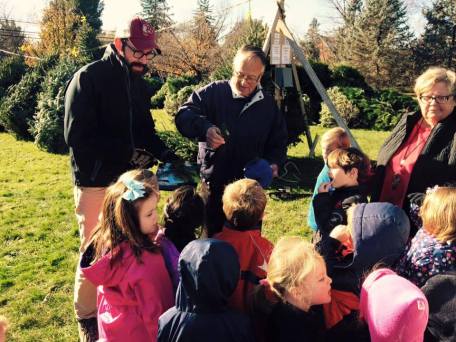
Weekly Devotional Image             On Saturday afternoon, by God’s will, we will gather on the front lawn of St. John’s UMC with a cohort from the community. Our third Annual Community Cook-Out will be filled with familiar and strange faces, we will have more food than we’ll know what to do with, we’ll have children jumping on bouncy houses, and we’ll even have a dunk tank set up (I’ll be the first to be knocked in!). For years and years this church has stood in the middle of the community, but for too long it has been disconnected from the lives of the people in the immediate neighborhood. Therefore, the Cook-Out is our opportunity to share Christ’s love with those who surround us.

During the last two Cook-Outs it has been a joy to see strangers becoming friends through a shared meal and fellowship, but there is always the temptation to stay where we feel comfortable and only talk to the people we know. The Cook-Out is by no means an attempt to “evangelize the neighborhood” and get everyone saved. But if we are not willing to follow the example of Christ by reaching out to strangers, then the church is failing to be the body of Christ for the world.

IMG_1642

St. John’s exists and thrives because of the great cloud of witnesses that brought us to where we are. We owe a great deal to the saints who have come before us, the ones who first invited us to discover God’s love in a place like this, and now the time has come for us to follow them on the path to Christlikeness. For it is when we humble ourselves, when we disregard the shame of embarrassment, we join together with the one who never knew a stranger, the one who came to change the world, the one who has taken his seat at the right hand of the throne of God.

To follow Jesus on the way that leads to life requires us to actually act like him here and now. It means crucifying our selfish ways and opinions so that we might encounter the other without pretense. It means laying aside every weight that prevents us from sharing the Good News. It means running the race with perseverance so that we might bless others in the same ways we that we have been blessed.

An Example – Sermon on Luke 12.32-34

Luke 12.32-34

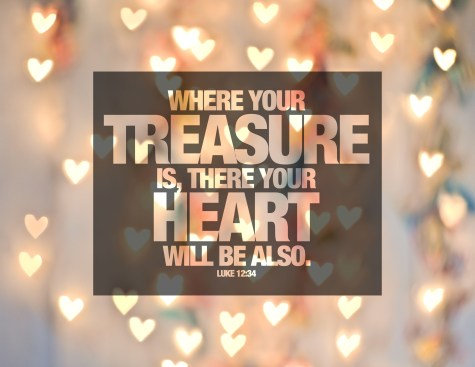
Do not be afraid, little flock, for it is your Father’s good pleasure to give you the kingdom. Sell your possessions, and give alms. Make purses for yourselves that do not wear out, an unfailing treasure in heaven, where no thief comes near and no moth destroys. For where your treasure is, there your heart will be also.

bible-verse-luke-1234-where-your-treasure-is-there-your-heart-will-be-also-2014-for-slideshow


Meanwhile, when the crowds gathered by the thousands to hear him talk, so many in fact that they began to trample on one another, Jesus rose to speak. He warned his disciples against hypocrisy – live honest lives. He instructed them to confess fearlessly – all who earnestly repent will be forgiven. He shared the parable of the rich fool – you can’t take your money to heaven. And then he gave them some final instructions:

“Do not be afraid little sheep! For it is God’s good pleasure to give you the kingdom. Sell your possessions, and give away your money, use your gifts to bless others here and now. For where your treasure it, there your heart will be also.”

Sometimes Christians drive me crazy. You know, the super pious ones who are forever wearing their faith on their sleeves; the ones who stand on the street corners of life blasting off about some passage or another; the ones who come knocking on your door and try to sell you on the gift of eternal life instead of the fires of hell.

Have you ever met or encountered a Christian like that? I can’t help but feel like they are the kinds of Christians that are giving the rest of us Christians a bad name. Jesus never instructed his disciples to act like the people from Westboro Baptist church who are forever picketing the funerals of people whom they believe did not live up to Christ’s expectations. Jesus never called his disciples to be racist or bigoted toward peoples of different nationalities, or race, or creed, or sexual orientation. Jesus never implored the disciples to use fear mongering to convince people to come to church or otherwise be threatened with the fires of eternal punishment. Yet, if you turn on the news, or get online, those are the kinds of Christians we hear about the most; the ones who give the rest of us Christians a bad name.

Like Hillary Clinton proudly claiming to be a Methodist over and over again, and how much her Methodism has shaped her politics. But we know that she has gone back and forth on a number of issues and made untruthful claims when the bible is pretty clear: you shall not bear false witness.

Or like Donald Trump who, when asked about his faith said that he’s never needed to pray for forgiveness and when asked about his favorite scripture was said, “An eye for an eye and a tooth for a tooth.” Except the scripture he was talking about actually goes like this: “You have heard an eye for an eye and a tooth for a tooth. But I say to you, ‘Do not resist an evildoer. But if anyone strikes you on the right cheek, turn the other also.’”

Just once I would like a good Christian to be featured for all to see; someone who has absorbed the Word throughout his or her life and has lived accordingly; someone who believes the good news is so good, that is worth sharing not to fill the pews, but to fill hearts; someone who could stand like an earthly example for the rest of us to catch a glimpse of the ways Jesus calls us to behave.

tumblr_naz1buY4JX1svej5no1_1280

This winter I was asked to be a guest preacher at Augusta Street UMC just down the road. We had a midweek and midday service and I decided to preach about how good it is when we dwell together in unity. The service was well received and we gathered in the social hall after worship for a light lunch. I walked around for a couple minutes until I found an empty chair next to Wilford Kirby who was deeply engrossed in a conversation with someone else.

Elsewhere in the room, United Methodists from all of the churches in our town were sitting with their friends from their churches. Like cliques in a high school, the Central folk were at one table, the Cherryvale folk at another, and so on. But Wilford refused to be subject to this paradigm. He was sitting with the preacher from Augusta Street, though I don’t think he knew that he was the preacher. Because I eavesdropped on the end of their conversation, and the last thing Wilford said to the preacher was: “You should come try out our church on Sundays.”

Anyway, I sat with Wilford and he was quick to make a couple comments about their church facility in comparison with ours, offered a few critiques on how my sermon could have been better, and continued to eat his soup and sandwiches. I had other things to get done that afternoon, so after I finished eating I excused myself and told Wilford that I’d see him in church on Sunday and left.

Not fifteen minutes later was my phone ringing. When I answered all I heard was: “Wilford fell, broke some ribs, on his way to the hospital.”

I immediately turned my car toward the direction of Augusta health and beat the ambulance to the Emergency Department. But because they needed to do some x-rays and have him checked out I wasn’t able to get back, and he didn’t want me to anyway.

The next day I showed up at his house and banged on his door until he slowly made his way to the front of the house and let me in. I should have been a little more compassionate and patient regarding the fact that he was walking around with a few broken ribs, but I wanted to know what happened. I wanted to make sure he was okay. I wanted to pray for him.

And as we sat down in his basement, before I could even open my mouth, he asked me how I was doing, and then went through the list of everyone he had been praying for and wanted updates since he had been out of the loop for a whole day.

Wilford Kirby is the kind of Christian that makes the rest of us Christians look better.

Wilford Kirby is an example to us all about what it means to follow Christ in this life.

Luke, in this passage about our treasures and our hearts, calls for us to put first things first. The things of the Lord are to be the most urgent and pressing priority in every Christian’s life. We are not to be afraid nor are we to succumb to the worldly distractions of wealth that constantly distract us from God’s love and care. There are no wallets, or stock portfolios, or bonds that will not wear out in time. God promises not to fill us with earthly wealth and material possessions, but instead surprises us with the gift of the kingdom.

Receiving this gift, the kingdom, makes us rich beyond our ability to comprehend. But being rich toward God is not about putting sizable sums in the offering plate during worship. What Jesus rejoices in, is our reorientation toward the whole of life as an abundant gift from a generous God – a gift that can be given away with abandon.

Wilford Kirby has given his life to the kingdom, because the kingdom was first given to him.

12347609_912278878848427_5975116725585975318_n

He has easily attended more worship services than anyone in this church over the last three years, including me (and I’m the pastor!). On Sunday mornings Wilford is the first layperson to enter the sanctuary making sure our heat is pumping in the winter, and the AC is on during the summer. He checks the lights for optimum worship participation, and he checks through the bulletins to make sure everything will go smoothly.

Every winter he sits out in his truck for hours on end waiting for people to come take a peek at our Christmas trees and offer them his assistance. Even though we have a giant sign advertising the times the lot will be open, Wilford believes in being present for the kind of people who ignore signs like those.

He is here an hour before our special services throughout the year like Ash Wednesday, and Good Friday, and Christmas Eve just in case anyone arrives extra early.

He is almost always the first person to show up in my office to find out how someone from our church is doing and how he can be praying for him or her.

For years he has mowed the lawn of our church and took care of the property as a volunteer. He never complained; he never sought recognition; he never wanted praise. I cannot tell you how many times I’ve been sitting in the comfort of my air-conditioned office day-dreaming about God when I’d see Wilford come flying past my window on the lawn mower with a smile hidden underneath his dust-mask.

Wilford has been here for every funeral since I arrived. Even for people he never knew. Yet he always stands in the back greeting people as they walk in, not because he was asked to, not because he was told to, be because he believes it’s the right thing to do.

For where your treasure is, there your heart will be also.

            The greatest treasure that Wilford Kirby has offered this church has been his very life, and he has given it with abandon.

But why? Wilford could be spending his precious time working with other civic organizations trying to make the world better. He could be spending his afternoons on the golf course or relaxing in the comfort of his home. He could use his life to do any number of things, but instead he has given it to this church.

My suspicion is that Wilford has given his life to the church because he knows and has experienced how the kingdom was given to him, and he wants to share that gift with others. He trusts that the Lord will provide. He humbly obeys the commands to love even the unlovable. He has seen first-hand how the kingdom of God can become manifest in other peoples’ lives. He put his treasure in this place because his heart has always been here. He wants other people to be blessed in the ways that he has been blessed. So he shows up. He prays. He cares. He loves. And he is an example to us all.

But that’s not to say that Wilford is perfect; he’s not. There are plenty of Sunday mornings when I finish a service and walk down the center aisle only to see Wilford standing in the back with his arm outstretched and his finger pulling me in as if to say, “Let me offer a suggestion.” Or there have been plenty of times that I’ve heard his footsteps walking down the hallway and I know from the texture of his tempo that he’s coming not to congratulate me on something but to complain about something that has happened in the church. But the thing is, even when Wilford is frustrated or upset it is because he believes our church can be better. He believes that we are part of the kingdom and we can’t be just like any other church. He expects excellence precisely because that’s what God expects from all of us.

Being rich toward God involves a generosity of spirit that opens our perceptions toward God’s generosity. Wilford knows how blessed he is, for the kind of life that he has had, and therefore he knows no other way to live than the way that he does.

Theses words from Jesus first meant for the crowd, and now meant for us, decisively interrupt our lives in this place and on this day calling us to focus not on the demands of the overly scheduled life, but on the Lord who comes in surprising ways to offer comfort, assurance, and love. Through these words we hear Jesus telling us that the time is now to start living a new life, not dictated by the past, but defined by God’s belief in our future. God uses people like us, people like Wilford, to make the kingdom manifest so that lasting joy will come to God’s little flock we call the church.

At this table, where Wilford has come time and time again, we receive the body and blood of Jesus Christ. In this profound moment we are offered the kingdom again even though we do not deserve it. We come forward with hands outstretched remembering this incredible gift that has been given without cost. And by receiving this gift, we cannot help ourselves but live transformed lives.

So come and see that the Lord is good. Feast at this table where heaven and earth are bound together. Join together with Wilford Kirby as he walks to the front to receive the gift of the kingdom once again. And let it change your life like it has changed his. Amen.

Devotional – Luke 10.39

Devotional:

Luke 10.39

She had a sister named Mary, who sat at the Lord’s feet and listened to what he was saying.

Weekly Devotional Image

The last week has been filled with tragedy and senseless violence. A black man was shot and killed by a police officer after selling CDs in front of a convenience store and a black man was shot and killed after a routine traffic stop for a broken taillight. In response to their deaths, 5 law enforcement officers were murdered in Dallas during a peaceful protest and another 7 more were injured. As we talked about all that had taken place over the last week during church yesterday, all anyone could talk about was their inability to get away from the suffering; every time they got online, or turned on their television, they were bombarded with the images of terror and destruction that had taken place across the American landscape.

And honestly, right now, we need to open our eyes to these tragedies. For too long those of us who are too comfortable with our white privilege have neglected to do the Christ-like work of becoming uncomfortable and standing with our black brothers and sisters. For too long those of us who are too comfortable with our white privilege have made the false assumption that this is not our problem. It is.

But to step into this situation, as a Christian, without first sitting and listening at the feet of Jesus will only further the kinds of vitriolic violence that we’ve seen this last week.

As the events transpired in Baton Rouge, Minneapolis, and Dallas countless people jumped to social media to vent their frustrations and quickly condemn those who they believed were responsible. Without taking the time to listen and be still, many of us put up our walls to the people and opinions around us and did everything we could to make sure our voice and our opinion was heard (or read). From the comfort and safety of our computers and cell phones we engaged in social media warfare.

_90345723_mediaitem90345722

To sit and listen to Jesus is a bold and daring thing to do. It requires us to wrestle with differing opinions and perspectives. It challenges us to seek out those who we often miss and stand with them shoulder to shoulder. It implores us to seek unity in the midst of chaos, hope in the midst of terror, and resurrection in the midst of crucifixion.

So today, we pray for the Lord to crucify our prejudices that we might be resurrected into new life in Christ. That instead of rushing to make our opinion heard we might listen, learn, and love. That instead of furthering the fear and hatred, we might respond with grace. That instead of remaining comfortable with our Christianity, we might take uncomfortable steps toward making the kingdom of God manifest here on earth.