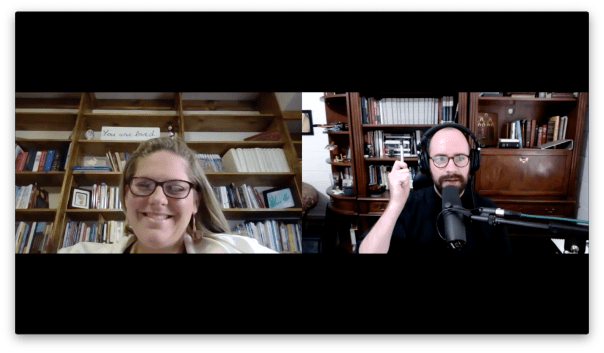
All!

Acts 2.1-13

When the day of Pentecost had come, they were all together in one place. And suddenly from heaven there came a sound like the rush of a violent wind, and it filled the entire house where they were sitting. Divided tongues, as of fire, appeared among them, and a tongue rested on each of them. All of them were filled with the Holy Spirit and began to speak in other languages, as the Spirit gave them ability. Now there were devout Jews from every nation under heaven living in Jerusalem. And at this sound the crowd gathered and was bewildered, because each one heard them speaking in the native language of each. Amazed and astonished, they asked, “Are not all these who are speaking Galileans? And how is it that we hear, each of us, in our own native language? Parthians, Medes, Elamites, and residents of Mesopotamia, Judea and Cappadocia, Pontus and Asia, Phrygia and Pamphylia, Egypt and the parts of Libya belonging to Cyrene, and visitors from Rome, both Jews and proselytes, Cretans and Arabs – in our own languages we hear them speaking about God’s deeds of power.” All were amazed and perplexed, saying to one another, “What does this mean?” But others sneered and said, “They are filled with new wine.”

Think and Let Think · All!

They were all together in one place.

A little more than a week had passed since they watched their Lord ascend to the right hand of the father. And whatever joy they had been feeling in the moment, the proverbial kick in the rear end from the angels asking about their eyes in the sky, apparently dried up. One would hope that the first disciples, having been commissioned by Jesus would actually be out there in the world doing the work they had been entrusted to do.

But instead they were all together in one place.

A violent wind came whipping through the room without warning, knocking over tables and cutlery, such that it filled the entire place where they were staying.

Divided tongues, like fire, appeared among them and they were filled with the Holy Spirit and began to speak in other languages.

The early disciples tumbled out of the house, into the streets from which they were previously hiding and they made good on the new gift and started speaking to the people in their own native tongues.

They told them the Good News.

The crowds, meanwhile, were amazed and astonished by the miracle in their midst and all of wondered what it could possibly mean.

And yet others sneered and said, “They’re just drunk.”

The rest of the story goes that Peter takes that as his cue to preach, stands in the midst of the street, delivers the Word, and 3,000 were added to their number that day.

I’ve got to tell you, I’ve preached from Acts 2 every Pentecost since I became a pastor, and even the best of my sermons haven’t come close to delivering thousands of new people to the church. 

For a while I wondered if it was because I wasn’t as good of a preacher as Peter. 

But, go read his sermon some time. 

It’s terrible. It’s boring. There’s no illustration. It doesn’t even end with an application.

So then I thought it was because the church wasn’t doing its job holding up the Acts 2 vision.

But, go look at what the church does.

Nothing. The only thing the people called church do is act like they’re drunk early in the morning.

The story of the arrival of the Spirit in Acts 2 is counter to just about everything we think about and do in the church today. It is disruptive, it is confounding, and it is for all.

Really.

If you tune out in the next few minutes, no worries. Just pick up a Bible and notice how many time the word “all” appears in this text.

It’s ridiculous.

Just like the Spirit.

pentecost-painting-7

I can give you plenty of reasons why the church shouldn’t exist. It’s filled with a bunch of sinners who are struggling with our inability to be good. We put up signs like, open hearts, minds, and doors when we actually close off our hearts, minds, and doors to anything we might deem “other.”

And, to be real, the church is a place where people get together week after week to sing songs, sit in silence, listen to someone preach, and then eat the body and blood of Jesus.

It’s shouldn’t exist. 

But people keep showing up. People keep streaming worship on their phones and computers. 

None of this can be explained without Jesus’ resurrection from the dead. None of what happens here is intelligible unless the Spirit was poured out on ALL flesh.

And when the Spirit hits, it knocks us out of alignment from everything we think we’re supposed to do, say, and believe.

I’ve heard it said, in this church no less, “God is good all the time – all the time God is good.”

Which is fine. 

But, if that’s true, then why have we been worshipping at home for so long? Why do black men keep getting killed in this country for no reason other than the color of their skin? Why can’t we have God when we really need God? What good is the goodness if it’s not there when we need it?

It took me a long time to come to grips with this stark reality. And the Pentecost story is the one that helped me. You see, by the time the Holy Spirit showed up, the Israelites had been waiting centuries for a gift and Word from the Lord like they received on Pentecost. 

Earlier, Moses was told to save God’s people, to deliver them to the Promised Land, and he does, but he dies before he can get there himself.

Later, the prophet Isaiah spends three years wandering around naked as a sign and wonder against the Egyptians.

Even Lazarus was dead for three days before Jesus showed up and called him out of the tomb.

Which is all to say: God’s time is not our time. God’s ways are not our ways.

Long before the wind swept through the house and tongues of fire landed on the disciples, the people of God were long trained in being out of control and out of time. And even though they were trained in this practice of patience, it still drove them crazy. 

It still drives us crazy.
Final-Acts-Graphic-16x9

Its why, rather than having difficult conversations this week about yet another black man’s murder, people like me are quick to post poetic reflections on the problems of racism.

Its why, rather than engaging in the long process of upending the inequality of this country, we offer our lament and move quickly on to whatever the next story might be.

It why, rather than calling into question the powers and principalities that so dominate and control our attention, we talk about the looting of stores rather than the destruction of bodies.

We want to be in control of all things, and make sure things happen according to our timetable, and that it all happens while requiring the least of us.

And yet, to follow Jesus is ongoing training for learning to live a life out of control. 

Faith, belief, trust, those are merely words for letting go of our presumption that fixing the world is up to us. Everything has already been done that needs doing. The end has already come to us in the person of Jesus through cross and resurrection. The powers and principalities have been vanquished forever. 

We just don’t act like it.

Or to put it another way, we’ve somehow convinced ourselves that we can do the work of the church whether or not Jesus was raised from the dead.

What difference does it make if he wasn’t raised? Jesus is a good ethical teacher, he wants us to be kind to one another, spread a little more love in the world.

But that’s ridiculous!

Christianity has nothing to do with getting along with one another.

Christianity is a violent Spirit blowing wherever it wants, knocking us down or back in order to get done what the Spirit wants getting done.

We want God to be for us, which means, of course, that we want God to be against them, whoever the them might be.

But the Spirit doesn’t show up for us, or for them, the Spirit is poured out on ALL flesh.

Contrary to all of our best intentions, and all our well meaning programs and practices, we continue to sin against the Spirit poured out on Pentecost because we continue to do whatever we can to explain away the disruption that is God.

And we all know why we do this – we’re afraid. 

We’re afraid of the Spirit that goes wherever it wants.

We’re afraid, though we think we have it all together, that we’re going to be grabbed up from our comfortable couches, shaken and thrown into confusion, and have even intoxicated like behavior.

Most of us, myself included, go to worship to have confirmed what we think we already know. That we’re right, and good, and fine, and they (whoever they are) are wrong. We don’t expect to be turned upside down.

But those early Christians, the ones accused of being drunk early in the morning, they were so accused because the Good News tasted like 200-proof grace that makes the room spin around with outrageous joy.

Here’s another way to think about it: When was the last time you left a church service, whether in-person or online, so joyful, so out of control, so confused, so filled with the brim with grace that someone said of you, “Look at those Christians again, drunk as skunks on a Sunday morning.”?

Usually, when we wrap things up on a Sunday morning, onlookers are more likely to say, “Look at those Christians, they look so smug, they look so bored, they look so dead.”

The Spirit refuses to let us die in our own self-righteous indignation.

The Spirit is poured out on all flesh, the good and the bad, the tall and the small, the black and the white, the rich and the poor, all so that we might begin to see the world and ourselves differently. 

Flannery O’Connor has a short story about a woman named Ruby Turpin. In it, Mrs. Turpin is a large Southern white woman who believes she is superior to just about everyone else, but particularly black folk. She spends her days looking down on those she deems unworthy, and the story picks up with her taking her husband to the doctor’s office for an appointment.

In the waiting room, she is disgusted to find people of lower classes, lower ambitions, filling up all the seats while she has to stand. She strikes up a conversation with a nearby mother who is there with her daughter and they bond over their disdain for certain individuals. They wax lyrical about the virtues of being hardworking, clean, and having a good disposition. And the more they talk the more the young daughter glares at Mrs. Turpin with hatred in her eyes over the cover of a book.

Eventually, the conversation moves closer to home as the mother complains that her daughter isn’t grateful enough for everything she’s been given. Mrs. Turpin, of course, agrees with the woman wholeheartedly, when all of the sudden the young daughter takes her book and throws it with all of her might straight at Mrs. Turpin’s face and hits her right above the eye. The girl further lunges toward Mrs. Turpin, grabs her around the throat, and has to be subdued and given a sedative by the doctor.

Right before the girl gives way to the medicine flowing in her veins, Mrs. Turpin demands an apology from her, and instead all the girl says is, “Go back to hell where you came from, you old wart hog.

Needless to say, Mrs. Turpin is greatly disturbed by the comment, and can’t help herself from wondering if maybe it was a message from God. And the more she thinks on it, the more upset she becomes.

Eventually she returns home only to scold God in her prayers, demanding to know how she, the upstanding, polite, and perfect Christians she think she is, could possibly be an old wart hog. She even angrily lifts up her fists in the sky and shouts, “Who do you think you are?”

And its at that precise moment, with rage in her veins, she sees a vision. It’s a road from the earth to the sky, and on that road she and all the “proper” white Christians are at the back of the line. In front of them, arriving in heaven first, are all the people Mrs. Turpin considers inferior and unworthy of either her or even God’s love.

Sometimes the Spirit shows up in a perfectly timed hymn, or just the right scripture reading, or even in the occasional sermon.

But most of the the time the Spirit shows up like a mighty wind, like flames of fire, or like a book being hurled across the room.

Because all of us, each and every single one of us is an old wart hog. We choose to do things we know we shouldn’t. We avoid doing things we know we should. And yet God still pours out the Spirit on all of us.

And all really means all. Amen. 

A Job To Do

Acts 1.6-14

So when they had come together, they asked him, “Lord, is this the time when you will restore the kingdom to Israel?” He replied, “It is not for you to know the time or periods that the Father has set by his own authority. But you will receive power when the Holy Spirit has come upon you; and you will be my witnesses in Jerusalem, in all Judea and Samaria, and to the ends of the earth.” When he had said this, as they were watching, he was lifted up, and a cloud took him out of their sight. When he was going and they were gazing up toward heaven, suddenly two men in white robes stood by them. They said, “Men of Galilee, why do you stand looking up toward heaven? This Jesus, who has been taken up from you into heaven, will come in the same way as you saw him go into heaven.” Then they returned to Jerusalem from the mount called Olivet, which is near Jerusalem, a sabbath day’s journey away. When they had entered the city, they went to the room upstairs where they were staying, Peter, and John, and James, and Andrew, Philip and Thomas, Bartholomew and Matthew, James son of Alphaeus, and Simon the Zealot, and Judas son of James. All these were constantly devoting themselves to prayer, together with certain women, including Mary the mother of Jesus, as well as his brothers.

Think and Let Think · A Job To Do

You want to hear about Josh don’t you?

Everybody wants to know about Josh. It doesn’t matter where I go or what I do, or even what I say, it always comes back to him.

Which, to be fair, makes sense. 

He turned my life upside down before he did it to the world, who wouldn’t want to know more?

But if you want to know about Josh, you need to know what my life was like before he showed up.

I was happy.

Well, that’s not true. But I was really good at making it seem like I was happy. 

You know the whole married, kids, nice job, mortgage, decent neighborhood. I traveled a lot for work back then and I was a frequent guest a particular airport bar. I’d be coming in, or going out, or not really knowing the difference when I would sit down and the bartender knew what to bring before I could even ask for it.

And it was during one such barstool session that Josh arrived.

He sat down right next to me and he said, “Pete, you’re going to make a killing on this trip, huge bonus is coming your way, but I’ve got something better for you.”

To be clear, I’d never laid eyes on this guy in my life, and here is is telling me about my work and even calling me by name. I should’ve known then that it was something not normal. But I didn’t, and I just went along with him.

“Sure,” I said, “That makes total sense, except business has been lousy and I can’t even remember the last time I got a bonus.”

“I don’t know,” he said, “I’m in the miracle business and I know one is coming your way. But, again, I’ve got something better for you. Why don’t you finish your drink and follow me?”

Maybe it was the 3rd too many drinks I had already consumed, or the fact that he appeared to know more than he should, or maybe it was something else, but I did get up from that barstool and I followed him straight out of the airport.

And, honestly, I never looked back.

Final-Acts-Graphic-16x9

But you don’t want to know about me. You want to know about Josh. You want to know if it’s all true, if it all really happened.

Well, I can tell you the truth, not the crazy stuff that went around on Twitter, or even the low-quality YouTube videos from so-called eye witness. 

I was there, for all of it.

Like the time he fed everyone in the park. Do you know that one?

See, we’d been in the park with him all day, Josh had quite a following at that point, he talked most of the day about all sorts of things that sounded nice but didn’t make a lot of sense. At least, it didn’t at the time. He was so good with crowds, it was like he knew exactly how to play them and how to lift them up and bring them down and keep them on the edge of their toes.

But we had been there all day, and when he finished talking he started walking throughout all the people and started curing some of the sick and comforting the downtrodden and no one wanted to leave. 

But they were getting hungry.

And then Josh said, “This is a nice size crowd today. You think we have about 5,000? Too bad we don’t have any food to give them. Pizza sounds nice.”

“Pizza?” I said, “Do you know how expensive it is to feed 5,000 people pizza?”

He ignored me and spotted a kid on the other side of the park walking home with a pizza in his arms and he ran after him. Josh came back a minute later with the pizza, and the kid, and said that the boy had agreed to let us borrow the pizza. I mean, who ever heard of borrowing a pizza? But then he told me to round everyone up and to see how far we could stretch it out. 

So I grabbed a few pieces and handed them to the closest person and when I went back to the box it was still full. And it was full every time I went back for more. Until everyone in the park had their fill and we even had leftovers.

By the end of the spectacle it was clear what had happened. At first, people just assumed the slices were being passed out from the middle of the park where a whole boatload of pizzas had been delivered. But the word got around that Josh had fed the entire park with just one box of pizza, and they started calling it the greatest miracle of all time and they said that Josh should be elected to the Senate, or even the White House with the kind of powers that he had.

That’s when things really started to change. 

Because up until then, Josh seemed content for his miracles to be a substitute for the message. But after the powerful pizza moment, he was convinced that any miracle would give people the wrong impression. He talked about his death a lot at the time and none of us really listened. We were too busy eating our pizza. And even when he talked about a New Order and the first being last and the last being first, it all sounded nice but it couldn’t quite compare with sick kids getting better, and people walking away from their wheelchairs.

But, like I said, things changed after the pizza.

He talked about his death all the time, and those riotous crowds started dwindling. They waited for a miracle and all they got was hot air. He started telling all these stories that didn’t make much sense, like the one about a man abandoned on the side of the road and only a homeless man stopped to help him. Or the one about the dad who sold the family business and gave the proceeds to his youngest son who blew it all in Vegas only to return home penniless and his dad threw him a giant party.

I couldn’t blame the crowds for leaving. I mean, here he was in one day fixing the hunger problem, filling the bellies of thousands. Why couldn’t he run for office and fix all sorts of other things?

But Josh just kept saying the same thing each time, how that wouldn’t solve anything. Even if people got food miraculously they would still die eventually. He’d talk about a new kind of food, a food that would really fill the world. In fact, he once said that unless we were all filled with him, we would stay dead forever. But if we fed on him, he would raise us from death for good.

But what you really want to know is where he is now. Why did he leave if there’s still so much work to be done?

Well, that’s honestly what I wondered at first too, until I remembered all the stuff he used to say. 

Josh’s final earthly act was just as bizarre and paradoxical as his bizarre and paradoxical life was. He had already been killed and raised from the dead. He had been with us for forty days talking to us about all the stuff we had already gone over. When one day he said he wanted to go for a hike. So we filled our bags with sandwiches and headed for the woods. We hiked and hiked until we came to a clearing.

He looked up into the sky and said, “It’s time for me to reign with my Father.”

And one of us said, “Wait, wait, wait. If you’re about to do something really cool, can we at least call the news station to get a camera out here? And if not that, can I at least put it on Facebook Live?”

And Josh said, “No. Listen to me. I know this doesn’t make sense to you. But hasn’t all of this been weird? I am leaving. But I’m not really leaving. It’s time for me to rule over the cosmos, but I’m sending you another soon. I want you to get it through your thick skulls one last time, the world depends on it: The New Order does not come because you or anyone else can do anything to make it happen. I am the New Order; It is me and it is in me. It’s in you. When I ascend I am taking the whole world with me.”

Then he looked up again and continued, “I know it won’t seem like it right now, but this is nothing new. I am simply making manifest what I’ve been doing all along. No meddling, divine or human, spiritual or material, moral or immoral can save the world. Your salvation is already here, in me. The only thing you have to do is trust me.”

And with that he started floating, subtly at first, just a few inches off the ground. “Listen,” he said, “We don’t have long, and you have work to do. But its not the work that you think. It’s not your job to fix anyone or save anyone. Hell, it’s not your job to fix or save yourselves. All you need to do is go and tell everyone what you’ve seen and what you’ve heard. Tell them they are forgiven. And when they don’t believe you, because they won’t, tell them again. Tell them again and again and again until it seeps into the marrow of their very existence. Tell them I’ve gone and done for them what they never could for themselves. Tell them. And don’t let them forget.”

And then he disappeared. 

We were all stupefied and kept looking hoping against hope that maybe it was just a trick of the light until we realized that he was gone. But the strangest thing was, it didn’t really feel like he was gone. It felt like he was right there with us.

And that’s when two crazy bearded men came tumbling out of the woods and said, “What the hell are you all doing standing around like that? Didn’t you hear what he said? Go. You’ve got a job to do.

And I’ve been doing it ever since. Amen.

Gold Bond and The Gospel

4d46bf1bb0394b294fab8d3ea3c7ea0b-1024x1024

This week on the Strangely Warmed podcast I speak with Tripp Fuller about the readings for the 7th Sunday of Easter [A] (Acts 1.6-14, Psalm 68.1-10, 32-35, 1 Peter 4.12-14, 6.6-11, John 17.1-11). Tripp is the host of Home-brewed Christianity, and is a Religion/Science Research Fellow at the University of Edinburgh, Scotland. Our conversation covers a range of topics including homeschooling in quarantine, Process Theology, hide and seek, idiotic disciples, looking down and out, psalm problems, faithful suffering, tyrannical immediacy, thinking small, and the doneness of the Good News. If you would like to listen to the episode or subscribe to the podcast you can do so here: Gold Bond and The Gospel

Screen Shot 2020-04-29 at 2.00.37 PM

Awe-Full

Acts 2.42-47

They devoted themselves to the apostles’ teaching and fellowship, to the breaking of bread and the prayers. Awe came upon everyone, because many wonders and signs were being done by the apostles. All who believed were together and had all things in common; they would sell their possessions and goods and distribute the proceeds to all, as any had need. Day by day, as they spent much time together in the temple, they broke bread at home and ate their food with glad and generous hearts, praising God and having the goodwill of all the people. And day by day the Lord added to their number those who were being saved. 

The Spirit fell upon the disciples like flames of fire.

They were given the gift to speak in many languages, tumbled out into the streets, and started spitting off the Good News.

Crowds of people assumed they were drunk, even very early in the morning.

But Peter, ever eager Peter, stood and preached to the people and told them exactly what God was up to.

And that day, 3,000 were added to the early church.

That should be the end of the story and we should be able to move on to the next relevant narrative. After all, it’s the Acts of the Apostles so it would nice to find out what happens next. Maybe jump to the early details of Saul soon to be Paul. Or maybe give us an update on what the women who went to the tomb were now up to. Maybe we could catch a glimpse of the powers and principalities plotting against this budding group that just won’t shut up.

But that’s not what happens in Acts.

Final-Acts-Graphic-16x9

Luke just keeps going. The story continues by showing, rather immediately, how the Holy Spirit is embodied by those who are now part of The Way.

They devote themselves to the apostles’ teaching.

They gather together in fellowship.

They break bread and feast with one another.

And, finally, they share their prayers.

But it’s more than that. 

We, those of us for claim to follow Jesus, we can point to any of those descriptions as being part of our faith lives even today.

On a weekly basis many of us commit ourselves to the apostles’ teaching, we gather (even on the internet) to share in fellowship with the revealed Word, we offer signs of peace to each other with the breaking of bread, and, at the very least, we pray. 

But wait, there’s more!

And the more is something that, we confess, we’d like to overlook at times.

All who believed were together and had all things in common; they would sell their possessions and goods and distribute the proceeds to all as any had need.

Woah.

I mean, God, it’s all good and fine if you want us to put some money in the offering plate or donate online every once in a while. We’re even on board with serving meals to the homeless so long as it eases our guilty consciences. 

But selling off our possessions and distributing the proceeds to other people?

That sounds awful.

Luke choses this moment, having learned that the Good News is spreading like wild fire, to show what the early gathering of faith looks like. And it looks like a bunch of lazy pinko commies who want everything done for them.

Or, that’s at least how some would have us imagine it.

However, the commonality of goods is set up as a concrete testimony of how empowering the Holy Spirit really is. It forces us to confront, with wonder, that something unsettling, specific, and substantial has happened to these bewildered and bewildering people.

And maybe, just maybe, we should call the first Christians communists.

That, of course, sounds ridiculous and downright rude to some of our ears. Communism, politically speaking, doesn’t really come close to the bartering and redistribution of the small and early group of the faithful, but it is notable that we find those two things to be so incompatible with one another.

Particular when, frankly, Christianity has far less in common with something like capitalism than communism.

Bible-and-Flag

This is somewhat of a scandal to those of us in the West, and in particular those from the good ol’ US of A. Today, with our (and by “our” I mean American) bizarre piety for, and idolatry of, free enterprise and private wealth, it’s almost unimaginable that we would ever call something like this country a Christian nation.

Or, to put it simply, if the rich keep getting richer and the poor keep getting poorer, then it’s not the kingdom of God. 

Certainly no one in the Acts church, not even Peter, was advocating for, or attempting to institute, some new political rule over and against the powers and principalities. The disciples were not holding informational meetings with agendas about how to get the right people elected to office. Nor were they standing on the street corners of Jerusalem handing out hats emblazoned with “Make Israel Communist Again.” They weren’t even setting up their own political action committees to consolidate tremendous amounts of money. 

But the church was (and always will be) its own politics.

Our form of life as the gathering body of Christ is predicated on the sharing of goods as seen here at the beginning of Acts. And it’s not just because we think we should be doing nice things for other people. 

It’s simply the embodiment of what we really believe.

God has made all things new and turned the world upside down.

However, most us would like to tip it back over every once in a while.

It’s amazing to read this little description of the early church and see how far we’ve moved away from it. But, for a long time in the early centuries of the church, the redistribution of all things was fairly normative. So much so that even by the 4th century, Ambrose of Milan refused to grant that even a rich man could make gifts to the poor. Instead, he could, at most, only restore what already belonged to them,

Say that in a place like the US today and you’re liable to get kicked out.

Again, many would consider that behavior and idealism downright awful.

But how could it ever be possible unless people were filled with awe?

They devoted themselves to this wildly different way of living, instilling a sense of value and worth in all people, and then they broke bread together with glad and generous hearts.

Which, in many senses, means they liked to have a good time with each other.

Acts 2:1-4. When the day of Pentecost came. Pastel & pen. 26 May 2012.

And, this makes a lot of sense. When you take away the things that tend to divide us from one another the most (namely economics and possessions), when those walls are torn down forever, there’s no better way to respond than by throwing a party.

This really is at the heart of what it means to be a gathering people, to be the church.

Go through the Gospels sometimes and note how many times Jesus “was at table with them.” And the them in that sentence contains a whole bunch of people who never would’ve eaten together otherwise. 

Jesus goes to a wedding, and when the host runs out of wine he makes manifest the first miracle so that the party won’t stop. 

Jesus comes upon a tiny little tax collector, a man who has made life miserable for so many, and what does he do? He invites himself over for lunch.

Jesus meets the deserting and denying disciples on the shore of the sea with some grilled fish and a nice loaf of artisanal bread.

Of all the criticisms lobbed at Jesus by the governing and religious authorities, the fact that he ate with sinners is one of the things that comes up the most. They couldn’t stand the company he kept at table. Receiving the outcasts, eating with the marginalized, instilling worth and value in people who felt worthless and valueless was Jesus cup of tea.

And it drove people crazy.

It would be quite easy, therefore, to take this text and preach it at people like all of you in such a way that you would feel guilty for not inviting more of the riffraff over for dinner. It’s not all that difficult to raise up the redistribution of goods here in Acts and drop that like a bombshell on the dozing church and triumphantly declare that you all need to get your acts together!

And, that’s all fine. Perhaps we should feel guilty for the company we keep and maybe we should feel guilty about how we keep holding onto all our earthly possessions while people around us starve. 

Jesus failed to make distinctions between people and we can’t get enough of it of those distinction that people squarely in their places.

But, haven’t we heard all of that before?

We need longer tables, and more open churches, and bigger feeding programs.

Preacher types like me remind people on a somewhat regular basis that Jesus has given us work to do. That we must rid ourselves of our addictions to the old systems of prioritized self-interest that result in the first being first-er and the last being last-er. 

But has that kind of exhortation ever worked?

Notice: when Jesus went to the wee-little man’s house for a mid-afternoon snack, he doesn’t tell him to go and repay everyone he wronged.

The tax collector comes up with that all on his own.

Notice: The Holy Spirit doesn’t command the early church to set up programs for food delivery and economic redistribution. 

They just start living differently. 

Being filled with awe, really filled with awe, is a crazy thing and can make us do crazy things.

And what could fill us with more awe than knowing that Christ chooses us?

Or, let me put it another way: What if what we’re supposed to focus on isn’t so much our need to have bigger visions of the kingdom, but that Jesus’ vision of the kingdom was big enough to include us?

Or how about this: What if instead of thinking about what we would have to do to get criticized for the people we hang out with, we thought about how Jesus would be criticized for hanging out with the likes of us?

Because, let’s admit it, we don’t have a lot going in our favor.

We do things we know we shouldn’t.

We avoid doing things we know we should.

We care more about ourselves than other people.

Giving up our possessions so that those who have nothing can have something doesn’t sound like a good deal.

And knowing this, knowing that we bristle at the ideas and images of a radical way of life, knowing that our addiction to self-interest isn’t something we can kick, Christ comes to us and for us anyway. 

It’s like we’ve been brought before the throne of God and every single one of our mistakes is paraded out in front of us. With every instance we cower closer and closer to the floor. And at the end, Christ looks at us, really looks at us, and says, “It’s okay. I forgive you.”

That is radical.

Perhaps even more radical than inviting a few extra people over and giving away a few things to make someone else’s life a little better.

Once we even come close to realizing how ridiculous it is that Jesus has invited us to his table, how bewildering it is that in him all things are held together, how perplexing it is that through him the first have become last and the last have become first, then we can begin to see what it means to be filled with awe.

It could change everything.

It already has.

Amen. 

Walking and Talking

4d46bf1bb0394b294fab8d3ea3c7ea0b-1024x1024

This week on the Strangely Warmed podcast I speak with Sarah Locke about the readings for the 3rd Sunday of Easter [A] (Acts 2.14a, 36-41, Psalm 116.1-4, 12-19, 1 Peter 1.17-23, Luke 24.13-25). Sarah is an ordained elder in the United Methodist Church and serves at Hickory UMC in Chesapeake, VA. Our conversation covers a range of topics including shame in the church, John Prine, preaching with authority, Jesus’ titles, The Good and Beautiful Life, loving the Lord, the preciousness of death, Peter and Social Distancing, and grace in retrospect. If you would like to listen to the episode or subscribe to the podcast you can do so here: Walking and Talking

Screen Shot 2020-04-20 at 8.12.51 AM

Mortal

Ezekiel 37.1-14

The hand of the Lord came upon me, and he brought me out by the spirit of the Lord and set me down in the middle of a valley; it was full of bones. He led me all around them; there were very many lying in the valley, and they were very dry. He said to me, “Mortal, can these bones live?” I answered, “O Lord God, you know.” Then he said to me, “Prophesy to these bones, and say to them: O dry bones, hear the word of the Lord. Thus says the Lord God to these bones: I will cause breath to enter you, and you shall live. I will lay sinews on you, and will cause flesh to come upon you, and cover you with skin, and put breath in you, and you shall live; and you shall know that I am the Lord.” So I prophesied as I had been commanded; and as I prophesied, suddenly there was a noise, a rattling, and the bones came together, bone to its bone. I looked, and there were sinews on them, and flesh had come upon them, and skin had covered them; but there was no breath in them. Then he said to me, “Prophesy to the breath, prophesy, mortal, and say to the breath: Thus says the Lord God: Come from the four winds, O breath, and breathe upon these slain, that they may live.” I prophesied as he commanded me, and the breath came into them, and they lived, and stood on their feet, a vast multitude. Then he said to me, “Mortal, these bones are the whole house of Israel. They say, ‘Our bones are dried up, and our hope is lost; we are cut off completely.’ Therefore prophesy, and say to them, Thus says the Lord God: I am going to open your graves, and bring you up from your graves, O my people; and I will bring you back to the land of Israel. And you shall know that I am the Lord, when I open your graves, and bring you up from your graves, O my people. I will put my spirit within you, and you shall live, and I will place you on your own soil; then you shall know that I, the Lord, have spoken and will act,” says the Lord. 

In this strange new time I keep referring to as Coronatide, we have been physically separated by orders of law and state, but we are still bound to one another through the Lord. And yet, it has become apparent with every Facebook post calling on people to answer questions in order to learn more about one another that we really don’t know much about each other at all. 

Well, knowing that we don’t know what we don’t know, I’m going to share something that you do know about me, no matter who you are, and something I know about you, no matter who you are.

We’re all going to die.

What a way to start a sermon!

Or, as it is written in one of my favorite books, “In the world according to Garp, we’re all terminal cases.”

Back-to-the-Start_LowRes-WebSlide

That’s what we were affirming on Ash Wednesday, which now feels like an eternity ago, and it’s what Lent reminds us at every turn: In the midst of life we are in death. And, frankly, we didn’t need the Coronavirus to remind us. We didn’t need the empty supermarkets, and the abandoned jungle gyms, and the vacant school parking lots to remind us that no one makes it out of this life alive.

Though plenty of us love believing the contrary. We are suckers for the advertisements of products that promise youthful glows, and smoothed wrinkles, and tighter waistlines. We use tomorrow’s money to finance today’s void. We even check the updates on how fast the virus is spreading in certain places and think, “Well surely, it won’t happen like that to me.”

But then it does.

Or, to put it another way, a few weeks ago, before everything really ramped up, I took my 3 year old son out for lunch at a local Chic-fil-a. We ate our waffle fries in beatific silence, smiling as the ketchup smudged our cheeks, and then my boy gave me a look that said, “Dad. Bathroom time.” We quickly cleaned off our messy hands and faces, and bee-lined for the restrooms. After business was taken care of, a man walked in, used the stall next to us, and walked out. To which my son shouted, “Uh, Dad, that guy didn’t wash his hands.”

And I, being the great parent I am, said, “Elijah, say it louder next time.”

In ways both simple and profound, we like to pretend like the one universal truth is actually a lie.

But it’s not.

Ezekiel, contrary to our dispositions, knew the truth of our finitude. Should you have any extra time on your hands while social distancing, go read through the book of Ezekiel, there’s some wild stuff inside. But for today, we get to see, through Zeke’s eyes, the valley of the dry bones. 

It must’ve been a particularly striking and relevant image for the bizarre prophet considering his own life situation. Prior to this text, we learn that Ezekiel has been on somewhat of a rampage against God’s people, indicting them for all the had done and left undone. The people God chose to change the world, the people with whom God had covenanted, the people God loved with reckless abandon had abandoned the Lord – they had given themselves over to idolatry.

Idolatry, for the people in the back, is believing and acting as if anything or anyone can give us what only God can give.

Idolatry is believing wealth says more about who a person is than the fact they were made in the image of God.

Idolatry is looking out for our own interests at the expense of the marginalized.

Idolatry is assuming that we can save ourselves.

The people of God worshiped whatever they wanted whenever they wanted, the ignored the plight of the needy, and they believed they were entirely in control of their destines.

And the Lord spoke into their midst and said, “You want idolatry? I’ll give you idolatry!”

They were dragged off as captives to become strangers in a strange land: Babylon. A foreign place where the land was dominated by colossal statues and overwhelming debauchery. In short: a place totally at odds with what the worship and love of God is supposed to look like.

And it’s from this place of exile, maybe something a few of us can identify with right now, that Ezekiel speaks of his vision.

maxresdefault (1)

The Lord drags Ezekiel out to a graveyard, that stretches as far as the eye can see, and all his eyes can see are bones piled upon bones, and they’re all dry. And the Lord says, “Can these bones live?” Ezekiel replies, “Lord, only you know.” And the Lord says, “Tell this to the bones: O dry bones the Lord will give you life! The Lord will breathe upon you and the sinews and the flesh will string together and you will live because God is God!”

Ezekiel does what the Lord commanded, and the earth trembles beneath his feet, and like a scene befitting a horror film, Ezekiel watches as bones come together, and tendons and muscles are stretched and skin forms until a vast multitude stands on their feet and they are alive.

“Look” says the Lord, “these bones are the whole of Israel. They say, ‘Our bones are dried up and our hope is lost; we are cut off completely.’ But look what I did for them! I will bring you back and you shall know that I am the Lord!”

This is strange stuff, even for the Bible. 

The Lord promises to reconstitute the very people who had given up on the Lord.

God breathes life into the bones of those who destroyed life time and time again.

God makes a way where there was no way.

And the bones live.

Contrary to how so many of us speak about church or hear about church, this confounding moment in the valley of the dry bones has not one thing to do with us and whatever it is we think we bring to the table. 

Notice: The people of God have done less than nothing to restore God’s faith in them. They died and were buried in their sins and in the trespasses and God says, “Ok, time to make something new.” 

They didn’t deserve it and they certainly didn’t earn it. 

Notice: God doesn’t tell Ezekiel to go out and give the bones a ten-step process on how to get their lives sorted out. God doesn’t tell the people to pray three times a day in order to earn their salvation. God doesn’t wait for the people to memorize their favorite book of the Bible before the bones starting coming back together.

God raises the bones to life because that’s what God does!

I hope you hear that as a hopeful word. Because even at our best, we’re not very good.

When we hear about the valley of the dry bones, if we hear about it at all, we are often so caught up with the striking physical details that we don’t take a moment to really think about it. We have the benefit, if you want to think about it that way, of knowing whose bones we’re walking on whenever we go through a cemetery. But Ezekiel could only see bones upon bones.

But who did they belong to?

Scripture answer the question for us, of course. The Lord says to Ezekiel, “These bones are the whole house of Israel?” But even a statement like that warrants further reflection. Because if the bones are the whole house of Israel, that means that some of those bones belong to Cain and Abel, Jacob and Esau, Saul and David, the elect and the reject. It means that buried among that pile of bones are the good and the bad, the sinners and the saints, the first and the last.

63682-lent-thinkstockphotos-902294032-azerberber.1200w.tn

I don’t know what you all have been up to these last few weeks, but I’ve seen and heard countless stories about people going above and beyond to help people in need. Distilleries shutting down production of their whiskey in order to reformat their facilities to produce hand sanitizer. Businesses donating medical masks to hospitals in need. Neighbors picking up groceries for the most vulnerable. Basically, stories of saints.

But for every positive story there’s plenty of stories that demonstrate the opposite.

Individuals hoarding up precious supplies and equipment only to price gouge individuals and business who really need them. Corporations calling on furloughed workers to start GoFundMe campaigns for medical expenses rather than offering financial assistance. And countless politicians using our present crisis as an opportunity to shore up votes for the next election cycle.

And that’s not to mention the great number of pastors who have, foolishly, assured their respective congregations that they can keep worshipping together or going out in public because the Lord will protect them in all of their comings and goings.

Basically, stories of sinners.

In the end, we’re all just a bunch of dry bones sitting in the bottom of a valley. Even the best of us cannot prevent the bell that tolls for us with our perfect spirituality or magnificent morality. Even the worst of us cannot so take advantage of others to stop the inevitability of our own demise.  

Remember, in the time of Jesus, it was all of the so-called “good” institutions, both the religious and the secular, following all of the proper protocols, and calling for a vote, people like you and me joined together to crucify Jesus of Nazareth. In all of our goodness and our badness we nailed that man to a cross and hung him up for the world to see. 

Stories end in graveyards. I’ve been in enough of them with the dirt in my hands laying it over the bodies of the dead to know it is true. I’ve seen enough tears spilt upon the tombstones of the familiar and the stranger to know that the one thing we all truly share is our death. I’ve listened to enough conversations and met with enough people to know that is our deaths that frighten us the most even if we do everything in our power to convince ourselves otherwise.

The disciples knew it too. That’s why they abandoned the Lord the closer he got to death, it’s why they avoided him on the cross, and it’s why they only trudged up to his grave three days later.

And yet, one of the greatest messages of scripture, a message as plain as day in the story of Ezekiel and the dry bones, is that in the end it’s not up to us to save ourselves. We will be buried among saints and sinners, our bones will dry and scatter, and only God, Father of the Incarnate Word, is the one who raises the dead. 

If you find yourself thinking, “My life is all dried up, I’m stuck in the confines of my home unsure of what tomorrow will bring, I have nothing to hope for, I feel completely cut off” then you are in good company. God can work with that. Amen. 

The Grammar of Faith

Genesis 12.1-4a

Now the Lord said to Abram, “Go from your country and your kindred and your father’s house to the land that I will show you. I will make of you a great nation, and I will bless you, and make your name great, so that you will be a blessing. I will bless those who bless you, and the one who curses you I will curse, and in you all the families of the earth shall be blessed.” So Abram went, as the Lord had told him; and Lot went with him.

The people who seem to have it all just drive me crazy. 

Now, you’re good and faithful and kind people so you don’t know what’s its like to feel the way I do, but when people go about parading all of their successes and all of their perfections I just get all sorts of frustrated.

It’s even worse when the people in question are Christians.

These people are the type who get on social media and brag about all the blessings God has showered down on top of them, all the while giving you a tour of their 3.5 million dollar house. 

They are the type of people who, after experiencing some apparently divine miracle, start raking in the dough from the righteous investments and then brag about their vacation home on the other side of the world. 

They are the type of people who make it seem as if being a Christian simply means there are no problems, no fights with spouses, no disagreements with kids, no bills to be paid, no medicine to take, so long as you invite Jesus into your heart.

But what about the other Christians? 

What about the disciple who’s coping with poverty and hunger? What about the family that shows up in church only to get in the car and continue the fight they paused when they pulled into the parking lot? What about the person sitting in the pews week after week feeling less and less sure about this thing called faith?

To be clear: Miracles happen, and the less fortunate can become the most fortunate. After all, Jesus did say that the first will be last and the last will be first. It just seems like sometimes those who go from last to first want to remind everyone that they got there on their own.

Which, of course, is absurd. 

But that doesn’t stop us from consuming it with reckless abandon.

We are suckers for the supposedly self-made fortunes, and the get rich quick schemes, and the take this pill to lose all your fat babble. 

And, frankly, if we want to pour ourselves into those narratives, we are more than welcome to do so, they just don’t have much to do with the Lord.

Back-to-the-Start_LowRes-WebSlide

Every verse in the Bible is important.

That’s why, every week, we read the Word aloud in this space and we affirm the importance of that Word by responding with: The Word of God for the People of God… Thanks be to God. There are, of course, verses in the scripture for which it becomes a little harder to affirm our gratitude for something that appears confounding. But, as Christians, we believe that this book continues to speak new and fresh and good words into our lives, even today.

Every verse is important but (dare I say it?) there are some which are more important than others. What we’ve read today, the call of Abram, though short and to the point, it contains some of the most important words of all: Now the Lord said to Abram…

That might not seem like much, but it is not too strong of a statement to say that the entire structure of our faith hangs upon this foundation that we, at other times, call revelation. Now the Lord said to Abram… If this is something we believe to be true, then everything else falls into place accordingly.

Like most books, we learn to read the Bible in particular ways. Some of us learned this explicitly from a pastor or a Sunday school teacher, and others among us just picked it up along the way. There are a great many ways to read the Word and how we do it can make all the difference.

The two primary ways of coming to the text, of reading it and hearing it, are to do so anthropologically or theologically.

Now, before I lose all of you to the midmorning nap session that can come from using words like the ones I just did, bear with me. All they mean is that we can encounter the Bible as if its all about humanity (and largely only about humanity) or as if its all about God (and largely only about God).

How we read the Bible, and in particular this story near the beginning, is a big deal.

And it comes down to grammar. 

Again, I recognize that I am tempting fate by dragging out such ideas this early on a Sunday morning, on Daylight Savings no less, but the grammar we use in the life of faith communicates more about who we are and whose we are than we recognize

God is the subject of the verb right here at the beginning of Genesis 12. That means we’re not the main characters of the story – God is.

The story of the Bible is, of course, the great tale of God with God’s people’s, but (more often than not) we read it as the story of who we are, and what we’re supposed to do, or not to, and the more we focus on ourselves the less we realize that God is the subject of the verb.

But we don’t like this. 

Not one bit. 

So time and time again we change the grammar. We do it whether we’re lay or clergy, we do it in the pulpit and in the classroom, and the results can be devastating.

hands

I can vividly remember attending a college campus meeting of Christians shortly after moving away from home in which all of the faithful freshman were encouraged to gather together for a worship service in an auditorium. There was a band that played familiar songs, and we said familiar prayers, and this scripture from Genesis 12 was used by the speaker that night. 

She went on and on about how Abram was faithful in traveling to where God sent him. She talked about how Abram is an example to all of us whenever we encounter something new and strange and different. She kept returning to this singular idea that no matter how difficult college life might feel like, all of us had to keep the faith, to stay the course, and to be like Abram as strangers in a strange land.

I know she meant well, and I know that she truly believed in what she was saying, the only problem is most of us were already nervous as it was, and now it felt ten times worse. She left us with this idea that our faith was being put to the test, and that only if we held fast to our moral convictions would we remain, as she put it, sheep of His flock.

It was all about us, and it had almost nothing to do with God.

We, whether we’re college freshman or not, are all functioning narcissists. We think the world revolves around us and we want to know how everything will affect us and we act as if the entirety of the cosmos is resting on our shoulders.

And that is exhausting.

For some reason, bad theology mostly, we think this whole story from Genesis 12 is going to be about Abram as if Abram has special powers or holy characteristics that make him worthy of God’s affections. There had to be something special about Abram that led to God choosing to bless the world through him. 

But, the truth is, we don’t know anything about Abram at this point in the story. At least Noah was a good man when God told him to build the ark, but Abram’s got nothing. All we know from Genesis is that he is the son of Terrah, and his wife Sarai is barren. 

That’s it.

And yet, those skim details are everything! They are everything because these two people carry nothing significant about them or within them. What happens from this point forward is about what God does in the lives of two people who had no potential for anything on their own.

God chooses nobodies to bless the world.

god-god-is-love-lord-love-the-greatest-love-of-all-favim

I don’t know how that makes you feel, but it brings me great comfort. For, if God could bless the world through two people who had no hope in the world, then maybe God can do something even through someone like me.

Or someone like you. 

And, again, notice the grammar. God is the one who blesses the world through Abram and Sarai, not the other way around. God is the one who makes a way out of no way which, incidentally, is the entire story of the Bible.

God promises to do what is impossible for humankind, God calls into existence things that do not exist, God is the subject of the verb.

If it were all on us, if it were all up to us, we would fail. We can’t bless the world because we are far too concerned with blessing ourselves. We can’t fix the world because we are so fixated on our own problems. We can’t redeem the world because we are the ones who need redemption.

We can’t even keep our promises.

But God does. 

Always.

That’s a pretty crazy thing to think about when you hear it for the first time or the thousandth time, it just also happens to be true.

Lenny Duncan is a pastor in Brooklyn, NY at a church that has rapidly grown under his leadership. He is a gifted speaker and is sought after across the country as someone who can speak the truth of the role of church in the 21st century. He wrote a book that I’m reading right now called Dear Church.

But the fact that Lenny became a pastor is a miracle.

It’s a miracle because he had a far greater chance of ending up in prison than behind a pulpit.

He’s a former drug dealer, sex worker, homeless queer teen, and a felon.

He tried church again and again and again when he was younger, and every time he did he left feeling worse than when he arrived. He was told, explicitly and implicitly that he was not enough, that he needed to correct his ways before coming to the Lord, and that he needed to take a good hard look in the mirror to find out if he was really worthy of Jesus’ love.

That only led to more of the same in his life.

Until one day, miraculously, he entered a church just like any other church, sitting in the first pew with a backward cap on, listening to people whisper about him under their breath, but this time he heard something different. Not a different sermon or a different prayer or a different hymn, but a different invitation.

An invitation that felt like an invasion. 

“This is Jesus’ table; he made no restrictions, so come.”

There was no membership meeting, no checking of theology, no “friendly” talk with the pastor before he was invited to the table of grace. He was welcomed simply as he was, and that was revolutionary. 

He describes the moment that he heard those words and walked up the center aisle like this: 

Tears welled up in my eyes as I walked forward… this welcome to the table was something I had never experienced before. I didn’t even know what it was. It awakened the shadow side of my relationship with God that I hadn’t had the courage to look under. It was like a knife that cut instantly through years of shame and brokenness and released me from those bonds. Grace is like a knife sometimes.

That invasion of an invitation changed him forever. It changed him because instead of being invited to change or transform or get his life together, he was invited by a mighty God who works the changes that we couldn’t on our own. 

Right then and there God called him to a new and strange and different life. Not because he had any of the prerequisites or the right schooling or the right amount of faith, but simply because God loves to make something of our nothing. Amen.

Sinners In The Hands Of A Loving God – Ash Wednesday

Psalm 51.1-3

Have mercy on me, O God, according to your steadfast love; according to your abundant mercy blot out my transgressions. Wash me thoroughly from my iniquity, and cleanse me from my sin. For I know my transgressions, and my sin is ever before me. 

“I know all about that.”

I looked up from my book toward in the man sitting next to me. He had bandages all over his face and he was pointing at the cover of my book.

When God Is Silent by Barbara Brown Taylor.

I was trying to mind my own business at the dermatologist, just preparing for a routine exam of my pale and mole-y body, I didn’t even wear a clergy collar because I just wanted to be like everybody else, but I didn’t think about the book I was reading.

So I looked into the eyes of the man and I said, “What do you mean?”

“I know all about God being silent.”

And, knowing that listening is often better than speaking, I just kept looking into his eyes and waited for him to continue.

And then he did.

I learned about the man. About his life, about his family, about his struggles, about his skin cancer that just keeps coming back. About how many times he’s pleaded with God to just give him a sign, to just say anything at all. He kept talking and talking until they called his name and he left me sitting there in the waiting room, waiting for my own appointment, in silence.

I hear this a lot, considering what I do for a living. I hear about God’s silence, about the absence of God from one’s life. I hear about suffering and loneliness and fear and, in particular, the silence of death. People want to know what their loved ones long dead are now doing. They want reassurance that, even though they hear nothing, God is somewhere still speaking.

In other words, they want to hear about life without having to think about death.

And they, whoever they are, are us.

We all do it. 

Consciously and unconsciously.

tumblr_static_flashlight_beam

Whether we’re lying awake at night frantically willing ourselves not to think about the end, or we’re watching yet another commercial desperately attempting to convince us that we can make it out of this life alive.

I was sitting with a family one time preparing a funeral and the daughter of the woman now dead said, “We really want this to be a celebration of life.”

“Sure,” I muttered, thinking we could move on to selecting hymns or particular scriptures, but she continued.

“In fact, we would prefer it if you didn’t mention how she died, or even that she’s really dead at all. Come to think of it, we’d really like it if you could talk about her as if she were still alive with us right now.”

There is a time to live and there is a time to die, as the scripture goes. And we’d prefer to have to the first bit without the latter.

I wonder if the reason we feel so afraid of death, the reason we pretend the dead aren’t dead, is because the silence of death is so overwhelming. We go from having someone with whom we can converse and then suddenly that conversation is cut off forever. We don’t know what to do with something we can’t control, and we therefore fear it with every fiber of our being.

We fear death.

We used to fear God.

I’ve been preaching and gathering together with Christians on Ash Wednesday for the better part of a decade, and I find it to be one of the most incredible and strange things we do. Ash Wednesday, though hyper focused on our identity as sinners in the hands of God, is a time when we are actually encouraged to do some navel gazing.

Every other day of the church year feels different. As the oft quoted line goes, “The church is the only institution in the world that exists for the sake of outsiders.” That’s probably true, but today is different. Today, it really is about us.

It’s about how we know we’re going to die, and how God is going to make something out of the nothing of our deaths, and how God will still speak even in the silence of our ends.

But that’s not an easy thing to handle, and its why fewer and fewer people attend services like this one, whether its at 7 in the morning or 7 in the evening. We don’t want to look at sin and death any more than we have to, but we have to do it. Otherwise we run the risk of perpetual self-deception, in which our ears become so stopped up that we can’t hear the voice of the Lord that still speaks in spite of us.

Like the psalmist, today we come before the throne of the Lord and confess that God has a case against us and we throw ourselves upon the mercy of the Lord. 

As Christians this rests at the heart of who we are and whose we are – we cannot ignore the condition of our condition, we cannot fool ourselves into believing that we are better than anyone else, we are sinners resting in the hands of a loving God.

That we can call God a loving God is what makes all the difference. For, it is in the same moment that we can truly acknowledge our brokenness that we also begin to see God as the One who offers mercy to us even though we don’t deserve it.

god-god-is-love-lord-love-the-greatest-love-of-all-favim

While we were sinners, Christ died for us. Not before we were sinners, or after we were sinners, but in the midst of our sin. 

Even the psalmist gets it: “Have mercy on me, O God, according to your steadfast love; according to your abundant mercy blot out my transgressions. Wash me thoroughly from my iniquity, and cleanse me from my sin. For I know my transgressions, and my sin is ever before me.”

That is the prayer of someone who knows that there is hope in spite of feeling hopeless, who knows that God’s compassion far exceeds our own, and who knows that grace is always greater than our sin. Always.

I waited my turn, all the while thinking of the man and what he said. I pondered over what I would’ve said had his name not been called, and I kept mulling over the different scriptures that speak about God’s silence in the Bible. I even pulled out my phone to look up a passage about Elijah and the still small voice, when I realized that the man was finished and was walking back into the waiting room. But instead of walking toward the door and leaving us all behind, he walked back over to me, sat down and said, “Thanks for listening earlier. I feel a lot better.” Then he shook my hand and left.

His gratitude for my silent listening was a reminder for me that whenever God might feel silent, perhaps God’s silence is due to God’s listening. That, rather than interrupting and knocking us down a peg or two (something we all deserve) God is content to listen to whatever we might hurl at God. God can handle our anger and our fear and our frustration and even our sin because God is holy.

63872-ash-wednesday-thinkstockphotos-902323194-azer.1200w.tn

In a few moments we are going to pray together. As we pray and reflect on the overwhelming love of God we are going to confess our lack of love. While we remember Jesus’ willingness to come and take away our sins, we are going to confess those sins for which Jesus came. As we acknowledge the unconditional grace of God, we are going to confess the conditions we place on one another all the time. 

And while we do all of that, lifting up contradictory elements of who we are and who God is, it will become our worship. God has done a remarkable thing for us. We don’t need to lie to ourselves or to others, we don’t have to compete with unattainable moral expectations, we don’t have to pretend we are something that we are not.

We are Christians, we can be who we are and can be seen as the sinners we are, because God will not remain silent.

God speaks his Son into the world who comes to be the judged Judge in our place. He takes each and every one of our sins, nails them to the cross, and refuses to evaluate us by our mistakes. God reminds us today, and every day, that we are dust and to dust we shall return. 

But God is in the business of raising the dead, which means that dust isn’t the end. Prayer.

Natural Born Sinners

Screen Shot 2020-02-20 at 9.07.10 AM

This week on the Strangely Warmed podcast I speak with Jason Micheli and Teer Hardy about the readings for Ash Wednesday [A] (Joel 2.1-2, 12-17, Psalm 51.1-17, 2 Corinthians 5.20b-6.10, Matthew 6.1-6, 16-21). Jason and Teer are United Methodist Pastors serving Annandale UMC in Annandale, VA and Mt. Olivet UMC in Arlington, VA respectively. Our conversation covers a range of topics including nasty podcast reviews, 2020 goals, nudity in the Bible, confronting finitude, Frodo and the Ring, failing at Lent, obstacles, practicing piety, Ashes To Go, and the higher bar of faith. If you would like to listen to the episode or subscribe to the podcast you can do so here: Natural Born Sinners

We Are (Not) Together

We tried something different in church yesterday… Instead of the typical ~15 sermon, I broke the congregation up into groups and sent them to different rooms throughout the building. Below I have included the directions for the group leaders in addition to the questions used for discussion. After the groups had spent a significant amount of time together, I invited them back into the sanctuary for a brief homily to connect the scripture with our activity.

get_to_know_your_audience

We Are (Not) Together – Group Leader Instructions

Directions:

Below you will find step-by-step instructions to guide each group through their time together. In light of your leadership during the activity I will share with you the reason for our activity, but I ask that you do not share it with the group – Many of us attend church on a regular basis, we see the same familiar faces, and yet we don’t have an intimate knowledge about those whom we call our brothers and sisters in Christ. Over the last few weeks I have been particularly struck by our lack of knowledge in regard to the people in the pews on Sunday, and when the text for worship came up with a focus on “working together” I had the idea that we might try to work together on working together. 

Each group will be asking and answering questions in order to learn more about our community. My hope is that we will begin to know more about one another than just where each person sits in the sanctuary on Sunday morning. The quality of the answers should be emphasized over the quantity. I would rather you only get to one of the questions and really learn about each other than get to all of the questions without really soaking up the answers.

  1. Reread the following portion from our text for the day:
    1. 1 Corinthians 3.9
    2. For we are God’s servants, working together: you are God’s field, God’s building.
  2. Ask everyone to share their names.
  3. Say: “For the next 15-20 minutes, we will be speaking casually with one another about our respective interests. This is not going to be a densely theological conversation about “When was the last time you felt God’s presence?” Or “What sins are you currently struggling with?” Instead, our time we be focused on what makes you, you. By no means is this mandatory, and if there is a question that you do not want to answer, all you have to say is “pass” and we can move one to the next person. However, if you can answer the questions, it will allow for greater growth and fruitfulness in this church and in our community.
  4. Below are a list of questions that you may use for the group. The idea is to read one of the questions aloud and then ask everyone to respond in a circle, or at random, or any other way you’d like. I have prepared more questions than you will be able to answer in the time allowed but that’s okay. I trust you to know and judge the situation such that you can choose the right questions to get conversation flowing. A primary emphasis should be placed on giving every person ample time to respond so that everyone will learn a little bit about everyone else. If a natural conversation begins in response please allow it to continue so long as it fits with the general nature of the activity. However, if someone begins to monopolize the time, or become too long-winded, please ask them to conclude so that the group can move on to the next person.
  5. Questions:
    1. What was the last good movie you watched and what made it good?
    2. What is your “go-to” restaurant in Woodbridge and what do you usually order?
    3. What is one of your most memorable birthday presents and how did you feel when you opened it?
    4. If you could have one superpower what would it be and why?
    5. If you could recommend one book for all of your friends to read, what book would it be and why?
    6. When was the last time you felt truly joyful and what were the circumstances behind it?
    7. When you were a child, what did you want to be when you grew up?
    8. What is your favorite thing to do in the winter and why?
    9. If they made a movie about your life, which actor would you want to play you and why?
    10. If you could only eat one type of food for the rest of your life, what would it be and why?
    11. Who is your hero and why?
    12. What is one thing that you’re extremely proud of from your life and why?
    13. If you had a time machine, to what time would you travel and why?
    14. If you could have a conversation with one person from the entire history of the world, who would it be and why?
    15. If you had an entire vacation paid for, where would you travel and why?
    16. What do you think is the greatest invention from your own lifetime and why?
  6. Wrapping Up
    1. Depending on the service, we need everyone back in the sanctuary by 9:15am or 10:45am. When your group comes to a time that naturally allows for a conclusion I ask that you pray the following words out loud, and then lead your group back to the sanctuary.
    2. Prays: “Lord, you know each of us and have called us by name. In the midst of our community together, we give you thanks for each person in the group and for everything they have shared today. We praise you for the many ways in which you have revealed yourself to us through one another. We pray, Lord, that you might instill in each of us the beauty of our community. Give us the strength to live in harmony and work together for your kingdom. Amen.

1-cor-web-sermon

Homily:

For we are God’s servants, working together; you are God’s field, God’s building.

What are churches for? One on hand, churches are physical spaces for God’s people to get together. And that makes sense – we are a people who recognize what comes from communing with community. The church is also a symbol. It stands as a beacon of a different way of being in which we know and believe we cannot make it through this thing called life by ourselves. And still yet, the church is practical – we need somewhere we can gather and sing and pray and listen and eat and baptize. We need a place for study and for contemplation.

But mostly, church is a place for us to come to grips with the strange new world of the Bible and recognize how that strange new world has become our world.

A few years back I got a knock on the door of my office and a man asked if he could speak with me. He introduced himself and told me that he was married in the church forty years ago and that his wife had died the day before. He said that he woke up that morning and realized he had no one to tell about his loss – no family, no friends, no church community. So he got into the car and drove to the place where their marriage began and told a stranger about how he was feeling.

The church is a lot of things, more things that we often realize, but if it is anything it is a place where loneliness is combatted with every fiber of our beings. Part of what we read in scripture is the witness that there is no such thing as a solitary Christian because Christ has gathered all of us together.

We are God’s servants working together. But how can we work together if we’re not together?