Witnessing By Listening

strangely-warmed-spreaker-header

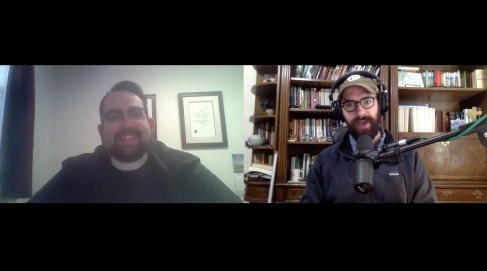
This week on the Strangely Warmed podcast I speak with Tim Ward and Sarah Locke about the readings for the Easter 2B (Acts 4.32-35, Psalm 133, 1 John 1.1-2.2, John 20.19-31). Tim is the pastor of Restoration UMC in Reston, VA and Sarah is the pastor of Christ UMC in Staunton, VA. Our conversation covers a range of topics including red Christianity, the “perfect” church, God’s agency, unity vs. uniformity, witnessing by listening, the failure of statistics, BBT’s Learning To Walk In The Dark, reclaiming Eastertide, and hanging on to sins. If you would like to listen to the episode or subscribe to the podcast you can do so here: Witnessing By Listening

Art-of-listening_v1

Three Words

1 Corinthians 15.1-11

Now I would remind you, brothers and sisters, of the good news that I proclaimed to you, which you in turn received, in which also you stand, through which also you are being saved, if you hold firmly to the message that I proclaimed to you – unless you have come to believe in vain. For I handed on to you as of first importance what I in turn had received: that Christ died for our sins in accordance with the scriptures, and that he was buried, and that he was raised on the third day in accordance with the scriptures, and that he appeared to Cephas, then to the twelve. Then he appeared to more than five hundred brothers and sisters at one time, most of whom are still alive, though some have died. Then he appeared to James, then to all the apostles. Last of all, as to one untimely born, he appeared also to me. For I am the least of the apostles, unfit to be called an apostle, because I persecuted the church of God. But by the grace of God I am what I am, and his grace toward me has not been in vain. On the contrary, I worked harder than any of them – though it was not I, but the grace of God that is with me. Whether then it was I or they, so we proclaim and so you have come to believe.

Ah, the strange and bewildering day we call Easter. All of the Bible, all of the church, all of Christianity hinges on this day: Easter, Resurrection, out of death into life. If this story were not in scripture, we would’ve thrown our bibles away a long time ago. If the Bible does not tell us this story, it tells us nothing.

Easter is the one day when all of the hopes of the past are made manifest in the present. Today we are a church unlike many of the other Sundays in the year. On Easter our pews are filled with those deeply rooted in their faith, with those filled with questions, and with those filled with doubts. So, what does one say on a day like today? How might I meet each of you where you are and provide words of truth and challenge and grace? What can I say today?

The truth: He is risen! Hallelujah!

Graveside funerals make me nervous.

If we have a funeral in the sanctuary, most things can be taken care of and are under control. We can set the temperature, clear the parking lot, and truly celebrate the many ways in which God moved in and through the person now dead.

But when you’re at the graveside, everything is out of control. You might be driving in the sunshine while in the funeral procession, but the minute you hit the cemetery the clouds roll in and the rain begins to fall. You might have your bible open to a particular passage but then the wind will blow and you’ve gone from 1 Corinthians to Exodus. Or, as has happened to me far too many times, you’ll stand over the casket with dirt in your hands and ask everyone for a few moments of silence only to hear the faint but nevertheless decisive moo of a cow from a nearby farm.

Cemeteries are often in the strangest places. I’ve buried people in perfectly manicured military compounds where you’ll never get lost because there is always a solider ready to lead you out. I’ve buried people in cemeteries stuck in the middle of residential neighborhoods, next to a playground, and across the streets from a cow farm. I’ve even buried someone’s ashes in the backyard of a beloved family member.

And because they are often in the strangest places, they can be difficult to find.

Years ago, a young pastor was asked to do a burial service for an older man from the community who had no friends, and no family. The pastor was unable to speak with anyone about the man’s life, but he wrote a decent funeral sermon nonetheless, and when the appointed day arrive he got in the car and headed out for an old country cemetery out in the middle of nowhere.

He drove and drove, and though he did not want to admit it to himself, he was lost. He tried searching for the address on his phone, and he eventually stopped at a gas station to ask for directions. When he finally pulled up he was over an hour late.

As he drove across the open and barren landscape, the hearse was nowhere in sight, but the backhoe was next to the open hole, and there was a group of men resting under the shade of a nearby tree. The young pastor parked his car and walked over to the open grave and embarrassingly discovered that the lid was already in place and dirt had been already been sprinkled across the top.

The guilt welled up within the young preacher and he opened up his bible and began preaching like he never had before. He cried out to the heavens with clenched fists, he proclaimed the promise of resurrection, and he did so with a conviction rarely found in his Sunday delivery.

After his final “amen” he returned to his car while still sweating from his passionately delivered sermon. And just before he opened the door, he overheard one of the men under the tree say to the others, “I ain’t never see nothing like that before, and I’ve been putting in septic tanks for twenty years.”

holy-week-easter-title-still

Today is Easter and it is also April Fools’ Day. This is the first time both days have fallen together in 62 years. And for months I’ve been reading articles, and listening to other pastors, expressing the importance of incorporating humor in today’s worship service. And, of course, Easter is a joke – the greatest joke God ever played on the devil. But to trivialize this day, of all days, does a disservice to the decisive change made possible by this day. It belittles the death of Jesus to graveyard jokes about septic tanks. It makes the resurrection optional instead of essential.

If God didn’t raise Jesus from the dead, if the bodily resurrection isn’t real, then we are wasting our time. It’s as simple as that. The resurrection of Jesus from the grave is the vindication of all his teaching. It is what makes the sermons and the stories intelligible, it is the light in the darkness, it is the way we follow the way.

Without the resurrection, we have no business loving our neighbors, or enemies. Without the resurrection it would be absurd to teach our children the call to turn the other cheek. Without resurrection everything in the New Testament falls apart.

The world does not recommend doing any of this Christian stuff. It is strange and bizarre to give clothes to those who are naked, and to feed those who are hungry, and to befriend the friendless. We don’t do these things as Christians not simply because God tells us to, or because it’s the right thing to do. We do them because God raised Jesus from the dead!

The empty tomb is everything. It is funnier than any joke, it is more serious than any death, it is more majestic that any mountain, it is deeper that any valley. It is everything.

Without resurrection, I’ve got nothing to say. Without Easter, nothing that Christians do makes any sense.

“He is risen!” are the three precious words found at the heart of our identity. They changed, and continue to change, everything. They are the three words handed to Paul, and Paul to the Corinthians, and eventually to us.

Some of you know that I have an annual tradition of taking this cross out of the sanctuary on Good Friday, throwing it over my shoulder, and walking through town. I started this because years ago I was struck by often we keep our crosses tucked away in our sanctuaries, hidden among the altars and rafters. And so, for the last five years, I’ve marched around town with a cross on my back, beckoning all who encounter to remember that Christ died for them, and for the world.

On Friday I made my way across our parking lot with the cross thinking, somehow, it was heavier than last year, and eventually I made it to Route 1. I began by heading north, politely waving at cars and passers by, and I think it freaked some people out. There were many open mouths and puzzled expressions in regards to a bearded young man, all dressed in black, with a cross on his back.

But I kept walking.

After about twenty minutes there was a car to my left that slowed down as it came closer, and eventually pulled in front of me and into the closest parking lot. A man quickly exited his car and started walking toward me. After 20 minutes of walking I felt like God’s was giving me the opportunity to share the gospel story. In the man’s eyes I could sense a deep need and longing, and I was just the pastor to provide. So when he stood in front of me and said, “Can I ask you a question?” I replied: “Of course, my son, ask away.” To which he asked, “Do you know where the post office is? I can’t find it.”

“Yeah,” I said, “Its back a few blocks on the left… right across the street from my church.”

Another 20 minutes of walking passed by as a few drivers kindly honked their horns in support. When all of the sudden I noticed a car full of teenagers on the other side of the road, in which they were pointing at me. The driver’s made a quick u-turn, and then they stopped in the middle of Route 1 so that half of the kids could lean out their windows to take even more pictures. As they began driving away I heard one of the girls say, “Imma put him on my Instagram!”

Eventually, after walking for more than an hour, I started heading back toward the church, wondering if carrying the cross had really made any difference. I thought about all of the people who saw the cross and whether or not it made them reflect on what Jesus did for them. I wondered about how many of them even knew what I was doing.

Shortly before I got back to the church property, I saw a young man running toward me in full workout gear. He had headphones on that were clearly pumping some serious music and he was bopping his head back and forth. I assumed that he would run right past me, but he stopped briefly on the sidewalk, gave me a double index finger point, winked, and then said, “He is risen!” and then he kept running.

He said, “He is risen!” like it was a joke.

When the event of the resurrection comes upon us, like it did Paul, when we are encountered by the living God, raised from the dead at Easter, our world is rocked and we are changed forever.

resurrection-Easter-edit[1]

It’s no joke. The resurrection is a reminder that we can never go back the same way we came. Those three words are the beginning of God’s in-breaking in the world, they are the witness to God’s unending love, they are nothing short of grace.

Easter is world shattering. It is deeply disruptive. It changes everything, now. Easter is the totality of the Good News. The story of the empty tomb is what radically reshaped Paul’s life, and, hopefully, it’s what has reshaped ours as well.

On Easter we celebrate the great power and mercy of God. In Easter we see how God took something like the cross, a sign of death to the world, and made it into the means of life. On Easter God transformed the tomb the same way that he did on Christmas in a virgin’s womb; God made a way where there was no way. On Easter God changed the world.

And all it took was three words.

So come and taste the goodness of God in the bread and in the cup. Listen for the truth of salvation in the songs we sing and the prayers we pray. Witness the power of Easter in the people in the pews next to you. Hear the Good News, the best news. Hear the three most important words you will ever hear: He is risen!

Hallelujah!

Are You Afraid Of The Dark?

Mark 16.1-8

When the Sabbath was over, Mary Magdalene, and Mary the mother of James, and Salome bought spices, so that they might go and anoint him. And very early on the first day of the week, when the sun had risen, they went to the tomb. They had been saying to one another, “Who will roll away the stone for us from the entrance to the tomb?” When they looked up, they saw that the stone, which was very large, had already been rolled back. As they entered the tomb, they saw a young man, dressed in a white robe, sitting on the right side; and they were alarmed. But he said to them, “Do not be alarmed; you are looking for Jesus of Nazareth, who was crucified. He has been raised; he is not here. Look, there is the place they laid him. But go, tell his disciples and Peter that he is going ahead of you to Galilee; there you will see him, just as he told you.” So they went out and fled from the tomb, for terror and amazement had seized them; and they said nothing to anyone, for they were afraid.

I was hiding in the tomb for what felt like hours, but in reality it had only been 30 minutes, on Easter Sunday more than a decade ago. It was the church’s Easter Sunrise service, out on the lawn, much like ours, though we had a fake tomb, with a fake stone, around which everyone had gathered.

I arrived particularly early that morning because it was my job to dress like an angel and hide in the tomb until the right moment, in which I would break down the stone and declare the resurrection of Jesus. The pastor and I had concocted this plan together, and nobody else knew.

So there I sat crumpled up in the corner while failing to keep my wings nice and clean. I hadn’t anticipated the walls being so think which made it difficult to hear the pastor, and more importantly to hear the keyword that would be my signal.

When he said something approximate to what we had agreed upon, I turned on the fog machine. You know, we wanted to create the right sort of atmosphere. But I was in a very small and tight space, and the space filled with smoke far sooner than I had anticipated, and I misheard the pastor and he was not yet ready for the theatrics.

So I did what anyone would have done, I tried to keep quiet. But the more the smoke billowed around me, the more I felt the need to cough until I could no longer hold it in, and like a drunken fool I kicked down the stone blocking the entrance, and fell into the mud, while hacking up a lung.

While the smoke dissipated, I took in the scene around me. The sun was just peaking above the tree line, a few dozen dedicated Christians were huddled together for warmth, the pastor was standing off to the side with his sermon in his hands, and all eyes were on me. I don’t know quite what I looked like, but I’m sure I looked more like a vagrant who slept in the tomb overnight than an angel prepared to make the greatest declaration in the history of the world.

For a few moments of silence I panicked – I was supposed to offer a brief monologue pertinent for the occasion, but I couldn’t remember any of it. So I just stammered something like, “He’s alive!” And then I ran.

If anyone left that day feeling anything but bewilderment, I’m sure they were afraid.

Much has been made about the women fleeing from the tomb in fear. Some say that the gospel writer did not intend to end the story this way but that he either died mid sentence, or the page was ripped at this exact place. Others have remarked that many people fear the divine in the bible, and the women are just living into the reality of what it’s like encountering something greater than yourself.

We don’t know exactly. All we know is that they left in fear.

crosses-sunrise-690x353

But why fear? For many of us, fear is the last thing we think about on Easter. Instead Easter is about the lilies, and the eggs, and the giant bunny. Easter is about color coordinated children, and big lunches, and the good ‘ol hymns. You know, like Christ The Lord Is Risen Today, and In The Garden. Those hymns are about joy and hope and praise and glory. Nothing about fear.

But the little we know of the first Easter, is that the very first people to experience news of the resurrection responded in terror.

We are told that in life there are only two truths: death and taxes. And if we’re honest, both of those truths scare us. Jesus tells us what to do about taxes – give unto Caesar what belongs to Caesar. But death, death is still an absolute. Or at least it was until Easter.

And that’s why the women are afraid.

If Jesus, the one crucified by colluding governmental and religious leaders, the one who had been crushed by the forces of evil, if this Jesus was now raised from the dead, now vindicated by the mighty act of God to bring new life, if God stepped in and reversed all of time and history, then the women at the tomb knew enough to know that everything in the world had been turned upside down, and that nothing would ever be the same again.

If the one truth you knew to be true was no longer true, how do you think you’d respond?

When you take the time to think about it, being met by a man who was once dead is a truly frightening proposition. It seems more like a horror movie than a polite Sunday sermon.

If Jesus was beaten, crucified, dead, buried and nothing more, then the world is right: Evil is all powerful. Violence wins. All life concludes in cemeteries.

But if Jesus is raised, if the tomb is empty, if God has the final Word, then there is reason for the women to run in fear, there is reason for all of us to be afraid. God is on the move! Everything about what we think we know to be true is wrong. He’s alive!

The frightening truth about the resurrection is that we, like the women that first Easter, will not leave the same as we arrived. Every Easter we are confronted by the scary truth: God really is in control.

That’s a frightening thing to accept because in the resurrection we discover God’s truth; that our dependence on all sorts of earthly things mean nothing. Life, beauty, security, wealth, power, our careers, property, even our families – they pale in comparison to the promise of the empty tomb.

Everything has been made new!

It is good and right for us to be here in this space at this time to celebrate Easter. Don’t get me wrong, I love worshipping in the sanctuary, but here, right now, we are participating in an even deeper truth. Jesus’ resurrection happened in the dark, when no one was around. Jesus was given new life in the tomb just like he received life in his mother’s womb. It happened in the scary mystery of darkness.

Easter was, is, and forever shall be the height of joy, it is God’s love and majesty made manifest in a new reality. Death has been defeated. We have reason to celebrate.

            But Easter is also a reminder that God has inaugurated a strange new world, one in which all of our priorities have been flipped upside down.

So the question remains: Are we afraid? If not, then perhaps we should be. Amen.

Yet

Psalm 22.1-11

My God, my God, why have you forsaken me? Why are you so far from helping me, from the words of my groaning? O my God, I cry by day, but you do not answer; and by night, but find no rest. Yet you are holy, enthroned on the praises of Israel. In you our ancestors trusted; they trusted, and you delivered them. To you they cried, and were saved; in you they trusted, and were not put to shame. But I am a worm, and not human; scorned by others, and despised by the people. All who see me mock at me; they make mouths at me, they shake their heads; “Commit your cause to the Lord; let them deliver – let them rescue the one in whom he delights!” Yet it was you who took me from the womb; you kept me safe on my mother’s breast. On you I was cast from my birth, and since my mother bore me you have been my God. Do not be far from me, for trouble is near and there is no one to help.


Last night we gathered to remember Jesus’ final night with his friends. We, like they, broke bread together and shared a cup in order to remember what Jesus did.

And while we were together we talked a lot about memory – What stories do we hold on to – What stories do we want to forget?

Part of our memories, what makes them such, is our ability to have something memorized. Think, for instance, of a beloved story you like to tell, or even one you like to hear. Think about a favorite song or movie. Can you remember the words? Can you repeat them just like the singer or the actor? We memorize that which is valuable and important to us. We internalize particular words or phrases from those whom we love and we cherish the memories they become.

I have memorized many anecdotes from my family. I could stand here tonight and fill the evening with hilarious stories from just one of my grandmothers, and come back tomorrow and do it again without repeating anything twice. Those stories are important to me, and because they are part of my family’s history, they are all the more important. Such that at any given moment, should it be required, I can pull the avenues of the narrative to the surface, and I could share the story.

During the time of Jesus life, people had profound memories of well. Some things, regardless of the sands of time remain the same. Get people together today, or 2000 years ago, for a meal and the stories start to flow. But there was a level of memory present during the time of Jesus that has all but disappeared these days.

Jesus, and his contemporaries, knew the scriptures.

And when I say they knew them, I don’t mean they could open up a bible and find the book of Malachi, or they could list of the books of the bible in order at any given notice. No, they had scriptures memorized.

As a young Jew around the first century Jesus, like many others, would pray the psalms out loud once a week. All of them. From 1 to 150. The psalms were the spoken word of the people, they were on their hearts, minds, and lips, all day long. Praying through the psalms was as natural to them as watching bad sitcoms are to us. It was part of their collective identity.

Such that when Jesus was hung on a cross to die, his final words were these: “My God, My God, why have you forsaken me?”

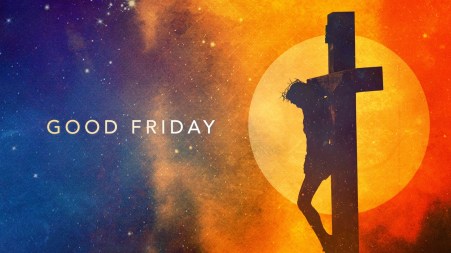
GoodFriday

It is difficult and challenging to contemplate our Lord saying those words from the cross. We might be a little more comfortable with John’s story (It is finished) or even Luke’s version (Into thy hands I commit my spirit). But according to Matthew and Mark, Jesus’ final earthly words were “My God, my God, why have you forsaken me.”

When I need to offer a grieving family a hopeful word, I often turn to Psalm 23, that beloved collection of verses that some of us have memorized. The Lord is my shepherd, I shall not want, he maketh me to lie down in green pastures, he leadeth me beside still waters, he restoreth my soul. They are comforting words. But rarely, if ever, have I pulled out Psalm 22.

It’s difficult just to get past the first verse. My God, my God, why have you forsaken me? We are pulled to the cross, to the torment and to the agony of Jesus yelling out into the void moments before his death.

Jesus suffers. It is both disconnected and disconnecting. In suffering on the cross he was made completely alone. Entirely and utterly alone. In this moment we are welcomed into the divine in a way not parsed out in other places of the bible. Here on the cross, in the cry of dereliction we experience the duality of Jesus’ divinity and humanity, we experience the abyss of fear and the hope of things unseen, we confront the elect and the reject.

And yet here, on the cross, with his final moments, Jesus turned to prayer. Not a final sermon on the marks of a faithful life, not a moment of divine healing. Jesus prays.

Prayer corresponds with experience. It is the way we process the moment we are in with something larger and more enduring. Prayer is what enables us to scale the impossible mountains of torment that threaten to close us off from all we have known, and prayer is what enables us to see the truth of our lives in terms of what has gone before and what is yet to come.

Of all the things we do as disciples, worshipping the crucified Jesus is possibly the strangest. It is only something we can do through the power of prayer. It is also why tonight’s worship is usually the least attended of all the worship services in a year. Tonight we glorify the Son of God who was degraded by his fellow human being as much as it is possible to be, by decree of both church and state. We worship the one who died in a way designed to subject him to utter shame and to be erased from human memory.

It is a story realer than real. It cannot be spiritualized away, nor can it be fully comprehended by we finite people. The climax of the gospel takes place in the midst of political and economic life, it is shocking and violent, it threatens the prevailing authorities, and it results in people two millennia later worshipping God nailed to a cross.

Good-Friday-Image

There is a paradox in our worship tonight, a paradox as difficult as Jesus’ final words. The paradox is that the generosity of God means the crucifixion of the Son. In Him both the godly and the ungodly are justified.

According to the strange and mysterious wisdom of God, it is in the crucified death of Jesus that all of the cosmos is altered (and altar-ed). This death makes our lives possible. This death is what makes the Christian experience intelligible. This death is at the heart of who God is.

If you’re anything like me, you’re eager to jump to Easter. Enough with the crucifixion! Give me resurrection! But you can’t have one without the other.

We cannot ignore the challenging words of Jesus from the cross. We cannot imagine away, or explain away, the overwhelmingly jarring nature of the Son of God crying out to the Father in fear.

But of course, that’s not where the Psalm ends.

Psalm 22 contains what it possibly the greatest “yet” in scripture… “O my God, I cry by day, but you do not answer; and by night, but find no rest. Yet you are holy, enthroned on the praises of Israel. In you our ancestors trusted; they trusted, and you delivered them.”

On that “Yet” hangs both the Old and New Testament. In that “Yet” we confront the true paradox of the crucifixion: that Jesus is both elected and rejected, that he knows sorrow and hope, that he dies and will rise again.

Jesus knew the power of “yet.”

But we must wait for Easter. We have to take the terrible time to sit in the shadow of the cross, to see in this first century man all the fullness of God, to recognize our sin in him nailed to the tree.

Good Friday, unlike just about anything else we do as a church, cannot be tied up neatly in a bow. We can’t fast-forward to Sunday morning. We, like the disciples in the distance, have to look at our Lord on the cross and wait. We have to wait for God to do a new thing. We have to recognize that this is what God did for us, and not the other way around.

We will leave this place tonight under the cover of darkness. And yet… Jesus is the light of the world.

The words of our prayers and hymns will fall silent. And yet… God cannot be silenced.

The shadow will feel darker than ever. And yet…

What Did Jesus Do? > What Would Jesus Do?

1 Corinthians 11.23-26

For I received from the Lord what I also handed on to you, that the Lord Jesus on the night when he was betrayed took a loaf of bread, and when he had given thanks, he broke it and said, “This is my body that is for you. Do this in remembrance of me.” In the same way he took the cup also, after supper, saying, “This cup is the new covenant in my blood. Do this, as often as you drink it, in remembrance of me.” For as often as you eat of this bread and drink the cup, you proclaim the Lord’s death until he comes.


Years ago I was in Michigan helping a church out for a summer. The church was massive in size and in ministries. They had hundreds of people in worship every week and were deeply involved in their community.

I did my best to help in every area of the church, including worship and preaching. However, they had plans for everything, including who would be preaching on what every Sunday six months in advance. So some shuffling was done, and I, the faithful intern, was given an opportunity to preach.

It so happened that I would be preaching on the first Sunday of July, and there would be communion.

holy-week

As I said, this church had everything planned out. But not only the text, and the sermon subject – they had metrics and data for worship attendance going back ten years and they used this information to provide necessary items in the sanctuary. That had it so fine-tuned that they were able to print an accurate number of bulletins +/- 10, they knew how many parking attendant workers they would need, and finally, they knew how many pieces of bread would need to be pre-cut for communion.

Here at Cokesbury we serve by intinction, in which I tear off a piece of bread from a common loaf and offer it to every person in worship. But at that church, years ago, they pre-cut every slice of bread, and had them stacked in baskets for people to pick up on their way to the altar where the single cup could be found.

And so I preached, and we moved to the table, the elements were blessed, and then the congregation was invited forward. However, no one thought to augment the numbers of bread pieces, and, as the shiny new intern, more people came to hear me preach than they anticipated.

As the gathered people lined up in the center aisle and walked forward to receive the body and blood of Jesus, it was abundantly clear that we were going to run out of Jesus. So, when the last piece was picked out of the basket, I walked back up to the altar where the actual loaf we blessed was, I ripped in in half, and I started giving Jesus so people.

And while I was standing there one of the lay leaders from the church leaned over and whispered into my ear, “Are we even allowed to do this?”

Are we even allowed to do this?

communion_elements

For I received from the Lord what I also handed on to you. So Paul writes in his letter to the church in Corinth. I gave you what was given to me. That on the night in which Jesus was betrayed he took a loaf and he took a cup and he said do this in remembrance of me.

Memory is a funny thing. It connects us to the past, in both good ways and bad. We can all reflect on those positive moments from our lives, and we can also remember the visceral pain we have experienced.

We cannot escape our memories. Memory is everything.

Paul cherished the memory he received, but he was concerned with the Corinthians ability to remember how transforming the meal was for their community. Like counting the number of bread pieces to such a degree that they no longer gave life, the Corinthian church was partaking in the meal without remembering why.

On any given Sunday, or even a Thursday night, at best the church is called to remember. Remember what God did for God’s people. Remember Jesus’ words to his disciples. Remember how God has showed up in your life.

Remembering our memories is strange, particular in the time we are living in. Many families and groups are separated in ways impossible in the past – we are separated by geography, estrangement, or even through dementia. And because of all these weird divisions, the art of memory sharing is dying. Memory, however, is the glue that keeps us together, and without it we don’t know who we are.

I’ve had to do a lot of funerals as a pastor, and whenever a family and I sit down to discuss the arrangements; I will ask questions to get the conversation going. “What was your mother passionate about?” “What stories did your grandfather tell you about his childhood.” “What’s a the story about your wife that you’ve told the most?” “How did your husband pop the question?”

And then I will sit back and listen.

And throughout all of the funerals I’ve prepared, and all of the families I’ve listened to, there are two things that have happened every single time.

No matter what the person was like, or how old they were, or even where they lived, at some point some one in the room always says, “I never knew that.”

Children make the comment about one of their parents, a brother will make the comment about his sister, and I’ve even heard a wife make the comment about her husband.

Something is shared, a deeply personal and important memory, and someone’s response is “I never knew that.”

Either we don’t remember these important things, or the memory of them was never shared. It is always a troubling and difficult moment to process in my office in which someone realizes they didn’t know the person as well as they thought they did, and now it was too late to do anything about it.

In addition to the “I never knew that” comment, there is always a moment in which someone shares a funny story about the person we are about to bury, and 99% of the time, the story takes place around a dinner table.

I don’t know what it is exactly, but there is something mysterious about the dinner table. Perhaps it’s the one place where entire families gather together for a finite period of time, maybe it’s the sharing of food that compels us to share stories, or maybe it’s just the wine that get passed around. At the table memory is shared unlike anywhere else.

Maundy-Thursday3-1080x675

As disciples of Jesus, we believe that whenever we gather at this table, or dare I say any table, Christ is with us breaking the bread and pouring the wine so that we too can be his body redeemed by his blood.

When we break bread, when we pass the cup, when we tell stories, we are connected with the signs and symbols that tell us who we are and whose we are. It is around the table the particularity of bread slices, or the shame in admitting “I never knew that,” disappear. Because at the table things begin to change.

At the table signs of memory are everywhere. In the water we remember our own baptisms, we remember the great stories of scripture where God’s people were delivered through water, we remember the living waters Jesus offers us. We see wedding bands are reminded of a couples’ promise, and God’s promise to us.

            At the table, all sorts of ordinary things become extraordinary.

We break bread, we share the cup, and we remember and retell the story of Jesus death, and resurrection. But it is more than just passing on a story – it is contemplating a mystery.

For years it has been fashionable in certain Christian circles to wear a bracelet with the acronym WWJD on them. WWJD of course meaning: What Would Jesus Do? It is used like a talisman, a final reminder of Jesus’ morality before we make a choice or a decision. And for as helpful as the WWJD reminder can be, it is also inherently problematic. It is problematic because, at the end of the day, we fundamentally can’t do what Jesus did, and that’s kind of the point.

We don’t gather to contemplate how Jesus would respond to a certain situation, we don’t wonder about what Jesus would do, instead we ask ourselves What Did Jesus Do?

Because that question, and the struggle to answer it, is at the heart of the mystery we call faith. This night, tomorrow night, Easter Sunday, every Sunday, they’re not about what we should do. It’s about what Christ did.

The Christian life is predicated on a story handed to us, a story about a poor Jewish rabbi named Jesus. It is Jesus’ story that re-narrates and re-navigates our story. We repeat it again and again and again because is not only reinforces our memory, but it also becomes a proclamation, it is a witness.

We do not gather here tonight for ourselves. We are here because at the table we discover God’s story for us, and not the other way around.

            So, what did Jesus do?

On his final night, while surrounded by his closest friends and disciples, one of whom who betray him and another would deny him, he took an ordinary loaf of bread. He gave thanks to God, and then he broke it. He looked at his friends and said, “This is my body that is for you. Do this in remembrance of me.” In the same way he then took the cup, and said, “This cup is the new covenant in my blood. Do this, as often as you drink it, in remembrance of me.”

Let us then remember…

Jesus is Back, Jack!

strangely-warmed-spreaker-header

This week on the Strangely Warmed podcast I speak with Teer Hardy and Jason Micheli about the readings for the Resurrection of the Lord [Year B] (Isaiah 25.1-9, Psalm 118.1-2, 14-24, 1 Corinthians 15.1-11, Mark 16.1-8). Teer serves as the associate pastor at Mt. Olivet UMC and Jason is the executive pastor of Aldersgate UMC (both in Northern Virginia). Our conversation covers a range of topics including bad impressions, shout outs to Scott Jones, bible translations, Easter as NOT the celebration of spring, God’s time, the challenges of recording live, Paul’s little Easter, female preachers, and God as an iceberg. If you would like to listen to the episode or subscribe to the podcast you can do so here: Jesus is Back, Jack

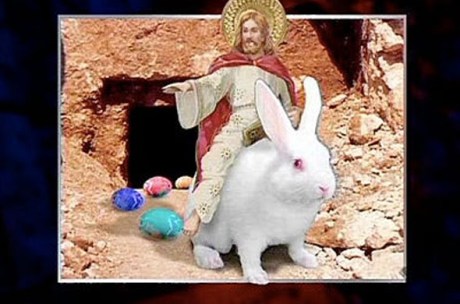
jESUS AND EASTER BUNNY


An Exodus For The Rest Of Us

strangely-warmed-spreaker-header

This week on the Strangely Warmed podcast I speak with Teer Hardy and Jason Micheli about the readings for the The Liturgy of the Passion [Year B] (Isaiah 50.4-9a, Psalm 31.9-16, Philippians 2.5-11, Mark 14.1-15.47). Teer serves as the associate pastor at Mt. Olivet UMC and Jason is the executive pastor of Aldersgate UMC (both in Northern Virginia). Our conversation covers a range of topics including talking about ourselves as little as possible, the freedom to fail, memorizing scriptures and prayers, an accursed way to die, shame, the gospels as television channels, the nude dude, and disappearing from the story. If you would like to listen to the episode or subscribe to the podcast you can do so here: An Exodus For The Rest Of Us

J

Make The Church Weird Again

Jeremiah 31.31-34

The days are surely coming, says the Lord, when I will make a new covenant with the house of Israel and the house of Judah. It will not be like the covenant that I made with their ancestors when I took them by the hand to bring them out of the land of Egypt – a covenant that they broke, though I was their husband, says the Lord. But this is the covenant that I will make with the house of Israel after those days, says the Lord: I will put my law within them, and I will write it on their hearts; and I will be their God, and they shall be my people. No longer shall they teach one another, or say to each other, “Know the Lord,” for they shall all know me, from the least of them to the greatest, says the Lord; for I will forgive their iniquity, and remember their sin no more.


I’ve been in ministry for roughly 5 years and I’ve finally figured it out. After all the sermons and all the meetings, after all the prayers and preparation, I know how to fix all the church’s problems.

It’s time to do a new thing.

Now, before we get to the solution, we need to talk a little bit about the problem that needs fixing. Churches everywhere, not just here at Cokesbury, are suffering under what I will call the paralysis of analysis. We spend far too much time looking at what we’ve done, evaluating past strengths and weaknesses, such that we don’t spend enough time looking forward. We don’t even ask if God is doing a new thing. Instead we assume that God did all the things God was going to do, and if it worked in the good ol’ days then it should certainly work now.

Here’s an example: Communion

Two weeks ago, on the first Sunday of the month, we had communion like we usually do. I stood here at the front of the sanctuary, and I prayed for God’s anointing on the bread and the cup. We all prayed together, we stood together, and we began feasting together.

One by one you came forward with outstretched hands recognizing the incredible gift that you were receiving. I took the bread, placed it in your hands, you dipped it in the cup, partook of the meal, and returned to your pews.

It was a holy thing.

However, there was a young family with us in worship two weeks ago, a family who has never ever been to church. They sat patiently during the service, though I’m sure that a lot of what we did must’ve sounded and felt strange. But nevertheless, when the time for communion arrived, they stood up like everyone else, walked to the front, and prepared to celebrate the joy of the Lord’s Supper.

I reverently handed a piece of bread to the mother, who bowed penitently before dipping the bread in the cup. I then knelt down close to the floor to hand a piece of bread to her son, but the longer I held it in front of him the longer he stared at it. I motioned for him to take it, which he eventually did, but before dipping it in the cup he frantically looked between his mother’s eyes and the brim of the chalice back and forth, back and forth.

When finally I said, with every bit of pastoral bravado, “My son, this is Jesus’ gift for you.” To which he said, “Yeah, but you said this is his blood, and I don’t know how I feel about drinking it.”

            And he promptly swallowed the un-dipped piece of bread, and jogged back to his pew.

communion_elements

            We have been doing what we do for so long that many of us neglect to think, at all, about what we are doing.

We, in many ways, are exactly like the Israelites during the time of the prophet Jeremiah. The days are surely coming, says the Lord, when I will make a new covenant with the house of Israel and the house of Judah. It will not be like the covenant I made with their ancestors when I took them by the hand to bring them out of the land of Egypt – a covenant they broke.

God had to do a new thing, not because there was anything inherently wrong with the first covenants, but there was something wrong with the participants within the covenant. Their faithfulness, their days of living as the people of God, had become so repetitive, that the Law God offered them was nothing more than a clanging cymbal, instead of the lifeforce it was meant to be.

Many of them followed the Law, they ate the right food at the right times in the right places, they abstained from foreign worship, and they wore clothes without mixing fibers, but it was done simply because that’s what they were supposed to do.

They were going through the motions.

They, to use God’s analogy, were like a spouse who no longer remembered what drew him or her to the marriage in the first place. They were waking up every morning to make breakfast, rushing to get the kids out the door, and maybe even stopping to give their beloved a kiss on the cheek, but without love, without intention, without grace.

For the people of God during the time of Jeremiah, it was all about the external and rarely about the internal. It was assumed that if you did all the right things, life would work out accordingly. Day to day experience was rationalized through objective realities – children exist to help the family, the community exists to maintain order, the worship of God exists to move life along.

There was no “why?”

But this is the covenant that I will make with the house of Israel after those days: I will put my law within them, and I will write it on their hearts; and I will be their God, and they shall be my people. No longer shall they teach one another, or say to each other, “Know the Lord,” for they shall all know me, from the least of them to the greatest, says the Lord; for I will forgive their iniquity, and remember their sin no more.

God looked out on the people, a people for whom the law was written on stones and parchment, a people who did what they were told without it providing life, and decided the time had come for a new thing.

The days of laws written on stone came to an end. There would be no need to write them down for all to see and few to follow.

Instead of attempting to adhere to a code of do’s and don’ts, instead of the Law being the thing they worshiped, instead of the marriage dissolving into routine rather than romance, God writes the law on their hearts, on our hearts.

No longer would the people need to shout at one another until they were blue in the face, “Know the Lord!” No longer would the marriage partner scream at the spouse, “Do your duty!” No longer would the people walk around as if God wasn’t there with them all the while.

This was the beginning of a new day, one in which all people would no longer know about God, with the right words and right theology. Instead they would know God, with all the intimacy needed, in which the “why” would become more important than the “what,” in which a new covenant was established.

            So now to the solution… The time has come to embrace the weird.

WEIRD

If you take a step back from all of this, from the pageantry and the pedagogy, from the liturgy and the lighting, being the church is a pretty weird thing. We take time out of our schedules every week to sit in a strangely decorated room, to listen to somebody wearing a dress talk about texts that are far older than even the country we’re in, and then we do the even weirder practice of pouring water on people’s heads and eating a poor Jewish man’s body and drinking his blood.

We are pretty weird.

But, because Christianity has become so enveloped by the world, we often see and experience what we do as being normative. We make assumptions about ourselves and others based on the fact that this is “what we do.”

But if we only focus on “what we do” instead of “why we do it” then we neglect to encounter the weirdness of who we are.

The time has come to make the church weird again. To embrace all that separates us from the expectations of the world. In no other place, in no other gathering, do we willfully consider how far we have fallen from what we could be. In no other arena of our lives do we say, and believe, that there is something inherently powerful about gathering even just to sit in silence for a few moments. In no other community can we find the power and the bravery to tear down injustice and overthrow corruption and evil.

28575700_10155147927847797_2581309506758064640_n

The time has come for us to re-evaluate our “whats” and begin to shore up our “whys.” Instead of going through the motions of our faith, instead of taking the church for granted, we have to ask ourselves “Why are we doing all of this?” “What does this have to do with the kingdom of God?” “How does the church make tangible the new covenant of God?”

If we can’t answer those questions, then we need to dive deep into the “why.”

            Better yet, we should, at the very least, start with our “why.”

Why are we here? Are we here because we don’t have certainty about anything else and we’re looking for answers? Are we here because we’ve always gone to church and we don’t know how to live any other way? Are we here hoping to get something out of church?

Or, are we here because we know God is getting something out of us? Are we here not for ourselves, or our families, but for the Almighty Father, Son, and Holy Spirit? Are we here because God found us when we were lost and showed us a better way?

The people during the time of Jeremiah were lost. They were lost in themselves, lost in their exile, even lost in the Law. They were a people of “what.”

            God saw their suffering, God saw their heartless practices, God saw their injustices, and ultimately saw it fit to do a new thing. The new covenant was inscribed on the hearts of God’s people, such that they would remember the “why.”

Perhaps God’s Spirit is moving again in such a way that the new covenant will break our hearts of stone and we might know that God is ours, and we are God’s. Maybe the time has come for us to question every little thing we do as a church so that we break free from our bondage to doing what we’ve always done such that we can ask why we do what we do and start over with God’s new covenant.

Perhaps the time has come to make the church weird again. Amen.

Look At It And Live

strangely-warmed-spreaker-header

This week on the Strangely Warmed podcast I speak with Rev. Ben Maddison about the readings for the Fourth Sunday of Lent [Year B] (Numbers 21.4-9, Psalm 107.1-3, 17-22, Ephesians 2.1-10, John 3.14-21). Ben is an episcopal priest who serves as the rector of Holy Trinity Episcopal church in Wenonah, NJ. Our conversation covers a range of topics including serving a church in a post-Christian context, clergy collars, fiery serpents, the temptation of allegory, healing and scars, God’s agency, backsliding, and Fleming Rutledge’s The Crucifixion. If you would like to listen to the episode or subscribe to the podcast you can do so here: Look At It And Live

BM

The Not Top 10

Exodus 20.1-17

Then God spoke all these words: I am the Lord your God, who brought you out of the land of Egypt, out of the house of slavery; you shall have no other gods before me. You shall not make for yourself an idol, whether in the form of anything that is in heaven alone, or that is on the earth beneath, or that is in the water under the earth. You shall not bow down to them or worship them; for I the Lord your God am a jealous God, punishing children for the iniquity of parents, to the third and the fourth generation of those who reject me, but showing steadfast love to the thousandth generation of those who love me and keep my commandments. You shall not make wrongful use of the name of the Lord your God, for the Lord will not acquit anyone who misuses his name. Remember the Sabbath day, and keep it holy. Six days you shall labor and do all your work. But the seventh day is a Sabbath to the Lord your God; you shall not do any work – you, your son of your daughter, your male or female slave, your livestock, or the alien resident in your towns. For in six days the Lord made heaven and earth, the sea, and all that is in them, but rested the seventh day; therefore the Lord blessed the Sabbath day and consecrated it. Honor your father and your mother, so that your days may be long in the land that the Lord your God is giving you. You shall not murder. You shall not commit adultery. You shall not steal. You shall not bear false witness against your neighbor. You shall not covet your neighbor’s house; you shall not covet your neighbor’s wife, or male or female slave, or ox, or donkey, or anything that belongs to your neighbor.

Lent is a season of repentance and introspection. However, that doesn’t mean the liturgical season encourages navel-gazing – in fact it compels us to look at our lives individually and corporately. Lent almost forces us to ask, “How have I failed, and how have we failed?”

It is not an easy season in the life of the church.

In preparing for this Lent I was struck by the theme of covenants – both biblical and otherwise, and what they have to do with our faithfulness. Almost everyone here is familiar with what a covenant is, we’ve borrowed money, or rented an apartment, or purchased a car, all under the auspices of a contract. They exist because of a fundamental distrust that we have for one another and institutions, we use them to protect ourselves should the other not hold up their end of the bargain.

Yet the truest and deepest relationships are those built on trust – when we lovingly yield ourselves to the other with vulnerability and fragility. And that is precisely what God has offered us in the covenant – the vulnerability required for true trust.

ten-commandments-set-free-to-live-free_27594_banner_img

Confession time: I am prejudiced against Sunday School.

I can’t help it really – while growing up in the church, I had far more love for what we did in a room like this, than what happened in the Sunday School rooms. Participating in Sunday School required waking up earlier than usual, it forced us to rush through the typical morning rhythm, and then we’d be deposited in classrooms in which there were old smelly couches, fading biblical posters, and an assortment of discarded bibles.

Bless the teachers’ hearts: they tried to teach us about the bible… but it never really stuck. I can remember a lesson about David and Goliath, but all we talked about was how buff David looked in the pictures and we wondered aloud how long it would take us to look similarly.

I can remember learning about Abraham and the sacrifice of Isaac, and even though I now know that God provided a ram instead, at the time I was terrified of God and didn’t want to go back to church for a few weeks.

I can even remember learning about Jesus and Mary Magdalene, but the story fell a little flat when our teacher kept referring to her as a “lady of the night” which made Mary sound more like a vampire than whatever a lady of the night is.

Beyond the lack of theological depth, the thing that really drove me crazy about Sunday School was the fact that it felt way too much like regular school. We had a teacher, who took our attendance, assigned us particular seats, gave out homework, and even presided over pop-quizzes. And I understand that theological education is important, I went to seminary after all, but the way it was done for me resulted in my studying not to hear what God had to say, but for the promise of receiving a piece of candy if, for instance, I could find the book of Isaiah before anyone else in the room.

I could fill this entire sermon with Sunday School anecdotes, but the one event I remember most vividly was the day we were quizzed on the Ten Commandments. I knew they were a thing, I was pretty sure we had an embroidered version of them hung on the wall outside the sanctuary, but I had no idea what they were.

I sat there at the table with my blank piece of paper and I stared off into the distance for a long time. What does God command us to do? I probably wrote something about loving God, and loving neighbor. I might’ve even suggested that we’re supposed give our money to God. But when the time of our quiz came to an end I turned in my poor excuse of a quiz, and I failed.

There would be no piece of candy for tween-age Taylor that day.

Do you know all of the Ten Commandments, in order? If I gave each of you a piece of paper for a quiz, would you receive your piece of candy? How many of us have memorized God’s top 10?

When I was living in Durham, NC there was a period of time when people started placing the Ten Commandments on lawn-signs in their front yards for everyone else to see. I’d be riding my bike to class, and house after house, rather than wanting me to know who they would be voting for in the next election, wanted me to know that I’m not supposed to break the Sabbath, or worship any other god, or kill anyone.

It was around that same time, as it comes up again and again, that a sizable portion of the population began advocating for the appearance of the Ten Commandments in public buildings, like schoolhouses and local courthouses.

And I couldn’t help but think that God was using the surging publicity of the Ten Commandments to make up for my failure in Sunday School.

            Somehow or another, God was going to drill these commandments into my brain!

            But then I began wondering, was this God’s work, or was it ours?

Or, to put it another way: Were the commandments being used to provide freedom, or as a weapon?

Then God spoke all these words… Through a covenant, a promise to be our God, God delivers us, sustains us, heals us, and watches over us. God only asks that we follow ten simple rules. And we can’t do it.

Every single one of us in this room has broken a commandment (some of us more than others!) And yet, our failure to hold up our end of the agreement does not affect God’s commitment. It is in knowing that we fail, God loves us.

God is the one who establishes the covenant with us, not the other way around. No response, no bargaining on our part, was required. God binds God’s self to us knowing full and well how we will respond.

And the way we talk about the commandments, the way we quiz children, or place them in our yards, or desire them in our courthouses, makes a mockery of the gift that they are.

We make them more about us, than about God.

The Ten Commandments express the purposeful will of God for God’s people. In our limited imaginations we’ve made them out to be a list of what we can and cannot do. We’ve used them like a bludgeon against those who do not follow them.

But at the heart of the commandments, at the heart of God’s covenant with us, is the freedom to love God and one another.

Of course, there is a freedom to ignore the covenants, something we do all the time. All those signs in people’s yards, they were all facing away from those who lived in the houses. It was as if they wanted others to follow what they themselves had forgotten. Quizzing children on what the commandments say is a far stretch from helping them to be implemented. Displaying them in courthouses will not make people follow them any more than a speed limit sign will on a highway.

It’s incredibly ironic that many people want the Ten Commandments up in public in a country where divorce is over 50% (you shall not commit adultery), where we have more guns than human beings (you shall not kill), where capitalism is more important than community (honor the Sabbath), and where we spend more time worshipping celebrities than Almighty God (you shall have no other gods before me).

Public displays of religious affection in the form of the Ten Commandments will not change or transform this world.

But binding ourselves to them, holding each other accountable to these strange and life-giving realities, is the seed that results in a new garden of life. If we ignore them, we do so at our own peril, not because God is waiting with a whip to punish us, but because the teachings establish a way of being.

Living outside the commandments results in a life of isolation, individiualism, and apathy.

            But living in the commandments, writing them on our hearts rather than our walls, is the beginning of a trust that transforms everything else.

We might say, “What’s the harm in a little coveting?” Our entire advertising economy is based on the principles of jealousy and envy after all. Or we might wonder about what’s so wrong with working extra hours on a Saturday morning… Our entire culture produces a narrative in which over production is an expectation.

It is in the prohibition of such things that God challenges our understanding of reality. We can give our lives over to our own commandments, but our lives will be a shallow shadow of what they could be. Living in the Ten Commandments sets us forth on a path that allows us to fully love God and one another. It is the way we become who God is calling us to be.

The Ten Commandments are God’s Top 10 rules for faithful living and, sadly, they have become a Not Top 10 list for us.

1280x720-apA

We regularly worship other gods, like the god of wealth or political power. We build up false idols in material objects. We do things in the name of the Lord that harm and destroy others. We break the commitment to rest. We reject and rebel against our parents. We live in a world fueled by war and violence. We are captivated by a highly sexualized culture that tempts us toward adultery. We steal from those without power. We lie constantly. And we believe the commercials that tell us life will be better if we just had what the person on the screen has.

But it doesn’t have to be that way. We can rediscover this Not Top 10 list for the freedom that it provides. We can bind ourselves to it, and in so doing the shackles of death will fall away. We can remember that its not a list to be memorized, or a weapon to be used, but a way of life that leads to life.

We can love God with our whole hearts, we can trust in our allegiance to the Lord, we can ask to be used by God rather than the other way around, we can find true rest, we can love our parents both biological and spiritual, we can see all people as having sacred worth, we can live into the promises we make in marriage, we can give to those in need, we can tell the truth in love, we can believe that we already have enough.

We can do all of this but God makes the impossible possible. God fills us and fuels us for lives bent not toward ourselves, but toward others. God sustains us when we are down in the valley, and uses the Spirit to push us back toward the mountaintop.

Displaying the Ten Commandments for other people to see will never bring us closer to God, but striving to live according to the them results in a profound freedom unlike anything else. Amen.