On Suicide

Isaiah 43.1-2

But now thus says the Lord, he who created you, O Jacob, he who formed you, O Israel: Do not fear, for I have redeemed you; I have called you by name, you are mine. When you pass through the waters, I will be with you; and through the rivers, they shall not overwhelm you; when you walk through fire you shall not be burned, and the flame shall not consume you.

Romans 8.35-39

Who will separate us from the love of Christ? Will hardship, or distress, or persecution, or famine, or nakedness, or peril, or sword? As it is written, “For your sake we are being killed all day long; we are accounted as sheep to be slaughtered.” No, in all these things we are more than conquerors through him who loved us. For I am convinced that neither death, nor life, nor angels, nor rulers, nor things present, nor things to come, nor powers, nor height, nor depth, nor anything else in all creation, will be able to separate us from the love of God in Christ Jesus our Lord.

suicide


It was 2003 and I was a freshman in High School. And like most High School freshman, I spent many an evening on my computer typing to my friends on Instant Messenger. This was long before Facebook’s wild popularity, Twitter’s terse communication style was far away from coming into reality, and none of us even had cameras on our cell phones. But night after night we would sit in front of our computer screens typing away about what we thought were the most important things in the entire world.

One night in the spring, I waited for my parents to go to bed and then I snuck downstairs to get back on the computer. Most of the conversations were frivolous and limited by the speed at which our fingers could move over the keyboard. I can’t remember what the topic was that evening, but I do remember a new box appearing on the screen that changed everything.

At the time, my best friend was dating a girl and things were less than perfect. They fought about all kinds of stupid things and were the epitome of every high school relationship cliché. She, the girlfriend, was the one who sent me a message that night. All it said was, “We got in a really bad fight, he told me he was going to kill himself, and I don’t know what to do.

Suicide is ugly. It leaves families and friends reeling in whiplash, it creates guilt and unanswered questions, and it produces feelings of morbidity and fear.

Suicide is controversial in the church for a number of reasons. Many churches and Christians believe that suicide is ultimately sinful and worthy of eternal damnation. To have suicidal thoughts is to not have enough faith. Some pastors will even refuse to preside over funerals for those who have committed suicide.

If you look through the entirety of scripture, both Old and New Testaments, you will not find a passage that condemns suicide. None of the prophets, or priests, or kings have anything to say about suicide or what happens to those who commit suicide. However, Augustine (an important theologian from the early church) read the commandment “thou shall not kill” as a prohibition against suicide. And from Augustine’s reflection on the topic, suicide became the black sheep of sins in the church.

For a thousand years, suicide was a mortal sin and an affront against God’s goodness. Those who committed suicide were treated as criminals and refused Christian burials. By the 1500s those who attempted suicide were excommunicated by the church and were punished by the civil authorities.

And still today, suicide carries an awful stigma in the realm of the church and is one that is either referred to with eternal damnation or complete silence.

            That silence, the utter and complete darkness of a topic that is remarkably relevant for our time and reflection, is a controversy worth confronting.

According to the Center for Disease Control (CDC), on average, one person dies by suicide in the state of Virginia every 8 hours. It is the 11th leading cause of death in our state, and it is the 2nd leading cause of death for people ages 10-34.

Among high school students across the country, 17% seriously considered suicide in the last 12 months. And 8% attempted suicide one or more times in the last year.

If you’re like me, you tend to think about young people being the most susceptible to suicide attempts, but suicide rates are actually highest among people middle aged and older, by a lot. In fact, middle aged and older adults are nearly twice as likely to commit suicide as young people.

And right now, suicide has surged to its highest levels in thirty years.

yqecn1ygjymjb3igsiev

When I received that message on my computer back at the beginning of high school, I grabbed my things and was out the door before I even had a chance to really think about what I was doing. All I knew was that my friend would not just make an empty threat about suicide like that, and I had to do something about it. So I grabbed my bicycle out of the garage and I started riding as fast as I possibly could in the middle of the night. He lived a couple miles away and when I screeched into his driveway I was drenched in sweat.

I dumped the bike right there and I ran to the front door and started banging with my fist and I started yelling. Within a minute his parents were coming down the stairs in their pajamas with tired and angry looks on their faces. When they opened the door and saw me standing and sweating in the dark they were utterly bewildered and then I told them why I was there.

We immediately went to check on him in his bedroom, but he wasn’t there. We searched the house from top to bottom and we finally found him in the basement. He was sitting on the couch with tears in his eyes and he had just swallowed an entire bottle of ibuprofen.

They wound up taking him to the hospital and had his stomach pumped. They sat there and held their son while he cried and cried. And they saved his life.

Suicide is not the way any human life should end. The church, this church, has an obligation to see that all persons are grafted into a community of love and are cared for in the midst of isolation, depression, and despair.

Life is a gift, plain and simple. It is a gift from God and therefore we are called to be good stewards of this gift: our lives and the lives of others.

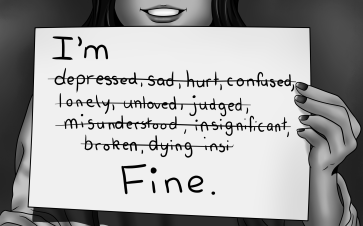
We cannot ignore this topic as if it has nothing to do with us. The statistics confront us with a stark reality about the prevalence of suicide in our culture. With the advent of the Internet and instant communication, young people are being bullied and attacked at a degree that few of us can even fathom. With an economy that moves up and down like a roller coaster, people in the middle of life are undergoing identity crises and are wondering how they can provide for their families. Older people who receive a grim diagnosis or the loss of a spouse struggle to justify living with such a horrible outlook for the days ahead.

We know that we are supposed to be present for and with one another, like being there for friends and family at a moment of tragedy. We rarely know what to say on such occasions, but we know we should be there. We, above all things, are called to be present for others in the midst of suffering and loneliness and depression that often lead to the contemplation of suicide. To be part of the faithful community requires us to be for one another.
i_m_fine_by_black_avenger-d60mqnl

We live because life is a gift. We are not our own creators. We Christians are the people who must learn to live by the fact that life is a gift. We therefore can live each and every day not as a survival technique, but through recognizing that each and every day is an opportunity to live and love in the service of our Lord.

When we talk about suicide, we say it is “the taking of one’s life.” But even the way we talk about suicide shows how much a problem we have with it. Our lives are not our own. As the Lord says through the Prophet Isaiah: “Do not fear, for I have redeemed you; I have called you by name and you are mine.” We belong to the Lord and to one another. God tells us to not be afraid because God will be with us as we pass through the waters, and the rivers of life shall not overwhelm us, we shall not be burned by the fires of frustration. Not because they won’t hurt or be terrifying, but because we belong to the Lord and the Lord is with us.

If we’re here in the sanctuary this morning, we have some sense of this in our lives. We know that God is with us, we feel God’s presence in this place and we know that we are not alone. It is through encountering the divine love of God in worship that we are given the strength to be God’s presence for others who sink under the waters of life and who feel burned by the world. It is our charge to be shaped and called by God’s love and to reach out to those who contemplate ending their days. We have the challenge of showing all people, even those who see no value to their lives, how our lives are not defined by what we have done with them, but by what God will do with them.

Six months after my friend had his stomach pumped, he attempted to commit suicide again. This time he did it with a hose running from his exhaust pipe into his car. But his little brother heard the car door close and it woke him up, and then he woke up his parents. In the strange and quiet time of the darkness of night they pulled their son out of the car and they got him help. It took a long time for him to move on. It took counselors and therapists, it took friends and family, it took the power of God’s grace to show him that his life could get better, that there was hope for the future, that there was something worth living for. And because people in his life were brave enough to confront his suicide attempts, he still lives today.

But there will always be some that we cannot reach. There will be people who feel so suffocated by the weight of the world that they will make that dreadful decision to end the life that God’s has given to them. And for them, for those who will die by their own hand, what will happen to them? For centuries the church saw suicide as an unpardonable sin, something that eternally damns those who do it. Will God abandon them for making such a choice? Will God refuse to love the people who felt no love in their lives? Will the God of mercy punish them until the end of time?

           No. In all these things we are more than conquerors through him who loved us. For I am convinced that neither death, nor life, nor angels, nor rulers, nor things present, nor things to come, nor powers, nor height, nor depth, nor anything else in all creation, will be able to separate us from the love of God in Christ Jesus our Lord. Amen.


Controversy Original

Devotional – 1 Timothy 6.10

Devotional:

1 Timothy 6.10

For the love of money is a root of all kinds of evil, and in their eagerness to be rich some have wandered away from the faith and pierced themselves with many pains.

Weekly Devotional Image

In the United Methodist Church we spend a lot of time every fall preparing for Charge Conference. Charge Conference is an annual meeting in the life of the church where we evaluate where we’ve been and where we’re going, we discuss challenges and new approaches, and we vote on things like the budget and pastoral compensation.

Paying pastors is one of those things in the life of the church that we like to handle quickly and then move on to a different subject. Frankly, whenever we talk about money we want to address it as fast as possible and then get back to “doing church.” Money makes us uncomfortable.

On some level this is a good thing. We know that Paul writes to Timothy about the love of money being a root of all kinds of evil. Or we can think about a time when the fear regarding finances sent the church in a frightening direction. Or we can reflect on how the love of money has reshaped a relationship with a friend or with someone in our family.

tithe

However, money and wealth is one of the things that Jesus talks about more than anything else, and we have slowly removed it from our common experiences in the life of the church.

On the Virginia Conference website for the United Methodist Church there is a page dedicated to the bishop. On that particular page anyone can find narrative information about our bishop, but there is also a link to what is called the “Appointment Workbook.” If you click on the link you will have access to a list of all the pastors in the Virginia Conference, how long they served, how many new people are attending their churches, how much their churches are required to pay in apportionments, what percentage of the apportionments have they paid, AND their annual compensation. This is good and important information for the life of the church, but the fact that the entire list of pastors is not organized by name, or region, or new disciples, but by salary, shows how we have wandered away from the faith.

Paul warns us about the love of money in our individual lives and in the community of the church. When we become so consumed by the pursuit of money whether we are a teacher, or a doctor, or a denomination, we fall captive to the evil the sends us wandering away from the faith. As Christians, our ultimate call is to grow in our faith and Christlikeness, not in our annual salary.

The Problem with The Pledge of Allegiance

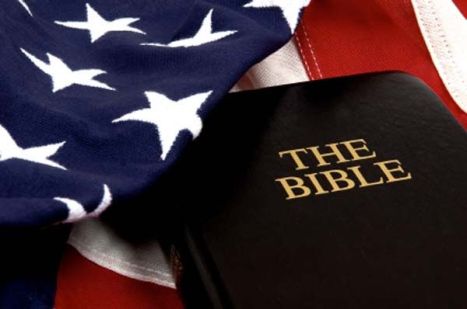
“I pledge allegiance to the Flag of the United States of America, and to the Republic for which it stands, one Nation under God, indivisible, with liberty and justice for all.”

bible-american-flag

It has been ten years since the last time I placed my hand over my heart and said the words to the pledge of allegiance. For the better part of eighteen years, I started every morning in school by standing up with my classmates, turning to the corner where the flag was standing, and saying those words that countless Americans have said throughout the decades. But then I stopped, and I haven’t since.

I was in 8th grade and living in Alexandria, VA when 9/11 happened. I can remember my father taking me out of school before it went on lockdown. I can remember sitting on the carpet in the living room watching the towers fall over and over and over again on television. I can remember my dad saying, “I bet Osama bin Laden had something to do with it” and I had no idea who Osama bin Laden was, or how my dad knew who he was. I can even remember realizing that nothing would ever be the same.

In the weeks that followed everything was a blur of red, white, and blue. The country had not experienced a wave of patriotism and nationalism to that degree since the end of World War II. My friends and I had conversations in the lunch hall about how we needed to go to war and kill the people who killed our people. We seriously wondered if the country would reinstitute the draft. And we proudly stood each and every morning to pledge our allegiance to the flag that was now flying in every front yard and on every car-bumper.

Over the next few years my dedication to the eradication of terrorism grew and grew. When members of Amnesty International painted our high school rock with words about peace and love, I got my friends together and we painted over it in black and red paint with things like “Pro-War” and “Bomb Saddam.” When we learned about how our country had played a major role in the chaos of the Middle East, I tuned out my teachers and ignored the textbooks. And when President Bush landed on the aircraft carrier to declare that we were victorious I beamed with pride.

But then a strange thing happened; I started really paying attention in church. I waited for our pastor to echo the same sentiment of celebration that President Bush declared. I waited to hear him give thanks to God for our victory over tyranny and oppression. I waited to learn about God’s saving hand over America from the pulpit. And those things never came. Instead we were asked to do something bizarre: pray for our enemies.

I heard the words of Jesus in a way I never had before, and it forced me to confront my own sinfulness. The more I read the bible the more I realized that my behavior was just like the crowds standing before the cross shouting, “crucify!” The more I read about Jesus’ way, the more I realized that I had fallen short of God’s glory and that I needed to repent. The more I experienced God’s grace the more I realized that my feelings were in conflict with my faith.

And then the words of the pledge of allegiance started sounding strange. I continued to stand with my peers throughout high school, I placed my hand on my heart and said the same words, but it made me uncomfortable. And then one day I stopped, and I haven’t since.

This has been particularly awkward at times; like when I was asked to speak before a local Kiwanis meeting and I felt the eyes of everyone in the room when I did not participate in the pledge of allegiance, or like when I gathered with a community band on the Fourth of July to play patriotic music and I was the only one who did not pledge allegiance to the giant flag waving gently in the breeze.

I am not against the American Flag, and I do not wish to be disrespectful toward it. I am not against our military nor am I a traitor. Instead, as a Christian, I have problems with the pledge of allegiance.

When we pledge our allegiance to a flag and whatever it stands for, it means we are pledging our allegiance to everything the flag represents; The flag that stood at the frontlines of Native American massacres; the flag that orchestrated coups in foreign countries for our own benefit; the flag that suppressed minority voices and segregated races; the flag that has benefited the rich at the expense of the poor; the flag that symbolizes “freedom” but really means “if you’re not with us, then you’re against us.” Our flag, and what it stands for, is something that puts me at dis-ease and is not something that I can blindly pledge allegiance to.

When we pledge allegiance to one nation under God it means that we believe that we are one nation, and that we believe in one God. We are not one nation. Just turn on the news for five minutes, or listen to the bickering of our politicians, or the activists from Black Lives Matter, or anything else and it is clear that we are not one nation. Day after day we are at odds with one another over some of the most important and some of the most frivolous things. And we are certainly not all Christian. Oddly enough, the words “under God” were not added to the pledge until the 1950’s when the Christian church in America started to decline. Though Christians are called to make disciples, we are not called to do so by conscription. To expect and force all citizens to pledge an allegiance to one nation under God fundamentally goes against the freedom of religion that we so dramatically praise on a regular basis. Moreover, to expect and force all citizens to pledge their allegiance to one nation under God fundamentally goes against Jesus’ command to “love our neighbors as ourselves.” If we would not stand to pledge our allegiance to one nation under Allah, or under Buddha, or under Krishna, then we should not expect others to do the same to God.

When we pledge allegiance to a nation that stands for liberty and justice for all we must wrestle with the fact that our country does not have liberty and justice for all. The rise of voter registration laws that unfairly affect those of a lower socio-economic status means we do not have liberty and justice for all. The frighteningly high incarceration rates of minorities mean we do not have liberty and justice for all. The unbelievably prevalent examples of gender discrimination and wage gaps mean we do not have liberty and justice for all. The seemingly endless episodes of violence against those who are different than the norm mean we do not have liberty and justice for all.

I am grateful for the freedoms that this country affords me. I believe in paying my taxes even if they are used for something I might not agree with. I am thankful for a military that defends the weak across the world. But my allegiance is not with America; it is with Jesus Christ. And that doesn’t make me un-American. It just makes me a Christian.

On The Separation of Church and State

Romans 13.1

Let every person be subject to the governing authorities; for there is no authority except from God, and those authorities that exist have been instituted by God.

John 15.12-19

This is my commandment, that you love one another as I have loved you. No one has greater love than this, to lay down one’s life for one’s friends. You are my friends if you do what I command you. I do not call you servants any longer, because the servant does not know what the master is doing; but I have called you friends, because I have made known to you everything that I have heard from my Father. You did not choose me but I chose you. And I appointed you to go and bear fruit, fruit that will last, so that the Father will give you whatever you ask him in my name. I am giving you these commands so that you may love one another. If the world hates you, be aware that it hated me before it hated you. If you belonged to the world, the world would love you as its own. Because you do not belong to the world, but I have chosen you out of the world – therefore the world hates you.

rethinking

Preachers can fall into the rut of preaching on whatever keeps the congregation pleased; keep them happy and they’ll keep coming back, or something like that. This sermon series is something different. Instead of falling back to the familiar narratives that keep us smiling on our way out of church, we are confronting some of the greatest controversies facing the church. There is a better than good chance that I will say something from this pulpit over the next two months that you won’t agree with, and if that happens I encourage you to stay after worship, join us for lunch, and continue the conversation. We can only grow as Christians in community, and that requires some honesty and humility and dialogue. Today we begin with The Separation of Church and State.

The Church and the State have a long and complicated relationship. Like a number of romantic couples from popular TV shows, think Ross and Rachel, Sam and Diane, Jim and Pam, Luke and Lorelai, and even Kermit and Miss Piggy, the “will they/won’t they” question of their relationships has happened over and over and over again.

It began during the days of Jesus. A wandering and poor Jew developed a following that threatened the power dynamics of the Jewish leadership and the Roman Empire. His actions might have appeared innocuous, feeding the multitudes by the sea, healing the blind, walking on water, but what he said terrified those in power: “The last shall be first and the first shall be last,” sounds the beginning of a call to revolution.

And for living and healing and preaching the way he did, Jesus was nailed to a cross. But three days later he rose from the dead. The Christian church began in the wake of Jesus’ resurrection, the power of the Good News of God’s triumph over death spread throughout the region and small groups gathered together to worship the Lord Jesus Christ. The book of Acts, and Paul’s letters, help us to see how the story traveled and took hold of the communities where it was received. Lives were transformed; the gospel spread, and the kingdom began to become incarnate.

But whatever the church stood for, and whatever the state stood for, was very different.

635716335783776523-1907621126_shutterstock_96065306.imgopt1000x70

Most of what we know about the early church comes from scripture. Which is to say, we know what the church thought about the church. However, we do have some idea of what the state thought about the church. Pliny the Younger was the governor of Pontus (Asia Minor) from 111 to 113 CE. During his rule he wrote to the Roman Emperor Trajan about the Christians in his community in response to their unwillingness to worship the Emperor: “They [the Christians] asserted, however, that the sum and substance of their fault of error had been that they were accustomed to meet on a fixed day before dawn and sing responsively a hymn to Christ as to a god, and to bind themselves by oath, not to some crime, but not to commit fraud, theft, or adultery, not falsify their trust, not to refuse to return a trust when called upon to do so. When this was over, it was their custom to depart and to assemble again to partake of food – but ordinary and innocent food.”

The first Christians were strange, with their singing songs to a man who died on a cross, and sharing bread and wine, and promising to be good and trustworthy. How bizarre. And for nearly 300 years they were persecuted, abused, and killed for following Jesus. The state, Rome, resented the Christians and their weirdness. They refused to bow down to worship the Emperor like everyone else. Instead they believed some guy named Jesus was Lord. And for that, they were punished.

But then things changed.

In the year 312 CE something happened that forever affected the relationship between the church and the state. I cannot overemphasize this point enough; it changed everything. The story goes that emperor Constantine was preparing his troops for a battle against a rebellion from within the empire, and on the night before the battle he had a vision of the Greek letters Chi (X) and a Rho (P) in the sky and the words, “in this sign you will conquer.” From this vision Constantine ordered all of his troops to be marked with the Chi-Rho, which looks like the symbol on the right hand page of your bulletin. Chi and Rho are the first two letters of Christos (the Greek version of “Messiah”). After doing so, Constantine’s army won a decisive victory and he entered Rome shortly thereafter as the undisputed Emperor. The battle gave him complete control of the Western Roman Empire and it paved the way for Christianity to become the dominant faith.

tumblr_static_chi_rho_arrows_small

The very next year Constantine issued the Edict of Milan, which made Christianity an officially recognized and tolerated religion in the Roman Empire. Within a dozen years, he called for the Council of Nicaea, which was the first attempt to attain a consensus in the church through an assembly representing all of Christendom.

From a vision of two Greek letters in the sky, Christians went from being persecuted and murdered, to being part of the state religion.

And now we fast-forward to today, to the United States, to a country founded on the principles of religious freedom, tolerance, and the Separation of Church and State. After centuries of the church and state co-mingling to a frightening degree, the founders decided to move in a different direction. After being persecuted for their different religious convictions they envisioned a new way forward. Recognizing that this place was, and could continue to be, a melting pot of differing ideologies, the forefathers articulated a political system whereby the state could not control religion, nor could religion control the state, and that those two things would find their fullest potential while being completely separated.

Constantine’s vision of conquering under the sign of Christ was over, and the time of secularism began.

Paul, writing to the Christians in Rome, said, “Be subject to the governing authorities.” This is to say, follow the laws of the land, pay your taxes, be good citizens. Paul’s words echo through the centuries and reverberate here in this sanctuary: Do as the country tells you to do. If you’re called to serve in the military, go to war. If its time for a presidential election, vote with your conscience. If the government says there’s a separation of church and state, keep it that way.

And Jesus, speaking to his disciples said, “This is my commandment, that you love one another as I have loved you… If the world hates you, be aware that it hated me before it hated you. If you belonged to the world, the world would love you as its own. Because you do not belong to the world, but I have chosen you out of the world – therefore the world hates you.” Jesus’ words echo through the centuries and reverberate here in this sanctuary: Following me means acting like me.   If people are being persecuted, you are to love them with every fiber of your being. If the government starts belittling people for what they believe, you need to stand up for the oppressed. If you feel called to live like a disciple, prepare yourself to be hated by the world.

These two scriptures from Romans and John contain the tension of what it means to be a Christian in the United States. We constantly wrestle between being subject to the governing authorities and pushing back against the governing authorities. We wrestle between what it means to love the world and what it means to be hated by the world. We, as disciples, live in the world but we are not of the world. We may be citizens of the United States, but our truest citizenship is in heaven.

Years ago there was a civil case raised against an organization for displaying a nativity scene on public property. Because of the separation of Church and State, the concerned citizen believed the nativity scene had to be removed. However, when the matter was brought to trial, the court ruled in favor of the Christian display. The reasoning was that because the nativity scene was next to Rudolph the Red-Nosed Reindeer, Frosty the Snowman, and Santa Claus, it had every right to be there. Christians across the country rejoiced when the matter was settled and celebrated what they thought was a decisive victory for the church.

But was it? Should we celebrate a time when the nativity is one of many signs of the holiday? Or should we savor its sacredness? Do we want the nativity to be the same as holiday cartoons, or do we want it to symbolize the profound incarnation of God in the flesh being born in a manger?

A few years ago there was another civil case raised against a baker for refusing to bake a cake for a gay couple’s wedding. Because of the freedom of religion, the baker believed it was within his right to refuse service to people who went against his religious convictions. The matter went to trial and the judge ruled that the baker unlawfully and illegally discriminated the couple for their sexual orientation. Christians across the country protested when the matter was settled, and vehemently opposed the ruling.

Were they right? Should Christians support the freedom to pick and choose who they serve? Or should they follow the command to love the way Jesus loved? Do we want the church to be connected with the religious liberty that isolates particular people, or do we want to go against the conventions of fanatical Christianity and love people regardless of any particular identity?

The separation of the Church and the State is a good thing because for too long the state controlled the church. The Constantinian revolution was certainly responsible for spreading Christianity across the globe, but it also led to things like the Crusades and the Inquisition. Constantine co-opted the church for the role of government in such a way that it limited the qualities that made Christians strange, and instead made them normative. Gone were the days when people lived by the convictions of Christ, and instead they went to church because that’s what they were expected to do.

But the era of Constantine did not die when our nation was founded. Though we articulate beliefs like the Separation of Church and State, it still says, “in God we trust” on our national currency, children still pledge their allegiance to the flag and country under God every morning before school starts, and we still have many courts where we must place our hands on a bible and are asked, “Do you swear to tell the truth, the whole truth, and nothing but the truth, so help you God?”

So perhaps now is the time, the best time, to recover those qualities that will make the world hate us. Not the qualities of religious bigotry and prejudice that for too long have dominated the state’s view of the church. But the qualities of Christ-like love that drive the state crazy. Like refusing to bow and worship our country and our politicians as if they were gods, and instead worshipping the risen Lord. Like gathering together on a day set apart to hold ourselves accountable to honesty, truthfulness, and peace. Like sitting before a table of ordinary food of bread and wine that becomes the extraordinary gift of body and blood.

We are in the world, but we are not of the world. We might have national citizenship, but our true Lord is Jesus Christ. We are like strangers living in a strange land. Amen.


Controversy Original

Devotional – Hebrews 13.8

Devotional:

Hebrews 13.8

Jesus Christ is the same yesterday and today and forever.

Weekly Devotional Image

I try hard to read some theology every week that has nothing to do with the sermon for Sunday. I do this in order to learn more about what it means to follow Jesus without it being intimately connected with whatever will be proclaimed from the pulpit; discipleship is something I need to work on outside of the work required for the vocation.

Last week I opened up Tripp Fuller’s Homebrewed Christianity: Guide to Jesus – Lord, Liar, Lunatic… Or Awesome? and started to read. (I discovered the book through a podcast that mentioned the title and I decided to check it out.) The premise is straightforward in that Fuller wants the reader to confront the totality of Jesus’ identity, but I had a hard time getting through the first few pages. Fuller writes, “The full humanity of Jesus is something every Christian affirms, but when it comes to discussing his journey through adolescence, we like to keep it vague – “He grew in wisdom and stature” is the only mention in the Bible of his teen years. Of course, we don’t spend much time thinking about Jesus having lice in his hair or pooping, even if he did such things in the holiest of ways.”[1]

img_6935

I understand that Fuller wants the reader to encounter the depth of Jesus humanity, but today we seem to emphasize his humanity over and against his divinity. In church and in theology we hear so much about how Jesus is just like us that we sometimes forget he is also completely unlike us. We want to know that Jesus knows our struggles and is there alongside us when we are going through the valleys of life. But in so doing, we’ve made Jesus out to be a good teacher or an ethical leader, and not God in the flesh.

In Hebrews we read about how “Jesus Christ is the same yesterday and today and forever.” Jesus remains steadfast to love and forgiveness and Jesus remains committed to grace and mercy. We, on the other hand, neglect to love and forgive others. We forget what it means to give and receive grace and mercy. We change each and every day like the blowing of the wind. But Jesus is the same yesterday and today and forever.

Jesus is like us and totally unlike us. Jesus is fully human and fully God. Jesus went through his own angst-filled teenage years and shows us the light of the Lord in the midst of the darkness.

For as much as we want to identify with the humanity of Christ, we also do well to remember that Jesus, like God, never changes.


[1] Fuller, Tripp. Homebrewed Christianity: Guide to Jesus – Lord, Liar, Lunatic… Or Awesome? (Fortress Press: Minneapolis. 2015), 2.

Karl Barth and The Strange New World Within The Bible

When I was in seminary, Dr. Stephen B. Chapman told a remarkable story about a survey that had been done in past. All of the faculty and doctoral candidates at Duke Divinity School were once asked to name the top 3 books or articles that had shaped their call to ministry or academia. Though many were quick to respond with something like “The Bible” or “1 Corinthians” the survey challenged people to think more specifically about works outside of the bible that had shaped their lives.

Some of the greatest works from Christian History were all named such as Calvin’s Institutes, Aquinas’ Summa Theologica, Wesley’s Sermons, and Augustine’s Confessions. Others were quick to name works from more contemporary writers like Schweitzer, Bonhoeffer, Merton, Yoder, Hauerwas, and Nouwen. The survey demonstrated that there were an abundance of texts from a variety of traditions that had shaped the minds of those called to serve the church. However, even with all the variations of answers and all the different denominations that were represented, there was one article that was mentioned more than any other: Karl Barth’s “The Strange New World Within The Bible.”

barth-bw

Barth’s article can be found in chapter 2 of his seminal work The Word of God and The Word of Man originally written in 1928. When I read the article for the first time I underlined so many sentences that it was difficult to read it a second time. The margins are now covered with thoughts, exclamation points, and asterisks. It is nothing short of transformative.

1101620420_400

In it, Barth attempts to answers the following questions: What is there within the Bible? What sort of house is it to which the Bible is the door? And What sort of country is spread before our eyes when we throw the Bible open?

Like most of Barth’s writing, it cannot be explained but only proclaimed. The best way to experience it is by reading the thing itself. Therefore, I have attached a PDF of the chapter to end of this post for anyone to read.


But after rereading the article again this week, and looking through all my old notes and markings, I decided to write my own version of the chapter relying on Barth’s original to guide my thoughts…


The Strange New World Within The Bible

We are to attempt to find an answer to the questions, What is there within the Bible? What sort of house is it to which the Bible is the door? What sort of country is spread before our eyes when we throw the Bible open?

We are with Adam and Eve in the Garden. We hear the Lord warn them about the tree of knowledge of Good and Evil. We hear the slithering serpent calling them (and us) to rebel against the One who loves us. And Adam and Eve reach for that forbidden fruit inevitably driving them away from the Lord and into the unknown. We can feel that there is something of ourselves in these two standing at the edge of Eden looking back to what they once were and unsure of what would come in the days ahead.

We are with Noah kissing the ground after the Flood. We see the rainbow cast across the sky and we feel the colors reflecting off the pools of water around Noah’s feet. We hear the promise from the Lord to never abandon creation again. We believe that Noah is the new beginning, another chance for humanity to get things right. But then we see him tilling the ground, preparing the vines, and eventually getting drunk from the wine. In him we see the failures of the past reaching forward into the present and we know that there is something behind all of this.

We are with Abraham in a strange land. We hear a call from the Lord, which commands him to go to a land that has been prepared. We hear a promise to Abraham: “I will make of you a great nation and your descendants will be more numerous than the stars.” And we see that Abraham believed the promise! We feel the Spirit moving through the space as the story moves ever forward.

We are with Moses on a rocky hillside. We feel the warmth of a bush burning but not being consumed. We hear the voice of the Lord speak to the wandering shepherd: “Tell them I AM sent you.” We experience the calling that will forever define an entire nation of people, a delivery from slavery to Egypt, and freedom in the Promised Land. We hear these strange words and promises and we know that they are unlike anything else we have ever read. We know that it is a story, but it is a story about us.

We are with Joshua at the edge of the new land. We remember the painful journey and the years of struggle that led to this moment. We experience fear and excitement with the other sojourners, as they are about to cross the threshold into God’s promise. We hear about Rahab and what she was willing to do for God’s people and it gives the people confidence to actually be God’s people.

We are with Samuel asleep on the floor. Again we hear a call three times “Samuel, Samuel!” We see the young man run to the priest Eli to share his experience and we begin to connect this call with others. We know that Samuel has heard the Lord and that he must obey. We know the journey will not be easy, but it will be good.

We read all of this, but what do we experience? We are aware of some greater power beneath the word, a faint tremor of something we cannot know or fully comprehend. What is it about this story that makes our hearts beat with such tempo? What is opening up to us through the words on the page?

We are with David when he puts the rock into the sling and takes down the mighty Goliath.

We are with Solomon when he prays for the Lord to give him the gift of wisdom.

We are there when Isaiah feel the coal being placed on his lips.

We are with Elijah when he hears the Lord not through the wind, not the storm, nor the fire, but through the still small voice.

Then come the incomprehensible days when everything changed; that strange and bewildering moment in a manger in Bethlehem when the Word became flesh. When a man and a woman fled to save their child’s life. When that baby grew to be a man who was like no other man. His words we cause for pause and alarm and delight and fear. With unending power and resonating grace he calls out: Follow me. And they do.

Through him the blind begin to see. The lame begin to walk. The hungry are fed. The powerful are brought low. The poor are made rich. The deaf hear. The blind see.

And then we are there when the sky turns black. We hear his final words and we feel a faint echo from those first words so long ago. But that echo continues for three days until it reaches a triumphant crescendo in an empty tomb, in resurrection.

We are there with the disciples in the upper room. We watch the Holy Spirit fill their mouths with the words to proclaim. We go with them across the sea and over the dry land. We watch them use water and word to bring new disciples into the faith. We smell the bread being broken and we can taste the wine being shared at the table. We can feel the parchment of letters sent to church far away in our fingers.

And then it ends and The Bible is finished.

Open-Bible-Religious-Stock-Photos

What is it about scripture that makes it different from everything else we read? What is so important about the connections from Adam to Jesus? What are we to make of the prophets and the apostles? What do we do with statements like “In the beginning God created the heavens and the earth” and “Forgive them Father, for they do not know what they are doing”?

These are difficult and dangerous questions. It might be better for us to stay clear of the burning bush and the coal for our lips and the call to the cross. Perhaps we would do well to not ask because in our asking is the implication that The Bible has an answer to every question. Yet it does provide something just as the Lord provided for Abraham.

It is not merely a history or a genealogy.

It is neither a myth nor a fable.

What is there within The Bible? The answer is a strange, new world, the world of God.

We want The Bible to be for us. We want to mine it for all its precious metals. We want it to answer our questions. We want to become masters of the text.

But The Bible is itself and it drives us out beyond ourselves to invite us into to something totally other. We are invited regardless of our worth and our value, regardless of our sin and failures, to discover that which we can only barely comprehend: a strange new world.

Reading The Bible pushes us further through the story that has no end. In it we find the people and places and things that boggle our thoughts. We read decrees that shatter our understanding of the real. We experience moments of profound joy and profound sorrow. We find ourselves in the story when we did not know we had a story.

And it causes us to ask even more questions: Why did they travel to this place? Why did they pray this way? Why did they speak such words and live such lives? And The Bible, for all its glory, rejects answers to our Why.

The Bible is not meant to be mastered; instead we are called to become shaped by the Word. And this is so happen in a way we cannot understand. For the heroes of the book are seldom examples to us on how to live our daily lives. What do David and Amos and Peter have to teach us except to show us what it means to follow God?

The Bible is not about the doings of humanity, but the doings of God. Through the Bible we are offered the incredible and hopeful grain of a seed (as small as a mustard seed), a new beginning, out of which all things can be made new. This is the new world within the Bible. We cannot learn or imitate this type of new life, we can only let it live, grow, and ripen within us.

The Bible does not provide us with simple tools on how to live like a disciples, or what to do in a particular situation. It does not tell us how to speak to God, but how God speaks to us. Not what we need to do to find the Almighty, but how he has found they way to us through Jesus Christ. Not the way we are supposed to be in relationship with the divine, but the covenant that God has made with God’s creation.

The strange new world within the bible challenges us to move beyond the questions that so dominate our thoughts. Questions like “What is within the Bible?” and “Who is God?” Because when we enter the strange new world within the Bible, when we discover ourselves in the kingdom of God, we no longer have questions to ask. There we see, we hear, and we know. And the answer is given: God is God!


Strange+New+World

On Evangelism or: Why The Church Needs Crucifixion

Matthew 28.19 – Go therefore and make disciples of all nations, baptizing them in the name of the Father and of the Son and of the Holy Spirit.

Evangelism

We sent out hundreds of post-cards over a month ago inviting the entire neighborhood to join us on the front lawn of the church for a free Community Cook-Out. The post-cards were well designed and inviting with all of the necessary information. For a modest price we were able to reach a whole group of people who we would otherwise miss.

This will be our third annual gathering and it has been largely successful. Half of the people in attendance are usually not from the church and we want them to know that we care about the neighborhood we are in. However, on some level, we also want them to know that we love them enough that we would love to have them join us in worship on Sunday mornings.

IMG_1642

Yet, evangelism is not the goal of our gathering. We have not specifically identified key lay people to go around asking people if Jesus Christ is their personal Lord and Savior. We have not prepared pamphlets to hand out describing the eternal fires of hell if someone does not get saved. We have not invited the neighborhood to our front lawn to get them into heaven.

Instead, we hope that by showing them our love, it will somehow draw them into church to discover where that love comes from: God.

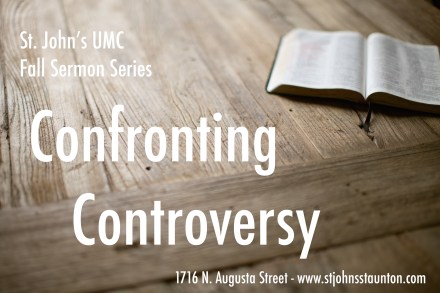
Next week we are going to send out even more post-cards to the local community about our upcoming sermon series titled “Confronting Controversy.” After speaking with a few nominal Christians from the neighborhood about what they want to hear about in church, we synthesized this series to be approachable and life-giving to people who are not currently in the church. The post-card has been well designed with a catchy image and all of the necessary information on the back. We hope that by sending them out, people from the community will join us in worship and discover that what the world thinks about the church may not be the same thing as what God thinks about the world.

controversy

Both of these ventures, a Community Cook-Out and a Controversial Sermon Series, are about trying to grow the church in some way, shape, or form. Many of us call this “evangelism.” But that’s not what evangelism means.

In David Fitch’s recent work Prodigal Christianity, he highlights a moment from his ministry where the church tried to grow and failed:

“When our church, Life on the Vine, was new, we sent out ten thousand postcards to people in our neighborhoods. We artfully displayed a collage of various depictions of Jesus (classical paintings, icons, and European, African, and Asian portrayals) with the question in bold print running across it: “Who is Jesus?” On the back, we invited the neighborhood to have a discussion with us about the question. We were playing off the cultural curiosity around Easter and hope that we could welcome a constructive conversation around the question. The card was not well received. Local “Bible-believing” Christians accused us of straying into relativism with so many different depictions of Jesus. They worried we were losing the truth of Jesus. Meanwhile many others accused us of being intolerant. Were not other religious leaders just as worthy of discussion? We got nasty phone calls asking, “Why are you focusing only on Jesus?” No one, and I mean NO ONE, came to any of our gatherings from this postcard.”[1]

Out of ten thousand postcards, no one came to any of the gatherings. I think a lot of this has to do with our false assumption that just by offering something people will show up. We believe that if we give them an interesting sermon series or bible study people are bound to show up in droves. And if we let them know about it through a postcard we can reach even more people!

These types of evangelism largely fail because we’ve confused evangelism with filling the pews instead of sharing the Good News.

I cringe whenever I encounter an “evangelist” in the midst of life who abruptly asks, “Have you confessed Jesus Christ as your personal Lord and Savior?” Because with their question is the assumption that we have the power to save ourselves, and that they are playing a fundamental role in our salvation. However, Jesus does not command the disciples to go out convincing people to confess him as Lord. Instead he tells them to go and make disciples.

Discipleship formation is primarily about relationships and less about post-cards and Main Street confessions. We become evangelists not when we beg or convince someone to confess Jesus as Lord, but when we intentionally create relationships with individuals through the love that Jesus taught us to live by. We can use sermon series and community events to first bring people into the church, but those types of things will never be enough (by themselves) to evangelize. It takes a willing and loving disciple who sees others not as pew fillers but fellow brothers and sisters in the kingdom of God.

As a gathering church we are called to be confident in God’s love for us, and for us to share that same love with others; “We love because he first loved us” (1 John 4.19). We will grow and bear fruit in the kingdom when love becomes our first priority instead of growth. We have failed to grow not because we have been doing things unworthily, but because we’ve grown bored and unhappy. With churches all across the American landscape floundering under the pressure to grow and remain sustainable, the church falls back to the common tropes of Vacation Bible Schools and Sermon Series assuming they will grow the church.

Can you imagine what the church might look like if Christians were actually happy and excited about being the church? That’s where and when evangelism happens – not in the boredom of another series or bible study, but in the community transformed by joy and sharing that joy.

Evangelism (1)

Evangelism is our call as Christians. We are commanded by the Lord to share the Good News in order to make disciples and transform the world. If we want this kind of dynamic and life-giving evangelism to take place, then we have to be willing to crucify some of our current practices and programs; you can’t have resurrection without crucifixion.

We need to crucify our boring and lifeless activities that we assume will grow the church. Is the annual Cook-Out really sharing the good news with others, or are we doing it to feel good about seeing a lot of people on our property?

We need to ask difficult questions about our programs and whether or not they are designed to evangelize. Are our monthly meetings really about branching out to the community and transforming our cultural landscape, or are we meeting to keep the people already in the church happy?

We need to confront our budgets and demand that they reflect Jesus’ mission. Are we spending our resources according to the great commission, or are we neglecting to be good stewards by wasting our resources of lifeless avenues of ministry?

We need to take a look at our own families and reflect on how we evangelize those closest to us. Are we so consumed by raising our children to choose whether to be Christian or not for their own good, or are we afraid of telling them what we really feel and believe?

What can we crucify in our hearts and in our churches to be resurrected into the kind of evangelists that God is calling us to be?


[1] Fitch, David and Geoff Holsclaw, Prodigal Christianity: Ten Signposts into the Missional Frontier (Jossey-Bass: San Francisco, 2013), 32.

Devotional – Hebrews 12.1-2

Devotional:

Hebrews 12.1-2

Therefore, since we are surrounded by so great a cloud of witnesses, let us also lay aside every weight and the sin that clings so closely, and let us run with perseverance the race that is set before us, looking to Jesus the pioneer and perfecter of our faith, who for the sake of the joy that was set before him endured the cross, disregarding its shame, and has taken his seat at the right hand of the throne of God.

Weekly Devotional Image             On Saturday afternoon, by God’s will, we will gather on the front lawn of St. John’s UMC with a cohort from the community. Our third Annual Community Cook-Out will be filled with familiar and strange faces, we will have more food than we’ll know what to do with, we’ll have children jumping on bouncy houses, and we’ll even have a dunk tank set up (I’ll be the first to be knocked in!). For years and years this church has stood in the middle of the community, but for too long it has been disconnected from the lives of the people in the immediate neighborhood. Therefore, the Cook-Out is our opportunity to share Christ’s love with those who surround us.

During the last two Cook-Outs it has been a joy to see strangers becoming friends through a shared meal and fellowship, but there is always the temptation to stay where we feel comfortable and only talk to the people we know. The Cook-Out is by no means an attempt to “evangelize the neighborhood” and get everyone saved. But if we are not willing to follow the example of Christ by reaching out to strangers, then the church is failing to be the body of Christ for the world.

IMG_1642

St. John’s exists and thrives because of the great cloud of witnesses that brought us to where we are. We owe a great deal to the saints who have come before us, the ones who first invited us to discover God’s love in a place like this, and now the time has come for us to follow them on the path to Christlikeness. For it is when we humble ourselves, when we disregard the shame of embarrassment, we join together with the one who never knew a stranger, the one who came to change the world, the one who has taken his seat at the right hand of the throne of God.

To follow Jesus on the way that leads to life requires us to actually act like him here and now. It means crucifying our selfish ways and opinions so that we might encounter the other without pretense. It means laying aside every weight that prevents us from sharing the Good News. It means running the race with perseverance so that we might bless others in the same ways we that we have been blessed.

Devotional – Luke 11.1

Devotional:

Luke 11.1

He was praying in a certain place, and after he had finished, one of his disciples said to him, “Lord, teach us to pray, as John taught his disciples.”

Weekly Devotional Image

Back in October I preached a sermon series on why we do what we do. One Sunday we explored why we give our gifts to the church, another Sunday we explored why we worship the way we do, and on the final Sunday we talked about why we pray.

Of course, we usually pray because we want something from God; we cry out to God in the midst of suffering for healing, when we are lost we call out for direction, and when we are afraid we ask for peace. We know why we pray, and Jesus answered the question of “How to pray?” by giving the disciples the Lord’s Prayer.

But I often wonder if we are praying for the right things.

Cash-Envelopes

To conclude the sermon back in October I asked everyone in worship to open their bulletins and pull out the envelope and blank piece of paper that had been placed inside. I said, “I would like each of us to take out the paper and write down a true prayer to God. It has been my experience that when I pray out loud I don’t take the necessary time to really contemplate what I am asking for. But if we slow down enough to write down our prayer, it might encourage us to pray like Jesus. So write out your prayer, and then place it in the envelope and seal it. Then I would like each of us to write our name and address on the front and place it in the offering plate later in the service. No one will see this prayer but you and God. And we will mail them back to you in a number of months. God answers our prayers, sometimes in different ways than we can imagine. My hope is that we will all take the time to earnestly pray to God, and in the months ahead we will begin to have our eyes opened to the ways God is moving in our lives.”

That was nine months ago, and today the envelopes are being sent back out.

We currently live in a culture so steeped in instant gratification that we expect God to answer our prayers immediately. However, God’s time is not the same thing as our time. It is my belief that God has, in some way, shape, or form, answered our prayers over the last nine months and perhaps we can only see that now looking back. So keep your eye out for your mailbox this week, rejoice in the prayer that you once offered, and give thanks for the way God has responded.

The Kingdom of Chaos

Mark 4.30-32

He also said, “With what can we compare the kingdom of God, or what parable will we use for it? It is like a mustard seed, which, when sown upon the ground, is the smallest of all the seeds on earth; yet when it is sown it grows up and becomes the greatest of all the shrubs, and puts forth large branches, so that the birds of the air can make nests in its shade.”

parables

Today marks the second part of our July Sermon Series on The Power of the Parables. A favorite rhetorical device of Jesus’, a parable is a story that illustrates a lesson or principle usually without explanation. They are simple and life-sized with familiar characters and they are supposed to drive us crazy.

Over the centuries the parables have become so watered down through the church that they no longer carry the same weight and punch that they once did. The familiar parables are beloved to us, The Feast, The Mustard Seed, The Prodigal Son, The Good Samaritan, but during the time of Jesus they were frustrating and confusing. During this month we will do our best to recover this sense of strangeness and encounter the power of the parables.


The stories that Jesus tells about the kingdom of God are down to earth, literally. The kingdom is not some esoteric arena in the great by-and-by, but as close as a wedding feast, or a fishing net, or even a mustard bush.

A mustard bush is a strange thing. It develops from the smallest of seeds and grows like a weed choking out everything else. It is the kind of plant that farmers fear. The seeds are so tiny that if they get caught up in a group of others being sowed in a field, it can destroy the planned crop and replace it with mustard bushes.

One of the main points of Jesus’ parables is the fact that they are common stories that nearly everyone can appreciate or picture. But are we, today, familiar with a mustard seed or a mustard bush? I went out on Wednesday to a couple local plant nurseries, and I went to a couple hardware stores, and I found nothing. Not one bag of mustard seeds. Not one single mustard plant.

For the first century Jews and Gentiles this parable was as familiar as could be. Jewish law made it illegal to plant a mustard seed in a garden because they knew it would grow and grow and eventually take over the entire space. But for us today, we only know the mustard we buy in grocery stories. So, perhaps we need a new parable. Maybe we need a new comparison to what the kingdom of God is like. One that still holds true to the reality of a mustard seed but also resonates with our understanding of the world.

Jesus also said, “With what can we compare the kingdom of God, or what parable will we use for it? It is like one of those computer viruses that we receive in an email attachment from our grandmother. At first it seems harmless “Click here to learn the secret to weight-loss” or “Click here to see a video of a monkey playing a piano” and then before we know what hit us it spreads and spreads through our entire computer corrupting every file before sending the same email out to everyone in our address book.

Jesus also said, “With what can we compare the kingdom of God, or what parable will we use for it? It is like the flu, we try to stop it from spreading by receiving flu shots and preventing people from visiting others in the hospital, but once it takes hold it spreads through everything we touch until it reaches the next person and the next person and the next person.

Jesus also said, “With what can we compare the kingdom of God, or what parable will we use for it? It is like a video posted on the Internet of a black man being shot by a police officer during a routine traffic stop. At first we try to scroll past because we know it is too graphic, too awful, too real, but we can’t help ourselves from watching. The longer we watch the more people we think about that need to see the video, we start to think about how the whole world needs to see this injustice so that justice might rain down like water. So we send it out for everyone to see until something changes.

If Jesus showed up in church today and shared any of those parables with us, how would we respond? I’d tell him that he is crazy, that he has no idea how no idea how the church is supposed to work, and that his vision of the kingdom does not match with mine.

Jesus’ parable of the mustard seed is one that confuses and creates frustration precisely because our version of the kingdom is different than the kingdom inaugurated in the life, death, and resurrection of Jesus Christ.

ST. PAUL, MN - JULY 07: A couple hold a sign protesting the killing of Philando Castile outside the Governor's Mansion on July 7, 2016 in St. Paul, Minnesota. Castile was shot and killed the previous night by a police officer in Falcon Heights, MN. (Photo by Stephen Maturen/Getty Images)

The kingdom of God strikes in ways that we almost cannot see, and certainly not in ways that we can expect. Like an idea popping up in the mind, it refuses to be stifled and it begins to spread out through our conversations and our writing. Ideas like “war is wrong” or “homophobia is wrong” or “the indiscriminate killing of black men and women” is wrong. Those ideas spread like wildfire and at some point they cease to be ideas and instead transform into revolutions. The original thought tangles in the mind and heart of the revolution and people become so moved that they are willing to die so long as that original idea will continue to spread.

More often than not, we know what we want the kingdom of God to look like and we know what we want the church to look like. We want clear lines to be drawn so that we know who is in and who is out, what is allowed and what is forbidden, what is black and what is white.

But then Jesus gives us this two-verse parable with the mustard seed – the tiniest symbol of how God is forever invading our ordinary and orderly sense of things. The mustard seed is there in plain sight but hidden by our ignorance. We overlook it in the fields, in the church, in our lives, and then it sprouts into the greatest of all the shrubs.

Since January of this year at least 123 black Americans have been shot and killed by police. This week saw a black man gunned down outside of a convenience store for selling CDs and a black man gunned down during a routine traffic stop for having a broken taillight. The saddest part of these stories is that they have become part of our common vernacular and experience of black culture. For a time we can remember the names of the individuals killed, names like Eric Garner and Michael Brown and Tamir Rice and Freddie Gray, but now the list has grown so long that the names begin to bleed together.

And how do we feel? Are we outraged? Or are we apathetic? Are we disgusted? Or are we disinterested? Are we on fire for change? Or do we want things to stay the same?

And the death of black men and women is a small fraction, or perhaps the mustard seed, of the larger picture of racial inequality in our country.

People of color make up about 30% of the total population in the U.S. but they account for 60% of those who are imprisoned. 1 out of every 3 black men can expect to go to prison at some point in their lifetime. Once convicted, black offenders receive sentences that are nearly 20% longer than white offenders for the same crime.

In preschools across the country black students account for 18% of the total number enrolled but make up 48% of preschoolers with multiple out-of-school suspensions. Preschoolers! In elementary, middle, and high schools across the country, black students are expelled at 3 times the rate of white students.

And 11am on Sunday morning is still, without a doubt, the most segregated hour in the United States.

The kingdom of God is like a mustard seed, the smallest of all the seeds, but when it is planted it grows into the grandest and largest of all the shrubs and puts forth branches so that all the birds of the air can find rest in its shade.

The kingdom of God is not like the kingdom of America where people are still persecuted because of the pigmentation of their skin, where immigrants are treated as second-class citizens, where members of the LGBTQ community are murdered because of their identity; where police are attacked in retaliation for events in other parts of the country.

On Thursday evening, during a peaceful protest in Dallas, Texas, five law enforcement officers were killed and six others were injured. Snipers were set up in strategic elevated areas and sent the downtown area into chaos as bullets continued to fly back and forth. It is unclear what the exact motives of the attack might be, though it is clear that it is somehow connected with the recent shootings of black men in other parts of the country.

Black men and women are shot and killed by the police. Black communities respond in rage and protest. Police are shot and killed by individuals whose anger manifested itself into violence and destruction.

What are we to do? Turn off the television because of the unending violence? Shrug off the waves of death because at least its not happening in Staunton? Fall to our knees in prayer that we might be transformed into a people of peace?

Today we grieve and mourn all the lives lost at the hands of the destructive power of death. We lift up our fists and rail against the prejudices that result in black persecution and police assassination. We demand answers from the Lord for why things like this continue to happen.

People take part in a rally on April 29, 2015 at Union Square in New York, held in solidarity with demonstrators in Baltimore, Maryland demanding justice for an African-American man who died of severe spinal injuries sustained in police custody. AFP PHOTO/Eduardo Munoz Alvarez (Photo credit should read EDUARDO MUNOZ ALVAREZ/AFP/Getty Images)

That’s the power of a parable like the mustard seed; it strikes us as something true whenever we hear it. A detail will emerge that we’ve never thought about and we realize that Jesus is still speaking to us through the story. The power of a parable is its ability to convey a deep and profound truth about Jesus in the midst of our lives today. The power of a parable is its ability to show us that God’s kingdom is strange, unexpected, and beautiful.

The kingdom of God, like the mustard seed, like a viral video, like a revolution, invades the cultivated soil of our certainties and creates something new. Hidden in plain sight, like words of a prayer, the seeds of faith grow in unexpected ways until what we thought we knew is transformed by our invasive and surprising God.

Our lives should transformed by the mustard seed quality of the kingdom of God when it stretches and reaches into every part of our existence and challenges us to be better. Not to pass the buck on to someone else, not to become apathetic to the tragedies of our time, but to be caught up in a revolution of the heart.

The power of the parable of the mustard seed is in the tiniest of seeds leading to a radical change. The mustard seed germinates and stretches out to grab hold of everything in its path. Oh that today the Lord would plant that mustard seed in our hearts, that the kingdom of God might grow and dwell among us, reaching out to everyone in our midst, that we might all believe that black lives matter, that we might believe that violence will only ever beget more violence.

We need that mustard seed. We need it planted deep into the soil of our souls, we need it to be cultivated, and we need it to grow with reckless abandon. We need a revolution of the heart, here and everywhere. Amen.