Be Afraid, Be Very Afraid

strangely-warmed-spreaker-header

This week on the Strangely Warmed podcast I speak with Jason Micheli and Scott Jones about the readings for the 2nd Sunday of Advent [Year B] (Isaiah 40.1-11, Psalm 85.1-2, 8-13, 2 Peter 3.8-15a, Mark 1.1-8). Jason is the Executive Pastor of Aldersgate United Methodist Church in Alexandria, VA and Scott is the host of the Give and Take Podcast. The conversation covers a range of topics including manscaping, Isaiah as Socialist, resuscitation vs. resurrection, how God isn’t white, the need to revisit our sin, and the beauty of the already but not yet. If you would like to listen to the episode or subscribe to the podcast you can do so here: Be Afraid, Be Very Afraid

14581480_10154811561604789_967400924124218630_n

Scott Jones

Devotional – Exodus 20.13

Devotional:

Exodus 20.13

You shall not murder.

Weekly Devotional Image

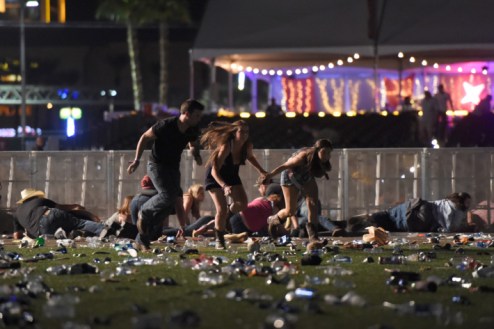
I woke up early this morning so that I could go to the gym before heading over to the church. It was early enough that it was still very dark outside and there were only a handful of cars in the parking lot. When I made it to the workout room I quickly stretched in the corner and then went over to a treadmill to start running. After about 15 minutes I slowly noticed that all the people had stopped using their machines because it became eerily quiet and I looked up at the TV. All of us at the gym were transfixed as we watched the closed captioning scroll across the screen. “Deadly shooting in Las Vegas. 20 dead. 100 plus injured.”

I don’t know how long we stood there like statues, but I remember the first sound I heard was the simple whimpering of a man over on an elliptical.

Throughout the day the reports coming out of Las Vegas have become clearer and more detailed such that, at the time of writing this devotional, 58 people have died and over 500 people were injured in the massacre outside of the Mandalay Bay Casino in Las Vegas, Nevada.

The emotional roller coaster of an event like this can be exhausting. There’s the shock that comes when we attempt to understand how someone could bring such terror and evil into the world. There’s the fear that something like Las Vegas could happen in our own communities. There’s the immense sadness when recognizing the high toll of lives and injuries in such a brief period of time. There’s the anger that percolates within us as we watch the footage of people running for their lives and we heard the gunfire ringing in the background. And, of course, there’s the bewilderment that comes with discovering that this marks the 273rd mass shooting in the United States this year, and today is only the 274th day of the year.

2-mandalay-bay.w710.h473

You shall not murder: four simple words in the middle of Exodus 20; four words that rest at the heart of most major religions; four words that we must not forget.

In the days, weeks, months, and even years ahead the massacre in Las Vegas will be used to manipulate political decisions, it will be used to strike fear into the hearts of individuals, and it will be used as a rallying cry for change. But what happened in Las Vegas cannot be used as a tool, or worse: a weapon, to bring about more violence in the world. Violence will always beget more violence. We, as Christians, are called to pray for those who died, those who are suffering, and those who are afraid. We, as Christians, are called to do all that we can to ensure the wellbeing of the people around us in every way, shape, or form that we can imagine. And we, as Christians, must never forget those four words from Exodus 20: You shall not murder.

Devotional – Psalm 103.8

Devotional:

Psalm 103.8

The Lord is merciful and gracious, slow to anger and abounding in steadfast love.

Weekly Devotional Image

16 years ago I was sitting in my 8th grade band class when an announcement came over the PA system that I was needed at the main office. I walked down the hallway wondering why in the world they needed me in the main office of my middle school when I saw my father standing outside the doors beckoning me to hurry up. We quickly dashed toward the car where my sisters were already waiting and all I remember my dad saying was, “So many people have already died.”

It was September 11, 2001 and my father somehow got us out of school before they went under lockdown. I spent the entire day sitting on the living room floor at my parents’ house watching the World Trade Centers fall to the ground over and over again. And I was angry.

sept-11-Brigitte

Thinking back on that day 16 years ago, I can remember the anger I felt, but I can’t tell you who or what that anger was directed toward. The television contained images of violence I never thought possible in the world and it created in me a frustration and an anger that remained for a long time.

It was only years later that I came across a prayer written by one of my professors 30 minutes after the destruction of the World Trade Center. Dr. Hauerwas’ words articulate a feeling that I believe most Americans felt 16 years ago, but he was also bold enough to speak the truth in a time of fear, anger, and violence. This is the prayer he wrote 16 years ago today:

“Vulnerable – we feel vulnerable, God, and we are not used to feeling vulnerable. We are Americans. Nor are we used to anyone hating us this much. Such terrible acts. Killing civilians. We are dumbfounded. Lost. We are good people. We are a nation of peace. We do not seek war. We do not seek violence. Try to help us remember that how we feel may be how the people of Iraq have felt while we have been bombing them. It is hard for us to acknowledge the “we” in “We bombed them.” What are we to do? We not only feel vulnerable, but we also feel helpless. We are not sure what to feel except shock, which will quickly turn to anger and even more suddenly to vengeance. We are Christians. What are we to do as Christians? We know that anger will come to us. It does us not good for us to tell ourselves not to be angry. To try not to be angry just makes us all the more furious. You, however, have given us something to do. We can pray, but we wonder for what we can pray. To pray for peace, to pray for the end of hate, to pray for the end of war seem platitudinous in this time. Yet, of course, when we pray you make us your prayer to the world. So, Lord of peace, makes us what you will. This may be one of the first times we have prayed that prayer with an inkling of how frightening prayer is. Help us.” (Dr. Stanley Hauerwas – Disrupting Time)

So today, 16 years later, we still pray for God’s will to be done. We pray that we might become God’s prayer for the world. And, perhaps most boldly, we remember that while the world is consumed by fear and terror, we worship the God who is merciful and gracious, slow to anger, and abounding in steadfast love.

We Don’t Belong To Babylon

Isaiah 44.6-8

Thus says the Lord, the King of Israel, and his Redeemer, the Lord of hosts: I am the first and I am the last; besides me there is no god. Who is like me? Let them proclaim it, let them declare and set it forth before me. Who has announced from of old the things to come? Let them tell us what is yet to be. Do not fear, or be afraid; have I not told you from of old and declared it? You are my witnesses! Is there any god besides me? There is no other rock; I know not one.


Years ago I spent a summer working for a Toyota Dealership up in Alexandria. I was a porter and I was responsible for parking customer’s cars, driving them into the bays, and then bringing them back out when the work was completed. Every day I hopped into more cars than I could count and drove with great care through a parking lot that had twice as many cars as it should have.

I loved working there. I loved how every day was different, I loved all the strange and bizarre things people kept in the cars, I even enjoyed the great range of music that people chose to blare through their sound systems. But the part of the job that I loved the most was the people I worked with.

All of the other porters were at least twenty years older then me, and none of them were white. We were quite the motley crew standing together waiting to park cars, and during the slow moments we regaled one another with stories. That summer I learned about Carlos’ difficult journey from Mexico to the United States, I learned about Jamal’s continued experience of racism even though we lived in a supposedly progressive place, and I learned about Michael’s love for his home country of Ghana.

Of all the other porters Michael took me under his wing and always made sure that I was always drinking enough water. He called me Mr. Taylor and would clap his hands when he saw me walking up early in the morning.

We worked side by side for an entire summer and by the end he felt more like a friend than a co-worker.

On one particularly rainy afternoon, while business was slow, I asked Michael about what it was like to live here after spending most of his life in Ghana. He told me about how for years he only dreamed of one thing; saving enough money to bring him and his family to the US. How for years they watched American movies and read American books and they knew they had to do everything they could to get here.

And when they finally saved enough, when they finally came to the US, they were disappointed.

I remember thinking: “Disappointed? How could they be disappointed with all we have to offer here?”

And then he told me that they were disappointed because it was dirty, because there were people in need, and that he and his family still felt like strangers in a strange land.

18540

Isaiah’s message from the Lord isn’t just some random call from a prophet for the people to know more about God – it comes at a particular time to a particular people in a particular place. These words were, and still are, meant for a people in captivity.

The people of God had grown distant from the Lord and after countless attempts to bring the people back into the fold; they were taken into captivity in Babylon. For two generations God’s people were in a foreign land and it was in the midst of the Babylonian captivity that Isaiah spoke these words from the Lord: I am the first and I am the last, there is no one else like me. If any are so bold as to claim to be like the Lord let them declare what is to come. Do not fear, or be afraid. Have I not told you what was to happen? You are my witnesses!

The people receiving the Word from Isaiah were a people without hope. They had lost their homes, their nation, their possessions, their faith, their traditions, their roots, their identity, and their sense of belong. The Babylonian empire was known for its power and its majesty, but it was not what they thought it would be. Like my friend Michael from Ghana arriving in a new place, the Israelites were strangers in a strange land. Babylon was a nation with its own roots and customs and gods, and Israel was a tiny nation that had been assimilated into the greater empire.

Every single day God’s people were surrounded by idols clamoring for their worship. But unlike all the idols of Babylon, unlike all of the customs and the experiences, Isaiah declared that only the Lord is first and last, only God calls the future into being.

And to be honest, it is almost impossible for us to connect with the captive situation during the time of Isaiah. We are so entrenched in the culture around us that we cannot even fathom what it would look like to be in bondage, to be chained down, to be strangers in a strange land. But we are.

We are in bondage to the next new thing; in just a few months droves of people will be lining the streets for the next iPhone, Potomac Mills will be nearly impossible to navigate through, and the promise of big deals will cause people to make irrational decisions and choices.

We are controlled by the current political structures that we think determine our lives. Just ponder about how much time we spend watching or reading the news that is now completely and totally focused on who said what, the next vote down the line, and the latest tweet from the White House.

We are chained to economic plateaus that are relatively inescapable. Here in this country we cherish the American Dream, but the truth is that the overwhelming majority of us will die in the same economic bracket we were born into.

We think that all of those things determine our lives. They have become our Babylon.

On any given day we will spend more time worrying about a new product, or politics, or our prosperity far more than anything else. Like the Israelites in Babylon, like Michael at the dealership, we Christians are strangers in a strange land. And here’s the frightening part: the longer we spend time in the strange land, the less strange it appears.

I know a man who started attending church later in life and quickly got involved. At first he volunteered as an usher, and pretty soon he was helping to lead worship as a liturgist. He loved church. He embraced the different rhythms and habits of the congregation and threw himself completely in.

And, of course, it didn’t take long for him to join one of the many committees at church. For months he attended the meetings and all of the other activities at church, but suddenly he stopped appearing around the church as frequently until he disappeared all together.

I asked to meet with him to discuss what happened and his answer was simple and hard to hear. He said, “I loved church because it was unlike anything else in my life, but at some point it started feeling the same. I experienced arguments in church meetings, apathy in the pews, and people never stopped lamenting about the past. I came to church to escape that kind of stuff from my life, only to discover that it was here as well.”

If the church is no better than the culture that surrounds it, if it doesn’t embody a different way of being, then it simply isn’t the church.

We are supposed to be strangers in a strange land. While the world around us strives to change our priorities the words of Isaiah ring even louder. While the culture tells us that we have to make it through this life on our own, Jesus tells us that we cannot do it on our own. While cultural idols strive for our allegiance, the Lord speaks loud and clear: I am the first and I am the last; besides me there is no God.

We don’t belong to Babylon. We belong to God.

And, as Isaiah is bold to proclaim, our God comes to us from the future. God is concerned about where we are going, whereas we often spend far too much time stuck in the past.

0f01ca760818853c9a197c7f191b52d3--religion-quotes-tattoo-quotes

The Israelites in captivity were stuck in the past just as much as they were stuck in Babylon. Their minds were focused on the old things, the failures of a distant time, memories from days long ago. They needed to hear the good and the true Word of God: “Who else can tell you what is to come? Let them try to prophesy the future. I am coming to you from the future for I am the first and the last, the beginning and the end. Do not fear, or be afraid! You are my witnesses. Remember what I have done for you, and you will know there is no other rock.

At the time of Isaiah’s proclamation the people were in danger of forgetting who they were, and whose they were. They wallowed in their present circumstances and were giving themselves over to the idols in their midst. They needed a probing and holy Word from the Lord. They needed deliverance from their chains. They needed to hope for things not seen, they needed to believe, they needed to know that God was with them even in the midst of captivity.

But maybe all this Babylonian captivity stuff is too much for today. We haven’t been stolen from our homes and delivered into a foreign country. Perhaps the talk of idols and nationalism, the comparisons within politics, and the particles of God’s time traveling omnipotence are just too heavy. Maybe we’ve got other things to worry about: bills to pay, people to call, children to raise, a marriage to sustain, a future to figure out. Perhaps we are so deeply rooted in this strange land that we can no longer see it as strange. Maybe our captivity has become our home.

Well then let us all hear the adapted word from the prophet Isaiah:

We cannot save ourselves. We have been and will be saved by God. There is nothing on this earth, or in the entire cosmos, like the living God. No amount of materialistic accumulation, economic growth, or political power will ever bring us satisfaction. Every little thing that we want to give meaning to our lives will fall away.

God, however, is almighty, eternal, and full of mercy. God is the one reaching out to us when we no longer have the strength to reach back. God is the one who surrounds us when we feel completely alone. God is the one who delivers us from the captivity to the Babylons in our midst.

As Christians, we are strangers in a strange land. Everything surrounding us is constantly telling us what to think, how to act, and what to believe. The world tries to tell us who we are and whose we are.

But we don’t belong to Babylon. We belong to God. The world’s ways are not our ways!

We are more than the stories of the past. We are more than the failures of the present. We are more than our captivity to the idols competing for our allegiance. We are God’s children.

And our God is an awesome God! Our God is the first and the last. Our God is the beginning and the end. Our God is in control. Our God makes a way where there is no way. Our God is king of the cosmos. Our God is the solid rock upon which we stand. Our God is concerned with our future. Our God believes in our future. Our God know where we’re going.

Thanks be to God that we don’t belong to Babylon. Amen.

Practice Resurrection – Easter Sunrise Sermon

Mark 16.1-8

When the Sabbath was over, Mary Magdalene, and Mary the mother of James, and Salome bought spices, so that they might go and anoint him. And very early on the first day of the week, when the sun had risen, they went to the tomb. They had been saying to one another, “Who will roll away the stone for us from the entrance to the tomb?” When they looked up, they saw that the stone, which was very large, had already been rolled back. As they entered the tomb, they saw a young man, dressed in a white robe, sitting on the right side: and they were alarmed. But he said to them, “Do not be alarmed; you are looking for Jesus of Nazareth, who was crucified. He has been raised; he is not here. Look, there is the place they laid him. But go, tell his disciples and Peter that he is going ahead of you to Galilee; there you will see him, just as he told you.” So they went out and fled from the tomb, for terror and amazement had seized them; and they said nothing to anyone, for they were afraid.

17966886_10206879248298323_4940910702880605006_o


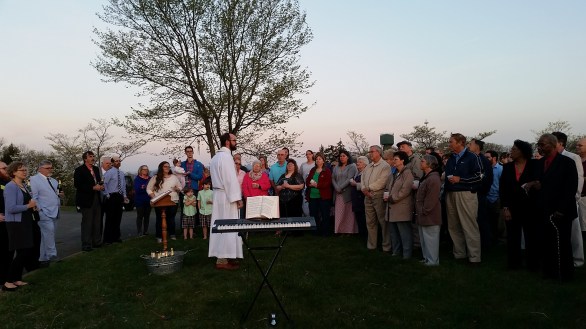
Hallelujah! Hallelujah! Hallelujah! Man it feels good to say that word! In the church I serve, we have purposely avoided saying “Hallelujah” since before Ash Wednesday. No hymns, no prayers, no sermons contained the word. And now we can shout it out with all the pent-up gusto we’ve been holding in throughout Lent. Hallelujah! He is risen!

NT Wright is quite a famous theologian and he has said on numerous occasions that on Easter Christians should break out the champagne! But, we’re good United Methodists, so we’re stuck with Welsh’s Sparkling Grape Juice, plus it’s 6:30 in the morning and a bunch of us have other church services to go to after this!

But nevertheless, it’s time to pop some bottles and celebrate! I’ve passed out bottles to all the clergy so just go to the closest pastor to receive your cup. It’s time to shout out some Hallelujah and drink some Methodist champagne!

A Toast: To the God of Grace and Glory who broke forth from the tomb; Hallelujah!

Easter: What is this day all about? For centuries people like you and me have gathered like this to remember the first Easter. But, has Easter changed throughout the centuries?

We have a lady at St. John’s who, I believe, is keeping Hallmark in business. Whenever I visit people from our church community there is a better than good chance that I will see a card from Dianne on a refrigerator, or on a countertop, just to brighten someone’s day. And, wanting to be more like Dianne, I started looking through the greeting cards at Rite-Aid the other day in the section titled, “Easter.”

I flipped through a handful, looking for something appropriate, but then I couldn’t stop myself. And before I knew it I had gone through every single Easter card. They were all filled with nice words like “renewal” and “rebirth” and “revival.” They had colorful pictures of butterflies, lilies, and baby bunnies. But not one of them contained the right word: Resurrection.

easter-sunday1120-1024x576

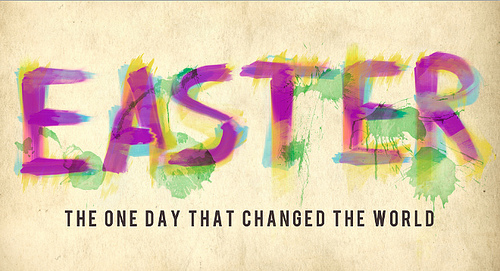
Easter is not the celebration of spring.

This is important! While we are bombarded with images and messages about spring being the season of rebirth and renewal, the resurrection is something entirely different.

I can assure you that the women who walked to the tomb that first Easter were not captivated by the birds singing in the air, or the new buds bursting from the trees. They, as Mark so eloquently puts it, were afraid.

But we are far removed from the strange new world of the bible, and instead we like to make Easter about the egg hunts, the bunny who comes like a thief in the night, and the rebirth of nature. Maybe then, we are actually just like the women who fled from the tomb; the message and power of the resurrection is such that we can barely bring ourselves to say anything about it at all.

I, or any of the fine preachers from Staunton, could stand before you this morning and talk all about the change of seasons, the wonder of the birds chirping as the sun rises, the call to a new life. But does any of that actually grab you? Does it terrify you? Does it fill you with such hope that you would stand against the tyranny of the Roman Empire?

Easter is not about spring. Easter is resurrection.

Resurrection is God’s penultimate Word to us, His creatures. And frankly, it should make us tremble and consider running in the other direction because recognizing this new truth and new reality means that we will, sooner or later, have to give up our dependence upon the things that the world tells us we need: beauty, security, wealth, power, careers, out loved ones, even our lives.

But since you’re here at the crack of dawn to worship the living God, you must surely get it already. You’re here because your lives have been transformed by the power of the resurrection and you can’t go back. Or maybe, just maybe, you’re like me and you’ve heard this story so many times before that you’ve become a little numb to the Good News of God bursting from the tomb. Perhaps we need to be shocked or afraid like the women who ran away. Maybe resurrection isn’t supposed to make us smile and grin. Perhaps resurrection is supposed to make us run away in bewilderment.

Resurrection changes everything.

Just shy of a year ago, my wife gave birth to our son Elijah. And at first it was terrifying. I’ll never forget pushing him in his little basinet down to the recovery room and Lindsey finally getting to rest after the draining ordeal of childbirth. My beautiful wife was sleeping soundly, and our beautiful baby boy was asleep at the foot of her bed. It was a profoundly holy moment. And then Elijah started choking.

At first I looked around for a nurse or a doctor to do something, and then remembered that we were all alone. So I got up, rushed to him, used a suction cup to clear his throat, and he promptly nuzzled into my neck.

Having a baby changed everything.

Eventually we made it home and started figuring out how to exist with another tiny little human being in the house. We got into a good rhythm. And, I decided to start reading to him every night.

He was barely a month old when I picked up my collection of the Chronicles of Narnia and began with The Lion, The Witch, and The Wardrobe. Every night I would flip through the old and worn pages that called us into the strange new land of Narnia. And, of course, it meant nothing to him, but it meant everything to Lindsey and me.

We read the entire collection in just over a month and the very last paragraph of the very last book goes like this: And for us, this is the end of all stories… But for them, it was only the beginning of the real story. All their life in this world and all their adventures in Narnia had only been the cover and the title page: now at last they were beginning chapter one of the Great Story, which no one on earth has read: which goes on forever: in which every chapter is better than the one before.

narnia1

The end of Mark’s gospel, this wonderful bit about the women running away afraid, is no ending at all. It is a great ellipsis in which the story continues through us. The women were afraid because the resurrection was unlike anything this earth had ever known. They could not comprehend the sheer magnitude of God’s dynamic and reality-altering gift in his Son breaking free from the chains of death.

But their story, and our story, does not end with the written gospel. Their story, and our story, is resurrection. The gospel of Jesus Christ, the Son of God, is always unfinished. There is an unwritten page left for each of us to write, in which we record the many glorious, joyful, and even frightening things that God has done for and through us.

Easter, resurrection, isn’t perfect like a hallmark card. We cannot contain the inexplicability of God raising Jesus from the dead in pastel colors with a simple quote about renewal. It’s strange, and complicated, and scary.

For some of us Easter creates more questions than it provides answers. For the women at the tomb it was frightening and astonishing. For all of you it probably feels uncomfortable as we passed around out Methodist champagne with shouts of Hallelujahs while gathering in a place like this: a cemetery.

Easter can be downright terrifying.

But’s its not the end of the story. Jesus came alive so that we could come alive. The resurrection forces us to not experience Easter as just a day when the seasons change, but the very life-altering, earth shaking, cosmically confusing, moment of transformation of all things.

This, what we’re doing here, is our witness to the fact that we do not know what will happen next. We do not know when the bell will toll for us. And, if we’re truly honest with ourselves, this frightens us.

But hear the Good News: resurrection is the beginning of a new story, which goes on forever, in which every chapter is better than the one before. Jesus’ story, our story, has no end.

Hallelujah! Amen.

Devotional – Luke 10.39

Devotional:

Luke 10.39

She had a sister named Mary, who sat at the Lord’s feet and listened to what he was saying.

Weekly Devotional Image

The last week has been filled with tragedy and senseless violence. A black man was shot and killed by a police officer after selling CDs in front of a convenience store and a black man was shot and killed after a routine traffic stop for a broken taillight. In response to their deaths, 5 law enforcement officers were murdered in Dallas during a peaceful protest and another 7 more were injured. As we talked about all that had taken place over the last week during church yesterday, all anyone could talk about was their inability to get away from the suffering; every time they got online, or turned on their television, they were bombarded with the images of terror and destruction that had taken place across the American landscape.

And honestly, right now, we need to open our eyes to these tragedies. For too long those of us who are too comfortable with our white privilege have neglected to do the Christ-like work of becoming uncomfortable and standing with our black brothers and sisters. For too long those of us who are too comfortable with our white privilege have made the false assumption that this is not our problem. It is.

But to step into this situation, as a Christian, without first sitting and listening at the feet of Jesus will only further the kinds of vitriolic violence that we’ve seen this last week.

As the events transpired in Baton Rouge, Minneapolis, and Dallas countless people jumped to social media to vent their frustrations and quickly condemn those who they believed were responsible. Without taking the time to listen and be still, many of us put up our walls to the people and opinions around us and did everything we could to make sure our voice and our opinion was heard (or read). From the comfort and safety of our computers and cell phones we engaged in social media warfare.

_90345723_mediaitem90345722

To sit and listen to Jesus is a bold and daring thing to do. It requires us to wrestle with differing opinions and perspectives. It challenges us to seek out those who we often miss and stand with them shoulder to shoulder. It implores us to seek unity in the midst of chaos, hope in the midst of terror, and resurrection in the midst of crucifixion.

So today, we pray for the Lord to crucify our prejudices that we might be resurrected into new life in Christ. That instead of rushing to make our opinion heard we might listen, learn, and love. That instead of furthering the fear and hatred, we might respond with grace. That instead of remaining comfortable with our Christianity, we might take uncomfortable steps toward making the kingdom of God manifest here on earth.

The Politics of Easter: A Reflection

Matthew 28.3-5

His appearance was like lightning, and his clothing white as snow. For fear of him the guards shook and became like dead men. But the angel said to the women, “Do not be afraid.”
6818680928_cd412c2345

A few weeks ago I told the church I serve about my experience of voting during the Virginia Primary. When I arrived at my voting location I was disappointed with the limited number of participants. But by the time I left, the parking lot was starting to fill rapidly.

When I got into the building I went over to the table to receive my instructions and eventually got set up with a machine to cast my vote. While my wife finished registering and voting I stood off to the side.

I really try not to eavesdrop, but sometimes it feels impossible. When people walk into a building and starting shouting things, it’s hard not to notice.

The first man came in wearing bib overalls, dirt all over his boots, with his hair going every direction. When he arrived at the table the volunteer asked, “What party will you be voting for?” The man stared blankly back and then declared, “Well, I ain’t no socialist so I’ll be voting Republican.

The second man came in wearing a perfectly pressed suit, with a tie clip, and an expensive looking watch on his wrist. When he arrived at the table the volunteer asked, “What party will you be voting for?” Without taking time to think about his answer he said, “I can’t trust Hillary but I’m still voting Democrat.

The first woman came in wearing a completely coordinated outfit, her hair and makeup looked perfect, and her heels were so high they started giving me vertigo. When she arrived at the table the volunteer asked, “What party will you be voting for?” I don’t think the woman was really paying attention because she filled the next few minutes trying to convince the volunteer that our country is in a mess and the only good option we have left is the Christian Ted Cruz.

The next woman came in wearing a sweat suit, with spit-up on her shoulder, while making a comment about her baby waiting in the car. She was clearly in a rush so when the volunteer asked, “What party will you be voting…” She interrupted and yelled, “Anyone but Trump!

It didn’t take long for me to notice that all of the people coming in to vote were doing so out of fear. None of them were particularly satisfied with any of the candidates, they represented different walks of life, and the one thing that united them was fear.

The two most well known stories of the New Testament bookend Jesus’ life. The two most well attended church services in the year similarly reflect these bookends: Christmas and Easter. As a pastor, I’ll be the first to admit that there are some of the hardest services to plan and preside over. And honestly, I feel guilty about how much they stress me out. They’re supposed to be the most joyful and incredible worship services in the year, and they leave me feeling anxious.

Part of the problem is the fact that a whole lot of people show up on Christmas and Easter who otherwise never attend church. That means that we’ve got one hour to show them how powerful regular worship can be in the hope of getting them to attend worship between the major holidays.

The other problem is the fact that most of the people who attend on Christmas and Easter already know the story. It has been told for two millennia and a 15-minute sermon from a pulpit is unlikely to shine a new light on either narrative.

But the biggest problem with Christmas and Easter is the fact that many of us read ourselves into the story as the wrong characters.

On Christmas Eve we hear about the angel Gabriel visiting Mary and Joseph to share with them the Good News that they will be bring God in the flesh into the world. They, of course, are terrified by this news but the angel says, “Do not be afraid.” We like to stop the story there because it fits well with our sensibilities. We like to think about being afraid of starting something new and God showing up to reassure us.

But the story goes on to talk about Herod’s fear. Herod heard about a messiah possibly being born in Bethlehem. Out of fear that this child will one day usurp his power, he ordered all of the babies born in Bethlehem to be murdered. Obviously, this is not a popular topic for Christmas Eve. But it is important. It is important because most of us have never, nor will we ever be in a position like a Mary and Joseph. We have families and a government that support our way of life. We know we have people to count on, we know that there is money in our bank accounts. Many of us will never know the fear that Mary and Joseph experienced on that Christmas Eve.

But many of us can connect with Herod’s fear about people in a faraway place whose existence threaten our power and way of life. (Think Syrian Refugees or ISIS)

On Easter we hear about Mary Magdalene and the other Mary going to the tomb expecting to find Jesus’ dead body, and instead they experience an earthquake and an angelic presence. The angel says to the women, “Do not be afraid.” But he scares the Roman guards nearly to the point of death. We like the story to focus on God’s power over death and Jesus’ resurrection from the grave. We like to hear about how Jesus’ victory over death opens up the gates of heaven for people like us.

But the story specifically sets up a distinction between the women at the tomb, and the guards at the tomb. And if we’re honest, most of us are like the guards in the story; we’re Caesar’s people. We might know about loss and suffering, we might’ve experienced the awful power of death in a loved one or friend, but we’ve never had to tread lightly for fear that our political system will murder us for speaking out, we’ve never known what it’s like to watch someone die on a cross and then be placed in a grave, we’ve never had to guard our political opinions because we live in the land of freedom.

But what we do know is that most of our lives are pretty good. Many of us have the right skin color, the right passport, the right education, the right sexual orientation, and the right amount of wealth to be rewarded in our society.

And Jesus, the guy Christians claim to worship on Christmas, Easter, and every Sunday in between, came to make the first last and the last first.

So maybe we should be afraid. We should be afraid because God raised his Son from the dead and calls us to sacrifice our own lives for people who betray us. Maybe we should be afraid because we’re told to take up our cross and follow Jesus. Maybe we should be afraid because Jesus tells us to love our enemies, whether they support Bernie Sanders or Hillary Clinton or Ted Cruz or Donald Trump.

When angels show up in scripture, but in particular at Christmas and Easter, they come to people who have every reason to be afraid and they bring words of comfort: Your Son will be God in the flesh; Jesus has been raised from the dead. God speaks to the outcasts, to the last, least, and lost and brings them Good News.

We, who have nothing to fear, we who are so comfortable and content in our lives… Maybe it’s time to recognize that following Jesus’ will disrupt the comfort and the contentment we feel. Maybe it’s time to start praying for and acting on behalf of people who are belittled and broken by our political system. Maybe it’s time for us to stop ignoring everyone with a different way of life, particularly if have a different skin color, a different passport, a different education, a different sexual orientation, or a different socio-economic status. Maybe it’s time to hear the Good News of Jesus Christ and let it shake our lives.


(with thanks to Jason Micheli for inspiring parts of this reflection)

Calming the (Political) Storm

Mark 4.35-41

On that day, when evening had come, he said to them, “Let us go across to the other side.” And leaving the crowd behind, they took him with them in the boat, just as he was. Other boats were with him. A great windstorm arose, and the waves beat into the boat, so that the boat was already being swamped. But he was in the stern, asleep on the cushion; and they woke him up and said to him, “Teacher, do you not care that we are perishing?” He woke up and rebuked the wind, and said to the sea, “Peace! Be still!” Then the wind ceased, and there was a dead calm. He said to them, “Why are you afraid? Have you still no faith?” And they were filled with great awe and said to one another, “Who then is this, that even the wind and the sea obey him?”

160221104601-donald-trump-hillary-clinton-ted-cruz-marco-rubio-bernie-sanders-composite-exlarge-tease1


On Tuesday morning, Lindsey and I woke up early to hit the polls before work. We were expecting long lines so we made sure to plan for enough time and double check our voting location. When we arrived, we were both a little shocked to discover the limited number of participants but we walked into the building with excitement.

I went over to the table to receive instructions and eventually went over to the machine to cast my vote. Lindsey, however, was forced to reregister because of a filing error, so I stood off to the side and waited patiently.

I really try not to eavesdrop, but sometimes it feels impossible. When people walk into to a building and start shouting things, it’s hard not to notice.

The first man came in wearing bib overalls, dirt all over his boots, with his hair going every direction. When he arrived at the table the volunteer asked, “What party will you be voting for?” The man stared blankly back and then declared, “Well, I ain’t no socialist so I’ll be voting Republican.

The second man came in wearing a perfectly pressed suit, with a tie clip, and an expensive looking watch on his wrist. When he arrived at the table the volunteer asked, “What party will you be voting for?” Without taking time to think about his answer he said, “I can’t trust Hillary but I’m still voting Democrat.

The first woman came in wearing a completely coordinated outfit, her hair and makeup looked perfect, and her heels were so high they started giving me vertigo. When she arrived at the table the volunteer asked, “What party will you be voting for?” I don’t think the woman was really paying attention because she filled the next few minutes trying to convince the volunteer that our country is in a mess and the only good option we have left is the Christian Ted Cruz.

The next woman came in wearing a sweat suit, with spit-up on her shoulder, while making a comment about her baby waiting in the car. She was clearly in a rush so when the volunteer asked, “What party will you be voting…” She interrupted and yelled, “Anyone but Trump!

It didn’t take long for me to notice that all of the people coming in to vote were doing so out of fear. None of them were particularly satisfied with any of the candidates, they represented different walks of life, and the one thing that united them was fear.

On that day, when the evening had come, Jesus said, “Let us go across to the other side.” As the sun was setting in the distance, darkness was hovering over the waters, and Jesus suggested that it was time to go across the Sea of Galilee. And this was no simple journey; Jesus had been ministering to the Jews in the Jewish territory, but now he wanted his disciples to go across to the other side, to the gentiles.

This is probably Jesus’ first foray into dangerous territory, his first opportunity to proclaim a sense of inclusion that still mystifies most of us today.

And while they were out on the water, making the journey from their side to the other side, a great windstorm arose, smashing waves against the boat so hard that it was being swamped with water. But Jesus was asleep! So the disciples woke him up and asked, “Teacher, do you not care that we are going to die?

Jesus woke up, rebuked the wind, and said to the sea, “Peace! Be still!” and there was a dead calm. He turned to his disciples and said, “Why are you afraid? Have you no faith?

They were definitely afraid; afraid of the wind and the waves crashing against the boat, afraid about the journey to the other side, afraid for their very lives.

And notice that Jesus does not say, “There’s nothing to be afraid of.” There are plenty of things for Jesus’ disciples then, and now, to be afraid of: isolation, pain, illness, losing one’s job, money problems, failure, death. Instead, he asks, “Why are you afraid?”

            Why are you afraid for your lives when I’m here on the boat with you?

            Why are you afraid of rejection and failure when I’m here with you in life?

            Why are you afraid of death when you know that I rose from the grave?

What a fitting text for this political season in our lives. While many of us grow tired of the countless fights and arguments that break out on the news, while the chain of endless debates rattle with sound bite after sound bite, while people go to the polls to vote against someone rather than for someone, Jesus asks, “Why are you afraid?”

029-james-ensor-theredlist

We are afraid. We are afraid of the wind and the waves that assail our fragile ships. We are afraid for our lives, our church, our cities, our politics, our country, our world. We fear disapproval, rejection, failure, meaninglessness, illness, death… We are held captive by the power of fear.

And perhaps our greatest fear is of anything that differs from us. We are so contented in life that we fear death. We are so rooted in our Republicanism that we fear Democrats, or we are so Liberal that we fear Conservatism. We are so constantly surrounded by white middle-class Christian America, that we fear anyone who is black, or Hispanic, or Muslim, or Atheist. We are so used to seeing the traditional family unit of a husband and wife with 2.5 children that we are afraid of anyone who is lesbian or gay.

And Jesus is the one telling us its time to go to the other side. Jesus is the one who knows, even better than us, that there is plenty to be afraid of, but those things do not have the final word.

What we fail to remember and realize, is that we were once the outsiders that Jesus welcomed in. We were the gentiles waiting on the other shore for an incredible Messiah to show up and graft us in. If it were not for the incredible inclusiveness of Jesus’ ministry, none of us would be here in this place, none of us would have been blessed with grace, and none of us would have received the gift of the cross.

And now we face a time with other outsiders, people for whom many of us are afraid of, people who will rock our boats. And as we get closer, as the scales begin to fall from our eyes, as we begin to see others as brothers and sisters instead of enemies, that’s precisely when the storms start billowing in, playing toward our fears.

“If we start working with the Republicans, we will lose everything we once deemed sacred…”

“If we let another Democrat into the White House, God only knows what kind of terrible things will happen to us…”

“If we start changing what we do on Sunday mornings, the church will die…”

“If we start affirming their relationships, the traditional family will die…”

“If we start opening our borders, our country will die…”

Jesus knows best of all, that we cannot have resurrection without crucifixion.

The call to not be afraid bookends the gospel. It is there at the beginning when the angel Gabriel shares the news of the coming Messiah with Mary, and it is there at the end when the disciples encountered the angels on the first Easter. Not because there are no fearsome things on the seas of our days, not because there are no storms, but rather, because God is with us.

That night on the Sea of Galilee, Jesus brought peace in the midst of the storm. This kind of thing happens all the time when people are willing to look past their fear and remember that Jesus is in the boat with us.

Painting184B

It may be at the polls while people are arguing about the fate of our country, it may be at General Conference when people are arguing about homosexual relationships, it may be in our own families when people are arguing about anything under the sun.

We will face strong winds and huge waves in the middle of a storm. Jesus wants us to remember that he will always be in the boat with us; that we can rely on his strength and mercy when ours runs out; that the prince of peace will always calm the waters.

On Wednesday night I had the youth of our church read the story of Jesus’ calming the storm. We discussed the types of storms that we have witnessed in our lives and then we started to talk about fear. I gave each of them a permanent marker and a plate with the instructions to write down their deepest and truest fears. I promised them that whatever they wrote was between them and God, but they also talked about fears they felt comfortable sharing…

“I’m afraid of death.”

“I’m afraid of our government.”

“I’m afraid of being alone.”

Then we went out into the back parking lot and we smashed the plates into tiny pieces. After we collected all of our broken fears, we started to glue them back together in the shape of the cross (you can see it right here).

Christ’s cross shatters our fears, it breaks down the moments that haunt us, and remind us over and over again that we are not alone. To wear a cross around our necks, to see one in the sanctuary, is a witness to the fact that the cross shatters our fears. The cross is a reminder that God is with us; with us in on the seas of life, with us in our most frightened moments, with us when we need him.

This part of the sanctuary is called the nave. The word comes from the Latin navis, which means “ship.” If you look up at the ceiling, it looks like the inside of a boat. In this place we are bombarded with images of the cross and the ship on the sea as a reminder of how God is with us.

Every week we gather here into this boat, with Christ as the captain, calming the wind and the waves of our fears.

Every week we hear scriptures, and hymns, and prayers that help to remind us who is our real hope and salvation while the world feels like it’s falling apart.

Every week we gather in the boat to remember that Jesus promised to be with us always, even to the end of the age.

Don’t be afraid. Amen.

What Are Angels?

Hebrews 13.1-3

Let mutual love continue. Do not neglect to show hospitality to strangers, for by doing that some have entertained angels without knowing it. Remember those who are in prison, as though you were in prison with them; those who are being tortured, as though you yourselves were being tortured.

xlba-00052

This morning marks the beginning of our sermon series on Questions. After polling all of you about your queries regarding faith, scripture, and the church, I compiled three of the most prevalent questions: What Are Angels? What Does The Bible Say About Divorce? And How Can We Be Biblically Wise? Though there are no simple, black and white, answers to any of these questions, we will strive over the next few weeks to bring clarity to our wonder. This morning we begin with “What Are Angels?”

Close your eyes. Seriously. Close your eyes. Picture, if you can, an angel. What do you see? Think about the movies you’ve watched, or the stories you’ve read about angels and try to picture one in your mind. What do you see? If you’re anything like the people I encountered this week, people who tried to picture an angel in their mind, you would describe the vision like so: “Angels are clothed in white and might be glowing.” “All angels have halos hovering above their heads.” “You can’t be an angel without wings.” “When we lose someone we love, they come back to us as angels.”

If we want to know what angels are, then we should begin with what they look like. And if we want to know what they look like, we should begin with scripture.

Angels are mentioned 273 times in the Bible. That’s a lot. They appear in both the Old and New Testaments. They appear to prophets and paupers. They minister to the wealthy and the weak.

I know many of us like the image of an angel with a halo, during our Preschool Pageant all of the angels had pipe cleaner halos hanging above their heads, but halos are never mentioned in scripture. Angels, when they do appear, are oftentimes described as having a particular shine or brightness, but they don’t have floating discs above their heads.

Some passages describe angels having wings, but others just describe them as looking like human beings. Zechariah is in the temple when an angel, who looked like a man, appeared and told him about his son John the Baptist. After Jesus was born, an angel appeared in Joseph’s dream and warmed him to get the child out of Bethlehem. Even when the disciples went to the tomb after Jesus’ crucifixion they saw two men in shining garments who told them about Jesus’ resurrection from the dead.

Well then, what do angels do? They report to God, they observe God’s people (us), they announced the birth of Jesus to the shepherds in the fields, they help God’s people when they are in need, and they rejoice in God’s creation and offering of salvation.

The descriptions and stories of angels in scripture vary and are all over the place. They certainly exist and work for God’s purposes, but that doesn’t make them any easier to understand or grasp. However, there is one thing that connects most of the angels in the bible, and it’s the way people react to their presence: fear.

the_ministry_of_angels_in_the_lives_of_believers

Before I came to St. John’s, I spent a year working as an on-call chaplain for Duke University Hospital in Durham, North Carolina. Every week I gathered with other chaplains to talk about grief, death, and suffering. We worked through our own issues with the brokenness in the world, and we were responsible for visiting people in need throughout the community.

I often met with people near the end of life who were tasked with making decisions about the way they wanted to die. Throughout my time in chaplaincy I became well versed in the topics of Do-Not-Resuscitate, Advanced Directives, and Power of Attorney. I was invited into some of the darkest moments of peoples lives and while everyone else would tell someone that they were going to be okay, that they would get better, I was one of the few people tasked with telling the truth: no one makes it out of this life alive.

During my year of chaplaincy, I had multiple 24-hour shifts at the hospital. I would put on my overly large white lab coat and respond to particular patients and their needs. More often that not I would be called to a room for someone who was lonely and just wanted another human being to be present with them. But every once in a while, I would be called to a room with a patient who needed something more.

It was 4 am, and I had been running around the hospital for my entire shift. Every time I thought I would have a moment to rest, a patient would die and I would have to meet with the grieving family. At 4am I received a page to a particular unit on the other side of the hospital with the words: We Need You.

Outside of the patient’s room I learned from the doctor and nurses that the patient was about to die; there was nothing else they could do to prolong her life and they wanted me to sit with her. Normally one of the nurses would stay in the room but they were so swamped with other patients that they could not spare another nurse. Of course, I asked about any family member that would want to be present and the staff just looked back at me with empty eyes and said, “She’s all alone.”

They left me standing there in the hallway, so I said a brief prayer and then walked right in.

Something about the hospital room was different. Whereas most are filled with machines making lots of noises, this room was quiet and peaceful. And strangely enough, I remember it being very warm; warm enough that I had to take off my lab coat and roll up my sleeves. The woman was lying in the hospital bed and was going in and out of consciousness. So I pulled up a chair and started to hold her hand.

For thirty minutes I sat there looking at the wrinkles on her skin wondering about her life, wondering about why no one else was there with her at the end, and if I should say anything. Instead, I just sat and held her hand at the minutes went by. I couldn’t even imagine the kind of pain and hurt I would’ve felt if I was in a room all by myself at the end of my life, and if I’m honest, the thought of it made me cry while I sat there holding her hand.

I don’t know how long I had been there when she started to move around a little bit more and opened her eyes to look right at me. We held one another in sight for some time when I felt like I needed to explain why I was there, so I said, “I’m the chaplain and I didn’t want you to be alone.”

            In response, she smiled her so slightly and said, “I’m not alone.”

After that holy moment, we continued holding hands in silence until her breathing started to fade away, until her heart stopped beating, until she died.

That night at the hospital, when I was afraid of the power of loneliness, when that woman was facing her final earthly moments, I believe there was an angel in the room with us. I couldn’t see it, but as soon as she told me that she wasn’t alone, I knew it was true.

If and when God sends angels to us, we are either very afraid, or are about to be afraid by their presence. It is a humbling and powerful thing to be attended to by the likes of an angel and it really puts us in our place. I have asked countless people form our church if they have ever seen or experienced an angel and I was shocked, in a good way, by how many people said yes.

I heard things like: “My grandfather had just passed away and my brother and I were driving around Staunton when we saw a man who looked exactly like our grandfather walking down the street, wearing the same type of clothes, who took out a comb just like our grandfather did to comb his hair, and we knew that even though he died, he was still with us.”

“My sister was driving in her car when she felt asleep at the wheel and veered off the road. She woke up while the car was flipping over and she said she felt time slow down and arms wrap around her to protect her. While the car tumbled and tumbled she was held tight and only after the car stopped moving did she feel the protective arms let go and she was okay.”

Big and small, dramatic and simple, angels have showed up in our lives. The writer of Hebrews tells us to be faithful in our hospitality toward others because we never know when an angel will show up in our midst. Whether it’s in a hospital room, or driving through town, or even in church, angels show up.

When I first felt God calling me to ministry I was afraid. I was afraid of how my family would respond, and what my friends would think. I was afraid of whether or not I had what it would take to be a pastor. I was afraid of how much it would change my life.

And then at 16, while walking down Ft. Hunt road in Alexandria, VA I felt pulled to my knees and I prayed and prayed. I didn’t see an angel near me, or hear an angel speak to me, but I felt an angel’s presence with me as I prayed for God’s will to be done in my life, and not my own.

I can only articulate that experience of an angel in my life and in that hospital room because the church has given me the vocabulary of divine intercession. I can only look back and say that an angel was with me, because the church taught me how to open my eyes to the ways that God actually works in the world. Others might talk about a bizarre feeling they had or a strange movement in their midst. The church taught me to understand those experiences as angelic and holy moments.

What are angels? Angels are God’s way of helping us to see and experience God’s will in our lives. Angels are God’s way of pushing and nudging us in the right direction. Angels are God’s way of bringing us peace when we feel the depth of fear. Angels are God’s way of reuniting the heavens and the earth in profound and holy moments. Angels are God’s way of rescuing us from ourselves. Angel’s are God’s way of reminding us that we are never alone.

I conclude with these words from the hymn that we will sing in a few moments. I offer these words so that they might help us to recognize and experience the angels in our midst. O Lord, Open my eyes that I may see, glimpses of truth though hast for me. Open my ears that I may hear, voices of truth thou sendest clear. Open my mouth and let me bear, gladly the warm truth everywhere. Silently now I wait for thee, ready, my God, thy will to see. Open my eyes, illumine me, Spirit divine. Amen.