Stuck In The Bushes

Romans 5.12-21

Therefore, just as sin came into the world through one man, and death came through sin, and so death spread to all because all have sinned – sin was indeed in the world before the law, but sin is not reckoned when there is no law. Yet death exercised dominion from Adam to Moses, even over those whose sins were not like the transgression of Adam, who is a type of the one who was to come. But the free gift is not like the trespass. For if the many died through the one man’s trespass, much more surely have the grace of God and the free gift in the grace of the one man, Jesus Christ, abounded for the many. And the free gift is not like the effect of the one man’s sin. For the judgment following one trespass brought condemnation, but the free gift following many trespasses brings justification. If, because of the one man’s trespass, death exercised dominion through that one, much more surely will those who receive the abundance of grace and the free gift of righteousness exercise dominion in the life through the one man, Jesus Christ. Therefore just as one man’s trespass led to condemnation for all, so one man’s act of righteousness leads to justification and life for all. For just as by the one man’s disobedience the many were made sinners, so by the one man’s obedience the many will be made righteous. But law came in, with the result that the trespass multiplied; but where sin increased, grace abounded all the more, so that, just as sin exercised dominion in death, so grace might also exercise dominion in death, so grace might also exercise dominion through justification leading to eternal life through Jesus Christ our Lord.

I take a lot of pride in my ability to communicate with people of different age groups. On any given week I will spend time explaining theology to five year olds in our preschool, fifteen year olds in our youth group, 50 year olds in our bible study, and then the rest of you on Sunday morning. It is definitely a challenge taking ideas from the likes of Paul and proclaiming them in a way that can be appreciated for the here and now for the young and old.

But sometimes, I fail.

Like the time I tried to address the moral and ethical dilemmas of Capital Punishment to our youth group one night, to the times I’ve tried to proclaim the strange complexity of confronting our finitude on Ash Wednesday to our preschoolers, to the times I’ve told some of our much older adults that one must have the faith of a child to inherit the kingdom of God.

Communicating the gospel, sharing the Good News, is a challenge, and I definitely failed once when we were on our mission trip to West Virginia a couple summers back. Picture it, if you can: It is hotter than blazes outside, and I’m stuck in a tiny kitchen surrounded by teenagers who would rather be instagramming and snap chatting one another than cleaning a floor or painting a ceiling. And it was silent.

So I did what I do: I started asking questions…

“What’s your favorite story from the bible?”

One of our boys immediately said something about David defeating Goliath. The Davidic story will forever rest in the hearts of prepubescent boys who struggle with how rapidly the girls are growing while they remain the same.

A boy from another church said, “Well, I kinda like the one about, you know, Jesus feeding people?” while saliva poured out of his mouth as he stared at the cooler in the corner filled with our lunches.

A girl from a different church said, “I’ve always been rather captivated by Jesus turning water into wine at the wedding at Cana in Galilee.” To which I made a mental note to bring this up with her youth group later in the evening. No sensible teenage girl should be thinking about water turning into wine, and certainly not when Jesus has anything to do with it.

We went on and on, and then it was my turn to answer. “Well” I said, “It’s not my favorite story, but I’ve always loved this little detail at the beginning of the bible, in the book of Genesis. Adam and Eve were placed in the Garden of Eden with a choice. They could choose to live in perfect harmony with God and God’s creation, with each other, free from sin and free from death. But Adam and Eve made the wrong choice, they wanted to be like God, and as soon as they tasted the fruit from the tree of knowledge of Good and Evil, their eyes were opened, and they knew they were naked.

“But here’s the part that gets me every time. Almost as soon as they sin, they heard the sound of God walking in the garden and they both sprinted for the bushes. But God called out, ‘Where are you Adam? Where are you Eve?’ After waiting for a few moments, Adam popped his little head out of the bushes, and told God that he was hiding because he was naked and afraid.”

To which God said, ‘Who told you that you were naked?’

“Isn’t that hilarious?” – The teenagers had all stopped working while I was sharing the story, and now they were all staring at me with eyebrows askew. I could hear the paint dripping off their brushes onto the floor as if even the crickets were too concerned to chirp. One of the boys finally broke the silence to say, “Um… I don’t think it’s very funny. If I were naked and God came looking for me, I’d run for the bushes too!”

Do we know this old, old, story? Do we know what sin is? Do we know what happened to Adam and Eve in the Garden of Eden?

What kind of stories and habits and beliefs do we want to pass on to the coming generations? I feel like I am forever hearing about the good ol’ days when “we knew our bibles” and “we would’ve gone to school with snow like this when I was a kid” and “we entertained ourselves with our imaginations and not a screen in our pockets.”

Do we wish that things could go back to the way they were? Are we worried about the future that we are handing to our children?

We can talk and talk about what we want to pass on, what we hope to engender, but if we don’t know our story, if we don’t know where we came from, how in the world can we even hope to take a step in the right direction?

tumblr_nfzluvor3q1sk7sreo1_500

Just as sin came into the world through one man… Paul assumes that we know the story, that we know the details of the Garden. He does not waste lines in his letter rehashing the characters and the questions, he gets right to the point: Sin came into the world through Adam and Eve. They, and therefore we, broke the covenant with God. The transition from God’s rule to the rule of sin and death came into the world because of our rebellious and disobedient desires.

This is our condition. There is no going back. Fear and shame and anger and disappointment are our lives. We are, in a sense, stuck in the bushes for good, hoping that God will not come looking for us.

We are in the bushes. And Lent is a great time to ask the question: Why? Which of the commandments have we broken? Did we work on the Sabbath? Have we hated our mothers or our fathers? Did we covet something that did not belong to us? An object, a job, or God forbid, a person?

How would we respond if we heard God walking toward us in the middle of our sin? We, like Adam and like that boy on the mission trip, would run for the bushes.

Paul assumes that we know the story of Adam and Eve in the Garden because it is OUR story! Adam’s sin is our sin, and it not only divided us from God, but also brought death into the world, which spread like a disease. This is Paul’s point, and he says it in these few verses over and over again.

We are trapped in sin and death and we are stuck in the bushes. That’s the story of the Garden. Is this what we want to pass on?

Truly I tell you, we cannot know who we are to be, if we do not know our story. This inexhaustible, unexplainable, indescribable moment from the beginning is who we are. It is the story of how the life of order fell into disorder. But, thanks be to God, it is not the end of the story.

Adam brought the entirety of humanity down, down to the depths of death and destruction. Jesus, however, is the new way who is able to create a new humanity.

The promise of a good and remade and hopeful future comes from the old story that is forever new. The story of our death, and then the death that freed us from sin and death.

In Jesus Christ our stories are made new; God, as the author of salvation, takes up the pen and starts a new chapter through the life, death, and resurrection of his son. This is the story that those who are coming, the one who will follow us, need to hear. This is the story we need to share. We need to pray for the courage to shout this story from the rooftops as if our lives depended on it, because they do.

The only way to victory, the way to upend what was done in the Garden, is through the cross. We might think of a different way, a more efficient and less taxing way, but the way of the cross is the WAY that Christ defeated death.
08687e2b32757ff3722238f19cd727cd

But this is not an easy story to tell. The message and value of the cross comes with a cost. It is difficult, it is selfless, and frankly it is un-American. Today, we would rather surround the young with lessons that teach very different values: get the job, earn as much as you can, find the right spouse, buy the car, lose the weight, invest in the right companies, bring 2.5 children into the world, purchase the perfect house, and you will be free and life will be perfect.

That’s the story we tell. And it’s a lie! It’s all a lie! None of these things can give life. They cannot give us the identity and purpose and hope we so desire. The job will change, the money will disappear, the spouse will grow old, the body will too, the companies will falter, the car will rust, the children will not listen; Sin and Death corrupt them all.

But there is nevertheless Good News, there is a way out of the bondage that was brought into the world by the one we call Adam. We are freed through the one we call Christ.

We are stuck in the bushes of our own sin and shame. But Christ comes to us in the Garden of our own demise without a question, but a call. Jesus does not ask us who told us we were sinning, Jesus says follow me. Follow me to Galilee, follow me to Gethsemane, follow me to Calvary.

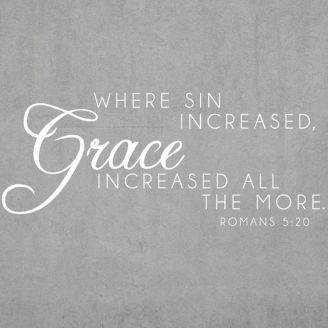
Jesus is the way and the truth and the life. Sin has increased in this world and in our lives, but God’s grace in Jesus Christ has abounded all the more.

The story, our story, began in the Garden, but it did not end there. It continued through the strange and wild wilderness in the days of Abraham, weaved through the journey to Egypt and back again in Jacob and Joseph. It rose through the power of David and Solomon, and fell through the failure of God’s people worshipping idols. It danced through the prophets who remained faithful to the Lord, it endured droughts and famines, it saw suffering and sadness. It connected the lives of the powerful with the powerless, it brought down the high and lifted up the lowly.

It was born again in a manger in a small town called Bethlehem; it trudged through the towns of Galilee and sailed over the sea. It walked through the streets of Jerusalem and turned over the tables at the Temple. It was dragged before the council and the ruling elite. It was marched up to a hill and nailed to a cross. It was silent in a tomb for three days. And it broke free from the chains of sin and death.

That is the story. It is a story worth telling over and over again; because in it we discover who we are and whose we are. In it we see ourselves stuck in the bushes being beckoned by Jesus to follow him. And in it we realize that it is not just a story, nor even our story, but THE story. Amen.


romans_feature-01

Devotional – Psalm 32.5

Devotional:

Psalm 32.5

Then I acknowledged my sin to you, and I did not hide my iniquity; I said, “I will confess my transgressions to the Lord,” and you forgave the guilt of my sin.

 Weekly Devotional Image

I want you to take both hands and squeeze them into fists as tightly as possible (seriously). They need to be tight enough that you actually feel strained as you do so. Keep them squeezed and think about something you’ve done recently that could be qualified as a sin. It could be as simple as getting really frustrated when that person cut you off at the grocery store for the line marked “Ten Items Or Less” and it was clear that they had at least 40 items in their cart; or the anger you experienced when your child brought home that less-than-stellar report card; or the shame you felt when you caught yourself flirting with someone while you were currently in a relationship with someone else. Just think of a recent sin.

Now: Quickly release the tension in your left hand. But don’t let go with your right; keep that one tight. You’ll notice that your left hand might have a little tingling sensation from being held tightly for a few moments, but otherwise it should feel relatively normal.

Yet, the longer you continue to hold your right hand clenched in a fist, the more it will start to hurt. At first it was fine, maybe even comfortable, but now you can feel the little aches in all the tiny muscles, you can even feel the blood struggling to flow where it needs to go.

But don’t let go.

Clenched Fist

Think about that same sin again. What did you do with it? Did you let it percolate and grow into something much bigger? Did you confess your sin to the Lord? Did you share your struggle with anyone else and ask for help?

Keep that right hand tight for just a little bit longer.

And now release the tension slowly.

It’s going to hurt. As your fingers gradually stretch back out you will feel stabs of pain in the muscles as your hand regains it’s feeling. And, once you finally flex them all the way out, they’ll probably start curling back into a fist without you trying to do so.

Sin is like our clenched fists. We all sin, every single one of us. From the four-year-old preschool student, to the life-long Sunday school teacher, to the Mom or Dad just trying to make sure the kids have their lunches ready before they leave for school. We all sin.

We can, like our left hand, release the tension of our sins quickly. In the moment we can recognize where we have fallen short of God’s glory and, as the psalmist puts it, we can confess and repent of our transgressions to the Lord and be forgiven. However, most of us are more likely to treat our sins the way we treated our right hand; we let them simmer and boil for far too long so that by the time we actually confess it hurts all the more, and the more likely we are to descend back into that kind of behavior.

The Lord will forgive our sins, but we have to confess them first.


Why You Can’t Read John 3.16 without John 3.1-15

strangely-warmed-spreaker-header

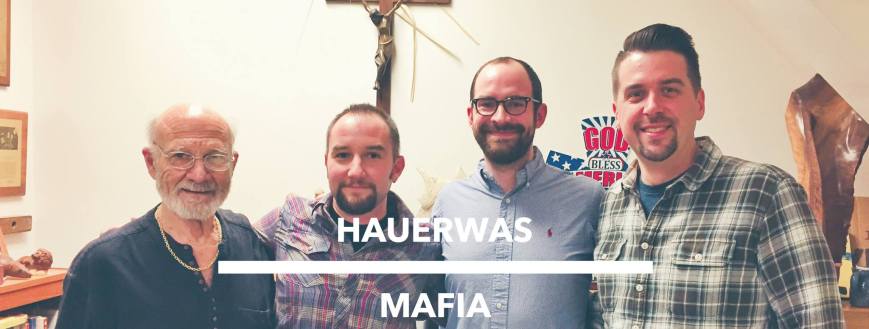
The team from Crackers & Grape Juice went down to Durham, NC a couple weeks ago to interview Stanley Hauerwas for our new lectionary Podcast Strangely Warmed. During our time together we talked about the readings for the second Sunday of Lent during year A from the Revised Common Lectionary and Dr. Hauerwas gave us a lot to chew on. If you want to hear the conversation, and learn why you can’t read John 3.16 without John 3.1-15, you can check out the podcast here: Year A – Lent 2

hauerwas

Devotional – Genesis 12.1

Devotional:

Genesis 12.1

Now the Lord said to Abram, “Go from your country and your kindred and your father’s house to the land that I will show you.”

 Weekly Devotional Image

And that’s how it all began. The Lord said to Abram, “Go.” In the entirety of the Old Testament, there are few passages as important and theologically profound as God’s calling of Abram to go to a strange new place. We can talk about Jacob wrestling with the emissary from God by the banks of the Jabbok river, we can talk about Joseph saving the Egyptian people from certain starvation, we can even talk about Moses’ trials and tribulations with the Hebrew people in the wilderness, but this moment with Abram, this call, sets in motion the great narrative of God with God’s people.

The sheer magnitude of such a call cannot be overlooked. During the time of Abram’s life, almost everything was dependent on staying in one’s country and with one’s family. Most people spent their entire lives, from birth to death, within a handful of miles and rarely explored anything outside the normal and comfortable dwelling of “home.” And yet God had the audacity, the boldness, and the faithfulness to call Abram to do the unthinkable: go to a strange new place and leave it all behind.

This, in a sense, is akin to the call of all Christians. We might not be asked to leave our home country, we might not be asked to leave our families, but we are certainly compelled to enter into strange relationships and moments around us. It is easy to stay within a certain bubble throughout our lives and never stretch too far into the unknown. We can develop rhythms and habits that actively prevent us from encountering anything out of the ordinary. But God is extraordinary.

go

Lent is a time for us to reflect and repent. We reflect on the many ways God’s has so graced us, and we repent for the many ways we have failed to positively respond to that grace. Lent is a time for us to all recognize the Abram within us, and wonder where God is calling us to go. What place are we avoiding because it makes us uncomfortable? What relationship have we let fall apart because it just felt like too much work? What frustrating behavior in a friend or a spouse or a child have we let percolate for far too long?

In some way, shape, or form God is calling each and every one of us to “go.” God calls us to “go” because our God is a God on the move. God cannot be relegated to a sanctuary on Sunday mornings at 11am, God is not absent until we pray for God’s presence, God is not sitting on a throne up in heaven watching us through a telescope. God moves, and so should we.

The End Of The Beginning – Ash Wednesday

Genesis 3.19

By the sweat of your face you shall eat bread until you return to the ground, for out of it you were taken; you are dust, and to dust you shall return.

If you’re here in this place, with these people, on this occasion right now, you are blessed. You are blessed because you understand, you grasp, what the church is really all about. We are a people called church, who follow Jesus and take upon ourselves the sins of the world.

However, we don’t take upon the sins of the world in the way Jesus did. We are told to take up our own crosses, but we don’t drag them up to a place called The Skull, and we don’t wait for people to nail us to them. We take upon the sins of the world in confession, a confession that God is our judge and has every right to be. Because we have failed to be the people God has called us to be over and over and over again.

The United Methodist Church has a document to help us whenever we gather together. The Book of Worship outlines the ways to serve the Lord for just about every occasion, including funerals.

The Service of Committal is brief and is reserved for the graveside. And in our Book of Worship you can find these directions for clergy: “Stand at the head of the coffin and while facing it, cast earth upon it as it is lowered into the grave. The pastor then says, ‘Almighty God, into your hands we commend your son/daughter, in sure and certain hope of resurrection to eternal life through Jesus Christ our Lord. This body we commit to the ground, earth to earth, ashes to ashes, dust to dust.’”

The last time I did a graveside burial, I held the Book of Worship in my hands like I’ve done too many times before, I read the all too familiar words, and when it came time to cast dirt upon the coffin, I couldn’t find any. I frantically looked at the area around the hole, and they had covered it with a frighteningly sharp bright green carpet of AstroTurf. So I bent down in my robe onto my knees, and I started ripping up the perfectly manicured grass on the edge of the fabricated lawn. I needed some dirt. I needed to dirty this pristine and picturesque committal service because death is ugly and disruptive. I clawed the ground and threw the grass to the side until I scraped enough bare earth with my hands to have a solid mound to drop onto the coffin.

It was a holy thing.

dirt-placeholder

I took my dirt covered hands and placed them on the coffin, I prayed the words from the Book of Worship, and then I slowly walked away giving the family time to grieve before leaving. And just as I began backing away, the funeral director motioned for the pall bearers to come forward. But they did not bend down to the hole in the ground I had just revealed. No, they took roses, the boutonnieres, from their lapels and laid them silently on the recently dirt covered coffin.

It is, of course, much nicer to throw roses than dirt. But like almost everything in the tradition of the church regarding worship, the dirt has important theological significance.

I wound venture to guess that many Christians, though they hear the words about ashes to ashes and dust to dust at funerals and at Ash Wednesday services, they have no idea where those words come from. But you do. You know where they come from because you just heard it. It is the final announcement from God to Adam and Eve as they are kicked out of the Garden of Eden.

By the sweat of your face you shall eat bread until you return to the ground, for out of it you were taken; you are dust, and to dust you shall return.

            For us humans, this is the end of the beginning.

Much has been made about the Genesis story of eating from the tree of knowledge of Good and Evil. The slithering serpent who manipulates Eve’s desire; Eve’s treachery through inviting Adam to join her in the prohibited act; Adam hiding his shame and nakedness from God when the Lord returns to the Garden. And its all pretty harsh.

By this act sin was brought into the world. Because of our ancestors’ choice, we were banished from the paradise of God’s created order and were punished. Women must suffer through childbirth. Humans must work and sweat over the earth in order to glean enough produce to survive. Families are torn apart by an individual’s choice that has ramifications far greater than they can ever imagine.

And then we come to a place like this to have ashes smeared across our foreheads in an effort to remember what happened long ago, and what will happen to all of us one day.

We will die.

But we’re content with spending the rest of our days prettying everything that we can. We bring roses to place on the coffins at graveyards. Politicians bump up statistics to make things appear better than the actually are. We do our best to cover our scars, both physical and emotional, as if they were never there. And some churches spend Ash Wednesday not in sanctuaries confessing their sins with their brothers and sisters in faith, but in their parking lots presenting “Ashes to God with a cup of Joe.”

We would rather cover the harsh realities of truth than look at them in the eye.

God’s pronouncement to Adam and Eve, that terrifying moment when they were expelled and told that they will suffer until they return to the ground, that strange and all too familiar expression you are dust and to dust you shall return, they strike fear in the hearts of us mortals.

Sometimes its good to be afraid because it reminds us what a tremendous blessing it is to be alive at all. Sometimes its good to get down on our knees and confess our sins before the Lord because it reminds us that we are not God. And sometimes we need to catch a glimpse of ourselves in the mirror on Ash Wednesday to remember who we are, and whose we are.

This day, this Ash Wednesday, is a moment for us to confess our sins, and for all the sins of the people who are not here. We bow our heads and are adorned with a sign of death, not just as a reminder to us and to others that we will die, but that God will not let death be the final Word.

And here is the hope, my brothers and sisters, the hope we need on a day like today. We know how the story ends. We know that the pronouncement at the edge of the Garden was not the final word. We know the final word is not suffering, nor death, nor dirt, nor even dust. We know that the final Word is Jesus Christ.

The ashes that will soon be on our skin are not our crosses to bear, but Christ’s who carried it to The Skull and was nailed to it for the world. Jesus Christ is God’s greatest and final Word because in him the fullness of the Lord was pleased to dwell. In Him the sin of Adam and Eve were reconciled unto the Lord. In Him we are brought back into the dwelling of God’s grace where the light always shines in the darkness.

So wear the ashes with fear and trembling, let them dirty your lives a little bit, but also remember the hope that has been available to us in the one who hung on the cross, and rose again. Amen.

maxresdefault-2

In Defense Of The Revised Common Lectionary

Crackers & Grape Juice is an interview-driven theological podcast about faith without using stained glass language. My friends Jason Micheli, Teer Hardy, and Morgan Guyton started the podcast over a year ago in order to remain connected to one another while also continuing to explore theology. Near the beginning, I was asked to help with editing specific episodes and quickly became part of the team. Since the inception, Crackers & Grape Juice’s audience has grown tremendously thanks, in part, to interviewees such as David Bentley Hart, Stanley Hauerwas, Will Willimon, Rob Bell, and others. We are committed to producing and providing faithful content with faithful theologians, but we have also added a new podcast to the mix.

Strangely Warmed is a new lectionary-based podcast designed to address the weekly church reading without using stained glass language. The Revised Common Lectionary is a wonderful resource for churches and one that has come to shape the Christian experience over the last few decades. The RCL is a three-year cycle of four readings for each Sunday and special days throughout the liturgical year. There is always a reading from the Old Testament, the Psalms, an Epistle, and a Gospel (with a few exceptions). At the heart of the RCL is a desire to bring churches through the great narrative of scripture without being limited by the subjectivity of the preacher.

However, the Lectionary is something unknown in many churches even if the preacher follows it weekly. Therefore, I have created the following Top Ten List in defense of the Revised Common lectionary for pastors and lay people who are interested in following and subscribing to Strangely Warmed. (You can subscribe on iTunes, Stitcher, and Spreaker)

strangely-warmed-spreaker-header

  1. Our Time is NOT God’s Time
    1. Christians, whether they know it or not, follow a different year than the calendar year. We might write February 28th on our checks and important documents, but for us the day is actually defined by being part of the season of Epiphany (until Ash Wednesday when we enter the season of Lent). To follow Jesus Christ implies a willingness to have our expectations (taught to us by the world) uprooted and flipped by the living God. The RCL helps guide us through the Christian year in such a way that our identity first rests with our discipleship, and then everything else secondarily. Moreover, following something like the RCL is a reminder that our time is not the same thing as God’s time. We might feel wearied by the weight of the most recent political development or social event, but the stories of God’s interaction with God’s people transcend time; they are in fact timeless. There is a great comfort that comes when diving into the strange new world of the bible through the RCL because it provides a sense of perspective that Christians regularly need.
  2. Habits/Discipline
    1. As Stanley Hauerwas has said on a number of occasions: What we believe shapes how we behave. Following the RCL informs our beliefs and necessarily shapes our behaviors, choices, and actions. The lectionary is a habit and requires discipline for both pastors and lay people. I will be the first to admit that there are plenlty of stories in the Bible that I would rather not preach, and when a particular event occurs I often know which story from the Bible would be effective to use from the pulpit in which to address the event. However, only picking and choosing the stories that we are familiar with, or the stories we are comfortable with, furthers the sinful idea that we can fit God into a box. Psalm 23 is a beautiful text and brings comfort to many people, but it cannot be the only thing that we Christians proclaim on a weekly basis. We need the Psalm 22s just as much as the Psalm 23s and the RCL provides that disciplined exposure to the canonical narrative of God’s grace.
  3. Limited Imagination
    1. Similarly, following the RCL, whether in preaching or in a bible study, forces us to proclaim scripture we would otherwise ignore. God can, and does, speak through scripture, even if we can’t imagine how upon first glance. And when we limit the passages on Sunday mornings to, say, the Gospels, we are limiting God’s Word being proclaimed in worship. There are definitely weird and strange passages in both the Old and New Testaments, but committing to them (rather than ignoring them) challenges us to have scripturally shaped imaginations. At the heart of the RCL is a commitment to be under the obligation of the text to say what God wants said for God’s church rather than what the preacher want to say about God to God’s church.
  4. Biblical Literacy
    1. We don’t know our bibles like we once did. Period. I could go on and on about the many times I’ve encountered someone who has gone to church for most of his/her life only to not know about the story of the bible. For instance: I was recently asked if Moses was in the New Testament, another person had no idea who Isaiah was, and another shared her utter shock that when we have communion we are living into the last time Jesus gathered with the disciples. All of those interactions came from people who have been going to church longer than I’ve been alive! Now I’m not say that we need to memorize the entirety of scripture, or get lost in the weeds, but the RCL is a tool to help us reclaim our biblical literacy.
  5. The catholic (universal) church
    1. Preaching and reading from the RCL connects us with the church universal. There is something profoundly beautiful about the fact that two churches, from completely different denominations, can read the same scripture on the same Sunday morning. Personally, this connection with the catholic church has been made manifest in a Lectionary Bible Study I participate in at the church I serve where more than half of the people in attendance attend other churches on Sunday morning. Yet, the same scriptures we read during the week are the ones they encounter on Sunday morning. In a time when there seem to be almost more denomination than there are Christians, the RCL connects us to the united church that Christ prayed for in John 17.
  6. Scripture Interprets Scripture
    1. The bible is cyclical, and you can miss this if you read it in isolation or with the strange collaboration of something like the RCL. For instance, the story of Christ’s Transfiguration on the mountaintop is a powerful one in and of itself, but it takes on a whole new meaning when we read it in light of the similarities between Jesus and Moses. Both were born into situations where their lives were in peril, both heard the voice of the Lord in pivotal moments before their ministries began, both proclaimed the law from a mountain, and both had their faces shine in the light of God’s presence. Scripture helps interpret scripture, and the RCL does a pretty good job at pairing readings from throughout the bible that connect with one another.
  7. Christological Focus
    1. Jesus Christ is the lens by which we read scripture. We Christians have the benefit of knowing the “end of the story” when we are reading passages from the Old Testament and we should remember Christ’s role throughout the canon. However, we don’t simply read the New Testament into the Old; we also need to read the Old into the New. The New Testament is filled with scriptural references to the Old Testament that fall flat when we, as preachers and readers, do not draw the connections between the two. And Christ is the glue that holds both Testaments together. The RCL implores those who adhere to it to see the connections between all four readings and how Christ is the means by which they relate to one another.
  8. Inexhaustibility of Scripture
    1. God always has something to say. Now that I’m in my fourth year of ministry, I am making my way through Year A of the RCL for the second time and I am blown away by how much the same scripture I preached on just a few years ago still have so much to say. The way I read John 1 my first year in ministry has changed dramatically and has therefore transformed the way I preach that passage. Similarly, I have been in bible studies and read enough theology over the last few years that I will never look at certain passages the same way again. The RCL allows we preachers to reflect on how we looked at, and preached, a text in the recent past and how we can use in again in the present.
  9. Room for the Spirit
    1. As previously mentioned, there are some difficult passages in both the Old and New Testaments. Passages about the wrath of God or the judgment of God are not easily preached or taught in church. However, using the RCL compels the preacher to rely on the Spirit’s guidance when handling a difficult passage which is something that should be done for every sermon regardless of difficulty. When I was first appointed to St. John’s and was planning worship for the coming months, I made a habit of reading all for lectionary texts for each Sunday and the one I wanted to preach on the least was the one that I picked for the particular Sunday. This simple practice forced me to rely on praying for the Spirit to guide me and for God’s will to be done in a way that made my preaching better, more faithful, and more fruitful.
  10. Being Shaped by the Word
    1. In our current cultural clime (the Reign of Trump), the lectionary helps us negotiate the world in which we find ourselves. Rather than reading into scripture what we want to say, the RCL allows us to proclaim what God wants to say. If we are willing to stand under the text (rather than above it) then we can let the text narrate our lives and we can be faithful. For example: On election day, the gospel lection was about Jesus’ prophecy of the destruction of the Temple in three days. Stanley Hauerwas was tasked with preaching that week at Duke Divinity School, and he preached about how Jesus just didn’t get it; you don’t tell the Jews the Temple is going to be destroyed in three days if you’re running for office. He then went on to address how the assumption that elections are the means by which just societies are established is an illusion; in the New Testament we learn about how democracies work in the one moment where there is an example of a democratic election… the crowd chose Barabbas. Hauerwas easily could have picked any number of passages from the Bible to preach during Election Day, but he was held accountable to the lectionary, which told him what to preach rather than the other way around. Following the RCL, whether in preaching or in teaching, grants us the freedom to be shaped by the Word.


16991646_1754345251560760_6036548281295906470_o


16992453_1752449351750350_1251793558137580780_o

Devotional – Exodus 24.15

Devotional:

Exodus 24.15

Then Moses went up on the mountain, and the cloud covered the mountain.

Weekly Devotional Image

I like having a plan. Whether Lindsey and I are preparing to travel with Elijah, or the church is hosting an event, or even just putting together the order of worship for Sunday mornings, I like having a plan. This need for structure and planning probably began during my time in scouting (“Be Prepared”) and it has continued to manifest itself throughout my life over and over again.

When I felt God calling me to a life of ministry as a teenager, I started planning with my home church pastors about where to go to school and how to follow the guidelines of the United Methodist Church to be ordained one day.

When I experienced God calling me to spend the rest of my life with Lindsey, I started planning the perfect way to propose to her while we were dating.

When I received the call to serve St. John’s UMC, I started planning all the ways I could help move and nurture the church even before I set foot on the property.

I like knowing where the road of life is leading me. Yet, for most of the people in scripture, the way forward is more like walking into a dense cloud covering the mountain.

Abraham was told to go to a strange new land and he did not have the advantage of Googling it before he arrived. Noah was told to build an ark and fill it will animals without really knowing what life would be like on the other side of the flood. Moses’ mother placed him in a basket and let him float down the Nile River without knowing what would happen to her precious baby boy. And Moses went up on the mountain to encounter the Lord while a cloud covered everything he could see.

98c001_b

When I read these stories in scripture, they make me anxious. I think they make me anxious because in the characters I encounter a faithfulness that I rarely experience in my own life. Again and again, God’s chosen people are ready and willing to walk into the cloud of the unknown, while I insist on patiently preparing for any and every contingency.

Part of the strange and beautiful mystery of following Jesus Christ is that we do not know where He is leading us. We might have an idea based on stories from scripture and the experiences of the disciples, but the road that leads to life eternal is one that is often covered with a thick and dense cloud.

Or to put it another way, a biblical way: Do not worry about what tomorrow will bring. Rejoice in cloud of the unknown and the comfort of the living God who surrounds you with hope and grace and peace. Celebrate the mystery of not know what is about to come, but that God is with you in the midst of it. Enjoy the strange and beautiful thing we call life; a life that is strange and beautiful precisely because it is not under our control.

Less Preaching, More Praying

Psalm 119.33-40

Teach me, O Lord, the way of your statutes, and I will observe it to the end. Give me understanding, that I may keep your law and observe it with my whole heart. Lead me in the path of your commandments, for I delight in it. Turn my heart to your decrees, and not to selfish gain. Turn my eyes from looking at vanities; give me life in your ways. Confirm to your servant your promise, which is for those who fear you. Turn away the disgrace that I dread, for your ordinances are good. See, I have longed for your precepts; in your righteousness give me life.


I’ve mentioned The Circle in a number of recent sermons, and for good reason. Every week, our youth gather together as a witness to the loving nature of God made manifest in their lives. While others their age are consumed by that which they consume: the Internet, social media, attention from co-eds, false identities, and even politics, our kids are consumed by another thing they consume: the body and the blood of Jesus Christ.

But I don’t want to lay it on too thick. I love our youth, but they can be miserable at the same time. I have never been more self-conscious about my balding head than when one of our boys insists on bringing the subject up every single week. (Honestly, I think he does it not because he cares about my lack of follicles, but because he enjoys watching my reaction to his provocation.)

Another one of our youth will miss a meeting (too much homework, play practice, or some other obligation) only to have her brother tell me that she’s not at The Circle because a recent sermon I preached made her lose her faith.

Another one of our youth will purposely pretend like he can’t find a particular book in the bible, forcing one of us to flip through and declare the page number only to have him smile diabolically in return.

Like I said, we’ve got wonderful and miserable youth at this church.

Anyway, as I’ve mentioned on a number of occasions, we follow the same formula every week – we gather around the table for communion, fellowship, and bible study. Communion looks a lot like it does in this room whereby we pray together for God to pour out the Holy Spirit on us, and on the gifts of bread and the cup. And after we feast we go to the box.

The box contains a random assortment of questions designed to get all of us to share and reflect on what it means to be faithful. An example: “Who do you trust the most and why?” The question propels us to think about the value of our friendships, and implores us to be thankful for the people we trust.

One of the more frustrating questions is: “When was the last time you shared your faith with someone?” Everyone always sighs deeply when that one is pulled, but one by one they’ll each struggle to share a moment from the last week or so when they talked with someone about their faith.

But recently we read a new question: “If you could change one thing about the church what would it be and why?” Without hesitation, my follicle-conscious friend said, “I’d get rid of the preacher!” Another youth however, took the question seriously and said she would make the youth group larger so we could share the stories of Jesus with more people.

One by one each youth got a chance to reflect about a particular change to the church, and we ended with our adult volunteer for the evening. You see, everyone has to answer the question from the box whether you’re in the sixth grade of you’re sixty.

After giving the question some deep thought she said, “I’d get rid of the preaching… I’ve always thought that preaching in worship was okay, but it’s not the most important part of what we do. Sometimes you go on a little too long. But I would definitely increase our prayer time. In fact, what if all we did was pray?”

I got burned.

The preaching on Sunday is a little long? Seriously? You all should be grateful! I get you out of here before the Baptist churches in town every week, and we want to talk about the length of the sermon?!

I’m only teasing. But maybe she’s on to something. What if we prayed more, and I preached less?

less-is-more-blog-image

The psalmist, at least the author of Psalm 119, was a praying poet pleading with God. No preaching, no pontificating; only praying.

Teach me Lord, give me understanding, lead me in the path of your commandments, turn my heart to your decrees, turn my eyes from looking at vanities, give me life.

Where does this life of prayer come from? Praying like the psalmist requires an awareness of God’s presence. We can pray like the psalmist when we poetically plead with God, not to show that we are above anyone else, not out of arrogance, but with remarkable humility and hope – we ask God to give us what only God can give us.

And we can dispense with polite trivialities. No more do we need to start our prayers with a listing of God’s divine attributes, no more do we need a long list of adjectives before we begin to converse with the Lord. We need only pause, breathe, and then declare our faith in the Lord who hears and responds to our prayers.

Teach us, O Lord, your ways and we will follow on the path to the end. Give us understanding God, so that we can observe your will here on earth with our whole hearts. Lead us on your paths and we will delight in traveling the way that leads to life. Turn our hearts to your commandments, and not to our own selfish and arrogant ambitions. Turn our eyes from looking at vanities, the things that fade away, the things that do not give life, and instead give us life in you. Confirm to us your promises God because we are worthy when we fear you. Turn away the disgrace that we are ashamed of, for you are forgiving. O God, we have longed for your will; nothing more, nothing less, nothing else. In your righteousness, give us life.

When those words become our words, when we can utter them with true faith and humility, when we can ask for God’s will to be done and mean it, then our prayers will always mean more than my preaching. As Karl Barth said, when we clasp our hands together in prayer, it is the beginning of an uprising against the disorder of the world.

Because this is what we need God to do for us. We need God’s help to empower our uprising against the disorder of the world. We need God to teach us, to lead us, and to turn us. We cannot do this stuff on our own.

God, thank you for gathering us together in this place, at this time, with these people to call on you to make us into your people. Come to us now! Awaken us! Give us your light! Be our Teacher and our Comforter! Speak to us through the scriptures, through the prayers, through the hymns, through the sermon, so that we may hear just what we need and what will help. Preserve us by your Word; protect us from hypocrisy, error, boredom, and distraction. Give us knowledge and hope and joy.

We can pray like that. We can pray like the psalmist. We can do it from the comfort of our bedrooms when we wake up and right before we fall asleep. We can pray from the depths of our souls in this holy place whenever we gather together. Our prayers can be as long and as profound as the entirety of Psalm 119, or they can be as short and as simple as: Lord have mercy on me, a sinner.

Praying to God is a good and right thing because it actively makes us participate with the divine. Praying calls us to question the status quo, and to wonder about what could be. Praying challenges us to see ourselves for who we really are and to ask for God’s help to be better. Prayer changes things, and more often than not the thing that prayer changes is us.

prayer-changes-me

But sometimes we need to be prayed for, more than we need to pray for ourselves. Do you hear the difference? It is good and right for us to pray to the Lord like the psalmist, but at the heart of being a disciple of Jesus Christ is a willingness to share our burdens and needs with others, and to receive their prayers for us when we cannot pray on our own.

Years ago, I helped lead a mission trip to Costa Rica. We went for a week, and I was responsible for keeping track of the youth at our different work sites, and led devotions each night. A large focus of the trip was partnering with the local community in order to empower them, rather than helping with something only to disappear a few days later.

Every day, whether we were working on construction for a new school building, or we were helping young children in a day care program, the whole trip was about creating relationships with people.

Of course, for some of us, myself included, this was quite a difficult task since there was a language barrier. We quickly learned to speak with our hands and with the few words we knew of each other’s languages, and we did the best we could.

At the end of the trip I asked the youth to each pair up with someone they connected with during the week, but not someone from our own team. The kids quickly dispersed to find the friends they made over the week and I watched my sister Haley walk over to Jose. Haley and Jose were the same age; both had wonderful and loving personalities; but they couldn’t have been more different.

One grew up with all the advantages and privileges of an American who grew up outside of Washington D.C. The other lived day to day without a clear understanding of what the future held.

And yet, even though they spoke different languages, and had different hopes, and different dreams, they sat down together and prayed for each other. Haley went first, she prayed for Jose and lifted him up to the Lord. I only later realized it was the first time that Haley had ever prayed for another person out loud. And after Haley said “amen” Jose grabbed her by the hands and prayed for her.

Haley could not understand a word he uttered, but she wept as Jose prayed for her.

I know this is going to drive some of you crazy, but I am here not just to comfort the afflicted, but also to afflict the comfortable. So, in just a moment, we are going to pray for one another. You will feel tempted to find one of your friends in the congregation, someone you are comfortable with, but we all need to resist that temptation. We are going to stand up, and move about the sanctuary until we find someone we are not as familiar with, and they will be our prayer partners. And we’re going to talk to them. We’re going to listen to them. We’re going to pray for them. And they are going to do the same for us.

Remember, God does not need ornate and complicated prayers; God only needs our hearts. Pray for one another as you feel led, and then I will lead us in a congregational prayer. So, let us pray.

We are afraid, God, and we believe we can and should hide ourselves from you. We did it in the Garden, we did it in the wilderness, and we still do it today. We even think we can hide from ourselves. For better or worse, usually for worse, our desire to hide scatters and shatters our identity in you. As a result, we begin to hate ourselves, our families, our neighbors, and even You. We hate ourselves, and one another, because You refuse to believe that we are the masks we wear. God, help us learn to trust your love. Help us to learn we do not need to pretend to be something we are not. Help us accept that we are who we are because of You. Forgive us God. And as forgiven people, help us follow your Son in this world shaped by lies and deception. As your forgiven people, make us your salvation, that the world might see how good and great it is to be who we are, your children. Amen.

Devotional -Leviticus 19.1-2

Devotional:

Leviticus 19.1-2

The Lord spoke to Moses, saying: Speak to all the congregation of the people of Israel and say to them: You shall be holy, for I the Lord your God am holy.

Weekly Devotional Image

Before I became the pastor of St. John’s, I had a meeting with other clergy from the Virginia Conference who were all about to start at their first appointments. We represented a number of different seminaries and all of us were nervous in some way, shape, or form about what we were about to embark upon. A few of us were about to serve as deacons connecting the church to the world through youth ministry positions and hospital chaplaincy, a few of us were going to large churches as associate pastors, and a few of us were being sent to serve a church all by ourselves.

After a few ice-breakers designed to build bridges between us, we were all asked to answer the question: “What are you most worried about?” I remember someone jumping right in to say, “I am terrified of having to do funerals.” Another person said, “I have no idea what it takes to create and implement a church budget.” Another person said, “I’m nervous about being single and whether or not people will respect me for who I am.” And my friend Drew ended with, “I just want to be holy.”

217387_578604105493543_912821730_n

We all listened and offered advice to one another, but Drew’s comment has always stuck with me. While the rest of us were nervous and anxious about specific and practical matters, Drew was thinking about his holiness. How in the world can pastors lead people to holiness when they feel unholy? What does it even mean to be holy in the first place?

Some might say that to be holy means going to church every Sunday. Others might say that holiness comes with reading the bible every morning. And still yet others might say that you can only be holy if you pray to God every night before you fall asleep.

Holiness, however, is about living a life of total devotion to God. That might manifest itself in showing up to church, and reading the bible, and talking to God, but it also entails a fundamental commitment to the Lord in everything we do.

It means that when we encounter the stranger we see them as a brother and sister in Christ. It means that when we spend our money we reflect on whether or not it is bringing harm to someone else. It means that we strive to take nothing for granted because tomorrow is never promised.

Being a Christian is not a hobby, or something to be turned on and off whenever we choose. Being a Christian is about living a life of holiness and being totally devoted to God.

So then we must ask ourselves: What am I currently doing that is unholy? What relationships are preventing me from being totally devoted to God? What idols am I being consumed by instead of committing myself to the Lord? How can I be holy?

Devotional – Isaiah 58.1

Devotional:

Isaiah 58.1

Shout out, do not hold back! Lift up your voice like a trumpet! Announce to my people their rebellion, to the house of Jacob their sins.

Weekly Devotional Image

Sin is an ugly word. It is an ugly word because it makes us uncomfortable. When I encounter people in my life who no longer attend church, they often describe their reasoning as “church was only about sin” or “I left every week feeling miserable.” Sin is an ugly word.

It is true that in some churches sin is the focus of nearly everything. But in Mainline Protestant Christianity, we avoid even mentioning sin because of its ugliness. We preachers would rather talk about God’s loving nature than God’s judgment. We would rather tell our people to love their neighbors as themselves than to tell their neighbors that they’re sinners. We would rather skip over the hard passages about condemnation than reflect on how they are still speaking directly to us even today.

And yet, God speaks through Isaiah to say, “Shout out, do not hold back! Lift up your voice like a trumpet! Announce to my people their rebellion, to the house of Jacob their sins.”

There are definitely bad ways to “shout out” about people’s sins. Logging on to Facebook in order to belittle the other for their differing political or social opinion might sound like a blaring trumpet blast, but it accomplishes nothing good. Sending anonymous letters or notes to people because of their former lifestyles might feel like “not holding back” but it usually just leaves them hurt and afraid. Judging others from afar with our like-minded peers might feel like “announcing their rebellion” but it will just harden our hearts.

ba5a88_745ed11d50df4caf94abfd12d5025422

However, there are good ways to “shout out” about people’s sins. First, we must remember that we too are sinners who have fallen short of God’s glory. Second, we can only speak the truth of another’s sin in love, which is to say, we need to be in relationship with the person to such a degree that they can hear what we have to say without blowing it off. Third, we can only “announce rebellion” if we are willing to help the person to move out of their sinfulness; we cannot simply declare their sin like a trumpet blast unless we are willing to do the hard work of helping them out of it. And finally, we can only announce another person’s sins if we are prepared to hear our sins as well.

The existence of the church is a response to our need to hear about our sinfulness. We gather together to hear the Word so that we might be transformed into God’s people. But this cannot happen if we are more concerned with transforming others, than with transforming ourselves. We cannot announce the sins of another, unless we can first say “Have mercy on me O Lord, for I am a sinner.”

So shout out, and lift up your voices like a trumpet. But beware, for the trumpet will blow in your direction as well.