Impossible Possibility

strangely-warmed-spreaker-header

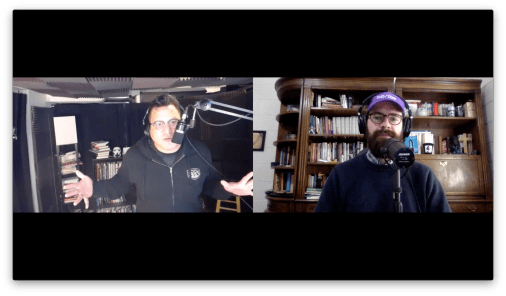
This week on the Strangely Warmed podcast I speak with Scott Jones about the readings for the 4th Sunday of Advent (Micah 5.2-5a, Psalm 80.1-7, Hebrews 10.5-10, Luke 1.39-55). Scott is the host of my rival lectionary podcast Synaxis. Our conversation covers a range of topics including Netflix as the cost of empire, the young Karl Barth, little towns, Caspian and the Narnians, the peace of Christ, rectification vs. forgiveness, God’s anger, looking like an idiot int he pulpit, church marquees, and the gratuitous nature of salvation. If you would like to listen to the episode or subscribe to the podcast you can do so here: Impossible Possibility

Screen Shot 2018-12-17 at 9.50.25 AM.png

Ending With A Promise

Devotional:

Isaiah 12.2

Surely God is my salvation; I will trust, and will not be afraid, for the Lord God is my strength and my might; he has become my salvation. 

Weekly Devotional Image

Today, thanks to Tommie Marshell’s excellent devotional for the Advent Begins In The Dark series, I was reminded of some words from the phenomenal preacher Fleming Rutledge:

“The sermon should end with a promise because God’s purposes cannot be defeated; that’s God’s promise. So that if we have received the gift of faith, we need to know that God is present in that gift of faith and even when we think we are losing our faith, God is still there.”

God is still there…

Many years ago, when I was a teenager, I used to run the sound system at my home church. Every Sunday I could be found in the back of the sanctuary tinkering away with all the knobs and slides so that everyone could hear whatever it was the preacher was saying. And, on Christmas Eve, I would do the same.

On one particular Christmas Eve I drew the short straw and was asked to run the board for the 11pm service. The preacher that night was exhausted by that point, having already preached at 3, 5, 7, and 9pm services, and the sanctuary was not as filled as it had been earlier in the evening. But nevertheless a faithful remnant stood vigil and offered the hymns with gusto. To be honest, I don’t remember much from the service that night except that the sermon ended with a promise: “God is born in Jesus for you.”

After we blew out the final candle and turned off all the lights, I got in my car and drove home to my parents’ house. Longing for the warmth of my bed, and the hopeful joy of presents in the morning, I drove with anticipation. 

Until I saw the fleshing red and blue lights ahead of me.

My home was down the street from an old stone bridge that runs across the George Washington Parkway in Alexandria, VA and as I pulled up to the bridge I went into Boy Scout mode without really thinking about what I was doing. And before I knew it I had parked the car and ran down to the road offering to help in any way that I could to the first police officer I encountered.

He looked up from the road and said, “Son, go home and forget that you saw any of this. Merry Christmas.”

And I wish that I could forget what I saw.

But I can’t.

dark-church

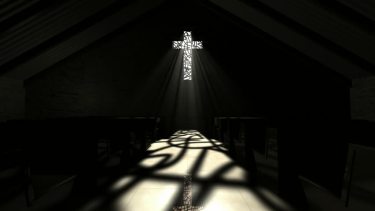
Because that night, shortly before I arrived in my car, a man from our community had been standing on the edge of the bridge for a long time waiting and waiting. He waited until he saw a large SUV coming down the road, and when he felt that it was the right moment, he jumped.

The SUV was carrying a family on their way home from their own Christmas Eve service, a family ready for the warmth of their beds, and the hopeful joy of presents in the morning, a family that would be forever changed.

In the many years since that night I have tried my best to forget what I saw on the road. I’ve tried to fill that memory with the light and the glow of the sanctuary instead of the red and blue lights. 

But I can’t. 

And that’s okay; this world of ours is broken and flawed and people are hurting. It doesn’t do any of us any good to sugar-coat this season like the candy-canes we have displayed in our homes. But we mustn’t forget the promise: “God is born in Jesus for you.”

For me.

For the man who jumped.

For the family in the car.

And for you.

I Am What’s Wrong With The World

strangely-warmed-spreaker-header

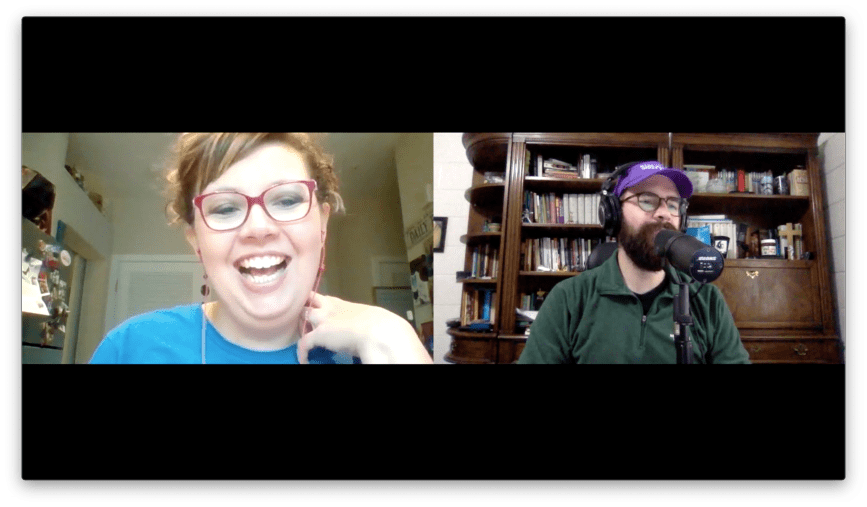
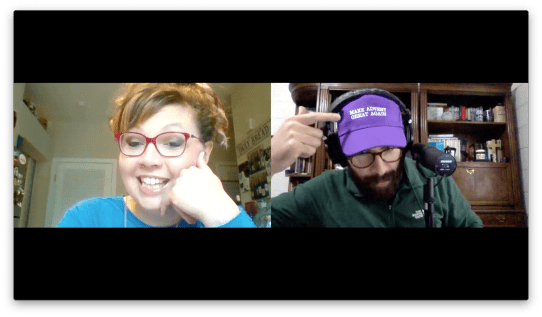
This week on the Strangely Warmed podcast I speak with Scott Jones about the readings for the 3rd Sunday of Advent (Zephaniah 3.14-20, Isaiah 12.2-6, Philippians 4.4-7, Luke 3.7-18). Scott is the host of my rival lectionary podcast Synaxis. Our conversation covers a range of topics including the greatest crossover podcast of all time, Top Gun references, shaming people in church, sin as unbelief, self-justification projects, evangelism as the heart of mission, witness vs. with-ness, doing crazy things in worship, praying to baby Jesus, and John the Baptist as the OG PK. If you would like to listen to the episode or subscribe to the podcast you can do so here: I Am What’s Wrong With The World

Screen Shot 2018-12-10 at 9.50.21 AM

Like A Whore In Church: Advent Begins In The Dark

Devotional:

Isaiah 1.21-31

How the faithful city has become a whore! She that was full of justice, righteousness lodged in her – but now murderers!

Weekly Devotional Image

Many of you know that I am part of the Crackers & Grape Juice podcast team. Every week we put out 2-3 episodes ranging from interviews with theologians, to unpacking stained glass language, to reflecting on all of the Lectionary texts for the following Sunday. The team is made up of 3 United Methodist Clergy and 2 lay people and we originally started the conversations to keep our theological juices flowing but it has grown far beyond what we could’ve ever imagined. For instance: this year we had our 300,000th download.

A few months ago we decided to produce a daily Advent devotional with contributions from some of our favorite guests, and from the team itself. I drew the unlucky straw of writing our second devotional, following the first by Bishop Will Willimon. If you would like to subscribe to the Advent devotional (receiving each one by email every day) or simply read them as they come out you can do so here: www.AdventBeginsInTheDark.com 

Below is my attempt at approaching the unenviable text from Isaiah 1.21-31…

IMG_5924-1024x536

There’s a reason that we don’t read Isaiah 1.21-31 out loud at church.

When we think of Advent we conjure up in our minds the Chrismon trees and the lights surrounding the altar. We remember the purple and pink advents candles and the red plumage of the poinsettias. We consider the plight of Mary and Jospeh to the small town of bread knowing not at all what their future would hold.

We like our religious observances to be orderly and helpful and we don’t even mind a sermon that steps lightly on our toes because we know that everyone has room for improvement. But then when we hear these words from the 5th gospel, we experience some painful theological whiplash.

The faithful city has become a whore!

She was once full of justice but now she is full of murderers!

Who wants to hear about that kind of stuff in church?

In her book Advent: The Once & Future Coming of Jesus Christ, Fleming Rutledge writes, “For many years, I thought that, during Advent, one was supposed to pretend that Jesus hadn’t been born, so that we would be more excited when Christmas came. Needless to say, this stratagem didn’t work. For me, it was a revelation years later to learn that the last weeks of Pentecost and the first weeks of Advent look forward to the second coming of Christ… In Advent, we don’t pretend, as I once thought, that we are in the darkness before the birth of Christ. Rather, we take a good hard look at the darkness we are in right now, facing and defining it honestly, so that we will understand with utmost clarity that our great hope and only joy is in Jesus’ final victorious coming.” (Advent: The Once & Future Coming Of Jesus Christ, Eerdmans, Grand Rapids Michigan, 2018), 58.

It is far too easy, today, to take passages like this one from Isaiah and read it through a somewhat anti-semitic lens as if Jesus is the wrath of God being poured upon God’s people. Preachers will foolishly wax-lyrical about the idolatry of God’s people from the past all while giving God the glory for arriving as the baby in Bethlehem

But that kind of reading leaves us imagining that Advent is all about pretending that Jesus hasn’t been born, and it prevents us, to use Fleming’s words, from taking a good hard look at the darkness we are in right now.

Whether we like to admit it or not, we are still the faithful city that has become a whore. The people we look to for guidance and leadership, in politics/business/churches, are rebels and companions of thieves. We worship them and ourselves thinking they/we can provide our salvation when we know how quick we all are to run after those things that cannot give us life. 

We are all coming of age in a world where it is far too easy and far too convenient to ignore the plight of the marginalized while strangely finding comfort in the words of a hymn like Away In A Manger. There was “no crib for a bed” because people like you and I are so consumed by our own needs and desires that the cause of other does not come before us!

But that’s not the kind of message we want to hear during the season of Advent. No, we want to hear about how Jesus’ birth will warm our hearts. We’d rather imagine the animals snuggled closely providing comfort for the King of kings and Lord of lords.

But what if we are the darkness that needs to be blotted out by Jesus’ light?

Throughout the history of the church, Christians have had a remarkable propensity to read themselves into a biblical story. When we hear about the two on the road to Emmaus we imagine ourselves as one of those two listening to, and breaking bread with, Jesus. When we hear about Prodigal Son we imagine God welcoming us back with open arms after going down the wrong path.

And yet when we read about God destroying the rebels and the sinners, we inexplicably reject the notion that we could be the rebels and sinners that need destroying!

What a time to be God’s church! Advent is the season we conjure up the darkness among us and in us and proclaim the bitter and strange truth: We cannot save ourselves.

No amount of Christmas lights, no number of presents under the tree, no perfectly arranged dinner table can rectify the wrongs we have perpetuated in this world. We have become whores to our own desires and dreams at the expense of the orphan, and the widow, and the sojourner, and the marginalized.

Just consider a headline from the newspaper this morning: “America’s ‘War on Terror’ has cost the US nearly $6 trillion and killed roughly half a million people with no end in sight.”

What would the rest of this strange and bewildering season look like if we insisted on facing and defining the darkness honestly rather than sugar-coating it with chocolate calendars? 

How might our steps toward Christmas change if we admitted the challenging truth of our own sinfulness before calling it out in someone else?

What habits and practices will we need to crucify before God’s church can experience a new resurrection?

Isaiah’s declaration about the inherent failures of the whoring city doesn’t preach easily. Few pastors are dumb enough, or brave enough, to proclaim these words from the pulpit. They run the risk of running off those who came with expectations of the warm manger scene rather than the destruction of all things.

But today, here in the midst of Advent, we are like oaks whose leaves wither, and we are like gardens without water. We might look around and see families with perfectly behaved children, or individuals who appear perfectly put together, but all of us are perpetuating a world in which our own righteousness has somehow become more important than God’s righteousness.

Advent, therefore, is the right time to look into the heart of our own darkness with the understanding that our greatest hope, and our only joy is in the once and future coming of Jesus Christ. 

The Demands of the Divine

strangely-warmed-spreaker-header

This week on the Strangely Warmed podcast I speak with Michelle Matthews about the readings for the 2nd Sunday of Advent (Malachi 3.1-4, Luke 1.68-79, Philippians 1.3-11, Luke 3.1-6). Michelle serves as the pastor of the Kingstowne Communion in Kingstowne, VA . Our conversation covers a range of topics including being obsessed with the Enneagram, burning up the excess, the whole OT in one Psalm, the God who will die, the theology of discernment, and the scandal of particularity. If you would like to listen to the episode or subscribe to the podcast you can do so here: The Demands Of The Divine

Screen Shot 2018-12-03 at 1.11.43 PM

The Motto For The Church

strangely-warmed-spreaker-header

This week on the Strangely Warmed podcast I speak with Michelle Matthews about the readings for the1st Sunday of Advent (Jeremiah 33.14-16, Psalm 25.1-10, 1 Thessalonians 3.9-13, Luke 21.25-36). Michelle serves as the pastor of the Kingstowne Communion in Kingstowne, VA . Our conversation covers a range of topics including the beginning of year C, favorite hymns, executing justice, The Message, eating with the hungry, reclaiming humility in the church, hyperbolic thanksgiving, having an apocalyptic Advent, and singing throughout history. If you would like to listen to the episode or subscribe to the podcast you can do so here: The Motto For The Church

Screen Shot 2018-11-26 at 10.25.51 AM

A Liturgy For Thanksgiving

I used to love Thanksgiving: the food, the family, and the fellowship. But now I kind of dread it.

Gone are the days of civil and non-partisan Thanksgiving tables. Now we wear our red hats or bicker about the midterms, we jockey seats to surround ourselves with those of the same persuasion, and we find ourselves replenishing our wine with every passing political anecdote.

Therefore I have created a brief thanksgiving liturgy to be used by anyone in order to redeem the table. You may say it privately to yourself, or you may publicly read it aloud, but the hope is that it will bring a sense of theological clarity to what was once one of my favorite holidays…

1E30AA8E-C0C3-4FD6-908E-04D4827231FE-5408x2704

Prayer:

Almighty God, Father of all mercies, we your unworthy servants give you humble thanks for all your goodness and loving-kindness to us and to all whom who have made. We bless you for our creation, preservation, and all the blessings of this life; but above all for your immeasurable love in the redemption of the world by our Lord Jesus Christ; for the means of grace, and for the hope of glory. And, we pray, give us such an awareness of your mercies, that with truly thankful hearts we may show forth your praise, not only with our lips, but in our lives, by giving up ourselves to your service, and by walking before you in holiness and righteousness all our days; through Jesus Christ our Lord, to whom with you and the Holy Spirit, be honor and glory throughout all ages. Amen. 

Read Psalm 23:

The Lord is my shepherd, I shall not want. He taketh me to lie down in green pastures; he leadeth me beside the still waters; he restoreth my soul. He leadeth me in the paths of righteousness for his name’s sake. Yea, though I walk through the valley of the shadow of death, I will fear no evil: for thou art with me; thy rod and thy staff they comfort me. Thou prepares a table before me in the presence of mine enemies: thou anointest my head with oil; my cup runneth over. Surely goodness and mercy shall follow me all the days of my life: and I will dwell in the house of the Lord for ever.

Meditation:

The Bible is one long and flowing narrative about the goodness of creation, the brokenness that often comes through sin, and God’s work to restore all of creation to its wholeness. The 23rd Psalm reminds us that we will inevitably walk through dark valleys, but we will do so with the Lord by our side. It is therefore at our Thanksgiving tables that we discover the strange truth of what it means to sit at a table prepared in the presence of our enemies; our enemies might not be our families and friends, but our greatest enemy might actually be ourselves. And so, let us take a moment to reflect on our own brokenness and the grace that God has offered, such that we can then go around the table and truly express something for which we are particularly grateful for this year. Or, to put it another way, how have we experienced our cups running over this year?

Prayer:

Lord, help us to be mindful of those who do not have a table such as this one around which we can gather, celebrate, remember, and rejoice in all that you’ve done, are doing, and will do. As we eat and feast together, let the breaking of bread be a foretaste of the promised resurrection made possible through your Son, our Lord, Jesus Christ. Amen. 

I Pledge Allegiance To Jesus Christ

strangely-warmed-spreaker-header

This week on the Strangely Warmed podcast I speak with Jonathan Page about the readings for the Christ the King Sunday (2 Samuel 23.1-7, Psalm 132.1-18, Revelation 1.4b-8, John 18.33-37). Jonathan serves as the pastor of Herndon UMC in Herndon, VA. Our conversation covers a range of topics including bidding farewell to Year B, the particularity of liturgical days, the Christian version of the 4th of July, the end of metaphors, generational evangelism, rebelling against the kingdom, flags in the sanctuary, and the power of lingering questions. If you would like to listen to the episode or subscribe to the podcast you can do so here: I Pledge Allegiance To Jesus Christ

Screen Shot 2018-11-19 at 9.44.46 AM


The Way

Ecclesiastes 3.1-8

For everything there is a season, and a time for every matter under heaven: a time to be born, and a time to die; a time to plant, and a time to pluck up what is planted; a time to kill, and a time to heal; a time to break down, and a time to build up; a time to weep, and a time to laugh; a time to mourn, and a time to dance; a time to throw away stones, and a time to gather stones together; a time to embrace, and a time to refrain from embracing; a time to seek, and a time to lose; a time to keep, and a time to throw away; a time to tear, and a time to sew; a time to keep silence, and a time to speak; a time to love, and a time to hate; a time for war, and a time for peace.

John 14.1-6, 27

“Do not let your hearts be troubled. Believe in God, believe also in me. In my Father’s house there are many dwelling places. If it were not so, would I have told you that I go to prepare a place for you? And if I go and prepare a place for you, I will come again and will take you to myself, so that where I am, there you may be also. And you know the way to the place where I am going.” Thomas said to him, “Lord, we do not know where you are going. How can we know the way?” Jesus said to him, “I am the way, and the truth, and the life. No one comes to the Father except through me.” Peace I leave with you; my peace I give to you. I do not give to you as the world gives. Do not let your hearts be troubled, and do not let them be afraid.
truth-and-life-1024x576

The disciples just don’t get it. I mean, they’ve been with Jesus for years and they’ve seen it all. They were there when he walked on water and when he told the story about the mustard seed. They were there when he was chased out of Nazareth and when he healed blind Bartimaeus. They were there when he calmed the storm and when he made the lame man walk.

But now, after all of that, they still don’t get the whole picture.

“What to you mean Lord? We don’t know where you are going, how can we know the way?” 

Jesus said, “I am the way!”

In our lives there is a time for everything. Ecclesiastes hits the truth that we’d sometimes rather ignore. If we had it our way our lives would be nothing but birthing, planting, healing, building, laughing, dancing, embracing, keeping, speaking, and loving. But life doesn’t work that way. For every glorious mountaintop there is an equally frightening valley.

When a child is born a new parents feel an unknown joy and expectation, only to realize how fragile the new life is and the terror begins to creep in.

When we start to recover from an illness, the memory of our horrible we felt stays with us and we find ourselves waiting for the next time we have to reach for the medicine.

When we find someone we want to spend the rest of our lives with, we begin to realize that if we lose them we might just lose everything that keeps our lives together.

There is a time for everything, and this was especially truth during the life of Jesus.

A time to be born, to a poor virgin in a small little town called Bethlehem. 

A time to die on a hill called Golgotha while abandoned by the most important people. 

A time to plant new ideas in the minds of his followers, and a time to pluck up as he brushed the dust off his feet village after village. 

A time to heal the many who were suffering from every ailment under the son, and a time to let the dead bury the dead. 

A time to weep for his dead friend Lazarus and a time to laugh while sharing wine around the table with his friends. 

A time to embrace his friends while washing their feet, and a time to let go when encountering Mary by the empty tomb. 

A time to go looking after the one lost sheep, and a time to let go of the broken theology of the scribes and the Pharisees. 

A time for silence while he prayed in the garden and a time to scream as he turned the tables over in the temple. 

A time to love the very people who hated him and a time to hate the very world that lost sight of what it means to love.

For everything there is a season.

All of us go through life from birth to death jumping back and forth between the mountaintops and the valleys, begin the joys and the sorrows, between the laughing and the crying. And all the while Jesus is with us – weeping while we weep, dancing while we dance, and praying while we pray.

Lo, I am with you, even to the end of the age. 

Jesus insists on journeying with us in this life from our first breath to our last, knowing full and well that we need all the help we can get. Because even the disciples, the ones closest to Jesus, the ones who walked with him on the roads of life still didn’t get it.

Their hearts were troubled because they thought they knew what Jesus was here to do. They were awaiting a version of their own kingdom rather than Jesus’ kingdom. They saw a future that suited their needs best, rather than a future where all of God’s children could rejoice together.

“I am going ahead of you,” says Jesus. “I am preparing the way for you.”

To be frank, their confusion is also born out of their resistance to let go of the one who grabbed hold of them. If they had it their way, Jesus would’ve stayed with them forever walking along the sea of Galilee. They couldn’t bring themselves to a see a world where Jesus hung from a cross, so instead they just kept asking the same types of questions over and over again.

But as the way, there was no other way for Jesus than the cross, the tomb, and the resurrection. 

Jesus walks through the valley of the shadow of death, Jesus sits in the darkness of suffering and shame, Jesus breaks forth from the chains of death so that we might know that nothing can separate us from the love of God in Jesus Christ our Lord.

That’s the whole message of scripture. 

The disciples didn’t get it, but you know who did? Kwabe did.

Kwabe knew the place where he was going, the place that Jesus prepared for him. 

He knew that every single time he walked forward to receive communion at church that he was tasting what now belong to him forever and ever. He knew that every single moment with his children, every perfect embrace, is what he is now experiencing with God Almighty. He knew the forgiveness and peace that he experienced through Abigail was awaiting him in his promised resurrection.

Kwabe had eyes to see and ears to hear the kingdom of God in his midst. His faith was such that even without walking the streets with Jesus like the disciples, he knew the place where Jesus was going, and he held on to the way that is Jesus the Christ no matter what.

I was driving on my way to church one morning when I got a call from Kwabe on my cell phone. “Hello Pastor” he said calmly. Thinking there was something wrong on our recent financial report I slightly braced myself for whatever it was that he needed to tell me. But I was wrong.

He was calling to tell me he had cancer.

It hit me so hard that I had to pull into an empty parking lot because I felt like I had been punched in the gut. 

In that moment I asked him too many questions, I prayed for him over the phone, I even offered to drive over to his house, and the entire time he remained perfectly calm. 

And after a period of silence, a silence born out of the fact that I no longer knew what to say, Kwabe said something I’ll never forget. “It is in God’s hands. I am in God’s hands. And I know the way.”

I know the way.

It’s hard for me to admit, but Kwabe was more faithful that I am. When confronted by the stark reality of his finitude I began to crumble and yet he remained steadfast. 

I know the way. 

I miss Kwabe. I miss his smile and his laugh. I miss the way he was able to calm the room when everyone else felt anxious. I miss the way he would nod at me in the middle of a sermon as if to say, “Good job.” I miss the way he would wait for me after church to ask if we could pray together. I miss him.

I think Kwabe knew a sense of peace in his life that most of us don’t. Regardless of the circumstances at work, or at home, or at church, or even in the midst of his cancer, he felt a calm sense of peace that carried him through some profoundly difficult moments. And I truly and deeply believe that Kwabe’s peace came from knowing the way, the truth, and the life that is Jesus Christ the Lord. 

Kwabe knew, deep in his bones, the place where he was the going, the place where he is now waiting for each of us. Throughout his life he was held in the palm of God’s hand and now he rejoices in the promise of the Good News made manifest for him through Father, Son, and Holy Spirit. Kwabe’s heart and soul were not troubled, he was not afraid, because he knew the way.

Kwabe’s death is painful and difficult for many of us to reckon with. There will be days where we will continue to grieve and lift up our clenched fists to the sky. But there will come time when we will laugh as we remember those time that Kwabe made us laugh. There will come a day when we can smile with gratitude for all that he meant to us. And there will come a time where we can rejoice with Kwabe knowing that he is now rejoicing with the Lord.

Christ speaks to us through the scriptures, helping us to see and know what Kwabe saw and knew – there is a place prepared for us. And though we mourn and cry and grieve here and now, we need not be afraid because Jesus is the way and the truth and the life. 

There is a time for everything. Our time with Kwabe has come to an end, but now the time has come for Kwabe to rest in the Lord. We are the ones now responsible for lifting up his lamp, to shine the kind of glorious light that Kwabe did, so that we, and others, can feel the peace that he knew in Jesus. 

So thanks be to God for the life of Kwabena Sakyi, a man who deeply loved his family, who cared for those in his community, and who knew where he was going. Amen. 

You Think You Know But You Have No Idea

strangely-warmed-spreaker-header

This week on the Strangely Warmed podcast I speak with Jonathan Page about the readings for the 26th Sunday After Pentecost (1 Samuel 1.4-20, Psalm 16, Hebrews 10.11-25, Mark 13.1-8). Jonathan serves as the pastor of Herndon UMC in Herndon, VA. Our conversation covers a range of topics including culture (re)framing, marginalized scripture, brutal honesty, refuge as actual safety, measuring gods, the elevator speech of grace, the great “and yet”, sitting with the apocalyptic Jesus, and MTV Diary. If you would like to listen to the episode or subscribe to the podcast you can do so here: You Think You Know But You Have No Idea

Screen Shot 2018-11-12 at 8.38.30 AM