Christmas Eve – Extra(Ordinary)

Luke 2.1-14

In those days a decree went out from Emperor Augustus that all the world should be registered. This was the first registration and was taken while Quirinius was governor of Syria. All went to their own towns to be registered. Joseph also went from the town of Nazareth in Galilee to Judea, to the city of David called Bethlehem, because he was descended from the house and family of David. He went to be registered with Mary, to whom he was engaged and who was expecting a child. While they were there, the time came for her to deliver her child. And she gave birth to her firstborn son and wrapped him in bands of cloth, and laid him in a manger, because there was no place for them in the inn. In that region there were shepherds living in their fields, keeping watch over their flock by night. Then an angel of the Lord stood before them, and the glory of the Lord shone around them, and they were terrified. But the angel said to them, “Do not be afraid; for see – I am bringing you good news of great joy for all the people: to you is born this day in the city of David a Savior, who is the Messiah, the Lord. This will be a sign for you: you will find a child wrapped in bands of cloth and lying in a manger.” And suddenly there was with the angel a multitude of the heavenly host, praising God and saying, “Glory to God in the highest heaven, and on earth peace among those whom he favors!”

christmascandle

Merry Christmas! O what a time to be gathered together. Christmas is just special. The way we decorate our homes with lights and manger scenes. The presents all piled up under the trees. The advent calendars filled with mediocre pieces of chocolate.

It’s hard not to get nostalgic and reminiscent during the holidays. When you pull out the favorite ornament, you remember your grandmother who crafted it with care. When you see the cracked serving platter you remember the uncle who had a little too much nog that one year and dropped it. When you finally plug in the lights on the front of the house, you remember all the years your father mumbled under his breath as he struggled to untangle all the cords.

Christmas is the best. Among the decorations, and the songs, and the gifts, we are reminded of the great story of Jesus’ birth. This is a story we have told again and again to the point that I bet you know all the details….

Joseph went from the town of Nazareth in Galilee, to the city of David called ­­­Bethlehem. He went there to be registered with Mary, to whom he was engaged and was expecting a child. And she gave birth to her firstborn son and wrapped him in bands of cloth, and laid him in a manger, because there was no place for them in the inn.

What a story, but it could have gone like this…

Mary sat in the uncomfortable airport lounge and could not believe that she could actually no longer see her feet. Everyday her body was changing with new movements, sounds, and smells. She found herself wishing for an easier pregnancy, feet that would stop swelling, and a baby that would stop kicking her in the side every time she fell asleep.

Mary was thankful for Joseph, how much he doted on her over the last 9 months, but if he made one more comment about how beautiful she looked she was going to punch him in the face. “I know I look like a cow!” she would say, “stop pretending that I’m something that I’m not.” Mary blamed the outbursts on the hormones, but sometimes it just felt nice to speak her mind.

She sat in the airport lounge, and couldn’t believe she had agreed to travel while pregnant. Joseph had been initially suspicious of the pregnancy, but he was a good man and stuck by her side. And here they were, waiting to get on the plane, and it felt like people’s eyes were magnetized to her belly.

Is it a boy or a girl?” someone asked for the thousandth time. Mary turned to her right and tried to return the smile, but her sarcasm got the better or her, and she said, “We’re just hoping it’s a human!

Are you going to try natural child birth?” someone asked for the thousandth time. Mary turned to her left and tried to return the smile, but declared, “That’s frankly none of your business!

Finally, a woman from the airline announced that anyone with medical needs could begin boarding the plane. “One of the rare perks…” thought Mary as she pushed herself up from the seat. She wobbled over to the gate like a penguin when an older woman walked up with her hand outstretched to rub Mary’s belly. Joseph quickly jumped in front to stop the arm from making contact and instead put out his arm to on a direct course to the woman’s abdomen and said, “How would you feel if a stranger tried to rub your belly?

Mary’s seat on the airplane felt smaller than usual and, try as she might, she couldn’t sleep. Joseph sat next to her with his earmarked copy of What To Expect When You’re Expecting open to the section on child-birth. And Mary cringed when she thought about what her body would be doing in the not too distant future.

By the time they finally landed, stood in line for the rental car, and finally made it out of the airport, Mary was exhausted. Her feet felt like flippers, and she was starting to feel what she thought were contractions, but she was determined to believe it was something else.

As they drove through the empty city streets late that night, the feeling grew worse and more regular until it came with such suddenness that Mary yelled at Joseph to pull the car over. In the dimly lit alley with cats meowing behind cardboard boxes and passersby ignoring the scene right in front of them, Mary gave birth to a baby boy, wrapped him in her fiancés sweater, and grinned from ear to ear.

All the pain she had felt, all the fear of how much her life would change, all the frustrations with strangers and inappropriate comments started to fade away into the darkness. Instead she saw her little baby as the light of the world. In him she saw a better and brighter future. In him she knew the world would be turned upside down. And she named him Jesus.
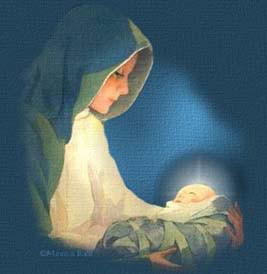
mary_and_baby_jesus

We know the story. We hear it year after year. We see it portrayed by children in church productions, and on the front lawns of countless homes. Mary and Joseph traveled to Bethlehem because the emperor believed that everyone needed to be registered. When they arrived there was no room at the inn, so Mary had her baby and placed him in a manger.

The text from Luke, rather than romanticizing the poverty of Mary and Joseph, invites us to see them as people much like us. The details are lacking and the narrative flows in a way that feels rather ordinary. Mary and Joseph were just two people trying to make their way in the world, like a couple traveling during the holidays. They were normal people; people who felt the pressures of the world and the judgments of others; people who were squeezed by rising taxes and governmental expectations; people who were weary from a variety of struggles including the fear of childbirth; people who were badly in need of hope.

And, as God would have it, the hope they so desperately needed came to them that night as a baby. In the ordinary ways of the world, something extraordinary happened. Jesus, the light of the world, was born to that struggling couple surrounded by the most ordinary of circumstances and changed the world forever.

The baby was extraordinary, God incarnate, capable of miracles and filled with Messianic hope. The baby, wrapped in swaddling clothes, God in the flesh, was born to guide the world in the ways that lead to life.

We are like Mary and Joseph and Jesus was born to us and for us. The story takes places in the ordinary but makes our lives extraordinary. So often we hear about how Jesus’ birth changed the cosmos and the very history of the world that we forget about how this wonderful and precious moment actually changed our individual lives as well. It changed us, people who are trying to understand our ordinary lives in light of the extraordinary news that God came as a baby for us.

If you haven’t spent much time in the Bible, this is how it works. If you haven’t experienced much of God’s presence, this is how God works. The extraordinary arises within the ordinary. The heavens break forth in the middle of a moment here on earth. What we usually see as normal and commonplace is often the realm of God’s marvelous work among us.

If you want to know God, you don’t have to go off on some high mountaintop, you don’t have to sink deep into the recesses of your ego. You just have to be in a place like Bethlehem, or an airport, or a rental car, or a church. You just need to be in the midst of trying to make your way in the world, getting along as best you can with what you’ve got. That’s when God loves to show up and change our lives forever.

When Jesus was born to Mary and Joseph the ordinary became extraordinary. In that tiny baby they would come to discover what it means to love God and neighbor in new and radical ways. In that tiny baby they would have their sins forgiven and salvation presented. In that tiny baby they would finally understand how much God loved them.

God loves to show up in the ordinary things of life. God shows up in the bread and juice offered to us at the table without cost. God shows up in the flicker of a flame as we sing silent night together. God shows up in the cry of a baby who came to change the world.

God shows up and makes our ordinary lives extraordinary. What a gift.

Merry Christmas.

gifts of god

Devotional – Isaiah 9.2

Devotional

Isaiah 9.2

The people who walked in darkness have seen a great light; those who lived in a land of deep darkness – on them light has shined.
Weekly Devotional Image

When I was preparing my Christmas Eve sermon last year, I was struck by the importance of God’s light shining in the darkness. During the weeks leading up to Christmas I read over the differing texts, and explored different hymns, but the image of God’s light stayed at the forefront of my mind. So when it came time to conclude my thoughts on God’s greatest gift from the pulpit, this is what I said:

“For me, Christmas is at it’s realest when we light our candles as we sing Silent Night. Some of my earliest memories are standing in a dark sanctuary on Christmas Eve while people around me are singing. In mere minutes the darkness is replaced by a brilliant light, made remarkable by the God who took on our flesh to dwell among us, to be God with us.

Jesus is the light of the world who shines in the darkness. Whatever that darkness might look like for you, whether it be an uncertain future, fears about your children, frustrating family members, the loss of a loved one, a heavy diagnosis, or the lack of love in your life, Jesus stands in stark contrast as the one who brings the light into our lives.

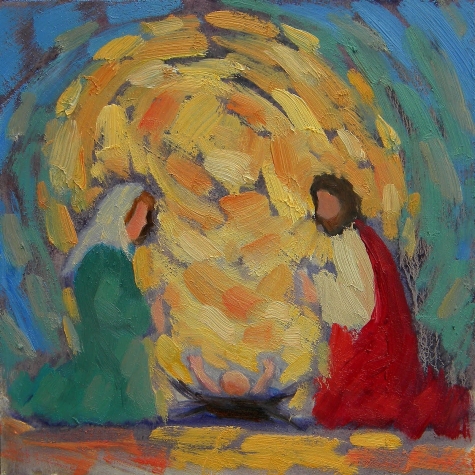
_the_holy_family__nativity_scene___another_commiss_f6de659b784c8c14ecc1ee8b95fa4fa8

Christmas Eves always mean the most and convey the most when we feel the depth of the darkness. Because new life always starts in the dark. Whether it is a seed in the ground, a baby in the womb, or Jesus in the tomb, new life starts in the dark.

At the end of our service we will turn out all the lights, from the one candle, the Christ candle, we will light all others as we sing Silent Night. As we do so let us open our eyes the different forms of darkness in our lives and give thanks to the light of the world who shines in the darkness.

It will feel like Christmas in the room, when we hear the familiar words that have been sung for centuries exclaiming the great joy of the newborn king.

It will feel like Christmas in the room, when we gather as God’s table to feast on the bread of life and drink from the cup of salvation.

It will feel like Christmas in the room, when we see the light of Christ shining in one another.”

It is my hope and prayer that no matter where you are, or who you’re with, God’s light will shine in your lives. Merry Christmas.

Devotional – Philippians 4.4

Devotional:

Philippians 4.4

Rejoice in the Lord always, again I will say, Rejoice.

Weekly Devotional Image

Advent is a strange time for Christians. While we patiently wait through the weeks leading up to Christmas, people around us are moving at remarkable speeds to get anything and everything they need for the holiday. I was at Target yesterday and I saw a couple arguing about how many gifts they should be purchasing for their respective in-laws. In the parking lot I witnessed a man struggling to fit his bags of presents into the back of his car. And while I was leaving the shopping center I saw someone blow through a red light and the immediate response of one driver screaming obscenities from her car.

Advent is a strange time for Christians. While we strive for patience, the world rushes on. And while we strive to remember the reason for the season, we get caught up with the anger and impatience the holiday brings with it.

Children, on the other hand, are somehow able to maintain the sense of joy that comes this time of year.

This morning, shortly after the preschoolers arrived, we gathered in the sanctuary to practice for the upcoming Christmas pageant. For weeks the students have worked on memorizing their lines and delivering them clearly into a microphone, their costumes have been altered and cleaned, and they have learned to keep from fidgeting while standing in place.

After we went through the theatrical side of the production, we then reorganized the kids to practice singing six songs about the real meaning of Christmas. Our Preschool director quieting counted “1-2-3” in order to start the song and then they started to belt out the words to “We Wish You A Merry Christmas.” It was loud and powerful. They took in as much air as possible to sing with full gusto, they had accompanying hand motions to mirror the words, and every one of them had a huge smile on their face. In fact, they were so loud that our secretary left her office just to make sure that everything was okay in the sanctuary.

IMG_0566

Near the end of his letter to the Philippians, Paul commands the disciples of Jesus to “Rejoice in the Lord always, against I will say, Rejoice.” There are plenty of Sundays in worship when it really feels like we are rejoicing in the Lord, but many of them pale in comparison to the joy I heard echoing from our Preschoolers this morning. They believe in rejoicing in the Lord always.

This week, let us strive to rejoice in this season rather than resent it. Let us pray for God to give us patience while we prepare for the holiday. And let us recapture the joy of this time in the same spirit as preschool-age children.


Devotional – Luke 1.78-79

Devotional:

Luke 1.78-79

By the tender mercy of our God, the dawn from on high will break upon us, to give light to those who sit in darkness and in the shadow of death, to guide our feet into the way of peace.

Weekly Devotional Image

It was on my first day in seminary when a preacher said, “We spend so much time talking about Jesus that we forget to talk to Jesus.” It was a convicting truth that would come to fruition over the following months and I knew I needed to do something about it. Days would pass and, though I had been deep in scripture for particular class, I realized that I had not taken the time to pray to the Lord who was being revealed to me in the scripture. It was at that point when I committed to attend Morning Prayer in Goodson Chapel with all of the Anglicans and Episcopalians.

I was one of the token Methodists with a few of my denominational colleagues and we tried to keep up with our peers as they bowed their heads at particular times during the liturgy, as they made the sign of the cross across their bodies, and as they drank from a common cup when we had communion. It was difficult to assimilate during those first few weeks; many of the people in attendance did not even need to look at a Book of Common Prayer to say all of the right words at the right time. However, after a few months passed, I started to realize that I no longer needed to look at the book because the words and habits of Morning Prayer had sunk deep into my soul.

books-of-common-prayer

I don’t remember when it happened, but one morning while we were proclaiming the words from “The Song of Zechariah” (Benedictus Dominus Deus) the young man next to me changed some of the words. Instead of speaking in the plural, he spoke individually: “By the tender mercy of my God, the dawn from on high will break upon me, to give light to me as I sit in darkness and in the shadow of death, to guide my feet into the way of peace.” His willingness to proclaim God’s faithful words for himself, has stuck with me ever since.

During this season of Advent, it is good and right for us to recognize that God made good on his promise “to give light to those who sit in darkness and in the shadow of death” when he came in the form of flesh as a baby in a manger. We spend these weeks patiently waiting, just like the Israelites did so long ago, for the light that will shine in the darkness. But this isn’t just something that God did in the past; every Advent is an opportunity to embark on a new way of life where God’s tender mercy will guide our feet into the way of peace.

This week, let us take time to proclaim the words from The Song of Zechariah personally. Whether in the morning when we wake up, or at night before we fall asleep, or whenever we feel called to during the day, let us proclaim: “By the tender mercy of my God, the dawn from on high will break upon me, to give light to me as I sit in darkness and in the shadow of death, to guide my feet into the way of peace.”


What Is Truth?

John 18.33-38

Then Pilate entered the headquarters again, summoned Jesus, and asked him, “Are you the King of the Jews?” Jesus answered, “Do you ask this on your own, or did others tell you about me?” Pilate replied, “I am not a Jew, am I? Your own nation and the chief priests have handed you over to me. What have you done?” Jesus answered, “My kingdom is not from this world. If my kingdom were from this world, my followers would be fighting to keep me from being handed over to the Jews. But as it is, my kingdom is not from here.” Pilate asked him, “So you are a king?” Jesus answered, “You say that I am a king. For this I was born, and for this I came into the world, to testify to the truth. Everyone who belongs to the truth listens to my voice.” Pilate asked him, “What is truth?”

During the celebration of holy mass in the chapel of the Carmelite Monastery 6 members of the OCDS community made promises to the Order.  Dr. Jason Bourgeois and Judy Hawkins professed their temporary vows for 2 years and David Travers, Suzie Megown, Kathryn Theobald and Wendy Corbella professed their Difinitive Promise to the Secular Order.  Fr. Lawrence Herzog, OCD celebrated the mass which was attended by the Carmelite Nuns and families of the OCDS community.


Christ the King Sunday is the New Year’s Eve of the Christian calendar. Many of us might celebrate the New Year beginning on January 1st, but in the church the season of Advent is the beginning of our year as we wait for the coming of the Lord on Christmas. For centuries the church has celebrated this rhythm where we start a new year in anticipation of Jesus’s birth, we proclaim Jesus’ life and teachings, and we mark his death and resurrection with Holy Week. Then we look forward to the celebration of Pentecost when God’s Spirit was poured out on the first disciples, and we have a long season of what we call ordinary time to learn more about the stories from scripture.

The Christian year is built the way it is so that we retell the greatest story ever told, every year.

But just like with the celebration of New Years Eve we need a big party to mark the end of our year, we need to pull out all the stops and look back over where we’ve been, and get excited about where we’re going. We need our New Years Eve, but for us we call it Christ the King Sunday.

Since the foundation of the early church, disciples have worshipped Christ in his three offices: Prophet, Priest, and King.

Throughout the Christian year we learn about Jesus as Prophet whenever he shared a lesson with the disciples, whenever he told a parable, and whenever he spoke out against the injustices of the world. Like a true Prophet Jesus spoke the truth in love. He went out to the last, least, and lost and helped to speak words that gave them value. Jesus confronted the hypocrisy of society and challenged the world to behave according to the way God would have us to behave.

Throughout the Christian year we learn about Jesus as Priest whenever he healed the sick, fed the hungry, and clothed the naked. Like a true and holy Priest Jesus shared his final meal with his friends and told them he was offering his body and blood for their sake and for others.

Jesus atoned for the sins of the world by sacrificing himself and dying a terrible death on a cross.

Throughout the Christian year we learn about Jesus as King whenever we hear about the kingdom of God, whenever we discuss what it means to take up our cross to follow him, and whenever we confess Jesus as Lord. Like a true King Jesus watched out for the people of his community, fed the multitudes and offered a new way of life. But perhaps one of the greatest insights into what it means to worship Christ as King comes from Jesus’ interaction with Pontius Pilate.

It was early in the morning when the Jewish elders brought Jesus to Pilate with death on their minds. Of course, according to the Law, they could not kill him but they knew that the Roman leader could. So Pilate entered the headquarters and asked Jesus, “Are you the King of the Jews?” Jesus answered, “Are you asking because you want to know, or did other people tell you about who I am?” Pilate replied, “I’m not Jewish! Your people, your chief priests, your nation handed you over to me. So, what have you done?”

Jesus answered, “My kingdom is not from this world. If it were from this world, my followers would be fighting to the death to keep me from being handed over. But as it is, my kingdom is not from here.” Pilate asked, “So you are a king?” Jesus answered, “You say that I am a king. For this purpose I was born, and for this I came into the world, to testify to the truth. Everyone who belongs to the truth listens to my voice.” Pilate asked him, “What is truth?

truthianm

What is truth?

Pilate wanted to know. Christians have wanted to know. And if we’re honest with ourselves, we want to know as well. What is truth?

Seeing as how today is our New Year’s Eve, I thought we would do well to look back over the last year and examine what we have learned to be true…

In Advent we learned about how everyone is given a new beginning in Jesus Christ. That when God came into the world it changed everything, and when you discover Jesus in your heart it changes everything. It changes the way you think, the way you speak, and the way you act.

During the winter we asked tough questions about are faith like “Is it better to be cremated or buried?” and “Is it appropriate to have an American Flag in our sanctuary?” We talked about how being a Christian means sacrifice, how food will not bring us closer to God, and how God strengthens the weak.

During Lent we spent the season praying for God to cleanse us of our sins, and heal our brokenness. We got back to the basics of our faith by looking at the Ten Commandments, admitting that we cannot save ourselves, and that God is God (and we are not).

During Holy Week we went from the joy of the last supper with a foot washing on Maundy Thursday, to the shadow of the cross on Good Friday, to the glory of the resurrection on Easter Sunday.

Before Pentecost we looked to the stained glass windows in our sanctuary to learn about the faith attested in the Good Shepherd, the Methodists, and the Johns. On Pentecost we listened to two of our youth proclaim that the church is not a building but a people.

Throughout the summer we retold some of the greatest and strangest stories from the Old Testament, we even had a donkey preach one of the sermons, and we spent time praying for one another.

And this fall we addressed why we do what we do. Why we worship, why we give, why we serve, and why we pray. (All of them bring us closer to God)

What is truth? Every Sunday that we gather in this sanctuary is an attempt to answer that very question. Every sermon, every prayer, every hymn is all geared toward discovering the truth in our lives.

As we look forward to a new year in the Christian calendar we anticipate more services attempting to answer Pontius Pilate’s question and the question that rests in our hearts. We will have sermon series and bible studies, we will have prayer vigils and fellowship events, we will have baptisms, and we will have funerals, all striving to answer “What is truth?

For us today, sitting here in this worship service, Jesus has a simple and profound answer: My kingdom is not of this world.

In the wake of the tragic terrorist attacks in Paris, the French community continues to mourn and grieve over the fragility of life. For days, Parisians have gathered from across the city to place flowers and light candles in memory of all the innocent people who lost their lives.

A French interviewer recently caught sight of a father and son who were kneeling by the flowers and the interviewer asked the boy if he understood what had happened. The four year old said, “bad guys who were very mean did something very bad. We need to be very careful and my family has to move out of France.” The father quickly interrupted and said that they did not need to leave because France was their home but the son, with a quiver in his lip reminded his father about the bad guys who have guns and can shoot us because they’re really mean.

The father took a moment to think about what his son said, and then he replied, “Yes. They have guns. But we have flowers.”

The son was incredulous, “But flowers don’t do anything!”

“Of course they do,” said the father, “look, everyone is putting flowers here. It’s to fight against guns.”

“It’s to protect us?” “Exactly”

Then the son asked, “And the candles too?” “Yes. The candles are to remember all the people who are gone.”

The boy, who had clearly been distraught the whole time, finally began to smile as he took in the abundance of flowers and candles in the square and looked right at the interviewer to say, “The flowers and the candles are here to protect us.”

We live in a remarkably tumultuous world that feels like it’s on the brink of something terrible. Just turn on the television or open a newspaper and you are immediately bombarded by tragedy after tragedy. But when a young boy discovers the power of a flower, something dismissed by so much of the world, we are reminded that Jesus’ kingdom is not of this world.

It is not easy thing to be a Christian, to live our lives in such a way that Jesus is our king. Because our king asks us to do some strange things like: pray for our enemies, turn the other cheek, and give away our clothing and possessions to help those in need. But Jesus’s kingdom is not of this world, it does not harmonize with the expectations of the world.

The world tells us to gain all we can.

            Jesus tells us to give all we can.

            The world tells us to seek vengeance.

            Jesus tells us to seek forgiveness

            The world tells us to destroy our enemies.

            Jesus tells us to love our enemies as ourselves.

            The world tells us that we are the center of the universe.

            Jesus tells us that God is the center of all things.

            The world tells us ignore the weak.

            Jesus tells us that the meek shall inherit the earth.

            The world tells us that death is the end.

            Jesus tells us that death is the beginning.

What is truth? The answer to the question is our collective effort to know who we are and whose we are, to remember the stories of scripture so that they shape our lives, to live out the incarnation so that the world can be transformed.

The whole Christian year is the attempt to answer: “What is truth?

But today Jesus gives us one response: “My kingdom is not of this world.

Thanks be to God. Amen.

christ-the-king 2

Devotional – John 11.35


Devotional:

John 11.35

Jesus began to weep.

Weekly Devotional Image

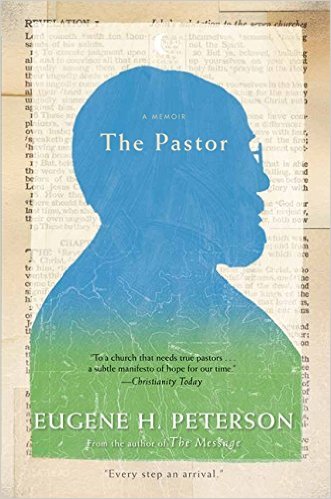
In Eugene Peterson’s memoir The Pastor he recounts the death and funeral of his mother after having buried countless church members throughout his life. As he stood before the gathered people his emotions came to a precipice and he could no longer contain himself. He writes:

“While I was reading the scriptures, tears erupted. I tried to hold them back, then gave in. I remember thinking, ‘All these people get to grieve, now it’s my turn,’ and let it come, sobbing uncontrollably. After thirty seconds or so, I recovered my composure and finished what I was doing. After the benediction, I didn’t want to see anyone and slipped into a room just off the chancel. My daughter, Karen, came in and sat beside me, without words, putting her hand on my thigh. And then a man I didn’t know came in, put his arm across my shoulder, spoke for three of four minutes in preacher clichés, and prayed. After he left I said, ‘Oh Karen, I hope I have never done that to anyone.’” (Peterson, Eugene. The Pastor: A Memoir. New York: HarperCollins, 2011. 294)

8T655xLGc

Across the great scope of Christianity, many churches will celebrate All Saints Day this Sunday. In the United Methodist Church we will use this particular opportunity in worship to remember the Saints of the church as well as all Christians both past and present. It is a time set apart to reflect on the many people who have shaped our lives, the grief we still feel regarding their deaths, and the hope of the promised resurrection.

All Saints is not a time for “preacher clichés.” It is not a time for churches to claim that God “just wanted another angel in heaven.” It is not a time for us to seek out those who are grieving and tell them how they are supposed to grieve (or worse: telling them they are supposed to be done grieving).

All Saints is a time for tears. Just like when Eugene Peterson’s wept over the death of his mother, and just like when Jesus wept over the death of Lazarus, it is good for us to grieve those who have died. This Sunday is a moment in the life of the church where we do well to let our emotions get the best of us and offer up our losses and sadness. Because it is in our grief that we really begin to appreciate those who have died and the ways they continue to shape our lives.

This week, as we prepare for All Saints Day, let us take time to reflect and pray for the people who have died in our lives. Let us thank God for their witness to God’s grace. And let us strive to sit alongside those who are grieving and bless them with our presence more than our words.

51ltEQZuJVL._SX329_BO1,204,203,200_

Devotional – Hebrews 7.23-24


Devotional:

Hebrews 7.23-24

Furthermore, the former priests were many in number, because they were prevented by death from continuing in office; but he holds his priesthood permanently, because he continues forever.
Weekly Devotional Image

Full disclosure: There is temptation in ministry. There is the temptation to believe that you are the only one with the ability to save others. There is the temptation of power to control every single little element in the life of the church. And there is the temptation of becoming more important than the Lord you serve.

It happens a lot.

After weeks of a particular strong sermon series, a pastor’s ego can swell from all the compliments she hears. During the reception following a wedding, a pastor’s pride can cast a huge shadow over the guests. The habits of worship can lead to a pastor pointing to himself far more than he points to the cross. Temptation affects pastors just as much as everyone else.

Yet, pastors/priests/ministers come and go. I can remember hearing a couple of the ushers from my home church arguing about a particular pastor’s sermon and their frustration with how much longer he would remain “in charge of the church.” For weeks they spent time during every worship service venting their frustrations and they began to compare him to all of the “better pastors from the past.” They would say things like “he used to do it this way,” and “he made me feel better when I left church,” and “he used to tell the best stories.” This went on and on until one of the ushers could no longer stand to hear all of this take place during church and said, “We’re not supposed to be here for the pastor; we’re supposed to be here for Jesus.”

9.6.IsJesusSeniorPastorOfChurch_464334126

The writer of Hebrews rightly shows the difference between priests and Jesus. Ministers/Priests/Pastors are many in number because we eventually come to the end of our time, but Jesus holds his priesthood permanently and continues forever. This one line from Hebrews is a sobering reminder for all who have been called to the ministry to remember that we are called to point to the Lord who reigns forever and ever. We can do a lot of wonderful and marvelous things for the churches we serve, but we are only as good as we are willing to remember the one from whom all blessings flow.

Similarly, this passage from Hebrews is a reminder to everyone in the church about who is really “in charge.” If we are serious about the commitments and covenants we have made as Christians we will remember that Jesus is the King of kings and Lord of lords. We will listen to the words of our pastors but will always remember the distinction between their words and God’s Word. And we will remember that even minister are broken by the powers of temptation and are in need of God’s divine grace.

Devotional – Hebrews 1.1-2

Devotional:

Hebrews 1.1-2

Long ago God spoke to our ancestors in many and various ways by the prophets, but in these last days he has spoken to us by a Son, whom he appointed heir of all things, through whom he also created the worlds.

Weekly Devotional Image

When I was growing up in the church I loved to ask questions. I thought the beauty of what we were doing as Christians was the fact that it was never a one-sided conversation; the moments following worship or bible studies when I had the freedom to wonder are still some of my fondest memories. As Kurt Vonnegut once said, “People don’t come to church for preachments, of course, but to daydream about God.”

I remember in particular one meeting in a youth room filled with old soft couches that just consumed those who sat on/in them. We were going around the room sharing our experiences of prayer and what we got out of it. One of my friends made a comment about how important it was for his family to pray before every meal remembering that God had really blessed them. Another friend shyly admitted that the only time she ever prayed was at church or in youth group because she didn’t know how to pray by herself. But one of my friends sat on his own couch with his arms crossed around his chest in frustration. When it came time for him to share he said, “I don’t understand prayer. We’re told to ask God to help us, but I never hear God say anything back. We learn about all these stories in the bible when God speaks to the people, so why doesn’t God speak to us like that anymore?”

All the eyes in the room immediately darted to our leader in anticipation of his answer. He calmly smiled and said, “God spoke his truest and best Word in Jesus. If we are waiting to hear God speak in our lives, all we have to do is open our bibles because God is still speaking to us through Jesus.”

word-became-flesh

That memory has stuck with me over the years because of how profound it actually was. Many of us expect prayer to be like a phone conversation with one of our friends, and then become immediately disappointed when God does not speak back. However, that leader was right: God spoke God’s fullest Word in Jesus Christ (as the incarnate Word). God can still speak to us today through our friends, or even in the still small silence, but God decisively speaks in our world through the stories of Jesus in scripture.

So, instead of reading scripture like a collection of stories from long ago, can you imagine how life giving it could be if we read it like Jesus was speaking to us here and now? The beauty of the bible takes on a whole new dimension when we stop limiting Jesus to the past, and start hearing him speak in the present.

When Should We Pray? – Sermon on James 5.13-20

James 5.13-20

Are any among you suffering? They should pray. Are any cheerful? They should sing songs of praise. Are any among you sick? They should call for the elders of the church and have them pray over them, anointing them with oil in the name of the Lord. The prayer of faith will save the sick, and the Lord will raise them up; and anyone who has committed sins will be forgiven. Therefore confess your sins to one another, and pray for one another, so that you may be healed. The prayer of the righteous is powerful and effective. Elijah was a human being like us, and he prayed fervently that it might not rain, and for three years and six months it did not rain on the earth. Then he prayed again, and the heaven gave rain and the earth yielded its harvest. My brothers and sisters, if anyone among you wanders from the truth and is brought back by another, you should know that whoever brings back a sinner from wandering will save the sinner’s soul from death and will cover a multitude of sins.

00030228_h


Sunday morning: 11am. The gathered community of faith was sitting patiently in the pews waiting for the worship service to begin. Week after week the people sat in the same pews with the same expressions on their faces. Year after year they listened to preachers come and go telling the same stories about Jesus from different perspectives.

It was just like every other Sunday morning. Mr. Smith sat all the way up on the right hand side in the front pew with his notebook and pen in hand ready to take notes on whatever he heard. Jimmy, John, and Josh were midway back on the left quietly giggling while drawing stick figure battles all over the bulletin. And Miss Ethel, old and frail, was still slowly making her way up the center aisle while the first hymn was being played.

Worship is repetitive; for nearly two millennia Christians have gathered once a week to say the same prayers, hear the same stories, and sing the same songs. Worship is just like any good habit, and the longer you have it, the more fruitful it will become.

The congregation sat attentively while the pastor preached on the power of prayer. The seasoned Christians had heard sermons like this one before; they could almost imagine how the preacher would tie it together before he even spoke the words. The newer Christians were getting a little tired of hearing about prayer week after week, they wondered about when the pastor would call for them to lead a revolution to turn the world upside-down, they wanted to hear about power, not about prayer. And the youth, bless their hearts, if you had called their names from the pulpit in the middle of the service they would have looked up with bug-eyed expressions as if their teacher had singled them out in the middle of class.

The preacher was getting to what he imagined was the pinnacle of his proclamation, the words were flowing accordingly, and he no longer needed to look at his notes to drive the point home. As he stood up in the pulpit, gazing out over his gathered flock, he lifted up his fist for the final paragraph and froze in mid-sentence when he saw Miss Ethel slowly slump over in her pew having taken her final breath on earth.

Hands

When are we supposed to pray? James would have us pray all the time. Are any among you suffering? They should pray. Are any cheerful? They should sing songs of praise. Are any among you sick? They should call for the elders of the church and have them pray over them, anointing them with oil in the name of the Lord.

No matter what is going on in life, whether we’re on a mountaintop of joy, or in the bottom of a valley of sorrow, we should pray. We pray in celebration and in defeat, we pray during the mundane, and we pray during the extraordinary.

The end of James’ letter is a favorite among preachers because it explains itself. There’s no need to go digging through the grammar to exegete a strange or divergent meaning. James means what he says:

We should pray all the time.

            Prayers of deep faith will bring about salvation on earth.

The Lord will raise us up.

            Through prayer, any sin can be forgiven.

            We should confess our sins to other people, and pray for others to be healed.

            Righteous prayers are powerful and effective.

            Elijah was just like us, and he prayed for a drought for three years and it did not rain, and as soon as he prayed for the rain to fall, it did.

            If anyone begins to wander away from faithful life, we do well to reach out and bring them back out of love.

            That’s it.

So, then why is prayer such a last resort for many of us?

James clearly outlines that if Christians do anything, they should pray. As individuals and as a community we are defined by the fact that we believe in relying on something bigger than ourselves being active in the world. Yet, more often than not, Christianity has been compartmentalized into just having a personal relationship with Jesus Christ (something you can do without the church). But having a personal relationship with Jesus Christ, though wonderful, is not what Jesus wants from us. Instead, we are called to be people of prayer who live like Jesus in community with our brothers and sisters in faith.

James clearly outlines what prayer can accomplish: it keeps us humble when life is full of success, and it keeps us hopeful when life is full of disappointment; it encourages us to open our eyes to the ways God is moving in the world, and it encourages us to be active participants in God’s kingdom here on earth.

Prayer is about relationship; it’s about connecting with God through the people around us.

The pastor stood in the pulpit and did not know what to do. He was trying desperately to string the final thoughts of his sermon together when Ms. Ethel fell over in her pew and died. He could feel all the eyes in the sanctuary look from her pew, to him in the pulpit, expecting him to do something. But he panicked and froze.

This was not something they covered in seminary, there was no class on ministering to the dead in the middle of a worship service, so the pastor stood in the pulpit and stared back at the church.

One of the ushers immediately called the rescue squad, but the rest of the church slowly stood up from their pews and began to gather around Ms. Ethel’s pew. No directions were offered, no specific pages of the hymnal were referenced, but as if God’s was orchestrating the entire thing, the congregation gathered around her lifeless body and began to pray and sing.

The words of faith came pouring from their mouths, thanksgivings were uttered, and intercessions were demanded. The great songs like Amazing Grace and How Great Thou Art were sung and hummed by the church. And by the time the ambulance had taken Ms. Ethel away, the pastor and the entire church were holding each other in tears of pain and joy, recognizing the loss of life while acknowledging the hope of the resurrection.

When asked later about the moment of prayer, the parishioners simply explained that in the midst of something so profound, the only thing they could do was pray.

james-4x3

Prayer can be beautiful, but it can also be uncomfortable. We don’t like having to wrestle with our finitude, we don’t like having to admit that one day we will die, that’s why weddings are much more crowded than funerals. But prayer, done rightly, is the most faithful thing we can ever do as Christians.

If James had it his way, we would spend more of our time confessing our sins to our fellow Christians. Talk about uncomfortable. When I encouraged all of you to take time to walk up to the pulpit and proclaim your sins, I did so in jest, but it would make us a more faithful community.

Look around the room: you all are beautiful. On the surface you’ve got the right outfits and dispositions. But on the inside, everyone is facing a battle that they rarely share with anyone else. It is a mistake to assume that we are eager to surrender our privacy to the church, but imagine (if you can) what it would be like if we trusted each other enough to do so.

If we could find just one person to confess to, we would make ourselves vulnerable and ready for healing. Confession is the beginning of transformation.

How are we, as a church, shaped by prayer?

Worship is structured around prayer. We pray for God’s presence to be made known to us in this place on Sunday mornings. We pray collectively for the world toward the beginning of the service. We pray silently from our pews lifting up our own joys and concerns. We pray for the offering that is collected by the ushers. We pray through the hymns we sing and the creeds we confess. The best sermons we hear are the ones less about our lives and more like prayers offered to and about God. And we end worship with a prayer.

In addition to worship we pray before our bible studies and youth meetings. We pray before every committee and before the church council. We are a people of prayer… but are we being shaped by prayer?

We are now going to try something that will probably make us uncomfortable.

In a few moments I will ask us to find someone else in church and ask for their prayers. We tried this on Wednesday night at The Circle meeting and it was a challenge. I asked for the youth to give me just one thing that I could pray for regarding their lives. Immediately I heard about friends or family members that needed prayer, but that wasn’t what I was talking about. I asked, “How can I pray for you right now?” and I want each of us to ask that same question right now.

So, as your able, I encourage you to find someone else in the church, you don’t have to wander too far, but find someone that is not in your immediate family. Once we’ve paired up, I want both people to take an opportunity to share something they need prayers for. This doesn’t have to be an ultimate confessional moment, maybe the thing you need is more patience with your children, perhaps you feel confused about decision and you could use some discernment, or maybe you’re unsure about what God is doing in your life.

Whatever that thing is I want you to share it, and the person who hears it will pray about it. The prayer can be as simple as “Lord, in your mercy, hear our prayer.” Or it can be filled with other words. The point is, I want everyone in this church to have the opportunity to share a need they have, and have someone in this church pray for them right away.

I know this is uncomfortable, but sometimes the most faithful things we do as disciples are born out of discomfort. So, let’s give it a try….

In the words of James: Are any of us suffering? We should pray. Are any of us filled with joy? We should sing songs of praise. Are any of us sick? We should call for our brothers and sisters in Christ to come and pray over us. We should confess our sins to one another, and pray for one another, so that we may be healed and transformed. Amen.

Crumbly Faith – Sermon on Mark 7.24-37

Mark 7.24-37

From there he set out and went away to the region of Tyre. He entered a house and did not want anyone to know he was there. Yet he could not escape notice, but a woman whose little daughter had an unclean spirit immediately heard about him, and she came and bowed down at his feet. Now the woman was a Gentile, of Syrophoenician origin. She begged him to cast the demon out of her daughter. He said to her, “Let the children be fed first, for it is not fair to take the children’s food and throw it to the dogs.” But she answered him, “Sir, even the dogs under the table eat the children’s crumbs.” Then he said to her, “For saying that, you may go – the demon has left your daughter.” So she went home, found the child lying in the bed, and the demon gone. Then he returned from the region of Tyre, and went by way of Sidon towards the Sea of Galilee, in the region of the Decapolis. They brought to him a deaf man who had an impediment in his speech; and they begged him to lay his hand on him. He took him aside in private, away from the crowd, and put his fingers into his ears, and he spat and touched his tongue. Then looking up to heaven, he sighed and said to him, “Ephphatha,” that is, “Be opened.” And immediately his ears were opened, his tongue was released, and he spoke plainly. Then Jesus ordered them to tell no one; but the more he ordered them, the more zealously they proclaimed it. They were astounded beyond measure, saying, “He has done everything well; he even makes the deaf to hear and the mute to speak.”

crumbs

Brandy had high expectations for Staunton, Virginia. When she moved here with her adult son Verney, who suffers from Cerebral Palsy, she knew that one of the best ways she could get connected with the community was finding a church home so she went looking. Each Sunday she would get herself ready with just the right outfit, she would put Verney in his wheel chair, and they would worship with a different church. The days between Sundays were spent in prayer about whether or not it was the right fit.

At some point she felt that she had found her church home and she approached the pastor about whether she could join. The conversation was great, she immediately felt loved and welcomed, she learned about Sunday school options, and different opportunities to serve in the church. But before the meeting was over she asked another quick question. “When do you think you could baptize my son Verney, and when will he be able to start taking communion?” The pastor stared back at her with a puzzled look on his face. “Ma’am,” he began, “I will not baptize your son, nor will I offer him communion. He can’t understand what they mean. And honestly, there would be no point.”

Jesus entered the house and did not want anyone to know he was there. Yet, word about him had spread so quickly that he could not escape notice. A woman, whose daughter had an unclean spirit, heard that Jesus had entered the town and she went to bow at his feet.

Up to this point Jesus, as a Jew, had been ministering to the Jews. He had read to them from the Torah, he had proclaimed God’s reign like one of the prophets from old, and he lived according to the law. This woman who came to beg at Jesus’ feet was not Jewish, she was a Gentile of Syrophoenician origin.

The woman was prostrate on the floor begging the Lord to cast out the demon from her daughter. And Jesus said, “Let the children be fed first, for it is not fair to take the children’s food and throw it to the dogs.” But she answered him, “Sir, even the dogs under the table eat the children’s crumbs.”

Imagine a homeless person banging on your door to ask for a favor, or a mother with a handicapped son asking for her son to be given communion, and you can get a sense of what was taking place in front of Jesus.

The unnamed Syrophoenician woman was driven by something more than proper etiquette and expectation; she was so desperately afraid for her daughter’s life that she was willing to beg at the feet of Jesus, a man from a completely different culture and way of life. Yet, Jesus’ response to the woman is one that many of us would rather overlook. We don’t hear Jesus immediately proclaim the grand scope of God’s kingdom; Jesus doesn’t reach out with his hands for a blessing. Instead he calls the woman a dog, and tells her that his mission is for the Jews alone.

The Syrophoenician woman, with no worth or status, does not go quietly into the night. She holds her ground and pushes the point back to Jesus and says: “even dogs eat the crumbs from the table.” When I read this story I imagine a sly smile stretching across Jesus’ face, a smile of recognition that this woman understands the way God’s upside-down kingdom is supposed to work, she believes in God’s goodness, she yearns for the kind of love than goes beyond all borders of culture and race.

So in response to her declaration, Jesus blesses her daughter, and rids her of the demon.

But the story is not over yet.

Jesus continues on his way, and people brought him a deaf man with a speech impediment. The deaf man was brought into a private place away from the crowds and Jesus used the power within him to open the man’s ears and release his tongue. In response Jesus ordered the people to tell no one what he had done, but the more he ordered the more zealously they proclaimed it.

This was radical.

During the first century, the time of Jesus, people who were blind, people who were deaf, and even women had little or no status at all. They were consistently removed from populated areas of life and were largely ignored. In those days people were afraid of anything that was different than the status quo; Jesus embraced it.

The story of the Syrophoenician woman and the deaf man are intricately linked because they demonstrate Jesus’ willingness to upset the expectations of the world and welcome all into God’s love.

body-and-blood-mark-jennings (1)

After Brandy’s meeting with the pastor, the meeting where he told her there was no point for him to baptize or share communion with her son, she abandoned the church. When I met her for the first time and she told me her story, she couldn’t remember what eventually brought her to St. John’s, but when she got here she was afraid. She was afraid that this church would be like the first. She was afraid that this church would see her son as worthless, invisible, and unworthy of their time.

There is something about our own sinful nature, perhaps our deep insecurity, which pushes us to institute rules that give certain people an elevated status while denigrating others. These divisions can take place over differences in physicality, economics, race, gender, sexual identity, and an assortment of other identifiers. Even today in our modern contemporary world, there is a sense that we are supposed to avoid people who are unlike us, that we are entitled to brush past the people in need in our community and in the global community, and that we have no need to embrace the things that separate us.

Jesus’ actions in the two stories from Mark 7 are worth our careful consideration and emulation. Jesus shows how a worthless unnamed gentile woman and an ignorable deaf man are actually vital and worthy people in the kingdom of God. This story forces us to reopen our eyes and ears to the fact that there are no barriers between God and humankind. Nothing can ever separate us to from God’s love in Jesus Christ, not race, class, gender, ethnicity, age, sexual orientation, or physical condition. And if there are no barriers between God and God’s people, then there should be no divisions between us.

Brandy was afraid of how this church would respond, but this church knows the stories of Jesus. All those years ago this church community welcomed Brandy and Verney with open arms, he was baptized in the name of the Father, Son, and Holy Spirit and was always reminded that he had a place at God’s table. This church knows that the best kind of faith is crumbly faith; you only need a little taste for the world to change.

When God came in the form of flesh in Jesus Christ the world was turned upside down. Throughout his earthly ministry Jesus time and again demonstrated that all people are worthy of God’s love. His work and words testified to the fact that the Lord is gracious and merciful, slow to anger and abounding in love. Jesus did everything he could to embody how the Lord is good to all, God’s compassion is over all creation. Jesus even went so far as to carry a cross on his back, hike under the ridicule of the world, and die to defeat death.

communion_elements

We remember and experience how far God was willing to go for our sakes in the bread and in the cup of Communion. When we are invited to this table to feast on the crumbly bread of Jesus’ body and partake in his blood we are like the Syrophoenician woman, we are like the deaf man, and we are like Brandy and Verney. We all come with our shortcomings and brokenness, we all share disappointments and failures, but when we stand before the throne we are all made new in God’s love.

I don’t know what you might be going through in your life right now. Many of us are remarkably reluctant, if not downright afraid, to share where we feel broken in our lives. We don’t want to admit our shortcomings or fears.

But remember the people from God’s word, remember the strong and resilient faith of the Syrophoenician woman who gave voice to God’s power in the world. Remember the deaf man whose life was forever changed as he was welcomed back into the heart of the community. Remember Brandy and Verney who were given hope in the midst of fear. And remember that you are always welcome at Jesus’ table, where the crumbs of eternal life are waiting. Amen