Then he opened their minds to understand the scriptures.
I’m grateful that Jesus, shortly before ascending to the right hand of the Father, opened the minds of the disciples to understand the scriptures.
I’m still waiting for that miracle to fall into my lap.
Unlike those first disciples, I regularly encounter scriptural passages that leave me feeling more confused than edified on the other side.
I might put up a good front in Sunday School, or in Bible Studies, or even in Worship, but scripture, to me, often feels like a rather bizarre enigma.
There’s a reason Karl Barth referred to scripture as the “strange new world of the Bible,” for it is strange and new.
Which is all to say, I am deeply suspicious of anyone who claims the Bible is “clear” on anything.
And yet, the more time I’ve spent with the Word, the more I preached and prepared to preach, the more grateful I’ve become for the bizarre nature of the Holy Scriptures. Nothing in life is very clear, and to know that the Bible we come to week after week is as confounding as our lives can be is a great and comforting thing. It means that it can speak something new and good and true into the midst of our messed up and broken lives.
I’ve been spending a lot of time reading while we’ve been sequestered away from one another, and I came across this quote from Robert Farrar Capon earlier in the week that hits home the topsy-turvy nature of the Word:
“One of the peculiarities of biblical miracles is the way in which they stand the cause-and-effect sequence on its head. We normally expect that, when someone heals us, the order of events will be first the treatment, then the restoration of wholeness and finally, when we are quite sure we’re out of trouble, the celebration of the happy issue out of our afflictions. But the scriptural order is very often the reverse: the first step is a command to celebrate – to act as if we already had something we obviously don’t; the second step is the discovery that suddenly we’ve got it; and the third step – the actual treatment that achieves the remedy – never actually appears in the process at all.” (Robert Farrar Capon, Party Spirit)
For many of us, preachers included, we tend to bring our own expectations to the scriptures assuming we have an idea about “what it all means.” When, more often than not, the Bible doesn’t give a flip about what we think we know.
Suffering? Try rejoicing and see what happens.
Unsure of the future? Throw a party; God is with you.
Anxiety bringing you down? Celebrate that God has already done for you that which you could never do for yourself.
That’s pretty weird stuff. But so is life. And so is God.
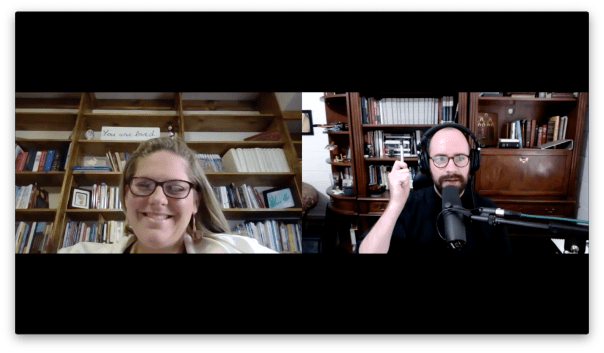
This week on the Strangely Warmed podcast I speak with Josh Blakely about the readings for the 6th Sunday of Easter [A] (Acts 17.22-31, Psalm 66.8-20, 1 Peter 3.13-22, John 14.15-21). Josh works for Longwood University and is currently completing a Masters Degree at Duke Divinity in order to pursue ordination as a Deacon in the United Methodist Church. Our conversation covers a range of topics including serialized stories, knowing your audience, Spiritual But Not Religious, TikTok church, worship statistics, God’s exams, faithful evangelism, baptismal remembrance, and seeing the Lord. If you would like to listen to the episode or subscribe to the podcast you can do so here: The Best Graphic Novel
But filled with the Holy Spirit, he gazed into heaven and saw the glory of God and Jesus standing at the right hand of God. “Look,” he said, “I see the heavens opened and the Son of Man standing at the right hand of God!” But they covered their ears, and with a loud shout all rushed together against him. Then they dragged him out of the city and began to stone him; and the witnesses laid their coats at the feet of a young man named Saul. While they were stoning Stephen, he prayed, “Lord Jesus, receive my spirit.” Then he knelt down and cried in a loud voice, “Lord, do not hold this sin against them.” When he had said this, he died.
Something happened to Stephen.
What exactly? Well, scripture doesn’t give us much.
All we know is that he was one of the seven deacons appointed by the Apostles to distribute food and charitable aid to poorer members of the community in the earliest days of the church. He was full of the Spirit and, apparently, had the face of an angel, but he was eventually dragged before the council and accused of blasphemy.
His response to the accusation?
Stephen tells a story, in fact he tells the story of scripture from Abraham to Jesus.
And it gets him killed.
The lectionary text for today doesn’t give us the whole speech from the first martyr, but the speech sealed his fate. Stephen repeats the history of God with God’s people and points them to the truth of Jesus’ lordship. But that is enough for those who gather. So much so, they cover their own ears and rush against him, drag him outside of the city, and stone him to death.
Such is the fate of those who choose to speak the truth.
And the truth Stephen told was a story that he would not have picked on his own.
After all, why would anyone tell a story that would get them murdered?
Something happened to Stephen.
And the something that happened, was Jesus.
This is who Jesus is, Stephen tells the crowds, the long awaited and exalted Messiah who rules now and forever. Jesus Christ is Lord.
We call that a confession. For, to confess the Lordship of Christ is to affirm there is no other lord over our lives. It means that our allegiance is to Jesus and to no one else. It means we cannot remain as we are.
Which sounds good and fine until you consider the countless others that are constantly vying for our allegiance even today, and how stuck we are in our ways.
For instance, we like to talk about the Freedom of Religion in the US. It means we’re free to exercise our faith, so long as we do so within certain limits. It means that you and I can say and do and believe and act according to a tradition, and that we are somehow protected in our practice.
And yet, this Freedom that we hold so dear has often resulted in religiosity being confused with national allegiance.
The terms “good American” and “good Christian” have become tied to one another without us having to consider whether or not those things have anything to do with each other.
Part of our presumed goodness, as Americans or Christians, has a lot to do with not upsetting the status quo; a certain delight in things remaining the same and never calling anything into question. Politeness and kindness and deference have become virtuous in a way that those behaviors are called upon to be emulated from the time we’re children whether its in a public school classroom, or tucked away in the furthest reaches of a Sunday school lesson.
But this story of Stephen is an ever ringing reminder to us practitioners of polite and civil religion that once there were Christians who did things we would never imagine – who quite joyfully parted with possessions, their families and friends, and even their very lives in order to remain faithful.
There was a time when Christians spoke the truth.
But now we’re addicted to whatever lies disrupt our lives the least.
The vast majority of us live under the tyrannical presumption that each of us get to do pretty much whatever we want whenever we want to whomever we want. And we have the gall to call it the pursuit of happiness.
In this distorted view of reality, every person gets to make up his or her mind based on the presumption that our choices are made free from the influence of others.
It doesn’t take long to look around and see how much we really are under the influence of other people and other things. Our diet of media consumption alone says a tremendous amount about what we think, believe, speak, and act.
Christianity, on the other hand, reminds those of us with ears to hear that we don’t really have minds worth making up. Precisely because we regularly chose to do things we know we shouldn’t.
And we do it all the time.
We struggle with the choices we make, and the stories we consume, and even more the stories we tell.
And it’s not just a matter of which grocery store to shop in and what television shows to watch. We’re talking about what’s good, and true, and beautiful.
But how in the world could we ever be expected to know what choices to make?
That’s, actually, kind of the point of the church. The church grabs hold of us and says, “Look, you don’t know what powers and stories have you under their control, so we’re going to make you part of this story instead, the story of Jesus.”
We might like to think that we had something to do with all of this, that we chose Jesus in our time of need. But the truth is, we don’t get to chose God, nor would we on our own.
I mean, why would anyone willingly sign up for turning the other cheek, and giving away 10% of their income, and reaching out to the last, least, lost, little, and dead?
God chooses us, in spite of us.
God happens to us.
Just like God happened to Stephen.
And we can read this story of his willingness to proclaim the truth, we can encounter the punishment that rained down upon him by the crowds, and we might feel tempted to just remove ourselves form the wider society. If people aren’t ready to hear about Jesus, why bother risking life and limb? And, without even realizing it, we find ourselves back in the position of doing whatever we can to maintain the status quo and to avoid upsetting the apple cart at all costs.
But, turning things upside down is what we do.
Or, at the very least, it’s what Jesus does.
A Christian is someone who calls a thing what it is. Which is just another way of saying that Christians tell the truth.
And we don’t do much of that these days.
Instead, we want to hear about God’s love, and mercy, and grace.
Which is all true and good and beautiful.
But we often talk about those things at the expense of telling the truth.
We want everyone to be happy all the time.
But how in the world can anyone be happy in a world of such horrific and terrible violence?
How can anyone be happy in a world in which an innocent black man can be murdered for no other reason than the color of his skin? How can anyone be happy knowing that what happened to Emmett Till is still happening even in 2020? How can anyone be happy when an indiscriminate virus is actually discriminately affecting certain people more than others?
As Christians, our call isn’t to happiness. Particularly when one’s happiness is usually achieved through someone else’s suffering.
Our call is to a life of adventure. The Good News of Jesus Christ tells us again and again that we’ve been grafted into the strange new world of the Bible through the work and the life of Jesus Christ.
Or, to put it another way, think about a time you received a gift you didn’t want. Perhaps you were hoping to get a new bicycle for your birthday but instead you got a book. Maybe you hated the book because you really really wanted that bike, but then one strange rainy afternoon you picked up the book and were immediately transported to another world. And, low and behold, you were trained to have wants you didn’t know you should have.
That what the church is all about – it’s an adventure we didn’t know we wanted to be on.
The adventure of Christianity is a life of truth telling.
We tell the truth and we have to the truth told to us.
That’s the name of the game.
And, frankly, it’s not something we would really want on our own. It’s something that happens to us. It happened to Stephen all those centuries ago. It has happened to countless saints over the years who, unexpectedly and inexplicably, stood up and said things they never would’ve on their own.
Without those who tell the truth, we are doomed to repeat our greatest mistakes over and over again.
It has been rightly said by many people in many places that America’s original sin is racism.
This is the truth.
It has plagued every single moment and every single decision and ever single interaction. It festers in the foundation of all that we hold dear. And we still carry it with us in all of our comings and all of our goings even today.
And rather than confronting the truth of the condition of our condition, we act like it’s not real.
But it is.
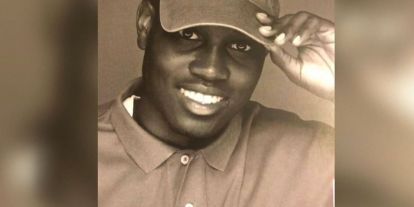
I alluded to it already, but a few months ago Ahmaud Arbery went for a jog one afternoon and it ended in his death. Two white men saw him run past their lawn and decided to chase him down with weapons in a truck.
That’s racism.
That’s sin.
And it’s not some isolated incident that happened in some far away place.
That racism happens whenever someone locks their doors when driving in particular neighborhoods, whenever someone crosses the street because of someone walking toward them, whenever someone has a knee-jerk reaction to whatever they might classify as other.
And we, more often than not, cover our ears whenever the term racism is uttered. And, to be clear, when I say we in this instance I mean those of us who are white. It is precisely our white fragility, to use a term that has come into vogue as of recent, that results in black bodies being locked up in prison at a staggeringly disproportionate rate, punished in schools for lower offenses than their white peers, and buried in cemeteries for committing the crime of running while black.
Christians need to be judged for their complicity in systems that are racist.
Christians need to speak the truth about what is right and wrong and good and evil in our society.
It will obviously create conflict and not everyone will be happy, but at least we’ll be talking about things that really matter.
Like Black Lives, for instance.
Because right now, black lives don’t seem to matter at all to those of us who are white.
Otherwise it wouldn’t have taken months of discourse and social media upheaval before Ahmaud Arbery’s attackers were arrested.
Christianity isn’t a story we would choose on our own because it requires so much of us. It calls us to look into the mirror and realize that when we read a story like the one about the stoning of Stephen, we are less like Stephen and more like the crowds who covered their ears and rushed forward. Christianity forces us to come to grips with our own sinfulness and our inability to transform ourselves.
After all, that’s why we call Jesus our Savior. It implies our need to be saved, and in particular our need to be saved from ourselves.
But we don’t like the idea that there’s anything wrong with us. So instead we trade out the Gospel of Jesus for the Gospel of the status quo. We say pithy things like, “Jesus was killed because he wanted us to love each other.”
But that’s crazy.
Jesus wasn’t killed because of his talk of love – Jesus was killed because he challenged the powers that be. He was killed for telling the truth.
That is the story given to us, a story that confronts us.
However, the recent wave of the COVID19 pandemic has forced churches across the world to adapt to the situation whether they wanted to or not.
When I first felt a call to ministry as a teenager in the early aughts, I told my pastor and he responded by telling me I would be preaching at the end of the month. He then gave me a few instructions (here’s the text, write 2,000 words, practice in front of a mirror, etc.) and the rest is history. One of the unanticipated benefits of being launched into ministry the way I was means that every sermon I’ve ever preached can be read online.
Literally through this blog.
As the years progressed I started making digital audio recordings of said sermons and now it’s not just a matter of reading the sermons online, but anyone anywhere can listen to them as well.
Therefore, to add the videocamera a few weeks ago to the typical Sunday morning experience wasn’t too much of a stretch.
It would seem, then, that going forward every sermon can be read, listened to, or watched online.
But, is it still church?
A good friend of mine, Alan Combs, recently started a new podcast called “Shelter In Place.” The idea behind the podcast is to reach out to a variety of people to discover how they are finding comfort in an inherently uncomfortable situation. I love the premise of it all and was thrilled to be invited on for a recent episode.
In it Alan, his friend Joey, and I talked about the challenges of doing ministry in the midst of the pandemic from live-streaming on Sunday mornings, to staying connected with church folk, to what kind of music we’ve been listening to.
If you would like to listen to the episode, or subscribe to the Shelter In Place podcast, you can do so here: Faith In The Time Of COVID
This week on the Strangely Warmed podcast I speak with Sarah Locke about the readings for the 3rd Sunday of Easter [A] (Acts 2.14a, 36-41, Psalm 116.1-4, 12-19, 1 Peter 1.17-23, Luke 24.13-25). Sarah is an ordained elder in the United Methodist Church and serves at Hickory UMC in Chesapeake, VA. Our conversation covers a range of topics including shame in the church, John Prine, preaching with authority, Jesus’ titles, The Good and Beautiful Life, loving the Lord, the preciousness of death, Peter and Social Distancing, and grace in retrospect. If you would like to listen to the episode or subscribe to the podcast you can do so here: Walking and Talking
This week on the Strangely Warmed podcast I speak with Joanna Marcy Paysour about the readings for the 2nd Sunday of Easter [A] (Acts 2.14a, 22-32, Psalm 16, 1 Peter 1.3-9, John 20.19-31). Joanna is an elder in the United Methodist Church and serves at Cave Spring UMC in Roanoke, VA. Our conversation covers a range of topics including Eastertide, Reese’s Peanut Butter Eggs, the H-word, shorter sermons, tour bus preaching, other gods, bad church marquees, icky verses, the harrowing of Hell, DBH, and death breath. If you would like to listen to the episode or subscribe to the podcast you can do so here: Less Is More
When the sabbath was over, Mary Magdalene, and Mary the mother of James, and Salome bought spices, so that they might go and anoint him. And very early on the first day of the week, when the sun had risen, they went to the tomb. They had been saying to one another, “Who will roll away the stone for us from the entrance to the tomb?” When they looked up they saw that the stone, which was very large, had already been rolled back. As they entered the tomb, they saw a young man, dressed in a white robe, sitting on the right side; and they were alarmed. But he said to them, “Do not be alarmed; you are looking for Jesus of Nazareth, who was crucified. He has been raised; he is not here. Look, there is the place they laid him. But go, tell his disciples and Peter that he is going ahead of you to Galilee; there you will see him, just as he told you.” So they went out and fled from the tomb, for terror and amazement had seized them; and they said nothing to anyone, for they were afraid.
They traveled to the tomb very early on the first day of the week.
On a Sunday.
The Gospel is reluctant to give us too many details about the journey. We don’t hear about their grief and their pain. We don’t get a glimpse at their plans now that the Lord is dead and forsaken in a tomb. We don’t really learn anything except they travel without knowing how they will roll the stone back.
Low and behold… The very large stone has already been rolled away by the time they arrive. And to further their confusion, when they look inside they discover a young man dressed in white. A divine messenger? An angel?
He speaks, “Don’t be afraid. I know you’re looking for Jesus, but he ain’t here. He was dead, but now he is alive. Look over there, that’s where they laid his body. But now go, tell the disciples that Jesus is going on ahead of you to Galilee, you will see him there.”
And here’s how the Gospel story ends: They ran from the tomb terrorized, and they said nothing to anyone, for they were afraid.
Easter.
It doesn’t get much better than this for the church. Out of death, life!
For centuries the church has mined this story for every possible nugget that can speak something new and wonderful into our lives. I, myself, have preached about the fear that so befuddles the women and how the Gospel ends with a lie. For, if they really said nothing to anyone, how else would we have heard the story?
I have preached about how new life seems to always start in darkness, whether its in the womb or in the tomb.
I have preached and preached this story.
And yet, this year, as I returned to the words that have comforted and confounded Christians for centuries, I’ve been stuck on a different detail.
Why Galilee?
I mean, good for Jesus that he’s raised from the dead and goes home. But Galilee was an out-of-the-way forgotten sort of place. It’s only claim to fame is that Jesus came from it.
Of course, Jesus did his Jesus thing in Galilee, and Galilee is where he called the disciples, and cured the sick, and fed the hungry, and preached the parables.
But even in the midst of his Galilean mission, Jesus was focused on eventually getting to the big show – Jerusalem.
The mission and the ministry builds toward the Transfiguration, and then everything shifts to the Holy City – the gospels sharpen as Jesus enters on the back of the donkey on Palm Sunday. Jerusalem is where he was betrayed, beaten, and left to die on the cross.
Jerusalem was the place to be, it’s where all the movers and the shakers were hanging out, its where those who believed in unbelievable things hoped the Messiah would take charge and transform the world.
Which makes the detail and the news of a Galilean reunion so bizarre. Here, on Easter, the Son of God is no longer held captive by the dominion of death, he is resurrected, and he leaves Jerusalem for Galilee.
That’s confounding.
One would hope that, on the other side of resurrection, Jesus would be smart enough to go right up to the palace to give Pilate a whole, “You can’t handle the truth!”
Or, Jesus would storm into Herod’s inner court to rip him a new one.
Or, at the very least, Jesus would gather a band of revolutionaries to overturn the powers and the principalities occupying Jerusalem.
Did the Lord of lords not know that if you really want to make a change you have to go to the top?
Jerusalem should’ve been the first step in the journey toward overthrowing the empire, Jerusalem would’ve been the perfect place to plant the flag of the kingdom of Heaven, Jerusalem could’ve been the beginning of the end.
But Jesus doesn’t do any of that – he doesn’t do the effective thing.
Instead he goes back to Galilee, of all places.
Nobody special lived in Galilee – it was populated by shepherds, fishermen, and farmers. The people there held no power or prestige.
The only thing notable at all about Galilee, is that’s where the followers of Jesus were from.
People like us.
When we read the Easter story, whether it’s on a Sunday in church or from the comfort of our own homes, we catch this moment when the women run away in fear. And because we tend to focus so much on their reaction, their terror, that we miss how Jesus is raised from the dead only to return to the very people who abandoned him.
Jesus chooses the unworthy and undeserving ragtag group of would-be disciples that he’d been dragging along for three years as the people for whom and through whom he will change the world.
On Easter Jesus returns not to the powers that be, but to people like you and me.
He doesn’t storm the gates of the temple, he doesn’t show up in the Oval Office, he goes where nobody would’ve expected.
Hear the Good News:
Christ died for us while we were yet sinners. Not after we repented of all of our sins, not before we even had a chance to think up all of our sins, but in the midst of them, in our worst and most horrible choices Jesus dies and rises for us.
At the right time Christ died for the ungodly, people like us who too easily move from “Hosanna” to “Crucify.”
There is therefore now no condemnation for those who are in Christ Jesus.
My sin, oh the bliss, of this glorious thought; my sin, not in part, but the whole. Is nailed to the cross and I bear it no more, praise the Lord, praise the Lord, O my soul.
All of that can be summed up like this: Jesus returns to us.
Take it from a preacher like me, even in these strange circumstances of celebrating Easter online, we’ve messed up the resurrection message for a long time. We’ve made church into yet another self-help program, a place to gather week after week to hear about what you must do to make your life better. Or, in case you don’t want to look too close to home, what you must do to make the world a better place.
And that doesn’t have anything to do with Easter!
It’s not Good News.
Notice: on Easter, Jesus’ response to the sins of his followers isn’t to berate them or judge them or even damn them. He doesn’t give them a list of things to do, or programs to start, or prayers to pray.
Instead, he just comes back to them, to us, with, of all things, love.
How odd of God.
When you think about it, it’s rather confounding how God keeps coming back to us.
Stuck in captivity in Egypt? God shows up in a burning bush.
Lost in exile? God brings the people home.
Dead in your sins? God sets us free.
Are we really sure we want to worship this God who refuses to leave us to our own devices?
God is like the shepherd who willingly leaves behind the ninety-nine to search for the one who is lost. God doesn’t sit back and relax and just hope for the best. God charges out into the wilderness and refuses to quit.
God is like a Samaritan, forsaken and ignored by the rest of the world, who stops by the side of the road to help the one that everyone overlooked. God doesn’t keep walking by with better things to do. God condescends God’s self to get down in the ditch with all of us.
God is like a king who hosts a giant party and, when not enough people show up, sends his servants out into the streets to grab anyone they can find, even the poor and the marginalized, and makes space for them at the banquet.
God is like the father who runs out into the street, stops his prodigal and wayward child before an apology can even spring forth, and says, “I’m busting out the good stuff tonight, we’re having a party! You were dead but now you’re alive!”
We, the good and righteous folk that we are, we might’ve thought the story was over. That the shadow of the cross remaining in the distance puts a conclusion on the whole thing. That, in the end, we really had gone too far this time with the whole killing the Son of God.
But even in this, the greatest sin of all, Jesus comes back.
He comes back to the betrayers and the crucifiers, to the doubters and the deserters.
Jesus comes back to us.
The work of Jesus, contrary to how we so often talk about it and hear about it in church, is not transactional. There is no such thing as “if” in the Gospel.
We are not told that the Lord expects us to get everything ironed out before he will come and dwell among us.
He doesn’t wait behind the stone in the tomb until there’s enough good morality in the world before he busts out.
What we are told, from the cross and from the resurrection, is that Jesus is already in it with us, and even more that he has gone on ahead of us.
Church, whenever it descends into “you must do this, or you have to make the world a better place” fails be the church Christ inaugurated in his life, death, and resurrection, because we will fail that work.
Easter invites us to do nothing except trust; trust that there is a New Jerusalem waiting to come down and feast at the Supper of the Lamb, the Lamb who has been with us the whole time, who refuses to abandon us regardless of how good we are or how bad we are.
If Easter because anything less bizarre than that, then faith is turned into standing on your tiptoes to see something that isn’t going to happen.
We can’t make Easter happen. We can’t raise Jesus from the dead.
It happens in spite of us entirely, which is the best news of all.
Easter, simply put, is a gift. A gift like grace – unwarranted, unmerited, undeserved.
God has made the world a better place in Jesus Christ who comes back to us. Amen.
Early on the first day of the week, while it was still dark, Mary Magdalene came to the tomb and saw that the stone had been removed from the tomb. So she ran and went to Simon Peter and the other disciple, the one whom Jesus loved, and said to them, “They have taken the Lord out of the tomb, and we do not know where they have laid him.” Then Peter and the other disciple set out and went toward the tomb. The two were running together, but the other disciple outran Peter and reached the tomb first. He bent down to look in and saw the linen wrappings lying there, but he did not go in. Then Simon Peter came, following him, and went into the tomb. He saw the linen wrappings lying there, and the cloth that had been on Jesus’ head, not lying with the linen wrappings but rolled up in a place by itself. Then the other disciple, who reached the tomb first, also went in, and he saw and believed; for as yet they did not understand the scripture, that he must rise from the dead. Then the disciples returned to their homes. But Mary stood weeping outside the tomb. As she wept, she bent over to look into the tomb; and she saw two angels in white, sitting where the body of Jesus had been lying, one at the head and the other at the feet. They said to her, “Woman, why are you weeping?” She said to them, “They have taken away my Lord, and I do not know where they have laid him.” When she had said this, she turned around and saw Jesus standing there, but she did not know that it was Jesus. Jesus said to her, “Woman, why are you weeping? Whom are you looking for?” Supposing him to be the gardener, she said to him, “Sir, if you have carried him away, tell me where you have laid him, and I will take him away.” Jesus said to her, “Mary!” She turned and said to him in Hebrew, “Rabbouni!” (which means Teacher). Jesus said to her, “Do not hold on to me, because I have not yet ascended to the Father. But go to my brothers and say to them, ‘I am ascending to my Father and your Father, to my God and your God.’” Mary Magdalene went and announced to the disciples, “I have seen the Lord”; and she told them that he had said these things to her.
I camped in the backyard with my very nearly 4 year old on Monday night. With the calls for Social Distancing and the stay-at-home order, I figured why not break out the tent and the sleeping bags and have a mini adventure. My plan was to get Elijah all snug in his bag around bed time and that I would be able to stay up for a few more hours by the fire, reading a book. But, of course, the minute I zipped up the tent the calls for me to join him started ringing out.
“But Dad, what if I get hungry?”
“Dad, I think you probably need to come in the tent now.”
“Um, Dad, I can’t sleep without you.”
So, at 8:30pm, I willed myself into the sleeping bag right next to him and began staring at the inside of the tent until I drifted off to sleep.
It took a long time.
Elijah was out within minutes, but I had nothing to do but listen to the sounds around me until sleep came for me. And, to be honest, I was shocked at how loud it was in my backyard. I could hear full conversations that neighbors were having in their backyard. I could make out the low buzz of a television sitcom with a laugh track coming from somewhere to the south. And I could hear God knows how many cars and motorcycles driving all over the place.
Which only made falling asleep that much harder.
But eventually sleep came for me, and I embraced it with love.
At around 4am I jolted awake inside the tent. I looked around for a brief moment trying to remember why I was inside a tent in the middle of the night, and then I laid my head back down and tried to go back to sleep. But something felt off.
And not just the fact that I was laying on the ground in the backyard. It took me awhile to realize where my discomfort was coming from – it was silent.
No cars. No conversations. No birds. It was completely still and quiet and it drove me crazy.
Somehow I eventually tell back asleep in the tent, even with the suffocating silence surrounding me. Until around 5:45am, while deep in in a dream, I heard the faintest little whisper, “Dad, are you awake?”
That’s all it took.
The whispered voice of my son called me out of what was into what is. And I was awake.
The Bible contains multitudes. But sometimes what it doesn’t say is what really stands out. Like one of my favorite and least favorite passages from John’s gospel, “Jesus did many other signs and wonders but we didn’t record them here.” I mean, why the hell not? I would love to know more about what Jesus said and did.
For as much as the Bible tells us, it’s notable that we learn absolutely nothing about what happens from the time Jesus is taken down off the cross until the disciples head to the tomb a few days later.
I would love to know what they were up to. But, we don’t get a behind the scenes glimpse at their grief stricken conversations. We don’t get to hear Mary the Mother of Jesus singing a song of lament to rival her Magnificat.
In fact, we don’t even find out what exactly happens in the tomb with Jesus that whole time.
Instead, Scripture just picks up right in the middle of the darkness with Mary Magdalene traveling to the tomb.
Which is just another way of saying that the most pivotal moments in the Gospel take place not in the light of day but under the cover of darkness. Whether its the incarnate life in the womb, or the upending of creation from the cross, or the resurrection within the tomb, it all begins with and in the dark.
Mary walks to the tomb in the silent darkness. She discovers, unexpectedly and inexplicably, that the stone has been rolled away. And she runs to tell the disciples. They, of course, rush to the tomb, take a peak inside, make some connections, and leave only slightly wiser than when they arrived.
But Mary stays at the tomb. Overcome with grief, she weeps.
Let us just stay here with that word for a moment. Before the joy of Easter, before the Good News truly becomes good, Mary grieves.
Loss is something we don’t often give space for during Easter. We focus so much on the Bunny, and the Candy, and the Eggs, and the hymns, and the lilies, that we don’t make space for people to feel what they feel. The Resurrection of Jesus Christ from the grave does not take away the pain of absence in death.
But death has been changed.
The Resurrection gives us eyes to see that death is not the end.
However, Mary has not yet seen the risen Lord. She peaks into the tomb and sees two angels and they ask her about her tears. For what it’s worth, they don’t tell her to get over her grief or start processing her feelings, they just ask her about her tears.
Then she turns around and see Jesus standing there, though of course she doesn’t recognize him. And he, like the angels, asks about her tears. She pleads, supposing him the gardener, to tell her where the body of her Lord is.
And instead of responding to her request, Jesus says, “Mary.”
Easter, for Mary, begins with a whisper.
All it takes is the sound of her name whispered from the lips of the Lord and everything changes forever.
She runs with the Good News ringing in her head and is the first to preach Easter to the disciples with words that still shake our hearts, “I have seen the Lord.”
The resurrection of Jesus Christ happened at night. No one was there when it took place. By the time Mary arrived with her tears it was already finished.
Some of the best and the most important things in the world take place without us have to do much of anything. That is a very strange and troubling word for those of us who feel as if we’re never doing enough. But Easter, Easter is a reminder that the most defining moment in the history of the cosmos happens in spite of us.
That’s why it’s Good News.
Jesus doesn’t wait behind the stone until his disciples have the right amount of faith before breaking out. Jesus doesn’t tell them that he will be raised only when they evangelize enough people. Jesus doesn’t give them a list of to-dos before Easter happens.
Jesus came to raise the dead – not to reform the reformable, not to improve the improvable, not to teach the teachable, but to raise the dead.
The promise of Easter for people like you and me is wild beyond all imagining. It it the gift of life in the midst of death, it is a way out simply by remaining in, it is everything for nothing.
Truly.
Easter is the promise that God, who has always been with us, will remain with us.
Easter is the promise that God can make something of our nothing.
Easter is the promise that death isn’t the end.
And we don’t have to do anything for it.
So I end with a whisper, not with clanging cymbals or banging drums, but with a whisper of the Good News, the very best news.
The Lord said to Moses and Aaron in the land of Egypt: This month shall mark for you the beginning of months; it shall be the first month of the year for you. Tell the whole congregation of Israel that on the tenth of this month they are to take a lamb for each family, a lamb for each household. If a household is too small for a whole lamb, it shall join its closest neighbor in obtaining on; the lamb shall be divided in proportion to the number of people who eat of it. Your lamb shall be without blemish, a year-old male; you may take it from the sheep or the goats. You shall keep it until the fourteenth day of this month; then the whole assembled congregation of Israel shall slaughter it at twilight. They shall take some of the blood and put it on the two doorposts and the lintel of the house in which they eat it. They shall eat the lamb that same night; they shall eat it roasted over the fire with unleavened bread and bitter herbs. Do not eat any of it raw or boiled in water, but roasted over the fire, with its head, legs, and inner organs. You shall let none of it remain until the morning; anything that remains until the morning you shall burn. This is how you shall eat it: your loins girded, your sandals on your feet, and your staff in your hand; and you shall eat it hurriedly. It is the passover of the Lord. For I will pass through the land of Egypt that night, and I will strike down every firstborn in the land of Egypt, both human being and animals; on all the gods of Egypt I will execute judgments: I am the Lord. The blood shall be a sign for you on the houses where you live: when I see the blood, I will pass over you, and no plague shall destroy you when I strike the land of Egypt. This day shall be a day of remembrance for you. You shall celebrate it as a festival to the Lord; throughout your generations you shall observe it as a perpetual ordinance.
Why is tonight different from all other nights? That’s a worthy question for any of us taking the time to gather, strangely enough online, to remember Jesus’ final night with his friends. Particularly at a time when we cannot gather with our own friends, our brothers and sisters in Christ.
But that question is not meant for us alone. The same question is asked of Jewish children who gather together for the celebration of Passover. Why is this night different from all other nights?
Long ago, God made it all. The tall and the small, the near and the far, from here to there and everywhere. God brought forth life. Including us. That is, humankind.
God made a promise with Abraham to be his God, for his descendants to be more numerous than the stars in the sky. Abraham begat Isaac who begat Jacob. Jacob wrestled with an angel of the Lord on the banks of the Jabbok river and was given a new name: Israel. A name that means, “You have struggled with God and prevailed.”
Jacob begat Joseph who was sold into slavery in Egypt by his brothers. But during his time as a stranger in a strange land he was prosperous and eventually brought about the gathering of Abraham’s descendants such that they were fruitful and multiplied in a foreign land.
All was well in Egypt, until it wasn’t.
The Egyptians grew jealous of the Hebrews and began to subjugate them and eventually ordered the deaths of every male child born to a Hebrew woman out of fear that they would one day rise up against their overlords.
Moses was born, saved by his mother by pushing him out in basket to float down the Nile. He grew in strength and wisdom and was called by God from the burning bush to deliver God’s people out of captivity in Egypt to the Promised Land.
God commanded Moses to have the people slaughter lambs and use the blood to mark their doors. This would be the sign for the Lord to pass over their homes while slaughtering the firstborns in Egypt. God implored the people Israel to gird their loins that night because the time of their delivery was near.
Passover is a night different from all other nights because it is a time set aside to mark and remember the sacred and holy moment of God’s deliverance; Passover is when a people remind themselves of how God made a way where there was no way.
Jesus gathered with his friends in the upper room to celebrate Passover. They sat around a table to think about all that God had done long ago to save their ancestors. And it was around that table, pondering the past, that Jesus took an ordinary loaf of bread and said, “You all see this? This is my body. Take it, eat it, and know that I’m giving it for you.” Later he reached for a cup of wine and said, “This is my blood. It is a new covenant. I am pouring it out for you and for many for the forgiveness of sins. Remember me and what I’ve done for you.”
A night unlike any other night built upon the movements of the days from long ago, Jesus said to his friends, “I’m making a way where there is no way.”
Why does Jesus suffer and die on a cross? Well, the cross is how Rome made an example of those who rocked the boat. But if I were to ask those of you across the great spectrum of the internet the same question, chances are better than good that you would say something like, “He died to make us right with God.” Or, “It’s his way of forgiving us.” Or, “He did it so we can go to heaven.”
Which, to be honest, aren’t necessarily wrong. It’s absolutely true that one of the final things Jesus says from the cross is, “Father, forgive them for they have no idea what they’re doing.”
But if the only thing we needed was forgiveness, couldn’t we have received it without Jesus’ having to die?
One of the things we so often miss, even those of us blessed to have communion in church every week, is that Jesus chose Passover for the time of his Last Supper.
And Passover isn’t about forgiveness.
The Lord didn’t look out on the misdeeds of the Israelites and say, “Okay, time to let bygones be bygones, I will wash away your sins.” No. God says, “I’m getting you the hell out of Egypt. Let’s go!”
Passover is about freedom.
The blood that the Israelites marked their doors wasn’t a sign of guilt or shame or sorrow. It wasn’t a substitute for their own blood as a sacrifice for the sins they’d committed.
The blood marked the people out as the ones God was going to rescue.
When Jesus sits around the table with his friends for Passover, when he takes the bread and the cup he says this is my body and blood, he’s giving them a peak behind the curtain of salvation such that when they see him up on the cross, they would really be seeing a door streaked with blood.
Just as Israel was set free from captivity, given a new identity, sent to dwell in a new land, so too will the world is freed from oppression of another sort, given a new identity, and delivered not to a new geographical location, but into a community where people live on earth as it is in heaven.
Notice the connections:
Jesus was without sin and was innocent of the charges lobbed against him, just like the Passover lamb is supposed to be perfect and without blemish.
Jesus was beaten to the point of death and stabbed in the side shortly before his end, just like the Passover lamb is supposed to be bled before being hung to roast.
Jesus was hung up high and though beaten his bones were not broken, just like the Passover lamb’s bones were to remain intact.
Perhaps we’ve always seen it, but in case our eyes have been fixated on something else, the Bible is begging us to see that the cross is our exodus.
It is our delivery out of captivity into something new.
Look. I don’t know you. I don’t even know who’s watching this. Chances are some of you are from the church I serve. But some of you aren’t. And yet, I’ve been a pastor long enough to know something about every person viewing this. We’re all sinners.
Sin isn’t just something we do when no one else is looking. Sin is who we are. We all do things we know we shouldn’t and we all avoid doing things we know we should. Sin is like shackles around our hands and feet, and no matter what we do we cannot break free on our own.
We’re all stuck in our own Egypts, we’re surrounded by the sins we’ve committed and the sins committed against us. They’re hovering around us all the time. We are held captive by them, and we are stuck in our sins, dead in our sins, and they’re ain’t nothing we can do about it.
But that’s kind of the whole point.
Jesus chooses Passover for his Last Supper, for his last moment with his friends, because he wants all of us to see that God is in the business of deliverance. As Robert Jenson so wonderfully put it, “God is whoever raised Jesus from the dead having first raised Israel out of Egypt.”
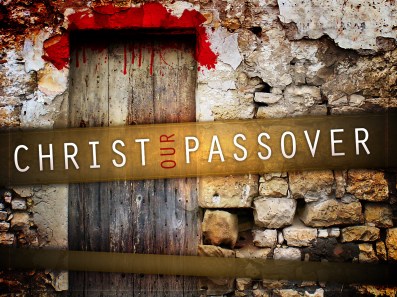
Jesus Christ is our Passover lamb, slaughtered as a sign and mark of our freedom from the tyranny that surrounds us in every moment.
Jesus Christ is our Passover Lamb which means that we are not defined by our mistakes or our sins or our shames.
Jesus Christ is our Passover Lamb, breaking the chains of our past, present, and our future.
God in Christ does for us what we could not and would not do for ourselves. Jesus is our Exodus. Lift High the Doorpost! Amen.
This week on the Strangely Warmed podcast I speak with Joanna Marcy Paysour about the readings for Easter Sunday [A] (Jeremiah 31.1-6, Psalm 118.1-2, 14-24, Colossians 3.1-4, John 20.1-18). Joanna is an elder in the United Methodist Church and serves at Cave Spring UMC in Roanoke, VA. Our conversation covers a range of topics including lengthening Lent, Ta-Nehisi Coates, Incubus and The Weeknd, Easter in Coronatide, defining worship, finding grace in the wilderness, contingencies, dying with Christ, resurrection emotions, and biblical connections. If you would like to listen to the episode or subscribe to the podcast you can do so here: Crying on Easter








![resurrection-Easter-edit[1]](https://thinkandletthink.com/wp-content/uploads/2016/03/resurrection-easter-edit1.jpg?w=452&h=191)



 think and let think