The Gifts of God – Grace

Philippians 1.3-11

I thank my God every time I remember you, constantly praying with joy in every one of my prayers for all of you, because of your sharing in the gospel from the first day until now. I am confident of this, that the one who began a good work among you will bring it to completion by the day of Jesus Christ. It is right for me to think this way about all of you, because you hold me in your heart, for all of you share in God’s grace with me, both in my imprisonment and in the defense and confirmation of the gospel. For God is my witness, how I long for all of you with the compassion of Christ Jesus. And this is my prayer, that your love may overflow more and more with knowledge and full insight to help you to determine what is best, so that in the day of Christ you may be pure and blameless, having produced the harvest of righteousness that comes through Jesus Christ for the glory and praise of God.

Christmas 1

From now until Christmas Eve, we will have a sermon series on the gifts of God. This is particularly fitting considering the fact that Advent is usually a time when we fret about what we will be purchasing for everyone else. However, this Advent, we will be reflecting on what God has given us. Today we continue the sermon series with God’s gift of Grace.

PowerPoint presentations were all the rage when I was in seminary. Professors would carefully craft their lectures around being able to display particular words on the screen while they talked. Some failed to use PowerPoint effectively and would just randomly throw words up on the screen without much context. But others used PowerPoint in a powerful way by displaying a piece of art and then describing how it conveys a deeper sense of faith than words alone.

In the spring semester of my first year I was in the middle of a New Testament lecture about the crucifixion when my professor began showing image after image of Jesus’ death. At the time, I was so academically invested in the words of scripture that I was treating it more like a text to be mastered rather than letting in sink into my soul.

I would go to church on Sundays but instead of listening to a sermon for my own discipleship I would think about how to change the sermon to make it more effective. I would receive communion but I would lose myself to thoughts of Eucharistic practices throughout the centuries while I chewed on the bread and juice. And I would read scripture everyday but I thought about how it applied to other people more than myself.

So there I was in the New Testament lecture and the images of Jesus’ death kept flowing across the large screen. I lost count of how many versions were displayed and at some point I stopped listening to my professor and stopped taking notes. Instead I watched my savior dying over and over again.

Some were abstract with shapes and colors conveying the cross and Christ’s body whereas others were remarkably vivid in detail with blood, cuts, and bruises. My professor continued to run through the images on the screen and let the art speak for itself. Like a merry-go-round of emotional impact, I sat in my chair observing the death of Christ until my professor stopped and said, “This is what Christ did for you.”

Overcome by the totality of the moment I jumped up from my chair and covered my tears as I walked out into the hallway. I remember breathing heavily as I tried to compose myself when my friend Wil came out of the lecture hall to check on me.

“What’s going on? Are you alright?” He asked.

I said, “I just don’t deserve it. I don’t deserve what Christ did.”

Then he looked me in the face and started to laugh. “Taylor,” he said, “That’s the whole point!”

Paul wrote his letter to the Philippians from prison. In the shackles for the crime of his faithfulness, Paul continued to embody that same discipleship in a letter to a church that he loved. The community of faith had learned about Jesus Christ, they had heard about his ways and stories, they shared bread, wine, and goods together and were living a radically different life. Their faith in the Lord God was bearing fruit in the community and Paul wrote to encourage their commitment.

This wasn’t just a “keep up the good work” note, but was a profound theological reminder of what the point of the church is supposed to be.

I thank the God of heaven and earth whenever I remember you and I pray for you constantly. I am confident that God will bring your work to completion in Jesus Christ because of your commitment to the kingdom. It is right and good for me to think this way about you, because you hold me in your heart, for all of you share in God’s grace with me.

What is God’s grace?

gracechangeseverything4-w855h425

I asked this question recently of our youth and some of our more seasoned Christians and I got a wide variety of answers: love, hope, peace, forgiveness, salvation, joy, knowledge, wisdom, food, blessing, etc. “Grace” is a buzzword in the church, one of those terms that we fling around all the time without really thinking about what it is. We say grace before we eat, we sing hymns like “Amazing Grace” and we even use it in common expressions like “there by the grace of God go I.” But what is grace?

Like my friend Wil reminding me in the hallway, Grace is love that we don’t deserve.

A few days ago I was standing on the front lawn of the church with all of our preschoolers. We were walking through the rows and rows of Christmas tree to select a few for the classrooms downstairs. Wilford Kirby generously volunteered his time to teach the children about how Christmas trees grow and how the real reason for the season isn’t the gifts under the tree but the gift of Jesus Christ for you and me. All of the kids loved it except for one, who was having a complete meltdown.

Why? I couldn’t begin to explain what was going through his mind. But for whatever reason, the moment we asked him to pick out a tree he started wailing and crying. “I don’t want a Christmas tree! NO! NO! NO!”

I tried to distract the other kids from his tears by guiding them along the trees and I could tell that the boy’s teacher was growing very tired of his outburst. Yet, while I kept an eye on her class, she went over to the boy wrapped her arms around him, and started to comfort him.

Grace is love that we don’t deserve.

Yesterday afternoon many of us gathered to remember the life of Dave Fitzgerald, a long time member of this church. We sat in our grief regarding the life that was lost, but we also faithfully proclaimed the promise of the resurrection. We got out the hymnal with our tissues and we praised God for sharing Dave’s life with us.

During the funeral I told a story about Dave that completely reshaped my understanding of the church. When I arrived at this church, Dave and his wife Pat were some of the first people I had a chance to visit outside of these walls. I hadn’t been here more than a month before I was sitting in their living room and learning about this church and all of you. They shared about why the church was important to their lives and how they had, hopefully, passed that feeling to their sons. I learned about how Dave used to butcher meat and stuff sausages in the back parking lot much to the chagrin of some older church members. And then I started to hear about all the drama from the past.

Every church has drama, arguments, and fights. After all, churches are filled with broken people like you and me. So Dave described this seemingly epic event from the past and how it made him so angry with the church and with the people in it. One man in particular. Who and why are not important. Frankly it could have been anyone about anything. But after he had finally got all of the frustration out, he said, “But just because I didn’t agree with him, it doesn’t mean that I couldn’t love him.”

Grace is love that we don’t deserve.
Gods-grace

I am fortunate to know most of you and your stories. I have been invited into your homes and precious moments. I have learned your stories, and what makes you smile. You all are good people. But if you’re anything like me, you don’t deserve God’s love. You make the wrong choice when you know what you’re really supposed to do. You turn your head away from the public arguments and bullying that you know you could stop. You hear about the problems going on in the world and though you feel bad about it, you don’t have enough energy to do anything about it.

We are so broken people, us Christians. Frankly, that’s what church is all about. This place is not supposed to be a museum of saints. It is a hospital for sinners. We fail to be obedient to the words we hear in church and read in scripture. We love the tunes of the hymns but we forget to live according to them from Monday to Saturday. And we are content to leave our discipleship in this room.

And guess what? God still loves us even through we don’t deserve it!

Can you think of anything more radical that our God could possibly do? I believe in the profound power of the resurrection from the dead, but I am still astonished by the fact that God loves me even though I don’t deserve it.

Like a prodigal son who squandered his inheritance, God will always welcome us home.

Like a crying preschooler on the front lawn, God will always surround us with love.

Like a frustrated parishioner, God will always love us even if God doesn’t agree with us.

Grace is love that we don’t deserve. Grace is a gift.

This table embodies God’s overwhelming grace. There are plenty of people in our lives that, if we did something bad enough, they would never welcome us back. Walls will be built up between us and few bridges would ever get us back. Yet God, no matter who we are or what we’ve done, always invites us to the table and to the kingdom. God’s love is so profound that even when we are at our worst, God will be here with open arms.

God’s grace is a gift. Grace is the love of God made manifest in the life of Jesus Christ who gave his life for the world. Grace is the love of God made real in a baby born in a manger to a young woman in the middle of Bethlehem. Grace is the bread and cup at this table offered to you no matter what.

Grace is love that we don’t deserve. Amen.

Devotional – Luke 1.78-79

Devotional:

Luke 1.78-79

By the tender mercy of our God, the dawn from on high will break upon us, to give light to those who sit in darkness and in the shadow of death, to guide our feet into the way of peace.

Weekly Devotional Image

It was on my first day in seminary when a preacher said, “We spend so much time talking about Jesus that we forget to talk to Jesus.” It was a convicting truth that would come to fruition over the following months and I knew I needed to do something about it. Days would pass and, though I had been deep in scripture for particular class, I realized that I had not taken the time to pray to the Lord who was being revealed to me in the scripture. It was at that point when I committed to attend Morning Prayer in Goodson Chapel with all of the Anglicans and Episcopalians.

I was one of the token Methodists with a few of my denominational colleagues and we tried to keep up with our peers as they bowed their heads at particular times during the liturgy, as they made the sign of the cross across their bodies, and as they drank from a common cup when we had communion. It was difficult to assimilate during those first few weeks; many of the people in attendance did not even need to look at a Book of Common Prayer to say all of the right words at the right time. However, after a few months passed, I started to realize that I no longer needed to look at the book because the words and habits of Morning Prayer had sunk deep into my soul.

books-of-common-prayer

I don’t remember when it happened, but one morning while we were proclaiming the words from “The Song of Zechariah” (Benedictus Dominus Deus) the young man next to me changed some of the words. Instead of speaking in the plural, he spoke individually: “By the tender mercy of my God, the dawn from on high will break upon me, to give light to me as I sit in darkness and in the shadow of death, to guide my feet into the way of peace.” His willingness to proclaim God’s faithful words for himself, has stuck with me ever since.

During this season of Advent, it is good and right for us to recognize that God made good on his promise “to give light to those who sit in darkness and in the shadow of death” when he came in the form of flesh as a baby in a manger. We spend these weeks patiently waiting, just like the Israelites did so long ago, for the light that will shine in the darkness. But this isn’t just something that God did in the past; every Advent is an opportunity to embark on a new way of life where God’s tender mercy will guide our feet into the way of peace.

This week, let us take time to proclaim the words from The Song of Zechariah personally. Whether in the morning when we wake up, or at night before we fall asleep, or whenever we feel called to during the day, let us proclaim: “By the tender mercy of my God, the dawn from on high will break upon me, to give light to me as I sit in darkness and in the shadow of death, to guide my feet into the way of peace.”


The Gifts of God – Truth

Psalm 25.1-10

To you, O Lord, I lift up my soul. O my God, in you I trust; do not let me be put to shame; do not let my enemies exult over me. Do not let those who wait for you be put to shame; let them be ashamed who are wantonly treacherous. Make me to know your ways, O Lord; teach me your paths. Lead me in your truth, and teach me, for you are the God of my salvation; for you I wait all day long. Be mindful of your mercy, O Lord, and of your steadfast love, for they have been from of old. Do not remember the sins of my soul or my transgressions; according to your steadfast love remember me, for your goodness’ sake, O Lord! Good and upright is the Lord; therefore he instructs sinners in the way. He leads the humble in what is right, and teaches the humble his way. All the paths of the Lord are steadfast love and faithfulness, for those who keep his covenant and his decrees.

Christmas 1

Happy New Year! As I mentioned last week, today is the beginning of our year as Christians. We have reset the calendar to rediscover the love of God in our lives and in this place. From now until Christmas Eve, we will have a sermon series on the gifts of God. This is particularly fitting considering the fact that Advent is usually a time when we fret about what we will be purchasing for everyone else. However, this Advent, we will be reflecting on what God has given us. Today we begin the sermon series with God’s gift of truth.

Make me to know you ways, O Lord; teach me your paths. Lead me in your truth, and teach me, for you are the God of my salvation; for you I wait all day long.


One of God’s greatest gifts to us is truth. God provides for us a way and a path for Christian living and they all point to the truth. The psalmist confesses the beauty of this truth and pleads for God to maintain the truth in all times and in all places.

Advent is a wonderful and strange time for us Christians. In four short weeks we, as a church, are expected to make time and space to prepare our lives for God’s indwelling. All the while, many of us want to quickly break out the carols to accompany the dizzying whirl of parties and purchasing the usually precede Christmas. We want Christmas morning to be here so badly, that we forget about the anticipation of Advent.

True confession: My Christmas lights were up three weeks ago. We had a particularly balmy day and I decided that I might as well get outside and string up the lights, even if I was wearing shorts and a tee shirt. I have almost purchased all of my Christmas presents. I keep a notebook with me throughout the year and whenever Lindsey makes mention of something she likes, I make a note of it so that I will be prepared for Christmas. And even this morning, while I was praying in our sanctuary and on the front lawn, I caught sight of a particularly beautiful Christmas tree that I will probably bring home this afternoon.

I am impatient. I get so excited about a particular time and event that I often lose sight of the time leading up to it, precious time to be savored and enjoyed. But here’s a truth that God provides for us impatient people: the anticipation is just as important as the thing itself.

If couples went from engagement immediately to the wedding they would not have the important time of really learning what their in-laws are like.

            If young people were given a driver’s license without having a learner’s permit for nine months there would be a tremendous amount of fender benders in Robert E. Lee’s parking lot.

            If we jumped straight from Thanksgiving to Christmas morning then we would believe Christmas is more about gifts under the tree than God’s gift of Jesus for you and me.

The anticipation is just as important as the thing itself.

The psalm describes a profound trust in the Lord, a trust in the Lord’s paths, ways, and truths. God reminds us of these truths through different people and events, and when we confront them we can’t help but admit how true they really are.

The psalm also proclaims an important truth that we all need to hear right now: God is the God of our salvation.

In our contemporary culture, people often use the language of salvation when referring to politicians. President Roosevelt was considered by many to be a savior as was Kennedy and Reagan. Today we still look at our politicians with a messianic lens.

I was walking down Beverley street a few weeks ago when I overheard a couple in front of me discussing Donald Trump’s political astuteness. One of them said, “If only he was president, he would fix all the problems that the democrats started!” I couldn’t help but laugh when I heard what they had to say and I kept on walking. But then when I got in the car and started to drive back to church I heard someone call into NPR to claim that Hillary Clinton has the power to unite all people and will bring us, as in Americans, to the Promised Land. And then I got an email from someone who asked me to use the pulpit as a means by which to convey to all of you that Ben Carson was handpicked by God to bring about infinite prosperity and a return to Christendom here in the United States. And then someone sent me a picture that said, “We should elect Bernie Sanders as a socialist Jew, because we worship another socialist Jew every Sunday in church.”

political_saviors

In a matter of hours, I heard about how four different political candidates would bring about a peace and wholeness in America that sounds impossible. Politicians cannot save us. They can advocate for us, they can institute law that can help us, but they cannot save us. Donald Trump cannot save us. Hillary Clinton cannot save us. Ben Carson cannot save us. Bernie Sanders cannot save us. Only Jesus saves.

This is one of God’s truths: only God can save. Yet, we all fall to the temptation of believing that political leaders are like messiahs who should be the ultimate objects of our trust and allegiance. Just drive around Staunton for an hour and look at all the political bumper stickers and yard signs covered in red white and blue. Countless Americans will contribute untold sums of money to political campaigns, they will use their precious free time to attend rallies and knock on doors, and they will jump at the first chance to get into an argument with someone who has a difference in political opinion.

Can you imagine what our community would be like if we actually worshipped Jesus like we worship our politicians? Can you picture what Staunton would look like if we put crosses on our cars (letting everyone know what we are supposed to act like) instead of political bumper stickers? Can you imagine what it would be like if we put up mangers in our front yards letting everyone know we worship the kings of kings instead of political banners?

We need politicians for our country. But we only need God for salvation.

That’s what God’s truths are like. On some fundamental level we know them to be true, but life tries to convince us otherwise. Getting excited about Christmas isn’t a bad thing; it’s only when we let the material become more important than the spiritual that God needs to remind us of the truth. Wanting politicians to make substantial and important changes isn’t a bag thing; it’s only when we start worshipping politicians like we are supposed to worship Jesus that God needs to remind us of the truth.

On Thursday evening I was sitting around the table at my parents house in Alexandria, VA for Thanksgiving. Family members had worked all day to get the food exactly the way we wanted, decorations had been set up across the house, and we were finally about to go around the table and share what we were thankful for this year. One of my cousins got the waterworks flowing as he shared that he was thankful for the new life that Lindsey and I will be bringing into the family in April. Both of my sisters expressed thankfulness for our family that has supported them throughout their lives. But then my grandmother started to share.

She told us about a family that lives across the street who has been through the ringer over the last few years: Divorce, unruly children, uncertain employment, etc. The mother of the family has grown close with my grandmother and they were out in the street talking a few weeks ago. The woman asked my grandmother what she would be doing for Thanksgiving and she described the very feast and fellowship that we were currently enjoying. The woman listened patiently to all the things my grandmother described and then said, “Do you know how blessed you are?

My grandmother began to cry and she exclaimed how she takes so many of her blessings for granted: Good health, a family that loves one another, food on the table, her faithfulness. The joy and exuberance of the day quickly transformed into a brief time of silence as we all pondered about the blessings that we take for granted.

Want to know one of God’s truths that we miss the most? We are blessed. Amidst spinning truths and impending threats we have a God who loves us more than we can possibly imagine. Amidst all of our fears and frustrations we have a savior who was willing to die on a cross to save us. Amidst all of the uncertainties and hypocrisies we have a Spirit that breathes new life into us each and every day. We are blessed.

blessed-main-image

Good and upright is our God. He patiently instructs us through his Word in the way that leads to salvation. God leads the humble in what is right and teaches each of us the path to follow. All of the Lord’s ways are steadfast love and faithfulness so long as we remember the truth.

In a moment I’m going to invite us to encounter and confront one of these truths. Some of us will still wish it was Christmas day today, some of us will still worship politicians like we should worship Jesus Christ, but one of the things all of us can do is be thankful for the blessings in our lives. I would like each of us to pair up with someone in the church, someone that we don’t normally spend time with, and I want us to just have a conversation about how God has blessed us this year. Take a few moments to share, perhaps like you did on Thanksgiving, what you are thankful for right now.

One of the gifts of God this advent is the truth. The truth of God’s love made manifest in a baby born in a manger, a baby that embodied the Good News, a baby that carries the promise of transformation of life from sin to salvation, from slavery to freedom, from injustice to peace, and from death to resurrection. We are blessed. Amen.

What Is Truth?

John 18.33-38

Then Pilate entered the headquarters again, summoned Jesus, and asked him, “Are you the King of the Jews?” Jesus answered, “Do you ask this on your own, or did others tell you about me?” Pilate replied, “I am not a Jew, am I? Your own nation and the chief priests have handed you over to me. What have you done?” Jesus answered, “My kingdom is not from this world. If my kingdom were from this world, my followers would be fighting to keep me from being handed over to the Jews. But as it is, my kingdom is not from here.” Pilate asked him, “So you are a king?” Jesus answered, “You say that I am a king. For this I was born, and for this I came into the world, to testify to the truth. Everyone who belongs to the truth listens to my voice.” Pilate asked him, “What is truth?”

During the celebration of holy mass in the chapel of the Carmelite Monastery 6 members of the OCDS community made promises to the Order.  Dr. Jason Bourgeois and Judy Hawkins professed their temporary vows for 2 years and David Travers, Suzie Megown, Kathryn Theobald and Wendy Corbella professed their Difinitive Promise to the Secular Order.  Fr. Lawrence Herzog, OCD celebrated the mass which was attended by the Carmelite Nuns and families of the OCDS community.


Christ the King Sunday is the New Year’s Eve of the Christian calendar. Many of us might celebrate the New Year beginning on January 1st, but in the church the season of Advent is the beginning of our year as we wait for the coming of the Lord on Christmas. For centuries the church has celebrated this rhythm where we start a new year in anticipation of Jesus’s birth, we proclaim Jesus’ life and teachings, and we mark his death and resurrection with Holy Week. Then we look forward to the celebration of Pentecost when God’s Spirit was poured out on the first disciples, and we have a long season of what we call ordinary time to learn more about the stories from scripture.

The Christian year is built the way it is so that we retell the greatest story ever told, every year.

But just like with the celebration of New Years Eve we need a big party to mark the end of our year, we need to pull out all the stops and look back over where we’ve been, and get excited about where we’re going. We need our New Years Eve, but for us we call it Christ the King Sunday.

Since the foundation of the early church, disciples have worshipped Christ in his three offices: Prophet, Priest, and King.

Throughout the Christian year we learn about Jesus as Prophet whenever he shared a lesson with the disciples, whenever he told a parable, and whenever he spoke out against the injustices of the world. Like a true Prophet Jesus spoke the truth in love. He went out to the last, least, and lost and helped to speak words that gave them value. Jesus confronted the hypocrisy of society and challenged the world to behave according to the way God would have us to behave.

Throughout the Christian year we learn about Jesus as Priest whenever he healed the sick, fed the hungry, and clothed the naked. Like a true and holy Priest Jesus shared his final meal with his friends and told them he was offering his body and blood for their sake and for others.

Jesus atoned for the sins of the world by sacrificing himself and dying a terrible death on a cross.

Throughout the Christian year we learn about Jesus as King whenever we hear about the kingdom of God, whenever we discuss what it means to take up our cross to follow him, and whenever we confess Jesus as Lord. Like a true King Jesus watched out for the people of his community, fed the multitudes and offered a new way of life. But perhaps one of the greatest insights into what it means to worship Christ as King comes from Jesus’ interaction with Pontius Pilate.

It was early in the morning when the Jewish elders brought Jesus to Pilate with death on their minds. Of course, according to the Law, they could not kill him but they knew that the Roman leader could. So Pilate entered the headquarters and asked Jesus, “Are you the King of the Jews?” Jesus answered, “Are you asking because you want to know, or did other people tell you about who I am?” Pilate replied, “I’m not Jewish! Your people, your chief priests, your nation handed you over to me. So, what have you done?”

Jesus answered, “My kingdom is not from this world. If it were from this world, my followers would be fighting to the death to keep me from being handed over. But as it is, my kingdom is not from here.” Pilate asked, “So you are a king?” Jesus answered, “You say that I am a king. For this purpose I was born, and for this I came into the world, to testify to the truth. Everyone who belongs to the truth listens to my voice.” Pilate asked him, “What is truth?

truthianm

What is truth?

Pilate wanted to know. Christians have wanted to know. And if we’re honest with ourselves, we want to know as well. What is truth?

Seeing as how today is our New Year’s Eve, I thought we would do well to look back over the last year and examine what we have learned to be true…

In Advent we learned about how everyone is given a new beginning in Jesus Christ. That when God came into the world it changed everything, and when you discover Jesus in your heart it changes everything. It changes the way you think, the way you speak, and the way you act.

During the winter we asked tough questions about are faith like “Is it better to be cremated or buried?” and “Is it appropriate to have an American Flag in our sanctuary?” We talked about how being a Christian means sacrifice, how food will not bring us closer to God, and how God strengthens the weak.

During Lent we spent the season praying for God to cleanse us of our sins, and heal our brokenness. We got back to the basics of our faith by looking at the Ten Commandments, admitting that we cannot save ourselves, and that God is God (and we are not).

During Holy Week we went from the joy of the last supper with a foot washing on Maundy Thursday, to the shadow of the cross on Good Friday, to the glory of the resurrection on Easter Sunday.

Before Pentecost we looked to the stained glass windows in our sanctuary to learn about the faith attested in the Good Shepherd, the Methodists, and the Johns. On Pentecost we listened to two of our youth proclaim that the church is not a building but a people.

Throughout the summer we retold some of the greatest and strangest stories from the Old Testament, we even had a donkey preach one of the sermons, and we spent time praying for one another.

And this fall we addressed why we do what we do. Why we worship, why we give, why we serve, and why we pray. (All of them bring us closer to God)

What is truth? Every Sunday that we gather in this sanctuary is an attempt to answer that very question. Every sermon, every prayer, every hymn is all geared toward discovering the truth in our lives.

As we look forward to a new year in the Christian calendar we anticipate more services attempting to answer Pontius Pilate’s question and the question that rests in our hearts. We will have sermon series and bible studies, we will have prayer vigils and fellowship events, we will have baptisms, and we will have funerals, all striving to answer “What is truth?

For us today, sitting here in this worship service, Jesus has a simple and profound answer: My kingdom is not of this world.

In the wake of the tragic terrorist attacks in Paris, the French community continues to mourn and grieve over the fragility of life. For days, Parisians have gathered from across the city to place flowers and light candles in memory of all the innocent people who lost their lives.

A French interviewer recently caught sight of a father and son who were kneeling by the flowers and the interviewer asked the boy if he understood what had happened. The four year old said, “bad guys who were very mean did something very bad. We need to be very careful and my family has to move out of France.” The father quickly interrupted and said that they did not need to leave because France was their home but the son, with a quiver in his lip reminded his father about the bad guys who have guns and can shoot us because they’re really mean.

The father took a moment to think about what his son said, and then he replied, “Yes. They have guns. But we have flowers.”

The son was incredulous, “But flowers don’t do anything!”

“Of course they do,” said the father, “look, everyone is putting flowers here. It’s to fight against guns.”

“It’s to protect us?” “Exactly”

Then the son asked, “And the candles too?” “Yes. The candles are to remember all the people who are gone.”

The boy, who had clearly been distraught the whole time, finally began to smile as he took in the abundance of flowers and candles in the square and looked right at the interviewer to say, “The flowers and the candles are here to protect us.”

We live in a remarkably tumultuous world that feels like it’s on the brink of something terrible. Just turn on the television or open a newspaper and you are immediately bombarded by tragedy after tragedy. But when a young boy discovers the power of a flower, something dismissed by so much of the world, we are reminded that Jesus’ kingdom is not of this world.

It is not easy thing to be a Christian, to live our lives in such a way that Jesus is our king. Because our king asks us to do some strange things like: pray for our enemies, turn the other cheek, and give away our clothing and possessions to help those in need. But Jesus’s kingdom is not of this world, it does not harmonize with the expectations of the world.

The world tells us to gain all we can.

            Jesus tells us to give all we can.

            The world tells us to seek vengeance.

            Jesus tells us to seek forgiveness

            The world tells us to destroy our enemies.

            Jesus tells us to love our enemies as ourselves.

            The world tells us that we are the center of the universe.

            Jesus tells us that God is the center of all things.

            The world tells us ignore the weak.

            Jesus tells us that the meek shall inherit the earth.

            The world tells us that death is the end.

            Jesus tells us that death is the beginning.

What is truth? The answer to the question is our collective effort to know who we are and whose we are, to remember the stories of scripture so that they shape our lives, to live out the incarnation so that the world can be transformed.

The whole Christian year is the attempt to answer: “What is truth?

But today Jesus gives us one response: “My kingdom is not of this world.

Thanks be to God. Amen.

christ-the-king 2

This Is Not The End

Mark 13.1-8

As he came out of the temple, one of his disciples said to him, “Look, Teacher, what large stones and what large buildings!” Then Jesus asked him, “Do you see these great buildings? Not one stone will be left here upon another; all will be thrown down.” When he was sitting on the Mount of Olives opposite the temple, Peter, James, John, and Andrew asked him privately, “Tell us, when will this be, and what will be the sign that all these things are about to be accomplished?” Then Jesus began to say to them, “Beware that no one leads you astray. Many will come in my name and say, ‘I am he!’ and they will lead many astray. When you hear of wars and rumors of wars, do not be alarmed; this must take place, but the end is still to come. For nation will rise against nation, and kingdom against kingdom; there will be earthquakes in various places; there will be famines. This is but the beginning of the birth pangs.

511238384_640


The temple in Jerusalem was something to behold. It captivated the hearts and imaginations of countless Israelites throughout the centuries and was the pivotal focus of their faith. During times of strife and warfare the Hebrews would pray for the foundation of the temple. When uncertainties remained in the air, the temple was the place to offer sacrifices. It stood as a beacon to all with eyes to see regarding the power and the glory of the Lord.

It is no wonder therefore why the disciples couldn’t help but marvel at the giant stones when they were walking with Jesus. After spending a considerable amount of time ministering to the last, least, and lost in Galilee, Jesus triumphantly entered Jerusalem on the back of a donkey and brought his friends to the temple.

“Look Lord! Look at the large stones and large buildings!” Like the dwarfing power of a modern skyscraper the temple kept the disciples’ eyes in the sky. But then Jesus said, “See these buildings? Not one stone will be left here upon another; all will be thrown down.

I can almost imagine the disciples rubbing their hands together in anticipation; “Finally Jesus is getting ready for the revolution! He keeps talking about the first being last and the last being first, now is the time to strike!”

Later, when Jesus was sitting on the Mount of Olives opposite the temple, the inner circle of disciples gathered close and asked Jesus privately, “Tell us, when is it going to happen? What will be the sign that all these things are about to be accomplished?”

Then Jesus began to teach them, “Beware that no one leads you astray with empty promises about the end. Many will come in my name declaring change and messianic power, and they will lead people astray. When you hear about wars and destruction, do not be alarmed; this must take place, the end is still to come. There will be earthquakes. There will be famines. This is just the first part of the birth pangs, the beginning of the end.

this-is-not-the-end

We call this an apocalypse. Commonly understood to mean the destruction of the world, it conveys much more than that. An apocalypse is a revelation from God; it is a vision of a timeless reality. It is the past, the present, and the future. Jesus’ friends saw the temple as the end-all-be-all of faithful living, and he quickly brushed it aside to say that even bricks and mortar will fall away. Don’t put your faith in the buildings and in the structure but in the Lord who reigns forever.

But then Jesus takes the time to warn his friends about the coming days, things that we are still experiencing even now. Watch out for the deceivers who claim to know when the end of the world is coming, beware of the preacher who proclaims words in Jesus name that don’t match what Jesus said, keep guard when you encounter the Christian as sales-rep and instead look for the Christian as servant.

Jesus’ words are tough to swallow in our comfortable contemporary condition. We would rather hear about the miracles or the ethical teachings of Jesus. But today we hear about the devastation, the destruction, and the death that will come before the end. When you look out at the world and it looks like the very fabric of life is unraveling, the end is still to come. When you feel lost and alone deep in your soul, unsure of your future and welfare, the end is still to come. When you lose a loved one to death, and you feel like you can’t go on, the end is still to come.

Only a Messiah like ours would dare to proclaim the end as the beginning, the fear as the new birth.

Francine Christophe is an 83-year-old French writer and poet who survived the Holocaust. She was recently interviewed for a documentary about what it means to be human and this is what she said:

“My name is Francine Christophe. I was born on August 18th, 1933. 1933 was the year when Hitler took power… When I was 11 years old in the Bergen-Belsen camp, an amazing thing happened. Let me remind you, as the children of prisoners of war, we were privileged. We were permitted to bring something from France. A little bag, with two or three small items. One woman brought chocolate, another some sugar, a third, a handful of rice. My mom had packed two little pieces of chocolate. She said to me, “We’ll keep this for a day when I see you’ve collapsed completely, and really need help. I’ll give you this chocolate, and you’ll feel better.

“One of the women imprisoned with us was pregnant. You couldn’t tell, she was so skinny… But the day came, and she went into labor. She went to the camp hospital with my mom, the barracks chief. Before they left, my mom said, “Remember that chocolate I was saving for you?” “Yes, Mama.” “How do you feel?” “Fine, Mama. I’ll be okay.” “Well, then, if it’s alright with you, I’d like to bring your chocolate to this lady, our friend Helene. Giving birth here will be hard. She may die. If I give her the chocolate, it may help her.” “Yes, Mama. Go ahead.”

“Helene gave birth to the baby. A tiny, little, feeble thing. She ate the chocolate. She did not die. She came back to the barracks. The baby never cried. Never! She didn’t even wail. 6 months later, the camp was liberated. They unwrapped the baby’s rags, and the baby screamed. That was when she was born. We took her back to France. A puny little thing, for 6 months.

“A few years ago, my daughter asked me, “Mama, if you deportees had had psychologists or psychiatrists when you returned, maybe if would have been easier for you.” I replied, “Undoubtedly, but we didn’t have them. No one thought of mental illness. But you gave me a good idea. We’ll have a lecture on that topic.” I organized a lecture on the theme: “If the survivors of concentration camps had had counseling in 1945, what would have happened?”

“The lecture drew a crowd. Elderly survivors, historians, and many psychologists, psychiatrists, psychotherapists… Very interesting. Many ideas emerged. It was excellent. Then, a woman took the podium and said, “I live in Marseille, where I am a psychiatrist. Before I deliver my talk, I have something for Francine Christophe.” In other words, me. She reached into her pocket, and pulled out a piece of chocolate. She gave it to me and she said, “I am the baby.”

I can’t imagine the fear of being pregnant while in one of the concentration camps. New birth and new life is supposed to be filled with such hope and promise, but to be pregnant in one of the camps was basically a death sentence.

Francine Christophe’s story is a powerful reminder of the power of new life in the midst of chaos and calamity. We see the truth and depth of Jesus’ words, “the end is not yet.

Today, faithfulness and religious observance is either a fanatical or apathetic endeavor. Turn on the news and you will quickly hear about the destructive powers of ISIS, the greed of the Church, or the failure of Christian politicians. The world quickly identifies the people who claim to speak on behalf of Jesus who then rapidly lead disciples away from the truth. They care more about the color of Starbucks coffee cups than they do about children going hungry. They preach intolerance instead of love, they emphasize death over resurrection, and they support destruction above new life.

On the other side, countless churches contain only the blandness of discipleship. Week after week the pews are filled with less and less people as the sermons are filled with more and more trite clichés about living a better life. Cultural Christians might take the time to attend worship and offer up a few dollars and change when the plate comes around but their once deeply rooted faithfulness has been replaced with apathy for all things religious. They have a bible displayed at their homes but it is covered in dust, they go to church simply because that’s what you’re supposed to do, and they only pray when they don’t know what else to do.

Against the fanatical religious leaders of today, Jesus warns us to “beware that no one leads us astray.” Hold fast to the love that has been revealed to you in scripture and in the church, remember who you are and whose you are.

            And against the apathetic churches of today, Jesus announces an electrifying message: the end is not yet!

This kind of scripture might terrify us to the core; we might see the world falling apart and immediately identify what we witness with what Jesus warned his disciples about. From our comfortable vantage point, these verses are more horrifying than hopeful. But for those for whom the present is a terrifying reality, it is a truly hopeful word.

For a pregnant woman in the middle of a concentration camp, “this is not the end” rings true in a young woman with a gift of chocolate.

For a grieving family preparing to gather for a funeral, “this is not the end” takes on a whole new meaning when they hear about the glory of the promised resurrection.

For a city in France that is still mourning the loss of so many innocent lives, “this is not the end” becomes powerful through the global community responding in love and prayer.

For a church that sees fewer and fewer people in the pews each week, “this is not the end” resonates in the commitment to spread the Good News of Jesus Christ.

No matter what you are going through in your life right now, hear Jesus’ hopeful words and know that they are meant for you, “this is not the end.” Amen.


151114-paris-peace-sign.jpg.CROP.promovar-mediumlarge

Devotional – John 11.35


Devotional:

John 11.35

Jesus began to weep.

Weekly Devotional Image

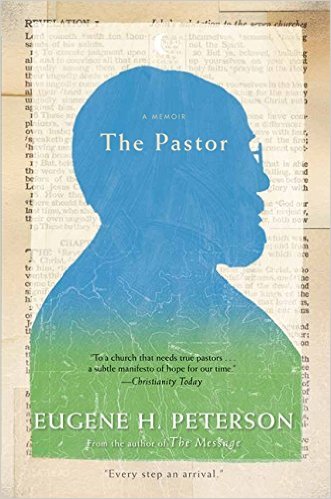
In Eugene Peterson’s memoir The Pastor he recounts the death and funeral of his mother after having buried countless church members throughout his life. As he stood before the gathered people his emotions came to a precipice and he could no longer contain himself. He writes:

“While I was reading the scriptures, tears erupted. I tried to hold them back, then gave in. I remember thinking, ‘All these people get to grieve, now it’s my turn,’ and let it come, sobbing uncontrollably. After thirty seconds or so, I recovered my composure and finished what I was doing. After the benediction, I didn’t want to see anyone and slipped into a room just off the chancel. My daughter, Karen, came in and sat beside me, without words, putting her hand on my thigh. And then a man I didn’t know came in, put his arm across my shoulder, spoke for three of four minutes in preacher clichés, and prayed. After he left I said, ‘Oh Karen, I hope I have never done that to anyone.’” (Peterson, Eugene. The Pastor: A Memoir. New York: HarperCollins, 2011. 294)

8T655xLGc

Across the great scope of Christianity, many churches will celebrate All Saints Day this Sunday. In the United Methodist Church we will use this particular opportunity in worship to remember the Saints of the church as well as all Christians both past and present. It is a time set apart to reflect on the many people who have shaped our lives, the grief we still feel regarding their deaths, and the hope of the promised resurrection.

All Saints is not a time for “preacher clichés.” It is not a time for churches to claim that God “just wanted another angel in heaven.” It is not a time for us to seek out those who are grieving and tell them how they are supposed to grieve (or worse: telling them they are supposed to be done grieving).

All Saints is a time for tears. Just like when Eugene Peterson’s wept over the death of his mother, and just like when Jesus wept over the death of Lazarus, it is good for us to grieve those who have died. This Sunday is a moment in the life of the church where we do well to let our emotions get the best of us and offer up our losses and sadness. Because it is in our grief that we really begin to appreciate those who have died and the ways they continue to shape our lives.

This week, as we prepare for All Saints Day, let us take time to reflect and pray for the people who have died in our lives. Let us thank God for their witness to God’s grace. And let us strive to sit alongside those who are grieving and bless them with our presence more than our words.

51ltEQZuJVL._SX329_BO1,204,203,200_

Devotional – Job 38.4

Devotional:

Job 38.4

“Where were you when I laid the foundation of the earth? Tell me, if you have understanding.”
Weekly Devotional Image

The grains of sand fell through my hand while I was sitting on the beach. My Boy Scout troop had set up camp the night before and a few of us had woken up to catch the sunrise. We could hear our fellow scouts still rustling in the warmth of their sleeping bags, but we were content to sit in the sand and listen to the water.

The boy next to me was absent-mindedly running his fingers through the sand when he looked up and said to no one in particular: “How many grains of sand are in my hand? And in this little spot where I’m sitting, how many grains of sand could there possibly be? Do we even have a number to count that high? And what about all the beaches in the world… and all the sand under the oceans… all those grains of sand… And yet, there are more stars in the sky at night than there are grains of sand on the whole earth…”

4e5e532e25bc1DSC01828_large_medium (1)

The rest of us sat there in amazement at such a simple and profound reflection and immediately felt tiny and insignificant in the grand scheme of the cosmos. If we felt like the world revolved around us, we were all changed by our friends’ comment, and I have never forgotten the way it made me feel.

After Job has been through all his trials and tribulations, after Job challenges the Lord, God finally answers Job by saying: “Where were you when I laid the foundation of the earth? Tell me, if you have understanding.” As if Job had heard our discussion about the grains of sand, he was immediately put in his place in relation to God. Instead of believing that he was the center of the universe, Job was humbled by God’s declaration.

Sometimes it is good for us to be humbled. After a particular season of life where we believe that people should worship the ground we walk on, we do well to be knocked down a peg or two. It can be incredibly life giving to realize that we are no greater than anyone else. And it can do wonders to remember what we are in the grand scheme of things: a grain of sand. Because when we remember our place, our eyes can be opened to the people around us instead of only focusing on ourselves.

This week let us remember to not think too highly of ourselves. If we catch ourselves deep in the clutches of vanity and vainglory let us remember the story of the grains of sand, let us remember God’s declaration to Job, and let us remember to be humble.


Why We Do What We Do: Give – Sermon on Luke 12.22-34

Luke 12.22-34

He said to his disciples, “Therefore I tell you, do not worry about your life, what you will eat, or about your body, what you will wear. For life is more than food, and the body is more than clothing. Consider the ravens: they neither sow nor reap, they have neither storehouse nor barn, and yet God feeds them. Of how much more value are you than the birds! And can any of you by worrying add a single hour to your span of life? If then you are not able to do so small a thing as that, why do you worry about the rest? Consider the lilies, how they grow: they neither toil nor spin; yet I tell you, even Solomon in all his glory was not clothed like one of these. But if God so clothes the grass of the field, which is alive today and tomorrow is thrown into the oven, how much more will he clothe you – you of little faith! And do not keep striving for what you are to eat and what you are to drink, and do not keep worrying. For it is the nations of the world that strive after all these things, and your Father know that you need them. Instead, strive for his kingdom, and these things will be given to you as well. Do not be afraid, little flock, for it is your Father’s good pleasure to give you the kingdom. Sell your possessions, and give alms. Make purses for yourselves that do not wear out, an unfailing treasure in heaven, where no thief comes near and no moth destroys. For where your treasure is, there you heart will be also.

church

The receiving line following worship is vastly underrated. A lot of people make their way out of the sanctuary as quickly as possible, whereas others will wait in line just to ask that one question that popped up during the service. It never ceases to amaze me that some of the most profoundly theological and spiritual moments that take place at St. John’s happen in that line after worship on Sunday mornings.

This month’s sermon series “Why We Do What We Do” has its roots in those conversations. Week after week I will hear some of you wonder about the purpose of an acolyte carrying in the flame for worship, or you ask about the value and importance of having a time for offering and collection, or you question why we talk so much about bible study, or you remark about how difficult it is to pray. If you’ve ever left church with a question on your heart and mind, this sermon series is for you.

Today we will explore why we give.

I was in my final year of seminary when my friend asked me to preach at his church. He had labored for the past few years as a full time student and full time pastor at the same time and needed someone to fill-in. He had received tickets to a Carolina Panthers football game, though I was forbidden from telling his church that’s where he was instead of with them on a Sunday morning for worship.

When Lindsey and I arrived at the tiny United Methodist Church in the middle of nowhere North Carolina, I was a little nervous about leading worship for a congregation that I had never met, but I figured God would show up even if my sermon fell flat. The sanctuary was tiny, with white walls and bright florescent lights hanging from the ceiling, there was a cross above the altar that was draped with an American flag, and it was so quiet that I was worried we had arrived at the wrong church.

However, the lay leader was waiting by the door and greeted us as if we were first-time visitors, only to later realize that I was supposed to be the pastor for the day. He quickly led me into the sanctuary, gave me a quick and grand tour, and then informed me that he was the head usher, liturgist, organist, and treasurer.

From what I remember the service went well, though most of the congregation was utterly bewildered by my academic deconstruction of a prophecy from the book of Daniel (something I thankfully gave up doing that day), and there was an infant who wailed the entire service. I like to think that she loved my preaching so much that it drove her to tears.

When the service ended, I finally had a chance to actually look around at the sanctuary and I noticed a list on the wall behind the pulpit of the hymns for the day, the offering brought in last week, and the deficit regarding the annual budget. There in big numbers for everyone to see was how far away they were from keeping up with their plan, and it was a staggering amount.

On my way out I thanked the lay-leader/usher/organist/treasurer for the opportunity to preach and asked why they felt the need to display their deficit for everyone to see every Sunday. I’ll never forget how casually he shrugged his shoulders and said, “Guilt is the only way to get them to give.

page44_picture0_1338615554

Talking about giving, and in particular financial giving is about as awkward as it gets in the church. Money, in general, is one of the taboo subjects of normal conversations. We don’t ask how much someone makes in a year, even if we are curious. We avoid asking for financial help because it means admitting too much vulnerability. But then if we take the taboo subject of money, and put it together with religion (or the church) we have the double whammy of things we’re not supposed to talk about.

After all, money and religion are personal and private subjects aren’t they? What I do with my money and what I do with my faith should be of no concern to anyone else other than myself…

To talk about giving in the church, to address the subject of why we give, we have to get personal. It would be shameful for me to stand here each and every week calling for the gathered body to give their gifts to God if I, myself, was afraid to talk about my own giving. If we want to be a church of gifts, then we must first be a church of vulnerability and then conversion.

Before I became a pastor, I rarely gave to the church. I have vivid memories of sitting in church throughout my adolescence, and feeling waves of guilt as I passed the offering plate over my lap to whomever else was in the pew. It helped that I was a teenager and had no money to give in the first place but the guilt was still there.

By the time I made it to college and seminary, I still attended church but rarely gave to the church. I certainly volunteered my time, led mission trips, and taught bible studies, but giving money to the church was not on my radar.

Then I was appointed here to St. John’s. Now that I had a steady income, Lindsey and I decided to start tithing to the church, and honestly it was really hard. We are a young married couple with debt to the federal government for paying for my seminary education, and we are going to have a baby in April. Yet, we covenanted with God and one another to give 10%. In the first months it was harder than I thought. I would find myself thinking about those thousands of dollars that I could be spending on other things, but we got into the habit and we kept giving.

blog.the.offering

My conversion toward giving did not happen in a big shiny moment, but was a gradual transformation. The more I gave, the longer the habit continued, the easier it became, and my perspective started to change.

Instead of imagining what I could’ve have done with the money I gave to church, I started to tangibly witness and experience what the money I gave was doing for the church and the kingdom.

Giving to the church requires a conversion; it is built on a vision where we recognize how our blessings can be used to bless others. We are not called to give to St. John’s out of guilt, but out of generosity.

As John Wesley once said: “Having, first, gained all you can, and, secondly saved all you can, then give all you can.

We are called to give because we have a shared vision and are invited into the mission of God through the church. Even a seemingly small act of generosity can grow into something far beyond what we could ever ask or imagine – The creation of a community of love in this world. If we act generously, we are helping God build the kingdom here on earth.

However, we should not be expected to give, or feel inclined to give without knowing why or to what we are giving. To just stand before you and say “give give give” prevents us from developing strong relationship with the people and programs we serve. So here are just three aspects of what our church does with our gifts:

At St. John’s we believe in providing meaningful, fruitful, and life changing worship every week of the year. We plan months ahead, connect messages with the music, and look for imaginative ways to respond to God’s love in the world. This means that we have to keep our sanctuary in the best shape possible for the worship of God, and use the great gifts of all involved in the church to make it happen. As a church we regularly welcome first-time visitors to discover God’s love through this place and help to develop professions of faith in Jesus Christ.

At St. John’s we believe in nurturing those in the midst of their faith journeys. We spend a significant amount of time and resources to help disciples grow in the faith and love of God and neighbor. We have numerous classes and opportunities to study God’s Word, but one of the most profound things we offer is weekly Chapel Time to our Preschoolers. Not only do we help to provide a wonderful facility for them to learn and grow, but we also welcome them into this sanctuary every week to learn about God, Jesus, and the Holy Spirit. The Preschoolers discover how much God loves them, and they take those stories home to the families and subsequently teach them about God’s love.

And at St. John’s we believe in witnessing to our faith in service beyond ourselves. We strive to serve those in need through a mosaic of opportunities in order to be Christ’s body for the world. For the first time in a long time we have paid our Apportionments in full to benefit the greater church, and the world. Some of that money goes to pay for clergy healthcare, some of it goes to domestic and international benevolences funds, and a number of other places. Moreover, we are able to provide a tremendous amount of financial resources to SACRA (Staunton-Augusta Church Relief Association) who then distribute the money to acute needs in the local community.

thumb

We give from our blessings to bless others. Whether it’s the people in the pews next to us who gather for worship, the preschoolers who gather to be nurtured and educated, or the countless people in the local and global community who need our help. We give out of generosity, because so much has been given to us.

However I don’t want to make it sound as if giving is the easiest thing in the world, because it does require sacrifice. Living a spiritual life of generosity requires a change of heart, a conversion. It might happen in a moment, or throughout a lifetime of faith, but when the transformation occurs, we become people of generosity.

We all have blessings to offer. Some of us have been blessed by God with incredibly lucrative careers and vocations, God has clothed us with more splendor than Solomon and all his temples, and we can give back to God through our financial giving. Some of us have been blessed by God with powerful relationship skills, God has given us personalities that bring out the best in others, and we can give back to God through our willingness to serve others. And God has blessed all of us with the gift of time, which is the most precious thing we can ever offer to the church and others.

Are we grateful for what God has done for us through this place? Do we appreciate all the blessings we have receiving throughout our lives? Do we want to bless others as we have been blessed?

We give because we have a common yearning for God’s kingdom to reign on earth, and when we give we join a new communion with the people of God. We give because it is the way by which we live out our love toward the church and our brothers and sisters in faith. We give because God first gave to us.

Where our treasure is, there are hearts will be also. Amen

Devotional – Amos 5.14

Devotional:

Amos 5.14

Seek good and not evil, that you may live; and so the Lord, the God of hosts, will be with you, just as you have said.

Weekly Devotional Image

A few weeks ago I found myself sitting in a sanctuary filled with pastors and lay people for a class on spiritual disciplines. Our teacher led us through a lecture about the means of grace and the many ways that we can find communion with God through spiritual disciplines. We heard about the value of reading scripture, praying for God’s intercession, and listening to the silence. All in all it was a very informative class, and I believe that many of us left with a renewed spirit and dedication to living prayerful lives. However, in addition to all the wonderful comments during the class, I overheard the instructor talking with someone on the way out and what he said stopped me in my tracks.

A woman stood with the instructor and asked for his advice regarding the fact that God’s love was absent from her life. She claimed to have committed herself to the spiritual discipline of Morning Prayer, but God’s presence was still lacking. The instructor stood there with a serious look on his face and simply asked, “Are you doing all the good you can in your life?”

That question is one that cuts straight to the heart. Though I was unable to pick up on the rest of the conversation, I can imagine that the instructor was trying to make the point that, as we read in Amos 5, if we seek the good, God will be with us. We can pray and commit ourselves to spiritual disciplines, but unless those disciplines are bearing fruit in our lives then they might need to be reconsidered.

telling-your-story-to-motivate-donors-and-advocates-for-your-cause-32-638

During the time of John Wesley, many Christians were consumed by a faith of the mind. They relied heavily on reason and experience to determine their understanding of God and were content to let God be something they pondered rather than someone to whom they could give their life. Frustrated with the way the church was moving, Wesley pushed for holiness of heart and life whereby spiritual practices and thoughts would become manifest in daily life by doing the good. A wonderful quote often attributed to Wesley shows his commitment to the good: “Do all the good you can. By all the means you can. In all the ways you can. In all the places you can. At all the times you can. To all the people you can. As long as ever you can.”

In our lives, how often do we strive for the good? If God’s presence feels absent, if we want to experience God’s love here and now, then one of the best things we can do is seek the good and discover God’s presence along the way.

Devotional – Hebrews 1.1-2

Devotional:

Hebrews 1.1-2

Long ago God spoke to our ancestors in many and various ways by the prophets, but in these last days he has spoken to us by a Son, whom he appointed heir of all things, through whom he also created the worlds.

Weekly Devotional Image

When I was growing up in the church I loved to ask questions. I thought the beauty of what we were doing as Christians was the fact that it was never a one-sided conversation; the moments following worship or bible studies when I had the freedom to wonder are still some of my fondest memories. As Kurt Vonnegut once said, “People don’t come to church for preachments, of course, but to daydream about God.”

I remember in particular one meeting in a youth room filled with old soft couches that just consumed those who sat on/in them. We were going around the room sharing our experiences of prayer and what we got out of it. One of my friends made a comment about how important it was for his family to pray before every meal remembering that God had really blessed them. Another friend shyly admitted that the only time she ever prayed was at church or in youth group because she didn’t know how to pray by herself. But one of my friends sat on his own couch with his arms crossed around his chest in frustration. When it came time for him to share he said, “I don’t understand prayer. We’re told to ask God to help us, but I never hear God say anything back. We learn about all these stories in the bible when God speaks to the people, so why doesn’t God speak to us like that anymore?”

All the eyes in the room immediately darted to our leader in anticipation of his answer. He calmly smiled and said, “God spoke his truest and best Word in Jesus. If we are waiting to hear God speak in our lives, all we have to do is open our bibles because God is still speaking to us through Jesus.”

word-became-flesh

That memory has stuck with me over the years because of how profound it actually was. Many of us expect prayer to be like a phone conversation with one of our friends, and then become immediately disappointed when God does not speak back. However, that leader was right: God spoke God’s fullest Word in Jesus Christ (as the incarnate Word). God can still speak to us today through our friends, or even in the still small silence, but God decisively speaks in our world through the stories of Jesus in scripture.

So, instead of reading scripture like a collection of stories from long ago, can you imagine how life giving it could be if we read it like Jesus was speaking to us here and now? The beauty of the bible takes on a whole new dimension when we stop limiting Jesus to the past, and start hearing him speak in the present.