Can I Get A Witness?

Psalm 66.8-20

Bless our God, O peoples, let the sound of his praise be heard, who has kept us among the living, and has not let our feet slip. For you, O God, have tested us; you have tried us as silver is tried. You brought us into the net, you laid burdens on our backs; you let people ride over our heads; we went through fire and through water; yet you have brought us our to a spacious place. I will come into you house with burnt offerings; I will pay you my vows, those that my lips uttered and my mouth promised when I was in trouble. I will offer to you burnt offerings of fatlings, with the smoke of the sacrifice of rams; I will make an offering of bulls and goats. Come and hear, all you who fear God, and I will tell you what he has done for me. I cried aloud to him, and he was extolled with my tongue. If I had cherished iniquity in my heart, the Lord would not have listened. But truly God has listened; he has given heed to the words of my prayer. Blessed be God, because he has not rejected my prayer or removed his steadfast love from me.


What do you want for your funeral? It’s a strange question, and its one we would rather like to avoid if possible. But have you ever thought about what your funeral might look like? What hymns would you want your family to sing? What scripture has meant the most to you in your life? Do you want people to offer testimonies?

Every time I meet with a family to plan a Service of Death and Resurrection I avoid mentioning a time of testimony. I avoid it for a number of reasons including the fact that testimonies are supposed to be about how God has worked in the life of the person now dead, and that rarely happens, you never know what someone might say when they are invited to speak freely from a pulpit, and sometimes you don’t know whether anyone will get up to say anything at all.

To be clear, a lack of testimonial witness on behalf of the gathered body for worship is not an indication that the person lived a flawed or inconsequential life, it usually has more to do with how uncomfortable many of us are with public speaking.

But every once in awhile the family insists on having it, even when I didn’t bring it up. And every time we have a service and the time comes for the testimony, I invite anyone who would like to speak to come up to the pulpit, I sit down, and I pray that God taps on at least one person to come up and say anything, but I am always prepared to make something up on the spot should the pulpit remain uncomfortably empty.

If I were bolder, if I had more faith, I would just say, “Can I get a witness?” and then I would sit down in comfort knowing that God will provide.

8ff3283513b11bafb0653b3170d7d3b2

In Psalm 66 the faithfulness of God is remembered, offerings on behalf of God’s people are made, and then one lone worshipper offers a witness to all who will listen.

Bless the Lord your God! Let the sound of his praise be heard in this place and in all places. Our God has kept us among the living! What a great God is ours who has tested us, laid burdens on our backs, let people ride over our heads, and delivered us through fire and water. We remember, o people, how God journeyed with the people through the valleys of the shadow of death and brought them to the Promised Land. We remember, o people, how God has been with us in the midst of suffering and carried us through to the other side.

And because of what the Lord has done, we will come into this house with our offerings. We will present our money, and our gifts, and our time. Come and hear, all you who fear God, and I will tell you what he has done for me.

The writer describes in great detail the types of offerings made to the Lord, the physical things brought forth as an act of faith. But it is also about far more than that: God’s faithfulness to the people of Israel, God’s faithfulness to us, is the lens by which we interpret our own lives.

God has listened to the prayers of the psalmist; God has listened to us. And because God has listened we must testify.

Can I get a witness?

14890

Witnessing is a taboo thing in the church these days, or at least in the United Methodist Church. There was a time however when worship was all about testimony, moments when the preacher would step away from the pulpit and let the people of God proclaim the glorious works of God to the rest of the people of God.

But today, we don’t have time for any of this witnessing stuff. We don’t want to make people uncomfortable. We don’t want to evangelize anyone. Professional Christians like pastors are the ones meant to testify.

Or, we might say that we don’t want to talk about our faith because it is a private thing. Which is ridiculous since we can only understand and interpret our faith within the faith community.

Over and over again scripture bombards us with the call to testify, to witness, to our story because that is exactly what the bible is. The bible is the witness to the marvelous works of God.

The psalmist witnesses to the truth of God’s reign because the psalmist has experienced it and cannot be kept from proclaiming it. The psalmist has been so transformed by God that the only way to respond is to tell the stories to everyone with ears to hear.

Can I get a witness?

When we are lost and found by God, that is a worthy beginning to our witness. For it is when we are lost that we are most open to the possibility of being found.

And here’s the thing: Testimony, witnessing to God, is not limited to speech about what God has done. Testimony is speech shaped by what God has done. The psalmist witnessed to the works of the Lord and in so doing allowed others, people like us, to hear and even experience what the writer experienced in God.

We don’t care much for the idea of witnessing any more. It no longer matches up with our modern sensibilities, but telling our story is the means by which we come to understand our own faith. When we do it, when we are brave and bold enough to witness, we don’t simply tell what we have already come to believe… it becomes the means by which we believe.

And that is why we witness, that is why we testify, because in so doing we become the very community God has called us to be.

So, can I get a witness?

Seriously this time, who among us will stand to share what God has done for you?


(Time of congregational testimony)


My testimony:

I’ve shared with you on a number of occasions the ways and means by which God called me to spend the rest of my life doing what I do. You’ve heard about the sidewalk square where I fell to my knees and offered my life to God. You’ve been brought into the narrative of being marched to the front of the church as a teenager and attempting to proclaim God’s Word through my first sermon. But I want to testify to another of God’s marvelous works in my life: God sending me here to you.

I never would’ve picked St. John’s UMC in Staunton, VA. Not because there was anything particularly wrong with the church, I just knew nothing about it. When I walked into the sanctuary that first Sunday morning I only knew about 5 of you, and even then I barely knew you. And yet God called me here.

When Lindsey and I arrived, it was really hard at first. We were a young couple plucked out of our community in Durham, NC and planted here. She couldn’t find work. I didn’t know what it meant to do this work. We didn’t make friends with people in the community. And, whether or not either of us would admit it, I wondered if God had called me to the right place.

And I got up in this pulpit every week to proclaim what God had placed on my heart. I prepared for Bible Study. I visited people in the hospital. I sat on the floor with our preschoolers and told them about the bible.

And slowly, you grafted us into the community. As the weeks and months passed we felt more and more connected to the people in the pews this very morning. We loved you, and you loved us. And suddenly, this church became our family. We wept when you wept; we celebrated when you celebrated.

God sent me here to you. And some might say that God sent me here for a reason, that this church needed me. And that might be true. All churches need pastors for different reasons. But for as much as this church needed me, I needed this church.

I know in my heart of hearts that God sent me here in order to rekindle my faith; after spending years reading about God in seminary it was too easy to be cynical about what the church might be. In coming here I needed to rediscover the wonderful power of God made manifest in a community of love that you can never discover in a book on theology; I needed to re-encounter the One in whom we live and move and have our being. And you provided that for me.

And I know in my heart of hearts that the time has come for God to send me to a new place. But when I got the call about moving, it came without knowing who would be the new pastor at St. John’s. And I’ll be honest, I’ve been nervous about it. I love this church because this church has loved me. And I want it to have a pastor that will love it, and receive love from it, like I have.

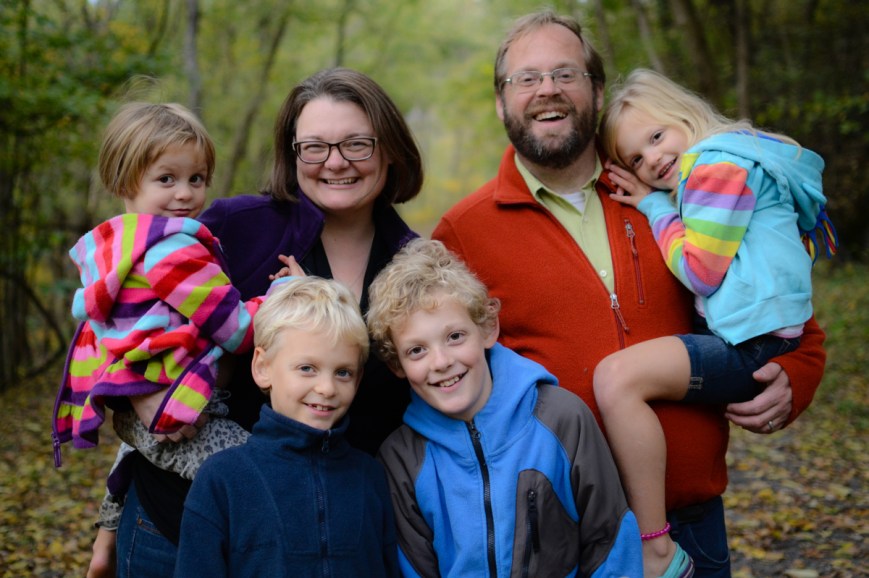
And today we can finally announce that the new pastor of St. John’s is Rev. Chuck Cole. When I found out Chuck was coming here I knew that God had answered my prayers: Chuck and I were ordained together last June and have interacted a lot before we knew he was coming here. Chuck and his wife Sarah have four children and they currently live in Covington where Chuck is serving two churches. Chuck is full of love for God’s church and I know that he will love this place, and that you will love him.

What has God done for me? God sent me to a church that listened to me, prayed with me, and loved me in spite of myself.

What has God done for me? God is sending me to a new place and is sending a new pastor to the church that I love to continue the good work of the kingdom.

What has God done for you? Amen.
 

132-DSC_0211

The Cole Family

Devotional – John 14.18

Devotional:

John 14.18

I will not leave you orphaned; I am coming to you.

Weekly Devotional Image

I stood by the bell tower in my robe and I casually greeted everyone as they walked into the building for worship. Just inside the doors were greeters, ushers, and handful of other church members eagerly waiting to address those entering with greetings and salutations. I talked with individuals and families under the bell tower and when one particular woman stepped forward she was greeted by the small crowd with, “Happy Mother’s Day!” and she immediately grimaced; she is not a mother, and will never be one.

On Monday I spoke with a member of the church about a number of matters pertaining to the local community and right before we said goodbye she apologized for not being in church the day before. I asked if everything was okay, or if there was a specific reason she avoided church to which she responded, “I never come to church on Mother’s Day. It just hits too close to home.” She is not a mother, and will never be one.

mothers-day-church

Mother’s Day is a strange Sunday in the liturgical life of the church. There is nothing in scripture about the need to have a specific day focused on the glorification of those who are mothers, but in many churches that is exactly what it becomes. And it happens to such a degree that while trying to be grateful for mothers, we often ostracize a sizable community within our churches who can’t be, don’t want to be, or never will be, mothers.

To so emphasize and value the roles of the presumed normative domestic situation does a disservice to the truth of what the church is called to be: the new family.

Jesus, near the end of his earthly life, promised to not leave his friends orphaned. In a sense Jesus’ promise is a prediction of his own death and resurrection, but it also speaks to the future existence of the community of faith. Just as Jesus’ friends were not abandoned after the cross, so too have we not been abandoned in our communities of faith.

Through the sacraments of baptism and communion we are grafted into a community whereby the common identifiers and labels of mother and father are no longer limited by their biological connections. Instead we become brother and sister and mother and father to the entire community that gathers together to encounter the living God.

Being a mother is a remarkable responsibility and should be lauded on a regular basis, but it is not the most important identity that one can have. Following Jesus Christ as a disciple implies a willingness to be maternal toward all people regardless of whether or not we are biological mothers.

In the community of faith we are called to open our eyes to the realities of those around us so that, rather than discomforting someone on their way in or ostracizing someone to the point that they don’t even come, we remember that God will not leave us orphaned, not even in church.

On Stealing Sermons (and the similarities between Jesus and NT Wright)

strangely-warmed-spreaker-header

The team from Crackers & Grape Juice recently spent an afternoon interviewing Brian Zahnd (founder and lead pastor of Word of Life Church, a nondenominational congregation in St. Joseph, Missouri) for our lectionary podcast Strangely Warmed. During our time together we talked about the readings for the season of Easter during year A from the Revised Common Lectionary. For the sixth Sunday of Easter, Brian challenged us to make it all about joy (again) while the world struggles under the weight of the current political climate. If you want to hear the conversation and learn more about stealing sermons, the difference between making disciples and church members, golden calf ministries, and how Jesus (in the gospel of John) is like NT Wright you can check out the podcast here: Easter 6A – Brian Zahnd

Concept: Copy paste buttons on the keyboard. 3D rendering.

Best Day Ever

John 14.1-7

“Do not let your hearts be troubled. Believe in God, believe also in me. In my Father’s house there are many dwelling places. If it were not so, would I have told you that I go to prepare a place for you? And if I go and prepare a place for you, I will come again and will take you to myself, so that where I am, there you may be also. And you know the way to the place where I am going.” Thomas said to him, “Lord, we do not know where you are going. How can we know the way?” Jesus said to him, “I am the way, and the truth, and the life. No one comes to the Father except through me. If you know me, you will know my Father also. From now on you do know him and have seen him.

18449317_10208649403543496_1358279190100268299_o


Dear Teagan Leigh…

We are the stories we tell. Stories make up the very fabric of our existence here on earth. As you grow older your parents and grandparents and teachers will tell you tales and fables in order to teach you lessons about the world around you. When you mature enough you will be told stories about the past in order to avoid the mistakes of those who came before you. And when you get old like me, you’ll start telling stories in order to comprehend the events of life and in attempts to derive meaning out of the mundane.

We are taught by stories, we are convicted by stories, and we are entertained by stories.

Teagan, when your parents got married, I stood in front of them and their friends and their families and I told them about the importance of stories. After listening to them describe their love and commitment to and for one another in the months leading up to that moment, I knew that their stories were coming together in that holy space as I pronounced them husband and wife.

I told the story of how when your Dad, Tucker, was 4 years old he went shopping with your great grandmother. The whole trip was planned around your Dad finding something for his mom for Mother’s Day. He was given complete and total freedom to pick out whatever he wanted from the store, and sure enough he found the perfect Mother’s Day gift. They went home and wrapped it and then you’re grandmother, Lisa, opened her gift to discover that your 4 year old father, out of all the items he could’ve pick in that store, chose for her a broom and a dust pan… Your grandmother mustered up all the strength she could to accept her gift with pride, though she couldn’t help herself from asking, “Tucker, why the broom and the dust pan?” To which your father replied, “Momma, they’re green, just like your eyes!”

Teagan, I also told a story about your mother, Jess. When your Mom was about 5 years old, she started playing tee ball. She practiced and practiced and then the first real game finally arrived. When your mother got up to the plate for that first at-bat, she swung as hard as she could and she started running. By the time she rounded second base she was beaming with pride thinking about how she was about to score her very first run, and when she was closing in on third base, her coach yelled, “Home Jess! Go home!” but instead of rounding third, your mother ran straight into the dugout and, if her friends and parents hadn’t been there, she would have literally kept running all the way back to her house.

I told those stories at your parents’ wedding because we are the stories we tell. You’re mother is a remarkably loving friend who takes people at their word. Her trust for others is such that she would go to great lengths for the people in her life, even if it meant running all the way home. And your Dad is easily one of the most genuine people I’ve ever met in my life; he will tell you exactly how he feels rather than waste anyone’s time and he knows how to make the best out of any situation, even if he bought your grandmother a broom.

At your parents wedding, I stood before them, their friends, and the rest of your amazing family and told stories. I told those stories to show how your mother and father were about to have their stories join together and you, sweet precious Teagan Leigh, are one of the wonderful results of that union.

And frankly, I would like to take a little credit for your existence. Had I not been there to marry your parents together, had I not joined them in holy matrimony, you wouldn’t be here this morning for your baptism. So, you’re welcome.

I’m just kidding, but there is someone else we need to talk about, someone else whose story makes possible your story. And you might think that I’m going to start talking about Jesus… nope (or at least not yet). We need to talk about your grandfather Marshall.

At your parents’ wedding, your grandfather stood up at the reception and gave one of the best speeches I’ve ever heard. To be honest, I was a little disappointed when I was listening to it because I realized that no one would remember what I said during the ceremony, but everyone would remember what your grandfather said. And, if I may be so bold, I can condense his 45-minute speech into one phrase: Best Day Ever.

Your grandfather Marshall went on and on about all the memories he had of your Dad and your Mom and how every day was the best day ever, all the way up to the wedding day, and that throughout their marriage they would continue to experience the best day ever.

It was perfect.

What made it perfect was how faithful it was. Because marriage, the joining together of two people is based on an assurance of commitment, what we like to call a covenant. Your parents covenanted to love and cherish and remain with one another recognizing that life will change, that circumstances would move them into strange and unknown places, and yet they believed in the power of God to hold them together in spite of the great mystery we call marriage.

Which brings me to Jesus…

Teagan, your parents are crazy. In their marriage they looked into the abyss of the unknown and jumped right in, and they’re doing it again today in your baptism. Bringing you forth to be baptized is one of the craziest and most faithful things that you parents will ever do, because in doing so they are recognizing that you don’t belong to them.

            You belong to God.

Teagan, there is this profoundly awesome moment in the gospel of John when Jesus was talking to his disciples about what it would mean to follow him. Jesus went on and on in attempts to strengthen his friends and provide for them a glimpse of the kingdom of God on earth and Thomas responded by saying, “Lord how will we know the way?”

i-am-the-way

Thomas’ question is all of our questions. Throughout your life Teagan you will encounter this question in its many forms: Who should I sit next to at lunch? What should I get my mom for Mother’s Day? What school should I attend? Who should I marry? What kind of family should I raise? What kind of job should I pursue? What kind of church should I attend? How will I know when it’s the right time to retire? All of these questions are predicated on the assumption that we do not know where we’re going and we need all the help we can get.

Thomas wanted to know how to get where Jesus was going, he wanted an answer to his question, he wanted to know the way. And Jesus responded like this, “I am the way, and the truth, and the life.”

Teagan, there are many ways that you can live your life, you can find a great number of answers to your many questions. But Jesus is THE way, and THE truth, and THE life. And unlike many of the means by which the world will try to entice you with a great number of choices, attempts at making you the author of your own story, Jesus is the one who acts upon your behalf.

There might come a day when you’ll look back and regret the choice that your parents made for you. You might wonder if you would’ve made the same choice for yourself had they waited until you were old enough to make it. Your experience of the baptized life might be such that you’ll even be mad at me for being the one who doused you in water. But this thing we call baptism doesn’t really have anything to do with you, or your parents, or even me. Instead it has everything to do with God revealing THE way through THE Son.

In your baptism, something you won’t remember outside of stories and photographs, God is the one acting on your behalf. It is the Spirit that moves through the water and calls you forth into a new life, it is God who has worked in and through the waters of so many who have been grafted into the church, it is Jesus who makes possible the kind of radical transformation that takes place in the water.

When your parents got married, they stood before the altar of the Lord and asked for God’s help to navigate the difficult and challenging covenant of marriage. And in your baptism they will do much the same, and we will all join them in their covenant. The people of God’s church, and not just the people of St. John’s but all Christians everywhere, are making the promise to raise you in the faith, to support you when you falter, to congratulate you when you succeed, and to call you out when you wander from THE way.

In a sense, we are making the public proclamation that you are a gift to us from God.

For many of us Teagan, this is the best day ever. When we look up to see you at the font surrounded by such love it will give those of us who have followed THE way a great deal of hope. In the water that will cover your head we will be reminded of THE truth of what Jesus came to do for the world through THE life of God offered on the cross and resurrected from the grave. And Teagan, I hope that one day you will look back at this day, the day of your baptism, as the best day ever.

But even that would be a disservice to the living God who breathed the breath of life into you, the living God who called your mother and father to live in holy matrimony all of their days, and the living God who revealed THE way and THE truth and THE life in his Son. For to follow Jesus on THE way as THE way is to know that every day is the best day ever. Because every day is another opportunity to encounter the incredible grace of God in the laughter of a friend, in the tear of a spous e, in the smile of a stranger. Every day offers us a chance to live into THE truth that God is the author of our stories. Every day presents an occasion to give thanks for THE life that reorients all of our lives.

Teagan Leigh, you are a gift. You are a gift to your mother and father and to your family. You are a gift to the church. You are a reminder of what God’s grace actually looks like. So today we give thanks to God for you, for making this the best day ever, and for THE truth that even greater days are yet to come. Amen.

On The Perils Of Preaching On Mother’s Day

strangely-warmed-spreaker-header

The team from Crackers & Grape Juice recently spent an afternoon interviewing Brian Zahnd (founder and lead pastor of Word of Life Church, a nondenominational congregation in St. Joseph, Missouri) for our lectionary podcast Strangely Warmed. During our time together we talked about the readings for the season of Easter during year A from the Revised Common Lectionary. For the fifth Sunday of Easter, Brian challenged us to make it all about joy (again) while the world struggles under the weight of the current political climate. If you want to hear the conversation and learn more about the challenge of preaching on Mother’s Day, how to listen to those who are screaming, and what it means to be a holy nation, you can check out the podcast here: Easter 5A – Brian Zahnd

Mom_wide_t.jpg

Bonus Sermon – The Bad Shepherd

I try to have my sermons finished by Thursday afternoon before being preached on Sunday. This allows me to truly experience Sabbath on Fridays and forces me to think about the scripture throughout the beginning part of the week rather than procrastinating until the end. But every once in awhile, something will take place during the week that necessitates a sermonic change.

Last Friday morning I woke up, read over the sermon one last time and it just didn’t feel right. With everybody online going crazy about the executive order for religious liberty and the House voting on a bill that would repeal and replace most parts of the Affordable Care Act, I felt like God was calling me to trash what I had written and start over. So I did (You can read that sermon here: “The Politics of the Church.“)

But I had already written an entire sermon and crafted a whole worship service around a central theme! So I asked the congregation to pray for me as I offered the new sermon, written later than usual, outside the normal connections through our whole service. And, because I wrote two sermons last week, I have included the sermon that wasn’t preached below…


Psalm 23

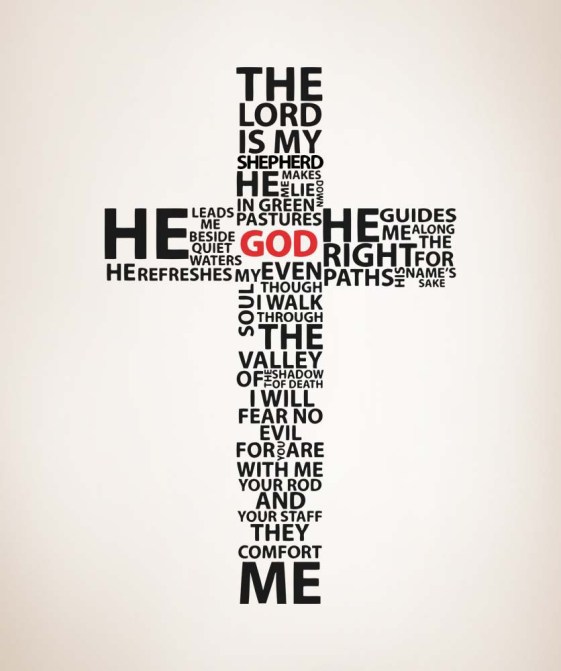
The Lord is my shepherd, I shall not want. He makes me lie down in green pastures; he leads me beside still waters; he restores my soul. He leads me in right paths for his name’s sake. Even though I walk through the darkest valley, I fear no evil; for you are with me; your rod and your staff– they comfort me. You prepare a table before me in the presence of my enemies; you anoint my head with oil; my cup overflows. Surely goodness and mercy shall follow me all the days of my life, and I shall dwell in the house of the Lord my whole life long.

ISHALLNOTWANT


“Pass the wine.” The party was getting on into the wee hours of the morning, and everyone was having a great time. The food was good and plentiful. The wine flowed profusely. The stories kept bubbling forth. “Remember that time we walked into town and everybody just kept staring at us, waiting for something to happen?” “Or what about the day we ate by the beach and talked about the future.” “I’ll never forget the looks on everyone’s faces when we walked out of town that one time and wiped the dirt of our feet.”

It was a great party.

There’s something about the stories and the food and the wine that help blind us from the reality of what is to come. On Thanksgiving we fill our bellies in denial of all the money we are about to spend during the Christmas season. On New Years Eve we clink the champagne in ignorance of all the mistakes we made and we believe that this year will finally be the one we get it all right. On Easter we tell stories about the resurrection in hopes that hope will not fade in the weeks that follow, but the normalcy of life slips in and our hallelujahs don’t have quite the force they did a few weeks ago.

But what did the host think during the party? While the friends were passing around the bottle and giggling with memories of the last few years, what was going through his mind? Was he buzzed with the joy of his compatriots as he walked around the table filling their glasses? Was he nostalgic about all they had been through and in denial of what was going to happen in just a few hours?

Did he think about the words to Psalm 23?

Throughout the gospel narratives Jesus is forever quoting and referring to the Old Testament, and in particular the Psalms. The psalms, it seems, are his prayers. They are familiar and well known and comforting. But while he sat at the table that night, that last night, when he told them the bread was his body and the wine his blood, I wonder if he thought about the 23rd psalm when he looked across the table and into the eyes of his friend Judas: “You prepare a table before me in the presence of my enemies.”

Full disclosure: I don’t enjoy preaching on well-known texts. Give me some obscure passage from Zephaniah or Joel and I will get up here and proclaim it with everything that I’ve got. In fact, I rather enjoy preaching on the passages we don’t know because we can all come to the text with a fresh perspective. But when we read a passage that everyone knows, a passage that we’ve all heard more times than we can count, the challenge becomes that much greater.

Like John 3.16 – For God so loved the world… As soon as the words hit the air most of us immediately wander in our minds to black tape under the eyes of sport figures, scratched notations in bathroom stalls, and college evangelists trying to save souls. And because of this we forget that John 3.16 is part of a much bigger story of Jesus meeting in the late hours with Nicodemus.

Instead, I could randomly flip open the bible, pick any verse, and I think we would receive it better than the well-known texts because we would not bring any of our own baggage to God’s Word.

But today we’ve got one of the most well known, perhaps the most well known passage in all of scripture: Psalm 23.

The Lord is my shepherd, I shall not want.

And already most of you have tuned out whatever I’m about to say. Because the moment we hear these remarkably familiar words, our minds jump back in time to memories of this passage. We start thinking about the last time we read the passage out-loud at a funeral. We remember sitting down on our Grandmother’s lap and hearing her repeat the words without looking in her bible. We are transported back to our childhood Sunday school classrooms where many of us were forced to repeat the psalm, out loud, from memory, in front of our peers.

Perhaps for some of us, the mere mention of the psalm elicits a feeling of joyfulness and peace. We think about the green pastures and the still waters and whatever stress we’ve got going on in our lives starts to fade away.

And maybe for some of us, the mere mention of the psalm elicits a feeling of strange and bizarre reflection. The green pastures and still waters are nice, but why in the world is God preparing tables for us in the presence of our enemies? Our cups are overflowing with many blessings, but why can’t we dwell with the Lord forever, and not just while we’re living?

It is remarkably difficult to approach this text with open eyes because it already means so much to so many of us.

But what did it mean to Jesus?

That night before he gave himself up, the evening of the Last Supper, did he think about the table being prepared before him with an enemy? Did he still believe that his cup overflowed with grace and peace and mercy even though one of his closest disciples was about to betray him for a couple pieces of silver?

In the midst of stress, fear, and anxiety the psalmist offers a strange alternative: the refreshing peace found in the Good Shepherd.

But is the Lord really a good shepherd? Yeah, God will set us down in the green pastures, and will lead us beside the still waters; whatever that means. God takes us down the right paths for his name’s sake, and even though we walk through the valley of the shadow of death, we will fear no evil.

Really? I don’t know about you, but I don’t think I have the kind of faith such that I could walk through a place or a time in my life described as the valley of the shadow of death and not be afraid. I get afraid every time I get a phone call from an older member of the church on their way to the hospital, every time I hear my son fall to the ground with a loud thud, and even when I’m hear at night in the sanctuary and all the lights are off.

And the rod and the staff? Those aren’t meant to be tools of comfort like a quilt or a duvet. Rods and staffs are meant to wring us and knock us back on to the right track when we’ve gone astray. And where does God eventually lead us? To a table prepared just for us in the presence of our enemies.

We love this psalm, we pray it and read it and hear it all the time. But sometimes, God sounds more like a bad shepherd than a good one.

Sometimes we hold it so close that we don’t think about what it really says, or even what it might’ve meant to the one we call the Good Shepherd.

I want to have the faith of the psalmist, I want to be able to look at the darkest valley, and the rod and the staff, and the table filled with my enemies with hope and joy. But this psalm isn’t really about me or us, nor is it about what we think of the Shepherd. It’s a psalm about who God is, and what God does for us, his sheep.

God’s protective power, God’s immense grace, is so great, so unimaginable, that God has the audacity to prepare a table before us in the presence of our enemies. A good shepherd would prepare the table in the presence of our friends and our families; not with the people who want to destroy us. God’s table, provided for us, is not the table we would choose for ourselves. Like a middle school cafeteria, we would rather sit with the people we like than with the bullies eyeing us from across the room.

We read in the psalm that God transforms every situation. But we take that to mean that nothing bad will ever happen to us. A good shepherd, we think, would protect us from every type of evil. But no, our bad shepherd says there will be deathly valleys and enemies galore; the difference is that our shepherd has done something that prevents them from destroying us.

We will absolutely experience hardships, and fear, and stress, but the bad shepherd is with us in the midst of them.

Our shepherd is only a bad shepherd in that we think we know what God should do for us. We abstract this psalm from the reality to which it speaks and make it out to be some kind of shield to protect us from everything in life. What makes our bad shepherd a good shepherd is that our shepherd will never abandon us.

Being a disciple is a way of life that we cannot know outside of being converted to it. For taking up our cross to follow Jesus changes every little thing about the way we live. It means that even though we talk through the valley of the shadow of death, we will fear no evil because Jesus has defeated the very death that casts a shadow in our lives. We cannot live without that fear unless we’ve been converted to a way of life that constitutes knowledge of the bad shepherd who takes care of us.

Sitting down with the very people who hate us is not something we could do without being converted to it. All of us, sinners that we are, would choose the other table. But God in Christ chose to sit down at the table where his betrayer sat, offered him the same bread and cup that we are offered here in church knowing full and well what he was about to do.

Being a Christian is possible only through the grace of God empowering us to follow His Son on the way. We cannot do it on our own accord, and it cannot take place without a radical restructuring of what we know and what we believe. We cannot follow Jesus without sitting at the table, elbow to elbow, with the people who would rather betray us.

And, again, that makes God sound like a pretty bad shepherd. What kind of God would willfully send a child to the table with bullies? What kind of God would use a rod to knock us back into line? What kind of God would ignore the rest of the guests to make sure our cup was overflowing at all times in the middle of a party?

The very same one who was willing to take on our flesh in the incarnation. Our ­bad shepherd really is the good shepherd because Jesus came to live and to die and to live again for the sheep. Christ is the one who makes possible the goodness and mercy that follows us all the days of our lives such that we can sit at the table with hope, because Christ did the same thing for us. Amen.

5132_Psalm_23_Cross-1

Devotional – Psalm 31.5

Devotional:

Psalm 31.5

Into your hand I commit my spirit; you have redeemed me, O Lord, faithful God.

Weekly Devotional Image

It is such a blessing to work for a church with a preschool because I get to interact with children who are beginning to learn about God the Father, Son, and Holy Spirit. This takes place weekly during chapel time in the sanctuary as I help to share stories from the bible with the kids, and it also takes place on special occasions like when we celebrate communion together and when we talk about the waters of baptism. Our preschool represents a great diversity of families and religious convictions (including a few kids whose mother or father is the pastor of a different church) so I have to make sure that whenever we talk about scripture I’m not doing it in such a way that it will undermine what a child has been taught at his/her home church.

Over the last few years we’ve had two brothers attend the preschool whose mother is the pastor of another United Methodist Church in town. Pastor Sarah and I are very close and I’ve greatly enjoyed talking with her boys about the bible because they know it so well (though it has made chapel time sessions a challenge since they are forever answering the questions before the other kids get a chance). Her boys, Charlie and Jed, are what I hope my son, Elijah, will be like as he grows up.

Months ago I was having a conversation with Sarah at a clergy event when she shared with me that her boys were not baptized as infants and that they had recently decided to commit their lives to Jesus AND that they wanted me to participate in their baptisms. To be asked by another clergy person to take part in her children’s baptism is quite unlike anything I’ve ever been blessed to do in my life.

18274839_10101184948111357_2588130454250855285_n

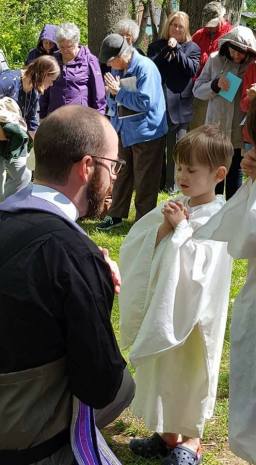
And so yesterday afternoon, Sarah’s family and friends gathered together with her boys by a river just outside of Staunton for their baptism. I offered a little homily to reflect on how God has already moved in and through their lives and then it was time to go to the water. The river was moving at a good pace and was so cold that I was worried if the boys slowly walked out into the water they would have high-tailed it in the other direction, so one-by-one I carried Sarah’s sons over the water and together she and I baptized them in the name of the Father, the Son, and the Holy Spirit.

18342074_10101184948241097_8213855151748564830_n

For what it’s worth: the Spirit got a hold of them real quick and they were both screaming as they came out of the water!


Being there are the water’s edge, and then in the middle of the river for the baptism, was one of the holiest experiences I’ve had in a long time. And when I looked at Jed and Charlie, when I saw their utter dedication to what they were about to do (even with the water as cold as it was), and I was reminded of Psalm 31.5: “Into your hand I commit my spirit.” Jed and Charlie made a choice yesterday afternoon to offer their lives to Christ, something that most of us have done whether we made the choice or someone made it for us. And today I am grateful that I was there to participate because their faithfulness has challenged me to be more faithful like them.

The Politics Of The Church

Acts 2.42-47

They devoted themselves to the apostles’ teaching and fellowship, to the breaking of bread and the prayers. Awe came upon everyone, because many wonders and signs were being done by the apostles. All who believed were together and had all things in common; they would sell their possessions and goods and distribute the proceeds to all, as any had need. Day by day, as they spent much time together in the temple, they broke bread at home and ate their food with glad and generous hearts, praising God and having the goodwill of all the people. And day by day the Lord added to their number those who were being saved.

On Thursday President Donald Trump signed an executive order titled “Promoting Free Speech and Religious Liberty.” This brought to fruition one of his many campaign promises that he would give “our churches their voices back.”

The order was designed to dismantle the Johnson Amendment that bans tax-exempt organizations, like churches, from endorsing political candidates and activities or they run the risk of losing their tax-exempt status. To be clear: fully repealing the Johnson Amendment would require congressional action, but the order certainly takes a step in that direction.

Basically, churches and other tax-exempt organizations are now on a path that will potentially lead to a time where preachers like me can stand in pulpits like this and tell you how we think you should vote according to the Lord. It means we, as a church, can give money from our tithes and offerings to specific political individuals or campaigns if we believe they match our religious convictions. And we can do all this without fear or retribution from the federal government.

Freedom.

On Thursday, the same day the executive order regarding religious liberty was signed into action, the House voted to approve legislation to repeal and replace major parts of the Affordable Care Act, another one of President Trump’s campaign promises. It still faces an uphill battle in the Senate, but the people who represent us in the House approved it.

In the wake of the vote, people on either side of the issue have been going ballistic. Some are thrilled that the bill would eliminate tax penalties for people who go without health insurance. Some are terrified that it would roll back state by state expansions of Medicaid, which covers millions of low-income Americans (40% of which are children).

Freedom.

So here we are, days after the executive order and the House vote, and I can’t help but imagine how many pastors are standing up in places like this one this morning, with a new found sense of freedom to speak either for or against what our government is doing. I can already imagine what a lot of the posts on Facebook and Twitter are going to look like this afternoon from either side of the political spectrum.

shutterstock_357934955_edit

In the early days of the church the disciples devoted themselves to the apostles’ teaching, to fellowship, to the breaking of bread, and to the prayers. And during this time awe came upon everyone, because many wonders and signs were being done by the apostles’, perhaps most spectacular was the fact that the Lord was adding to their number those who were being saved. And what makes that spectacular? All who believed were together and had all things in common; they would sell their possessions and goods and distribute the proceeds to all, as any had need.

Who signs up for something like that? Come join our group, we’d love to have you! And once you start participating all you have to do is sell everything you have so that we can take care of everyone. We believe in recognizing the inherent blessings of God in our lives and we don’t really believe in personal property. So join us on Sundays at 11am and don’t forget to sell your stuff!

That sounds a whole lot more like Communism than Capitalism.

            Where’s the freedom in that?

And here’s the point: Religious figures on the right and left have come out in droves about what the government has done as of recent, as is their right, but inherent in their declarations is a grave sin: idolatry.

Today we worship our government the way we once worshipped the Lord. We follow the never-ending political news-cycle like we once checked in on our brothers and sisters in faith. We read and repost articles about votes in the house and senate and executive orders like we once shared the story of Jesus Christ.

And I am guilty of this sin too; hence the great number of sermons as of recent that have revolved around the current political climate.

This story about the budding church sounds so weird and bizarre because we are so far removed from it. Instead of looking like this idyllic church community we’ve been co-opted by the assumption that our government is supposed to be the church, or at least it’s supposed to act like the church. Therefore we support political candidates who agree with our personal beliefs regarding issues like abortion rather than attempt to be present for women who wrestle with the fear of having an unplanned child. We spend more time talking about how our government should vet political refugees than pooling our resources together to bring them out of their war torn areas. We verbally attack people on the Internet for being politically opposed to our position instead of realizing that we often sit shoulder to shoulder with them in our church pews and that we have far more in common than we think we do.

Christians in America have played this political game for so long that we can almost no longer differentiate between America and God, something that scripture and Jesus call idolatry.

The church does not exist to serve our political aspirations, nor does the government exist to serve the needs of the church. The church does not represent a particular partisan agenda to be made manifest on Capitol Hill.

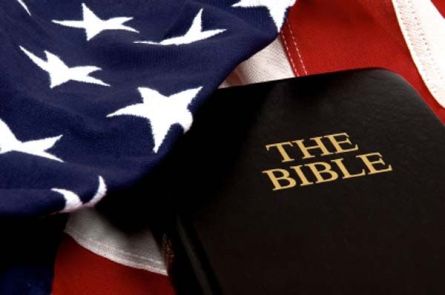
bible-american-flag (1)

The church itself is a politic. We do well to remember that we are a politic and that there are many ways for the church to be political. But the way to be the church is not synonymous with pursuing democratically elected representatives who can therefore represent our personal political opinions. As one of my former professors recently noted, “There’s only one instance of democratic voting in the gospels, and the people chose Barabbas.”

Gathering with others around the body and the blood of Christ is one way for Christians to be political, and it is the original way. For it is in gathering around a table such as this one, particularly with people who do not necessarily agree with us politically, we live and lean into the strange mystery that we call the kingdom of God. For us, this table is an ever-present reminder that we are not the authors of our salvation and neither is our government.

Here in America we greatly celebrate our freedom, and in particular our freedom of speech. But honestly, we are mostly only concerned with our freedom to say what we want. And the moment we hear someone speak from the other perspective we either cover our ears in anger, or we rush against them with vitriol.

For far too long we’ve limited our imagination of the church to being the mechanism by which we can develop strategies that can, to put it in political terms, Make America Great Again. But that is not the task nor is it the mission of the church. The task of the church is to be a community of character that can survive as a witness to the truth.

All of this is not meant to be a critique of the policies of the political right or the political left. Nor is in meant to be an endorsement of policies representing either side of the political spectrum. No, this is about our captivity to the presumption that our politics determine our lives more than the living God.

And that is why we worship, it is why we gather together to tell the stories of scripture and break bread and say the prayers. This is why we still do what they started doing back during the time of Acts. We gather together in witness to what the risen Christ is doing in and through our community. And in so doing we respond to the risen Christ by doing strange things like freely giving of our income to bless others who are in need, like giving of our time to work down at the Trinity Kitchen so provide food to those who are in need, like showing up in a different community every summer to help with modest home repairs for those who are in need, like breaking bread with people we disagree with to create meaningful relationships for those who are in need.

We’ve come a long way throughout the centuries as the strange community we call the church. You can tell how far we’ve come, or to put it another way how far we’ve moved, by how much we bristle when we read about selling our possessions and distributing the needs to all as any have need. That doesn’t match with what the world has told us life is all about.

Instead we’re captivated by a narrative that tells us to earn all we can and save all we can, that freedom is more important than faithfulness, and that the world is ruled by politics.

No. God rules the word. Faithfulness is more important than freedom. It is better to give all that we can rather than to gain all that we can.

And so we worship. We listen to the stories of scriptures, we enter the strange new world of the bible, and we learn to speak the truth. Worship id where we begin. In worship we develop an imagination capable of forming us into the people God is calling us to be, a people who can live into the difficult reality of Acts 2, who can be political, even more political than our government, by recognizing who we are and whose we are.

As Christians, we know that Jesus is Lord and therefore we do not need executive orders to grant us freedom to speak truth. We know that Jesus is Lord and therefore we believe in taking care of our brothers and sisters regardless of whether or not our government does. We know that Jesus is Lord and therefore we are not captivated by political policies geared toward keeping us “safe.” After all, we worship a crucified God and we seek to be in fellowship with the One who mounted the hard wood of the cross.

Being a Christian is not about freedom, denying responsibility, or being safe. Following Jesus is all about challenging the presumptions of the world with the truth of the lordship of Christ that often puts us in a place of danger. Because, as Christians, we believe in loving the Lord our God with all our heart, soul, mind, and strength and loving our neighbor as ourselves, which is not the same thing as being a Democrat or a Republican. We believe in serving the needs of those on the margins, which means helping those who cannot help themselves.

We believe the greatest freedom we’ve ever received did not come with the Declaration of Independence but through a poor Jewish rabbi who was murdered by the state.

And as Christians, we know that we can act politically: we can vote, we can march, we can lobby all we want. But we also believe that gathering together to do this thing we call church is the most political thing we could ever do. Amen.

On Listening For The Shepherd’s Voice

strangely-warmed-spreaker-header

The team from Crackers & Grape Juice recently spent an afternoon interviewing Brian Zahnd (founder and lead pastor of Word of Life Church, a nondenominational congregation in St. Joseph, Missouri) for our lectionary podcast Strangely Warmed. During our time together we talked about the readings for the season of Easter during year A from the Revised Common Lectionary. For the fourth Sunday of Easter, Brian challenged us to make it all about joy (again) while the world struggles under the weight of the current political climate. If you want to hear the conversation and learn more about adding 3,000 people from just one sermon, the challenge of preaching the most well known passage in the bible, the exclusivity vs. inclusivity of the church, spirit animals, and what it means to pray the prayers, you can check out the podcast here: Easter 4A – Brian Zahnd

listening

Devotional – Acts 2.42

Devotional:

Acts 2.42

They devoted themselves to the apostles’ teaching and fellowship, to the breaking of bread and the prayers.

Weekly Devotional Image

“Why don’t you offer the prayer?” This is one of my favorite questions to ask in order to make someone uncomfortable when they least suspect it. I’ll be out at dinner, or some sort of communal function, and the moment right before the host inevitably asks me (as the pastor) to pray, I’ll lean over to someone and say, “Why don’t you offer the prayer?”

The question is often met with a blank expression that quickly morphs into terror. Some people feel like they can’t say no when a pastor asks them to do something so they start to pray; others begin to quake under the anxiety of publically praying though they muster something together; and others just sit there silently waiting (and perhaps praying) for me to start saying something instead.

But the more I’ve done this, the more I’ve realized how harmful it can be. And not just on an interpersonal level regarding the manipulation of the pastor over and against a lay person, but also because it leaves people feeling like they have to be able to make up a prayer and offer it on the spot in order to be a Christian.

Spontaneous and extemporaneous prayers can be difficult and problematic things. Instead of sitting silently and listening for the Spirit we often fill the void with our own words that may have nothing to do with what it means to pray in the first place. We assume that praying has to be original and new every time it happens, but it was not so for the first Christians.

lightstock_4192_small_diana_hapsari

In the wake of Pentecost, the new coverts “devoted themselves to the apostles’ teaching and fellowship, to the breaking of bread and the prayers.” Notice the definite article: the prayers. They were given prayers to pray and this is entirely different than assuming that everyone can and should be able to make up their own prayers on the spot.

It is a great gift in the church to have prayers from the saints, to be able to look back and use the words that have been used so many times (and will continue to be used long after we’re gone) because sometimes we don’t have the right words to pray. Rather than struggling to come up with something on our own we can use the words from the Psalms, or reach for the Book of Common Prayer, or even read the words from a beloved hymn. Those words are our prayers, they are the prayers, and they have been given to us. Thanks be to God for providing the words of prayer when we cannot find them on our own.