This week on the Strangely Warmed podcast I speak with Andrew Whaley about the readings for the 7th Sunday After Epiphany [C] (Genesis 45.3-11, 15, Psalm 37.1-11, 39-40, 1 Corinthians 15.35-38, 42-50, Luke 6.27-38). Andrew is the lead pastor of Raleigh Court Presbyterian Church in Roanoke, VA. Our conversation covers a range of topics including The Frozen Chosen, the death of Christendom, striking the familiar, preservation, delighting in delight, body positivity, Christians as losers, Karl Barth on neighbors, and the uniqueness of the church. If you would like to listen to the episode or subscribe to the podcast you can do so here: You Don’t Have To Be Responsible
This week on the Strangely Warmed podcast I speak with Andrew Ware about the readings for the 5th Sunday After Epiphany [C] (Jeremiah 17.5-10, Psalm 1, 1 Corinthians 15.12-20, Luke 6.17-26). Andrew is the pastor of Beech Grove UMC in Suffolk, VA and he is the host of the Active Faith podcast. Our conversation covers a range of topics including active self-care, rooted trust, burnout, vital nutrition, vague preaching, contentedness, scripturally shaped imaginations, ecclesial axioms, blessed (re)assurance, and compliments. If you would like to listen to the episode or subscribe to the podcast you can do so here: Woe and Woah
This week on the Strangely Warmed podcast I speak with Andrew Ware about the readings for the 5th Sunday After Epiphany [C] (Isaiah 6.1-13, Psalm 138, 1 Corinthians 15.1-11, Luke 5.1-11). Andrew is the pastor of Beech Grove UMC in Suffolk, VA and he is the host of the Active Faith podcast. Our conversation covers a range of topics including self-care, holy terror, calls to confusion, last paragraphs, physical faith, congregational singing, gospel repetition, storying the story, and fearful fishing. If you would like to listen to the episode or subscribe to the podcast you can do so here: Clearly Confounding
The hand of the Lord came upon me, and he brought me out by the spirit of the Lord and set me down in the middle of a valley; it was full of bones. He led me all around them; there were very many lying in the valley, and they were very dry. He said to me, “Mortal, can these bones live?” I answered, “O Lord God, you know.” Then he said to me, “Prophesy to these bones, and say to them: O dry bones, hear the word of the Lord. Thus says the Lord God to these bones: I will cause breath to enter you, and you shall live. I will lay sinews on you, and will cause flesh to come upon you, and cover you with skin, and put breath in you, and you shall live; and you shall know that I am the Lord.”
Luke 23.32-43
Two others also, who were criminals, were led away to be put to death with him. When they came to the place that is called The Skull, they crucified Jesus there with the criminals, one on his right and one on his left. Then Jesus said, “Father, forgive them; for they do not know what they are doing.” And they cast lots to divide his clothing. And the people stood by, watching; but the leaders scoffed at him, saying, “He saved others; let him save himself if he is the Messiah of God, his chosen one!” The soldiers also mocked him, coming up and offering him sour wine, and saying, “If you are the King of the Jews, save yourself!” There was also an inscription over him, “This is the King of the Jews.” One of the criminals who were hanged there kept deriding him and saying, “Are you not the Messiah? Save yourself and us!” But the other rebuked him, saying, “Do you not fear God, since you are under the same sentence of condemnation? And wended have been condemned justly, for we are getting what we deserve for our deeds, but this man has done nothing wrong.” Then he said, “Jesus, remember me when you come into your kingdom.” He replied, “Truly I tell you, today you will be with me in Paradise.”
The first church I served after seminary had a preschool and I made it a point to be at the doors every morning welcoming the children, and their parents, to the building. I would teach a “chapel time” lessons once a week in the sanctuary, helping to convey stories from the Bible to a group of kids, many of whom had never heard of the Bible in the first place.
It was awesome.
It’s awesome teaching kids about scripture because they enter into the strange new world of the Bible with wonder and delight. They ask all the questions that adults are too afraid to ask, and they rest in the bewildering rather than dismissing it away.
Over the years I served that church I got to know a lot of those preschool families and would run into people all over the community. There’s nothing quite like walking down the aisle in a grocery store and hearing a 4 year old scream, “Pastor Taylor! What are you doing here?”
As if I wasn’t allowed out of the church or something.
Anyway. One morning, while I stood by the doors to the preschool, one of the moms approached me with mascara streaming down her face and her daughter completely oblivious.
The mom ushered the girl into the school and then asked if we had a moment to talk. We retreated into the reading room outside of earshot from everyone else and she said, “My husband died yesterday, and I don’t know how to tell our daughter. Will you tell her for me?”
Death is the one thing that guaranteed for each of us, and it also happens to be the one thing most of us deny all the time. It’s why all the ads we come across online, or the commercials we watch on tv, are all designed at selling us the idea that we get to stick around forever.
Take this pill and you’ll lose the weight you never really meant to gain.
Wear these clothes and you’ll appear like you did in high school.
Go to this vacation destination and you can look like the models in these images enjoying their time on the beach.
But the heart of the matter is this: The bell will toll for us all. We know not when, only that it will happen.
Some of us get to live good long lives. Some of us don’t. Some of us make it to the end of our days with no regrets. Some of us won’t.
When we’re dead, we’re dead.
Which is why the language of death and dying is so important, whether you’re talking to a preschooler or not.
We say things like, “so and so passed away.”
What does that mean? Where did they pass to? What does that mean about their body?
We say things like, “God just wanted another angel in heaven.”
Which makes God into a monster and the author of all suffering in the world.
After the mother retreated to her car, I walked into the sanctuary and prayed for a good long while before I went back into the preschool. I waited until they went out onto the playground and I called the little girl over to talk.
I said, “Your mom and I talked this morning and,”
“My daddy died” she interrupted.
“Yeah… but she told me you didn’t know…”
“He was sick, and he told me he was going to die. And now he’s dead.”
“How are you feeling?” I asked.
“I’m sad, I think. But it’s okay. Daddy told me that when he died he was going to be with Jesus, the guy you talk about all the time. So, it’s okay. But I am sad.”
Christian truths are delivered in Scripture through images and stories. Most of us, however, are literalists. We want clarity above all else. But that doesn’t stop us from consuming all sorts of media designed to keep us guessing. Because for as much as we might we addicted to certainty, the world, and the kingdom of heaven for that matter, run on mystery.
What happens in the end? The strange new world of the Bible has all sorts of answers about life after death, some of which we will explore shortly, but let me tell you this: that little preschool girl proclaimed the one thing we can say with certainty about death. When we die, we are with Jesus.
Everything else is a mystery.
And yet, if we’re asked to imagine what heaven is like, we will conjure in our minds all sorts of ideas and images that, frankly, come from Hallmark more than they come from scripture.
St. Peter hanging by the pearly gates discerning who makes it in or not is the center point of a good many jokes, but it’s not in the scriptural witness.
Gobs of folks clothed in robes relaxing on puffy clouds might show up in movies and television shows, but it’s not in the scriptural witness.
Among the many images for the kingdom of heaven in scripture, one of the most predominant is that heaven will be like a never ending worship service. Which, to some people, probably sounds more like hell than it does heaven.
So other than being with Jesus at the end, what else can we say about it?
What’s at stake in our two scriptures today is that the resurrection of the dead is precisely that, the bodily resurrection, the reconstitution of our bodies after our deaths. And that our experience of it will be immediate – hence Jesus’ words to the thief on the cross: today you will be with me in Paradise.
Our bodies are good gifts given to us by God and they aren’t just vessels for our souls during earthly life. This proclamation is important for the ways we experience our bodies here and now and how we treat others.
Christianity isn’t a spiritual faith, it’s an embodied one.
It’s why we baptize with water and we break bread and share from the cup.
When scripture talks about the new heaven and the new earth, they are not replacements for the old ones. We are not beamed away from here to go somewhere else. The strange new world of the Bible says that, in the eschaton, God transfigures what we have and what we are. The redeemed order is not the created order forsaken. God doesn’t look at us and all we’ve done and say, “meh, it wasn’t good enough.” Instead God will take the created order, all of it, and raise it in glory.
And for us, in our deaths, we go to be with the Lord. Our dead bodies will be cremated or buried in the ground, but our experience of it is such that, when the bell tolls, we arise.
There’s no waiting room for the kingdom of heaven with an endless supply of People magazines from the 1990’s. We don’t pull off a tab and wait for our turn like we do at the DMV.
Today, Jesus says, today you will be with me in paradise.
Robert Farrar Capon used to tell this story about how, for years, his local fire house would run the siren at exactly five minutes to 5 pm every Friday afternoon. For a while he thought it must be part of the weekly test of the system, but it was a rather odd time to do so. And then, one day, it dawned on him – rather than run the risk that the festivity of the weekend be delayed even one minute beyond the drudgery of the work week, some gracious soul had decided to proclaim the party of the weekend from the top of the fire house, five minutes ahead of schedule.
That, Capon says, is heaven.
Heaven is the party of the streaming sunlight of the world’s final afternoon. Heaven is when all the dead beats and all the success stories, all the losers who never got anything right and all the winners who finally give up on winning, simply waltz over to the judgment seat called the Kingdom of God, with nothing to show for their lives except an eternal invitation from the host of the party that goes on forever.
Heaven is a bash that has happened, that insists on happening, and will happen forever and ever.
And the celebration is so good and so loud and so fun that it drowns out all the party poopers in the world.
Which is why we should take seriously the words we say week after week in the Lord’s Prayer – thy will be done on earth as it is in heaven.
It’s also why the sharing of the Good News is really the most important thing we can ever do. Being a part of the community called church means living into the reality that we have a role to play in making people experience heaven on earth rather than hell. It’s why we sing the songs we sing and pray the prayers we pray. We received the witness and the testimony of the end, which frees us to live fully now in anticipation of the Supper of the Lamb.
We can do all sorts of wild and wonderful things right here and right now because the end has no end.
Heaven, in short, is fun.
What is, of course, the question at hand today, but the question of who is just as important. Lots of people, even Christians, think that only good people make it to heaven, whatever heaven may be. But, as I’ve noted on numerous occasions, it’s important for us to remember that the only people in heaven are forgiven sinners. You don’t go to hell for being bad, or not being good enough. You go to heaven by being bad and accepting forgiveness.
Now, does that mean that we have permission here and now to be bad? If you want to stick you hand in a meat grinder you are free to do so, but the only thing it accomplishes is making your life into one heck of a mess.
God doesn’t run the universe as a system of punishment or reward.
God has consigned all to disobedience that God might be merciful to all.
In the end, our ends aren’t up to us. That’s reason enough to rejoice because it frees us to freely live here and now. Jesus came not to reform the reformable, or teach the teachable, or fix the fixable. Jesus came to raise the dead.
This week on the Strangely Warmed podcast I speak with Todd Littleton about the readings for the 4th Sunday After Epiphany [C] (Jeremiah 1.4-10, Psalm 71.1-6, 1 Corinthians 13.1-13, Luke 4.21-30). Todd is the lead pastor of Snow Hill Baptist Church in Tuttle, OK. Our conversation covers a range of topics including flyover country, James Spader, prophetic calls, wordy words, faithful funerals, re-construction, seasons of refuge, Jurassic Park, wedding requests, unfamiliar preaching, and the condition of our condition. If you would like to listen to the episode or subscribe to the podcast you can do so here: Homecoming
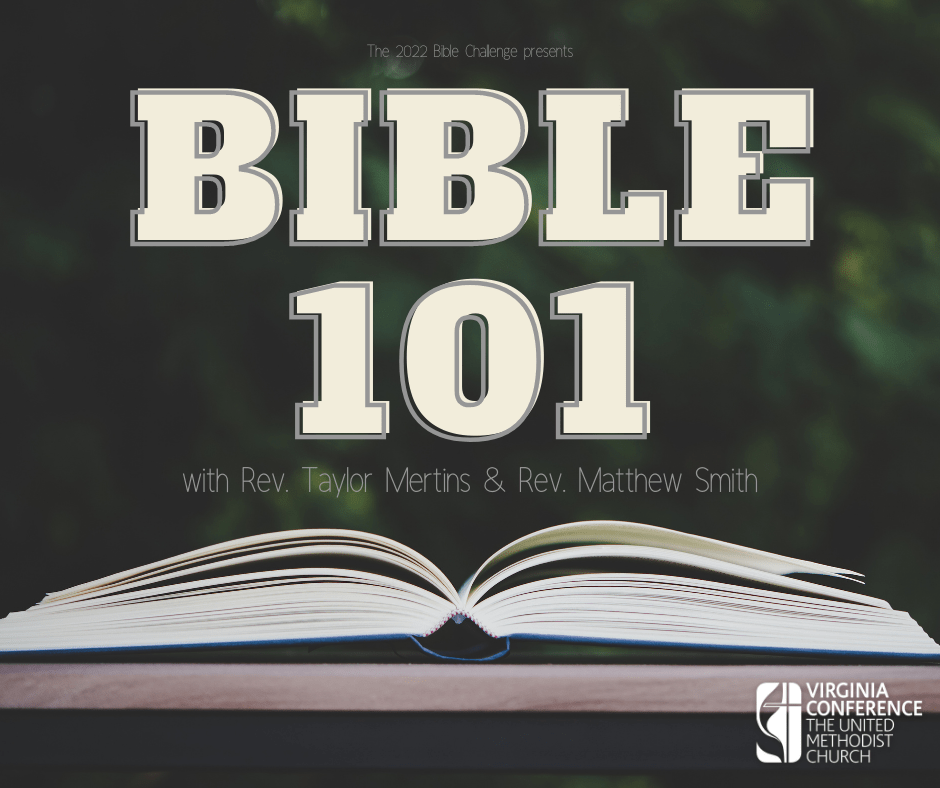
What, exactly, is the Bible? Why do/should Christians read it? Is there a proper way to read it?
The Virginia Annual Conference for the UMC has an annual challenge of reading through the entirety of the Bible and Rev. Matthew Smith and I were recently invited to record a podcast for the conference about Bible basics. You can check out the episode here:
And Ezra opened the book in the sight of all the people, for he was standing above all the people; and when he opened it, all the people stood up. Then Ezra blessed the Lord, the great God, and all the people answered, “Amen, Amen,” lifting up their hands. Then they bowed their heads and worshiped the Lord with their faces to the ground.
Most weeks we find leftover detritus in the pews after worship. There’s the occasional candy wrapper, a handful of loose change, and (my favorite) children’s drawings. The drawings are usually confined to the margins of various pieces of paper like offering envelopes or prayer cards and whenever I encounter one I am hit with waves of nostalgia.
There’s no telling how many bulletins I covered with Tic Tac Toe, Hangman, and comic book heroes over the years.
But, at some point, either from pressure applied by my parents or the wandering gaze of other church members, I gave up my artistic Sunday morning pursuits and I attempted to be a good Sunday morning worshiper. I said all the right prayers, sang all the right hymns, I stood up and sat back down just like everyone else. And yet, there were plenty of Sundays when the sermon could not hold my attention and I needed something to do.
So I did the only thing I could do: I reached in front of me, grabbed a pew Bible, and I started reading.
This is my confession: I fell in love with the Bible not because of some gifted homiletician, or from a remarkably profound experience of Vacation Bible School, but because I read the good book Sunday after Sunday while worship was happening around me.
There’s this moment in the Old Testament when the priest Ezra pulls the holy scriptures up and the gathered people rise in reverence and then fall to their knees in prayer. Their love for the Word is palpable from the pages of the Bible precisely because they understood it to be the remarkable thing that it is.
And yet, today, I’m not sure how we feel about the holy scriptures.
It doesn’t help that we often use it like a bludgeon against those with whom we disagree.
It doesn’t help that the words within it get cherry-picked to make whatever argument we want to make.
It doesn’t help that the Bible can leave us scratching our heads more than wanting to stand up in reverence or pull us down in prayer.
But perhaps we can reclaim a love for the scriptures when we start to see them as the strange new world that God has made for us. Or, to put it another way, maybe it would help if we stopped reading it as if it’s an instruction manual of religious behavior and instead we started watching it like a movie.
You can’t understand a movie, or say anything about it really, until you’ve consumed the thing as a whole. The Bible is the same. It is not meant to be taken apart in these little discrete segments – it is meant to be seen, appreciated, and understood as an entire proclamation.
When you start to see the Bible like a movie you start to appreciate how all the separate parts might be entertaining or enlightening but in terms of their meaning, you cannot know what it is until the end. Each story/chapter/verse seems like it’s going somewhere, but only when you see Christ on the cross and Christ risen from the grave, all the sudden you start to understand what’s behind everything!
So the next time you’re in church on a Sunday morning, or watching the livestream from the comfort of your couch, and you grow bored with the preacher up in the pulpit, reach for your Bible and enter the strange new world that God has made for you.
This week on the Strangely Warmed podcast I speak with Todd Littleton about the readings for the 3rd Sunday After Epiphany [C] (Nehemiah 8.1-3, 5-6, 8-10, Psalm 19, 1 Corinthians 12.12-31a, Luke 4.14-21). Todd is the lead pastor of Snow Hill Baptist Church in Tuttle, OK. Our conversation covers a range of topics including good books, age differences, textual reverence, liturgical moments, the gift of rediscovery, the equity of the Law, restoration and reconciliation, new gifts, pulpit shadows, and Martin Luther. If you would like to listen to the episode or subscribe to the podcast you can do so here: Take It Up And Read
This week on the Strangely Warmed podcast I speak with Jason Micheli about the readings for the 2nd Sunday After Epiphany [C] (Isaiah 62.1-5, Psalm 36.5-10, 1 Corinthians 12.1-11, John 2.1-11). Jason is the lead pastor of Annandale UMC in Annandale, VA. Our conversation covers a range of topics including the 5th Gospel, visible vindication, marital imagery, Good News For Anxious Christians, judgment as transformation, sentimentality, spiritual gifts, communal confirmations, the atonement, and new wine. If you would like to listen to the episode or subscribe to the podcast you can do so here: The Operating System Of The New Testament
This week on the Strangely Warmed podcast I speak with Teer Hardy about the readings for Baptism of the Lord Sunday [C] (Isaiah 43.1-7, Psalm 29, Acts 8.14-17, Luke 3.15-17, 21-22). Teer is one of the pastors at Mt. Olivet UMC in Arlington, VA. Our conversation covers a range of topics including unquenchable fires, stereotypes, perfect worship, formation, divine declarations, gear grinding, the voice of the Lord, the open Kingdom, baptismal difference, Phillip Cary, ill-advised liturgies, and righteous clothing. If you would like to listen to the episode or subscribe to the podcast you can do so here: Baptism By Fire





 think and let think