Desiring A Better Country

strangely-warmed-spreaker-header

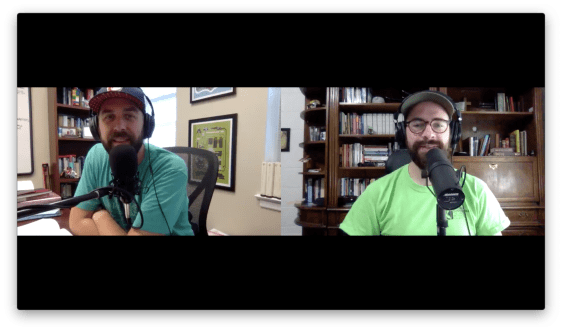
This week on the Strangely Warmed podcast I speak with Teer Hardy about the readings for the 9th Sunday After Pentecost [C] (Isaiah 1.1, 10-20, Psalm 50.1-8, 22-23, Hebrews 11.1-3, 8-16, Luke 12.32-40). Teer serves at Mt. Olivet UMC in Arlington, VA. Our conversation covers a range of topics including better introductions, boasting in the Chronicles of Narnia, getting rid of people, hard words, wrestling references, theological thanksgiving, nationalism from the pulpit, and partying with Jesus. If you would like to listen to the episode or subscribe to the podcast you can do so here: Desiring A Better Country

bible-american-flag (1)

The (Christian) Problem with The Death Penalty or: Why “An Eye For An Eye” Leaves Everyone Blind

For the first time in nearly two decades, the federal government will resume executions and, effectively, reinstate the federal death penalty. The announcement was made by Attorney General William Barr last week while indicating that five men convicted of murdering children will, themselves, be put to death in December of this year. Additional executions will be scheduled at a later time.

While public support for capital punishment has decreased, it is still advocated for in the Christian church and this is a problem.

Though denominations like the United Methodist Church have opinions against the death penalty clearly spelled out in governing documents like the Social Principles (“We believe the death penalty denies the power of Christ to redeem, restore and transform all human beings.”) the day to day experience and support for the death penalty is felt and experienced differently throughout the American church.

Capital punishment, killing someone in response to a crime, is as old as civilization itself. Some of the earliest archaeological discoveries of law codes contain the ramifications for shedding blood or taking someone’s life and, more often than not, it comes down to “An eye for an eye, a tooth for a tooth, a limb for a limb, a life for a life.” It’s there in Hammurabi’s code from ancient Babylon, and it is present in the Christian Bible.

The Death Penalty has been around for a very long time, and it is still employed for a lot of reasons, though not recently for Federal crimes. Some advocate for the death penalty because it is the only way to guarantee that someone will never recommit a violent crime, others claim that it helps as a deterrent to influence other away from committing similar crimes, and still yet others say it brings closure to families who grieve the loss of someone murdered. 

There are roughly 2,600 people on death row right now in the United States. And the state of Virginia, where I live, has executed more prisoners than almost any other state.

And again, for Christians, this is a problem because Jesus was killed by the Death Penalty.

The main reasons that people use to justify the death penalty can just as easily be used from a different perspective. Deterrence? In the south, where 80% of all death penalty convictions occur is the only part of the country where crime rates continue to increase. Closure? Statistics has shown that there is benefit for the families in the short term, but in the loan term they tend to experience bouts of depression and grief from another person’s death. 

And, since 1976, about 1 in every 9 death row inmates have been exonerated, usually after decades of living in a prison cell. 

And even among these statistic and facts, for Christians it is inconceivable to support the death penalty when the Lord we worship was killed by the same means.
69659

Christians love crosses. We put them up in our sanctuaries and in our living rooms, we tattoo them on our skins and wear them around our necks. But many of us have become desensitized to what the cross means: death.

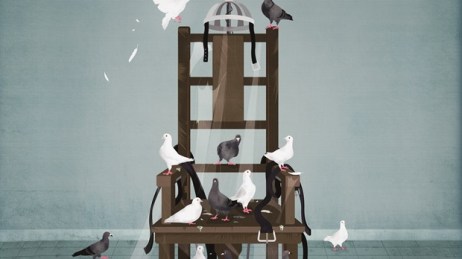
Let me put it this way: If Jesus died 100 years ago, Christians would be wearing nooses around our necks. If Jesus died 50 years ago, Christians would bow before electric chairs in our sanctuaries on Sunday mornings. If Jesus died today, Christians would hang hypodermic needles in our living rooms.

The cross was the electric chair for the Romans. The cross is like the hangman’s nooses of lynching mobs. The cross is like the lethal injections in modern prisons. It is the way people were killed by the state as a punishment for their crimes.

And, I’ll admit it, there are scriptures in the Bible that justify the practice of capital punishment. But there are also people in the Bible who committed capital crimes and God still used them for the kingdom.

We like the think about Moses talking to the burning bush, and leading God’s people to the Promised Land, but we don’t like to think about the fact that Moses murdered an Egyptian in cold blood before he met God in the wilderness.

We like to think about David defeating Goliath, and dancing in front of the Ark of the Covenant, but we don’t like thinking about the fact that David ordered one of his soldiers to die so that he could sleep rape his wife.

We like to think about Paul being knocked to the ground on the road to Damascus, and writing his letters to the churches by candlelight, but we don’t like thinking about the fact that Paul murdered Christians before his conversion.

One of the tenants of Christian theology is that nothing is impossible for God. But when we kill people for killing people, then we effectively remove all possibility of change in that person’s life. If we Christians really believe in the resurrection of Christ and the possibility of reconciliation coming through repentance, then the death penalty is a denial of that belief.

The beginning and the end of theology is that with God’s help and grace all things are possible. An alcoholic can kick the bottle, an atheist can discover faith, and a sinner can receive forgiveness. Why then do we keep slinging our nooses? Who do we keep sending people to the electric chair? Why do we strap people down for lethal injections? Why do we keep nailing people to crosses?

The message of Jesus’ ministry, of the cross, is mercy. And mercy triumphs over judgment.

That doesn’t mean that people who commit horrendous crimes get to walk away scot-free, nor does it mean that we should break down the walls of our prisons and let everyone run wild, but it does require us to fundamentally reshape our imagination regarding the so-called justice system. 

For centuries the death penalty was something that took place in public – crosses on a hill, nooses in a tree. The state used the death penalty to publicly frighten potential criminals from committing crimes. But now capital punishment takes place in hidden rooms with minimal witnesses. It has retreated from the public arena and can happen without disrupting our daily lives such that when the recent announcement was made by the Attorney General it was merely a blip on the radar in terms of our collective response.

But we are murdering people for murder.

Jesus once said, “You have heard that it was said an eye for an eye and a tooth for a tooth.” Interestingly, President Trumps has made it known on more than one occasion that this is his favorite verse from the Bible. But Jesus doesn’t stop there: “But I say to you, Do not resist an evildoer. But if anyone trikes you on the right cheek turn the other also.”

Violence only begets violence.

An eye for an eye leaves everyone blind. 

God sent God’s son into the world to transform the world. Not with the ways of the world, not with power and prestige, nor with armies and aggression, but with mercy and sacrifice.

God in Christ ministered to the last, least, lost, little – people like those who are waiting for the end of their days on death row.

And Jesus carried death on his back to the top of a hill to die so that we might live.

So long as we employ the death penalty, we will deny the power of God to redeem, restore, and transform all of us. As long as we sling our nooses, and prepare our needles, we will prevent grace from making new life in those who have sinned. As long as we murder murderers, we will never give God the chance to make the impossible possible. 

Twittered Repentance

strangely-warmed-spreaker-header

This week on the Strangely Warmed podcast I speak with Teer Hardy about the readings for the 8th Sunday After Pentecost [C] (Hosea 11.1-11, Psalm 107.1-9, 43, Colossians 3.1-11, Luke 12.13-21). Teer serves at Mt. Olivet UMC in Arlington, VA. Our conversation covers a range of topics including O Brother Where Art Thou?, hipster pastors, cold brew coffee, unwinding repentance, social media identities, roaring like Aslan, vulnerable redemption, talking to strangers, and problematic parable preaching. If you would like to listen to the episode or subscribe to the podcast you can do so here: Twittered Repentance

Screen Shot 2019-07-29 at 8.49.59 AM


Three Powerful Words

strangely-warmed-spreaker-header

This week on the Strangely Warmed podcast I speak with Wil Posey about the readings for the 7th Sunday After Pentecost [C] (Hosea 1.2-10, Psalm 85, Colossians 2.6-19, Luke 11.1-13). Wil serves as the pastor of First UMC in Murphy, NC. Our conversation covers a range of topics including praying in Greek, pastoring a football team, whores in church, unpacking scripture, idolatry in symbols, the one thing needful, weeds, death, erasing the record, and the prosperity gospel. If you would like to listen to the episode or subscribe to the podcast you can do so here: Three Powerful Words

Screen Shot 2019-07-15 at 10.10.37 AM.png

The Orchard Of Scripture

strangely-warmed-spreaker-header

This week on the Strangely Warmed podcast I speak with Wil Posey about the readings for the 6th Sunday After Pentecost [C] (Amos 8.1-12, Psalm 52, Colossians 1.15-28, Luke 10.38-42). Wil serves as the pastor of First UMC in Murphy, NC. Our conversation covers a range of topics including fruit puns, sermon titles, fishing for a thesis, baldness as a punishment, the feat of death, reading canonically, using the first-person plural, piety vs. mercy, and praying with our feet. If you would like to listen to the episode or subscribe to the podcast you can do so here: The Orchard Of Scripture

Screen Shot 2019-07-15 at 10.10.37 AM

A Man Without A Church

Devotional:

Psalm 82.3-4

Give justice to the weak and the orphan; maintain the right of the lowly and the destitute. Rescue the weak and the needy; deliver them from the hand of the wicked.

Weekly Devotional Image

I have shared on a number of occasions that one of my favorite writers is the late Kurt Vonnegut Jr. I was introduced to his novels and short stories when I was in middle school and quickly read through everything he published. I know that it can sound strange to hear that Vonnegut is one of the favorite writers of a pastor since he basically loathed organized religion and spoke avidly of his own humanism. To quote, “We Humanists behave as well as we can, without any expectation of rewards or punishments in an Afterlife. We serve as best we can the only abstraction with which we have any real familiarity, which is our community.” 

And yet, some of Vonnegut’s thoughts on the church speak, to me, a better truth than is often heard in the church. In his writing and speaking he could both critique and admire the church in a way that is instructive and ultimately productive. 

vonnegut

Vonnegut died in 2007 two weeks before he was scheduled to speak in his home town of Indianapolis for an event celebrating his life and achievements. The speech he wrote for that event was the last thing he wrote before he died and it contains a lot of his more memorable contributions to the literary ethos. However, there is something in the speech that does appear anywhere else in Vonnegut’s corpus, to my knowledge:

“I got a letter a while back from a man who had been a captive in the American penal system since he was sixteen years old. He is now forty-two, and about to get out. He asked me what he should do. I told him: ‘Join a church.’ And now please note that I have raised my right hand. And that means I am not kidding, that whatever I say next I believe to be true. So here goes: The most spiritually splendid American phenomenon of my lifetime wasn’t our contribution to the defeat of the Nazis, in which I played such a large part, or Ronald Regan’s overthrow of Godless Communism, in Russia at least. The most spiritually splendid American phenomenon of my lifetime is how African-American citizens have maintained their dignity and self-respect, despite their having been treated by white Americans, both in and out of government, and simply because of their skin color, as though they were contemptible and loathsome, and even diseased. Their churches helped them do that.”

These words, in fact some of the last words from Vonnegut, are all the more striking when considering the fact that he hailed from Indiana which, when he was a kid, contained the national headquarters of the Ku Klux Klan, and was the last state to have a lynching of a African-American citizen north of the Mason-Dixon Line. 

At its best, the church has been the place in which justice was given to the weak and orphaned and where the rights of the lowly were maintained. The church has, at times, rescued the weak and needy by delivering them from the hand of the wicked.

But, at its worst, the church has been the place where injustice has rained down like waters, where the marginalized have been further marginalized. 

It was not that long ago, all things considered, when African-Americans were forced to sit in the balconies of churches rather than with everyone else. It was not that long ago that Martin Luther King Jr. declared 11am on Sunday mornings to be the most racially segregated moment of the week. The prejudices of the past are still very present here in the present.

Vonnegut often described himself “a man without a country.” But reading his last bit of writing makes me wonder if he was actually “a man without a church.”

For if the church is not the place where justice is present, where the rights of the lowly are maintained, and the weak and needy are delivered, then what in the world are we doing?

Bedazzle Your Crosses

strangely-warmed-spreaker-header

This week on the Strangely Warmed podcast I speak with David King about the readings for the 5th Sunday After Pentecost [C] (Amos 7.7-17, Psalm 82, Colossians 1.1-14, Luke 10.25-37). David is a 21 year old college senior who is currently studying philosophy and religion. Our conversation covers a range of topics including plumb lines, persistent pursuits, sycamore trees, justice for the marginalized, easy Christianity, hearing hope, poor parable preaching, and dying to save. If you would like to listen to the episode or subscribe to the podcast you can do so here: Bedazzle Your Crosses

Screen Shot 2019-07-08 at 9.38.34 AM

Our Independence Day

Psalm 30.4

Sing praises to the Lord, O you his faithful ones, and give thanks to his holy name. 

Weekly Devotional Image

I was 8 years old when the movie Independence Day was released in theaters. At the time it was all anyone could talk about – the special effects, the story-telling, Will Smith saving the world. And yet, the thing I remember most about seeing the movie back in 1996 was Bill Pullman’s rallying speech as the President and his now infamous line: “Today we celebrate our Independence Day!”

I know for a fact that I, along with every young person in the theater, lifted my fist into the air in patriotic solidarity.

In a few days, Americans across the country will bring out all the red, white, and blue that we can muster and we will fill the sky with fireworks. We will be celebrating our declared independence from the monarch of Britain which inevitably led to the Revolutionary War and the  foundation of the United States of America.

The 4th of July is always a spectacle to behold because it encapsulates so much of what America stands for: freedom, fireworks, and food!

Bible-and-Flag

And behind all of the three-color-coded outfits, the backyard barbecues, and the displays of pyrotechnical achievements, the 4th is all about strength. It’s all about displaying and rejoicing in our strength in the realms of economy, military, and even freedom itself.

However, on the 4th of July, while many of us will be out in the community celebrating America’s independence, it is important for Christians to remember that our truest independence came long before George Washington and the Continental Congress and the Declaration of Independence.

Out truest freedom comes from Jesus.

Can we get all dressed up in red, white, and blue this week? Of course – though we should remember and recognize that there is a slippery slope between patriotism and nationalism that often results in xenophobia and violence.

Can we support our military? Or course – though we cannot forget or ignore how America is an imperial power that often uses violence indiscriminately and disproportionately through the world.

Can we kick back and enjoy the fireworks? Or course – though we cannot let them blind us to the injustices that our taking place within, and right on, our borders.

The 4th of July is not the independence day for Christians. It certainly marks the beginning of a new kind of freedom for a nationstate, but the real independence day for Christians took places 2,000 years ago on the cross.

The 4th of July, therefore, does not really belong to Christians. We can participate and enjoy the day as much as everyone else but we do so know that our hopes and dreams have been formed by the Lord, not by a document declaring our freedom from monarchy.

What we experience across the country as we mark a new year in the life of the nation is fun and full of power, but it will never ever compare to the grace of Jesus Christ made manifest in the bread and wine of communion and in the water of baptism.

Americans might bleed red, white, and blue, but Jesus bled for us so that we wouldn’t have to.

The 4th of July is not our independence day. In fact, if it is anything, it is our dependence day. It is our dependence day because it shows how much faith and hope we put in things made by human hands which, to use the psalmist words, can come and go like the wind. 

We can absolutely enjoy the 4th of July and rejoice in our celebrations, but if what we do this week is more compelling and life-giving that the Word of God revealed in Jesus Christ then we have a problem.

In Jesus Christ we discover the end of all sacrifices, particularly those demanded by countries of their citizens.

In Jesus Christ we meet the one in whom we live and move such that we can rejoice in the presence of the other without hatred, fear, or even bitterness.

In Jesus Christ we find the incarnate Lord whose resurrection from the dead brought forth a light into this world that outshines all fireworks.

The Good News Should Be Good

strangely-warmed-spreaker-header

This week on the Strangely Warmed podcast I speak with David King about the readings for the 4th Sunday After Pentecost [C] (2 Kings 5.1-14, Psalm 30, Galatians 6.1-16, Luke 10.1-11, 16-20). David is a 21 year old college senior who is currently studying philosophy and religion. Our conversation covers a range of topics including prayers for healing, disrupted expectations, finding words, laughing at funerals, Paul as James Joyce, bearing burdens, boasting in the cross, on not going house to house, and the fruit of God’s labor. If you would like to listen to the episode or subscribe to the podcast you can do so here: The Good News Should Be Good

Screen Shot 2019-06-29 at 2.10.25 PM

Slaves To Freedom

strangely-warmed-spreaker-header

This week on the Strangely Warmed podcast I speak with the Sunday school class at Cokesbury UMC in Woodbridge, VA about the readings for the 3rd Sunday After Pentecost [C] (2 Kings 2.1-2, 6-14, Psalm 77.1-2, 11-20, Galatians 5.1, 13-25, Luke 9.51-62). Our conversation covers a range of topics including what its like to have a crazy pastor, Cub Scouts, proper preparation, being delivered through water, cutting down trees, feeling freedom, patience, and God’s sense of humor. If you would like to listen to the episode or subscribe to the podcast you can do so here: Slaves To Freedom

suissa-freedom