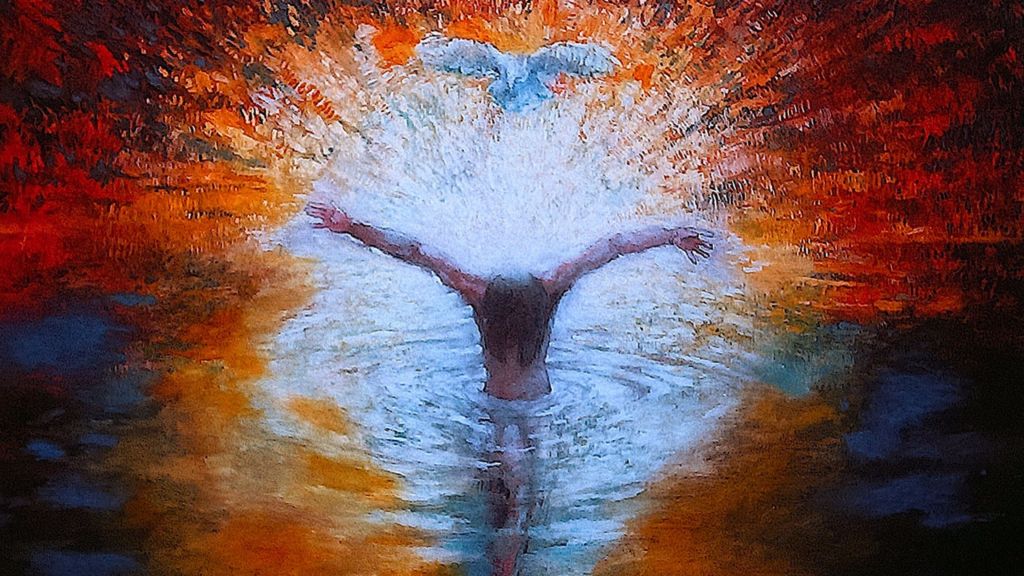
Impossible Possibility

1 Timothy 2.8-14 

I desire, then, that in every place the men should pray, lifting up holy hands without anger or argument; also that the women should dress themselves modestly and decently in suitable clothing, not with their hair braided, or with gold, pearls, or expensive clothes, but with good works, as is proper for women who profess reverence for God. Let a woman learn in silence and with full submission. I permit no woman to teach or to have authority over a man; she is to keep silent. For Adam was formed first, then Eve; and Adam was not deceived, but the woman was deceived and became a transgressor. Yet she will be saved through childbearing, provided they continue in faith and love and holiness, with modesty.

Galatians 3.19-28

Why then the law? It was added because of transgressions, until the offspring would come to whom the promise had been made; and it was ordained through angels by a mediator. Now a mediator involves more than on party; but God is one. Is the law then opposed to the promises of God? Certainly not! For if a law had been given that could make alive, then righteousness would indeed come through the law. But the scripture has imprisoned all things under the power of sin, so that what was promised through faith in Jesus Christ might be given to those who believe. Now before faith came, we were imprisoned and guarded under the law until faith would be revealed. Therefore the law was our disciplinarian until Christ came, so that we might be justified by faith. But now that faith has come, we are no longer subject to a disciplinarian, for in Christ Jesus you are all children of God through faith. As many of you as were baptized into Christ have clothed yourselves with Christ. There is no longer Jew or Greek, there is no longer slave or free, there is no longer male and female; for all of you are one in Christ Jesus. 

We were in the basement rooms of my seminary. Our preaching precept had eight students and one preceptor. Each week we would gather as a large group to listen to our distinguished professor wax lyrical about the ins and outs of homiletical theology, and then we would break off into our little small groups to do the work of preaching.

We would be assigned a text, offered tools for exegesis, and then one by one we would stand in front of our precept to preach.

It was awful.

It was one thing to preach occasionally on a Sunday morning for a dozing congregation, it was another thing entirely to preach in front of a bunch of soon to be preachers – particularly since we were required to listen to comments and criticisms immediately following our proclamations.

And don’t get me wrong, some of the sermons were really good. I can remember one of my classmates preaching on the institution of the Lord’s supper, that final evening shared between Jesus and his friends, and the theme of the sermon was, “We are what we eat.”

It was perfect.

I can remember another classmate preaching on the binding of Isaac, this terrifying moment in Genesis when Abraham is called to sacrifice his son and she, the preacher, kept slowly knocking on the pulpit over and over again whenever she talked about Abraham chopping the wood, or taking steps to the top of the mountain, and his heart beating in his chest, and I don’t know if I’ve ever been more anxious in a sermon. 

It was perfect.

But the one sermon that stands out the most wasn’t even a sermon. It was the prayer offered beforehand. One of my classmates walked over to the pulpit, opened up his Bible, called for us to bow our heads in prayer, and then he said: “Lord, I thank you that you have called men, and only men, to preach your Holy Word, be with me now as I do so. Amen.”

I opened my eyes in that moment to the five women in the room, one of whom was our preceptor, all who felt called by God to preach, and we had to sit through a sermon and I know not one of us listened to another word he said.

Why do women have certain roles in certain churches? That’s the question for us today and it’s a question I’ve been asked a lot in the short time that I’ve been here, and frankly it’s a question that I’ve been asked throughout my ministry.

The question is born out of the fact that, depending on what church you experience, there are a variety of understandings about what women can, and can’t, do. 

I grew up in the United Methodist Church which means I saw women reading scripture from the pulpit, I saw women preach, I saw women serve as Lay Leader, and just about every other aspect of the church.

But in other churches you might never see a woman read scripture, or preach, or serve in places of leadership, and it’s all because of the Bible. 

Well, sort of.

There are various verses in favor of limited female participation in church and there are various verses in favor of full female participation which is why, depending on the church, you can have wildly different experiences.

Perhaps the most well known, and often quoted texts, regarding the limiting of what women can do in the church comes from Paul’s first letter to Timothy: 

Men should pray, Paul says. 

Sounds good. But they aren’t allowed to be angry or have arguments – something we can aspire to I guess.

Women should dress themselves modestly, no braids in their hair, no gold, no pearls, no expensive clothing.

Okay Paul, that’s oddly specific, but you are the apostle.

Let a women learn in silence and with full submission. I permit no woman to teach or to have authority over a man; she is to keep silent.

Wow.

Examining authorial intent, or community context, can be a slippery slope in preaching. We can certainly speculate about intentions or situations but it can only go so far. Nevertheless, perhaps it worth our time to recognize that, in the time in which Paul is writing, men and women would’ve sat on separate sides of worship spaces, only men were allowed to speak, and only men were allowed to learn, which would’ve left women required to be somewhere and yet they had nothing they, themselves, could do. There, anything they did do was seen as a distraction, from talking at all, to what they wore, etc.

And yet, scripture says what it says. You know, the whole Word of God for the people of God, thanks be to God…

However, scripture says other things as well.

Take some time to explore the strange new world of the Bible and you can read about Miriam, who led the people Israel during the time of Moses. Or you can read about the judge Deborah who was in charge of Israel’s governance and military (there’s a particular striking episode during her time with a woman named Ja-el who runs a tent peg through the skull of a foreign enemy). Or you can read about Hannah the mother of Samuel who put the chief priest in his place. Or you can read about Queen Esther who save an entire nation of people from genocide. Or Rahab, or Ruth, or I could go on.

And that’s just a cursory glance at the Old Testament! And, to be frank, those women who make it into the hallowed halls of scripture do so precisely because they broke conventions, they upended expectations, they made the impossible possible. 

And the Gospels are no different! 

Mary the Mother of God who literally bore the fullness of the divine in her womb. Peter’s mother-in-law is called a deacon for serving the needs of Jesus and the disciples. Mary Magdalene who was the first to see the resurrected Christ and was the first Christian preacher! She’s the one who reports the Good News, the very best news, to the stumbling disciples hiding in the upper room.

Which is another way of saying: without women preachers, we never would’ve heard about the resurrection!

Even throughout the rest of the New Testament – female prophets were common among the churches that sprung up during the Acts of the Apostles, both Peter and Paul affirm this in various places. We can read about Dorcas, Lydia, Phoebe, Priscilla, Aquila, Syntyche, on and on and on.

And that’s not even mentioned the powerful women int he first generation of the church! It was only in the 4th century, during the Council of Laodicea, when women were banned from ordination and being elders in Christian churches.

And this is what is really wild: up until that Council, Christianity was revolutionary with regard to women as compared to the wider culture. Women were afforded rights, privileges, and power though the church that they could receive no where else.

And yet, today, its as if things have flipped in certain churches – that is, women have greater rights and powers and privileges in the surrounding culture than they do in church.

At the end of the day, it’s not just about what women can or can’t do in the church – it’s about how we understand one another in the totality of existence. What we believe shapes how we behave. Or, to put it another way, what we do in church shapes what we do outside of church.

It we’re part of a church that limited what women can or, a church that belittles who women are, we’re obviously going to do the same outside the walls of the church.

Think, for a moment, about what that teaches a young girl about who she is and how she is to understand herself… Think about what that teaches young boys about who they are in relation to girls.

God calls both men and women to preach and to lead the church.

It’s really as simple as that.

And yet we’ve mucked it up centuries.

Which leads us to Galatians.

Paul, the same apostle who wrote to Timothy, also wrote to the budding church in Galatia about what it means to be the church. Again, we can only discern so much about the context behind the content, but it’s clear the community of faith was struggling between who was in and who was out, what was and what wasn’t permissible. And Paul’s words are remarkable.

Why all the rules? Those were added because of our inability to be good, they were given until we could come into the promise made to us. 

Are the rules in opposition to the promises of God? Of course not! If rules were given that could give us life and life abundance, then righteousness would have come through the law. But the Word has imprisoned all things under the power of sin so that the promised might be given not because of what we do, but because of what has been done for us.

The rules were our disciplinarian until Christ came, but now that Christ has arrived we are no longer subject to a disciplinarian – we are all children of God through faith.

There is no longer Jew or Greek, there is no longer slave or free, there is no longer male and female; for we are all one in Christ Jesus.

In his call for “no longer male and female” Paul isn’t combining the two or obliterating their distinctions. Instead he is eliminating the privileged position of men in the new reality we call the kingdom of God. His words insist on the equality and equity between the two with retraining the glorious uniqueness of each. 

In essence, whenever the church attempts to claim what anyone can or can’t do, the church then attempts to limit what God can do. But God is the God of impossible possibility, God lifts up the lowly and brings down the mighty, God makes a way where there is no way. 

The church is called to proclaim the goodness of God in Christ Jesus who came not to judge the world, but to save it. 

Nobody, in other words, not the devil, not the world, not the law, not even ourselves, can take us away from the Love that refuses to let us go. We can, or course, squirm around in God’s grip and make up all sort of declarations about the church and we can no doubt get ourselves into a heck of a mess by doing so.

But if we take seriously the proclamation that we are all made in the image of God then perhaps we should start acting like it. Amen.

#PartyLikeJesus

John 2.1-2

On the third day there was a wedding in Cana of Galilee, and the mother of Jesus was there. Jesus and his disciples had also been invited to the wedding. 

It’s a bit I often use when I’m preaching for a wedding. Something about how, in the Gospels, people are forever asking Jesus about the kingdom of heaven and he has some rather strange and bizarre answers. The kingdom of heaven is like… a mustard seed. The kingdom of heaven is like… treasure buried in a field. The kingdom of heaven is like… yeast. On and on. But the thing Jesus compares the kingdom to most of all is a feast, a party.

I like to bring this up at weddings because immediately following my part, the newlyweds usually lead everyone in attendance to a reception during which they celebrate. It is my attempt at showing how the marriage ceremony, the part with all the religious language, is connected to everything that happens after. Or, to put it bluntly: Jesus is just as much present in the celebration as the ceremony.

And so it came to pass, during one particular wedding, that the bridal party actually listened to what I was saying throughout the ceremony to such a degree that, for the rest of the evening, they shouted “Party Like Jesus!” every time they lifted their campaign flutes.

I’ll admit that it was a rather contradictory moment, and yet it held the promise of the Gospel!

Contrary to how we might like to imagine it, a fair amount of Jesus’ ministry took place over a cup of wine with friends. He, to use the language of Robert Farrar Capon, was literally the Spirit of the party. Therefore, we do well to remember that feasts (maritally oriented or otherwise) are blessed opportunities to have a little slice of heaven on earth. 

I love that Jesus compares the kingdom to a feast because a feast (more often than not) is something we’re invited to. It is an ever ringing reminder that no matter what we do, or leave undone, God is the host, and God likes crowded tables. There is no bouncer at the party, save for a king who insists on dragging in people off the street. There is no list of pre-requisites to enter, save for recognizing that we have no business being at the party to which we’re invited. There isn’t even an expectation of reciprocation, save for the fact that we’re encouraged to stumble out from the party doing whatever we can to share the joy of it with others. 

Or, as Capon put it:

“Grace is the celebration of life, relentlessly hounding all the non-celebrants in the world. It is the floating, cosmic bash shouting its way through the streets of the universe, flinging the sweetness of its cassations to every window, pounding at every door in a hilarity beyond all liking and happening, until the prodigals come out at last and dance, and the elder brothers finally take their fingers out of their ears.”

And, because I believe that music often does a better job at conveying theological claim than mere words alone, here are some tunes to put us in the party spirit:

Miner is a folk-rock family band based in Los Angeles. Their propulsive “Tomorrow” is simple in terms of its lyrics and yet profound in its arrangement. The thematic “waves washing over” are  conveyed through the repetition of the vocals and the drums which build throughout the song. In a time when it feels like we’re bombarded by nothing but bad news, the proclamation of the Good News of better days is something, I think, we can all use right now. 

Real Estate is known for their catchy guitar earworms, and their easy rock feel. When I saw them live a few years ago everyone in the audience exuded happiness as they swayed back and forth to the music. The band covered the Grateful Dead’s “Here Comes Sunshine” back in 2016 and I love returning to this track for a little boost every so often. I hope it does the same for you.

May Erlewine is a singer-songwriter from Michigan who teamed up with the Woody Goss (of Vulfpeck fame) Band for an amazing record in 2020. The single “Anyway” has funky drums, a picky guitar riff, and a smooth melody. Who wouldn’t want to hear “I’m gonna love you anyway” over and over?

The Operating System Of The New Testament

This week on the Strangely Warmed podcast I speak with Jason Micheli about the readings for the 2nd Sunday After Epiphany [C] (Isaiah 62.1-5, Psalm 36.5-10, 1 Corinthians 12.1-11, John 2.1-11). Jason is the lead pastor of Annandale UMC in Annandale, VA. Our conversation covers a range of topics including the 5th Gospel, visible vindication, marital imagery, Good News For Anxious Christians, judgment as transformation, sentimentality, spiritual gifts, communal confirmations, the atonement, and new wine. If you would like to listen to the episode or subscribe to the podcast you can do so here: The Operating System Of The New Testament

Baptism By Fire

This week on the Strangely Warmed podcast I speak with Teer Hardy about the readings for Baptism of the Lord Sunday [C] (Isaiah 43.1-7, Psalm 29, Acts 8.14-17, Luke 3.15-17, 21-22). Teer is one of the pastors at Mt. Olivet UMC in Arlington, VA. Our conversation covers a range of topics including unquenchable fires, stereotypes, perfect worship, formation, divine declarations, gear grinding, the voice of the Lord, the open Kingdom, baptismal difference, Phillip Cary, ill-advised liturgies, and righteous clothing. If you would like to listen to the episode or subscribe to the podcast you can do so here: Baptism By Fire

Family Ties

Matthew 1.1

An account of the genealogy of Jesus the Messiah, the son of David, the son of Abraham.

Merry Christmas!

Here we are on the other side of the manger, the presents have been opened, the zooms with family have taken place, and we find ourselves back in worship waiting on a Word from the Lord.

There’s something about this season that can bring out the very best, and the very worst, in us. I’ve stood in enough churches for enough Christmas services to witness the extent of how true that sentence really is. 

It was merely days ago that the children of the church dressed in all the correct costumes and re-created Christmas for us…

But it was also merely days ago that I heard raised voices and arguments out in the church parking lot, disagreements came to the brim at some of our Christmas tables, and long held grudges remain held.

After our 8pm Christmas Eve service, a woman walked up to me who I had never seen before and all she said was, “Thanks for being open tonight. I didn’t want to be alone on Christmas Eve.” And with that she walked out.

Families are complicated.

And perhaps no family was and is more complicated than Jesus’.

The Gospel according to St. John begins with a connection to the cosmos – in the beginning was the Word, and the word was with God, and the Word was God.

The Gospel according to St. Mark doesn’t even have an introduction and just hits the ground running with the J the B going buck wild out in the wilderness. 

The Gospel according to St. Luke provides some authorial remarks regards the necessity for the transmission of the Gospel in the first place.

And The Gospel according to St. Matthew gets down to earth and puts Jesus’ family tree in the particular context and history of Israel. And the closer you get to earth, the dirtier it all becomes. 

Therefore, for the next ten minutes or so, I’m going to attempt to bring us through the genealogy of the baby born King we were worshipping on Christmas Eve. And, hopefully, you will see that my claim of Jesus’ sordid family history is not made in vain.

We start with good ol’ Abe. Father Abraham! The one with whom the covenant was made. I will be your God and you will be my people, and all that. Through you, the Lord says, generations will be blessed.

And Abraham, in his old age, becomes the father of Isaac.

However, it is the faith of Abraham, a major theme of both the Old and New Testaments, that results in Isaac being nearly murdered by his faithful father. Thanks be to God for the ram in the bushes!

Isaac survives to father Jacob, a devilishly tricky young boy who swindles his way into salvation history by pulling one over on his own aging father.

Incidentally, Jacob was himself duped as well. He wound up sleeping with the wrong bride by mistake and becomes the father of Judah.

And, because families are complicated, Judah accidentally slept with his own daughter-in-law Tamar, who pulled one over on him by dressing up as a harlot (more on that in a moment). And when Judah discovered that his daughter-in-law got knocked up while a lady of the night, he ordered her to be burned at the stake!

He only relented when, of course, he discovered that he, himself, through his midnight machinations fathered the child in her, Perez.

And that’s just the first three verses of the genealogy!

Next we encounter a list of people we know nothing about until we get to Boaz.

The strange new world of the Bible tells us that Boaz was a good and honorable man and his conjugal connections with Ruth, a dirty rotten foreigner outside of the covenant, continue the family line.

Ruth, notably, shows up after Boaz had a few too many ciders on the threshing room floor and, prior to their marriage, uncovers his feet.

If you know what the Bible means…

Anyway, this kind of behavior would’ve been no surprise to Boaz because his mother was Rahab, the harlot who had the sweetest little house on the edge of Jericho, who hid the agents of Joshua, and who, herself, was brought into the family line after a city was massacred.

So Ruth and her Bo-az (get it?) made their life in Bethlehem (ever heard of it?) and they brought Obed into the world, who was the father of Jesse, the father of David.

If you couldn’t tell already, the whole first section of the genealogy is filled with the complicated nature of reproduction.

The next section is filled with violence.

David, after slaying Goliath and playing the harp, after high-tailing it away from King Saul, eventually becomes King. And while King, with all the power it holds, he chanced upon Bathsheba, a woman bathing naked, during some afternoon peeping.

He used the power at his disposal to arrange her husband murder, rapes her, and becomes the father of Solomon, you know, the one with all the wisdom.

The whole story of David is filled to the brim with intrigue and murder.

A lot of murder.

In many ways, David was just a really successful band who, along with the Holy Spirit, brought together a bunch of tribal areas and started a real kingdom.

But, back to the family tree: Solomon’s son Reheboam lost almost all of David’s gain through his insatiable greed. He, according to scripture, encouraged pagan cults and even sacrificed male prostitutes.

The next few names on the list aren’t much to speak us, through at least two of them had some idea about what it meant to be covenanted with the great I Am.

Nevertheless, from Jehosophat through Joram and Ahaziah, it’s quite awful. Should you find yourself with some free time, you can skim through the canon and learn about murdered sons, blood thirsty kinds, assassins, and more!

Perhaps the first Sunday after Christmas isn’t the best time to take a peak behind the curtain of the Holy Family, but it’s all there. All the way up to, and through, the exile.

After the time of being strangers in a strange land, of wrestling between planting roots and getting plucked up, things only get marginally better for this family. But only because most of the next names in Matthew’s genealogy aren’t mentioned anywhere else in scripture.

And finally, finally (!), we make our way down the list until we’re back in the little town of Bethlehem with Joseph who Matthew describes as a just man (which is saying something compared to his ancestors). And who does Joseph brings to the family reunion caused by the emperor’s census? His pregnant virgin fiancé Mary.

No wonder no one wanted to let them stay at their house.

And then, Jesus, son of God and son of Man, light from light eternal, is born in the manger.

That’s it. That’s Jesus’ family tree in all its glory.

So what should we make of it?

Well, not to put too fine a point on it, but Jesus obviously did not belong to the nice clean world of all the worst Hallmark Christmas movies. He did not belong to the reasonable, or honest, or sincere world of decency and that we all too often claim for ourselves today.

Jesus comes from a family of murderers, cheats, cowards, scoundrels, adulterers, and liars.

Jesus comes from people like us, and he came for people like us.

No wonder God had to send his Son into the world; Jesus is the only hope we’ve got. Amen. 

All The Good Verbs!

This week on the Strangely Warmed podcast I speak with Teer Hardy about the readings for the Second Sunday After Christmas [C] (Jeremiah 31.7-14, Psalm 147.12-20, Ephesians 1.3-14, John 1.1-18). Teer is one of the pastors at Mt. Olivet UMC in Arlington, VA. Our conversation covers a range of topics including Christmas presents, strangers in a strange land, experiential faith, scattering and gathering, strange celebration, new words, Frozone and Frozen, the mystery of salvation, Indiana Jones, universalism, and the incarnation. If you would like to listen to the episode or subscribe to the podcast you can do so here: All The Good Verbs!

Redeeming Grace

Titus 2.11-14

For the grace of God has appeared, bringing salvation to all, training us to renounce impiety and worldly passions, and in the present age to live lives that are self-controlled, upright, and godly, while we wait for the blessed hope and the manifestation of the glory of our great God and Savior, Jesus Christ. He it is who gave himself for us that he might redeem us from all iniquity and purify for himself a people of his own who are zealous for good deeds. 

There’s a better than good chance that all of us here have heard the story before. We all know that the holy family was turned away by a greedy innkeeper, that Jesus was born in a stable, laid in a manger, surrounded by farm animals, admired by shepherds, and sung to by angles.

Never mind the fact that half of these details aren’t even in the Bible; we’re still ready to remember it that way. Just a few hours ago the children of this church even acted the whole thing out with pipe cleaner halos, cotton ball covered sheep, and plastic shepherd staffs.

You have to be careful giving a long stick to a 5 year old, you never know when they’ll flip it around and turn it into a light saber and cut you in half.

A few years ago, when I was serving a different church, we had one of our wisemen decide to take a nap on the chancel steps halfway through the service and he didn’t wake up until the end and he was surrounded by a bunch of people holding up candles and singing a song.

I promise there was nothing silent about that night.

Or, like this afternoon, when one of our angels came up to the chancel area, she adored the baby Jesus so much, that she decided to pick him up and rock him back and forth while the wisemen were busy following the star across the sanctuary.

Her precious parents motioned for her to put the baby Jesus back in the hay but she, I kid you not, smiled at them like an angel, and kept on rocking.

It warms our hearts to return to this story, it’s part of the trimmings and the trappings of this season. We can recall in our minds Christmases past when we’ve encountered this story in a variety of ways. And yet, if you spend even a short amount of time in the strange new world of other Bible, you can’t help but notice that all of the sentimentality is missing.

Which, of course, runs completely counter to how we want this to go. We want the cute little baby cooing up at his parents, we want him glowing preternaturally as if he’s the one keeping everyone else warm, we even want the wisemen making silly noises and faces at the baby born king. 

In short, we want sentimentality.

Why? Sentimentality rises when we are in denial of reality. It is our way of coping with an unbelievable world. It’s why Hallmark and Lifetime make a killing this time of year with their never-ending and confounding Christmas stories that all follow the exact same pattern. 

We can turn them on, and disappear for 90 minutes, while everything else is crumbling around us. 

But Christmas, the real Christmas, begins in the dark. It is not a denial of how bad things are, it is a proclamation that though things are bad, God has arrived to do something about it!

“What child is this?” That might be the best beginning to any hymn we’ve got in the hymnal, because that question is our question. All we do as a church, particularly on Christmas Eve, is our attempt at answering the question. And we get lots of answer.

The child is the dawn of redeeming grace, the child is light from light eternal, the child is the Savior, the child is Lord at thy birth.

Translation: the child is God!

But if Kurt Vonnegut is right, and people come to church not to hear preachments but to day-dream about God, then the question still lingers: Who is this God we worship?

In church circles there are these two major competing images for the Lord.

Among some, God is like a mother-in-law who shows up for Christmas dinner with nothing but judgments and expectations: I thought you were going to actually do something with your life! Why aren’t we using the family china? 

God then becomes the arbiter of bad news for bad people. We cower in fear of the One whose expectations we will never meet. We hide in shame from the One born for us. We struggle under the weight of guilt that we are never enough.

But there’s another image of God among church types.

God is like an uncle who shows up for Christmas dinner with a sausage under one arm and a bottle of wine under the other. And when he sees us moping around he slams his fist on the table, sending the roast beast flying, and shouts, “Why all the long faces?! Have you not heard the Good News! Grace has appeared, bringing salvation to all! Let’s celebrate!”

Christmas, despite its various trimmings and trappings, is a party, it is a celebration, it is the foretaste of the Supper of the Lamb to which we are invited without earning it or deserving it. 

It is the divine laughter that goes on ad infinitum. 

And this party hosted by One who turns water into wine, who drags in people off the street, who slaughters the fatted calf for the wayward child, this party isn’t in preparation -it’s not off in some distant place during some different time.

It’s here! Right now! It’s in our kitchens and in our living rooms, it’s in the aisles and the grocery store and out on the ball field.

Christmas is who we are.

It is from Christmas that our lives are ordered and re-ordered. Christmas makes intelligible all of the illegible wanderings of our days and of our nights.

Christmas is the proclamation of the great Good News that God is here! We are redeemed. No matter what we’ve done or left undone, it is no match for the Lamb of God who comes to take away the sins of the world.

If Christmas says anything, it says that God comes to us!

Years ago, during one of my first Christmas Eve services as a pastor, I stood outside the doors to the sanctuary welcoming the last stragglers before the service started. And the final car pulled into the lot just as the organist started playing the first hymn.

I had a choice – either get the show on the road, or let the service start without me in order to greet the one lost sheep.

I chose the sheep.

I could feel the organist’s eyes growing wider and wider as the pastor did not walk down the center aisle, but I waited.

And I waited.

Out of the car stepped an old little man who shuffled along with the help of cane and a decisively Ebeneezer Scrooge scowl on his face. By the time he made it to the door the organist had started the hymn over again. So I politely, and quickly, offered him my hand, opened the door, and started to make a break for the front, but he grabbed me by the robe, pulled me down, and said, “Listen son – I only come to church once a year so the Good News better be good.”

It seems like, no matter how hard we try, the world just keep drowning in bad news. Just turn on the news at night, or doom scroll through Twitter for five minutes, and it seems like we have no hope at all.

Thanks be to God, then, that the hope of the world is born for us.

So hear the Good News: God in Christ, born to us, has brought us salvation. God is our helper, liberator, and redeemer. God rescues us and delivers us. We live because God lives with us.

God in Christ, born to us, has changed the cosmos free of charge, without our earning or deserving. The only thing we are asked to do is stretch out our hand, receive the gift, and be thankful.

God is Christ, born to us, has brought salvation to all, without reservation or exception, simply because that is who God is.

Do not be afraid; for see – I am bringing you good news of great joy for all people: to you is born this day in the city of David a Savior, who is the Messiah, the Lord. Merry Christmas.

Born To Set Us Free

Luke 2.1-7 

In those days a decree went out from Emperor Augustus that all the world should be registered. This was the first registration and was taken while Quirinius was governor of Syria. All went to their own towns to be registered. Joseph also went from the town of Nazareth in Galilee to Judea, to the city of David called Bethlehem, because he was descended from the house and the family of David. He went to be registered with Mary, to whom he was engaged and who was expecting a child. While they were there, the time came for her to deliver her child. And she gave birth to her firstborn son and wrapped him in bands of cloth, and laid him in a manger, because there was no place for them in the inn. 

Merry Christmas!

It doesn’t get a whole lot better than this. No matter how old or jaded we may be, regardless of whether or not we deserve coal in our stockings, Christmas Eve never fails to work its magic.

Maybe it’s the hymns or the candlelight or the knowledge of what awaits us when we awake – there’s something different about Christmas that makes all the difference.

And here we are! Some of you were raised in this church and wouldn’t dream of being anywhere else. Other made plans weeks ago and are perhaps here for the first time. Some of you are here with questions, while others are just waiting to get home to finish all of the other items on the to-do list. Some of you made a last minutes decision and are still wondering if you made the right choice.

Some of you were brought here against your will…

There are some here tonight for whom there are more Christmases ahead than behind, and there are those for whom there are only a few Christmases left.

Whoever you are, and whatever feelings, thoughts, and questions you’ve brought, I’m glad you’re here. For, it is to you and for you that the great Good News rings loud and true – An angel of the Lord stood before them, and the glory of the Lord shone around them, and they were terrified. But the angel said, “Do not be afraid; for see – I am bringing you good news of great joy for all people: to you is born this day in the city of David a Savior, who is the Messiah, the Lord.”

Luke’s Gospel opens like a movie. We begin with the movers and shakers of the world. In those days a decree went out from Emperor Augusts that all the world should be registered. This took place while Quirinius was governor or Syria.

We’re brought behind the scenes of the power brokers and we are provided all the details we need at the beginning of the story.

But then, very quickly, the director of our film, Luke, draws our gaze and attention somewhere else. He wants us to see behind the curtain of the cosmos, where all the real moving and shaking takes place, a sleep little town called Bethlehem.

Bethlehem, from which King David hailed, from which a new shepherd King is born to us us free.

In a few minutes, we will have the whole thing acted out for us with word and voice and characters and costumes. We will encounter the story as has been done for centuries. But sometimes, if we’re able to take a step back from the whole thing, we can see how unexpected and bewildering the whole thing really is.

According to the strange new world of the Bible, the birth of God is the manger comes in less than one verse, and then the story just keeps going.

The details, of course, are important. We are rooted in a time and a space, we are introduced to all the important characters, but when it comes to the moment for which all of us are gathered here, it comes down to this: While they were there, the time came for Mary to deliver her child. And she gave birth to her firstborn son and wrapped him in bands of cloth, and laid him in the manger, because there was no place for them in the inn.

That’s it. 

That’s why we’re here right now.

God, light from light eternal, is born into the world as us to save us.

Sometimes it can feel as if we’re just playing at Christmas – we dress up the house, we dress up in costumes in the sanctuary, we put on a feeling of joy even if we don’t really feel it deep down. 

We hang the lights and come up with perfect dinner menus. We buy the just the right presents and we send all the Christmas cards with a picture of color-coordinated outfits taken by a semi-professional photographer.

And why do we do all of that? Perhaps we do so out of habit, or tradition. Or maybe we do all of it because we think we’re supposed to even if we’re unsure of why.

The Christian proclamation is that we do so because God is born to us and for us.

And that is such a confounding claim that we can’t help but try to act it out year after year.

Christmas Pageants are always a strange enterprise. The story our children will shortly bring to life will be cute and faithful and a little bit awkward. But the story to which they point is full of fear and pain and hardship. There is a seriousness to the story that can never fully understand.

Particularly when we dress up our children to act it all out.

I experienced a pageant one year in which one of our shepherds, having executed all of his lines appropriately, decided to turn his shepherd’s staff upside and whip it around the chancel area like a light saber looking for someone to cut in half.

I experienced another pageant once in which the little Mary grew bored of having to cradle the plastic baby Jesus, grabbed him by the ankle, and began smashing his head against the altar.

And still yet there was a pageant one year during which one of the wisemen, no doubt tired from having followed the star, decided to fall asleep on one of the steps in the chancel area and remained there until the very end of the service when he woke up to a bunch of people waving candles around and singing silent night.

There was nothing silent about his terror of waking up to that scene.

And you know what? I find all of those moments to be nothing but grace upon grace! Why? Because there is nothing perfect about Christmas! We have all of our anxieties even today about this time of year which is fitting because of the plight that fell upon Mary and Joseph and Jesus. 

We can dress Christmas up as much as we want, but it will never cover the truth of who we are and how we experience the world. 

You see, it’s not just that God was born into the world as Jesus. It’s that we desperately needed God to be born into the world as Jesus.

And that’s why we keep retelling the story. Not to retreat away from the harsh truths of the world for a little while every year, but to remember that God chose to be born into our broken and harsh world to shine as the light in the darkness.

God breaks into the world in order to make all things new, even us.

Therefore, when we say Merry Christmas, we are also saying, “Do Not Be Afraid.” We needn’t be afraid because this story is in fact our story. God has not abandoned us to a life of merely doing one thing after another. God has arrived in the world to show us the wonderful good news that no matter what we do or leave undone, God is still for us. 

God makes a way where there is no way, bringing us grace and truth and mercy. This gift isn’t cheap, and it isn’t even expensive. It’s free.

Which is why, in the end, we don’t need to worry about whether or not we’re just playing at Christmas. We may think we’re only pretending year after year, dressing up with the same trimmings and trappings, but, by God’s grace, God makes us what we pretend to be!

This is Christmas! Rejoice! From our fears ands sins God has released us! 

This is the time, the sacred time, to meet the One who comes to us, the One who lives, dies, and lives again that we might do the same.

That is the good news of great joy for all people that the angelic host shared with the shepherds, and it is the good news of great joy that our children will now share with us.

To you is born this day in the city of David a Savior, who is the Messiah, the Lord.

Merry Christmas. 

Christmas Clothes

This week on the Strangely Warmed podcast I speak with Sarah Killam and Ben Crosby about the readings for the First Sunday After Christmas [C] (1 Samuel 2.18-20, 26, Psalm 148, Colossians 3.12-17, Luke 2.41-52). Ben is a deacon in the Episcopal Church and a PhD candidate in ecclesiastical history at McGill University in Montreal and Sarah has theological roots in Pentecostalism, is currently applying for PhD programs, and she is interested in the Atonement. Our conversation covers a range of topics including the means of grace, clergy vestments, living the faith, motherhood, praise, worship music, creation imagery, Tolkien and the Ents, the Daily Office, parenting the Lord, Good News, and the Ascension in Christmastide. If you would like to listen to the episode or subscribe to the podcast you can do so here: Christmas Clothes

Embodiment

Hebrews 10.5-10

Consequently, when Christ came into the world, he said, “Sacrifices and offerings you have not desired, but a body you have prepared for me; in burnt offerings and sin offerings you have taken no pleasure. Then I said, ‘See, God, I have come to do your will, O God’ (in the scroll of the book it is written of me).” When he said above, “You have neither desired nor taken pleasure in sacrifices and offerings and burnt offerings and sin offerings” (these are offered according to the law), then he added, “See, I have come to do your will.” He abolishes the first in order to establish the second. And it is by God’s will that we have been sanctified through the offering of the body of Jesus Christ once for all. 

“Consequently” is a rather interesting way to start a passage of scripture. It’s like beginning with “therefore.” Whenever we encounter a therefore we need to discern what the “therefore” is there for.

So, if we flip back one verse we will find these words: For it it impossible for the blood of bulls and goats to take away sins. Consequently, when Christ came into the world, he said, “sacrifices and offerings are not desired, but only the body of the One who comes to do the will of the Lord.”

Contrary to how we might feel on Good Friday, with Easter looming on the horizon, today is actually the most expectant worship service of the year. Sure, Jesus predicted his passion and resurrection no less than three times, but no one seemed to believe him. They abandoned him, betrayed him, and denied him. 

But today, we are firmly rooted between the already and the not yet. This is the final Sunday of Advent – everything about our worship (songs, scripture, sermon) is saturated with a sense that something uniquely impossible is about to happen.

You see, for centuries the people of God waited for something. That something took on different shapes and sizes and expectations. And the something had a name: Messiah, the Holy One of Israel, from the righteous branch of David, the one born to set us free.

Freedom is good and all. But freedom from what?

Freedom from tyranny? Freedom from fear and judgment? 

What about freedom from sin and death?

There have been plenty of figures throughout history who have come to bring freedom, but freedom from the great enemies of sin and death is only possible if the One born to Mary also happens to be God in the flesh.

Incarnation.

It is not yet Christmas, but here on the final Sunday of Advent, we straddle two worlds and two times. And it is from this vantage point that we can’t help but ask ourselves, “What child is this?”

All Christian worship is an attempt to answer that question.

Was Jesus like God? Was Jesus a prophet of God? Was Jesus merely a good ethical teacher?

The fundamental Christian proclamation is that Jesus is not like God, Jesus is God, light from light eternal.

Everything depends on this being true; otherwise the nativity story is just another tale of no real importance.

And here is the challenge set before us today: the child we come to worship on Christmas is, as the writer of Hebrews puts it, the very body that is sacrificed for us.

We don’t talk much about sacrifice in the church these days even though we’ve got plenty of the “bloody hymns” in our hymnal. If we do sing those songs at all we usually save them for the season of Lent during which we’re supposed to feel bad about our badness.

But it’s almost Christmas Eve! Nows not the time to talk about blood and sacrifice!

We are surely ready for that cute little baby to be born for us in the manger – it’s another thing entirely to be prepared for that baby to be the One born to die on the Cross.

Let alone to prepare our hearts for his return to judge both the living and the dead.

And yet, to ignore the language of sacrifice, the shadow of the cross in the manger, is to deny the truth of the strange new world of the Bible.

In the ancient world sacrifice was at the heart of all religious practice. Israel might stand apart in how the God of Abraham did not require human sacrifices (save for that incident with Isaac, but that’s for another sermon). But there are plenty of sacrifices expected by and through the Law for the people of God. For, to sacrifice is to admit there is a need for it. The only way to be holy is to remove sin altogether, and no one can do that.

Sacrifice, therefore, was offered on behalf of God’s people in order to be made right.

However, over time, the sacrifices themselves became empty signs of an empty faith. Again and again the prophets of God rejected the blood spilled by the people when injustice continued to reign. What good is it to sacrifice a bull or a goat when widows, orphans, and the outcasts were ignored?

Therefore, as Hebrews puts it, Jesus’ death is a single offering for all time for those who are sanctified.

There is no holiness without sacrifice. In fact, the very meaning of sacrifice is “making holy.”

Of course, there are some of us who would like to believe that we are beyond the need and the time of sacrifice. That, because of the Cross, we have left sacrifice behind.

But that only betrays how essential sacrifice is to our daily lives.

We sacrifice the land and the lives of animals that we might live.

We make sacrifices in the name of love that we feel for others.

We sacrifice those who serve in the military that we might feel safe.

Sacrificing is part of who we are, and we do so because we often think it is the only way we can make up for the wrongs we have done.

And yet, that feeling of guilt, the knowledge of what we have done and left undone, important as it may be, is in contradiction to the work of Christ who was offered as a single sacrifice for all time. 

There’s an unbelievable story that happened on Christmas a little more than 100 years ago, and perhaps some of you have heard about it. It took place in and among the trenches of World War I in 1914. All across the western front there were unofficial ceasefires to observe the holiday that were also due to limited ammunitions along the front. Halting fire for a period of time was nothing special, and has been part of warfare for a long time. But it’s what happened during the cease fire that boggles the mind.

In certain areas along the trench lines, soldiers left the safety of their barricades and met in the middle of No Man’s Land to celebrate Christmas.

There was one area where the ringing of church bells gave certain soldiers the courage to bravely enter the disputed space between the trenches.

In other places the soldiers saw Christmas trees being hastily decorated on either side and ventured out for a closer look.

But my favorite miracle took place when a group of German soldiers started singing Stille Nacht, and when they came to the end of one of the verse, the English soldiers on the other side took it up and started singing it on their own.

It sounds too good to be true, but all the best stories are like that. We have letters from soldiers who expressed total surprise by what they experienced on that Christmas Eve. How, they exchanged gifts and food in the middle of No Man’s Land with the very people they had been trying to kill.

There were even football (soccer) matches that occurred in various locations that Christmas Eve.

One soldier later recalled that, at the end of the celebration, they returned to their respective sides and woke up on Christmas morning to a dead silence. He said both sides shouted merry Christmas back and forth, but that no one felt particularly merry anymore. And then, the silence ended in the early afternoon of Christmas Day and the killing started again.

He said, “It was a short peace in a terrible war.”

Sacrifices were made in the name of peace, just hours after they were singing together about the dawn of redeeming grace.

Throughout the great collection of scripture we are told again and again what we can, and what we can’t do. Thou shall not and all that. And, if thou hast done something, this is how thou shall atone for what thou has done.

But, the primary function of the Law, as Jesus says in John 5 and Paul says in Romans 3, is to accuse us. That is, the Law exists to show us who we are in relation to it – we’re sinners. The Law reveals the complete and total righteousness we require to acquire the Kingdom of Heaven, and how we might meet the Holy One of Israel blameless and justified.

The only problem is, none of us can do it. 

We’re all on the naughty list.

We delude ourselves, we self-rationalize all sorts of behaviors, we feel as if we can justify all sorts of things, so long as we feel like we’re growing closer to God.

But the truth is that God is the one hellbent on coming to us.

Contrary to how we so often talk about it, the Law doesn’t bring us to the mountaintop of God’s domain.

The Law, instead, bring us down to our knees.

Or, to put it another way, the Law gets us to see ourselves with enough clarity that we can ask the question, “How could God love someone like me?”

Ask that question and you are not far from the kingdom of God.

In theological and ecclesial circles, there is a lot of talk about the atonement – what is accomplished by Jesus’ death on the cross? 

There are an array of ideas about the work of cross – we owed a debt to God via our sins and Jesus paid it all, or the death of Jesus satisfied God’s wrathful anger against us.

That have all the makings of seminary basement debates.

But the theologian Gerhard Forde dispenses with all of those theories in favor of seeing the cross simply as our being caught up in a murder. He argues that any theory that tidily explains the death of God’s Son pales next to the great Good News that the One we tried to do away with on the cross speaks a surprising word of reconciliation int he resurrection.

When the incarnate God in Jesus Christ comes to us, we nail him to the cross. And then, three days later, God gives him back to us.

Which is just another way of saying: Hear the Good News, Christ died for us while we were yet sinners, and that prove’s God’s love toward us.

And perhaps that’s why we read these words from Hebrews just shy of Christmas Eve; they forever and always declare the very same thing declared in the incarnation: God is for us. There is therefore literally nothing on earth or in heaven that can ever separate us from God’s love in Jesus Christ.

In the full knowledge of our sins, past/present/future, our propensity toward violence, even against those who worship the same baby in the manger – God joined our lives to be life for us, becoming one of us, to free us from the attempt to be more than we were created to be.

Jesus arrives, fully God and fully human, down in our miserable estate and is obedient to the point of death, even death on a cross, to end forever any sacrifice not determined by his cross.

Consequently, Christmas comes with a cost – the baby born for us is the God who dies for us. God is the dawn of redeeming grace. God is our peace. God is the one who sanctifies us.

Come, thou long expected Jesus! 

Born to set thy people free; 

From our fears and sins release us,

Let us find our rest in Thee!