Devotional – Mark 9.47

Devotional:

Mark 9.47

And if your eye cause you to stumble, tear it out; it is better for you to enter the kingdom of God with one eye than to have two eyes and be thrown into hell.
Weekly Devotional Image

I was sitting in a classroom at James Madison University when one of my peers raised her hand to ask a question. The lecture had been focused on the reliability of the New Testament writers/witnesses and a debate had erupted over whether or not to take the bible literally. I sat patiently near the front of the class watching the comments fling back and forth like a ping pong match between the students and our professor when the girl finally raised her hand.

She said, “I just want everyone to know that I take the bible literally because Jesus is my savior.” The rest of us stared at her and then slowly turned to watch our professor’s rebuttal. “Really? You take the entire bible literally all the time?” he asked rhetorically. The silence was palpable. He continued, “Well then, let me ask you this: Are you a sinner?”

With an obvious look on her face, she said, “Of course I am, but Jesus died on the cross to save me from my sins.” The professor responded, “Yes yes, but do you sin, even though Jesus died for the world?” “Duh,” she said, “everyone sins, and that why we need to let Jesus into our hearts.”

The professor then sighed and brought the point home, “So you say you’re a sinner, but I notice that you have two hands, two legs, and two eyes… Jesus told his disciples that if their hands or feet cause them to sin, they should cut one of them off, and if their eyes cause them to sin they should pluck one out. So you see, I’m having a hard time understanding how you take the bible literally, affirm that you’re a sinner, and still have both your hands, both your feet, and both your eyes all at the same time.”

I don’t remember the girl’s name, but I will never forget the way she looked as she slumped back down into her chair thinking about what our professor had said.

Image processed by CodeCarvings Piczard ### FREE Community Edition ### on 2015-05-18 22:39:16Z | http://piczard.com | http://codecarvings.com &

The bible is full of different literary forms that give it life. There are epic poems that retell the great story of the past in order to teach a lesson to the present. There are long genealogies that connect different characters throughout the centuries. There are parables of everyday situations that are meant to leave us scratching our heads in wonder. There are metaphors used (just like we do) to convey meaning in a way that is memorable and effective. There are proverbs, psalms, and poems that contain wisdom beyond their literal words.

The bible is not a historical narrative to be analyzed and redacted like a modern textbook. It is not a perfect collection of rules to live life. The bible is not a text to be read literally all the time in every situation; otherwise we would all be stumbling around with missing appendages.

The great beauty of scripture is that it opens up the strange new world of what it means to be in relationship with God and with our fellow human beings. The greatest moments in our lives cannot be conveyed in simple words to be taken literally, but are in fact so profound that we must use differing literary forms to even begin conveying what our experience was like. The bible is full of wonder and that’s why we keep coming back to it every day and every week to learn more about who we are, and whose we are.

This week, let us open up our bibles to discover the strange new world of God’s kingdom, and start letting it become incarnate in the way we live.

Devotional – Ephesians 4.29

Devotional:

Ephesians 4.29

Let no evil talk come out of your mouths, but only what is useful for building up, as there is need, so that your words may give grace to those who hear.

Weekly Devotional Image

A few weeks ago Gwen Hammer, a wonderful member of St. John’s, came into my office with a gift. She and her family had been on vacation and she said they found something I “just had to have.” So with eager anticipation and excitement I opened up the package to discover one of the funniest signs I’ve ever read, a sign that is now hanging in my office for everyone to see: “Live your life so that the preacher won’t have to lie at your funeral.”

Whenever I meet with families and friends to prepare for a funeral, I hear wonderful stories about the person who has died. Without having to ask questions, I quickly learn about what it was like to grow up with the person, how they met their spouse, what it meant to them to be a parent, and a slew of other details. I hear the funny stories that have been told and retold countless times at family gatherings. I start to see how God’s grace developed in the person’s life and led them to live the way they did.

IMG_0264

But at some point, stories pop up that I would not want to share from the pulpit; disappointments regarding a grudge that was never settled, failures to communicate what was really happening, and frustrations over choices with larger implications. I always do my best to sit and listen patiently, knowing that it is important for the friends and family to experience their grief in different ways. But when it comes time to craft the words that will be shared at the funeral, I do my best to include the truth about the person’s life, while emphasizing the details that help to build up the community of faith.

Paul wrote to the church in Ephesus about what it means to live in community: “Let no evil come out of your mouths, but only what is useful for building up, as there is need, so that your words may give grace to those who hear.” As human beings we tend to emphasize and remember our problems, but as Christians we are called to speak in a way that benefits the people around us. In our everyday lives we have opportunities to share kind words toward others such as complimenting their work or affirming their character. Whatever we can do to live in such a way that we build others up, rather than breaking them down, will allow us to fully live into God’s kingdom.

This week, let us speak in such a way that our words may give grace to those who hear, and live in such a way so that the preacher won’t have to lie at our funeral.

Confronting Conflict – Sermon on Isaiah 6.1-8

Isaiah 6.1-8

In the year that King Uzziah died, I saw the Lord sitting on a throne, high and lofty; and the hem of his robe filled the temple. Seraphs were in attendance above him; each had six wings: with two they covered their faces, and with two they covered their feet, and with two they flew. And one called to another and said: “Holy, holy, holy is the Lord of hosts; the whole earth is full of his glory.” The pivots on the thresholds shook at the voices of those who called, and the house filled with smoke. And I said: “Woe is me! I am lost, for I am a man of unclean lips, and I live among a people of unclean lips; yet my eyes have seen the King, the Lord of hosts!” Then one of the seraphs flew to me, holding a live coal that had been taken from the altar with a pair of tongs. Then seraph touched my mouth with it and said: “Now that this has touched your lips, your guilt has departed and your sin is blotted out.” Then I heard the voice of the Lord saying, “Whom shall I send, and who will go for us?” And I said, “Here am I; send me!”

6292687510_a9b81d37f4_z

Tell me about your last fight.” So began one of my recent premarital counseling sessions. The couple danced around the question for a few moments, claiming they couldn’t remember the last time they had a fight, but when I started to ask more specific questions the answers started pouring out. Their conflict could be boiled down to a lack of communication, and when I sat there with them I saw them begin to share things with one another for the very first time. Before we went on, I couldn’t help myself from asking, “Why haven’t you talked about this stuff before?”

The woman sat in my office with her head hung low. It took her a few minutes to muster the courage to begin telling her story, and when she started it came out like the floodgates were opening. She felt invisible to her husband, no matter what she did, he would brush it off and continue to focus on the task before him. She was afraid that she had done something wrong and didn’t know where else to turn so she came to me. We talked together about her situation, but I couldn’t help myself from wondering, “Why hasn’t she told her husband how he makes her feel?

We were sitting on the edge of a property in West Virginia after nearly a week on our mission trip. The young boy was from a different church, but I could tell something had sent him over the edge. His tears fell slowly and deliberately as he confided in me about his struggles. He could not longer stand being treated like an infant or a child. He had important ideas and things to share but everyone brushed him aside instead of treating him with worth. Rather than being supported in his discipled journey, he felt like he was all alone and he was worried. I listened, but I also knew that when the end of the trip arrived he would be going home to a different community and a different church so I asked, “Is there someone from home that you can share all of this with?” And he said, “I don’t know, I’m afraid.

In each of your bulletins you will find a piece of paper about the size of an index card and I would like you to hold it in your hand. We’re going to have some time for silence, and during that time I want everyone to write down the name of one person that you are currently in conflict with.

Maybe your mother-in-law has been driving you crazy with her relentless need to tell you how to raise your family. Perhaps your boss continues to heed your advice, but then takes all the credit when things go right. Maybe your son has made some poor choices and you can’t remember the last time you had a decent conversation about anything. Perhaps one of your best friends is letting their backwards political opinions isolate them from what it means to be a decent human being. Maybe your pastor has been preaching all sorts of sermons that you definitely do not agree with.

So take a moment, and write down a name. No one will see it but you. When you’ve finished, I want you to hold the card in your hand for the rest of the sermon.

In the year King Uzziah died, Isaiah saw the Lord sitting on a throne. God encountered the soon-to-be prophet in the midst of something important. Uzziah was an arrogant ruler, and his arrogance led to his death. Even though his reign brought economic prosperity, he neglected to respect the temple and the worship of God. It was at this particular time, in the wake of Uzziah’s death that Isaiah was called to speak.

The call is frightening. The Lord is high and lofty with the hem of his robe filling up the entirety of the temple. Seraphs, winged creatures, were flying above the Lord, each with six wings. One of them called out to another and declared, “Holy, holy, holy, is the Lord of hosts; the whole earth is full of his glory!

Everything around Isaiah began to shake and tremble and the room filled with smoke. Only then does Isaiah muster up the courage to say anything at all, “Woe is me! I am lost, for I am a man of unclean lips, and I live among a people of unclean lips; yet my eyes have seen the King, the Lord of hosts!

Isaiah was confronted with the utter and radical holiness of the Lord. With wind spinning, floors shaking, and voices trembling, Isaiah is struck with the realization of his own unworthiness and the unworthiness of his people. Have you ever felt unworthy when confronted by something greater than yourself?

When I saw my wife Lindsey walking down the aisle at my home church to meet me at the altar for the covenant of marriage, I felt completely unworthy. When I held Archer and Abram Pattie in my arms above the baptismal font and brought them into the fold of God’s kingdom, I felt completely unworthy. Every month when I serve communion here at the front of the church, I am met with eyes of Christians who have lived far more faithfully than I ever will, and I feel completely unworthy.

God’s majesty, whether through the beauty of creation, a call vision, or the people in our lives often leaves us feeling pretty feeble. When we discover the divine we can only feel that much more mortal. When we encounter the infinite, we are reminded of our finitude. When we meet the living God, we can’t help but wonder about the lives that he gave to us.

God’s call is frightening. God calls the young and old, men and women, to abandon their former and sinful ways to live fully in Christ. God called a young prophet to speak harsh truths to a community that had grown far too complacent. God continues to call all of his children to be prophetic with our words and our actions.

The call is frightening and scary enough. But when we respond, when we answer the call, the real trouble begins.

hereami2

Then one of the seraphs flying high above the Lord came down to Isaiah with a live coal that had been taken from the altar with a pair of tongs. The seraph touched his mouth with the burning coal and said, “Now that this has touched your lips, your guilt has departed and your sin is blotted out.” Then Isaiah heard the voice of the Lord saying, “Whom shall I send, and who will go for us?” and Isaiah said, “Here am I; send me!

Isaiah was dramatically changed through his encounter. The flaming coal not only cleansed him, but it also gave the him the power to speak on behalf of the Lord. In a matter of moments he went from crying out, “Woe is me! I am lost” to “Here am I; send me!

This whole story about Isaiah’s call is a lot like what we do in worship. We come together to praise the almighty God, we pray and confess our unworthiness, and then seek forgiveness. We pray for God to give us the grace and strength to hear the Word with faith so that we can respond accordingly.

How we worship matters because it shapes us into the disciples we are called to be. Every Sunday is like Isaiah’s call. We meet the Lord in the words from scriptures, prayers, hymns, and our brothers and sisters. Through that encounter we are called to live out our faith as soon as we depart in a way that will make God’s kingdom reign. All of these things that we do on a weekly basis, they are done to attune us to the voice of God who speaks into our lives.

Isaiah’s call, this dramatic and overpowering moment in the temple, reminds us that when we encounter the living God, there is not way to know God without being changed. Like a coal coming from the altar to our lips, we are tasked with speaking words like fire. Like a frightened prophet we are given the power to cry out “Here am I; send me!

The prophet was called to speak during a particular time, to sinners in the midst of sin. If we hear something from God’s Word today it should be a similar call. We should not be afraid to names the sins of our time, just as Isaiah did when he confronted the people’s political arrogance, spiritual pride, and economic injustice.

Abraham had to confront the Lord who promised to make his descendants more numerous than the stars. Jacob had to confront his twin brother Esau who sought to kill him for stealing his blessing. David had to confront King Saul who was jealous of the Lord’s favor. Isaiah had to confront a people who neglected to thank God for being the source of all their blessings. Jesus had to confront a religious elite who no longer practiced what they preached. Peter had to confront the gentiles and welcome them into the fold of the church. Paul had to confront his own sinfulness and call others to do the same.

Christians, for centuries, have been called by God to confront the conflict in their lives. To be faithful is to meet the outcasts where they are and show them love. To be a disciple means a willingness to forgive people when they have done something wrong. To follow Jesus means having the courage to ask for forgiveness when we have done something wrong.

What situation are you in right now that God is calling you to confront? I believe the holy Lord of hosts is personally addressing each and every one of us in the scripture today. Who do we need to call out? Where are the conflicts in our lives?

In each of our hands we have a name that represents a conflict in our life. Some of them can be confronted with a phone call or a conversation. Some of them can be confronted with our willingness to forgive a wrong that was done toward us. Some of them can be confronted with the simplest of gestures.

It might not go well. If we take the first step to confront one of our conflicts, it might blow up in our faces. But the longer we let these names stay on paper, the longer the conflict will keep us from fully living out our identities as disciples. The longer we let the conflict simmer, the longer we will be people of unclean lips living amidst unclean lips. The longer the conflicts remain, the harder it will be to hear the living God speaking into our lives.

The voice of the Lord is saying to all of us, “Whom shall we send, who will go for us to confront the conflict?” Our answer should be the same as Isaiah’s, “Here am I, send me!” Amen.

00021958_h

Reality Check – Sermon on Psalm 4

Psalm 4

Answer me when I call, O God of my right! You gave me room when I was in distress. Be gracious to me, and hear my prayer. How long, you people, shall my honor suffer shame? How long will you love vain words, and seek after lies? But know that the Lord has set apart the faithful for himself; the Lord hears when I call to him. When you are disturbed, do not sin; ponder it on your beds, and be silent. Offer right sacrifices, and put your trust in the Lord. There are many who say, “O that we might see some good! Let the light of your face shine on us, O Lord!” You have put gladness in my heart more than when their grain and wine abound. I will both lie down and sleep in peace; for you alone, O Lord, make me lie down in safety.

sleep_in_peace_lg

He was resting in the bed when I entered the room. Like many people suffering from a terminal illness, the living room had been reimagined as a bedroom with medical equipment spread throughout the space. The older man’s son stood next to me, trying not to cry while he watched his dad sleeping in the bed. The son gently nudged his father to wake up and introduced me as the young seminary intern. He then left us alone.

After his son left the room, the older man sat up from his bed with a smile that left me feeling disoriented. I could see his physical discomfort, but there was a sense of joy and peace that emanated from his whole person to anyone around. Unsure how to begin our conversation, I just sat there trying to come up with something, when he interrupted my thoughts by saying, “Taylor, this cancer has been the best thing that ever happened to me.

Rev. Willie Mac Tribble was dying of a brain tumor. He had spent the majority of his life serving as a United Methodist Pastor in the North Georgia Conference. He had pastored 10 different churches during his 40-year career, but now he was stuck in his living room talking to a young seminarian about his life and ministry. Though simple movements sent lightning bolts of pain throughout his body, and he was nearing the end of his life, he claimed that his suffering had been a blessing.

Psalm 4 is often overlooked in the life of faithfulness, but it conveys the depth of what it means to rely on the Lord and have the right perspective. Upon first inspection we might label it as an evening psalm, something to be prayed before our heads hit the pillows: I will both lie down and sleep in peace; for you alone, O Lord, make me lie down in safety. It sounds like a prayer that we hope the leaders of our community would utter up to God recognizing they have endured shame for the betterment of the people. It is selfless, hopeful, and faithful. 

Yet, this psalm is not just for a particular set of people with a specific set of problems, but it is a psalm for all of us, worthy to be prayed throughout our lives.

prayer-slide

Psalm 4 begins by addressing the Lord:

God, when I start praying, please listen and answer me. I know that you are the Lord of my life, and you are with me in all things, but I need you presence now.

In the past you provided for me when I was in need. You placed words on my tongue when I was speaking, you sent the right people into my life when I was lonely, and you provided food from the earth when I was hungry. So Lord, be gracious yet again and listen to me as I pray.

The psalmist then moves to address the people who no longer trust God:

How long will all you people fall short of you potential? Why do you continue to love words that puff up, that make you sound better than you are, that inflate your ego and self-perception? How long will you believe all the lies that surround you? Why are you so transfixed by the rumors and drama? Remember this: the Lord has set us apart to be a holy people who pursue holiness. The Lord listens when we call to him. 

When life is full of disappointment and regret, when you feel like nothing is going your way and the floor is crumbling underneath, when you experience loneliness and fear, do not sin. Instead of venting and taking out your frustrations on other people, ponder your circumstances and be silent. Give up the things that are tearing you down, and put your trust in the Lord. 

Too many people only believe and keep faith when everything is going right in their lives. They only praise the Lord when they are successful, and the minute something becomes derailed they blame the Lord first before looking at themselves. Too many prayers are based upon: “Lord, if you do this for me, I will turn my life around, or I’ll start going to church.”

We are at the peak of our faithfulness when we recognize the gladness the Lord has placed in our hearts more than when all the material things of life abounded. We do well to recognize the Lord’s blessing in all things and trust that God is with us. Because it is only with a deep trust and confidence in the Lord that we can sleep in peace, for the Lord is the one who brings us comfort in our rest.

Why are all of us here this morning? I count it as nothing short of a miracle that God continues to gather people together every week for worship. But the fact that people choose to spend their time doing something like this will always surprise me. With all the competing narratives in our world, we decided to come here to participate in an ancient practice of letting the Lord reorient our lives.

Why are we here? Perhaps the best answer to that question is this: we want to hear something true. All of us are constantly bombarded by the facts of the life, and the subsequent denial of those facts. We wake up feeling sore and then we watch a commercial about a cream that can make all of our pain go away. We struggle through relationship after relationship and then we get invited to an online dating service that promises to find us a companion for life. We wrestle with children who neglect to pay attention at home and school, and a friend tells us about the magic pill that will calm our children, and make them into who they are supposed to be.

And then we come to church and we hear the truth. We learn about our sinfulness and how we need to be better. But through the church there are no cheap fixes, there’s no pill or simple prayer that can turn everything around. Discovering our sinfulness and seeking holiness requires a lifetime of work.

Yet, here we are. I have to believe that even though the life of discipleship is remarkably difficult, we are here because we believe it is worth it. We are here because we hear the words of Psalm 4 and we know that it is speaking something new and truthful into our very lives on this very day.

Church, at its best, is the arena of reality checks. Whether we want to admit it or not, this is the time when we face the truth: The unrighteous often flourish, and the faithful are usually ridiculed and ignored. In fact, godliness tends to make suffering inevitable. Psalm 4 speaks to the deep truth of what it means to follow Christ: if we really act like the Christians we claim to be, we will be persecuted for our discipleship.

So here is the deep reality check of Psalm 4: True happiness and faithfulness is often found in the least likely of places. We imagine that the wealthy and powerful are joyful but what they have cannot make them happy and sleep in peace. It never ceases to amaze me, but I regularly discover happiness in places I would never imagine: hospitals and funerals. The people who are in the midst of pain and suffering are somehow renewing their own lives. They are the ones who are proving that they can face life’s harshness and still stand fast. There is an inner glow in the heart of a disciple who can show such faith in the midst of something so tragic.

Taylor” he said, “this cancer has been the best thing that ever happened to me. For the first time in years people have been anxious to come visit with me. For decades I served as a pastor and was surrounded by people, but since I retired I have never been so lonely in my life. Yet now, my sons and daughter, who used to just call once in awhile, have been driving to see me on a regular basis. I’ve had old confirmands and church members from past seek me out since my diagnosis. Friends from long ago have reached out through letters, phone calls, and even visits. I am ashamed that, for the first time in my life, I am thankful for living at all.

Mac’s faith was not grounded in simple and straightforward theological claims, but was instead rekindled by the recognition of how blessed his life really was. It is so sad that it often takes a profound loss or an unwavering diagnosis to make us appreciate what we have, but for Mac it made all the difference. He recognized the true gladness in his heart, even in the midst of suffering, because God’s love was being poured down upon him during the final days of his life. He could only claim his cancer as the best thing to happen, because he understood that death is not the end, and that God will take care of us when we die.

This room is full of sinners and maybe that’s exactly why we are here. While the world tells us to forget our mistakes and press forward, the church calls us to look upon our short-comings and repent. While we seek to find fulfillment in relationships and passions, the church challenges us to remember that only the Lord can provide wholeness. While we strive to ignore that annoying co-worker, and push off our children’s problems onto someone else, the church tells us to love one another and take responsibility.

This is one of the only places left that actually challenges us with the truth. 

I stand at the front door every Sunday and I see all the sinners gather for worship. I see the broken relationships, the arguments between friends, the bad blood that continues to boil over, the resentments and frustrations, the prejudices and failures. And we stand and sit, we praise and pray, and then the chief sinner of us all gets to stand at the front and talk about what God is still doing in our lives.

My friends, we can’t wait for something bad to happen before we begin to appreciate what we have. If we base our happiness around material success, then we will never feel truly fulfilled. If Psalm 4 is speaking something to us today, it’s to start giving thanks for what we have, and seeking out those whom God has placed in our lives.

But if we’re not at that point, then we can at least begin with prayer. Maybe like the psalmist we can commune with the Lord before we go to sleep, or perhaps we can go to God the moment we awake in the morning. It does not matter how we pray, but that we pray in the first place because prayer leads to trust, a trust in the Lord that even when we die, it will not be the end. Amen.

tumblr_mr2oiqKjz01r1c0cto1_500

Crucified Faith – Lenten Homily on John 14.1-7

John 14.1- 7

“Do not let your hearts be troubled. Believe in God, believe also in me. In my Father’s house there are many dwelling places. If it were not so, would I have told you that I go to prepare a place for you? And if I go and prepare a place for you, I will come again and will take you to myself, so that where I am, there you may be also. And you know the way to the place where I am going.” Thomas said to him, “Lord, we do not know where you are going. How can we know the way?” Jesus said to him, “I am the way, and the truth, and the life. No one comes to the Father except through me. If you know me, you will know my Father also. From now on you do know him and have seen him.”

image

Jesus is the way, and the truth, and the life.

I know a lot of people who want the greatest amount of reward for the least amount of effort. They have a faulty perception about how much they deserve based on how much they work.

Its like the guy who lets his grass grow and grow until you can barely see his porch because he only wants to have to mow it once. Or like the woman I recently saw at Food Lion who was using every single finger and both elbows to carry all of her bags to the car instead of making multiple trips. Or like the foolish pastor (cough *Me* cough) who believes that so long as he picks a scripture and prays about it, that God will give him a sermon to preach that will having people jumping and shouting “Amen!”

Sadly, I have come across a number of people (even myself at times) who want God without Jesus. We believe on some level that so long as we show up to church, and live a decent life, that we are doing all that the Lord would have us to do. We want salvation without suffering. We want love without expectations. We want resurrection without crucifixion.

Jesus is the way, and the truth, and the life. No one comes to the Father except through him.

way

The disciples are confused. Jesus tells them that he will go and prepare a place for them because there are many rooms in his Father’s house and they know where he is going. Then Thomas asks the question that all the other disciples are thinking: “Lord, we do not know where you are going. How can we know the way?” Jesus responds with hopeful and frightening words: I am the way.

The destiny in store for Jesus is likewise laid up for his friends, and for us. Those who want to save their life will lose it. If we want to experience the presence of God here and now, we can only do so by following the way, by following Jesus.

Sam Wells, the former dean of Duke Chapel, was appointed to a new church, and wanted to experience every single aspect of its mission. For the first few months he spent a couple of days each week going through the ins and outs of the church as if he was not the pastor; He toured the preschool like a prospective parent with a three-year old; He went to weekly prayer services and sat in the back like a stranger might if they randomly walked in off the street; He stood in line at the food pantry and patiently waited for his turn to receive some food.

One of the last things he needed to experience was the homeless shelter. He had heard that it was frequently attended because they gave out the best food and had the nicest provisions and he wanted to see it with his own eyes and taste it with his own tongue. So, for a few days before the experience, he stopped showering and shaving, he found some of his oldest and rattiest clothes, and prepared to spend a night with others in the basement of the building.

He began by waiting outside in line with everyone else. He tried to keep a low profile, but most of the people spotted his costume immediately. For whatever reason they welcomed him into their little group anyway and spent most of the night talking and learning about one another. He asked about their pasts and what had led them to where they were, most of them had normal lives until some unforeseen circumstance sent them out to the streets.

However, before the night ended one of the men shared an important perspective with the pastor. “We don’t come here for the food or for the warmth,” he said, “we come here because this is the only place where we can be with other people like us. Sure the food and shelter is nice, but the community is what we really need.

I don’t think Sam would necessarily put it this way, but I believe he encountered the living God in those homeless men and women precisely because he was acting like Jesus. I don’t think Sam actively went out with the hope that he could walk around like Jesus, but in meeting the people where they were he followed the way that Christ set up for us.

Sometimes the hardest part of being a Christian is recognizing that we cannot have resurrection without crucifixion. More often than not we need to crucify a part of our lives before we can meet and encounter the living God.

Maybe we need to crucify our false assumptions about the poor and how they wind up living on the streets. Perhaps we need to crucify our ridiculous prejudices toward people who are of a different sexual orientation. Maybe we need to crucify our faulty self-perceptions. Perhaps we need to crucify our selfish desires to crave our passions. Maybe we need to crucify a program in our church that is no longer giving life to anyone involved. Perhaps we need to crucify our willingness to hold on to a grudge from the distant past. Maybe we need to crucify our love and obsession with money.

Jesus is the way and we have been given the precious opportunity to follow him, even to the cross. If we want to encounter the living God, we can only do so by crucifying our brokenness and seeking out ways to be resurrected here and now. Amen.

Devotional – 2 Corinthians 4.5

Devotional:

2 Corinthians 4.5

For we do not proclaim ourselves; we proclaim Jesus Christ as Lord and ourselves as your slaves for Jesus’ sake. 

Weekly Devotional Image

Have you ever listened to someone discuss a topic only to realize that you learned more about the speaker than you did about the subject?

There were many times in college that I would leave a lecture knowing more about my professor’s interpretation of an event than I did the actual event. Similarly, there have been church services that taught me more about what the pastor was doing in his/her life than what I should be doing to live out God’s Word in mine. The temptation, for all of us, is to point at ourselves rather than the subject at hand.

Brian Williams, the anchor for NBC’s Nightly News, recently fell into controversy regarding comments he made about his experiences during the US invasion of Iraq. Williams stated that he was on an helicopter that was hit by an RPG and forced to land. However, reports have subsequently come to light that call his memory into question; a flight engineer who was on board one of three helicopters that were hit, reported that William’s helicopter arrived at the scene nearly an hour later to interview the crew members about the attack.

1343751252634_2x1_overlay_590_295

In the days that followed William’s false report, he has been scrutinized by a number of media outlets and veterans about his claims. He has taken a leave from his regular Nightly News  broadcast, and executives from NBC have announced there would be an internal investigation into William’s reports on Iraq and other issues. Moreover, debates are taking place regarding whether or not he will be replaced in relation to his newscast.

When we share information with our friends and family about issues facing the world, there is a strong temptation to point at our relation to the subject rather than the subject itself. Instead of talking about the issue of poverty we talk about how we have interacted with people begging on the streets. Instead of talking about what we can do to help our education system, we share stories about what we experienced in school. Instead of talking about what Jesus did for us, we talk about the many ways we are living out our Christianity on a regular basis.

Paul wrote to the church in Corinth as a reminder about who was truly at the center of the church: “We do not proclaim ourselves; we proclaim Jesus Christ as Lord and ourselves as your slaves for Jesus’ sake.” As Christians, we are called to the same proclamation.

When we feel the temptation to point to ourselves and what we have done, Paul helps us to remember to point to Jesus. We can certainly celebrate our accomplishments in our faith journeys, but we are called to serve one another as slaves for Jesus’ sake.

This week, let us point away from ourselves to Christ, and seek new ways to serve those around us.

Devotional – Mark 1.28

Devotional:

Mark 1.28

At once his fame began to spread throughout the surrounding region of Galilee.

Weekly Devotional Image

In a place the size of Staunton, you quickly begin to recognize people all over town. It only took six months for trips to the grocery store to extend in length because there was a good chance I would run into someone that I knew and a conversation would naturally develop. Moreover, when your vocation includes serving the general public, people begin to talk about you with friends and family outside the context of church.

For instance: There was the time I was playing drums in a band concert at Gypsy Hill park when a stranger introduced himself and asked if I was “the strange pastor who carried a giant cross around Staunton.” Or there was the time that I was helping out at another United Methodist Church when a stranger introduced herself and asked if I was “the young pastor who made the youth do all sorts of strange things during worship” (and promptly walked away as soon as I confirmed her suspicions!). Or there are the numerous times when I am somewhere in town and a random person will say: “Oh, I’ve heard all about you and the things you’re doing at St. John’s” and I can never tell whether or not that is a good thing.

Gossip

Frankly, you don’t have to be in a place like Staunton for words and gossip to spread around like wild-fire; people thrive on receiving and sharing information that excites and dramatizes individuals in the local community. Many of us are guilty of perpetuating this cycle whenever we begin a conversation with: “Did you hear about ______?” or “Can you believe what ________ did?” Sometimes we sadly choose to focus on the dramatic successes and misfortunes of others so that we don’t have to confront the reality of what is actually happening to us in our lives.

Before the end of Mark’s first chapter, words and stories about Jesus have begun to spread all over Galilee; He called the first disciples, He cleansed a man with an unclean spirit, He healed Peter’s mother from her fever, and He cured many who were sick with various diseases and cast out many demons. Jesus recognized that he would have to be publicly active in his willingness to proclaim God’s Good News through his words and actions.  He went out to find people in order to bring about God’s will on earth. Important for us to remember is the fact that Jesus did not let all the rumors prevent him for doing his ministry on earth.

Wherever you live and whatever you have done, there is a good chance that people are probably talking about you in a way that is spreading your “fame” (for better or worse) in the community. Remember this: In God’s eyes you are defined by what you do for the kingdom and not by what people say about you. Therefore, let us be people of courage who do not let the words of the World break us down, but instead firmly root our hope in faith in the one whose fame continues to spread throughout the world: Jesus Christ.

Devotional – Philippians 1.27

Devotional:

Philippians 1.27

Only, live your life in a manner worthy of the gospel of Christ, so that, whether I come and see you or am absent and hear about you, I will know that you are standing firm in one spirit, striving side by side with one mind for the faith of the gospel.

Weekly Devotional Image

“Church Shopping” is a phenomenon in the contemporary church that I have not quite wrapped my head around. Oftentimes when a family, or an individual, moves to a new community they will try out a number of churches, regardless of denomination, until they find one that fits with their understanding of the way church is supposed to be. They will use their own rubrics and check-lists in order to determine whether the church is a good fit; Was I genuinely greeted and welcomed to church? Is the church full of people around my stage of life? Was the worship authentic and life-giving?

60_ChurchShopping_1_1139x541

In Staunton I have been struck by the more particular phenomenon of “Pastor Shopping.” When we have new visitors that become regular attendees I often ask them, in preparation for membership, where they came from and how they arrived at St. John’s. More often than I would like to admit, many of the responses have to do with a disagreement or a frustration with a pastor from their last church: He walked around too much while he preached; She wore blue jeans during worship; He doesn’t preach from the Bible; etc.

I will admit that there are plenty of churches that are detrimental to Christians’ faith. Pastors and congregations sometimes lose sight of the Gospel and become so inwardly focused that they forget to proclaim the Good News of Christ. However, I also believe that as Christians we have the responsibility to “stand firm in one spirit” with our brothers and sisters in Christ at our churches. The fact that so many are willing to leave a faithful community, after years of shared discipleship, because they disagree with a pastor is a frightening reality for the contemporary church.

It is my hope that if we have people at St. John’s who do not agree with what I preach, or how I lead, that they would be faithful enough to share their frustrations with me, and strive to continually serve “side by side for the faith of the gospel.” If we continue to commodify the church, which is to say if we make it into something that people can pick and choose like they pick and choose a cereal brand, then we will continue to have churches that are filled with people who are not challenged in their faith journeys.

Whether I’m your pastor or not, have you shared your thoughts and concerns with your pastor? Are you lovingly honest with them about their preaching? Have you prayed for them?

Perhaps today is the day that we can begin living our lives in a manner worthy of the gospel of Christ with our pastors, with our families, and with our brothers and sister in Christ.

Devotional – Matthew 18.15

Devotional:

Matthew 18.15

If another member of the church sins against you, go and point out the fault when the two of you are alone. If the member listens to you, you have regained that one.

Weekly Devotional Image

During our weekly lectionary discussion group, after reading Matthew 18, Leah Pack questioned the group in attendance about whether or not any of us has had an experience of someone from the church confronting us in order to point out our faults. After all, pointing out the faults of a fellow church member is something Jesus charged his disciples to do. While the group pondered particular moments from their church lives, I shared with them one of my experiences.

Preaching in Birmingham

Preaching in Birmingham

I had been helping serve at a church in Birmingham, Michigan for most of the summer. My responsibilities included visiting the hospitals, preaching, teaching, leading worship, and regular committee attendance. It was a particularly rewarding summer for me, and helped me identify my own strengths and weaknesses for ministry. Throughout my internship I met with the Seminary Committee who helped to provide the necessary information for my journey and offer advice and feedback regarding my work. On my last evening in Birmingham the committee shared their final evaluations for the summer and wished me well on my ministerial journey; the group was incredibly gracious and kind with their reflections.

As we prepared to leave the church that night one of the older gentlemen from the committee asked to speak with me privately before we left. “You are so full of it,” he began, “I watched you all summer long, and you might’ve fooled everyone else but you can’t fool me. You are one of the most arrogant and self-righteous young men I have ever met.” And with that he left me alone in the room; his words piercing deep in my soul.

I learned later that the man had a very difficult time watching a young person speak with such confidence from the pulpit on a regular basis and that, for him, was a sign of arrogance. Nevertheless, his words have stayed with me ever since that particular evening a few summers ago. Though I may not completely agree with him regarding his judgment of my faults, it was helpful (though painful) to hear him speak his mind. It has helped me to be mindful of the ways I come off as a pastor to others in ways than I could not previously imagine.

One of the highest callings of discipleship is a willingness to confront others when they are at fault. However it is important to remember that we are not called to judge them, but instead speak the truth in love about ways others have wronged us, and how we can reconcile broken relationships.

How have you confronted others who have faulted you? Has anyone pointed out your faults? Let us be truthful people who are kind with our words and courageous in our faith.


Getting Stoned With Stephen – Sermon on Acts 7.54-60

Acts 7.54-60

When they heard these things, they became enraged and ground their teeth at Stephen. But filled with the Holy Spirit, he gazed into heaven and saw the glory of God and Jesus standing at the right hand of God. “Look,” he said, “I see the heavens opened and the Son of Man standing at the right hand of God!” But they covered their ears, and with a loud shout all rushed together against him. Then they dragged him out of the city and began to stone him; and the witnesses laid their coats at the feet of a young man named Saul. When they were stoning Stephen, he prayed, “Lord Jesus, receive my spirit.” Then he knelt down and cried out in a loud voice, “Lord, do not hold this sin against them.” When he had said this, he died.

the-stoning-of-stephen

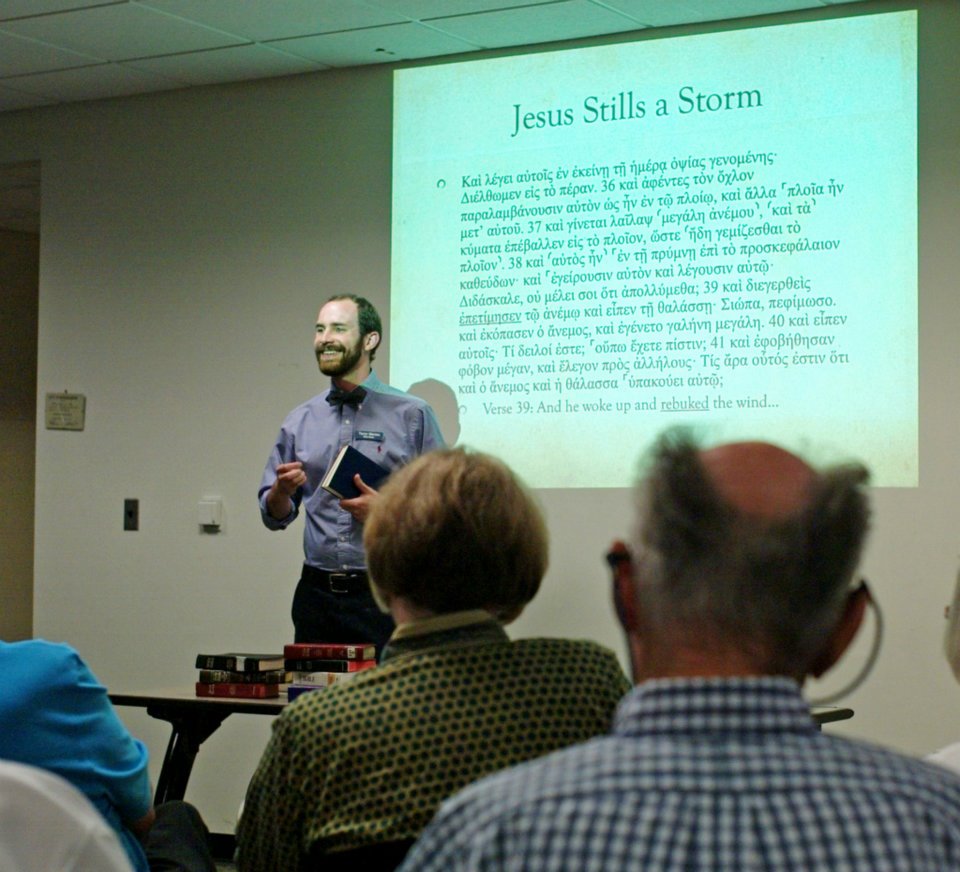
I was standing in front of a packed lecture hall, talking about Jesus according to the gospels, when I began to notice that the crowd was turning against me. For the previous three weeks I had stood in the front of that same room, a brilliantly bright powerpoint displayed on the screen behind me, making my way through the original Greek text of the gospel according to St. Mark. Each week we focused on a different element of Mark’s writing, comparing his gospel with the others, and generally reflecting on how this gospel still speaks fresh and new words into our lives.

It had seemed as if everyone was on board with what I was talking about, until the conversation moved to the cost of discipleship. I recognize now that I probably went to far, but at the time I felt the truth was worth exploring.

531711_3548371078945_1217125254_n

This is what I said: “In the gospels, particularly Mark, Jesus makes it very clear that following him, taking up our own crosses, being a disciple, will cost us our very lives.” Many people in attendance nodded. But then I continued, “Most of us here have no idea what that means. We sit in the comfort of our homes here in Michigan, sure we hear about all the bad things happening in the world, and even the bad things happening down the road in Detroit, but our lives will never be taken for our faith. We exist in such comfort with our faith that we can no longer even imagine what it would mean to give our lives for Christ, the cost of discipleship for us doesn’t cost very much at all.” “Well excuse me young man,” one of the women began, “but I go into downtown Detroit every week to serve food and give away clothing. My life is on the line for Christ every seven days. Don’t lecture me about the cost of discipleship.” This is when I should have stopped, apologized, and moved on, but I couldn’t help myself. So I asked her, “Do you go downtown every week because you believe thats the most and the best you can do as a disciple? Or do you go downtown with food and clothing every week because you feel guilty?


The early church had a problem. While the disciples were increasing in number, an argument developed over the distribution of food. Like us modern Methodists, a major conflict erupted not over proper theology, or reverence, but instead who was getting the appropriate amount of food. The twelve got together and asked for seven leaders to come forward in order to help with the organization of the early church, and to faithfully distribute the food among all the people. Stephen, described as a man full of faith and the Holy Spirit, was one of those chosen seven. 

In a short amount of time Stephen began to do great wonders and produce signs among the people. Once he stepped into the limelight of the early church, he rested under the microscope of many leaders and elders of the synagogues who argued with him. The leaders instigated some others to raise charges of heresy against Stephen and he soon found himself standing before the high-priest in order to defend his words and actions.

What followed is one of the most concise and deliberate retellings of the entire salvation story of God with God’s people. Stephen’s speech contains remembrances of Abraham, Isaac, Jacob, Joseph, Moses, and the prophets. He weaves the story in and out of the major moments; the beginning of the covenant, the flight to Egypt, Moses’ calling, the delivery from slavery to the Promised Land, the commandments being given on Sinai. In just a few short paragraphs Stephen perfectly encompassed the Old Testament for the high priest.

Though very descriptive, Stephen committed no blasphemy in his speech. He fairly repeated that which we have detailed for us in the scriptures, but before he finished speaking he had one final message to deliver: “You stiff-necked people, uncircumcised in heart and ears, you are forever opposing the Holy Spirit, just as your ancestors used to do. Which of the prophets did your ancestors not persecute? They killed those who foretold the coming of the Righteous One, and now you have become his betrayers and murderers. You are the ones that have received the law as ordained by angels, and yet you have not kept it.

It was only after hearing these words that the people became enraged and ground their teeth at Stephen. While they began to torment him, he looked up and saw the glory of God and Jesus standing along the right side, and he declared this triumphantly to the people. But instead of listening, instead of looking up to see what he could see, they covered their own ears and with a loud shout rushed forward to grab him and take him out of the city. While they stoned him, he prayed, “Lord Jesus, receive my spirit.” And with his final breath he cried out in a loud voice, “Lord, do not hold this sin against them.” When he had said this, he died.

saint-stephen-the-martyr-23

Stephen’s speech to the high priest and those gathered sealed his doom. Did he speak the kind of blasphemy against Moses and God like he was accused of? Nope. But Stephen went too far when he claimed that Jesus was at the right hand of the Lord, ready to rule. Stephen merely affirmed the same thing we claim every week when we stand and affirm the Apostles’ Creed, yet when he did it, it cost him his life. 

Some scholars and theologians claim that the climax of this episode in the book of Acts is Stephen’s death, when in fact the defining moment is the exaltation of Christ. Surrounded by his accusers and killers, Stephen continues to assert that Jesus is sitting at the right hand of God, that he is the long awaited Messiah already changing the world.

Jesus is there with Stephen at the final moments of his life, and how fitting considering the fact that Stephen utters the same words that Christ did at his own death. While the stones were flying through the air, Stephen’s prayer was not for deliverance, but a declaration of trust. Not, “Lord, save me!” but “Lord, receive my spirit.” His prayer is one that looks forward, not backward. His prayer was for his enemies, and not himself.

At his death, Stephen did what all of us are called to do in every moment of our lives: he acted like Jesus. He was serene while everyone else was going crazy; he was forgiving while the crowds were vindictive; he prayed while the people acted as if God was not among them; he loved when he saw nothing but hate; he trusted the Lord when everything was claiming the contrary; he kept on hoping when there seemed nothing left to keep hope alive. All of this to tell the truth to the high priest and the crowd. All of this to die for what he believed in. All of this as the cost for his own discipleship.

What happened to Stephen is paradigmatic for what the church was like. Thousands upon thousands of Christians have given their lives in order to speak the truth of God’s reign in the world.

In the United States we have “freedom of religion.” This was instituted during the foundation of our nation and has secured the right to practice religion, regardless of orientation or denomination. For Christians, the freedom of religion means that we are free to exercise our faith in whatever ways necessary so long as we do so within certain limits, as long as we do not become fanatical. We can pray as a family at public restaurants so long as it is not too loud to disrupt the other patrons. We can teach our children to turn the other cheek and love their enemies so long as we are still willing to let them serve in the military. We can talk about controversial issues in church so long as we limit those conversations to this building.

Yet the story that we read today, the remembrance of Stephen’s final moments, reminds us practitioners of polite, civil, and calculated religion that once there were Christians who readily and joyfully parted with possessions, family, friends, even life itself to remain faithful.

Some might call Stephen fanatical and crazy (after all he was willing to give his live for his faith) but he is presented as a very rational person who died for the same faith by which he lived.

When I stood in front of that crowded lecture hall, talking to the Methodists of Birmingham, Michigan, I could sense their desire to be affirmed in their faith. They wanted me to believe that they were willing to give their lives for Jesus, but the truth is, most of them, and most of us here, will never be in a situation like Stephen’s. Christianity has become so complacent and accepted within our culture that we no longer feel the need to be radical and controversial when considering the ways of the world versus the ways of God.

Our faith used to be a movement. The early church used to be attacked, arrested, and silenced for their dedication to the Word. The first methodists used to be ridiculed for their methodical dedications to spiritual disciplines, feeding the poor, and befriending the outcasts.

What would it take for someone to ridicule you in your faith? I’m not saying that we are all called to stand trial for our God and give our lives like Stephen, but instead we need to ask ourselves if we are living up to the potential of faith that God sees in us.

Not all of us can be Stephens, but we can all be Christians. We can all speak the truth of what God has done for us. We can reclaim our commitment to changing the world for the kingdom of God. We can discover our faith in God by opening our eyes to the kind of faith that he has in us. How far would you go to demonstrate your faith in the world? What would it take to start ruffling people’s feathers here in Staunton by living as Christ’s body?

Speaking the truth can be the most difficult thing in the world, but at the same time it can also be the most faithful thing in the world. Perhaps you know someone who has, for too long, relied on alcohol to fill an emptiness in their lives but you’re too afraid to saying anything. Maybe you know someone who treats their spouse horribly and you’re unsure how you can help the situation. Perhaps you’ve seen someone embarrass or harass their children in public. Or maybe you need to be honest with yourself about something you need to change in your own life.

Stephen was willing to speak the harsh truth to a people who desperately needed to hear it. Stephen was prepared to give his own life for a man he barely knew that died on a cross and was raised again. How far are you willing to go? Amen.