This week on the Strangely Warmed podcast I speak with Alan Combs about the readings for the 4th Sunday after Epiphany [B] (Deuteronomy 18.15-20, Psalm 111, 1 Corinthians 8.1-13, Mark 1.21-28). Alan serves at First UMC in Salem, VA. Our conversation covers a range of topics including South Park, betting on Jesus, Weird Methodist Twitter, prophetic preaching, Deus Dixit, online communion, bookcases, Thrice, social media dunking, Taco Bell, demons, and questions of authority. If you would like to listen to the episode or subscribe to the podcast you can do so here: This Is Who We Are
God has taken his place in the divine council; in the midst of the gods he holds judgment: “How long will you judge unjustly and show partiality to the wicked? Give justice to the weak and the orphan; maintain the right of the lowly and the destitute. Rescue the weak and the needy; deliver them from the hand of the wicked.” They have neither knowledge or understanding, they walk around in darkness; all the foundations of the earth are shaken. I say, “You are gods, children of the Most High, all of you; nevertheless, you shall die like mortals, and fall like any prince.” Rise up, O God, judge the earth; for all the nations belong to you!
John 10.31-39
The Jews took up stones agin to stone him. Jesus replied, “I have shown you many good works from the Father. For which of these are you going to stone me?” The Jews answered, “It is not for a good work that we are going to stone you, but for blasphemy, because you, though only a human being, are making yourself God.” Jesus answered, “Is it not written in your law, ‘I said, you are gods’? If those to whom the word of God came were called ‘gods’ – and the scripture cannot be annulled – can you say that the one whom the Father has sanctified and sent into the world is blaspheming because I said, ‘I am God’s Son’? If I am not doing the works of my Father, then do not believe me. But if I do them, even though you do not believe me, believe the works, so that you may know and understand that the Father is in me and I am in the Father.” Then they tried to arrest him again, but he escaped form their hands.
Two scenes.
Imagine, if you can, two separate courtroom dramas.
BUM BUM (a la the theme to Law & Order)!
In the first, God sits behind the judgment seat looking out over a room full to the brim with God’s people. They have all meandered in, carrying their own hopes and fears, sins and shames, on their sleeves. They have been elevated to the status of angels because they, unlike the rest of humanity, have received the Torah. And yet they have taken this privilege and squandered it with injustice.
God smacks the gavel and all those gathered sink even lower into their chairs.
God declares, “What is wrong with all of you? How long will you continue to make such a mess of things? All I ask is that you give justice to the weak and the orphan, maintain the right of the lowly and the destitute, rescue the weak and the needy. For once you were no people but now you are my people – start acting like it!”
But they don’t.
They are more concerned with themselves than with others. They do whatever they can to rise to the top and care not one bit about what it costs. They walk around like a people stuck in darkness and they have no hope.
God shakes the very foundations of the earth from God’s divine courtroom and proclaims the verdict: “You are gods, you are children of the Most High, all of you belong to me. Nevertheless, you shall die like mortals, and fall like any prince.”
Justice is served.
In the second courtroom, the tables have turned (literally). Now it is God’s people who sit in the seat of judgment and Jesus, God in the flesh, is the one on trial.
Jesus has given his whole pitch, proclaimed the kingdom parabolically, as the good shepherd who lays down his life for the sheep. But he ends the head-scratching discourse (Consider: what good does it do for the sheep for their shepherd to give his life away?) with a reoccurring connection between himself and the Father.
And now the gathered faithful surround the accused: “How long will you keep us in suspense?” they demand. “How long are you going to annoy us with your stories and cheap parlor tricks? Just tell us who you really are!”
They are looking for some good old plain truth.
But there is nothing plain about Jesus.
Born God in the flesh to an unwed virgin in Bethlehem.
Heals the sick and feeds the hungry.
Elevates the lowly and brings down the mighty.
There is nothing plain about the Messiah, about a God who speaks from a burning bush, about the One who makes a way where there is no way.
“Look,” Jesus begins, “I have told you again and again who I am, but you don’t believe me. Have you not seen the wonders wrought through these hands? Have you not received parables about the coming and present Kingdom? Have you not witnessed the Father’s work here and now?”
The crowds of judgment bicker among themselves.
“Well, he did feed those 5,000 people…”
“My cousin told me that his friend’s coworker saw him make a blind man see…”
“I heard he can cast out demons…”
Jesus interrupts their discussion, “It’s simple really. The Father and I are one.”
That’s enough for the judge, jury, and executioner! They all rush forward to put him to death but Jesus merely lifts his hands and says, “I have done so many good things for all of you. For which of them are you going to kill me?”
They answer in unison, “It’s not for a good work that we are going to stone you to death, but for blasphemy, because you, though only a human being, are making yourself God.”
“I seem to remember another courtroom of sorts in the Psalms,” Jesus says, “when the Lord called those who received the Word gods. So can you really call me a blasphemer even though I have been sanctified and sent into the world as God’s Son? If you don’t think I’m doing God’s work then fine, don’t believe me. But, at the very least, you can believe in the things I do and maybe, just maybe, you’ll start to understand that the Father is in me and I am in the Father.”
And they rush forward to enact justice against Jesus, to kill him where he stands, but he escapes, again.
Here’s the matter at hand from the strange new world of the Bible today – Jesus is in a standoff with the religious authorities. He has told them who he is, he has demonstrated who he is, and they still do not believe. The whole of it feels on edge, like a powder keg ready to go off.
The people are dismayed, confused, and downright angry. They want to know when the truth will be revealed. They want to get a glimpse behind the curtain. They want to know who Jesus really is.
But Jesus’ answer fills them not with satisfaction, but with rage.
The Father is in me, and I am in the Father.
Jesus has equated himself with the Lord and the gathered people don’t like it one bit.
And yet, they want to kill him for it?
It can all feel a little exaggerated when we encounter this story, particularly when the Jesus of our minds is the hippie-dippy Jesus who just wants people to get along, a little more love in the world, and would be an excellent guest on the Mr. Roger’s Neighborhood.
But that’s not who Jesus is, at least according to the strange new world of the Bible.
Jesus was offensive.
Jesus was offensive to those who trusted in their own reason, in their own understandings of how things were supposed to go because he ran counter to just about everything they could think of.
Jesus was offensive to the practitioners of religious observance because he was forever eating dinner with outcasts, those deemed unclean.
Jesus was offensive to those who sat in the positions of power because with every passing parable and proclamation the calls for the first to be last and the last to be first sounded more like a threat and less like a theory.
But more than all of that, more than the taking people to task, more than upending all the expectations, more than dropping story after story that made things more confusing rather than more clear, the most offensive thing about Jesus to the crowds is that he equates himself with God.
Why should he, a nobody from a nobody town, be the Son of God?
Isn’t God supposed to be perfect, and clean, and morally pure, and removed, and distant, and holy, and hidden, and powerful?
And here’s this Jesus, who insists on spending time with the last, least, lost, little, and dead. He breaks bread with sinners, he dwells in and among the lowliest of the low, he reveals the secrets of the Kingdom, and he demonstrates his power, ultimately, through weakness.
What seems to disrupt and offend the crowds so much is the fact that Jesus points to a truth they can’t stand.
As my friend Kenneth Tanner put it this week: The poverty of God is the greatest wealth in the cosmos, the weakness of God in the human Jesus is the conversion of the world and stronger than any power visible or invisible.
And yet for the crowds, and even for us, that rubs the wrong way. We are a people who are drunk on the illusion of power than comes from human hands, from our own ways and means, but God comes in Christ to remind us that power, real power, comes not from a throne or from violence, but from the cross and from mercy.
And so the crowds rush forward to kill the One in whom they live and move and have their being and Jesus spins the scriptures right back in their faces – How can saying “I am the Son of God” be blasphemy if Psalm 82 does not hesitate to call “sons of God” those to whom the word of God came.
Apparently, even Jesus liked to proof-text every once in a while.
Notably, the “gods” of Psalm 82 lose their divine-like status for failing to take serious the justice of God and here, in Jesus, the justice of God is made manifest to a people undeserving, namely all of us.
God is Jesus and Jesus is God.
God is at least as nice as Jesus, and at least as zealous as Jesus.
The hiddenness of God is revealed in the person of Christ. The incomprehensibility of God is made known through the life, the teaching, the parables, the miracles, the healings, the feedings, and ultimately the death and resurrection of Jesus Christ.
Which, when you think about it, is rather confounding. Or, perhaps it would be better to call it offensive.
It is all so offensive because while God in Christ is like us, God in Christ is also completely unlike us.
Consider – How does God in the flesh react to those who are hellbent on stoning him to death?
Does Jesus respond with retribution and damnation and destruction?
Does Jesus take up the sword to put people in their place?
Does Jesus react the way we would?
No.
In the end, God in Christ responds to all that we do with, of all things, forgiveness.
And forgiveness can be the most offensive thing of all.
There’s this great YouTube channel I came across this week where they ask people to respond to a question in one minute or less. They’ve been interviewing theologians and pastors which makes the premise all the better because pastors and theologians aren’t known for their brevity.
Nevertheless, this week they asked Dr. Jane Williams where she finds hope in a time such as ours and her answer was perfect.
She said, “I suppose I’ve always thought that Christianity isn’t really an optimistic religion. After all, it tells us that when the Son of God, Jesus Christ, comes to live with us, we end up killing him. But it is a hopeful religion because it also says that’s not the end of the story. When we’ve done the worst we can think of, there is still something that God does – God has resources that we don’t. So when kill Jesus Christ, he is raised from the dead. God turns the worst we can experience, the worst we can do to each other, and God turns that into a way of coming closer to us. Christianity is a profoundly hopeful religion because we trust in God’s ability to bring life out of death, rather than our own ability to do the best that we can.”
The offensive nature of the gospel is both that Jesus Christ is fully God and fully human, and that God does for us what we could not do for ourselves.
Yet they sinned still more against him, rebelling against the Most High in the desert. They tested God in their heart by demanding the food they craved. They spoke against God, saying, “Can God spread a table in the wilderness? Even though he struck the rock so that the water gushed out and torrents overflowed, can he also give bread, or provide meat for his people?” Therefore, when the Lord heard, he was full of rage; a fire was kindled against Jacob, his anger mounted against Israel, because they had no faith in God and did not trust his saving power. Yet he commanded the skies above, and opened the doors of heaven; he rained down on them manna to eat, and gave them the grain of heaven.
John 6.25-35
When they found him on the other side of the sea, they said to him, “Rabbi, when did you come here?” Jesus answered them, “Very truly, I tell you, you are looking for me, not because you saw signs, but because you ate your fill of the loaves. Do not work for the food that perishes, but for the food that endures for eternal life, which the Son of Man will give you. For it is on him that God the Father has set his seal.” Then they said to him, “What must we do to perform the works of God?” Jesus answered them, “This is the work of God, that you believe in him whom he has sent.” So they said to him, “What sign are you going to give us then, so that we may see it and believe you? What work are you performing? Our ancestors ate the manna in the wilderness; as it is written, ‘He gave them bread from heaven to eat.’” Then Jesus said to them, “Very truly, I tell you, it was not Moses who gave you the bread from heaven, but it is my Father who gives you the true bread from heaven. For the bread of God is that which comes down from heaven and gives life to the world.” They said to him, “Sir, give us this bread always.” Jesus said to them, “I am the bread of life. Whoever comes to me will never be hungry, and whoever believes in me will never be thirsty.”
A woman stands up in a crowded sanctuary.
The gathered people called church have been arguing and arguing about the one thing needful, about what they must do to be saved.
Some suggest the baptism is the singular requirement, though then they begin to squabble about just how much water needs to be used, and how many people need to be present, and how old the person baptized needs to be.
While others offer thoughts about making a public declaration of faith, like kneeling at the front of the church during an altar call.
While still yet others boisterously complain that unless someone tithes to the church, they shouldn’t have any expectations of going anywhere but down at the end of their days.
The woman stands and patiently raises her hand until everyone stops bickering and they all give her their attention.
She says, “I’ve been doing some reading in this here book, and it seems to be that the whole of faith is this: Grace plus Nothing.”
“Excuse me?” A man shouts from a nearby pew, “If its grace plus nothing, then why bother being good or coming to church or doing anything really?”
The woman calmly responds, “Well, we do those things because they make life more fun.”
Another person interjects, “So, what you’re saying is, in the end it doesn’t matter how you live your life?”
And the woman says, “Of course it matters how we live! But it doesn’t earn us squat in the Kingdom of God.”
It seems for the briefest of moments that the Holy Spirit has finally showed up through the woman, and yet, it only takes a few minutes before the room returns to arguing.
Now there are two camps – those who align themselves with those who raised objections, who were righteously offended by the talk of Grace plus Nothing and eventually they all storm out of the sanctuary to start their own church down the road.
Works-Righteousness UMC.
However, the other half, those who agree with the woman, they all perk up in their pews when she mentions Grace plus Nothing because for the first time they actually hear the good part of the Good News. So while the other half go off and start their own church, the half intoxicated by grace keep showing up week after week, dragging in all their friends – the disabused, the forgotten, the overlooked, the last, least, lost, and little and they relished in the Gospel.
This is a parable of grace.
And God rained down upon them manna to eat, and gave them the grain of heaven.
The Psalms understand the human condition – in them we catch a mirror glimpse of ourselves at our worst and at our best. The Psalmist, time and time again, lifts up their innermost feelings, articulating needs and fears, hopes and shames, in a way that none of us could on our own.
In short, the Psalms tell the truth.
God’s people were a lot more nimble, were forced to live truly by faith, while God was leading them through the desert. They had a portable tent for worship, they had the ark of the covenant which stood to remind them of the call to love God and one another. And yet, they couldn’t help themselves from looking backward all while God was leading them forward.
“Moses! Where are you dragging us? At least, back in Egypt, we had three square meals a day and water to drink. So what if we had to be slaves for it? Better to be a slave and full than to be free and hungry!”
Moses takes the staff that divided the waters of the Red Sea, strikes a rock in the desert, and water streams forth.
But it ain’t enough for the people of God.
“Moses! The water’s nice and all but can God spread a table in the wilderness? We’re hungry!”
Therefore, the Psalmist tells us, when the Lord heard their complaints, God was full of rage, God’s anger mounted against Israel, because they had no faith and did not trust.
Yet.
Yet!
Yet, God rained down on them manna to eat and gave them the grain of heaven.
This is a parable of grace.
Jesus spends the afternoon feeding 5,000 through his divine mercy. And, when all was said and done, bellies full to the brim, a crowd gathers to question the behavior of this God in the flesh.
Jesus’ response – You all are looking for me but for the wrong reasons. I delight in giving you food to eat, but I also have something else to offer.
“What must we do?” The crowds intone.
“Believe” Jesus answers.
“Okay, we get that, but how do we really know you can make good on your promise? Can you rain down from manna from heaven for us like Moses did?”
And then Jesus says, “Moses didn’t give you the manna! It was God who gave the good gift!”
“Sure,” they say, “That’s fine. We’d like some of that bread from heaven please.”
And Jesus answers them, “Have you not heard anything I’ve said? I am the bread!”
Another parable of grace.
What wondrous good news it is that, when Jesus showed up proclaiming the beginning of God’s new kingdom, he did so not with sermons about the Trinity, or the atonement, or justification, or any other big and abstract theological mishmash. Instead, Jesus began by pointing right at our stomachs, to that gnawing, unsatisfied, emptiness within and then invited us to dinner.
Jesus feeds the hungry – that who Jesus is.
Notably, he fills the 5,000 and then tells the gathered people to work for the food that endures forever. The crowds prepare themselves to hear Jesus’ religious pitch (before he can speak again they’re already asking what’s required).
But this time it doesn’t end with the guilt trip they’ve all heard so many times before.
There’s no “I fed you so now you all have to go feed fifty people” or “Because I did this for you, now you have to do something for me.
Jesus just says, “I, myself, am the bread. Whosoever eats of me will never be hungry.” Think of the crowds during the days of Moses and during the days of Jesus, imagine how they felt while eating the bread.
Did they deserve it? Did they earn it?
No!
The Psalmist reminds us that they had done everything but deserve it! God’s wrath was kindled against them and yet God gave them the bread anyway. The 5,000 didn’t have to lay out all their good works before Jesus delighted in filling their bellies.
This is grace.
Grace plus Nothing.
Just when we, the people of God, expect to be clobbered with guilt – You didn’t listen in the wilderness! You haven’t loved your neighbors enough! – we actually get clobbered by grace.
And, when that happens, we begin to realize that whenever we’ve gone looking for peace or happiness by doing this, that, and the other we’ve actually overlooked the God who has always been looking for us.
The One who offers us the gift we simply don’t deserve.
The heart of Christianity is this – We don’t have to give or say or pay anything – In Christ it has all been given, said, and paid for us.
And yet, it can be very VERY difficult to receive the gift of God’s grace.
Consider – Even after being delivered from slavery, God’s people still grumbled. Even after the feeding of the 5,000 the crowds want to know what they have to do.
It is difficult for us to receive God’s gift because in our “you get what you deserve” world, accepting a gift can be one of the hardest things we’re ever asked to do.
We’ve always been consumed by the fantasy of self-made people, that we can work for and earn anything our hearts desire.
The grace of God, however, tells us that there is nothing about God’s love which we can earn, deserve, or work for. It has to be given. It can come only as a gift.
It is by grace and only by grace that we are accepted by God.
Can God spread a table in the wilderness?
That question is often still our question. We look at the wildness of our lives, we spend more time looking backward than forward, and whenever we encounter our own disappointments and shortcomings, we wonder if God can really do anything about it.
Frankly, it’s why some of us keep showing up to church week after week, even if we can only do so online – we want an answer to our question. Can God make something of our nothing? Can God spread a table in the wilderness?
And the answer is, quite simply, yes.
God can and God does all the time. God is the Good Shepherd who goes after the one lost sheep, God is the Prodigal Father who rushes out to find us in the street even before we have a chance to apologize, God is the One who, rather than leaving us to our own devices, comes to dwell in the muck and mire of this life to offer us Grace plus Nothing. Amen.
Do not let those who hope in you be put to shame because of me, O Lord God of hosts; do not let those who seek you be dishonored because of me, O God of Israel. It is for your sake that I have borne reproach, that shame has covered my face. I have become a stranger to my kindred, an alien to my mother’s children. It is zeal for your house that has consumed me; the insults of those who insult you have fallen on me.
John 2.13-22
The Passover of the Jews was near, and Jesus went up to Jerusalem. In the temple he found people selling cattle, sheep, and doves, and the money changers seated at their tables. Making a whip of cords, he drove all of them out of the temple, both the sheep and the cattle. He also poured out the coins of the money changers and overturned their tables. He told those who were selling the doves, “Take these things out of here! Stop making my Father’s house a marketplace!” His disciples remembered that it was written, “Zeal for your house will consume me.” The Jews then said to him, “What sign can you show us for doing this?” Jesus answered them, “Destroy this temple, and in three days I will raise it up.” The Jews then said, “This temple has been under construction for forty-six years, and will you raise it up in three days?” But he was speaking of the temple of his body. After he was raised from the dead, his disciples remembered that he had said this; and they believed the scripture and the word that Jesus had spoken.
It was only a few days after the ordeal at the wedding. They had slept off the hangovers, returned to life as normal, but they couldn’t help but feel as if nothing would ever be normal again.
They were guests at the wedding, one of those affairs where they knew someone who knew someone. It didn’t matter, then, that they were sat at the reject table. They knew how to have a good time and how to make the most of the least.
At least they did, until the wine ran out.
If you’ve ever had the misfortune of being at a wedding party that ran out of booze you’ll have some idea how the tension in the room percolated straight to the surface.
So they sat there, minding their own business, wondering how long they’d have to stay before it was appropriate for them to duck out the side door to see what else Cana had to offer. But then they heard their teacher arguing with his mother.
The discomfort of a dry wedding is one thing, but having to listening to an adult son fight with his mother? That’s another thing entirely.
They tried not to eavesdrop, but it was loud enough for most of the guests to hear. And then, all of the sudden, their guy disappeared into the basement.
Within 15 minutes the wedding host announced that a miracle had occurred, and they now had enough wine to last them through the night and into the next day. And who were they to turn down an invitation like that from their host?
And so it was, a few days later, on the other side of all the pinot noir and all the partying, they found themselves in Jerusalem.
It was Passover, and all the Jews were making their way to the holy city including the fumbling crew who were still regaling one another with stories about what happened at the wedding.
They arrived at the temple and took in the scene before them. There were groups of people in every direction engaged in the economics of temple worship – some were selling cattle, sheep, and doves, while other exchanged the different currencies to make the system as simple as possible.
It had gone like this for some time.
But then Jesus disappeared again. Though this time he didn’t retreat into a dimly lit basement to turn water into wine, this time he marched straight toward the closest table, grabbed it by the corner, and flipped it high into the air. Coins went flying in every direction as jaws hit the dusty ground.
But he wasn’t done yet. Next he grabbed a leather whip and started chasing after everyone within distance, all while shouting insults about how they ruined his Father’s house.
He ragtag crew of would-be followers stood off to the side and let Jesus do his Jesus thing and they whispered among themselves:
“Is this really such a good idea?”
“If he keeps this up, he’s going to get himself killed.”
And then one of them, maybe Peter, said, “‘Zeal for you house will consume me’ isn’t that what the Psalm says?”
And they all nodded in agreement.
Just then a group of Jews shouted at the mad men with the whip in his hands, “What sign can you show for doing all of this?”
Jesus said, “I’m going to tear this Temple down and in three days raise it up!”
But it made no sense to the crowds that day, and neither did it register with his disciples. Only after he had lived, died, and rose again did they realize that he was talking about himself as the Temple of the Lord.
According to John’s Gospel, this moment by the temple not only kicks off Jesus’ ministry, but it’s also the event that puts a target on his back until he’s nailed to the cross. In one moment of physical and audible proclamation he put the religious elite in their place and shook things up.
Zeal for they house has consumed me.
The New Testament is filled with references to the Old Testament – both explicitly and implicitly. From biblical characters literally quoting from one of the prophets, to simple allusions that run back and forth, to people saying more than they know with the words they use – the two testaments are inextricably tied up with one another.
Of all the Old Testament books, the prophet Isaiah and the Psalms are quoted the most in the New Testament. In fact, in my line of work, people often refer to Isaiah as the fifth gospel because it show up so much in the other four.
But there is just something special about the way the Psalms show up in the Gospel stories.
Notably, Jesus, as a good rabbinic jew, would’ve had the whole psalter memorized and the words of Psalms are used by Jesus to refer to himself, and by others to make sense of what they experienced in Jesus.
Put simply – the psalms are the prayer book of Jesus Christ int he truest sense of the world – Jesus prayed the psalter and now it has become his prayer for for all time.
So when Jesus shows up in the Temple, starts flipping tables and chasing people with the whip, his followers immediately process the scene through one of the Psalms: “zeal for your house has consumed me.”
Contrary to how Jesus is often portrayed with his weak and quiet and reserved demeanor, whether its in sermons or Sunday school classes or even in movies, home boy was quite zealous. That is, he was on fire for things not yet seen.
In our text today he has a temple tantrum, flipping over tables and calling out the powers and principalities all as a commentary against what the faith of God’s people had become.
Regularly throughout his earthly ministry Jesus spent time among the movers and shakers and called them out for taking advantage of the last, least, lost, little, and dead.
Time and time again Jesus walked straight into complicated and even dangerous situations to reveal the confounding nature of grace and faith from meeting Mary Magdalene shortly before her being stoned to death to stopping to talk with the woman at the well.
Jesus was nothing if not zealous.
So much so that, on one notable occasion, his family thought he was completely bonkers and tried to stop him from continuing on the path that inevitably led to his cross.
Or, as the psalmist puts it, I have become a stranger to my kindred, an alien to my mother’s children. It is zeal for your house that has consumed me!
But they didn’t stop him. You see, nothing could stop Jesus from doing when he did – he was consumed with zeal for his Father’s house.
Jesus sees possibilities where we, too often, see failure.
Jesus believes in those who have quit believing in themselves.
Jesus makes a way where there is no way.
That’s exactly who Jesus is!
And, lest we ever forgets, God is at least as nice as Jesus which also means that God is at least as zealous as Jesus.
Because Jesus, as Paul reminds us, is the fullness of God revealed.
God is not merely sitting idly by watching the world spin down the toilet – God is showing up in places, flipping the tables of complacent, and is probing us to wonder and the ways things are so that we might move to where things can be.
Taking at step back from the scene in the temple, with the tables overturned and the money-lenders cowering in the corner, it’s not hard to imagine the headline in the next issue of the Jerusalem Times: Jesus – The Disturber of the Peace
There have always been disruptors of the peace, those zealots who shake up the status quo.
And yet, the peace disturbed by Jesus that day, and still disturbs today, was no real peace. The weak and the marginalized were getting abused forced into economic hardships all while God’s blessing were being construed as something to be purchased or earned.
And then God in Christ shows up to remind us there is no real transformation without disruption. Faithful following is only every possible because of disruption and dislocation – otherwise we are doomed to remain exactly as we are.
Or, as others have put it, we never move unless someone steps on our toes.
And, for some of us, that doesn’t sound too bad. Some of us would do quite well is things remained exactly as they are. But God is in the business of making something from nothing, of taking us from here to over there, of deliverance.
We might reject transformation and disruption, we might cling with all of our strength to the status quo, we might not be comfortable with Jesus’ zealous side, but none of us could ever rejoice in the knowledge of salvation were it not for Jesus’ disruption of the way things were that eventually led to his crucifixion and resurrection.
Change, real change, good change, is never painless. It’s why we put crosses in our sanctuaries, an ever present remind of what happened should any of us start asking all of the right questions.
We have a method for dealing with disturbers of the peace.
And yet, it only takes a minor gander of the great stories of history to be reminded that the most important shifts from one thing to another have always come because of disruption.
We can point to the real change makers of the world, those who refused to accept things as they were, but Jesus, whether we like it or not, is the most striking example of disruption, dislocation, and painful challenge to our status quo. Ever since he showed up we’ve never really be able to return to normal because God in Christ is marching on, all while bringing us along for the ride.
“Zeal for your house will consume me,” the psalmist writes and the disciples apply to Jesus. And they were right – The zeal Jesus had for a new day did consume him. So much so that we killed him for it.
But even the grave couldn’t stop our disturber of the peace. Amen.
In those days a decree went out from Emperor Augustus that all the world should be registered. This was the first registration and was taken while Quirinius was governor of Syria. All went to their own towns to be registered. Joseph also went from the town of Nazareth in Galilee to Judea, to the city of David called Bethlehem, because he was descended from the house and family of David. He went to be registered with Mary, to whom he was engaged and who was expecting a child. While they were there, the time came for her to deliver her child. And she gave birth to her firstborn son and wrapped him in bands of cloth, and laid him in a manger, because there was no place for them in the inn. In that region there were shepherds living in the fields, keeping watch over their flock by night. Then an angel of the Lord stood before them, and the glory of the Lord shone around them, and they were terrified. But the angel said to them, “Do not be afraid; for see — I am bringing you good news of great joy for all the people: to you is born this day in the city of David a Savior, who is the Messiah, the Lord. This will be a sign for you: you will find a child wrapped in bands of cloth and lying in a manger.” And suddenly there was with the angel a multitude of the heavenly host, praising God and saying, “Glory to God in the highest heaven, and on earth peace among those whom he favors!”
Merry Christmas!
The hopes and fears of all the years are met in Jesus Christ tonight!
There’s just something about Christmas isn’t there?
No matter how old or jaded we may be, regardless of whether or not we deserve coal in our stockings, Christmas never fails to work some magic.
Maybe its the music, or the candles, or the knowledge of what tomorrow might bring – Christmas is the difference that makes the difference.
And here we are!
Albeit, not in the way we wanted and not in the way we would’ve imagined. We’re tuning in for Christmas worship this year unlike any other. Some of you were perhaps raised in this church and wouldn’t dream of doing anything else but sit behind your computer or phone or iPad tonight to hear what God has to say. While some of you were just scrolling through social media and decided to stop. Some of you, no doubt, are being forced to watch this against your will! Perhaps God will have something special in store for you tonight!
Whoever you are and whatever feelings, thoughts, and questions you have tonight, it is my hope and prayer that you encounter the incarnate Lord who makes his blessing flow far as the curse is found.
“Do not be afraid” the angel says, “For see — I am bringing you good news of great joy for all people: to you is born this day in the city of David a Savior, who is the Messiah, the Lord.”
Odd.
That’s what Christmas really is.
It’s strange.
Now, it might not feel strange, with all of our sanitized nativity scenes set up throughout our homes, and our lights hanging from the gutters for the last few weeks, and Nat King Cole’s voice crooning through our bluetooth speakers.
But Christmas is, for lack of a better word, different.
And we bring to this oddest of nights all sorts of thoughts and expectations. We assume that Christmas is the time that sets everything right. You know, Christmas is the time to come home, to return to those types of memories when all was warm and bright, when everything that’s come upside down in our lives is set, at least for a few days in December, right side up.
And this year, it feels like everything is wrong.
A global pandemic.
Economic devastation.
Gathering restrictions on how many people we can actually be with.
And so, we believe, that Christmas stands as this beacon where, in spite of whatever confusion might be happening in world, tonight things are set right.
Yet, according to the strange new world of the Bible, Christmas was the time when everything was turned upside down.
Consider – It wasn’t about a perfect mother who had the right pregnancy reveal on Instagram and subsequent photos of the color-coordinated nursery and the cutest invitations to her catered baby shower. It was about Mary, an unwed mother-to-be, pregnant in an upside down and impossible way, forced by governing authorities to relocate to a city where there was no room for her, her finance, and the Logos momentarily waiting in her womb.
Consider – The message of the incarnation, the birth of the baby born King doesn’t come through the official state sanctioned media outlet, there’s no announcement in the Jerusalem Times, there’s not even a carefully crafted and endlessly retweeted tweet. It was delivered in a song sung by angels.
Consider – The Good News came not to the learned and the powerful, not to the president or the president elect, not to the movers and the shakers. It was shared first with a bunch of dirty shepherds working the night shift.
Consider – The Word made flesh wasn’t surrounded by the best medical team with a crew of doctors ready to jump in at a moment’s notice. He was placed in a feeding trough.
Christmas isn’t when everything was right – but it’s certainly when God started really turning things upside down. It’s when God shows up in the strangest and most vulnerable of ways to reconstitute the fabric of reality not to make it the way things used to be, but to set the cosmos on a course to how things can be.
And maybe, just maybe, that’s why you find yourself watching and listening tonight. Because your world might not be all that it could be. But, be warned. It is risky coming before the babe at Bethlehem, for God delights in grabbing the rug right under our feet, and when the Lord pulls, no one knows where we’ll wind up.
O come let us adore him, we sing. We come to the manger scene expecting to meet what we have already thought before we arrive. We come expecting, and perhaps hoping, for the fulfillment of our desires, the confirmation of all our prejudices and preconceived notions.
In some way, we want to know that Jesus is on our side, whatever that might mean.
But we are wrong.
Dead wrong.
For Jesus is like us but he is also totally unlike us. Jesus is the Lord made flesh.
Which makes our Christmases even stranger. We often present tonight as something spiritual or mystical. Or, on the other hand, we criticize others for making this time of year too materialistic.
But Christmas really is a reminder that Christianity is inherently materialistic. God becomes material in Jesus.
God becomes us.
Is God in Christ, then, the perfect, magnanimous, and serene figure often displayed in stained glass windows? Is he holier than thou, looking down upon us in our misery every chance he gets? Is he perennially shaking his head with regard to the disappointing efforts of human progressivism?
Or, is Jesus as Jesus is revealed in the strange new world of the Bible?
For the baby we worship tonight grows not to be very respectable at all – he breaks the sabbath, consorts with crooks and criminals, and he even insists on a public demonstration of protest by flipping over the tables in the temple.
He eats dinner with sinners. He shares wine with the last, least, lost, little, and on one memorable occasion, the recently dead.
He dies as a criminal. He becomes sin for us sinners, weak for us weaklings, lost for us losers.
And the angel says this is Good News.
What makes the Good News of Christ so good is the fact that everybody, even the worst stinker in the world, is somebody for whom Christ was born and for whom Christ died.
Contrary to how we’ve made it out in church, God isn’t born into the world to see if we are good little girls and boys, instead he comes to disturb the conventions by which we pretend to be good.
God isn’t born into the world to see if we are sorry for all of our sins, instead he already knows our repentance isn’t worth the hot air we put into it because we’ all jump back in the sinning business just as soon as we apologize for it.
God isn’t born into the world to come and count up all of our mistakes, instead he lives, he dies, and he lives again all while throwing out the ledger against us forever.
In short, Christmas turns the world upside down forever because God in Christ comes only to forgive.
For free.
For nothing.
On no basis on our part.
Because we are far too gone, and up the creek without a paddle, to do much of anything for ourselves in the first place.
Christ is our only hope.
He, himself, is the Good News.
And in him the dawn of redeeming grace has arrived, the world turned upside down. Amen.
This week on the Strangely Warmed podcast I speak with Ben DeHart about the readings for the Fourth Sunday of Advent [B] (2 Samuel 7.1-11, 16, Luke 1.46b-55, Romans 16.25-27, Luke 1.26-38). Ben is the Associate Rector at Calvary-St. George’s Church in NYC. Our conversation covers a range of topics including phenomenal music, the uncontrollable God, riffing on the Magnificat, Kingdom ethics, the Prayer of Humble Access, obedience, impossible possibility, Israel’s calling, Hell, and Fleming Rutledge. If you would like to listen to the episode or subscribe to the podcast you can do so here: Give God The Verbs
The spirit of the Lord God is upon me, because the Lord has anointed me; he has sent me to bring good news to the oppressed, to bind up the brokenhearted, to proclaim liberty to the captives, and release to the prisoners; to proclaim the year of the Lord’s favor, and the day of vengeance of our God; to comfort all who mourn; to provide for those who mourn in Zion – to give them a garland instead of ashes, the oil of gladness instead of mourning, the mantle of praise instead of a faint spirit. They will be called oaks of righteousness, the plant of the Lord, to display his glory. They shall build up the ancient ruins, they shall raise up the former devastations; they shall repair the ruined cities, the devastations of many generations. For I the Lord love justice, I hate robbery and wrongdoing; I will faithfully give them their recompense, and I will make an everlasting covenant with them. Their descendants shall be known among the nations, and their offspring among the peoples; all who see them shall acknowledge that they are a people whom the Lord has blessed. I will greatly rejoice in the Lord, my whole being shall exult in my God; for he has clothed me with the garments of salvation, he has covered me with the robe of righteousness, as a bridegroom decks himself with garland, and as a bride adorns herself with jewels. For as the earth brings forth its shoots, and as a garden causes what is sown in it to spring up, so the Lord God will cause righteousness and praise to spring up before all the nations.
Two weeks ago, on the first Sunday of Advent, my family and I loaded ourselves into the car to drive around and check out the early Christmas Lights. We figured that there would either be only a handful of houses with any indication of the Holiday spirit, or because this has been the craziest year in recent memory that we would luck out with some incredible displays.
So we drove and we drove, and we saw all the staples: The LED projection of green snowflakes frantically circling around on the siding of a house, the dangling and frenetically flashing bulbs adorning the lowest limbs of trees, and we even saw a giant inflatable rainbow unicorn.
But the best house, the Clark Griswold house, was only a block away. I passed it on a run earlier in the week and knew we had to see it in all its electric, and eclectic glory. For, unlike houses with similar color schemes or even thematic connections throughout the lawn, this house had a little bit of everything.
None of the light strands matched any of the others.
There were six different Santa Clauses of every shape, size, and variety.
An inflatable Snoopy was, apparently, keeping watch over the pre-lit reindeer.
And, to cap it all off, there was a blimp floating in mid-air with penguins parachuting to the ground like they were in the middle of a holiday invasion.
And yet, even with all its glory, I couldn’t help but wonder what Isaiah, or Luke, or even John the Baptist would make of all our holiday pageantry. Because, chances are they would be horrified to see the ways we’ve trivialized the turning of the cosmos.
I don’t mean to sound too harsh, I too have lights up on the house, with a Christmas tree standing in the front window with far too many presents already wrapped and under the tree.
But we need to know, all of us, that these things, with all of their safe and sanitized renderings, may actually prevent us from seeing, hearing, knowing, and believing what the Lord has come to do.
The audience for this Advent text from Isaiah are those forced to the margins of life, the last, least, lost, little, and dead. They are, strangely enough, words of hope for people who feel no hope. They are words meant to comfort a people who feel no comfort in the world.
Even all these centuries later, this proclamation is aimed toward the afflicted, the brokenhearted, the captives, the mourners.
From those locked up in physical prisons, to those who feel imprisoned by their situations, Isaiah speaks to those who know not what tomorrow will bring.
It might feel or even seem bizarre, but this passage is also meant for people like us, those who are willing to wake up and live-stream a worship service on their phones, iPads, and computers on a Sunday morning.
Most of us move through life without giving too much thought to whatever it is we are wading through. Worship, blessedly, offers us opportunities to reflect on the here and the now, and we are challenged to imagine the not yet, the more of God’s design.
And we do this because who among us is truly content with our current circumstances?
Right now we are seeing more and more people kicked out of their homes and apartments because they simply can’t put together the money necessary because the bottom third of our economy is crumbling.
Right now parents are preparing to wake up with their children on Christmas morning without a single present under the non-existent tree.
Right now we are being warned that gatherings of more than ten people will most likely result in the most devastating of Januarys in which we will be burying more people than any of us are used to – 5 of the top 10 most deadly days in American history have all happened within the last week.
And, in the midst of all of this, most of us flock to the sentimentalities that hopefully distract us from the truth.
But when has that ever worked?
Whether we like it or not, our lives are bombarded with calls of such frightening frequency to make the best with what we’ve got that we no longer know what it is to hope.
And thus speaks Isaiah: The spirit of God is with me and I’ve been commanded to bring good news to a people drowning in bad news, to announce freedom to those who are trapped, and to break down the walls of prisons, it’s time for jubilee. We shall comfort those who mourn and give them garlands instead of ashes. They will be like tall trees for the Lord, steadfast and glorious. All the ruins shall be remade and the devastations of previous generations will be rectified. For I the Lord love justice!
God, through Isaiah, speaks to those who live in the world wondering if it has anything more to offer. It is received by those in worship who don’t know whether or not to hope for more. And, it is also spoken to those (though we know not how they will hear) who stopped coming to church long ago because they’ve given up hoping for anything else.
Listen – God has arrived; God shows up. God has taken action in the world to bring about a reality that we could scarcely come up with in our wildest dreams. And God’s work in the world is downright political – prisoners are getting released, reparations are being made to those who have been wronged, justice is for all.
It’s the time for jubilee in which debts are forgiven, punishments are lifted, and rectification reigns supreme.
God has, and is, turning the world upside down such that all of the empty streets of our too-comfortable neighborhoods are being transfigured into festivals of joy.
Why?
We were slaves in Egypt but God showed up and intervened – delivered us from bondage into the Promised land. Sure, we were content with what we had back there, at least in slavery we got three meals a day and clean water to drink and it only cost us our first born children! But God said there was more for us than Egypt-land.
We were slaves to sin and death but God showed up and intervened – delivered us from our miserable estate into salvation. Sure, we were fine with the way things were, so much so that when Jesus started talking about the first being last and the last being first we nailed him to the cross. But God said there was more for us than all of this.
God is in the business of intervention – an intrusion that will bring forth new life and halt our relentless march toward dust.
There have been many divine interventions – Exodus, Calvary, The Upper Room, The Empty Tomb.
And without those interventions of the Lord there is no hope and there is no “more.”
But God is the God of impossible possibility, who makes a way where there is no way, who delights in bringing something out of nothing.
God says through the prophet Isaiah, “Even in circumstances of the worst imaginings, captivity and imprisonment and mourning, this is not the end; there will always be more.”
Do we deserve it?
Nope.
Can we earn it?
Nope.
In the end, the gospel isn’t about being good – it’s about being rescued. It’s not about being safe – it’s about being saved.
For, there is nothing safe about the Lord. Isaiah speaks a word beyond the present, beyond the status quo, where there is actual Good News, where there is true liberty, where we wear garlands instead of ashes.
And it’s downright dangerous.
Consider the vision the Isaiah proclaims: It truly is an inversion of the ways things are for the way things should be. A world without prisons or borders or hunger or suffering.
To many that sounds more like chaos than paradise.
But, in the church we call this apocalyptic – Bible talk about the more beyond the now.
Isaiah’s apocalyptic proclamation is what taught Mary, the mother of God, how to sing:
“He has brought down the powerful from their thrones, and lifted up the lowly; he has filled the hungry with good things, and sent the rich away empty. He has helped his servant Israel, in remembrance of his mercy.”
When we come to church (even online) and are exposed to the words of Isaiah and Mary and so many others we are beckoned out beyond the world of predictability and into another world, a world of more, or risk, of gift.
In short, we’re given hope for things not yet seen.
And that hope, as noted, is a dangerous one, for good reason – just look at what happened to Jesus. Advent is the time between time in which we wait not only for the baby born in the manger, but also for the return of that baby-born-King who is the great I AM.
God is not done with this world and God is not done with us.
After all, these words of eschatological rendering don’t just describe the world – they re-create the world. It is a world made open in which the old foundations are destroyed in order for something new and something more to take their place.
Imagine – the lowliest of the low raised to the highest heights, the brokenhearted bound up in love, the captives set free, the prisoners released, no more debts, no more pain, no more suffering, no more death.
This is what God desires for us and for the world.
And, make no mistake, this is God’s work – the history of humanity has shown over and over again that we are incapable of rescuing ourselves from the forces that weigh us down. The great Good News of Isaiah’s declaration is that God will set everything right once and for all. God will end war forever.
God will bring down the mighty and raise up the last, least, lost, little, and dead.
God will overthrow the pride of the smug and the arrogant.
God will engulf the cosmos in a blaze of righteousness that will consume everything in us that needs to be burned away.
God has more in store for us than all of this.
And yet, we go forth from church (or from our couches as the case may be) and there are the same arguments around the dinner table, the same anxieties about our ever-shrinking bank accounts, the same blue Mondays will break in the morning.
We are not the world of God’s more.
At least, not yet.
For we all still sit in the shadow of sin, of our choices that result in the world looking more like our kingdom and less like God’s kingdom. We are so captivated by the ways things have been that we can scarcely imagine what they could be. We assume the world runs by debt and punishment all while God exists to show grace and mercy.
In spite of the condition of our condition, Isaiah has given us the possibility to be aware of a new world with new hope and new possibilities and new dreams and new hunger for something else, something more.
The church gives us the vision to see how watered down our versions of the Kingdom have been and it gives us the thirst for the new wine that intoxicates us with grace.
The church opens us up to the strange new world of the Bible where God exists not only with us but for us.
The church envelops us into the body of Christ where we are bound to and with one another for the sake of the already but not yet.
In short: The church gives us the Gospel, the Good News.
The very best worship services are those from which we go forth not to more of the same, but to more of the name that is above all names: Jesus the Christ. For, in him, we begin to see that the Good News really is good
A number of years ago, a rather famous theologian was in the middle of a lecture about the early church when a bright eyed and bushy tailed student raised his hand and said, “Professor, I don’t understand. If the early Christians were suffering daily, why did they stay committed to the cause?”
The professor did not hesitate before answering, “They kept the faith because the Gospel is an adventure; the Gospel is fun.”
Advent is actually an adventure – it reminds us that we are caught up in God’s great story and we have the good fortune of being characters in the epic-tale. It is an adventure because it is still unfolding, it is not over, greater things are just on the horizon.
In the Kingdom of God that is the adventure without end, there is always more to come. Amen.
Comfort, O comfort my people, says your God. Speak tenderly to Jerusalem, and cry to her that she has served her term, that her penalty is paid, that she has received from the Lord’s hand double for all her sins. A voice cried out: “In the wilderness prepare the way of the Lord, make straight in the desert a highway for our God. Every valley shall be lifted up, and every mountain and hill be made low; the uneven ground shall become level, and the rough places a plain. Then the glory of the Lord shall be revealed, and all people shall see it together, for the mouth of the Lord has spoken.” A voice says, “Cry out!” And I said, “What shall I cry?” All people all are grass, their constancy is like the flower of the field. The grass withers, the flower fades, when the breath of the Lord blows upon it; surely the people are grass. The grass withers, the flower fades; but the word of our God will stand forever. Get you up to a high mountain, O Zion, herald of good tidings; lift up your voice with strength, O Jerusalem, herald of good tidings, lift it up, do not fear; say to the cities of Judah, “Here is your God!” See the Lord God comes with might, and his arm rules for him; his reward is with him, and his recompense before him. He will feed his flock like a shepherd; he will gather the lambs in his arms, and carry them in his bosom, and gently lead the mother sheep.
“A hopeless situation.”
That’s how she described herself while sheltering against the church from the wind. Above her mask I could see a tiredness in her eyes, a tiredness that was further echoed in her story. No job, no family, no food, no money, no hope.
Meanwhile, a van full to the brim with a family drove by and, even though all the windows were up, we could still hear all of them singing at the tops of their lungs, “It’s the hap-happiest season of all!”
I handed her a bag of food, offered to pray with her, and when she walked away I couldn’t tell if it had made any difference at all.
Can you imagine anything worse than being in a situation without any hope? Being forced so strongly to the margins of life that there was no one you could call to bail you out, no family that would welcome you in?
Hopelessness can derail individuals and families. And even though, at this time of year, we light candles and string up sparkly things, and decorate Christmas trees, and talk about hope in places like this, the sting of hopelessness can still hit harder than just about anything else.
God’s people Israel knew hopelessness. During the Babylonian Exile, the time in which Isaiah speaks his confounding word of comfort, they were a people who knew no comfort.
It’s challenging for people like us, today, to imagine, at all, what that time was like for God’s people – they had lost their homes, their nation, their possessions, their worship, their status, roots, stories, identity, and just about everything else.
They were truly strangers in a strange land.
They were swallowed up by their oppressors and compelled to adopt a way of life that ran counter to all they had ever known.
They were in a hopeless situation.
And, to make matters worse, the Lord of their ancestors had commanded them again and again to take no other gods save for the Lord God. Their idolatry, their wanton disregard for the commandments resulted in an exilic punishment.
To put it plainly, they brought it upon themselves.
And they were hopeless to do anything about it.
But it is precisely here, to a hopeless people, that God speaks through Isaiah:
Comfort, O comfort my people! Speak kindly to my people, remind them that the penalty for sin has been paid. A voice is crying out – Prepare the way of the Lord! The valleys will be lifted up, the hills will be brought down, God’s divine leveling will come to fruition. God’s glory will be revealed and all will see what God can do. A voice cries out – People are like grass, they wither and float away. But God stands forever and ever! So do not fear! God is coming with might! He will feed his flock like a shepherd; he will gather the lambs in his arms and carry them in his bosom.
Chances are, some of us are familiar with at least part of this proclamation from the prophet – In the wilderness prepare the way of the Lord. We hear those words every Advent in reference to John the Baptist who, spoiler warning, prepares the way of the Lord.
And J the B, as I like to call him, was no ordinary fellow.
He is rather alarming, coming straight out of the desert dressed in animal skins while eating insects and yelling about repentance. And, according to Mark’s Gospel, its precisely J the B showing up on the scene in ancient Palestine that marks the beginning of the gospel of Jesus Christ, the Son of God.
J the B has never been fully understood, and for good reason.
He shows up out of nowhere, and before we really get to learn much of anything, he is beheaded for crimes against the state. So for two thousand years he has stood in the midst of this season, with his strange sense of fashion and bewildering diet and discomforting theology completely out of sync with his age, our age, and just about any age.
Advent, for better or worse, is a time set apart in the church when we make a conscious effort to recover some of the strangeness from the strange new world of the Bible – and John embodies it all. Because, like J the B, Advent is rather peculiar. It’s out of sync with time.
As we talked about last week, Advent is about the time between time, the already but not yet, the pause between the once and future king.
To put it in musical terms: Advent is God’s great caesura…
The best parts of Advent are those that give us the courage and the conviction to rest in the tension of who we are, and what God has done for us in spite of who we are. We take time Sunday after Sunday to look toward the darkness into which, and for which, Jesus arrives.
Advent, in a way, is actually a lot more like Lent than we often make it out to be. We take stock of who we really are in order to come to grips with what it is, exactly, that Jesus does for us.
J the B arrives, confused for Elijah, proclaiming a baptism of repentance for the forgiveness of sins. He does so, to take the hint from Isaiah, to prepare the way of the Lord. There’s something about recognizing the condition of our condition that enables God to do the work that we so desperately need because all of us, whether we like to admit it or not, are hopeless cases.
It takes quite the Christian constitution to affirm the truth of Isaiah’s words: we are like grass and flowers that wither and blow away. Sin isn’t just something we do, it’s who we are. In ways big and small we regularly (like the Israelites before us) rebel against the Law of God, we insist on laying down at the altars of countless idols, and we are forever determined to be the masters of our own destinies.
Just take a look around – Covid cases spiking yet again, economic uncertainty as jobs are not rebounding, evictions are piling up as rents can’t be paid, and there’s no sign that any of it will slow down any time soon.
Obviously, some of this is out of our control, but some of it lies squarely with us and our unwillingness to love our neighbors as ourselves.
I know it might not seem like it, but confessing our sins is actually very good news for us. There’s a reason the Catholics have been doing it for millennia. There is a documentable psychological benefit to confessing our faults and failures, we literally release endorphins in the brain when we do so. But confessing our sins also benefits us by putting us squarely in an Adventen frame of reference.
Light is only light because of the darkness it shines in.
Grace is only grace because it cancels the power of sin.
Resurrection is only resurrection because it refuses to let death be the final word.
That’s a stark and frightening thing to admit but it’s part of the Christian witness. The message of John to a hopeless people, the message of Isaiah to an exiled people, is better for us than all the trimmings and the trappings that this season usually holds. All of the advertisements and pressures and assumptions only provide a shadow version of our own reality.
That’s not who we are.
We’re Christians! We’re sinners!
We’ve come to worship today, albeit in a way none of us quite imagined back before the pandemic struck, we’ve come to worship in some part because we know we need these words from Isaiah and from John more than we need the mall, and the wrapping paper, and the light shows, and the curated Christmas playlists, and the never-ending holiday-themed Lifetime Movie marathons.
We know we need these words from the prophets because we know we need Jesus – he’s the only hope we’ve got.
Without Jesus, we’re just a people in exile stuck in a hopeless situation. But Isaiah and John show up to prepare us for the appearance of God’s own self in the person of the Messiah. They remind us that God is active in the world in ways seen and unseen and it is upon the work of the Lord that the universe hinges.
But, how might we prepare for this? It was one thing to wander around during the days of J the B and find ourselves dunked into the Jordan river repenting our sins. But we are a people stuck in Advent between the once and future king – we already know what awaits us in the manger and on the cross.
What, then, is the right response to the triumph of God showing up?
The Beyonce of the Episcopal Church, Fleming Rutledge, makes the case that, during Advent, we should keep the tune O Holy Night stuck in our gray matter because when God shows up, the only proper response is to Fall On Your Knees!
Think about it: when the reality of God breaks in on from on high, the only thing we can do is recognize the great chasm across which God chose, and chooses, to traverse for us. When we see how God is God and we are not, we can’t help ourselves but fall to our knees in reverence.
J the B stands at the edge of time. He, in himself, holds the words of the prophets while pointing to the One who transfigures the cosmos. Advent, then, looks not just to the birth of a baby in the manger, but also to the long-awaited day of the Lord when rectification reigns supreme.
In Jesus Christ, the once and future King, the new day of righteousness is made incarnate. The old age of sin and death is crumbling away and in the coming kingdom of God there is the divine shepherd who gathers the sheep into his bosom.
That’s what J the B came to declare – our deliverance is nigh!
And how shall we respond? Fall On Our Knees!
God is going to level out all things. The mountains are coming down and the valleys are moving up. Creation will be reknit and all of us along with us.
Despite the language we might hear about in church about how it’s our job to prepare the way of the Lord – God is doing this work regardless of whether or not we participate in the divine clearing project.
And, frankly, its not going to be easy for people like us. For, God’s work of divine leveling means laying ourselves open and vulnerable to a vision of reality that is God’s will be done and not necessarily our own.
It means living every moment of our lives in anticipation of God’s bringing down the mighty and lifting up the lowly.
It means relinquishing our most cherished (and therefore flawed) understanding of what we have earned and deserved.
It means being ready to give up all of our privileges and advantages in the world on behalf of those who are stuck down in the valleys of life.
Again, this isn’t going to be easy. Particularly for a people drunk on our own self-righteousness.
We don’t like admitting our faults and failures.
We don’t like confessing our privileges and advantages.
We don’t like repenting of our wrong-doings.
In the time between time, Advent, we can (with the help of the Spirit and the church) take a good hard look in the mirror and confess the condition of our condition. That’s how repentance works – it is a change of life, a reorientation, a turning back. And we can’t turn without admitting that we need to turn in the first place.
But even if we can’t bring ourselves to confess the truth. God is still in the business of making something of our nothing.
For God does not desire the immense brokenness that surrounds us. God in Christ is reconciling all things to himself. The old age of Sin and Death was run by death and division. But in God’s kingdom, what we are preparing for and are being prepared for, is run on reconciliation, grace, and mercy.
So hear the Good News: Christ died for us while we were yet sinners, not before or after, but in the midst of our sin. And this proves God’s love for us. In the name of Jesus Christ, you are forgiven. The Kingdom of God is near. Amen.
O that you would tear open the heavens and come down, so that the mountains would quake at your presence — as when fire kindles brushwood and the fire causes water to boil — to make your name known to your adversaries, so that the nations might tremble at your presence! When you did awesome deeds that we did not expect, you came down, the mountains quaked at your presence. From ages past no one has heard, no ear has perceived, no eye has seen any God besides you, who works for those who wait for him. You meet those who gladly do right, those who remember you in your ways. But you were angry, and we sinned. Because you hid yourself we transgressed. We have become like one who is unclean, and all our righteous deeds are like a filthy cloth. We all fade like a leaf, and our iniquities, like the wind, take us away. There is no one who calls on your name, or attempts to take hold of you; for you have hidden your face from us, and have delivered us into the hand of our iniquity. Yet, O Lord, you are our Father; we are the clay, and you are our potter; we are all the work of your hand. Do not be exceedingly angry, O Lord, and do not remember iniquity forever. Now consider, we are all your people.
In most churches there are two types of people:
There are those who, seeing the purple paraments and the tree and the wreath and hearing the scriptures about sin, judgment, and wrath think to themselves, “Thank God! It’s finally Advent again!”
And there are those who, seeing and hearing the same things think to themselves, “What is happening? Where’s the Christmas spirit? I thought this was supposed to be the most wonderful time of the year…”
Advent, for better or worse, is a habit. And it takes a whole lot of courage and consideration to get used to this season.
Because outside of the Christian community, Advent is just an excuse to speed up toward Christmas – the decorations have been on sale since before Halloween, Black Friday begins before Friday, and just about every online retailer is constantly bombarding all of us with reminder to purchase our presents now before its too late!
Advent, in the church at least, teaches us to delay Christmas in order to rejoice in it fully when it finally arrives.
Advent habituates us into seeing how the message of Christmas vanishes if we are not willing to walk toward the shame and pain that is all around us.
Advent reminds us that we need the light of the world because we’re stuck in the darkness.
Which is why Advent always begins in the dark…
Isaiah, appropriately, depicts the stark nature of this liturgical season with a perceived absence of God.
God, can’t you just come down here and start shaking things up! We could do for some trembling mountains and boiling rivers! We remember the mighty deeds with which you delivered us from the snares of death. And yet, for years and years no one has heard or seen or experienced anything divine except for you, and work in and through those who know what it means to wait. But you were angry with us and our miserable estate. You looked down upon our sinfulness, our wanton disregard for the last, least, lost, little, and dead. We’re unclean. All of our supposedly good deeds are like a filthy rag. Yet, O Lord, you are the Father; we are the clay, and you are our potter. We are the work of your hand. So don’t be exceedingly angry with us Lord, and do not remember our sins forever. We belong to you.
The language in our appointed scripture passage is not for the faint of heart, and it is certainly not what most of us are used to this time of year. We’d prefer to hear about hope, and love, and joy or maybe reflect on the theological value of The Grinch, It’s A Wonderful Life, and Home Alone.
And, to be fair, even though it’s not what we would necessarily prefer, the words of Isaiah are already echoed in our living in the world…
Tables were set this week for Thanksgiving with empty seats either because people could not travel in light of the Coronavirus, or because they are part of the quarter of million people who have died in this country because of the pandemic. Our holidays have the potential to both bring out our gratitude and our anger. We can be thankful for what we have while, at the same time, be filled with rage because of how the world continues to spin while we suffer.
In spite of travel restrictions and warnings about gatherings with too many people, airports across the country swelled as they always do during this time of year which has led many epidemiologists to intone – “It’s fine to have a big family gathering right now so long as your prepared to bury someone by Christmas…”
And it’s not just the pandemic that brings all these things into focus. More people suffer from depression at this time of year, more people end their own lives at this time of year, more couples get divorced at this time of year, more car accidents happen at this time of year, I could go on and on and on.
So here, in the midst of a world drowning in bad news, it’s not hard to imagine raising our clenched fist to the sky and shouting, “God! Where the hell are you?”
That is an Advent question.
It is perhaps the Advent question.
This isn’t the easiest stuff to contemplate and mull over at this time of year. I rejoice in setting up the lights on my house, and tuning the radio to the old familiar Christmas hits, and quoting along with all my favorite holiday movies. And yet, to so engage in this festive atmosphere can be a denial of the reality of this life.
Advent, fortunately or unfortunately depending on how you look at it, requires us to look straight into the heart of darkness. Particularly when we are afraid that we might see ourselves in the darkness.
Isaiah reminds us today that even the best of us are distorted and unclean – all that we do can be compared to a filthy old rag. We, all of us, chose to do things we know we shouldn’t and we avoid doing things we know we should. Whether it’s leaving a nasty comment on social media, or dropping a scathing critique of a family member, to avoiding the apology and reconciliation we know, deep in our bones, that we need to do.
To confess the condition of our condition requires a constitution made possible only by the community called church in which we are reminded who we are over and over again.
We are, of course, beloved children of God, crafted in the image of the divine, fearfully and wonderfully made. And, at the same time, we, all of us, are sinners desperately in need of grace.
That is why we begin the church year with Advent, a season that begins in darkness. We, unlike the crowded ways of life, know the truth of ourselves, that there is nothing good in us, that we all fade away like leaves.
Therefore, the authentically hopeful Advent spirit is not looking away from the darkness, it is not filling our lives with fluff in order to deny the truth.
It is, instead, praying for Holy Spirit to give us the courage and the conviction to look straight into the muck and mire of this life.
For, in the end, that’s exactly where God chose, and still chooses, to show up for us.
Jesus Christ, for whom our hearts long for and are prepared for, is the One who identifies not with the people who’ve got it all figured out, and have the perfect decorations on the house, and have all the presents already wrapped under the tree.
Jesus comes for the last, least, lost, little, and dead. Who, if we’re honest, also includes all the people who seem like they have it all together on the surface. But under our masks, we are all the same – sinners in need of grace.
Jesus, thanks be to God, comes to take on our shame and pain by being born into this world, he shows up in the midst of our darkness, and gives himself up to die the brutal and dehumanizing death of a slave.
There’s a reason Jesus spent his earthly ministry among the marginalized, because they were those who had been crying out for rectification.
There’s a reason we nailed Jesus to the tree after all his healing and teaching – no one wants to be told they’re a sinner.
So we killed God, or at least we thought we did. Despite our best efforts, the grave could not contain the Lord, and he rose on the third day in order to save us from ourselves. He taught the disciples about the way, the truth, and the life, and then ascended to the right hand of the Father.
But that is not the end of the story. In fact, it is the beginning of the end. For as much as we are Easter people, we are also Advent people. The church lives in Advent and we are stuck in it. We are a people between, and out of, time. We worship the once and future King Jesus Christ. We live in the light of his resurrection while anticipating his return to transfigure the cosmos into a new heaven and a new earth.
We, to put it bluntly, are a people who know what it means to wait.
We are ripe with bad news in the world right now. Between the never-ending political in-fighting and civil unrest and an extremely communicable virus, there’s plenty of horrible things happening. And it always seems to coincide with this season we call Advent. But we also have the benefit of knowing the story behind the story. When we pick up the paper, or flip through the news, or doom-scroll on Twitter, we can rightly observe, “No wonder God had to send his Son into the world.”
Because Jesus is the only hope we’ve got.
Our hope won’t come from the world. It will never come from the next political candidate, or the next policy initiative, or the next fiscal plan, or the next diet, or the next pharmaceutical breakthrough. If our hope could come from the world it would’ve happened a long long time ago. We don’t have the power on our own to fix what is in us, despite what every commercial tries to sell us.
No peloton, no diet, no queer eye makeover can transform us into our dream-selves.
No job, no paycheck, no material possession can fill the hole we feel in the depths of our souls.
No gift under the tree, no light on the house, no curated Christmas carol playlist can cover up the truth about who we really are.
The comfort we so need and seek must come from somewhere else – in a burst of power breaking upon us from beyond us altogether.
The joy of Advent then comes from a different place. It comes from the Lord who chose to do the inexplicable for a people undeserving. It comes from the Son who chose to live by forgiveness rather than vengeance. It comes from the Spirit who chooses to move in and through us even though we’re nothing but a bunch of filthy rags.
God will come again, God’s justice will prevail over all that is wrong in this life, God will fully destroy evil and pain forever and ever.
Advent, this blessed and confounding season in the church, is all about looking straight into the darkness, its about seeking solidarity with those whose lives are nothing but darkness, all while living in the unshakable hope of those who expect the dawn to break in from on high.
To follow Jesus it to recognize that we are a people stuck in Advent, and the only way out is through the Lord who delights in making a way where there is no way. Amen.
When the Son of Man comes in his glory, and all the angels with him, then he will sit on the throne of his glory. All the nations will be gathered before him, and he will separate people one from another as a shepherd separates the sheep from the goats, and he will put the sheep at his right hand and the goats at the left. Then the king will say to those at his right hand, “Come, you that are blessed by my Father, inherit the kingdom prepared for you from the foundation of the world; for I was hungry and you gave me food, I was thirsty and you gave me something to drink, I was a stranger and you welcomed me, I was naked and you gave me clothing, I was sick and you took care of me, I was in prison and you visited me.” Then the righteous will answer him, “Lord when was it that we saw you hungry and gave you food, or thirsty and gave you something to drink? And when was it that we saw you a stranger and welcomed you, or naked and gave you clothing? And when was it that we saw you sick or in prison and visited you?” And the king will answer them, “Truly I tell you, just as you did it to one of the least of these who are members of my family, you did it to me.” Then he will say to those at his left hand, “You that are accursed, depart from me into the eternal fire prepared for the devil and his angels; for I was hungry and you gave me no food, I was thirsty and you gave me nothing to drink, I was a stranger and you did not welcome me, naked and you did not give me clothing, sick and in prison and you did not visit me.” Then they will also answer, “Lord, when was it that we saw you hungry or thirsty or a stranger or naked or sick or in prison, and did not take care of you?” Then he will answer them, “Truly I tell you, just as you did not do it to one of the least of these, you did not do it to me.” And these will go away into eternal punishment, but the righteous into eternal life.
The Lord Jesus Christ is Lord and King over all creation!
Easter and Christmas Eve are remarkable moments in the liturgical year, but there’s nothing quite like Christ the King Sunday.
Today, for Christians, is our New Year’s Eve, it’s time for champagne and fancy clothes and bad renditions of Auld Lang Syne.
It is our once-a-year opportunity to look both backward and forward. We look behind us to the story of Jesus as we followed his moves from a manger to meeting the disciples to ministering with the last, least, lost, little, and dead to table-turning to Holy Week to Easter to Pentecost and to the Ascension. And then, as the first Sunday of Advent comes a-knockin’, we look forward on this day to the second coming of the Lord, to the re-arrival of the once and future King.
In church lingo, we often refer to Jesus as the Lord, but we don’t live in a world of lords so to call Christ as such can feel a little empty handed. And yet, to confess Christ as Lord is to express faith in One who was, is, and will be the ruler of the cosmos.
But, when we talk of Jesus, we love to speak of him as a teacher, or a healer, or a rabbi, or a sage, or a spiritualguru, or the perfectmoralexemplar. And all of that stuff is good and fine, but if that’s all he was, is, and will be, then he is only one of many and he isn’t really worth our time.
What makes Jesus Jesus is the fact that he is God in the flesh, dead on the cross, raised from the dead, master of all things.
He, to put it rather pointedly, is our King.
Our King, according to the strange new world of the Bible, was born as Jesus from Nazareth in the reaches of Galilee. He was poor and had no standing in the world whatsoever, but he went out talking about the Kingdom of God, healing the sick, feeding the hungry, clothing the naked, befriending the friendless, and it attracted a whole lot of attention. And for good reason – he spoke to a people who, for centuries, lived through exile, defeat, abandonment, and foreign occupation all while waiting for the promised Messiah.
And so it came to pass that, after a flirting with popularity and controversy, the religious and secular authorities (church and state) finally got their acts together and put his little ministry to an end.
He was betrayed, beaten, abandoned to die alone on a cross, and buried in a tomb.
Later, his discredited would-be followers started moving from Jerusalem throughout the Mediterranean, and they delivered the news (we call it the Gospel) that this crucified man was the Lord and King of the universe; that even after his horrific and degrading death, even after being left dead behind the rock, he was resurrected and now rules at the right hand of God.
He’s the King.
And we pause on this proclamation for a moment because this runs counter to just about everything we think we know about power and glory and vindication.
It’s even more confounding that this One, this King, can speak to his followers as he does to us in our texttoday. These words comes to us from his final moment of teaching before his arrest, execution, and resurrection.
Listen – When the Son of man comes in his glory, he will sit on his glorious throne. Before him will be gather all the nations, and he will separate them one from another as a shepherd separates the sheep from the goats.
Think about how strange this is! Jesus was born to nothing, he didn’t graduate at the top of his class, he didn’t have a full ride to Jerusalem University, he held no bank account, he had no job or mortgage or stock portfolio. And this man, who was about to be judged guilty under the guise of law and order, tells his followers that he is going to come again at the end of all things to determine the fate of every single human being who has ever lived.
Jesus is about to go on trial and he chooses this final teachable moment to tell those within earshot about the Great Trial, the one in which he will be the Judge.
Jesus will judge humanity, and its not just all of humanity that will be there – you and I are going to be there too.
Now, I know that sounds a little strange, but with talk of divine courtrooms and eternal Kings, it can can all feel a little above us. But this Jesus comes to us, to live among us, and, ultimately, to judge us.
Which leads us to the parable at hand, the parameters of separating the sheep from the goats.
These words are fairly well known among well-meaning Christian types – “I was hungry and you gave me food, I was a stranger and you welcomed me… just as you did to the least of these you did to me.”
Generally, when we refer to this final teaching from the Lord, we (that is: the church) use it as a way to encourage more do-goodery from congregations. We hang it over the heads of those who follow Jesus in order to convince folk like you to serve at soup kitchens, donate gently used articles of clothing, and, at the very least, drop a few extra bills into the offering plate.
And yet, in looking over the parable, the response from those who are told they are about to inherit the kingdom is remarkable – they are amazed! They are amazed because they didn’t even know they had ministered to the hidden Christ among the least of these. That they are vindicated in their goodness is strange considering the fact they were not even aware they had done anything good at all!
On the other side, appropriately, the response of those on the King’s left are similarly surprised. They have no idea they had neglected to do the goodness so described by the Lord.
Surprises are in store for everyone, apparently.
If we are ever in the mood for self-congratulation, Jesus seems to say, the we are precisely those who have not done what we were called to do. The moment we think we’ve saved ourselves is the beginning of our end.
And if we think we can rely on explaining our lack of goodness away for lack of Jesus’ obviously identifiable presence, it becomes the end of our beginning.
There is therefore good reason to fear this parable – for it to leave us scratching our heads rather than comforted in the knowledge of our vindication.
Because, who among us can present a laundry list of more good deeds than bad deeds? If we take Jesus seriously, we need only think of adultery to have committed it, we need only think jealous thoughts to have stolen from our neighbors.
The end and beginning of discipleship is the recognition that, as Paul puts it, “None is righteous, no, not one; no one understand; no one seeks God. All have turned aside; together they have become worthless; no one does good, not even one.”
This, to put it bluntly, is a rather terrifying prospect. But that’s exactly what makes the parable so good.
For all of its terror, it is also the last laugh in Jesus’ ministry of salvation – it is the bestowal of the Kingdom of God on a bunch of dumb sheep who not only didn’t know they were doing good things for Jesus, but they also never knew they were faithful to him.
The language of separation remains, of course, but Jesus tells us the King will separate them one from another like a shepherd separates the sheep from the goats and, lest we forget, Jesus is the Good Shepherd.
And the Good Shepherd lays down his life for the sheep, but he also lays down his life for the goats as well because on the cross he draws all to himself, which is why all nations will be gathered in the end.
Remember – Jesus came to raise the dead, not to teach the teachable or fix the fixable.
What the Gospel stresses, what Jesus proclaims, what we are called to keep at the forefront of our minds, is the fact that Jesus is both Lord of the universe AND he identifies with the lowest and the least among humanity. And it is precisely the combination of both things that makes his final teaching ring clear. Otherwise it just descends into a Santa Clausian nightmare in which “He’s making a list, he’s checking it twice, he’s gonna find out who’s naughty or nice, Jesus Christ is coming to town!”
That’s not what Jesus is saying here! The division of the sheep and goats is not based on who is good and who is bad. If that were the case, then we’d all wind up among the goats.
It’s based, instead, on who the Shepherd is and what he’s been up to this whole time.
For, from the foundation of the cosmos, the triune God has been engaged and involved in the good work of drawing all into the salvific work of the cross and resurrection. The great story of God with God’s people has been one of rectification, not damnation.
The only thing we have to do, particularly since we don’t even know that we’re doing good things when we’re doing good things, is to take Jesus at his word and trust him.
Because, in the end, our King Jesus cares so much for the last, least, lost, little, and dead that he is willing to die for people like you and me who deserve not one parcel of his grace, replacing our unrighteousness with his righteousness, becoming the judged Judge standing in our place.
Our King, counter to every other king in the history of all things, looks upon our miserable estate, takes all of our sins, and nails them to the cross upon which we hung him.
And he leaves those sins there forever.
No one can earn or deserve salvation. No one can even know that he or she is saved. We can only believe it. We can only trust it.
You know, for all of the talk in the church of doing this, that, and the other, for all our talk of who is in and who is out, for all our talk about what is good and what is bad, this final teaching from Jesus offers a different understanding of the way things were, are, and shall be forevermore – we, even the brightest and most faithful among us, we don’t know what we don’t know, we are incapable of doing what we’ve convinced ourselves we have to do, we are, to put it simply, sinners in need of grace.
And even if we can’t rest in the trust that Jesus is good to his Word (for he is the Word), it’s all still Good News because Jesus is in the raising-of-the-dead business and he is very very good at his job. Jesus is the Love that refuses to let us go, he is the fatted-calf slaughtered on our behalf, he is the Divine Father rushing out to meet us in the street before we can even open our mouths to apologize.












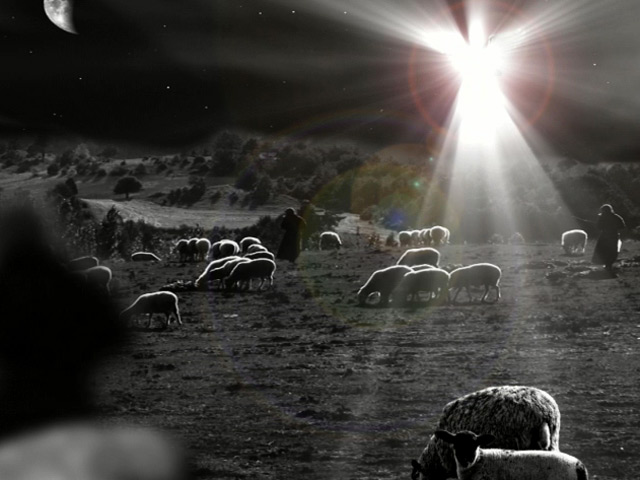
 think and let think