Hoping Against Hope

strangely-warmed-spreaker-header

This week on the Strangely Warmed podcast I speak with Rev. Dr. Emily Hunter McGowin about the readings for the Second Sunday of Lent [Year B] (Genesis 17.1-7, 15-16, Psalm 22.23-31, Romans 4.13-25, Mark 8.31-38). Emily is a teacher and scholar of religious studies and a theologian in the Anglican tradition. She has a book on evangelical family practices titled “Quivering Families” coming out in May. Our conversation covers a range of topics including the recent school shooting in Florida, the covenant, name changes, mutual suffering, professional Christians, the difference between trust and witness, and the obsession with safety. If you would like to listen to the episode or subscribe to the podcast you can do so here: Hoping Against Hope

EM

The End Of The Rainbow

Genesis 9.8-17

Then God said to Noah and to his sons with him, “As for me, I am establishing my covenant with you and your descendants after you, and with every living creature that is with you, the birds, the domestic animals, and every animal of the earth with you, as many as came out of the ark. I establish my covenant with you, that never again shall there be a flood to destroy the earth.” God said, “This is the sign of the covenant that I make between me and you and every living creature that is with you, for all future generations: I have set my bow in the clouds, and it shall be a sign of the covenant between me and the earth. When I bring clouds over the earth and the bow is seen in the clouds, I will remember my covenant that is between me and you and every living creature of all flesh; and the waters shall never again become a flood to destroy all flesh. When the bow is in the clouds, I will see it and remember the everlasting covenant between God and every living creature of all flesh that is on the earth.” God said to Noah, “This is the sign of the covenant that I have established between me and all flesh that is on the earth.”

Lent is a season of repentance and introspection. However, that doesn’t mean the liturgical season encourages navel-gazing – in fact it compels us to look at our lives individually and corporately. Lent almost forces us to ask, “How have I failed, and how have we failed?”

It is not an easy season in the life of the church.

In preparing for this Lent I was struck by the theme of covenants – both biblical and otherwise, and what they have to do with our faithfulness. Almost everyone here is familiar with what a covenant is, we’ve borrowed money, or rented an apartment, or purchased a car, all under the auspices of a contract. They exist because of a fundamental distrust that we have for one another and institutions, we use them to protect ourselves should the other not hold up their end of the bargain.

Yet the truest and deepest relationships are those built on trust – when we lovingly yield ourselves to the other with vulnerability and fragility. And that is precisely what God has offered us in the covenant – the vulnerability required for true trust.


519_covking_657bull-02-02-1080x675

Things were looking good for the people of God, but just six chapters into the Good Book, humanity has become polluted beyond repair. The situation was so terrible that God sends a flood to start over. However, God calls upon Noah to build an Ark that will be the seed of new life, and he and his family, plus two of every animal are spared..

And then, after rocking gently on the waves for forty days and forty nights, the waters recede; the family and animals walk down the ramp, and up in the sky is a rainbow declaring God’s love toward all of creation.

This, of course, is the most beloved of all Sunday School stories for children. I have yet to encounter a church nursery or children’s Sunday school room in which the ark wasn’t painted on a wall, or a book describing the events couldn’t be found on a shelf, or plastic figurines of the animals and Noah weren’t tossed in a corner after years of repeated use and play.

At my last church I would take time every year to teach the children in our preschool about Noah and his Ark. We would put on little animal masks and line up two by two and march around the church property making animals sounds as loud as we possibly could while cars would slow down to watch a tall bearded man lead a group of children in flapping their wings, clomping their jaws, and shaking their tails.

And it would inevitably end in the playground where there was a large plastic boat that had enough space for everyone to climb aboard. We would pretend that the waves we shaking us back and forth, and then we’d look up in the sky for our make-believe rainbow.

            The end.

And we almost always tell the story that way; we jump straight to the rainbow. But in jumping ahead, we forget about the immense devastation the survivors would have witnessed. We forget that God sent the flood for a reason, and that death and carnage would have spread as far as the eye could see.

Have you seen what Houston looked like after the flood waters receded? Do you remember how long it took to sift through the entire city of New Orleans after Katrina? That’s what the flood must have been like, but worse.

            And we teach this story to our children.

Full_featured_double_rainbow_at_Savonlinna_1000px

The rainbow was in the sky as a sign and reminder of the covenant God made with God’s people, but it was also done in the presence of death and destruction. “Never again,” says the Lord, “Will I destroy the earth.”

On Wednesday afternoon, while countless Christians were walking around with ashes in the sign of a cross smeared across their foreheads, a young man pulled the fire-alarm at Marjory Stoneman Douglas High School in Florida, and waited for people to pour out in the hallways. And then he began shooting.

17 dead, another dozen injured.

In October, a man looked out from his room in Las Vegas at the crowds of people dancing at a music festival. While the pumping music was filling the air, he added to it with the sound of gunshots.

58 dead, 851 injured.

On December 14th, 2012, a young man walked into Sandy Hook Elementary School in Newtown, Connecticut and began shooting.

20 dead, the majority of whom were 6 or 7 years old.

Since the shooting at Sandy Hook, more than 400 people have been shot in over 200 school shootings. Those numbers don’t include what happened in Las Vegas, or a number of other shooting related events. But in the last five years, 400 people have been shot in over 200 school shootings.

Called to life out of chaos and nothingness by the breath of God, we humans seem at every turn bent on returning to that chaos. “The Lord saw that the wickedness of humankind was great in the earth, and that every inclination of the thoughts of their hearts was only evil continually.” And so God sent the flood.

Following the Flood, God placed the rainbow in the sky, and God promised to never drop such violence on us again, and for some reason, we’ve failed to hold up our end of the bargain.

God’s act over creation binds all of creation together, from the fish in the sea to the birds in the air, to the people in the pews next to you. And yet violence, anger, aggression, they rule the day. They captivate our attention, they fuel our inner thoughts, they drive our responses to frustration. We are a people near the end of the rainbow.

It’s like we’re so obsessed with the end of the story, we forget what got us here.

Since Wednesday afternoon I have been bombarded with messages from people both inside and outside of the church.

On one side there are people fighting for stricter gun control. They believe that sensible legislation could prevent events like those we’ve seen as of recent from ever happening again. They want to make it harder to purchase a firearm.

It’s important to note, that of the last 18 mass shootings, the majority of the firearms were purchased legally and with a federal background check.

On the other side, there are people fighting for greater access to weapons and freedom to use them. They believe that arming teachers and administrators will prevent events like those we’ve seen as of recent from ever happening again. They want to protect their freedom to defend themselves and others.

Violence, it seems, is inescapable. Regardless of the rainbows above our heads, this world of ours is captivated by one in which the power to end life reigns supreme.

But God has a knack for making a way out of no way.

We all know what chaos looks like, we don’t need the reminder from Genesis, we have the nightly news, and Facebook, and Twitter to show us what real chaos looks like. But it is in the midst of chaos, with the stories flooding in and the destruction around our ankles, that the rainbow arches across the sky demanding our attention.

And when we see that bow, when we hear about those teachers who sacrificed their lives to protect their students, when we witness the children standing in front of the school praying for their friends, we remember what God did for humanity and all of creation, we get a taste of the covenant, we discover redemption.

noahs-beaver-problem

Maybe that’s why we teach children the story of Noah and the Ark, and the rainbow in the sky, even if we’ve lost a connection to its deep and frightening truth – we want our children, in fact we want everyone, to know that God’s love and hope is present in the chaos, that even while the world is full of disturbing devastation, God has not forgotten us.

In the covenant made through the sign of the rainbow, God bound God’s own self to us in a new and different way. God became intimately connected with the creatures of his creation, preserving, sustaining, and encouraging them (us) toward redemption.

The rainbow, therefore, acts like a mirror, in which we see the truth of our reflection. We see who we really are, with our anger, and our propensity toward violence, and our fear. We see the truth, and we remember that God hung his bow in the sky.

So, perhaps the time has come to reclaim the strange, ugly, and beautiful truth of the rainbow. Maybe the time has come to put an end to the rainbow in nurseries and children’s bibles alone. Perhaps we need to seal our hearts with the rainbow that declares a new day has broken, that there is a better way, that there is room for all of the colors that make the covenant what it is.

That kind of rediscovery could completely reshape and shake up what we know of who we are. It won’t make us perfect, it won’t rid the world of evil, but it will stand as a reminder, just as it once did, that God has not abandoned us to our own devices, that God has made a new day and a new way.

This story from near the beginning, is the beginning of the covenants that lead to the kingdom. It is a promise established in Noah, and later with Abraham, David, and through our baptisms into Jesus’ death and resurrection.

            The covenant, at its core, is a witness to the fact that God is stuck with us, and that we are stuck with God.

In life, there are moments when we can feel the rage build within us. It usually happens in response to something we experience in another person, whether right in front of us, on television, or on the Internet.

And, to be clear, there are times when rage is appropriate. The Psalms are filled with these little vignettes into the anger of the people Israel amidst such terrible injustice. It is good and right for us to be angry when we see what happened in Florida this week, it is good and right for us to be angry about innocent children being murdered indiscriminately, it is good and right for us to voice our opinions about what can and needs to change.

            The challenge is in remembering that God is with us in the midst of our anger. That God saw the deplorable state of the world not only during the days of Noah, but in the days right before Jesus’ birth, and God sent us a new sign, in his Son, who came to show that love always trumps violence, that we are bound to one another even when we can’t stand each other, and that there is a better way.

The rainbow above Noah’s head, the experience of Jesus in our lives, they are a reminder that the world was broken, is still broken, and that God is in the business of reconciliation. It forces us to confront the brokenness of our own lives, and in the lives of others. It even makes us uncomfortable – for if God was willing to refrain from violence upon the world, if God was willing to hang up the bow, why haven’t we done the same? Amen.

Showing Up To Our Own Funerals

Joel 2.15-17

Blow the trumpet in Zion; sanctify a fast; call a solemn assembly; gather the people. Sanctify the congregation; assemble the aged; gather the children, even infants at the breast. Let the bridegroom leave his room, and the bride her canopy. Between the vestibule and the altar let the priests, the ministers of the Lord, weep. Let them say, “Spare your people, O Lord, and do not make your heritage a mockery, a byword among the nations. Why should it be said among the people, ‘Where is their God?’”

“By next week I want each of you to have your funeral sermon and bulletin figured out.” My peers and I exchanged strange looks before I raised my hand, “Funeral stuff for whom?” Our facilitator looked at us seriously and said, “You own funerals of course.”

I was in the middle of what we call CPE, clinical pastoral education. It can take place in many ways, but for me in meant serving a handful of 24 hour on-call shifts at Duke University hospital and spending every Monday for an Academic year gathering with a small group to process through the work of serving people near the end of life.

And it was on one such Monday when our facilitator informed us that we needed to create our own funeral services and bulletins.

To be frank: it was miserable. At first I kind of enjoyed thinking about the hymns and prayers I wanted to be used, but then I couldn’t help but imagine the actual people sitting in the pews while my urn, or coffin, rested at the front of the sanctuary. I found joy in flipping through the bible trying to pick one of my favorite verses for the funeral sermon, but then I started wondering who would be the one preaching, and if my life amounted to any profound theological reflection.

The longer I spent working on the assignment the more I hated it.

The following Monday we sat around our table, preparing to share our hypothetical funerals with one another when, thankfully, one of my peers raised what all of us were thinking. She looked at our facilitator and said, “I can’t understand why you would make us do this. It was cruel and frankly unchristian.” To which after giving it some thought he said, “Why do you think we get together every Ash Wednesday if not to think about our own funerals?”

ashes

If we do this service right, all of us will be blessed. We will be blessed because we will get a taste of what the church is really for. In this service, in this time set apart, we will take upon the sins of the world (not by dying on a cross like Jesus) but through confessing our sins and the sins of others. We are here to do the thing that we should do everyday, but we often fail to until we come a little to close to death for comfort.

For it is in the wrestling with our mortality, we catch a glimpse of who we really are, and we wonder about what we could become, should we have just a little more time.

In the end, only God knows the degree to which each of us have participated in, or encouraged, or allowed some great evil to exist in this world. And it is for that reason God sent his Son to be crucified, to be killed. It is God’s judgment laid upon us, that God took away from us.

That, in a sense, is what the strange celebration of Ash Wednesday is all about. It is why we gather together when people from our community die. We, like the prophet Joel says, have been gathered together for a solemn assembly, to be sanctified, to weep if necessary, to call upon the Lord to do spare us, knowing what God did in Jesus Christ.

This is the day, the one day, when we can faithfully admit that we deserved, and still deserve, to be judged. Yet, at the same time, we proclaim that God did not abandon us.

            This is the day that we show up to our own funerals.

Ash Wednesday is time set apart from the regular movement of church time, it is time interrupted, to confront the stark truth: no one makes it out of this life alive. Regardless of every commercial product promising to make you look, feel, and act younger – the bell will toll for us all.

Everything we do here right now, we do in the presence of ashes; these ashes force us, compel us, to speak of death before death in a world where death is denied.

Years ago I was standing by the entrance of the preschool at the church I was serving, greeting all of the children and their parents/caretakers as they arrived for another day of school. I knew every child’s name and their favorite food, color, and television show. I knew more about each parent walking into the building than they ever could’ve imagined, because the kids were like faucets you couldn’t turn off when the doors closed, and they weren’t old enough to know that some things are meant to be kept a secret.

And on that particular day, one of the moms ushered her daughter down the hallway, and made a motion to me that said, “we need to talk.” I, of course, was worried that I was about to get lectured about teaching too many of the strange stories from the bible to the kids, but instead she asked for my help. In less than a minute she told me that her ex-husband, the father of her daughter, had died the night before after being sick for a few weeks, and she wanted me to tell the child that her father was dead. And with a solitary tear streaking down her cheek, she turned around and left the building.

I got nothing done that morning as I retreated to my office and frantically prepared to devastate a four year old girl with news no one wants to here. I thought about analogies and metaphors that might soften the blow, I even contemplated going to the library to find a children’s book on grief, but time ran out, and I had to do something before the day ended.

And so I marched down toward the preschool, sat down at the table with the kids, and asked to speak to the girl in the hallway. I sat down on the floor with her and I spent a couple awkward moments trying to work up the courage to begin, when she asked, “Did my Daddy die?”

Not knowing quite what to say, I just simply nodded, and then she said with maturity beyond her years, “That’s okay. So did Grandma, so did our old neighbor. Everyone dies. Even Jesus died. But he died so that we could be together again right?”

“Right.” I said. And much like her mother, she turned around and went back in the room to play with her friends.

Everyone dies. There’s no way around it. No pill, no procedure, no product can stop it forever. And because no one makes it out of this life alive, we grieve. We weep and wail. We raised our clenched fists in the air and shout, “Where are you God?”

And then we remember the theological wisdom of a four year old; God has answered that question. God answers in Jesus being born like us and among us. God answers in the ashes smeared on our foreheads. God answers in the community of faith that carries us through the gravity of our grief. God answers in the words of scripture, and in the words of prayer. God answers in the truth that we’d rather avoid: We are dust and to dust shall return.

But, thanks be to God, dust is not the end. Amen.

What We Believe Shapes How We Behave

Mark 1.29-39

As soon as they left the synagogue, they entered the house of Simon and Andrew, with James and John. Now Simon’s mother-in-law was in bed with a fever, and they told him about her at once. He came and took her by the hand and lifted her up. Then the fever left her, and she began to serve them. That evening, at sundown, they brought to him all who were sick or possessed with demons. And the whole city was gathered around the door. And he cured many who were sick with various diseases, and cast out many demons; and he would not permit the demons to speak, because they knew him. In the morning, while it was still very dark, he got up and went out to a deserted place, and there he prayed. And Simon and his companions hunted for him. When they found him, they said to him, “Everyone is searching for you.” He answered, “Let us go on to the neighboring towns, so that I may proclaim the message there also; for that is what I came out to do.” And he went throughout Galilee, proclaiming the message in their synagogues and casting out demons.

After a month of answering your questions during our January sermon series, I am happy to be moving on. Don’t get me wrong, I enjoy tackling different topics, but I always look forward to getting back to the rhythms of scripture in worship. The problem with taking time every week to answer specific questions from a biblical perspective is the temptation to do what we pastors call “proof-texting.” It is the practice of taking verses or passages out of context and re-appropriating them in whatever way helps to craft the argument.

Perhaps the best, and by best I mean worst, example of this is from Ephesians 5.22: “Wives, be subject to your husbands, as you are to the Lord.” As soon as those words just left my mouth, the women perked up and the men grew smug smiles on their faces. But this verse has been used again and again to subordinate women in terrible and horrific ways. And what makes it all the worse is that we take it out from the whole of the bible and use it like a weapon.

But the verse immediately before “Wives be subject to your husbands,” says, “[Everyone] be subject to one another out of reverence for Christ.” And just three verses later we can read “Husbands, love your wives, just as Christ loves the church and gave himself up for her.” The love that Paul writes about is not the Hallmark version of love, Paul isn’t saying that husbands need to buy flowers and chocolate for their wives every once in awhile (though it’s a good idea), but that husbands must sacrifice, even their very lives, for their wives just as Christ gave up his life for us.

But we don’t get that when we just pick and choose the verses we want to use.

The beginning of today’s scripture is another prime example: “As soon as they left the synagogue, they entered the house of Simon and Andrew, with James and John.” Wait, what do you mean, “as soon as they left the synagogue”? What were they doing there? What happened? Is that important to know?

Dividing the bible into discrete units is a pretty strange practice. However, it’s hard to imagine it as strange, because we’ve been doing it all our lives, but we don’t do it with any other text. Think about your favorite book for a moment, perhaps you could repeat a really moving line but can you remember what chapter it was in, or what page it is on? Probably not, but I bet if I asked you what your favorite passage from the bible is, you could not only quote it, but also provide the book, chapter, and verse.

Open-Bible-Religious-Stock-Photos

So here were are with this incredible story. It’s a day in the life of Jesus. After leaving the synagogue they go to Peter’s mother-in-law’s house, Jesus makes her whole, he cures everyone who gathers around the door, then he retreats to a deserted place for prayer, and finally they all depart for the next town to do it all again.

But what happened before?

Jesus brought his first disciples to the synagogue, and he taught as one having authority. While he was there, a man with an unclean spirit cried out, and Jesus made the man whole again. And his fame began to spread through Galilee.

What has that got to do with the healing of Simon’s mother-in-law, and the curing of many people, and praying in a deserted place, and moving on to the next town?

            Jesus’ teaching cannot be separated from his healing.

            He practiced what he preached.     

            What he believed shaped how he behaved.

Last Sunday I stood right here and I invited the congregation to stand for our final hymn, My Hope Is Built. We were coming to the conclusion of our service after spending an hour reflecting on how God is the one who saves us, not the other way around. The first notes began to harmonize throughout this space and I did what I usually do, I closed my eyes and listened. It’s a beloved hymn of mine and I love hearing the faithful sing it together. But for some reason, as we neared the final verse I opened my eyes, and I looked out at all of you.

In the short amount of time it took to get through the last verse, one of our congregants collapsed and was clearly not doing well. I walked forward while most continued to sing, and immediately two of the nurses from our church rushed over to check on him. The words were still bouncing off the walls as we checked on him together, and one of them ran out to call for an ambulance.

When the song ended I offered a rushed benediction, in order to clear out the sanctuary as quickly as possible and I went into what I call “boy scout” mode. I assigned tasks to different people and tried to encourage others to give him space as we waited for the ambulance to arrive. Once the room was mostly cleared, I looked out our doors to see the ambulance and fire truck pull into our lot, and I walked back into the sanctuary to pray for him before he left.

But as I walked into the room, a group of eight people from the church were already huddled over him with hands touching his head and shoulders praying fervently to the Lord.

And it stopped me right in my tracks.

No one asked any of them to pray, they were not ordered to do so, and it was as natural to them as just about anything else.

By the time I got over the holiness of the moment I witnessed, I walked over and he was smiling while a group of women were fanning him with their bulletins. I said, “I know these beautiful women are making you feel like a king right now, but try to not let it go to your head.” And with that he chuckled, and winked at me.

Friends, I felt God’s presence in our worship last week as surely as I ever have. Through the hands and the prayers that surrounded Don, I experienced a moment of profound holiness where what we believe shaped how we behaved. It was powerful, and it was faithful.

For what its worth, Don is doing well, and he and his family are grateful for all of the support and prayers.

There is a healing power in touch and in intimacy. Over and over again in the bible we read about Jesus bringing restoration to people through his willingness to meet them where they were and offer them a new way. Jesus is an intimate Messiah who found individuals in the muck of their lives, who finds us in the moments of our deepest frustrations, and says, “follow me.”

00026846

From the very beginning of scripture, up through the end, we see again and again that it is not right for human beings to be alone. We are at our best when we join together even while all the odds are stacked against us. We are the truest form of God’s dream for us when we gather together rather than trying to do it all by ourselves. We are the faithful vision when we congregate as a congregation.

No one can do it all on their own.

And when you’ve had a taste of what the healing power of community can do, it changes you forever.

Jesus took Simon’s mother-in-law by the hand and lifted her up. Then the fever left her, and she began to serve them. I’ve seen depictions of this scene from the beginning of Mark’s gospel where the mother-in-law is feverishly sweating under a blanket, with a thermometer sticking out of her mouth, but after receiving the touch of the Lord, she pulls our a pitcher of lemonade to make sure all the men are refreshed. But that portrayal of the scene diminishes the truth of what happened.

We read that she served them, but a better translation might be she ministered to them. Not unlike what the pastor is supposed to do for a church, gathering them together attending to their needs, challenging them to be better. In some churches we call this the work of a deacon, a service ministry to the community.

In many senses, Simon’s mother-in-law is the first deacon. She was touched, and it changed everything. Not only did it restore her to health, not only did it bring about a sense of wholeness in her being, it propelled her to minister to those nearby.

She was given a job to do.

This is exactly how Jesus lived his life, it’s what he called his followers to do, and I caught a glimpse of it last Sunday here in the sanctuary.

Fair warning: “practicing what you preach” is no easy thing. There will come times when the last thing we want to do is gather with the people whom we call the church. Whether it’s because they stand for different political realities, or they speak the truth in love (and it hurts), or they simply remind us too much of whom we really are, it is not easy being a faithful community together. Even Jesus needed time alone.

Prayer-can-Heal-yes-or-no__82367

After the episode with Simon’s mother-in-law, word quickly spread through the town and the first disciples brought to Jesus all who were sick or possessed with demons. And the whole city was gathered around the door (a reminder that all are struggling whether we can see it on the surface or not).

But in the morning, while it was still very dark, Jesus got up and went out to a deserted place, and there he prayed. After emptying himself to others, Jesus had to empty himself to God before he could go to the next town to do it all over again. It’s a dance of being filled by the Spirit, to share the Spirit, to need the Spirit again. And in this wonderful story, a story beyond the scripture we read this morning, we experience a day in the life of the Lord, a day like any other day, a day perhaps like today.

When I was ordained, the bishop placed his hands on my head and shoulder and said, “Take thou authority. Go and comfort the afflicted, and afflict the comfortable.” It’s not an easy task, but it’s one we all get to experience right now. In just a second I’m going to invite all of us to comfort someone in the church who is afflicted, and it’s going to be so uncomfortable that you’re going to feel afflicted while you’re comforting. It’s so much easier to pray for someone than to ask someone to pray for you. To say, “I am broken, I need help, I am not the whole vision God has for me.”

But if we can’t do that for each other as the church then we are not the church. So… sorry that I’m not sorry. Go find someone you don’t know, and pray for each other.

Shiny

strangely-warmed-spreaker-header

This week on the Strangely Warmed podcast I speak with Tommie Marshell about the readings for Transfiguration Sunday [Year B] (2 Kings 2.1-12, Psalm 50.1-6, 2 Corinthians 4.3-6, Mark 9.2-9). Tommie recently started the Backsliding Podcast which seeks to produce lay drive conversations about theology and faith (it’s really good and you should subscribe here: Backsliding). Our conversation covers a range of topics including womanist theology, mentorship, covenant separation, naked prophets, giving voice to the voiceless, the positivity of fire, Moana, the blindness of unbelievers, lightning bugs, and the Messianic Secret. If you would like to listen to the episode or subscribe to the podcast you can do so here: Shiny

TM

What Must We Do To Be Saved?

Psalm 111

Praise the Lord! I will give thanks to the Lord with my whole heart, in the company of the upright, in the congregation. Great are the works of the Lord, studied by all who delight in them. Full of honor and majesty is his work, and his righteousness endures forever. He has gained renown by his wonderful deeds; the Lord is gracious and merciful. He provides food for those who fear him; he is ever mindful of his covenant. He has shown his people the power of his works, in giving them the heritage of the nations. The works of his hands are faithful and just; all his precepts are trustworthy. They are established forever and ever, to be performed with faithfulness and uprightness. He sent redemption to his people; he has commanded his covenant forever. Holy and awesome is his name. The fear of the Lord is the beginning of wisdom; all those who practice it have a good understanding. His praise endures forever.

In 1962 one of the greatest theological minds of the 20th century visited the United States on a lecture tour. Karl Barth was a product of Western Theology who actively spoke against the Nazi regime and rejected their un-Christian allegiance to Adolf Hitler. His writings and influence spread throughout the world to a degree beyond his ability to comprehend, such that (for instance) I have an entire shelf in my office dedicated to his books.

But long before I heard about Barth, he toured the US in the early sixties, lecturing to both the young and old about the importance of God being God.

And for as much as I love Barth, he can be remarkably dense. During his tour he was approached by a young theologian who declared, “Professor Barth, you’re my hero! I’ve read everything you’ve ever written.” To which Barth responded, “Son, I haven’t even read everything I written.”

That particular tour had him stopping at the leading theological institutions like Princeton, the University of Chicago, and Union Theological Seminary. And after one such lecture, not doubt filled with deep theological affirmations beyond reasonable comprehension, a young woman decided to bravely ask a question.

Now, at the time, evangelical theology was beginning to take off in the US. Churches were pushing hard for “personal relationships with Jesus Christ.” Altar calls were all the rage. And every wanted to know when everybody got saved.

So, this young woman, with her hand shaking in the air, patiently waited to ask her question. Barth lectured on and on about who knows what and then he finally called on her.

She said, “Well, Professor Barth, I was wondering, when were you saved?”

After no doubt responding to questions about the immutability of God, the diminishing role of the third member of the trinity, and the self-unveiling of God who cannot be discovered by humanity, Barth was finally asked a simple question with a simple answer.

And this is what he said, “Hmm, when was I saved? Of yes, that’s easy, it was… 2,000 years ago on the cross.”

What must we do to be saved?

salvation-0

In many churches, being “saved” is equated with a moment when an individual accepts Jesus Christ as their “personal Lord and Savior.” We look at it as an item on a check-off list, an accomplishment to be met in order to get into heaven. These moments of willed salvation often take place in the midst of an altar call, that time when the pastor calls for people like you to come to the throne to give your lives to Jesus. Sometimes it takes place in baptism, when water is used to cleanse a child or an adult from their broken ways and saved them. Sometimes it takes place in the bread and cup of communion, nourishing someone’s faith to the point of everlasting reward.

In many places, being “saved” like this is worth celebrating as a total rebirth, such that individuals will celebrate two birthdays each year. Their actual birth day, and their new-birth day. Some, believe it or not, will even bring out a birthday cake and presents, for BOTH of the days.

But is that what it takes to be saved? Is that part of God’s requirements to pass through the pearly gates?

            This is what I do know: The saving of anyone is something is not within our own power, it is exclusively God’s. No one can be saved – by virtue of what he/she can do. But everyone can be saved – by virtue of what God can do.

Great are the works of God, and we delight in what God has done, is doing, and will do. God’s work is full of majesty and God’s righteousness endures forever. The psalmist covers all the bases, buttering God up with all of God’s attributes. We know of God from all of God’s wonderful deeds. The Lord is gracious and merciful. He offers and provides food to those who fear, and God is always mindful of the covenant.

But among these buttery and complimentary verses, there is one that shines bright and is somehow often overlooked: God sent redemption to God’s people.

Perhaps it’s a product of coming of age in a culture where we always hear about the need to pull yourself up by your bootstraps, that we assume salvation is up to us. We read these books about how to be the better me, thinking that if I only add this discipline, or get on this diet, that it will fix everything. We surround ourselves with people who often think like us, to embolden our own beliefs, rather than spending time with people who will challenge what we think we know.

But God sent redemption to us!

cropped-signweblogo

Can you think of a more profoundly beautiful sentence? God sent redemption to us. Not a five steps process to becoming the true you, not an outline of a daily schedule to practice piety, not a pill or product that can fix our problems. God sent redemption. To us.

We have been redeemed. But from what? In the beginning of scripture there is a story about a man and a woman who had a choice. They could have stayed within God’s loving and beautiful embrace, or they could taste the fruit, the forbidden fruit. All was theirs, and then all was lost, because they chose to govern themselves rather than obey God. They believed in the boot-strap model more than the grace-filled reality of God. They wanted power, and they received punishment.

But, God sent redemption to us.

In the United Methodist World, we call redemption grace. And it begins with prevenient grace. It is something offered to us without price or cost. It is free. And we can choose to respond to the grace, but we cannot do anything to earn it.

And then there’s God’s justifying grace, the act of Jesus’ death on the cross and resurrection from the dead that reconciled the divisions that took place in the Garden of Eden. Again, it is something God did for us, without our having earned it.

And finally there’s God’s sanctifying grace. It is the power of God’s grace working in us toward a better and more perfect understanding of who we are and whose we are. Sanctification is a life-long process where we grow daily in our Christlikeness.

We experience God’s grace through a number of means, like communion and baptism, reading scripture, daily prayer, and even sometimes through a sermon. They are the tools and mechanisms by which we are reminded what God has done, so that we might respond.

Our lives are made up of holy sanctified moments, those strange and powerful moments where the earthly and the divine come close together.

We are all in the process of sanctification. And, as someone once noted, sanctification is nothing more than getting used to our justification.

When I was in seminary learning about all the stuff pastor’s are supposed to learn, we took a class on the New Testament. Every time we gathered we looked at a different book in the New Testament and we unpacked the theology. We talked about who Jesus was, and where Jesus went, and what Jesus said. And one day, in the middle of the lecture, my professor projected an image on the board of the crucified Jesus. It looked like a painting from the Renaissance and Jesus was the perfect specimen of humanity, almost glowing while dangling without pain. But then my professor went to the next slide, and it was another crucifixion scene. This time it was more abstract with strange colors and shapes but it was still clearly Jesus on the cross. And again and again, the slides came and went with different portrayals of Jesus’ death.

And the longer it went on the more uncomfortable I felt.

Instead of looking at the images from the perspective of a student studying lines and meaning, I began looking at them like a Christian. And with each passing image I saw the immense suffering of the one we call Lord, dying on the cross. I noticed the fragility of the One born in the manger, I saw the struggle of the Savior, I experienced the labor of the Lord.

And it was too much.

Before I knew it I was walking out of the room as if I couldn’t breathe, and I sat down in the hallway by the door. One of my friends promptly followed me outside and picked me up, looked me in the eyes, and said, “What in the world is going on with you?”

I said, “I don’t deserve it. Seeing Jesus on the cross, for me, I just don’t deserve it.”

And with complete sincerity he said, “You idiot, that’s the whole point. You don’t deserve it. Neither do I. That’s why we call it grace.”

God sent redemption, to us. We did not receive God’s redemption, God’s grace, because we finally mastered the faithful life, and because we finally put all our ducks in a row, and because we finally paid off our credit card debt, and because we finally lost those ten pounds. God sent redemption to us. Period.

No matter what you do, God will never love you any more, or any less. You have been saved, and are being saved. As you get used to your justification, God is sanctifying you. There is nothing we can do to be saved because God is the one saving us.

That’s why the psalmist can say, “Praise the Lord!” Because God’s works are indeed great, God is full of majesty and righteousness. The Lord is gracious and merciful. Holy and awesome is the name of God. He has sent redemption to us.

However, lest we become “couch potato Christians”, we are not sitting around passively waiting for God to do something. God’s grace is such that it propels us to respond in ways we can scarcely imagine. We are always moving on to a greater understanding of what it means to love God and neighbor.       

God’s grace, prevenient, justifying, and sanctifying is a gift. We can receive the gift and pack it away in the closet and it will never do a thing. Or we can receive the gift and use it each and every day in the ways we commune with God, the ways we interact with our fellow brothers and sisters, and the ways we experience God’s creation.

Additionally, grace is not a get out of jail free card, nor is it a protective talisman that saves us from ever suffering. The life of God in Christ, the redemption sent to us, is the penultimate reminder that you cannot have resurrection without crucifixion. That those who wish to gain their lives must lose them. And that if we want to call ourselves disciples of Jesus, we have to take up our own crosses to follow him.

So we praise the Lord! We give thanks to Lord with our whole hearts, in the company of the congregation, because God sent redemption to us. Amen.

It’s A Curse To Speak Without Some Regard

strangely-warmed-spreaker-header

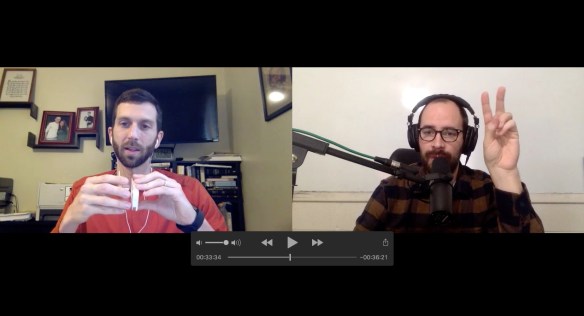
This week on the Strangely Warmed podcast I speak with Josh Munnikhuysen about the readings for the 5th Sunday After Epiphany [Year B] (Isaiah 40.21-31, Psalm 147.1-11, 20c, 1 Corinthians 9.16-23, Mark 1.29-39). Our conversation covers a range of topics including the folly of using metaphors for God, functional atheism, church democracies, living east of Eden, the “meaning” of scripture, the Avett Brothers, arresting verses, and women serving the Lord. If you would like to listen to the episode or subscribe to the podcast you can do so here: It’s A Curse To Speak Without Some Regard

HeatherPhoto2

Wasting Time With God

strangely-warmed-spreaker-header

This week on the Strangely Warmed podcast I speak with Wil Posey about the readings for the 4th Sunday After Epiphany [Year B] (Deuteronomy 18.15-20, Psalm 111, 1 Corinthians 8.1-13, Mark 1.21-28). Our conversation covers a range of topics including gift-giving, the terrible responsibility of preaching, You-Who prayers, temptation, and how food CAN bring us closer to God. If you would like to listen to the episode or subscribe to the podcast you can do so here: Wasting Time With God

230865_3866247818098_342475955_n


What A Difference A Day Makes

Genesis 1.1-5

In the beginning when God created the heavens and the earth, the earth was a formless void and darkness covered the face of the deep, while a wind from God swept over the face of the waters. Then God said, “Let there be light”; and there was light. And God saw that the light was good; and God separated the light from the darkness. God called the light Day, and the darkness he called Night. And there was evening and there was morning, the first day.


“How old is the earth?” The fifth grader looked up from his homework assignment as if to say, “Well, dude, you’re the tutor… what’s the answer?” We were sitting inside Forest View Elementary School in Durham, North Carolina, and I was in the middle of a tutoring session. Each week we would sit in the library and go through his homework together. His class was finishing up a unit on earth sciences and his worksheet was filled with questions about the subject.

“How old is the earth?” I, of course, could not remember the answer so I promptly pulled out my cell phone to Google it and the young man rolled his eyes as he opened up his textbook with dramatic emphasis. We flipped through the pages together looking for key words or pictures that would indicate we were on the right path and then we found it in big bold numbers on the bottom of a page: 4.54 billion years.

I waited patiently for my young tutee to copy the number down into the answer column on his worksheet, but he just kept looking at the textbook with a glazed-over look in his eyes. Then I heard him say, no louder than a whisper, “That can’t be right.”

“Well of course it’s right!” I said, “I mean its in the book, it has to be right.”

And then he said, “But my pastor told me the earth is only 6,000 years old…”

In the beginning there was nothing. All matter was formless. What we now know and see was a soup of nothingness, a bottomless emptiness, an inky blackness. And in the midst of nothingness, there was something: God. And God said, “Let there be light”; and there was light. God saw the light was good; and God separated the light from the darkness. God called the light Day, and the darkness he called Night. And there was evening and there was morning, the first day.

7606B94A-6E65-43BB-BFD4BD7A1485127F_source

I can think of few verses in scriptures that have created more problems with interpretation than those found at the very beginning of the book. These words have vexed and inspired, they have built up and they have destroyed, they have been the start of faith for some and the very end for others.

Genesis 1 is beginning, and not just a beginning to a story, but the beginning to the story.

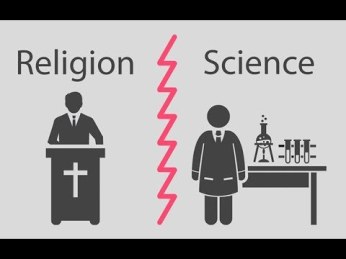
So how did this collection of sentences lead to one of the largest debates from the last few hundred years? Why are these descriptions about God’s creation at the heart of the debate between science and religion?

Centuries ago there was a man named James Ussher who set out to date the earth. He dove deep into the Old Testament and, with the help of genealogies and life spans, established the exact time and date of God’s creation as 6pm on October 22nd 4004 BC. Therefore, according to the work of Ussher, the earth is approximately 6,000 years old.

            However, with the advent of modern science, and carbon dating, and evolutionary biology, scientists have determined that the earth is rough 4.5 billion years old.

There is a huge difference between 6,000 and 4.5 billion.

For a long period of time, the Christian church established itself as the predominant distributer of information, and when that came into conflict with Science, the battle began.

The war between Science and Religion has manifested itself in a great number of ways like the fight between Galileo and the church, Darwin and the church, and even the American Government with the church.

And nowhere is the war more apparent than between the debate of creation and evolution.

            “How old is the earth?” might sound like an innocuous question without too many ramifications, but how we answer the question comes with a lot of consequences.

A couple of years back, the state of Kansas removed questions about evolution from its standardized tests. This meant that teachers were still allowed to teach evolution, but the children would not be tested on it at the end of the year. Some Christians rejoiced in the victory Creation over Evolution, and others were concerned that children from Kansas would pale in comparison to students from other states by the time they entered college.

It would seem that the church has one answer to the question, and science has another.

hqdefault

I remember learning about the theory of evolution when I was in the 8th grade. With all my hormonal angst, and pimply face, and peach fuzzed mustache, I sat in my science class and learned about how all life can trace its origins back to one single cellular being: That over millions of years that first cell grew and evolved and developed new traits; how life began in the sea, and eventually developed to live on land and in the air; how humanity is one of the last developments in a tremendously long line of evolved species.

I thought it was awesome! The science-fiction nerd within me went into overdrive and I relished in learning about where we came from, how the earth has changed, and how beautifully unique we really are. And the whole time I dove into evolution I saw God’s handiwork all over the place. Who could have brought life into that first being, who could have the imagination to force molecules and atoms together in such a way that life began, who could have moved the development of species to its zenith in humanity?

However, around that same time a number of my Christian friends stopped attending church. While learning about evolution, their faith in church disappeared. What they heard in the classroom became more important than what they heard in the sanctuary. When they learned the earth was older than what they heard from the pulpit, their faith was crushed.

            I was fortunate to have pastors and mentors who helped me to see the bonds between science and faith, but my friends saw only the battle.

A lot of you wrote questions about the relationship between science and religion. And frankly, I wasn’t surprised. The so-called war between science and religion is one that has gone on for a very long time, and frankly it’s something we rarely address in church. It’s as if we let the world of science rule our lives Monday through Saturday, and the world of faith is reserved for Sundays, and never the two shall meet.

2852667_orig

There is conflict between science and religion, and the conflict exists because of us. The fault is ours. We Christians who become defensive when scientists learn more about the world instead of rejoicing in God’s strange and creative majesty; we Christians who are too quick to jump ship when we discover there is more to the world than what we can read about in the bible; we Christians who see scientific discoveries as works of the devil, and label them as such.

But the realms of science and religion are not as mutually exclusive as we think they are.

There are Christians out there called “Young-Earth Creationists” who believe, like Ussher, that God created the earth over six 24-hr days around 6,000 years ago. They dismiss discoveries like dinosaur bones as a way for God to test our faith.

However, there are ways of looking at the biblical account of creation such that it harmonizes with science, rather than creating yet another battle.

To start, the word for “day” in Hebrew is “yom.” And it carries with it a number of definitions and interpretations. Yom is used in the Old Testament as a general term for time, like a time period of finite but unspecified length. We can also read in Psalm 90.4 “For a thousand years in your sight are like yesterday when it is past, or like a watch in the night.” What we understand the word “day” to mean is different than what it means in scripture. God’s time is not our time.

We could then read Genesis 1 to be that in the beginning God created light, and after light God created air, and after air God created earth and sky and sea. But how long it took God to do this is unknown. One day? One million years? Only God knows.

Genesis, and the rest of the bible, is not meant to be read like a science or history textbook. The bible, over and over again, rejects our desire to become masters the text and instead calls us to be servants of the Word. We might be concerned with how and when God created, but the bible only tells us the who and why of God’s creation.

Then we can look at the order of creation itself and the similarities with the theory of evolution. Though it was written thousands of years before Darwin’s On the Origins of Species the order of creation parallels Darwin’s and modern evolutionary scientist’s ideas. The first thing to exist was light and energy. Then matter began to fuse together into celestial beings like stars and planets. Eventually the earth developed an atmosphere and water and land. The first life began in the sea, eventually evolved to fly in the air and crawl on the earth, and the last life to be developed, the pinnacle of God’s creation, was us, humanity.

difference

            Knowing this, countless Christians are able to hold that evolution is real, but that God set it in motion. They are able to assert that the earth is 4.5 billion years old AND God created it in the way described in Genesis. They are able to hold together science and faith in such a way that it gives glory to God’s glorious creation.

The conflict between science and religion, between creation and evolution, exists because people like us have treated the book just like every other book. We see it as our own historical textbook, or as our scientific journal, or as our genealogical record. We import the ways we read other texts into the way we read God’s great Word.

And then many of us take it up like a weapon against anyone who disagrees with us.

But the bible is fundamentally unlike anything ever written. It is historical, and scientific, and literary, and poetic, and every other form we can think of. It is beyond our ability to fully comprehend, it breaks down and exceeds the expectations we place on it, it is the living Word of the Lord.

The bible is far less concerned with explaining how things happened, and is far more concerned with proclaiming God’s handiwork. It comforts us when we are afflicted, and it afflicts us when we are comfortable. It can make us laugh and it can make us cry. It can bring us to our knees and it can propel us to dance on our feet. It identifies God as creator and us as creature. It harmonizes with the marvelous developments in science. It humbles us and exalts us. It is who we are and whose we are. It is God’s Word for us. Amen.

There’s No Time To Waste

strangely-warmed-spreaker-header

This week on the Strangely Warmed podcast I speak with Wil Posey about the readings for the 3rd Sunday After Epiphany [Year B] (Jonah 3.1-5, 10, Psalm 62.5-12, 1 Corinthians 7.29-31, Mark 1.14-20). Our conversation covers a range of topics including Duke Divinity School, the Greek exegesis of Mark, bad nicknames, scripturally shaped imaginations, economics, the privatization of faith, the cost of discipleship, and the word that appears in the Bible more than any other word. If you would like to listen to the episode or subscribe to the podcast you can do so here: There’s No Time To Waste

WP