On Listening For The Shepherd’s Voice

strangely-warmed-spreaker-header

The team from Crackers & Grape Juice recently spent an afternoon interviewing Brian Zahnd (founder and lead pastor of Word of Life Church, a nondenominational congregation in St. Joseph, Missouri) for our lectionary podcast Strangely Warmed. During our time together we talked about the readings for the season of Easter during year A from the Revised Common Lectionary. For the fourth Sunday of Easter, Brian challenged us to make it all about joy (again) while the world struggles under the weight of the current political climate. If you want to hear the conversation and learn more about adding 3,000 people from just one sermon, the challenge of preaching the most well known passage in the bible, the exclusivity vs. inclusivity of the church, spirit animals, and what it means to pray the prayers, you can check out the podcast here: Easter 4A – Brian Zahnd

listening

In Defense Of The Revised Common Lectionary

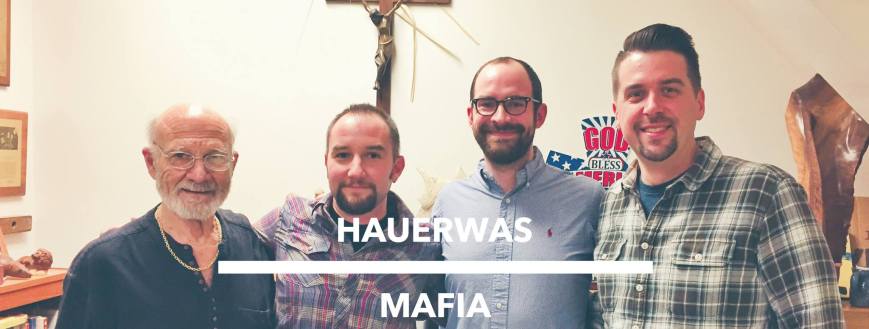
Crackers & Grape Juice is an interview-driven theological podcast about faith without using stained glass language. My friends Jason Micheli, Teer Hardy, and Morgan Guyton started the podcast over a year ago in order to remain connected to one another while also continuing to explore theology. Near the beginning, I was asked to help with editing specific episodes and quickly became part of the team. Since the inception, Crackers & Grape Juice’s audience has grown tremendously thanks, in part, to interviewees such as David Bentley Hart, Stanley Hauerwas, Will Willimon, Rob Bell, and others. We are committed to producing and providing faithful content with faithful theologians, but we have also added a new podcast to the mix.

Strangely Warmed is a new lectionary-based podcast designed to address the weekly church reading without using stained glass language. The Revised Common Lectionary is a wonderful resource for churches and one that has come to shape the Christian experience over the last few decades. The RCL is a three-year cycle of four readings for each Sunday and special days throughout the liturgical year. There is always a reading from the Old Testament, the Psalms, an Epistle, and a Gospel (with a few exceptions). At the heart of the RCL is a desire to bring churches through the great narrative of scripture without being limited by the subjectivity of the preacher.

However, the Lectionary is something unknown in many churches even if the preacher follows it weekly. Therefore, I have created the following Top Ten List in defense of the Revised Common lectionary for pastors and lay people who are interested in following and subscribing to Strangely Warmed. (You can subscribe on iTunes, Stitcher, and Spreaker)

strangely-warmed-spreaker-header

  1. Our Time is NOT God’s Time
    1. Christians, whether they know it or not, follow a different year than the calendar year. We might write February 28th on our checks and important documents, but for us the day is actually defined by being part of the season of Epiphany (until Ash Wednesday when we enter the season of Lent). To follow Jesus Christ implies a willingness to have our expectations (taught to us by the world) uprooted and flipped by the living God. The RCL helps guide us through the Christian year in such a way that our identity first rests with our discipleship, and then everything else secondarily. Moreover, following something like the RCL is a reminder that our time is not the same thing as God’s time. We might feel wearied by the weight of the most recent political development or social event, but the stories of God’s interaction with God’s people transcend time; they are in fact timeless. There is a great comfort that comes when diving into the strange new world of the bible through the RCL because it provides a sense of perspective that Christians regularly need.
  2. Habits/Discipline
    1. As Stanley Hauerwas has said on a number of occasions: What we believe shapes how we behave. Following the RCL informs our beliefs and necessarily shapes our behaviors, choices, and actions. The lectionary is a habit and requires discipline for both pastors and lay people. I will be the first to admit that there are plenlty of stories in the Bible that I would rather not preach, and when a particular event occurs I often know which story from the Bible would be effective to use from the pulpit in which to address the event. However, only picking and choosing the stories that we are familiar with, or the stories we are comfortable with, furthers the sinful idea that we can fit God into a box. Psalm 23 is a beautiful text and brings comfort to many people, but it cannot be the only thing that we Christians proclaim on a weekly basis. We need the Psalm 22s just as much as the Psalm 23s and the RCL provides that disciplined exposure to the canonical narrative of God’s grace.
  3. Limited Imagination
    1. Similarly, following the RCL, whether in preaching or in a bible study, forces us to proclaim scripture we would otherwise ignore. God can, and does, speak through scripture, even if we can’t imagine how upon first glance. And when we limit the passages on Sunday mornings to, say, the Gospels, we are limiting God’s Word being proclaimed in worship. There are definitely weird and strange passages in both the Old and New Testaments, but committing to them (rather than ignoring them) challenges us to have scripturally shaped imaginations. At the heart of the RCL is a commitment to be under the obligation of the text to say what God wants said for God’s church rather than what the preacher want to say about God to God’s church.
  4. Biblical Literacy
    1. We don’t know our bibles like we once did. Period. I could go on and on about the many times I’ve encountered someone who has gone to church for most of his/her life only to not know about the story of the bible. For instance: I was recently asked if Moses was in the New Testament, another person had no idea who Isaiah was, and another shared her utter shock that when we have communion we are living into the last time Jesus gathered with the disciples. All of those interactions came from people who have been going to church longer than I’ve been alive! Now I’m not say that we need to memorize the entirety of scripture, or get lost in the weeds, but the RCL is a tool to help us reclaim our biblical literacy.
  5. The catholic (universal) church
    1. Preaching and reading from the RCL connects us with the church universal. There is something profoundly beautiful about the fact that two churches, from completely different denominations, can read the same scripture on the same Sunday morning. Personally, this connection with the catholic church has been made manifest in a Lectionary Bible Study I participate in at the church I serve where more than half of the people in attendance attend other churches on Sunday morning. Yet, the same scriptures we read during the week are the ones they encounter on Sunday morning. In a time when there seem to be almost more denomination than there are Christians, the RCL connects us to the united church that Christ prayed for in John 17.
  6. Scripture Interprets Scripture
    1. The bible is cyclical, and you can miss this if you read it in isolation or with the strange collaboration of something like the RCL. For instance, the story of Christ’s Transfiguration on the mountaintop is a powerful one in and of itself, but it takes on a whole new meaning when we read it in light of the similarities between Jesus and Moses. Both were born into situations where their lives were in peril, both heard the voice of the Lord in pivotal moments before their ministries began, both proclaimed the law from a mountain, and both had their faces shine in the light of God’s presence. Scripture helps interpret scripture, and the RCL does a pretty good job at pairing readings from throughout the bible that connect with one another.
  7. Christological Focus
    1. Jesus Christ is the lens by which we read scripture. We Christians have the benefit of knowing the “end of the story” when we are reading passages from the Old Testament and we should remember Christ’s role throughout the canon. However, we don’t simply read the New Testament into the Old; we also need to read the Old into the New. The New Testament is filled with scriptural references to the Old Testament that fall flat when we, as preachers and readers, do not draw the connections between the two. And Christ is the glue that holds both Testaments together. The RCL implores those who adhere to it to see the connections between all four readings and how Christ is the means by which they relate to one another.
  8. Inexhaustibility of Scripture
    1. God always has something to say. Now that I’m in my fourth year of ministry, I am making my way through Year A of the RCL for the second time and I am blown away by how much the same scripture I preached on just a few years ago still have so much to say. The way I read John 1 my first year in ministry has changed dramatically and has therefore transformed the way I preach that passage. Similarly, I have been in bible studies and read enough theology over the last few years that I will never look at certain passages the same way again. The RCL allows we preachers to reflect on how we looked at, and preached, a text in the recent past and how we can use in again in the present.
  9. Room for the Spirit
    1. As previously mentioned, there are some difficult passages in both the Old and New Testaments. Passages about the wrath of God or the judgment of God are not easily preached or taught in church. However, using the RCL compels the preacher to rely on the Spirit’s guidance when handling a difficult passage which is something that should be done for every sermon regardless of difficulty. When I was first appointed to St. John’s and was planning worship for the coming months, I made a habit of reading all for lectionary texts for each Sunday and the one I wanted to preach on the least was the one that I picked for the particular Sunday. This simple practice forced me to rely on praying for the Spirit to guide me and for God’s will to be done in a way that made my preaching better, more faithful, and more fruitful.
  10. Being Shaped by the Word
    1. In our current cultural clime (the Reign of Trump), the lectionary helps us negotiate the world in which we find ourselves. Rather than reading into scripture what we want to say, the RCL allows us to proclaim what God wants to say. If we are willing to stand under the text (rather than above it) then we can let the text narrate our lives and we can be faithful. For example: On election day, the gospel lection was about Jesus’ prophecy of the destruction of the Temple in three days. Stanley Hauerwas was tasked with preaching that week at Duke Divinity School, and he preached about how Jesus just didn’t get it; you don’t tell the Jews the Temple is going to be destroyed in three days if you’re running for office. He then went on to address how the assumption that elections are the means by which just societies are established is an illusion; in the New Testament we learn about how democracies work in the one moment where there is an example of a democratic election… the crowd chose Barabbas. Hauerwas easily could have picked any number of passages from the Bible to preach during Election Day, but he was held accountable to the lectionary, which told him what to preach rather than the other way around. Following the RCL, whether in preaching or in teaching, grants us the freedom to be shaped by the Word.


16991646_1754345251560760_6036548281295906470_o


16992453_1752449351750350_1251793558137580780_o

Devotional – Exodus 24.15

Devotional:

Exodus 24.15

Then Moses went up on the mountain, and the cloud covered the mountain.

Weekly Devotional Image

I like having a plan. Whether Lindsey and I are preparing to travel with Elijah, or the church is hosting an event, or even just putting together the order of worship for Sunday mornings, I like having a plan. This need for structure and planning probably began during my time in scouting (“Be Prepared”) and it has continued to manifest itself throughout my life over and over again.

When I felt God calling me to a life of ministry as a teenager, I started planning with my home church pastors about where to go to school and how to follow the guidelines of the United Methodist Church to be ordained one day.

When I experienced God calling me to spend the rest of my life with Lindsey, I started planning the perfect way to propose to her while we were dating.

When I received the call to serve St. John’s UMC, I started planning all the ways I could help move and nurture the church even before I set foot on the property.

I like knowing where the road of life is leading me. Yet, for most of the people in scripture, the way forward is more like walking into a dense cloud covering the mountain.

Abraham was told to go to a strange new land and he did not have the advantage of Googling it before he arrived. Noah was told to build an ark and fill it will animals without really knowing what life would be like on the other side of the flood. Moses’ mother placed him in a basket and let him float down the Nile River without knowing what would happen to her precious baby boy. And Moses went up on the mountain to encounter the Lord while a cloud covered everything he could see.

98c001_b

When I read these stories in scripture, they make me anxious. I think they make me anxious because in the characters I encounter a faithfulness that I rarely experience in my own life. Again and again, God’s chosen people are ready and willing to walk into the cloud of the unknown, while I insist on patiently preparing for any and every contingency.

Part of the strange and beautiful mystery of following Jesus Christ is that we do not know where He is leading us. We might have an idea based on stories from scripture and the experiences of the disciples, but the road that leads to life eternal is one that is often covered with a thick and dense cloud.

Or to put it another way, a biblical way: Do not worry about what tomorrow will bring. Rejoice in cloud of the unknown and the comfort of the living God who surrounds you with hope and grace and peace. Celebrate the mystery of not know what is about to come, but that God is with you in the midst of it. Enjoy the strange and beautiful thing we call life; a life that is strange and beautiful precisely because it is not under our control.

God Said It, I Believe It, That Settles It

Deuteronomy 23.12-14

You shall have a designated area outside the camp to which you shall go. With your utensils you shall have a trowel; when you relieve yourself outside, you shall dig a hole with it and then cover up your excrement. Because the Lord your God travels along with your camp, to save you and to hand over your enemies to you, therefore your camp must be holy, so that he may not see anything indecent among you and turn away from you.

1 Corinthians 14.32-35

And the spirits of prophets are subject to the prophets, for God is a God not of disorder but of peace. As in all the churches of the saints, women should be silent in churches. For they are not permitted to speak, but should be subordinate, as the law also says. If there is anything they desire to know, let them ask their husbands at home. For it is shameful for a woman to speak in church.


We have a problem. I’m sorry that I have to use the pulpit to bring it up, but this is the best way to reach the highest number of people. We, as a church, have fundamentally broken one of God’s laws and we need to do something about it. We need to pray for forgiveness. We need to seek God’s mercy. And, we should get moving on this issue quickly in order to establish our faithfulness before the Lord.

We need to stop using the church bathrooms.

Now, some of you might be thinking: What in the world? Stop using the bathrooms? We’ve heard him say some strange stuff from the pulpit, but this has to be the strangest!

But scripture is pretty clear. We are supposed to have a designated area, outside the church, where we shall go when nature calls. We are supposed to keep a trowel with us at all times so that when we relieve ourselves outside, we can dig a hole and then cover up our excrement. We need to do this because the Lord is with us when we are in church, therefore this church must be holy and we can’t let the Lord see anything indecent among us.

So, after prayerful consideration, the trustees have voted to permanently close all the bathrooms in the church building, and we will construct some outhouses on the edge of the property for excrement disposal.

Just kidding.

lexica

Have you ever heard someone preach on Deuteronomy 23.12-14? I haven’t, nor have I even encountered it during a bible study. But in the 1880’s, churches and bathrooms were quite the topic of sermonic conversation. The advent of indoor plumbing had arrived and the question about whether or not to have bathrooms in churches started to pop up.

By the logic of the Old Testament, churches were seen just like the Israelite encampments and because of this the same rules about where people could relieve themselves were applied. Many preachers used this argument from their pulpit more than a century ago to fight the growing trend to build bathrooms in churches!

Today, when designing a new church, one of the first questions isn’t what the sanctuary should look like, or what kind of design will enhance the altar, or even how many people can fit in it, but how many bathrooms should there be, and where should they be put.

How do we understand the Word of God? Do we believe that all scriptures have been inspired by God and are useful for teaching? What does it even mean that God inspired the writing of scripture?

Years ago I was invited to participate in a bible study that met once a week. At the time we were going through the gospel of Matthew when one of the women in attendance interrupted with a dilemma for the group. Her son told her that he was thinking about getting a tattoo and she knew that God forbids this kind of behavior in the Old Testament. It was clear that she was looking for approval from the rest of us, but I opened my big mouth and said something like, “Well, I don’t think its that big of a deal” To which she replied, “If God says it in the bible, then the issue has been settled!”

I should have stopped right there, but I couldn’t help myself. “So, you don’t eat pork or shrimp? And you are going to rally the community together to stone your son to death for rebelling against you? And you didn’t mean to wear earrings today because you know the bible forbids them as well?”

This sort of extreme biblical literalism is problematic, and basically impossible. If we try to live by the Word with extreme rigidity, we would not be allowed to wear clothing with blended fabrics, we’d have to completely rethink our diets, working on the Sabbath would get us killed, and men would not be allowed to trim their beards. Ever.

            God said it, I believe it, that settles it.

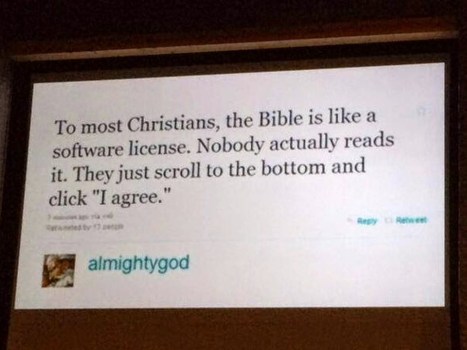
This is another one of the trite and cliché Christianisms that float around in conversation. When Christians get into an argument about a particular biblical precept, like prohibitions against tattoos or homosexuality, they will take a verse and use it like a weapon against the person they disagree with. God said it, I believe it, that settles it.

But, whether we admit it or not, rarely do we read the bible and think, “Okay, that settles it then.”

Today, no one worries about whether to build a church without a bathroom, we don’t hear preachers belabor biblical dietary restrictions, and we neglect a great number of scriptures while at the same time we use scripture to attack others.

There are all sorts of rules and regulations in scripture that, if we’re honest, we pick and choose to emphasize.
bible-and-its-interpretation

As we read earlier, Paul is clear in more than one letter that women should not speak in church. And yet, this church had a female pastor for a number of years, and our liturgist this morning just read out loud from the bible! Heaven forbid! A woman speaking in church! Can you believe it?

Of course, some churches still believe that the words about the subordination of women are the gospel truth. In those church, women are not allowed to serve in leadership positions, they are not allowed to teach Bible Studies where men are present, and they are not allowed to serve in any capacity that would require them to speak in front of the congregation.

I’ll tell you right now, this church would not be here if women kept their mouths shut. We are as faithful as we are because the women in our midst have been brave enough to speak what God has placed on their hearts, and because we have listened.

So what are we to do? We can’t just throw out the bible, but at the same time we can’t live by every single word within it.

Like the apostles and disciples before us, we read scripture and we hear God speaking through it. But we also ask questions of it. We consider context. We wonder if God really intended women to remain silent in church. We recognize that things like slavery are counter to God’s will, despite more than 200 verses that support it in the Bible. We don’t preach and teach that having bathrooms inside churches are offensive to God.

We follow Jesus’ example.

Jesus, Son of Man and Son of God, did not adhere to strict biblical literalism. He had different interpretations of the Sabbath restrictions, he had stronger opinions about divorce and adultery, and he regularly disobeyed the Law by eating with those deemed unclean.

Living as a Christian, reading the bible, it’s all about interpretation. And, to be clear, interpretation does not mean to change the text, or to ignore it, but to proclaim it for this time and for this place.

Even the Bibles in our pews are themselves a work of interpretation. Someone, and more often than not some people, made particular choices about how to translate particular words from Hebrew and Greek into English. This might not seem like a big deal, but if you take something like one of the most beloved of all scriptures: For God so loved the world that he gave his only begotten son that whosoever believe in him may not perish but have everlasting life. The word for “perish” in Greek is apollumi which can mean perish, but it can also mean to die, to be destroyed, to be lost, killed, or ruined. Each of these translations can change the meaning of the text slightly, and are therefore a product of interpretation.

So whenever we take up a bible, whenever we flip to a specific passage, the work of interpretation started long before our eyes flow over the English translation. But nevertheless, even the best translations leave us to continue the task of interpretation.

How do we do it? Well, we don’t do it in isolation. We don’t read our bibles in our living rooms never to speak about the words again, we don’t listen to a sermon only to have that be the only time we encounter the words.

We interpret God’s Word in community. We go to bible studies, we send emails to our friends and to our pastor, and we do what we need to do in order to comprehend that which is often incomprehensible.

And we let Jesus help us interpret. In the beginning was the Word and the Word was with God, and the Word was God. As the definitive Word, Jesus helps us to understand the words of scripture. We read from the Old and New Testament alike through the lens of Jesus and we begin to wrestle with how these words continue to live and breathe in our lives today.

But that requires a lot more work than “God said it, I believe it, that settles it.” It compels us to actually take up our bibles, read them, and talk about them. It challenges us to ask hard questions and produce new ideas. It requires us to believe that this book is in fact the living Word of God and that it continues to speak truth in new and exciting ways, perhaps in ways we cannot even imagine.

This last week has been filled with controversy from the Oval Office. In their first week, the new administration put forth a number of executive orders including a call to begin construction on a wall at our southern border, a gag order for the EPA, and the halting of refugee migration from a number of countries.

c3nffwbxaae5lbr

On the same day we celebrate the liberation of the concentration camps in Europe, our country said, “we don’t want them” to people fleeing persecution and destruction.

Now, no one has said that this has been done because of scripture, but the bible should have played a role in the decision if our politicians are going to keep claiming their Christian allegiance.

Moses was a refugee after fleeing from Egypt.

            Ruth was a refugee after her husband died and she followed her mother-in-law to a strange new land.

            The entire Israelite people were refugees in Babylon.

            Jesus, the one we worship here in church, was a refugee. Jesus, like people in the Middle East today, had to flee his home out of fear of violence, persecution, and even death.

And yet, we tout these certain stories from scripture and hold them over people’s heads about behavior and identity. But when we start actively preventing the oppressed from entering the country, we forget all about the story of our Lord and Savior.

People have used this book, with understandings like “God said it, I believe it, that settles it,” to attack and belittle people for far too long. It has been used to justify the horrific practice of slavery. It has been used to subjugate and relegate women’s rights. It has been used to rationalize physical violence and aggression toward people of different religions. It has been used to incite fear and terror in those who do not believe. It has been used as a weapon again and again and again.

And now we, the people of God, join together to say “no more!”

“No more!” to the use of scripture like a weapon to oppress the weak and the marginalized. “No more!” to the complacent Christianity that stands idly by as people are attacked for whom they are. “No more!” to the backwards ways of the past that lose sight of God’s grace here and now.

“No more!” to God said it, I believe it, that settles it.

Devotional – James 5.8

Devotional:

James 5.8

You also must be patient. Strengthen your hearts, for the coming of the Lord is near.

Weekly Devotional Image

Christmas pageants require patience. Christmas pageants for preschoolers require particularly profound patience. Every year the students of St. John’s Preschool spend time each day during the season of Advent practicing and rehearsing their lines for their annual Christmas pageant. We always have a Mary and a Joseph who carefully hold a baby doll in their hands as they sit patiently toward the front. We always have a couple Wisemen who are forever beating each other with gold, frankincense, and myrrh. And we have an assorted collection of barnyard animals including mice, sheep, cows, and at least one donkey.

Today I gathered with the children in the sanctuary and, as the defacto narrator, I led them through the pageant from beginning to end. When our shyer students walked up to the microphone I was ready to feed them their line and when our gregarious students walked up to the microphone I covered my ears in anticipation of them belting out their one line proclamation.

Meanwhile, a father of one of our students was in the preschool preparing Christmas trees for each of the classrooms. The hope was that after practicing, the children would return to their rooms with the surprise of cheer waiting for them in the form of a tree and then they could decorate each tree as they saw fit.

christmas-trees

When we finished the pageant, I walked with the children to their rooms and as soon as they saw the Christmas trees they went berserk. Our pretend shepherds were jumping up and down while our animals were spinning around in circles and even Mary and Joseph were screaming with joy. I did my best to calm them and then we sat on the floor to talk about the trees and how the relate to the Christmas story. I began with what I thought was a rather innocuous question: “Why do we celebrate Christmas?” To which one of our three year olds shouted out, “TO GET PRESENTS!!!”

Advent is a season of patience. While others want to jump straight to Christmas morning, while our preschoolers salivate over wrapped boxes under the tree, we strive to patiently wait for the coming of the Lord. This is the season of strengthening our hearts so that we might be prepared to receive the gift of the Christ-child with unadulterated joy (like the preschoolers) while also remembering the real present is God’s presence with us.

Devotional – 2 Timothy 2.8-9

Devotional:

2 Timothy 2.8-9

Remember Jesus Christ, raised from the dead, a descendant of David – that is my gospel, for which I suffer hardship, even to the point of being chained like a criminal. But the word of God is not chained.

Weekly Devotional Image

A few of my friends recently embarked on a new venture into the world of podcasting. They call themselves “Crackers and Grape Juice” and they regularly interview people about their faith in order to share the conversations with others through the Internet. One of their regular interviewees is Fleming Rutledge, a retired Episcopal priest, who truly has the gift of preaching. In a recent interview they asked Fleming about her love of scripture and her response was powerful: “If I love scripture, it is because my grandmother read me those stories when I was a child. The role of someone we love, loving us enough to read us scripture, makes all the difference.”

1200x630bf

What do we think of the bible? Is it a text that we are called to master like a subject from school? Should we memorize the facts and dates like a work of history? Should we analyze the literary techniques like a famous work from Shakespeare?

Today, in the lives of Christians, the Word of the Lord is often chained to the realm of the church. If we want our children to learn about the bible, we send them to a Sunday School classroom. If we have a friend grieving the loss of a spouse, we recommend that they go speak with a pastor. If we are unsure about how to encounter a troubling topic, we ask to hear a sermon about it in worship.

But, as Paul reminds us, the word of God is not chained! The bible demands our attention and our affection. It yearns to be read and savored. It should not be relegated to the confines of a church building and should instead sit at the heart of what it means to be a family and what it means to be a community.

Can you imagine how all children would feel about scripture if someone they loved took the time to read them the stories? Can you imagine how differently you would feel about the bible if someone took the time to read it to you when you were younger?

The call of Christians, all Christians, is to remember Jesus Christ, raised from the dead. We remember the great stories of the bible when we gather together in worship on Sundays, but that is not enough. We remember the greatness of the risen Lord whenever we share his gospel with the people we love: our families, friends, and neighbors. We remember the acts and grace of God whenever we sit down with one of our children and grandchildren to tell them about how Jesus changed our lives. We remember the resurrection when we believe the Word of God is unchained and worthy of our time.

On The Separation of Church and State

Romans 13.1

Let every person be subject to the governing authorities; for there is no authority except from God, and those authorities that exist have been instituted by God.

John 15.12-19

This is my commandment, that you love one another as I have loved you. No one has greater love than this, to lay down one’s life for one’s friends. You are my friends if you do what I command you. I do not call you servants any longer, because the servant does not know what the master is doing; but I have called you friends, because I have made known to you everything that I have heard from my Father. You did not choose me but I chose you. And I appointed you to go and bear fruit, fruit that will last, so that the Father will give you whatever you ask him in my name. I am giving you these commands so that you may love one another. If the world hates you, be aware that it hated me before it hated you. If you belonged to the world, the world would love you as its own. Because you do not belong to the world, but I have chosen you out of the world – therefore the world hates you.

rethinking

Preachers can fall into the rut of preaching on whatever keeps the congregation pleased; keep them happy and they’ll keep coming back, or something like that. This sermon series is something different. Instead of falling back to the familiar narratives that keep us smiling on our way out of church, we are confronting some of the greatest controversies facing the church. There is a better than good chance that I will say something from this pulpit over the next two months that you won’t agree with, and if that happens I encourage you to stay after worship, join us for lunch, and continue the conversation. We can only grow as Christians in community, and that requires some honesty and humility and dialogue. Today we begin with The Separation of Church and State.

The Church and the State have a long and complicated relationship. Like a number of romantic couples from popular TV shows, think Ross and Rachel, Sam and Diane, Jim and Pam, Luke and Lorelai, and even Kermit and Miss Piggy, the “will they/won’t they” question of their relationships has happened over and over and over again.

It began during the days of Jesus. A wandering and poor Jew developed a following that threatened the power dynamics of the Jewish leadership and the Roman Empire. His actions might have appeared innocuous, feeding the multitudes by the sea, healing the blind, walking on water, but what he said terrified those in power: “The last shall be first and the first shall be last,” sounds the beginning of a call to revolution.

And for living and healing and preaching the way he did, Jesus was nailed to a cross. But three days later he rose from the dead. The Christian church began in the wake of Jesus’ resurrection, the power of the Good News of God’s triumph over death spread throughout the region and small groups gathered together to worship the Lord Jesus Christ. The book of Acts, and Paul’s letters, help us to see how the story traveled and took hold of the communities where it was received. Lives were transformed; the gospel spread, and the kingdom began to become incarnate.

But whatever the church stood for, and whatever the state stood for, was very different.

635716335783776523-1907621126_shutterstock_96065306.imgopt1000x70

Most of what we know about the early church comes from scripture. Which is to say, we know what the church thought about the church. However, we do have some idea of what the state thought about the church. Pliny the Younger was the governor of Pontus (Asia Minor) from 111 to 113 CE. During his rule he wrote to the Roman Emperor Trajan about the Christians in his community in response to their unwillingness to worship the Emperor: “They [the Christians] asserted, however, that the sum and substance of their fault of error had been that they were accustomed to meet on a fixed day before dawn and sing responsively a hymn to Christ as to a god, and to bind themselves by oath, not to some crime, but not to commit fraud, theft, or adultery, not falsify their trust, not to refuse to return a trust when called upon to do so. When this was over, it was their custom to depart and to assemble again to partake of food – but ordinary and innocent food.”

The first Christians were strange, with their singing songs to a man who died on a cross, and sharing bread and wine, and promising to be good and trustworthy. How bizarre. And for nearly 300 years they were persecuted, abused, and killed for following Jesus. The state, Rome, resented the Christians and their weirdness. They refused to bow down to worship the Emperor like everyone else. Instead they believed some guy named Jesus was Lord. And for that, they were punished.

But then things changed.

In the year 312 CE something happened that forever affected the relationship between the church and the state. I cannot overemphasize this point enough; it changed everything. The story goes that emperor Constantine was preparing his troops for a battle against a rebellion from within the empire, and on the night before the battle he had a vision of the Greek letters Chi (X) and a Rho (P) in the sky and the words, “in this sign you will conquer.” From this vision Constantine ordered all of his troops to be marked with the Chi-Rho, which looks like the symbol on the right hand page of your bulletin. Chi and Rho are the first two letters of Christos (the Greek version of “Messiah”). After doing so, Constantine’s army won a decisive victory and he entered Rome shortly thereafter as the undisputed Emperor. The battle gave him complete control of the Western Roman Empire and it paved the way for Christianity to become the dominant faith.

tumblr_static_chi_rho_arrows_small

The very next year Constantine issued the Edict of Milan, which made Christianity an officially recognized and tolerated religion in the Roman Empire. Within a dozen years, he called for the Council of Nicaea, which was the first attempt to attain a consensus in the church through an assembly representing all of Christendom.

From a vision of two Greek letters in the sky, Christians went from being persecuted and murdered, to being part of the state religion.

And now we fast-forward to today, to the United States, to a country founded on the principles of religious freedom, tolerance, and the Separation of Church and State. After centuries of the church and state co-mingling to a frightening degree, the founders decided to move in a different direction. After being persecuted for their different religious convictions they envisioned a new way forward. Recognizing that this place was, and could continue to be, a melting pot of differing ideologies, the forefathers articulated a political system whereby the state could not control religion, nor could religion control the state, and that those two things would find their fullest potential while being completely separated.

Constantine’s vision of conquering under the sign of Christ was over, and the time of secularism began.

Paul, writing to the Christians in Rome, said, “Be subject to the governing authorities.” This is to say, follow the laws of the land, pay your taxes, be good citizens. Paul’s words echo through the centuries and reverberate here in this sanctuary: Do as the country tells you to do. If you’re called to serve in the military, go to war. If its time for a presidential election, vote with your conscience. If the government says there’s a separation of church and state, keep it that way.

And Jesus, speaking to his disciples said, “This is my commandment, that you love one another as I have loved you… If the world hates you, be aware that it hated me before it hated you. If you belonged to the world, the world would love you as its own. Because you do not belong to the world, but I have chosen you out of the world – therefore the world hates you.” Jesus’ words echo through the centuries and reverberate here in this sanctuary: Following me means acting like me.   If people are being persecuted, you are to love them with every fiber of your being. If the government starts belittling people for what they believe, you need to stand up for the oppressed. If you feel called to live like a disciple, prepare yourself to be hated by the world.

These two scriptures from Romans and John contain the tension of what it means to be a Christian in the United States. We constantly wrestle between being subject to the governing authorities and pushing back against the governing authorities. We wrestle between what it means to love the world and what it means to be hated by the world. We, as disciples, live in the world but we are not of the world. We may be citizens of the United States, but our truest citizenship is in heaven.

Years ago there was a civil case raised against an organization for displaying a nativity scene on public property. Because of the separation of Church and State, the concerned citizen believed the nativity scene had to be removed. However, when the matter was brought to trial, the court ruled in favor of the Christian display. The reasoning was that because the nativity scene was next to Rudolph the Red-Nosed Reindeer, Frosty the Snowman, and Santa Claus, it had every right to be there. Christians across the country rejoiced when the matter was settled and celebrated what they thought was a decisive victory for the church.

But was it? Should we celebrate a time when the nativity is one of many signs of the holiday? Or should we savor its sacredness? Do we want the nativity to be the same as holiday cartoons, or do we want it to symbolize the profound incarnation of God in the flesh being born in a manger?

A few years ago there was another civil case raised against a baker for refusing to bake a cake for a gay couple’s wedding. Because of the freedom of religion, the baker believed it was within his right to refuse service to people who went against his religious convictions. The matter went to trial and the judge ruled that the baker unlawfully and illegally discriminated the couple for their sexual orientation. Christians across the country protested when the matter was settled, and vehemently opposed the ruling.

Were they right? Should Christians support the freedom to pick and choose who they serve? Or should they follow the command to love the way Jesus loved? Do we want the church to be connected with the religious liberty that isolates particular people, or do we want to go against the conventions of fanatical Christianity and love people regardless of any particular identity?

The separation of the Church and the State is a good thing because for too long the state controlled the church. The Constantinian revolution was certainly responsible for spreading Christianity across the globe, but it also led to things like the Crusades and the Inquisition. Constantine co-opted the church for the role of government in such a way that it limited the qualities that made Christians strange, and instead made them normative. Gone were the days when people lived by the convictions of Christ, and instead they went to church because that’s what they were expected to do.

But the era of Constantine did not die when our nation was founded. Though we articulate beliefs like the Separation of Church and State, it still says, “in God we trust” on our national currency, children still pledge their allegiance to the flag and country under God every morning before school starts, and we still have many courts where we must place our hands on a bible and are asked, “Do you swear to tell the truth, the whole truth, and nothing but the truth, so help you God?”

So perhaps now is the time, the best time, to recover those qualities that will make the world hate us. Not the qualities of religious bigotry and prejudice that for too long have dominated the state’s view of the church. But the qualities of Christ-like love that drive the state crazy. Like refusing to bow and worship our country and our politicians as if they were gods, and instead worshipping the risen Lord. Like gathering together on a day set apart to hold ourselves accountable to honesty, truthfulness, and peace. Like sitting before a table of ordinary food of bread and wine that becomes the extraordinary gift of body and blood.

We are in the world, but we are not of the world. We might have national citizenship, but our true Lord is Jesus Christ. We are like strangers living in a strange land. Amen.


Controversy Original

Karl Barth and The Strange New World Within The Bible

When I was in seminary, Dr. Stephen B. Chapman told a remarkable story about a survey that had been done in past. All of the faculty and doctoral candidates at Duke Divinity School were once asked to name the top 3 books or articles that had shaped their call to ministry or academia. Though many were quick to respond with something like “The Bible” or “1 Corinthians” the survey challenged people to think more specifically about works outside of the bible that had shaped their lives.

Some of the greatest works from Christian History were all named such as Calvin’s Institutes, Aquinas’ Summa Theologica, Wesley’s Sermons, and Augustine’s Confessions. Others were quick to name works from more contemporary writers like Schweitzer, Bonhoeffer, Merton, Yoder, Hauerwas, and Nouwen. The survey demonstrated that there were an abundance of texts from a variety of traditions that had shaped the minds of those called to serve the church. However, even with all the variations of answers and all the different denominations that were represented, there was one article that was mentioned more than any other: Karl Barth’s “The Strange New World Within The Bible.”

barth-bw

Barth’s article can be found in chapter 2 of his seminal work The Word of God and The Word of Man originally written in 1928. When I read the article for the first time I underlined so many sentences that it was difficult to read it a second time. The margins are now covered with thoughts, exclamation points, and asterisks. It is nothing short of transformative.

1101620420_400

In it, Barth attempts to answers the following questions: What is there within the Bible? What sort of house is it to which the Bible is the door? And What sort of country is spread before our eyes when we throw the Bible open?

Like most of Barth’s writing, it cannot be explained but only proclaimed. The best way to experience it is by reading the thing itself. Therefore, I have attached a PDF of the chapter to end of this post for anyone to read.


But after rereading the article again this week, and looking through all my old notes and markings, I decided to write my own version of the chapter relying on Barth’s original to guide my thoughts…


The Strange New World Within The Bible

We are to attempt to find an answer to the questions, What is there within the Bible? What sort of house is it to which the Bible is the door? What sort of country is spread before our eyes when we throw the Bible open?

We are with Adam and Eve in the Garden. We hear the Lord warn them about the tree of knowledge of Good and Evil. We hear the slithering serpent calling them (and us) to rebel against the One who loves us. And Adam and Eve reach for that forbidden fruit inevitably driving them away from the Lord and into the unknown. We can feel that there is something of ourselves in these two standing at the edge of Eden looking back to what they once were and unsure of what would come in the days ahead.

We are with Noah kissing the ground after the Flood. We see the rainbow cast across the sky and we feel the colors reflecting off the pools of water around Noah’s feet. We hear the promise from the Lord to never abandon creation again. We believe that Noah is the new beginning, another chance for humanity to get things right. But then we see him tilling the ground, preparing the vines, and eventually getting drunk from the wine. In him we see the failures of the past reaching forward into the present and we know that there is something behind all of this.

We are with Abraham in a strange land. We hear a call from the Lord, which commands him to go to a land that has been prepared. We hear a promise to Abraham: “I will make of you a great nation and your descendants will be more numerous than the stars.” And we see that Abraham believed the promise! We feel the Spirit moving through the space as the story moves ever forward.

We are with Moses on a rocky hillside. We feel the warmth of a bush burning but not being consumed. We hear the voice of the Lord speak to the wandering shepherd: “Tell them I AM sent you.” We experience the calling that will forever define an entire nation of people, a delivery from slavery to Egypt, and freedom in the Promised Land. We hear these strange words and promises and we know that they are unlike anything else we have ever read. We know that it is a story, but it is a story about us.

We are with Joshua at the edge of the new land. We remember the painful journey and the years of struggle that led to this moment. We experience fear and excitement with the other sojourners, as they are about to cross the threshold into God’s promise. We hear about Rahab and what she was willing to do for God’s people and it gives the people confidence to actually be God’s people.

We are with Samuel asleep on the floor. Again we hear a call three times “Samuel, Samuel!” We see the young man run to the priest Eli to share his experience and we begin to connect this call with others. We know that Samuel has heard the Lord and that he must obey. We know the journey will not be easy, but it will be good.

We read all of this, but what do we experience? We are aware of some greater power beneath the word, a faint tremor of something we cannot know or fully comprehend. What is it about this story that makes our hearts beat with such tempo? What is opening up to us through the words on the page?

We are with David when he puts the rock into the sling and takes down the mighty Goliath.

We are with Solomon when he prays for the Lord to give him the gift of wisdom.

We are there when Isaiah feel the coal being placed on his lips.

We are with Elijah when he hears the Lord not through the wind, not the storm, nor the fire, but through the still small voice.

Then come the incomprehensible days when everything changed; that strange and bewildering moment in a manger in Bethlehem when the Word became flesh. When a man and a woman fled to save their child’s life. When that baby grew to be a man who was like no other man. His words we cause for pause and alarm and delight and fear. With unending power and resonating grace he calls out: Follow me. And they do.

Through him the blind begin to see. The lame begin to walk. The hungry are fed. The powerful are brought low. The poor are made rich. The deaf hear. The blind see.

And then we are there when the sky turns black. We hear his final words and we feel a faint echo from those first words so long ago. But that echo continues for three days until it reaches a triumphant crescendo in an empty tomb, in resurrection.

We are there with the disciples in the upper room. We watch the Holy Spirit fill their mouths with the words to proclaim. We go with them across the sea and over the dry land. We watch them use water and word to bring new disciples into the faith. We smell the bread being broken and we can taste the wine being shared at the table. We can feel the parchment of letters sent to church far away in our fingers.

And then it ends and The Bible is finished.

Open-Bible-Religious-Stock-Photos

What is it about scripture that makes it different from everything else we read? What is so important about the connections from Adam to Jesus? What are we to make of the prophets and the apostles? What do we do with statements like “In the beginning God created the heavens and the earth” and “Forgive them Father, for they do not know what they are doing”?

These are difficult and dangerous questions. It might be better for us to stay clear of the burning bush and the coal for our lips and the call to the cross. Perhaps we would do well to not ask because in our asking is the implication that The Bible has an answer to every question. Yet it does provide something just as the Lord provided for Abraham.

It is not merely a history or a genealogy.

It is neither a myth nor a fable.

What is there within The Bible? The answer is a strange, new world, the world of God.

We want The Bible to be for us. We want to mine it for all its precious metals. We want it to answer our questions. We want to become masters of the text.

But The Bible is itself and it drives us out beyond ourselves to invite us into to something totally other. We are invited regardless of our worth and our value, regardless of our sin and failures, to discover that which we can only barely comprehend: a strange new world.

Reading The Bible pushes us further through the story that has no end. In it we find the people and places and things that boggle our thoughts. We read decrees that shatter our understanding of the real. We experience moments of profound joy and profound sorrow. We find ourselves in the story when we did not know we had a story.

And it causes us to ask even more questions: Why did they travel to this place? Why did they pray this way? Why did they speak such words and live such lives? And The Bible, for all its glory, rejects answers to our Why.

The Bible is not meant to be mastered; instead we are called to become shaped by the Word. And this is so happen in a way we cannot understand. For the heroes of the book are seldom examples to us on how to live our daily lives. What do David and Amos and Peter have to teach us except to show us what it means to follow God?

The Bible is not about the doings of humanity, but the doings of God. Through the Bible we are offered the incredible and hopeful grain of a seed (as small as a mustard seed), a new beginning, out of which all things can be made new. This is the new world within the Bible. We cannot learn or imitate this type of new life, we can only let it live, grow, and ripen within us.

The Bible does not provide us with simple tools on how to live like a disciples, or what to do in a particular situation. It does not tell us how to speak to God, but how God speaks to us. Not what we need to do to find the Almighty, but how he has found they way to us through Jesus Christ. Not the way we are supposed to be in relationship with the divine, but the covenant that God has made with God’s creation.

The strange new world within the bible challenges us to move beyond the questions that so dominate our thoughts. Questions like “What is within the Bible?” and “Who is God?” Because when we enter the strange new world within the Bible, when we discover ourselves in the kingdom of God, we no longer have questions to ask. There we see, we hear, and we know. And the answer is given: God is God!


Strange+New+World

Babbling Grace – Karl Barth and Genesis 11.1-9

Professors in seminary can make all the difference. Some can call you into the strange new world of the bible through their passionate lectures and you will never be able to look at scripture the same way again. Some can refers to moments of history in the church that decisively reshape the way you understand the church today. And still yet others can turn your entire understanding of the kingdom of God upside down through just a few lines in one lecture.

Stanley Hauerwas is one of those professors.

Hauerwas

In 2013, I had the good fortune of participating in his last ethics class before he retired. In it, he did his best to make us Christians more Christian. By highlighting problems that the church is facing, and has faced for a long time, he helped to provide a better grammar for what it means to be a Christian in the world.

During one of his lectures on the remarkable importance of the gathering community, he briefly mentioned a sermon he once wrote on the story of the Tower of Babel from Genesis 11. At the time, the story of Babel was one that I remembered from my youth; the pictures we drew of people attempting to build a tower to God, the lesson it conveys about why there are so many languages on the earth. But I honestly hadn’t thought about it having much to do with my life as a Christian.

Dr. Hauerwas said, “The divisions at Babel are healed and reconciled at Pentecost. The language divisions were still present, but within the gathered communal identity of the church was a common Lord in Jesus Christ. Pentecost was a new day of creation, not unlike those we read about at the beginning of Genesis.”

In just a few sentences, Hauerwas jumped from Genesis 11 to Acts 2 and it blew my mind. Now it seems so obvious, that the Lord would bring together God’s people through the power of the Holy Spirit therefore redeeming what had happened at Babel. But when Hauerwas connected them in that lecture, it was like I was given a new lens by which I could read scripture.

For a time I attributed this new way of thinking and reading to Dr. Hauerwas, and it was only later that I realized he got it from Karl Barth.

barth-bw

In Church Dogmatics III.4 Karl Barth uses the story of the Tower of Babel to evaluate the problem of nationhood in the modern period. For Barth, Babel contains every bit of the human desire to remain self-reliant and focused on pride, which has resulted in our divisions as a species. It is a story, not unlike Adam and Eve’s first sin, that reminds us of the brokenness in our world.

I have always seen Babel as a kind of means by which we can teach a lesson to children or young Christians about the dangers of pride. I have seen Babel as a shadow of what the church is supposed to be. But for Barth, Genesis 11 is all about grace.

Barth is quick to note that, “A Christian people is one in which heathenism and national egoism are broken, judged, and purified by the Spirit of Christ… As we are warned in Genesis 11, rebellion against God leads to the forceful disintegration rather than the organic development of national identities.”[1] Babel should frighten us, as a people, about what happens when we rebel against the Lord to such a degree, but the story is about much more than the Lord’s “punishment” at the end.

The Tower of Babel, for Barth, contains elements of both divine wrath and divine blessing. The story begins with: “Now the whole earth had one language and the same words” (Gen. 11.1). As a unified people, they settled into the land of Shinar and decided to use bricks to make themselves a city and a tower, “otherwise we shall be scattered abroad upon the face of the whole earth” (Gen. 11.2-4). In response to this, the Lord goes down to examine the city and tower and eventually confuses humanity’s language to remind them of the divide between Creator and creature.

Tower_of_babel

Barth immediate questions the supposed sin within the story: What is inherently wrong with building a city or a tower? The constructions of such objects were not completed against God; attempts at civilization are never formally wrong.[2] For Barth, the thing itself, the object built, is not the fault but rather when a people want to create something for themselves in order to reach an attempted equality with God there lays the sin. The depth of humanity’s sin is the “arrogance of thinking that man himself can and must take himself as he takes the brick and mortar, and make himself the lord of his history, constituting the work of providence of his own work.”[3]

In light of humanity’s over-determined arrogance, God must respond with punishment. If God let humanity build the tower to completion, just as if God had let Adam and Eve stay in the Garden after eating of the tree of knowledge of good and evil, humanity would further perpetuate itself as a sinful people. The scattering of the nations at the end of the story is an example of God’s divine wrath, and usually where I would let the story finish, but for Barth (and Hauerwas) we cannot understand Babel without the rest of the Bible.

Barth sees grace at Babel through, of all things, Jesus’ parable of the sower: “The constant sowing of the seed of the divine Word will always find soil even if there is no true harvest in one place. Even in this passage we must not fail to see the Gospel in this sense. Even in the terrible decree of v. 7 (“Come let us go down, and confuse their language there, so that they will not understand one another’s speech.”) we must not miss His grace.”[4]

Important for Barth’s understanding of God’s grace in his exegesis is the fact that God could have easily used an earthquake or another divine miracle to achieve God’s condemnation. But rather than destroying creation, as had been done through the flood in Genesis 7, God merely divides humanity and confuses their language. Instead of raining destruction upon humanity, God limits the punishments to linguistics.

Additionally, God does not abandon humanity to their own devices even after their construction. Regardless of the self-righteousness employed by humanity, God will remain faithful even when we are not. Babel could have been the end of the relationship between the Creator and the creature, but God remained steadfast.

Morever, Barth’s final move regarding the babbling grace of Genesis 11 comes in the recognition that, as Christians, we are aware that God has more in store for his creatures than the end of the story in Genesis; we know what happens at Pentecost. What transpires at the end of the Babel narrative is not the ultimate decree on the matter but rather, “only a penultimate word, and that the curves of the separated ways are so ordered in advance that they will finally come together again.”[5] Here is where Barth shines the light of God’s glory the brightest: even though the main emphasis of the Tower of Babel in on how the separation and division of people was right (at the time), God’s original desire is for humanity to be in unity.

For Barth, we cannot read Genesis 11 outside of, or in spite of, Acts 2. These two different stories, separated by thousands of years, though different in form and content, contain the beginning and the next step of God’s action toward creation. God intended for humanity to remain in unity, and through our own self-righteousness were have rejected the divine unity for our own division. And yet, according to Barth, we are to remain grateful to God’s out-pouring of grace which simultaneously remaining discontent until there is a total reunification of God’s creation.

1101620420_400

Barth, time and time again throughout Church Dogmatics, refuses to read particular texts as isolated witnesses. To read the bible is to read it canonically. Narratives from different places help to inform one another and the Old Testament reads into the New just as much as the New reads into the Old. Babel and Pentecost are connected. Eden and Revelation are connected. David and Jesus are connected. Exodus and Acts are connected. And so on.

As Christians reading scripture, we have the benefit of knowing how the story “ends.” We know that in the person of Jesus Christ the previously divided nations have come together. In the Holy Spirit of Acts 2 the conclusion of Genesis 11 takes place: “The miracle of Pentecost tells the us how the decision is take to look and break out from the nations to the one people of God, how the divine disposition of Genesis 11 is rightly understood as a teleological divine purpose, and how it is recognized in the form of the corresponding orientation from the near to the distant, the narrower sphere to the wider.”[6]

Barth’s reading of scripture, and in particular his exegetical work in the excurses of Church Dogmatics has directly influenced the work of Stanley Hauerwas and a whole mosaic of theologians over the last century. To be a Christian is to read, and to read well; to look for the connections from book to book; to identify the thread that God pulls through seemingly unrelated stories; to see ourselves as characters in God’s great narrative.

And for Barth, the story of Babel is not one for us to leave for children’s Sunday School rooms and flannel-graphs. It is one that we must read with conviction knowing full and well how the story ends. Just as with the construction of Babel, humanity still consistently places brick after brick of our own presumed infallibility in direct contradiction to the One in whom we live and move and have our being. Barth’s work reminds us that we have divided ourselves against God’s original and good intentions, and to complete the end of the story we must take seriously God’s mighty acts in Jesus Christ, desiring for humanity to one day be made perfectly one.


[1] Barth, Karl. Church Dogmatics III.4. (Peabody, Massachusetts: Hendrickson Publishers, 2004), 306.

[2] Ibid., 314.

[3] Ibid., 314.

[4] Ibid., 316.

[5] Ibid., 317.

[6] Ibid., 323.

On Why Christians Should Not Read The Bible

A reflection on Stanley Hauerwas’ Unleashing the Scripture:

I was 9 years old and sitting in one of the front pews at Aldersgate UMC in Alexandria, Virginia when I was called up to the altar and given a red hardback copy of the New Revised Stand Version of the Bible. I can remember feeling the thin pages in my fingers while I flipped between the Old and New Testaments and ignored whatever the preacher was preaching about. I knew it was the same bible as the one sitting on the back of the pew in front of me, but there was something different about it being my bible. From that point forward, whenever I grew tired or distracted by whatever was going on in the pulpit, I always knew I could open up the book in front of me and enter the strange new world of the bible.

I still have that bible that was given to me almost 20 years ago; it sits on one of my shelves next to the never-ending row of different translations that I have accumulated over the years. I had it with me in college when I grew frustrated with different campus ministries, I had it with me in seminary while I was helping multiple churches, and I still have it now while pastoring a church. For years I came to rely on that bible’s words to reveal something to me about the nature of God, particularly when I felt like worship was not making the cut.

This is why, according to Stanley Hauerwas in Unleashing the Scripture, we need to take the bible away from North American Christians.

Hauerwas

Most American Christians believe they have a right and obligation to regularly read from the bible. Ask almost anyone in the church I serve and they will tell you about how important it is for them to start their mornings by reading scripture. As Protestants we celebrate the great availability of the Bible and regularly call for individuals to read it on a daily basis. But through the privatization of scripture we have transformed our understanding of the bible into it being treated like any other book, rather than the living Word of God.

The scriptures we affirm as the holy and living Word of the Lord cannot be properly understood outside of the church community that gathers around the Word every week. Or, to put it another way, to read scripture in isolation without the community of faith assumes that the text of scripture makes sense separate from a Church that gives it sense.

Reading in isolation, or believing that having a personal relationship with Jesus Christ revealed through scripture alone (sola scriptura) is enough, has led to some of the most profound abuses of scripture through a practice called proof-texting (Cherry-picking particular verses to make a singular argument).

Inductive-PF

The collection of both the Old and New Testaments contain a remarkable number of stories and teaching that make it difficult to treat as a whole. Whenever someone makes the comment, “The Bible says…” I am always thinking of another place in the Bible that says something contrary to the first point. The bible is a strange and beautiful thing that cannot be limited to a handful of verses.

However, this is exactly what many Christians do when they want to argue a very specific position. For instance, there are passages in both the Old and New Testaments that advocate for the subjugation or lower status of women (ex. 1 Corinthians 11.8-9), but these verses can only be properly understood in the light of scripture as a whole and within the worshipping community. Because only in a worshipping community can the scriptures be read, debated, and proclaimed. Only in a worshipping community can a differing opinion be brought forth and used to consider the first scripture at hand. Only in a worshipping community that gathers at the table are we forced to confront the deep and profound truth that we (men and women) have been created in God’s image, that we (men and women) are invited to partake without cost, and we (men and women) are offered the body and the blood of the Lord.

Similarly, proof-texting has been used to advocate for the horrific treatment of members of the LGBTQ community by reading verses from the likes of Leviticus and the letters of Paul without confronting the fact that Jesus never says anything about homosexuality in the four gospels. It is only in the community of faith that we are challenged to read the scriptures that go against our opinion and then, through the power of the Holy Spirit, are we able to take steps forward in faith.

The temptation to read our bibles in isolation results in the Scripture being broken up as separate texts, commandments, and opinions. The Church, as the body of Christ, is the corrective to this temptation and is the place where scripture lives and becomes incarnate in the way we live.

It is good and right for us to have our own bibles and to read from them from time to time. I’ll admit that to call for the Bible to be taken away from individuals who wish to read the Word of God is an absurd proposition. Yet, in the Church’s current situation, the overwhelming opinion that every person has the “right” to interpret scripture has led to the fractured and divisive nature of the Church.

Instead, we are most faithful when we turn in our bibles together in the midst of worship, when we pray for the Lord to speak to us once again through the Word, and when we wrestle with what God is saying as a community.