Transfigured Moments

Luke 9.28-36

Now about eight days after these sayings Jesus took with him Peter and John and James, and went up on the mountain to pray. And while he was praying, the appearance of his face changed, and his clothes became dazzling white. Suddenly they say two men, Moses and Elijah, talking to him. They appeared in glory and were speaking of his departure, which he was about to accomplish at Jerusalem. Now Peter and his companions were weighed down with sleep; but since they had stayed awake, they saw his glory and the two men who stood with him. Just as they were leaving him, Peter said to Jesus, “Master, it is good for us to be here; let us make three dwellings, one for you, one for Moses, and one for Elijah” – not knowing what he said. While he was saying this, a cloud came and overshadowed them; and they were terrified as they entered the cloud. Then from the cloud came a voice that said, “This is my Son, my chosen; listen to him!” When the voice had spoken, Jesus was found alone. And they kept silent and in those days told no one any of the things they had seen.

sunrise-over-the-mountains


On Monday morning, before I departed for my ordination interviews, I came by the church to print off my papers and spend some time in prayer. Full disclosure: I was very anxious. Months of effort and focus had led to up to this week. Many of you have been here throughout this whole ordination process: you have endured sermons that went into my papers and some of you were here when we had to record an entire worship service. A number of you participated in the bible study I wrote on the book of James and offered feedback about what went well and where it could’ve been better.

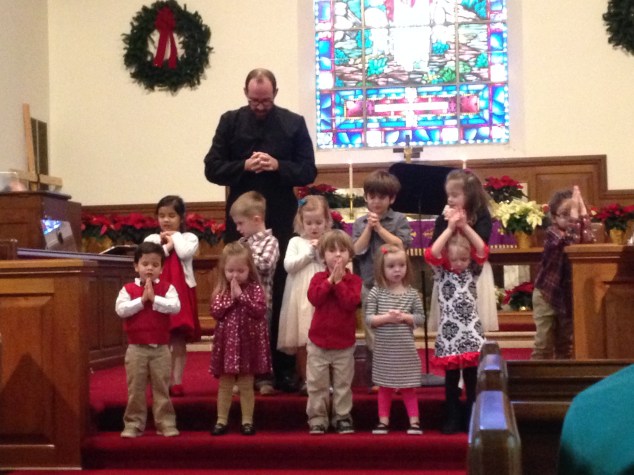
The sanctuary was nice and quiet when I first entered to pray for God’s will to be done over the following days, but the longer I prayed, the louder the preschoolers were down in the basement. I continued to lift up my concerns to God until I felt that I had fully expressed myself, and then I went downstairs to say “hello” to the kids.

Like most of you, they were also aware of the interviews I would have this week. Yet, even knowing this, I was not prepared for what happened when I entered the first classroom. The teacher quickly motioned to the kids and while I was trying to kneel to speak with one of them they promptly surrounded me in a circle, grasped hands, and started to sing: “Thank you God for giving us Pastor Taylor, thank you God for giving us Pastor Taylor, thank you God for giving us Pastor Taylor, right where are. Amen.

The Transfiguration is an important moment in the life of Christ, and it really bears witness to the identity of the Messiah. Up to this point in scripture, Jesus has performed lots of miracles; he has healed the unwell, embraced the outcasts, preached in the synagogues, and started a revolutionary movement. But all of these particular moments were a crescendo to the brilliance on the mountaintop.

Jesus took with the inner circle of disciples up to the peak to pray. And while Jesus was in the depth of his prayers his face began to change and his clothes became dazzling white. Suddenly, the disciples saw two men standing on either side of Jesus, one of them was Elijah, and the other was Moses. The disciples listened intently as the three shining men talked about Jesus’ departure that would soon take place in Jerusalem.

After they had discussed this for some time, and the two men started to depart from Jesus, Peter interrupted and begged Jesus to let them build three dwellings for this holy moment. He wanted to establish a degree of permanence in this brilliantly shining experience. But he, as scripture tells us, had no idea what he was talking about.

Then a cloud came and overshadowed all of them on the mountain and they were utterly terrified. But a voice cried out from the cloud saying, “This is my Son; my chosen. Listen to him!” When the voice finished, the disciples noticed that they were alone with Jesus, and they did not speak about this moment for a long time.

Shortly before this passage in scripture Peter was able to confess Jesus as the Christ; he understood that Jesus was the Messiah that the Hebrew people had heard about for centuries. Yet, this story of the Transfiguration is a reminder that even those disciples in the inner circle had gaps in their understanding. Professing deep and true faith requires something more than just knowing the stories from the past and connecting the dots. Professing deep and true faith requires transfigured moments that change everything.

transfiguration-abstract-e1360464424741

While the preschoolers sang their prayer around me, I felt like I was up on the mountaintop of Transfiguration. In their tiny voices and clasped hands I experienced the profound power of prayer in their willingness to lift me up in a holy moment. And like Peter, I didn’t want to the moment to end. Like Peter, I thought about setting up a dwelling place in that space to stay happy and comfortable.

When the kids finally shouted “Amen!” to conclude the prayer they immediately sprinted into the middle of the circle and started hugging me to the point that I fell over on the floor. It was a transfigured moment while I collapsed to the ground under the weight of laughing preschoolers, but I knew that I would have to eventually leave the mountaintop and make my way down to the valley of ordination interviews.

The next 24 hours were a blur. I made it to Blackstone, I spent the night, I woke up and interviewed all morning, and before I knew it I was back in my car heading west toward Staunton. The entire car ride was filled with more anxiety than before the interviews because now all I could do was wait. I spent far too much time rehashing questions in my mind and coming up with better answers than the ones I offered. But now the only thing I could do was pray patiently.

By the time our youth meeting rolled around on Wednesday evening, I had spent most of the day checking my phone every 5 minutes waiting for the call about whether I had been approved or not. I tried to be as present for the youth at the Circle but I know that my thoughts were elsewhere. With every minute that passed it felt like my heart rhythm was increasing one beat per minute. But still the call did not come.

I eventually brought the youth into the social hall and had them sit by the fireplace. I got a fire going and handed each of them a palm branch from our last Palm Sunday service and I explained our activity.

I said, “Every year churches take their used and dried-out palm branches and burn them. We do this in order to collect the ashes and use them for Ash Wednesday. Lent, which starts on Ash Wednesday, is a time to reflect on ways we could be better. It is a whole season for us to confront the mistakes we’ve made and start living like disciples of Jesus. I want each of you to take a couple minutes to think about one mistake you made in the past year, a moment you wish you could take back. I want you to imagine that failure as you throw your palm branch into the fire. And while you watch it burn, I want to you to remember that God can take our mistakes and make them into something holy. These palm branches will become the ashes that mark our foreheads next week. We will walk around with ashes signifying for everyone to see that we are broken people in need of grace. These ashes are a reminder that even though we mess up, God still loves us.

One by one we each took a turn throwing our palms into the fire and we watched them burn. We took our mistakes and watched them become ashes. We concluded by praying for God to make things new in our lives, to use the season of Lent to transfigure us into better disciples of his Son. When we said the final “Amen” I looked up and saw our District Superintendent standing in the room with a giant smile across his face and he told me that I passed my interviews.

Transfiguration-3

The Transfiguration is such a powerful moment because it is about transformation. Yes Jesus is changed into a glowing figure in dazzling white clothes, yes the appearance of Moses and Elijah reshaped the narrative of Jesus’ journey toward the cross, but when the disciples had to walk back down from the mountain their lives were forever changed.

Whereas they might’ve understood their friend to be a powerful speaker and leader, they were now confronted with the fact that he really was divine. Whereas they might’ve believed he was special, they were now confronted with the fact that he had real power. Whereas they might’ve believed he was capable of great things, they were now confronted with the fact that he was the Son of God. Jesus’ transfiguration transfigured their lives.

Standing by the fire on Wednesday night, as I let the knowledge that I will be ordained sink into my soul, and the youth started to jump around and yelp in celebration, I was reminded of how powerful those transfigured moments in life can be. I thought about how blessed we are to have a God who is so merciful and forgiving of our mistakes. I thought about how blessed we are to be surrounded by people in this church who pray for us and care about us. That moment by the fire reshaped my understanding of ministry and the church. In that transfigured moment I felt God’s love moving in this church through all of the connections we have made.

Transfigured moments always remind us how dependent we are on one another and the divine. When we encounter the true glory of the Lord it leaves us staggering in comparison. But God did not abandon the disciples on that mountaintop, and God has not abandoned us here and now. Instead God spoke through the cloud, and speaks to us today: “Jesus is the Son of God, listen to him!”

So what does it mean for us to listen to God’s Son here at St. John’s?

Do you feel loved? In your daily lives do you experience moments of joy that you can only equate with feeling loved? Do you have friends and family that care about who you are and what you’re experiencing? Are you connected with individuals you make you laugh and thankful for the gift of life?

This week, for me, has been an experience of love. Love of God and neighbor through all of you in this church.

In this church we have listened to Jesus speak to us, and we have responded to his command: “Love one another.” We have covenanted through baptism to love and support all those around us in the pews. We have gathered together to mourn during funerals and reach out to remind individuals of their worth. We have met here at God’s table to partake in the bread and the cup as a reminder that God’s love knows no bounds. We have opened our eyes and ears to the great witness of scripture that points toward God’s unfailing love for people like us.

So hear this from Jesus, and embrace it in your lives: “You are loved.”

No matter what you are currently experiencing, no matter how far you feel divided from the people around you, no matter how afraid you might be, you are loved. God has gathered all of us here in this place to build a new community of love.

When we lift up our hymnals to sing our faith we do so as a complete community in harmony with our relationship and our voices.

When we pray from our pews we do so as a new family who can faithfully say God is OUR Father.

When we are invited to this table to receive the bread and the cup we are invited as a community to a feast. There is a spot for us at God’s table where we can grow closer to the people in church next to us while growing closer with the Lord.

This is the place of transfigured moments that cut through the monotony of life. This is the place where we encounter the revealed Lord. This is the place where we hear Jesus saying to us, “You are loved.” Amen.

How Can We Be Biblically Wise?

1 Kings 3.5-12

At Gibeon the Lord appeared to Solomon in a dream by night; and God said, “Ask what I should give you.” And Solomon said, “You have shown great and steadfast love to your servant my father David, because he walked before you in faithfulness, in righteousness, and in uprightness of heart toward you; and you have kept for him this great and steadfast love, and have given him a son to sit on his throne today. And now, O Lord my God, you have made your servant king in place of my father David, although I am only a little child; I do not know how to go out or come in. And your servant is in the midst of the people whom you have chosen, a great people, so numerous they cannot be numbered or counted. Give your servant therefore an understanding mind to govern your people, able to discern between good and evil; for who can govern this your great people?” It pleased the Lord that Solomon had asked this. God said to him, “Because you have asked this, and have not asked for yourself long life or riches, or for the life of your enemies, but have asked for yourself understanding to discern what is right, I now do according to your word. Indeed I give you a wise and discerning mind; no one like you has been before you and no one like you shall arise after you.”

xlba-00052

This morning we conclude our sermon series on Questions. After polling most of you about your queries regarding faith, scripture, and the church, I compiled three of the most prevalent questions: What Are Angels? What Does The Bible Say About Divorce? And How Can We Be Biblically Wise? Though there are no simple, black and white, answers to any of these questions, we have strived during this series to bring clarity to our wonder. This morning we finish with “How Can We Be Biblically Wise?”


Three men were trapped on a deserted island. During the months of their stranded captivity they learned to rely on one another for survival. Without entertainment, they told each other stories and grew very close together. Each day one of them was responsible for making minor repairs to their shelter, one was tasked with scavenging for food, and the last one had to comb the beaches for anything helpful that might’ve washed up.

One particularly beautiful morning, the third man was walking along the beach when he discovered a strangely colored bottle sticking up in the sand. He quickly procured it with his other discoveries and brought them all back to the shelter. Later that night, while they were looking through all the goodies from the beach, one of the men accidently rubbed the bottle and a genie popped right out!

Because there were three men present, the genie explained that he could grant each of them one wish, rather than giving each of them three wishes. The first man wasted no time and declared, “I miss my family and I wish that I could be back with them!” The genie snapped his finger and poof; the man disappeared.

The second man thought for a moment and said, “You know, I was engaged before I got trapped on this island, I wish I was back with my fiancé.” The genie snapped his finger and poof; the man disappeared.

The third man was now alone with the genie and he thought long and hard about his wish. After all, it’s not like you run into a genie everyday. So he stood there with the genie thinking about all of the things he could wish for when he causally said, “Geez, I wish my friends were back here to help me make my wish.”

Be careful what you wish for…

Solomon was young, inexperienced, and about to rule the kingdom when God showed up in one of his dreams. Almost like a genie, the Lord asks Solomon to make a wish. And, like a preacher in a bad sermon, Solomon over-explains his wish: “God, you were great and loving to my father David because he walked before you in faithfulness, righteousness, and in uprightness of heart. Throughout his years you kept your great and steadfast love for him, and now you have given him a son to sit on his throne; you gave him me. But God, I am only a little child, and I don’t know the first thing about taking care of others. I am in the midst of the people you have chosen, a great people, so numerous they cannot be counted. So Lord, if I can ask for anything, give me an understanding mind to govern your people, able to discern between what is good and what is evil. Give me wisdom.

the_god_kind_of_wisdom_std_t_nv

It pleased the Lord to hear Solomon wish for wisdom. God then replied to Solomon in his dream: “Solomon, because you have asked for wisdom, and have not asked for yourself long life or riches, or for the life of your enemies, but have asked to be able to discern what is right, I now do according to your word. Indeed, I will give you a wise and discerning mind; no one like you has been for you and no one like you shall arise after you.”

Of all the things Solomon could’ve requested: wealth, prosperity, and military victory… He chose wisdom. As a young ruler of God’s chosen people he selflessly asked for the knowledge to lead God’s people in the ways that lead to life.

Godly wisdom, or biblical wisdom, pleases the Lord when it is not self-serving, but other serving. Solomon’s desire for wisdom, because it was for the betterment of others, is what inclined the Lord to dispense it generously. It is in our willingness to use wisdom for others that we begin to experience God’s grace in the world around us.

Fred Craddock is widely regarded as one of the greatest preachers in recent history. His command of scripture is evident in his sermons and he captivated anyone with ears to hear. But before he became a great preacher, he was a normal Christian just like you and me.

During the height of the Civil Rights movement, Craddock found himself driving across the country. He was making his way through northern Mississippi early one morning and needed to stop for a cup of coffee and some food. He found a no name diner in the middle of a town and made his way in for breakfast. It was early enough in the morning that Craddock was alone in the diner with the cook and he ordered his food and coffee. While he was sitting at the counter, a black man entered and sat down a couple stools away and ordered a coffee. The cook turned around and said, “Get out! We don’t serve your kind here!”

The man patiently responded, “My money is just as good as his” while pointing at Craddock. But the cook continued to point at the door and said, “The sign says ‘Whites Only’ so get out before I put you out!

The black man sighed and slowly removed himself from the stool and the diner.

Craddock continued to finish his meal, paid, and left. But right before he was about to get back in his car, in that still and quiet morning moment, he heard a rooster crow in the distance.

Are any of you feeling chills? Some of us will immediately understand the significance of this moment: Craddock, after sitting and witnessing the racism and bigotry mere feet away from him, realized that he had just denied Jesus as Peter did right before his crucifixion. But some of us did not catch the meaning; we did not have an emotional response to the conclusion of Craddock’s little narrative. If we missed the power of the rooster crowing in the distance, it is because we are unfamiliar with the ways God works in the world.

I had a number of you request, for this sermon series, that I preach about biblical wisdom. I can summarize the whole answer to the question in one sentence: “How can we be biblically wise?” “By reading our bibles!”

Image of an old Holy Bible

If Craddock was not as familiar with scripture as he was, he easily could’ve entered his car after hearing the rooster crow, and would have missed the power of what God was trying to communicate to him. God used a particular moments to speak large and powerful words to Craddock and God does the same thing in our lives. But if we are not familiar with the ways God has communicated in the past, then we will probably miss the ways God is trying to speak to us right now.

To be biblically wise implies a willingness to bring our souls into alignment with God’s ways. Yet we, as broken and flawed people, have a propensity to become out of alignment with God’s ways. To reorient ourselves, to turn back to the ways of God, we do so by reading scripture.

If we’re here in this sanctuary then we are already on the right path. It was only a few minutes ago that God’s Word was read to us in this place. By taking the time to listen to scripture in a sanctuary we are taking the first steps down the path that will bring us back to the kind of wisdom God desires for us.

But just coming to church is not enough.

We can do some incredible things in this space on Sunday morning, we can re-enter the strange new world of the bible, we can see ourselves in the biblical characters of the past, we can learn about how God uses things like roosters to shock us in the midst of our lives, but it is not enough.

One of the things that Christian people do, is read the bible. The bible is completely unlike any other book that we might read. Any of us can pick up a piece of literature and say, “This is a nice story.” However, the bible is not “a story’, it is “our story”. Our lives began with Adam, Noah, Abraham, and Moses. Our history goes back to the very beginning. When we read these stories, whether in church or in our daily lives, these stories are about our family.

A strange thing happens when we start reading our bibles and to see them as the living Word of God. When we get to the point where we can let the Holy Spirit bring us inside scripture we begin to really recognize it as our story. Suddenly all of these bizarre and exciting figures from the past look us in the eyes and we recognize our own reflections. We begin to see that we are like them and they are like us.

God is speaking to us all the time. Though not necessarily as the big booming voice we often see portrayed in movies and stories. God uses things like people, scripture, and even roosters to speak the truth into our lives. We can listen all we want, but until we are willing to become a people of the book, then God’s words will fall on deaf ears.

If we want to be biblically wise, we have to read our bibles. Amen.


What Does The Bible Say About Divorce?

Mark 10.2-12

Some Pharisees came, and to test him they asked, “Is it lawful for a man to divorce his wife?” He answered them, “What did Moses command you?” They said, “Moses allowed a man to write a certificate of dismissal and to divorce her.” But Jesus said to them, “Because of you hardness of heart he wrote this commandment for you. But from the beginning of creation, ‘God made them male and female.’ For this reason a man shall leave his father and mother and be joined to his wife, and the two shall become one flesh.’ So they are no longer two, but one flesh. Therefore what God has joined together, let no one separate.” Then in the house the disciples asked him again about this matter. He said to them, “Whoever divorces his wife and marries another commits adultery against her; and if she divorces her husband and marries another, she commits adultery.”

Le divorce

This morning we continue our sermon series on Questions. After polling all of you about your queries regarding faith, scripture, and the church, I compiled three of the most prevalent questions: What Are Angels? What Does The Bible Say About Divorce? And How Can We Be Biblically Wise? Though there are no simple, black and white, answers to any of these questions, we will strive during this series to bring clarity to our wonder. This morning we continue with “What Does The Bible Say About Divorce?”


Good morning. It is so nice to see and be with both of you for this premarital counseling session. I am really excited about your wedding and I considerate it a privilege that you’ve asked me to preside over the service.

Before we really get started, let’s pray… Amen.

So, tell me about your last fight… Uh huh, interesting. And would you agree? … Okay. So let me get this straight, your mother keeps offering her unsolicited opinion about what you two should do with your money, and then your mother keeps inserting herself into wedding plans? But the fight really started when you began arguing about where you would be spending your first Christmas as a married couple. You think you should be with your parents and family? And you think you should be with your parents and family?

This is going to be a great session!

Marriage is a strange thing. Out of all the people in the world, out of all the conversations and friendships and relationships, you two have been brought together (somehow or another) and you are now about to make a public covenant that you want to be together for the rest of your lives.

Let’s talk about why you want to be married. Everything in your relationship seems to be going fairly well, so why do you want to move toward marriage?

Because you love each other… How precious. We’ll talk more about love later. What else? What makes you feel like the person next to you in the one you want to wake up next to forever?

You trust each other… nice. You feel complete when the other one is around… good. You want to start your own family together… great.

Marriage is a public union ratified by God in heaven. In gathering together before your friends, families, and the Lord you will make a covenant to embody Christ’s love for us with the person sitting next to you. It is just about the most serious decision and commitment that you will ever make.

So you know why you want to get married. The next question, then, is why do you want to get married in the church? Because the three of us could get in the car and head down to the courthouse right now and you could be married within the hour. It would be a legal marriage in the eyes of the state and it would probably cost a whole lot less. So, why get married in the church?

I love that answer: You believe that marriage is bigger than just the two of you, and you want to the community of faith to be there with you. Wow.

Have you all thought about what scripture you want to use in the service? I encourage all couples to spend time in the bible and search for a verse or a passage that has special meaning for you. My only caveat is this: I will not preach on 1 Corinthians 13. Do you know it? “Love is patient; love is kind; love is not envious or boastful or arrogant or rude. It does not insist on its own way; it is not irritable or resentful; It does not rejoice in wrongdoing, but rejoices in the truth. It bears all things, believes all things, hopes all things, endures all things. Love never ends”

Why won’t I preach on 1 Corinthians 13? Love is not enough to make a marriage work.

A successful marriage will never be contingent on your whims or your romantic feelings for one another. There will come a day, I promise, that you will not look or feel as good as you do right now. Love is not enough to carry you through the changes and the frustrations that will occur. Marriage requires more than love.

Between this session and the next, take the time to dive deeply into your bibles and find a scripture you want to use in the service and we’ll go from there. Just stay away from 1 Corinthians 13.

Have you thought about any hymns you would like to use in the service?

Number 408. Wait… is that “The Gift of Love”?

Were you not listening to anything I just said? Love is not enough. A successful and faithful marriage is based on qualities like endurance, patience and hope, conversion and renewal, forgiveness and reconciliation. (sigh)

Anyway. Have you all considered the seriousness of your marriage? Which is to say, have you talked about divorce?

Both sets of parents are currently divorced? And it happened when you were a child, and when you were in college? How do you feel about divorce?

Interesting. You believe this covenant is so important that you will never get divorced? That’s rather admirable.

But here’s a dose of reality. 50% of all marriages end in divorce. In our country there is one divorce every 36 seconds. That’s nearly 2,400 divorces per day, 16,800 divorces per week and 876,000 divorces per year. Divorce is so remarkably prevalent in our culture and society to the degree that we have become numb to it.

For too long the church has refused to confront divorce. We’d rather talk about every other controversial subject under the sun, but bring up divorce and you start making people really uncomfortable.

Bride and groom figurines standing on two separated slices of wedding cake

And let me be clear, there are circumstances that occur in marriage where divorce is probably the best possible solution. Situations like physical abuse or traumatic adultery, but people get divorced for the most mundane reasons. “Our interests have grown apart” “We no longer effectively communicate” “We’re not in love anymore.”

As a society, we no longer take the covenant of marriage seriously. Some of us are too quick to end the relationship whenever we feel those first hiccups. As Christians, however, we are called to hear the bible and Jesus who are quite clear in their reflections on divorce.

The pain and complications of divorce cast a great shadow across almost every family and congregation, yet we fail to talk about it. Jesus once told his followers “What God has brought together, let no one separate.” God is the one who does the joining; it is we, with our fallen and broken natures, who do the separating. Marriage is a serious thing, perhaps the most serious, and we need to start taking it seriously. Divorce will always be a possibility, but it should be a last resort.

I have some tips for you. They’re not full-proof ways to avoid having your marriage fall apart. But they are practices that you can initiate now in order to help when things get rocky.

Accept the fact that you two are different. Opposites tend to attract and each of you are not only physically different, but have different backgrounds and outlooks to particular situations. God designed these differences for a reason. The more you learn to celebrate the things that make you different, the stronger your marriage will become.

Leave and cleave. Don’t let either set on in-laws dictate how you will lead your new family. Decide in advance that no one will become a wedge between the two of you. Every couple has lots of other relationships, including the possibility of children at some point, but none of them should be allowed to interfere with the oneness God will create in your marriage.

Make a commitment to the marriage no matter what. Couples usually assume that everything in their marriage will work out, when the reality is that many couples only commit until it becomes difficult or until the love starts to fade. If, and when, you struggle, you need to learn to ask for help. Remove the fear of asking for professional counseling if necessary. It would be better to get help early than to see your marriage disintegrate beyond repair.

Model after the right couples. I encourage both of you to find a couple whose marriage you admire, and follow them closely. If they are as good as you think they are, the probably have stories to share about how they got there. Things may not have been as wonderful throughout their marriage as it is right now.

Put Christ first. This is the one that you were probably expecting me to say, but it’s not just the preacher in me talking, it’s the best way to ensure a lasting marriage. Your individual and collective relationship with Christ will enable you to move through the toughest days in marriage. When I stand with you before all of your friends and family, you will make a vow, but it is not a private one. In marriage, the two of you will enter into a union that is not your own, but will be received in participation with Christ and properly lived out in the church.

Are you still feeling like you want to get married? I know I’ve made it sound like one of the hardest things in the world, but that’s because it is. If you are serious about committing to your marriage, then you have to recognize that the only way it can be done well is with the grace of God. There will come a day when you wake up next to the person you are sitting next to right now, and you will have no idea how it happened. You will move through tragedies and hardships, you will celebrate on the mountaintops of joy, and if you are still married it is because you have found the true nature of marriage through the God of hope.

Marriage, and I mean Christian marriage, is committed and covenanted. Marriage, seen this way, is about as counter-cultural as can be. Marriage can only be sustained in a community, like the church, which understands itself as something strange compared to the world. Marriage is one of the ways the community of faith embodies the surprising hope of new creation.

If you want to know the real secret to a successful marriage, is begins with discipleship. As disciples, you learn about how God’s commitment to us is so strong that God will never divorce himself from us; God will never abandon us. As disciples, you learn about the sacrifice Christ was willing to make for us and therefore we are able to sacrifice for one another. As disciples, you learn that the only way to make it through this thing called life is to have a community around you to support you through it all.

I want to thank both of you for taking the time to meet with me in preparation for your wedding. Over the coming weeks and months we will meet again to talk more about marriage, the church, and your actual ceremony. It’s going to be great. Throughout his ministry, Jesus loved comparing the kingdom of heaven to a wedding feast. This means that your wedding will be one of the rare times that we can experience a little bit of heaven here on earth. Thank you foe inviting me into this holy and remarkable moment in your lives. But I have to warn you, if you chose to invite me to the reception following the ceremony, I will dance the entire time. Amen.


10882177_10203170202006882_2656540029380569957_n

1498071_10151977138149016_1228625660_o

1559323_10204258156845073_4982157524832909104_o

What Are Angels?

Hebrews 13.1-3

Let mutual love continue. Do not neglect to show hospitality to strangers, for by doing that some have entertained angels without knowing it. Remember those who are in prison, as though you were in prison with them; those who are being tortured, as though you yourselves were being tortured.

xlba-00052

This morning marks the beginning of our sermon series on Questions. After polling all of you about your queries regarding faith, scripture, and the church, I compiled three of the most prevalent questions: What Are Angels? What Does The Bible Say About Divorce? And How Can We Be Biblically Wise? Though there are no simple, black and white, answers to any of these questions, we will strive over the next few weeks to bring clarity to our wonder. This morning we begin with “What Are Angels?”

Close your eyes. Seriously. Close your eyes. Picture, if you can, an angel. What do you see? Think about the movies you’ve watched, or the stories you’ve read about angels and try to picture one in your mind. What do you see? If you’re anything like the people I encountered this week, people who tried to picture an angel in their mind, you would describe the vision like so: “Angels are clothed in white and might be glowing.” “All angels have halos hovering above their heads.” “You can’t be an angel without wings.” “When we lose someone we love, they come back to us as angels.”

If we want to know what angels are, then we should begin with what they look like. And if we want to know what they look like, we should begin with scripture.

Angels are mentioned 273 times in the Bible. That’s a lot. They appear in both the Old and New Testaments. They appear to prophets and paupers. They minister to the wealthy and the weak.

I know many of us like the image of an angel with a halo, during our Preschool Pageant all of the angels had pipe cleaner halos hanging above their heads, but halos are never mentioned in scripture. Angels, when they do appear, are oftentimes described as having a particular shine or brightness, but they don’t have floating discs above their heads.

Some passages describe angels having wings, but others just describe them as looking like human beings. Zechariah is in the temple when an angel, who looked like a man, appeared and told him about his son John the Baptist. After Jesus was born, an angel appeared in Joseph’s dream and warmed him to get the child out of Bethlehem. Even when the disciples went to the tomb after Jesus’ crucifixion they saw two men in shining garments who told them about Jesus’ resurrection from the dead.

Well then, what do angels do? They report to God, they observe God’s people (us), they announced the birth of Jesus to the shepherds in the fields, they help God’s people when they are in need, and they rejoice in God’s creation and offering of salvation.

The descriptions and stories of angels in scripture vary and are all over the place. They certainly exist and work for God’s purposes, but that doesn’t make them any easier to understand or grasp. However, there is one thing that connects most of the angels in the bible, and it’s the way people react to their presence: fear.

the_ministry_of_angels_in_the_lives_of_believers

Before I came to St. John’s, I spent a year working as an on-call chaplain for Duke University Hospital in Durham, North Carolina. Every week I gathered with other chaplains to talk about grief, death, and suffering. We worked through our own issues with the brokenness in the world, and we were responsible for visiting people in need throughout the community.

I often met with people near the end of life who were tasked with making decisions about the way they wanted to die. Throughout my time in chaplaincy I became well versed in the topics of Do-Not-Resuscitate, Advanced Directives, and Power of Attorney. I was invited into some of the darkest moments of peoples lives and while everyone else would tell someone that they were going to be okay, that they would get better, I was one of the few people tasked with telling the truth: no one makes it out of this life alive.

During my year of chaplaincy, I had multiple 24-hour shifts at the hospital. I would put on my overly large white lab coat and respond to particular patients and their needs. More often that not I would be called to a room for someone who was lonely and just wanted another human being to be present with them. But every once in a while, I would be called to a room with a patient who needed something more.

It was 4 am, and I had been running around the hospital for my entire shift. Every time I thought I would have a moment to rest, a patient would die and I would have to meet with the grieving family. At 4am I received a page to a particular unit on the other side of the hospital with the words: We Need You.

Outside of the patient’s room I learned from the doctor and nurses that the patient was about to die; there was nothing else they could do to prolong her life and they wanted me to sit with her. Normally one of the nurses would stay in the room but they were so swamped with other patients that they could not spare another nurse. Of course, I asked about any family member that would want to be present and the staff just looked back at me with empty eyes and said, “She’s all alone.”

They left me standing there in the hallway, so I said a brief prayer and then walked right in.

Something about the hospital room was different. Whereas most are filled with machines making lots of noises, this room was quiet and peaceful. And strangely enough, I remember it being very warm; warm enough that I had to take off my lab coat and roll up my sleeves. The woman was lying in the hospital bed and was going in and out of consciousness. So I pulled up a chair and started to hold her hand.

For thirty minutes I sat there looking at the wrinkles on her skin wondering about her life, wondering about why no one else was there with her at the end, and if I should say anything. Instead, I just sat and held her hand at the minutes went by. I couldn’t even imagine the kind of pain and hurt I would’ve felt if I was in a room all by myself at the end of my life, and if I’m honest, the thought of it made me cry while I sat there holding her hand.

I don’t know how long I had been there when she started to move around a little bit more and opened her eyes to look right at me. We held one another in sight for some time when I felt like I needed to explain why I was there, so I said, “I’m the chaplain and I didn’t want you to be alone.”

            In response, she smiled her so slightly and said, “I’m not alone.”

After that holy moment, we continued holding hands in silence until her breathing started to fade away, until her heart stopped beating, until she died.

That night at the hospital, when I was afraid of the power of loneliness, when that woman was facing her final earthly moments, I believe there was an angel in the room with us. I couldn’t see it, but as soon as she told me that she wasn’t alone, I knew it was true.

If and when God sends angels to us, we are either very afraid, or are about to be afraid by their presence. It is a humbling and powerful thing to be attended to by the likes of an angel and it really puts us in our place. I have asked countless people form our church if they have ever seen or experienced an angel and I was shocked, in a good way, by how many people said yes.

I heard things like: “My grandfather had just passed away and my brother and I were driving around Staunton when we saw a man who looked exactly like our grandfather walking down the street, wearing the same type of clothes, who took out a comb just like our grandfather did to comb his hair, and we knew that even though he died, he was still with us.”

“My sister was driving in her car when she felt asleep at the wheel and veered off the road. She woke up while the car was flipping over and she said she felt time slow down and arms wrap around her to protect her. While the car tumbled and tumbled she was held tight and only after the car stopped moving did she feel the protective arms let go and she was okay.”

Big and small, dramatic and simple, angels have showed up in our lives. The writer of Hebrews tells us to be faithful in our hospitality toward others because we never know when an angel will show up in our midst. Whether it’s in a hospital room, or driving through town, or even in church, angels show up.

When I first felt God calling me to ministry I was afraid. I was afraid of how my family would respond, and what my friends would think. I was afraid of whether or not I had what it would take to be a pastor. I was afraid of how much it would change my life.

And then at 16, while walking down Ft. Hunt road in Alexandria, VA I felt pulled to my knees and I prayed and prayed. I didn’t see an angel near me, or hear an angel speak to me, but I felt an angel’s presence with me as I prayed for God’s will to be done in my life, and not my own.

I can only articulate that experience of an angel in my life and in that hospital room because the church has given me the vocabulary of divine intercession. I can only look back and say that an angel was with me, because the church taught me how to open my eyes to the ways that God actually works in the world. Others might talk about a bizarre feeling they had or a strange movement in their midst. The church taught me to understand those experiences as angelic and holy moments.

What are angels? Angels are God’s way of helping us to see and experience God’s will in our lives. Angels are God’s way of pushing and nudging us in the right direction. Angels are God’s way of bringing us peace when we feel the depth of fear. Angels are God’s way of reuniting the heavens and the earth in profound and holy moments. Angels are God’s way of rescuing us from ourselves. Angel’s are God’s way of reminding us that we are never alone.

I conclude with these words from the hymn that we will sing in a few moments. I offer these words so that they might help us to recognize and experience the angels in our midst. O Lord, Open my eyes that I may see, glimpses of truth though hast for me. Open my ears that I may hear, voices of truth thou sendest clear. Open my mouth and let me bear, gladly the warm truth everywhere. Silently now I wait for thee, ready, my God, thy will to see. Open my eyes, illumine me, Spirit divine. Amen.

Praise The Lord!

Psalm 150

Praise the Lord! Praise God in his sanctuary; praise him in his mighty firmament! Praise him for his mighty deeds; praise him according to his surpassing greatness! Praise him with trumpet sound; praise him with lute and harp! Praise him with tambourine and dance; praise him with strings and pipe! Praise him with clanging cymbals; praise him with loud clashing cymbals! Let everything that breathes praise the Lord! Praise the Lord!

00033674_h


I am a creature of habit. I like routines, I like order, and I like preparation. I asked Lindsey to give me three examples of how I am a creature of habit and her response was: “only three?” I like my coffee a certain way, I enjoy sitting in a particular chair to read books, and I have rhythms for most of the events in my life. Sundays are no exception.

Most Sundays I arrive here in the sanctuary hours before some of you are even awake. Of course I start with the practical things like turning on the lights and unlocking the doors, but then I make my way back to the sanctuary to prepare for worship. First I pray on my knees from the third pew on the right hand side and confess where I have fallen short and how I have sinned. I pray for God’s forgiveness, and ask God to show up in my words in worship, even if I don’t deserve it. I then make my way up to the altar and praise God for the mighty acts revealed in scripture and in my life.

When I turn around I walk down the center aisle and I pray over every single pew asking for God to turn them into avenues of connection rather than walls of division. My hand touches every pew and I pray for God transform all of the people who will inhabit them through our worship.

From the Narthex I pray for the ways that we greet people on their way into the church, and I even go out onto the front lawn to give thanks for Staunton, and ask for God to send to us all who need to feel God’s love.

All in all it takes some time to prayerfully prepare for worship, but it’s worth it. When I finish praying, I make my way into the pulpit and read over the bulletin one last time. I check to make sure that the theme of worship is present throughout the entire worship service and, before I read my sermon out loud, I pull out my hymnal.

Like I said, I am a creature of habit. Every Sunday before any of you get here, I pray in this sanctuary and I sing through the hymns by myself. When I’m alone in the church I can belt out the hymns without the deep sighs from our organist Rick in response to me not keeping the pitch, I can let my emotions get the best of me without being judged by some of you from the pews, and I can just be myself up here jamming.

One Sunday, after going through my whole prayer routine, I stood up in the pulpit and looked at the bulletin to the hymn number for “Have Thine Own Way, Lord.” And I did what I always do. And I got really into it: (sing Have Thine Own Way)

Of course, when I sing, I often close my eyes and just let the words flow. So here I was singing from the top of the lungs from the pulpit, and you can imagine my surprise and terror when I finished the last note and someone shouted, “sounds okay from back here!

A visitor to the church had arrived hours early, walked in through the narthex, picked up a bulletin, and sat down in the farthest back pew, and was listening to my solo. I stood up here in shock without knowing what to say and I fumbled through trying to explain myself when the man raised his hand to stop me and said, a little too sarcastically, “I’m sure other pastors do this kind of stuff all the time.”

I am a creature of habit and, even though I was embarrassed that one morning, I still sing all the hymns before you get here. Singing the hymns and reading over the lyrics is incredibly important, because when we sing from this hymnal, we are articulating our faith. When we sing from this hymnal we are reentering the world of scripture. When we sing from this hymnal we are praising the Lord.

So let’s go to that hymn that I embarrassingly belted from the pulpit; number 382 Have Thine Own Way, Lord. (Sing together.)

Is this a familiar tune for you? Can you remember singing it when you were younger? Maybe you’ve heard the version that Johnny Cash performed. This is a beautiful hymn. The words quote Jeremiah 18.6 about clay in the potter’s hand. The tune is easy to follow and the theology behind it is great: It is an honest and prayerful desire for God’s will to be done in our lives.

I have always enjoyed singing this hymn, but when I learned the story behind the hymn it became that much more precious. If you look to the bottom left hand corner of the page, you will see that Adelaide Pollard wrote the hymn in 1902. The story goes that Adelaide was going through a rough period in her life and was unsuccessful in raising enough funds to make a trip to Africa for missionary work. In the depth of her struggle, she went to a tiny prayer meeting one night for the local community. She listened to person after person make their prayer requests for medical issues, material possessions, and a slew of other things when an old woman stood up to make her prayer request. Bucking with the trend of the evening the old woman simply said, “Have thine own way with me, Lord.” Impressed by the faith of the old woman, Adelaide went home that night and wrote the words to the hymn.

Psalm 150, the final one of the entire psalter, compels us to praise the Lord through music. Praise God with trumpets, lutes, harps, tambourines, dance, strings, pipes, and cymbals. Toward the beginning of the hymnal, we can find John Wesley’s directions for singing, that pair so well with Psalm 150:

“Above all sing spiritually. Have an eye to God in every word you sing. Aim at pleasing him more than yourself, or any other creature. In order to do this attend strictly to the sense of what you sing, and see that your heart is not carried away with the sound, but offered to God continually; so shall your singing be such as the Lord will approve here, and reward you when he cometh in the clouds of heaven.”

So we are going to follow the words of Psalm 150 and the words of John Wesley, we are going to praise the Lord. I would like all of us to take out our hymnal and turn to our favorite song. When you find the one you love shout out the number and we will sing the first verse. (We’ll probably do this for five hymns) Together we will praise the Lord. And as we do, take the time to soak up the words and the let the tune flow over you so that the Lord will approve our singing and reward us when God comes in the clouds of heaven. Amen.

What Are You Wearing?

Colossians 3.12-17

As God’s chosen ones, holy and beloved, clothe yourselves with compassion, kindness, humility, meekness, and patience. Bear with one another and, if anyone has a complaint against another, forgive each other; just as the Lord has forgiven you, so you also must forgive. Above all, clothe yourselves with love, which binds everything together in perfect harmony. And let the peace of Christ rule in your hearts, to which indeed you were called to be one body. And be thankful. Let the word of Christ dwell in you richly; teach and admonish one another in all wisdom; and with gratitude in your hearts sing psalms, hymns, and spiritual songs to God. And whatever you do, in word or deed, do everything in the name of the Lord Jesus, giving thanks to God the Father through him.

IMG_0624

Worshipping so close to Christmas Day is a challenge. Christmas Eve: I love it. The way families come out, the perfect color-coordinated outfits, and we get a ton of people who never come to church. But the crowd on the Sunday after Christmas, you all, you make it tough. You are the real deal. You are the ones who love the light of Christmas Eve but recognize that you need the companionship of other Christians to hold you accountable in between Christmas Eve and Easter. You expect to hear uplifting sermons on Christmas Eve, but you also want to hear about the challenges of living a faithful life. You don’t want the watered-down stuff. You want the authentic discipleship.

Francis Asbury, depicted in this stained glass window to my right, also felt the challenge of preaching on this side of Christmas. In his journal entry from Christmas day in 1788, while making his way through the wilds of Virginia, he wrote: “I preached in the open house at Fairfield on Isaiah 9.6. I felt warm in speaking; but there was an offensive smell of rum among the people.”

From up here in the pulpit I certainly can’t smell rum on your breath, but I can smell all the Christmas food filling up all your Tupperware in the fridge, the ripped wrapping paper stuffed in trash bags, and all of the new clothes and gifts you received. Friends, you stink of Christmas.

Worshipping so close to Christmas day is a challenge. While we are still flying high on all the gifts we opened and gave, while we are admiring all the new clothes we get to wear, God still call us together to hear the Word.

One of my good friends and preaching colleagues is a man by the name of Jason Micheli. He served as a mentor for my faith while I was growing up, and even presided over Lindsey’s and my wedding. Years ago he wanted to preach a sermon that involved a number of props up by the altar. The church had three services on Sunday morning so he would have to preach it three times in a row. The sermon had to do with the fact that all people are invited to feast at God’s communion table, so Jason had set up a variety of different looking dining room chairs around the altar. The point being that no matter who you are, what you’ve done, or what you look like, you are invited.

However, during the sermon, Jason wanted to lift up specific chairs and move them around the altar to get the message to really sink in. At the 8:30am service, while wearing his long white robe and carrying a chair up the steps, he stepped on the front part of his robe and nearly fell straight on his face in front of the whole congregation.

For the 9:30 and 11 o’clock services he made the decision to ditch the robe for fear of actually falling and making a fool of himself during the sermon. So during the final two services he said the same words, lifted the same chairs, made the same points, but did so without a robe.

Like all pastors, Jason heard the kind of generic compliments and critiques that are often expressed in the narthex following worship. “Good sermon” or “You gave us a lot to think about” or “Nice weather today.” But none of the comments prepared him for what happened next.

Over the following days and weeks, Jason received a considerable number of anonymous complaints from church members about the fact that he did not wear a robe during worship. He wasn’t trying to make some point, or go contemporary, or purposely upset people. He just didn’t want to fall down and get hurt. But instead of going to him directly to express their opinion, anonymous notes were left under his door, members went to lay-leaders with their frustrations, and some even bypassed the local church and went straight to the bishop to complain. The situation became so intense so fast that Jason actually received a phone call from the bishop about the fact that he was not wearing a robe in church.

Want to know a secret? God’s doesn’t care what we wear to church.

God couldn’t care less about what we have adorned on ourselves when we gather in this place. So long as we are wearing something, God is content. Yet, we put so much emphasis on the clothing and appearance of one another.

Put-on-love-500x370

On Christmas Eve, mere days ago, a time when the church is filled to the brim, I received more comments about the Christmas colored pants I was wearing than anything else. Before and after the service that’s what I heard about.

And it’s not isolated to Christmas Eve. Week after week I overhear seemingly innocent comments from some of you, “Can you believe what she wore to church this week?” or “How can she let him out of the house looking like that?” And two years ago, when I was invited to preach at Central UMC during Lent I wore a pair of Carhart Coveralls in the pulpit. To this day I still run into people in Staunton who remember what I wore far more than what I said. And if I’m honest, I judge on outward appearance as well. Whenever I’m driving through our town, or even when I’m up here in the pulpit, I catch myself making judgments about how other people look.

How strange that we judge on outward appearance, while God cares about the content of our character.

Paul wrote to the church in Colossae about how to dress properly. Clothe yourselves with compassion, kindness, humility, meekness, and patience. Bear with one another and, if anyone has a complaint about someone else, forgive each other; just as the Lord has forgiven you. Above all, clothe yourselves with love, which binds everything together in perfect harmony.

This Christian work regarding our behavioral and spiritual clothing is tough. We are called to bear with one another, forgive one another, and be bound to one another. This kind of work and effort is not for the faint of heart. This passage is not advice on how to avoid conflict. This passage is not telling us to put on a happy face and smile. This passage is not Paul’s version of accentuate the positive.

This text is about what to do when the real emotional brawls break out in our lives.

When the earliest Christians were baptized, they were told to strip off their clothes before entering the baptismal waters, and then were given new clothes in their new life. The clothes themselves were nothing special, but the whole act was to signify an entirely new way of being and relating to others.

When they stepped foot out of the water they were making a covenant to be clothed with the virtues of Christ: compassion, kindness, humility, meekness, and patience. They embarked on the difficult practice of bearing with one another and the ultimate challenge of forgiveness. They started on a path on striving to live like Jesus in the world.

God does not care about what we wear to church, but is instead concerned with the way we dress our souls.

We can wear all the right Christian clothes, we can wear clergy collars or robes, we can adorn ourselves with shirts that came from a mission trip, or we can wear the biggest crosses you’ve ever seen around our necks, but until we are clothed with the behavior and compassion of Jesus, all the clothes remain meaningless.

Col.-3.12

To be well dressed with Christ is to live in harmony with others. Not just letting other people get away with their behavior and smiling absent-mindedly in response. Not just letting frustrations percolate for years. Not just ignoring people who are different than us.

To be well dressed with Christ is to actually forgive others, actually live our lives with compassion, kindness, humility, meekness, and patience. To be well dressed with Christ is to be clothed with love.

The days after Christmas are always interesting. Worshipping so close to Christmas is obviously a challenge and exemplifies the depth of discipleship. But in our day-to-day lives, the days following Christmas can bring out the worst in us. The joy of presents can be replaced with thoughts of the other things we wanted. The excitement of the family getting together can be replaced with the old arguments and fights. The hope of a baby born in a manger to save the world can be replaced with the scream and tears of our children coming down from a sugar-rush.

Yet, here we are. In the shadow of Christmas trees we gather to remember the light that shines in the darkness. While people rejoice with their new material gifts and possessions we give thanks for the gift of Christ that endures forever. As the marketed desires of the world turn to the next big holiday, we remember that every day is a gift.

We are challenged by the words of Paul today. Paul calls us to act, speak, and behave like Christ. While the world spins and focuses elsewhere, we are pushed to live like the baby born in the manger.

When we wake up every morning, if we do so with compassion, kindness, humility, meekness, and patience we will be living according to the ways of the one born in Bethlehem, the one who walked and talked in Galilee, hung on a cross for you and me, and rose three days later magnificently. Amen.

The Gifts of God – Peace

Micah 5.2-5a

But you, O Bethlehem of Ephrathah, who are the one of the little clans of Judah, from you shall come forth for me one who is to rule in Israel, whose origin is from of old, from ancient days. Therefore he shall give them up until the time when she who is in labor has brought forth; then the rest of his kindred shall return to the people of Israel. And he shall stand and feed his flock in the strength of the Lord, in the majesty of the name of the Lord his God. And they shall live secure, for now he shall be great to the ends of the earth; and he shall be the one of peace.


IMG_8605-5843

The children looked perfect in their Christmas pageant costumes. One by one they entered the chancel area in preparation for proclaiming their individual lines. The shepherds came first, watching over their sheep. Then the animals of the manger came forth, including a cow, a bird, and a mouse. They all made it to their spots and sat perfectly still as a donkey, Mary, and Joseph walked up to the microphone and exclaimed that a baby would soon be born, but they would need to find a place to stay.

Then the angelic cherubs boldly walked down the center aisle in the dark each holding an electric candle. The lead angel walked up to the microphone and frightening declared: “Do not be afraid! I bring joy to everyone!” The wise men and a camel followed the star to the manger where they presented the baby Jesus with their gifts of gold, frankincense, and myrrh.

I had the best vantage point of the entire production from up here in the pulpit. I could see all of the children with their costumes and I could also look out at the faces of all the parents, families, and friends that had gathered for this spectacular performance. I was honestly beaming while I stood up here on Tuesday evening because the kids had all done such a great job, they all nailed their lines, and were standing perfectly still in their spots.

Except for one of our shepherds.

Throughout the weeks of practice we had purposely withheld the shepherd staffs from the children knowing full and well that they would play with them too much. And during the actual performance most of them were being wonderful, but one of the shepherds could not overcome the desire to do something.

At first he just twirled the staff around in his hands like trying to start a fire on the carpet. Later, he swung it from side to side like a microphone at a rock and roll concert. I tried my best to whisper powerfully for him to stop, and though he would for a moment or two, he would then start up with something new.

As we were nearing the end of the performance, nearly all of the characters and animals from the manger scene were in place; the little shepherd grabbed his staff and started lifting it into the air. I, of course, immediately thought of Moses lifting up his staff in the wilderness to strike the rock for water. I, of course, immediately thought of how theological our young shepherd was being as he lifted the staff into the air, but then I realized he was about to bash somebody on the top of the head!

Breaking character from the pulpit, I quickly reached down and stopped the staff in mid arch. My eyes went down the shaft of the staff to the little hand, to the arm, to the face of the young shepherd, and instead of seeing a repentant and apologetic look; he had the biggest and proudest grin on his face.

IMG_0610

We lean toward violence. From Preschoolers picking up shepherd staffs, to fights in high school, to international and political disagreements, we lean toward violence. There is a power that comes with violence and demonstrates our importance and opinion. Violence has been at the forefront of some of the most important historical moments in the entirety of human existence and still captivates our attention. The movies that make the most money, the stories that garner the most attention, the moments we can’t tear our eyes away from usually contain violence.

As I have found myself saying too often from this pulpit: just turn on the TV or get online and you will be immediately bombarded with the violence in the world and the local community. Even this season of Advent and preparation for the holidays tends to bring out the worst in us. We have short tempers with the people ahead of us in line while we are buying gifts. We mutter inappropriate comments about drivers that are just driving too slowly. And we secretly expect to receive as many good gifts as we give.

Our lives and the world are filled with aggression, anger, and violence.

Yet, the prophet tells us about the one who will come with peace.

Micah spoke during a time of considerable unrest. The situation was grim with corrupt political leaders. There were fearful enemies on the horizon. Internal disputes were pinning people against one another. (Sound familiar?) And while the people saw no hope, Micah saw the promise of peace. Micah looked beyond the present circumstances, he looked beyond the news headlines and the talking heads, he looked beyond the broken and tarnished community to what God was promising to do.

From the little town of Bethlehem will come one who will rule the world. From a back road town of insignificance will come the one who will lead his flock in the way that leads to life and peace.

Many of us have a hard time imaging that an impressive hero can come from such a small town and such a fragile beginning. We, instead, look to politicians and presidents, magistrates and ministers, to fix all of our problems. But from the words of scripture this morning, Micah is jumping up and down and waving his arms to move us in an entirely different direction. He is pointing not at the towering leaders of the world on CNN. He is not drawing us to the political buildings in Washington DC. Instead he is pushing us to a small, out of the way, little place called Bethlehem.

55f81b353eaa23507d83b12e70adb998

Jesus is the one of peace, the one who comes as a light in the darkness, the one who will stand and lead like a shepherd. Jesus came from humble beginnings and changed the world.

One of the things that the bible loves to show us is that true power and peace often comes from unexpected people in unexpected places. Many of us have heard the Christmas story so many times that we are desensitized to the insignificance of Bethlehem in the most significant story ever told.

Yet, important babies that change the world can be born just about anywhere. Bethlehem is proof of that. Every baby has the potential to help remind us of the way that leads to peace. Jesus is proof of that.

This week, our little neck of the woods made national news. A local geography teacher landed in the hot seat for an assignment where her students were required to copy a text in Arabic from the Quran. The purpose was to demonstrate the beauty and power of calligraphy and, in a sense, teach students to appreciate people who have differing beliefs and opinions. However, when a particular parent found out that the text in Arabic said, “There is no god but Allah. Muhammad is the messenger of Allah” everything came to a head.

In the days that followed, a community meeting was held at a local church for concerned parents who were outraged by the assignment. Augusta County rightly started to step up security measures in order to maintain the peace, but the longer the situation percolated the more frightening it became. On Thursday morning there were armed guards at Riverheads elementary school. And on Thursday afternoon, every student in Augusta County was ordered to leave their respective school and the buildings were to go on lockdown. Lastly, Friday’s classes were completely canceled.

Augusta County received so many threats by phone and mail that they believed they could not guarantee the safety of their students and decided to cancel an entire day of school.

There are so many facets to the story that we don’t have enough time to address all of them, but suffice it to say, it is sad. It is a sad that a teacher did not take the time to re-evaluate what text she was having the students copy. It is sad that an entire community responded immediately out of fear and hatred. It is sad that such a tremendous amount of people were filled with rage to the point that Augusta County had to cancel school. It is sad.

While Fox News picked up the story for the nation to learn about what was going on here, I felt God’s Word calling me to listen to the Bethlehem-like voices. Instead of reading news article after news article from talking heads, I went to the local youth of our community and listened.

This is what one of them said: “Religion is not the problem. Religion does not breed terrorism. Ignorance breeds terrorism. Lack of education breeds terrorism. Failure to see the world around you breeds terrorism. Incompetence breeds terrorism. The inability to accept one’s wrongs breeds terrorism. The inability to connect and empathize and understand your fellow human beings is what breeds terrorism.”

I don’t know how to fix or change what happened in Augusta County this week, but if we continue to treat everyone who is different from us with nothing but suspicion and fear, then we have lost our connection to the one who comes in peace. If we make the self-righteous assumption that everyone should look like us, think like us, and talk likes us, then we have stopped following Jesus.

For too long we have lived with a culture that teaches us to defeat our enemies so that only our friends will be left. But that’s not what Jesus calls us to do! Jesus, the one born in a manger in Bethlehem, Jesus the one who shall be our peace, Jesus the one who we worship on Christmas Eve and every Sunday of our lives, tells us to love our enemies! Jesus calls us to pray for those who persecute us. Jesus tells us to live our lives in the way that leads to peace.

God’s peace in Christ is a gift; a gift with strings attached. God gives us peace, but we are to be instruments of God’s peace on earth. We know that peace is not easy. It requires a willingness to sacrifice and be vulnerable with people who differ from us. Peace is uncomfortable. Peace is strange. Peace is difficult because it is so contrary to the ways of the world.

Peace is hard, but so is following Jesus. Amen.

Devotional – Luke 1.52

Devotional:

Luke 1.52

He has brought down the powerful from their thrones, and lifted up the lowly.

Weekly Devotional Image

Some sermons stick with us, while others fade away. I can remember interactive sermons from the church where I grew up that required congregational participation for the message to hit home. I can remember specific lines from the church I attended in college that continued to resonate in my relationships and activities. And I can definitely remember a preacher from seminary who connected the hymns in worship with the sermon better than anyone else.

After preaching steadily for the last few years, I have noticed how much I miss listening to sermons. I enjoy the art of crafting words to proclaim God’s Word in worship, but I also need to have words preached toward me as well. I will often listen to, or read, sermons online but they are no substitute for the depth of experiencing a sermon in worship.

Last advent, Clayton Payne, one of my clergy peers from Staunton, preached for a community advent service. I served as the liturgist for the service, welcoming the congregation, announcing the hymns, praying when necessary, and introducing the speaker. And then Clayton walked up in to the pulpit and brought the Word.

He preached from Mary’s Magnificat, Luke 1.46-55, a song of praise that she delivered after meeting with Elizabeth. The beginning of the sermon was striking because Clayton specifically confronted how joyful Christmas is for us, and how Mary’s song should really put us in our place. Mary proclaims that God will bring down the powerful from their thrones, and lift of the lowly. Clayton then made it very clear that most of us are not the lowly that God will be raising up. We who rest in comfort, we who have presents piled under the Christmas tree, we who always know that we will have another meal, are like the powerful that God needs to bring down from our thrones of privilege.

I remember thinking that Clayton was mighty brave for preaching such a convicting sermon, and then I realized how right he was. Christmas should be a time of great joy and celebration, but it should also be a time when we take a hard look in the mirror and recognize our place of privilege. The words of scripture around the first Christmas are filled with hope for the lowly, but they are also filled with terror for the powerful.

the-virgin-mary-cared-for-her-child-jesus-with-simplicity-and-joy-elizabeth-wang-

Some sermons stick with us, while others fade away. Though it still makes me uncomfortable, I am grateful for Clayton’s words that helped me to see another angle of the great story of God coming to change the world.

This week, as we prepare for Christmas, let us reflect on the sermons from the past that have stayed with us. Let us give thanks to the preachers who faithfully proclaimed God’s Word. And let us remember our place in the story.

The Gifts of God – Hope

Isaiah 12.2-6

Surely God is my salvation; I will trust, and will not be afraid, for the Lord God is my strength and my might; he has become my salvation. With joy you will draw water from the wells of salvation. And you will say in that day: Give thanks to the Lord, call on his name; make known his deeds among the nations; proclaim that his name is exalted. Sing praises to the Lord, for he has done gloriously; let this be known in all the earth. Shout aloud and sing for joy, O royal Zion, for great in your midst is the Holy One of Israel.

hope-hero

Over the last few weeks we have been going through a sermon series on The Gifts of God. This has been particularly fitting considering the fact that Advent is usually a time when we fret about what we will be purchasing for everyone else. However, this Advent, we have been reflecting on what God has given us. Today we continue the sermon series with God’s gift of Hope.

When I was a kid, even when I was as young as some of our preschoolers, I loved Star Wars. We had the old VHS versions of “A New Hope” “The Empire Strikes Back” and “Return of the Jedi.” The covers were so worn from use that you could barely read the writing, and the film inside the VHS tapes was starting to crackle from excessive usage. But I loved them nonetheless.

Some of the themes were lost on me as a child but I loved the light saber fights, the fundamental battle of Good vs. Evil (The Darkside vs. The Light), and that a kid from a Tatooine moisture farm could go from bulls-eyeing womp rats in T-16 to saving the entire galaxy.

Star Wars taught me that, with the right cause, even the weak could triumph. Star Wars taught me that we are not defined by our past and are given opportunities to change. And Star Wars taught me about hope.

In the beginning of Episode IV, aptly titled “A New Hope”, the galaxy is in disarray and the evil Empire continues to exert its power over the powerless. For a generation, people of all shapes and sizes cowered under the rule of the emperor and started to forget the way things used to be. However, a group of people held onto the hope of a new future, they called themselves The Rebel Alliance, and they believed that things could change.

Isaiah 12 is about hope for the future. Like the rebels from the Star Wars universe, Isaiah fundamentally believed that a day would come when everything would be turned upside down and salvation would be delivered.

With confidence, Isaiah declared a profound trust in the Lord, a trust without fear. With hope, Isaiah envisioned that future day when all of God’s people would give thanks to the Lord and make God’s deeds known among the nations. With joy, Isaiah could hear the songs of the future praising the mighty works of the Lord, for he would have done gloriously.

And on that day, God’s people will draw water from the wells of salvation.

IMG_4568

The man felt empty; like something was missing from his life. He had parents who loved him, he had gone to the right school, he had a good job, but things didn’t feel right. Whenever the holiday seasons came around he did not have the energy the call his parents, he resented the happy families at department stores purchasing gifts, and he abstained from the holiday radio channels.

He couldn’t explain it but one day he lost his patience with his family when they kept asking him about whether or not he was happy. One day at work he screamed at a customer after losing his patience. And one night, while he sat in his apartment, he realized how empty and lonely he felt.

He continued like this for some time. Living a dry and empty life, until he met her. She was everything he could have hoped for; smart, pretty, funny. They immediately hit it off, and in her he believed he found the solution for his emptiness, in her he thought he found the one thing that could fill him again.

The beginning of their marriage was wonderful; they saw the world with hope and expectation. They both were not filled, but they had more than they had in a long time. But it started to fade. Arguments with the in-laws, shouting matches in the living room, and nights spent sleeping in other rooms emptied them of the joy and hope they once felt.

They were at a crossroads in their relationship and were unsure of how to move forward. Both of them were too proud to try counseling, and definitely too proud to apologize, so they just continued with the thinly veiled frustration with one another. But then they had an idea: “Maybe if we have a child, it will fix all our problems, it will bring us closer together.”

They had some stability after the first, but when things reverted back to the pre-baby days, they decided to have a second child, and then a third. What they didn’t know, but what many of should know, is that even the perfect child cannot fill the emptiness within us. No child should be expected to make up for our baggage, and no child should be expected to heal our brokenness.

But this habit and rhythm in the family didn’t stop. After the kids, the parents tried to fill themselves with experiences and material possessions. They went on vacations they couldn’t afford, they took out a loan on a house they could never pay back, and every Christmas had to be better (and filled with more gifts) than the last. But all of these things failed to fill the emptiness they felt.

And on that day, God’s people will draw water from the wells of salvation.

IMG_4571

Jesus once met a woman at a well and confronted her emptiness. She had attempted to fill her life with man after man and yet there was something missing. Jesus said to her, “Everyone who drinks of this water will be thirsty again, but those who drink of the water that I give them will never be thirsty. The water that I will give will become in them a spring of water gushing up to eternal life.

Many of us are broken. Actually, the truth is, we are all broken. Most of us just don’t want to admit it. We have good days, but there are times that we feel dry and empty inside. We seek out the wrong objects to validate our lives: a spouse, a career, a child. And none of those things are strong enough to hold our identity together.

Yet, God offers us this living water, water from a well that never runs dry. When we start to see the hope that God has given us, when we rest our identity on the fact that we are first a child of God, when we drop our buckets into God’s well of salvation things starts to change.

God knows our thoughts and minds. God witnesses our brokenness and sinfulness. And God still loves us anyway. God’s love is truly unconditional. God’s love is unmerited. God’s love is filled with hope for our futures.

I’ve only been doing this whole pastor thing for two and a half years, but two and a half years is long enough to know that most of us, if not all of us, are looking for love and validation in all the wrong places. We expect our children to makes our lives better, we expect the presents under the tree to make our lives fuller, and we expect our spouses to fix all of our problems.

Jesus offers us something totally and wonderfully different. Jesus offers us hope from the well of salvation. A hope in a future not defined by our past. A future not limited by the mistakes we make here and now. A future not corrupted by the powers of death.

Jesus offers us hope, a hope unlike any other, a hope that can truly fill us.

An-so-Lord-where-do-it-put-my-hope

When we find our hope in the Lord, we can stand up to the intolerance and injustice in our midst because we know God’s sees the world differently.

When we find our hope in the Lord, the presents under the tree will not leave us looking for the next fix because we will know that the greatest gift we’ve ever received is Jesus.

When we find our hope in the Lord, we can confront the brokenness in the world and know that life here on earth is not the end.

Isaiah had hope, hope for a day when God would show up, hope for a time when God would make all things new. Isaiah prayed for a future where people would sing praises for the glorious power of the Lord. Isaiah dreamed about a day when God would offer the wells of salvation to the world.

That hope became real on the first Christmas, and that hope is still real and available to you and to me.

Jesus calls to each of us today and says, “I can fill you. I can fill you with the living water that never runs dry. I can bring you to the well of salvation. I can fill you with hope, and love, and validation. I can fill you with joy, and peace, and purpose. I can fill you and turn your life around.

Amen.


(With thanks to the Tamed Cynic, Jason Micheli, for inspiring parts of this sermon)

The Gifts of God – Grace

Philippians 1.3-11

I thank my God every time I remember you, constantly praying with joy in every one of my prayers for all of you, because of your sharing in the gospel from the first day until now. I am confident of this, that the one who began a good work among you will bring it to completion by the day of Jesus Christ. It is right for me to think this way about all of you, because you hold me in your heart, for all of you share in God’s grace with me, both in my imprisonment and in the defense and confirmation of the gospel. For God is my witness, how I long for all of you with the compassion of Christ Jesus. And this is my prayer, that your love may overflow more and more with knowledge and full insight to help you to determine what is best, so that in the day of Christ you may be pure and blameless, having produced the harvest of righteousness that comes through Jesus Christ for the glory and praise of God.

Christmas 1

From now until Christmas Eve, we will have a sermon series on the gifts of God. This is particularly fitting considering the fact that Advent is usually a time when we fret about what we will be purchasing for everyone else. However, this Advent, we will be reflecting on what God has given us. Today we continue the sermon series with God’s gift of Grace.

PowerPoint presentations were all the rage when I was in seminary. Professors would carefully craft their lectures around being able to display particular words on the screen while they talked. Some failed to use PowerPoint effectively and would just randomly throw words up on the screen without much context. But others used PowerPoint in a powerful way by displaying a piece of art and then describing how it conveys a deeper sense of faith than words alone.

In the spring semester of my first year I was in the middle of a New Testament lecture about the crucifixion when my professor began showing image after image of Jesus’ death. At the time, I was so academically invested in the words of scripture that I was treating it more like a text to be mastered rather than letting in sink into my soul.

I would go to church on Sundays but instead of listening to a sermon for my own discipleship I would think about how to change the sermon to make it more effective. I would receive communion but I would lose myself to thoughts of Eucharistic practices throughout the centuries while I chewed on the bread and juice. And I would read scripture everyday but I thought about how it applied to other people more than myself.

So there I was in the New Testament lecture and the images of Jesus’ death kept flowing across the large screen. I lost count of how many versions were displayed and at some point I stopped listening to my professor and stopped taking notes. Instead I watched my savior dying over and over again.

Some were abstract with shapes and colors conveying the cross and Christ’s body whereas others were remarkably vivid in detail with blood, cuts, and bruises. My professor continued to run through the images on the screen and let the art speak for itself. Like a merry-go-round of emotional impact, I sat in my chair observing the death of Christ until my professor stopped and said, “This is what Christ did for you.”

Overcome by the totality of the moment I jumped up from my chair and covered my tears as I walked out into the hallway. I remember breathing heavily as I tried to compose myself when my friend Wil came out of the lecture hall to check on me.

“What’s going on? Are you alright?” He asked.

I said, “I just don’t deserve it. I don’t deserve what Christ did.”

Then he looked me in the face and started to laugh. “Taylor,” he said, “That’s the whole point!”

Paul wrote his letter to the Philippians from prison. In the shackles for the crime of his faithfulness, Paul continued to embody that same discipleship in a letter to a church that he loved. The community of faith had learned about Jesus Christ, they had heard about his ways and stories, they shared bread, wine, and goods together and were living a radically different life. Their faith in the Lord God was bearing fruit in the community and Paul wrote to encourage their commitment.

This wasn’t just a “keep up the good work” note, but was a profound theological reminder of what the point of the church is supposed to be.

I thank the God of heaven and earth whenever I remember you and I pray for you constantly. I am confident that God will bring your work to completion in Jesus Christ because of your commitment to the kingdom. It is right and good for me to think this way about you, because you hold me in your heart, for all of you share in God’s grace with me.

What is God’s grace?

gracechangeseverything4-w855h425

I asked this question recently of our youth and some of our more seasoned Christians and I got a wide variety of answers: love, hope, peace, forgiveness, salvation, joy, knowledge, wisdom, food, blessing, etc. “Grace” is a buzzword in the church, one of those terms that we fling around all the time without really thinking about what it is. We say grace before we eat, we sing hymns like “Amazing Grace” and we even use it in common expressions like “there by the grace of God go I.” But what is grace?

Like my friend Wil reminding me in the hallway, Grace is love that we don’t deserve.

A few days ago I was standing on the front lawn of the church with all of our preschoolers. We were walking through the rows and rows of Christmas tree to select a few for the classrooms downstairs. Wilford Kirby generously volunteered his time to teach the children about how Christmas trees grow and how the real reason for the season isn’t the gifts under the tree but the gift of Jesus Christ for you and me. All of the kids loved it except for one, who was having a complete meltdown.

Why? I couldn’t begin to explain what was going through his mind. But for whatever reason, the moment we asked him to pick out a tree he started wailing and crying. “I don’t want a Christmas tree! NO! NO! NO!”

I tried to distract the other kids from his tears by guiding them along the trees and I could tell that the boy’s teacher was growing very tired of his outburst. Yet, while I kept an eye on her class, she went over to the boy wrapped her arms around him, and started to comfort him.

Grace is love that we don’t deserve.

Yesterday afternoon many of us gathered to remember the life of Dave Fitzgerald, a long time member of this church. We sat in our grief regarding the life that was lost, but we also faithfully proclaimed the promise of the resurrection. We got out the hymnal with our tissues and we praised God for sharing Dave’s life with us.

During the funeral I told a story about Dave that completely reshaped my understanding of the church. When I arrived at this church, Dave and his wife Pat were some of the first people I had a chance to visit outside of these walls. I hadn’t been here more than a month before I was sitting in their living room and learning about this church and all of you. They shared about why the church was important to their lives and how they had, hopefully, passed that feeling to their sons. I learned about how Dave used to butcher meat and stuff sausages in the back parking lot much to the chagrin of some older church members. And then I started to hear about all the drama from the past.

Every church has drama, arguments, and fights. After all, churches are filled with broken people like you and me. So Dave described this seemingly epic event from the past and how it made him so angry with the church and with the people in it. One man in particular. Who and why are not important. Frankly it could have been anyone about anything. But after he had finally got all of the frustration out, he said, “But just because I didn’t agree with him, it doesn’t mean that I couldn’t love him.”

Grace is love that we don’t deserve.

Gods-grace

I am fortunate to know most of you and your stories. I have been invited into your homes and precious moments. I have learned your stories, and what makes you smile. You all are good people. But if you’re anything like me, you don’t deserve God’s love. You make the wrong choice when you know what you’re really supposed to do. You turn your head away from the public arguments and bullying that you know you could stop. You hear about the problems going on in the world and though you feel bad about it, you don’t have enough energy to do anything about it.

We are so broken people, us Christians. Frankly, that’s what church is all about. This place is not supposed to be a museum of saints. It is a hospital for sinners. We fail to be obedient to the words we hear in church and read in scripture. We love the tunes of the hymns but we forget to live according to them from Monday to Saturday. And we are content to leave our discipleship in this room.

And guess what? God still loves us even through we don’t deserve it!

Can you think of anything more radical that our God could possibly do? I believe in the profound power of the resurrection from the dead, but I am still astonished by the fact that God loves me even though I don’t deserve it.

Like a prodigal son who squandered his inheritance, God will always welcome us home.

Like a crying preschooler on the front lawn, God will always surround us with love.

Like a frustrated parishioner, God will always love us even if God doesn’t agree with us.

Grace is love that we don’t deserve. Grace is a gift.

This table embodies God’s overwhelming grace. There are plenty of people in our lives that, if we did something bad enough, they would never welcome us back. Walls will be built up between us and few bridges would ever get us back. Yet God, no matter who we are or what we’ve done, always invites us to the table and to the kingdom. God’s love is so profound that even when we are at our worst, God will be here with open arms.

God’s grace is a gift. Grace is the love of God made manifest in the life of Jesus Christ who gave his life for the world. Grace is the love of God made real in a baby born in a manger to a young woman in the middle of Bethlehem. Grace is the bread and cup at this table offered to you no matter what.

Grace is love that we don’t deserve. Amen.