Why Do We Study?

Philippians 3:4b-14

If anyone else has reason to be confident in the flesh, I have more: circumcised on the eighth day, a member of the people of Israel, of the tribe of Benjamin, a Hebrew born of Hebrews; as to the law, a Pharisee; as to zeal, a persecutor of the church; as to righteousness under the law, blameless. Yet whatever gains I had, these I have come to regard as loss because of Christ. More than that, I regard everything as loss because of the surpassing value of knowing Christ Jesus my Lord. For his sake I have suffered the loss of all things, and I regard them as rubbish, in order that I may gain Christ and be found in him, not having a righteousness of my own that comes from the law, but one that comes through faith in Christ, the righteousness from God based on faith. I want to know Christ and the power of his resurrection and the sharing of his sufferings by becoming like him in his death, if somehow I may attain the resurrection from the dead. Not that I have already obtained this or have already reached the goal; but I press on to make it my own, because Christ Jesus has made me his own. Beloved, I do not consider that I have made it my own; but this one thing I do: forgetting what lies behind and straining forward to what lies ahead, I press on toward the goal for the prize of the heavenly call of God in Christ Jesus.

Fred Craddock is widely regarded as one of the greatest preachers of recent history. His command of scripture is evident in his sermons, and he regularly captivated those with ears to hear. But before he became a great preacher, he was a normal Christian just like you and me.

During the height of the Civil Rights movement, Craddock found himself driving across the country. He was making his way through northern Mississippi early one morning and needed to stop for a cup of coffee and some breakfast. He found a no name diner in the middle of a no-name town and decided to pop in. It was early enough in the morning that Craddock was alone in the diner with the cook and he ordered his food and coffee. While Craddock was sitting at the counter, a black man entered and sat down a couple stools away and ordered a coffee. The cook promptly turned around, looked at the man in the face and said, “Get out! We don’t serve your kind here!

The man patiently responded, “My money is just as good as his” while pointing over at Craddock. But the cook continued to point at the door and said, “The sign says ‘Whites Only’ so get out before I put you out!

And with that the black man sighed and slowly removed himself from the stool and the diner.

Craddock continued to finish his meal, he paid, and then he left. But right before he was about to get back into his car, in the still and quiet of the early morning, he heard a rooster crow in the distance.

This is where I pause for a moment.

Do any of you feel chills? Some of you will undoubtedly appreciate the story for its timely reminder about problematic race relations in this country, but for some of you this story hits even harder. Craddock, after sitting and witnessing the racism and bigotry a few feet away realized, in the rooster’s crow, that he had just denied Jesus as Peter did right before his crucifixion.

The story of Craddock’s experience becomes powerful particularly in its connection to scripture. For, if Craddock was unfamiliar with the stories of God, he could’ve heard that rooster in the distance, drove off, and never think about the experience at all.

But Craddock knew his bible; he had studied it well enough to know the ways God works in the world. Such that when he heard the rooster, it changed his life forever.

Bible Hands STOCK PAID

This whole month we’re diving deep into why we do what we do as Christians. Last week we talked about why we worship, and today we’re looking at why we study. To put it rather simply: we study God’s Word because this story is our story. It’s like opening up the pages to discover our family history, our quirks and idiosyncrasies, our triumphs and our failures.

Whenever we open the scriptures and study we are entering into the strange new world of the bible, one that shines a light on what our lives really look like even today.

When Paul wrote to the church in Philippi, he got really personal. We preachers are taught to do the opposite. Rather than standing before a group of people like you and share how we are trying to follow Jesus, we’re supposed to point away from ourselves to Jesus. And I believe that’s wise counsel; there is far too much temptation for preachers to make ourselves into the Jesus figure of our congregations and instead of saying, “follow Jesus” we say, “follow me.”

But Paul got personal. He laid it all out for this small and budding church. I have every reason to boast in the world: I was the Jew of all Jews, I followed the law, I was blameless in everything I did. I even persecuted the church. Yet whatever I gained in the world, I have come to regard as loss because of Christ.

Paul’s story is a powerful one, but it’s only powerful when we know the whole story. We can read the letters he wrote to different communities, we can reflect on his theology and declarations, but when we study the bible, when we know who Paul was before he encountered Jesus on the road to Damascus, everything he writes comes into a new light.

Paul was so zealous in his Jewishness, he was so righteous, that he murdered Christians in the years following Jesus’ resurrection. The earliest disciples feared him. And, in God’s strange wisdom, the greatest persecutor of the church became her greatest missionary.

We study God’s Word because this story is our story.

large_your-only-bible-reading-duty-is-delight-3vbwjrol

Years ago I was sitting in a coffee shop working on a sermon while wearing a clergy collar. And, most days, people ignore the pastor sitting in the corner supping on coffee and scratching his head. But not that day.

A guy walked in, looking pretty disheveled, and immediately bee-lined over to me. His eyes were locked onto my collar, and before I knew what he was doing, he fell to his hands and knees and started kissing my feet. Embarrassed, I tried to get him to stop, and when he could tell that everyone was staring at us, he asked to speak with me outside.

We sat down on a nearby bench and he began telling me about all his troubles. He was down on his luck with no job and no home. He had been kicked out of a couple local homeless shelters, but he recently heard that he could get some actual help in Richmond.

As he went on and on I caught myself preparing a response in my head rather than actually listening to him. And, as I often do, I offered him a few dollars and suggested that he seek out some organizations in town to help support his needs.

He stared at me blankly and said, “Man, I just need a ride to Richmond.”

I don’t remember exactly what I said in response, but I’m sure that I made some excuses about how much work I had to do, or that I really needed to get back to the church. And as I went on listening off my justifications, he stood up while I was talking and he just left me there sitting on the bench. My voice tailed off as he walked away, and before he turned the corner I heard him say, “A man was going down from Jerusalem to Jericho…”

That moment has haunted me in the years since. Because, as soon as he said those words, I felt my heart burning within me because I had failed to live into my baptismal identity. He, in a few choice words, had initiated the story of the Good Samaritan, and I was the priest who failed to help the man on the side of the road.

If I hadn’t known Jesus’ parable that the man quoted, I might’ve let it roll off my back like any number of other interactions, but because I knew the story, that moment has haunted me.

On Monday morning I was sitting my office here at the church when a man walked in covered in sweat and asking to talk to the preacher. I invited him into the office and I watched and listened to him share his story. Down on his luck, no job, no home. And immediately, I started sensing a gulf developing between us as I began rehearsing my response in my mind. We get calls here every day from people in the community looking for help; late on rent, overdue on an electric bill, no food in the refrigerator. And we try to help as many as we can, or at least direct them in such a way that they can be helped, but it’s hard not to be suspicious. It’s hard to prevent that sinful side of myself from bubbling to the surface and ignoring the person in need.

Anyway, the man was sharing his story, and before I was able to respond with the same sorts words I’ve used hundreds of times he said, “I just need a ride to Charlotte, NC. I want to start over and my daughter lives there and she’s going to put me up for awhile.”

I apologized and said that I would be unable to drive him myself, but the church would be more than happy to buy him a bus ticket.

He beamed.

I ordered him a ticket for a Megabus leaving that afternoon and then we got in my car and I drove him to a nearby VRE station so that he could get into the city to catch the bus. We talked during the car ride about the change in weather and about Virginian hospitality and a number of other subjects. And when we got to the station I got out of the car to open his door and wish him well, and then he asked to pray for me. Let me say that again, he asked to pray for me, not the other way around. So he wrapped his arms around me and prayed.

After the “amen” he looked at me in the eyes and said, “As you have done onto the least of these, so you have done unto me.” And with that he turned around and walked away.

When I came into work on Tuesday morning there was a message on our answering machine. He had made it to his daughter’s house and wanted to thank the church for its generosity.

I’m not proud of what I did. Sure, I’m happy he made it, and I’m glad that we could offer him some grace, but I’m not proud of what I did; because I didn’t want to do it. I only did it because I knew the story of scripture, and then that man turned it around and left those words resonating in my ears as he walked away.

We study God’s Word because God is always talking to us, only if we have ears to hear. When we know the story that is our story, we become attuned to God’s frequency in the world, we hear the rooster, we see the man in need, and it changes our lives just as God changed the lives of the people we read about in the bible.

If you’re anything like me, if you’re anything like Paul, you want to know Christ and the power of his resurrection. We catch a glimpse of that power and experience it here and now when we study the Word and encounter it in our daily living. We need to study the Word because all of us, sinners and saints, preachers and laypeople, we’re all works in progress. We press on to make Christ’s resurrection our own, because Christ has made us his own.

Beloveds of Cokesbury, I have not made it to perfection, in fact I am far from it, but there is one thing I know for sure: when we know the story that is our story, when we study God’s Word, we can hear God calling to us in Christ Jesus. Amen.

October

The Ten Commandments vs. The Bill of Rights

strangely-warmed-spreaker-header

This week on the Strangely Warmed podcast I speak with Teer Hardy about the readings for the 18th Sunday after Pentecost (Exodus 20.1-4, 7-9, 12-20, Isaiah 5.1-7, Philippians 3.4b-14, Matthew 21.33-46). Teer currently serves as an associate pastor at Mt. Olivet UMC in Arlington, VA. The conversation covers a range of topics including why the West Wing was such a good show, the ten commandments becoming our golden calf, suffering, and discipleship. If you would like to listen to the episode or subscribe to the podcast you can do so here: The Ten Commandments vs. The Bill of Rights

TheWestWing-AboutImage-1920x1080-KO

Why Do We Worship?

Philippians 2.1-13

Therefore, my beloved, just as you have always obeyed me, not only in my presence, but much more now in my absence, work out your salvation with fear and trembling; for it is God who is at work in you, enabling you both to will and to work for his good pleasure.

Gather – Sermon 1

Luke 24.13-24

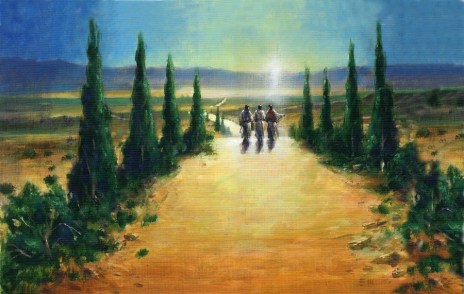
Now on that same day two of them were going to a village called Emmaus, about seven miles from Jerusalem, and talking with each other about all that had happened. While they were talking and discussing, Jesus himself came near and went with them, but their eyes were kept from recognizing him. And he said to them, “What are you discussing with each other while you walk along?” They stood still, looking sad. Then one of them, whose name was Cleopas, answered him, “Are you the only stranger in Jerusalem who does not know the things that have taken place there in these days?” He asked them, “What things?” They replied, “The things about Jesus of Nazareth, who was a prophet mighty in deed and word before God and all the people, and how our chief priests and leaders handed him over to be condemned to death and crucified him. But we had hope that he was the one to redeem Israel. Yes, and besides all this, it is now the third day since these things took place. Moreover, some women of our group astounded us. They were at the tomb early this morning, and when they did not find his body there, they came back and told us that they had indeed seen a vision of angels who said that he was alive. Some of those who were with us went to the tomb and found it just as the women had said; but they did not see him.”

407025348_640

I haven’t been here long, but I have been here long enough to hear a lot of questions about why we do what we do as Christians. Perhaps we have so many questions because so many of us having been going to church for such a long time that we know longer know, or maybe we never learned, what all of this stuff is all about. In the last three months I’ve heard some of you ponder about why the acolyte carries in the flame for worship, or why we spend time studying the bible, or what does it really mean to pray, or why in the world do we pass around an offering plate, or why do we give our time to serving others.

All of those are great questions, and they are questions we will attempt to answer together over the next month. Today we begin with “Why do we worship?”

Over the last two thousand years, disciples of Jesus Christ have been gathering to worship the living God. From the secretive upper rooms of the first century, to the ornate and opulent cathedrals of Europe, to the contemporary gymnasiums and living rooms filled with folding chairs; getting together is what we do as Christians.

I’d like each of you to take out your bulletins for a moment and scan through the service. Some will call this an Order of Worship, other will call it the liturgy. Liturgy literally means “work of the people” and it is work that we do together to worship God. You will notice that our liturgy is broken into 4 parts: Gathering – Proclaiming – Responding – Sending Forth. These four parts have connections to the ancient worship practices of the Israelites, but they can be specifically connected to the story of the two disciples on the road to Emmaus.

Throughout our service today we will have four sermons for the four parts of our worship as they connect with what happened in the Emmaus experience; Jesus gathered the two men on the road, later he proclaimed the scriptures and interpreted them, then they responded by having a meal of bread and wine, and after the disciples eyes were opened to Jesus’ presence they were sent to proclaim what they seen and heard.

The beginning of our worship takes place through the act of Gathering. But when does it actually start? Does worship begin when the choir processes into the sanctuary? Does it start when I begin to speak? Actually, worship begins before we even walk into the building. God is actively involved in gathering us together from the moment we wake up. God is with us in the thoughts we have while driving to the church, God is with us in the parking lot when we wave and signal our greetings to our fellow church people, and God is with us through the conversations we have in the narthex and while we’re sitting in the pews.

God continues to gather our focus together as the choir enters the sanctuary singing the prelude all while following the light of Christ carried by an acolyte. The light is a reminder for us of the light of Christ that shines in the darkness, a light that came into the world in order to transform the world, a light that strengthens us in our worship and in our discipleship.

The work of gathering continues through the announcements, silent reflection, and our call to worship. All of these little movements have a purpose, and they allow us to practice our faith. Worship is practice. We do it over and over to tone our spiritual muscles in order to do the work of the Lord.

After the liturgist leads us through the call to worship, we begin singing our first hymn. Picking the hymns for worship is easily one of my favorite parts of being a pastor. Spending time every week deep in the hymnal humming tunes and praying about which songs will best fit with what we will do is such a privilege. This morning our first hymn will be “Come Christians, Join to Sing.” The lyrics and tune are designed to uniquely gather us together in heart, mind, soul, and body.

When the first hymn ends and all of you return to your pews, I then invite us to join in prayer together. The prayers we offer are a sign of our devotion to the people in the pews next to us, as well as a commitment to the world around us. But above all, our prayers are another means by which God gathers us for the work of the church.

This is how God gathers us every week, just like God (in Christ) gathered the two disciples on the road to Emmaus and changed their lives forever. So, let’s get gathered…


Proclaim – Sermon 2

Luke 24.25-27

Then he said to them, “Oh, how foolish you are, and how slow of heart to believe all that the prophets have declared! Was it not necessary that the Messiah should suffer these things and then enter into his glory?” Then beginning with Moses and all the prophets, he interpreted to them the things about himself in all the scriptures.

road_emmaus

After the disciples and Jesus were gathered on the road, after Jesus listened to them ramble on about everything they had seen in Jerusalem, he proclaimed the stories of scripture and interpreted them through his gracious work. However, they were still unable to recognize who he really was.

The second part of our liturgy is dedicated to Proclamation, speaking words about God’s Word. We do this because Jesus first did it on the road to Emmaus, but we also do it because God’s Word is alive and still speaks into our daily experiences.

We proclaim God’s Word together every week through The Children’s Moment, listening to the choir, offering a prayer for the reading of the Word, we hear scripture read to us, we sing a hymn, and then we listen to a sermon.

Our scriptures, more often than not, are picked according to a list called the Revised Common Lectionary, which compiles a great assortment of readings over a three-year cycle designed to bring congregations through the great narrative of scripture. We boldly proclaim these words from the bible with prayers and hopes that somehow or another God can and will speak through them to us about what following Jesus is all about.

The middle hymn in our liturgy is usually picked in reference to the specific text or a theme from the text. For instance: today we will sing, “Open My Eyes, That I May See” because Jesus opened the eyes of the two disciples from the Emmaus story when they broke bread together. And we’re also calling on God to open our eyes to see how the text is speaking into our lives right now.

The sermon, unlike everything else in the liturgy, is a little harder to explain. Every sermon, like every preacher, is different. Some are funny and light-hearted, others are sad and pensive. The point of preaching is to make God’s Word incarnate (again) through the ways we respond to it and live it.

This is how God proclaims God’s Word every week, just like God (in Christ) proclaimed the scriptures and interpreted them for the disciples on the road to Emmaus. So let’s hear what God has to say today…


Sermon

A one-sentence sermon: Whenever we gather in this place to do what we do, we join those first disciples on the road and we experience God working in us, enabling us both to will and to work for God’s good pleasure.


Respond – Sermon 3

Luke 24.28-32

As they came near the village to which they were going, he walked ahead as if he were going on. But they urged him strongly, saying, “Stay with us, because it is almost evening and the days is now nearly over.” So he went in to stay with them. When he was at the table with them, he took bread, blessed and broke it, and gave it to them. Then their eyes were opened, and they recognized him; and he vanished from their sight. They said to each other, “Were not our hearts burning within us while he was talking to us on the road, which he was opening the scriptures to us?”

communion_elements

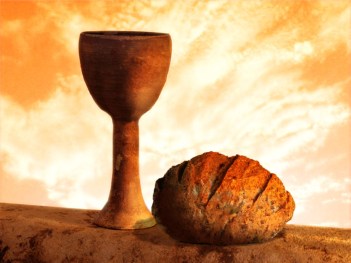
Jesus was going to keep on walking, but the disciples invited him to stay with them. While at the table he took bread and the cup, gave thanks to God, and gave it to them. Only then did they realize who had been with them the whole time. It was only in responding to the words they heard on the road in the breaking of bread and sharing of the cup, that Christ became real for them.

The third part of our liturgy is all about responding to the proclaimed Word of God. On most Sundays we do this by affirming our faith with the Apostles’ Creed and then with the giving of our tithes and offerings. We make public confessions about whom we are and how we understand the world and we give freely from ourselves because God has given so much to us. However, the best and most faithful response to God’s Word happens when we gather at the table like those two disciples did with Jesus.

We could break down all the parts of our communion liturgy, but they really deserve their own sermon series. What we can say right now is that this holy meal is what being a Christian is all about. We are invited by God no matter who we are and no matter what we’ve done, we confess how we have failed to love God and neighbor, we are forgiven, we share signs of Christ’s peace, and then we feast.

This is how we respond to God’s glory in the church and in the world by feasting at the table just like Jesus did with the two disciples whose eyes were truly opened. So, let’s see how God’s enables us to responding to God’s Word…


Sending – Sermon 4

Luke 24.33-35

That same hour they got up and returned to Jerusalem; and they found the eleven and their companions gathered together. They were saying, “The Lord has risen indeed, and he has appeared to Simon!” then they told what had happened on the road, and how he had been made known to them in the breaking of the bread.

go

I’ve always wondered what it must’ve been like to be one of those two disciples sitting at the table when Jesus was revealed. But then I remember that I do know what it was like; for every time we gather around the table, with every brilliant smile and grateful affirmation, I realize that I’m catching glimpses of Jesus.

The disciples were so moved by their experience of being gathered on the road, of hearing Jesus proclaim the truth, and responding to the truth at the table, that they ran back to Jerusalem to share all they had seen and heard. When we are confronted by God’s incredible power and glory, we can’t help ourselves from sharing what it felt like with other in our lives.

The fourth and final part of our liturgy is all about being sent forth into the world. While the notes of the final hymn are still resonating in our souls, while we are contemplating all that we have seen and heard in this place, God send us out into the world to be Christ’s hands and feet for the world.

I stand before you, the congregation, and offer a benediction tying the totality of worship together and then we all follow the acolyte and the light of Christ out of the sanctuary in order to shine God’s light in the world.

This is how we are sent forth from God’s house, just like the disciples ran to tell their friend what happened. So, let us prepare to be sent forth into the world by the living God…

God Isn’t Fair

strangely-warmed-spreaker-header

This week on the Strangely Warmed podcast I speak with Lindsey Baynham about the readings for the 17th Sunday after Pentecost (Exodus 17.1-7, Ezekiel 18.1-4, Philippians 2.1-13, Matthew 21.23-32). Lindsey is an elder in the Virginia Annual Conference of the United Methodist Church and currently serves as the Associate Director for Call, Candidacy & Discernment in the Center for Clergy Excellence. The conversation covers a range of topics including the prevalence of complaining, the differences between equality and equity, identity, and whether or not God is fair. If you would like to listen to the episode or subscribe to the podcast you can do so here: God Isn’t Fair

21199453_873285013490_6485396214584115227_o

What’s Right With The Church?

Psalm 145.1-8

I will extol you, my God and King, and bless your name forever and ever. Every day I will bless you, and praise your name forever and ever. Great is the Lord, and greatly to be praised; his greatness is unsearchable. One generation shall laud your works to another, and shall declare your mighty acts. On the glorious splendor of your majesty, and on your wondrous works, I will meditate. The might of your awesome deeds shall be proclaimed, and I will declare your greatness. They shall celebrate the fame of your abundant goodness, and shall sing aloud of your righteousness. The Lord is gracious and merciful, slow to anger and abounding in steadfast love.


People outside the church love to talk about its faults and failures. For instance: Church organizations were able to mobilize and respond to the recent devastation in Texas and Florida before FEMA or the Red Cross, but whenever the Church is in the news it has to do with a failure to keep track on money properly, a scandal involving clergy, or a denomination’s vote on something like homosexuality.

Last week I shared some stories about a recent wedding I presided over, and I told you about how effusive some of the people in attendance were with their praise. There is something strange and mysterious about a wedding that leads people to speak in deeply honest ways. Perhaps it’s the fact that love is in the air, or that reunions are bringing people together, or the free alcohol. However, what I didn’t share with you last week were the negative comments from other people.

“I don’t think you’re gonna have a job much longer preacher. You know the church is dying right?”

            “How can you support a system that is so archaic and out of touch with reality?”

            “You seem like a nice guy but I think the church is more responsible for evil in the world than good.”

It’s easy to pick on people outside of the church who are so harsh and judgmental with their language. It’s easy to pick on them because they’re not here, they don’t know what God is up to, they don’t know what the church is really like.

And for as much as people outside of the church love to talk about its faults and failures, people inside the church might be even worse.

I went to my first clergy meeting for the Alexandria District this week and I was struck by how somber so many of us were. Throughout the time of our gathering there was far more negativity than positivity, and at some point it felt like the whole point of the meeting was to get preachers together to complain about people like you.

            What’s right with the church?

Fotolia_137876364_Subscription_Monthly_M-1080x675

A few years ago I was given a copy of sermon preached by a man named Zig Volskis in 1987, the year before I was born. In it he attempts to answer that very question, “What’s right with the church?” Zig, like me, was frustrated with all of the negativity surrounding the church and instead he wanted to focus on the life-giving elements of the body of Christ that is the church.

Zig preached that as a child he would have responded to the question with: the church bells and music. They both represent the energy and depth of the worshipping community through sounds and communal response. The music of the church reassures the people that God is the one in control, even is the world claims the contrary.

As an adult, Zig claimed that his answer had changed over a career of serving the church for thirty years. He believed the best thing about the church is that it endures. Empires come and go, even church buildings are destroyed by war and exodus, yet the body of Christ always endures. With all its blindness and plundering, for all its inability to faithfully use its enormous resources properly, the church has sought to minister to human needs in thousands of different ways. And, for untold numbers of persons, the helping hand of the church has been a lifesaver.

Zig ended the sermon with a call to those who love the church: make more room for church, bring to the church your best and highest devotion. And to those who are not sure about the church: you will not find perfection here, but come in anyway, and help us make the church better.

And with that he said: Amen.

Over the years I’ve thought a lot about Zig’s sermon, and in particular our willingness to overemphasize the negative rather than addressing the positive. And, I’ll be the first to admit – The church does have problems. From this Cokesbury here in Woodbridge to the great universal church, we have problems because, at its heart, the church is filled with people like us: broken, flawed, sinners.

I could take time to bring up poor management, or fiscal irresponsibility, or personal judgments. We could spend weeks talking about how we’ve failed as a church, we could spend weeks talking about how we need to get better, but in so doing we would fail to recognize all the things that are right with the church.

But the psalmist, and the witness of scripture, chooses to focus on the things that are right. I will extoll the Lord, I will meditate on the goodness of God, I will declare the greatness of God. Every generation will share with those who follow all the splendor and majesty of God.

The psalm we have today is like a hymn, something to be declared by the entire congregation. And if you look at it, and really read through each line, it is so over the top with declarations of God’s glory that it sounds like the kind of love letters middle school students used to leave in each other’s lockers.

The love and praise the psalmist has for God is not something that can remain bottled up and hidden away. There is a quality of God’s grandeur that evokes a response, it pushes us to bring forth our gladdest praise and declare from the rooftops about the mighty works of God.

However, most of us are uncomfortable with wearing our faith on our sleeves. We don’t know quite what to make of religious displays of affection. We can’t even imagine standing up in church to talk about what God has done for us.

This psalm, these words about God, they are an invitation to remember what God has done for us, and shout it out.

I love asking people to tell me about sermons they remember from the past. Such as: Have you ever heard a sermon on Psalm 145? Can you remember the preaching from when you were a kid? Can you even remember what I preached about last week? The truth is that most of us remember very little, myself included!

I think back on what it was like to be raised in the church and I can’t remember any sermon I heard. There are a couple phrases that continue to bounce around the grey matter between my ears, but I don’t remember anything more than that. But you know what I do remember? I remember the people who got up and talked about how the church had changed their lives.

I remember sitting as a child at the altar and listening to a man in a hospital gown talk to us about how the church visited him when he was in the hospital after finding out he had cancer. I remember the woman who wept from the pulpit as she was thanking people for attending her husband’s funeral. I remember the older man who was baptized in front of the whole church who then shared his story about how he lost everything in his life, and then found everything when he started coming to church.

There is a profound power in being reminded, again and again, of what God is doing in the world and in the church. There is something good and right and true about sharing stories of what is right with the church. So that’s exactly what we’re going to do.

Founders-Day-2017-672x330

I’m going to go first, as an example, but then I want to open up this space and this time for you to share what you think is right with the church.

Shortly after I arrived here at Cokesbury, I was working on a sermon in my office when a bunch of people came in through the door and kept walking past without saying a word. I mean I was the new guy and they didn’t even both to check on me. And they call themselves Christians! I found out later they were the Prayer Shawl team, and that they had work to do in the conference room.

I sat in my office for a while, pretending to work, but what I was actually doing was eavesdropping. I wanted to know what they were really up to, I wanted to know what these ladies were really like, I wanted some gossip.

But I was disappointed. Instead their conversation was filled with affirmation for one another, and they worked and worked and worked.

You want to know what I think is right with the church? Our prayer shawl team. They gather together and have created a beautiful community designed to make the community more beautiful. They work to give away everything they’ve created to be a blessing to others. And they do so with abundant joy. Each of their shawls, and all of the squares in our bulletins today are seeds they are casting into the world, and because of their work and God’s grace, those seeds will grow to bear beautiful fruit for God’s kingdom.

So, now its your turn: What’s right with the church?


There are few things in this life more joyful than discovering how our lives are caught up with the great and enduring story of God’s wondrous works. As we share what’s right with the church we discover how connected we are with one another. As we listen to what’s right with the church we rediscover the faith and the fervor of the psalmist within each and every one of us.

So to those who love the church: make more room for it, bring to it your best and highest devotion. And to those who are not sure about the church: you will not find perfection here, but come anyway, and help us make the church better. Amen.

Worthy of the Gospel

strangely-warmed-spreaker-header

This week on the Strangely Warmed podcast I speak with Lindsey Baynham about the readings for the 16th Sunday after Pentecost (Exodus 16.2-15, Jonah 3.10-4.11, Philippians 1.21-30, Matthew 20.1-16). Lindsey is an elder in the Virginia Annual Conference of the United Methodist Church and currently serves as the Associate Director for Call, Candidacy & Discernment in the Center for Clergy Excellence. The conversation covers a range of topics including what it means to be “called”, the overabundance of arrogance, justice-oriented ministry, and the joy of serving the church. If you would like to listen to the episode or subscribe to the podcast you can do so here: Worthy of the Gospel

LB image

An Inconvenient Truth

Matthew 18.21-35

Then Peter came and said to him, “Lord, if another member of the church sins against me, how often should I forgive? As many as seven times?” Jesus said to him, “Not seven times, but, I tell you, seventy-seven times. For this reason the kingdom of heaven may be compared to a king who wished to settle accounts with his slaves. When he began the reckoning, one who owed him ten thousand talents was brought to him; and, as he could not pay, his lord ordained him to be sold, together with his wife and children and all his possessions, and payments to be made. So the slave fell on his knees before him, saying, ‘Have patience with me, and I will pay you everything.’ And out of pity for him, the lord of that slave released him and forgave him the debt. But that same salve, as he went out, came upon one of his fellow slaves who owed him a hundred denarii; and seizing him by the throat, he said, ‘Pay what you owe.’ Then his fellow slave fell down and pleaded with him, ‘Have patience with me, and I will pay you.’ But he refused; then he went and threw him into prison until he would pay the debt. When his fellow slaves saw what had happened, they were greatly distressed, and they went and reported to their lord all that had taken place. Then his lord summoned him and said to him, ‘You wicked slave! I forgave you all that debt because you pleaded with me. Should you not have mad mercy on your fellow slave, and I had mercy on you?’ And in anger his lord handed him over to be tortured until he would pay his entire debt. So my heavenly Father will also do to every one of you, if you do not forgive your brother or sister from your heart.”

I don’t know what it is about weddings, but people really let themselves go when they gather to celebrate two individuals joining together. Maybe it’s the beauty of a ceremony focused on love, or perhaps it’s the atmosphere of family members and friends rejoicing together, or maybe its just the abundance of free alcohol, but weddings are a rare moment where people appear to be the truest selves.

If you were here last week you’ll know that I wasn’t. While Michael was bringing the Word I was flying back from Maine where I had just presided over a wedding ceremony for one of my best friends. And I want you all to know that I missed you. I missed being here in this place worshiping together, I missed the choir, I missed seeing all of your beautiful faces.

That’s not to say that I had a bad time at the wedding. On the contrary, I had a great time. People were so over-the-top with their compliments about the wedding sermon and ceremony, perhaps because of the libations, or maybe because many of the people in attendance had bad experiences of weddings in the past and I offered something different. I don’t know what it was, but people seemed to like it.

Now, I want to share with you all that I made a few mistakes at the wedding. During the prayer before the dinner at the reception I made an offhand comment about how people needn’t hide their wine glasses behind their backs when they talk to me because, after all, Jesus’ first miracle was turning water into wine. I even prayed about how we should celebrate together and learn to party like Jesus.

If only I hadn’t used those last three words. Because, throughout the rest of the evening, a slew of people who were really enjoying themselves would wander over, slap me with a high five and scream, “Party like Jesus!”

Another mistake: I never quite know what to do when the bride and groom kiss for the first time. I mean, I’m right up there next to them and that moment is a favorite for photographers. So, right before I said, “You may kiss the bride” I took a step back and bowed my head so as not to appear too creepy in any photographs. However, what I didn’t anticipate was how my baldhead would appear like a shining beacon in the photos that are now all over Facebook.

But all in all, it was a remarkable celebration and I count myself blessed to have been part of it.

21458112_10155713151057840_9203595134897334660_o

During the reception, while I was milling about and striking up conversations with people, there was a youngish man who approached me and outstretched his hand. He made a few kind comments about the ceremony and as if he felt guilty due to my presence he said, “You know, I haven’t been to church in a long time.” I hear that kind of thing all the time and I never know how to respond so I just don’t.

And then he continued, “But,” he said, “If church was like that ceremony I’d be there every Sunday.”

I should’ve said “Thanks” and politely walked away. But instead I opened my big mouth: “Church shouldn’t be like that every week.”

“Why not?” he asked.

            “Because, if church was like that every week, we wouldn’t need it.”

I’m not sure what has happened over the last few decades in the church, at least in the United Methodist Church, but there was a time when one could expect to hear just about the same sort of message every Sunday: we are sinners.

But no more. Instead of confronting that rather inconvenient truth, we want to make believe that the church is full of saints. We’d rather hear about grace than sin, we want to talk about mercy and not sacrifice, we want to be built up and not broken down.

We want our Sunday services to look more like celebratory wedding ceremonies than the confrontational and convicting services of the past.

It’s as if, because we want to appear so perfect on the outside, we have forgotten who we really are on the inside.

Peter said to Jesus, “Lord, how many times should I forgive someone in the church who has sinned against me? Seven times?” And Jesus said, “You’ve got to forgive seventy-seven times.”

Forgive-Me

Notice the context of Peter’s question, because it’s important. Forgiveness is often used in this overwhelming sense of totality. If someone gossips about me at work, should I forgive them? If someone cuts me off on the highway should I forgive them? But Peter doesn’t ask about anyone sinning against him, he asks about people who sin against him in the church.

Forgiving someone from the church is very different than just forgiving an individual from the community or even someone on the other side of the world. Frankly, its easier to forgive someone you’ll never see again than it is to forgive someone you’re going to see every Sunday for the rest of your life.

And notice the fact that Peter assumes he will be the one in a position to forgive. Which is to say, Peter assumes he will be the one who has the power to forgive.

Peter was a sinner, just like the rest of us. And, just like the rest of us, his chief sin was being blind to the fact that he was a sinner.

The inconvenient truth of our sinful and broken identities is that we expect the world, and others, to be perfect. Peter listens to Jesus and wants to know how many times he should forgive another person. A man goes to a wedding and wishes that church services could be filled with joy and happiness every single week. We want to know how many times we have to forgive someone because we are so convinced that others will sin against us and we forget that we sin against others as well.

Jesus’ response to Peter probes and prods us to ask ourselves, “How can we be at peace with one another?” But more than that, even more than forgiving one another seventy-seven times, Jesus’ words are all about how God has first forgiven us.

please_forgive_me

The man at the wedding just stared at me while people were gyrating on the dance floor. He thought about my comment for what seemed like a mini-eternity and then finally said, “Well, I think more people would go to church if it were like that every week.”

“Perhaps,” I said, “but the church isn’t in the business of growing for the sake of growing. The church is about telling the truth. And sometimes, offering and receiving the truth hurts.

I don’t like preaching about forgiveness because I’m so bad at it. I don’t like having to stand it this place and talk to people like you about it, because in doing so it’s like I’m holding up a mirror and realizing, all over again, that I’m a sinner.

Maybe you’re like me and you hold grudges, or you get frustrated with people, or sometimes you just can’t imagine forgiving someone for what they’ve done.

Maybe you’re like me and you want to put conditions on forgiveness.

Maybe you’re like me and sometimes the golden rule of, “do unto others as you would have them do unto you” turns into “do unto others as they have done unto you.”

Offering forgiveness isn’t easy.

            Receiving it might be even worse.

Jesus doesn’t leave Peter and the disciples with the seventy-seven times of forgiveness. He goes on to tell them a story.

A king forgives the debt of one of his slaves, who then berates a fellow slave for a much smaller debt. When the king receives word of what happened, he confronts the first slave about his inability to be merciful and orders him to be tortured. And then Jesus ends with this: “so it will be with you if you do not forgive your brother and your sister.

Jesus’ story, this parable meant to shed light on the virtues of forgiveness, is purposely intense. It is meant to be shocking. There is no way a slave could ever owe a king so much money, there’s no way the slave would ever be able to pay it back, nor would a king ever forgive such an outrageous debt.

But that’s what forgiveness is really like. It feels impossible and out of touch with reality.

Someone can do something that seems so small to others, but to us it can feel like a debt that is unachievable. We can be so fueled with anger over what people have done to us that we might want them to be tortured for what they’ve done.

Jesus’ response to Peter, to be honest, is pretty irresponsible. I mean, how logical is it to grant unlimited forgiveness? What kind of community can be sustained where individuals will be forgiven over and over and over and over?

But Jesus’ parable isn’t about us! It’s about God.

God is the one who first forgives our debt that we can never repay. Our sin, who we really are on the inside, our prejudices and our judgments and our mistakes, the things that are only known to us are such that we should never be forgiven. If we took the time to lay out all of our sins on the altar, if we listened to one another confess who we really are, we might not be able to look at one another ever again.

My friends, hear this inconvenient truth: You and I, we’re sinners. We’re broken. Some of us more than others, but all of us are sinners.

            That’s not something that’s easy to hear: I know it. I don’t like holding the mirror up to who I really am either.

Jesus knew that those who chose to follow him would wrong one another, that the disciples then and now would sin against each other, that there would be conflict. Therefore Jesus doesn’t offer a way to eliminate or avoid conflict, instead Jesus tells Peter and us what to do with it: We must remember who we really are.

If we are to be peacemakers capable of forgiving one another, we have to remember that God first forgave us.

If we are to take seriously Jesus’ command to forgive over and over again, we can only do so when we remember how God first forgave us.

If we are to be the church, then we have to know and believe that church is going to be messy sometimes. We’re going to hear and receive things in this place that will be hard to hear and receive.

The church cannot be a never-ending wedding feast.

Earlier in the service each of you were given an index card and you were asked to write down the name of someone from whom you need forgiveness.

I think it would’ve been all to easy to write down someone’s name you need to forgive and say, “when you leave church today, call them or text them and let them know they are forgiven.” But that would be too easy.

What’s harder is to look at the name of the person you wrote down and think about how, today, you can get in touch with them and ask them to forgive you. I promise it’s going to be hard to do, and it might actually make the situation worse than it is right now. When you have to ask someone for forgiveness you’re forced to recognize that you’re not as perfect as you think you appear to be.

This isn’t going to fix everything; it’s not going to make all the problems in your life disappear. And for that I am sorry. But we have no business, at all, talking about forgiving someone else unless we are willing to ask someone to forgive us for what we’ve done. Amen.

The God We’re Stuck With

strangely-warmed-spreaker-header

This week on the Strangely Warmed podcast I speak with Rev. Jason Micheli about the readings for the 15th Sunday after Pentecost (Exodus 14.19-31, Genesis 50.15-21, Romans 14.1-12, Matthew 18.21-35). The conversation covers a range of topics including the possibility that Episcopalians might listen to the podcast, violence, church arguments, forgiveness, and why O Brother, Where Art Thou? is so quotable. If you would like to listen to the episode or subscribe to the podcast you can do so here: The God We’re Stuck With

37867_1409543449591_1562302_n

The Mystery of Marriage – A Wedding Homily

1 Corinthians 13.1-3

If I speak in the tongues of mortals and of angels, but do not have love, I am a noisy gong or a clanging cymbal. And if I have prophetic powers, and understand all mysteries and all knowledge, and if I have all faith, so as to remove mountains, but do not have love, I am nothing. If I give away all my possessions, and if I hand over my body so that I may boast, but do not have love, I gain nothing.

Ecclesiastes 4.9-12

Two are better than one, because they have a good reward for their toil. For if they fall, one will lift up the other; but woe to one who is alone and falls and does not have another to help. Again, if two lie together, they keep warm; but how can one keep warm alone? And though one might prevail against another, two will withstand one. A threefold cord is not quickly broken.

21369500_10154707052062651_2839710461080071606_n

Marriage is a mystery. However, I am an expert. I am an expert because I am a pastor and I’m supposed to be an expert in these types of matters. When a family has a baby and they don’t know quite what to do when the baby becomes a toddler and starts talking back, the family brings the child to church in hopes that someone like me will teach them how to behave properly. Or when a family loses someone they love, they will have a funeral at a church in hopes that someone like me can use words to make sense out of such a terrible loss. Or when a couple is finally ready, and for you two I really mean the words “finally ready”, to take that next step into holy matrimony they start talking with a pastor in order to figure out what marriage is all about.

But all three of those things: life, death, marriage – they are the most profound mysteries we will ever encounter in this world.

I don’t understand why people get married. And I say that as a happily married man. To get all these people together, to make them sit and listen to someone like me wax lyrical about the virtues of love and commitment, to look someone in the eye and promise to love and to cherish them the rest of the days of your life is a strange and mysterious thing.

Brianna, I have no memory of my life without you in it. In fact some of my earliest memories are of your remarkably curly hair and wondering what might happen if I stuck a toy in it. I’ve been your friend for every major moment of your life, and frankly I consider myself more of your brother than a friend. I know you well enough to know that you are spectacular and funny and kind and dedicated. I know that there have been, are, and will be times when you know better what to do than anyone in the room. And you’re not afraid to let everyone know that you know. I know that you can be the most extraverted or the most introverted person in the room. And I know that you can throw one hell of a party.

But for as much as I think I’ve got you figured out, and even for as much as you might convince yourself that you know who you are: You are a mystery.

And Alex, I haven’t known you nearly as long as Brianna. But she hasn’t stopped talking about you since the day you met and she has basically forced me to ingest all of this knowledge about the one and only Alex Chatfield. I know that you can provide for other people in a way that will never stop, no matter the consequences. I know that your sense of values and morality are better than most of the Christians I know. And as you so eloquently put it recently, I too know that you’re pretty damn good-looking.

But for as much as I think I’ve figured you out, and even for as much as you think you know who you are: You are a mystery.

Which makes it all the weirder that the two of you are standing here on this occasion making a covenant toward the unknown.

21458112_10155713151057840_9203595134897334660_o

Now, all of us here can affirm that two are better than one. We know that from our experiences of life. And we know it because the writer of Ecclesiastes talks about it. It’s nice to have someone that can pick you up when you fall down. It’s good to have someone keep you warm when you’re cold. But the last line is the most important: A threefold cord is not quickly broken.

Three. Not Two.

The mystery that is marriage is made manageable and magnificent by God. Only God knows who the two of you really are, only God knows what it will take to make your relationship what it needs to be, only God can provide the strength and hope necessary for what you two are about to do.

One of the greatest mysteries in the church is what we call the Trinity: Father, Son, and Holy Spirit. Somehow, the three-in-one plurality in unity is what God is. We cannot see it, we cannot touch it, we cannot even understand it. And yet God is. The Trinity, like marriage, is a mystery.

God made the two of you into who you are. God is the one responsible for your quirks and idiosyncrasies. God is the one who ultimately brought your lives into tandem. And God is the one who is going to bless your marriage, who will be the third part of your cord; who will reveal to you what love really means.

Brianna, you once told me that you wanted to be committed to someone who wanted to be committed to you. In other words, you wanted to find a partner.

            Alex, you once told me that you wanted to find someone with whom you could speak the truth in love, even when it was the hardest thing to do.

Your relationship with one another has had its mountaintop moments of joy, and its deep valleys of challenge. From meeting at Webster Hall, to taking care of one another when you both had the Neuro Virus, to sleeping through meeting your future-father-in-law for the first time, to countless parties, vacations, and celebrations.

You’ve seen one another at your best, and at your worst. And with that full knowledge, you believe the time has come to make this holy vow to one another.

I believe both of you are right. And all the people here do too. That’s why they’re here after all. They were willing to travel to this place and listen to someone like me because they believe the two of you have found a partner in one another.

            All of us here are a testament to the love you two share.

And your love, thanks be to God, is deeper and truer than the Hallmark/Lifetime channel version of love we hear about all the time. Both of you know that you could have the greatest job or the greatest car, that you could have all wisdom and all knowledge, that you could have the kind of faith that could move mountains, but without love you would be nothing.

Love, the kind of love that will sustain your marriage, holy love, is Godly love. It is a love unlike anything else on this earth. It is beyond definition and explanation. It is deeper than the deepest ocean, and greater than the tallest mountain. It is sacrifice and resolution. It is compromise and dedication. The love that God has for you is the kind of love you are promising to one another and it is a mystery.

It is only something you can figure out while you’re figuring it out.

We never really know whom we marry; we just think we do. Who you are today will be different tomorrow. As the days, weeks, months, and year pass each of you will become someone new and different. And marriage, being the enormous mystery that it is, means that we are not the same person after we have entered it. The challenge of your marriage, of any marriage really, is learning how to love and care for the stranger to whom you find yourself married.

A few weeks ago the three of us talked about what you wanted your wedding to look like. You both shared how you wanted everyone to feel like they were part of the celebration, you wanted great music and lots of laughter, and above all you wanted your friends and family to recognize how we are all connected.

Through his ministry Jesus was often asked about the kingdom of heaven, and do you know what he compared it to the most? A wedding feast; a party, a time of celebration with great music and laughter, where all sorts of people recognize how connected they really are.

So, whether you knew it or not, your wedding is just about as close as any of us will ever get to having heaven on earth. For it is here, at your wedding, as we party together, that we see and feel the love that God first had for us. Here, in the promises and covenant you make with one another, all of us will be reminded of God’s promise to us in Christ that without love, we are nothing.

Brianna and Alex, I would like you to look one another in the eye for a moment. Bask in the strange, mysterious, and wonderful reality that you are about to take steps into the unknown. Rejoice in the fact that as you see one another, you can also catch glimpses of everyone else here who have promised to help sustain you in your relationship. Between them and God, you two have the best cord anyone could ever ask for. Between these people and God, you will have everything you need to care and love for the stranger you are staring at right now.

May God bless and sustain you in the mystery that will be your marriage, may God give you the strength and the wisdom of how to party like Jesus, and may God provide you with a holy love that will never be broken. Amen.

Lift High The Doorpost

strangely-warmed-spreaker-header

This week on the Strangely Warmed podcast I speak with Rev. Jason Micheli about the readings for the 14th Sunday after Pentecost (Exodus 12.1-14, Ezekiel 33.7-11, Romans 13.8-14, Matthew 18.15-20). The conversation covers a range of topics including Jason’s Judaic roots, why its hard to talk about blood, the morality of Christianity, and how Ezekiel is like the Jethro Tull of the Old Testament. If you would like to listen to the episode or subscribe to the podcast you can do so here: Lift High The Doorpost

10399274_1026151385029_5270_n