Devotional – Psalm 118.24

Devotional:

Psalm 118.24

This is the day that the Lord has made; let us rejoice and be glad in it.
Weekly Devotional Image

The topic of “blessings” occurs regularly in our Bible studies at St. John’s. We can be reading from the Old or the New Testament, we can be reading a Psalm or an Epistle, we can be reading a genealogy or one of the miracles of Jesus, and the conversation almost always turns to how we take out blessings for granted. There is something inherent in scripture that works like a mirror, forcing us to confront ourselves in the text.

Yesterday morning, while we were reading about the episode of Jesus with the woman at the well, we started off by praying over the text, and before long one of our group members started to reflect on her blessings: “I am so blessed. I’ve got a great family and home. I have a church that cares about me. But I am even more blessed than that. I wish I could realize that every single day, every single breath, is a gift. And I wish I could stop taking these gifts for granted.”

this-is-the-day-360x450

For many of us, life feels like a train that keeps moving in one direction and we barely have time to admire the scenery passing out windows. Time rolls like a blur and we neglect to be thankful for the present because we are always looking toward the future. The psalmist’s words then confront us in our fast-paced lifestyles: “This is the day that the Lord has made; let us rejoice and be glad in it.”

I use these words to mark the beginning of worship at St. John’s because gathering in our sanctuary is a gift that God has given. It is not something we should take for granted. But can you imagine how differently we would live if we started every morning with these words? Can you picture how wonderful it would be to contemplate the blessing of your life every morning rather than just once in a while?

This week, let us use the words of Psalm 118 to mark our mornings. Instead of waking up and rushing to catch up with the train of life, let us take a slow breath and say: “This is the day that the Lord has made; I will rejoice and be glad in it.” If we do this, we will begin to stop taking our lives for granted, and we can give God thanks for all of our many blessings.

Devotional – Isaiah 43.18-19

Devotional:

Isaiah 43.18-19

Do not remember the former things, or consider the things of old. I am about to do a new thing; now it springs forth, do you not perceive it? I will make a way in the wilderness and rivers in the desert.

Weekly Devotional Image

On Saturday morning I gathered with a few hundred United Methodists from all over the Virginia Conference for the Bishop’s Convocation on prayer. I was asked to teach a class on spiritual disciplines, but before we broke off into small classes we all met in the sanctuary to hear from our plenary speaker Dr. Fred Schmidt (Reuben P. Job Associate Professor of Spiritual Formation at Garrett-Evangelical Theological Seminary in Evanston, Illinois.)

Dr. Schmidt’s lecture was focused on the need to reclaim a sense of prayerful discernment. He admitted that countless churches will often use prayer in worship, or at the beginning of committee meetings, but rarely do churches actually strive to discern the will of God through their prayers. He set up this distinction by comparing the church of the 50s and 60s to the contemporary church; a half-century ago the church was comfortable with its role in society but as the church has diminished over the decades we have tried to reclaim that popularity. He mentioned that we now have things like “Ashes-to-go” on Ash Wednesday, we hand out coffee in our narthexes, and we fill worship with things like “how to be a better you.” Year after year we initiate new programs in the hope that they will bring us back to the heyday of the church. Then Dr. Schmidt brought the whole point home: “Part of our problem is that we’ve been seeking to rebuild our attendance and influence instead of rebuilding the body of Christ.”

Bc8l84xCAAA2R7Y

The Lord once spoke through the prophet Isaiah and said, “Do not remember the former things, or consider the things of old. I am about to do a new thing;” Many of us fall prey to the temptation to make things “just like they once were” and we want the church to be as popular as it once was. However, God does not call us to be popular. God calls us to be faithful.

This week, let us consider how we can discern God’s will in our lives and in our churches. Instead of just assuming that if we water down our ministries more people will show up in the pews on Sundays, let us earnestly pray and wait for God’s will to be revealed. Instead of limiting our faith to “how to be a better person,” let us earnestly live out our faith and pray for God to make us more like Jesus.

Devotional – Psalm 32.5

Devotional:

Psalm 32.5

Then I acknowledged my sin to you, and I did not hide my iniquity; I said, “I will confess my transgressions to the Lord,” and you forgave the guilt of my sin.

Weekly Devotional Image

There is a shop in Alexandria, VA called “The Variety Store” that truly contains a variety of items. Some of my earliest memories are of walking up and down all the aisles with my mother struggling to take in all the strange things I was seeing. There was an aisle full of ribbons, an aisle of ceramic dinnerware, an aisle of candy, and much more. It was a treat to witness the enormity of “The Variety Store” as a child, though it feels a lot smaller now than it did then.

Once, when my mother brought me into the store for some light shopping, I made my way to the toy aisle and just stood in awe of everything. And, as was my custom, I picked up a yellow smiley-face bouncy ball and bounced it all around the store with my her while she collected her items for purchase. We went through all the necessary aisles, my mother waited in line to pay for everything she found, and then we got in the car to go home. All in all, it was a relatively uneventful journey to the store until I put my hand into my pocket and discovered the bouncy ball. I can remember my entire disposition changing in an instant when I realized that I (accidentally) stole the yellow smiley-face bouncy ball.

ar120274857936808

For the next few minutes, which felt like hours, it burned a whole in my pocket as I walked around my house. Were the police on their way to arrest me for shoplifting? How severely was my Mother going to punish me for stealing a plastic ball that cost a quarter? The fear I experienced was palpable and when I finally mustered up the courage to confess my transgressions to my mother I’m sure that I was in tears.

But the strangest thing happened: As I explained my predicament, and I confessed my wrongdoing, the fear and terror faded away. My mother’s calm demeanor and response comforted me as she forgave me for what happened. Even when we returned to the store and I handed the smiley-face bouncy ball back over to the cashier I experienced forgiveness in a way that I would never forget.

When we can muster up the courage to confront and acknowledge our sins, it relieves us from the burden that comes with the weight of sin. When we have those opportunities to express our shortcomings to one another and to God it allows us to start moving in the right direction in discipleship. This week, let us take time to properly and faithfully acknowledge our sins to God, let us repent our transgressions, and let us rejoice in the forgiveness of our sins.

The Healing Ministry

Luke 4.14-21

Then Jesus, filled with the power of the Spirit, returned to Galilee, and a report about him spread through all the surrounding country. He began to teach in their synagogues and was praised by everyone. When he came to Nazareth, where he had been brought up, he went to the synagogue on the Sabbath day, as was his custom. He stood up to read, and the scroll of the prophet Isaiah was given to him. He unrolled the scroll and found the place where it was written: “The Spirit of the Lord is upon me, because he has anointed me to bring good news to the poor. He has sent me to proclaim release to the captives and recovery of sight to the blind, to let the oppressed go free, to proclaim the year of the Lord’s favor.” And he rolled up the scroll, gave it back to the attendant, and sat down. The eyes of all in the synagogue were fixed on him. Then he began to say to them, “Today the scripture has been fulfilled in your hearing.”
ws_On_the_way_1366x768

This morning we continue in the season of Lent. Christians throughout the world will use this time to repent of sins and seek renewal in their commitment to follow Jesus Christ. We are exploring and examining Jesus’ life from baptism to resurrection by walking in his footsteps on the way that leads to life. We are using Adam Hamilton’s book The Way to guide our weekly services because it follows Jesus’ life in a way that is important for us to rediscover during Lent. Today we are looking at Jesus’ healing ministry.


Have you ever listened to a sermon that made you so mad you wanted to kill the preacher?

Jesus, after his baptism by John and his temptations in the wilderness, was filled with the power of the Spirit when he returned to Galilee. He began teaching in synagogues and people were praising him left and right.

When he came home to Nazareth, the place where he grew up, a town of no more than 200 people, he went to the synagogue on the Sabbath, as was his custom. The place was filled to the brim with people who had known him his entire life, filled with friends who were more like family, filled with people full of expectation.

He stood up to read, and the scroll of Isaiah was handed to him. He unrolled the scroll and started to read, “The Spirit of the Lord is upon me, because he has anointed me to bring good news to the poor. He has sent me to proclaim release to the captives and recovery of sight to the blind, to let the oppressed go free, to proclaim the year of the Lord’s favor.

Jesus then slowly rolled the scroll back up, and sat down to begin his lesson. Everyone was glued to Jesus. They sat around him and waited to hear what he had to say. When he opened his mouth, he said these words, “Today the scripture has been fulfilled in your hearing.”

The people could not believe their ears. Who in the world does this son of a carpenter think he is? The Messiah? They began to murmur among themselves regarding his audacity and some even wondered if he would perform miracles like they ones that were rumored.

Jesus, however, cut through the air, “I’m sure that some of you want a sign, you want me to do some quick healings. But the truth is, prophets are never accepted in their hometown. Prophets get rejected all the time. I am here for bigger things than Nazareth. Do you remember what happened during the time of Elijah? There was a severe famine across the whole land, but God only sent the prophet to one widow in Sidon. And do you remember what happened during the time of Elisha? There was lepers all across the land, but God only sent the prophet to cleanse Naaman the Syrian.”

When the people in the synagogue heard his words, they were filled with rage. They got up, drove him out of the town, and led him to the brow of the hill so that they might hurl him off the cliff. But he passed through the midst of them and went on his way.

Prayer-can-Heal-yes-or-no__82367

Have you ever listened to a sermon that made you so mad you wanted to kill the preacher?

Jesus spent the majority of his ministry looking for the sick and the oppressed. Rather than showing up at the palaces of the wealthy and powerful, Jesus looked for the people living on the margins of life and made them whole.

Healing, at least the kind of healing Jesus did, was not limited to physical health. He cleansed the sick, and brought sight back to the blind, and helped the lame to walk, but he also did so much more.

He proclaimed that he came to bring good news to the poor. He did not give them money to reverse their socio-economic situations. Instead he pointed out how, in the kingdom of God, the last would be first and the first would be last. He gave meaning to their lives by giving them the time and attention they deserved.

He proclaimed that he came to bring release to the captives. He did not go around encouraging insurrections against prison guards and corrupt politicians. Instead he reunited broken families, forgave wrongdoers, and encouraged the downtrodden; all that were held captive by the power of sin.

He proclaimed that he came to recover the sight of the blind. He did not go around healing individual’s eyes and leave them to their own devices. He healed them and sent them back to the families that had disowned them, to the friends that had abandoned them, and to the towns that had forgotten them.

Jesus’ ministry of healing went beyond biology and into the realm of relationships. He brought newness to people’s lives and then expected the culture to change at the same time. Jesus came to heal the sick of body, and of spirit, all at the same time.

And while Jesus loved healing others, he also loved disrupting contentment. He showed up in his hometown, proclaimed an incredible and powerful message, and then basically told the people that they needed something more than cheap grace. The kinds of people who really needed Jesus’ physical healing were not in the synagogue that day. They were the ones forced out of town, abandoned by friends, and disowned by families. By withholding his physical healing ministry from their gathering, he implicitly told them to start healing their brokenness first.

alternative-healing-arts-modalities

Have you ever listened to a sermon that made you so mad you wanted to kill the preacher?

Let me tell you, Jesus is a tough pill to swallow. You think the message in the synagogue that day was bad? Wait till you hear some of the other things Jesus told his followers.

Full disclosure: What I am about to say are not my own words. If, while you’re listening, you start noticing that your fists are clenched, and you start wondering about where the closest cliff might be to throw me off, just remember that these are Jesus’ words and not my own.

“Woe to you that are rich, for you have already received your consolation. Woe to you who are full now, for you will be hungry. Woe to you that are laughing now, for you will mourn and weep.” (Luke 6.24-25)

“Do not store up for yourselves treasures on earth, where moth and rust consume and where thieves break in and steal.” (Matthew 6.19)

“You have heard that it was said an eye for and eye and a tooth for a tooth. But I say to you, do not resist an evildoer. But if anyone strikes you on the right cheek, turn the other also; and if anyone want to sue you and take your coat, give your cloak as well; and if anyone forces you to go one mile, go also the second mile. Give to anyone who begs from you, and do not refuse anyone who wants to borrow from you.” (Matthew 5.38)

“How hard it will be for those who have wealth to enter the kingdom of God! It is easier for a camel to go through the eye of a needle than for someone who is rich to enter the kingdom of God.” (Mark 10.24-25)

“You have heard that it was said, ‘You shall love your neighbor and hate you enemies.’ But I say to you, Love your enemies and pray for those who persecute you.” (Matthew 5.43-44)

Feeling angry yet?

Jesus loved disrupting people’s false contentment. He came to comfort the afflicted, and afflict the comfortable. Even today, Jesus loves gathering people in a place like this and then turning our heads around to the people we are supposed to be healing.

What we often fail to realize is that God uses people like us to accomplish his will on earth. We are the instruments of God’s peace to deliver healing to the people around us.

Healing for others and ourselves can only come when we are willing to get uncomfortable in church and start living like Jesus outside the church.

When we catch ourselves mocking the people begging for money on the streets, Jesus wants us to know that if we ignore them, we are ignoring him.

When we catch ourselves serving the master of money and losing sleep over how much we have in our bank accounts, Jesus wants us to know that we are supposed to be using our blessings to bless others.

When we catch ourselves cursing the people fleeing their countries out of fear, Jesus wants us to remember that he once had to abandon his home out of fear.

If we want to walk in the footsteps of Jesus, if we want to be part of his kingdom on earth, then we need to start healing our broken understanding of reality and start healing others.

Have you ever listened to a sermon that made you so mad you wanted to kill the preacher? When it happened to Jesus in Nazareth, he was able to sneak back through the crowd and continue his ministry. But when it happened to Jesus in Jerusalem, they nailed him to a cross. Amen.

Devotional – Matthew 6.1

Devotional

Matthew 6.1

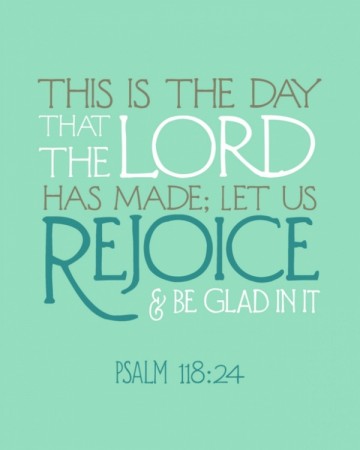
Beware of practicing your piety before others in order to be seen by them; for then you have no reward from your Father in heaven.
Weekly Devotional Image

When I was in seminary we called the season of Lent, “The Spiritual Olympics.” For those of us enrolled in higher theological education, we loved competing with our peers regarding our public piety during a season of fasting. Whereas many Christians rightly use the season of Lent to return to God’s way by confronting their finitude, we used the season to show off how holy we thought we were.

It was not uncommon to hear subtle brags throughout the hallways of our esteemed institution: “This year I’m going to give up sweets…” “Sweets? That’s easy! I’m going to give up meat in order to honor the glory of God’s creation…” “Meat? Give me a real challenge! I’m giving up television so that my focus can remain of the Word of God…” And I was there in the thick of it, offering up my own sacrifices to demonstrate my piety for anyone with eyes to see, and ears to hear.

What made the Lenten season so ridiculous was the fact that everyone knew what everyone else was giving up because it became the forefront of our conversations. In those moments of “Spiritual Olympics” we wanted everyone to know how pious we thought we were, and we had lost contact with Jesus’ words to his disciples: “Beware of practicing your piety before others in order to be seen by them; for then you have no reward from your Father in heaven.” It was frightening how easy it was for us to turn the gospel around to be more about our own selfishness than the good news of Jesus Christ.

Beware

Resisting temptation is a powerful practice during the season of Lent. When we take the time and energy away from bad habits and give that time back to God, it gives glory to the Lord. But if we take this season as an opportunity to flaunt our piety, it bears no fruit.

This Lent let us challenge ourselves to engage in acts of piety. Perhaps we know of something in our lives that we need to give up this season, a distraction away from recognizing God’s grace in our midst. Maybe we know of a practice that we need to add into our daily rhythms like prayer or bible study. But instead of sharing what we are giving up, or adding, with everyone around us, instead of making this vulnerable season in the life of the church into “Spiritual Olympics,” let us keep our piety to ourselves.

If we can keep our piety in check, which is to say if we can be pious for God’s sake and not our own, we will begin walking down the path that Jesus’ prepared for us.

Transfigured Moments

Luke 9.28-36

Now about eight days after these sayings Jesus took with him Peter and John and James, and went up on the mountain to pray. And while he was praying, the appearance of his face changed, and his clothes became dazzling white. Suddenly they say two men, Moses and Elijah, talking to him. They appeared in glory and were speaking of his departure, which he was about to accomplish at Jerusalem. Now Peter and his companions were weighed down with sleep; but since they had stayed awake, they saw his glory and the two men who stood with him. Just as they were leaving him, Peter said to Jesus, “Master, it is good for us to be here; let us make three dwellings, one for you, one for Moses, and one for Elijah” – not knowing what he said. While he was saying this, a cloud came and overshadowed them; and they were terrified as they entered the cloud. Then from the cloud came a voice that said, “This is my Son, my chosen; listen to him!” When the voice had spoken, Jesus was found alone. And they kept silent and in those days told no one any of the things they had seen.

sunrise-over-the-mountains


On Monday morning, before I departed for my ordination interviews, I came by the church to print off my papers and spend some time in prayer. Full disclosure: I was very anxious. Months of effort and focus had led to up to this week. Many of you have been here throughout this whole ordination process: you have endured sermons that went into my papers and some of you were here when we had to record an entire worship service. A number of you participated in the bible study I wrote on the book of James and offered feedback about what went well and where it could’ve been better.

The sanctuary was nice and quiet when I first entered to pray for God’s will to be done over the following days, but the longer I prayed, the louder the preschoolers were down in the basement. I continued to lift up my concerns to God until I felt that I had fully expressed myself, and then I went downstairs to say “hello” to the kids.

Like most of you, they were also aware of the interviews I would have this week. Yet, even knowing this, I was not prepared for what happened when I entered the first classroom. The teacher quickly motioned to the kids and while I was trying to kneel to speak with one of them they promptly surrounded me in a circle, grasped hands, and started to sing: “Thank you God for giving us Pastor Taylor, thank you God for giving us Pastor Taylor, thank you God for giving us Pastor Taylor, right where are. Amen.

The Transfiguration is an important moment in the life of Christ, and it really bears witness to the identity of the Messiah. Up to this point in scripture, Jesus has performed lots of miracles; he has healed the unwell, embraced the outcasts, preached in the synagogues, and started a revolutionary movement. But all of these particular moments were a crescendo to the brilliance on the mountaintop.

Jesus took with the inner circle of disciples up to the peak to pray. And while Jesus was in the depth of his prayers his face began to change and his clothes became dazzling white. Suddenly, the disciples saw two men standing on either side of Jesus, one of them was Elijah, and the other was Moses. The disciples listened intently as the three shining men talked about Jesus’ departure that would soon take place in Jerusalem.

After they had discussed this for some time, and the two men started to depart from Jesus, Peter interrupted and begged Jesus to let them build three dwellings for this holy moment. He wanted to establish a degree of permanence in this brilliantly shining experience. But he, as scripture tells us, had no idea what he was talking about.

Then a cloud came and overshadowed all of them on the mountain and they were utterly terrified. But a voice cried out from the cloud saying, “This is my Son; my chosen. Listen to him!” When the voice finished, the disciples noticed that they were alone with Jesus, and they did not speak about this moment for a long time.

Shortly before this passage in scripture Peter was able to confess Jesus as the Christ; he understood that Jesus was the Messiah that the Hebrew people had heard about for centuries. Yet, this story of the Transfiguration is a reminder that even those disciples in the inner circle had gaps in their understanding. Professing deep and true faith requires something more than just knowing the stories from the past and connecting the dots. Professing deep and true faith requires transfigured moments that change everything.

transfiguration-abstract-e1360464424741

While the preschoolers sang their prayer around me, I felt like I was up on the mountaintop of Transfiguration. In their tiny voices and clasped hands I experienced the profound power of prayer in their willingness to lift me up in a holy moment. And like Peter, I didn’t want to the moment to end. Like Peter, I thought about setting up a dwelling place in that space to stay happy and comfortable.

When the kids finally shouted “Amen!” to conclude the prayer they immediately sprinted into the middle of the circle and started hugging me to the point that I fell over on the floor. It was a transfigured moment while I collapsed to the ground under the weight of laughing preschoolers, but I knew that I would have to eventually leave the mountaintop and make my way down to the valley of ordination interviews.

The next 24 hours were a blur. I made it to Blackstone, I spent the night, I woke up and interviewed all morning, and before I knew it I was back in my car heading west toward Staunton. The entire car ride was filled with more anxiety than before the interviews because now all I could do was wait. I spent far too much time rehashing questions in my mind and coming up with better answers than the ones I offered. But now the only thing I could do was pray patiently.

By the time our youth meeting rolled around on Wednesday evening, I had spent most of the day checking my phone every 5 minutes waiting for the call about whether I had been approved or not. I tried to be as present for the youth at the Circle but I know that my thoughts were elsewhere. With every minute that passed it felt like my heart rhythm was increasing one beat per minute. But still the call did not come.

I eventually brought the youth into the social hall and had them sit by the fireplace. I got a fire going and handed each of them a palm branch from our last Palm Sunday service and I explained our activity.

I said, “Every year churches take their used and dried-out palm branches and burn them. We do this in order to collect the ashes and use them for Ash Wednesday. Lent, which starts on Ash Wednesday, is a time to reflect on ways we could be better. It is a whole season for us to confront the mistakes we’ve made and start living like disciples of Jesus. I want each of you to take a couple minutes to think about one mistake you made in the past year, a moment you wish you could take back. I want you to imagine that failure as you throw your palm branch into the fire. And while you watch it burn, I want to you to remember that God can take our mistakes and make them into something holy. These palm branches will become the ashes that mark our foreheads next week. We will walk around with ashes signifying for everyone to see that we are broken people in need of grace. These ashes are a reminder that even though we mess up, God still loves us.

One by one we each took a turn throwing our palms into the fire and we watched them burn. We took our mistakes and watched them become ashes. We concluded by praying for God to make things new in our lives, to use the season of Lent to transfigure us into better disciples of his Son. When we said the final “Amen” I looked up and saw our District Superintendent standing in the room with a giant smile across his face and he told me that I passed my interviews.

Transfiguration-3

The Transfiguration is such a powerful moment because it is about transformation. Yes Jesus is changed into a glowing figure in dazzling white clothes, yes the appearance of Moses and Elijah reshaped the narrative of Jesus’ journey toward the cross, but when the disciples had to walk back down from the mountain their lives were forever changed.

Whereas they might’ve understood their friend to be a powerful speaker and leader, they were now confronted with the fact that he really was divine. Whereas they might’ve believed he was special, they were now confronted with the fact that he had real power. Whereas they might’ve believed he was capable of great things, they were now confronted with the fact that he was the Son of God. Jesus’ transfiguration transfigured their lives.

Standing by the fire on Wednesday night, as I let the knowledge that I will be ordained sink into my soul, and the youth started to jump around and yelp in celebration, I was reminded of how powerful those transfigured moments in life can be. I thought about how blessed we are to have a God who is so merciful and forgiving of our mistakes. I thought about how blessed we are to be surrounded by people in this church who pray for us and care about us. That moment by the fire reshaped my understanding of ministry and the church. In that transfigured moment I felt God’s love moving in this church through all of the connections we have made.

Transfigured moments always remind us how dependent we are on one another and the divine. When we encounter the true glory of the Lord it leaves us staggering in comparison. But God did not abandon the disciples on that mountaintop, and God has not abandoned us here and now. Instead God spoke through the cloud, and speaks to us today: “Jesus is the Son of God, listen to him!”

So what does it mean for us to listen to God’s Son here at St. John’s?

Do you feel loved? In your daily lives do you experience moments of joy that you can only equate with feeling loved? Do you have friends and family that care about who you are and what you’re experiencing? Are you connected with individuals you make you laugh and thankful for the gift of life?

This week, for me, has been an experience of love. Love of God and neighbor through all of you in this church.

In this church we have listened to Jesus speak to us, and we have responded to his command: “Love one another.” We have covenanted through baptism to love and support all those around us in the pews. We have gathered together to mourn during funerals and reach out to remind individuals of their worth. We have met here at God’s table to partake in the bread and the cup as a reminder that God’s love knows no bounds. We have opened our eyes and ears to the great witness of scripture that points toward God’s unfailing love for people like us.

So hear this from Jesus, and embrace it in your lives: “You are loved.”

No matter what you are currently experiencing, no matter how far you feel divided from the people around you, no matter how afraid you might be, you are loved. God has gathered all of us here in this place to build a new community of love.

When we lift up our hymnals to sing our faith we do so as a complete community in harmony with our relationship and our voices.

When we pray from our pews we do so as a new family who can faithfully say God is OUR Father.

When we are invited to this table to receive the bread and the cup we are invited as a community to a feast. There is a spot for us at God’s table where we can grow closer to the people in church next to us while growing closer with the Lord.

This is the place of transfigured moments that cut through the monotony of life. This is the place where we encounter the revealed Lord. This is the place where we hear Jesus saying to us, “You are loved.” Amen.

Devotional – Luke 9.35


Devotional

Luke 9.35

Then from the cloud came a voice that said, “This is my Son, my Chosen; listen to him!”
Weekly Devotional Image

When I was in seminary we had all sorts of assignments that were designed to get us engaged with scripture. When I took a class on the gospel according to Mark, I was required to read all 16 chapters out loud, in my spare time, at least once a week. When I was learning about biblical Greek, I was tasked with memorizing the Lord’s Prayer in Greek and I would mutter it under my breath everywhere I walked on Duke’s campus. And when I was enrolled in a class on the art of preaching, I had to work with a group to come up with a strange and exciting way to bring a scriptural text to life.

My group broke up parts of the worship service; one person would do the call to worship, one person would lead the rest of the class in singing a few hymns, one person was responsible for all of the prayers, and I was assigned the “sermon” section. Rather than waxing lyrical about the particular text (Jesus’ Transfiguration) we agreed that I should just retell the story in an exciting and dynamic way.

I prayed over the text during the days leading up to the worship service and decided that I would tell the story of Jesus’ Transfiguration from Peter’s perspective, from the future looking back on the incredible event. Like a lot of group of assignments, it felt like everything was just thrown together, but we were confident that God could make something out of our worship.

Transfiguration-3

When the day of the assignment arrived, everyone in the group nailed their respective parts and I eventually had to stand before the gathered class and give my rendition of the Transfiguration. As I went on and on as an older Peter remembering the past, I could tell that the class was starting to lose interest, so I started elevating my volume and delivery. I began building the story up through a crescendo until that pivotal moment when Jesus was clothed in white and everyone in the room went wide eyed. I, at first, thought that my command over the scripture had blown the class away, but I soon realized what had happened: While I was talking, one of my peers had slowly started to dim the lights in the room until it was rather dark (I was so focused on what I was saying that I didn’t even notice it). But then at the exact moment I described the dazzling whiteness of Jesus’ garment, she turned on the projector and I started to glow.

Transfiguration Sunday is an important event in the liturgical calendar as we bask in the glory of Christ right before we enter the season of Lent on Ash Wednesday. Important for us is a willingness to be knocked back by the dazzling power of Jesus’ life and work. We take the time to be blown away, just like Peter was, by how God’s love really knows no bounds.

This week, as we prepare to celebrate the Transfiguration, let us look for moments where God’s glory shines in our midst. We might see it in a perfect sunset, the laughter of a child, or in the still small silence of prayer. And whenever it happens, let us give thanks for the glory of the Lord.


Devotional – Luke 4.15


Devotional:

Luke 4.15

He began to teach in their synagogues and was praised by everyone.

Weekly Devotional Image

Having the favor of the people can turn on a dime. I have known too many beloved leaders in the community who took one step too far and then lost the popularity and support they once held. Preachers, politicians, and professionals alike are often at the whim of the people they serve. Jesus was widely respected and praised by everyone when he first initiated his ministry, but was then run out of town when he claimed that the scripture was being fulfilled in him. Likewise, Martin Luther King Jr. was revered and praised for the kind of prophetic proclamations he made, but it ultimately led to his assassination.

A few days ago, I was asked to speak at the community Martin Luther King Jr. service. At first I felt honored by the request, but then I felt terrified. How in the world can I possibly do justice to the man whom I have admired most of my adult life? How can I find the right words to pray in memory of a preacher who I strive to emulate on a weekly basis? How can I speak a word of hope and truth while so many people are still being persecuted for the color of their skin?

But then I remembered a few words that Martin Luther King Jr. once said; words that Jesus similarly uttered in the garden of Gethsemane: “I just want to do God’s will.”

Whatever we do in our lives, it should have less to do with what we think people will think, and more to do with striving to seek God’s will in our lives. Rather than sugarcoat messages of hope, we should continually be pushed to seek justice for the many ways we have failed to love our brothers and sisters.

download (1)

I end this devotional with a prayer from Martin Luther King Jr. Let us use these words this week to faithfully pray for God to move among us and transform the world.

“Thou Eternal God, our of whose absolute power and infinite intelligence the who universe has come into being, we humbly confess that we have not loved thee with our hearts, souls, and minds, and we have not love our neighbors as Christ loved us. We have all too often lived by our own selfish impulses rather than by the life of sacrificial love as revealed by Christ. We often give in order to receive. We love our friends and hate our enemies. We go the first mile but dare not travel the second. We forgive but dare not forget. And so as we look within ourselves, we are confronted with the appalling fact that the history of our lives is the history of an eternal revolt against you. But thou, O God, have mercy upon us. Forgive us for what we could have been but failed to be. Give us the intelligence to know your will. Give us the courage to do your will. Give us the devotion to love your will. In the name and spirit of Jesus, we pray. Amen.”

Praise The Lord!

Psalm 150

Praise the Lord! Praise God in his sanctuary; praise him in his mighty firmament! Praise him for his mighty deeds; praise him according to his surpassing greatness! Praise him with trumpet sound; praise him with lute and harp! Praise him with tambourine and dance; praise him with strings and pipe! Praise him with clanging cymbals; praise him with loud clashing cymbals! Let everything that breathes praise the Lord! Praise the Lord!

00033674_h


I am a creature of habit. I like routines, I like order, and I like preparation. I asked Lindsey to give me three examples of how I am a creature of habit and her response was: “only three?” I like my coffee a certain way, I enjoy sitting in a particular chair to read books, and I have rhythms for most of the events in my life. Sundays are no exception.

Most Sundays I arrive here in the sanctuary hours before some of you are even awake. Of course I start with the practical things like turning on the lights and unlocking the doors, but then I make my way back to the sanctuary to prepare for worship. First I pray on my knees from the third pew on the right hand side and confess where I have fallen short and how I have sinned. I pray for God’s forgiveness, and ask God to show up in my words in worship, even if I don’t deserve it. I then make my way up to the altar and praise God for the mighty acts revealed in scripture and in my life.

When I turn around I walk down the center aisle and I pray over every single pew asking for God to turn them into avenues of connection rather than walls of division. My hand touches every pew and I pray for God transform all of the people who will inhabit them through our worship.

From the Narthex I pray for the ways that we greet people on their way into the church, and I even go out onto the front lawn to give thanks for Staunton, and ask for God to send to us all who need to feel God’s love.

All in all it takes some time to prayerfully prepare for worship, but it’s worth it. When I finish praying, I make my way into the pulpit and read over the bulletin one last time. I check to make sure that the theme of worship is present throughout the entire worship service and, before I read my sermon out loud, I pull out my hymnal.

Like I said, I am a creature of habit. Every Sunday before any of you get here, I pray in this sanctuary and I sing through the hymns by myself. When I’m alone in the church I can belt out the hymns without the deep sighs from our organist Rick in response to me not keeping the pitch, I can let my emotions get the best of me without being judged by some of you from the pews, and I can just be myself up here jamming.

One Sunday, after going through my whole prayer routine, I stood up in the pulpit and looked at the bulletin to the hymn number for “Have Thine Own Way, Lord.” And I did what I always do. And I got really into it: (sing Have Thine Own Way)

Of course, when I sing, I often close my eyes and just let the words flow. So here I was singing from the top of the lungs from the pulpit, and you can imagine my surprise and terror when I finished the last note and someone shouted, “sounds okay from back here!

A visitor to the church had arrived hours early, walked in through the narthex, picked up a bulletin, and sat down in the farthest back pew, and was listening to my solo. I stood up here in shock without knowing what to say and I fumbled through trying to explain myself when the man raised his hand to stop me and said, a little too sarcastically, “I’m sure other pastors do this kind of stuff all the time.”

I am a creature of habit and, even though I was embarrassed that one morning, I still sing all the hymns before you get here. Singing the hymns and reading over the lyrics is incredibly important, because when we sing from this hymnal, we are articulating our faith. When we sing from this hymnal we are reentering the world of scripture. When we sing from this hymnal we are praising the Lord.

So let’s go to that hymn that I embarrassingly belted from the pulpit; number 382 Have Thine Own Way, Lord. (Sing together.)

Is this a familiar tune for you? Can you remember singing it when you were younger? Maybe you’ve heard the version that Johnny Cash performed. This is a beautiful hymn. The words quote Jeremiah 18.6 about clay in the potter’s hand. The tune is easy to follow and the theology behind it is great: It is an honest and prayerful desire for God’s will to be done in our lives.

I have always enjoyed singing this hymn, but when I learned the story behind the hymn it became that much more precious. If you look to the bottom left hand corner of the page, you will see that Adelaide Pollard wrote the hymn in 1902. The story goes that Adelaide was going through a rough period in her life and was unsuccessful in raising enough funds to make a trip to Africa for missionary work. In the depth of her struggle, she went to a tiny prayer meeting one night for the local community. She listened to person after person make their prayer requests for medical issues, material possessions, and a slew of other things when an old woman stood up to make her prayer request. Bucking with the trend of the evening the old woman simply said, “Have thine own way with me, Lord.” Impressed by the faith of the old woman, Adelaide went home that night and wrote the words to the hymn.

Psalm 150, the final one of the entire psalter, compels us to praise the Lord through music. Praise God with trumpets, lutes, harps, tambourines, dance, strings, pipes, and cymbals. Toward the beginning of the hymnal, we can find John Wesley’s directions for singing, that pair so well with Psalm 150:

“Above all sing spiritually. Have an eye to God in every word you sing. Aim at pleasing him more than yourself, or any other creature. In order to do this attend strictly to the sense of what you sing, and see that your heart is not carried away with the sound, but offered to God continually; so shall your singing be such as the Lord will approve here, and reward you when he cometh in the clouds of heaven.”

So we are going to follow the words of Psalm 150 and the words of John Wesley, we are going to praise the Lord. I would like all of us to take out our hymnal and turn to our favorite song. When you find the one you love shout out the number and we will sing the first verse. (We’ll probably do this for five hymns) Together we will praise the Lord. And as we do, take the time to soak up the words and the let the tune flow over you so that the Lord will approve our singing and reward us when God comes in the clouds of heaven. Amen.

Devotional – Isaiah 9.2

Devotional

Isaiah 9.2

The people who walked in darkness have seen a great light; those who lived in a land of deep darkness – on them light has shined.
Weekly Devotional Image

When I was preparing my Christmas Eve sermon last year, I was struck by the importance of God’s light shining in the darkness. During the weeks leading up to Christmas I read over the differing texts, and explored different hymns, but the image of God’s light stayed at the forefront of my mind. So when it came time to conclude my thoughts on God’s greatest gift from the pulpit, this is what I said:

“For me, Christmas is at it’s realest when we light our candles as we sing Silent Night. Some of my earliest memories are standing in a dark sanctuary on Christmas Eve while people around me are singing. In mere minutes the darkness is replaced by a brilliant light, made remarkable by the God who took on our flesh to dwell among us, to be God with us.

Jesus is the light of the world who shines in the darkness. Whatever that darkness might look like for you, whether it be an uncertain future, fears about your children, frustrating family members, the loss of a loved one, a heavy diagnosis, or the lack of love in your life, Jesus stands in stark contrast as the one who brings the light into our lives.

_the_holy_family__nativity_scene___another_commiss_f6de659b784c8c14ecc1ee8b95fa4fa8

Christmas Eves always mean the most and convey the most when we feel the depth of the darkness. Because new life always starts in the dark. Whether it is a seed in the ground, a baby in the womb, or Jesus in the tomb, new life starts in the dark.

At the end of our service we will turn out all the lights, from the one candle, the Christ candle, we will light all others as we sing Silent Night. As we do so let us open our eyes the different forms of darkness in our lives and give thanks to the light of the world who shines in the darkness.

It will feel like Christmas in the room, when we hear the familiar words that have been sung for centuries exclaiming the great joy of the newborn king.

It will feel like Christmas in the room, when we gather as God’s table to feast on the bread of life and drink from the cup of salvation.

It will feel like Christmas in the room, when we see the light of Christ shining in one another.”

It is my hope and prayer that no matter where you are, or who you’re with, God’s light will shine in your lives. Merry Christmas.