The beginning of the good news of Jesus Christ, the Son of God. As it is written in the prophet Isaiah, “See, I am sending my messenger ahead of you, who will prepare your way; the voice of the one crying out in the wilderness: ‘Prepare the way of the Lord, make his paths straight.’”
In Advent, we begin again.
It’s notably strange that we, Christians, continue to repeat ourselves year after year with this bewildering season. We pull out the purple paraments, we decorate our Advent wreaths, and we start singing tunes about “ransoming captive Israel.” Advent, for better or worse, is a season all about waiting – waiting for the birth of Jesus in the manger AND waiting for his return at the end of all things.
And, every year, we spend this season living into the tension of the already but not yet.
It’s just the best.
And yet, Advent can feel like a drag. We hear, week after week, about preparation, but it’s not altogether clear what we are preparing for. Sure, we’ve got to get the lights up on the house and purchase all the perfect presents and send out the color-coordinated family picture, but what does any of that have to do with Jesus?
The beginning of Mark’s gospel starts with the beginning. John the Baptist is out in the wilderness preparing the way of the Lord proclaiming a baptism of repentance for the forgiveness of sins.
He, prophetically, points to the sinfulness within each of us to make sure we know what it is that Jesus is showing up for. He calls us to look into the darkness inside of us, and then points us toward the One who will rectify the cosmos, including us.
This is no easy task.
Therefore, Advent can be a little frightening as we prepare our hearts, minds, and souls for the One who shows up to cancel out our sins. But Advent is equally a time for celebration! We celebrate because Jesus has already done the good work of rewriting reality, and we now simply wait for his return and the knitting of the new heaven and the new earth.
Advent is a time in which we balance out both the beginning and the end all while looking straight into the darkness knowing that the dawn will break from on high. Advent is both convicting and celebratory. It is the church at her very best.
Robert Farrar Capon puts it this way:
“Advent is the church’s annual celebration of the silliness (from selig, which is German for “blessed”) of salvation. The whole thing really is a divine lark. God has fudged everything in our favor: without shame or fear we rejoice to behold his appearing. Yes, there is dirt under the divine Deliverer’s fingernails. But no, it isn’t any different from all the other dirt of history. The main thing is, he’s got the package and we’ve got the trust: Lo, he comes with clouds descending. Alleluia, and three cheers…What we are watching [waiting] for is a party. And that party is not just down the street making up its mind when to come to us. It is already hiding in our basement, banging on our steam pipes, and laughing its way up our cellar stairs. The unknown day and hour of its finally bursting into the kitchen and roistering its way through the whole house is not dreadful; it is all part of the divine lark of grace. God is not our mother-in-law, coming to see whether he wedding present-china has been chipped. God is, instead, the funny Old Uncle with a salami under one arm and a bottle of wine under the other. We do indeed need to watch [wait] for him; but only because it would be such a pity to miss all the fun!” – (Capon, The Parables of Judgment)
So here’s to the season of repentance and celebration where we begin, again! Amen.
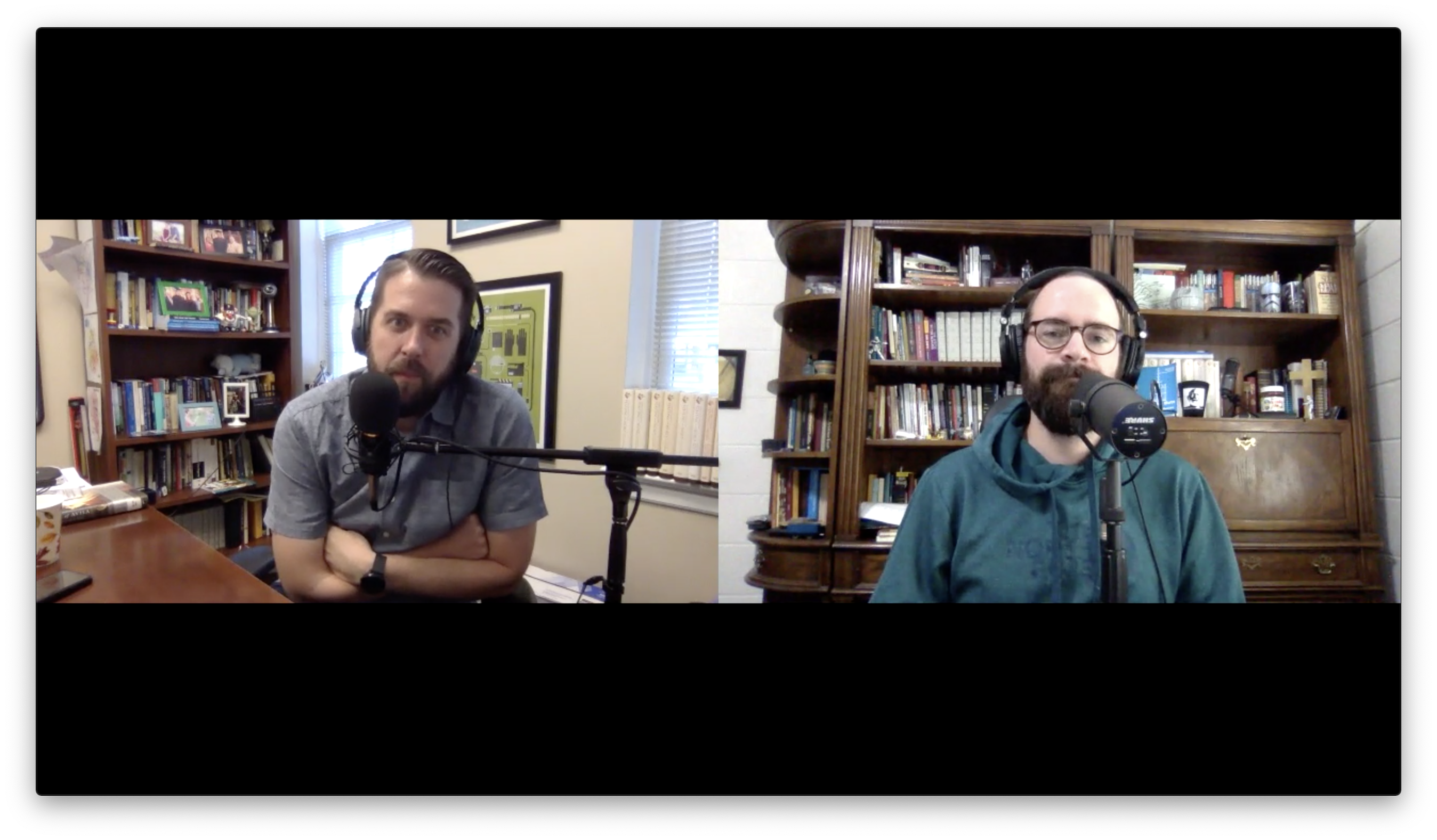
This week on the Strangely Warmed podcast I speak with Lauren Lobenhofer about the readings for the Second Sunday of Advent [B] (Isaiah 40.1-11, Psalm 85.1-2, 8-13, 2 Peter 3.8-15a, Mark 1.1-8). Lauren serves as the senior pastor at Cave Spring UMC in Roanoke, VA. Our conversation covers a range of topics including beginning again, Lauren Winner, comforting in chaos, divine reversal, unpacking peace, worship at war, Dr. Who, slowing down, divine grammar, and embodying Advent. If you would like to listen to the episode or subscribe to the podcast you can do so here: Wibbly-Wobbly Timey-Wimey
This week on the Strangely Warmed podcast I speak with Lauren Lobenhofer about the readings for the First Sunday of Advent [B] (Isaiah 64.1-9, Psalm 80.1-7, 17-19, 1 Corinthians 1.3-9, Mark 13.24-37). Lauren serves as the senior pastor at Cave Spring UMC in Roanoke, VA. Our conversation covers a range of topics including Advent(ures), the Theotokos, liturgical purity, parental love, divine ceramics, repetitive prayers, the audience of worship, the Flying V, spiritual gifts, eschatological contemplation, and Wendell Berry. If you would like to listen to the episode or subscribe to the podcast you can do so here: People Look East!
When he returned to Capernaum after some days, it was reported that he was at home. So many gathered around that there was no longer room for them, not even in front of the door; and he was speaking the word to them. Then some people came, bringing to him a paralyzed man, carried by four of them. And when they could not bring him to Jesus because of the crowd, they removed the roof above him; and after having dug through it, they let down the mat on which the paralytic lay. When Jesus saw their faith, he said to the paralytic, “Son, your sins are forgiven.”
Doomscrolling.
Have you heard of it?
It’s falling into deep, morbid rabbit holes filled with negative content, agitating oneself to the point of physical discomfort, erasing any hope of a good night’s sleep.
Basically, instead of retreating to the binge-worthy content of Netflix many of us are actually binge-watching the world flush down the drain.
We can’t unplug or disconnect ourselves from the headlines – COVID cases spiking across the country, a horrific blast rocking Beirut, social unrest resulting in broken buildings and broken people.
And, like slowing down on the interstate past a wreck, we can help ourselves from staring.
We’ve become addicted to the world of bad news so much so that a new word was created to help explain it – doomscrolling.
And it’s not just what we’re doing on social media – it’s how we’re having our conversations with friends, family, and even neighbors.
Did you see the latest numbers for the virus?
Can you believe he went golfing again during all of this?
What kind of idiot posts a video of a Corvette while preparing to run for president?
So it goes.
And, I must confess dear online worshippers, even I am not immune to the bizarre charms of doomscrolling. I find myself, at times, scrolling through the likes of Twitter and Facebook only to discover more and more bad news.
Last weekend the city of Staunton, on the other side of Virginia, experienced heavy rains in a very short period of time that resulted in horrific flooding. Restaurants, businesses, homes all filled with water that destroyed everything.
The videos and the pictures have been devastating. And they felt all the more pressing for me personally because Staunton is where I was first appointed before coming here. The restaurants and businesses were those that I frequented, and now they’re all navigating through a completely unknown future.
So I was scrolling through the videos and images, reading the comments from various community members offering support, and then I noticed a comment that seemed to keep cropping up on every different post. No matter how bad or grim the situation appeared, someone felt the need to write, “God won’t give you more than you can handle.”
It is my sincere hope and prayer that, in the midst of a moment of pain or fear or grief, no one has ever dismissively said to you, “God won’t give you more than you can handle.”
But chances are, someone has.
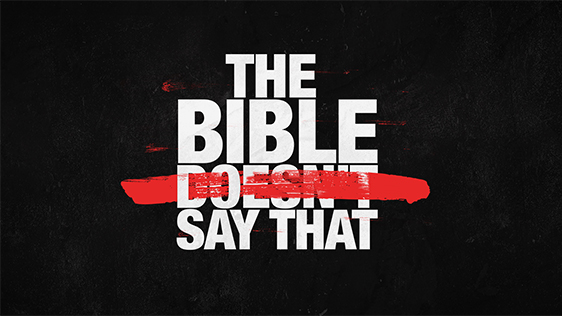
It is near the top of the list of Christian expressions used when we don’t know what else to say and, spoiler warning, it’s NOT in the Bible.
Sure, there are plenty of verses about how God will see us through to the other side, about how we can do all things through Christ who strengthens us, and so on. But the specificity of claiming that God won’t give us more than we can handle implies a whole lot about God that it absolutely shouldn’t.
To begin with, “God won’t give you…” immediately sets up a theological understanding that God, you know the author of salvation, gives every single little thing to us, on purpose; the good and the bad, the joy and the sorrow, the love and the pain.
Which means, according to the expression, God sows our suffering.
As has been said from this place on a number of occasions, if God delights in our suffering, if God purposely sends bad things to happen to us in order to punish us or teach us a lesson or make us stronger, then God isn’t worthy of our worship.
God, absolutely, rejoices with us when we rejoice and God, absolutely, weeps with us when we weep, but that’s not the same thing as God authoring and willing every little thing that happens to us.
God is not some sadist who rejoices in our tribulations.
God is not an architect of divine destruction.
God is not sitting up in heaven plotting away about what difficult things he should send for us to handle.
Let me put it this way: Can you imagine reaching out to a neighbor whose house just burned to the ground only to pithily remark, “God won’t give you more than you can handle?”
Maybe you can imagine it, maybe you’ve even said it to someone before. And, chances are, dear listeners, you’re pretty decent people, and if you ever said something like that you were only doing so because you wanted to cheer up the person suffering, or you wanted them to believe they could make it through, or you believe that what doesn’t kill you only makes you stronger.
And we should try to comfort those in the midst of tragedy, suffering, and grief.
We should help in ways both seen and unseen.
But the more we say things like, “God won’t give you more than you can handle” the more we make God into monster and the more we place the burdens of the world entirely on one person’s shoulder.
Jesus has been doing his Jesus thing for a little bit. Been baptized by his cousin in the river Jordan, called some of the first disciples, and word has started to spread about this Messiah man.
Did you hear the he healed Peter’s mother-in-law?
What kind of Kingdom is he talking about all the time?
And have you seen his followers – what kind of Messiah enlists fishermen?
Jesus moves from town to town, synagogue to synagogue, preaching about a new age and healing the sick all while seeking the last, least, lost, little, and dead.
But Jesus needs some rest, so he returns to Capernaum for a spell.
He’s sitting in the house, kicking up his feet, when the whole town shows up at the door looking for a word, hoping to catch a glimpse of something they’ve longed for, yearning for someone to make something of their nothing.
Meanwhile, on the other side of town, some friends are milling about, loitering their afternoon away, when word of the Messiah reaches their ears.
And, without taking much time to discuss their plan, they drop everything and run to their friend’s house. They find him like they always do, laying on a mat in the corner of the room, wasting away without the use of his legs.
He can’t even put up a word of protest before the friends are dragging him out of the house because, surely, if anyone can do something about the condition of his condition, Jesus can.
They carry him through the streets on a blanket, knocking people from side to side, but as they arrive in front of the house the crowds are so thick they can’t get any closer.
Ah, but these are no ordinary friends and this is no ordinary day – they take matters into their own hands.
They lift the paralyzed man up onto the closest rooftop, and they cross from house to house until they reach their destination. They dig a hole straight through the roof, and they lower their friend to the Lord.
Jesus, now interrupted from his sermon, looks up to see the spectacle above his head and smiles saying, “Good job! I’m impressed!”
And then he looks straight into the eyes of the paralytic, having witnessed the faith of his friends, and says, “You are forgiven.”
The strange new world of the Bible is indeed strange.
Notice: Jesus doesn’t berate them for destroying property in the midst of the reckless hope for healing and transformation. Jesus doesn’t wax lyrical about what is and isn’t possible in the kingdom of heaven. Jesus doesn’t interrogate the paralyzed man about his past and every choice he ever made.
Instead, Jesus offers forgiveness.
The rest of the story includes a rebuttal from the scribes accusing Jesus of blasphemy to which he memorably replied, “Which is easier to say? ‘Your sins are forgiven’? Or ‘Take up your mat and walk’? Well, to show you that I really mean business I’m going to say both. Hey formerly paralyzed man! Get outta here and go celebrate with your friends.”
It’s wild stuff.
Jesus delights not only in forgiving the man of his sins (what sins?) but he also restores him to wholeness.
And why does Jesus do this? Well, Jesus can do whatever Jesus wants, but scripture also dangles out this little thread of the faithfulness of the man’s friends.
Friends who, in the end, have such a profound hope in what Jesus can do they carry their friend, literally dig through a roof, just so something remarkable might happen.
I don’t know about you, but I can’t help but think about pallbearers when I read this story – those who carry the dead into and out of the church.
I also can’t help myself from considering the many who have carried me during times when I needed it most. Friends, family, and even strangers who, when encountering the condition of my condition, said, “Okay, it’s our turn to carry you for a bit.”
Because whether it’s a friend in need, or a body being put into the ground, when we can’t handle what’s happening in our lives, we need others who can carry us, and who can carry us to Jesus.
Life tends to come at us pretty fast. These days all the more. We might’ve been fed the lie since birth that “we’re in control of our destinies” but a pandemic and economic instability is quick to remind us of the truth – all of us will face things that are more than we can handle, on our own.
So here’s a potential corrective to the statement in question today: It’s not that God won’t give you more than you can handle. But when life give you more than you can handle, God will help you handle all that you’ve been given.
This acknowledges that tribulations and hardships will occur and that when we go through the muck and mire of life, God will be there in the midst of it with us.
And when those time comes, because they will, it is good and right for us to admit, “You know, I can’t do this by myself – I need help.” There simply are times when we need a doctor, or a financial expert, or a pastor, or a therapist to help us through to the other die.
God does not give us what we can or can’t handle – but God does give us Jesus so that we can handle what life gives us.
There was a woman who, back in the 90’s, was struggling with a horrible drug addiction and was trying her best to kick the habit all while her newborn baby was asleep in the next room. The new mother was at the rock bottom of her life, fearing that every day she wouldn’t be able to get the kick she needed, or that her child would be taken away, or (most frighteningly) maybe her child needed to be taken away, from her.
So one night, around 2 am, she was lying in the fetal position on the floor desperately trying to will herself into turning her life around. In her hand she kept folding and unfolding a piece of paper with a phone number on it. It was the number for a Christian counselor that he mother had sent in the mail 4 years earlier, back when they were still talking.
The new mother didn’t know what to do, or where to turn, but she knew she couldn’t do it on her own so she grabbed the phone and dialed the number.
A man answered, and the woman blurted out, “I got this number from my mom, do you think maybe you could talk to me?”
She heard some shuffling around on the other line and then the man said, “Uh, yeah. What’s going on?”
She realized right then that she hadn’t told anyone the truth, not even herself, and without thinking much about it she said, “I’m not in a good place and I’m scared.” And she kept going, she told the man about her drug problem, and that she was worried about her baby, and on and on and on.
And the man, well, he listened.
He didn’t judge, he didn’t offer advice, he just stayed with her on the phone.
They phone call lasted until the sun started to creep through the blinds and the woman, noticing how long she had been on the phone, said, “Thank you for staying with me, and I really appreciate your listening, but aren’t you supposed to tell me some Bible verses I should read or something?”
The man laughed, brushed her comment aside, and she interrupted by saying, “No I need you to know how grateful I am. How long have you been a Christian counselor?”
And he said, “Listen, I’ve been trying to avoid this, I need you to not hang up. That number you called, the one your mom gave you… wrong number.”
She didn’t hang up, but thanked him nonetheless and they talked until the conversation came to its natural conclusion. In the hours that followed the woman experienced what she calls a peace she didn’t know was possible. She said she discovered, for the first time, that there is love out in the world, some of it being unconditional, and some of it was meant for her.
After that, everything changed. Not right away, but slowly, her life transformed.
When she tell her story she always ends it with this: “I now know, that in the deepest and darkest moment of despair, it only takes a pinhole of light, and all of grace can come right in.”
Today we live in a world under the shadow of fear. Between civil unrest, an infectious pandemic, and economic uncertainty, we’re all looking to put our hope somewhere. The world puts its hope in human strategies – the belief in progressivism is very tempting! But as Christians, we know that human strategies rarely, if ever, work.
But God is full of impossible possibility. God can make new what no one else can. God can make a way where there is no way.
In the end, that’s what God’s all about. God helps us handle what life gives us through Jesus Christ.
Sometimes it’s through a wrong number.
Sometimes it’s through a group of friends willing to dig through a roof.
God won’t abandon us to our own device. God won’t leave us alone. God won’t let life get the better of us.
Because when life give us more than we handle, God will help us handle all that we’ve been given. Amen.
He said to them, “Is a lamp brought in to be put under the bushel basket, or under the bed, and not on the lampstand? For there is nothing hidden, except to be disclosed; nor is anything secret, except to come to light. Let anyone with ears to hear listen!” And he said to them, “Pay attention to what you hear; the measure you give will be the measure you get, and still more will be given you. For to those who have, more will be given; and from those who have nothing, even what they have will be taken away.” He also said, “The kingdom of God is as if someone would scatter seed on the ground, and would sleep and rise night and day, and the seed would sprout and grow, he does not know how. The earth produces of itself, first the stalk, then the head, then the full grain in the head. But when the grain is ripe, at once he goes in with his sickle, because the harvest has come.”
Look, the Bible is a strange thing.
And God is even stranger.
For, if you ever decide to lift it up and take a stroll through the strange new world of the Bible, its quickly clear that God does so many ungodly things – like not remembering our mistakes and transgressions, erasing the ledger against us, become sin for us.
The only safe way to come to scripture is by first realizing that we really have no idea what we’re doing.
Which is just another way of saying, God is God and we are not.
And this is perhaps no where better seen than in Jesus’ parables.
They are, without a doubt, some of the most well known bits of the Bible, though just because we know the stories it doesn’t mean we actually know them.
After all, they are told in such a way to destroy every preconceived notion about what we think we know about God such that, after hearing a particular parables, the only thing we can be sure of is that we know less than when it started.
Jesus is far more concerned with telling stories than explaining them.
GK Chesterton, country to how we so desperately want all things explained all the time, once opined that if you tell someone a story and they claim not to understand, tell them again. And, if they say they still don’t understand, give it to them a third time. But from there on, if they still insist they do not understand, the only thing left is to praise them for the one truth they seem to have a grip on: “Yes,” you say, “You are quite correct – you do not understand.”
And leave it at that.
If Jesus wanted things simple, and easy, and therefore accessibly presentable, he would’ve told his tales that way.
But he didn’t.
And not only did he come to preaching paradoxical parables, the gospel writer tell us that he endeavor to speak nothing except in parables!
This Kingdom of Jesus’, whatever think it might look like, is always far more mysterious than any of us can imagine.
Listen: When you buy a new lamp for your living room, do you hide it under the rug or leave it in the closet? Or, do you put it on that nice table next to the couch so it really lights up the room? Hidden things are brought to the surface and secrets are exposed.
Listen: The Kingdom of God is as if someone threw seeds onto the ground and then went to bed. Overnight, the seed produces of itself, and the person has no idea how it happens.
What in the world is Jesus cooking up here?
The lamp, the light that shines in the darkness, the Good News in a world drowning in bad news, is the Word that comes with the kingdom, namely Jesus. But unless that lamp is set up in such a way to spread light near and far, the light will never be seen.
Or, to push the parable in its profound direction, if we keep sweeping Jesus under the rug, if we hide him in the closet when no one is looking, if we stand Him on anything other that the story of a world turned upside down, then we really will be stuck in the darkness.
For, the kingdom Jesus embodies, inaugurates, and incarnates, is already here among us. We don’t have to sit around and wait for it, we don’t even have to work for it.
The best thing we can do, really the only thing we can do, is not make Jesus’ job any harder than it already is.
But, for some strange reason (lets call it sin), we believe its our job to do Jesus’ job.
I am bringing you today’s sermon from the midwest where my in-laws live. In fact, I am preaching from my mother-in-law’s art studio.
It took us a long time to drive our here, particularly with a four year old who wouldn’t stop asking the one question you’re not allowed to ask on road trips. And throughout our westward journey, I was confounded by how many theologically infused highway billboards coasted by our windshield.
Some were straight forward with promises of “A Friendly Church Atmosphere” 7 miles ahead at Exit 86.
Others displayed stock photo images of families with children of every ethnic and racial background under a church name just so the observers will know that no matter what they might be like, they can find other people like them at said church. Even though, statistically speaking, churches are some of the most segregated spaces in the country.
But the overwhelming majority of billboards were, to put it mildly, terrifying.
“STOP AND ACCEPT JESUS NOW OR SUFFER THE CONSEQUENCES”
“DO YOU WANT TO BURN FOREVER? CALL THIS NUMBER…”
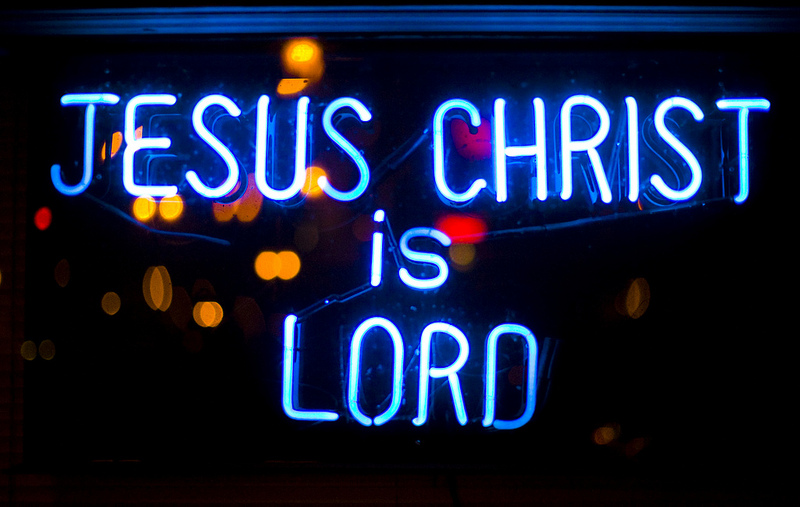
“AVOID ETERNAL PUNISHMENT WITH THREE SIMPLE WORDS: JESUS IS LORD.” That one was followed by three smiley face emojis.
Almost every churchy sign, with the exception of those with empty promises about welcoming, loving, and tolerating congregations, were predicated on making an action now to insure the future.
That future is what we in the church often call Heaven. And, to our wondering and wandering imaginations, Heaven is often filled with fluffy clouds and pipe cleaner halos, and a whole lot of boredom.
But in Scripture, the thing those signs portend to represent, Heaven is actually a whole lot more like earth. In fact, it is those two things wedded together – the predominant image Jesus uses to describe the kingdom of Heaven is a wedding feast that never stops, a party with food and drink that never ever ends.
And that kingdom, the kingdom of celebration, is what Jesus says is sown on the earth, lit like a lamp, and never to be hidden under a basket, or a rug, or in the closet.
Which is just another way of saying, Christianity is less about what happens when you die and more about what’s happening with and in the life you’ve been given.
The kingdom is already done, it is here, it cannot be taken away. It is a lamp set up on a lampstand shining bright for all to see. It dwells in us, among us, and for us. The person of Jesus Christ, kingdom incarnate, has already done for us that which we could not do for ourselves. That is the light in which we live.
And rather than just leaving it right there, Jesus continues with his penchant for parables and proceeds to give yet another illustration of the very points he’s been cooking together.
Consider the seed that grows without work on the part of the one who threw it to the ground. The kingdom is at hand, planted right here, at work in this world right now. Jesus is sown into all of this and brings about a new reality that shakes the foundations of everything we hold dear.
By his death and resurrection, Jesus, as God in the flesh, reconciles everything, everywhere, to himself. And at the end, when he makes all things new, he makes not just a new Heaven but a new earth, combined and mixed and stuck together forever.
That is God’s work in Christ, and it happens for us and in spite of us!
Notice: once the person in the parable sows the seed, nothing else is done. The sower goes to bed, wakes up and goes to the grocery store, maybe hits the gym for a quick workout, comes home to make dinner, and goes to bed again. That’s what happens day after day and night after night — all the while, the seed that is the kingdom sprouts and grows in a way that the person simply knows nothing about.
Jesus says the seed bears fruit of itself automatically. The kingdom has been sown into the world among sinners and saints, the best and the worst, the greatest and the least, the perfect and the pitiful, and it will come up a perfect kingdom all by itself.
It grows without any help, and when it’s ready in all of its ripeness, that’s when the sickle comes.
The harvest is made.
And, that sounds nice, but what about all the bad people? Do they get taken up in the harvest as well? What about the person who burned that bridge with us so long ago? What about the people on the news every night that make us clench our fists? What about those we clearly believe are outside the realm of Jesus’ kingdom?
But Jesus doesn’t make distinctions here. The kingdom is ready for harvest and that’s that.
And that might be the most confounding part of this paradoxical set of parables.
It is confounding to us because every one of us is an eschatology junkie – we are consumed by the idea that, in the end, in the eschaton, wrongs must be set right, that those who are evil must be kicked out of the intertwined new heaven and earth, and that the only way the Kingdom can ever come is if we separate the good from the bad, and the deserving form the undeserving, and the saints from the sinners.
Notice, in the kingdoms of earth, our favorite solutions to problems are knocking people down a peg or two, locking them up behind bars, and – if all else fails, getting them out of the game forever with the death penalty.
We set up systems (powers and principalities) all in the name of law and order, but in the end they keep the poor poor and the rich rich. They lift the mighty even higher, and bring the low even lower. They, to put it simply, make the world a better place by making it better for certain people and far worse for everyone else.
Remember: it was law and order that nailed Jesus to the cross – church and state working together for the common good to keep suppressed that which they disagreed with.
Which, isn’t too far of a stretch from how we’re still living.
To bring it full circle – we think its all up to us. We believe we have been so elected by God to be the great arbiters of morality and justice and goodness all while the world continues to go down the drain. We come up with all these “great ideas” on how to fix everything when, even if we do take a step forward, it doesn’t take long before we fall tumbling back.
The kingdom grows, Jesus tells us, because the kingdom has already been sown into the ground. It grows of itself in its own time and, above all, we don’t know how! Any and all the bright ideas we might have of making the world a better place, about how to fix everything we think is broken, how to make people more holy and faithful and good and honest and true, will always and everywhere fall short of what God in Christ has already done and is forever doing.
This has been proven again and again throughout history because if the kingdom could have been made to grow perfectly in this world by our own bright ideas, it would have sprouted up all over the place and there would never be anything bad on the news at night.
But it never did and it never will.
Except, except, in a mysterious way that will always be outside of our moralizing and addiction to knowing how everything should be happening.
We might be obsessed with the end as we see it, but Jesus, in this parable, reminds us that the end is in his hands, and so too is the present. The kingdom is already here, it is made manifest among and within people like us – it is happening and we know not how.
For a people hell bent on having explanations for everything, that’s bad news.
But for those who live in Jesus’ kingdom, there’s nothing better. Amen.
When the sabbath was over, Mary Magdalene, and Mary the mother of James, and Salome bought spices, so that they might go and anoint him. And very early on the first day of the week, when the sun had risen, they went to the tomb. They had been saying to one another, “Who will roll away the stone for us from the entrance to the tomb?” When they looked up they saw that the stone, which was very large, had already been rolled back. As they entered the tomb, they saw a young man, dressed in a white robe, sitting on the right side; and they were alarmed. But he said to them, “Do not be alarmed; you are looking for Jesus of Nazareth, who was crucified. He has been raised; he is not here. Look, there is the place they laid him. But go, tell his disciples and Peter that he is going ahead of you to Galilee; there you will see him, just as he told you.” So they went out and fled from the tomb, for terror and amazement had seized them; and they said nothing to anyone, for they were afraid.
They traveled to the tomb very early on the first day of the week.
On a Sunday.
The Gospel is reluctant to give us too many details about the journey. We don’t hear about their grief and their pain. We don’t get a glimpse at their plans now that the Lord is dead and forsaken in a tomb. We don’t really learn anything except they travel without knowing how they will roll the stone back.
Low and behold… The very large stone has already been rolled away by the time they arrive. And to further their confusion, when they look inside they discover a young man dressed in white. A divine messenger? An angel?
He speaks, “Don’t be afraid. I know you’re looking for Jesus, but he ain’t here. He was dead, but now he is alive. Look over there, that’s where they laid his body. But now go, tell the disciples that Jesus is going on ahead of you to Galilee, you will see him there.”
And here’s how the Gospel story ends: They ran from the tomb terrorized, and they said nothing to anyone, for they were afraid.
Easter.
It doesn’t get much better than this for the church. Out of death, life!
For centuries the church has mined this story for every possible nugget that can speak something new and wonderful into our lives. I, myself, have preached about the fear that so befuddles the women and how the Gospel ends with a lie. For, if they really said nothing to anyone, how else would we have heard the story?
I have preached about how new life seems to always start in darkness, whether its in the womb or in the tomb.
I have preached and preached this story.
And yet, this year, as I returned to the words that have comforted and confounded Christians for centuries, I’ve been stuck on a different detail.
Why Galilee?
I mean, good for Jesus that he’s raised from the dead and goes home. But Galilee was an out-of-the-way forgotten sort of place. It’s only claim to fame is that Jesus came from it.
Of course, Jesus did his Jesus thing in Galilee, and Galilee is where he called the disciples, and cured the sick, and fed the hungry, and preached the parables.
But even in the midst of his Galilean mission, Jesus was focused on eventually getting to the big show – Jerusalem.
The mission and the ministry builds toward the Transfiguration, and then everything shifts to the Holy City – the gospels sharpen as Jesus enters on the back of the donkey on Palm Sunday. Jerusalem is where he was betrayed, beaten, and left to die on the cross.
Jerusalem was the place to be, it’s where all the movers and the shakers were hanging out, its where those who believed in unbelievable things hoped the Messiah would take charge and transform the world.
Which makes the detail and the news of a Galilean reunion so bizarre. Here, on Easter, the Son of God is no longer held captive by the dominion of death, he is resurrected, and he leaves Jerusalem for Galilee.
That’s confounding.
One would hope that, on the other side of resurrection, Jesus would be smart enough to go right up to the palace to give Pilate a whole, “You can’t handle the truth!”
Or, Jesus would storm into Herod’s inner court to rip him a new one.
Or, at the very least, Jesus would gather a band of revolutionaries to overturn the powers and the principalities occupying Jerusalem.
Did the Lord of lords not know that if you really want to make a change you have to go to the top?
Jerusalem should’ve been the first step in the journey toward overthrowing the empire, Jerusalem would’ve been the perfect place to plant the flag of the kingdom of Heaven, Jerusalem could’ve been the beginning of the end.
But Jesus doesn’t do any of that – he doesn’t do the effective thing.
Instead he goes back to Galilee, of all places.
Nobody special lived in Galilee – it was populated by shepherds, fishermen, and farmers. The people there held no power or prestige.
The only thing notable at all about Galilee, is that’s where the followers of Jesus were from.
People like us.
When we read the Easter story, whether it’s on a Sunday in church or from the comfort of our own homes, we catch this moment when the women run away in fear. And because we tend to focus so much on their reaction, their terror, that we miss how Jesus is raised from the dead only to return to the very people who abandoned him.
Jesus chooses the unworthy and undeserving ragtag group of would-be disciples that he’d been dragging along for three years as the people for whom and through whom he will change the world.
On Easter Jesus returns not to the powers that be, but to people like you and me.
He doesn’t storm the gates of the temple, he doesn’t show up in the Oval Office, he goes where nobody would’ve expected.
Hear the Good News:
Christ died for us while we were yet sinners. Not after we repented of all of our sins, not before we even had a chance to think up all of our sins, but in the midst of them, in our worst and most horrible choices Jesus dies and rises for us.
At the right time Christ died for the ungodly, people like us who too easily move from “Hosanna” to “Crucify.”
There is therefore now no condemnation for those who are in Christ Jesus.
My sin, oh the bliss, of this glorious thought; my sin, not in part, but the whole. Is nailed to the cross and I bear it no more, praise the Lord, praise the Lord, O my soul.
All of that can be summed up like this: Jesus returns to us.
Take it from a preacher like me, even in these strange circumstances of celebrating Easter online, we’ve messed up the resurrection message for a long time. We’ve made church into yet another self-help program, a place to gather week after week to hear about what you must do to make your life better. Or, in case you don’t want to look too close to home, what you must do to make the world a better place.
And that doesn’t have anything to do with Easter!
It’s not Good News.
Notice: on Easter, Jesus’ response to the sins of his followers isn’t to berate them or judge them or even damn them. He doesn’t give them a list of things to do, or programs to start, or prayers to pray.
Instead, he just comes back to them, to us, with, of all things, love.
How odd of God.
When you think about it, it’s rather confounding how God keeps coming back to us.
Stuck in captivity in Egypt? God shows up in a burning bush.
Lost in exile? God brings the people home.
Dead in your sins? God sets us free.
Are we really sure we want to worship this God who refuses to leave us to our own devices?
God is like the shepherd who willingly leaves behind the ninety-nine to search for the one who is lost. God doesn’t sit back and relax and just hope for the best. God charges out into the wilderness and refuses to quit.
God is like a Samaritan, forsaken and ignored by the rest of the world, who stops by the side of the road to help the one that everyone overlooked. God doesn’t keep walking by with better things to do. God condescends God’s self to get down in the ditch with all of us.
God is like a king who hosts a giant party and, when not enough people show up, sends his servants out into the streets to grab anyone they can find, even the poor and the marginalized, and makes space for them at the banquet.
God is like the father who runs out into the street, stops his prodigal and wayward child before an apology can even spring forth, and says, “I’m busting out the good stuff tonight, we’re having a party! You were dead but now you’re alive!”
We, the good and righteous folk that we are, we might’ve thought the story was over. That the shadow of the cross remaining in the distance puts a conclusion on the whole thing. That, in the end, we really had gone too far this time with the whole killing the Son of God.
But even in this, the greatest sin of all, Jesus comes back.
He comes back to the betrayers and the crucifiers, to the doubters and the deserters.
Jesus comes back to us.
The work of Jesus, contrary to how we so often talk about it and hear about it in church, is not transactional. There is no such thing as “if” in the Gospel.
We are not told that the Lord expects us to get everything ironed out before he will come and dwell among us.
He doesn’t wait behind the stone in the tomb until there’s enough good morality in the world before he busts out.
What we are told, from the cross and from the resurrection, is that Jesus is already in it with us, and even more that he has gone on ahead of us.
Church, whenever it descends into “you must do this, or you have to make the world a better place” fails be the church Christ inaugurated in his life, death, and resurrection, because we will fail that work.
Easter invites us to do nothing except trust; trust that there is a New Jerusalem waiting to come down and feast at the Supper of the Lamb, the Lamb who has been with us the whole time, who refuses to abandon us regardless of how good we are or how bad we are.
If Easter because anything less bizarre than that, then faith is turned into standing on your tiptoes to see something that isn’t going to happen.
We can’t make Easter happen. We can’t raise Jesus from the dead.
It happens in spite of us entirely, which is the best news of all.
Easter, simply put, is a gift. A gift like grace – unwarranted, unmerited, undeserved.
God has made the world a better place in Jesus Christ who comes back to us. Amen.
My family and I were away from the church last weekend while on vacation and I asked one of my lay members, Melissa Clark, to preach in my absence. Apparently, her sermon was met with audible “amens!” and applause at the end.
For a regular preacher this brought me great joy and great envy!
Her sermon was on Mark 8.31-34 and she graciously allowed me to post it here on the blog…
Mark 8.31-34
Then he began to teach them that the Son of Man must undergo great suffering, and be rejected by the elders, the chief priests, and the scribes, and be killed, and after three days rise again. He said all this quite openly. And Peter took him aside and began to rebuke him. But turning and looking at his disciples, he rebuked Peter and said, “Get behind me, Satan! For you are setting your mind not on divine things but on human things.” He called the crowd with his disciples, and said to them, “If any way to become my followers, let them deny themselves and take up their cross and follow me.”
I know that Taylor did not announce that he wouldn’t be here this week and I am not sure if that is because he through that if people knew I was preaching more people would show up than for him or less! Either way, you’re stuck now!
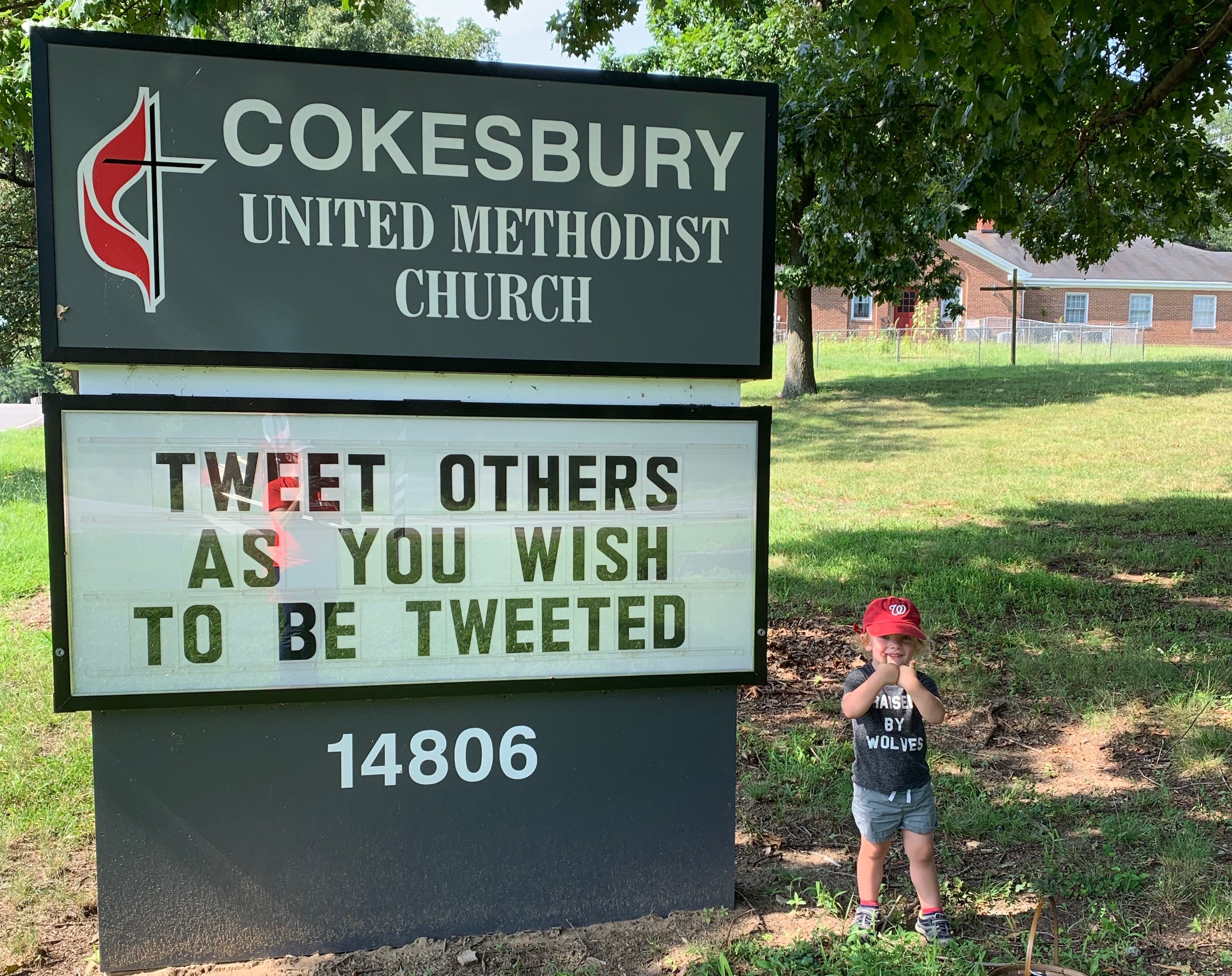
I hope all of you saw the sign out front this week. If you did not it says “Tweet Other As You Wish To Be Tweeted.” I have to say that I first saw it posted on our church Facebook page and when I read ti I assumed that it was directed at me. Now I will admit that I am not on Twitter, or Instagram, or many of the other social media outlets, but I am on Facebook, a lot. A lot. If you are not familiar with Facebook or the process of making friend on Facebook you may seem surprised, or maybe not, that I do not have a lot of friends on the site, only about 150. Some people consider it an achievement to get as many friends as possible and thus end up with thousands. I have made it a practice not to be friends on Facebook with anyone that I work with and I do not send out friend requests because I am concerned that what I post might offend some of the people that I am friends with in polite society. If you are not familiar with how to become friends on Facebook, you would send a friend request to someone you know or want to know and they have the opportunity to accept or deny your request, that being said, if you send me a friend request this week I am going to accept it, but consider that you have all been warned!
On of the things I have learned about myself on Facebook it that I am extremely judgmental and extremely unapologetic when I think I am right.
And I always think I am right.
I am therefore, part of the problem that I am about to complain about.
The problem that I am focused on right now is the loud voice of people that continue pushing this pervasive idea that there is a war on Christianity. My first thought is that that is absolute rubbish – there is no such thing.
How can people who believe in a God that rules over all and is the most powerful force in the universe believe that God could be under attack or much less win that that war. But the more I think about it, maybe there is.
Maybe the war began when we removed prayer from public schools, or maybe it was when the Supreme Court affirmed the their decision in Roe v Wade? Maybe it was when the gay marriage was made legal? Or maybe all the trouble started 100 years ago when women were given the right to vote? That sure changed things.
Actually, it must have started when retail stores that live or die by the money they make between Thanksgiving and Christmas forced all their employees to stop saying Merry Christmas.
It sounds a little ridiculous don’t you think?
I am beginning to that think there is a War on Christianity but I am also beginning to think that the war is being waged by Christians.
It is only Christians that are yelling at the top of their lungs that prayer has been removed from schools, but that is not true. Children are allowed to pray they are just not being forced to pray. And, lets face it, would we want our tax dollars paying some of these teacher to pray with our kids? How about the school principal in Boca Raton, Florida who told a parent that “not everyone believes the Holocaust happened” or the music teach in Chicago that posts videos on Youtube denouncing non-Christian religions saying that are only two religions in the world, “God’s Way” or man made religions like Islam, Judaism, and Scientology. These are not the kind of people that I want teaching our children anything, let alone prayer.
Many people want to blame the decline of society on the removal of God from schools and public places. But I would argue that there is not a single person in this church, community, state, country, or world who could move God anywhere that God does not want to go.
The idea that there is a War on Christmas because we’re not allowed to say “Merry Christmas” in our places of business is another myth being screwed at us by Christians. I have worked in retail all my life and I assure you that I say “Merry Christmas” all the time. The only time I don’t say it is when I am not sure that the person I am talking to is Christian and I don’t want to offend someone of a different religion. If I don’t say “Merry Christmas” to you it is because I don’t recognize that you are a Christian, and you should ask yourself why that it. Is it because I can’t recognize you as one, or are you not behaving like one? And yes, I don’t want to offend my non-Christian customers by saying the wrong thin, and the idea of not wanting to offend someone, or being “politically correct” is the absolute tenant of Christianity: “Love you neighbor as yourself.”
The greatest commandment, as Jesus reminds of, is to love God with all our heart, soul, mind, and strength and to love our neighbors as ourselves – on these two commandments hang all the law and the prophets.
We are surrounding ourselves with worldly ideas and calling them Christian ideals and claiming that they are being attacked in a war. We scream about there being no prayer school but we do nothing when children show up hungry day after day because there is no food in their home. We get all offended because no one said, “Merry Christmas” to us but we snap at the cashier cause the sale price didn’t ring up. We scream about illegal immigrants at the southern border without acknowledging that that are also our neighbors and are in danger. They need our Christianity hospital and not our American hatred.
Jesus told Peter, “Get behind me, Satan. You do do not have in minds the concerns of God, but merely human concerns.” Are all of these not human concerns? Prayer in school? Merry Christmas? Red Starbucks cups? Complaining about whether or not someone “hates America” because they are critical of the government?
These are not the concerns of God. These are made up battles in the so-called war on Christianity designed to create conflict that separates us from Jesus Christ and it is all being done in the name of Christianity.
Jesus also said, “Whomever wants to be my disciples must deny themselves and take up their cross and follow me.” I don’t believe that when Jesus says, “deny themselves” that he is saying “give up everything you own and follow the teachings of the closest church you can find.” I believe that Jesus is saying you must deny the worldly things that separate us from the Lord and then we can follow the cross that he already took up, for us.
Now, I said earlier that I would be compiling about myself in this sermon. I give in to worldly ideas all the time. If you become my friend on Facebook you will learn that I use language that is probably not acceptable to God’s ears, frankly its probably not acceptable in a sailor’s bar, but I rationalize it as “I am who I am.” I am not forgiving of people that I think support un-Christian ideas and I often decide for myself what I believe is un-Christian. So, I repeat, I am part of the problem! Just like the rest of you, I am a work in progress, and as part of that work I will continue to say what I personally believe to be the truth of Christ.
God so loved the world that he gave his only begotten son that whosoever believes in him will not perish but have eternal life.
Whosoever.
There is no qualifier in that sentence, whosoever is for God to judge, not you and not me. And with Jesus’ help I’ll keep trying to be the best example of Christian that I can. Will you?
As he came out of the temple, one of his disciples said to him, “Look, Teacher, what large stones and what large buildings!” Then Jesus asked him, “Do you see these great buildings? Not one stone will be left here upon another; all will be thrown down.” When he was sitting on the Mount of Olives opposite the temple, Peter, James, John, and Andrew asked him privately, “Tell us, when will this be, and what will be the sign that all these things are about to be accomplished?” Then Jesus began to say to them, “Beware that no one leads you astray. Many will come in my name and say, ‘I am he!’ And they will lead many astray. When you hear of wars and rumors of wars, do not be alarmed; this must take place, but the end is still to come. For nation will rise up against nation, kingdom against kingdom, there will be earthquakes in various places; there will be famines. This is but the beginning of the birthpangs.”
This might be our least favorite Jesus. We prefer the Jesus who fed the 5,000 gathered to hear him speak. We like rejoicing in Jesus’ greatest parables like the Prodigal Son and the
Good Samaritan. We enjoy reflecting on Jesus’ final evening with his friends while passing bread and wine around the table.
But the apocalyptic Jesus? No thank you!
Jesus and his disciples are walking through Jerusalem and the temple is casting a shadow over everything (literally and figuratively). It captivates the hearts and imaginations of all who walk in its shade, and it is the pivotal focus of their faith. It stands as a beacon to all with eyes to see regarding the power and the glory of God.
And the disciples can’t help but marvel in the giant stones and the large buildings. Like kids seeing a skyscraper for the first time they probably kept fumbling over their feet while their eyes were stuck in the sky.
Jesus had led them all through Galilee ministering to the last, least, and lost, but now they are in Jerusalem, rubbing shoulders with the very people who fear Jesus the most.
It was probably Peter who keeps his finger pointed up high with every passing arrangement of architecture and Jesus says, “Psst. You want to know a secret?”
The disciples frantically move to get close enough to hear the Good News.
“All of this stuff is going to be destroyed.”
“Now wait just a minute Jesus! This temple has stood for centuries. You mean to tell us the pinnacle of all that we hope for and that we believe in will crumble?”
“Yep.”
Later, they’re sitting on the Mount of Olives, opposite the temple, and they bring it up again: “Seriously Jesus, when is this going to happen? What will be the signs of the times so we know what to expect?”
“My friends, beware that no one leads you astray with empty promises about the end. There will be plenty of people who come in my name declaring profound change, and messianic power. They will lead many down the wrong path. But when you hear about wars and destruction, do not be alarmed; all of this must take place. There will be earthquakes. There will be famines. There will be wars. But all of this is just the birth pangs, the beginning of the end.”
Big and towering buildings are not supposed to crumble to the ground. Oceans are not supposed to leap out and cover the dry land. The earth is not supposed to shake and tremble.
We are not supposed to lose the people we love.
But then it happens.
Those who witness such unfortunate and frightening sights not only lose things that are dear and precious to them – like the countless families whose homes and properties have burned to the ground in California. But in a very real sense they have also lost their innocence.
They now know that something they once believed to be a sure thing is no longer trustworthy.
These images, both in scripture and in our lives, are what we might call apocalyptic. They signal to those with eyes to see the destructive forces of the world such that reality seems to be pulling at the seams. But thats not what apocalypse means.
An apocalypse is a revelation from God – it is a vision of a timeless reality. It is the past. It is the present. It is the future.
Jesus’ friends saw the temple as the end-all-be-all of faithful living, and he quickly brushed it aside to say that even the brick and mortar will fall away.
Don’t put your faith in the buildings and in the structure. Keep your faith in the Lord who reigns forever.
But we don’t like this Jesus; he’s frightening!
These words are tough to swallow in our comfortable and contemporary condition. What if the things we cling to most are just illusions? What happens when those things we so elevate come crashing to the ground? How have we so forgotten these words from Jesus?
Take a look around for just a moment at our sanctuary… None of this will last. Everything has its time. But we deny it again and again. Look at the pews, there’s a reason they’re bolted to the floor! They are made to feel far more permanent than they really are.
All of this will disappear. All of our great monuments are temporary – not just in the church but in the world at large.
And we don’t have to be seasoned with life to know that this is true. Each of us here, in some way, shape, or form, know about the finitude of things. We all kind of know, whether we like to admit it or not, that all life is loss.
Time is now fleeting, the moments are passing…
We try to deny the truth, we erect giant edifices, we worship our architecture as if it was here from the beginning, and we believe that are favorite institutions are too big to fail.
But they do, and they will.
Perhaps most frightening of all isn’t the foolish belief that these things will last forever, but that we will last forever. We won’t. The bell will toll for us all.
We cannot stop the inevitable.
All life comes to an end.
Only a living God can make our end a beginning.
There is a strange and bizarre comfort in these words from Jesus to the disciples in Jerusalem. I know it doesn’t sound comforting. For us, when Jesus says, “God’s gonna destroy all of this,” it sounds like bad news. But for others, those for whom these institutions and statues are like hell on earth, the destruction of them is good news.
None of those things give true life. No building, no institution, no company.
Only God gives life.
The truth of the gospel is that God is gonna get what God wants. No matter how much God’s gotta mess up what we’ve got, God’s gonna get what God wants.
Jesus rightly warns his disciples that many will come proclaiming some version of a truth, they will come with empty promises about the saving end of all things. They will, in some way, call upon you and I to join up to protect the things that we think rule the world.
But Jesus is abundantly clear – the temple cannot and will not stand.
The restoration of the temple, getting Jesus back in schools, whatever the thing is that we are willing to die for is not the end of all things. Those things are not God’s goals for the world.
The goal of all life is resurrection!
This is why we are cautioned about those who draw all of our attention and focus and energy of bold claims about what’s really at stake. And yet we cannot help ourselves! The all-you-can-eat-buffet of suffering and destruction in this world is a fix that never stops bizarrely comforting us.
And we, today, become so focused on discerning the signs of the time, that we neglect to open our eyes to the truth of the gospel today.
Our focus is not on the signs of the times themselves, but rather on the one who is to come – the one who enables us to stare into the void of such devastation and claim the certainty of a new day dawning in the light of the resurrection.
Today, faithful living, whatever that means, has become something of fanatical observance, or an apathetic endeavor.
Just turn on the news and you will quickly learn about the destructive powers of Christians in their communities all across the theological spectrum. Or you can learn about the failure of so-called Christian politicians. Or you can learn about the greed in churches that wedge themselves between families, between friends, and between brothers and sisters in Christ.
The world quickly identifies the people who claim to speak on behalf of Jesus who then rapidly lead disciples down paths of idolatrous worship. They care more about which politicians won certain seats than about the people who sit in the seats of their churches. They preach intolerance rather than love, they emphasize death over resurrection, and they support judgment above new life.
And then, on the other side, there are countless churches that contain only the blandest sense of discipleship. Week after week the pews fill with less and less people as the sermons are filled with more and more trite aphorisms about living your best life. They might have a bible displayed at the front of the sanctuary but it is covered in dust, the people who show up on Sunday don’t even know why they do so, and they only pray because they don’t know what else to do.
And so, it is against the fanatical religious leaders of today, Jesus warns us to beware that no one leads us astray. He speaks to us through the apocalyptic vision of the past, present, and future about holding fast to the love that has been revealed to us in Father, Son, and Holy Spirit. And he beckons us to remember who we are and whose we are.
And it is against the apathetic churches of today, the ones who are just going through the motions, that Jesus announces an electrifying and revelatory message: this is not the end!
This kind of scripture might terrify us to the core; we might see the world falling apart under our feet and immediately identify what we witness with what Jesus warned his disciples about. Depending on who we are, and where we are, these verses can appear more horrifying than hopeful.
But for anyone with a truly terrifying reality – this is a profound word and vision of hope.
For the woman who fears the Thanksgiving table, and the conversations and memories it brings, “this is not the end” promises something redemptive and transformative.
For the man who knows he cannot afford to buy Christmas presents this year, “this is not the end” is a hope that burns like a faithful flame in the midst of darkness.
For the family grieving as they take their first steps after burying someone in the ground, “this is not the end” takes on a whole new meaning when they experience the glory of God who promises our resurrection.
No matter who you are, and no matter what you going through in your life right now, hear these frighteningly and faithfully apocalyptic words and know that they are meant for you: “This is not the end.” Amen.
This week on the Strangely Warmed podcast I speak with Jonathan Page about the readings for the 26th Sunday After Pentecost (1 Samuel 1.4-20, Psalm 16, Hebrews 10.11-25, Mark 13.1-8). Jonathan serves as the pastor of Herndon UMC in Herndon, VA. Our conversation covers a range of topics including culture (re)framing, marginalized scripture, brutal honesty, refuge as actual safety, measuring gods, the elevator speech of grace, the great “and yet”, sitting with the apocalyptic Jesus, and MTV Diary. If you would like to listen to the episode or subscribe to the podcast you can do so here: You Think You Know But You Have No Idea
This week on the Strangely Warmed podcast I speak with Teer Hardy about the readings for the 25th Sunday After Pentecost (Ruth 3.1-4, 4.13-17, Psalm 127, Hebrews 9.24-28, Mark 12.38-44). Teer serves as an associate pastor at Mt. Olivet UMC in Arlington, VA and is one of the cohosts for Crackers And Grape Juice. Our conversation covers a range of topics including Advent devotionals, Rated R scriptures, podophobia, neighborhood names, bringing God into the voting booth, the once-for-all-ness of the atonement, sacrificing Jesus one Sunday a month, and ignoring people in robes. If you would like to listen to the episode or subscribe to the podcast you can do so here: The Fruit of the Womb









 think and let think