Christ Takes It For Granted That People Are Bad

strangely-warmed-spreaker-header

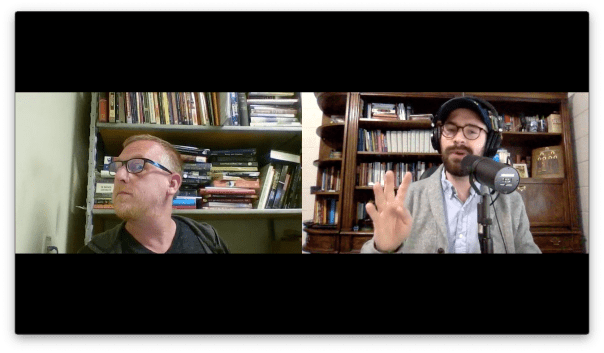
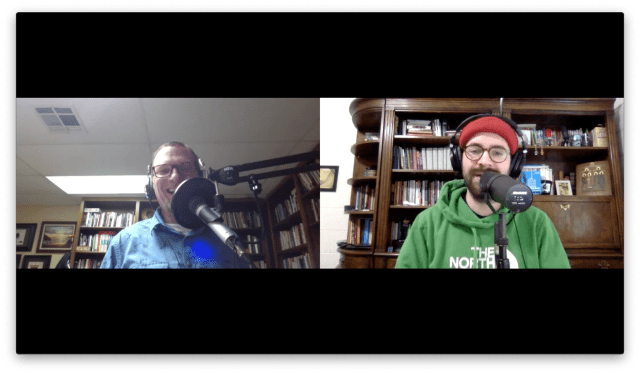
This week on the Strangely Warmed podcast I speak with Joshua Retterer about the readings for the 6th Sunday After Epiphany [C] (Jeremiah 17.5-10, Psalm 1, 1 Corinthians 15.12-20, Luke 6.17-26). Our conversation covers a range of topics including internet friends, discipling interns, distrusting mortals, the color green, the Law, reading Romans, preaching the same sermon every week, the bodily resurrection, the morality of wealth, and lighting money on fire. If you would like to listen to the episode or subscribe to the podcast you can do so here: Christ Takes It For Granted That People Are Bad

Screen Shot 2019-02-11 at 10.13.45 AM

What’s Good About The Good News?

Devotional:

Luke 5.11

When they had brought their boats to shore, they left everything and followed him. 

Weekly Devotional Image

Are you willing to leave it all behind for Jesus?

It’s a question that Christian types will ask under the auspices of something like “evangelism.” And for as much as it pains me to hear things like that, it’s not actually wrong.

I mean, its THE implicit question that Jesus hangs in the air when he meets Peter while fishing. The fisherman have finished their late night trolling (no one was dumb enough to fish during the day) and then this strange and bewildering rabbi shows up and says, “Hey, let’s go out and see what we can catch.” 

Peter, inexplicably, agrees and before long they’re hauling in so many fish the nets begin to break and the boat starts to take on water.

Peter can’t handle the holiness of the moment and begs Jesus to depart from him because he is a sinful man. But Jesus calmly replies, “Don’t be afraid; from now on you will be catching people.”

Notice: Jesus doesn’t ask a question! There is just something about the profound wonder of the moment that compels Peter and the other fishermen to leave everything and follow Jesus. 

Oftentimes when this passage comes up, we make it out into a moment of self-righteousness; it becomes a competition about who has given up more for Jesus. And, invariably, the everything isn’t everything but mostly just a list of material possessions.

And no doubt, Peter and the others gave up something material – they left the livelihoods of fishermen. But there is more to what is left behind for Jesus than just our jobs or our material comforts.

Sometimes we are compelled to leave something even more difficult behind.

Our sins.

Goodnews word on vintage broken car license plates, concept sign

The faithful life is not easy. When we confront the frustrations in another person, Jesus tells us to turn the other cheek. When we witness horrible behavior, Jesus whispers in our ears “judge not, lest ye be judged.” When we are so convinced of our own righteousness, Jesus shows up to remind us of how broken we really are.

But the kicker is that even though we are compelled to leave it all behind, we don’t. 

We might have good days where we make the right decisions and speak the loving words that Jesus would have us say. But we invariably fall back into patterns and rhythms in which we are not the people God has called us to be.

And we’re not alone – the same thing happened to Peter! Peter, called from the boat, abandoned Jesus in his greatest hour of need and denied even knowing him.

But to whom does Jesus appear after the resurrection by the side of the sea? 

Peter.

One of the great mysteries of faith is that we are compelled to leave it all behind and Jesus knows that we won’t. 

That’s the kind of love we encounter in the risen Jesus, a forgiveness in spite of, and because of, us.

No wonder we call it Good News.

You’ve Got To Set Yourself On Fire

strangely-warmed-spreaker-header

This week on the Strangely Warmed podcast I speak with Josh Munnikhuysen about the readings for the 5th Sunday After Epiphany [C] (Isaiah 6.1-13, Psalm 138, 1 Corinthians 15.1-11, Luke 5.1-11). Our conversation covers a range of topics including fishing with Jesus, deserted island scriptures, prophetic imagination, transformation by fire, the call to confusion, theological reset buttons, the intimacy of creation, resurrection lenses, spiritual hangovers, and leaving everything behind. If you would like to listen to the episode or subscribe to the podcast you can do so here: You’ve Got To Set Yourself On Fire

Screen Shot 2019-02-04 at 9.13.27 AM

The Dead Faith Of The Living

strangely-warmed-spreaker-header

This week on the Strangely Warmed podcast I speak with Josh Munnikhuysen about the readings for the 4th Sunday After Epiphany [C] (Jeremiah 1.4-10, Psalm 71.1-6, 1 Corinthians 13.1-13, Luke 4.21-30). Our conversation covers a range of topics including profanity from the pulpit, awesome responsibilities, building and destroying, the watching world, fidelity, wedding sermons, playing drums in church, wearing the jersey of the other team, and prophetic humility. If you would like to listen to the episode or subscribe to the podcast you can do so here: The Dead Faith Of The Living

Screen Shot 2019-01-27 at 9.32.50 PM.png

On The Perils Of Preaching At Home

strangely-warmed-spreaker-header

This week on the Strangely Warmed podcast I speak with Todd Littleton about the readings for 3rd Sunday After Epiphany (Nehemiah 8.1-3, 5-6, 8-10, Psalm 19, 1 Corinthians 12.12-31a, Luke 4.14-21). Todd is the pastor of Snow Hill Baptist Church in Tuttle, Oklahoma and he is the host of the Patheological Podcast. Our conversation covers a range of topics including reading from other preachers, the cyclical nature of history, getting rid of pew bibles, communal interpretation, clapping in church, God’s perfect speech, the most important question in church, first sermons, and helping people cry. If you would like to listen to the episode, or subscribe to the podcast, you can do so here: On The Perils Of Preaching At Home 

screen shot 2019-01-21 at 4.32.14 pm

Asking The Right Quanswers

strangely-warmed-spreaker-header

This week on the Strangely Warmed podcast I speak with Drew Colby about the readings for Baptism of the Lord Sunday [C] (Isaiah 43.1-7, Psalm 29, Acts 8.14-17, Luke 2.15-17, 21-22). Drew is one of the associate pastors at St. Stephen’s UMC in Burke, VA. Our conversation covers a range of topics including lighting stuff on fire, unpacking redemption, being comfortable with sin, Maggie Smith as the voice of God, shouting “glory!” in church, the gray area of sentimentality, baby baptism, and youth group initiations. If you would like to listen to the episode, or subscribe to the podcast, you can do so here: Asking The Right Quanswers

screen shot 2019-01-07 at 3.27.17 pm


Hats At The Dinner Table

Crackers-Banner-1

This week on the Strangely Warmed podcast I speak with Teer Hardy about the readings for the 1st Sunday After Christmas (1 Samuel 2.18-20, 22-26, Psalm 148, Colossians 3.12-17, Luke 2.41-52). Teer is the associate pastor of Mt. Olivet UMC in Arlington, VA, and is part of the Crackers & Grape Juice Team. Our conversation covers a range of topics including life after Christmas, conscripted youth groups, dressing for the job your parents want you to have, praise vs. gratitude, shout outs to DBB, the people who give church a bad name, SNL, education models, and the imagination of children. If you would like to listen to the episode or subscribe to the podcast you can do so here: Hats At The Dinner Table

Screen Shot 2018-12-28 at 4.53.26 PM

Missing From The Manger

“While they were there, the time came for her to deliver her child. And she gave birth to her firstborn son and wrapped him in bands of cloth, and laid him in a manger, because there was no place for them in the inn.”

It doesn’t get a whole lot better than this: Christmas Eve! 

No matter how old or jaded we may be, regardless of whether we deserve coal in our stockings or not, Christmas Eve never fails to work its magic. 

The lights are hung in the sanctuary, the candles are burning, the poinsettias are blooming. 

And we are here! Some of us were raised in this church and wouldn’t dream of being anywhere else. Others made plans weeks ago and are here for the very first time. Some of us are here with questions, and others are just waiting to get home to finish everything else. Some of us made a last minute decision and are still wondering if we made the right choice, and others were dragged here against our will!

There are some here tonight with more Christmases ahead than behind, young parents with children, kids with long wish lists. And of course there are some for whom there are only a few Christmases left, and with each passing season we feel more nostalgic about the past.

Whoever you are, and whatever feelings, and thoughts, and questions you’ve brought tonight, it is my hope and prayer that you encounter the light of the world in Jesus Christ.

MangerScene_NoJesus

I am beside myself.

It’s one of my grandmother’s favorite things to say. And, to be honest, I’m not sure what it means. I don’t even know if she knows what it means.

And yet she says it all the time.

It can be used in both exhilarating and terrifying ways. Like when she gets a card from someone in the mail with whom she has not conversed with in years. She will pick up the phone and tell me about it, and to describe the feeling she says, “I am beside myself!”

Or like when she turns on the news and learns of yet another senseless tragedy taking place somewhere in the world, she will pick up the phone and tell me about it, and to describe the feeling she says, “I am beside myself!”

I love my grandmother with every fiber of my being, and I will contend that she decorates for holidays better than anyone on the planet. 

Who else has 76 Easter bunnies that she hides in the house for her grandchildren, and now great-grandchildren to discover every spring? 

But the greatest decoration of all, her pride and joy, is her manger scene.

Every year she sets aside the time to pull out the box with every individual character wrapped in their own paper to place them perfectly in their pre-ordained spot. The camels are so life-like they look as if they could spit on the bureau where they are situated during December. The magi are so majestic I am convinced that if you opened up their tiny gift boxes you would indeed discover gold, frankincense, and myrrh. The detail in the faces of Mary and Joseph are so incredible that you can see both their excitement and their terror about the new baby boy in their lives.

But one year, when the whole family gathered at her house, she greeted us at the front door with her preferred expression from both sides of the emotional spectrum: “I am beside myself!”

I had hoped that she was beside herself in joy that her entire family was waiting by the door, but I was wrong. No, she was beside herself because baby Jesus was missing – and you can’t have Christmas without baby Jesus.

The manger appeared as perfect as planned, except there, right in the middle was the tiny feeding trough without a Jesus wrapped in swaddling clothes. 

So we looked, and we looked, and we looked looked looked looked. We checked the box where the manger scene spent the other 11 months of the year, we checked under the bureau, we even found ourselves looking in the refrigerator.

But the longer we looked the more beside herself my grandmother became.

Jesus was indeed missing.

Only later, having gone through every sock drawer, and basement box, and even the trash, did we find him.

When my grandmother set up the manger that year, she put the trough in upside down. It looked like it was empty, when in fact if you looked close enough you could see baby Jesus’ little hands and feet sticking out of the bottom, crushed under the weight of his make-shift crib, and all we had to do was flip it around.

Jesus was there the entire time.

These days the season of Christmas is filled with lots of stuff. And rather than bemoaning the commercialization and the commodification of the holiday, we can just focus on the church herself. We’ve got all sorts of decorations, we’ve got some of the best songs from the hymnal, we will even end this service under the beauty of candlelight. 

But contrary to what we see or even hear this time of year, the biblical story itself is strikingly simple, brief, and straightforward.

Jesus’ birth barely gets one verse.

According to Luke all of the clutter that might distract people like us from the profound truth of the incarnation of God in the flesh is pushed to the side. 

There are no magi in the manger, we don’t even hear about any animals nuzzled in close for warmth.

It’s just Mary, Joseph, and a baby.

However, Luke does share with us this incredibly powerful moment where the heavenly host proclaims the arrival of someone and something new to the shepherds out in the fields.

It would be one thing to expect the divine declaration about the in-breaking of the kingdom arriving in front of the emperor back in Rome, or even in the governor’s palace in Jerusalem. 

But God does something incredibly different and contrary to the systems and expectations of the world. 

candlelt

While people even today focus on the people and the places of worldly power, Luke draws our attention toward the margins.

There’s a reason the shepherds lived out in the fields – it wasn’t just the place where their livestock lived, but also because they were seen as a sub-class, not fit to even be in the cities, towns, and villages.

And that’s where the glory of the Lord shined the brightest! 

This is the sign for you – you will find a child wrapped in bands of cloth and lying in a manger – he is the Savior, the Messiah, the Lord.

Most of us have heard this story enough time that the weight of that particular proclamation no longer carries the weight it once did. The angel of the Lord announces the triumphant entry of God into the world to the least likely people – and even more outrageous is the fact that God chooses to enter through Jesus. 

How can this baby, a tiny and weak and vulnerable thing, be the Savior, Messiah, and Lord?

Only a God like ours would see if fit to transform the very fabric of reality with something tiny, weak, vulnerable. Gone are the days when militaristic might would reign supreme, no longer would economic prosperity dictate the terms of existence. God brings forth a wholeness of life in the life of God’s only Son through whom God ordains a restoring of balance to all the forces of creation and all the things that have influence over our lives.

Luke begins this story with Emperor Augustus and Governor Quirinius, but that’s not where the story ends. The birth of Jesus into the world establishes a new order in which the last will be first and the first will be last. The arrival of the Savior, Messiah, and Lord upsets all of the expectations and assumptions that we’ve foolishly made about this world.

Today we assume we know where Jesus is or, at the very least, where Jesus should be. We elevate particular politicians because we think they are on Jesus’ side, or we dismiss entire populations of people because we think Jesus is on our side. 

We relegate the incarnate Lord to our perfect manger scenes only to pack him away in a few days.

But the story of Christmas is that God cannot, and will not, be stopped.

God saw and sees the disparities of this world and makes a way where there was and is no way. God knows better than us about what is best for us. And the Lord, the one often missing from the manger scenes of our lives, arrives as Jesus Christ, perfectly vulnerable and weak to transform everything.

Because that very same baby, the one with teeny tiny toes and the one resting in the feeding trough, is the same person who walked through Galilee, who was transfigured magnificently, who feed the people abundantly, who walked on water miraculously, who suffered on the cross tragically, and rose from the grave majestically.

The womb and the tomb could not and cannot contain the grace of God, and no matter whether or not we think Jesus is missing, he is there, he is here, and he always will be. Amen. 

Fruit Of The Womb

Luke 1.39-55

In those days Mary set out and went with haste to a Judean town in the hill country, where she entered the house of Zechariah and greeted Elizabeth. When Elizabeth heard Mary’s greeting, the child leaped in her womb. And Elizabeth was filled with the Holy Spirit and exclaimed with a loud cry, “Blessed are you among women, and blessed is the fruit of your womb. And why has this happened to me, that the mother of my Lord comes to me? For as soon as I heard the sound of your greeting, the child in my womb leaped for joy. And blessed is she who believed that there would be a fulfillment of what was spoken to her by the Lord.” And Mary said, “My soul magnifies the Lord, and my spirit rejoices in God my Savior, for he has looked with favor on the lowliness of his servant. Surely, from now on all generations will call me blessed; for the Mighty One has done great things for me, and holy is his name. His mercy is for those who fear him from generation to generation. He has shown strength with his arm; he has scattered the proud in the thoughts of their hearts. He has brought down the powerful from their thrones, and lifted up the lowly; he has filled the hungry with good things, and sent the rich away empty. He has helped his servant Israel, in remembrance of his mercy, according to the promise he made to our ancestors, to Abraham and to his descendants forever.” 

636169111672408480521702275_christmasmusic

Mary was the first to carry the gospel. 

Our choir was singing those words with a particular gusto because the truth of that statement is a profound one. In Protestant circles Mary tends to be overlooked and is relegated to the side of the Advent/Christmas stories. Sure, she is the Theotokos, the God-bearer, but she was just a vessel right?

Wrong.

No. Mary is much much much more than a vessel and her role in the salvation of the world is one worthy of our time and attention.

She is a young and engaged version with the angel Gabriel shows up with supposedly good news. Imagine having to tell your fiancé that you were now pregnant with the Son of God!

And yet her faithfulness in the midst of something that appears terrible is bewildering. 

Let it be with me according to thy will…

Harmonizing with God’s purposes in the world is no easy endeavor, and in Mary’s case it sends her to relatives’ house, Elizabeth and Zechariah. 

Now, remember, this is a time before Facebook and viral pregnancy announcements, there was no gender reveal party or even an opportunity for a baby shower. Mary merely enters the house, and John the soon-to-be Baptist leaps inside his mother, Elizabeth’s, womb.

I’ve been playing the drums for a very long time and I’ve taken as many opportunities as I could to play with a variety of groups in a variety of places. I’ve played in jazz combos at bars, I’ve classical music in benefit concerts, and I’ve played jam-band music in more garages than I can count.

But my first love of drums came in worship music. I played for a contemporary Christian worship band nearly every Sunday from the time I was 16 until I was 25. And I loved it.

I loved practicing with a group during the week, I loved bonding over music, and I loved providing the rhythm for the praising of God during worship. And the people I’ve played with other the years are some of my very favorite people.

While I was living in North Carolina I practiced with a group every Tuesday night, and we would play for a worship service every Sunday evening. We would always wait until everyone arrived for practice and then we would circle up to pray before we did anything else. It became an important habit that shaped how we practiced such that we always remember for whom we were playing.

On one such night, we went around the circle sharing our concerns, when our leader, the pregnant pianist, suddenly departed for the bathroom and left us standing there holding hands.

We patiently waited for her to return until we heard her scream in the bathroom, and the girls from the band immediately ran to check on her.

Later, we found out that she was spotting and assumed that she lost the baby. The terror in her voice has haunted me ever since.

She went to the doctor the following day and, miraculously, she learned that the baby was okay. But she didn’t feel him kicking or moving around.

The doctor, the trained professional, had told her everything she could’ve possibly hoped to hear, but because of her experience, it didn’t feel real. She had to make it through day after day in that horrible tension of being told something that didn’t seem true.

Until Sunday, when she had to sit at the piano and sing to the Lord.

I can remember that Sunday evening, sitting behind the drums, playing away, and looking over at her as she stared off into the distance. She was there, but not really there. She was playing all the right notes, and singing all the right words, but her heart wasn’t into it.

But we kept playing anyway.

And then, in a way that is difficult to describe, it felt like the Holy Spirit blew through the room as I looked over at her in the middle of a song, and she was crying with a giant smile on her face. The tears were falling on the keys and she was singing in a way that none of us had ever experienced – it felt like the heavenly hosts were lifting her voice up to praise.

As soon as the song ended she looked back over her shoulder at the band and she said, “The baby started kicking along to the song, he was leaping in my womb.”

The jumping of John in his mother’s womb was enough to get Mary singing a song that Christians like us have been proclaiming and declaring for centuries. “My soul magnifies the Lord!” The Spirit moved in and through her to sing from the depth of her being that God was doing a new thing. That God refused to leave God’s people. That God would do whatever it took to rectify this world.

And so, what else can we do, but magnify the Lord with our songs? 

Monsters At The Manger

strangely-warmed-spreaker-header

This week on the Strangely Warmed podcast we have a bonus episode for Christmas Eve. In it I speak with Teer Hardy and Jason Micheli about the readings for the Nativity of the Lord [C]: Isaiah 9.2-7, Psalm 96, Titus 2.11-14, and Luke 2.1-20. Teer is the associate pastor of Mt. Olivet UMC in Arlington, VA and Jason is the senior pastor of Annandale UMC in Annandale, VA. Our conversation covers a range of topics including some enneagram bashing, Methodists with the BCP, the highs and lows of worship on Christmas Eve, the peril of just retelling the story, the importance of time and place, the eschaton in the manger, the all-ness of salvation, and God’s great “nevertheless.” If you would like to listen to the episode or subscribe to the podcast you can do so here: Monsters At The Manger

Screen Shot 2018-12-18 at 9.23.58 AM