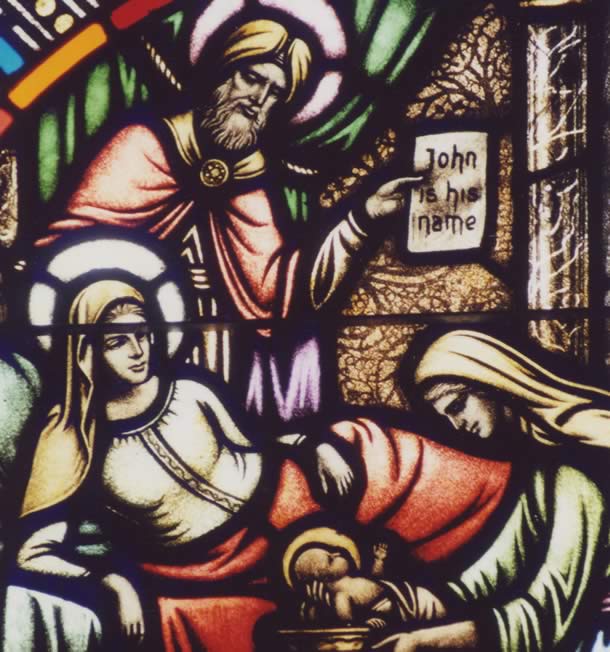
Crucified Faith – Lenten Homily on John 14.1-7

John 14.1- 7

“Do not let your hearts be troubled. Believe in God, believe also in me. In my Father’s house there are many dwelling places. If it were not so, would I have told you that I go to prepare a place for you? And if I go and prepare a place for you, I will come again and will take you to myself, so that where I am, there you may be also. And you know the way to the place where I am going.” Thomas said to him, “Lord, we do not know where you are going. How can we know the way?” Jesus said to him, “I am the way, and the truth, and the life. No one comes to the Father except through me. If you know me, you will know my Father also. From now on you do know him and have seen him.”

image

Jesus is the way, and the truth, and the life.

I know a lot of people who want the greatest amount of reward for the least amount of effort. They have a faulty perception about how much they deserve based on how much they work.

Its like the guy who lets his grass grow and grow until you can barely see his porch because he only wants to have to mow it once. Or like the woman I recently saw at Food Lion who was using every single finger and both elbows to carry all of her bags to the car instead of making multiple trips. Or like the foolish pastor (cough *Me* cough) who believes that so long as he picks a scripture and prays about it, that God will give him a sermon to preach that will having people jumping and shouting “Amen!”

Sadly, I have come across a number of people (even myself at times) who want God without Jesus. We believe on some level that so long as we show up to church, and live a decent life, that we are doing all that the Lord would have us to do. We want salvation without suffering. We want love without expectations. We want resurrection without crucifixion.

Jesus is the way, and the truth, and the life. No one comes to the Father except through him.

way

The disciples are confused. Jesus tells them that he will go and prepare a place for them because there are many rooms in his Father’s house and they know where he is going. Then Thomas asks the question that all the other disciples are thinking: “Lord, we do not know where you are going. How can we know the way?” Jesus responds with hopeful and frightening words: I am the way.

The destiny in store for Jesus is likewise laid up for his friends, and for us. Those who want to save their life will lose it. If we want to experience the presence of God here and now, we can only do so by following the way, by following Jesus.

Sam Wells, the former dean of Duke Chapel, was appointed to a new church, and wanted to experience every single aspect of its mission. For the first few months he spent a couple of days each week going through the ins and outs of the church as if he was not the pastor; He toured the preschool like a prospective parent with a three-year old; He went to weekly prayer services and sat in the back like a stranger might if they randomly walked in off the street; He stood in line at the food pantry and patiently waited for his turn to receive some food.

One of the last things he needed to experience was the homeless shelter. He had heard that it was frequently attended because they gave out the best food and had the nicest provisions and he wanted to see it with his own eyes and taste it with his own tongue. So, for a few days before the experience, he stopped showering and shaving, he found some of his oldest and rattiest clothes, and prepared to spend a night with others in the basement of the building.

He began by waiting outside in line with everyone else. He tried to keep a low profile, but most of the people spotted his costume immediately. For whatever reason they welcomed him into their little group anyway and spent most of the night talking and learning about one another. He asked about their pasts and what had led them to where they were, most of them had normal lives until some unforeseen circumstance sent them out to the streets.

However, before the night ended one of the men shared an important perspective with the pastor. “We don’t come here for the food or for the warmth,” he said, “we come here because this is the only place where we can be with other people like us. Sure the food and shelter is nice, but the community is what we really need.

I don’t think Sam would necessarily put it this way, but I believe he encountered the living God in those homeless men and women precisely because he was acting like Jesus. I don’t think Sam actively went out with the hope that he could walk around like Jesus, but in meeting the people where they were he followed the way that Christ set up for us.

Sometimes the hardest part of being a Christian is recognizing that we cannot have resurrection without crucifixion. More often than not we need to crucify a part of our lives before we can meet and encounter the living God.

Maybe we need to crucify our false assumptions about the poor and how they wind up living on the streets. Perhaps we need to crucify our ridiculous prejudices toward people who are of a different sexual orientation. Maybe we need to crucify our faulty self-perceptions. Perhaps we need to crucify our selfish desires to crave our passions. Maybe we need to crucify a program in our church that is no longer giving life to anyone involved. Perhaps we need to crucify our willingness to hold on to a grudge from the distant past. Maybe we need to crucify our love and obsession with money.

Jesus is the way and we have been given the precious opportunity to follow him, even to the cross. If we want to encounter the living God, we can only do so by crucifying our brokenness and seeking out ways to be resurrected here and now. Amen.

Devotional – John 2.16

Devotional:

John 2.16

He told those who were selling the doves, “Take these things out of here! Stop making my Father’s house a marketplace!” 

Weekly Devotional Image

“Now let us exchange signs of Christ’s peace,” the pastor bellowed from the pulpit. In quick and succinct fashion people rotated 360 degrees and shook hands with those closest and muttered, “peace of Christ.” Though it was something we did one a month, the passing of the peace was finished within 20 seconds, and people were ready to get on with the rest of the communion liturgy. For months I attended worship in that church, sitting in the same pew, but I never learned anyone’s name nor did I know anything about what was going on in their lives. I felt invisible even while I was surrounded by people.

That summer I was appointed to help a small church in the shadow of the Great Smokey mountains in western North Carolina. Passing the peace was something they did every week and it took forever. The pastor would casually invite us to greet one another with the love of Christ and before I knew it I was getting hugs from people I had never seen before and others wanted to know my life story. I overheard men making plans to go golfing in the afternoon, women sharing the latest bits of gossip from the community, and kids making fart jokes.

To go from one extreme to the other while passing the peace was difficult. Each week, when we hit the 10 minute mark during the peace, all I could think about was Jesus turning over the tables and rebuking the money-lenders and dove-sellers. Had we turned God’s house into a space no better than a marketplace? Where was the solemn respect for the divine, where was the recognition of God’s holiness?

The weeks passed throughout the summer and I continued to walk throughout the entire sanctuary during the passing of the peace and I began to learn about the people who called that church “home.” I got invited to dinner parties, people prayed for me and my calling while others moved around us, I even had a woman begin to confess her most recent sinful behaviors. I felt confused about what we were doing and how it fit into the worship of God in a church until an older gentlemen spied my discomfort and whispered in my ear: “this is how we build community; we don’t get many chances to check in on one another and this time, for us, is sacred.”

Jesus threw out the money-lenders because they were making a mockery of the temple. In that tiny rural church we shared our lives with each other during the passing of the peace, and it felt like what the church was really all about. Instead of just sitting down and facing the front without interacting with our brothers and sisters, that church made a point to pass the peace by building their community.

What is church like for you? Do you gather each week with the expectation of hearing a few prayers, listening to a sermon, singing a couple hymns, and going back to your regular life? Or do you see church as an opportunity to build your community by getting to love on, and communicate with, your brothers and sisters in Christ?

peace-dove-web2

Devotional: Mark 1.4

Devotional:

Mark 1.4

John the baptizer appeared in the wilderness, proclaiming a baptism of repentance for the forgiveness of sins. 

5a41c986c792a4cfdb6fa2be67b9c637

I had been waiting at the garage for longer than I had hoped. I had neglected to take the car in for an inspection during the month of November, and I was running the risk of receiving a ticket for my negligence. I was prepared to speak with my hypothetical police officer about the numerous demands on clergy during Advent, but every time I made the list of excuses in my head, the more pitiful they became. Only after Christmas was I willing to finally bite the bullet and wait for my car to be inspected.

I thought it would be a quick in-and-out appointment, but I continued to sit in the waiting room while my car was being checked out. After thirty minutes, I saw my car coming out of the garage and was re-parked right outside the window. However, when I approached the cashier, she informed me that I still needed to wait. The time passed idly by while I made small talk with the other customers about being a pastor in town and the recent arrival of the holidays, but the repair shop neglected to call my name even while my car was parked outside with a new inspection sticker clearly placed on the front window. I tried to be as patient as possible, but when I could no longer take it I went back to the cashier and explained the situation, to which she apologized for making me wait for nothing, and handed me my keys. She explained that the paperwork had been lost in the shuffle and asked if there was anything she could do. I laughed to myself and then said, “It’s okay, I’m a pastor and I’m supposed practice what I preach, including patience.”

FamilyForgive

After church yesterday afternoon, my wife and I were enjoying lunch at a local pizza shop when she brought up the familiar topic of practicing what I preach. The sermon had been about forgiveness and the need to act on the words that we so faithfully pray in the Lord’s Prayer every week, and it was clear the Lindsey wanted to explore the topic further. She spoke in a way that halted and haunted me: “Taylor, you kept talking about our need to forgive. Is there anyone that you need to forgive? Or better yet, do you think there’s anyone out there who might be wrestling with whether or not to forgive you?”

John appeared proclaiming a baptism of repentance for the forgiveness of sins. It is too easy, particularly from my side of the pulpit, to neglect the need to repent for my faults, and forgive others around me. It is even harder to open my eyes to the fact that there might be people who have not forgiven me for something I have done. As we take our first steps into 2015, let it be the year we actually practice what we preach. Let us strive to be people of patience, forgiveness, and repentance. Let us be brave with our love, and seek to be truly reconciled with everyone around us.

Christmas In The Room – Christmas Eve Sermon on John 1.1-5

John 1.1-5

In the beginning was the Word, and the Word was with God, and the Word was God. He was in the beginning with God. All things came into being through him, and without him not one thing came into being. What has come into being in him was life, and the life was the light of all people. The light shines in the darkness, and the darkness did not overcome it.

_the_holy_family__nativity_scene___another_commiss_f6de659b784c8c14ecc1ee8b95fa4fa8

Merry Christmas! To me, there are few things as wonderful as gathering together to celebrate the birth of Christ. This is what church is all about; a community coming together to rejoice in our Savior.

Have you noticed all the lights around the neighborhoods? The different decorations throughout Staunton? Have you seen all the wonderful manger scenes displayed in front yards and on coffee tables?

One of the things I love most about Christmas is that every year we try new things to make Christmas real again. Many of us are very familiar with the story; we can imagine the angel Gabriel appearing before Mary, we can picture the manger scene with all the animals gathering close to baby Jesus, we can almost hear the angelic host proclaiming the Good News to the shepherds. This story has so captivated our hearts, minds, and imaginations that every year we gather to remember it in new and exciting ways.

This year our Preschool chose to remember the story by putting on a Christmas pageant. Now this wasn’t your simple and typical pageant; almost every one of our students had a line to perform in the microphone in front of a packed sanctuary. We practiced for weeks in the chancel area, rehearsing our lines, standing in our spots, and getting the story exactly right. On the morning of the big show, the kids and I were all here going through every bit one last time. However, this was the first time that they were all in costume.

10413358_742665702476413_2082989571026907176_n

Some of our precious three years olds were sheep, though they looked more like pillows as they walked to the microphone and quietly whispered: “I shared my wool with baby Jesus.” We had a manger mouse with big ears and a tail who said with a smile: “I peeked at baby Jesus!” We even had an angel choir of two-year olds who started from the back and walked all the way down carrying electric candles to guide the wisemen.

When it came time for Mary and Joseph to appear I was so pleased with how well everything was going. This was going to be a great performance for all of the friends and family. Our little Mary came up to the microphone to sweetly say, “A baby will soon be born.” And then Joseph, one of our most precocious four year olds, said with loud emphasis: “I MUST FIND A PLACE FOR US TO STAY!

Everything was perfect. The kids were sitting quietly in place, they had all nailed their lines, and I could just imagine all of the tears that would be spilt watching these precious lambs of Jesus Christ. I even found myself getting emotional. I remember thinking: “this is what Christmas is all about.” Look at these children retelling the story centuries later. They embody the sweetness that just have been felt in the manger. Their child-like innocence is why God came into the world for us. Those little kids made Christmas real for me.

That was, until I noticed our little Mary fidgeting around by the crib. We continued with the pageant but Mary was far more focused on the little baby-doll Jesus than anything else. “Well,” I thought, “she’s just being attentive like any good mother would be” when all of the sudden she picked up Jesus by his ankle, dangled him back and forth and then dropped him on his plastic head!

The realness of Christmas was quickly replaced with the reality of Preschoolers being dressed up like animals and adults acting out the story.

Every Christmas we strive to reimagine the story so that we can reconnect with it’s incredible message.

There is a church somewhere in the midwest that REALLY believes in retelling the story. On Christmas Eve they invite people from the community into their sanctuary, but they don’t just listen to a pastor in the pulpit, they don’t just pray in their pews, they bring in all sorts of animals and actors to make it come alive.

Animal trainers help guide the donkeys and sheep into the space and lead them up to the altar near a newborn baby being cradled by his mother. The church has a full orchestra and light show to go along with the actors and animals; they have no limitations when it comes to fully immersing the people in the story.

However, a few years ago the church became responsible for a viral video that made its way across the internet. At the height of the production, as the human-angels were hung by wires to sing Hallelujah, as the majestic magi were making their way up to the altar, as people were completely captivated by the story, a camel was being led down the center aisle.

It was at that precise moment, at the paramount of the Christmas production, the camel decided that he no longer wanted to be part of the story. The video shows the trainer in the middle of the church struggling to guide the camel forward, the camel ignoring his suggestive movements, and deciding that he should take a break on top of all of the people sitting on the right hand side. Like a tree falling in the woods, the camel fell to his side and quickly buried a few people under his girth.

The realness of Christmas was quickly replaced with the reality of what happens when you bring the zoo into a church.

Every Christmas we strive to reimagine the story so that we can reconnect with it’s incredible message.

Years ago I went to church on Christmas Eve and experienced a service unlike any other. Instead of a typical sermon, the pastor decided to make it into a drama with particular characters acting out the story.

Mary and Joseph stood on opposite sides of the altar, wearing robes from the days of old. The gazed off into the distance pondering the incredible messages the the angel Gabriel had shared with each of them.

While the pastor described the man named Joseph, he began to remove his robes, shedding the costume from the past, and revealed a middle age man wearing a business suit. The pastor was attempting to make the story real again by showing what it would look like if it happened today. Joseph was a respected man and much older than Mary. Can you imagine how he would have reacted when he found out that she was pregnant? Can you picture how embarrassed he must have been by her?

While the pastor described the woman named Mary, she began to remove her robes, shedding the costume from the past, and revealed a teenage girl wearing a cheerleading uniform. Mary was a young woman with future full of potential. She was much younger than Joseph, and was told by the angel that she would conceive a son by the power of the Holy Spirit while still a virgin. Do you think she believed this was Good News? Can you imagine how her family would have regarded her for becoming pregnant before getting married?

There stood Mary and Joseph, not the couple from the manger scenes kneeling quietly over the new born king, but a business man and a cheerleader who would be ridiculed by the community.

The realness of Christmas was quickly replaced by the reality of social relations that develop when an unwed teenage girl becomes pregnant.

Every Christmas we strive to reimagine the story so that we can reconnect with it’s incredible message.

I always look forward to this season because it affords me the opportunity to ask others what they love about Christmas. I often hear about the joy of opening gifts, the wonder of putting up all the decorations, and even the changed behavior of children in response to the elf on the shelf. Yet all of those things don’t make Christmas real. Yes they make it feel like Christmas, but they do not fully convey the depth of what it means for God to have come into the world as a baby in Bethlehem.

For me, Christmas is at it’s realest when we light our candles as we sing Silent Night. Some of my earliest memories are standing in a dark sanctuary on Christmas Eve while people around me are singing. In mere minutes the darkness is replaced by a brilliant light, made remarkable by the God who took on our flesh to dwell among us, to be God with us.

candlelt

Jesus is the light of the world who shines in the darkness. Whatever that darkness might look like for you, whether it be an uncertain future, fears about your children, frustrating family members, the loss of a loved one, a heavy diagnosis, or the lack of love in your life, Jesus stands in stark contrast as the one who brings the light into our lives.

Christmas Eves always mean the most and convey the most when we feel the depth of the  darkness. Because new life always starts in the dark. Whether it is a seed in the ground, a baby in the womb, or Jesus in the tomb, new life starts in the dark. 

At the end of our service we will turn out all the lights, from the one candle, the Christ candle, we will light all others as we sing Silent Night. As we do so let us open our eyes the different forms of darkness in our lives and give thanks to the light of the world who shines in the darkness.

It will feel like Christmas in the room, when we hear the familiar words that have been sung for centuries exclaiming the great joy of the newborn king.

It will feel like Christmas in the room, when we gather as God’s table to feast on the bread of life and drink from the cup of salvation.

It will feel like Christmas in the room, when we see the light of Christ shining in one another.

Merry Christmas. Amen.

Devotional – Mark 1.7

Devotional:

Mark 1.7

He proclaimed, “The one who is more powerful than I is coming after me; I am not worthy to stoop down and untie the thong of his sandals.”

Weekly Devotional Image

I was in the middle of a short homily when I started worrying about whether or not the water would be too cold for the baptism. You never can tell how a child will react to the living water; some laugh as if it is tickling them while it trickles down their hair, some scream in fear as the cold water seeps into their clothing, and others remain stupefied by a grown man wearing a long white dress pouring water onto their head. I stood in front of the local community hoping that this baptism would go smoothly, rather than be remembered for the blood curdling cries during the sacrament.

I had picked the beginning of Mark’s gospel for my baptismal homily; John baptizing Jesus in the Jordan. I love the text because it is concise and too the point while remaining profoundly theological. I shared with gathered body John’s ability to bring in the crowds for the repentance of their sins out in the wilderness when Sawyer began to squirm around in his mother’s arms. Without really thinking about what I was doing, I walked over to the family in their pews, reached for Sawyer, picked him up, and continued preaching. For a few moments I continued with whatever I was saying but it felt as if everyone had disappeared and Sawyer and I were the only ones remaining in the sanctuary. I was unsure why I had felt God push me to pick him up, but as I held him close I felt the words of John come alive for me: “I am not worthy to stoop down and untie the thong of his sandals.” Here I was holding a precious baby boy, who kept smiling as he stared at the hair growing on my face and I was struck by his preciousness. When I baptized him with the living water I felt unworthy to do what I was doing, and then became profoundly thankful for God’s presence in that beautiful moment.

10505419_827338247305732_338805337312225694_n

Through the waters of baptism Sawyer, and all of us, experienced a new beginning. Like the event of John baptizing Jesus in the Jordan, everything would be different from that moment forward. We covenanted to raise Sawyer in the faith, to pray fervently for him, and to be abundantly present for him in times of need. The church is at its best when we make good on the promises we make to the children we baptize, something I look forward to participating in during Sawyer’s life.

In this season of Advent we are reminded of the new beginning that took place in Bethlehem in a manger. Moreover, in our baptisms we had the privilege of being incorporated into God’s cosmic story to be God’s children. While we prepare for Christmas, I encourage all of you to be thankful for your baptisms, and remember that God came in the form of a baby, just like Sawyer, to dwell among us.


If You Knew… – Sermon on John 4.5-15

John 4.5-15
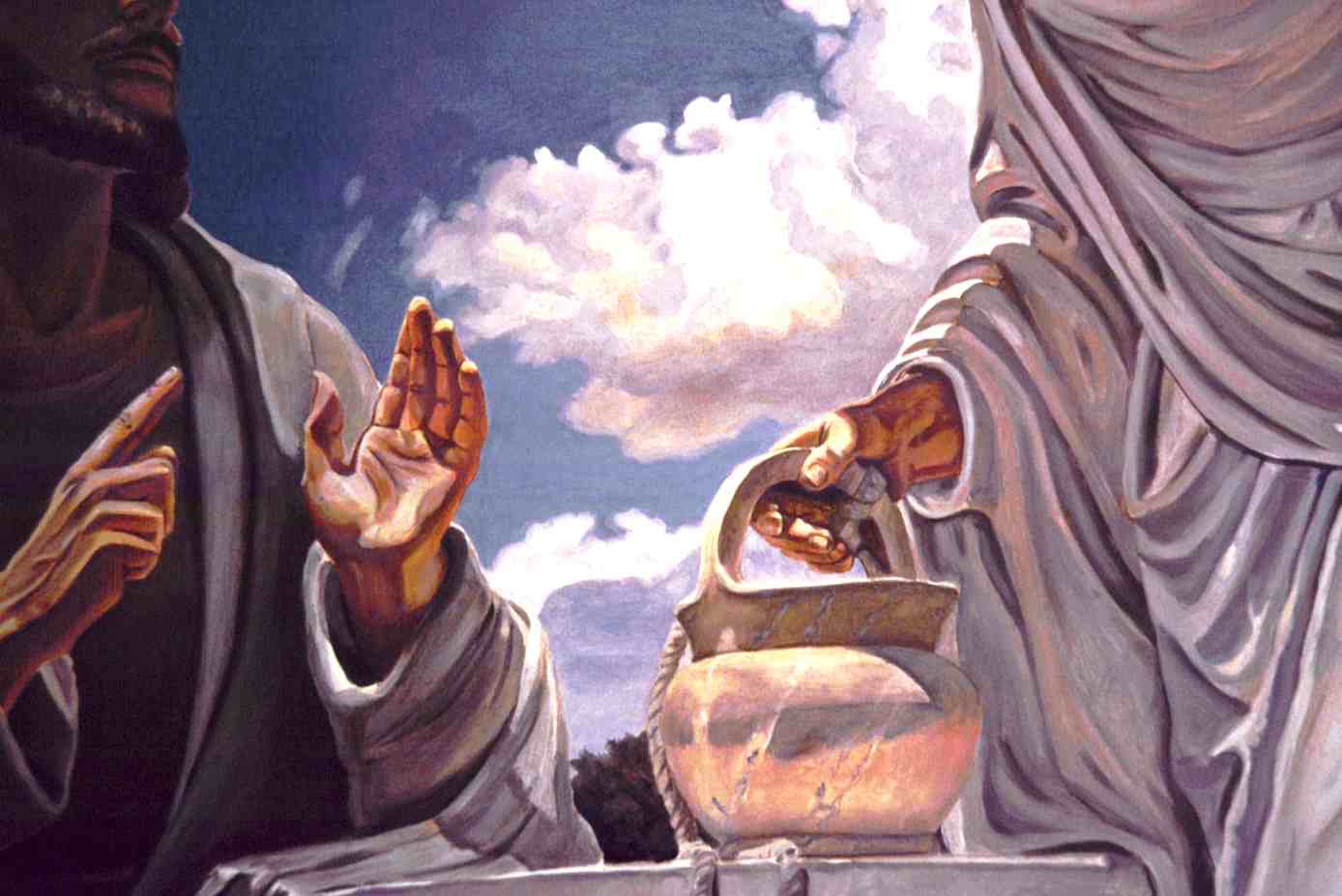
So he came to a Samaritan city called Sychar, near the plot of ground that Jacob had given to his son Joseph. Jacob’s well was there, and Jesus, tired out by his journey, was sitting by the well. It was about noon. A Samaritan woman came to draw water, and Jesus said to her, “Give me a drink.” (His disciples had gone to the city to buy food.) The Samaritan woman said to him, “How is it that you, a Jew, ask a drink of me, a woman of Samaria? (Jews do not share things in common with Samaritans.) Jesus answered her, “If you knew the gift of God, and who it is that is saying to you, ‘Give me a drink,’ you would have asked him, and he would have given you living water.” The woman said to him, “Sir, you have no bucket, and the well is deep. Where do you get that living water? Are you greater than our ancestor Jacob, who gave us the well, and with his sons and his flocks drank from it?” Jesus said to her, “Everyone who drinks of this water will be thirsty again, but those who drink of the water that I will give them will never be thirsty. The water that I give them will become in them a spring of water gushing up to eternal life.” The woman said to him, “Sir, give me this water, so that I may never be thirsty or have to keep coming here to draw water.”

Woman-at-the-Well-ii-100070

Jesus answered her, “If you knew the gift of God, and who it is that is saying to you, ‘Give me a drink,’ you would have asked him, and he would have given you living water.”

In the heat of the day, with the sun held straight above, Jesus was resting by a well. He was tired from his recent journey, traveling around Galilee healing the sick, feeding the hungry, and now here he was, sweating under the sun in the middle of Samaria. He had sent his disciples into the local city of Sychar to procure some food and was enjoying some “me-time” by the well when a woman appeared.

Now, you might not know this, but Jesus definitely did; nobody goes to the well at noon. Its too hot out around lunch time when the sun strikes the ground. Most people went either in the cool of the evening of the cool of the morning. At those times the local wells were bustling with women, gossiping about the coming and goings in town, while taking care of retrieving water and washing clothes.

So, at this most bizarre time, a Samaritan woman made her way to the well where Jesus was resting. “Give me a drink” Jesus asked. But the Samaritan woman replied, “Why are you, a Jew, asking me, a woman from Samaria, for something to drink.” You see, at the time Jews did not share anything in common with the Samaritans, let alone using the same cup or even really speaking to one another. Jesus replied, “If you knew the gift of God, and who it is that is saying to you, ‘Give me a drink,’ you would have asked him, and he would have given you living water.”

header-livingwater

The woman pondered this for a moment and then said, “Sir, you have no bucket, and the well is deep. Where do you get that living water. Are you greater than Jacob, who gave us this well, and his sons and animals that drank from it?” Sensing that she was missing the point Jesus tried again to explain, “Everyone who drinks of this water will be thirsty again, but those who drink the water that I will give them will never be thirsty. The water that I give them will become in them a spring of water gushing up to eternal life.”

Leather_bucket_of_a_well


Believing that she finally understood what this strange bearded man was saying, the woman said to him, “Sir, give me some of that water, so that I may never be thirsty or have to keep coming here to drink water.”

Sometimes, no matter how much explaining, no matter how many metaphors you use, no matter how many illustrations, people will not get the point. During the heat of the day, that strange time to draw water, Jesus revealed the depth of his ministry to this unnamed woman and she doesn’t get it. Jesus’ words “If you knew…” are perfect for describing the situation. If she knew who she was talking to, if only she knew what living water was, If she knew then she would have understood. But living water is not necessarily an easy thing to grasp.

I love this story. Its filled with so many wonderful details that could each become their own sermons. For instance, I love the fact that Jesus was tired. Many of us are tired within our lives. A tired Christ therefore must understand what its like to feel this way, as no one else ever could, Jesus could perceive the struggle in the woman by the well just like he knows our struggles. In that small, seemingly insignificant detail we discover that Christ is with us, because he is like us. Its Christ’s humanity that brings him down to us, and in his divinity that we are brought to him.

Another detail: The woman approaches Jesus, but he makes the first step that opens this great story: “Give me a drink.” There is no shadow of a doubt that what draws most people to Jesus is not so much what he gives us as what he asks. We are moved and drawn toward Christ because he looks on us to help, offering us a share in this thing called the kingdom of God. So the unnamed woman is reeled in with this simple request.

Another detail: After a short debate about the historical prohibitions about a Jew and Samaritan interacting with one another, Jesus declares and offers his “living-water,” Though he repeats his description numerous times, the woman misunderstands. How often are we presented with an aspect of the Gospel, perhaps for our entire lives, and we still never really understand what its all about?

So, what is the point of the story? Is there one? Are we supposed to walk away from this feeling Christ’s living water gushing up from within us? Are we supposed to offer Christ’s living water to our friends and family?

In many ways, the focus of the narrative rests in the fact that Jesus, as a Jew, is in enemy territory. The most substantial detail is in the fact that he offers the living water to the least likely of persons: female, Samaritan, we discover later that she was a frequent object of the men in town, the focus of gossip, and isolated from everyone else. It was to the least of these that Jesus attempts to reconcile the divided nations of Samaria and Israel.

One of my professors loved to tell a story about his roommate from college. They were going to school in South Carolina during the height of the Civil Rights movement when my professor’s friend decided to travel to Washington DC in order to participate in a Civil Rights March. Upon returning back to school, the friend relayed what had happened during the trip:

He described that everything was about as normal as you could imagine. he arrived, met up with the people he needed to, marched where he was supposed to, handed out flyers. By the time it was over he was exhausted while waiting for his plane to bring him home. As he sauntered onto the airplane, he sat down in my seat and, you’ll never believe this, he was sitting next to Martin Luther King Jr.
It was the craziest thing. He had gone all the way to DC and here he was, sitting on an airplane, next to his hero.

martin_luther_king_jr-_and_lyndon_johnson_large

“So,” my professor asked, “what happened?!” Well, he got so nervous, and he was sweating, and fidgeting, and rehearsing what he might say, but there was a small problem: Martin Luther King Jr. was asleep. I mean what was he going to do? Wake up the leader of the Civil Rights movement? So he just waited, sitting there, staring at him, watching him sleep. After the flight had nearly reached its destination, he finally opened his eyes. “Dr. King I don’t know what to say. You are my hero. I just traveled all the way to DC to help march for Civil Rights, you are such an inspiration, I am so impressed with…” “Thank you. God Bless.” he interrupted, seemingly ending the conversation. But the young man was undeterred. “Dr. King you don’t understand, you have changed my life, you have opened my eyes to the many opportunities that are not available to others… “I appreciate your kind words son.” Dr King interrupted again. However he was was not finished, “Dr. King, you don’t understand. My father is a racist. I left home because of him and his prejudice. He offered to pay for my college, but I have cut all ties with him. We have not exchanged a word in years because of his racial bigotry.” At this point Dr. King’s eyes widened, he turned his body to face this young college student and he reached out and grabbed him by the collar, “You have got to love your father. Whether he’s racist or not, loving him is the only thing you can do.” And with that he let go, closed his eyes, and promptly fell back asleep. It was at that moment that my professor’s roommate realized that Dr. Martin Luther King Jr. really was a prophet, beyond all expectation and assumption.

Woman at the Well

In the story of the woman at the well, Jesus began to reconcile a very old, and very real division between the Jews and the Samaritans. The whole story is about religious tensions and a church which sought to overcome them in the first few centuries. Though portrayed as a simple interaction between two individuals at a well under the heat of the sun, the narrative has major religious implications for us, even today. Just like with Nicodemus, the conversations points to something great and profound that will change the way that we interact in the world.

The gospel, in all its magnificence, is incarnational in its ability to use everyday realities to convey a deeper sense of the divine.

But here’s the problem: when we confront a text such as this we tend to think of it it in large grandiose terms; Jesus reconciled the Jews and Samaritans. There is no church unfamiliar with ancient and large divisions within people: Catholic and Protestant, Jew and Christian, Faithful and Faithless. But, like the man on the airplane learned, sometimes the reconciliation needs to occur much closer to home. 

When Jesus met the woman at the well, he offered the beginning of a new life to the least likely of candidates. Before him stood an unnamed woman, a Samaritan, a polygamist, a focus of gossip, and a isolated individual. The first reconciliation did not take place at a theological council, or a political rally, but it happened face-to-face.

At-the-well

I would venture to guess, that in all of our lives we have “a woman at the well.” He or she might not be as obvious as the character in our narrative today, but we all know someone who has been ostracized from the group. Whether its that kid that everyone else makes fun of at school, or that politically opposed neighbor you have living down the street, or maybe its someone within your own family. Its sad considering how easy it is for us to cut ties with people around us as if their hearts and souls were just another commodity for us to examine, purchase, and then throw away.

Martin Luther King Jr. sat on a plane next to a young college student and reminded him that the truest forms of Christian living happen at home, within our own families and friends.

Jesus, our Savior, sat at the well and in the simplest of conversations help to re-establish a woman’s life. With simple questions and the beginning of a friendly relationship he gave her the kind of identity that she had lost in her life. He provided her with one of the greatest gifts the world has ever known: he gave her a sense of worth.

“If you knew” was Jesus’ great rebuttal to her ignorant question. How much of our lives are wasted and could be reignited by that little phrase? If you knew that man who stands on the corner every Tuesday morning has nobody else in the world and needs a friend; If you knew that in your own family there is someone who has lost their identity and needs to rediscover a sense of worth; If you knew that your son or daughter wants to reconnect even if you don’t; If you knew that the stranger asking for a drink was actually Jesus; would you do it?

Jesus calls us to love one another. Not just the people we worship with, not just the people who make us feel comfortable, but the last the least, and the lost. Where is the woman at the well in your life? How will you greet her the next time you meet?
Amen.

Nicodemus and Sidewalk Chalk – Sermon on John 3.1-17

John 3.1-17

Now there was a pharisee named Nicodemus, a leader of the Jews. He came to Jesus by night and said to him, “Rabbi, we know that you are a teacher who has come from God; for no one can do these signs that you do apart from the presence of God.” Jesus answered him, “Very truly, I tell you, no one can see the kingdom of God without being born from above.” Nicodemus said to him, “How can anyone be born after having grown old? Can one enter a second time into the mother’s womb and be born?” Jesus answered, “Very truly, I tell you, no one can enter the kingdom of God without being born of water and Spirit. What is born of the flesh is flesh, and what is born of the Spirit is spirit. Do not be astonished that I said to you, ‘You must be born from above.’ The wind blows where it chooses, and you hear the sound of it, but you do not know where it comes from or where it goes. So it is with everyone who is born of the Spirit.” Nicodemus said to him, “How can these things be?” Jesus answered him, “Are you a teacher of Israel, and yet you do not understand these things? Very truly, I tell you, we speak of what we know and testify to what we have seen; yet you do not receive our testimony. If I had told you about earthly things and you do not believe, how can you believe if I tell you about heavenly things? No one has ascended into heaven except the one who descended from heaven, the Son of Man. And just as Moses lifted up the serpent in the wilderness, so must the Son of Man be lifted up, that whoever believes in him may have eternal life. For God so loved the world that he gave his only Son, so that everyone who believes in him may not perish but may have eternal life. Indeed, God did not send the Son into the world to condemn the world, but in order that the world might be saved through him.

john-3-16

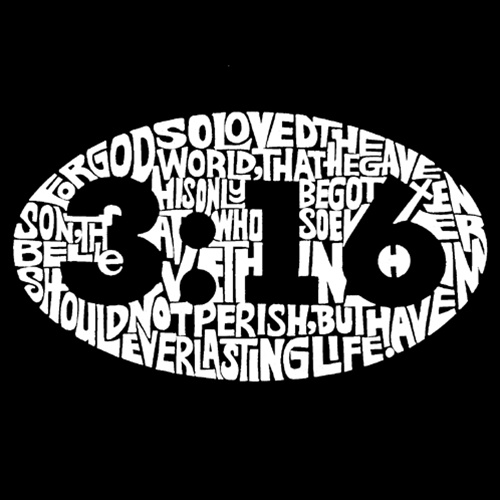
For God so loved the world that he gave his only Son, so that everyone who believes in him may not perish but have eternal life.

There was a pharisee named Nicodemus and he came to visit Jesus at night. As a leader of the Jews it was probably best to visit Jesus under the cover of darkness, and when they met together Nicodemus began to ask Jesus about all he had seen and heard. “Teacher, it is clear to us that you have come from God because no one can perform the signs that you do apart from the presence of God.” “You’re absolutely right,” Jesus replied, “No one can see the kingdom of God without being born from above.”

“Now wait a minute Jesus, how can anyone be born after having grown old? Can someone re-enter their mother’s womb and be born?” Jesus calmly answered, “Listen Nicodemus, no one can enter the kingdom of God without being born of water and Spirit. What is born of the flesh is flesh, and what is born of the Spirit is spirit. Do not be surprised that I told you that you had to be born from above. You know very well that the wind blows where it chooses, you hear the sound of it, but you do not know where it comes from or where it goes. So it is with everyone who is born of the Spirit.”

“But Jesus how can these things be?!” “Nicodemus, are you a teacher of Israel, and yet you do not understand these things? If I had told you about earthly things you would’ve believed,  but now I talk to you about heavenly things and you do not believe. No one has ascended into heaven expect the one who descended from heaven, the Son of Man. Just as Moses lifted up the serpent in the wilderness, so must the Son of Man be lifted up, that whoever believes in him may have eternal life. For God so loved the world that he gave his only Son, so that everyone who believes in him may not perish but have eternal life. Indeed, God did not send the Son into the world to condemn the world, but in order that the world might be saved through him.”

Nicodemus_Jesus

Last week we looked at one of the most well known stories from the Old Testament: Adam and Eve in the Garden. Today I could not help myself from proclaiming one of the most well known New Testament scriptures: John 3:16. In the entire biblical canon, both the Old and New Testaments, there must be few, if any, scriptures that have been so remarkably loved by so many as this text. It is simple and to the point. It opens up endless possibilities. It embodies the hope of all Christians. It is beautiful and appealing. It begins with the beginning and stretches into the far reaches of eternity. It proclaims that which is most fundamental to our faith: that God loves us. 

But the scripture today is about so much more than just that one isolated verse. I am thrilled that so many of us have memorized John 3:16, but we cannot forget about the inquisitive soon-to-be disciple named Nicodemus.

What do you make of this pharisee who came to see Jesus in the middle of the night?


On Tuesday morning, after gathering with the UMW, I made my way outside onto our back parking lot. After months of cold weather, with mounds of snow continually piling up, the Pre-School was finally able to play outside again. Now, let me be clear: I am just like those children. Having been cooped up in this church all winter I was just as, if not more, excited to run around and play outside. The children all had their plastic cars and bikes, some were running around in circles, others were using the fake gas pump to fill up the cars, (capitalism at its finest) when I saw a box of sidewalk chalk.

sidewalk-chalk

I silently made my way to the middle of the black top with the biggest piece of chalk that I could find and I began to draw. Without saying a word, or drawing attention to myself, the children began to congregate around me in a large circle. “Pastor Taylor, what are you drawing?” I heard one them mutter behind me, and I replied, “You’ll see in a moment.” As I stepped back the children moved with me, and there on the blacktop was a giant head with a wide open mouth. Why? I have no idea, but its what I drew. And without really understanding what I was doing I told the children that I was going to jump in the mouth of this mystery person made out of chalk. If I had said that to any of you, you would have thought that I lost my marbles. But with the children, they believed me, they looked into my soul, and some of them even begged me not to do it. But there I stood crouched with my hands at my side, and I jumped in. Of course I acted as if I was falling in and some of the children laughed, and when I was done, I encouraged some of them to jump in. There was a moment when the first girl stepped forward to the edge of the face. As I saw her prepare to jump in I realized she was unsure of what would happen to her. While rocking her hands back and forth I could see the sense of wonder and imagination brewing within her as she jumped right in.

Thats what Nicodemus was like. Jesus is known for having said that whoever does not receive the kingdom of God like a child shall not enter it. Nicodemus had a childlike and inquisitive faith. When confronted with the man of many wonders, Nicodemus wanted to jump right in to learn more about this new kingdom. While his contemporaries scoffed at the new teaching, Nicodemus’ imagination allowed him to see deeply into the truth of Jesus.

The other leaders of the synagogues were already muttering with irritated resentment regarding this so-called teacher who was beginning to develop a following. They disagreed with his strange ways, his strange teaching, and his strange disregard for authority. Nicodemus, however, felt there was indeed something strange about Jesus, but it could not be dismissed so easily. To Nicodemus, God was still speaking through people, and to his ears there was something in this new proclamation worth considering.

So, under the cover of night, Nicodemus went to learn more. He wanted to see for himself, he desired to hear from the man himself, to question and to learn. Instead of giving into the rumors, Nicodemus wanted to base his understanding on first hand experience. He could not settle for hearing about the man, but instead needed to jump straight into the abyss of the Son of Man.

In his willingness to question Christ we discover that Nicodemus was a great man who possessed enviable qualities. While suffocated by the surrounding culture and religions assumptions and expectations, he somehow managed to exhibit an open-mindedness that broke the chains of religious limitation. 

Moreover, Nicodemus is one of the best examples of discipleship. By the end of the gospel account Peter will have denied Jesus in a shameful panic, the rest of the disciples will have scattered or run off into hiding. For all practical purposes, the story had come to a close. But Nicodemus, this strange pharisee from our story today, openly stood forth as one of Jesus’ only remaining friends. Nicodemus dared to risk the punishment of superiors, the resentment of his peers, by paying the last loving rites to the dead body of Jesus that would have been treated as trash by anyone else.

Nicodemus is an understatedly important figure in the Gospel for us in the life of the church. He is so familiar to us, because he is just like us. He asked the kind of questions that many of us would have asked, had we been there with our Lord.

If you take a step back from the account, what Jesus was talking about sounds impossible. How can someone be born anew? Jesus simply responds to our misunderstanding and confusion; its not about being physically reborn as a child, but about being born anew in such a way that you can reorient your life. We must be born anew. Our prayer and our hope should be rooted in the desire to be recreated. Make me another kind of being from what I am. Renew a steadfast spirit within me. Create in me a clean heart. Do all this, O God, so that I can lead a different life. 

The whole point of the gospel is that God can achieve the impossible. Just as God can raise Jesus from the dead, God can achieve the impossible with you and me. And he does it! We see it happening in other peoples lives, our wayward friends who reorient their lives for the better. We have experienced it on some measure in our own lives however small or large. How does God change us? Ah, says Jesus, that is part of the great mystery. The wind comes who knows how, cleansing, refreshing, and then before we know it, its gone.

For God all things are possible. We can be born anew. We can find a new orientation for our lives no matter how young or old we may be. But even greater than this, is the promise of eternal life.

Jesus ends his conversation with Nicodemus with the, now famous, “for God so loved the world that he gave his only Son, that whoever believes in him may have eternal life.”

Martin Luther, the great protestant reformer once said, “If I were as our Lord God, and these vile people were as disobedient as they are now, I would knock the whole world to pieces!” We consistently make a mockery of God’s love by continually disobeying his commands, and by ceasing to love others as we love ourselves. How can God love us when we ruin everything he created including ourselves?

God loves us, because God is love. God loves the world; his foolish, blundering, wayward, and sin sick world. This love utterly breaks through our foolish conceptions of what love means and is; God’s love runs out to lengths that sounds incredible to our human ears because we could never return that same love.

god-god-is-love-lord-love-the-greatest-love-of-all-favim

God is like that remarkable parent who continues to love a child through all the wrong decisions and failures. Picking them up from the police station, driving them back to rehab, sitting with them night after night helping with homework, loaning them money when they fall on hard times. The only difference being that when our love for our children fails, his love for us remains steadfast.

God proves his love toward us by doing all that God can do, and giving all that God can give to help us; stretching himself even to sacrifice his only Son, and hold back nothing.

Thats what Nicodemus learned from his time with Jesus. That in the impossible mystery of God’s created order, God’s love knows no bounds, was made manifest in Christ’s death on the cross for you and for me and for the whole world.

Let us all strive to live like Nicodemus. Let our faith be inquisitive and exciting. Let us all prepare to jump into the unknown, to fearlessly step into a relationship with the triune God, and above all remember that great scripture: God so loved the world that he gave his only Son, so that everyone who believes in him may not perish but have eternal life. To God be the Glory.

Amen.


Weekly Devotional – 2/17/14

Devotional:

1 Corinthians 3.16

Do you know that you are God’s temple and that God’s Spirit dwells in you?


While preaching yesterday morning I mentioned, anecdotally, a practice regarding ship building. During the time of Jesus (and even today in some places) a gold coin would be placed underneath the mainmast of most sailing vessels. Some claim that this practice began with the Romans as they used the coin to appease the gods. Others believe that the Romans placed the coin to help purchase a spot in the afterlife for the sailors who were lost at sea. Regardless of the true beginning of the tradition, it helped to show other sailors that even a wreck had value.

16-god-is-with-us-gods-promises.jpg?w=584&h=584

Years ago, while approaching the end of a mission trip in Costa Rica, I helped lead a group of young people through a foot-washing service. A basin and chair was set up in the middle of the room and, after reading the appropriate scripture from the gospel according to John, I encouraged those present to find someone that had made a particular impact on them that week (positively or negatively) and then ask to wash their feet. With soft music playing in the background I witnessed God’s grace manifest in the tears that poured on the ground from those washing, and from those who were being washed. It is a remarkably humbling thing to kneel and take someone’s feet into your hands, but perhaps even more humbling is to have someone wash your feet.

As the service continued I noticed that one of the older boys was dutifully making his way through the entire room asking to wash everyone’s feet. Every time someone sat in the chair before him he would focus intently on what he was doing, demonstrating God’s love through his fingers and the water.

When I finally had a chance, I stood up, walked over to him, and asked to wash his feet. “I’m not worth it,” he replied, “no one should be washing my feet.” I responded: “Yes you are my friend. The whole point is to wash and be washed. You are worth it.”

While writing to the church in Corinth, Paul asks, “Do you know that you are God’s temple and that God’s Spirit dwells in you?” This is a question that I want to ask whenever I see someone feeling down or blue. I want to shout out, “You have value! You are uniquely beautiful, made in the image of God, worthy of being loved! God’s Spirit is in you!”

So, as we begin a new week I ask: Do you know that you are God’s temple and that God’s Spirit dwells in you? Do you know that you have worth, that you are special, that you are wonderful? Do you know that God loves you for who you are no matter what?

I hope you do.


Greatness – Sermon on Luke 1.5-23

Luke 1.5-23

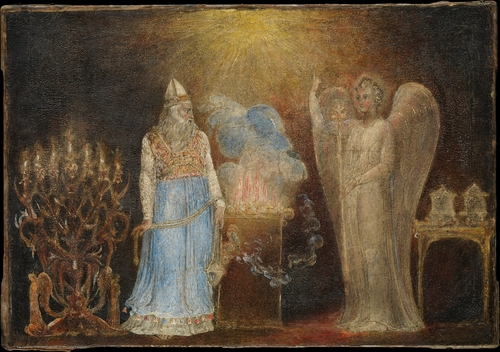
In the days of King Herod of Judea, there was a priest named Zechariah, who belonged to the priestly order off Abijah. His wife was a descendant of Aaron, and her name was Elizabeth. Both of them were righteous before God, living blamelessly according to all the commandments and regulations of the Lord. But they had no children, because Elizabeth was barren, and both were getting on in years. Once when he was serving as priest before God and his section was on duty, he was chosen by lot, according to the custom of the priesthood, to enter the sanctuary of the Lord and offer incense. Now at the time of the incense offering, the whole assembly of the people was praying outside. Then there appeared to him an angel of the Lord, standing at the right side of the altar of incense. When Zechariah saw him, he was terrified; and fear overwhelmed him. But the angel said to him, “Do not be afraid, Zechariah, for your prayer has been heard. Your wife Elizabeth will bear you a son, and you will name him John. You will have joy and gladness, and many will rejoice at his birth, for he will be great in the sight of the Lord. He must never drink wine or strong drink; even before his birth he will be filled with the Holy Spirit. He will turn many of the people of Israel to the Lord their God. With the spirit and power of Elijah he will go before him, to turn their hearts of parents to their children, and the disobedient to the wisdom of the righteous, to make ready a people prepared for the Lord.” Zechariah said to the angel, “How will I know that this is so? For I am an old man, and my wife is getting on in years.” The angel replied, “I am Gabriel. I stand in the presence of God, and I have been sent to speak to you and to bring you this good news. But now, because you did not believe my words, which will be fulfilled in their time, you will become mute, unable to speak, until the day these things occur.” Meanwhile the people were waiting for Zechariah, and wondered at his delay in the sanctuary. When he did come out, he could not speak to them, and they realized that he had seen a vision in the sanctuary. He kept motioning to them and remained unable to speak. When his time of service was ended, he went to his home.


“Do not be afraid, Zechariah, for you prayer has been heard.”

archangel-gabriel-struck-zechariah-mute-1824

And so it came to pass in the days when King Herod ruled Judea, that a priest named Zechariah had his life turned upside down. Now Herod was a terrible king, responsible for countless atrocities, murders, and high levels of corruption. A man with frightening power ruled over a land and a people with such chaos that he dominated the attention of the masses. During his rule, a nobody priest married to a woman named Elizabeth, made his way through life.

Zechariah belonged to the priestly order of Abijah and was regularly responsible for activities around the Temple in Jerusalem. Though Zechariah and Elizabeth lived righteous lives, they had no children and were getting on in years.

One day, a day like any other, Zechariah made his way to the temple in order to perform his regular duties. As was the custom, lots were cast to decide who would enter the sanctuary and offer incense to the Most High God. While countless people gathered outside the walls, Zechariah made his way in to perform a simple task that had been done for as long as he could remember.

This is where the story gets interesting.

1-blake-z-and-angel

While standing within the closed room, an angel of the Lord appeared to Zechariah. We receive no description of this heavenly messenger in the biblical narrative, but the sight was enough to overwhelm and terrify Zechariah. Let your imaginations conjure up the confrontation with an angel to the degree that you would cower in fear and trembling.

Do not be afraid, Zechariah, for your prayers have been heard. Your wife Elizabeth will bear you a son, and you will name him John. You will be filled with joy and gladness and many will rejoice at his birth, for he will be great in the sight of the Lord. Take care to make sure that he never drinks wine or other strong substances, even before his birth he will be filled with the Holy Spirit. In time, he will turn the people of Israel back to the Lord their God. He will make ready a people prepared for the Lord.

And how does Zechariah react to this momentous declaration? How does he respond to the heavenly messenger carrying news of great joy?

“How will I know this is so? For I am an old man, and my wife is getting on in years.”

It’s moments like these in the scriptures that I wish I could jump into the story and smack some sense into the lives of the people experiencing the glory of God. How will you know this is so Zechariah? You fool! Don’t you know that with God all things are possible? Have you forgotten how he delivered your people from slavery and captivity in Egypt through the Red Sea to the Holy Land? Have you forgotten how the Lord provided a ram in the bushes for Abraham to sacrifice instead of his son? Have you forgotten how David was able to triumph over Goliath because the Lord was with him? Moreover, have you forgotten how many barren women the Lord has provided for? Sarah, Rebekah, Rachel, Hannah. Come on Zechariah, have a little faith. 

The angel responds to Zechariah: I am Gabriel and I stand in the presence of God. I was sent to bring you this good news, but now, because you did not believe my words, you will become mute and unable to speak until these things occur.

So Zechariah made his way out of the temple, stood before the crowds unable to speak, and eventually returned home.

Of course, thats not the end of the story, but we’ll save that for later.

What are we to make of this remarkable episode recorded at the beginning of the Gospel according to St. Luke?

God is at work here in ways familiar to us from the Old Testament: the story contains a casting of lots to make a decision, there is a vision in God’s holy Temple, a divine being appears to pass along a message, there is a promised sign, and a childless couple is given new life.

It is clear that God works in and through the normal avenues of life in the believing and faithful community. The community of faith can fall under the temptation to make God into whatever they desire for worship, but there is an important conviction present at the beginning of this New Testament: the stories of Israel are important, vital, and necessary for understanding how to be used for God’s purposes in the world.

Though this is a story from the past, doesn’t it sound familiar? Just as it is today, some horrible and frightening situation has gripped the people, a power reigns from above in order to control a community. Evil has taken root at the center of life and dominates the attention of the populace. This past week marked the one year anniversary of the shooting at Sandy Hook Elementary school and another shooting took place at a school in Colorado. You need only turn on the news or read a newspaper to be reminded how much fear and violence demands ALL of our attention.

However, in spite of all this fear and damage in the world, just as during the time of Herod, there is another sort of person, quiet, removed, and yet, more important than the powers that rule, men and women who are the core of society and give it the depth of its reality. Then and always there were and are the humble and brilliant men and women in whom the strength of the present and promise of the future lie.

Gabriel tells Zechariah that his son, John, will be great in the sight of the Lord. Sadly, according to the ways of the world, greatness has had its definition confused and reshaped. We have been told that greatness is measured in terms of selfishness rather than service, in terms of material rather than spiritual wealth, in terms of instant gratification rather than hard work and perseverance. But greatness as God sees it, the greatness that John will live into, is about being linked with the eternal purposes of redemption, about being an obedient instrument of God’s peace, and helping others to know and feel love in their lives.

But notice: the greater John will become for God, the more hostility he will arouse in those around him. Doing the will of the Lord, reaching out in love according to discipleship sends ripples through the fabric of what the world deems as “greatness.”

John is to be like the prophets from old: in light of their direct contact and experience of the divine, they drew the messages which burned within them like fire and would not rest until the decrees of God were delivered.

In every age we need the passion of people on fire for God to shout out in prophetic fervor. Our lives are so often filled with the dry wood of dull possibilities that desperately need to be rekindled by the divine spark that often comes through the words and actions of the prophets. We need to have our lives turned around and back to God in order to discover the passion that is waiting for us in our discipleship. The communion between God and the prophet allows for a divine condition to be present and the purposes of God can be realized in the world.

I love the juxtaposition of the story of Zechariah in the temple with Gabriel. It is precisely at the moment when John is being prepared to speak for God, Zechariah is struck mute for his unbelief. The typical, traditional, and tired voice of the priest, is being replaced by the fervent, fantastic, and faithful voice of the prophet.


Worship is at the center of the story. I’ve read it countless times, and heard it discussed and preached on during numerous advent services, but something fresh and new struck me this week about Zechariah’s encounter. I wondered: why was he so surprised and scared? Think about it for just a moment; Zechariah was a priest, well-versed in the stories from old about how God interacted with God’s people, a man who often found himself in the holiest of places performing the works of the Lord. What did he think would happen to him inside that holy space?

Being overwhelmed by the presence of an angel in the sanctuary of the temple is like going to McDonalds, ordering a Big Mac, and being surprised to discover beef between the bread… I mean this is how God works! God shows up, confronts us in the midst of a moment, and calls us to something. It does not need to be grand, and more often than not it occurs in the small silence in a moment we least suspect, but for Zechariah it came in a big way. He was in God’s holy temple confronted by an angelic messenger bringing the good news. So why was he so surprised? And more importantly, why did he doubt the validity of the message?

Our expectations about worship have major impacts on the way we live our lives.

What we believe shapes how we behave.

What to we think will happen to us when we gather in this space? Are we prepared to be confronted by the God who called John to greatness? Are we willing to let God dwell in our hearts and change the way we live in the world? Are we ready to take up our own crosses to follow Jesus. Are we prepared for God to show up in our lives in ways that we cannot expect or anticipate?

Unless we recognize the definitive need for real experiences and methods of discipleship which wake the whole depth of our experience, then what we do in worship will remain, as it did for Zechariah, thin and lacking. Until we prepare ourselves to be surprised by God’s desire to find us where we are, then this holy place will remain, as it did for Zechariah, boring and repetitive. Until we dare to step out into new forms of life and love, hearing the word of the Lord, and letting it become incarnate in the ways we live our lives, then faith will remain, as it did for Zechariah, dwindling and fruitless.

eucharist

What do we expect will happen when we gather together at Christ’s table? Are we repetitively entering the holy space to burn incense unaware that we are meeting God in all of his holiness? Or are we excited and nervous about the prospect of being welcomed to a table that we have no right to join? Are we so rooted in our habitual worship that we can no longer remember why we join at this table? Or are we prepared to be called forth toward greatness in the world through the redemptive and life-giving properties of God’s presence at his table?

Just as it happened with Zechariah, a heavenly voice might be trying to break out into the world. Perhaps God’s good news is striving to strike forth through the closed circle of our expectations of church, faith, and discipleship. Important for us this morning is to remember that God is always on the move, reaching out to find us and change our lives, that there is always a new message for those with ears to hear. The great need for us is to realize, as Zechariah eventually did, to not be caught up in the limited imagination of what God can do in the world which assumes that the present must always be governed by the past.

zech_eliz_john

Nine months after Zechariah was struck mute in the temple by Gabriel, his wife Elizabeth gave birth to a baby boy. When it came time to name the child, the family wanted to name him Zechariah after his father, but Elizabeth insisted that it was to be John, and after Zechariah confirmed this with writing on a tablet his mouth was freed. The plague of his disbelief had been wiped away by the miracle of his son’s birth. Now filled with the Holy Spirit Zechariah spoke these great words to his infant son: And you, child, will be called the prophet of the Most High; for you will go before the Lord to prepare his way, to give knowledge of salvation to his people by the forgiveness of their sins. By the tender mercy of our God, the dawn from on high will break upon us, to give light to those who sit in darkness and the shadow of death, to guide our feet into the way of peace.

This is one of the many places that God confronts us in our lives. Through the bread and the wine let us all be moved to live lives worthy of the greatness that God is calling us toward.

Amen.


Jesus Said What? – A Thanksgiving Sermon on John 6.25-35

(preached at Cherryvale UMC in Staunton, VA on 11/27/13)

John 6.25-35

When they found him on the other side of the sea, they said to him, “Rabbi, when did you come here?” Jesus answered them, “Very truly, I tell you, you are looking for me, not because you saw signs, but because you are your fill of the loaves. Do not work for the food that perishes, but for the food that endures for eternal life, which the Son of Man will give you. For it is on him that God the Father has set his seal.” Then they said to him, “What must we do to perform the works of God? Jesus answered them, “This is the work of God, that you believe in him whom he has sent” So they said to him, “What sign are you going to give us then, so that we might see it and believe you? What work are you performing? Our ancestors ate the manna in the wilderness; as it is written, ‘He gave them bread from heaven to eat.’” Then Jesus said to them, “Very truly, I tell you, it was not Moses who gave you the bread from heaven, but it is my Father who gives you the true bread from heaven. For the bread of God is that which comes down from heaven and gives life to the world.” They said to him, “Sir, give us this bread always.” Jesus said to them, “I am the bread of life. Whoever comes to me will never be hungry, and whoever believes in me will never be thirsty.”
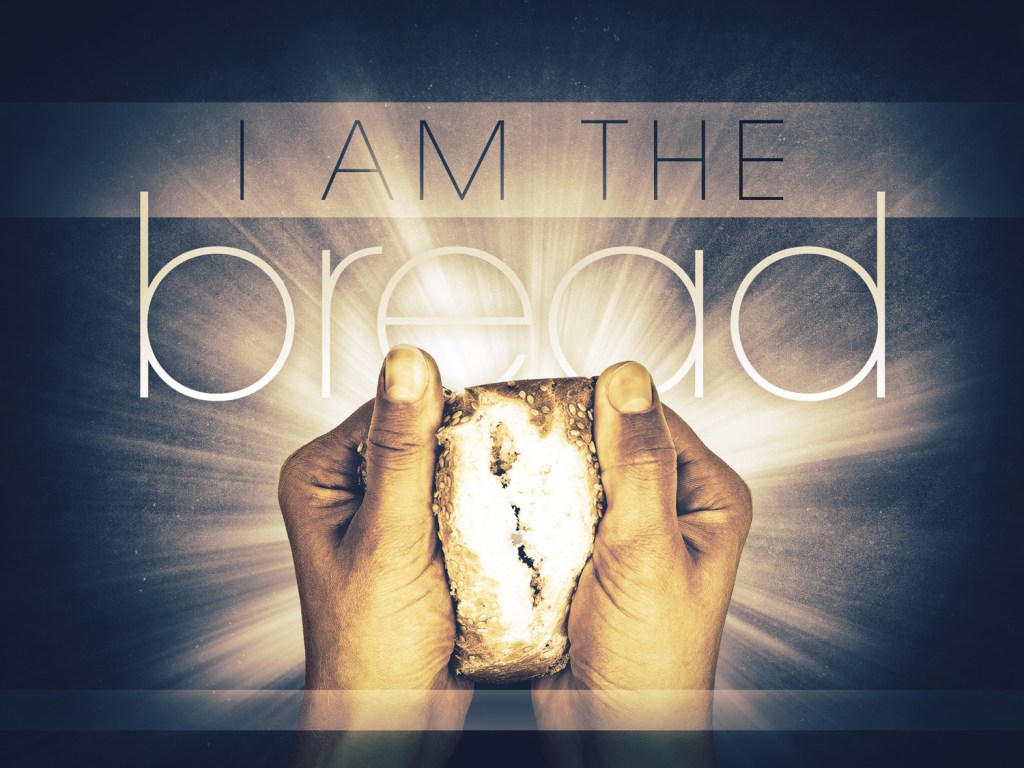
Jesus said to them, “I am the bread of life. Whoever comes to me will never be hungry, and whoever believes in me will never be thirsty.”

00029400_h

After miraculously feeding 5,000 people, the crowd stayed on the other side of the sea. Though they had been properly fed by the Word, the loaves, and the fishes, when they discovered that this miracle man was nowhere to be found, they got into the boats and went to Capernaum looking for Jesus.

When they finally caught up with him on the other side, they called out, “Teacher, where did you come from?!?” Jesus responded, “Very truly, I tell you, you are looking for me for the wrong reasons, you came here not looking for signs, but because I gave you enough to eat yesterday. Do not work for the food that spoils, but instead for the food that endures for eternal life, which the Son of Man will give you. For it is on him that God the Father has set his seal.”

“Okay, okay, so what do we have to do in order to perform the works of God?

Jesus answered simply, “This is the work of God, that you believe in him whom he has sent.”

“Well, who do you think you are Jesus of Nazareth? What sort of sign are you going to perform? Why should we listen to you? How can you prove what you are saying to us? Sure, yesterday you fed all of us, made something out of nothing, but so did Moses in the wilderness. Why should we turn away from him, to you?”

“Very truly, I tell you, it wasn’t Moses who gave you the bread from heaven, the manna, but it is my Father who gives you the true bread from heaven. For the bread of God is that which comes down from heaven and gives life to the world.”

“Now Jesus that sounds pretty good to us, we would like some of that bread!”
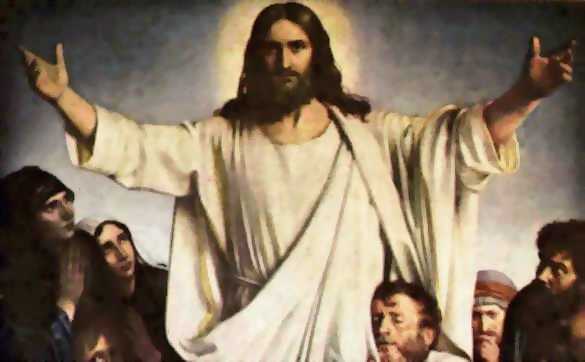
jeswelcom

“No, you don’t get it. I AM THE BREAD OF LIFE. Whoever comes to me will never be hungry, and whoever believes in me will never be thirsty.”

One of the great paradoxes of what it means to be Christian, is that we already know the end of the story while we’re stuck in the middle of it. Because we read from God’s word in order to remember the mighty acts of God in the world, we are all well versed on what happens in conclusion. Therefore it becomes nearly impossible for us to imagine the depth and meaning of these narratives in and of themselves.

Try with me, if you can, to imagine that you are there among the crowd. Yesterday you were blown away by this nothing of a man who made something out of nothing. As you stood in line with your stomach rumbling, you were given more fish and bread than you had ever seen in your life. Now, you were so hungry that you ate until your stomach was about to explode, (just like many of us will do tomorrow…) and the next day, the miracle man was gone. As your hunger started to creep back up, you agreed with those around you to go looking for this Jesus.

So here you are, gathered together to hear him speak once again. Some of the people in the front challenged him about Moses’ miracle in the wilderness, something about Manna, but you just want him to provide some more food. So as Jesus begins to describe this true bread from heaven that gives life to the world, your mouth begins to water. You imagine a glowing loaf cooked perfectly, warm and moist on the inside, with just enough crust on the outside. You join the chorus around you, “Give us some of that bread Jesus! We want that always!” And Jesus responds, “I am the bread of life.”

For us, the temptation to jump to the end of the story is great. We hear “bread of life” and we think about Holy Communion, we think about the last supper that Jesus shared with his disciples, we think about the crucifixion and the resurrection. And though it is important to know the end of the story, we’re not there yet.

I imagine that many who had gathered together that day were very confused. “What did he say? He’s the bread of life? What in the world could that mean?”

They don’t get it. The crowds that had witnessed Jesus’ miracle the day before knew exactly what they wanted, but thats not what Jesus is offering.

Today too many of us give the impression that numbers and popularity and packed pews are all important and sufficient in themselves. Many churches seem willing to accept people on any terms, if only they will come at all. How interesting is it then, that Christ would only accept the crowds on his terms, and would not want them upon any others. It hurt and frustrated him that they were merely interested in his ability to provide an easing of material difficulties or an increase in their comforts. “You came to me only for the chance of loaves and fish.”
8105338460_5b6fa706bf_z

Similarly, in our contemporary culture people are hugely interested in the by-products of Christianity, but hardly at all in Christianity itself. Crowds of folk are constantly looking for whatever they can get out of church and worship. They are primarily interested in the kind of faith that will give them bread and fish, bigger homes, shorter hours, better health, happier families. Today Christ looks into the depth of our hearts and triumphantly declares, “there are far better and more satisfying things within your reach than you have realized.”

The whole exchange begins with an accusation by Jesus regarding the crowds’ overwhelming desire and interest in full stomachs, instead of the power of theologically oriented signs. Jesus proposes to give them enduring food and not the kind they consumed the day before. The exchange then elicits a question from the crowd about the “works of God” which Jesus reduces to one, namely belief; belief “in him whom he has sent.”

What is belief? What does belief mean for each of you? Are we called to believe in God, in Jesus Christ, in the Holy Spirit? Is belief about accepting the bible as truth? Can we boil down our belief to something like the Apostles’ Creed?

Often times belief in Christian living is compartmentalized into believing that God simply exists.

The kind of belief that Jesus talks about with the crowds in John 6 is a different kind of belief. Belief is more than mental affirmation, belief is a world view, belief is a paradigm shift, belief is about a redefinition of reality.

What we believe, shapes how we behave.

Everything about what we do begins with belief; we believe in Jesus Christ and the things for which he stands, the way and the truth and the life he teaches us, the God whom he reveals to us, the grace and faith he came to offer us, the victory over death which he makes possible even for the least likely of us, the kingdom of God that he inaugurates for us. 

Okay Jesus, you want us to believe, to drop everything, to change our lives, to pick up our own crosses, to follow you. But why? Moses fed us with the manna in the wilderness, what can your belief offer us?

Moses was Moses, a mighty servant and steward of the Lord. Yet what Moses gave to the wandering Israelites was not the bread from heaven; it is God the Father who gives you the bread from heaven, and that is being offered to you this day. What Moses provided, rather what God provided through Moses, was merely food. What Jesus offers the crowd is the almighty God.

Tomorrow, millions will gather together with friends and family to celebrate the wonderful holiday of Thanksgiving. Crowds will develop in all of the airports, the roads will be filled with traffic, and kitchens will be teaming with individuals trying to concoct the perfect mashed potato – turkey – gravy – cranberry – stuffing combination of all time. After exchanging pleasant and cliche reflections on what we are most thankful for this year, most of us will partake to ridiculous degrees on the food set before us. Mountains of mashed potatoes will be eroded with rivers of gravy. Quarries of cranberry salad will rival seas of stuffing.

A-Thanksgiving-meal-has-at-least-3000-calories

Perhaps most frightening is the fact that within 24 hours, we can go from thanking God for all the blessing in our lives, to fighting one another at Best Buy in order to purchase something to fill our insatiable appetite.

ap_black_friday_21_dm_121123_wg

We know what we want, but thats not what Jesus is offering.

I like to think that, as the church, we have matured from our fragile days of discipleship in the first century. I like to believe that because we know the end of the story, we are better prepared to heed Jesus’ call to a life in the kingdom. I like to imagine that, as moderns, we are ready to take up our crosses in brilliant fashion and follow Jesus into glory.

But the truth is, we are still standing in that crowd asking Jesus for the bread.

We struggle so desperately to find meaning in our lives through failed relationships, the accumulation of material possessions, and vocational discernment. We hear the word of the Lord in scripture, and then quickly fall back away into the shadow of our lives. We thank God for our families and then bicker and fight as if they were not precious gifts in our lives.

Just as He did that day in the crowd, Christ looks out to all of us this thanksgiving season and offers us something more fulfilling than anything else. “I am the bread of life, whoever comes to me will never be hungry, and whoever believes in me will never be thirsty.”

“I am the bread of life”; search throughout the scriptures, I challenge you to find something equally simple and profound in summarizing the Good News. This the gospel of Jesus Christ at its very finest! How ample in its sweep, how generous in its description, how impossible to evade. This is a passage to which we can all cling in the darkest moments in our lives. With this one sentence we discover an everlasting hope that will endure all things.

“I am the bread of life”; Jesus Christ is as important to us as the very food we eat. Indeed, Christ is more important to us than food. No amount of food or drink or any material thing will ever fill us the way that Christ does. Through the bread of life that Christ offers we receive strength to live out our faith, we are sustained and nurtured and loved in all things.

“I am the bread of life”; The triune God is an end to all the craving and discontent in our lives. The bread of life roots our identities in the one from whom all blessings flow, the maker in whom we live and move and have our being.

lord__s_supper_by_bclary-d37hhzp

In a few moments all of you will be invited to Christ’s table to partake of him through the bread and the wine. Just as Jesus stood before the crowd to proclaim his identity as the bread of life, Jesus once gathered with his disciples to remember the stories of God in the world and share one final meal.

What are you thankful for this year? How have you been trying to fill the voids in your life? If you want to be filled, if you want to find a sustenance in your life, if you desire to have your life transformed, if you need to be made whole, if you want to discover purpose and faithfulness in your life, if you desire to know God, if you hope to find peace in your lives, then come. Come to Christ’s table. Feast on the true bread from heaven, believe in Jesus Christ, and be filled by the Spirit.

Amen.
00029400_h