Babbling Grace – Karl Barth and Genesis 11.1-9

Professors in seminary can make all the difference. Some can call you into the strange new world of the bible through their passionate lectures and you will never be able to look at scripture the same way again. Some can refers to moments of history in the church that decisively reshape the way you understand the church today. And still yet others can turn your entire understanding of the kingdom of God upside down through just a few lines in one lecture.

Stanley Hauerwas is one of those professors.

Hauerwas

In 2013, I had the good fortune of participating in his last ethics class before he retired. In it, he did his best to make us Christians more Christian. By highlighting problems that the church is facing, and has faced for a long time, he helped to provide a better grammar for what it means to be a Christian in the world.

During one of his lectures on the remarkable importance of the gathering community, he briefly mentioned a sermon he once wrote on the story of the Tower of Babel from Genesis 11. At the time, the story of Babel was one that I remembered from my youth; the pictures we drew of people attempting to build a tower to God, the lesson it conveys about why there are so many languages on the earth. But I honestly hadn’t thought about it having much to do with my life as a Christian.

Dr. Hauerwas said, “The divisions at Babel are healed and reconciled at Pentecost. The language divisions were still present, but within the gathered communal identity of the church was a common Lord in Jesus Christ. Pentecost was a new day of creation, not unlike those we read about at the beginning of Genesis.”

In just a few sentences, Hauerwas jumped from Genesis 11 to Acts 2 and it blew my mind. Now it seems so obvious, that the Lord would bring together God’s people through the power of the Holy Spirit therefore redeeming what had happened at Babel. But when Hauerwas connected them in that lecture, it was like I was given a new lens by which I could read scripture.

For a time I attributed this new way of thinking and reading to Dr. Hauerwas, and it was only later that I realized he got it from Karl Barth.

barth-bw

In Church Dogmatics III.4 Karl Barth uses the story of the Tower of Babel to evaluate the problem of nationhood in the modern period. For Barth, Babel contains every bit of the human desire to remain self-reliant and focused on pride, which has resulted in our divisions as a species. It is a story, not unlike Adam and Eve’s first sin, that reminds us of the brokenness in our world.

I have always seen Babel as a kind of means by which we can teach a lesson to children or young Christians about the dangers of pride. I have seen Babel as a shadow of what the church is supposed to be. But for Barth, Genesis 11 is all about grace.

Barth is quick to note that, “A Christian people is one in which heathenism and national egoism are broken, judged, and purified by the Spirit of Christ… As we are warned in Genesis 11, rebellion against God leads to the forceful disintegration rather than the organic development of national identities.”[1] Babel should frighten us, as a people, about what happens when we rebel against the Lord to such a degree, but the story is about much more than the Lord’s “punishment” at the end.

The Tower of Babel, for Barth, contains elements of both divine wrath and divine blessing. The story begins with: “Now the whole earth had one language and the same words” (Gen. 11.1). As a unified people, they settled into the land of Shinar and decided to use bricks to make themselves a city and a tower, “otherwise we shall be scattered abroad upon the face of the whole earth” (Gen. 11.2-4). In response to this, the Lord goes down to examine the city and tower and eventually confuses humanity’s language to remind them of the divide between Creator and creature.

Tower_of_babel

Barth immediate questions the supposed sin within the story: What is inherently wrong with building a city or a tower? The constructions of such objects were not completed against God; attempts at civilization are never formally wrong.[2] For Barth, the thing itself, the object built, is not the fault but rather when a people want to create something for themselves in order to reach an attempted equality with God there lays the sin. The depth of humanity’s sin is the “arrogance of thinking that man himself can and must take himself as he takes the brick and mortar, and make himself the lord of his history, constituting the work of providence of his own work.”[3]

In light of humanity’s over-determined arrogance, God must respond with punishment. If God let humanity build the tower to completion, just as if God had let Adam and Eve stay in the Garden after eating of the tree of knowledge of good and evil, humanity would further perpetuate itself as a sinful people. The scattering of the nations at the end of the story is an example of God’s divine wrath, and usually where I would let the story finish, but for Barth (and Hauerwas) we cannot understand Babel without the rest of the Bible.

Barth sees grace at Babel through, of all things, Jesus’ parable of the sower: “The constant sowing of the seed of the divine Word will always find soil even if there is no true harvest in one place. Even in this passage we must not fail to see the Gospel in this sense. Even in the terrible decree of v. 7 (“Come let us go down, and confuse their language there, so that they will not understand one another’s speech.”) we must not miss His grace.”[4]

Important for Barth’s understanding of God’s grace in his exegesis is the fact that God could have easily used an earthquake or another divine miracle to achieve God’s condemnation. But rather than destroying creation, as had been done through the flood in Genesis 7, God merely divides humanity and confuses their language. Instead of raining destruction upon humanity, God limits the punishments to linguistics.

Additionally, God does not abandon humanity to their own devices even after their construction. Regardless of the self-righteousness employed by humanity, God will remain faithful even when we are not. Babel could have been the end of the relationship between the Creator and the creature, but God remained steadfast.

Morever, Barth’s final move regarding the babbling grace of Genesis 11 comes in the recognition that, as Christians, we are aware that God has more in store for his creatures than the end of the story in Genesis; we know what happens at Pentecost. What transpires at the end of the Babel narrative is not the ultimate decree on the matter but rather, “only a penultimate word, and that the curves of the separated ways are so ordered in advance that they will finally come together again.”[5] Here is where Barth shines the light of God’s glory the brightest: even though the main emphasis of the Tower of Babel in on how the separation and division of people was right (at the time), God’s original desire is for humanity to be in unity.

For Barth, we cannot read Genesis 11 outside of, or in spite of, Acts 2. These two different stories, separated by thousands of years, though different in form and content, contain the beginning and the next step of God’s action toward creation. God intended for humanity to remain in unity, and through our own self-righteousness were have rejected the divine unity for our own division. And yet, according to Barth, we are to remain grateful to God’s out-pouring of grace which simultaneously remaining discontent until there is a total reunification of God’s creation.

1101620420_400

Barth, time and time again throughout Church Dogmatics, refuses to read particular texts as isolated witnesses. To read the bible is to read it canonically. Narratives from different places help to inform one another and the Old Testament reads into the New just as much as the New reads into the Old. Babel and Pentecost are connected. Eden and Revelation are connected. David and Jesus are connected. Exodus and Acts are connected. And so on.

As Christians reading scripture, we have the benefit of knowing how the story “ends.” We know that in the person of Jesus Christ the previously divided nations have come together. In the Holy Spirit of Acts 2 the conclusion of Genesis 11 takes place: “The miracle of Pentecost tells the us how the decision is take to look and break out from the nations to the one people of God, how the divine disposition of Genesis 11 is rightly understood as a teleological divine purpose, and how it is recognized in the form of the corresponding orientation from the near to the distant, the narrower sphere to the wider.”[6]

Barth’s reading of scripture, and in particular his exegetical work in the excurses of Church Dogmatics has directly influenced the work of Stanley Hauerwas and a whole mosaic of theologians over the last century. To be a Christian is to read, and to read well; to look for the connections from book to book; to identify the thread that God pulls through seemingly unrelated stories; to see ourselves as characters in God’s great narrative.

And for Barth, the story of Babel is not one for us to leave for children’s Sunday School rooms and flannel-graphs. It is one that we must read with conviction knowing full and well how the story ends. Just as with the construction of Babel, humanity still consistently places brick after brick of our own presumed infallibility in direct contradiction to the One in whom we live and move and have our being. Barth’s work reminds us that we have divided ourselves against God’s original and good intentions, and to complete the end of the story we must take seriously God’s mighty acts in Jesus Christ, desiring for humanity to one day be made perfectly one.


[1] Barth, Karl. Church Dogmatics III.4. (Peabody, Massachusetts: Hendrickson Publishers, 2004), 306.

[2] Ibid., 314.

[3] Ibid., 314.

[4] Ibid., 316.

[5] Ibid., 317.

[6] Ibid., 323.

Devotional – Psalm 118.24

Devotional:

Psalm 118.24

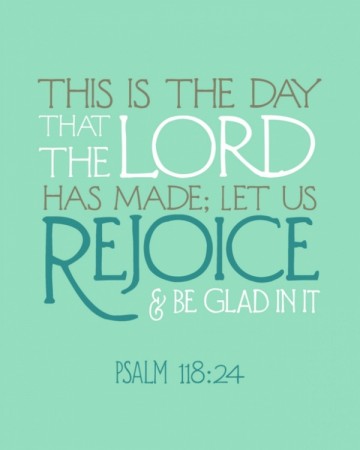
This is the day that the Lord has made; let us rejoice and be glad in it.
Weekly Devotional Image

The topic of “blessings” occurs regularly in our Bible studies at St. John’s. We can be reading from the Old or the New Testament, we can be reading a Psalm or an Epistle, we can be reading a genealogy or one of the miracles of Jesus, and the conversation almost always turns to how we take out blessings for granted. There is something inherent in scripture that works like a mirror, forcing us to confront ourselves in the text.

Yesterday morning, while we were reading about the episode of Jesus with the woman at the well, we started off by praying over the text, and before long one of our group members started to reflect on her blessings: “I am so blessed. I’ve got a great family and home. I have a church that cares about me. But I am even more blessed than that. I wish I could realize that every single day, every single breath, is a gift. And I wish I could stop taking these gifts for granted.”

this-is-the-day-360x450

For many of us, life feels like a train that keeps moving in one direction and we barely have time to admire the scenery passing out windows. Time rolls like a blur and we neglect to be thankful for the present because we are always looking toward the future. The psalmist’s words then confront us in our fast-paced lifestyles: “This is the day that the Lord has made; let us rejoice and be glad in it.”

I use these words to mark the beginning of worship at St. John’s because gathering in our sanctuary is a gift that God has given. It is not something we should take for granted. But can you imagine how differently we would live if we started every morning with these words? Can you picture how wonderful it would be to contemplate the blessing of your life every morning rather than just once in a while?

This week, let us use the words of Psalm 118 to mark our mornings. Instead of waking up and rushing to catch up with the train of life, let us take a slow breath and say: “This is the day that the Lord has made; I will rejoice and be glad in it.” If we do this, we will begin to stop taking our lives for granted, and we can give God thanks for all of our many blessings.

Devotional – Psalm 32.5

Devotional:

Psalm 32.5

Then I acknowledged my sin to you, and I did not hide my iniquity; I said, “I will confess my transgressions to the Lord,” and you forgave the guilt of my sin.

Weekly Devotional Image

There is a shop in Alexandria, VA called “The Variety Store” that truly contains a variety of items. Some of my earliest memories are of walking up and down all the aisles with my mother struggling to take in all the strange things I was seeing. There was an aisle full of ribbons, an aisle of ceramic dinnerware, an aisle of candy, and much more. It was a treat to witness the enormity of “The Variety Store” as a child, though it feels a lot smaller now than it did then.

Once, when my mother brought me into the store for some light shopping, I made my way to the toy aisle and just stood in awe of everything. And, as was my custom, I picked up a yellow smiley-face bouncy ball and bounced it all around the store with my her while she collected her items for purchase. We went through all the necessary aisles, my mother waited in line to pay for everything she found, and then we got in the car to go home. All in all, it was a relatively uneventful journey to the store until I put my hand into my pocket and discovered the bouncy ball. I can remember my entire disposition changing in an instant when I realized that I (accidentally) stole the yellow smiley-face bouncy ball.

ar120274857936808

For the next few minutes, which felt like hours, it burned a whole in my pocket as I walked around my house. Were the police on their way to arrest me for shoplifting? How severely was my Mother going to punish me for stealing a plastic ball that cost a quarter? The fear I experienced was palpable and when I finally mustered up the courage to confess my transgressions to my mother I’m sure that I was in tears.

But the strangest thing happened: As I explained my predicament, and I confessed my wrongdoing, the fear and terror faded away. My mother’s calm demeanor and response comforted me as she forgave me for what happened. Even when we returned to the store and I handed the smiley-face bouncy ball back over to the cashier I experienced forgiveness in a way that I would never forget.

When we can muster up the courage to confront and acknowledge our sins, it relieves us from the burden that comes with the weight of sin. When we have those opportunities to express our shortcomings to one another and to God it allows us to start moving in the right direction in discipleship. This week, let us take time to properly and faithfully acknowledge our sins to God, let us repent our transgressions, and let us rejoice in the forgiveness of our sins.

The Gifts of God – Peace

Micah 5.2-5a

But you, O Bethlehem of Ephrathah, who are the one of the little clans of Judah, from you shall come forth for me one who is to rule in Israel, whose origin is from of old, from ancient days. Therefore he shall give them up until the time when she who is in labor has brought forth; then the rest of his kindred shall return to the people of Israel. And he shall stand and feed his flock in the strength of the Lord, in the majesty of the name of the Lord his God. And they shall live secure, for now he shall be great to the ends of the earth; and he shall be the one of peace.


IMG_8605-5843

The children looked perfect in their Christmas pageant costumes. One by one they entered the chancel area in preparation for proclaiming their individual lines. The shepherds came first, watching over their sheep. Then the animals of the manger came forth, including a cow, a bird, and a mouse. They all made it to their spots and sat perfectly still as a donkey, Mary, and Joseph walked up to the microphone and exclaimed that a baby would soon be born, but they would need to find a place to stay.

Then the angelic cherubs boldly walked down the center aisle in the dark each holding an electric candle. The lead angel walked up to the microphone and frightening declared: “Do not be afraid! I bring joy to everyone!” The wise men and a camel followed the star to the manger where they presented the baby Jesus with their gifts of gold, frankincense, and myrrh.

I had the best vantage point of the entire production from up here in the pulpit. I could see all of the children with their costumes and I could also look out at the faces of all the parents, families, and friends that had gathered for this spectacular performance. I was honestly beaming while I stood up here on Tuesday evening because the kids had all done such a great job, they all nailed their lines, and were standing perfectly still in their spots.

Except for one of our shepherds.

Throughout the weeks of practice we had purposely withheld the shepherd staffs from the children knowing full and well that they would play with them too much. And during the actual performance most of them were being wonderful, but one of the shepherds could not overcome the desire to do something.

At first he just twirled the staff around in his hands like trying to start a fire on the carpet. Later, he swung it from side to side like a microphone at a rock and roll concert. I tried my best to whisper powerfully for him to stop, and though he would for a moment or two, he would then start up with something new.

As we were nearing the end of the performance, nearly all of the characters and animals from the manger scene were in place; the little shepherd grabbed his staff and started lifting it into the air. I, of course, immediately thought of Moses lifting up his staff in the wilderness to strike the rock for water. I, of course, immediately thought of how theological our young shepherd was being as he lifted the staff into the air, but then I realized he was about to bash somebody on the top of the head!

Breaking character from the pulpit, I quickly reached down and stopped the staff in mid arch. My eyes went down the shaft of the staff to the little hand, to the arm, to the face of the young shepherd, and instead of seeing a repentant and apologetic look; he had the biggest and proudest grin on his face.

IMG_0610

We lean toward violence. From Preschoolers picking up shepherd staffs, to fights in high school, to international and political disagreements, we lean toward violence. There is a power that comes with violence and demonstrates our importance and opinion. Violence has been at the forefront of some of the most important historical moments in the entirety of human existence and still captivates our attention. The movies that make the most money, the stories that garner the most attention, the moments we can’t tear our eyes away from usually contain violence.

As I have found myself saying too often from this pulpit: just turn on the TV or get online and you will be immediately bombarded with the violence in the world and the local community. Even this season of Advent and preparation for the holidays tends to bring out the worst in us. We have short tempers with the people ahead of us in line while we are buying gifts. We mutter inappropriate comments about drivers that are just driving too slowly. And we secretly expect to receive as many good gifts as we give.

Our lives and the world are filled with aggression, anger, and violence.

Yet, the prophet tells us about the one who will come with peace.

Micah spoke during a time of considerable unrest. The situation was grim with corrupt political leaders. There were fearful enemies on the horizon. Internal disputes were pinning people against one another. (Sound familiar?) And while the people saw no hope, Micah saw the promise of peace. Micah looked beyond the present circumstances, he looked beyond the news headlines and the talking heads, he looked beyond the broken and tarnished community to what God was promising to do.

From the little town of Bethlehem will come one who will rule the world. From a back road town of insignificance will come the one who will lead his flock in the way that leads to life and peace.

Many of us have a hard time imaging that an impressive hero can come from such a small town and such a fragile beginning. We, instead, look to politicians and presidents, magistrates and ministers, to fix all of our problems. But from the words of scripture this morning, Micah is jumping up and down and waving his arms to move us in an entirely different direction. He is pointing not at the towering leaders of the world on CNN. He is not drawing us to the political buildings in Washington DC. Instead he is pushing us to a small, out of the way, little place called Bethlehem.

55f81b353eaa23507d83b12e70adb998

Jesus is the one of peace, the one who comes as a light in the darkness, the one who will stand and lead like a shepherd. Jesus came from humble beginnings and changed the world.

One of the things that the bible loves to show us is that true power and peace often comes from unexpected people in unexpected places. Many of us have heard the Christmas story so many times that we are desensitized to the insignificance of Bethlehem in the most significant story ever told.

Yet, important babies that change the world can be born just about anywhere. Bethlehem is proof of that. Every baby has the potential to help remind us of the way that leads to peace. Jesus is proof of that.

This week, our little neck of the woods made national news. A local geography teacher landed in the hot seat for an assignment where her students were required to copy a text in Arabic from the Quran. The purpose was to demonstrate the beauty and power of calligraphy and, in a sense, teach students to appreciate people who have differing beliefs and opinions. However, when a particular parent found out that the text in Arabic said, “There is no god but Allah. Muhammad is the messenger of Allah” everything came to a head.

In the days that followed, a community meeting was held at a local church for concerned parents who were outraged by the assignment. Augusta County rightly started to step up security measures in order to maintain the peace, but the longer the situation percolated the more frightening it became. On Thursday morning there were armed guards at Riverheads elementary school. And on Thursday afternoon, every student in Augusta County was ordered to leave their respective school and the buildings were to go on lockdown. Lastly, Friday’s classes were completely canceled.

Augusta County received so many threats by phone and mail that they believed they could not guarantee the safety of their students and decided to cancel an entire day of school.

There are so many facets to the story that we don’t have enough time to address all of them, but suffice it to say, it is sad. It is a sad that a teacher did not take the time to re-evaluate what text she was having the students copy. It is sad that an entire community responded immediately out of fear and hatred. It is sad that such a tremendous amount of people were filled with rage to the point that Augusta County had to cancel school. It is sad.

While Fox News picked up the story for the nation to learn about what was going on here, I felt God’s Word calling me to listen to the Bethlehem-like voices. Instead of reading news article after news article from talking heads, I went to the local youth of our community and listened.

This is what one of them said: “Religion is not the problem. Religion does not breed terrorism. Ignorance breeds terrorism. Lack of education breeds terrorism. Failure to see the world around you breeds terrorism. Incompetence breeds terrorism. The inability to accept one’s wrongs breeds terrorism. The inability to connect and empathize and understand your fellow human beings is what breeds terrorism.”

I don’t know how to fix or change what happened in Augusta County this week, but if we continue to treat everyone who is different from us with nothing but suspicion and fear, then we have lost our connection to the one who comes in peace. If we make the self-righteous assumption that everyone should look like us, think like us, and talk likes us, then we have stopped following Jesus.

For too long we have lived with a culture that teaches us to defeat our enemies so that only our friends will be left. But that’s not what Jesus calls us to do! Jesus, the one born in a manger in Bethlehem, Jesus the one who shall be our peace, Jesus the one who we worship on Christmas Eve and every Sunday of our lives, tells us to love our enemies! Jesus calls us to pray for those who persecute us. Jesus tells us to live our lives in the way that leads to peace.

God’s peace in Christ is a gift; a gift with strings attached. God gives us peace, but we are to be instruments of God’s peace on earth. We know that peace is not easy. It requires a willingness to sacrifice and be vulnerable with people who differ from us. Peace is uncomfortable. Peace is strange. Peace is difficult because it is so contrary to the ways of the world.

Peace is hard, but so is following Jesus. Amen.

The Gifts of God – Hope

Isaiah 12.2-6

Surely God is my salvation; I will trust, and will not be afraid, for the Lord God is my strength and my might; he has become my salvation. With joy you will draw water from the wells of salvation. And you will say in that day: Give thanks to the Lord, call on his name; make known his deeds among the nations; proclaim that his name is exalted. Sing praises to the Lord, for he has done gloriously; let this be known in all the earth. Shout aloud and sing for joy, O royal Zion, for great in your midst is the Holy One of Israel.

hope-hero

Over the last few weeks we have been going through a sermon series on The Gifts of God. This has been particularly fitting considering the fact that Advent is usually a time when we fret about what we will be purchasing for everyone else. However, this Advent, we have been reflecting on what God has given us. Today we continue the sermon series with God’s gift of Hope.

When I was a kid, even when I was as young as some of our preschoolers, I loved Star Wars. We had the old VHS versions of “A New Hope” “The Empire Strikes Back” and “Return of the Jedi.” The covers were so worn from use that you could barely read the writing, and the film inside the VHS tapes was starting to crackle from excessive usage. But I loved them nonetheless.

Some of the themes were lost on me as a child but I loved the light saber fights, the fundamental battle of Good vs. Evil (The Darkside vs. The Light), and that a kid from a Tatooine moisture farm could go from bulls-eyeing womp rats in T-16 to saving the entire galaxy.

Star Wars taught me that, with the right cause, even the weak could triumph. Star Wars taught me that we are not defined by our past and are given opportunities to change. And Star Wars taught me about hope.

In the beginning of Episode IV, aptly titled “A New Hope”, the galaxy is in disarray and the evil Empire continues to exert its power over the powerless. For a generation, people of all shapes and sizes cowered under the rule of the emperor and started to forget the way things used to be. However, a group of people held onto the hope of a new future, they called themselves The Rebel Alliance, and they believed that things could change.

Isaiah 12 is about hope for the future. Like the rebels from the Star Wars universe, Isaiah fundamentally believed that a day would come when everything would be turned upside down and salvation would be delivered.

With confidence, Isaiah declared a profound trust in the Lord, a trust without fear. With hope, Isaiah envisioned that future day when all of God’s people would give thanks to the Lord and make God’s deeds known among the nations. With joy, Isaiah could hear the songs of the future praising the mighty works of the Lord, for he would have done gloriously.

And on that day, God’s people will draw water from the wells of salvation.

IMG_4568

The man felt empty; like something was missing from his life. He had parents who loved him, he had gone to the right school, he had a good job, but things didn’t feel right. Whenever the holiday seasons came around he did not have the energy the call his parents, he resented the happy families at department stores purchasing gifts, and he abstained from the holiday radio channels.

He couldn’t explain it but one day he lost his patience with his family when they kept asking him about whether or not he was happy. One day at work he screamed at a customer after losing his patience. And one night, while he sat in his apartment, he realized how empty and lonely he felt.

He continued like this for some time. Living a dry and empty life, until he met her. She was everything he could have hoped for; smart, pretty, funny. They immediately hit it off, and in her he believed he found the solution for his emptiness, in her he thought he found the one thing that could fill him again.

The beginning of their marriage was wonderful; they saw the world with hope and expectation. They both were not filled, but they had more than they had in a long time. But it started to fade. Arguments with the in-laws, shouting matches in the living room, and nights spent sleeping in other rooms emptied them of the joy and hope they once felt.

They were at a crossroads in their relationship and were unsure of how to move forward. Both of them were too proud to try counseling, and definitely too proud to apologize, so they just continued with the thinly veiled frustration with one another. But then they had an idea: “Maybe if we have a child, it will fix all our problems, it will bring us closer together.”

They had some stability after the first, but when things reverted back to the pre-baby days, they decided to have a second child, and then a third. What they didn’t know, but what many of should know, is that even the perfect child cannot fill the emptiness within us. No child should be expected to make up for our baggage, and no child should be expected to heal our brokenness.

But this habit and rhythm in the family didn’t stop. After the kids, the parents tried to fill themselves with experiences and material possessions. They went on vacations they couldn’t afford, they took out a loan on a house they could never pay back, and every Christmas had to be better (and filled with more gifts) than the last. But all of these things failed to fill the emptiness they felt.

And on that day, God’s people will draw water from the wells of salvation.

IMG_4571

Jesus once met a woman at a well and confronted her emptiness. She had attempted to fill her life with man after man and yet there was something missing. Jesus said to her, “Everyone who drinks of this water will be thirsty again, but those who drink of the water that I give them will never be thirsty. The water that I will give will become in them a spring of water gushing up to eternal life.

Many of us are broken. Actually, the truth is, we are all broken. Most of us just don’t want to admit it. We have good days, but there are times that we feel dry and empty inside. We seek out the wrong objects to validate our lives: a spouse, a career, a child. And none of those things are strong enough to hold our identity together.

Yet, God offers us this living water, water from a well that never runs dry. When we start to see the hope that God has given us, when we rest our identity on the fact that we are first a child of God, when we drop our buckets into God’s well of salvation things starts to change.

God knows our thoughts and minds. God witnesses our brokenness and sinfulness. And God still loves us anyway. God’s love is truly unconditional. God’s love is unmerited. God’s love is filled with hope for our futures.

I’ve only been doing this whole pastor thing for two and a half years, but two and a half years is long enough to know that most of us, if not all of us, are looking for love and validation in all the wrong places. We expect our children to makes our lives better, we expect the presents under the tree to make our lives fuller, and we expect our spouses to fix all of our problems.

Jesus offers us something totally and wonderfully different. Jesus offers us hope from the well of salvation. A hope in a future not defined by our past. A future not limited by the mistakes we make here and now. A future not corrupted by the powers of death.

Jesus offers us hope, a hope unlike any other, a hope that can truly fill us.

An-so-Lord-where-do-it-put-my-hope

When we find our hope in the Lord, we can stand up to the intolerance and injustice in our midst because we know God’s sees the world differently.

When we find our hope in the Lord, the presents under the tree will not leave us looking for the next fix because we will know that the greatest gift we’ve ever received is Jesus.

When we find our hope in the Lord, we can confront the brokenness in the world and know that life here on earth is not the end.

Isaiah had hope, hope for a day when God would show up, hope for a time when God would make all things new. Isaiah prayed for a future where people would sing praises for the glorious power of the Lord. Isaiah dreamed about a day when God would offer the wells of salvation to the world.

That hope became real on the first Christmas, and that hope is still real and available to you and to me.

Jesus calls to each of us today and says, “I can fill you. I can fill you with the living water that never runs dry. I can bring you to the well of salvation. I can fill you with hope, and love, and validation. I can fill you with joy, and peace, and purpose. I can fill you and turn your life around.

Amen.


(With thanks to the Tamed Cynic, Jason Micheli, for inspiring parts of this sermon)

The Gifts of God – Grace

Philippians 1.3-11

I thank my God every time I remember you, constantly praying with joy in every one of my prayers for all of you, because of your sharing in the gospel from the first day until now. I am confident of this, that the one who began a good work among you will bring it to completion by the day of Jesus Christ. It is right for me to think this way about all of you, because you hold me in your heart, for all of you share in God’s grace with me, both in my imprisonment and in the defense and confirmation of the gospel. For God is my witness, how I long for all of you with the compassion of Christ Jesus. And this is my prayer, that your love may overflow more and more with knowledge and full insight to help you to determine what is best, so that in the day of Christ you may be pure and blameless, having produced the harvest of righteousness that comes through Jesus Christ for the glory and praise of God.

Christmas 1

From now until Christmas Eve, we will have a sermon series on the gifts of God. This is particularly fitting considering the fact that Advent is usually a time when we fret about what we will be purchasing for everyone else. However, this Advent, we will be reflecting on what God has given us. Today we continue the sermon series with God’s gift of Grace.

PowerPoint presentations were all the rage when I was in seminary. Professors would carefully craft their lectures around being able to display particular words on the screen while they talked. Some failed to use PowerPoint effectively and would just randomly throw words up on the screen without much context. But others used PowerPoint in a powerful way by displaying a piece of art and then describing how it conveys a deeper sense of faith than words alone.

In the spring semester of my first year I was in the middle of a New Testament lecture about the crucifixion when my professor began showing image after image of Jesus’ death. At the time, I was so academically invested in the words of scripture that I was treating it more like a text to be mastered rather than letting in sink into my soul.

I would go to church on Sundays but instead of listening to a sermon for my own discipleship I would think about how to change the sermon to make it more effective. I would receive communion but I would lose myself to thoughts of Eucharistic practices throughout the centuries while I chewed on the bread and juice. And I would read scripture everyday but I thought about how it applied to other people more than myself.

So there I was in the New Testament lecture and the images of Jesus’ death kept flowing across the large screen. I lost count of how many versions were displayed and at some point I stopped listening to my professor and stopped taking notes. Instead I watched my savior dying over and over again.

Some were abstract with shapes and colors conveying the cross and Christ’s body whereas others were remarkably vivid in detail with blood, cuts, and bruises. My professor continued to run through the images on the screen and let the art speak for itself. Like a merry-go-round of emotional impact, I sat in my chair observing the death of Christ until my professor stopped and said, “This is what Christ did for you.”

Overcome by the totality of the moment I jumped up from my chair and covered my tears as I walked out into the hallway. I remember breathing heavily as I tried to compose myself when my friend Wil came out of the lecture hall to check on me.

“What’s going on? Are you alright?” He asked.

I said, “I just don’t deserve it. I don’t deserve what Christ did.”

Then he looked me in the face and started to laugh. “Taylor,” he said, “That’s the whole point!”

Paul wrote his letter to the Philippians from prison. In the shackles for the crime of his faithfulness, Paul continued to embody that same discipleship in a letter to a church that he loved. The community of faith had learned about Jesus Christ, they had heard about his ways and stories, they shared bread, wine, and goods together and were living a radically different life. Their faith in the Lord God was bearing fruit in the community and Paul wrote to encourage their commitment.

This wasn’t just a “keep up the good work” note, but was a profound theological reminder of what the point of the church is supposed to be.

I thank the God of heaven and earth whenever I remember you and I pray for you constantly. I am confident that God will bring your work to completion in Jesus Christ because of your commitment to the kingdom. It is right and good for me to think this way about you, because you hold me in your heart, for all of you share in God’s grace with me.

What is God’s grace?

gracechangeseverything4-w855h425

I asked this question recently of our youth and some of our more seasoned Christians and I got a wide variety of answers: love, hope, peace, forgiveness, salvation, joy, knowledge, wisdom, food, blessing, etc. “Grace” is a buzzword in the church, one of those terms that we fling around all the time without really thinking about what it is. We say grace before we eat, we sing hymns like “Amazing Grace” and we even use it in common expressions like “there by the grace of God go I.” But what is grace?

Like my friend Wil reminding me in the hallway, Grace is love that we don’t deserve.

A few days ago I was standing on the front lawn of the church with all of our preschoolers. We were walking through the rows and rows of Christmas tree to select a few for the classrooms downstairs. Wilford Kirby generously volunteered his time to teach the children about how Christmas trees grow and how the real reason for the season isn’t the gifts under the tree but the gift of Jesus Christ for you and me. All of the kids loved it except for one, who was having a complete meltdown.

Why? I couldn’t begin to explain what was going through his mind. But for whatever reason, the moment we asked him to pick out a tree he started wailing and crying. “I don’t want a Christmas tree! NO! NO! NO!”

I tried to distract the other kids from his tears by guiding them along the trees and I could tell that the boy’s teacher was growing very tired of his outburst. Yet, while I kept an eye on her class, she went over to the boy wrapped her arms around him, and started to comfort him.

Grace is love that we don’t deserve.

Yesterday afternoon many of us gathered to remember the life of Dave Fitzgerald, a long time member of this church. We sat in our grief regarding the life that was lost, but we also faithfully proclaimed the promise of the resurrection. We got out the hymnal with our tissues and we praised God for sharing Dave’s life with us.

During the funeral I told a story about Dave that completely reshaped my understanding of the church. When I arrived at this church, Dave and his wife Pat were some of the first people I had a chance to visit outside of these walls. I hadn’t been here more than a month before I was sitting in their living room and learning about this church and all of you. They shared about why the church was important to their lives and how they had, hopefully, passed that feeling to their sons. I learned about how Dave used to butcher meat and stuff sausages in the back parking lot much to the chagrin of some older church members. And then I started to hear about all the drama from the past.

Every church has drama, arguments, and fights. After all, churches are filled with broken people like you and me. So Dave described this seemingly epic event from the past and how it made him so angry with the church and with the people in it. One man in particular. Who and why are not important. Frankly it could have been anyone about anything. But after he had finally got all of the frustration out, he said, “But just because I didn’t agree with him, it doesn’t mean that I couldn’t love him.”

Grace is love that we don’t deserve.

Gods-grace

I am fortunate to know most of you and your stories. I have been invited into your homes and precious moments. I have learned your stories, and what makes you smile. You all are good people. But if you’re anything like me, you don’t deserve God’s love. You make the wrong choice when you know what you’re really supposed to do. You turn your head away from the public arguments and bullying that you know you could stop. You hear about the problems going on in the world and though you feel bad about it, you don’t have enough energy to do anything about it.

We are so broken people, us Christians. Frankly, that’s what church is all about. This place is not supposed to be a museum of saints. It is a hospital for sinners. We fail to be obedient to the words we hear in church and read in scripture. We love the tunes of the hymns but we forget to live according to them from Monday to Saturday. And we are content to leave our discipleship in this room.

And guess what? God still loves us even through we don’t deserve it!

Can you think of anything more radical that our God could possibly do? I believe in the profound power of the resurrection from the dead, but I am still astonished by the fact that God loves me even though I don’t deserve it.

Like a prodigal son who squandered his inheritance, God will always welcome us home.

Like a crying preschooler on the front lawn, God will always surround us with love.

Like a frustrated parishioner, God will always love us even if God doesn’t agree with us.

Grace is love that we don’t deserve. Grace is a gift.

This table embodies God’s overwhelming grace. There are plenty of people in our lives that, if we did something bad enough, they would never welcome us back. Walls will be built up between us and few bridges would ever get us back. Yet God, no matter who we are or what we’ve done, always invites us to the table and to the kingdom. God’s love is so profound that even when we are at our worst, God will be here with open arms.

God’s grace is a gift. Grace is the love of God made manifest in the life of Jesus Christ who gave his life for the world. Grace is the love of God made real in a baby born in a manger to a young woman in the middle of Bethlehem. Grace is the bread and cup at this table offered to you no matter what.

Grace is love that we don’t deserve. Amen.

You Cannot Save Yourself – Sermon on Ephesians 2.1-10

Ephesians 2.1-10

You were dead through the trespasses and sins in which you once lived, following the course of this world, following the ruler of the power of the air, the spirit that is now at work among those who are disobedient. All of us once lived among them in the passions of our flesh, following the desires of flesh and senses, and we were by nature children of wrath, like everyone else. But God, who is rich in mercy, out of the great love with which he loved us, even when we were dead through our trespasses, made us alive together with Christ – by grace you have been saved – and raised us up with him and seated us with him in the heavenly places in Christ Jesus, so that in the ages to come he might show the immeasurable riches of his grace in kindness toward us in Christ Jesus. For by grace you have been saved through faith, and this is not your own doing; it is the gift of God – not the result of works, so that no one may boast. For we are what he has made us, created in Christ Jesus for good works, which God prepared beforehand to be our way of life.

Screen Shot 2013-06-30 at 10.08.16 AM

Our series on “Back to the Basics” continues this morning by looking at the topic of salvation. We started this series in light of the fact that many of us are deeply rooted in our faith, but some of the basics have perhaps become so routined that we no longer understand what they mean. We began with a call to return to the basics, then we looked at the Ten Commandments and today we are talking about salvation. Here we go.

My friend Josh loved the Christian camp. Every summer he looked forward to returning to the familiar space with young people all growing in their faith. From tubing on the lake, to hiking around the compound, and even just praying at night with his friends, the camp was a place unlike any other; at camp he could be fully Christian without the world judging him for his discipleship.

By the time I met Josh, camp was long in the past though he remembered most of it fondly. Having never gone to a specifically Christian camp I was fascinated by the idea of being immersed in an intentional faith community with other young people and I regularly asked him questions about his experiences. After all, it was at camp where he met his future wife, and it was years later that he made a scavenger hunt at the camp in order to propose.

As a young Christian my faith was largely formed and nurtured by my home church. I was blessed to grow up around a number of people who took their commitment to raising me in the faith seriously. Josh, however, learned a lot about what it meant to be Christian from the counselors at camp, which, like many things, can be a blessing and a curse.

The young adult counselors embodied how you could still be cool and Christian. They made faith so appealing because they regularly demonstrated what God had done for them in their lives. They made efforts to make faith approachable and were able to share the love of God with campers every summer.

Yet, some of them deeply believed it was their chief responsibility to save others and did whatever they could to make that happen.

It would come at the end of an incredible week of building new relationships and ideas when one of the counselors who begin talking about the Roman Road and I imagine it went something like this:

“Have you accepted Jesus Christ as your personal Lord and Savior? Your life might feel pretty good right now, you might have a kind family and some nice friends, but what about your eternal life? Do you want to spend life after death burning in the fires of hell? Or do you want to be saved?

“Imagine that you are standing on the edge of a cliff. Being a good person isn’t enough to save you. You can see salvation on the other side of the divide, but the only way you can get there is through Jesus Christ. Try to picture the cross being a bridge for you to safely get to the other side. You have the power to decide your everlasting fate. What’s it going to be?”

5520158

When Josh explained these experiences to me I could sense the amount of manipulation that went into the dialogues. As the summers passed at camp, the conversations remained the same only the stakes became higher: What are you doing to save the people around you? Have you explained the Roman Road to your friends?

My friends, we are now alive though we were dead. Until the great gift of God in Jesus Christ we existed like lifeless bodies wandering around. Part of this came to be because we were guilty of sinfulness though we were also victims of our environment – people and organizations who told us we can save ourselves. But God, rich in mercy, saved us.

In the early church they did not spend their time going around trying to convince people with the Roman Road argument. They did not waste time going through the in and outs of theological proofs of Christ’s divinity and resurrection. Instead the church pointed at itself to prove the miracle. Want to know about death, the cross, and the resurrection? Here they are.

The budding Christian community grew not because it’s leaders were particularly articulate in their ability to save others through words, but because they believed in the Lordship of Jesus Christ. With the new family that was created in community they experienced a new kind of life with God at the core, a new opportunity that came with the Spirit.

While the early disciples went throughout their surrounding regions, their cries of evangelism did not begin with “Save yourselves!” Instead they, like Ephesians, triumphantly declared, “God saved you, come live your new life!

If we are anything we are a people of resurrection. Not a country club of like-minded individuals, not a political organization, not a club of devoted fans, but a people of resurrection.

Since the time of Christ, those who followed him have found new life, resurrected life, with God. New life has come by many ways – repenting for the wrongs of our lives, being forgiven by God and our friends, experiencing an assurance of the eternal dimension of God’s love and care, and by a number of other life events, even hearing about the Roman Road from camp counselors. However, we must be careful when putting too much emphasis on our power in salvation. Yes, God has opened the door and we must be the ones to walk through it, but the greater act came in the opening of the door and not our power to go through it.

Resurrected life is something that will come when Jesus returns but we can also experience it here and now. Whenever I’m asked about miracles I can quickly describe some of the incredible things I have witnessed, events I attribute to God’s grace. But some of the most powerful miracles, to me, are right here in our midst. I can look out from this pulpit and see people’s lives who have been turned around through Christ’s love. I see and remember stories about things that have happened to you, sinful desires that suffocated your ability to live fully, when God offered you a new resurrected life.

I heard someone once describe their days as lifeless. They went through the familiar motions but it all felt repetitious, pointless, and directionless. This went on and on until someone invited them to a church community. Suddenly people began to care about him without knowing anything about him or his past. It was like he was being seen and treated through God’s perspective. Through a simple invitation and a new opportunity he felt resurrected from the dead, and began living again. 

Salvation is not about receiving a perfect grade that allows us to make the cut into God’s heavenly kingdom. Who among us fulfills all of the laws from the Old and New Testaments? Loving our enemies, turning the other cheek, giving away our possessions? Even the greatest commandment to love God and neighbor with our hearts, souls, minds, and strengths is incredibly difficult.

romansRd31

If salvation was about getting the right grade, I’m sad to say that most of us would be failing. It’s as if the closer we get to visions of God’s glory, the more we realize our unholiness.

We pray to God before our meals and while we look out on the feast before us we are reminded of the many who have no food to eat. We kneel in a makeshift structure in Guatemala being served food by people who have nothing in terms of our materiality but have faith that we could never imagine. We sit on the stoops of a front porch in West Virginia after painting all day and we realize we could be doing so much more.

We were dead through the sins of our lives and we have been victims of our environment. The good news amidst this unholiness is that, by the grace of God, we have been saved. That through God’s incredible act of selflessness, our sinfulness has been forgiven.

Not a forgiveness as a nice plus added to a grade for our performance as Christians, but forgiveness as a completely unearned gift – a gift extended to a prodigal son who squandered his inheritance, a gift extended to a tax collector who only cared about himself, a gift extended to a thief who hung on a cross to die, a gift extended to you, or to me.

By grace we have been saved. 

Grace is like friendship. Josh, the one who shared with me his experiences of Christian camp, is my best friend and was the best man at my wedding. I did nothing to earn his friendship.  If it had been initiated over an exchange of goods (I will be your friend if you do this for me) it would never have become the true friendship that it is today. Friendship, and I mean true friendship, is an act of faith. Learning to trust the other knowing that they could hurt you.

I know that Josh will be there for me at a moment’s notice. He will listen to me and do whatever he can to help. I also know that he doesn’t expect anything in return. That is the meaning of true friendship; a willingness to give because the well-being of someone else matters more to you than your own. My friendship with Josh is an act of faith, but one that I am remarkably thankful for.

Salvation, for us, is the beginning of a covenant of friendship between us and God; between the divine and a sinner. Grace is another way of describing an incredible love story between God and his creation.

We cannot save ourselves. We cannot save other people. No matter what the commercials, advertisements, and camp counselors tell us. Only the Lord has the power to save. Thanks be to God that he came in the form of flesh in Jesus Christ to open up the gates of heaven to people like us.Thanks be to God that we are not called to save others, but merely help them to see what God has already done, and continues to do, in their lives.

We were dead but have been made alive through the greatest gift ever given. The question for us, then, should not be, “Am I saved?” Instead we should be asking, “What am I doing with this resurrected life?

Amen.

basics

The Advent of Paul – Sermon on Acts 9.1-9

Acts 9.1-9

Meanwhile Saul, still breathing threats and murder against the disciples of the Lord, went to the high priest and asked him for letters to the synagogues at Damascus, so that if he found any who belonged to the Way, men or women, he might bring them bound to Jerusalem. Now as he was going along and approaching Damascus, suddenly a light from heaven flashed around him. He fell to the ground and heard a voice saying to him, “Saul, Saul, why do you persecute me?” He asked, “Who are you, Lord?” The reply came, “I am Jesus, whom you are persecuting. But get up and enter the city, and you will be told what you are to do.” The men who were traveling with him stood speechless because they heard the voice but saw no one. Saul got up from the ground, and though his eyes were open, he could see nothing; so they led him by the hand and brought him to Damascus. For three days he was without sight, and neither ate nor drank.

paul-road-to-damascus

Today we continue with our Advent Sermon Series on “New Beginnings.” These few weeks of Advent are integral to the life of our church community in the sense that we are preparing our hearts, minds, and souls for the coming of God in Christ on Christmas day. We began with Abram being called to go to a strange land, and then we looked at Samuel being called by name in the temple. Today we continue by looking at the Advent of Paul.

Most pastors love to talk. They spend their Sundays standing before the gathered people proclaiming the Word of God with the hope of it becoming incarnate. It takes hours of preparation, study, and prayer to craft a sermon and many pastors find excitement and fulfillment when they are speaking. Whether they are preaching from a pulpit, leading a bible study, or huddling together in prayer, words are at the foundation of what we do.

Most pastors love to talk, and when you get a group of us together, sometimes the talking never stops…

I was at Licensing School, a required element to become a Pastor in the United Methodist Church, but frankly it could’ve happened at any clergy gathering. The routine is typical, everyone tries to size one another up based upon appearances, we try to guess what kind of churches are represented; Is this their first career, second, or third? What kind of call story do they have? Did she have all that gray hair before she became a pastor? We are usually forced to sit with people who we have yet to meet and then comes the ice breaker questions that will hopefully move us from strangers to friends.

The familiar questions focus on our ability to share our call narrative. I like to call it the elevator speech. In the time that it takes you to get from the lobby to the top floor, can you share how God has called you to ministry?

Here is my elevator speech:

“Born and raised as a United Methodist in Alexandria, VA, I began wrestling with a call to ministry when I was in high school. There were a number of formative experiences that led me to believe that God was calling me to ordained ministry including: being the crew chaplain for a Boy Scout High Adventure trip in Philmont, New Mexico, creating and leading a youth band for my home church, and helping to organize a weekly youth bible study. However, my awareness of the call truly came into focus when one of my dear friends died in a car accident right before Christmas. As we mourned her death I found myself comforting those around me with words that were not my own, and one night I was pulled to my knees on the sidewalk along Ft. Hunt Road to pray. I prayed and prayed and when I stood up, I knew there was nothing else in my life that I could do other than proclaim the Word of the Lord through ministry.

I have had to tell it so many times that I have learned how to include just the right amount of details in just the right amount of time.

For others, this process can take multiple elevator rides. They go on and on about the ways God has called them, and when I was at Licensing School I learned a lot about the people I would be serving with for the rest of my life.

You call that a call story? My husband left me right before the cancer came back. My children had grown up and moved off to different places with their own families and I was all alone. I went to support groups, and tried to keep a positive attitude but nothing was working. It was then that I accepted Jesus Christ as my personal Lord and Savior and put my whole trust in his grace. Later, when I beat the cancer, Jesus told me to become a pastor and share the Good News like he had done with me.”

You call that a call story? I was killing more brain cells than Paul was killing Christians when God called me to a new life in Jesus Christ. The bottle was my bible. Jose Cuervo and Jim Beam were my best friends and were with me through the important moments of life, though I could never remember any of them. It was deep in the trenches of one of my worst benders that Jesus told me it was time to live a new life, that he had a mission for me, and I haven’t had a drink since.”

These call stories went on and on with every new story going deeper and farther than the last. The more I sat and listened, the more I realized that I was doing the same thing, and that we were trying to “out-Paul” one another.

Now, don’t get me wrong — I love the story of Paul on the road, but sadly, we have too often used it to judge what Christianity is supposed to look like.

Flannery O’Connor, the American writer, once said “I reckon the Lord knew that the only way to make a Christian out of that one was to knock him off his horse!” Her statement gets at the heart of the matter for Paul’s conversion, but oddly enough there is no horse in the story.

But that helps to show how “well” we think we know the story. It has been told so many time in such a variety of ways. Most of the art depicting this scene has Paul falling off his horse, when this is a detail missing from the scripture. Regardless of equine presence, the story is one that captivates us even today.

The first detail we learn about Paul is that he was a young man who watched over the garments of those who stoned Stephen. But he was not just any young man, not just an innocent bystander. He not only approved of Stephen’s death, but also led a violent persecution of the budding Christian community.

Paul was enemy number one to the church, and God would turn his life around to become evangelist number one.

While he was threatening and murdering the disciples of God, Paul went to the high priest and asked for letters to the synagogues in Damascus, so that if he found any Christians on the way, he might bring them bound to Jerusalem. He was not just a concerned citizen, Paul was an active go-getter against the subversive community, willing to go above and beyond his duty.

It was on the way to Damascus that a light from heaven flashed around him. He fell to the ground and heard a voice saying, “Saul, Saul, why do you persecute me?” He asked, “Who are you, Lord?” The reply came, “I am Jesus, whom you are persecuting. But get up and enter the city, and you will be told what you are to do.” Paul’s companions that were traveling stood speechless because they heard the voice but saw no one. After being helped up from the ground Paul could see nothing, so his friends had to guide him the rest of the way to Damascus.

UnappLightGod

Some have subjected this story to psychological reflection about the inner-turmoil bubbling within Paul’s soul regarding his willingness to kill Christians. They see the Damascus road experience as an inward struggle that results in a changed life.

However, the details of the narrative argue the contrary. This is not an account of what was going on within Paul, but rather a story about a man who was encountered by something outside of himself. Conversion has to do with being approached by God, and being changed in the process of the encounter.

Paul was helpless and totally dependent on others after encountering Christ on the road. God, meanwhile, spoke with a disciple named Ananias in Damascus. He was commanded to go and meet the man from the road, Paul from Tarsus, lay hands on him so that he might recover his sight. Ananias hesitated knowing the kind of wrath and destruction that Paul had brought on his fellow Christians, but the Lord insisted “Go, for he is an instrument whom I have chosen to bring my name before Gentiles, and kings, and before the people of Israel; I myself will show him how much he must suffer for the sake of my name.

So Ananias went and laid his hands on Paul to restore his sight. Paul was then filled with the Holy Spirt, was baptized, and regained his strength. Through the power of God made manifest in Ananias, Paul went from being an enemy to being a brother; his life was completely turned around.

When pastors get together we can attempt to “out-Paul” one another. We strive to substantiate our call stories by comparing it with the one who was confronted on the road to Damascus. I have seriously heard people begin their stories with, “It was like I was on my own road to Damascus when God called me to a new life…” This story has become the prototype for many Christians, and we use it as a lens by which we judge others’ calls to different forms of discipleship.

This is a problem.

It is a problem because we forget that the radical kind of change worked in Paul is something that Christ does, not us. Sometimes we become so concerned with the desire to convert others that we foolishly put all of the responsibility on our shoulders when God is the true agent of change. We can show people the door of faith, but God is the one who gives them the strength to walk through it.

It is also a problem because it is not universal. The story of Paul on the road to Damascus is wonderful and miraculous, but it should not lead us to conclude that every conversion is basically the same.

Different people come to Jesus along different routes. When we consider the wealth of conversion stories from scripture, in addition to the tales of fellow Christians in our lives, it become self-evident that God calls individuals according to his will, not a singular story by which all others should be judged. Paul was called in a way that was proportionate to the life he was living – he needed to be knocked down in order to start a new life. But not all of us have lived like Paul. 

The one thing that is universal regarding the story of Paul on the road is that meeting God changes the way we see everything. When we encounter the divine we become dependent on those already versed in the faith, we need Ananiases to help guide and nurture us when our vision has been turned upside down.

God met Paul on the road to Damascus and changed his life forever. God brought me down to my knees on a cold December evening when I was sixteen years old and changed my life forever. God spoke through Gabriel to a virgin named Mary about her bringing a baby into the world which changed her life forever.

Paul’s story is a great. It is full of beautiful details and demonstrates God’s power to change lives. But his story is not the only one. The Old and New Testaments are filled with stories about people whose lives were changed by God in incredible ways. Our church is filled with people who have encountered the good God in ways that are beyond our imaginations.

Whenever we meet God, whether through a particularly poignant moment, the reading of scripture, or the deep thoughts of prayer we embark on a new beginning. Like Paul, everything gets changed and we see the world a little more clearly, we see God’s grace manifest through the friends and family around us and we realize the deepest truth about Christmas – that God does not leave us to our own devices. Amen.

Devotional – 1 Thessalonians 5.20-21

Devotional:

1 Thessalonians 5.20-21

Do not despise the words of the prophets, but test everything; hold fast to what is good. 

Weekly Devotional Image

“But that’s the way we’ve always done it.” This is perhaps one of the most common phrases used throughout regular church life. Whenever someone has a new idea or a suggestion, a vision for the future, or even just a simple dream, it is not uncommon for someone to say “But that’s the way we’ve always done it.” After all, the church has been doing some of the same things for centuries: we break bread with one another and partake in communion, we celebrate Advent and Easter, we pray the Lord’s Prayer together. However, one of the things that makes the church truly vibrant is our willingness to experiment, to test everything, and seek new ways to interact with God’s grace.

1500783_745594572119178_99851182_o

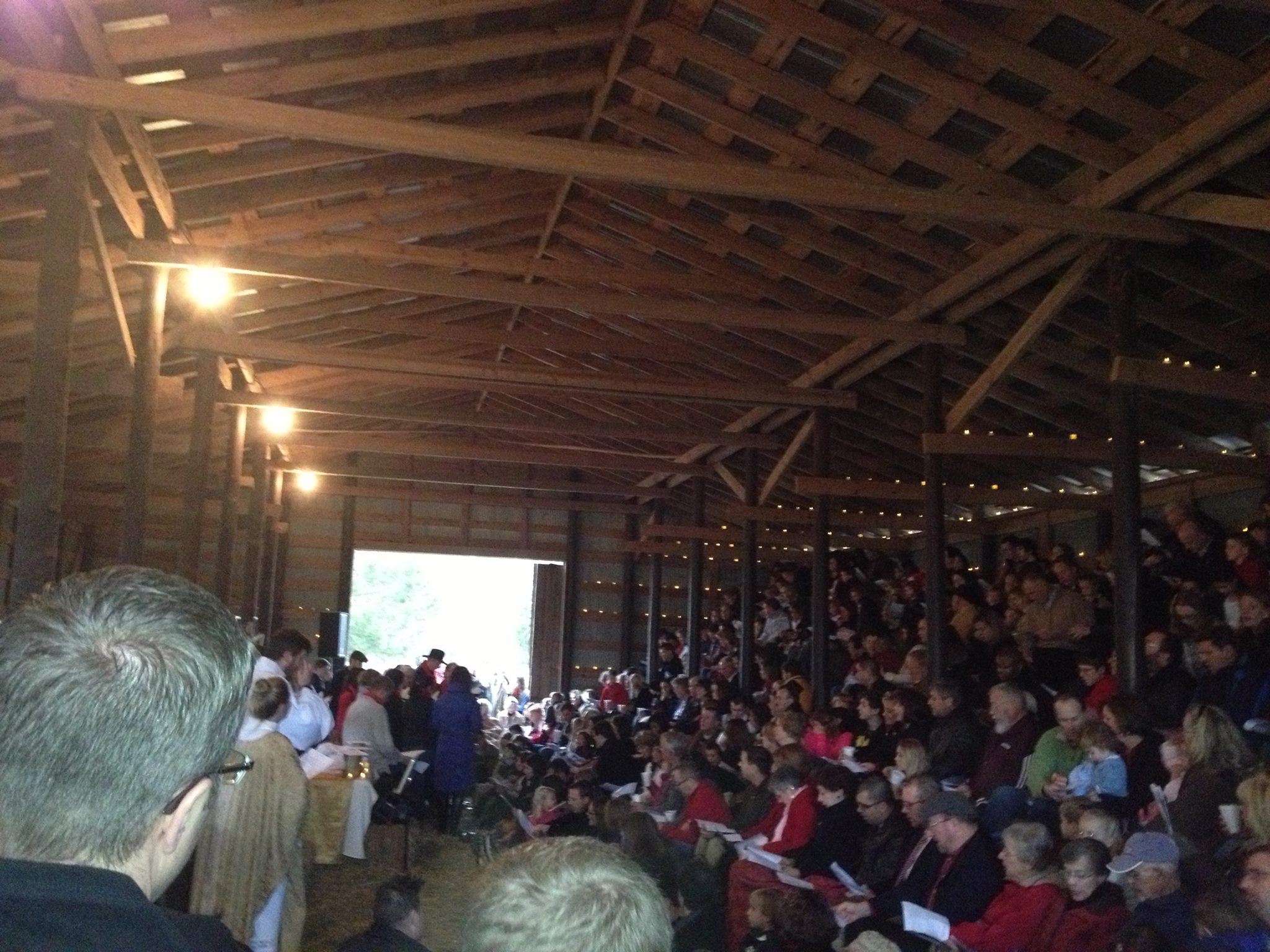
There is a church outside of Durham, North Carolina that celebrates Christmas Eve in a local barn. While other Christians are sitting in the warmth of their sanctuaries, listening to the beautiful message of a baby being born into the world, this church stands together in the frigid cold, singing hymns through chattering teeth, while the stench of animals wafts throughout the barn. I can imagine the first time someone brought up the idea for barn-worship, only to be met with “but we’ve always had Christmas Eve in the sanctuary!” Somehow or another the vision became a reality and it is now integral to the life of the community. The barn-yard service has given a new dimension and depth to the Christmas message to people who had become numb to the repetitious practices of the past. Through the willingness of someone to test the system, to propose a radically new idea, the message of God’s love in Jesus Christ has been spread to a group of people who otherwise might’ve have missed the Good News.

There is a church in Virginia that has a bluegrass band come to the sanctuary to play their Christmas Eve music. After years of hearing the same hymns from the organ, the pastor proposed a new musical style to relight the flame of faith. Though some were enraged by this new idea, it brought in an entirely new set of people who previously saw the church as a lifeless congregation. The bluegrass service is now one of the most highly attended during the year primarily because of the new musical genre. Through the willingness of someone to test the system, to propose a radically new idea, the message of God’s love in Jesus Christ has been spread to a group of people who otherwise might’ve have missed the Good News.

Paul encouraged the church in Thessalonica to “test everything” by what was good for the people. If something in your life has become flat and lifeless, let it go and seek something new. The beauty of church comes from our willingness to experience God’s wonder in a myriad of different ways.

This advent season, I encourage you to “test” and explore your faith in vibrant ways. Seek out opportunities to catch a new glimpse of God’s glory from the people around you. And remember to hold fast to the good so that others might see the Good News through you.

What’s Right With The Church? – Sermon on Philippians 4.1-9

Philippians 4.1-9

Therefore, my brothers and sisters, whom I love and long for, my joy and crown, stand firm in the Lord in this way, my beloved. I urge Euodia and I urge Syntyche to be of the same mind in the Lord. Yes, and I ask you also, my loyal companion, help these women, for they have struggled beside me in the work of the gospel, together with Clement and the rest of my co-workers, whose names are in the book of life. Rejoice in the Lord always; again I will say, Rejoice. Let your gentleness be known to everyone. The Lord is near. Do not worry about anything, but in everything by prayer and supplication with thanksgiving let your requests be made known to God. And the peace of God, which surpasses all understanding, will guard your hearts and your minds in Christ Jesus. Finally, beloved, whatever is true, whatever is honorable, whatever is just, whatever is pure, whatever is pleasing, whatever is commendable, if there is any excellence and if there is anything worthy of praise, think about these things. Keep on doing the things that you have learned and received and heard and seen in me, and the God of peace will be with you.

right with church

What’s right with the church? Easy sermon topic… I thought. I was having lunch with a some friends a few days ago when I casually mentioned the theme for our worship service this week, and shared with them my desire to accentuate the positive aspects of communal Christianity. I realized that this sermon was going to be very difficult to write when I asked them to share their ideas about what the church is doing right, and the table remained silent for an uncomfortable amount of time. What’s right with the church?

Two weeks ago Sue Volskis walked into my office before our lectionary bible study and in addition to the crossword puzzles that she so graciously gives to me, she handed over a manuscript. The title read: “What’s Right With The Church; a sermon by Zig Volskis; May 17, 1987.” She had been going through some of Zig’s things and found a sermon about the state of the church that he had preached the year before I was born. Whatever I had planned to do for the rest of the afternoon was placed on the back burner and I dove straight into his writing.

It is a beautiful sermon, and I wish that I could have been there to hear it in person. Instead of focusing on all the negative elements of church life, of which there are plenty, Zig dedicated the sermon to looking at the positive and life-giving elements of the body of Christ that is the church.

Zig proclaimed that as a child he would have responded to his question with the church bells and music. They both represented the energy and depth of the worshipping community through sounds and music. The music of church reassured the people that God was the one in control, even if the world claimed the contrary.

As an adult, Zig claimed that his answer had changed over a career of serving the church for thirty years. The first and foremost thing that is right about the church is that it endures! Empires come and go, churches are destroyed by war and exodus, yet the body of Christ endures.  With all its blindness, and plundering, for all its refusal to use its enormous resources, the church, nevertheless, has sought to minister to human need in a thousand different ways. And for untold numbers of persons the helping hand of the church has been a life-saver.

Zig ended the sermon with a call to those who love the church: make more room for it, bring to it your best and highest devotion. And to those who are not sure about the church: you will not find perfection here, but come in anyway, and help us make it better. There are so many things right about the church that the things that are wrong don’t really matter that much anyway. Amen.

On Monday morning I read through our scripture lesson for today, part of Paul’s letter to the church in Philippi, and I kept hearing Zig’s words in my mind. Paul, like Zig, could have listed all of the things wrong with the church and then implore the people to be better. He could’ve listed their sins and talked about the importance of temperance and self-control. But he didn’t. Like Zig, Paul instead calls the people to focus on the goodness in their church lives. Let your gentleness be known through your living. Remember that the Lord is near, and don’t worry about the trivial moments of life but instead go to the Lord in prayer and the peace of God will guard your minds and souls. Whatever is true, whatever is honorable, whatever is just, whatever is pure, whatever is pleasing, whatever is commendable, if there is any excellence and if there is anything worthy of praise, think about these things.

This is not a call to ignore the negative, nor is it a command to turn a blind eye to the problems of church. Paul is instead offering the church a way of understanding the world through the beauty and joy of what church can be.

Take it from a young pastor – there are plenty of problems in the church; from here at St. John’s to the global church. Churches are broken because they are filled with broken people. I could stand up here this morning and outline the depth of our depravity, I could talk to you about the problems facing the Middle East, we could talk about the Ebola Crisis, I could share with you the remarkably inappropriate comments I heard other clergy make this week about homosexuality. We could spend our church service focusing on all the negative but we already do enough of that.

whats-right-with-the-church-576x180

It is nearly impossible to turn on the television, open a newspaper, or get online without being bombarded with the problems of the world. And if the media is so inclined to mention something about the church is it almost always a controversy or a reminder of our brokenness.

So today, I want us to be different from the world. I want to follow Zig’s example, which is to say I want to follow Paul’s example, and talk about what’s right with the church.

I never had a choice about being a Christian. There was a never a time in my life where my family was not part of the church. Some of my earliest memories are of Church services, living nativities, and sitting at the altar during children’s messages.

As a kid I would have answered the question by saying the church is fun! Where else do we get to spend time on a weekly basis hearing about the incredible stories of God with God’s people? Where else will adults make fools of themselves for the sake of sharing the Good News with young people? For me the church has always been fun and I therefore had no reason to choose something else to do. The continued presence of the church in my life, and its influence over my actions and decisions, is a reminder that (unlike the popular American perspective) the choices made for us and in spite of us are often of more lasting consequences than the choices made by us (Willimon, What’s Right With The Church, 35-36). We like to think that we choose God, when in fact God is the one who chooses us.

What’s right with the church? The church is the place where people discover and live-into the reality that God has gone looking for them. I might experience God in the middle of the woods, or in the loving embrace of a friend, but church is the place where I learn the language to articulate those experiences. My eyes are opened by the church regarding how to experience God in this place, and in the world. The community of faith proclaims the Word so that we can absorb it, and live it out in the world. The people who gather as Christ’s body reach out to us in love through God’s will to call us in.

As I got older I might’ve answered the question by saying that the church’s music is awesome! Whether singing the incredible hymns from the hymnal, or wailing on the drums during a contemporary worship service, I have always loved church music. The words and tunes that we rely on every week articulate the faith of scripture and the value it plays in our lives.

I love those moments when I find myself whistling a tune, or mumbling through the lyrics of a song only to realize that it fits perfectly with my present moment. Sometimes the music of church gets the better of me and my emotions runneth over. Some of you might not realize it, but I stand behind this pulpit when I sing the hymns, so that, just in case I start crying, none of you will see it.

The music of our church is awesome because it can bring us to tears, bring smiles to our faces, reignite the flame of faith, and give us goosebumps. I love the music of church because it is so unlike the music we hear Monday through Saturday; it encourages us in our faith.

While in seminary I might’ve answered the question by saying the church is a radically alternative community. This place in unlike anything else you can experience. The church at its best is a place where everyone can belong regardless of anything else in your life.

Paul calls the church “a colony of heaven.” We are like an island of one kingdom in the midst of another. We exist communally because we could not survive on our own, we need others to help us stay accountable to the grace that God has poured on our lives. We work through our faith and live together in harmony as an alternative community where the world, for us, has been turned upside down.

We are a strange group of people who are more focused on others than ourselves, we believe the first will be last and the last will be first. In this alternative community we are habituated by love for love. In baptism we take vows to raise children in love and faith, in marriage we take public vows to help the new couple remain accountable to God and one another, in funerals we offer honest and truthful words about someone’s life, death, and promised resurrection.

But if you asked me today, right now, “What’s right with the church?” My answer would be: it’s incarnational. In the incarnation God took on our human flesh in Jesus Christ to be both fully God and fully human. Our church is incarnational. We gather together to hear the Word of the Lord and let it become flesh in the ways we live our lives.

Incarnational_2

The church is the fundamental location for discovering and receiving the peace of God. This peace is something that is beyond my ability to describe with words, but it is a peace that the world cannot give; money cannot by it, nor can we earn it through social positioning. The peace of God comes from God as a gift, peace which surpasses all understanding. It is a comfort that soothes every fiber of our being, while at the same time electrifies our existence into something new, bold, and incredible. In church we confront the living God who first breathed life into us, who walks along the paths of understanding with us side-by-side, and will stay with us no matter what.

The incarnational church refuses to be moved by the expectations of the world, and instead remains committed to the love of God in our daily lives. We who have been Christians for any reasonable amount of time can remember others who have lived before us a life that was full of incarnational joy, people who heard the Word and let it become flesh in their lives. We are better, stronger, and fuller Christians for having known and watched such fellow disciples. And now we have the same opportunity to be a source of incarnational joy and life to others with whom we come in contact.

What’s right with the church?

In spite of its obvious corruptions and imperfections, it is the church that reminds us about the love of God that will not let us go, as it points us toward the true home of our souls.

So, let me say to you who love the church: make more room for it, bring to it your best and highest devotion. Pray fervently for its renewal and commitment toward being Christ’s body in the world.

And let me say to you who are not so sure about the church: You will not find perfection here, but come in anyway, and help us make it better. Help us open our eyes to the way the living God is moving and speaking in the world so that we can continue to be the body of Christ for the world.

There are so many things right about the church that the things that are wrong don’t really matter that much anyway.

Amen.