Comprehending The Incomprehensible

Ephesians 3.14-21

For this reason I bow my knees before the Father, from whom every family in heaven and on earth takes its name. I pray that, according to the riches of his glory, he may grant that you may be strengthened in your inner being with power through his Spirit, and that Christ may dwell in your hearts through faith, as you are being rooted and grounded in love. I pray that you may have the power to comprehend, with all the saints, what is the breadth and length and height and depth, and to know the love of Christ that surpasses knowledge, so that you may be filled with all the fullness of God. Now to him who by the power at work within us is able to accomplish abundantly far more than all we can ask or imagine, to him be glory in the church and in Christ Jesus to all generations, forever and ever. Amen.

“Tell me about your prayer life…” has got to be some of the most ridiculous pastor lingo I’ve ever heard. I mean, who else would ask someone a question like that? I am rarely, if ever, happy about my “prayer life.” I consistently feel like I could be a better prayer, that I could spend more time in prayer, and that I could get more out of prayer than I usually do.

And, to be honest, I’m not even sure how I learned to pray in the first place. Maybe prayer is like learning to read. I know that at one point in my life I didn’t know how to read, and now I do, and I’m not really sure about the magic that made it possible.

Tell me about your prayer life… How would you feel if I asked that question, right now, right here in the sanctuary and made you stand up to answer? Exactly.

And yet, for all of the difficulty and frustration and confusion that surround prayer, it might be the most important thing the bible has to offer us.

For this reason I bow my knees before the Father and I pray. Paul here in Ephesians is no longer offering sound ethical advice, he’s not providing visions for the organization and structure of the church, he is simply describing his prayers. For the church. For us!

ephesians-1038x576

I think, like reading and so many other things, we learn how to pray by observing other people pray.

Maybe you pray like Paul… You get down on your knees and you use all the right language to elevate the divine qualities of God. You earnestly yearn for the people around you that Christ might dwell in their hearts. And that, above all, you pray for the world to know the breadth and height and depth of Christ’s love.

Or maybe you pray like my buddy Will: Woah God, how great was the weather today? Thanks! I mean, like, really awesome stuff. The way you had the clouds moving and the Sun! The Sun! It was like just bright enough but not too bright. You know what I mean? Of course you do! You’re God! Well, anyway, thanks.

There is no wrong or right way to pray, though there are certainly things that are better to pray for than others. The point isn’t so much how we pray, but that we pray at all.

Years and years ago I was helping a church in North Carolina and one of my responsibilities was visiting some of the older and retired members of the church. Many of them were what we call shut-ins, in that they could no longer make it to church for worship or fellowship, but they still felt very connected to the church.

So I would bring a copy of the latest bulletin and sit down with someone for an hour for nothing more than a conversation, and we would always end our time in prayer.

One of my regular visits was to a retired pastor, and he was easily my favorite. We got to know each other pretty quickly, and every time we got together he would offer me a sage piece of advice regarding my future vocation in the ministry. He told me story after story about his successes and failures. He told me what passages to avoid in the bible, and he even told me about the time a police officer had to drive him home after a funeral wake because he didn’t know the punch had alcohol in it.

Anyway, one afternoon I went to go visit him and our relationship had grown to such a degree that I regularly walked into his room at the retirement home without knocking. And as soon as I stepped through the threshold I saw him kneeling by his bed in a posture of prayer.

What a holy sight to behold! This man, after all the years of praying and serving the church, was still just as dedicated to communing with the divine. But the more I took in the scene the more uncomfortable I felt. I didn’t want to just leave without saying anything, and I didn’t want to just keep standing their awkwardly by the door, so after a minute or two I decided to join him by the edge of the pray and start praying too.

            I slowly crept across the room and lowered my knees to the floor and centered myself before I overheard the prayer of the retired pastor… he was snoring.

And, of course, I tried not to laugh, but then again I found myself at a loss for what to do. What would happen if he woke up while I was trying to slide out of the room? What would he do if he opened his eyes and saw me kneeling on the floor right next to him? I decided to very gently rub his back and he immediately opened his eyes and said, “Amen!”

Tell me about your prayer life…

Paul wrote to the church in Ephesus because he was filled with joy that all followers of Jesus Christ are part of God’s family. No longer is there “us” and “them.” There is no “insider” or “outsider.” All have been made part of the new family in Christ Jesus. And Paul’s response to this profound revelation is to get down on his knees and pray! He knew that trying days were ahead, that it would not be an easy thing for the church to accept, the incomprehensibility of a new family made up of all, and he knew that he could not give the church what it needed to be sustained by himself.

The church relies on God, not itself.

That’s a tall order in today’s world and in today’s culture. We are told from childhood to pull ourselves up by our bootstraps, that we can be anything we want to be, and that it’s all up to us. But the message of the gospel is in fact the opposite. You cannot pull yourself up by your bootstraps, you can’t be anything you want to be, and it is not all up to us.

We cannot do this thing we call life on our own. And we certainly cannot pray on our own.

36496-praying-together-1200.1200w.tn

Paul prays for the church to comprehend the incomprehensible. This is no easy thing! But Paul prays that we might comprehend the incomprehensible WITH the saints. It is something we can only do in community, and not in isolation.

The more time I spent with the retired pastor, the one praying in his sleep (or sleeping through his prayers), the more I learned what he was really like. Because for the first few months he was what I would call his Sunday morning self, the person he used to become on Sunday morning for everyone that once showed up at his church. He was able to keep the smile for the hour we were together and send me on my way with what felt like a benediction.

But after a couple months I saw behind the curtain and I learned about his loneliness, his broken family, his fears and failures. I encountered who he really was as I discovered his inner self. And the hardest discovery of all was learning that he felt as if he had moved beyond the love of God.

The great theme of Paul’s letter to the Ephesians is the fact that there is no nation, no tribe, no family, and no person who is beyond the love of God. This may sound obvious, but it can be very difficult to believe. Particularly if you’ve lost the community, or family, or church that helped to make that love feel manifest.

Even on our best Sundays here at Cokesbury, we, the gathered people of God, bring together a myriad of secret hurts, private humiliations, and lost hopes.

After only being here for a little more than a year I can stand behind this altar and look out at the truths many of you have shared with me. I see the broken families and the betrayals, I see the terror and fear about unknown futures, and I see the pain and loss of people who used to sit in these pews. I know so many of the secret shames and private failures that are contained in isolation and I know that the ultimate fear is about what happens if any of it gets out.

And yet we keep showing up. We keep carrying our own weights and disappointments. We put on our Sunday selves, we keep the smile for the hour we are here and then we are sent away with a benediction.

But what would happen if we revealed our truth to the church? Now, I don’t mean we take turns standing up at the front and airing out all of our dirty laundry. But think with me for a moment… how could this church change if we treated it like the church Paul prays for, rather than just a place where we hang out for an hour on Sundays?

Paul prayed for the church to know, above all else, the love of God in Christ that surpasses all knowledge. Paul prayed for Christ to so dwell in our hearts and minds that we might be filled with all the fullness of God. Paul prays for us to imagine the unimaginable, to know the unknowable, and to comprehend the incomprehensible.

If we pray for our church, if we pray for Cokesbury like Paul prayed for the Ephesians, then we do so by praying for a communal experience of the love of God in heart, soul, mind, and strength. And then we pray for the church to come to grasp the truth of grace; a truth that is utterly massive and beyond all earthly reason.

            God loves us, and there’s nothing we can do about it.

And so it is for that reason, that we bow our knees before God the Father, and we pray that according to the riches of God’s glory, God may grant that we may be strengthened in our inner beings, that Christ may dwell in all of our hearts, as we are being rooted and grounded in love. We pray for the power to comprehend, with all the saints, what is the breadth and length and height and depth, and to know the love of Christ that surpasses all knowledge, so that we may be filled with all the fullness of God.

_

We pray this so that all of us might know that no one, NO ONE, is beyond God’s love. Not even us. Amen.

Devotional – Psalm 138.6

Devotional:

Psalm 138.6

For though the Lord is high, he regards the lowly; but the haughty he perceives from far away.

Weekly Devotional Image

On Sunday morning, in the middle of worship, I gathered the children from the congregation and I announced a new plan for ministry. We moved about the sanctuary and I showed them where I was praying when God spoke to me as clear as day about what we need to do. Their faces were aglow with anticipation as I announced that the future of the church rests on the congregation’s ability to raise $54 million dollars.

While the children danced around with thoughts of all the money, the adults sank down deeper in their pews. I was grateful that one of the kids finally asked what the money was actually for and then I proudly announced that we need to purchase a private jet so that I, as the pastor, can share the gospel around the world.

I, of course, was kidding.

But a pastor named Jesse Duplantis said just about the same thing to his church two weeks ago, and he was dead serious.

If that church raises the funds, and it seems like it might, it will be Duplantis’ 4th private jet since entering ministry and he justifies the request because, “If Jesus were on the earth today he wouldn’t be riding on a donkey, he’d be in a private jet spreading the gospel.”

The Lord we worship is magnificent and beyond our ability to comprehend yet, as the psalmist puts it, our Lord regards the lowly. In the New Testament, Jesus talks about the subject of money more than just about anything else and very wonderfully says that its easier for a camel to go through the eye of a needle than for a rich person to enter the kingdom of heaven.

5b0eaa3de6a1e.image

I, for one, cannot wait to see Jesse Duplantis fly his (4th!) private jet through the eye of a needle.

In our fast-paced frenetic world that is so consumed by a thirst for power and wealth, it is always a strange thing to remember that our Lord came to dwell among us not as the televangelists live, but like those who wander among the margins of life. We worship a first century Jew who ate among the sinners, not a preacher who thinks flying with other people is akin to spending time with demons.

What a blessing and privilege to know that though our God is mighty, God chooses to meet us in the muck of life, instead of escaping away into the stratosphere.

The Last Jedi – Spiritual or Religious?

Crackers-Banner-1

A few week ago I was able to share a conversation with Jason Micheli and Chaim Saiman for our podcast Crackers and Grape Juice about the theological dimensions of Star Wars, and in particular The Last Jedi. After seeing the most recent Star Wars film, Chaim was struck by some of the subtle (and not so subtle) religious motifs within the movie and wrote an article for The Atlantic titled, “Why The Last Jedi Is More Spiritual Than Religious.” Chaim is a law professor at Villanova and is interested in the intersection between law and faith.

church-bb-8

Our conversation covers a range of topics including Jesus and the Law, growing up in the bible belt, the First Commandment, Jesus as the proto-Christian, the religiosity of Star Wars, and how our faiths and cultures are tied together. If you would like to listen to the episode, or subscribe to the podcast, you can do so here: Fact Checking Star Wars

One Crazy Year

Crackers-Banner-1

Last week Jason Micheli, Teer Hardy, and I sat down to review the interviews that we put out through Crackers and Grape Juice in 2017. From what started as a fever-dream, we’ve created and cultivated a weekly podcast (with two offshoots) that is approaching its 200,000th download. On Crackers and Grape Juice we interview guests about recent books, articles, or current events. On (Her)men•you•tics we pick one theological term per week and unpack it without using stained glass language. And on Strangely Warmed we spend thirty minutes every week talking about the four lectionary readings for the following Sunday to help preacher prepare and to help lay people tune in their ears to the language of scripture.

16804257_10207974466350488_1118968434879489424_o

2017 was an incredible year for the podcast in which we started Strangely Warmed and (Her)men•you•tics, we held a number of live events for people to experience a recording in person, and we produced conversations with a range of guests including (but not limited to), Stanley Hauerwas, Will Willimon, Amy Butler, Bishop Sharma Lewis, Robert Jenson, Rod Dreher, Fleming Rutledge, David Bentley Hart, Walter Brueggemann, Brian Zahnd, Tripp Fuller, and Diana Butler Bass. If you would like to listen to our recap episode, or subscribe to the podcast, you can do so here: 2017 Year In Review

Advent Longing [Live]

Crackers-Banner-1

The Crackers & Grape Juice team recently hosted a live podcast event in Alexandria, VA where we invited Tripp Fuller and Diana Butler Bass to offer their reflections about the first and second Advents. In the second part of the evening, we invited Diana to join us at the front and she explored the the ramifications of announcing Jerusalem as the capital of Israel, the importance of the second Advent, human agency vs. divine agency, and how to teach children about the already but not yet of God’s Advent in Christ. Diana is an author, speaker, and scholar specializing in American religion and culture. If you would like to listen to the live recording, or subscribe to the podcast, you can do so here: Advent Longing

25498049_10214631050032171_4530742543684584268_n

Devotional – 1 Corinthians 1.9

Devotional:

1 Corinthians 1.9

God is faithful; by him you were called into the fellowship of his Son, Jesus Christ our Lord.

Weekly Devotional Image

On any given day when I hear about faithfulness, it is often attributed to people. When a family is in church every Sunday for months in a row, I’ll overhear someone describe them as a truly “faithful” family. When a wife shares about her husband’s infidelity, she describes him having broken his “faithfulness.” When a family shares the story about Santa Claus with a questioning child they ask him/her to keep the “faith.”

Even from the pulpit, I am apt to use language about faithfulness primarily in regards to us. On any given Sunday I can wax lyrical about faithful giving, and faithful praying, and faithful yearning. I can quote the parables describing faith like a mustard seed, I can debate different uses of faith by Jesus across the gospels, and I can encourage people to have the type of faith that can move mountains.

But the faith I hear about the least, and sadly the faith I talk about the least, is the faith of God.

maxresdefault

Paul begins his first letter to the church in Corinth with a declaration not about who they are, but about who God is: “God is faithful; by him you were called into the fellowship of his Son, Jesus the Christ.” However, there are many moments in the realm of “doing Church” where we make it all about us and what we do. We say things like, “Let us now go and do likewise,” or “Accept Jesus Christ as your personal Lord and Savior,” and it’s like God isn’t even in the room.

But the bible, and what it means to be the church, is always primarily about God, and only secondarily about us.

At the heart of following Jesus is the recognition that God (in Christ) is faithful. God is faithful to the promises of scripture. God is faithful in receiving our prayers. God is faithful in delivering us out of captivity to sin and death. God calls us into fellowship with the Son. God reveals God’s self in the breaking of bread and the sharing of the cup. God destroys us and resurrects us to new life in baptism. God is faithful.

At the beginning of the liturgical year, it is good and right for us to remember that God is God and we are not, that God moves in and through us, and that God is faithful even when we are not.

Faith and Politics From The West Wing

Crackers-Banner-1

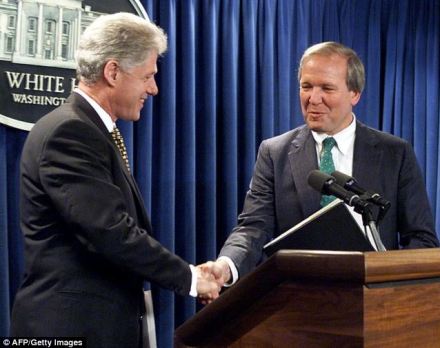
A few months ago my friend Jason Micheli recorded a conversation for our podcast Crackers & Grape Juice with the former White House Press Secretary Mike McCurry about what it was (and is) like to balance faith and politics while working in the West Wing. McCurry served as the Press Secretary during the Clinton years and enrolled at Wesley Theological Seminary following his time working in the administration. The conversation offers a lens into the inner workings of the most powerful office in the land while also addressing the deep challenge of being a political Christian. If you would like to listen to the episode or subscribe to the podcast you can do so here: From West Wing To Wesley 

article-2628189-1DD62C3400000578-874_638x506

A Reminder For Those Attending Annual Conference

Psalm 100.3

Know that the Lord is God. It is he that made us, and we are his; we are his people, and the sheep of his pasture.

2017AClogo_color_600

In a few days United Methodists from all over the state of Virginia will gather in Hampton for Annual Conference. It is the conference wide meeting for clergy and lay representatives so that we might have worship and parliamentary deliberations in order to discern the will of God. Highlights will include the Service of Ordering Ministry when new candidates will be blessed for ministry, our new(ish) Bishop will address the conference as a whole for the first time, and we will hear from all of the vibrant ministries taking place across the conference. However, there will come a time when we descend into the depths of Roberts Rules of Order, individuals will speak into the PA system just to hear the sound of their own voice, and it will feel a whole lot more like a shareholders meeting than the gathering of God’s people.

And as I have been preparing for Annual Conference this year by reading through the Book of Reports and praying for our denomination, I felt compelled to write the following reminder for anyone attending conference this year (and frankly for any Christian):

On one of my first Sundays at St. John’s 4 years ago, I sat with the Church Council in the Social Hall for the very first time. We gathered that afternoon in hopes of communing with one another such that we could discern what God was calling us to do together. And I started the meeting with this story…

On my first day of seminary the dean stood up in front of the entire incoming class and gave a 45-minute lecture on the ethics of the New Testament. It was interesting for the first ten minutes and then most of us lost track of where he was going. We struggled to listen but everything was so brand new that most of us were more captivated by the architecture in the sanctuary than what was being said from the pulpit. But he ended with these words, words I will never forget, and words I hope you will never forget.

He said, “Why are you here? Some of you think you’re here because you want to teach in college one day, some of you are here because you believe you can save the church, and some of you are here simply because you love the bible. But why are you here? Now, I want you all to pull out a small piece of paper. You might, and probably will, forget most of what I’ve said today, but this is the most important lesson you will ever learn as Christians. I want you to take your piece of paper and tape it somewhere you will see every single day. You can put in on the mirror in your bathroom, or on your computer, or even on your bible, I don’t care where it is just make sure you see it every single day. And on your piece of paper I want you to write the following words: ‘It’s about God, stupid.’”

Wherever you are when you read this reminder, I encourage you to find a piece of paper and write down those same words: It’s about God, stupid. Tape it up in your hotel room, fasten it to the front of your book of reports, put it on your name tag, just do whatever it takes to encounter those words while attending Annual Conference. The UMC does not exist to serve the needs of those already in it, it does not exist to further perpetuate the bureaucracy in which it finds too much meaning, it does not exist to do whatever it takes to keep doors open on Sunday mornings; The UMC exists because it’s all about God!

God is the one who first breathed life into John Wesley and sent him on a course that would forever reorient the fabric of the church. God is the one who breathed life into all of the churches of the Virginia Conference, who empowers the pastors to proclaim the Word from their respective pulpits, who shows up in the bread and in the cup at the table. God is the one who gathers us together for a time of holiness, who moves in the words we sing, who rests in the spaces between us when we worship, who calls us to serve the kingdom instead of serving ourselves.

And so, no matter what you’re thinking or how you’re feeling this year for Annual Conference, remember it’s all about God.

inom8GpY


Devotional – Matthew 28.16-17

Matthew 28.16-17

Now the eleven disciples went to Galilee, to the mountain to which Jesus had directed them. When they saw him, they worshipped him; but some doubted.

Weekly Devotional Image

Doubt has been with the church since the very beginning. Even after the resurrection while the disciples were worshipping Jesus on the mountain in Galilee there was doubt. This is a particularly interesting note in scripture considering the fact that doubt is so ridiculed and berated in parts of the church today.

In some so-called “prosperity gospel” churches if someone gets sick or loses a job the rest of the church blames the occurrence on the doubt of the individual. In other churches you might hear a sermon that makes it plainly obvious that doubting the Lord is a sign of weakness and it needs to be dismissed from the mind (or the heart). And still yet in some churches the “d” word is never mentioned because of it’s supposed negativity.

But doubt was with the disciples from the beginning! How else could a group of finite human beings respond to the infinite wonder and grace and mercy of God made manifest in the flesh?

doubt1

Doubt is not the opposite of faith. In fact, doubt is often the prerequisite and part of the cyclical nature of faith.

Two summers ago I took a group of people from the church on a mission trip to War, West Virginia and while we were there serving the needs of the community one of our members expressed doubt in God’s love and compassion when confronting the destitute poverty of the people in the community. One afternoon, while working on the floor of a house, he said, “It’s hard to believe in a God who could let something like this happen.” At that precise moment the homeowner walked around the corner laughing and said, “Honey, you are the proof that God is not done with us yet!”

Oftentimes when we are in the midst of doubt, whether a particular event has led us to begin questioning the Lord or it comes out of nowhere, it usually takes another person to show us back to The Way. In West Virginia is took a poverty-stricken homeowner to show my friend what the grace of God really looks like. When I begin questioning aspects of the kingdom or scripture or any number of things it usually takes a word or phrase from our hymnal to knock me back into the reality of God’s reign. For some people they need a friend or relative to reach out and ask to pray together. For others it takes something close to a miracle to show how God still rules this world and is the author of our salvation.

Regardless of what we doubt, or even if we doubt, the Good News is that God is not done with us yet!

Devotional – Luke 17.5

Devotional:

Luke 17.5

The apostles said to the Lord, “Increase our faith!”

 Weekly Devotional Image

4 years ago I received the phone call about being appointed to St. John’s. And over the last 4 years I learned what it really means to love God through the people of St. John’s. Through every rolled sleeve to clean dishes, through every casserole provided for a family in grief. Through every committee meeting, bible study, and Circle gathering. Through every mission trip, hospital visit, and church picnic.

St. John’s UMC has increased my faith.

While here I have watched people who were spiritually dead be resurrected into new life through the faithfulness of the church. I have seen people surrounded in the midst of sorrow and grief when they needed it most. I have seen tears spilt over the precious sacrament of baptism, and in recognition of the incredible gift of communion.

In the United Methodist Church clergy people like me make a vow to go where the Spirit leads us. When I was finishing seminary I lived into the promise when I received the phone call about coming here and I embraced it. I came to St. John’s not knowing what it would look like, how it would feel, or whether or not it would be fruitful.

And I can say today that serving St. John’s has been the greatest privilege of my life.

PC_grownupnew

But the Spirit is moving. Over the last few months the leadership of the church and I have been praying for God’s will to be done and we have discerned that the time has come for me to respond to the Spirit yet again in a new place, and that the Spirit is calling a new pastor to serve St. John’s. And in response to that prayer and discernment, our Bishop has projected to appoint me to serve as the Pastor of Cokesbury UMC in Woodbridge, VA at the end of June.

I am grateful beyond words for the community of Staunton, VA and for the people of St. John’s for increasing my faith. I have nothing but hope and faith that the church will continue to pour out God’s love onto the last, the least, and the lost. I rejoice in the knowledge that our God makes all things new.

This is a time of new life for St. John’s: a new pastor, a new chapter, and new beginning.

In the coming weeks of transition I ask that you please keep my family in your prayers and I encourage you to continually seek out new ways to increase the faith of the people around you like you’ve done for me.