The End Of The Rainbow

Genesis 9.8-17

Then God said to Noah and to his sons with him, “As for me, I am establishing my covenant with you and your descendants after you, and with every living creature that is with you, the birds, the domestic animals, and every animal of the earth with you, as many as came out of the ark. I establish my covenant with you, that never again shall there be a flood to destroy the earth.” God said, “This is the sign of the covenant that I make between me and you and every living creature that is with you, for all future generations: I have set my bow in the clouds, and it shall be a sign of the covenant between me and the earth. When I bring clouds over the earth and the bow is seen in the clouds, I will remember my covenant that is between me and you and every living creature of all flesh; and the waters shall never again become a flood to destroy all flesh. When the bow is in the clouds, I will see it and remember the everlasting covenant between God and every living creature of all flesh that is on the earth.” God said to Noah, “This is the sign of the covenant that I have established between me and all flesh that is on the earth.”

Lent is a season of repentance and introspection. However, that doesn’t mean the liturgical season encourages navel-gazing – in fact it compels us to look at our lives individually and corporately. Lent almost forces us to ask, “How have I failed, and how have we failed?”

It is not an easy season in the life of the church.

In preparing for this Lent I was struck by the theme of covenants – both biblical and otherwise, and what they have to do with our faithfulness. Almost everyone here is familiar with what a covenant is, we’ve borrowed money, or rented an apartment, or purchased a car, all under the auspices of a contract. They exist because of a fundamental distrust that we have for one another and institutions, we use them to protect ourselves should the other not hold up their end of the bargain.

Yet the truest and deepest relationships are those built on trust – when we lovingly yield ourselves to the other with vulnerability and fragility. And that is precisely what God has offered us in the covenant – the vulnerability required for true trust.


519_covking_657bull-02-02-1080x675

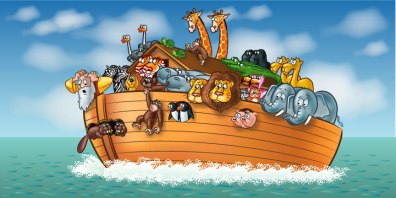
Things were looking good for the people of God, but just six chapters into the Good Book, humanity has become polluted beyond repair. The situation was so terrible that God sends a flood to start over. However, God calls upon Noah to build an Ark that will be the seed of new life, and he and his family, plus two of every animal are spared..

And then, after rocking gently on the waves for forty days and forty nights, the waters recede; the family and animals walk down the ramp, and up in the sky is a rainbow declaring God’s love toward all of creation.

This, of course, is the most beloved of all Sunday School stories for children. I have yet to encounter a church nursery or children’s Sunday school room in which the ark wasn’t painted on a wall, or a book describing the events couldn’t be found on a shelf, or plastic figurines of the animals and Noah weren’t tossed in a corner after years of repeated use and play.

At my last church I would take time every year to teach the children in our preschool about Noah and his Ark. We would put on little animal masks and line up two by two and march around the church property making animals sounds as loud as we possibly could while cars would slow down to watch a tall bearded man lead a group of children in flapping their wings, clomping their jaws, and shaking their tails.

And it would inevitably end in the playground where there was a large plastic boat that had enough space for everyone to climb aboard. We would pretend that the waves we shaking us back and forth, and then we’d look up in the sky for our make-believe rainbow.

            The end.

And we almost always tell the story that way; we jump straight to the rainbow. But in jumping ahead, we forget about the immense devastation the survivors would have witnessed. We forget that God sent the flood for a reason, and that death and carnage would have spread as far as the eye could see.

Have you seen what Houston looked like after the flood waters receded? Do you remember how long it took to sift through the entire city of New Orleans after Katrina? That’s what the flood must have been like, but worse.

            And we teach this story to our children.

Full_featured_double_rainbow_at_Savonlinna_1000px

The rainbow was in the sky as a sign and reminder of the covenant God made with God’s people, but it was also done in the presence of death and destruction. “Never again,” says the Lord, “Will I destroy the earth.”

On Wednesday afternoon, while countless Christians were walking around with ashes in the sign of a cross smeared across their foreheads, a young man pulled the fire-alarm at Marjory Stoneman Douglas High School in Florida, and waited for people to pour out in the hallways. And then he began shooting.

17 dead, another dozen injured.

In October, a man looked out from his room in Las Vegas at the crowds of people dancing at a music festival. While the pumping music was filling the air, he added to it with the sound of gunshots.

58 dead, 851 injured.

On December 14th, 2012, a young man walked into Sandy Hook Elementary School in Newtown, Connecticut and began shooting.

20 dead, the majority of whom were 6 or 7 years old.

Since the shooting at Sandy Hook, more than 400 people have been shot in over 200 school shootings. Those numbers don’t include what happened in Las Vegas, or a number of other shooting related events. But in the last five years, 400 people have been shot in over 200 school shootings.

Called to life out of chaos and nothingness by the breath of God, we humans seem at every turn bent on returning to that chaos. “The Lord saw that the wickedness of humankind was great in the earth, and that every inclination of the thoughts of their hearts was only evil continually.” And so God sent the flood.

Following the Flood, God placed the rainbow in the sky, and God promised to never drop such violence on us again, and for some reason, we’ve failed to hold up our end of the bargain.

God’s act over creation binds all of creation together, from the fish in the sea to the birds in the air, to the people in the pews next to you. And yet violence, anger, aggression, they rule the day. They captivate our attention, they fuel our inner thoughts, they drive our responses to frustration. We are a people near the end of the rainbow.

It’s like we’re so obsessed with the end of the story, we forget what got us here.

Since Wednesday afternoon I have been bombarded with messages from people both inside and outside of the church.

On one side there are people fighting for stricter gun control. They believe that sensible legislation could prevent events like those we’ve seen as of recent from ever happening again. They want to make it harder to purchase a firearm.

It’s important to note, that of the last 18 mass shootings, the majority of the firearms were purchased legally and with a federal background check.

On the other side, there are people fighting for greater access to weapons and freedom to use them. They believe that arming teachers and administrators will prevent events like those we’ve seen as of recent from ever happening again. They want to protect their freedom to defend themselves and others.

Violence, it seems, is inescapable. Regardless of the rainbows above our heads, this world of ours is captivated by one in which the power to end life reigns supreme.

But God has a knack for making a way out of no way.

We all know what chaos looks like, we don’t need the reminder from Genesis, we have the nightly news, and Facebook, and Twitter to show us what real chaos looks like. But it is in the midst of chaos, with the stories flooding in and the destruction around our ankles, that the rainbow arches across the sky demanding our attention.

And when we see that bow, when we hear about those teachers who sacrificed their lives to protect their students, when we witness the children standing in front of the school praying for their friends, we remember what God did for humanity and all of creation, we get a taste of the covenant, we discover redemption.
noahs-beaver-problem

Maybe that’s why we teach children the story of Noah and the Ark, and the rainbow in the sky, even if we’ve lost a connection to its deep and frightening truth – we want our children, in fact we want everyone, to know that God’s love and hope is present in the chaos, that even while the world is full of disturbing devastation, God has not forgotten us.

In the covenant made through the sign of the rainbow, God bound God’s own self to us in a new and different way. God became intimately connected with the creatures of his creation, preserving, sustaining, and encouraging them (us) toward redemption.

The rainbow, therefore, acts like a mirror, in which we see the truth of our reflection. We see who we really are, with our anger, and our propensity toward violence, and our fear. We see the truth, and we remember that God hung his bow in the sky.

So, perhaps the time has come to reclaim the strange, ugly, and beautiful truth of the rainbow. Maybe the time has come to put an end to the rainbow in nurseries and children’s bibles alone. Perhaps we need to seal our hearts with the rainbow that declares a new day has broken, that there is a better way, that there is room for all of the colors that make the covenant what it is.

That kind of rediscovery could completely reshape and shake up what we know of who we are. It won’t make us perfect, it won’t rid the world of evil, but it will stand as a reminder, just as it once did, that God has not abandoned us to our own devices, that God has made a new day and a new way.

This story from near the beginning, is the beginning of the covenants that lead to the kingdom. It is a promise established in Noah, and later with Abraham, David, and through our baptisms into Jesus’ death and resurrection.

            The covenant, at its core, is a witness to the fact that God is stuck with us, and that we are stuck with God.

In life, there are moments when we can feel the rage build within us. It usually happens in response to something we experience in another person, whether right in front of us, on television, or on the Internet.

And, to be clear, there are times when rage is appropriate. The Psalms are filled with these little vignettes into the anger of the people Israel amidst such terrible injustice. It is good and right for us to be angry when we see what happened in Florida this week, it is good and right for us to be angry about innocent children being murdered indiscriminately, it is good and right for us to voice our opinions about what can and needs to change.

            The challenge is in remembering that God is with us in the midst of our anger. That God saw the deplorable state of the world not only during the days of Noah, but in the days right before Jesus’ birth, and God sent us a new sign, in his Son, who came to show that love always trumps violence, that we are bound to one another even when we can’t stand each other, and that there is a better way.

The rainbow above Noah’s head, the experience of Jesus in our lives, they are a reminder that the world was broken, is still broken, and that God is in the business of reconciliation. It forces us to confront the brokenness of our own lives, and in the lives of others. It even makes us uncomfortable – for if God was willing to refrain from violence upon the world, if God was willing to hang up the bow, why haven’t we done the same? Amen.
The Last Jedi – Spiritual or Religious?

Crackers-Banner-1

A few week ago I was able to share a conversation with Jason Micheli and Chaim Saiman for our podcast Crackers and Grape Juice about the theological dimensions of Star Wars, and in particular The Last Jedi. After seeing the most recent Star Wars film, Chaim was struck by some of the subtle (and not so subtle) religious motifs within the movie and wrote an article for The Atlantic titled, “Why The Last Jedi Is More Spiritual Than Religious.” Chaim is a law professor at Villanova and is interested in the intersection between law and faith.

church-bb-8

Our conversation covers a range of topics including Jesus and the Law, growing up in the bible belt, the First Commandment, Jesus as the proto-Christian, the religiosity of Star Wars, and how our faiths and cultures are tied together. If you would like to listen to the episode, or subscribe to the podcast, you can do so here: Fact Checking Star Wars

Showing Up To Our Own Funerals

Joel 2.15-17

Blow the trumpet in Zion; sanctify a fast; call a solemn assembly; gather the people. Sanctify the congregation; assemble the aged; gather the children, even infants at the breast. Let the bridegroom leave his room, and the bride her canopy. Between the vestibule and the altar let the priests, the ministers of the Lord, weep. Let them say, “Spare your people, O Lord, and do not make your heritage a mockery, a byword among the nations. Why should it be said among the people, ‘Where is their God?’”

“By next week I want each of you to have your funeral sermon and bulletin figured out.” My peers and I exchanged strange looks before I raised my hand, “Funeral stuff for whom?” Our facilitator looked at us seriously and said, “You own funerals of course.”

I was in the middle of what we call CPE, clinical pastoral education. It can take place in many ways, but for me in meant serving a handful of 24 hour on-call shifts at Duke University hospital and spending every Monday for an Academic year gathering with a small group to process through the work of serving people near the end of life.

And it was on one such Monday when our facilitator informed us that we needed to create our own funeral services and bulletins.

To be frank: it was miserable. At first I kind of enjoyed thinking about the hymns and prayers I wanted to be used, but then I couldn’t help but imagine the actual people sitting in the pews while my urn, or coffin, rested at the front of the sanctuary. I found joy in flipping through the bible trying to pick one of my favorite verses for the funeral sermon, but then I started wondering who would be the one preaching, and if my life amounted to any profound theological reflection.

The longer I spent working on the assignment the more I hated it.

The following Monday we sat around our table, preparing to share our hypothetical funerals with one another when, thankfully, one of my peers raised what all of us were thinking. She looked at our facilitator and said, “I can’t understand why you would make us do this. It was cruel and frankly unchristian.” To which after giving it some thought he said, “Why do you think we get together every Ash Wednesday if not to think about our own funerals?”

ashes

If we do this service right, all of us will be blessed. We will be blessed because we will get a taste of what the church is really for. In this service, in this time set apart, we will take upon the sins of the world (not by dying on a cross like Jesus) but through confessing our sins and the sins of others. We are here to do the thing that we should do everyday, but we often fail to until we come a little to close to death for comfort.

For it is in the wrestling with our mortality, we catch a glimpse of who we really are, and we wonder about what we could become, should we have just a little more time.

In the end, only God knows the degree to which each of us have participated in, or encouraged, or allowed some great evil to exist in this world. And it is for that reason God sent his Son to be crucified, to be killed. It is God’s judgment laid upon us, that God took away from us.

That, in a sense, is what the strange celebration of Ash Wednesday is all about. It is why we gather together when people from our community die. We, like the prophet Joel says, have been gathered together for a solemn assembly, to be sanctified, to weep if necessary, to call upon the Lord to do spare us, knowing what God did in Jesus Christ.

This is the day, the one day, when we can faithfully admit that we deserved, and still deserve, to be judged. Yet, at the same time, we proclaim that God did not abandon us.

            This is the day that we show up to our own funerals.

Ash Wednesday is time set apart from the regular movement of church time, it is time interrupted, to confront the stark truth: no one makes it out of this life alive. Regardless of every commercial product promising to make you look, feel, and act younger – the bell will toll for us all.

Everything we do here right now, we do in the presence of ashes; these ashes force us, compel us, to speak of death before death in a world where death is denied.

Years ago I was standing by the entrance of the preschool at the church I was serving, greeting all of the children and their parents/caretakers as they arrived for another day of school. I knew every child’s name and their favorite food, color, and television show. I knew more about each parent walking into the building than they ever could’ve imagined, because the kids were like faucets you couldn’t turn off when the doors closed, and they weren’t old enough to know that some things are meant to be kept a secret.

And on that particular day, one of the moms ushered her daughter down the hallway, and made a motion to me that said, “we need to talk.” I, of course, was worried that I was about to get lectured about teaching too many of the strange stories from the bible to the kids, but instead she asked for my help. In less than a minute she told me that her ex-husband, the father of her daughter, had died the night before after being sick for a few weeks, and she wanted me to tell the child that her father was dead. And with a solitary tear streaking down her cheek, she turned around and left the building.

I got nothing done that morning as I retreated to my office and frantically prepared to devastate a four year old girl with news no one wants to here. I thought about analogies and metaphors that might soften the blow, I even contemplated going to the library to find a children’s book on grief, but time ran out, and I had to do something before the day ended.

And so I marched down toward the preschool, sat down at the table with the kids, and asked to speak to the girl in the hallway. I sat down on the floor with her and I spent a couple awkward moments trying to work up the courage to begin, when she asked, “Did my Daddy die?”

Not knowing quite what to say, I just simply nodded, and then she said with maturity beyond her years, “That’s okay. So did Grandma, so did our old neighbor. Everyone dies. Even Jesus died. But he died so that we could be together again right?”

“Right.” I said. And much like her mother, she turned around and went back in the room to play with her friends.

Everyone dies. There’s no way around it. No pill, no procedure, no product can stop it forever. And because no one makes it out of this life alive, we grieve. We weep and wail. We raised our clenched fists in the air and shout, “Where are you God?”

And then we remember the theological wisdom of a four year old; God has answered that question. God answers in Jesus being born like us and among us. God answers in the ashes smeared on our foreheads. God answers in the community of faith that carries us through the gravity of our grief. God answers in the words of scripture, and in the words of prayer. God answers in the truth that we’d rather avoid: We are dust and to dust shall return.

But, thanks be to God, dust is not the end. Amen.

You Deserve To Die

Ash Wednesday tends to bring out the best, and the worst, in us. We’re forced to confront our finitude while giving thanks to God for not abandoning us to our own devices. We are marked with signs of the cross and told to not practice our piety before others. We are reminded that we are dust, and then promised that dust is not the end.

It’s a lot of fun.

And because Ash Wednesday is fun, the team from Crackers and Grape Juice got together to record a brief conversation about the liturgical holy day, and the season of Lent that Ash Wednesday inaugurates. If you would like to listen to the episode, or subscribe to the podcast, you can do so here: You Deserve To Die


Devotional – Isaiah 58.1

Isaiah 58.1

Shout out, do not hold back! Lift up your voice like a trumpet! Announce to my people their rebellion, to the house of Jacob their sins.

Weekly Devotional Image

If there’s one thing that most us have in common, it’s a dislike for hearing about our own sinfulness. Most of us are fine with raising the sins of other people, in fact some of us actually delight in bringing up the failures of others, but when we’re asked to take a good hard look in the mirror we’d rather turn away.

My suspicion is that we enjoy the sins of others because it makes us feel like we have our lives together. When we hear about that couple whose relationship is on the rocks, it makes us feel like the last argument we had with our spouse wasn’t really that bad. When we receive word that one of our children’s classmates is repeating a grade, it makes us feel like even though we know we could do more at least our kid is moving on. When we turn on the television and witness scenes of celebrities entering rehab facilities, it makes our addictions look manageable and therefore unnecessary to confront.

what-is-sin

But then the Word of the Lord beckons our attention through the sands of time: “Shout out, do not hold back! Lift up your voice like a trumpet! Announce to my people their rebellion, to the house of Jacob their sins.”

The challenge with this, of course, is that we are not necessarily the ones meant to do the shouting! The prophet Isaiah was given this unenviable task, and today we are the ones meant to receive this, and therefore the Lord’s, condemnation.

How often have we ignored our own sins while identifying the sins of others? How often have we continued down a path of pain and shame knowing full and well the results of our actions? How often have we heard a challenging word in Church only to think about who else it might apply to instead of ourselves?

The season of Lent, which we enter into on Ash Wednesday, is no easy thing. We embark on this journey through a strange season every year as a way to stand before the mirror of truth and see who we really are. It is a time of repentance for what we’ve done, and a time for listening about how God is calling us out of the pit of our sin. It is the liturgy (ie. work of the people) designed to give us the strength to hear about our rebellion, and do something about it.

The Word Made Verb

strangely-warmed-spreaker-header

This week on the Strangely Warmed podcast I speak with Johanna Hartelius and Jason Micheli about the readings for the First Sunday of Lent [Year B] (Genesis 9.8-17, Psalm 25.1-10, 1 Peter 3.18-22, Mark 1.9-15). Johanna is the host of the (Her)men•you•tics podcast where she unpacks theological terms without using stained glass language. Our conversation covers a range of topics including covenant reminders, God’s immutability, liturgical vision, Lent as Christianity’s January, and the connections between death and baptism. If you would like to listen to the episode or subscribe to the podcast you can do so here: The Word Made Verb

IMG_3586

Suffering Envy

strangely-warmed-spreaker-header

This week on the Strangely Warmed podcast I speak with Todd Littleton about the readings for Ash Wednesday [Year B] (Joel 2.1-2, 12-17, Psalm 51.1-17, 2 Corinthians 5.20b-6.10, Matthew 6.1-6, 16-20). Todd is the pastor of Snow Hill Baptist Church in Tuttle, Oklahoma and he is the host of the Patheological Podcast. Our conversation covers a range of topics including the day of the Lord, true repentance, weeping in church, hiding in the bushes, prayer in public school, and being forced to act like a Christian. If you would like to listen to the episode or subscribe to the podcast you can do so here: Suffering Envy

TL


Back To The Future

2 Kings 2.1-12

Now when the Lord was about to take Elijah up to heaven by a whirlwind, Elijah and Elisha were on their way from Gilgal. Elijah said to Elisha, “Stay here; for the Lord has sent me as far as Bethel.” But Elisha said, “As the Lord lives, and you yourself live, I will not leave you.” So they went down to Bethel. The company of the prophets who were in Bethel came out to Elisha, and said to him, “Do you know that today the Lord will take your master away from you?” And he said, “Yes, I know; keep silent.” Elijah said to him, “Elisha, stay here; for the Lord has sent me to Jericho.” But he said, “As the Lord lives, and as you yourself live, I will not leave you.” So they came to Jericho. The company of the prophets who were at Jericho drew near to Elisha, and said to him, “Do you know that today the Lord will take your master away from you?” And he answered, “Yes, I know; be silent.” Then Elijah said to him, “Stay here; for the Lord has sent me to the Jordan.” But he said, “As the Lord lives, and as you yourself live, I will not leave you.” So the two of them went on. Fifty men of the company of prophets also went, and stood at some distance from them, as they both were standing by the Jordan. Then Elijah took his mantle and rolled it up, and struck the water; the water was parted to the one side and to the other, until the two of them crossed the dry ground. When they had crossed, Elijah said to Elisha, “Tell me what I may do for you, before I am taken from you.” Elisha said, “Please let me inherit a double share of your spirit.” He responded, “You have asked a hard thing; yet, if you see me as I am being taken from you, it will be granted you; if not, it will not.” As they continued walking and talking, a chariot of fire and horses of fire separated the two of them, and Elijah ascended in a whirlwind into heaven. Elisha kept watching and crying out, “Father, father! The chariots of Israel and its horsemen!” But when he could not longer see him, he grasped his own clothes and tore them in two pieces.


Elijah said to Elisha, “Stay here, for the Lord has sent me as far as Bethel.” But Elisha said, “As the Lord lives, and you yourself live, I will not leave you.” So they went down to Bethel.

In 1940 John Lewis was born into a poor sharecropping family in Alabama. He was raised in such a way that he was forced to skip school and help on the farm, to which he decided to rebuff his parents and run out to the School Bus when they weren’t paying attention, knowing full and well that punishment would come when he arrived home in the afternoon.

He eventually left Alabama to attend school in Nashville, Tennessee, and it was there that he became involved in the Civil Rights movement, helping to lead sit-ins at local businesses. Some of us can remember what it was like, and of course some of us are young enough to have no idea what it was like, but there was as a time in this country, in fact for the fast majority of it, where people of different races were not allowed to share anything; not a water fountain, not a bus, and not even a table.

Corbis-42-18151724

Lewis became well versed in the work of non-violent resistance, and his involvement (and beating and arrests) eventually introduced him to a young man named Martin Luther King Jr. At the time Lewis was 18 and ready to give his life to something, and the young Dr. King was the kind of mentor and visionary who provided it to him.

During the sit-in protests Dr. King offered him ways out of the demonstrations if necessary, but John Lewis remained committed, though he almost spent more time in jail than he did protesting.

Then Elijah said to him, “Stay here; for the Lord has sent me to Jericho.” But he said, “As the Lord lives, and you yourself live, I will not leave you.” So they came to Jericho.

After the Nashville sit-in movement resulted in the desegregation of the lunch counters in downtown Nashville, John Lewis continued to be arrested and beaten as he sought to desegregate other parts of the community. In 1960, Lewis became one of 13 original Freedom Riders, who sought to ride in public buses in an integrated fashion. At the time, even though segregation was outlawed, many southern states refused to let people of different races sit next to one another on public transportation.

So Lewis and his companions began riding all over the south. When they arrived at bus stations in places like Birmingham and Montgomery, angry mobs were waiting with KKK members and local police officers to inflict violent retribution before hauling them off to jail. Again, because of the sheer amount of violence, leaders in the Civil Rights movement proposed an end to the Freedom Rides, but Lewis was determined to not let any act of violence keep him and his fellow workers from the goal of freedom and equality.

When the Civil Rights movement marched on Washington D.C. in 1963 John Lewis was the youngest individual invited to speak, and today he is the only one left alive.

Then Elijah said to him, “Stay here; for the Lord has sent me to the Jordan.” But he said, “As the Lord lives, and as you yourself live, I will not leave you.” So the two of them went on.

In 1964, Lewis began leading what would later be called the Freedom Summer in Mississippi in which he non-violently combatted the inability for some black individuals to register to vote. He organized education classed which helped people to pass the voter registration tests, and he invited college students from all over the country to witness the perils of the black experience of the south.

The responses from the local communities were harsh and violent, and again, leaders from the movement offered a way out for Lewis, encouraging him to go to other parts of the country for work, but he stayed.

GVBR77RYAVAXLP23XSKDA6Z334

And on March 7, 1965, Lewis began leading a march from Selma to Montgomery, and as they crossed a bridge just on the outskirts of Selma, Alabama State Troopers charged the demonstrators while beating them with nightsticks. Lewis’ skull was fractured during the attack, but before he was taken to the hospital he appeared before television cameras calling on President Johnson to bring an end to the injustice in Alabama.

To this day, Lewis still has visible scars from the incident.

Three years after the bloody events of Selma, Dr. King was assassinated, but Lewis has worked tirelessly over the decades to keep his dream alive.

The month of February ties together a handful of narratives. At one moment we are focused on Black History, the individuals and communities that have been long overlooked in the education of young people. At the same time, in the church, we prepare for Ash Wednesday and the beginning of Lent. We do so in the church with what we call Transfiguration Sunday, a day in which we remember that holy moment when Elijah and Moses appeared on the mountain while Jesus was transfigured before the disciples. It is in the reading of the story that we are also called to remember the prophet Elijah who was sucked up on the whirlwind of the Lord, and his disciple Elisha who took up his mantle and continued his prophetic work.

tansfiguration_abstract_paintings_600 (1)

All of us have experienced moments of transfiguration, times and events that dramatically reshape the way we experienced the world. If any of us made a map of our lives, there would be those big locations, those massive landmarks of metamorphosis. Those places are obvious in retrospect; they are as big and bold as Gilgal, where the Israelites camped after crossing the Jordan river. Or like Bethel, the sacred temple site. Or like Jericho, where the Israelites famously defeated the city.

Those moments of transfiguration could be big and bold as Birmingham, Montgomery, or Selma.

These locations are important because they reveal a lens about where we were, but they also play a role in the future as well.

When Elisha followed his friend and mentor to the big bold places, he was experiencing the past of the people of God, while also preparing to be handed the mantle of the future.

When the disciples witnessed their friend and Lord transfigured before them, when they took in the vision of Moses and Elijah on either side, they were at once seeing the entire history of their people while also experiencing a foretaste of the future.

When John Lewis marched and protested in those now infamous moments, he was carrying the history of an oppressed people, while believing in a dream that was handed to him by his friend and mentor Martin Luther King Jr.

We are who we are because of the people who paved the ways for us, and the transfigured moments that show up on the map of our histories. However, the most transformative moments tend to happen outside of the big landmarks, in the days of everyday living. It is there in the ordinary moments that life is disrupted in ways both strange and superb.

Transfiguration takes place in the conversations between a prophet and his student on the way to the next town. Transfiguration takes place at a table when a teacher shares bread and a cup with his disciples. Transfiguration takes place in the linked arms of a protest line outside of a no name diner.

And that is why we celebrate the Transfiguration of Jesus on the mountain. It is why we remember the journey of Elijah and Elisha from one place to the next. It is why we take the time to learn about the struggles of a people in this country, who are still suffering under the weight of prejudice and racism even today.

Elisha, the disciples, and even John Lewis were given plenty of opportunities to leave. There were moments when the path before them was clear, and knowing what was at stake did not deter their vision. The work of the Lord, of going to the margins for the sake of people on the margins is no easy task. For many, it results in punishment, isolation, and even death. Yet staying the course resulted not only in their transfigured lives, but also in the transfiguration of all things.

Elisha and Elijah were standing by the Jordan river when Elijah rolled up his mantle and struck the water. And, just like in the days of Moses, the waters were divided to let them pass to the other side. In their final conversation, Elisha asked the prophet for a double share of the spirit, and Elijah was quickly lifted up on the whirlwind of the Lord as Elisha looked on with terror. And when Elijah was finally gone from sight, Elisha tore his clothes into two pieces.

The disciples who were on the mountain with Jesus during the Transfiguration stayed with him almost until the end, when he was hung on a cross for all to see. And in the wake of his suffering and death, they wailed and lamented in grief.

John Lewis continued the hard and challenging work of the Civil Rights movement knowing that his life could’ve ended many times, and that it could’ve ended with a gun shot just like his friend who dared to dream.

That is why we remember. That is why we take the time to read the stories, and sing the songs and offer the prayers. Because these stories are who we are. We are there with Elisha crying out into the void, we are there with the disciples shielding our eyes from the brightness of the Transfiguration. We are there with John Lewis marching across the bridge toward certain doom.

We do this because it is in the looking back, that the light of Christ shines before us propelling us back down the mountain, across the river, or even over the bridge. We are propelled back to the future seeing how far we’ve come while also knowing how far we still have to go. Amen.

Devotional – Psalm 50.3

Devotional:

Psalm 50.3

Our God comes and does not keep silence, before him is a devouring fire, and a mighty tempest all around him.

Weekly Devotional Image

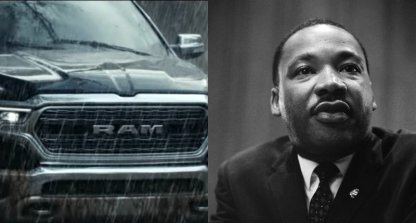
During the Super Bowl on Sunday, there was a commercial for Dodge Ram trucks. The advertisement began in darkness, and then text appeared on the screen announcing that the following words were spoken by Martin Luther King Jr. exactly fifty years ago to the day. The audio playback started, while the viewers witnessed a collage of pure Americana: construction workers, a student studying, a man doing push ups, and a cattle rancher all interposed with quick shots of a Dodge truck driving through mud. All the while you could hear Dr. King in the background saying these words:

“If you want to be important — wonderful. If you want to be recognized — wonderful. If you want to be great — wonderful. But recognize that he who is greatest among you shall be your servant. That’s a new definition of greatness. … By giving that definition of greatness, it means that everybody can be great … by giving that definition of greatness, it means that everybody can be great. … You don’t have to know about Plato and Aristotle to serve. You don’t have to know [Einstein’s] theory of relativity to serve. You don’t have to know the second theory of thermodynamics in physics to serve. You only need a heart full of grace, a soul generated by love. And you can be that servant.”

The recording was taken from one of Dr. King’s final sermons prior to his assassination. And, inexplicably, the advertisers failed to recognize, that part of King’s sermon [not quoted in the ad] was about the evils of advertising. Dr. King said:

“The presence of this instinct explains why we are so often taken by advertisers… you know those gentlemen of massive verbal persuasion. They have a way of saying things that get you in a bind: ‘In order to be a man of distinction you must drink this whisky’ ‘in order to make your neighbors envious you must drive this type of car’ ‘in order to be lovely to love you must wear this kind of lipstick or this kind of perfume’ and before you know it your just buying this stuff… And I am sad to say that the nation in which we live is the supreme culprit.”

Even from beyond the grave, Dr. King will not remain silent about the injustices and tragedies of the world. His words are still a rallying cry for those who wish to see God’s vision made into a reality. But some, with untold power, continue to manipulate his words for their own gain.

rammlk2-800x430

The Psalmist says, “Our God comes and does not keep silence.” The Word from the Lord blasts forth from the pages of our bibles, like the words of Dr. King’s sermon, and they beckon us to open our eyes to the truth. We live in a world that is still terribly broken and in need of divine healing. The marginalized are being pushed even further into the margins while the powers and principalities rule with an iron fist.

God will not keep silence, and neither should we.


You can read more about the Dodge Ram Commercial controversy here: MLK Jr. Sermon Used In A Ram Trucks Super Bowl Commercial Draws Backlash.

Shiny

strangely-warmed-spreaker-header

This week on the Strangely Warmed podcast I speak with Tommie Marshell about the readings for Transfiguration Sunday [Year B] (2 Kings 2.1-12, Psalm 50.1-6, 2 Corinthians 4.3-6, Mark 9.2-9). Tommie recently started the Backsliding Podcast which seeks to produce lay drive conversations about theology and faith (it’s really good and you should subscribe here: Backsliding). Our conversation covers a range of topics including womanist theology, mentorship, covenant separation, naked prophets, giving voice to the voiceless, the positivity of fire, Moana, the blindness of unbelievers, lightning bugs, and the Messianic Secret. If you would like to listen to the episode or subscribe to the podcast you can do so here: Shiny

TM