This week on the Strangely Warmed podcast I speak with Haley Husband about the readings for the 8th Sunday After Pentecost [B] (2 Samuel 7.1-14a, Psalm 89.20-37, Ephesians 2.11-22, Mark 6.30-34, 53-56). Our conversation covers a range of topics including sabbath scriptures, God’s presence, corporate worship, confronting control, the faith that moves, profound peace, crazy covenants, Taize tales, Jesus’ friends, and compassion. If you would like to listen to the episode or subscribe to the podcast you can do so here: The Temptation of Domestication
Blessed be the God and Father of our Lord Jesus Christ, who has blessed us in Christ with every spiritual blessing in the heavenly places, just as he chose us in Christ before the foundation of the world to be holy and blameless before him in love. He destined us for adoption as his children through Jesus Christ, according to the good pleasure of his will, to the praise of his glorious grace that he freely bestowed on us in the Beloved. In him we have redemption through his blood, the forgiveness of our trespasses, according to the riches of his grace that he lavished on us. With all wisdom and insight he has made known to us the mystery of his will, according to the good pleasure that he set forth in Christ, as a plan for the fullness of time, to gather up all things in him, things in heaven and things on earth. In Christ we have also obtained an inheritance, having been destined according to the purpose of him who accomplishes all things according to his counsel and will, so that we, who were the first to set out hope on Christ, might live for the praise of his glory. In him you also, when you had heard the word of truth, the gospel of your salvation, and had believed in him, were marked with the seal of the promised Holy Spirit; this is the pledge of our inheritance toward redemption as God’s own people, to the praise of his glory.
You learn, after a little while, not to tell people that you’re a preacher.
It doesn’t really matter where the interaction takes place or with whom, the responses are generally the same.
I’ll be at a BBQ and when the beans get spilled everyone starts hiding their beers behind their backs, or I’ll strike up a casual conversation in a grocery store and when the truth gets out the person across from me will confess they haven’t been to church in a very long time, or a fellow parent at a soccer practice, having seen me in my collar, will begin to list off a litany of complaints about the church he/she grew up in.
Right before the pandemic I was introduced to someone as a pastor and the person responded: “Good for you, but I don’t need to go to church.”
I was hooked.
“What do you mean you don’t need to go to church?”
“Well,” he began, “I don’t need someone like you to tell me how I’m supposed to be living my life. I’m a good person already.”
Is that what the church is for? Do we exist to make people into better versions of themselves? Is all of this designed to bring about better moral and ethical behavior?
We put a lot, and by a lot I mean A LOT, of emphasis on self help these days. The pandemic saw immense spike in the sales of Pelotons, designed to make our bodies look the way we really want them to, Diet Programs, designed to make our bellies look the way we want them to, and a whole slew of “How To Be The Best You” books, designed to make us look, think, act, and speak the way we want to.
We like to imagine ourselves as “self-made” individuals and we regularly lift up those who have done so in the greater and wider culture.
And yet Paul, in his letter to the church in Ephesus, speaks not of what we must do, but instead begins by only addressing what God does. And, to really hit the nail on the head, it’s all in the past tense – It’s all already done and decided.
Listen – God has blessed us by choosing us in Jesus Christ. He has made us holy and blameless by bringing us out of bondage to sin and death by the price of his own blood – That’s what redemption means.
Our holiness, whatever it may be, is only because of Christ’s own righteousness. Jesus’ perfect life under the Law has been transferred and credited to us as our own. The Judged judge has come to be judged in our place.
God has done all of this and has made us his children. Children by adoption with an inheritance.
Now, consider – Paul doesn’t say this is all something we must earn by our doing or by our faith – he says its already ours, gifted to us unconditionally and irrevocably by way of Jesus.
This is all God’s work from before the foundation of the world.
And that’s just the first bit of our scripture today!
Paul is emphatic that God is the one who acts, so much so that he strings this entire passage together as one rather long run-on sentence in the Greek. In fact, it’s the longest single sentence in the entire New Testament, and God is the subject of all it’s verbs.
Put simply: It’s all about God.
And yet, we can’t help ourselves, at times, from making church all about us.
Sermons and Sunday school curricula all join the mighty chorus of self-help programs.
We start by telling everyone that God loves them, but before too long we starting dropping lists of expectations if people want God to keep loving them.
We say things like, “God commands us to love our neighbors as ourselves so, you might want to write all of this down because it’s important, you all need to work on your racism, sexism, classism, ageism, ethnocentrism, STOP USING STYROFOAM, go vegan, gluten-free, eat locally, think globally, fight against gentrification, DON’T DRINK SO MUCH, practice civility, mindfulness, inclusiveness, take precautions on dates, keep the sabbath, live simply, practice diversity, do a good deed daily, give more, complain less, and while you’re at it, STOP DRINKING SO MUCH.”
If people have ever been evangelized by fear mongering or higher moral standards, they might be converted away from something, but not to the Gospel.
To be clear: that long list is, undoubtedly, filled with good things, things we should all probably work on, but Jesus comes not to make us struggle under the weight of additional expectations, he doesn’t wait up on the cross until we’ve righted all of our wrongs, he doesn’t hide behind the stone in the tomb until we have enough faith.
Jesus does what Jesus does for us without us having to do much of anything AT ALL.
Last week, after worship, a lot of you said a lot of things to me. But one of you said something I haven’t been able to get out of my head: “It’s good to know that God is still God no matter who stands in the pulpit.”
That’s some pretty good theology!
And, to be clear, I didn’t actually say that in my sermon, nor was it said in any other part of the service. But if that’s what was conveyed, well then “Thank you Holy Spirit!”
You see, we’re not the Good News. Not pastors, not lay people, not even the church.
It’s actually very Good News that we’re not the good news, because if we were then we’d be doing a terrible job.
We’re not the Good News. We all do things we know we shouldn’t and we all avoid doing things we know we should.
But here’s where the Good News gets really good: we’re the objects of it.
That is: God does for us what we could never, and would never, do on our own.
God, bewilderingly, chooses to come to us, and not the other way around.
Sure, there are plenty of people in scripture who seek the Lord, but not a one of em deserved anything the Lord gave em.
Have you heard about the wee little man up in a tree? The one who stole money from the likes of you and me? Well, Jesus invites himself over to lunch at Zacchaeus’ house and transforms his life forever.
Do you know about the crowds who were hungry after listening to Jesus preach for an entire afternoon? Well, he multiplies some loaves of bread and a handful of fish without even taking the time to discern whether or not the people were really worthy of such a miracle.
Again and again in the strange new world of the Bible, God meets the people of God in the midst of their sins, down in the muck of life, and offers grace.
And grace, as Robert Farrar Capon so wonderfully puts it, grace isn’t cheap or even expensive, its free.
God says to us, “Look, I don’t care what the world has told you about who you are. That’s not who you are! You are mine and I am thine!”
The thing that makes the church different than any other organization, different from political parties or rotaries or corporations is the Gospel.
The Gospel is what God has chosen to do, from before time!
For us, by the cross.
And through us, by the Spirit.
In the end, we don’t really bring much of anything to church. Sure, we can sing and we can pray, we can even drop some money in the offering plate when it comes around, but all of the pales in comparison to what God has already done for us.
If we bring anything here, week after week, we bring our brokenness in hopes and anticipation that God will make something of our nothing.
Do you see it? Church isn’t about what we do – it’s about being reminded, again and again, of what God has done for us.
And then, and only then, in the knowledge of what is already done, we get to take steps into the adventure that is called faith.
There was a man in one of my churches who I just couldn’t stand.
Now, I know that’s not very pastoral, but I’m a sinner in need of grace just like the rest of you.
Everything about this guy drove me crazy. He was older than dirt, he treated people like dirt, he was extremely racist, and he always felt it necessary to drive over to the church once a week to tell me how I, and the entire church, were failing to do what we were supposed to do.
He was regarded similarly by nearly about everyone I met. Just about once a week some poor soul would stumble into my office having been ripped a new one by the man in question.
I even tried to work the Gospel on him when I had the chance, but it never worked. He stuck to his well-worn path of belittling everyone within earshot, scoffed at the thought of ever needing to change any of his opinions, and rested comfortably knowing he was always the smartest, wisest, and all around best person to ever walk on the face of this earth.
And then he died, and I had to do his funeral.
In the days leading up to the service I lamented the fact that we would have a nearly empty sanctuary for his funeral. Even though he drove me wild, no one should be laid to rest without a church to worship in the midst of it all.
And so it came to pass that I stood at the doors of the church, ready to begin the service for a small gathering of people when, all of the sudden, cars started steaming into our parking lot. I could hardly believe my eyes when, one by one, church members who had been so wronged by the now dead man made their way into the sanctuary.
The last person to cross the threshold was a fiery old woman who was a regular target of the dead man’s insults and I grabbed her my the arm and said, “What are you doing here? I thought you hated the man.”
“Preacher,” she said, “Aren’t you the one who said we have to love our enemies and pray for those who persecute us?”
“Well, yeah I’m sure I said…”
“And didn’t you also say that even the worst stinker in the world is someone for whom Christ died?”
“Well, that’s certainly one way…”
“And didn’t you declare from the pulpit just last week that nothing, literally nothing, can get between us and the love of God in Christ Jesus?”
“Uhh, that might’ve been…”
“Well then so be it!”
And with that she marched right into the sanctuary to worship.
Our forgiveness, offered before the foundation of the cosmos, is the beginning to which we return to over and over again. It’s what we need to be reminded of throughout our lives lest we fall prey to the temptation of believing that we have to save ourselves. And it runs so counter to everything we think we know because it doesn’t make any earthly sense.
But that’s why God is God, and we are not.
We’re told, in ways big and small, that we have to do it all.
The Gospel tells us that it’s all already done.
Paul beckons our attention to the truth of our condition in that God willed our blessing before ALL things.
Put another way, before God said “Let there be light,” God’s first words were, “Let there be Gospel.”
That’s why, as my parishioner so vividly reminded me, Paul can proclaim in another letter that nothing, literally nothing, can get between us and the love of God in Christ Jesus because God’s love for us precedes all things.
Which is all just another way of saying, God loves you and there ain’t nothing you can do about it. Amen.
I appeal to you therefore, brothers and sisters, by the mercies of God, to present your bodies as a living sacrifice, holy and acceptable to God, which is your spiritual worship. Do not be conformed to this world, but be transformed by the renewing of your minds, so that you may discern what is the will of God – what is good and acceptable and perfect.
Years ago there was a young man, still early in his ministry, who was appointed to serve a new church.
At least, it was new to him.
He had gone to the right seminary, and studied all the right books, and prayed all the right prayers, and served in the right ways, and was excited about this next step in the adventure that is faith.
So with eager anticipation, he packed his bags and got in the car to go check out John Wesley UMC somewhere in Georgia.
This preacher was so excited, in fact, that when he arrived in town, before he unpacked his bags, he drove to the church. He typed the requisite address and admired the different varieties of trees planted perfectly along the road, but when came to his destination, he saw no church.
So he turned around, drove down the road once more and, again, no church to be found.
Finally, he got out of the car, and walked along the sidewalk for a closer inspection until he eventually found the church and he discovered why he missed it so many times: there was one of the oldest and most decrepit looking trees he had ever seen stretching all over the grounds with roots exposed and the church sign, plus the majority of the building, were hidden behind the tree’s long branches.
The preacher stood awkwardly on the front lawn of the church taking in the sight of the godforsaken tree, and decided he was going to do something about it.
So he drove back to his house, found the box containing his chainsaw, and then he set out to cut the tree down. He made short work of it, moving methodically from branch to branch (he was a Methodist after all) until, before long, he took a step back to admire his work.
The sign and the building were now completely visible from the road and he thought, rather proudly, that maybe just a few extra people would be in church on Sunday morning.
A few days later, as the pastor sat down to continue chipping away at his first sermon for the church, he received a call from his District Superintendent: “I hope you haven’t finished unpacking yet,” the DS said, “because you’re being reappointed.”
You see, the church was named John Wesley UMC for a reason.
John Wesley himself had stood on the roots of that tree nearly 300 hundred years ago and preached to that community. Afterward, the gathered people decided to build a church right next to the tree in honor of the man who started a revolution of the heart, and that young pastor chopped it down.
Stories are remarkably important. Put another way: We are the stories we tell.
They contain and convey just about everything regarding who we were, who we are, and who we can be. Stories held by and within a community help to shape the ways we interact with one another, and how we obtain the collective memories of the past. We tell stories to make people laugh, to teach lessons, and to share what it ultimately means to be human.
Today we live in a time of competing narratives in which every television show, every streaming service, every website, and every social media platform are vying for our allegiance and our attention. We are constantly bombarded, whether we like it or not, with information that attempts to tell us who we really are, what we really need, and where we are really going.
We live in a time in which more people recognize the golden arches of McDonald’s than they do the cross of Jesus Christ. We live in a time in which people spend more time debating where they see the best view of fireworks, or what’s really going on in Loki, or which politician is finally going to set things right than they will consider the children in their community who have nothing to eat. We live in a time in which plenty of us would rather store up all of our treasures on earth without thinking at all about how every gift first comes from the Lord.
Right now, the world is telling us what is important and it’s not easy to discern between the voice of the world, and the voice of God.
But listen to St. Paul: Do not be conformed to this world, but be transformed by the renewing of your minds. Do not listen to the powers and principalities that try to define you. Do not diminish God’s ability to radically transform your life and the world around you. Open your eyes to the beauty of the strange new world made possible by Jesus Christ and him crucified.
Whenever people like us gather like this we are bound together in loyalty to a story that once was not our story. But, through God’s wonderful and confounding actions in the world, that story is now our story. It is a story of cross and resurrection, of the first being last and the last being first, of undeserving people being forgiven.
That story will always but us at odds with the world.
And, according to the ways of the world, the church is between a rock and a hard place. People are no longer regularly attending worship and that started long before a pandemic kept us in our houses on Sunday mornings. Christianity has lost its status in the public arena, we are becoming frighteningly illiterate (biblically speaking), and young people are almost nowhere to be seen when it comes to the body of Christ.
Did you know that the average age of a United Methodist is 58?
That means I still have 25 years to go before I’m average!
Did you know that the average person in a United Methodist Church invites someone to worship once every 38 years?
The world will tell us that the church is dead, that we have to do whatever we can, however we can, to get people in our building, that we need to cut down every tree (real or otherwise) that is blocking the church from the street, that we need to abandon the past in order to embrace the future because the church is dead.
Thanks be to God then, that we worship the Lord who works in the business of resurrection, of making a way where there is now way, of impossible possibility.
We don’t have to conform to the ways of the world, but instead we get to be transformed by the renewing of our minds!
While others might shrink away or wail in fear regarding the statistics I just mentioned, imagine what would happen if we embraced them and saw them as an opportunity for transformation? How would the church change if we took seriously the radical nature of God’s grace? What would happen if we embraced the trees and traditions of the church to reclaim the story that has already changed the world?
We are the stories we tell.
Here’s part of mine:
I am a cradle Methodist – I was baptized when I was 19 days old at Aldersgate UMC in Alexandria VA, where I was raised and confirmed. I ran the sound system for worship as a tweenager, played for two of our worship bands, and spent even more time at the church because it was where my boy scout troop met every week. As a teenager one of my dearest friends died tragically in a car accident and I found myself ministering to friends and family using words that were not my own, but words that had been habituated into my life because of the church and the Spirit.
I began feeling like this might be what God was calling me to do with my life and when I told the senior pastor at my church his response was, “You wanna preach in a few weeks?”
I went to JMU to study religion, I went to Duke for my Masters in Divinity, met my now wife Lindsey while I was in North Carolina and we have a remarkable 5 year old named Elijah Wolf.
My first appointment was to St. John’s UMC in Staunton, my last appointment was to Cokesbury UMC in Woodbridge.
I love the church, I always have and I always will. For me, the church is the last vestige of a place where people willfully gather with people they have nothing else in common with save for the fact that Jesus has called them his friends.
I also love the church because I believe it is the better place God has made in the world. When we pray, when we break bread, when we baptize, we are all getting foretastes of the Supper of the Lamb that goes on and on forever.
Here’s what I know of your story:
I know that the church has been a beacon of the Gospel in Roanoke for 100 years. I know that you care deeply about the Word, about worship, and about mission. I know that you pride yourselves on your hospitality, something my family and I have been the beneficiaries of over the last few weeks. I know that you believe in the work of the Kingdom and are ready for the next 100 years.
And now God has seen fit to string and knit our stories together.
Being a Christian is all about being brought into another story, a different telling of where we have come from and where we are going, a story that we call the Gospel – The Good News.
And the stories from the strange new world of the Bible really do shape us – they speak greater truths than simple facts and statistics, they tell us who we are and, more importantly, whose we are. That’s why Jesus never really simply explains anything to anyone, but instead is forever going on and on telling stories, stories we call parables.
At the heart of the church is a willingness to share and to learn the art of story-telling. We learn one another’s stories by gathering for worship, or studying God’s Word, or serving the local and global community. We tell stories and receive stories so that we can cherish the roots of our foundations while, at the same time, looking to the future because God makes all things new.
The story of Raleigh Court United Methodist Church is entering into a new chapter. God is stirring things up in Roanoke. God is bombarding us with the grace that we don’t deserve but we surely need. And God is doing this not because there is a new pastor in town, and God is doing this not because the church is looking forward to the next hundred years – God is doing this simply because that’s who God is.
All of this, the church, the community of faith, grace, it’s all one remarkable gift. It’s the gift of a new past, in which the mistakes we’ve made are healed and the damage we’ve done is redeemed. We call it forgiveness. In the church and in the kingdom of God we are more than what we have failed to do, we are what God has done for us.
But it is all also a gift of a new future, in which the fear of punishment is annihilated and the terror of nothingness is obliterated – we’ve been promised resurrection.
The Church is a new past, present, and future – it is a way of life made possible by Jesus in anticipation of God doing what God does best.
The world might tell us that the church is in a difficult place. But I look out from this pulpit to all of you gathered here in person, and to all of you gathered online, and I’m not worried about what the world has to say. I’m not worried about anything because my hope isn’t in me or even in any of you, my hope is built on nothing less than Jesus’ blood and righteousness – I dare not trust the sweetest frame but wholly lean on Jesus’ name!
Christ is the solid rock upon which this church stands; all other ground is sinking sand, all other ground is sinking sand. Amen.
He left that place and came to his hometown, and his disciples followed him. On the sabbath he began to teach in the synagogue, and many who heard him were astounded. They said, “Where did this man get all this? What is this wisdom that has been given to him? What deeds of power are being done by his hands!”
Jesus is just different.
Different from the other prophets of Israel’s great history. Different from the messianic expectations people put on him. And even different according to the people from his hometown.
I’ve always loved this little anecdotal aside from Mark’s Gospel in which, after coming home and teaching in the synagogue, all the people from Jesus’ life couldn’t believe he was doing the things he was doing and saying the things he was saying.
Jesus, after all, is different.
The church, then, is different too. We are not just some institution among other institutions that cares about the well-being of people. We are not just some religiously affiliated people who are obsessed with ancient rituals and holy text. We are those things, but we are also so much more.
For the church, in the end, is an adventure. Week after week we gather to spend time in the strange new world of the Bible in order to discover how that world is actually our world. Everything about who we are, and what we do, is different.
We are different in terms of time – because we believe in things not yet seen and how God’s kingdom is already being made manifest in the present.
We are also different in terms of space – because even though we have a building and a property we are forever sharing space with the world in God’s mission.
But most of all we are different in terms of story – because while the world will tell us again and again who we are, or what we should think is important, the Gospel stands as a stark declaration that each and every one of us have value and worth no matter what we’ve done or left undone.
The Gospel gives us a story when we had no story – it is the story of Jesus Christ who is the difference that makes all the difference.
This week on the Strangely Warmed podcast I speak with Kenneth Tanner about the readings for the Pentecost Sunday [B] (Acts 2.1-21, Psalm 104.24-34, 35b, Romans 8.22-27, John 15.26-27; 16.4b-15). Ken is the pastor of Holy Redeemer in Rochester Hills, Michigan. Our conversation covers a range of topics including older movies, promise keeping, Babel reimagined, different languages, the colors of creation, the gift of presence, holy hope, and diachronic pneumatology. If you would like to listen to the episode or subscribe to the podcast you can do so here: A Tiny Pinhole Of Hope
I am the good shepherd. The good shepherd lays down his life for the sheep. The hired hand, who is not the shepherd and does not own the sheep, sees the wolf coming and leaves the sheep and runs away — and the wolf snatches them and scatters them. The hired hand runs away because a hired hand does not care for the sheep. I am the good shepherd. I know my own and my own know me, just as the Father knows me and I know the Father. And I lay down my life for the sheep. I have other sheep that do not belong to this fold. I must bring them also, and they will life to my voice. So there will be one flock, one shepherd. For this reason the Father loves me, because I lay down my life in order to take it up again. No one takes it from me, but I lay it down of my own accord. I have power to lay it down, and I have power to take it up again. I have received this command from my Father.
I was on vacation with my extended family and decided that, as a pastor, I should still probably go to church on Sunday morning. I googled “nearby United Methodist Churches,” picked the one with the least bad website, and announced my intention to the family. When Sunday morning arrived, the only takers I had for church were my sister, my son, and myself.
So we loaded into the car and left everyone to sleep in on Sunday morning as we prepared to worship the Lord in glory and splendor.
The church was beautiful, situated right in the middle of town (a town that will remain unnamed for reasons soon to be proclaimed), and when we pulled into the parking lot we were immediately greeted by a cheerful older couple dressed in their Sunday best.
Our little trio ascended the stairs leading into the sanctuary and were immediately bombarded by two things: an oppressive wave of heat wafting from the chancel area, and a slew of congregants who could sense fresh blood in the water.
Regarding the former: the AC had apparently died and the design of the sanctuary trapped the summer heat inside and we were to be treated to a sauna-like atmosphere for the service.
Regarding the latter: I couldn’t blame the church folk. Here we were looking like a new little family in town and they were all so happy to see people they’d never seen before.
And in that briefest of moments I had a choice. Well, I had a few. I could’ve grabbed my son and sister and made for the nearest exit so that we could find a church that had their air conditioning running. But seeing as I am a pastor, I felt that a tad impolite. Which brings me to the main choice I had: To share, or not to share, my vocation.
There’s something that happens when a pastor attends another church – people become, as my grandmother says, beside themselves. They want to pull out all the stops, and find you the best pew in the house, and they want to be their very best.
Why?
I’m not sure.
It’s not as if, as a pastor, I would ever come back on another Sunday. I have a job that requires me to be in a particular place at a particular time nearly every Sunday of my adult life.
Nevertheless, I had to choose. And, seeing as I was on vacation, I decided to truly rest, and allow the congregation to rest, and when the first person stepped forward to shake my hand, he sure enough asked what I did for a living. I opened my mouth to say something about being a librarian, or construction worker, or being a mid-tier manager at a sufficiently boring data company when my son, all of three years old at the time, stepped right in front of me and yelled, “I’m Elijah and this is my dad. He’s a pastor!”
And so it began.
15 minutes later, having received a tour that included a forgotten church library, three sets of bathrooms, and a hallway filled with more pamphlets than I’ve ever seen in one place at one time, I found myself sitting in what I was assured to be the best pew in the sanctuary, next to my sister and son and the three of us were completely drenched in sweat.
We stood for the appropriate hymns, we bowed for the requisite prayers, and finally we sat back for the sermon.
I love listening to other people preach. It is so much of what I do after all, and I don’t get to hear a lot of preaching, so I settled in to hear what God had to say through this particular preacher.
The text was John 10 – I am the good shepherd.
The preacher wax eloquently about John’s gospel in general, and the importance of the various I am statements (I am the bread of life, I am the light of the world, I am the way, the truth, and the life). The preacher made various allusions to Exodus 3 when Moses encountered God as the burning bush who declared I Am Who I Am.
It was all well and good, until it wasn’t.
The preacher was wrapping up the homiletical insights and ended with this: “Jesus is the good shepherd who watches out for the sheep. All of you out there are the sheep. You don’t know what to do and what not to do which is why you need Jesus. But I am neither shepherd nor sheep. I, as the pastor, am the sheep dog. Now I know that John doesn’t mentioned the sheep dog but I’m sure that he just forgot to write that part down. As the sheep dog my primary responsibility is to keep all of you in line. I will nip at your legs to make sure you know what you can and can’t do, where you can and you can’t go. So let me do my job.”
In the name of the Father, Son, and Holy Spirit, Amen?
The church universal has traditionally observed this, the 4th Sunday of Easter, as Good Shepherd Sunday. In all three years of the lectionary cycle, four different texts assigned for each Sunday, today is all about shepherds and sheep from both the Old and New Testaments.
Which, when you think about it, is kind of the perfect “life after Easter” message – Jesus returns to us, Jesus finds us, and Jesus will never let us go.
We are given an assurance from the Good Shepherd, just on the other side of rejection and resurrection, that we are loved, that we are cared for, that we matter not based on what we do or do not do, but on what Jesus does for us.
Which, to be clear, is rather counter to what I heard on vacation.
Consider the sheep: The sheep cannot do much of anything for themselves or their situations. The only thing sheep can do, really, is follow. And even that can be a trying endeavor. And when a sheep is lost, it is, for all practical purposes, a dead sheep. The only hope a lost sheep has is being found by the shepherd.
Jesus, as the Good Shepherd, tell us exactly what he will do, how far he will go, to save a bunch of dumb sheep who can’t do anything for themselves.
Jesus, to put it simply, does it all.
Jesus gets all the good verbs in scripture and yet, in Christian preaching, he often feels like an after-thought. But Jesus, even here, warns us about that possible proclamation! The hired hand, who is not the shepherd and does not own the sheep, sees the wolf coming and leaves the sheep and runs away! Jesus is rebuking religious leaders then, and now, who neglect the people of God.
Do you see? Discipleship is all about the admission of our condition – we’re sheep; we are dead in our sins. It is all about coming to grips with the fact that we have no power to save ourselves or to convince anyone that we are worth saving.
Consider – More than 18 million children in the US live in food insecure homes.
For the first time since the 1960’s life expectancy in the US has gone down.
And, while people celebrated (or lamented) the conviction of Derek Chauvin, the police officer who murdered George Floyd last year, a police officer in Columbus, Ohio shot and killed a 16 year old girl named Ma’Khia Bryant.
I could go on and on.
We truly are sheep without a hope in the world unless we have a shepherd who is willing to do for us that which we cannot do on our own.
Thankfully, that’s exactly what we get in Christ Jesus.
God in Christ finds us in the desert of death, not in the garden of progress. God meets us right smack dab in the middle of our sins, not in the triumph of our accomplishments.
The life of faith is predicated on recognizing how lost we are, how our lives really are out of our hands, how if we will ever really live again it will entirely be the gift of some gracious shepherd who delights in putting us on his shoulders and carries us home.
We can call the Good Shepherd a good shepherd because while the hired hands run away at the first sign of danger, or puts all sorts of unhelpful (and unattainable) expectations on us, Jesus remains steadfast. And (!) Jesus does not merely care for the sheep within reach, but also gathers the whole flock together!
For all of the talk in the church today about inclusion (open hearts, minds, doors), the most inclusive claim of the Gospel is that Jesus came to save sinners, which includes each and every single one of us!
And that’s the most important part of whatever this thing is that we call church – its about proclaiming God’s grace imputed to sinners through the work of Jesus Christ. If that’s not the beginning, middle, and end of everything we do, then we’re not really doing anything.
But, instead of making that profound proclamation, we are far more likely to be consumed by sheep dogs nipping at our legs both inside, and outside, the church. We hear it from pastors, politicians, pundits, and everyone in between. Things like: You need to work on your racism, sexism, classism, ageism, ethnocentrism, stop using styrofoam, go vegan, gluten free, eat locally, thinking globally, don’t drink so much, practice mindfulness, inclusiveness, keep the sabbath, live simply, practice diversity, on and on and on.
And, all of things are good and fine, we probably should start doing that stuff – but they are not where we begin. If those things are anything, they are a response to what God has already done.
A Bishop, from another denomination (thankfully), used to be in charge of recruiting for a seminary. He would seek out those who felt called to lead the church and he would end every single interview the same way, with a role play. He would say, “Pretend I’m not someone from the seminary, but that everything else about my life is true – I’m a 50 something, over-educated, occasionally kind, straight white male. Now, tell me why I should go to church…”
Every single person, throughout the years, would mention something about the value of community. But the Bishop would say, “I attend AA and I have all the community support I need.” Then the candidates would mention something about outreach. But the Bishop would say, “I’m a member of Rotary and I already help the needy.” Then the candidates would make a point to emphasize the beauty of the music at church. But the Bishop would say, “I have season tickets to the local symphony.”
He recruited for years and not a single candidate ever mentioned anything, specifically, about Jesus.
The church is not in the business of societal rearrangement, we are not the paragons of community service, and we certainly don’t hoard all of the musical prodigies. Church may have those gifts, but if we’re serious about being the church then we really only have one thing to offer at all: God’s grace in Jesus.
For the church today, the main thing is to keep the main thing, the main thing. We might think the main thing is convincing other people to adopt our positions on social issues. We might think the main thing is making sure that everyone falls asleep at night with a full belly. We might think the main thing is putting on the greatest performance in the world every single Sunday. But those are not the main thing.
The main thing is Jesus Christ and him crucified. The main thing is Jesus Christ, God in the flesh, born to dwell among us. The main thing is Jesus Christ, the Good Shepherd, who never ever stops tending to the sheep.
Friends, the only thing we’ve got that other group don’t, is Jesus Christ and him crucified, the Good Shepherd who lays down his life for the sheep; for us!
People can get everything they need, except Jesus, from other places and other people. And they might even be better at that stuff than we are.
But we’re in the Jesus business. That is: we are here to proclaim the Good News, frankly the best news, that God has seen fit to rectify all that we’ve wronged, that we are love in spite of all the reasons we shouldn’t be loved, and that, and the end of all things, we know how the story ends because we know Jesus Christ. Amen.
This week on the Strangely Warmed podcast I speak with Drew Colby about the readings for Easter Sunday [B] (Isaiah 25.6-9, Psalm 118.1-2, 14-24, 1 Corinthians 15.1-11, John 20.1-18). Drew is the lead pastor of Grace UMC in Manassas, VA. Our conversation covers a range of topics including preparation, in-person worship, champagne, the already-but-not-yet, righteousness, the radical nature of belief, salvific hindsight, liturgical anxieties, Fleming Rutledge, and resurrected recognition. If you would like to listen to the episode or subscribe to the podcast you can do so here: Exhausted By Easter
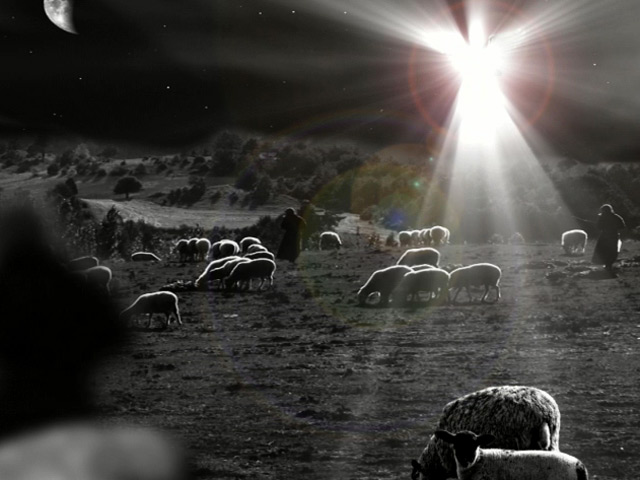
In those days a decree went out from Emperor Augustus that all the world should be registered. This was the first registration and was taken while Quirinius was governor of Syria. All went to their own towns to be registered. Joseph also went from the town of Nazareth in Galilee to Judea, to the city of David called Bethlehem, because he was descended from the house and family of David. He went to be registered with Mary, to whom he was engaged and who was expecting a child. While they were there, the time came for her to deliver her child. And she gave birth to her firstborn son and wrapped him in bands of cloth, and laid him in a manger, because there was no place for them in the inn. In that region there were shepherds living in the fields, keeping watch over their flock by night. Then an angel of the Lord stood before them, and the glory of the Lord shone around them, and they were terrified. But the angel said to them, “Do not be afraid; for see — I am bringing you good news of great joy for all the people: to you is born this day in the city of David a Savior, who is the Messiah, the Lord. This will be a sign for you: you will find a child wrapped in bands of cloth and lying in a manger.” And suddenly there was with the angel a multitude of the heavenly host, praising God and saying, “Glory to God in the highest heaven, and on earth peace among those whom he favors!”
Merry Christmas!
The hopes and fears of all the years are met in Jesus Christ tonight!
There’s just something about Christmas isn’t there?
No matter how old or jaded we may be, regardless of whether or not we deserve coal in our stockings, Christmas never fails to work some magic.
Maybe its the music, or the candles, or the knowledge of what tomorrow might bring – Christmas is the difference that makes the difference.
And here we are!
Albeit, not in the way we wanted and not in the way we would’ve imagined. We’re tuning in for Christmas worship this year unlike any other. Some of you were perhaps raised in this church and wouldn’t dream of doing anything else but sit behind your computer or phone or iPad tonight to hear what God has to say. While some of you were just scrolling through social media and decided to stop. Some of you, no doubt, are being forced to watch this against your will! Perhaps God will have something special in store for you tonight!
Whoever you are and whatever feelings, thoughts, and questions you have tonight, it is my hope and prayer that you encounter the incarnate Lord who makes his blessing flow far as the curse is found.
“Do not be afraid” the angel says, “For see — I am bringing you good news of great joy for all people: to you is born this day in the city of David a Savior, who is the Messiah, the Lord.”
Odd.
That’s what Christmas really is.
It’s strange.
Now, it might not feel strange, with all of our sanitized nativity scenes set up throughout our homes, and our lights hanging from the gutters for the last few weeks, and Nat King Cole’s voice crooning through our bluetooth speakers.
But Christmas is, for lack of a better word, different.
And we bring to this oddest of nights all sorts of thoughts and expectations. We assume that Christmas is the time that sets everything right. You know, Christmas is the time to come home, to return to those types of memories when all was warm and bright, when everything that’s come upside down in our lives is set, at least for a few days in December, right side up.
And this year, it feels like everything is wrong.
A global pandemic.
Economic devastation.
Gathering restrictions on how many people we can actually be with.
And so, we believe, that Christmas stands as this beacon where, in spite of whatever confusion might be happening in world, tonight things are set right.
Yet, according to the strange new world of the Bible, Christmas was the time when everything was turned upside down.
Consider – It wasn’t about a perfect mother who had the right pregnancy reveal on Instagram and subsequent photos of the color-coordinated nursery and the cutest invitations to her catered baby shower. It was about Mary, an unwed mother-to-be, pregnant in an upside down and impossible way, forced by governing authorities to relocate to a city where there was no room for her, her finance, and the Logos momentarily waiting in her womb.
Consider – The message of the incarnation, the birth of the baby born King doesn’t come through the official state sanctioned media outlet, there’s no announcement in the Jerusalem Times, there’s not even a carefully crafted and endlessly retweeted tweet. It was delivered in a song sung by angels.
Consider – The Good News came not to the learned and the powerful, not to the president or the president elect, not to the movers and the shakers. It was shared first with a bunch of dirty shepherds working the night shift.
Consider – The Word made flesh wasn’t surrounded by the best medical team with a crew of doctors ready to jump in at a moment’s notice. He was placed in a feeding trough.
Christmas isn’t when everything was right – but it’s certainly when God started really turning things upside down. It’s when God shows up in the strangest and most vulnerable of ways to reconstitute the fabric of reality not to make it the way things used to be, but to set the cosmos on a course to how things can be.
And maybe, just maybe, that’s why you find yourself watching and listening tonight. Because your world might not be all that it could be. But, be warned. It is risky coming before the babe at Bethlehem, for God delights in grabbing the rug right under our feet, and when the Lord pulls, no one knows where we’ll wind up.
O come let us adore him, we sing. We come to the manger scene expecting to meet what we have already thought before we arrive. We come expecting, and perhaps hoping, for the fulfillment of our desires, the confirmation of all our prejudices and preconceived notions.
In some way, we want to know that Jesus is on our side, whatever that might mean.
But we are wrong.
Dead wrong.
For Jesus is like us but he is also totally unlike us. Jesus is the Lord made flesh.
Which makes our Christmases even stranger. We often present tonight as something spiritual or mystical. Or, on the other hand, we criticize others for making this time of year too materialistic.
But Christmas really is a reminder that Christianity is inherently materialistic. God becomes material in Jesus.
God becomes us.
Is God in Christ, then, the perfect, magnanimous, and serene figure often displayed in stained glass windows? Is he holier than thou, looking down upon us in our misery every chance he gets? Is he perennially shaking his head with regard to the disappointing efforts of human progressivism?
Or, is Jesus as Jesus is revealed in the strange new world of the Bible?
For the baby we worship tonight grows not to be very respectable at all – he breaks the sabbath, consorts with crooks and criminals, and he even insists on a public demonstration of protest by flipping over the tables in the temple.
He eats dinner with sinners. He shares wine with the last, least, lost, little, and on one memorable occasion, the recently dead.
He dies as a criminal. He becomes sin for us sinners, weak for us weaklings, lost for us losers.
And the angel says this is Good News.
What makes the Good News of Christ so good is the fact that everybody, even the worst stinker in the world, is somebody for whom Christ was born and for whom Christ died.
Contrary to how we’ve made it out in church, God isn’t born into the world to see if we are good little girls and boys, instead he comes to disturb the conventions by which we pretend to be good.
God isn’t born into the world to see if we are sorry for all of our sins, instead he already knows our repentance isn’t worth the hot air we put into it because we’ all jump back in the sinning business just as soon as we apologize for it.
God isn’t born into the world to come and count up all of our mistakes, instead he lives, he dies, and he lives again all while throwing out the ledger against us forever.
In short, Christmas turns the world upside down forever because God in Christ comes only to forgive.
For free.
For nothing.
On no basis on our part.
Because we are far too gone, and up the creek without a paddle, to do much of anything for ourselves in the first place.
Christ is our only hope.
He, himself, is the Good News.
And in him the dawn of redeeming grace has arrived, the world turned upside down. Amen.
When Jesus saw the crowds, he went up the mountain; and after he sat down, his disciples came to him. Then he began to speak, and taught them, saying: “Blessed are the poor in spirit, for theirs is the kingdom of heaven. Blessed are those who mourn, for they will be comforted. Blessed are the meek, for they will inherit the earth. Blessed are those who hunger and thirst for righteousness, for they will be filled. Blessed are the merciful, for they will receive mercy. Blessed are the pure in heart, for they will see God. Blessed are the peacemakers, for they will be called children of God. Blessed are those who are persecuted for righteousness’ sake, for theirs is the kingdom of heaven. Blessed are you when people revile you and persecute you and utter all kings of evil against you falsely on my account. Rejoice and be glad, for your reward is great in heaven, for in the same way they persecuted the prophets who were before you.”
The day after the 2016 presidential election:
Thousands of angry citizens in California gather to protest against the election of Donald Trump. Though initially peaceful, the protest eventually turns violent as the crowds begin attacking the police and lighting dumpsters on fire. As tear gas is fired into the crowd, a chant starts to rise, “Kill Trump, Kill Trump, Kill Trump!”
Meanwhile, a woman walks into a Wal-mart in the Midwest while wearing her religious hijab. She goes up and down the aisles picking out her items when another woman walks up, grabs her by the shoulder while pointing at her hijab and says, “That would look a lot better around your neck! This is our country now!”
Meanwhile, a man is driving through a suburb of Chicago when a crowd of young men surrounds his car, pulls him from the vehicle, and drags him through the streets. They attack him because he has a Trump sticker on his bumper, and in the videos taken by on-lookers you can hear the young men shouting, “You voted for Trump, and now you’re going to pay for it!”
Meanwhile, white students at a Junior High School in Michigan form a human wall to block minority students from entering the building. There are shouts of “go back to your country” and “we’re going to make America great again.”
Presidential elections tend to bring out the worst in us.
Or, to use Paul’s language, it’s times like these that we are reminded “There is no one who is righteous, not even one; there is no one who has understanding, there is no one who seeks God. All have turned aside, together they have become worthless; there is no one who shows kindness, there is not even one.”
Time after time, it seems this is our fate. We, that is Christians, are content to gather, whether online or in-person, with people of differing political persuasions so long as we never address those differences and then, after an election, we hope things will tone down and we can get back to living life.
And yet, as Christians, we are already living in the time after time. God in Christ made, and still makes, time for us and has quite literally changed time forever.
It’s just that sometimes we don’t act like its true.
Today Christians across the globe are gathering for All Saints. All Saints is a day set apart, a different time, in remembrance of the dead – it is an opportunity for the church to offer witness to the ways in which God moved through the saints of our lives.
It is a radical moment in terms of the liturgical calendar, rivaled only by the radical words of Jesus from Matthew’s Gospel.
The so-called beatitudes have always been a source of comfort and hope for the people called church. Though, at times, we have inverted them to be descriptions of how we’re supposed to behave. We lift them up over the heads of dozing Christians and explain that if they want to join the community of saints, this is how you have to live.
But what Jesus describes in his Sermon on the Mount, both in the beatitudes and in the descriptions of behavior following, like turning the other cheek and praying for one’s enemies, they don’t describe what “works.”
Seeking righteousness in a world full of self-righteousness, and praying for the person persecuting you, tends to lead to more self-righteousness and more harm.
Jesus’ Sermon on the Mount isn’t a to-do list to make the world a better place. Instead, it is a description of who God is.
The poor, the mourners, the meek, the merciful, they are blessed not because they’ve earned it or deserve it, but simply because it is God’s good pleasure to do so.
To put it simply, the idea behind this crazy thing called church is that we might worship the Lord as well as learn what it means to exist as a beatific community in exile where the mourning, the meek, and the merciful are blessed.
The people called church are in the world, but not of the world.
The people called church are constituted and bound not by political documents, but by the Lord of heaven and earth.
The people called church are a community that has learned that to live in a manner described by the Sermon on the Mount requires learning to trust others to help us live accordingly.
To put it even simpler terms: the object of Jesus’ words to the crowds that day, and to us today, is to create dependence – it is to force us to need one another.
But, most of us don’t want to need anyone else. We’ve been spoon fed a narrative of self-determination since birth and we can’t stand the idea of having to rely on others.
And this is why the beatitudes will never make sense to those outside the people called church. Jesus’ words are only intelligible, and therefore advisable, in light of the cross and the empty tomb.
Otherwise, they are garbage.
But in the church, we are reminded over and over again that we are dependent on one another and the Lord, and that we are kidding ourselves if we think we can make it through this thing called life on our own.
The church is at her best when we can speak and hear the truth about the condition of our condition, that we are sinners in need of grace, that we are all in need of help and mercy, and that we all need one another far more than we think we do.
But that is not how we are used to hearing about Jesus’ Sermon on the Mount. If we hear about it at all, it is usually a brief reflection about how there are merely suggestions for how we should live or they are only meant for the super faithful among us, the Mother Teresas and the Mister Rogerses.
In short, we’re told the Beatitudes describe the saints.
The challenge for us, unlike most sermons proclaimed and received today, is that we cannot divorce this message from the messenger. Because, unlike preachers today (myself included), Jesus did not just say these words about some group of people sometime in the future; he, in himself, is the inauguration of the new time.
Jesus is the Messiah of the beginning and the end. Through his death and resurrection he has made it possible for us to live according to these confounding words not by our own effort, but by the Spirit moving through us.
And, saints (that is: all disciples) are not those who are the super best Christians of all. Saints are simply those who have already died in baptism to be raised into a new life where the impossibility of Jesus’ words not only become possible, but become real.
Which is just another way of saying, we’re all in this crazy thing called church together.
Presidential elections may bring out the worst in us, but they also remind us of who we are: sinners in need of grace. Contrary to how the talking heads might want us to think, the world does not hinge on our elections. God has been God a whole lot longer than we’ve been picking and choosing leaders, and God will be God long after we cast our final votes.
As Christians, we believe that Jesus is Lord – that means we believe that God is God regardless of who sits behind the desk in the Oval Office. And, pertinently, it means we believe God is calling us to live according the words of Jesus’ Sermon on the Mount which includes praying for our enemies.
Can you imagine? Christians praying for the people they disagree with?
Sadly, that’s at the heart of what it means to follow the Lord and it has been so absent during this election cycle, and the one before it, and the one before that one, and so on. Instead of praying for and loving our enemies, voters have been intimidated, people have been attacked, and families and churches have been divided.
And, perhaps we’d like to blame our politicians for this tumultuous season. But the problem goes far deeper than those running, and selected, for office.
The problem is us.
Rather than seeing one another as brothers and sisters in Christ, we’ve viewed each other through the names on our bumper stickers.
Rather than listening to and praying for those of different opinions, we’ve just shouted louder into the fray.
Rather than confessing Jesus as Lord and living accordingly, we’ve fallen prey to believing that what happens on Tuesday is more important than what happens on Sunday.
Our election of leaders will always pale in comparison to God’s election of us, precisely because we do not deserve it. We’ve been elected to salvation through Christ in spite of copious amounts of evidence to the contrary.
And Jesus calls us to a life of humility in which we pray for those whom we hate.
Jesus constitutes a people who are his body on earth to be for the last, least, lost, little, and dead.
Jesus, high in the air with the nails in his hands and feet, says, “Forgive them Father, for they do not know what they are doing.”
And, if we’re honest, we have no idea what we’re doing.
We don’t know how to be Christian in America, we don’t know how to hold our Christian identities and political identities in tandem, and we do not know how to love the people we hate.
But we do know this: Jesus is Lord – and he won’t give up on us.
So today, in spite of the world spinning as it does with fightings and fears within and without, we give thanks to the Lord our God who makes a way where there is no way, who has created a new community of love in his only begotten Son, and who elected us to salvation. Amen.
This week on the Strangely Warmed podcast I speak with Brian Johnson about the readings for the 21st Sunday After Pentecost [A] (Deuteronomy 34.1-12, Psalm 90.1-6, 13-17, 1 Thessalonians 2.1-8, Matthew 22.34-46). Brian serves at Haymarket Church in Haymarket, VA. Our conversation covers a range of topics including radio voices, the theology of Hamilton, seeing the Promised Land, Drive-In Worship, habits, poetic prose, modeling lament, Pauline distillation, combined commandments, and transfigured wholeness. If you would like to listen to the episode or subscribe to the podcast you can do so here: Jesus Lunchables











 think and let think