God’s Top 10 – Sermon on Exodus 20.1-17

Exodus 20.1-17

Then God spoke all these words: I am the Lord your God, who brought you out of the land of Egypt, out of the house of slavery; you shall have no other gods before me. You shall not make for yourself an idol, whether in the form of anything that is in heaven above, or what is on the earth  beneath, or that is in the water under the earth. You shall not bow down to them or worship them; for I the Lord your God am a jealous God, punishing children for the iniquity of parents, to the third and the fourth generation of those who reject me, but showing steadfast love to the thousandth generation of those who love me and keep my commandments. You shall not make wrongful use of the name of the Lord your God, for the Lord will not acquit anyone who misuses his name. Remember the sabbath day, and keep it holy. Six says shall you labor and do all your work. But the seventh day is a sabbath to the Lord your God; you shall not do any work – you, your son or your daughter, your male of female slave, your livestock, or the alien residents in your towns. For in six days the Lord made heaven and earth, the sea, and all that is in them, but rested the seventh day; therefore the Lord blessed the sabbath and consecrated it. Honor your father and your mother, so that your days may be long in the land that the Lord your God is giving you. You shall not murder. You shall not commit adultery. You shall not steal. You shall not bear false witness against your neighbor. You shall not covet your neighbor’s house; you shall not covet your neighbor’s wife, or male or female slave, or ox, or donkey, or anything that belongs to your neighbor.

ten-commandments-set-free-to-live-free_27594_banner_img

As a kid, I always preferred worship to Sunday School. Sunday School meant we had to wake up earlier in order to make it on time, it rushed us as a family to get things ready, and the classrooms were filled with all of those strangely adult renditions of biblical stories. The lesson might’ve been on David fighting Goliath, but all I could ever remember was how buff and old David appeared in the pictures rather than the young and innocent version from the story. The lesson might have been focused on the importance of sacrifice, but the imagery of Abraham preparing to kill his son left most of us utterly terrified of God, rather than ready to give our lives to him. The lesson might have been about Jesus and Mary Magdalene, but the story fell a little flat when our teacher kept calling Mary a “lady of the night” which made her sound more like a vampire than a prostitute.

On the other side, worship was awesome. I loved sitting near the front and watching all sorts of different people come together for this one thing. It amazed me that old men and women would take the time to talk to me and ask me questions about my life. Oh the joy that I remember experiencing when I was invited to the front for the children’s message; we were the special ones, all the adults had to sit in their pews but we, the kids, got to go all the way to the front and get closer to God.

My adolescent faith and love for church was like a roller-coaster. I looked forward to the hymns, the bread and cup, the communal act of praying together, but I dreaded the Sunday School classroom, the 25 year old cut-out flannel-graphs, and the seemingly endless amount of Old Testament arts and crafts.

But, if I’m honest, the thing that really drove me crazy about Sunday School was the fact that it felt way too much like regular school. We had a teacher who took attendance, put us in assigned seats, gave out homework, and even proctored pop-quizzes. Now, don’t get me wrong, there is an importance to the education that comes in Sunday School, but the way that it was done for me resulted in my desire to read the bible not for its knowledge, but for the promise of receiving a piece of candy if, for instance, I was the first person who could turn to the book of Isaiah.

Sunday-School_t

I could go on and on about the things I experienced in those Sunday School classrooms, but the one that stands out the most was the day we were quizzed on the 10 Commandments. At the time I knew they were a thing, but I certainly had no idea what they were. Up to that point in my life I could not remember ever hearing them preached about in church, I had no idea where they were in the bible, but I knew you could find them in framed cross-stitch patterns at older people’s homes.

My sheet of paper remained blank for a long time. However, the teacher took pity on me and tried to help encourage some answers: “What are the ten things God wants us to do?” My mind raced through different sermons and scriptures; I tried to remember what the pastor always said about God… I think God wants us to love Him, I’m pretty sure we are supposed to do unto others as we would have them do unto us… What else? God calls us to lift up our crosses. Oh, and God wants us to give Him our money!

I don’t remember what I eventually wrote down for the quiz, but I do remember that I failed, and I did not receive a piece of candy.

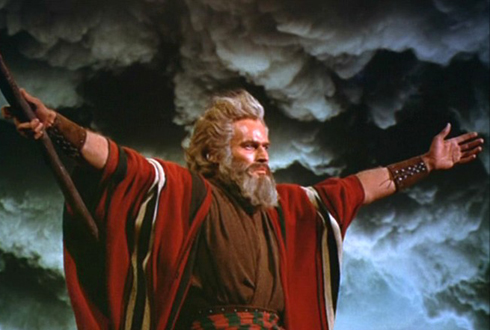
Can you recite the Ten Commandments from memory? What do you imagine when you hear about the Ten Commandments? Do you think about how the law was established to protect and bind us together? Or do you just picture Charlton Heston from the movie version of the Ten Commandments?
ten_commandments

Sadly, in our modern world we are more likely to hear about the Ten Commandments as they relate to controversies surrounding public displays than how they were written to help shape, guide, and mold our lives. Even as a child I was implicitly taught that it was more important to memorize God’s Top 10, than it was to understand them, and live accordingly.

The beginning of the commandments sets up an individual address, but the concern is not just about our private lives and welfare. The focus and thrust of the list is on protecting the health of the community in which the individual plays a pivotal role.

God graciously provided these guidelines as a way to open up our lives rather than limit them. It might not appear that way at first, but upon closer inspection they describe the outer limits of conduct rather than focusing on countless specific behaviors for every situation. At the foundation of the Ten Commandments is God’s desire for us to be protected from behaviors that have the potential to destroy.

In addition, the Ten Commandments are not a once-and-for-all declaration about the limitations of the Law. Throughout the history of Israel and the New Testament, faithful people struggled with these guidelines and amended them to be as fruitful as possible. This gives the people of God, in every age, the right and warrant to expand upon the laws.

If we can begin to see and imagine the commands as opportunities for fruitful living and malleable for our time, then they will no longer remain the stagnant list from our Sunday School memories.

I am the Lord your God, and you shall have other gods before me. You shall not create idols, nor shall your worship them

In our lives there are countless other gods fighting for our allegiances. From political parties to celebrities to businesses, it is next to impossible to be in the world without outside influences calling for us to worship them. When we find ourselves bowing to the powers in life, we neglect to honor the first two commandments. Honoring them encourages us to keep perspective about who is really in charge and the kinds of things that should be important in our lives. If we continue to worship what the media tells us, we will forget our call to love our enemies. If we spend more time catching up on all our favorite television programs, we will no longer catch up on what God is doing in our lives.

You shall not take the Lord’s name in vain

This is less about using curse words than it is about not claiming that we are doing something in the “name of the Lord” when we are really doing it in the name of ourselves. Perhaps some of us give time to serve the poor and homeless in Staunton, but if we do it to feel good about ourselves than we are taking the Lord’s name in vain. This command pushes us to commend and praise God for all the blessing of our lives, particularly when we can bless others.

Remember the Sabbath and keep it holy

Honoring the sabbath allows us to be our fullest. God rested on the sabbath, and we need rest in our lives. If we spend our days rushing through the familiar patterns of life, if we work without rest, then we will no longer be living. Or, as Ferris Bueller puts it, “Life moves pretty fast. If you don’t stop and look around once in a while, you could miss it.” Enjoying life and resting was not some external thing handed down for us to abide by, but a way in which we can be the truest form that God hopes for.

Honor your mother and father

Having parents is a gift. More and more children grow up without the vitally important guidance of parents and have to learn to live according to the tests and trials that are thrown at them. Our parents, whether biological or situational, made the choice to love us in spite of us. They gave and provided when we could not do so for ourselves. Loving our parents encourages us to be people of gratitude, instead of imagining that we are the source of all good things in our lives.

You shall not murder

Instead we should protect the innocence of life. We are called to value every single life whether belonging to someone famous, or someone nearly invisible in Staunton living on the streets. Every life has value, and God wants us to cherish the beauty in all people.

You shall not commit adultery

Instead we should love and embrace our commitments. When we covenant to be in relationship with those whom we love, we are asking for God (and others) to hold us accountable to that promise. Fighting against the temptations of adultery results in us valuing the needs and wants of the other, more than ourselves.

You shall not steal

No one should have to steal to live in our world. Instead of stealing we are called to give with glad and generous hearts. Whether through the offering in church, or to any charitable organizations, when we give we help to prevent the need for people to steal to survive. God will provide, it just might not be the way we are anticipating.

You shall not bear false witness

Instead we should speak well of our brothers and sisters. Gossip and deception only serve to destroy our community. Just imagine how we might start loving and treating and trusting each other if we believed that no one would speak falsely about anyone else. Think about how beautiful a town and a church such as ours could be if people took this commandment seriously and worked hard for it to become manifest. When we begin to speak well of others at all times, we start seeing the world through God’s perspective and not just our own.

You shall not covet

Instead we should be grateful. It is too easy to look around at all the sources of blessings in other people’s lives and begin desiring to take them for ourselves. How quickly do we begin to resent our coworkers when they are given a raise, how quickly do we begin to ignore our classmates when they receive a better grade, how quickly do we avoid our fellow church folk when everything starts going well in their lives as ours fall apart? God has given all of us gifts, large and small, seen and unseen, they are there we only need a change in perspective to realize them in our midst. God will provide in ways that are miraculous and beautiful. We need not covet what our neighbors have when we remember that God has chosen to be with all of us.

The Ten Commandments are a gift, they open up life for us rather than restrict, they call us to do more rather than simply obey, and they help to build and foster our community rather than destroy it. God’s Top 10 are part of the basics of faith, from them we learn how to grow as disciples and serve others. If we can move them from a memorized list to a practiced way of life, everything will begin to change for the better.

Amen.

Marked and Cleansed – Ash Wednesday Homily on Psalm 51.1-12

Psalm 51.1-12

Have mercy on me, O God, according to your steadfast love; according to your abundant mercy blot out my transgressions. Wash me thoroughly from my iniquity, and cleanse me from my sin. For I know my transgressions, and my sin is ever before me. Against you, you alone, have I sinned, and done what is evil in your sight, so that you are justified in your sentence and blameless when you pass judgment. Indeed, I was born guilty, a sinner when my mother conceived me. You desire truth in the inward being; therefore teach me wisdom in my secret heart. Purge me with hyssop, and I shall be clean; wash me, and I shall be whiter than snow. Let me hear joy and gladness; let the bones that you have crushed rejoice. Hide your face from my sins, and blot out my iniquities. Create in me a clean heart, O God, and put a new and right spirit within me. Do not cast me away from your presence, and do not take your holy spirit from me. Restore me to the joy or your salvation, and sustain in me a willing spirit.

ash-wed-sq-300x300

How would someone know that you’re a Christian? I think this is a very important question for us to ask ourselves on a regular basis. During a normal day, how would anyone know that we affirm Jesus as Lord, that we pray to God the Father, that we believe the Spirit is with us in all things? Maybe you wear a cross around your neck, though even that symbol has become so innocuous to the general culture around us. Maybe you bring your bible with you to work or public places and you are not afraid to spend some time reading from the good book in front of other people. I personally like to wear my clerical collar when I’m out in town because it helps to show others who I am, and frankly it forces me to act like a Christian in public.

When I became a pastor I was so excited to wear my collar for the first time, to walk around Staunton, and let it speak for itself. I imagined the conversations that would begin at one of our local coffee shops: “Sir, would you please pray for my wife, she just received some tough medical news.” … “Do you mind if I pull up a chair and ask some questions? I’ve always wanted to ask a pastor about the miracles from the gospels.” … “I’m new in town, would you be able to help me find a church community?” However, after being here for some time, I can share that most of the time no one notices. I’ve gone to a local bar with the expectation that people would hide their beer bottles behind their backs, but they just keep talking like normal. I’ve been shopping at the grocery store and prepared myself for random questions, but people just keep scanning the aisles on their own. I’ve sat down at a coffee shop with my collar on, and bible open, and almost no one has made mention of my vocation.

That was the case until last week.

I was sitting at a table alone working on a sermon when two women came in, ordered coffee, and sat at the table next to me. I’m not ashamed to admit that I often eavesdrop on the conversations around me. It’s not that I intend to, or have a problem with it, but most of the time the place is quiet enough that its impossible not to hear what people are talking about. I went to grab my headphones, in order to drown out their conversation, but I heard something that peeked my interest: “Being a pastor must be the easiest job in the world

I decided then that the sermon could wait, this conversation was too good to miss.

One of them continued, “Seriously! They get paid to act like the rest of us. I mean, how hard is it to write a sermon every week and visit old people? Being a Christian is so much harder than being a pastor. It must be the easiest job in the world.

Without thinking about what I was doing, I stood up, walked over to their table, and said, “You’re absolutely right. Being a Christian is harder than being a pastor. The church has expectations about the way you are supposed to behave, and I get paid to behave appropriately, I am a professional Christian. The only difference is this, everyone knows I’m a Christian, what about you?” I then packed up my things and left.

Today, above all days, is an opportunity for us to be marked and cleansed. In a short while, each of us will be invited forward to have a cross of ashes placed on our foreheads, a sign for us to carry around for the rest of the day. Today, wherever you go, people will know who you really are. 

IMG_1957

Do you know where the ashes come from? We save some of the palm branches from Palm Sunday, and we burn them down into ashes. The same palms that some of us waved last spring to welcome Jesus in Jerusalem have been placed in the fire, and will now adorn our heads. This is done as a reminder that our shouts of “hosanna!” can quickly turn to “crucify!” I can go from being a well behaved Christian, minding my own business at a coffee shop, to walking over to strangers and letting my passive aggressive side get the better of me. We use these ashes to mark and cleanse ourselves for the coming season of lent.

All of us are sinners, the young and the old, the weak and the strong, we all fall short of God’s glory. This season of lent is an opportunity to turn back to God and reorient our perspectives about the way the world truly works. For the coming weeks our prayers should be for wisdom, for God to purge from us all wrong desires and failures. This is the time for us to be bold in our faithfulness as we enter the community around us. Lent is the time for God to create in us clean hearts, to put new and right spirits within us. We begin here with the ashes, remembering our finitude, so that God might restore us to the joy of salvation, and sustain us with a willing spirit to be faithful in the world.

How would someone know you’re a Christian? Today, everyone will know just by looking at your foreheads. But, the ashes will eventually fade away; the cross will disappear. The challenge for us is to act like it’s still there, to live full lives of discipleship so that everyone might know who we are, and whose we are. Amen.

Listen to Him! – Sermon on Mark 9.2-9

Mark 9.2-9

Six days later, Jesus took with him Peter and James and John, and led them up a high mountain apart, by themselves. And he was transfigured before them, and his clothes became dazzling white. such as no one on earth could bleach them. And there appeared to them Elijah with Moses, who were talking with Jesus. Then Peter said to Jesus, “Rabbi, it is good for us to be here; let us make three dwellings, one for you, one for Moses, and one for Elijah.” He did not know what to say, for they were terrified. Then a cloud overshadowed them, and from the cloud there came a voice, “This is my Son, the Beloved; listen to him!” Suddenly when they looked around, they saw no one with them any more, but only Jesus.

20cuaresmaB2

Two years ago, today, I woke up like every other Sunday and got ready for church. Though I was enriched with theological education Monday – Friday in seminary, I looked forward to spending time in worship with people who were not from school on Sundays. Duke Memorial UMC is a beautiful church located right on the corner of downtown Durham and serves the needs of a wide variety of people. The sanctuary is wider than it is long, with a balcony, and a raised area above the altar for the choir and the organ. The church prides itself on its ability to worship faithfully, and engage deeply in the community.

Two years ago, today, I woke up like every Sunday morning, but this one would be different. While my roommates got ready to attend their respective churches, my phone began to ring and my pastor’s name appeared on the phone. Now, many of you might not know this, but if you receive a phone call from me on Sunday morning, it usually means there’s an emergency. I nervously answered the phone and through her scratchy voice I learned that both pastors of Duke Memorial were sick, and neither one of them would be able to preach. I had a feeling that I knew were the conversation was headed and I quickly glanced over at my clock; worship would begin in one hour. She continually apologized for their sickness and then finally asked if I would be willing to preach in a very short amount of time. “Of course” I said with a chipper voice, knowing full and well that I had not the faintest idea regarding what I would preach about.

The next hour was a blur.

I obviously did not have the time to write out a manuscript, I was not able to consult numerous commentaries about the text, and I had not spent an appropriate amount of time in prayer over the passage. All I knew was that the passage was the same as today’s (Mark 9.2-9) and that it was Transfiguration Sunday.

Duke Memorial UMC

Duke Memorial UMC

I barely made it in time for the service to began with a 3×5 index card in my pocket with three key points that I wanted to make. Upon arrival I searched for a bulletin to discover what else would be going on during the service and I quickly said a prayer before entering the sanctuary. My eyes were still closed when organ began and an acolyte walked up to me and asked, “Where’s the preacher?” To which I responded, “You’re looking at him.

The next hour was also a blur.

I led us through the usual motions of worship after explaining the lack of two ordained pastors. We prayed together; we sang together; we read together; I preached; and before I knew it, the service came to a conclusion ten minutes earlier than usual.

While people departed from the sanctuary, I did as all pastors do and stood at the door to shake hands with everyone. Many made comments thanking me for my service and willingness to preach on such short notice, but most of the compliments came in the form of, “Hey thanks for getting us out early!

However, there was one older woman waiting around at the back of the line for her turn to come forward. Another thing you might not know is that if someone waits a long time to speak after a service, they usually have a critique or a criticism that they don’t want to share in front of everyone else. I waited and waited until nearly everyone was gone when she finally stepped forward and grabbed my hand; “Son,” she said, “I’ve been coming to this church my whole life to worship the Lord and hear people preach. I want you to know that you said more in 10 minutes than many could say in 45. Thank you.” And with that she left the sanctuary.

Two years ago, today, I woke up and got tapped to preach a sermon at a moment’s notice. Now, of course, I am the pastor here at St. John’s and I have plenty of time each week to work on preparing for Sunday worship. I have the time to be in prayer over the words of scripture, I have the time to consult commentaries about what’s happening in the deeper sense of the text, I have the time to write out a full manuscript of everything I will say from this pulpit. But this week, I kept thinking about what happened two years ago on Transfiguration Sunday, and I wanted to do something similar…

00027841_h

Instead of combing through numerous books highlighting the ins and outs of Mark 9, instead of doing all the things I normally do to prepare a sermon, I began by reading one verse: “Then a cloud overshadowed them, and from the cloud there came a voice, “This is my Son, the Beloved; listen to him!”” and then I felt propelled to do something radical, something that I have not done in a long time, something that I want to share with all of you right now:

I listened to Jesus.

I spend so much time talking about Jesus, that I don’t spend enough time listening to him. Now, I have had some remarkably beautiful and religious experiences in my life, but I have never literally heard the Lord speak like on the mountain during the Transfiguration. I felt called to the ministry but it did not come in the form of a voice booming down from on high saying, “Taylor you need to be a pastor!” So, this week, I put away all the books, and tried to listen to Jesus speaking in my life.

I heard Jesus during my interactions with other people: 

One of my best friends in the world found out he has cancer this week. As a young pastor, husband, and father of two young boys, he is more often on the other side of the hospital bed praying for people in the midst of suffering. I immediately wanted to shout with my clenched fists in the sky, I wanted to know why this was happening, but when he wrote to me about his diagnosis I heard Jesus telling me that I need to keep the faith. I remembered that even pastors need prayers and that all of us are called to be faithful and loving people toward those who are suffering around us.

A few days ago I visited one of our long time church members who is nearing the end of her life. Upon arrival I learned, from one of her helpers, that she had tried to get herself ready for the visit, but discovered that she did not have enough energy to get out of bed. As I made my way into her bedroom, and knelt beside her bed, I saw her smile for the first time in a long time; “It’s not everyday that I invite a young man into my bedroom” she said with a laugh. We talked together about her struggles, we reflected on the many blessings from her life, and we prayed for God’s peace to reign abundantly in the days ahead. While kneeling beside her bed I heard Jesus telling me to be thankful for my blessings. I felt convicted by her faithfulness to not wallow in my own self-pity, and strive to live my life as fully as she has.

I heard Jesus during my reading of scripture.

This might come as a shock but I am ashamed at how rarely I read my bible. Sure, I read scripture every morning as a devotional practice; Sure, I read the bible every day in preparation for sermons on Sundays. But it has been a long time since I just picked up the good book and started reading for the simple pleasure of reading. More often than not my reading of scripture is based on a requirement or using the text as a resource. Even when I tell myself that I am reading for the right reasons I find myself writing down notes about using this bit in an epistle article or weekly devotional.

So, one day this week, I carved out some time and sat down with my bible. It took a while to rid myself of the vocational tendencies I have when reading scripture, but eventually the words and pages started to flow through my mind. I read about the great acts of God during the life of Moses, I flipped ahead to the story of Samson when he toppled the pillars and destroyed the Philistines, I soaked up some of the psalms and let their words become poetry for my soul, I walked the streets of Jerusalem with Jesus as he prepared to overturn the tables in the temples, I entered the strange new world of the bible and felt it come alive. Through reading the scriptures I heard Jesus telling me to that all people are part of God’s cosmic plan. From the patriarchs in Genesis, to the crowds in Mark, to the disciples at St. John’s, God can use anyone to bring about his will on earth.

I heard Jesus in the silence. 

silent-listen

I am not a quiet person. I am as extroverted as can be. I usually have music playing in my office, or I am tapping my fingers away in some sort of percussive rhythm, or I am humming a hymn or song out loud. But this week I tried to be quiet and listen. I turned off the radio in the car, I let my turntable collect some dust, and I left my headphones at home. Silence is uncomfortable. Even a few moments of silence can drive us to fidget in our seats. Allow me to demonstrate: (1 minute of silence from the pulpit)

How did that feel? Yet, even though it makes some of us uncomfortable, silence can be beautiful. Turning off the noise this week allowed me to hear things that I normally miss: the sound of children laughing in the preschool, the crisp sound of pages turning in my bible, I even heard my heartbeat. What did you hear during our minute of silence? Maybe you heard the wind blowing against the roof of our church, perhaps you heard people breathing beside you in the pews, or maybe you heard heard the faint murmurings of your heart beating. During my time in silence this week I heard Jesus telling me that life is precious and beautiful. Only God could have imagined something like a heart to give us life, constantly thriving and pumping to bring existence to our bodies, a constant reminder of the fragility and beauty of what it means to be alive.

The disciples thought they knew everything they needed to know about Jesus. They believed they had him completely figured out. But when they made it to the top of the mountain God made it very clear that their assumptions and expectations were wrong; whenever we think we know what God is up to, its usually more about us than God. Its like looking for something at the bottom of a well, when all we really see is a faint reflection of ourselves. The Transfiguration shines brilliantly as a reminder that we are called to listen to Jesus. We need to hear him through the people in our lives, through our prayers, through our bibles, and through the silence.

Listen to Him through the words of Thanksgiving at the Lord’s table. Hear what God has done in the world for people like you and me. Listen to the Messiah that speaks to us through the bread and the cup. Hear the Lord speaking to you as you come to gather at the altar. Listen closely, and you just might hear God speak. Amen.

Believing > Understanding – Sermon on Isaiah 40.21-31

Isaiah 40.21-31

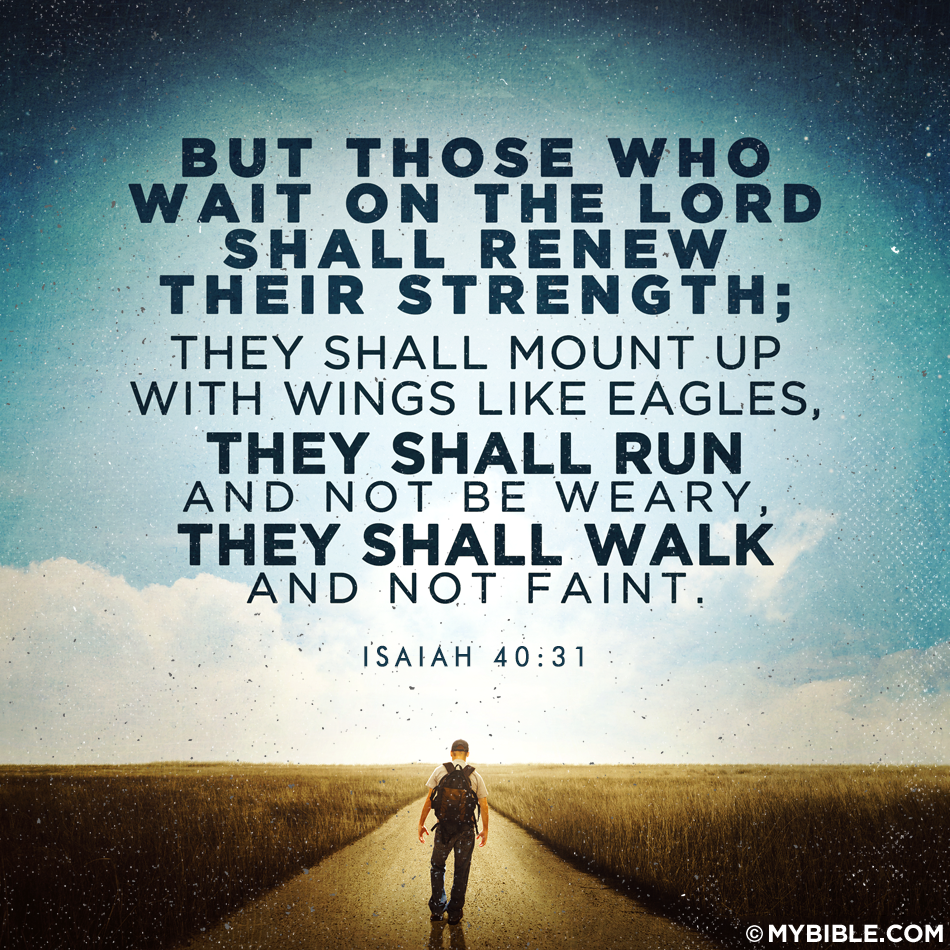
Have you not known? Have you not heard? Has it not been told you from the beginning? Have you not understood from the foundations of the earth? It is he who sits above the circle of the earth, and its inhabitants are like grasshoppers; who stretches out the heavens like a curtain, and spreads them like a tent to live in; who brings princes to naught, and makes the rulers of the earth as nothing. Scarcely are they planted, scarcely sown, scarcely has their stem take root in the earth, when he blows upon them, and they wither, and the tempest carries them off like stubble. To whom then will you compare me, or who is my equal? says the Holy One. Lift up your eyes on high and see: Who created these? He who brings out their host and numbers them, calling them all by name; because he is great in strength, mighty in power, not one is missing. Why do you say, O Jacob, and speak, O Israel, “My way is hidden from the Lord, and my right is disregarded by my God”? Have you not known? Have you not heard? The Lord is the everlasting God, the Creator of the ends of the earth. He does not faint or grow weary; his understanding is unsearchable. He gives power to the faint, and strengthens the powerless. Even youths will faint and be weary, and the young will fall exhausted; but those who wait for the Lord shall renew their strength, they shall mount up with wings like eagles, they shall run and not be weary, they shall walk and not faint.

Isaiah-40-31

I have witnessed, read, and heard lots of sermons. From as far back as I can remember I was in church on a regular basis listening to people like me stand at the front of church and talk all about the bible. During seminary, I learned about the importance of attending different churches to hear from a variety of preachers. Listening to different pastors helped to cultivate my own sermonic style, and show me what not to do.

I once heard someone preaching about the wonderful story of David and Goliath. He read the corresponding scripture, prayed for God to be with him in his preaching, and then began the sermon with these words: “The stench of war hung in the air like a pungent fart…

There was a time where I heard a young woman preach on the sacrifice of Isaac from Genesis. As a sweet and endearing theologian, she frightened everyone in the room by continuing to beat on the pulpit in rhythm; first the rhythm of Abraham’s heart as he pondered the fact that God called him to sacrifice his son, second the rhythm of Abraham’s axe falling on the wood to prepare for the fire, and then latter the frightening sound of the blade falling in Abraham’s imagination. It shook everyone to their cores.

Right before I was appointed here at St. John’s I heard a pastor from the Eastern Shore preach a sermon on one of the psalms. He stood up before the gathered body and explained that he had felt convicted by the Spirit that week to rewrite the psalm as if he was one of those slam poets, and then proceeded to perform his new rendition for all of us. I can’t remember precisely what he said, but it sounded like this: “My heart beats beats beats, O God my heart beats beats beats. I will sing along to the beat, and make the beat my melody. Awake to the rhythm of my heart beat beat beat. Give thanks for the beating heating sleeting of my heart. For his steadfast love, is like a perfect dove, in the heavens so high, up in the air where the birds fly. Listen to the beat beat beat…” He went on like that for twenty minutes.

Sermons, at their best, make the Word incarnate again so that we can live it out in the world. There are as many styles as there are preachers, but hopefully we all ground what we say in God’s Holy Word. A common rule of thumb for preaching is that the text from scripture should determine the style of sermon. For instance: If the scripture lesson is a letter from Paul to one of the early churches, the sermons should function in a similar way to the church that is listening. If the scripture is a narrative, then a story should be used to help reveal the Good News from the text. If the passage is a parable, then the sermon should leave the people scratching their heads in the same way that the first Christians probably did when Jesus said something like the kingdom of God is like a mustard seed.

Is40.28-31

Our scripture today, though from a prophet, is a poem.  The Babylonians had scattered the Israelites throughout the region and they feared for their existence. They continued to grumble about their situations and constantly blamed God for their misfortunes. Like Jesus praying before his crucifixion, the exile was their Garden of Gethsemane, in which they would pray for the cup to pass from them.

Instead of telling a harrowing tale from Israel’s past, instead of offering a parable about their situation, Isaiah speaks into their situation as a poet. It is now my challenge to do the same.

—————————

Have you not known? Have you not heard? Have you not read about this in your bibles? Have you not experienced it in worship and in your daily prayers? Has it not been told to you week after week since the very beginning of your faithful journeys?

God is the one who sits above all things, He is the one who reigns over us. All of us, the people and inhabitants of the earth, we are like insects who come and go.

God is the author of salvation, he has opened up creation for us, dwells besides us, and hopes with us. God is the one who tears governments down, and makes the rulers of the earth fall away like leaves in autumn.

Like flowers in a field they are rarely planted, their roots descend but to not take hold, and when God blows upon them they float away. Crops come and go like the seasons, new plants reach up to the heavens only to disappear, flowers bloom only to wither, but God remains everlasting.

To what, then, shall we compare the Holy One? What kind of associations, experimentations, delineations shall we use to understand the one on high? What kind of metaphor will bring God to light? What kind of story points to his glory?

Lift up your eyes and see!

Look around you at the people in your life, at the blessings of food, function, and faith, at the wonders of God’s creation. God is the author of salvation, the teller of your tale, the sower of your seeds. He brings about life for all creatures then and now. It is only because of God’s great strength and glory that not one thing is missing from your story. 

So, people of God, why do we say and believe that “God does not care about my life!” How can we even utter such an abominable accusation about the author of salvation?

Have you not known? Have you not heard? Have you not read about this in your bibles? Have you not experienced it in worship and in your daily prayers? Has it not been told to you week after week since the very beginning of your faithful journeys?

The Lord is the everlasting God, the creator of the ends of the earth. Strength will rise as we wait upon the Lord as we wait upon the Lord as we wait upon the Lord. Our God reigns forever, our hope, our strong deliverer. He will not faint. He will not grow weary. His understanding is unknowable.

The Lord is the everlasting God. He gives strength to those who are weak, he empowers the powerless, and loves the unlovable. When we look out and see destruction, God sees incarnation. When we experience death, God sees life. When we believe God is missing, He is the one carrying us through our shadow of darkness.

Even the young people, with their strength and vision for the future, they will fall and be weary. The people in church and society that we so admire will crumble. They believe that life is a sprint instead of a marathon. But those who wait for the Lord, those who believe in the power of patience, shall have their strength renewed. They shall mount up with wings like eagles, they shall soar from the highest of heights, they shall run and not be weary, they shall walk and not faint.

If you can’t fly, then run. If you can’t run, then walk. If you can’t walk, then crawl. If you can’t crawl then pray and pray and pray. But whatever you do you have to keep moving forward.

The Lord is the everlasting God.

—————————

Believing is greater than understanding. I’m not talking about the simple belief that God exists, I’m not talking about believing in God. I’m talking about believing God. Believing that He is everlasting, that he creates and commands that stars in the sky, and hopes for us when all things feel hopeless.

The captives were afraid that what they held so dear would disappear to the sands of time. Many of us fear the same thing about what we believe is precious: values, morality, ethics, the church, society, love, hope, patience. But why should we be frightened? God the everlasting remains when all others things are swept away. Kings will reign, politicians will run for office, we will live, grow, and die, but God is the one who remains.

tumblr_nfmkc6gBLv1s91yx0o1_500

We are so tempted to get caught up in the here and now that we are unable to see things from God’s perspective. Our humanity prevents us from seeing God’s divinity. We look around and see all the failures of life around us and we fling our “why?” at God; but we should first challenge ourselves. What can I do to make this world better? How can I serve the needs of my brothers and sisters? What can I do to help show people a little glimpse of heaven on earth?

To wait for the Lord requires patience. We will all spend so much of our lives in vain trying to understand all that God has done when all we are called to do is believe.

“What is the text saying?” My professor asked of our class. We had our bibles open to the corresponding verses and began to argue about what it meant.

Some people, who desperately liked hearing the sound of their own voices, waxed lyrical about the historicity of the text and mentioned elements like fragments of papyrus and the corresponding dates of discovery.

Some people, who were more evangelical than others, went on and on about the infallibility of God’s Word and declared that we must take every single word literally and live them out.

Some people, who clearly were not paying attention, skirted around the issues in the text and talked about broad subjects so as to make it appear as if they had done their reading, when in fact everyone could tell they had not.

My professor practiced his patience and let us all argue it out for a while before he raised his hand to indicate silence. “You’re all wrong,” he began, “because you are operating from a false assumption. All of you believe the bible is about you.” He then said something that I will never forget: “The bible is always primarily about God, and only secondarily about us.

This poem from Isaiah is a humbling reminder that we are not nearly as important as we think we are. We are not the center of the universe. We can strive to work as hard as we can for our church and our community, but ultimately God is the one who brings about true transformation here on earth. What we pray for and work toward is worthy of our time, we just have to learn to trust that God will bring it about according to his will. Only an everlasting God could have the patience necessary to see the world turned upside down.

We are people of faith. We are people of belief. Let us not give in to the temptations of the world’s expectations of immediate gratification, and instead believe that God is the everlasting perfecter of patience, now and forever. Amen.

Love > Knowledge – Sermon on 1 Corinthians 8.1-9

1 Corinthians 8.1-9

Now concerning food sacrificed to idols: we know that “all of us possess knowledge.” Knowledge puffs up, but love builds up. Anyone who claims to know something does not yet have the necessary knowledge; but anyone who loves God is known by him. Hence, as to the eating of food offered to idols, we know that “no idol in the world really exists,” and that, “there is no God but one.” Indeed, even though there may be so-called gods in heaven or on earth – as in fact there are many gods and many lords – yet for us there is one God, the Father, from whom are all things and for whom we exist, and one Lord, Jesus Christ, through whom are all things and through whom we exist. It is not everyone, however, who has this knowledge. Since some have become so accustomed to idols until now, they still think of the food they eat as food offered to an idol; and their conscience, being weak, is defiled. “Food will not bring us closer to God.” We are no worse off if we do not eat, and no better off if we do. But take care that this liberty of yours does not somehow become a stumbling block to the weak.

10726103223_1bf8b92cf2_b

Here’s the situation: The church in Corinth had lots of issues and Paul, as an apostle, wrote to them addressing a number of concerns and problems. At times he wrote about sexual immorality, at others he wrote about the importance of inviting everyone to receive the Lord’s Supper, but here in chapter 8, he brings up the issue of eating meat that was sacrificed to idols.

In Corinth, the elite would sacrifice their livestock to idols and then share the food with others. For some of the Corinthians they believed it was perfectly fine to eat the meat because they knew there is only one Lord and eating food would never bring them closer to God. However, others believed that if they ate some of the meat that was formerly sacrificed, they would be supporting the belief system in idols and would therefore be committing heresy.

Is this still an issue for us today? Unless your butcher is praying to satan before he/she presents your beef, then this probably does not affect you. However, this passage is not merely just about meat sacrificed to idols, and in fact is still relevant to us today.

When I moved into the parsonage I was very excited. I had spent my entire life either living with my family, or sharing apartments with roommates. For the very first time I would be living in a house, with a yard that I could take care of, with a fireplace that I could actually burn wood in! I would be living on a street with neighbors, and I casually day dreamt about someone knocking on the door to ask for some sugar. Staunton was going to be my Mayberry.

Yet, after moving everything in and getting settled I still felt isolated. I had our church community, of course, but I really wanted to meet my neighbors and create new relationships. I waited for them to stop by the house, but no one ever came.

ziggy

That’s when Lindsey and I decided to throw the first ever Bowie Street Bash. We actually wanted it to be David Bowie themed, but we were a little worried how our neighbors would respond to me dressing up like Ziggy Stardust complete with tights pants and a lightning bolt across my face. So instead we just made simple invitations to spend a Sunday afternoon together at the parsonage in order to have some fun.

Everyone came and we had a blast. We shared stories and talked about what Staunton used to be like. I saw in my neighbors true friends and realized that I was going to love living on this street.

When things were starting to wrap up, and each neighbor was preparing to head home, we said our goodbyes and promised to get together again sometime soon. However, before one of my neighbors left, she asked if she could speak to me for just a moment.

I don’t know if you drink.” she said, “but if you do, I want you to know that you are more than welcome to put your empty beer bottles in our recycling bin.

I stood there mystified. Why in the world would she offer her recycling bin for our bottles? But before I could even ask, she answered my question: “Some of your church members are known for doing drive-bys to see what you’re really up to.

Can we, as Christians, properly fit into the world of our surrounding culture? What are the lines to be drawn between accommodation to the reality of culture and unacceptable compromise?

For instance: That afternoon I began to wonder about whether or not we, as Christians, can drink alcohol. There are plenty of verses in scripture that speak against it: Do not drink because it leads to debauchery (Ephesians 5.18); Your body is a temple (1 Corinthians 6.19); etc. And there are plenty of verses that allow for it: Jesus’ first miracle was turning water into wine (John 2.1-11); Jesus shares wine with his disciples during the last supper (Matthew 26.17-30); etc.

The question at hand is this: Have we grown too comfortable with our cultural setting?

Almost every Sunday I have someone approach me after worship to apologize for not being here the previous week. Now I want you all to know that I love each and every one of you, but I do not take attendance at church. When some of you have explained and rationalized your lack of attendance, I honestly did not remember that you were not here with us.

“Taylor, sorry we were not here last week, our grandchildren were in town and we wanted to spend as much time with them as possible”, “Taylor, sorry we were not here last week, our son had a basketball game on Sunday morning and we wanted to support him.” , “Taylor, sorry I was not here last week, I overslept and would not make it in time for worship.”

I almost always respond with an affirmation of your lack of attendance by saying, “you were where you needed to be!” Most of the time I truly believe what I say, but sometimes I wonder… Have we grown so comfortable with our surroundings that church has become just something to do? Or do we believe it is the location of where we discover something worth living for?

Love-Knowledge-l

Paul feared how much the Corinthians were growing comfortable with their surroundings. Many professed a strong knowledge that there was only one God, so whenever they ate meat sacrificed to idols they knew what it really was. Paul commends them for their knowledge but then challenges them to see that their wisdom is not enough to help those young and weak in their faith.

You might know that you can drink responsibly, but would you offer wine to a recovering alcoholic? You might know that you love PB&Js, but would you serve one to someone with a peanut allergy?

Each of us has a stumbling block and it might be very different from the people in the pews with us.

Maybe you struggle with alcohol. Perhaps you are guilty of lusting after what others have. Some of us might fret too much about the way we look before we leave the house. A few of us might spend more time worrying who will win the Superbowl than we do about the people wandering around downtown who won’t have a warm place to sleep tonight.

1 Corinthians 8 encourages us to shine a light on our lives to see whether or not we are eating in the temples of the idols that surround us.

One of the most frightening forms of idolatry for churches today is the overwhelming power of materialism. Christians, whether we like to admit it or not, are enmeshed in economic practices that draw our loyalty away from Christ and divide the community by disregarding the poor and the needy.

Other than the irony of fighting for deals on Black Friday after Thanksgiving, Super Bowl Sunday is a sobering reminder of the power of materialism in our world today.

Tonight, Americans will eat 14,500 tons of Potato Chips, enough to fill 39 Boeing 747 Airplanes. We will eat 3.8 million pounds of popcorn, which could fill 13.5 million large buckets of popcorn from the movie theater. We will eat 4 million pizzas, which (when stacked on top of each other) would be taller than 910 Leaning Towers of Pisa. We will drink 325.5 million gallons of beer, which could fill 500 olympic size swimming pools. And we will eat 1.23 billion chicken wings, literally enough to give every person in the United States three wings each. (http://mashable.com/2015/01/28/super-bowl-food/)

What does it say about our culture when tonight we, as a country, will eat so much when so many go without food? And don’t even get me started on the commercials; millions upon millions of dollars have been spent for 30 seconds of ad space when people in our country cannot afford to go to the doctor when they are sick.

Love is greater than knowledge.

Love is more important than our looks, football games, our jobs, alcohol, and everything else in all creation. Love is what sets the church apart from the rest of the world. Love is what conquers all things and helps to show the world turned upside down.

Knowing all about the Civil Rights movement means nothing when we speak in prejudiced tones about people who do not look like us.

Knowing all about the importance of feminism means nothing when we still degrade women in the workplace and pay them at a lower percentage than their male counterparts.

Knowing all about the plight of the poor and needy in Staunton means nothing when we neglect to actually do something about it and let our love become manifest.

All of us will profit from looking in the mirror of 1 Corinthians 8 and asking whether there are ways in which we are using knowledge as a weapon rather than as an instrument of love.

Can we drink as Christians? Can we work hard to earn tremendous amounts of wealth? Can we watch the Superbowl and host big parties? Of course we can, so long as things like alcohol, money, and the Superbowl do not become idols that we worship more than the Lord of life.

The idols in our lives will never bring us closer to God. The more time we spend in culturally accepted practices that are disconnected from discipleship, the further we move away from the Lord. For the church in Corinth, they knew that food would not bring them closer to God whether from meat sacrificed to idols or not. Thanks be to God that the meal we will share in just a few moments will no longer be food, but instead it will be the body and blood of Christ.

When we gather at the table, love truly trumps knowledge. All of the idols of life fall away and pale in comparison to the gift of God on the cross for people like you and me. The table is where we discover what love really looks like; sacrifice, faithfulness, and hope.

We have set up a mirror here at the front of church. When you come up to receive the body and blood I encourage you to take a moment to look at yourself in the mirror, open your eyes to your life and see your own stumbling blocks. Let 1 Corinthians 8 be the mirror by which you begin to wrestle with the idols you worship, so that you can turn back to the Lord and let love be greater than knowledge. Amen.

Actions > Words – Sermon on Mark 1.14-20

Mark 1.14-20

Now after John was arrested, Jesus came to Galilee, proclaiming the good news of God, and saying, “The time is fulfilled, and the kingdom of God has come near; repent, and believe in the good news.” As Jesus passed along the Sea of Galilee, he saw Simon and his brother Andrew casting a net into the sea – for they were fisherman. And Jesus said to them, “Follow me and I will make you fish for people.” And immediately they left their nets and followed him. As he went a little farther, he saw James son of Zebedee and his brother John, who were in their boat mending the nets. Immediately he called them; and they left their father Zebedee in the boat with the hired men, and followed him.

montana-fly-fishing-3

When did I last share my faith with someone?” The paper with the question stretched across my lap in the parlor. I had been meeting with a discipleship circle once a month for a year. Our typical routine is to gather, celebrate communion together, engage in a short devotional, and then ask some of the traditional Wesleyan questions as a group. For instance one of the questions is: “Do I pray about the money I spend?” We would then take turns going around in a circle and answering the question honestly, and practice being vulnerable as we seek to grow in love of God and neighbor.

The evening began with a simpler question: “Did the bible live in me today?” Some of the answers were beautiful, some were simple, and others stretched the definition of living out God’s Word. But then it was my turn to draw one of the random questions from the bag, and I read the words out slowly and deliberately: “When did I last share my faith with someone?” All eyes in the room fell on me to answer the question.

To be honest: I hate that question. I hate how Christians have overemphasized the importance of evangelism to the point of events such as the Crusades and the Inquisition. I hate how sharing faith has been boiled down into trying to make other people into Christians. I hate the flyers I find in public bathrooms, and the desperate pleas for people to accept Jesus Christ as their personal Lord and Savior or face eternal damnation. Yet, there I sat and it was my turn to respond.

I began: “I last shared my faith on Sunday when I was speaking from the pulpit. We had a number of people here in worship and as I preached, I shared my faith.” The room was silent, and it was clear my answer did not satisfy the group. “That doesn’t count” one of them muttered, “answer it truthfully.

I shivered and felt ashamed because I realized that I could not remember the last time I shared my faith outside the context of serving as a pastor.

Following Jesus means sacrifice and bringing others to him. Simon and Andrew were in the middle of fishing, participating in their careers, when Jesus called them to fish for people. They left their nets, which is to say they left their ways of life, to follow this strange and compelling man. So too, James and John were mending their nets when Jesus called them to follow and they left it all behind. The life of discipleship for them, and for us, is not easy; it requires a commitment unlike anything else, and it will cost us our very lives. 

As I sat before my friends and peers with the question weighing heavily upon me, I began to wonder: If I believe Jesus is the light of the world, that God is the author of salvation, that the Holy Spirit gives me life, then why am I so afraid to share that with others?

I left the meeting that night with a heavy heart. The conversation had moved to a new direction but I kept replaying the question in my head over and over again. Had I grown content with just assuming that people will keep showing up to church on Sunday mornings? Or am I willing to be a fisher for people?

I made a promise to myself in the car that night: For the next two weeks I was going to take nothing for granted and I was going to explore fishing for people; I was going to share my faith with others.

Mcdonalds-90s-logo.svg

Two days later I was sitting in a McDonalds in Orange, VA. I had wandered around in the cold while Lindsey was busy with a visit and decided to warm myself up under the glow of the golden arches. The place was packed. Friends and families took up the majority of the seating, and though I wanted to just grab my soda and sit alone with a book, I remembered the promise I made and began searching the joint. Near a television that was showing reports on CNN I discovered a middle aged man sitting all alone with a Big Mac, fries, and an extra large Coke. I sat down beside him, and though I felt the Holy Spirit pushing me to speak with him, I couldn’t figure out where to start. A few awkward moments passed until I blurted out, “How’s your dinner?” The man slowly looked up from his food and shrugged his shoulders. “It’s McDonalds” he said, as if returning my question with a question. Again, I was at a loss for what to do next, but he decided to pick up the conversation. He motioned toward the television:

“What do you make of all these terrorist attacks in Europe?”

“I think it’s terrible, and I will never understand how people believe that death can accomplish what they want.”

“If we catch them, how do you think they should be punished?”

“I guess they should be charged, and put in prison if found guilty. Maybe they’ll even turn their lives around.”

“If I had it my way, I’d string ‘em up in the center of town for everyone to see while they suffer and are killed for what they’ve done.”

At this point I should have just stopped talking and gone back to my book, but I couldn’t help myself. I should have at least thought about what I was about to say, before I said it:

“You know, a group of people once hung a man on a tree to die for a crime that he did not commit, just so everyone could witness his suffering.”

“Oh really? Who was that?”

His name was Jesus.

The rest of our time together at McDonalds was filled with silence. Did I share my faith with him? I think so, but sometimes people aren’t in a place to hear it and respond.

This is the view from an airplane.

Later that night I was in line to board an airplane with Lindsey as we were preparing to make our way to visit her parents in Florida. Due to an oversight with the airline, they overbooked our flight and bumped one of us to first class. I pleaded with my wife to take the ticket, to enjoy the flight from the comfort of high society, but (like the true disciple she is) she insisted that I take the upgrade and stretch out my legs.

I had never been in first class before and was excited and nervous about the experience. When I found my seat I discovered that I would be sitting next to a man who was already watching an episode of South Park on the screen in front of him, jovially chuckling to himself. I got comfortable, and while the rest of the common people were entering the plane, a stewardess came by to take our drink order. I said that I was fine and went back to my book when my seat-mate looked at me like I was an idiot and said, “Son, getting a drink is the best part of flying first class!” and proceeded to order a Jack-and-Coke.

Four Jack-and-Cokes later we were in the air and I had my laptop open and my bible in my lap when the man leaned over to talk. I thought, “this time the person is coming to me” and I quickly prayed that God might give me something to say.

“What are you working on?”

“It’s a sermon for Sunday; I’m a pastor.”

“Well then, what are you reading?”

“It’s the Bible?”

“What do you think of it? Any good?” (Like he was asking about a John Grisham novel)

It’s the living Word of God for the people of God.

He paused and looked as if he was trying to figure out if I was serious or not, and slowly brought his headphones back to his ear, and drink to his mouth.

Did I share my faith with him? I think so, but sometimes people aren’t in a place to hear it and respond.

monkimage.php

Lindsey wasn’t feeling well when we returned from Florida so we decided to hit the Minute-Clinic at Walmart to find out if she needed a prescription or not. Remembering that she so graciously volunteered for me to ride in First Class, I thought it only appropriate that I drive and stay with her during the appointment. The waiting area was rather crowded, so I saw Lindsey to her seat and decided to sit on a bench outside of the room. I had a book with me and was looking forward to some light reading when I noticed a very disheveled man sitting on the bench all alone.

His mullet was knotted and unkempt. His smell was palpable from a few paces away. His clothes were stained and ill-fitting. His skin was blotchy and unhealthy. And I knew that I needed to share my faith with him. 

Unlike the previous two attempts I did not feel the pressure of the Spirit nagging me to do something, and I did not have a bible with me to spark a conversation, so instead I just decided to be myself, rather than someone else.

I introduced myself and sat down. He kept staring off into the distance, clearly focused on other things and remained unfazed by my presence.

Do you mind if I ask you a question?

He shrugged as if to say “I don’t care”

How are you doing?

He slowly turned his head to look at the stranger sitting next to him and he began to answer the question. I learned about how he and his wife had fallen on hard times and could no longer purchase anything other than food. He shared with me his own personal frustrations with not being able to provide for his family. He talked about how people are so blind to the needs of others in our community because they just assume that everyone is fine. He vented about employment opportunities and the lack of fairness in the hiring process because businesses are only looking to hire people who think and look just like themselves. And he told me that he was at Walmart so that his wife could walk around the store and feel like she was shopping even though they would be going home empty handed.

The conversation went on and on and I let the man speak, I let him go wherever he needed, and I just sat there and listened. When the time came his wife found us sitting on the bench and he told me that it was time to go. I could tell that he was in a better place than he was before the conversation, perhaps because he was finally able to get some of his worries off his chest, and before he left he turned around to shake my hand and said, “Thanks for listening -nobody else does.

Did I share my faith with him? I think so, but sometimes our actions speak louder than our words.

I don’t know for sure what compelled the first four disciples to drop their nets and follow Jesus, but I imagine it had a lot to do with his actions. Jesus loved to eat among the poor and the outcast, he loved to seek out the last and the lost, and he was known for listening to people in the midst of their trials and tribulations.

Sharing our faith is a difficult task because it requires us to be vulnerable and step into situations that might blow up in our faces. It implies a willingness to believe that faith is something so important and life-giving that it is worth sharing no matter what. Sharing our faith means we have to start acting like Jesus outside the walls of church to meet people where they are and listen.

When was the last time you shared your faith with someone? Amen

Yes, No, Maybe So – Sermon on Romans 13.1-2, John 18.36, and 1 Timothy 2.1-3

(Instead of a typical ~15 minute sermon from the pulpit, I broke the following sermon up into 3 homilies. I preached the first from the pulpit, the second from the lectern, and the third from the middle)

This morning concludes our Sermon Series on Questions. After polling the gathered body regarding your questions about God, Faith, and the Church this series was created. Last week we talked about the ever sensitive topic of forgiveness and whether or not to bury or cremate the dead. This week we finish by looking at the complicated relationship between politics and church. Before we begin I wanted to share with you some the actual questions that led to this sermon: How do we reconcile the divide between what we believe and particular political positions? The Old Testament seems to celebrate violence in God’s name. Jesus seems to permit only peaceful ways; So why do we live ready to go to war with whomever our government says we should? Is it right to have an American Flag in the sanctuary?

should-the-church-be-involved-in-politics

Let every person be subject to the governing authorities; for there is no authority except from God, and those authorities that exist have been instituted by God. Therefore whoever resists authority resists what God has appointed, and those who resist will incur judgment. 

Is the church political: YES

My office is far away from the main entrance to church. I can sit comfortably in the back hallway room, weeding through emails, making phone-calls, and preparing sermons while unaware of anyone entering the church and walking into the main office. If people arrive and desire to speak with me our secretary, Ashley, will either walk with them down toward my room, or call ahead to let me know that someone is on their way. I appreciate this system because I am rarely blindsided by a visit and can usually prepare myself for whatever enters the room. Usually.

Ashley had already gone home for the day when I heard the doorbell ringing. I have learned that I have to run from my office to the entrance if I want to catch people before they give up and assume no one is at the church. So it was with a bible and hymnal tucked under my arm that I found myself sprinting to the door to welcome whoever was waiting.

She was older, painfully shy, and carrying an absurd amount of political paperwork. She stuttered after I flung the door open and it took a lot of interpretation for me to gather that she wanted to talk about an upcoming election. On most days I would politely smile and decline her invitation, but I was in the mood to debate and argue, so I welcomed her in.

In my office we went through the expected pleasantries about how long I have been here, what the church is like, and other regular questions when the stuttering disappeared, and my shy visitor became extremely passionate about the subject of conversation. “Did you know” she began, “that Christians are voting less than they ever have in the past? While the world crumbles around us under the sinful temptations of the devil, people are neglecting their Christian duty to vote for politicians that can help turn the world right-side up… (of course, all I could think about is the fact that Jesus came to turn the world upside-down) … We need your help pastor. We need you, as the leader of this church, to use the pulpit as a tool to get good Christians back to the voting booths so we can bring our country back to the good old days.” I tried to stifle the sigh that was brewing within me, but before I had a chance to rebuke some of her statements, she dropped a bomb from scripture right on top of me, “remember what Paul wrote: ‘let every person be subject to the governing authorities; for there is no authority except from God.’ We greatly appreciate your helping our cause.

For as much as I was frustrated with some of her language, and her desire for our pulpit to become a political microphone, she was absolutely right. Throughout history Christians have wrestled with the relationship between church and state, and Paul had to address these growing concerns as a major problem in the first century. Christians, since the beginning, have either granted rulers too much power and latitude, or else have refused to give up what is fully entitled to the rulers (remember give to Caesar what belongs to Caesar?). This has resulted in Christians being too subservient in some periods, while in others they have neglected their duty to the area they found themselves in.

Paul wrote these profound words to the church in Rome because he thought that if we can be good citizens, we can be good disciples. We rely on governments, including our own, to bring order to the chaos of our world. As long as people persist in making our future unpredictable, Paul’s words will remain relevant. Wars will develop, evil will manifest itself in crime and violence, and the state will be here to protect the innocent.

Is the church political? YES. We are political because we are subject to authorities over us that were instituted by God. So, in honor of the woman who begged me in my office to do something I never wanted to do, I say this: “Remember to vote.” Amen.

——————————

Church and State

Jesus answered, “My kingdom is not from this world. If my kingdom were from this world, my followers would be fighting to keep me from being handed over to the Jews. But as it is, my kingdom is not from here.”

Is the church political? NO

I loved my AP Government class in high school. First of all, it was taught by the coach of our football team which meant that he spent more time working on the Xs and Os in his notebook than he did about the legislative branch and he was quick to reward us with stellar grades regardless of our effort. But mostly, I loved the class because it embodied, for me, all of the wonderful and incredible things I was about to experience. As a 17 year old, AP Government displayed the strange new world of our American System that I would soon be able to participate in through the right to vote. I eagerly absorbed our reading material because it was enlightening and it was relevant.

Midway through our year together a serviceman showed up in our classroom, and my excitement quickly dwindled and was replaced with disappointment and fear. The marine stood at the front of our class in his uniform while most of us were still rubbing our eyes to wake up, and began to explain the Selective Service. In mere moments I quickly learned that by no choice of mine I would be registered for the Selective Service along with every other male between the ages of 18-25. The marine attempted to calm the nerves that were developing in the room by claiming that it will probably never amount to anything, but that the government needed to have us on record just in case we were ever needed for war.

I was stupefied. How could our Government expect me to go to war when I believe in the one who calls me to love and pray for my enemies? How could our political system set aside young males, just in case, when it contradicts my understanding of God’s love and grace in the world?

God’s kingdom is not of this world, our allegiances are somewhere else. Doing things liking pledging allegiance to the flag and printing “In God We Trust” on our money draws us away from the one in whom we live and forces us to choose between God and country. Those two things are not the same. Having an American flag in our sanctuary is very dangerous because it, on some level, implies that what the cross represents is equal to what the flag represents. When we let the flag, and therefore the country it represents, come too far into our discipled lives, we run the risk of blurring the lines between God’s kingdom and America. It was not that long ago that a man named Hitler was able to bring one of the most advanced and progressive nations in the world into a war through the use of religious fanaticism that started with a nationalist church structure. That kind of thing still happens in the world today.

Is the church political? NO. God’s kingdom is not of this world, we believe in something greater than our country can represent, and we are held to a higher standard than what our country fights for. When our beliefs and faith go against what America proclaims as normative, we are reminded of the fact that God’s kingdom is not of this world. Our hope is built not on political parities but on Jesus Christ and his righteousness. Amen.

——————————

Blog Header World Compassion

First of all, then, I urge that supplications, prayer, intercessions, and thanksgivings be made for everyone, for kings and all who are in high positions, so that we may lead a quiet and peaceable life in all godliness and dignity. This is right and is acceptable in the sight of God our Savior.

Is the church political? MAYBE SO

I was hunched over the computer with my notes spread out across the desk when the text messages and phone calls started coming through. I quickly hid my phone in a drawer and continued to focus on my studies, my Old Testament Final Exam was in the morning and I felt woefully unprepared. But try as I might to remove the distraction of my phone, it continued to buzz and ring in the drawer when I began to realize that something big must’ve happened. All I needed to do was see the first message for the final to disappear from my thoughts: “We killed Osama bin Laden.

I spent the rest of the evening in front of the television witnessing the reports of our nation’s triumph in killing its greatest enemy, I saw crowds of people gathering in public and in front of political buildings celebrating a great victory while waving American flags back and worth. I even received a phone call from one of my childhood friends who was drunkenly celebrating in front of the White House who wished that I could be there to throw a cold one back with him.

In the days that followed, people continued to celebrate across the American landscape and I felt confused. On some level I kept recalling what it felt like to grow up in Alexandria and really remember the fear I felt when the Pentagon was hit, I remember the devastation that weighed on military families in my neighborhood, I remember the world changing forever on 9/11 and being angry at whoever was responsible. But while I witnessed people celebrating the death of Osama bin Laden, I couldn’t help but wonder if we had accomplished anything.

For weeks I struggled with how to feel and what it meant for our country to celebrate the death of a man who celebrated death. I was lost and unsure of my faith and what it meant to follow the one who died for us. The muslims I was used to seeing on Duke’s campus quickly disappeared from the public areas and were replaced with affluent kids dressed in red, white, and blue. Overwhelmed by everything that had taken place, I confided in a friend from seminary about my struggles and asked, “What are we supposed to do?

His response was quick and deliberate: “We pray.

The problematic relationship between church and politics is complicated by the fact that the Christian always belongs to two communities and has loyalties to both. Our identities are divided between God and Country and both are constantly striving for our allegiance. Sadly, there will never be a time that both of them stand for and represent the same things, and we will always live in this paradoxical struggle.

What are we to do when politicians fight for programs that go against our faith?

What are we to do when our country goes to war with our enemies while Jesus is the one who calls us to love them?

What are we to do with a sanctuary and worship service that displays an American flag while proclaiming the empty cross of Christ’s resurrection?

What are we to do when our country no longer stands for the Christian values everyone believes it was founded upon?

First of all then, I urge that supplications, prayers, intercessions, and thanksgivings be made for everyone, for kings and all who are in high positions, so that we may lead a quiet and peaceable life in all godliness and dignity.

We pray when confronted with the troubles of our world, when we are met with the political persuasions of our nation, and when we can no longer understand the balance between God and country. Karl Barth once said that “to clasp our hands in prayer is the beginning of an uprising against the disorder of the world.

Is the church political? MAYBE SO

We are political in the sense that we recognize that we are in the world, but we are not of the world. That God has called us to be brave and radical people who see the world turned upside down and live into a new reality. That when we clasp our hands together to pray for everyone, our leaders and enemies, our nations and others, we spark the beginning of an uprising against disorder.

The challenge of the relationship between faith and politics will always remain. Since the beginning of the church it has been a concern of Christians everywhere and it will continue to be.  But if we want to truly wrestle with this problem, is we want to take steps of faith into our political culture, we begin by asking: What Would Jesus Do about government?

He would pray for the government, he would listen to all people everywhere treating them with worth, and he would love them with all that he had.

Let it be so with us. Amen.

——————————

Forgiving the Dust – Sermon on Genesis 3.19 & Matthew 6.9-15

Genesis 3.19

By the sweat of your face you shall eat bread until you return to the ground, for out of it you were taken; you are dust, and to dust you shall return.

Matthew 6.9-15

“Pray then this way: Our Father in heaven, hallowed be your name. Your kingdom come. Your will be done, on earth as it is in heaven. Give us this day our daily bread. And forgive our debts, as we also have forgiven our debtors. And do not bring us to the time of trial, but rescue us from the evil one.” For if you forgive others their trespasses, your heavenly father will also forgive you; but if you do not forgive others, neither will your Father forgive your trespasses.

xlba-00052

This morning marks the beginning of our two part Sermon Series on Questions. After polling the gathered body about the types of questions you all have about God, Faith, and the Church this series was created. We begin by looking at two of the most prevalent questions: What does it mean to forgive? Should the dead be cremated or buried?

Strange things are done for funerals. There are people who insist on placing the favorite objects or tokens from the deceased into the casket in order to bring comfort to the dead, after they’re dead. Others take the ashes of their loved ones to have them placed under high pressure and temperature and have them formed into diamonds to be worn on a finger or necklace. In some communities the location of the burial spot has less to do with geology and availability as it does regarding the direction of the grave.

In Western North Carolina almost every cemetery is organized so that the gravestone, and therefore the bodies, are facing east. While I helped a church in Bryson City, North Carolina it was not uncommon to hear stories about families standing at the graveside, deeply grieving in their loss, when a distant cousin or uncle would pull out a trusty compass and declare that they had the body facing the wrong direction. Whether built in a valley or up on a hill, EVERY grave had to face east. Part of this comes from biblical reasons, but I always heard that it was done so that when Jesus comes back with the sunrise, he wants to see smiling faces, and not rear-ends.

Because I work for the church, I have the privilege to be with people at the paramount of their suffering and help guide them through their grief and pain. Whereas most of the world refuses to talk about death and what comes with it, I relish in the opportunity to declare that even though death is real, it has been defeated. We tend to treat death as an unspeakable subject, when it is at the very heart of what it means to be human.

Even with the sorrow that death brings, I must also admit that comedy often comes along with it.

I could tell you about all the truly scandalous things I have learned about the departed when I meet with a family to plan the funeral. We share stories about the person’s life, what they were passionate about, what set them a part from others. But at some point, and it almost always happens, the friends and families begin to share stories that should not be repeated. I sit there with my pen and paper in hand, fighting the urge to write down every perfect bit of gossip I hear, until someone usually realizes who they are talking to and they politely request that I neglect to mention those parts during the sermon.

I could tell you about how nobody knew what to do with the ashes of my grandfather’s brother after he passed so they just kept him around for awhile. And when my great-grandmother died, my grandfather asked the funeral home if he could spend a few moments alone with her after the viewing. Feigning some sort of important spiritual and prayerful goodbye, he quickly walked up once the room was empty, took a gallon size zip-lox bag containing uncle Preston, and  carefully hid him in the casket with my great-grandmother.

I could tell you about how the first time I met Dick Dickerson, he shared with me all sorts of stories regarding his wife Mildred and he kept motioning over toward the kitchen. I thought that this was a sweet and precious habit that was born out of their relationship, and that Dick was habituated into remembering her being in the kitchen, but when I asked him about it, he laughed out loud and told me that he was keeping her ashes in a bag above the sink.

It is important to remember that it okay to laugh after death. That first laugh or smile often comes with a feeling of guilt, but, if I can be so bold as to speak for the people I have buried, they would be happy to know that we are happy.

Strange things are done for funerals. Sometimes they bring the best out in people; a prodigal son returns home to bury his father; a wayward daughter reconnects with her family. But other times, they bring out the worst.

There were two brothers who fiercely loved their mother. Raised by her alone after losing their father at a young age, they worshipped her and were so very thankful for all that she had given them. The time came for them to start their own families, but they never neglected to remember their wonderful mother. It came as a shock to the local community when she passed away rather abruptly, but the wake of her death was truly felt between her sons.

They met with the pastor to go over funeral arrangements when the fight began…

The older son wanted his mother to be cremated. He claimed it was what she desired and had shared the detail with him on a number of occasions.

The younger son wanted his mother to be buried. He respected her wishes, but he was utterly convinced that the bible said you have to be buried in the ground.

burial_vs_cremation

By the time I arrived in the community, no one could even remember what they wound up doing with the mother, but ever since that fight, the brothers had refused to speak to one another.

Both of them had good points when it came to taking care of their mother’s body- we should respect the wishes of the person, while at the same time remain faithful to scripture.

Some believe that we should only bury bodies. Their arguments are based on the concept that out bodies were made in the image of God and will be resurrected when Christ returns. Most of the key people people in both the Old and New Testaments were buried, including the one who was crucified on a cross. It allows us to properly mourn their loss, and even create a place, such as cemeteries, for us to visit and pay our respects to those who helped to shape and mold us. Moreover they claim that burning a body, cremating it, prevents it from being newly constituted in the resurrection.

Some believe that we should only cremate bodies. Their arguments are based on the concept that nothing is impossible with God, that God can most certainly recreate a body for the resurrection. All flesh eventually decays and returns to the earth becoming just like the dust from which we were created. If God can only resurrect those whose bodies are buried, then anyone who has perished under less than ideal circumstances would be withheld from the resurrection. They also argue that cremation can be less expensive than burial and therefore helps families to thrive and serve God and neighbor. They choose to keep the ashes in an urn or scatter them in such a way that it is done in a fruitful and honorable manner.

Bottom line: we are dust, and to dust we shall return. When we die, whether we are cremated or buried in the ground, we are gone. Our bodies remain and eventually return to the dust from which God brought us into being. Nothing is impossible for God. When the time comes for the bodily resurrection, nothing, and I mean nothing, can stop God from forming us into our new bodies, bodies that will not look like the ones we had here on earth, bodies that are brilliant and beyond our imagination. What becomes important for us is the need to be present with the friends and families for those who have died, and be loving in the way that we see to their needs, whatever they are, in order to help them grieve and mourn.

I never had a chance to talk with the brothers about their argument before the funeral. This happened long in the past. I never had a moment for a surprise intervention or reconciliation. I wish I had the opportunity because this is what I would share with them:

“One of the bravest and strangest things we do as Christians is pray the Lord’s Prayer. Asked by his disciples about the way to pray, Jesus taught his friends to say the words that each of us say every Sunday in church. We collectively pray to OUR father, not MY father, or Jesus’ Father, but OUR father. We request that our limited daily means be met, we yearn for the bread that gives us life. And then we pray for God to forgive us just as we forgive those around us. We pray this to God because we are not strong enough to do it on our own and we need the Spirit to move in us and strengthen us for the terrifically difficult work of forgiveness.

6a00d8341c019953ef019aff52e6fa970b

You two lost your mother, you lost the rock that so much of your lives were founded upon. The one who was always there for you, cared for you, and nurtured you was gone and you wanted to do everything you could for her funeral to be perfect. Yet, you let your own opinions get the better of you, and you let your selfishness blind you from the kind of love your mother made manifest here among us. Your mother is gone, I know you might not be ready to hear it, the grief might still be too difficult to bear, but she is gone. She is now with OUR heavenly father. 

What are you two going to do with the lives she gave you, what are you going to do with the lives that God gave you? Will you continue to bear grudges against each other, refuse to speak and commune, ignore the needs of your respective brother? Will you let an argument about funeral practices divide you from the only family you have left?

Forgiveness is the hardest thing in the world; to see the other and look past everything that have done to hurt you and belittle you, and act on love rather than hate. We don’t forgive because God told us to, and we don’t forgive because its what your mother would have wanted, we forgive because its the last thing worth working for. Without forgiveness we are nothing.

God’s love knows no bounds. Neither should ours. Look at each other and stop seeing the old arguments and disagreements, look at each other forgive.”

Strange things are done for funerals and they can bring out the best, or the worst, in us. It is my prayer that funerals might bring out the best in us. Instead of limiting them to a simple worship service to praise God, think about how we could truly recognize the gift of the one who has gone, and strive to live better and braver lives. Let us see those tense and vulnerable moments, like funerals, as opportunities to forgive and start anew with the people in our lives.

Forgiveness is a difficult thing. It is irrational, draining, and frightening. It requires bravery rarely seen, faith rarely developed, and hope rarely witnessed. Yet, if Christ was willing to forgive those who hung him on the cross, if God is willing to forgive us all our trespasses, just imagine how many things we can forgive in our lives, even the dust.

Amen.

C.O.G. – Sermon on Galatians 4.4-7

Galatians 4.4-7

But when the fullness of time had come, God sent his Son, born of a woman, born under the law, in order to redeem those who were under the law, so that we might receive adoption as children. And because you are children, God has sent the Spirit of his Son into our hearts, crying, “Abba! Father!” So you are no longer a slave but a child, and if a child then also an heir, through God.

il_570xN.188791052

The sermon title this morning is C.O.G. which, if you are unfamiliar with the acronym, stands for Child of God. Made popular by the evangelical movement, COG is an identification with those who are part of a Christian community. For me, the use of child of God, happens whenever I baptize an infant or an adult. After going through the entire liturgy, blessing the water, and baptizing in the name of the Father, Son, and Holy Spirit I always announce that they are a child of God. There is just something incredible about receiving a new identity and a family through baptism that orients one’s priorities toward the divine and the new family that is the church.

Other than baptisms, I use Child of God when referring to our little preschoolers that gather here during the week. It has been strange recently, since they are on Christmas break, the hallways and building have been significantly quieter, and I have gotten a lot more work done! Nevertheless the COGs in our Preschool are one of the most important elements of our church and I believe in sanctioning my time in such a way that I can be with them and communicate the gospel in as many ways as possible.

This has taken place from being present at the basement doors every morning to welcome the children and families, to inviting them for regular church functions. But the way that the gospel is best communicated is during our weekly chapel time here in the sanctuary. While many of you are at work or home, studying in school or day-dreaming about the future, all of our COGs make their way to the choir loft and they sit in eager anticipation of a new story. We began in Genesis and have made our way to the time of David, we have made Chicken Noodle Soup, and gone through obstacle courses, we have drawn our own technicolor dream coats, and we have pretended to be our favorite animals on Noah’s Ark.

10258298_711472592262391_3893566834731889728_o

The most profound Chapel Time experience, for me, took place when we prepared to wrestle with God. The kids lined up in the center aisle and did push ups and sit-ups in order to gain some strength, and then one by one I wrestled each of them by the altar in the same way that Jacob wrestled with an angel on the banks of the Jabbok river. Each of them came forward, we would go back in forth, I would let them think they would beat me, and then I would pick them up over my head and spin them around as they giggled and screamed. When our last four year old, Jack, made his way forward I began to bring the lesson home…

I got down on my knees and we grabbed hold of one another and I said to the kids: “This is what God is like. We can wrestle with the things that happen in the world, we can question and be angry and upset, and no matter how confused or frustrated we become God will never let us go. That’s how much God loves us. He can put up with all of our tantrums and yelling, He is patient with us when we no longer have patience. God loves us no matter what.

The kids were silent and listening attentively. I don’t remember anything else I said, even though I went on for awhile, because I was distracted by something else. While I was holding Jack in my arms, I could feel his heartbeat through my hand. This precious and vulnerable little child, who I was wrestling with, was gripping me so tightly that I could feel his little heart beat. In an instant the lesson I was trying to communicate took a different form for me as I realized how fragile this child was in my arms and the kind of ways that we strive to take care of other children. In a fraction of a second I felt afraid of letting him go, out of fear of what could happen to him. Though not even a father, I felt responsible for him, and was terrified of what might happen if I let him go.

When the fullness of time came, God sent his Son in order to redeem us so that we might receive adoption as children. The world was a strange place when Jesus was born in Bethlehem; indeed the fullness of time had come. Between the Old and New Testaments a lot had taken place and changed. For a while the Jewish people flourished as their culture continued to grow and spread until Antiochus Epiphanes brought about a horrific wave of persecution. The Jews were hated and tortured for their faith and were driven to armed rebellion.

People, for the first time, were traveling beyond the cities and towns of their birth to see greater parts of the world.

During the time of Christ’s birth, the world was full of change and excitement. Add to that the Roman network of international highways over which the first Christian missionaries traveled, and the Greek language that united many different people under one tongue.

For Paul, writing the letter to the Galatians, the timing of Jesus’ birth was remarkably important. We too celebrate this event in such a way as to date everything that happened BC (Before Christ) or after his birth AD (Anno Domini) “in the year of our Lord.” (Now known as BCE “Before Common Era” and CE “Common Era”)

This was the specific and the right time for God’s new intervention in the world. Long anticipated through the Old Testament, the time of the Lord’s favor had begun.

Born into the rude stable that so many of us display on our coffee tables and mantles, God’s Word became incarnate in a baby born to a virgin. By becoming like us, by taking on our flesh to be just like us, God adopted us into his heavenly family so that we might become heirs and children of God.

Paul is then writing and pleading for the very thing that makes Christianity unique; the change that Christ can make in someone’s life so that they can possess and exercise total freedom.

Being Christian is all about freedom. God came into the world to free us from sin, and to free us for a new life.

However, this incredible gift cannot be brought about by unquestioning adherence to a book of rules. Otherwise we choose to break the rules, or we let the rules break us.

rules

Too many of my friends have left the church, and left the faith, because it was made into a rule-system by which they were required to follow. Like the child I held in my arms during chapel time, the church refused to let them go and experience the freedom to question, doubt, and explore. Perhaps when they were younger the church had been life-giving and exciting, but as they grew older it felt suffocating and demanding. They heard about the “freedom” that Paul wrote about, but they certainly didn’t feel it in their own lives. They were taught to so fervently keep the faith whenever they doubted, even just a little, that when they had a crisis of faith their entire discipleship fell apart and they left the church.

Paul’s thoughts to the Galatians opens up a new vision of what it means to be a Child of God, and how we can, in turn, nurture other COGs around us.

I held on to Jack and I felt his little heart beat in my hand. I began to play in my head all the terrible things that could happen to him once he was released from my protective bubble. I thought about what I had shared with the children: God loves you so much that he will never let you go. But that’s not exactly true.

God loves us to such a degree that He will not abandon us, but at the same time God gives us the freedom to question, to raise our clenched fists in the sky in frustration, and to wonder about what all of this faith stuff actually means. 

In that profound moment kneeling on the floor of our chancel I recognized that, like God, I had to let him go. That God’s love was so great and incredible that no matter what happens to him, God will never abandon him. That we have to give our children freedom to make mistakes and explore the world, because that’s the only way that they will come to know our God as “father.” They cannot experience God’s divine loves through a book and moral expectations alone. They will discover God’s majesty in those moments when they begin to doubt, and recognize that God’s love remains with them anyway.

Only a bible like ours would contain the psalms, a tremendous source of writing that has almost every single human emotion, most of them directed at God.

Only a faith like ours would gather in grieving people for funerals and triumphantly declare that death has been defeated in Jesus Christ even when the loss of a loved one feels so horrifically overpowering.

Only a God like ours would let us wrestle and walk away and still see us as his children.

Years ago I was lamenting with one of my friends about the ways certain Christians give others Christians such a bad name. It felt like every time I turned on the TV there was a report of some pastor abusing power from the pulpit, some church spouting off with heretical theology, or some Christian organization bashing anything and anyone that did not look or sound just like them.

I remember feeling beaten by these rogue Christians. How could we ever make the church appealing again if people like that are getting all of the attention from the media? Why don’t we share information about all the good the church is doing in the world? Why don’t we ever hear about the food pantries and clothing drives that are saving communities?

My friend listened patiently as I went on and on listing my complaints. She smiled politely whenever I went off on another tangent and waited for me to finish.

She said: “They’ll figure it out someday Taylor. When? No one knows, but at some point they will see how far they have moved away from God’s commands.

What makes you so sure?” I demanded.

They’re children of God, just like you and me.

Part of what makes our faith so beautiful is that we have been brought into God’s great family as children. We have been adopted into a new identity because God came to be Emmanuel by our sides. As God’s children we have been given the freedom to love God with our hearts, minds, and souls, and we have been given the freedom to question and wonder.

The future of our faith will largely depend on how we continue to nurture the spiritual questions of people young in the faith. We might want to grip those around us with structured rules of how to live and behave, but remember that God came to be with us to adopt us as children; our heavenly Father has given us the freedom that brings about true faith.

The world was a strange place and full of new and exciting things when Jesus was born in Bethlehem. The world is still a strange place and full of new and exciting things. It will take a tremendous amount of courage to see others as Children of God just like you and me; to give them freedom to doubt, to be patient with their foolish ways, and to not abandon them. But if God is willing to do it, shouldn’t we?

Amen.

Christmas In The Room – Christmas Eve Sermon on John 1.1-5

John 1.1-5

In the beginning was the Word, and the Word was with God, and the Word was God. He was in the beginning with God. All things came into being through him, and without him not one thing came into being. What has come into being in him was life, and the life was the light of all people. The light shines in the darkness, and the darkness did not overcome it.

_the_holy_family__nativity_scene___another_commiss_f6de659b784c8c14ecc1ee8b95fa4fa8

Merry Christmas! To me, there are few things as wonderful as gathering together to celebrate the birth of Christ. This is what church is all about; a community coming together to rejoice in our Savior.

Have you noticed all the lights around the neighborhoods? The different decorations throughout Staunton? Have you seen all the wonderful manger scenes displayed in front yards and on coffee tables?

One of the things I love most about Christmas is that every year we try new things to make Christmas real again. Many of us are very familiar with the story; we can imagine the angel Gabriel appearing before Mary, we can picture the manger scene with all the animals gathering close to baby Jesus, we can almost hear the angelic host proclaiming the Good News to the shepherds. This story has so captivated our hearts, minds, and imaginations that every year we gather to remember it in new and exciting ways.

This year our Preschool chose to remember the story by putting on a Christmas pageant. Now this wasn’t your simple and typical pageant; almost every one of our students had a line to perform in the microphone in front of a packed sanctuary. We practiced for weeks in the chancel area, rehearsing our lines, standing in our spots, and getting the story exactly right. On the morning of the big show, the kids and I were all here going through every bit one last time. However, this was the first time that they were all in costume.

10413358_742665702476413_2082989571026907176_n

Some of our precious three years olds were sheep, though they looked more like pillows as they walked to the microphone and quietly whispered: “I shared my wool with baby Jesus.” We had a manger mouse with big ears and a tail who said with a smile: “I peeked at baby Jesus!” We even had an angel choir of two-year olds who started from the back and walked all the way down carrying electric candles to guide the wisemen.

When it came time for Mary and Joseph to appear I was so pleased with how well everything was going. This was going to be a great performance for all of the friends and family. Our little Mary came up to the microphone to sweetly say, “A baby will soon be born.” And then Joseph, one of our most precocious four year olds, said with loud emphasis: “I MUST FIND A PLACE FOR US TO STAY!

Everything was perfect. The kids were sitting quietly in place, they had all nailed their lines, and I could just imagine all of the tears that would be spilt watching these precious lambs of Jesus Christ. I even found myself getting emotional. I remember thinking: “this is what Christmas is all about.” Look at these children retelling the story centuries later. They embody the sweetness that just have been felt in the manger. Their child-like innocence is why God came into the world for us. Those little kids made Christmas real for me.

That was, until I noticed our little Mary fidgeting around by the crib. We continued with the pageant but Mary was far more focused on the little baby-doll Jesus than anything else. “Well,” I thought, “she’s just being attentive like any good mother would be” when all of the sudden she picked up Jesus by his ankle, dangled him back and forth and then dropped him on his plastic head!

The realness of Christmas was quickly replaced with the reality of Preschoolers being dressed up like animals and adults acting out the story.

Every Christmas we strive to reimagine the story so that we can reconnect with it’s incredible message.

There is a church somewhere in the midwest that REALLY believes in retelling the story. On Christmas Eve they invite people from the community into their sanctuary, but they don’t just listen to a pastor in the pulpit, they don’t just pray in their pews, they bring in all sorts of animals and actors to make it come alive.

Animal trainers help guide the donkeys and sheep into the space and lead them up to the altar near a newborn baby being cradled by his mother. The church has a full orchestra and light show to go along with the actors and animals; they have no limitations when it comes to fully immersing the people in the story.

However, a few years ago the church became responsible for a viral video that made its way across the internet. At the height of the production, as the human-angels were hung by wires to sing Hallelujah, as the majestic magi were making their way up to the altar, as people were completely captivated by the story, a camel was being led down the center aisle.

It was at that precise moment, at the paramount of the Christmas production, the camel decided that he no longer wanted to be part of the story. The video shows the trainer in the middle of the church struggling to guide the camel forward, the camel ignoring his suggestive movements, and deciding that he should take a break on top of all of the people sitting on the right hand side. Like a tree falling in the woods, the camel fell to his side and quickly buried a few people under his girth.

The realness of Christmas was quickly replaced with the reality of what happens when you bring the zoo into a church.

Every Christmas we strive to reimagine the story so that we can reconnect with it’s incredible message.

Years ago I went to church on Christmas Eve and experienced a service unlike any other. Instead of a typical sermon, the pastor decided to make it into a drama with particular characters acting out the story.

Mary and Joseph stood on opposite sides of the altar, wearing robes from the days of old. The gazed off into the distance pondering the incredible messages the the angel Gabriel had shared with each of them.

While the pastor described the man named Joseph, he began to remove his robes, shedding the costume from the past, and revealed a middle age man wearing a business suit. The pastor was attempting to make the story real again by showing what it would look like if it happened today. Joseph was a respected man and much older than Mary. Can you imagine how he would have reacted when he found out that she was pregnant? Can you picture how embarrassed he must have been by her?

While the pastor described the woman named Mary, she began to remove her robes, shedding the costume from the past, and revealed a teenage girl wearing a cheerleading uniform. Mary was a young woman with future full of potential. She was much younger than Joseph, and was told by the angel that she would conceive a son by the power of the Holy Spirit while still a virgin. Do you think she believed this was Good News? Can you imagine how her family would have regarded her for becoming pregnant before getting married?

There stood Mary and Joseph, not the couple from the manger scenes kneeling quietly over the new born king, but a business man and a cheerleader who would be ridiculed by the community.

The realness of Christmas was quickly replaced by the reality of social relations that develop when an unwed teenage girl becomes pregnant.

Every Christmas we strive to reimagine the story so that we can reconnect with it’s incredible message.

I always look forward to this season because it affords me the opportunity to ask others what they love about Christmas. I often hear about the joy of opening gifts, the wonder of putting up all the decorations, and even the changed behavior of children in response to the elf on the shelf. Yet all of those things don’t make Christmas real. Yes they make it feel like Christmas, but they do not fully convey the depth of what it means for God to have come into the world as a baby in Bethlehem.

For me, Christmas is at it’s realest when we light our candles as we sing Silent Night. Some of my earliest memories are standing in a dark sanctuary on Christmas Eve while people around me are singing. In mere minutes the darkness is replaced by a brilliant light, made remarkable by the God who took on our flesh to dwell among us, to be God with us.

candlelt

Jesus is the light of the world who shines in the darkness. Whatever that darkness might look like for you, whether it be an uncertain future, fears about your children, frustrating family members, the loss of a loved one, a heavy diagnosis, or the lack of love in your life, Jesus stands in stark contrast as the one who brings the light into our lives.

Christmas Eves always mean the most and convey the most when we feel the depth of the  darkness. Because new life always starts in the dark. Whether it is a seed in the ground, a baby in the womb, or Jesus in the tomb, new life starts in the dark. 

At the end of our service we will turn out all the lights, from the one candle, the Christ candle, we will light all others as we sing Silent Night. As we do so let us open our eyes the different forms of darkness in our lives and give thanks to the light of the world who shines in the darkness.

It will feel like Christmas in the room, when we hear the familiar words that have been sung for centuries exclaiming the great joy of the newborn king.

It will feel like Christmas in the room, when we gather as God’s table to feast on the bread of life and drink from the cup of salvation.

It will feel like Christmas in the room, when we see the light of Christ shining in one another.

Merry Christmas. Amen.