He has brought down the powerful from their thrones, and lifted up the lowly.
Some sermons stick with us, while others fade away. I can remember interactive sermons from the church where I grew up that required congregational participation for the message to hit home. I can remember specific lines from the church I attended in college that continued to resonate in my relationships and activities. And I can definitely remember a preacher from seminary who connected the hymns in worship with the sermon better than anyone else.
After preaching steadily for the last few years, I have noticed how much I miss listening to sermons. I enjoy the art of crafting words to proclaim God’s Word in worship, but I also need to have words preached toward me as well. I will often listen to, or read, sermons online but they are no substitute for the depth of experiencing a sermon in worship.
Last advent, Clayton Payne, one of my clergy peers from Staunton, preached for a community advent service. I served as the liturgist for the service, welcoming the congregation, announcing the hymns, praying when necessary, and introducing the speaker. And then Clayton walked up in to the pulpit and brought the Word.
He preached from Mary’s Magnificat, Luke 1.46-55, a song of praise that she delivered after meeting with Elizabeth. The beginning of the sermon was striking because Clayton specifically confronted how joyful Christmas is for us, and how Mary’s song should really put us in our place. Mary proclaims that God will bring down the powerful from their thrones, and lift of the lowly. Clayton then made it very clear that most of us are not the lowly that God will be raising up. We who rest in comfort, we who have presents piled under the Christmas tree, we who always know that we will have another meal, are like the powerful that God needs to bring down from our thrones of privilege.
I remember thinking that Clayton was mighty brave for preaching such a convicting sermon, and then I realized how right he was. Christmas should be a time of great joy and celebration, but it should also be a time when we take a hard look in the mirror and recognize our place of privilege. The words of scripture around the first Christmas are filled with hope for the lowly, but they are also filled with terror for the powerful.
Some sermons stick with us, while others fade away. Though it still makes me uncomfortable, I am grateful for Clayton’s words that helped me to see another angle of the great story of God coming to change the world.
This week, as we prepare for Christmas, let us reflect on the sermons from the past that have stayed with us. Let us give thanks to the preachers who faithfully proclaimed God’s Word. And let us remember our place in the story.
Surely God is my salvation; I will trust, and will not be afraid, for the Lord God is my strength and my might; he has become my salvation. With joy you will draw water from the wells of salvation. And you will say in that day: Give thanks to the Lord, call on his name; make known his deeds among the nations; proclaim that his name is exalted. Sing praises to the Lord, for he has done gloriously; let this be known in all the earth. Shout aloud and sing for joy, O royal Zion, for great in your midst is the Holy One of Israel.
Over the last few weeks we have been going through a sermon series on The Gifts of God. This has been particularly fitting considering the fact that Advent is usually a time when we fret about what we will be purchasing for everyone else. However, this Advent, we have been reflecting on what God has given us. Today we continue the sermon series with God’s gift of Hope.
When I was a kid, even when I was as young as some of our preschoolers, I loved Star Wars. We had the old VHS versions of “A New Hope” “The Empire Strikes Back” and “Return of the Jedi.” The covers were so worn from use that you could barely read the writing, and the film inside the VHS tapes was starting to crackle from excessive usage. But I loved them nonetheless.
Some of the themes were lost on me as a child but I loved the light saber fights, the fundamental battle of Good vs. Evil (The Darkside vs. The Light), and that a kid from a Tatooine moisture farm could go from bulls-eyeing womp rats in T-16 to saving the entire galaxy.
Star Wars taught me that, with the right cause, even the weak could triumph. Star Wars taught me that we are not defined by our past and are given opportunities to change. And Star Wars taught me about hope.
In the beginning of Episode IV, aptly titled “A New Hope”, the galaxy is in disarray and the evil Empire continues to exert its power over the powerless. For a generation, people of all shapes and sizes cowered under the rule of the emperor and started to forget the way things used to be. However, a group of people held onto the hope of a new future, they called themselves The Rebel Alliance, and they believed that things could change.
Isaiah 12 is about hope for the future. Like the rebels from the Star Wars universe, Isaiah fundamentally believed that a day would come when everything would be turned upside down and salvation would be delivered.
With confidence, Isaiah declared a profound trust in the Lord, a trust without fear. With hope, Isaiah envisioned that future day when all of God’s people would give thanks to the Lord and make God’s deeds known among the nations. With joy, Isaiah could hear the songs of the future praising the mighty works of the Lord, for he would have done gloriously.
And on that day, God’s people will draw water from the wells of salvation.
The man felt empty; like something was missing from his life. He had parents who loved him, he had gone to the right school, he had a good job, but things didn’t feel right. Whenever the holiday seasons came around he did not have the energy the call his parents, he resented the happy families at department stores purchasing gifts, and he abstained from the holiday radio channels.
He couldn’t explain it but one day he lost his patience with his family when they kept asking him about whether or not he was happy. One day at work he screamed at a customer after losing his patience. And one night, while he sat in his apartment, he realized how empty and lonely he felt.
He continued like this for some time. Living a dry and empty life, until he met her. She was everything he could have hoped for; smart, pretty, funny. They immediately hit it off, and in her he believed he found the solution for his emptiness, in her he thought he found the one thing that could fill him again.
The beginning of their marriage was wonderful; they saw the world with hope and expectation. They both were not filled, but they had more than they had in a long time. But it started to fade. Arguments with the in-laws, shouting matches in the living room, and nights spent sleeping in other rooms emptied them of the joy and hope they once felt.
They were at a crossroads in their relationship and were unsure of how to move forward. Both of them were too proud to try counseling, and definitely too proud to apologize, so they just continued with the thinly veiled frustration with one another. But then they had an idea: “Maybe if we have a child, it will fix all our problems, it will bring us closer together.”
They had some stability after the first, but when things reverted back to the pre-baby days, they decided to have a second child, and then a third. What they didn’t know, but what many of should know, is that even the perfect child cannot fill the emptiness within us. No child should be expected to make up for our baggage, and no child should be expected to heal our brokenness.
But this habit and rhythm in the family didn’t stop. After the kids, the parents tried to fill themselves with experiences and material possessions. They went on vacations they couldn’t afford, they took out a loan on a house they could never pay back, and every Christmas had to be better (and filled with more gifts) than the last. But all of these things failed to fill the emptiness they felt.
And on that day, God’s people will draw water from the wells of salvation.
Jesus once met a woman at a well and confronted her emptiness. She had attempted to fill her life with man after man and yet there was something missing. Jesus said to her, “Everyone who drinks of this water will be thirsty again, but those who drink of the water that I give them will never be thirsty. The water that I will give will become in them a spring of water gushing up to eternal life.”
Many of us are broken. Actually, the truth is, we are all broken. Most of us just don’t want to admit it. We have good days, but there are times that we feel dry and empty inside. We seek out the wrong objects to validate our lives: a spouse, a career, a child. And none of those things are strong enough to hold our identity together.
Yet, God offers us this living water, water from a well that never runs dry. When we start to see the hope that God has given us, when we rest our identity on the fact that we are first a child of God, when we drop our buckets into God’s well of salvation things starts to change.
God knows our thoughts and minds. God witnesses our brokenness and sinfulness. And God still loves us anyway. God’s love is truly unconditional. God’s love is unmerited. God’s love is filled with hope for our futures.
I’ve only been doing this whole pastor thing for two and a half years, but two and a half years is long enough to know that most of us, if not all of us, are looking for love and validation in all the wrong places. We expect our children to makes our lives better, we expect the presents under the tree to make our lives fuller, and we expect our spouses to fix all of our problems.
Jesus offers us something totally and wonderfully different. Jesus offers us hope from the well of salvation. A hope in a future not defined by our past. A future not limited by the mistakes we make here and now. A future not corrupted by the powers of death.
Jesus offers us hope, a hope unlike any other, a hope that can truly fill us.
When we find our hope in the Lord, we can stand up to the intolerance and injustice in our midst because we know God’s sees the world differently.
When we find our hope in the Lord, the presents under the tree will not leave us looking for the next fix because we will know that the greatest gift we’ve ever received is Jesus.
When we find our hope in the Lord, we can confront the brokenness in the world and know that life here on earth is not the end.
Isaiah had hope, hope for a day when God would show up, hope for a time when God would make all things new. Isaiah prayed for a future where people would sing praises for the glorious power of the Lord. Isaiah dreamed about a day when God would offer the wells of salvation to the world.
That hope became real on the first Christmas, and that hope is still real and available to you and to me.
Jesus calls to each of us today and says, “I can fill you. I can fill you with the living water that never runs dry. I can bring you to the well of salvation. I can fill you with hope, and love, and validation. I can fill you with joy, and peace, and purpose. I can fill you and turn your life around.”
Amen.
(With thanks to the Tamed Cynic, Jason Micheli, for inspiring parts of this sermon)
I thank my God every time I remember you, constantly praying with joy in every one of my prayers for all of you, because of your sharing in the gospel from the first day until now. I am confident of this, that the one who began a good work among you will bring it to completion by the day of Jesus Christ. It is right for me to think this way about all of you, because you hold me in your heart, for all of you share in God’s grace with me, both in my imprisonment and in the defense and confirmation of the gospel. For God is my witness, how I long for all of you with the compassion of Christ Jesus. And this is my prayer, that your love may overflow more and more with knowledge and full insight to help you to determine what is best, so that in the day of Christ you may be pure and blameless, having produced the harvest of righteousness that comes through Jesus Christ for the glory and praise of God.
From now until Christmas Eve, we will have a sermon series on the gifts of God. This is particularly fitting considering the fact that Advent is usually a time when we fret about what we will be purchasing for everyone else. However, this Advent, we will be reflecting on what God has given us. Today we continue the sermon series with God’s gift of Grace.
PowerPoint presentations were all the rage when I was in seminary. Professors would carefully craft their lectures around being able to display particular words on the screen while they talked. Some failed to use PowerPoint effectively and would just randomly throw words up on the screen without much context. But others used PowerPoint in a powerful way by displaying a piece of art and then describing how it conveys a deeper sense of faith than words alone.
In the spring semester of my first year I was in the middle of a New Testament lecture about the crucifixion when my professor began showing image after image of Jesus’ death. At the time, I was so academically invested in the words of scripture that I was treating it more like a text to be mastered rather than letting in sink into my soul.
I would go to church on Sundays but instead of listening to a sermon for my own discipleship I would think about how to change the sermon to make it more effective. I would receive communion but I would lose myself to thoughts of Eucharistic practices throughout the centuries while I chewed on the bread and juice. And I would read scripture everyday but I thought about how it applied to other people more than myself.
So there I was in the New Testament lecture and the images of Jesus’ death kept flowing across the large screen. I lost count of how many versions were displayed and at some point I stopped listening to my professor and stopped taking notes. Instead I watched my savior dying over and over again.
Some were abstract with shapes and colors conveying the cross and Christ’s body whereas others were remarkably vivid in detail with blood, cuts, and bruises. My professor continued to run through the images on the screen and let the art speak for itself. Like a merry-go-round of emotional impact, I sat in my chair observing the death of Christ until my professor stopped and said, “This is what Christ did for you.”
Overcome by the totality of the moment I jumped up from my chair and covered my tears as I walked out into the hallway. I remember breathing heavily as I tried to compose myself when my friend Wil came out of the lecture hall to check on me.
“What’s going on? Are you alright?” He asked.
I said, “I just don’t deserve it. I don’t deserve what Christ did.”
Then he looked me in the face and started to laugh. “Taylor,” he said, “That’s the whole point!”
Paul wrote his letter to the Philippians from prison. In the shackles for the crime of his faithfulness, Paul continued to embody that same discipleship in a letter to a church that he loved. The community of faith had learned about Jesus Christ, they had heard about his ways and stories, they shared bread, wine, and goods together and were living a radically different life. Their faith in the Lord God was bearing fruit in the community and Paul wrote to encourage their commitment.
This wasn’t just a “keep up the good work” note, but was a profound theological reminder of what the point of the church is supposed to be.
I thank the God of heaven and earth whenever I remember you and I pray for you constantly. I am confident that God will bring your work to completion in Jesus Christ because of your commitment to the kingdom. It is right and good for me to think this way about you, because you hold me in your heart, for all of you share in God’s grace with me.
What is God’s grace?
I asked this question recently of our youth and some of our more seasoned Christians and I got a wide variety of answers: love, hope, peace, forgiveness, salvation, joy, knowledge, wisdom, food, blessing, etc. “Grace” is a buzzword in the church, one of those terms that we fling around all the time without really thinking about what it is. We say grace before we eat, we sing hymns like “Amazing Grace” and we even use it in common expressions like “there by the grace of God go I.” But what is grace?
Like my friend Wil reminding me in the hallway, Grace is love that we don’t deserve.
A few days ago I was standing on the front lawn of the church with all of our preschoolers. We were walking through the rows and rows of Christmas tree to select a few for the classrooms downstairs. Wilford Kirby generously volunteered his time to teach the children about how Christmas trees grow and how the real reason for the season isn’t the gifts under the tree but the gift of Jesus Christ for you and me. All of the kids loved it except for one, who was having a complete meltdown.
Why? I couldn’t begin to explain what was going through his mind. But for whatever reason, the moment we asked him to pick out a tree he started wailing and crying. “I don’t want a Christmas tree! NO! NO! NO!”
I tried to distract the other kids from his tears by guiding them along the trees and I could tell that the boy’s teacher was growing very tired of his outburst. Yet, while I kept an eye on her class, she went over to the boy wrapped her arms around him, and started to comfort him.
Grace is love that we don’t deserve.
Yesterday afternoon many of us gathered to remember the life of Dave Fitzgerald, a long time member of this church. We sat in our grief regarding the life that was lost, but we also faithfully proclaimed the promise of the resurrection. We got out the hymnal with our tissues and we praised God for sharing Dave’s life with us.
During the funeral I told a story about Dave that completely reshaped my understanding of the church. When I arrived at this church, Dave and his wife Pat were some of the first people I had a chance to visit outside of these walls. I hadn’t been here more than a month before I was sitting in their living room and learning about this church and all of you. They shared about why the church was important to their lives and how they had, hopefully, passed that feeling to their sons. I learned about how Dave used to butcher meat and stuff sausages in the back parking lot much to the chagrin of some older church members. And then I started to hear about all the drama from the past.
Every church has drama, arguments, and fights. After all, churches are filled with broken people like you and me. So Dave described this seemingly epic event from the past and how it made him so angry with the church and with the people in it. One man in particular. Who and why are not important. Frankly it could have been anyone about anything. But after he had finally got all of the frustration out, he said, “But just because I didn’t agree with him, it doesn’t mean that I couldn’t love him.”
Grace is love that we don’t deserve.
I am fortunate to know most of you and your stories. I have been invited into your homes and precious moments. I have learned your stories, and what makes you smile. You all are good people. But if you’re anything like me, you don’t deserve God’s love. You make the wrong choice when you know what you’re really supposed to do. You turn your head away from the public arguments and bullying that you know you could stop. You hear about the problems going on in the world and though you feel bad about it, you don’t have enough energy to do anything about it.
We are so broken people, us Christians. Frankly, that’s what church is all about. This place is not supposed to be a museum of saints. It is a hospital for sinners. We fail to be obedient to the words we hear in church and read in scripture. We love the tunes of the hymns but we forget to live according to them from Monday to Saturday. And we are content to leave our discipleship in this room.
And guess what? God still loves us even through we don’t deserve it!
Can you think of anything more radical that our God could possibly do? I believe in the profound power of the resurrection from the dead, but I am still astonished by the fact that God loves me even though I don’t deserve it.
Like a prodigal son who squandered his inheritance, God will always welcome us home.
Like a crying preschooler on the front lawn, God will always surround us with love.
Like a frustrated parishioner, God will always love us even if God doesn’t agree with us.
Grace is love that we don’t deserve. Grace is a gift.
This table embodies God’s overwhelming grace. There are plenty of people in our lives that, if we did something bad enough, they would never welcome us back. Walls will be built up between us and few bridges would ever get us back. Yet God, no matter who we are or what we’ve done, always invites us to the table and to the kingdom. God’s love is so profound that even when we are at our worst, God will be here with open arms.
God’s grace is a gift. Grace is the love of God made manifest in the life of Jesus Christ who gave his life for the world. Grace is the love of God made real in a baby born in a manger to a young woman in the middle of Bethlehem. Grace is the bread and cup at this table offered to you no matter what.
To you, O Lord, I lift up my soul. O my God, in you I trust; do not let me be put to shame; do not let my enemies exult over me. Do not let those who wait for you be put to shame; let them be ashamed who are wantonly treacherous. Make me to know your ways, O Lord; teach me your paths. Lead me in your truth, and teach me, for you are the God of my salvation; for you I wait all day long. Be mindful of your mercy, O Lord, and of your steadfast love, for they have been from of old. Do not remember the sins of my soul or my transgressions; according to your steadfast love remember me, for your goodness’ sake, O Lord! Good and upright is the Lord; therefore he instructs sinners in the way. He leads the humble in what is right, and teaches the humble his way. All the paths of the Lord are steadfast love and faithfulness, for those who keep his covenant and his decrees.
Happy New Year! As I mentioned last week, today is the beginning of our year as Christians. We have reset the calendar to rediscover the love of God in our lives and in this place. From now until Christmas Eve, we will have a sermon series on the gifts of God. This is particularly fitting considering the fact that Advent is usually a time when we fret about what we will be purchasing for everyone else. However, this Advent, we will be reflecting on what God has given us. Today we begin the sermon series with God’s gift of truth.
Make me to know you ways, O Lord; teach me your paths. Lead me in your truth, and teach me, for you are the God of my salvation; for you I wait all day long.
One of God’s greatest gifts to us is truth. God provides for us a way and a path for Christian living and they all point to the truth. The psalmist confesses the beauty of this truth and pleads for God to maintain the truth in all times and in all places.
Advent is a wonderful and strange time for us Christians. In four short weeks we, as a church, are expected to make time and space to prepare our lives for God’s indwelling. All the while, many of us want to quickly break out the carols to accompany the dizzying whirl of parties and purchasing the usually precede Christmas. We want Christmas morning to be here so badly, that we forget about the anticipation of Advent.
True confession: My Christmas lights were up three weeks ago. We had a particularly balmy day and I decided that I might as well get outside and string up the lights, even if I was wearing shorts and a tee shirt. I have almost purchased all of my Christmas presents. I keep a notebook with me throughout the year and whenever Lindsey makes mention of something she likes, I make a note of it so that I will be prepared for Christmas. And even this morning, while I was praying in our sanctuary and on the front lawn, I caught sight of a particularly beautiful Christmas tree that I will probably bring home this afternoon.
I am impatient. I get so excited about a particular time and event that I often lose sight of the time leading up to it, precious time to be savored and enjoyed. But here’s a truth that God provides for us impatient people: the anticipation is just as important as the thing itself.
If couples went from engagement immediately to the wedding they would not have the important time of really learning what their in-laws are like.
If young people were given a driver’s license without having a learner’s permit for nine months there would be a tremendous amount of fender benders in Robert E. Lee’s parking lot.
If we jumped straight from Thanksgiving to Christmas morning then we would believe Christmas is more about gifts under the tree than God’s gift of Jesus for you and me.
The anticipation is just as important as the thing itself.
The psalm describes a profound trust in the Lord, a trust in the Lord’s paths, ways, and truths. God reminds us of these truths through different people and events, and when we confront them we can’t help but admit how true they really are.
The psalm also proclaims an important truth that we all need to hear right now: God is the God of our salvation.
In our contemporary culture, people often use the language of salvation when referring to politicians. President Roosevelt was considered by many to be a savior as was Kennedy and Reagan. Today we still look at our politicians with a messianic lens.
I was walking down Beverley street a few weeks ago when I overheard a couple in front of me discussing Donald Trump’s political astuteness. One of them said, “If only he was president, he would fix all the problems that the democrats started!” I couldn’t help but laugh when I heard what they had to say and I kept on walking. But then when I got in the car and started to drive back to church I heard someone call into NPR to claim that Hillary Clinton has the power to unite all people and will bring us, as in Americans, to the Promised Land. And then I got an email from someone who asked me to use the pulpit as a means by which to convey to all of you that Ben Carson was handpicked by God to bring about infinite prosperity and a return to Christendom here in the United States. And then someone sent me a picture that said, “We should elect Bernie Sanders as a socialist Jew, because we worship another socialist Jew every Sunday in church.”
In a matter of hours, I heard about how four different political candidates would bring about a peace and wholeness in America that sounds impossible. Politicians cannot save us. They can advocate for us, they can institute law that can help us, but they cannot save us. Donald Trump cannot save us. Hillary Clinton cannot save us. Ben Carson cannot save us. Bernie Sanders cannot save us. Only Jesus saves.
This is one of God’s truths: only God can save. Yet, we all fall to the temptation of believing that political leaders are like messiahs who should be the ultimate objects of our trust and allegiance. Just drive around Staunton for an hour and look at all the political bumper stickers and yard signs covered in red white and blue. Countless Americans will contribute untold sums of money to political campaigns, they will use their precious free time to attend rallies and knock on doors, and they will jump at the first chance to get into an argument with someone who has a difference in political opinion.
Can you imagine what our community would be like if we actually worshipped Jesus like we worship our politicians? Can you picture what Staunton would look like if we put crosses on our cars (letting everyone know what we are supposed to act like) instead of political bumper stickers? Can you imagine what it would be like if we put up mangers in our front yards letting everyone know we worship the kings of kings instead of political banners?
We need politicians for our country. But we only need God for salvation.
That’s what God’s truths are like. On some fundamental level we know them to be true, but life tries to convince us otherwise. Getting excited about Christmas isn’t a bad thing; it’s only when we let the material become more important than the spiritual that God needs to remind us of the truth. Wanting politicians to make substantial and important changes isn’t a bag thing; it’s only when we start worshipping politicians like we are supposed to worship Jesus that God needs to remind us of the truth.
On Thursday evening I was sitting around the table at my parents house in Alexandria, VA for Thanksgiving. Family members had worked all day to get the food exactly the way we wanted, decorations had been set up across the house, and we were finally about to go around the table and share what we were thankful for this year. One of my cousins got the waterworks flowing as he shared that he was thankful for the new life that Lindsey and I will be bringing into the family in April. Both of my sisters expressed thankfulness for our family that has supported them throughout their lives. But then my grandmother started to share.
She told us about a family that lives across the street who has been through the ringer over the last few years: Divorce, unruly children, uncertain employment, etc. The mother of the family has grown close with my grandmother and they were out in the street talking a few weeks ago. The woman asked my grandmother what she would be doing for Thanksgiving and she described the very feast and fellowship that we were currently enjoying. The woman listened patiently to all the things my grandmother described and then said, “Do you know how blessed you are?”
My grandmother began to cry and she exclaimed how she takes so many of her blessings for granted: Good health, a family that loves one another, food on the table, her faithfulness. The joy and exuberance of the day quickly transformed into a brief time of silence as we all pondered about the blessings that we take for granted.
Want to know one of God’s truths that we miss the most? We are blessed. Amidst spinning truths and impending threats we have a God who loves us more than we can possibly imagine. Amidst all of our fears and frustrations we have a savior who was willing to die on a cross to save us. Amidst all of the uncertainties and hypocrisies we have a Spirit that breathes new life into us each and every day. We are blessed.
Good and upright is our God. He patiently instructs us through his Word in the way that leads to salvation. God leads the humble in what is right and teaches each of us the path to follow. All of the Lord’s ways are steadfast love and faithfulness so long as we remember the truth.
In a moment I’m going to invite us to encounter and confront one of these truths. Some of us will still wish it was Christmas day today, some of us will still worship politicians like we should worship Jesus Christ, but one of the things all of us can do is be thankful for the blessings in our lives. I would like each of us to pair up with someone in the church, someone that we don’t normally spend time with, and I want us to just have a conversation about how God has blessed us this year. Take a few moments to share, perhaps like you did on Thanksgiving, what you are thankful for right now.
One of the gifts of God this advent is the truth. The truth of God’s love made manifest in a baby born in a manger, a baby that embodied the Good News, a baby that carries the promise of transformation of life from sin to salvation, from slavery to freedom, from injustice to peace, and from death to resurrection. We are blessed. Amen.
Then Pilate entered the headquarters again, summoned Jesus, and asked him, “Are you the King of the Jews?” Jesus answered, “Do you ask this on your own, or did others tell you about me?” Pilate replied, “I am not a Jew, am I? Your own nation and the chief priests have handed you over to me. What have you done?” Jesus answered, “My kingdom is not from this world. If my kingdom were from this world, my followers would be fighting to keep me from being handed over to the Jews. But as it is, my kingdom is not from here.” Pilate asked him, “So you are a king?” Jesus answered, “You say that I am a king. For this I was born, and for this I came into the world, to testify to the truth. Everyone who belongs to the truth listens to my voice.” Pilate asked him, “What is truth?”
Christ the King Sunday is the New Year’s Eve of the Christian calendar. Many of us might celebrate the New Year beginning on January 1st, but in the church the season of Advent is the beginning of our year as we wait for the coming of the Lord on Christmas. For centuries the church has celebrated this rhythm where we start a new year in anticipation of Jesus’s birth, we proclaim Jesus’ life and teachings, and we mark his death and resurrection with Holy Week. Then we look forward to the celebration of Pentecost when God’s Spirit was poured out on the first disciples, and we have a long season of what we call ordinary time to learn more about the stories from scripture.
The Christian year is built the way it is so that we retell the greatest story ever told, every year.
But just like with the celebration of New Years Eve we need a big party to mark the end of our year, we need to pull out all the stops and look back over where we’ve been, and get excited about where we’re going. We need our New Years Eve, but for us we call it Christ the King Sunday.
Since the foundation of the early church, disciples have worshipped Christ in his three offices: Prophet, Priest, and King.
Throughout the Christian year we learn about Jesus as Prophet whenever he shared a lesson with the disciples, whenever he told a parable, and whenever he spoke out against the injustices of the world. Like a true Prophet Jesus spoke the truth in love. He went out to the last, least, and lost and helped to speak words that gave them value. Jesus confronted the hypocrisy of society and challenged the world to behave according to the way God would have us to behave.
Throughout the Christian year we learn about Jesus as Priest whenever he healed the sick, fed the hungry, and clothed the naked. Like a true and holy Priest Jesus shared his final meal with his friends and told them he was offering his body and blood for their sake and for others.
Jesus atoned for the sins of the world by sacrificing himself and dying a terrible death on a cross.
Throughout the Christian year we learn about Jesus as King whenever we hear about the kingdom of God, whenever we discuss what it means to take up our cross to follow him, and whenever we confess Jesus as Lord. Like a true King Jesus watched out for the people of his community, fed the multitudes and offered a new way of life. But perhaps one of the greatest insights into what it means to worship Christ as King comes from Jesus’ interaction with Pontius Pilate.
It was early in the morning when the Jewish elders brought Jesus to Pilate with death on their minds. Of course, according to the Law, they could not kill him but they knew that the Roman leader could. So Pilate entered the headquarters and asked Jesus, “Are you the King of the Jews?” Jesus answered, “Are you asking because you want to know, or did other people tell you about who I am?” Pilate replied, “I’m not Jewish! Your people, your chief priests, your nation handed you over to me. So, what have you done?”
Jesus answered, “My kingdom is not from this world. If it were from this world, my followers would be fighting to the death to keep me from being handed over. But as it is, my kingdom is not from here.” Pilate asked, “So you are a king?” Jesus answered, “You say that I am a king. For this purpose I was born, and for this I came into the world, to testify to the truth. Everyone who belongs to the truth listens to my voice.” Pilate asked him, “What is truth?”
What is truth?
Pilate wanted to know. Christians have wanted to know. And if we’re honest with ourselves, we want to know as well. What is truth?
Seeing as how today is our New Year’s Eve, I thought we would do well to look back over the last year and examine what we have learned to be true…
In Advent we learned about how everyone is given a new beginning in Jesus Christ. That when God came into the world it changed everything, and when you discover Jesus in your heart it changes everything. It changes the way you think, the way you speak, and the way you act.
During the winter we asked tough questions about are faith like “Is it better to be cremated or buried?” and “Is it appropriate to have an American Flag in our sanctuary?” We talked about how being a Christian means sacrifice, how food will not bring us closer to God, and how God strengthens the weak.
During Lent we spent the season praying for God to cleanse us of our sins, and heal our brokenness. We got back to the basics of our faith by looking at the Ten Commandments, admitting that we cannot save ourselves, and that God is God (and we are not).
During Holy Week we went from the joy of the last supper with a foot washing on Maundy Thursday, to the shadow of the cross on Good Friday, to the glory of the resurrection on Easter Sunday.
Before Pentecost we looked to the stained glass windows in our sanctuary to learn about the faith attested in the Good Shepherd, the Methodists, and the Johns. On Pentecost we listened to two of our youth proclaim that the church is not a building but a people.
Throughout the summer we retold some of the greatest and strangest stories from the Old Testament, we even had a donkey preach one of the sermons, and we spent time praying for one another.
And this fall we addressed why we do what we do. Why we worship, why we give, why we serve, and why we pray. (All of them bring us closer to God)
What is truth? Every Sunday that we gather in this sanctuary is an attempt to answer that very question. Every sermon, every prayer, every hymn is all geared toward discovering the truth in our lives.
As we look forward to a new year in the Christian calendar we anticipate more services attempting to answer Pontius Pilate’s question and the question that rests in our hearts. We will have sermon series and bible studies, we will have prayer vigils and fellowship events, we will have baptisms, and we will have funerals, all striving to answer “What is truth?”
For us today, sitting here in this worship service, Jesus has a simple and profound answer: My kingdom is not of this world.
In the wake of the tragic terrorist attacks in Paris, the French community continues to mourn and grieve over the fragility of life. For days, Parisians have gathered from across the city to place flowers and light candles in memory of all the innocent people who lost their lives.
A French interviewer recently caught sight of a father and son who were kneeling by the flowers and the interviewer asked the boy if he understood what had happened. The four year old said, “bad guys who were very mean did something very bad. We need to be very careful and my family has to move out of France.” The father quickly interrupted and said that they did not need to leave because France was their home but the son, with a quiver in his lip reminded his father about the bad guys who have guns and can shoot us because they’re really mean.
The father took a moment to think about what his son said, and then he replied, “Yes. They have guns. But we have flowers.”
The son was incredulous, “But flowers don’t do anything!”
“Of course they do,” said the father, “look, everyone is putting flowers here. It’s to fight against guns.”
“It’s to protect us?” “Exactly”
Then the son asked, “And the candles too?” “Yes. The candles are to remember all the people who are gone.”
The boy, who had clearly been distraught the whole time, finally began to smile as he took in the abundance of flowers and candles in the square and looked right at the interviewer to say, “The flowers and the candles are here to protect us.”
We live in a remarkably tumultuous world that feels like it’s on the brink of something terrible. Just turn on the television or open a newspaper and you are immediately bombarded by tragedy after tragedy. But when a young boy discovers the power of a flower, something dismissed by so much of the world, we are reminded that Jesus’ kingdom is not of this world.
It is not easy thing to be a Christian, to live our lives in such a way that Jesus is our king. Because our king asks us to do some strange things like: pray for our enemies, turn the other cheek, and give away our clothing and possessions to help those in need. But Jesus’s kingdom is not of this world, it does not harmonize with the expectations of the world.
The world tells us to gain all we can.
Jesus tells us to give all we can.
The world tells us to seek vengeance.
Jesus tells us to seek forgiveness
The world tells us to destroy our enemies.
Jesus tells us to love our enemies as ourselves.
The world tells us that we are the center of the universe.
Jesus tells us that God is the center of all things.
The world tells us ignore the weak.
Jesus tells us that the meek shall inherit the earth.
The world tells us that death is the end.
Jesus tells us that death is the beginning.
What is truth? The answer to the question is our collective effort to know who we are and whose we are, to remember the stories of scripture so that they shape our lives, to live out the incarnation so that the world can be transformed.
The whole Christian year is the attempt to answer: “What is truth?”
But today Jesus gives us one response: “My kingdom is not of this world.”
As he came out of the temple, one of his disciples said to him, “Look, Teacher, what large stones and what large buildings!” Then Jesus asked him, “Do you see these great buildings? Not one stone will be left here upon another; all will be thrown down.” When he was sitting on the Mount of Olives opposite the temple, Peter, James, John, and Andrew asked him privately, “Tell us, when will this be, and what will be the sign that all these things are about to be accomplished?” Then Jesus began to say to them, “Beware that no one leads you astray. Many will come in my name and say, ‘I am he!’ and they will lead many astray. When you hear of wars and rumors of wars, do not be alarmed; this must take place, but the end is still to come. For nation will rise against nation, and kingdom against kingdom; there will be earthquakes in various places; there will be famines. This is but the beginning of the birth pangs.
The temple in Jerusalem was something to behold. It captivated the hearts and imaginations of countless Israelites throughout the centuries and was the pivotal focus of their faith. During times of strife and warfare the Hebrews would pray for the foundation of the temple. When uncertainties remained in the air, the temple was the place to offer sacrifices. It stood as a beacon to all with eyes to see regarding the power and the glory of the Lord.
It is no wonder therefore why the disciples couldn’t help but marvel at the giant stones when they were walking with Jesus. After spending a considerable amount of time ministering to the last, least, and lost in Galilee, Jesus triumphantly entered Jerusalem on the back of a donkey and brought his friends to the temple.
“Look Lord! Look at the large stones and large buildings!” Like the dwarfing power of a modern skyscraper the temple kept the disciples’ eyes in the sky. But then Jesus said, “See these buildings? Not one stone will be left here upon another; all will be thrown down.”
I can almost imagine the disciples rubbing their hands together in anticipation; “Finally Jesus is getting ready for the revolution! He keeps talking about the first being last and the last being first, now is the time to strike!”
Later, when Jesus was sitting on the Mount of Olives opposite the temple, the inner circle of disciples gathered close and asked Jesus privately, “Tell us, when is it going to happen? What will be the sign that all these things are about to be accomplished?”
Then Jesus began to teach them, “Beware that no one leads you astray with empty promises about the end. Many will come in my name declaring change and messianic power, and they will lead people astray. When you hear about wars and destruction, do not be alarmed; this must take place, the end is still to come. There will be earthquakes. There will be famines. This is just the first part of the birth pangs, the beginning of the end.”
We call this an apocalypse. Commonly understood to mean the destruction of the world, it conveys much more than that. An apocalypse is a revelation from God; it is a vision of a timeless reality. It is the past, the present, and the future. Jesus’ friends saw the temple as the end-all-be-all of faithful living, and he quickly brushed it aside to say that even bricks and mortar will fall away. Don’t put your faith in the buildings and in the structure but in the Lord who reigns forever.
But then Jesus takes the time to warn his friends about the coming days, things that we are still experiencing even now. Watch out for the deceivers who claim to know when the end of the world is coming, beware of the preacher who proclaims words in Jesus name that don’t match what Jesus said, keep guard when you encounter the Christian as sales-rep and instead look for the Christian as servant.
Jesus’ words are tough to swallow in our comfortable contemporary condition. We would rather hear about the miracles or the ethical teachings of Jesus. But today we hear about the devastation, the destruction, and the death that will come before the end. When you look out at the world and it looks like the very fabric of life is unraveling, the end is still to come. When you feel lost and alone deep in your soul, unsure of your future and welfare, the end is still to come. When you lose a loved one to death, and you feel like you can’t go on, the end is still to come.
Only a Messiah like ours would dare to proclaim the end as the beginning, the fear as the new birth.
Francine Christophe is an 83-year-old French writer and poet who survived the Holocaust. She was recently interviewed for a documentary about what it means to be human and this is what she said:
“My name is Francine Christophe. I was born on August 18th, 1933. 1933 was the year when Hitler took power… When I was 11 years old in the Bergen-Belsen camp, an amazing thing happened. Let me remind you, as the children of prisoners of war, we were privileged. We were permitted to bring something from France. A little bag, with two or three small items. One woman brought chocolate, another some sugar, a third, a handful of rice. My mom had packed two little pieces of chocolate. She said to me, “We’ll keep this for a day when I see you’ve collapsed completely, and really need help. I’ll give you this chocolate, and you’ll feel better.
“One of the women imprisoned with us was pregnant. You couldn’t tell, she was so skinny… But the day came, and she went into labor. She went to the camp hospital with my mom, the barracks chief. Before they left, my mom said, “Remember that chocolate I was saving for you?” “Yes, Mama.” “How do you feel?” “Fine, Mama. I’ll be okay.” “Well, then, if it’s alright with you, I’d like to bring your chocolate to this lady, our friend Helene. Giving birth here will be hard. She may die. If I give her the chocolate, it may help her.” “Yes, Mama. Go ahead.”
“Helene gave birth to the baby. A tiny, little, feeble thing. She ate the chocolate. She did not die. She came back to the barracks. The baby never cried. Never! She didn’t even wail. 6 months later, the camp was liberated. They unwrapped the baby’s rags, and the baby screamed. That was when she was born. We took her back to France. A puny little thing, for 6 months.
“A few years ago, my daughter asked me, “Mama, if you deportees had had psychologists or psychiatrists when you returned, maybe if would have been easier for you.” I replied, “Undoubtedly, but we didn’t have them. No one thought of mental illness. But you gave me a good idea. We’ll have a lecture on that topic.” I organized a lecture on the theme: “If the survivors of concentration camps had had counseling in 1945, what would have happened?”
“The lecture drew a crowd. Elderly survivors, historians, and many psychologists, psychiatrists, psychotherapists… Very interesting. Many ideas emerged. It was excellent. Then, a woman took the podium and said, “I live in Marseille, where I am a psychiatrist. Before I deliver my talk, I have something for Francine Christophe.” In other words, me. She reached into her pocket, and pulled out a piece of chocolate. She gave it to me and she said, “I am the baby.”
I can’t imagine the fear of being pregnant while in one of the concentration camps. New birth and new life is supposed to be filled with such hope and promise, but to be pregnant in one of the camps was basically a death sentence.
Francine Christophe’s story is a powerful reminder of the power of new life in the midst of chaos and calamity. We see the truth and depth of Jesus’ words, “the end is not yet.”
Today, faithfulness and religious observance is either a fanatical or apathetic endeavor. Turn on the news and you will quickly hear about the destructive powers of ISIS, the greed of the Church, or the failure of Christian politicians. The world quickly identifies the people who claim to speak on behalf of Jesus who then rapidly lead disciples away from the truth. They care more about the color of Starbucks coffee cups than they do about children going hungry. They preach intolerance instead of love, they emphasize death over resurrection, and they support destruction above new life.
On the other side, countless churches contain only the blandness of discipleship. Week after week the pews are filled with less and less people as the sermons are filled with more and more trite clichés about living a better life. Cultural Christians might take the time to attend worship and offer up a few dollars and change when the plate comes around but their once deeply rooted faithfulness has been replaced with apathy for all things religious. They have a bible displayed at their homes but it is covered in dust, they go to church simply because that’s what you’re supposed to do, and they only pray when they don’t know what else to do.
Against the fanatical religious leaders of today, Jesus warns us to “beware that no one leads us astray.” Hold fast to the love that has been revealed to you in scripture and in the church, remember who you are and whose you are.
And against the apathetic churches of today, Jesus announces an electrifying message: the end is not yet!
This kind of scripture might terrify us to the core; we might see the world falling apart and immediately identify what we witness with what Jesus warned his disciples about. From our comfortable vantage point, these verses are more horrifying than hopeful. But for those for whom the present is a terrifying reality, it is a truly hopeful word.
For a pregnant woman in the middle of a concentration camp, “this is not the end” rings true in a young woman with a gift of chocolate.
For a grieving family preparing to gather for a funeral, “this is not the end” takes on a whole new meaning when they hear about the glory of the promised resurrection.
For a city in France that is still mourning the loss of so many innocent lives, “this is not the end” becomes powerful through the global community responding in love and prayer.
For a church that sees fewer and fewer people in the pews each week, “this is not the end” resonates in the commitment to spread the Good News of Jesus Christ.
No matter what you are going through in your life right now, hear Jesus’ hopeful words and know that they are meant for you, “this is not the end.” Amen.
As he taught, he said, “Beware of the scribes, who like to walk around in long robes, and to be greeted with respect in the marketplaces, and to have the best seats in the synagogues and places of honor at banquets! They devour widows’ houses and for the sake of appearance say long prayers. They will receive the greater condemnation.” He sat down opposite the treasury, and watched the crowd putting money into the treasury. Many rich people put in large sums. A poor widow came and put in two small copper coins, which are worth a penny. Then he called his disciples and said to them, “Truly I tell you, this poor widow has put in more than all those who are contributing to the treasury. For all of them have contributed out of their abundance; but she out of her poverty has put in everything she had, all she had to live on.”
The story of the Widow’s gift of the two small copper coins is a favorite among pastors for their stewardship sermons. All of the perfect details are there to entice, and guilt, a congregation into giving more money as they follow the example of the widow. It does not matter how much you make, but what you do with what you make! Pastors will be clear about thanking the rich for making their offering, but they will emphasize how even the poor have money to give.
But the story is much more complicated than that.
Jesus was teaching in the temple when he warned everyone with ears to hear about the religious elite. “Watch out for those scribes and priests. You know the ones who like to walk around in long robes and get all the respect in the marketplaces? You know those ministers and preachers who love to get the seats of honor at banquets? They are the type of people who prey on the widows and for the sake of appearance will fill their prayers with big and long words. They are not praying out of faithfulness but out of expectation and perception. Watch out for them.”
Then he immediately gathered around the treasury and watched as people filed in line to drop off their donations. Many rich people lined up, proud of the donation they were about to make publicly, but then a poor widow came up and put in two small copper coins, coins that amounted to a penny. Jesus pulled the disciples close and said, “This poor widow has put in more than all those who are contributing to the treasury. For all of them have contributed out of their abundance; but she out of her poverty has put in everything she had: her whole life.”
Is the widow an example of profound faith? Of course she is. She embodies the call to witness to God’s faithfulness by returning her gifts to the Lord, recognizing that the Lord will truly provide. She sacrifices deeply and stands as a worthy saint to be modeled after.
But does Jesus point her out to the disciples because of her worthy example of sacrifice, or does he point her out as a tragic example of how religious institutions can fail the people they are supposed to protect?
St. Mary’s Cathedral is a beautiful church in San Francisco that stands as a beacon of beauty and power to the people of the local community. For years its steeple has cut across the horizon as a worthy witness to God’s power. It is the kind of church that is filled with wealthy and put together people who want to hear about God’s love and grace. The parking lot is filled with expensive cars Sunday after Sunday. And they rarely worry about the future of the church because they believe God has a plan for them.
The church is also known for its beautiful and gothic architecture. The alcoves have been carved with deliberate care and focus and you can’t help but marvel when you see the structure. However, the beautiful alcoves create a problem for the church because homeless men, women, and children like to sleep in them to stay out of the rain. For some time the church attempted to turn a blind eye to the homeless who would gather on the property every night, but it got to the point where the lingering smell was so strong on Sunday mornings that the leaders of the church were worried about losing some of their strongest financial givers.
The church decided to install a sprinkler system in the ceilings of the three major alcoves in order to deter the homeless population from staying in them. Every night, from the time the Sun goes down until the early morning, the sprinklers will turn on for 75 seconds every 30 minutes for the pure and simple purpose of removing the people from where they gather. This church, in a state suffering from a tremendous drought, believed that installing the sprinkler system was the right thing to do.
Is that church an example of faithfulness? Or is it a tragic example of how the church has failed the people its supposed to protect?
Can you imagine how strange it would be to hear about this story from the gospel of Mark on a Sunday when the preacher asks for you to give more? I wrestle with how difficult it is to encourage generosity, particularly from those who are already sacrificing so much to the church. To be perfectly frank, the poor and vulnerable are often the strongest givers to the church and if the church fails to be good stewards of their gift, then we are failing our purpose.
Throughout the bible, both the Old and New Testaments, most of God’s anger is kindled against people who preserve their own wealth and power at the expense of the widow, the orphan, the stranger, and the poor. God commands the Israelites to not pick up the crops they drop in the fields so that the sojourner has something to eat. Just about every prophet addresses how the wealthy leaders neglected their responsibility to the poor and underprivileged. Even in the gospels, Jesus specifically references money and the care of it in regard to the last, least, and lost, more than almost any other ethical claim.
What we do with our money is incredibly important, particularly because we are supposed to use our blessings to bless others.
The church can only be a faithful place for the giving of gifts when we heed Jesus’ call to care for the outcast. If we were the kind of church that installed a sprinkler system to remove homeless people from sleeping under our bell tower, then we would have no right to ask for people to give generously because we would have failed to be the church.
The church has little use for hypocrites; the world already has enough. For far too long we have missed the value of this story from scripture and have perpetuated a system whereby the pretentious and powerful show off their status only to draw more attention to themselves at the expense of the less fortunate.
I know it sounds strange to hear someone, particularly a pastor who wears a long robe, talk about hypocrisy in the church, when I am standing in this high pulpit for everyone to see. I know that it sounds strange to hear a sermon entitled “Beware of the Church,” while you are sitting in a church. But if we aren’t willing to be generous for the sake of God and others (more than ourselves), then we have no business calling ourselves “the church” in the first place.
There was once another church in the midst of a stewardship drive and the finance committee could not stop arguing. They gathered in one of the Sunday school rooms and bickered back and forth about who they could hit up for more money this year. They debated about how much money they would need to bring in in order to buy new brass flower holders next to the altar. They argued about whether the pastor should know who gave what and how much.
The meeting got to such a boiling point that they never came to any conclusions about what to do, and the argument spilled into the parking lot as they prepared to leave. However, sitting on the front steps of the church was a homeless man holding out a cup for donations. He had been there for most of the afternoon, hopeful for any gift, and he could not help from overhearing the church folk arguing in the parking lot.
After some time had passed he stood up from the steps, walked over to one of the older women, grabbed her by the hand, dumped the few dollars and spare change he had received and said, “You clearly need this more than I do.”
In the story from scripture, the widow’s gift is great because of her sacrifice. She is worthy of our attention and focus, but her sacrifice would not have been as much of a struggle if the wealthy and religious elite had done what they could to comfort the afflicted. The whole religious system had become perverted during the time of Jesus. It did not protect the widows, the poor, and the vulnerable. Instead, it lived off of them.
Giving money and sacrificing to the church is a good and righteous thing to do, but only when the church uses the gifts as Jesus commands us. Feeding the hungry and providing clothing to the poor is an important thing to do, but we have to see that not as just a program or opportunity, but see it as the very life that flows from our worship.
This church is not perfect. After all, it’s filled with broken people like you and me. But we strive for transparency in our finances and a commitment to serving those in need. We believe in the power of the blessings God has given us to bless others. We believe that God can use us to change this community and the world.
Because the truth is, we can’t take our money with us to heaven. But we can use it here and now to make people feel a little bit of heaven on earth. Amen.
Then I saw a new heaven and a new earth; for the first heaven and the first earth had passed away, and the sea was no more. And I saw the holy city, the new Jerusalem, coming down out of heaven from God, prepared as a bride adorned for her husband. And I heard a loud voice from the throne saying, “See the home of God is among mortals. He will dwell with them; they will be his peoples, and God himself will be with them; he will wipe every tear from their eyes. Death will be no more; mourning and crying and pain will be no more, for the first things have passed away.” And the one who was seated on the throne said, “See, I am making all things new.” Also he said, “Write this, for these words are trustworthy and true.” Then he said to me, “It is done! I am the Alpha and the Omega, the beginning and the end. To the thirsty I will give water as a gift from the spring of the water of life.”
Revelation is full of some of the most bizarre imagery in all of Christianity. Pick up the bible; flip all the way to the end, and what you find sounds like the stuff that some people will scream out from the street corners of life. In Revelation we read about beasts and dragons and lambs, we catch a glimpse of the bowls of God’s wrath, and the destruction of the world.
It is an often-ignored book of the bible, and for good reason. Revelation has been responsible for countless deaths throughout the centuries, as zealous Christians believed they were seeing the images of the book before their eyes and acted accordingly. It rests at the foundation for some of the strangest modern Christian literature. And it accounts for the never-ending amount of fundamentalist preachers who claim to know the exact day of calamity that will bring about the end of the existence.
Growing up in the church, I can barely remember ever hearing about Revelation. On Sunday mornings we were more inclined to hear about the miracles of Jesus in the gospels, or the great narratives of Genesis, than we were to hear about visions of God’s power and destruction. Even today as a pastor, I am ashamed to admit that after leading worship for two and a half years, I have only preached on Revelation once, and frankly it was to talk about the writer of Revelation more than the text itself.
Yet, if regular worship ignores the power of Revelation, funerals are the place where it is most needed.
It is no accident that the text we read this morning has been used and associated with Christian burials for nearly as long as the church has existed. When faithful disciples gather for services of death and resurrection, Revelation 21.1-6 needs to be read precisely because of what it proclaims. This handful of verses offers evocative and moving images of comfort to those of us who live past our friends and family who die, and for those of us who live in troubled times.
John of Patmos, the writer of Revelation, saw a map of the future; a description of what God will do in time. From his vantage point John witnessed a new heaven and a new earth. All that we have come to know had passed away from recognition, and even the sea was no more. But there in the sky John saw the holy city, the new Jerusalem, coming down from heaven adorned like a bride for her husband. Like the wonderful moment of a bride walking down the aisle in church, with all of the joy and expectation of a new and beautiful future, God’s city came to rest with God’s creation.
And then John heard a loud and booming voice declare, “See God’s home is now with mortals. God will live with them and He will wipe away every tear from their eyes. Death will cease to exist; mourning and crying and pain will be no more. The first things have passed away and God’s divine reality will reign forever.”
And the one seated on the throne said, “See, I am making all things new! Write this down because it is trustworthy and true. It is done! I am the Alpha and Omega, the beginning and the end. To the thirsty I will give water as a gift from the spring of the water of life.”
John’s words are a consolation, a vision of hope for a people in distress. These words have brought comfort to countless Christians throughout the centuries, from the earliest disciples persecuted for their faith to those who still live in fear because of what they believe. And at funerals, they help to remind each of us about God’s love in the past, present, and future.
It was freezing outside as we all gathered around the grave. We had gone through the funeral service in the sanctuary, we had praised God in spite of loss, we had remembered the saint’s life that were now about to bury in the ground, and we had somberly marched into the cemetery with our heads hung low.
There is a strange thing that happens between the sanctuary service and the graveside. The finality of death takes on an entirely new and deeper meaning as you witness a casket or urn prepared to be lowered into the earth. Gone are the familiar smells and sights of the sanctuary only to be replaced with the sounds of nature and the smell of dirt.
We stood there and patiently waited for the family to gather as close as possible, and then every eye turned to me. When we mourn the dead, we become helpless and rely on someone to guide us through the right words and actions, hoping that the pastor will be true to the life and death of our beloved while declaring the hope of the resurrection.
Every person shivered in the wind. I offered prayers and scriptures reflective of the person’s life, I made time for silence so that we could all properly reflect on what we were doing, and then I walked over the casket. I reached down to the ground, and like I had countless times before, I grabbed the loose soil and dropped it onto the wood. And then with my hands resting on the casket I began to sing, “Softly and tenderly Jesus is calling. Calling for you and for me. Earnestly tenderly Jesus is calling, calling O Sinner come home. Come home, come home, ye who are weary come home. Earnestly tenderly Jesus is calling, calling O sinner come home.”
4.2.7
The beauty of Revelation 21 is in the discovery that God will dwell with us, and the home of God will be with us. The hope of the text is the fact that God will call for all of us to come home at one point or another. The bell will toll for us all, but death has lost its sting because of the gift and grace of Jesus Christ.
Since becoming a pastor, I have had to bury a lot of saints, those faithful servants of God’s kingdom who witnessed in their lives to the love of God. While I have sat with numerous friends and families as we mourned the dead I have been brought back to this passage in Revelation that describes the beautiful future in store for us. And though we weep here and now on earth, we wait for that glorious day when death will be no more, when mourning and crying and pain will be no more and we live and with the One who reigns forever.
Today we honor the saints who have come before us, whose examples we wish to follow. God has gathered us in this place to remember what the saints did with their lives, and give thanks for their witness. The saints of faith are our brothers and sisters who risked in all for the sake of Christ.
Today we remember those from this church who have died in the last year, and we join in mourning with all of their friends and families. We remember George Harris, Howard Cassidy, Ray Lancaster, John Taylor, Sam Folkes, Jerry Pangburn, Jo Anne Berg, Dick Dickerson, Lucy Wisely, Frances Pack, Frank Rankin, and Steve Wisely. Some of us have the privilege to recall the life lessons they shared with us, we can remember admiring them for their faith, and we can even picture where they used to worship in this sanctuary.
To hear their names while hearing the words of God from Revelation is to join in solidarity with the saints of our lives and be strengthened by their witness; we too can be saints if our lives become examples of God’s love and compassion toward others.
Being a saint is not something that just happens when we die, but is a worthy goal in the here and now. Instead of lazily watching the days of life pass by, we can embrace God’s call on our lives to start bringing about glimpses of God’s kingdom on earth. This vision of the new heaven is available to us because God continues to make all things new, even us.
So where do we begin?We begin by looking to the place where God dwells with mortals: worship. We start our saintly lives by mirroring the saints who have come before us. We give thanks for their witness remembering that they modeled their lives after Christ and we start doing the same.
We look for the living saints in the pews next to us. We ask for their prayers to give us the grace to be better Christians, we seek them out for advice, and we rely on their teachings. We begin seeing the pews not as walls of division, but instead as avenues of connection.
And then we come to the table and feast from the bread and the cup being strengthened for the work of ministry in the world. We start seeing this table as the connection between past, present, and future, as we remember all who have feasted before us and that this is a foretaste of God’s heavenly kingdom.
We can start living like saints because we belong to a communion of saints. We can start living like saints because Jesus gave his life to destroy the powers of death. We can start living like saints because God makes all things new. Amen.
They came to Jericho. As he and his disciples and a large crowd were leaving Jericho, Bartimaeus son of Timaeus, a blind beggar, was sitting by the roadside. When he heard that it was Jesus of Nazareth, he began to shout out and say, “Jesus, Son of David, have mercy on me!” Many sternly ordered him to be quiet, but he cried out even more loudly, “Son of David, have mercy on me!” Jesus stood still and said, “Call him here.” And they called the blind man, saying to him, “Take heart; get up, he is calling you.” So throwing off his cloak, he sprang up and came to Jesus. Then Jesus said to him, “What do you want me to do for you?” The blind man said to him, “My teacher, let me see again.” Jesus said to him, “Go; your faith has made you well.” Immediately he regained his sight and followed him on the way.
The receiving line following worship is vastly underrated. A lot of people make their way out of the sanctuary quickly, whereas others will wait in line just to ask that one question that popped up during the service. It never ceases to amaze me that some of the most profoundly theological and spiritual moments that take place at St. John’s happen in that line after worship on Sunday mornings.
This month’s sermon series “Why We Do What We Do” has its roots in those conversations. Week after week I will hear some of you wonder about the purpose of an acolyte carrying in the flame for worship, or you ask about the value and importance of having a time for offering and collection, or you question why we talk so much about bible study, or you remark about how difficult it is to pray. If you’ve ever left church with a question on your heart and mind, this sermon series is for you.
Today we will explore why we pray.
We’ve all been there before. We’re driving through the parking lot, maybe running a little bit late, and we cannot find a parking spot to save our lives. We search and search, we circle and circle, but nothing opens up and the more we look at the clock the more nervous and frustrated we become.
The man was driving through the grocery store parking lot with a list of items to purchase in his pocket and not a parking spot in sight. To complicate matters, the man’s wife is pregnant at home and he knows that the only thing that will make her happy is a jar of pickles, ice cream, and a bag of Doritos (all on his list). He had rushed out of the house with the hope of returning home with the necessary items as soon as possible, but the lot is full and he’s running out of time.
He decides its time to resort to the guy in the sky. Not the normal praying type, he’s not sure how to start. “Um… God, I’m not sure if you can hear me, but it’s me calling. I need your help. I don’t know how long I’ve been circling this lot, but I need a parking space. Maybe you don’t realize how getting this stuff for my wife will earn me some major brownie points. And I need those brownie points.”
He keeps driving around with no spots opening up, so he decides its time to step up his game: “God, I’ve been a good guy. I give to charity. I listen to others. I try not to swear. Can’t you just help me out this one time?”
Nothing. If the man was desperate before, now he’s starting to panic. He decides it’s time to make a deal. “Okay God, if you give me a parking space I will go to church every Sunday for the rest of my life. I will start tithing money to the church. I’ll even volunteer in the nursery…” When all of the sudden he rounds a corner to see a perfect spot open up just within his reach and decides to finish his prayer: “Forget it God, I found a spot on my own.”
In the story immediately preceding our scripture today James and John (the sons of Zebedee) want something from Jesus. To which Jesus asks, “What do you want me to do for you?” “We want to sit on your right and left in your glory!” They want power and prestige, and they want Jesus to give it to them. And what does Jesus say? “You do not know what you are asking for.”
Then they came to Jericho. As Jesus and the disciples were walking with a large crowd, Bartimaeus, a blind beggar, was sitting by the roadside. When he heard that it was Jesus of Nazareth walking by, he began to cry out, “Jesus, Son of David, have mercy on me!” However, the crowds were so large that Jesus was unable to hear Bartimaeus, and those closest to the blind man ordered him to be quiet. But Bartimaeus was no ordinary man so he continued to yell out, “Son of David, have mercy on me!” Jesus immediately stood still and called the man forward.
The crowds who have just moments ago ordered the blind man to be quiet now begin to shower him with praise: “Take heart! Get up, he is calling you!” Bartimaeus jumped up from the road and threw off his cloak, his one possession of value, and makes his way to the Lord. Then Jesus asks Bartimaeus the same question he asked the sons of Zebedee: “What do you want me to do for you.” But Bartimaeus’ prayer is completely different from the disciples and we can almost picture him kneeling before Jesus and saying, “My Lord, let me see again.”
Why do we pray?
One answer, of course, is that we want God to do something for us. We cry out to God in the midst of suffering for healing, when we are lost we call out for direction, and when we are afraid we ask for peace. We need something from God so we ask for it through prayer.
Another reason to pray is to commune with God. These prayers are not based on receiving something in particular, but setting time apart to listen for the ways that God is speaking in the world. Instead of listing all of our needs and wants, we wait and tune into God’s frequency.
Yet, the majority of prayers come in the form of a need. Sadly, prayer is often our last resort when we can no longer bring order out of the chaos in life and we rely on a higher power to straighten out our mess.
How do we pray?
For centuries faithful disciples have experimented with ways to pray. Silence is always a good place to start. Finding a quiet space and time in our lives and just letting the worries of the world float away. Like Bartimaeus throwing off his cloak, we look for the ways we can rid ourselves of the baggage that clogs our ears and prevents us from listening.
Another form of prayer comes through the reading of small bits of scripture over and over. Like taking one of the psalms and slowly reading the words as our own prayers to God, letting the words of the past make manifest our needs in the present. We dive into the depth of God’s great Word and slowly begin to realize that God is still using scripture to shape us even today.
If all else fails, we can rely on the helpful acronym of PRAY for Prayer.
P – Praise
God, I praise you for all of your marvelous works in the world, and in particular the gift of you Son Jesus Christ.
R – Repent
Lord, I confess that I have not loved you with my whole heart and I have not loved my neighbor as myself. I am truly sorry and I humbly repent.
A – Ask
Father, give me the strength to be a better disciple and patience to accept the things I cannot change.
Y – Yield
God, even with my needs and wants, let your will be done in my life and here on earth. Amen.
There are such a great number of ways to pray, that so long as we are doing what we do with intention, it can be a form of prayer. The greater question is not how do we pray, but are we praying for the right things?
On Wednesday night the youth gathered for The Circle. We went through the words of communion and feasted together, we checked in with each other and caught up about the comings and goings of the last week, and then we started to go through a few accountability questions. Someone pulled out the question “Who do I need to be praying for and why?” and the table responded in silence as we began to think about our responses. We listened as each person shared a particular need for someone else and it was obvious that our Adult volunteer was astounded by their maturity, and could not help himself from asking a new question: “Have any of you ever had your prayers answered? I’m not talking about praying for the Redskins to win, or to pass a test but a real and true prayer.”
It was truly a beautiful and holy moment as each of them shared a particular time when God had answered one of their prayers, a true prayer. Not prayers for a sports team, parking space, or academic grade, but for healing, patience, and purpose.
Bartimaeus is a model for discipleship. Instead of waiting for Jesus to just show up in his life, he calls out from the depth of his being for mercy. Instead of assuming that God will give him everything he needs without sacrifice, he quickly throws off the cloak of the past in order to embrace a new future. Instead of expecting a divine healing and a return the normalcy of life, he regains his sight and follows Jesus on the way to Jerusalem.
Bartimaeus calls out to Jesus, he fervently prays for mercy, and the crowds catch a glimpse of God’s grace. This event is a miracle. Miracles are those things that bring people from the darkness into the light, not just for the blind man, but everyone gathered around Jesus. Miracles turn our attention to what really matters in this life.
The true power of the miracle rests with Bartimaeus’ prayer.He calls out to Jesus. He comes to Jesus. He prays his true prayer. He sees Jesus better than the disciples, and he was blind.
What are we praying for?
In each of your bulletins you will find an envelope with a blank piece of paper inside. In a few moments I will be encouraging each of us to take out that paper and write down a true prayer to God. It has been my experience that when I pray out loud I don’t take the necessary time to really contemplate what I am asking for. But if we slow down enough to write down our prayer, it might encourage us to pray like Bartimaeus.
So we will take time to pray to God in written form, and then we will place the paper in the envelope and seal it. Then I would like each of us to write our name and address on the front and place it in the offering plate later in the service. No one will see this prayer but you and God. But we will mail them back to you in a number of months.
God answers our prayers, sometimes in different ways than we can imagine. My hope is that we will all take the time to earnestly pray to God, and in the months ahead we will begin to have our eyes opened, just like Bartimaeus, to the ways the God is moving in our lives. Amen.
He said to his disciples, “Therefore I tell you, do not worry about your life, what you will eat, or about your body, what you will wear. For life is more than food, and the body is more than clothing. Consider the ravens: they neither sow nor reap, they have neither storehouse nor barn, and yet God feeds them. Of how much more value are you than the birds! And can any of you by worrying add a single hour to your span of life? If then you are not able to do so small a thing as that, why do you worry about the rest? Consider the lilies, how they grow: they neither toil nor spin; yet I tell you, even Solomon in all his glory was not clothed like one of these. But if God so clothes the grass of the field, which is alive today and tomorrow is thrown into the oven, how much more will he clothe you – you of little faith! And do not keep striving for what you are to eat and what you are to drink, and do not keep worrying. For it is the nations of the world that strive after all these things, and your Father know that you need them. Instead, strive for his kingdom, and these things will be given to you as well. Do not be afraid, little flock, for it is your Father’s good pleasure to give you the kingdom. Sell your possessions, and give alms. Make purses for yourselves that do not wear out, an unfailing treasure in heaven, where no thief comes near and no moth destroys. For where your treasure is, there you heart will be also.
The receiving line following worship is vastly underrated. A lot of people make their way out of the sanctuary as quickly as possible, whereas others will wait in line just to ask that one question that popped up during the service. It never ceases to amaze me that some of the most profoundly theological and spiritual moments that take place at St. John’s happen in that line after worship on Sunday mornings.
This month’s sermon series “Why We Do What We Do” has its roots in those conversations. Week after week I will hear some of you wonder about the purpose of an acolyte carrying in the flame for worship, or you ask about the value and importance of having a time for offering and collection, or you question why we talk so much about bible study, or you remark about how difficult it is to pray. If you’ve ever left church with a question on your heart and mind, this sermon series is for you.
Today we will explore why we give.
I was in my final year of seminary when my friend asked me to preach at his church. He had labored for the past few years as a full time student and full time pastor at the same time and needed someone to fill-in. He had received tickets to a Carolina Panthers football game, though I was forbidden from telling his church that’s where he was instead of with them on a Sunday morning for worship.
When Lindsey and I arrived at the tiny United Methodist Church in the middle of nowhere North Carolina, I was a little nervous about leading worship for a congregation that I had never met, but I figured God would show up even if my sermon fell flat. The sanctuary was tiny, with white walls and bright florescent lights hanging from the ceiling, there was a cross above the altar that was draped with an American flag, and it was so quiet that I was worried we had arrived at the wrong church.
However, the lay leader was waiting by the door and greeted us as if we were first-time visitors, only to later realize that I was supposed to be the pastor for the day. He quickly led me into the sanctuary, gave me a quick and grand tour, and then informed me that he was the head usher, liturgist, organist, and treasurer.
From what I remember the service went well, though most of the congregation was utterly bewildered by my academic deconstruction of a prophecy from the book of Daniel (something I thankfully gave up doing that day), and there was an infant who wailed the entire service. I like to think that she loved my preaching so much that it drove her to tears.
When the service ended, I finally had a chance to actually look around at the sanctuary and I noticed a list on the wall behind the pulpit of the hymns for the day, the offering brought in last week, and the deficit regarding the annual budget. There in big numbers for everyone to see was how far away they were from keeping up with their plan, and it was a staggering amount.
On my way out I thanked the lay-leader/usher/organist/treasurer for the opportunity to preach and asked why they felt the need to display their deficit for everyone to see every Sunday. I’ll never forget how casually he shrugged his shoulders and said, “Guilt is the only way to get them to give.”
Talking about giving, and in particular financial giving is about as awkward as it gets in the church. Money, in general, is one of the taboo subjects of normal conversations. We don’t ask how much someone makes in a year, even if we are curious. We avoid asking for financial help because it means admitting too much vulnerability. But then if we take the taboo subject of money, and put it together with religion (or the church) we have the double whammy of things we’re not supposed to talk about.
After all, money and religion are personal and private subjects aren’t they? What I do with my money and what I do with my faith should be of no concern to anyone else other than myself…
To talk about giving in the church, to address the subject of why we give, we have to get personal. It would be shameful for me to stand here each and every week calling for the gathered body to give their gifts to God if I, myself, was afraid to talk about my own giving. If we want to be a church of gifts, then we must first be a church of vulnerability and then conversion.
Before I became a pastor, I rarely gave to the church. I have vivid memories of sitting in church throughout my adolescence, and feeling waves of guilt as I passed the offering plate over my lap to whomever else was in the pew. It helped that I was a teenager and had no money to give in the first place but the guilt was still there.
By the time I made it to college and seminary, I still attended church but rarely gave to the church. I certainly volunteered my time, led mission trips, and taught bible studies, but giving money to the church was not on my radar.
Then I was appointed here to St. John’s. Now that I had a steady income, Lindsey and I decided to start tithing to the church, and honestly it was really hard. We are a young married couple with debt to the federal government for paying for my seminary education, and we are going to have a baby in April. Yet, we covenanted with God and one another to give 10%. In the first months it was harder than I thought. I would find myself thinking about those thousands of dollars that I could be spending on other things, but we got into the habit and we kept giving.
My conversion toward giving did not happen in a big shiny moment, but was a gradual transformation. The more I gave, the longer the habit continued, the easier it became, and my perspective started to change.
Instead of imagining what I could’ve have done with the money I gave to church, I started to tangibly witness and experience what the money I gave was doing for the church and the kingdom.
Giving to the church requires a conversion; it is built on a vision where we recognize how our blessings can be used to bless others. We are not called to give to St. John’s out of guilt, but out of generosity.
As John Wesley once said: “Having, first, gained all you can, and, secondly saved all you can, then give all you can.”
We are called to give because we have a shared vision and are invited into the mission of God through the church. Even a seemingly small act of generosity can grow into something far beyond what we could ever ask or imagine – The creation of a community of love in this world. If we act generously, we are helping God build the kingdom here on earth.
However, we should not be expected to give, or feel inclined to give without knowing why or to what we are giving. To just stand before you and say “give give give” prevents us from developing strong relationship with the people and programs we serve. So here are just three aspects of what our church does with our gifts:
At St. John’s we believe in providing meaningful, fruitful, and life changing worship every week of the year. We plan months ahead, connect messages with the music, and look for imaginative ways to respond to God’s love in the world. This means that we have to keep our sanctuary in the best shape possible for the worship of God, and use the great gifts of all involved in the church to make it happen. As a church we regularly welcome first-time visitors to discover God’s love through this place and help to develop professions of faith in Jesus Christ.
At St. John’s we believe in nurturing those in the midst of their faith journeys. We spend a significant amount of time and resources to help disciples grow in the faith and love of God and neighbor. We have numerous classes and opportunities to study God’s Word, but one of the most profound things we offer is weekly Chapel Time to our Preschoolers. Not only do we help to provide a wonderful facility for them to learn and grow, but we also welcome them into this sanctuary every week to learn about God, Jesus, and the Holy Spirit. The Preschoolers discover how much God loves them, and they take those stories home to the families and subsequently teach them about God’s love.
And at St. John’s we believe in witnessing to our faith in service beyond ourselves. We strive to serve those in need through a mosaic of opportunities in order to be Christ’s body for the world. For the first time in a long time we have paid our Apportionments in full to benefit the greater church, and the world. Some of that money goes to pay for clergy healthcare, some of it goes to domestic and international benevolences funds, and a number of other places. Moreover, we are able to provide a tremendous amount of financial resources to SACRA (Staunton-Augusta Church Relief Association) who then distribute the money to acute needs in the local community.
We give from our blessings to bless others. Whether it’s the people in the pews next to us who gather for worship, the preschoolers who gather to be nurtured and educated, or the countless people in the local and global community who need our help. We give out of generosity, because so much has been given to us.
However I don’t want to make it sound as if giving is the easiest thing in the world, because it does require sacrifice. Living a spiritual life of generosity requires a change of heart, a conversion. It might happen in a moment, or throughout a lifetime of faith, but when the transformation occurs, we become people of generosity.
We all have blessings to offer. Some of us have been blessed by God with incredibly lucrative careers and vocations, God has clothed us with more splendor than Solomon and all his temples, and we can give back to God through our financial giving. Some of us have been blessed by God with powerful relationship skills, God has given us personalities that bring out the best in others, and we can give back to God through our willingness to serve others. And God has blessed all of us with the gift of time, which is the most precious thing we can ever offer to the church and others.
Are we grateful for what God has done for us through this place? Do we appreciate all the blessings we have receiving throughout our lives? Do we want to bless others as we have been blessed?
We give because we have a common yearning for God’s kingdom to reign on earth, and when we give we join a new communion with the people of God. We give because it is the way by which we live out our love toward the church and our brothers and sisters in faith. We give because God first gave to us.
Where our treasure is, there are hearts will be also. Amen


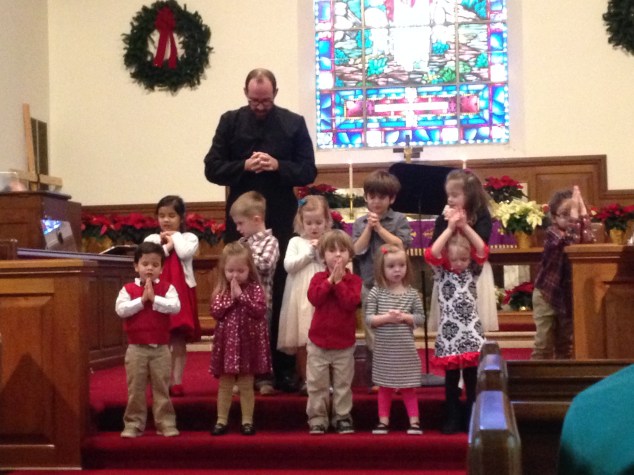




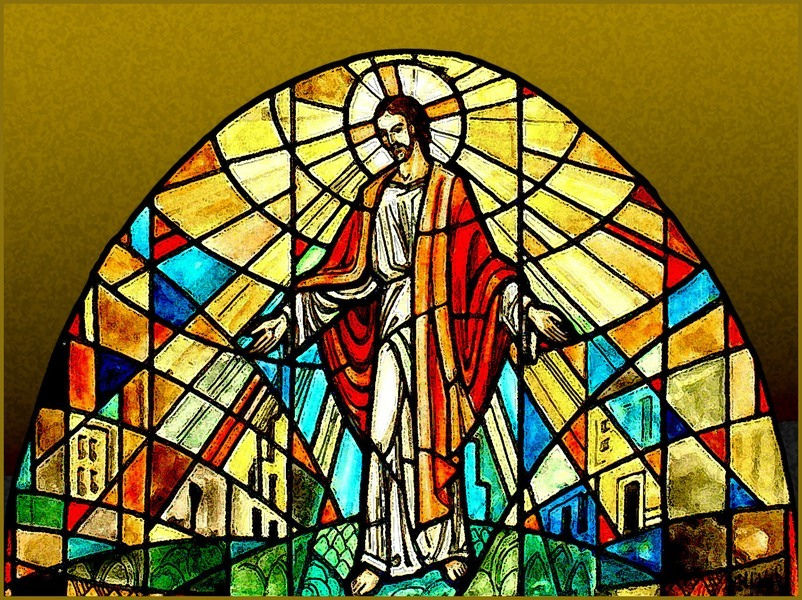











 think and let think