Be Afraid, Be Very Afraid

strangely-warmed-spreaker-header

This week on the Strangely Warmed podcast I speak with Jason Micheli and Scott Jones about the readings for the 2nd Sunday of Advent [Year B] (Isaiah 40.1-11, Psalm 85.1-2, 8-13, 2 Peter 3.8-15a, Mark 1.1-8). Jason is the Executive Pastor of Aldersgate United Methodist Church in Alexandria, VA and Scott is the host of the Give and Take Podcast. The conversation covers a range of topics including manscaping, Isaiah as Socialist, resuscitation vs. resurrection, how God isn’t white, the need to revisit our sin, and the beauty of the already but not yet. If you would like to listen to the episode or subscribe to the podcast you can do so here: Be Afraid, Be Very Afraid

14581480_10154811561604789_967400924124218630_n

Scott Jones

Have Yourself A Merry Little Apocalypse

strangely-warmed-spreaker-header

This week on the Strangely Warmed podcast I speak with Jason Micheli and Scott Jones about the readings for the 1st Sunday of Advent [Year B] (Isaiah 64.1-9, Psalm 80.1-7, 17-19, 1 Corinthians 1.3-9, Mark 13.24-37). Jason is the Executive Pastor of Aldersgate United Methodist Church in Alexandria, VA and Scott is the host of the Give and Take Podcast. The conversation covers a range of topics including clip-on bowties, looking for the next Advent, weak church confessions, singing in minor keys, Apple Watches, meditating on our deliverance, and kitten videos. If you would like to listen to the episode or subscribe to the podcast you can do so here: Have Yourself A Merry Little Apocalypse

Taylor Scot Jason

Give Me Joy Or Give Me Death

Psalm 100

Make a joyful noise to the Lord, all the earth. Worship the Lord with gladness; come into his presence with singing. Know that the Lord is God. It is he that made us, and we are his; we are his people, and the sheep of his pasture. Enter his gates with thanksgiving, and his courts with praise. Give thanks to him, bless his name. For the Lord is good; his steadfast love endures forever, and his faithfulness to all generations.

I am convinced that the days between Thanksgiving and Christmas Eve are some of the noisiest days in the year. There’s the noise of scratching together the proper shopping list, the boxes of decorations being dragged down from the attic, kids screaming in the car on the way to the grandparents’ house, extra services at the local church, and boxing other people out to buy the perfect present at the mall.

And right at the beginning of all this noise, the time of frenetic and frantic noise, we have Christ the King Sunday.

Like many Sundays throughout the liturgical year, this one has a special focus and significance. However, Christ the King Sunday is a more recent addition to the church calendar. Whereas Christians have celebrated the likes of Maundy Thursday and Pentecost for a long long time, Christ the King was only established as an official day in the liturgical year in 1925. It took the church nearly 1900 years to need this day the same way that we need it now.

In 1925, Mussolini had been in charge of Italy for 3 years, a loud insurrectionist in Germany named Hitler had been out of jail for a year and his Nazi party was rapidly growing in power, and the entire world was suffering under the weight of a Great Depression.

Yet, despite the rise of autocratic dictators, despite the lack of economic opportunities, despite the strange and uncomfortable silence between the two World Wars, Christ the King asserted, and still does, that Jesus Christ is Lord.

Jesus the Christ is Alpha and Omega, the one to whom we owe our ultimate allegiance. This psalm and this day are a reminder of our first and primary allegiance to the Lord.

Joyful_Noise_logo

Make a joyful noise to the Lord, everyone! Praise the Lord with glad and generous hearts; come into the presence of God and sing your hearts out. Know that the Lord is God. The Lord made us and we belong to the Lord. We are his people, the sheep of his pasture. With every breath give thanks to God and bless the name of the Lord. God is good; his steadfast love endures forever, and his faithfulness to all generations.

We praise and sing with joy because God in Christ is the Good Shepherd. We jump to our feet and throw our hands in the air because God has already done so much for us.

But if we’re honest, sometimes it feels hard to praise God during this time of year. For some of us, all those decorations and all those songs don’t hold the joy they once did.

Rather than hopeful in expectation, we are fearful in deliberation. Instead of thinking about all the God has done for us, all we can think about are all the things we still have to do. And instead of praising God with a joyful noise, we struggle to hear God among all the sounds of this season.

The psalmist proclaims a joy for the Lord that cannot be contained, a joy that must be shouted from the rooftops. But most of us don’t want to sing to the Lord in public. In fact, we don’t want to be confused with the type of people who do sing aloud in public places.

However, Christ the King Sunday prepares us for Advent, the season dedicated to waiting for the arrival of Christ on Christmas. This is joyful, praise-filled waiting. And, ironically, in many churches it does not look like the congregation is making a joyful noise to the Lord. Rather, most churches are filled with people singing along looking slightly bored.

Thanks be to God that this church is not like other churches.

Last Sunday, during the 8:30 service, our sound system decided to no longer cooperate when it was time to sing our final hymn “I Am Thine, O Lord.” The whole service had built up to the final hymn and our chance to respond to what God had said, and I sighed as I reluctantly announced that we would be singing it acapella knowing it wouldn’t have the full strength as usual. And just when I was about to start singing the first note, Gloria raised her hand from the choir and said, “Pastor, I can play that one on the piano.”

Friends, I don’t know if we’ve ever sounded more joyful than when we sang that hymn last week. And even at the 11 o’clock service, when I knew ahead of time she was going to play it, I ran over to the drums and joined her for our final hymn and the whole congregation made a joyful noise to the Lord.

It was a shot of joy to the arm, and it was a reminder that the Lord is indeed good.

But it forces us to ask ourselves, “How can we be joyful when so much is wrong in the world?”

When a new widower attends church on a Sunday morning, he hears the familiar words of a Christmas hymn and instead of being transported to joyful memories from the past, all he can think about is the now empty spot next to him in the pew.

When a mother goes to the store to purchase Christmas presents, she goes not with the excitement of how the children will react, but with the fear of how the family will be able to afford it all.

When the refugee woman hears similarities between her story and Mary’s, she cowers in fear upon returning home and wondering if she will be caught and shipped back to her home country.

The kind of joy the psalmist sings about is not a surface-level temporary experience. It is not a fall on the floor guttural sense of laughter that eventually fades.

The joy of the Lord comes because God is still God, even when the world feels like its falling apart.

The joy of the Lord comes because we are still God’s people, even when we feel like we’re all alone.

The joy of the Lord comes because Jesus is King, even when it seems like other people are determining what happens in the world.  

joy

When we feel the struggle of making a joyful noise amidst all the other noise, we fall back to God’s great gift of music. For music is the magnificent agent that lifts our hearts to commune with the heavenly angelic choir. Music transforms our hearts and minds such that we give thanks to the Lord through our voices, and we know that the Lord is good.

A few summers ago I took a group of youth down to Raleigh, NC for a week-long mission trip. My particular group was assigned to help at the Hillcrest Nursing Center. Every morning we traveled to the facility in order to help lead the activity center where residents could play bingo, exercise together, and respond to trivia questions. It was quite the shock to the youth to go from the comfort of their homes and friends and family to sitting in a room full of people with limited abilities and limited communication.

We tried pulling out the bingo cards and reading out the letters and number. I encouraged the youth to dance around the room to get the residents involved, but almost all of them just stared off into space. We even tried leading them through an exercise routine to the music of Michael Jackson, but it was as if we weren’t even there.

To be honest, we felt pretty worthless. Having traveled all the way to Raleigh, it was hard for the youth to feel so unsuccessful with those near the end of their lives. But then I saw a discarded hymnal on a table, and I started flipping through the pages until I found Amazing Grace.

Amazing grace! How sweet the sound that saved a wretch like me! I once was lost but now am found; was blind but now I see.

All eyes in the room, though previously locked onto the walls and the floor, had all turned to the center where I stood with the hymnal in my hands.

            ‘Twas grace that taught my heart to fear, and grace my fears relieved; how precious did that grace appear the hour I first believed.

            The youth moved closer toward the center and started singing and humming along with the familiar tune that had all heard so many times before.

Through many dangers, toils, and snares, I have already come; ‘tis grace hath brought me safe thus far, and grace will lead me home.

The residents started perking up in their wheel chair, even the ones who had nothing to do with what we had done earlier, and some of them even started to mouth the words with us.

            The Lord has promised good to me, his words my hope secures; he will my shield and portion be, as long as life endures.

The aides and employees who were wandering the hall started gathering in the doorway to watch what was happening, and a few of them even opened their hands and prayerfully joined in one voice.

            Yea, when this flesh and heart shall fail, and mortal life shall cease, I shall possess, within the veil, a life of hope and peace.

            Everyone in the room was singing or humming along, every resident who was previously lost to the recesses of their minds were found by the time we all joined together for the final verse.

            When we’ve been there ten thousand years, bright shining as the sun, we’ve no less days to sing God’s praise, than when we’d first begun.

It was abundantly clear that for many of the residents this was the first time they had participated in anything for a very long time. From the tears welling up in the eyes of the employees while watching the people they served each day, to the smiles and wrinkles breaking forth on individual faces, to the youth singing and dancing in the middle of the room, the Lord was giving us the strength to make a joyful noise.

From there we continued to flip through the hymnal and we joined together for a number of hymns. That previously silent room was suddenly filled with the words and tunes of Softly and Tenderly, Stand By Me, I Love to Tell they Story, O Come O Come Emmanuel, and we ended with Victory in Jesus.

            It was one of the most powerful moments in my life, and we get a hint of that same feeling every week when we gather here together.

When I hear all of you say the Lord’s Prayer just as Jesus taught his disciples, with one voice, it sends shivers up my spine. When I look out while the choir is singing and I see some of you on the edge of your seats my heart flutters in my chest. When I open my eyes right before saying “Amen” and catch all of you faithful praying with tightly clenched eyes, I feel the Spirit moving through air.

And I am filled with joy.

Even the sounds that drive some of us crazy: the shuffling around of bulletins from someone in the back row, a toddler crying from a pew, a kid cackling on their way up the stairs toward Children’s Church. These are joyful sounds!

They are a reminder of God’s wonderful majesty and mystery. They are a reminder that God still has work for us to do. They are a reminder that Jesus unites us in a way that nothing else on earth can.

We worship the King of kings in Jesus the Christ. We come into God’s presence with gladness and singing because of all that God has done for us. And in response we can make a joyful noise. Amen.

God Is God And We Are Not

strangely-warmed-spreaker-header

This week on the Strangely Warmed podcast I speak with Rev. Matt Hambrick about the readings for the Christ The King Sunday (Ezekiel 34.11-16, 20-24, Psalm 95.1-7a, Ephesians 1.15-23, Matthew 25.31-46). Matt is the pastor of Trinity UMC in San Diego, California. The conversation covers a range of topics including hipster churches, opt-in preschool chapel time, Caesar vs. The Shepherd, the hypostatic union, and Christians not liking other Christians. If you would like to listen to the episode or subscribe to the podcast you can do so here: God Is God And We Are Not

HipsterJesus

Devotional – Psalm 90.12

Devotional:

Psalm 90.12

So teach us to count our days that we may gain a wise heart.

Weekly Devotional Image

These are frightening words. We can read through the Psalms and discover just about every human emotion under the sun; we can dance with joy and weep with sorrow, we can raise our fists and anger and fall to our knees in gratitude. But confronting our mortality? That’s a challenge.

When I was in seminary one of my professors told me that the hardest thing about being a pastor is that I have to remind people that they are dying when everything and everyone else tries to claim the contrary. I have been given the unenviable tasks of proclaiming the deep truth of our mortality in hospital rooms, in church offices, and always at the grave.

Most of us are tempted to believe that we are invincible and that life will never catch up with us. We are tempted to believe that death isn’t real. Countless commercials and products are advertised with the sole purpose of prolonging our inevitable end. Even in church, we spend so much time talking about the joy and hope of God in the resurrection from the dead, that we fail to spend adequate time reminding ourselves of our own earthly finality.

I received a phone call yesterday afternoon from our church secretary informing me that there had been an accident on the church property. A man was driving under the influence and lost control of his vehicle, smashed into our church sign, and eventually flipped over until it came to a stop. The man was quickly rushed to the hospital where he was treated for relatively minor injuries. And when I spoke with the police officers on the scene they kept saying the same thing over and over again, “He’s so lucky it wasn’t worse.”

IMG_1123

Death is a frightening thing. Contemplating our finitude is by far one of the strangest things we do as Christians. But in the end, we do it so that we may gain wiser hearts, so that God might sustain us in the midst of our sinful lives, and above all so that we can appreciate the sacrifice of Christ on the cross and take solace in the glory of the resurrection.

It is my prayer that the man who crashed his car into our church sign yesterday will count his days and gain a wiser heart. Through God’s grace I hope he see’s his life for the tremendous gift that it is, and he gives thanks for all that has been given to him; including one more day.

The Strange New World

Psalm 78.1-7

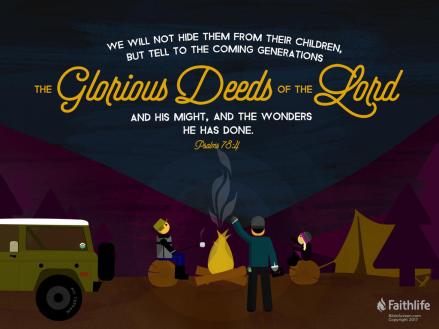
Give ear, O my people, to my teaching; incline your ears to the words of my mouth. I will open my mouth in a parable; I will utter dark saying from of old, things that we have heard and known, that our ancestors have told us. We will not hide them from their children; we will tell to the coming generation the glorious deeds of the Lord, and his might, and the wonders that he has done. He established a decree in Jacob, and appointed a law in Israel, which he commanded our ancestors to teach their children; that the next generation might know them, the children yet unborn, and rise up and tell them to their children, so that they should set their hope in God, and not forget the works of God, but keep his commandments.

A father was with his five year old daughter last Christmas, and it was the first time she ever asked what the holiday meant. He explained that Christmas is all about the birth of Jesus, and the more they talked the more she wanted to know about this “Jesus” so the father bought a kid’s bible and began reading to her every night.

She loved it.

They read the stories about Jesus’ birth, the miracles he produced, and teachings he offered. And the daughter would ask her father to explain some of the sayings from Jesus, like “love your neighbor as you love yourself” and “blessed are those who mourn” and “the kingdom of God is like a mustard seed.” They read and the read and at some point the daughter said, “Daddy, I really like Jesus.”

Right after Christmas they were driving around town and they passed by a huge Catholic Church with an enormous crucifix out on the front lawn. The cross was impossible to miss, as was the figure nailed to it. The daughter quickly pointed out the window and said, “Dad! Who’s that?

The father realized in that moment that he never told his daughter the end of the story. So he began telling her how it was Jesus on the cross, that he ran afoul of the Roman government because his message was so radical and unnerving that they thought the only way to stop him was to kill him, and they did.

And the daughter was silent the rest of the ride.

A few weeks later, after going through the whole story of what Christmas meant, the father took his daughter out to lunch on Martin Luther King Jr. day because her school was closed for the holiday. While they were sitting at the table waiting for their food, the daughter saw the local newspaper’s front-page story with a picture of Martin Luther King Jr. on it. She quickly point to toward the picture and said, “Dad! Who’s that?

“Well,” he began, “that’s Martin Luther King Jr. and he’s the reason you’re not in school today. We’re celebrating his life. He was a preacher.” And she said, “For Jesus?!”

“Yeah,” he said, “For Jesus. But there was another thing he was famous for; he had his own message and said you should treat everyone the same no matter what they look like.”

She thought about it for a minute and said, “Dad, that sounds a lot like love you neighbor as yourself.”

The dad said, “Yeah, I never thought about it like that, but it’s just like what Jesus said.”

And the young girl was silent for a minute or two, starring down at the table, but when she looked up at her dad she had tears in her eyes and she said, “Dad, did they kill him too?”

books-1245690_1920

It doesn’t happen often, but I love when a passage from scripture is straightforward. With the daunting amount of passages in both the Old and New Testaments that remain frustratingly ambiguous, it is refreshing to encounter a text that is so simple with its claims and expectations.

Listen up! Open your ears to what I am about to say regarding the mighty acts of God! I will declare the stories from the past, and we will not hide them from the children. They must hear about all the wonders of God. The Lord commanded our ancestors to teach their children, so they would teach their children, so that none of us would forget what God has done. Listen! We cannot fall back into the problematic rhythms of those who came before us, a stubborn and rebellious generation. We have to tell the story.

What follows in the psalm for today is a record of Israel’s history in song. The psalmist sets up a challenge: to remember the mighty acts of God for future generations, and then the psalmist declares the story of God with God’s creation. The narrative is so strong that the psalmist will not depart from it. The old old story has become so important to the psalmist that sharing it with others is the most important thing in the cosmos.

We have a member here at our church named Glenn who has dedicated himself over the last few years to rebooting our Children’s ministry. But he never really wanted to do it. It’s not a passion he’s had his entire life.

It actually all started when he volunteered to be the bible storyteller at Vacation Bible School a few years ago. Every morning he got the right costumes and ushered the kids into the strange new world of the bible through his stories. And one day, without really thinking about it, he simply asked, “Who is Jesus?”

The room was silent except for one girl who was brave enough to raise her hand with any semblance of an answer.

That was enough for Glenn to be jolted toward the importance of telling the story. That was enough for Glenn to commit himself to sharing Jesus with as many children as possible. That was enough for Glenn to hear the words of the psalmist echo through the sands of time: we will tell the coming generation the glorious deeds of the Lord.

There was a time when asking children about Jesus would’ve been unnecessary. There was a time when most families in a community went to church on a Sunday morning simply out of habit. There was a time when preachers could preach on a text without providing context.

But that time is gone.

Instead of embracing God’s story as our story, we’ve embraced other narratives. We don’t tell our children about Jesus, we expect the church to take care of that for us, much like we assume that schools will make them into perfect little citizens.

On Tuesday morning Lindsey and I brought Elijah to our local polling location to vote for Virginia’s next governor. I held him in my arms while Lindsey went to sit down and scan over her ballot, and while I was standing off to the side one of the poll workers gave me a little wave and said, “It’s so precious that you’re teaching your son about the value of voting!”

Is that what I want to instill in the coming generation represented by my son? Am I pleased to know that he will inherit a political structure that celebrates divisiveness while degrading cooperation? Am I more inclined to teach him about a political race than about God’s grace?

Ps78

The psalmist, long ago, believed in retelling the story to help shape the people of God. The psalmist believed that in going back to their origins, remembering who they are and whose they are, the people would always find the living God. When we tell the story that is our story, we become shaped by the Word to be Christ body in the world today.

But what is the story?

When we open the scriptures we are with Adam and Eve in the Garden. We hear the Lord warn them about the tree of knowledge of good and evil. We hear the slithering serpent calling them (and us) to rebel against the One who is love. And then Adam and Eve reach for that forbidden fruit inevitably driving them away from the Lord and into the unknown. We can feel that there is something of ourselves in these two standing on the edge of Eden looking back to what they once were and unsure of what will come in the days ahead.

We are with Noah kissing the earthy ground after the flood. We see the rainbow cast across the sky and we feel the colors reflecting off the pools of water still being sucked into the ground. We hear the promise of God to never abandon creation again. We believe in Noah there is a new creation, another chance for humanity to get things right. But then we see him tilling the ground, preparing the vines, and eventually getting drunk from the wine. In him we see the failures of the past reaching forward into the present and we hope for something better in the days ahead.

We are with Abraham in a strange land. We hear a call from the Lord commanding him to go to a land that has been prepared. We hear the promise, “I will make of you’re a great nation and your descendants will be more numerous than the stars.” We feel the Spirit moving through the space as the story continues lurching forward.

We are with Moses on a rocky hillside. We feel the warmth of a burning bush. We heard the voice of the Lord speak to the wandering shepherd: “Tell them I AM sent you.” We participate in the beginning of a call that will forever define an entire nation of people, a delivery from slavery to Egypt, and freedom in the Promised Land. We hear these strange words and promises and we know they are unlike anything else we have ever read. We know the story, and we think it might be about us, but it’s about God.

We are with David when he puts the rock into the sling and takes down the mighty Goliath.

We are with Solomon when he prays for the Lord to give him wisdom.

We are with Isaiah when the coal is placed on his lips.

And then we are there when everything changes; that strange and bewildering moment in a manger in Bethlehem when the Word becomes flesh. When a man and a woman flee to save a child’s life. When that baby grows to be a man who was like no other man. When His words are cause for pause and alarm and delight and fear. With unending power and resonating grace he calls out: “Follow me!

And they do.

Through him the blind see, the lame walk, the deaf hear, the hungry eat, the powerful are humbled, the poor are made rich.

And then we are there when the sky turns black. We hear His final words and we feel a faint echo of those first words from so long ago. But that echo continues for three days until it reaches a triumphant crescendo in an empty tomb, in resurrection.

We are there with the disciples in the upper room. We witness the Spirit fill their mouths with words to proclaim. We go with them across the sea and over the dry land. We feel the water of baptism and new birth. We smell the bread being broken and we taste the wine at the table.

And we know it is for us.

We tell this story because it is our story. And, of course, this isn’t just about teaching children the story. It’s about all of us, whether we’re eight or eighty. We come together in this place, all of us, to remember over and over the great acts of God in the world. We vacillate between creation and redemption, back and forth, to remind one another what God has done for us, and what God continues to do through us.

Telling the story pushes us further through the narrative that has no end. In it we find people and places that boggle our minds. We read decrees that shatter our understanding of what is real. We experience moments of profound joy and profound sorrow. And we find ourselves in the story when we did not know we had a story.

So, tell the story. Tell the story when you are up and when you are down, when all is well and when all is hell, tell the story when you are received and when you are nowhere believed. Tell the story until sinners are justified, until the devil is terrified, until Jesus is magnified, and until God is satisfied! Tell the story. Amen.

Devotional – Psalm 34.8

Devotional:

Psalm 34.8

O taste and see that the Lord is good; happy are those who take refuge in him.

Weekly Devotional Image

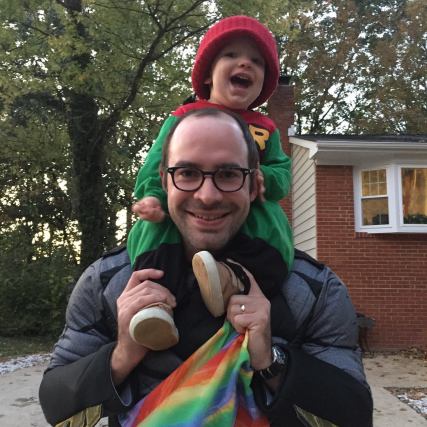
Last night, after we finished dinner, my wife and I got out the Robin costume for our 18 month old Elijah. The Halloween decorations had been up for weeks, we were stocked with candy for the neighborhood kids, and the time had come to begin trick-or-treating. And, wonderfully enough, this was to be Elijah’s first ever outing on Halloween and the excitement was palpable in the air.

However, once we made it outside we realized that no one else was combing the neighborhood. And, not wanting to be that family, we patiently waited in our front yard until we saw at least one other costumed child before we guided Elijah up to our neighbor’s front door. He only made it to ten houses last night but he ran down every sidewalk with the kind of excitement that leaves parents smiling and giddy with joy.

When we returned to our house, we set up chairs in the front yard and waited to pass out candy to kids from the neighborhood. And for the first fifteen minutes Elijah was fine with sitting on my lap, but at some point he remembered that people had strangely handed him pieces of candy and he wanted it. Lindsey and I quickly agreed that it would be fine for him to have one piece of candy (he’s maybe tasted chocolate all of three times in his life) and when he crunched down on his Kit-Kat bar his eyes lit up like fireworks. For the next fifteen minutes all he said was “mmmmmm” and “more.”

23004572_10209829521205700_6305377128442765365_o

In some strange way, the kind of excitement and joy that my kid experienced last night is the same kind of excitement and joy that we are privileged to experience in the church. The fleeting sugar rush that entered Elijah’s blood stream eventually disappeared, but the table that we feast at as a community of faith has an everlasting significance. The hope and wonder Elijah had while walking up to other homes is the same hope and wonder we discover when we actually do the good and hard work of loving our neighbors as ourselves.

The challenge of a holiday like Halloween is that there is so much build-up and when its over, its over. But with God we discover something that is truly good; we find a refuge offered without cost.

We can find happiness in this life through experiences of glee and moments of wonder, we can decorate our homes for all of the pertinent holidays, but true happiness comes when we discover that the Lord is good, and that one holy day with God is more powerful than any holiday.

Devotional – Psalm 90.1

Devotional:

Psalm 90.1

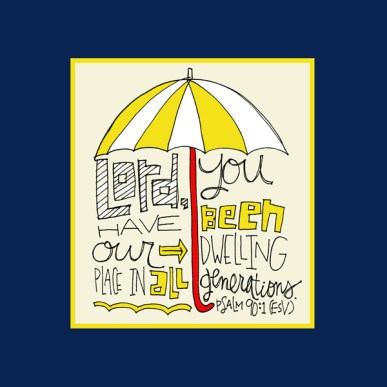
Lord, you have been our dwelling place in all generations.

Weekly Devotional Image

On Sunday we spent the entirety of our worship service talking about why we give to the church. We looked at biblical calls to generosity, we reflected on the challenges of tithing, and we even went through our Missional Budget for 2018. I know that it was a challenging service because I could see the tension it created throughout the pews, but I am happy to be part of a church that is willing to be honest and vulnerable with one another.

When looking at a church budget it is important to ask questions about money and how it will be used. Questions like: How much of our budget is going to salaries? Should we be spending that much on our copier expenses? Do we anticipate our giving increasing or decreasing next year?

I’ve spent enough time looking at church budgets to determine, rather quickly, whether a budget is designed for maintenance or for mission. A budget focused on maintenance prioritizes building expenses and maintaining the status quo over and against just about anything else. Maintenance budgets are designed to keep the church looking, and running, like the year before and insuring that the doors will be open every week. For better, but usually worse, maintenance budgets propel the idea that the church building itself is the decisive factor in what it means to be the church.

120601_Psalm90_1

A budget focused on mission is different in that it prioritizes ministries and vision for the year(s) ahead. Missional budgets are designed to ask: “What’s God calling us to do?” and figuring our how to live into that reality. That challenge and joy of a missional budget is the belief that God is our dwelling place more than a building or a property.

That’s not to diminish a church structure or property; churches (as in physical buildings) allow for a gathering of people on the journey of faith and they establish a place for community. But when the church (as building) becomes more important than the church (as Body of Christ) we fail to remember that God has been our dwelling place in all generations.

I am thrilled to be part of a church that puts a priority on mission rather than maintenance. The challenge, however, is committing to that reality and remembering that God is our dwelling more than the buildings we gather in on Sunday mornings.

Devotional – Psalm 96.1

Devotional:

Psalm 96.1

O sing to the Lord a new song; sing to the Lord, all the earth.

Weekly Devotional Image

I love the so-called “good ol’ hymns.” I love them because I grew up with them, because they remind me of particular people in particular places, and because the theology behind them is remarkable. All I need are the first verses of “Amazing Grace” to draw me to all of the saints that have gone on to glory during my life, or the opening melody of “Jesus Calls Us O’er The Tumult” will bring forth memories of my grandmother humming the tune in her kitchen, or I’ll read through the words of “O Come, O Come, Emmanuel” and it will give me goose-bumps thinking about how Christians have used those words for over a thousand years.

The “good ol’ hymns” are called as such accordingly; they are good and they are old.

In the church today, however, there is a strong temptation to employ something new simply for the sake of being new. Rather than relying on tradition or theology, we’re inclined to pull out the shiny new songs in hopes that they will bring about some sort of change or transformation. And, though many new songs are ripe with good theology, many of them fail in that particular category. New songs can have catchy melodies, and stir up emotional responses, but if the words we proclaim are unfaithful, we have to ask ourselves: “Is this the new song God wants us to sing?”

maxresdefault (5)

Over the last few weeks I’ve been talking with the choir at Cokesbury about new and different ways to praise God through voice and song; but not necessarily with new songs. So, we prayed about it, and on Sunday morning I got out my cajon and started playing along with our pianist to the tune of “I Surrender All.” For what it’s worth: “I Surrender All” was written in 1896 and it has been a favorite of Christians for more than a century. But for us on Sunday morning, it felt new. It felt new because we did not somber along with the verses, we did not say the words devoid of meaning. Instead we passed around a microphone to members of the choir, some over 70 and some under 17, and let them sing the verses as the Spirit led them.

It was beautiful, it was powerful, and it was new.

What songs from the hymnal move you the most? What is it about those particular hymns that resonate with you? How has God used a particular song to speak a new word at a particular moment in your life?

Devotional – Psalm 106.1

Devotional:

Psalm 106.1

Praise the Lord! O give thanks to the Lord, for he is good; for his steadfast love endures forever.

Weekly Devotional Image

On Sunday morning we will spend most of our worship service confronting the question “Why Do We Pray?” Prayer has been part of what it means to be a disciple of Jesus Christ from the very beginning of the church. Prayer, fundamentally, is about taking time to be with the Lord as well as a desire to change our circumstances. And for as important as it is to talk about why we pray, the question of how we pray is equally worth our time.

When I was a kid I was taught how to pray using the acronym PRAY: Praise – Repent – Ask – Yield. We begin praying by praising God for the marvelous works God has made real in our lives, then we repent and apologize for how we have failed to be the people God has called us to be, then we ask for how we need God to change our present circumstances, and then we conclude by yielding to God’s will. The PRAY way to pray is helpful for setting up a rhythm of what it means to commune with God, but it can also be limiting.

If our prayers follow the same pattern over and over again, we run the risk of no longer meaning what we say, or worse: we say things without realizing what we’re saying. Additionally, the PRAY model can result in us being tempted to ask God to change trite and insignificant things in our lives, instead of the deep reflection on what it means to yield to God’s will being done in our lives.

prayer_2014_02_07-13

Praying through PRAY can be helpful when we no longer know what to say, but some of the best prayers I’ve ever heard (or read) do not follow the model at all. Because, after all, prayer is not about checking off the box; prayer is about learning how to listen to God in the midst of loud and chaotic world.

Sometimes faithful prayer looks less like getting on your knees and clasping your hands together, and more like sitting in a quiet space for five minutes. Sometimes faithful prayer sounds less like all the big adjectives we use in church on Sunday and more like a conversation we have with a friend over the phone. Sometimes faithful prayer is less about following any model or rhythm and more about finding a way that works for us in order to hear what God has to say.

I have friends for whom using crayons in a coloring book is the best way to pray. For others, prayer is at its best when it is the complete absence of any distraction. And still yet for other, the PRAY model is the best way to pray.

The point of prayer is not so much that we have to pray a certain way, but that we do it in the first place.