Trust and Disobey

1 John 5.1-6

Everyone who believes that Jesus is the Christ has been born of God, and everyone who loves the parent loves the child. By this we know that we love the children of God, when we love God and obey his commandments. For the love of God is this, that we obey his commandments. And his commandments are not burdensome, for whatever is born of God conquers the world. And this is the victory that conquers the world, our faith. Who is it that conquers the world but the one who believes that Jesus is the Son of God? This is the one who came by water and the blood, Jesus Christ, not with the water only but with the water and the blood. And the Spirit is the one that testifies, for the Spirit is the truth.

Annual Conference is a strange beast. It is uniquely United Methodist, and it is the one time each year when church representatives, clergy and lay, from all over our state get together to worship, to pray, and of course, to vote.

The first time I ever went to annual conference, it was years before I actually became a pastor. The lay representative from my home church was unable to attend, so they asked me, a teenager, to go in his place. I, at the time, was beginning to wrestle with a call to ordained ministry so I figured I’d have to find out what all this stuff was about anyway, so I went.

I can’t tell you much about that first annual conference. There were a lot of people in one place uncomfortably shifting around in their seats as we listened to individuals talk about all kinds of stuff that were only barely relevant to the mission of the God in the world, but eventually something happened that I will never forget, and it took place when we came to the time of voting.

Someone, somewhere, put forth a motion requiring every United Methodist church in our conference to take at least one Sunday a year to pray for our country’s troops, and more specifically for those fighting overseas.

There was an audible affirmation of the motion, but before it could be put to a vote, somebody, somewhere, offered an amendment. They walked up to their microphone and said, “I am fine with praying for our troops, frankly we should be doing it anyway without being told to do it at least one Sunday a year. My only concern is that if we mandate and require all churches to be obedient to this rule, then we should also ask them to pray for our enemies, particularly those whom our military is fighting against.”

And like a stick of dynamite, the room exploded in arguments.

It took another hour of debates and amendments and further motions, 60 minutes of pastors and people pontificating about the validity of such a strange and bold request, before we got rid of the original request all together. Not because people were against praying for our troops, but because we could not agree on whether or not to pray for our enemies as well.

Obedience is a dirty word. It is a dirty word because we don’t like getting too close to it; it makes us uncomfortable. In our freedom-worshipping culture, we strive for independence and liberty above all else. We talk about being guided by our inner voice, we promise our children they can become anything they want when they grow up, we tell people to make their own destiny.

And yet Jesus, the one whom we worship, love, and adore, loves us enough to command us toward obedience.

No doubt this sounds authoritarian, and perhaps we don’t like imagining Jesus this way. Maybe we’d rather think of Jesus’ words as suggestions more than commands. From the time we are young we are taught about the folly of fascism and the need to reject superior rulers who tell us what to do. But lest we reject Jesus for his calls to obedience, let us at least admit the truth of our own subjugation.

We are all obeying somebody.

homosexuality-and-church-main_article_image

In this world we respond to a great number of masters with an almost blind and willful ignorance – our peers, our families, our jobs, our government, our political parties, popular fads. They all dictate, in some way, shape, or form, what we are to say, how we are to act, and who we are to be.

We do as we are told.

Everyone who believes that Jesus is the Christ has been born of God, and everyone who loves the parent loves the child. By this we know that we love the children of God, when we love God and obey his commandments.

For the love of God is this, that we obey his commandments. And his commandments are not burdensome, for whatever is born of God conquers the world.

We could debate, much like the people at annual conference did, about what it means to be obedient or not. But perhaps the better question is: “Who do we really obey?”

There are of course some Christians who boldly claim that Jesus, and the bible, are their ultimate authority – and they follow them explicitly.

I love meeting people like that, and not for the right reasons. I love people who blindly obey the bible because there are all kinds of crazy stuff in here, and contrary to John, it can feel pretty burdensome.

In Leviticus the people of God are expressly forbidden from wearing clothing with more than two materials mixed together (Leviticus 19.19). Do you know how hard it is to find clothing made of only one material? Most of what we wear is a blend of more than one substance, and we are so bold in our sinfulness that we brazenly show up to church wearing our sins literally on our sleeves!

Or we can look at other places in Leviticus, like when it says men must not cut the hair on the sides of our heads, or cut the edges of our beards (Leviticus 19.27). Take a good hard look around the room right now; not only do we have heathens in different clothing materials, we’ve got men on a straight shot to eternal damnation because they decided to pull out the bic razor this morning before they came to church!

The laws are indeed burdensome!

And yet, somehow, John is bold to proclaim the opposite.

Jesus requires our obedience to his commandments. We are called to obey that which he calls us to do. And, taking a cue from the New Testament, if we look at the summary of the commandments as loving God and loving neighbor, we can then begin to wrestle with how difficult those two things may or may not be.

9.8.CC.HOME_.PeaceThroughObedience

Loving our neighbors is about more than treating folks like family. In fact, sometimes that’s exactly the opposite of what we want! Just think about the last time you gathered around the table for Thanksgiving with family members you fundamentally disagree with! Rules and calls to obedience in terms of loving our neighbors become nothing more than abstractions unless they are somehow tied to a deep awareness of the mystical union we have with God in Christ Jesus.

It is precisely because God loves us, in spite of us, that we can love others. It is in the recognition of our unworthiness that we can actually meet the other where they are and, in spite of differences, we can love one another.

We follow, we are obedient to this law, not because being close to Jesus helps us get what we need or want.

We follow, we are obedient to this law, because we believe that being close to Jesus allows God to fulfill whatever God wants to get out of this world!

We live in a time deeply saturated in pluralism, when countless value systems vie for superiority or are uncritically embraced such that we no longer know who we are or what we are doing. We so root ourselves in ourselves, that we move farther away from God while telling ourselves that at least we are free.

But the Gospel is disorienting. It finds us where we are, in our shadowed existence, or deeply rooted in our own convictions, and it turns it upside down. The messages of grace, of Jesus’ life-death-resurrection, are unnervingly radical!

The commandments to love God and neighbor, though difficult according to the ways of the world, are possible through the impossible possibility of God. Everyone who believes that Jesus is the Christ has been born of God – when we believe (not just with our minds but with our actions) that Jesus is the Messiah, we begin to see how bound together we all are, and how we, and all of our earthly perspectives, have been conquered by God for something greater.

Right now the contemporary church, from the realm of United Methodism to conservative evangelicalism, is struggling. The church struggles, in large part, because of our failure to recognize how we are bound to God and not to the world – such that many churches take their theological cues from the powers and principalities and assert them on scripture, rather than the other way around.

It is precisely why our divisions are growing wider and our walls are growing taller.
26children-booming-black-articleLarge

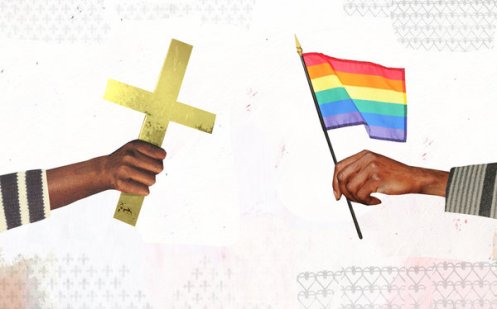
For too many decades, our denomination (United Methodism) has struggled with the question of human sexuality. We have in our polity the theological position that the practice of homosexuality is incompatible with Christian teaching. The belief and claim manifests itself in different ways from leaders barring homosexuals from becoming members at local churches to committees denouncing transgendered individuals, to pastors being punished for officiating at same-sex weddings.

Part of the church’s willingness to claim homosexuality as incompatible is rooted in the fact that our denomination believes that in so doing it is remaining obedient to Jesus’ commandments.

For months there has been a commission within the denomination seeking a Way Forward regarding human sexuality. They have read books, and prayed together, they have listened to stories, and imagined the future of the church. Our governing council of Bishops met this week in Chicago to begin looking at the commission’s proposals about where the church is being called and what’s in store for us.

There have been parliamentary debates and procedures to follow, press releases are being put together, and some churches are already banding together in hopes of starting their own denomination whether leaning traditional or progressive.

And, in the coming months, we’re going to talk more about the commission and the path of the United Methodist Church. But right now we don’t know a whole lot more than what I just told you. However, one thing we do know is that everyone who believes that Jesus is the Christ has been born of God.

Everyone.

Gay or straight, black or white, soldier or enemy, whoever believes that Jesus is the Messiah has been born of God. We, and they, are made one, by the Spirit, in Christ Jesus who came to live, die, and rise again. We can build our walls higher, we can put stricter language in our institution, we can do all kinds of things, but only Jesus conquers the world.

            Jesus conquers us.

To confess with our lips and with our lives that Jesus is the Messiah is a radical thing. It compels us to tell the world that no one else has the power Jesus has – not a political party, not a government, not even a church institution. It pushes us to look in the face of the powers and principalities and triumphantly declare, “No more!”

It is the beginning of a revolution of our hearts. Amen.

Devotional – Acts 10.44

Devotional:

Acts 10.44

While Peter was still speaking, the Holy Spirit fell upon all who heard the word.

Weekly Devotional Image

Far too much of the church is calibrated for a world that no longer exists, and hasn’t for some time. Whether it’s the ways we worship, or the types of books we use in Sunday school, or even the debates that happen in the parking lot; sometimes the church feels like it’s stuck in 1982.

When I drive through town and see church marquees that read: “Church – The Way It Used To Be” I cringe. I cringe because no one even really knows what that means, and just because it used to be a certain way doesn’t mean that it needs to be that way today. The church is (supposed to be) alive! It is not some memorial to days long ago.

As God’s church we are called to two realities: We pass the tradition from one generation to another AND we open our eyes and ears to the winds of the Holy Spirit by which the tradition comes alive for each generation. That doesn’t necessarily mean that adding something like projectors and screens in worship will make everything better, but it does mean that the Spirit loves to interrupt our lifelessness with new life.

forgotten_church_by_gaudibuendia-d6pu2zm

In Acts we read about how Peter was in the middle of preaching when the Holy Spirit fell upon all who heard the word. Notice: the verse does not say that the Spirit fell on Peter to give him the words to say, but that while he was speaking the Spirit landed on all who heard what he was saying.

The Spirit loves flipping upside down our expectations and priorities. The Spirit shows up when we least expect it and it lands in ways we can scarcely imagine. The Spirit interrupts our ways of understanding the church as if to say: “Behold! I am doing a new thing!”

However, sometimes the Holy Spirit has a hard time getting through our stubborn desire to stay where we are. We can read all the right books, and pray all the right prayers, but it takes a willingness to know and believe that the Spirit moves to respond to that Spirit with new understandings of reality.

Time and time again, from Acts until today, the Spirit loves interrupting our sensibilities with new ways of moving forward. The Spirit is the one who has a story to tell, but the way we tell the story is changing.

We might think we know how the world works, and what the church is supposed to look like, but that’s usually when the Spirit shows up in the middle of our conversations to grab us by the collar and says, “Follow me!”

Knee-Jerk Love

1 John 4.7-11

Beloved, let us love one another, because love is from God; everyone who loves is born of God and knows God. Whoever does not love does not know God, for God is love. God’s love was revealed among us in this way: God sent his only Son into the world so that we might live through him. In this is love, not that we loved God but that he loved us and sent his Son to be the atoning sacrifice for our sins. Beloved, since God loved us so much, we also ought to love one another.

Love has got to be once of the most misused and misunderstood words in our entire lexicon. Think, if you can, about the last time you used the word – perhaps you said it to a family member this morning, or maybe you used it in reference to the breakfast you consumed, or the movie you watched last night, or even the way you feel about this church.

In our daily live we drop the word “love” like it’s going out of fashion – Oh I love your outfit! You’ve got to watch this new show on Netflix, I just love it! There is no restaurant on this planet that I love more than Chic-Fil-A!

We love to love love.

And, more often than not, out love is directed away from what’s essential and toward the things that do not actually provide life. It has become far easier to express our love for meals, and experiences, and even God than toward our families and fellow brothers and sisters in Christ.

That might seem and sound strange, but it can be pretty easy to love God. God is great, God is good, let us thank Him for our food! God does all kinds of nice and wonderful stuff for us. And because we’ve relegated God to some realm beyond, we can talk about God in this place and use words like “love” while acting as if God isn’t even in the room.

Our world is terribly confused about love.

belovedlogo600

Perhaps it’s so confused because love can be so convoluted. We read from 1 John that love is the hoped-for and normal response between people and the Lord. Love is perfected in God, and God is perfected in human love. This love, whatever that actually means, calls us to see the sacred and holy not in God alone, but also in each person whether we think they’re worthy of love or not.

            It is in the loving of the other that we, and they, are made both human and holy.

And this is at the heart of it all. We can talk about how much we love God because God loves us, but without loving our fellow human beings, we cannot know God!

Let that sink in for just a moment – without love for one another, we cannot know God.

And love is difficult! Differences in nation, religion, gender, generation, sexual orientation, race, they all have these unspoken rules and guidelines about who should be included in the loving circle of comfort. However, those same rules and guidelines also tell us implicitly, and sometimes explicitly, who is not worthy of love.

But we’re here in church, so we must be doing something right. Otherwise, why else would we gather early on a Sunday morning to day-dream about God? We could take the time right now to examine the evil people in the world, as opposed to those we love, and explore what it would mean to change our behavior toward them. But that’s no easy task, and that’s not really what John is talking about.

Love is this: Not what we can do, but what God can do through us. We know love, and we know God, because God was, and is, willing to love us even though we do not deserve it. God sacrificed God’s own Son, for us, in spite of us.

That is love.

Love_TV_Logo

Therefore the act of loving the other is not so much about conjuring up in our minds the most evil person in the world and deciding to love him or her, but instead looking a little closer to home at those who produce a knee-jerk reaction in us.

Do you know what I mean when I say knee-jerk reaction? It’s that almost involuntary feeling we experience when we experience something outside of what we are comfortable with.

You might consider yourself a modern person, but how do you feel when you see two men or two women kissing in public? You might imagine that you have a pretty cosmopolitan view of the world, but how did you feel the first time you saw items in the grocery store listed in a different language? You might even think you’re a pretty racially progressive person because you attend a church that looks like this on Sunday morning, but how would you feel if this is what your home looked like on Sunday afternoon?

Those are knee-jerk reactions.     

Just over a year ago my family and I drove up to Woodbridge to start looking at houses. We searched online through our parameters and eventually had a list of homes we wanted to see in person. The very first house was in a nice neighborhood, not too far from the church, and when we pulled up in front of the address we immediately started to imagine ourselves living there. We walked around the front yard while we waited for our realtor, made comments about the trees and expressed our delight in the thought of our son playing in the front yard.

When our realtor finally arrived he walked briskly over to us and said, “I’m glad you two have a list of other homes to see cause you’re not gonna like this one.” I said, “Wow, I appreciate the wisdom, but I’m curious, what is it about the house that make it so bad? Is there something wrong with the roof? The foundation? The air-conditioning?”

All he said was this, “Come back here around 4:30pm and take a good look at the type of kids getting off the school bus. You don’t want to live here. Why don’t you let me show you some nice places in Stafford? I can get you into a nice neighborhood where you won’t have to worry about any of those types of people.”

Those types of people.

He had a knee-jerk reaction toward that which was different from himself. When he looked around the neighborhood and saw different skin pigmentations, he made an assumption that it was not the place for us, because presumably it would not be the place for him.

And that man is no different than any of us here this morning. For some of us it’s race, for others it’s class, or economics, or sexuality, or religious convictions, or political persuasions. We all have some sort of knee-jerk reaction to the other in our midst.

download

Hopefully some of us are self-aware enough to already know where and who those types of people are for us. It won’t take us long to conjure them up in our minds, and we still experience that knee-jerk of confusion, frustration, and even anger.

For others of us, it will be a little harder. Whether it’s because we think too highly of ourselves and imagine that we have no judgments of others, or because we sit in places of privilege and we are never made to feel less than ourselves by others, or we haven’t taken the time to address our sinful and harmful feelings toward others, it can be very difficult.

Love is a very difficult thing. And again, I’m not talking about the love any of us have for our families or friends or spouses, but the love that we are called to have for the very people who draw forth knee-jerk reactions in us. Love is a very difficult thing.

And yet, and yet, God loves us. And not only that, God is love.

The Greek word for love here in 1 John is AGAPE – it is a love that gives without expecting anything in return. It is a form of love that is sanctified and sacrificial. We might even call it unconditional love. And that’s what God is, AGAPE.

God is not the love that we often experience in our regular daily lives, a love that is contractual, a love in which “I’ll do this if you do that.” That’s is not AGAPE.

God is love, offered freely to us, the very people who have no reason to deserve it. In this is love, not that we loved God but that he loved us and sent his Son to be the atoning sacrifice for our sins. Beloved, since God loved us so much, we also ought to love one another.

We are the beloveds of God. We are those who receive the impossibly possible love of the divine.

God is love. God is AGAPE. Dare we say anything different? In this broken and battered world ruled by impersonal forces, ruthless principalities, and extremely complicated issues, some might want another gospel. We might want church to simply be a place where we can gather to feel better about ourselves. I know of no better way to feel joy than to know that God loves me, even me, in spite of me.

Yet, to proclaim this thing we call church as anything less than the heart of the universe as being a pulse of mercy with infinite passion and love and grace for all is to betray the gospel.

God as love, as AGAPE, pushes us to love everybody. And we cannot scare people into acceptance, or terrify them into tolerance. That will only result in a tepid version of reception that has almost nothing to do with love. It will result in a world still ruled by the powers and principalities. It will result in certain people not wanting anything to do with certain people.

In the church, in the fellowship of God with God’s people, there is little room for those who nurse grudges, who seek revenge, who assume superiority, or care little about the needs of others. Mercy and forgiveness and love are at the heart of God, and therefore they are poured on us!

            We are God’s beloved, we are God’s AGAPETOI.

True AGAPE love, the very nature of God, is loving the very people who create within us a knee-jerk reaction. Christ died for the godly and the ungodly. God gave of God’s self for us and for all. In the crucifixion and resurrection of Jesus Christ, the Son of God, all of humanity has been bound together by a love that will not let go: A love for the beloved. AGAPE for the AGAPETOI.

In each of your bulletins you will find a very special piece of paper. It is special because it is blank and because it is for you and you alone. All of us are going to take a few moments to prayerfully consider the people who produce knee-jerk reactions within us. We are going to contemplate the people in our lives, not far away and removed, but people we regularly encounter who make us feel uncomfortable, and frustrated, and angry.

And then we’re going to write it down on the piece of paper, and fold it in our hand. We are going to hold onto the name or the type of person tightly in our hand, we are going to grip it tightly until we need to let it go. And then we will. Amen.


(During Communion each congregant was invited to drop their paper in a large and clear baptismal bowl, the paper is specially designed to dissolve in the water such that we can experience how, in baptism, all of these false identities have been washed away.)

BFD

strangely-warmed-spreaker-header

This week on the Strangely Warmed podcast I speak with Benson McGlone about the readings for Easter 6B (Acts 10.44-48, Psalm 98, 1 John 5.1-6, John 15.9-17). Benson is currently planting a church in Northern Virginia, and is one of the hosts of the Free Range Church Podcast. Our conversation covers a range of topics including house churches, quantity vs. quality, starting in the middle of a story, reckless singing, breaking chains, difficult commandments, and being conquered by God. If you would like to listen to the episode or subscribe to the podcast you can do so here: BFD

BM

Love Loves To Love Love

strangely-warmed-spreaker-header

This week on the Strangely Warmed podcast I speak with Alan Combs about the readings for Easter 5B (Acts 8.26-40, Psalm 22.26-40, 1 John 4.7-21, John 15.1-8). Alan is the Lead Pastor at First UMC in Salem, VA. Our conversation covers a range of topics including interruptions in worship, King’s Hawaiian Bread with Welch’s Grape Juice, coffee communion, the need for discipled guidance, ambiguity in the psalms, choosing scriptures, theologically problematic hymns, the cosmic Jesus, and growing by subtraction. If you would like to listen to the episode or subscribe to the podcast you can do so here: Love Loves To Love Love

AC

Dear Church…

1 John 3.16-24

We know love by this, that he laid down his life for us – and we ought to lay down our lives for one another. How does God’s love abide in anyone who has the world’s goods and sees a brother or a sister in need and yet refuses help? Little children, let us love, not in words or speech, but in truth and action. And by this we will know that we are from the truth and will reassure our hearts before him whenever out hearts condemn us; for God is greater than our hearts, and he knows everything. Beloved, if our hearts do not condemn us, we have boldness before God; and we receive from him whatever we ask, because we obey his commandments and do what pleases him. And this is his commandment, that we should believe in the name of his Son Jesus Christ and love one another, just as he has commanded us. All who obey his commandments abide in him, and he abides in them. And by this we know that he abides in us, but the Spirit that he has given us.

Since Easter Sunday we, as a congregation, have been reading through 1 John. Every worship service, every scripture reading, every sermon, even the hymns have all been based on this one letter written centuries ago.

And it is important to remember that 1 John was, and is, a letter. It is a document written by a wise, old, veteran Christian leader who continues to help those who are in the midst of their faith journeys by addressing the challenges of discipleship.

For John, following Jesus was all about love… We know love by this, that Jesus laid his life down for us, and we ought to do the same for one another. Let us not love with words or speech, but in truth and action. And we shall do all of this because God is greater than our hearts.

Now, to be abundantly clear, I am not like John. I am not a mature Christian leader; seriously, I made you all play around with crayons, balancing blocks, and play-dough last week! I don’t have decades of experience to rely upon when addressing the marks of following Jesus. The well of my wisdom is shallow compared to the deep insight that John shares in his letter.

I am not like John. In fact, I’m the kind of person that John wrote this letter to in the first place. It was a written communication designed to sustain people like me, and you, in the midst of this strange and beautiful thing we call faith.

During the time of John letters were carefully crafted, parchment/papyrus were expensive and rare, reading and writing was uncommon. A lot of thought went into a letter before it was sent out. And this was even more particular in the realm of the early church when letters were shared with more than one gathering. They were sacred pieces of text that were treated with the utmost care.

DearChurch (1)

Today, however, we communicate in a variety of different forms. Sure, some of us still take the time to write our thoughts by hand, and then send it through the mail. But many of us, if not all of us, are versed in the instantaneous forms of email, text messaging, Facebooking, Tweeting, Instragramming, and even snap-chatting.

One of the biggest differences in the way we communicate today, as compared to the time of John, is that many of us offer our opinions and weigh into debates without really taking time at all to think about what we are offering. It is so easy to type a few lines, or click the share button, or take a picture on our cell phones that we do it without even realizing what we’re doing.

Today there exists computer programs designed to test whether information being shared in true, fair, and accurate. The fact that we need those things, because we simply don’t have the time to look into ourselves, is absurd.

But, when you consider how much is being produced, how much content is being created, we need something to help us sift through everything. Believe it or not, we, as a species, create as much content in 2 days as we did from the dawn of humanity through 2003.

            That’s craziness.

If you talk to a writer or a poet, they’ll tell you that if they got a paragraph together in one day, then it was a very good day. Sometimes all they can muster is a single sentence. But that’s because they take the time to weigh out what they’re trying to say.

dear-church

On the other side of the spectrum, most of us try to get out what we’re saying as quickly as possible with as little effort as possible. We don’t like our time wasted so we just throw words out and hope something sticks.

And so, while recognizing that I am not like John, and that we are bombarded with so much information, I reached out to a number of people this week. I asked a simple question: “If you could say anything to your/the church, without consequences, what would you say?”

It was my attempt to get people to think like John and speak the truth about what the condition of the church is like.

And, like seasoned and faithful Johns, a number of people put together their ideas about love and discipleship for our benefit. Whether it was on Facebook, email, Twitter, or YouTube, insight rained down upon our church office, and now you will be blessed to receive those same messages.

Fair warning: some of this will be hard to hear. It will be hard to hear because at times the messages can be convicting, just like John was. Some of them are short and to the point, some of them are a little longwinded and introspective, some will leave us scratching our heads, some will make us lift our chins with pride, and some will make us droop our heads in shame.

But that’s the thing about communication today – sometimes we say what we’re thinking without thinking about how it will be received. And maybe that’s okay…


Dear Church,

One of the best things about our church is the way we love each other. I can’t think of a Sunday when I came to worship without someone checking in on me. And that’s what I really care about. It doesn’t matter if the sermon falls flat, or if one of the hymns is too hard to sing, when I worship I feel loved.


Dear Church,

Life can be really difficult. But when it’s hard we have a choice, we can lay down and take whatever comes or we can get up and work on solving the problem. The choice is up to us.


Dear Church,

We should be doing God’s will, not power-hungry people’s will.


Dear Church,

What the church does is all about sharing the good news. And the good news is the fact that God loves sinners. And all of us are sinners. All of us.


Dear Church,,

I don’t care what church it is; if I have to hear another political sermon I’m going to lose my mind! The gospel is not about creating strong political opinions or calling people to march in protest. Jesus doesn’t share the Good News so that we know what political party to join, or which candidate to support. So many preachers today sound like wannabe politicians and I just can’t stand it anymore!

Following Jesus is not about whose political sign is in your yard or on your bumper; it’s a call for the people who have the resources and goods to open their hearts to people who have need. Love is about action, yes. But love is not a doctrine, or a sermon, or a political persuasion.

It is what you do, not what you think.


Dear Church,

I’ve been worshipping here for a while now, and I don’t think anyone knows my name.


Dear Church,

Love is more than a word.


Dear Church,

How can any church call itself a church when it refuses to help, or ignores altogether, people in need? This is why the church is dying. Not because it’s boring. Not because it’s old fashioned. The church is dying because it is hypocritical.


Dear Church,

Speaking up for the good of people is risky. You can lose your job, relationships, money, and even your life for living by the kind of love we talk about at church. But isn’t that what Jesus was willing to risk?


Dear Church,

Laying down your life for someone is different than dying for them. When push come to shove, many of us would consider sacrificing ourselves for the good of those we love. But laying down one’s life, laying aside your goals and priorities and dreams for the betterment of someone else, that’s entirely different. We need not die for anyone, but we certainly must lay aside our needs for others.


Dear Church…


After receiving these comments, and many more, I thought long and hard about what I might say. I pondered about what kind of letter I would write to this church, or any church, about what is really at stake. I prayed about what kind of shocking wisdom we might need to hear in this place.

And yet, rather than pontificating from the pulpit, I’d like to hear from you. I know this is uncomfortable, perhaps even worse that having to spend 15 minutes with playdough like last week, but if you could say anything to the church about what it really means to follow Jesus, what it really means to love, what would you say?

Imagine, if you can, that this was your final communication to the church, and that you had the opportunity to speak some truth into the midst of all of our lives, perhaps about what’s gone well and what’s gone poorly – What would you say?

_

We can open up forums on the church website. We can solicit responses from people all over the Internet. We can even listen to the people in the pews next to us.

And we can also listen to John, speaking through the centuries, about the wisdom of loving and being loved:

We know love by this, that he laid down his life for us – and we ought to lay down our lives for one another. How does God’s love abide in anyone who has the world’s goods and sees a brother or a sister in need and yet refuses help? Little children, let us love, not in words or speech, but in truth and action. And by this we will know that we are from the truth and will reassure our hearts before him whenever out hearts condemn us; for God is greater than our hearts, and he knows everything.” Amen.

You Are NOT The Good Shepherd

strangely-warmed-spreaker-header

This week on the Strangely Warmed podcast I speak with Alan Combs about the readings for Easter 4B (Acts 4.5-12, Psalm 23, 1 John 3.16-24, John 10.11-18). Alan is the Lead Pastor at First UMC in Salem, VA. Our conversation covers a range of topics including the beauty and wonder of Twitter, bad television, preaching Acts during Eastertide, breaking down stained glass language, sacrificial/sanctified love, knowing the sheep, and pastor shopping. If you would like to listen to the episode or subscribe to the podcast you can do so here: You Are NOT The Good Shepherd

AC

Godly Play

1 John 3.1-3

See what love the Father has given us, that we should be called children of God; and that is what we are. The reason the world does not know us is that it did not know him. Beloved, we are God’s children now; what we will be has not yet been revealed. What we do know is this: when he is revealed, we will be like him, for we will see him as he is. And all who have this hope in him purify themselves, just as he is pure.

Families are complicated. There was a time when “the family” meant a husband and wife, 2.5 children, a dog, and a white picket fence. But frankly, that time never really existed. Regardless of Leave It To Beaver and the Andy Griffith Show, the family has never been normative for everyone, and it certainly isn’t today.

Families have, and always will, constitute a difficult and confusing set of relationships. There are families with children and without children. There are families with two dads and two moms. There are families that represent different races, different languages, and different cultures. The family is anything but ordinary.

And somehow we believe that we become a new family as the church.

godly-play

We might spend most of our lives debating who is in and who is out, whether its in regard to our family units, or our communities, or even our country. But here in 1 John we are offered a corrective: in the church we are all children of God, regardless of our community or culture or race or ethnicity or sexual orientation or just about anything else. Here in this place we are family.

We are in the middle of Eastertide; that time when the glory of Easter is still shining bright. And we have scriptural texts all about how to be in relationship with people we do not know in addition to the people we do know – we are God’s children. But that doesn’t mean it’s easy.

Particularly when we say things like, “our church is a family” while we all act like we’re the adults and we forget what it means to be children.

The images of children are pervasive in scripture. And for good reason! Children live and work and play together with energy. They are not consumers sitting in pews waiting for something to happen. They are drawing in their bulletins, climbing over the pews, wandering around the altar area.

And even outside of the church, in the schoolyards and playgrounds, that’s where children live out their identities. They learn to communicate when something has gone wrong, they joyfully tug at one another, they make up new games, and they play.

Everything children do is about navigating a world in which their identities are still being formulated. They are not content with being labeled and placed in any kind of box. They live lives based on a fluidity that most of us have lost.

For some reason, as we mature into adulthood, our joyful play begins to fade and for some of us it completely stops. We just accept things the way they are, we make peace with the labels placed on us by society, we accept the love we think we deserve. We do all of this without ever asking, “Why?”

We are comfortable with our current relationships instead of forging new ones. We come home most evenings not with thoughts of what went well, but instead with thoughts about how everything fell apart. And, more often than not, we’d rather relax than play.

But not today.

The children of God, that’s us, work out their identities and relationships with energy and commitment and patience and intensity. They do it through play.

1 John 3, the text read for us this morning, compels and encourages us to see one another as children. It begs us to imagine a world in which we are still those joyful playful versions of ourselves.

So, I could fill this sermon with stories of how children play and come to inaugurate new visions of reality. I could call on each of you to remember your childhood games and imaginations. I could even ask us to think about the importance of being inclusive in the midst of playing with other and end with some sort of egalitarian vision of the church.

            Or, we could just play…

(For the next fifteen minutes everyone in worship had the option to play with play-dough, percussion instruments, blocks, coloring books, and an assortment of other activities.)

Don’t Make Jesus Hangry

strangely-warmed-spreaker-header

This week on the Strangely Warmed podcast I speak with Teer Hardy about the readings for Easter 3B (Acts 3.12-19, Psalm 4, 1 John 3.1-7, Luke 24.36b-48). Teer is the associate pastor of Mt. Olivet UMC in Arlington, VA and he and I help share the responsibilities for editing the Crackers and Grape Juice Podcast. Our conversation covers a range of topics including tee-ball, the challenges of returning to church after paternity leave, looking at the verses before the lectionary text, offensive evangelism, the elect and the reject, MLK’s legacy, the absence of silence, hol(e)y hands, and Jesus’ immoral teaching. If you would like to listen to the episode or subscribe to the podcast you can do so here: Don’t Make Jesus Hangry

th

Walking The Walk

1 John 1.1-2.2

We declare to you what was from the beginning, what we have heard, what we have seen with our eyes, what we have looked at and touched with our hands, concerning the word of life – this life was revealed, and we have seen it and testify to it, and declare to you the eternal life that was with the Father and was revealed to us – we declare to you what we have seen and heard so that you also may have fellowship with us; and truly our fellowship is with the Father and with his Son Jesus Christ. We are writing these things so that our joy may be complete. This is the message we have heard from him and proclaim to you, that God is light and in him there is no darkness at all. If we say that we have fellowship with him while we are walking in darkness, we lie and do not do what is true; but if we walk in the light as he himself is the light, we have fellowship with one another, and the blood of Jesus his Son cleanses us from all sin. If we say that we have no sin, we deceive ourselves, and the truth is not in us. If we confess our sins, he who is faith and just will forgive us our sins and cleanse us from all unrighteousness. If we say that we have not sinned, we make him a liar, and his word is not in us. My little children, I am writing these things to you so that you may not sin. But if anyone does sin, we have an advocate with the Father, Jesus Christ the righteous; and he is the atoning sacrifice for our sins, and not for ours only but also for the sins of the whole world.

Here, on the other side of Easter, I’ve been doing some thinking. On Easter we were singing the hymns, and praising the Lord; we were on the mountaintop. But here on the other side, though we still walk in the light, we have to confront reality. And as I’ve been thinking, and confronting, I’ve come to realize some essential truths.

Our country is pretty messed up.

We can listen to the talking heads talk about how politically divided we are, and how we just need to reach across the aisle, and all that sort of stuff. But I’m talking about brokenness on an entirely different level.

We are so obsessed with financial gains and economic prosperity, that we’ve allowed capitalism to become our religion. It is what we worship. And the evils of capitalism, of which there are many, are as real as the evils of militarism and the evils of racism.

As a nation, we spend more money on national defense each and every year than we do on programs of social uplift, which is surely a sign of our imminent spiritual doom.

We perpetuate a culture in which 1 out of every 3 black men can expect to go to prison at some point in their lives. The price that we must pay for the continued oppression of black bodies in this country is the price of our own destruction.

There is so much injustice in this country: racial injustice, economic injustice, gender injustice. And they cannot be solved without a radical redistribution of political and economic power.

            Something must change.

Pause: how do you feel about all that I just said? Do you agree? Do you disagree? Are you clenching your fists in anger about the problems we have and are ready to do something about it? Are you clenching your fists because you’re angry that I’ve criticized our country and our culture?

            Most of what I just said did not come from me, but from another preacher, one by the name of Dr. Martin Luther King Jr. And it was because he was willing to say things like what I just said that he was murdered.

martin_luther_king_jr-_and_lyndon_johnson_large

This past week saw the 50th anniversary of Dr. King’s assassination. 5 decades have come and gone since he stood on the balcony of his motel and was gunned down. 5 decades of wondering whether his dream will ever become a reality. 5 decades spent holding up his quotes and remembering his speeches.

But what do we actually remember?

Perhaps the two most remembered passages from Dr. King’s great collection of speeches and addresses are his “I Have A Dream” speech which he offered in Washington DC, and the quote that I saw again and again this week: “Darkness cannot drive out darkness; only light can do that. Hate cannot drive out hate; only love can do that.”

It’s a great quote. And it fits perfectly with out scripture today: “This is the message we have heard from him and proclaim to you, that God is light and in him there is no darkness at all. If we say that we have fellowship with him while we are walking in darkness, we lie and do not do what is true; but if we walk in the light as he himself is the light, we have fellowship with one another, and the blood of Jesus his Son cleanses us from all sin.”

There’s a nice and easy sermon there in which you can use Dr. King’s witness, and his quote about darkness and light, to describe and point toward the kingdom of heaven. But that sermon would leave us walking out of here with our chins held high, and perhaps would encourage us to pat ourselves on the back.

But Dr. King’s life and witness was about a whole lot more than one quote or one speech or even one issue. Just as Jesus’s life was about far more than just being kind to everyone.

Here in 2018 it’s hard to remember that a year before Dr. King was killed, he was one of the most hated men in the entire country. Contrary to what we see displayed every January when we celebrate his legacy, when King died he was not an icon of freedom and equality. In 1987 a poll revealed that almost 75% of Americans had a favorable rating of Dr. King, and Americans named him as the person they admired and respected more than any other person in the country’s history. And yet shortly before his death, in late 1966, 63% of Americans were vocally opposed to his words and work.

It’s hard to remember this, or even acknowledge it, because today everybody loves Dr. King. We celebrate his transformative work in documentaries and school projects. But it’s easier to celebrate someone when they’re no longer challenging, and upsetting, the status quo.

It’s easier to love a hero when they’re dead.

Dr. King was not only an activist for the Civil Rights movement, but was also a frustrating voice (to the powers and principalities) in regard to the Vietnam War, capitalism, and poverty. In fact he was shot the night after deliver a now infamous speech, not on securing the right to vote for black individuals, not on dismantling Jim Crow Laws, but on establishing a union for sanitation workers in Memphis, Tennessee.

We have so sanitized the legacy of his life that we forget he was once one of the most hated men in the country, we forget that he pushed an entire nation into places of discomfort; we forget that he was killed for challenging the way things were.

martin-luther-king-jr---mini-biography

Our sinfulness overwhelms our ability to remember and to be rational. We hear about godlessness and we immediately pull to our minds all those we believe who have fallen away, we encounter the challenges of God in scripture and immediately think about people in our lives who need to hear those words, and in so doing we forget that we are broken people, and that we need to hear those words as well.

If we say that we have no sin, we deceive ourselves, and the truth is not in us. We continually participate in a world in which people are battered, broken, and bruised over and over again. We, to use the language from our hymnal, do terrible things, and we leave things undone that we should’ve changed.

We hear about a young black boy in California who was shot for holding a cell phone, and we think there’s nothing we can do about it and after a few weeks we stop thinking about it all together.

We see images of families being literally ripped apart as mothers and fathers are sent back to countries they fled from and are forced to leave children here to fend for themselves. And we feel bad, but if don’t see it happening to our families, or in our neighborhoods, we just move on.

We drive by people in our community standing on the street corners begging for financial assistance, pleading for food, yearning for help, and we roll up our windows and lock our doors.

But the light of the resurrection shines out of the darkness of the cross and the tomb! That light pushes us into realms of discomfort as we are forced to reckon with our on sin and say, “no more!”

Talk of sin makes us uncomfortable particularly because we are far too comfortable in our sins. We don’t want our boats rocked; we don’t want to wrestle with what needs to change. And yet we worship a God who was nailed to a cross for challenging the expectations of the world.

All of this, the church, the faith, they exist because they have been handed down to us. Just as they were handed to Dr. King. His life was a testament and witness to the power of Jesus’ resurrection from the dead, it is what gave him the confidence to say and believe that something needed to change.

He walked the walk.

When we remember Dr. King, just as we remember Jesus, we celebrate their convictions and challenges, and we give thanks for their joy. But we must not forget the scars they bore for us. Dr. King was repeatedly beaten and arrested and eventually murdered. Jesus was berated, arrested, and eventually murdered.

We are here on the Sunday after Easter, the banners are still raised high, the “hallelujahs” still feel fresh on our tongues, and we are getting back to our routine, whatever that is. And we are reminded here in the glory of Eastertide, in the words of 1 John, in the witness of Dr. King, that we all sin. If we say we are without sin, we are contradicted by the reality of sin.

However, we also receive forgiveness in the risen Lord, a forgiveness experienced by the very first disciples who struggled under the weight of a new world in which God gave life to the dead. They, the disciples, heard, saw, and touched the Word. And in so doing they began the delicate walk of faith in which they recognized their sin and their forgiveness together.

The sinfulness to which we are so bound is made present in our individual lives, in our communities, and in our institutions. No person, no gathering, no organization is without sin. Which makes it all the more vitally important to remember the truth of Jesus’ life, to remember his words of conviction, and to remember that he died for both the godly and the ungodly so that we, all of us, may not sin.

1-John-Web

One of my professors loved to tell a story about his roommate from college. They were going to school in South Carolina during the height of the Civil Rights movement when my professor’s friend decided to travel to Washington DC in order to participate in a Civil Rights March. Upon returning back to school, the friend relayed what had happened during the trip:

He described that everything was about as normal as you could imagine. he arrived, met up with the people he needed to, marched where he was supposed to, handed out flyers. By the time it was over he was exhausted while waiting for his plane to bring him home. As he sauntered onto the airplane, he sat down in my seat and, you’ll never believe this, he was sitting next to Martin Luther King Jr.

It was the craziest thing. He had gone all the way to DC and here he was, sitting on an airplane, next to his hero.

“So,” my professor asked, “what happened?!” Well, he got so nervous, and he was sweating, and fidgeting, and rehearsing what he might say, but there was a small problem. Martin Luther King Jr. was asleep. I mean what was he going to do? Wake up the leader of the Civil Rights movement? So he just waited, sitting there, staring at him, watching him sleep. After the flight had nearly reached its destination, he finally opened his eyes. “Dr. King I don’t know what to say. You are my hero. I just traveled all the way to DC to help march for Civil Rights, you are such an inspiration, I am so impressed with…” “Thank you. God Bless.” he interrupted, seemingly ending the conversation.

But the young man was undeterred. “Dr. King you don’t understand, you have changed my life, you have opened my eyes to the many opportunities that are not available to others… “I appreciate your kind words son.” Dr King interrupted again. However he was was not finished, “Dr. King, you don’t understand. My father is a racist. I left home because of him and his prejudice. He offered to pay for my college, but I have cut all ties with him. We have not exchanged a word in years because of his racial bigotry.” At this point Dr. King’s eyes widened, he turned his body to face this young college student and he reached out and grabbed him by the collar, “You have got to love your father. Whether hes racist or not, loving him is the only thing you can do.” And with that he let go, closed his eyes, and promptly fell back asleep.

All of us, particularly those of us with a self-righteous leaning, are sinners in need of God’s grace. From the racists to those who abandon their racist family members.

One of the harshest realities this side of Easter is that most of us believe we are without sin, and we deceive ourselves.

Here at the table God invites us into fellowship. At this place the truth is laid bare; we are sinners in need of grace. But God does not just invite me, or you… God invites all into community with God and with one another. If we walk alone, then we walk in darkness, but if we walk together with God, then we walk in the light. Amen.