Expecting The Unexpected

1 Samuel 3.1-10

Now the boy Samuel was ministering to the Lord under Eli. The word of the Lord was rare in those days; visions were not widespread. At that time Eli, whose eyesight had begun to grow dim so that he could not see, was lying down in his room; the lamp of God had not yet gone out, and Samuel was lying down in the temple of the Lord, where the ark of God was. Then the Lord called, “Samuel! Samuel!” and he said, “Here I am!” and ran to Eli, and said, “Here I am, for you called me.” But he said, “I did not call; lie down again.” So he went and lay down. The Lord called again, “Samuel!” Samuel got up and went to Eli, and said, “Here I am, for you called me.” But he said, “I did not call, my son; lie down again.” Now Samuel did not yet know the Lord, and the word of the Lord had not yet been revealed to him. The Lord called Samuel again, a third time. And he got up and went to Eli, and said, “Here I am, for you called me.” Then Eli perceived that the Lord was calling the boy. Therefore Eli said to Samuel, “Go, lie down; and if he calls you, you shall say, ‘Speak, Lord, for your servant is listening.’” So Samuel went and lay down in his place. Now the Lord came and stood there, calling as before, “Samuel! Samuel!” And Samuel said, “Speak, for your servant is listening.”

Words are important.

What we say often shapes what we believe and, perhaps even more importantly, it shapes how we behave.

Take the common words we all offer together after the scripture is read in worship: The Word of God for the People of God… Thanks be to God. We say those words week after week, and if you’re like me, you don’t really think about what we’re saying.

But those words are really important, and they say a lot about what we think theologically.

Now the Lord came and stood there, calling as before, “Samuel! Samuel!” And Samuel said, “Speak, for your servant is listening.” The Word of God for the people of God… Thanks be to God.

For God so loved the world that he gave his only begotten son that whosoever believe in him may not perish but have eternal life. The Word of God for the people of God… Thanks be to God.

The Lord is my shepherd, I shall not want. He maketh me to lie down in green pastures, he leadeth me beside still waters, he restoreth my soul. The Word of God for the people of God… Thanks be to God.

thanks-be-to-god

But what about those difficult text from the bible? What are we supposed to do, or say, or believe about the scriptures that make us uncomfortable? Should we be thankful for something that makes us squirm?

But Jael took a tent peg, and took a hammer in her hand, and went softly to him and drove the tent peg through his skull, until it went down into the ground and he died. (Judges 4) The Word of God for the people of God… Thanks be to God?

No one whose testicles are crushed or whose penis is cut off shall be admitted to the assembly of the Lord (Deuteronomy 23). The Word of God for the people of God… Thanks be to God?

Let a woman learn in silence with full submission (Timothy 2). The Word of God for the people of God… Thanks be to God?

What are we communicating to young people, or those individuals who are new to the faith, when we say we are thankful for God’s Word when perhaps we’re not?

Additionally, words mean different things to different people based on a variety of different contexts. What you can say to one individual, and how it is received, is not the same as what you could say to someone else.

I have a long habit of adapting words to particular contexts and individuals. For instance, during vacation bible school, when dozens of young children are in our building, I’m not breaking out the bible stories about tent pegs being driven through skulls, or rules about genitalia, or verses about women’s subordination. Those kids, like the scriptural story today tells us, are like Samuel and they do not yet know the Lord.

Similarly, if I’m teaching a Sunday School class to seasoned Christians, I’m not going to just talk about how nice it is that God loves us. It’s true, but that kind of simple affirmation alone doesn’t challenge us to be any better than we were before we heard it.

The church is supposed to be a supple and open avenue to God’s ways in the world such that we can delight and rejoice when God moves outside of our expectations and reaches people where they are rather than assuming that they’ll figure it all out on their own.

That’s one of the reasons that we keep coming back to do this strange and wonderful thing we call worship. For Samuel it took God’s calling in the night three times, and the wisdom of a mentor, to help him know that God was encountering him. For some of us, it takes a lifetime of Sundays before we hear it.

Of all the stories in the bible, this one, this nighttime calling, might have the most ominous beginning: The Lord’s Word was rare at that time. This meant there were few prophets, decent sermons were all but gone, and the Lord seemed to be nothing more than an idea. And yet it is precisely at this time when the Word was rare that God intrudes and upends expectations.

When we have communion we, like many Christians, are invited to the table, we confess our sins, share signs of peace, and then share the bread and the cup together. While you all line up in the center aisle and make your way toward the altar, I will adapt the words I use as I offer the body of Christ. For some of you, well seasoned in your faith, I can say the words that have been said for centuries: “The body of Christ, given for you.” But for others, saying something like this only produces more questions, and so I will adapt the words, and instead I might say something like, “The gift of God for you” or “This is Jesus” or “God loves you.”

gwb69HQ2Th65lhyMqck8_Communion-JT-Blog-Image

A few months ago we had a fairly typical Sunday service, the sermon was around a B- quality, the hymns fit well with the theme of worship, and then we moved to the table. We said and did what we always do, and then we feasted. I offered the body of Christ to all who came forward and there was a young girl who I’d never seen before, and when I tore off the bread I said to her, “God loves you.” And then I kept serving everyone else.

When our service ended, the young girl’s mother shook my hand on her way out of church and then she said words I’ll never forget, “That’s the first time my daughter’s ever had communion. Thank you.”

And I couldn’t help but think, “What if that was the first time she ever heard that God loves her?”

Years from now I can imagine that girl graduating high school and entering college. Though fully endowed with a message of faith and love here in this place one Sunday, she never steps foot in a church after that day for one reason or another. High School is tough for her as she wrestles with her identity and wondering if life is about more than what she has experienced. The good grades never feel good enough, the friendships never feel close enough, and no matter what she tries it always seems like something is missing.

So without really knowing why, she applies to some university, and leaves home without looking back with the hope that this new chapter will be better than high school.

Sadly, it’s not. College life for her is filled with even more people, and she feels less and less connected. She falls through the cracks of campus life and spends far too much time alone in her dorm. She still believes that life must get better but she’s not seeing any indication of it. One night, however, her roommate invites her to a campus ministry service. She reluctantly attends, and is truly underwhelmed by the experience.

The music is okay, and the message is all about spreading the Gospel, whatever that means. She sits and listens attentively but she knows that she’ll never come back. But right before the service ends, the pastor brings out a loaf of bread and a cup of wine and starts talking about communion. Immediately, the girl is brought back to that morning when she walked down the aisle in this church when she heard a bearded man wearing a long black dress talking about communion. While her mind is flooded with memories from the past she makes her way up to the make-shift altar and stretches out her hands to receive the body and blood of Jesus while the pastors whispers just loud enough for her to hear: “God loves you.”

But, sadly, I can imagine that even after that profound moment of the past catching up with her future present, the knowledge of God’s love doesn’t stick. The girl continues through school and eventually meets her husband. They get married shortly after graduation, and move to a new city for work. Years pass, and even though all of the things on the outside look perfect – she has a few children, a steady job, and a home – she still feels like something is missing.

She tries to find fulfillment in her life: She joins young professional groups, she volunteers at the local soup kitchen when she has time, she even helps start a community garden. But nothing seems to fill the void she feels.

One day, however, a neighbor invites her and her family to the local United Methodist Church. She laughs while responding about how her mother dragged her to a UMC one Sunday morning when she was a kid but the neighbor is persistent and she eventually agrees to go to worship.

The woman sits with her family in church on Sunday morning. She stands when she is supposed to, sings when everyone else does, she even bows her head and mutters some version of a prayer under her breath. She listens to the sermon, but most of it feels lifeless and too repetitive. And then the pastor moves to the table and invites the congregation to partake in this beautiful and precious meal that Christ offers without price. The pastor says, “This table is the one true place we can find who we are and whose we are, because in the bread and cup we discover grace. We are living in a time when the Word of the Lord is rare – but at this table you can hear God calling, because here you find the God whose finding you.”

With tears welling up in here eyes, tears she cannot explain, the woman walks forward. She remembers that day long ago at Cokesbury UMC, she remembers the night in college when she walked up toward the altar. The emotional wave is almost overwhelming and as she stretches out her hands the pastor whispers just loud enough for her to hear, “God loves you.” And for the first time she believes it.

God_At_Work

One of the hardest things in the world to accept is the fact that God loves us. In our heart of hearts we, more than anyone else, know what we have done and what we have left undone. We see the mirrored reflection of our brokenness and we believe that we are unworthy of the love of God we so often hear about in church.

Sometimes, in fact most of the time, it takes more than a simple affirmation from the pulpit, it takes more than hearing it whispered during communion, it takes more than a bumper sticker or a billboard for the message to sink deep in every fiber of our being. We need to hear those words over and over and over again but they are true and remarkable and difficult.

When the Word of the Lord was rare during Eli and Samuel’s life, no one was expecting God to do something like call upon a young boy in the temple. The call completely disrupted his life not with peace, but with a call to disturb to the peace.

Why a kid? God does not call the equipped, God equips the called. God bypassed the expected and seasoned possibility of Eli, and went instead for the untrained and immature Samuel.

God does whatever God wants. But this story, this calling, is also about more than that. God loves upsetting our expectations.

God loves loving us, even when we do not love ourselves. Amen.

Jesus Is Lord, And Everything Else Is…

strangely-warmed-spreaker-header

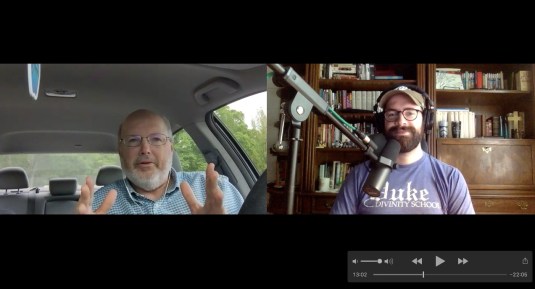
This week on the Strangely Warmed podcast I speak with Mikang Kim about the readings for the 2nd Sunday After Pentecost (1 Samuel 3.1-10, Psalm 139.1-6, 13-18, 2 Corinthians 4.5-12, Mark 2.23-3.6). Mikang serves as the pastor of Epworth UMC on the Eastern Shore of Virginia. Our conversation covers a range of topics including connecting with God through a native language, the movie Love Letter, choosing biblical names, pregnancy prayers, divine repetition, shame and guilt, dissonance and harmony, and breaking the rules. If you would like to listen to the episode or subscribe to the podcast you can do so here: Jesus Is Lord, And Everything Else Is…

m

Flashing Forth Flames of Fire

Psalm 29

Ascribe to the Lord, O heavenly beings, ascribe to the Lord glory and strength. Ascribe to the Lord the glory of his name; worship the Lord in holy splendor. The voice of the Lord is over the waters; the God of glory thunders, the Lord, over mighty waters. The voice of the Lord is powerful; the voice of the Lord is full of majesty. The voice of the Lord breaks the cedars; the Lord breaks the cedars of Lebanon. He makes Lebanon skip like a calf, and Sirion like a young wild ox. The voice of the Lord flashes forth flames of fire. The voice of the Lord shakes the wilderness; the Lord shakes the wilderness of Kadesh. The voice of the Lord causes the oaks to whirl, and strips the forest bare; and in his temple all say, “Glory!” The Lord sits enthroned over the flood; the Lord sits enthroned as king forever. May the Lord give strength to his people! May the Lord bless his people with peace!

Imagine, if you can, that I was a middle student and I came to your office one day and asked you to explain the Trinity. What would you say?

I was sitting at a table surrounded by pastors and lay people from the Virginia Conference of the United Methodist Church and they were evaluating whether or not I had been effective in my first three years of ministry. This was one of the last requirements to be fully ordained, and get to wear a stole like this one.

So I was sitting there at the table having already fielded an hour’s worth of theological questions when I was asked to explain the nature of the Trinity to a hypothetical middle schooler.

What would you say?

The three most popular analogies for the Trinity are as follows:

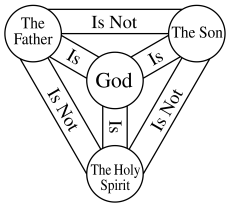
The Trinity is like an egg. At one moment it is three distinct things – a shell, a yolk, and an egg white. Without all three it ceases to be an egg. However this fails to justice to the Trinity because it cannot be divided into parts, but the egg can.

Another analogy is that the Trinity is like water. Water, depending on external temperature, can be a gas, a liquid, or a solid. And regardless of what state it is in, the chemical composition remains the same. However, this too fails to do justice to the Trinity because water can change into gas, or vice versa, but the Father does not become the Son or the Spirit.

Finally, there’s the analogy of the shamrock. St. Patrick was once said to have picked up a shamrock and say, just as there are three leaves, but there is one plant – so it is with the Trinity. However, this falls apart with the fact that the shamrocks have different parts and that is not true for the Trinity.

Pretend I’m a middle schooler and I wanted to know about the Trinity. What would you say?

835551271

Today is Trinity Sunday. It always falls on the Sunday immediately following Pentecost and it is a time for us to confront our three-in-one God. It continues us throughout the period we call Ordinary Time until Advent. Many churches use this day as a teaching moment to help illuminate church doctrine about what it means to be Trinitarian. They might break out some water, or eggs, or shamrocks and do what they can to help all in attendance to understand what we believe just a little bit better.

            But here’s the thing – For as much as our God is a present and revealing God, our God is also incomprehensibly and uncontainably complex.

Ascribe to the Lord, O heavenly beings! The voice of the Lord thunders, it breaks the cedars, the Lord shakes the wilderness, the Lord flashes forth like flames of fire!

The psalmist conveys to us images of the divine that have far more to do with destruction and devastation than with eggs, water, and shamrocks. Here we discover a God who causes the oaks to whirl, and strips the forest bare, such that all the people in God’s temple say, “Glory!”

Most of us have come of age in a world where the God of scripture has been conveyed to us through analogy after analogy, where professional Christians like me have endeavored to bring people like you closer to the divine, when the truth of the matter is that we cannot describe God, and God is the One who encounters us.

Our God cannot be contained by metaphors and analogies for middle school students – our God is as overwhelming as a windstorm leaving a forest bare, as frightening as a voice that can shake the wilderness, and as bewildering as flames of fire flashing forth.

262433.p

The church, the Bible, the Trinity, they are all confusing, and we can blame it on God. God reveals God’s self in ways we cannot imagine or rationalize, and choose to be God for us as Father, Son, and Spirit in such a way that it is beyond our ability to comprehend or describe.

And so, with all this confounding confusion, what can we say about our God?

Perhaps, we can say that God is whoever raised Jesus from the dead having first raised Israel out of Egypt. We can say this because God chose to reveal God’s self to us in the person and incarnation of Jesus of Nazareth. And Jesus, like God, is anything but simple.

In Jesus, God got physical, explicit, and peculiar. God came close to us, too close for comfort for many. Jesus is God in action. Jesus is God refusing to remain an abstract idea removed to a far off place. Jesus is God breaking forth from the shackles of God’s own divinity.

But, lest we fall into a day-dream version of God in Jesus through the lens of sentimentality… God is still the God of the psalm flashing forth flames of fire.

I once heard that God is at least as nice as Jesus, but the same holds true that Jesus is at least as frightening as God.

            And then we’re left with another question: Who is God’s peace for?

After describing the destructive power of the Lord, the psalm ends with a call for God to give strength to God’s people and for them to be blessed with peace. What about those who are not part of God’s people? What does this peace actually look like? Does God take sides?

The answers to those questions are as confusing an as ambiguous as the Trinity itself.

Shield-Trinity-Scutum-Fidei-English.svg

The Lord blesses the sons and daughters of Abraham but they live in a time of famine.

            They are rescued by Joseph only to become slave in Egypt.

            Led by Moses they escape bondage to wander in the wilderness for forty years.

            Joshua delivers them to the Promised Land but they are never really at peace.

            There are wars after wars and the so-called “chosen people” lose just as often as they win. They are taken into exile, or forced to wait for loved ones to return home. And when they are reconciled, if ever, peace is the last thing on their minds.

We can read these stories over and over again in the Old Testament, we can encounter those elected and rejected by God, but we don’t have to look far to know that it is true – we war among ourselves all the time; father against son, mother against daughter, brother against brother, sister against sister. And then we still ask, “Are we going to encounter the God of earthquakes, flames of fire, and whirling winds – Is God on our side?” Or, perhaps better put, “When will the Lord finally bless us with peace?”

Psalm 29, the doctrine of the Trinity, they both raise more questions than they provide answers. People like you and me have been struggling with these words and ideas for centuries, we’ve been tugged between the tension and ambiguity of God’s nature in the world and in our very lives.

We worship a God who blesses, but we live in a world where bad things happen to good people nonetheless. There is no easy and satisfying answer to the question of whether or not God takes sides, just as there is no easy and simple analogy for the Trinity.

We may never be able to avoid the confusing nature of faith completely. So much of what we do is based on a premise of mystery – we just happen to live in a world hell-bent on having an answer for everything.

If all this talk of trinitarianism and God’s frightening power seems a bit overwhelming, you are not alone. There are plenty of churches and communities that make this easier on the brain with simple analogies and ignorant assumptions. But there is no way for us to do justice to the marvelous complexity, the community in unity of the divine, without believing in the three-in-one God. We cannot worship God in faith without struggling and wrestling with the question of God’s preferences.

John Wesley, the founder of the Methodist movement struggled with his knowledge of God. He read all the right books and went to the right school, and even became a priest in the Church of England without believing in the faith he preached. He struggled and struggled to the point that when he asked one of his mentors what to do about leading a church without faith his mentor said, “preach until you get it.”

And it was 280 years ago this week that John Wesley wrote something rather remarkable in his diary: “In the evening I went very unwillingly to a society on Aldersgate Street, where one was reading Luther’s preface to the Epistle to the Romans. About a quarter before nine, while he was describing the change which God work in the heart through faith in Christ, I felt my heart strangely warmed. I felt I did trust in Christ, Christ alone, for salvation; and an assurance was given me that He had taken away my sins, even mine, and saved me from the law of sin and death.”

Wesley had spent most of his life looking for God, when in the end God was the one who found him and warmed his heart. That moment changed everything, that society meeting on Aldersgate is largely responsible for the existence of the United Methodist Church today.

God comes to us, all of us, at any time and at any place, as Father-Son-Spirit. For some God flashes forth like flames of fire, and for others God’s flame is found in the warmth of our hearts. God finds us and, contrary to what we might want, God doesn’t answer all of our questions. Yet when God encounters we discover an assurance that this God is with us.

When the far-off One who has been brought near is us, when the wall that has been destroyed is the wall we build in a vain attempt to keep God out of our lives and off our backs, that’s when we start to know the Trinity.

Faith, however, will always remain a mystery. We will find ourselves confused by the God who finds us. Because, in the end, it may simply be too frightening to think about God’s peace, whatever that is. It might be too overwhelming to think that God is not on our side, or worse: God might be on their side.

So on this Trinity Sunday, as we leave scratching our heads, we do so with the hope that God will bless us with true peace – not as we know peace or wish to know peace; a peace that is always defined on our terms. No, this Trinity Sunday, we pray for the peace, the perfect peace, that is known and shared within the Trinity – Father, Son, and Spirit.

            And, we may be so bold so pray, that God might warm our hearts in the process. Amen.

Mercy Precedes Judgment

strangely-warmed-spreaker-header

This week on the Strangely Warmed podcast I speak with Mikang Kim about the readings for the Trinity Sunday – Year B (Isaiah 6.1-8, Psalm 29, Romans 8.12-17, John 3.1-17). Mikang serves as the pastor of Epworth UMC on the Eastern Shore of Virginia. Our conversation covers a range of topics including Licensing School, Jacob’s ladder, instagram, strangers in a strange land, visitation as proclamation, the keys of heaven, the chaos of God, and the intimacy of the Trinity. If you would like to listen to the episode or subscribe to the podcast you can do so here: Mercy Precedes Judgment

mk

The End Is Music

Crackers-Banner-1

A few weeks ago I sat down with Jason Micheli, Teer Hardy, and Johanna Hartelius to record a Crackers & Grape Juice conversation in which we talked about the music that moves us. We were inspired by the late theologian Robert Jenson who once wrote that the end (of all things) is music. We each took two turns playing a particular song (both sacred and secular) and then unpacked how each song affected us theologically. We covered music and genres from Swedish Hymns to Sufjan Stevens. If you would like to listen to the episode, or subscribe to the podcast, you can do so here: The End Is Music

IMG_3956

This is me realizing how much time it was going to take to edit the episode.

Rebelling Against King Jesus

strangely-warmed-spreaker-header

This week on the Strangely Warmed podcast I speak with Alex Joyner about the readings for the Day of Pentecost – Year B (Acts 2.1-21, Psalm 104.24-35b, Romans 8.22-27, John 15.26-17, 16.4b-15). Alex is the District Superintendent for the Eastern Shore in the Virginia Conference, and he regularly blogs on his website Heartlands. Our conversation covers a range of topics including bad puns, living off the map (literally), church birthdays, faithful diversity, the connections between Babel and Pentecost, the impermanence of land, giving voice to the voiceless, and the community in the Trinity. If you would like to listen to the episode or subscribe to the podcast you can do so here: Rebelling Against King Jesus

aj

A Better Way To Vote

strangely-warmed-spreaker-header

This week on the Strangely Warmed podcast I speak with Benson McGlone about the readings for Easter 7B (Acts 1.15-17, 21-26, Psalm 1, 1 John 5.9-13, John 17.6-19). Benson is currently planting a church in Northern Virginia, and is one of the hosts of the Free Range Church Podcast. Our conversation covers a range of topics including theological tattoos, roosters with fishes and sheep, casting lots, church democracy, the intersection between finances and leadership, biblical happiness, knowing what we need, and the divine soliloquy. If you would like to listen to the episode or subscribe to the podcast you can do so here: A Better Way To Vote

Pictture-Castaneda-and-Vizcarrondo-Article-102312

Devotional – Psalm 22.28

Devotional:

Psalm 22.28

For dominion belongs to the Lord, and he rules over the nations.

Weekly Devotional Image

“What’s the difference between dominion and domination?” I asked the question before the Sunday School class with curiousity about how they might respond. We’ve been working our way through Diana Butler Bass’ book Grounded which address the particularity of God’s creation and humanity’s responsibility to be good stewards of this gift. At first the room was quiet as people put their thoughts together and then they started flooding out:

“Dominion is like a kind a gracious king who cares about the kingdom, whereas domination like a ruthless ruler who does whatever they want.”

“Dominion means responsibility and domination means destruction.”

We listened to one another and then took it a step further to contemplate whether we’ve cared for the earth with dominion or domination. We shared stories of pristine wilderness experiences and incredible natural beauty. However, we also shared anecdotes of ruined soil, toxic water, and tainted air.

In Genesis God’s gives humanity dominion over creation. We were given the responsibility to care for the planet with love and devotion. And our lives are such that today we are intimately connected with the dirt beneath our feet, the water we drink, and the air we breathe, even if we take them all for granted.

But we don’t care for creation simply because God told us to.

4_earth

On a primal and fundamental level we affirm that dominion first belong to the Lord, and that God rules over all nations. There might be days when this seems strange, and even paradoxical (particularly when we see images of atrocities from all across the world) but this world belongs to God first and only secondarily to us.

Imagine, if you can, that your best friend in the world offered to let you borrow his or her car, or maybe a house to stay in… Would you not take care of it even better than your own? Would the thought of his or her generosity be such that it would propel you to be an incredible steward of the gift rather than taking it for granted?

The earth is a precious, and at times fragile, gift. And, more often than not, we treat it terribly. We rarely think twice before flicking a piece of trash out the window while we’re driving, we take our clean drinking water for granted, and we assume that because a particular item of food is available at the grocery store that we are entitled to it.

But we are not entitled to anything.

This earth is a delicate gift offered to us with an expectation of responsibility. Just as we have been given dominion (not domination) over the earth, we remember that God has dominion over us.

Love Loves To Love Love

strangely-warmed-spreaker-header

This week on the Strangely Warmed podcast I speak with Alan Combs about the readings for Easter 5B (Acts 8.26-40, Psalm 22.26-40, 1 John 4.7-21, John 15.1-8). Alan is the Lead Pastor at First UMC in Salem, VA. Our conversation covers a range of topics including interruptions in worship, King’s Hawaiian Bread with Welch’s Grape Juice, coffee communion, the need for discipled guidance, ambiguity in the psalms, choosing scriptures, theologically problematic hymns, the cosmic Jesus, and growing by subtraction. If you would like to listen to the episode or subscribe to the podcast you can do so here: Love Loves To Love Love

AC

Devotional – Psalm 23.5

Devotional:

Psalm 23.5

You prepare a table before me in the presence of my enemies; you anoint my head with oil; my cup overflows.

Weekly Devotional Image

Sometimes the more we say something the less we understand what it means. Think about the phrase, “I love you.” Perhaps you can remember the first time your spouse offered those three magical words and how your body tingled with joy and hope and expectation. But then fast-forward 20 years… Do those three words still shake you to your core? Or are they more like the bookends to a conversation?

The same holds true for particular parts of Christianity. We memorize things like the Lord’s Prayer and the Apostles’ Creed to such a degree that we can say them in church, week after week, without thinking about what we are actually saying. We grow so accustom to seeing the same phrases and announcements in the bulletin that we just gloss over them (incidentally, I jokingly told the congregation that I hid a line in the bulletin months ago saying something like “the first person to notice this sentence will receive $20” and that no one found it. Of course I didn’t actually do it, but you could tell that a number of people were disappointed they missed the opportunity to make some quick cash!)

And then you take things like beloved moments in scripture, and we accept them without reflecting on them as well.

The 23rd Psalm might be the most well known passage in the entire bible, and yet somehow it contains a verse that many of us often forget. We like the idea of being lead to green pastures, and lying beside still waters, but having a table prepared for us IN THE PRESENCE OF OUR ENEMIES is another thing entirely.

Disney-Villains-jafar-2508555-1280-1024

Now, to be clear, when we think about who those “enemies” might be, we often conjure up people on the other side of the globe. However, sometimes our greatest enemies are actually the people in the pews next to us.

In God’s strange and mysterious wisdom, Christians are regularly gathered together to break bread with both allies AND enemies. We come to the table with the people we love AND hate. The table is prepared for us in the presence of those we love AND fear.

God’s table, where we encounter a little bit of heaven on earth, is the place where we begin the difficult and powerful work of being reconciled with those around us. It is because God is willing to gather us with our enemies that we are anointed for the work of discipleship in this world. Only a people who willingly gather with those we might call our enemies can also faithfully affirm that our cups runneth over.