I Pledge Allegiance To Jesus Christ

strangely-warmed-spreaker-header

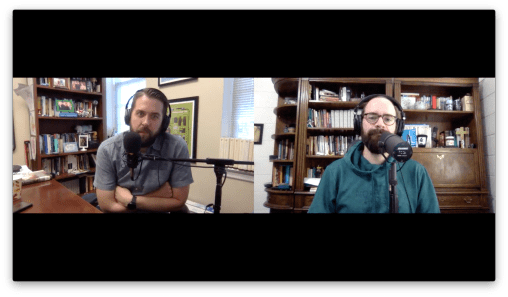
This week on the Strangely Warmed podcast I speak with Jonathan Page about the readings for the Christ the King Sunday (2 Samuel 23.1-7, Psalm 132.1-18, Revelation 1.4b-8, John 18.33-37). Jonathan serves as the pastor of Herndon UMC in Herndon, VA. Our conversation covers a range of topics including bidding farewell to Year B, the particularity of liturgical days, the Christian version of the 4th of July, the end of metaphors, generational evangelism, rebelling against the kingdom, flags in the sanctuary, and the power of lingering questions. If you would like to listen to the episode or subscribe to the podcast you can do so here: I Pledge Allegiance To Jesus Christ

Screen Shot 2018-11-19 at 9.44.46 AM


The Beginning Of The End

Mark 13.1-8

As he came out of the temple, one of his disciples said to him, “Look, Teacher, what large stones and what large buildings!” Then Jesus asked him, “Do you see these great buildings? Not one stone will be left here upon another; all will be thrown down.” When he was sitting on the Mount of Olives opposite the temple, Peter, James, John, and Andrew asked him privately, “Tell us, when will this be, and what will be the sign that all these things are about to be accomplished?” Then Jesus began to say to them, “Beware that no one leads you astray. Many will come in my name and say, ‘I am he!’ And they will lead many astray. When you hear of wars and rumors of wars, do not be alarmed; this must take place, but the end is still to come. For nation will rise up against nation, kingdom against kingdom, there will be earthquakes in various places; there will be famines. This is but the beginning of the birthpangs.” 

This might be our least favorite Jesus. We prefer the Jesus who fed the 5,000 gathered to hear him speak. We like rejoicing in Jesus’ greatest parables like the Prodigal Son and the 

Good Samaritan. We enjoy reflecting on Jesus’ final evening with his friends while passing bread and wine around the table.

But the apocalyptic Jesus? No thank you!

Jesus and his disciples are walking through Jerusalem and the temple is casting a shadow over everything (literally and figuratively). It captivates the hearts and imaginations of all who walk in its shade, and it is the pivotal focus of their faith. It stands as a beacon to all with eyes to see regarding the power and the glory of God.

And the disciples can’t help but marvel in the giant stones and the large buildings. Like kids seeing a skyscraper for the first time they probably kept fumbling over their feet while their eyes were stuck in the sky.

Jesus had led them all through Galilee ministering to the last, least, and lost, but now they are in Jerusalem, rubbing shoulders with the very people who fear Jesus the most.

It was probably Peter who keeps his finger pointed up high with every passing arrangement of architecture and Jesus says, “Psst. You want to know a secret?”

The disciples frantically move to get close enough to hear the Good News.

“All of this stuff is going to be destroyed.”

“Now wait just a minute Jesus! This temple has stood for centuries. You mean to tell us the pinnacle of all that we hope for and that we believe in will crumble?”

“Yep.”

Later, they’re sitting on the Mount of Olives, opposite the temple, and they bring it up again: “Seriously Jesus, when is this going to happen? What will be the signs of the times so we know what to expect?”

“My friends, beware that no one leads you astray with empty promises about the end. There will be plenty of people who come in my name declaring profound change, and messianic power. They will lead many down the wrong path. But when you hear about wars and destruction, do not be alarmed; all of this must take place. There will be earthquakes. There will be famines. There will be wars. But all of this is just the birth pangs, the beginning of the end.”

this-is-not-the-end

Big and towering buildings are not supposed to crumble to the ground. Oceans are not supposed to leap out and cover the dry land. The earth is not supposed to shake and tremble.

We are not supposed to lose the people we love. 

But then it happens. 

Those who witness such unfortunate and frightening sights not only lose things that are dear and precious to them – like the countless families whose homes and properties have burned to the ground in California. But in a very real sense they have also lost their innocence. 

They now know that something they once believed to be a sure thing is no longer trustworthy. 

These images, both in scripture and in our lives, are what we might call apocalyptic. They signal to those with eyes to see the destructive forces of the world such that reality seems to be pulling at the seams. But thats not what apocalypse means.

An apocalypse is a revelation from God – it is a vision of a timeless reality. It is the past. It is the present. It is the future.

Jesus’ friends saw the temple as the end-all-be-all of faithful living, and he quickly brushed it aside to say that even the brick and mortar will fall away. 

Don’t put your faith in the buildings and in the structure. Keep your faith in the Lord who reigns forever.

But we don’t like this Jesus; he’s frightening!

These words are tough to swallow in our comfortable and contemporary condition. What if the things we cling to most are just illusions? What happens when those things we so elevate come crashing to the ground? How have we so forgotten these words from Jesus?

Take a look around for just a moment at our sanctuary… None of this will last. Everything has its time. But we deny it again and again. Look at the pews, there’s a reason they’re bolted to the floor! They are made to feel far more permanent than they really are.

All of this will disappear. All of our great monuments are temporary – not just in the church but in the world at large. 

And we don’t have to be seasoned with life to know that this is true. Each of us here, in some way, shape, or form, know about the finitude of things. We all kind of know, whether we like to admit it or not, that all life is loss.

Time is now fleeting, the moments are passing…

We try to deny the truth, we erect giant edifices, we worship our architecture as if it was here from the beginning, and we believe that are favorite institutions are too big to fail. 

But they do, and they will.

Perhaps most frightening of all isn’t the foolish belief that these things will last forever, but that we will last forever. We won’t. The bell will toll for us all.

We cannot stop the inevitable. 

All life comes to an end. 

Only a living God can make our end a beginning.

There is a strange and bizarre comfort in these words from Jesus to the disciples in Jerusalem. I know it doesn’t sound comforting. For us, when Jesus says, “God’s gonna destroy all of this,” it sounds like bad news. But for others, those for whom these institutions and statues are like hell on earth, the destruction of them is good news.

None of those things give true life. No building, no institution, no company. 

Only God gives life.

The truth of the gospel is that God is gonna get what God wants. No matter how much God’s gotta mess up what we’ve got, God’s gonna get what God wants.

forgotten_church_by_gaudibuendia-d6pu2zm

Jesus rightly warns his disciples that many will come proclaiming some version of a truth, they will come with empty promises about the saving end of all things. They will, in some way, call upon you and I to join up to protect the things that we think rule the world.

But Jesus is abundantly clear – the temple cannot and will not stand. 

The restoration of the temple, getting Jesus back in schools, whatever the thing is that we are willing to die for is not the end of all things. Those things are not God’s goals for the world.

The goal of all life is resurrection!

This is why we are cautioned about those who draw all of our attention and focus and energy of bold claims about what’s really at stake. And yet we cannot help ourselves! The all-you-can-eat-buffet of suffering and destruction in this world is a fix that never stops bizarrely comforting us.

And we, today, become so focused on discerning the signs of the time, that we neglect to open our eyes to the truth of the gospel today. 

Our focus is not on the signs of the times themselves, but rather on the one who is to come – the one who enables us to stare into the void of such devastation and claim the certainty of a new day dawning in the light of the resurrection. 

Today, faithful living, whatever that means, has become something of fanatical observance, or an apathetic endeavor. 

Just turn on the news and you will quickly learn about the destructive powers of Christians in their communities all across the theological spectrum. Or you can learn about the failure of so-called Christian politicians. Or you can learn about the greed in churches that wedge themselves between families, between friends, and between brothers and sisters in Christ. 

The world quickly identifies the people who claim to speak on behalf of Jesus who then rapidly lead disciples down paths of idolatrous worship. They care more about which politicians won certain seats than about the people who sit in the seats of their churches. They preach intolerance rather than love, they emphasize death over resurrection, and they support judgment above new life.

And then, on the other side, there are countless churches that contain only the blandest sense of discipleship. Week after week the pews fill with less and less people as the sermons are filled with more and more trite aphorisms about living your best life. They might have a bible displayed at the front of the sanctuary but it is covered in dust, the people who show up on Sunday don’t even know why they do so, and they only pray because they don’t know what else to do.

And so, it is against the fanatical religious leaders of today, Jesus warns us to beware that no one leads us astray. He speaks to us through the apocalyptic vision of the past, present, and future about holding fast to the love that has been revealed to us in Father, Son, and Holy Spirit. And he beckons us to remember who we are and whose we are. 

And it is against the apathetic churches of today, the ones who are just going through the motions, that Jesus announces an electrifying and revelatory message: this is not the end!

This kind of scripture might terrify us to the core; we might see the world falling apart under our feet and immediately identify what we witness with what Jesus warned his disciples about. Depending on who we are, and where we are, these verses can appear more horrifying than hopeful.

But for anyone with a truly terrifying reality – this is a profound word and vision of hope. 

For the woman who fears the Thanksgiving table, and the conversations and memories it brings, “this is not the end” promises something redemptive and transformative.

For the man who knows he cannot afford to buy Christmas presents this year, “this is not the end” is a hope that burns like a faithful flame in the midst of darkness.

For the family grieving as they take their first steps after burying someone in the ground, “this is not the end” takes on a whole new meaning when they experience the glory of God who promises our resurrection. 

No matter who you are, and no matter what you going through in your life right now, hear these frighteningly and faithfully apocalyptic words and know that they are meant for you: “This is not the end.” Amen. 

The Way

Ecclesiastes 3.1-8

For everything there is a season, and a time for every matter under heaven: a time to be born, and a time to die; a time to plant, and a time to pluck up what is planted; a time to kill, and a time to heal; a time to break down, and a time to build up; a time to weep, and a time to laugh; a time to mourn, and a time to dance; a time to throw away stones, and a time to gather stones together; a time to embrace, and a time to refrain from embracing; a time to seek, and a time to lose; a time to keep, and a time to throw away; a time to tear, and a time to sew; a time to keep silence, and a time to speak; a time to love, and a time to hate; a time for war, and a time for peace.

John 14.1-6, 27

“Do not let your hearts be troubled. Believe in God, believe also in me. In my Father’s house there are many dwelling places. If it were not so, would I have told you that I go to prepare a place for you? And if I go and prepare a place for you, I will come again and will take you to myself, so that where I am, there you may be also. And you know the way to the place where I am going.” Thomas said to him, “Lord, we do not know where you are going. How can we know the way?” Jesus said to him, “I am the way, and the truth, and the life. No one comes to the Father except through me.” Peace I leave with you; my peace I give to you. I do not give to you as the world gives. Do not let your hearts be troubled, and do not let them be afraid.

truth-and-life-1024x576

The disciples just don’t get it. I mean, they’ve been with Jesus for years and they’ve seen it all. They were there when he walked on water and when he told the story about the mustard seed. They were there when he was chased out of Nazareth and when he healed blind Bartimaeus. They were there when he calmed the storm and when he made the lame man walk.

But now, after all of that, they still don’t get the whole picture.

“What to you mean Lord? We don’t know where you are going, how can we know the way?” 

Jesus said, “I am the way!”

In our lives there is a time for everything. Ecclesiastes hits the truth that we’d sometimes rather ignore. If we had it our way our lives would be nothing but birthing, planting, healing, building, laughing, dancing, embracing, keeping, speaking, and loving. But life doesn’t work that way. For every glorious mountaintop there is an equally frightening valley.

When a child is born a new parents feel an unknown joy and expectation, only to realize how fragile the new life is and the terror begins to creep in.

When we start to recover from an illness, the memory of our horrible we felt stays with us and we find ourselves waiting for the next time we have to reach for the medicine.

When we find someone we want to spend the rest of our lives with, we begin to realize that if we lose them we might just lose everything that keeps our lives together.

There is a time for everything, and this was especially truth during the life of Jesus.

A time to be born, to a poor virgin in a small little town called Bethlehem. 

A time to die on a hill called Golgotha while abandoned by the most important people. 

A time to plant new ideas in the minds of his followers, and a time to pluck up as he brushed the dust off his feet village after village. 

A time to heal the many who were suffering from every ailment under the son, and a time to let the dead bury the dead. 

A time to weep for his dead friend Lazarus and a time to laugh while sharing wine around the table with his friends. 

A time to embrace his friends while washing their feet, and a time to let go when encountering Mary by the empty tomb. 

A time to go looking after the one lost sheep, and a time to let go of the broken theology of the scribes and the Pharisees. 

A time for silence while he prayed in the garden and a time to scream as he turned the tables over in the temple. 

A time to love the very people who hated him and a time to hate the very world that lost sight of what it means to love.

For everything there is a season.

All of us go through life from birth to death jumping back and forth between the mountaintops and the valleys, begin the joys and the sorrows, between the laughing and the crying. And all the while Jesus is with us – weeping while we weep, dancing while we dance, and praying while we pray.

Lo, I am with you, even to the end of the age. 

Jesus insists on journeying with us in this life from our first breath to our last, knowing full and well that we need all the help we can get. Because even the disciples, the ones closest to Jesus, the ones who walked with him on the roads of life still didn’t get it.

Their hearts were troubled because they thought they knew what Jesus was here to do. They were awaiting a version of their own kingdom rather than Jesus’ kingdom. They saw a future that suited their needs best, rather than a future where all of God’s children could rejoice together.

“I am going ahead of you,” says Jesus. “I am preparing the way for you.”

To be frank, their confusion is also born out of their resistance to let go of the one who grabbed hold of them. If they had it their way, Jesus would’ve stayed with them forever walking along the sea of Galilee. They couldn’t bring themselves to a see a world where Jesus hung from a cross, so instead they just kept asking the same types of questions over and over again.

But as the way, there was no other way for Jesus than the cross, the tomb, and the resurrection. 

Jesus walks through the valley of the shadow of death, Jesus sits in the darkness of suffering and shame, Jesus breaks forth from the chains of death so that we might know that nothing can separate us from the love of God in Jesus Christ our Lord.

That’s the whole message of scripture. 

The disciples didn’t get it, but you know who did? Kwabe did.

Kwabe knew the place where he was going, the place that Jesus prepared for him. 

He knew that every single time he walked forward to receive communion at church that he was tasting what now belong to him forever and ever. He knew that every single moment with his children, every perfect embrace, is what he is now experiencing with God Almighty. He knew the forgiveness and peace that he experienced through Abigail was awaiting him in his promised resurrection.

Kwabe had eyes to see and ears to hear the kingdom of God in his midst. His faith was such that even without walking the streets with Jesus like the disciples, he knew the place where Jesus was going, and he held on to the way that is Jesus the Christ no matter what.

I was driving on my way to church one morning when I got a call from Kwabe on my cell phone. “Hello Pastor” he said calmly. Thinking there was something wrong on our recent financial report I slightly braced myself for whatever it was that he needed to tell me. But I was wrong.

He was calling to tell me he had cancer.

It hit me so hard that I had to pull into an empty parking lot because I felt like I had been punched in the gut. 

In that moment I asked him too many questions, I prayed for him over the phone, I even offered to drive over to his house, and the entire time he remained perfectly calm. 

And after a period of silence, a silence born out of the fact that I no longer knew what to say, Kwabe said something I’ll never forget. “It is in God’s hands. I am in God’s hands. And I know the way.”

I know the way.

It’s hard for me to admit, but Kwabe was more faithful that I am. When confronted by the stark reality of his finitude I began to crumble and yet he remained steadfast. 

I know the way. 

I miss Kwabe. I miss his smile and his laugh. I miss the way he was able to calm the room when everyone else felt anxious. I miss the way he would nod at me in the middle of a sermon as if to say, “Good job.” I miss the way he would wait for me after church to ask if we could pray together. I miss him.

I think Kwabe knew a sense of peace in his life that most of us don’t. Regardless of the circumstances at work, or at home, or at church, or even in the midst of his cancer, he felt a calm sense of peace that carried him through some profoundly difficult moments. And I truly and deeply believe that Kwabe’s peace came from knowing the way, the truth, and the life that is Jesus Christ the Lord. 

Kwabe knew, deep in his bones, the place where he was the going, the place where he is now waiting for each of us. Throughout his life he was held in the palm of God’s hand and now he rejoices in the promise of the Good News made manifest for him through Father, Son, and Holy Spirit. Kwabe’s heart and soul were not troubled, he was not afraid, because he knew the way.

Kwabe’s death is painful and difficult for many of us to reckon with. There will be days where we will continue to grieve and lift up our clenched fists to the sky. But there will come time when we will laugh as we remember those time that Kwabe made us laugh. There will come a day when we can smile with gratitude for all that he meant to us. And there will come a time where we can rejoice with Kwabe knowing that he is now rejoicing with the Lord.

Christ speaks to us through the scriptures, helping us to see and know what Kwabe saw and knew – there is a place prepared for us. And though we mourn and cry and grieve here and now, we need not be afraid because Jesus is the way and the truth and the life. 

There is a time for everything. Our time with Kwabe has come to an end, but now the time has come for Kwabe to rest in the Lord. We are the ones now responsible for lifting up his lamp, to shine the kind of glorious light that Kwabe did, so that we, and others, can feel the peace that he knew in Jesus. 

So thanks be to God for the life of Kwabena Sakyi, a man who deeply loved his family, who cared for those in his community, and who knew where he was going. Amen. 

Lettuce Sermons

Devotional:

Hebrews 10.14 

For by a single offering he has perfected for all time those who are sanctified. 

Weekly Devotional Image

Every sermon runs the risk of becoming a “Lettuce” sermon. A “Lettuce” sermon is one that ends with a final, and resounding, paragraph about what we are now supposed to do:

“Let us (get it?) now go forth to collect as many jackets as possible to cloth everyone in our community.” // “Let us remember Jesus’ words about feeding the 5,000 as all of us register to serve at the soup kitchen this week.” // “Let us rejoice in the gifts we’ve been given by committing to tithe to the church for the next year.”

This temptation runs deep in the heart and soul of preachers because we too fall prey to the expectation that people come to church in order to “get something out of it.” And there is a fear that without providing some sort of assignment or expectation, people will receive nothing and are free to leave without any responsibility at all.

Now, to be clear, clothing others, and feeding the hungry, and tithing to the church are all good things – things that we should be doing in our community and in our church. However, ending the proclamation from the pulpit with a call to action implies that we are to act in order to earn our salvation or redeem the world.

redemption-nesspreso

But the message of the gospel is that we have already been saved and that the world has already been redeemed!

Jesus as the single and perfect offering has perfected, for all time (!), those who are sanctified. Jesus’ life, death, and resurrection reconciled all that was lost in the Garden such that we have been freed from our bondage to sin and death and have been freed for life and joy in the kingdom. 

The distinction that is often lost in the church today is that we do good and wonderful things for the people around us not because we have to, but because we want to. Clothing others, feeding the hungry, and giving money to the church doesn’t help us and it certainly doesn’t earn us anything. They are simply our natural responses when we encounter the immense generosity of the Lord who gave us the greatest gift of all: Jesus.

You Think You Know But You Have No Idea

strangely-warmed-spreaker-header

This week on the Strangely Warmed podcast I speak with Jonathan Page about the readings for the 26th Sunday After Pentecost (1 Samuel 1.4-20, Psalm 16, Hebrews 10.11-25, Mark 13.1-8). Jonathan serves as the pastor of Herndon UMC in Herndon, VA. Our conversation covers a range of topics including culture (re)framing, marginalized scripture, brutal honesty, refuge as actual safety, measuring gods, the elevator speech of grace, the great “and yet”, sitting with the apocalyptic Jesus, and MTV Diary. If you would like to listen to the episode or subscribe to the podcast you can do so here: You Think You Know But You Have No Idea

Screen Shot 2018-11-12 at 8.38.30 AM


The Fruit Of The Womb

strangely-warmed-spreaker-header

This week on the Strangely Warmed podcast I speak with Teer Hardy about the readings for the 25th Sunday After Pentecost (Ruth 3.1-4, 4.13-17, Psalm 127, Hebrews 9.24-28, Mark 12.38-44). Teer serves as an associate pastor at Mt. Olivet UMC in Arlington, VA and is one of the cohosts for Crackers And Grape Juice. Our conversation covers a range of topics including Advent devotionals, Rated R scriptures, podophobia, neighborhood names, bringing God into the voting booth, the once-for-all-ness of the atonement, sacrificing Jesus one Sunday a month, and ignoring people in robes. If you would like to listen to the episode or subscribe to the podcast you can do so here: The Fruit of the Womb

Screen Shot 2018-11-05 at 12.31.07 PM

Teer Talking About Feet…

Spooky

Revelation 21.1-6a

Then I saw a new heaven and a new earth; for the first heaven and the first earth had passed away, and the sea was no more. And I saw the holy city, the new Jerusalem, coming down out of heaven from God, prepared as a bride adorned for her husband. And I heard a loud voice from the throne saying, “See, the home of God is among mortals. He will dwell with them as their God; they will be his peoples, and God himself will be with them; he will wipe away every tear from their eyes. Death will be no more; mourning and crying and pain will be no more, for the first things have passed away.” And the one who was seated on the throne said, “See, I am making all things new.” Also he said, “Write this, for these words are trustworthy and true.” Then he said to me, “It is done! I am the Alpha and the Omega, the beginning and the end.”

I love Halloween. There’s just something about people, both young and old, getting dressed up in costumes that draws forth a feeling of frivolity that feels almost completely absent in the world today. This Halloween, in particular, felt like a great pause and retreat from the never-ending horrible news cycle; rather than having all of the same conversations about the same stuff over and over again, for one night, people put on the masks and let it all go.

And nowhere was this more present than in our parking lot for the Trunk or Treat. We had over 200 hundred children from the community make their way from trunk to trunk and our property was filled with laughter, wrappers being ripped to shreds, and the monster mash. But perhaps the thing I enjoyed most, even more than watching kids go down the Bouncey house slide, or my son dancing in his Luke Skywalker costume, was watching the parents.

I recognized a number of people from the neighborhood, and some of whom regularly gather in our lot for the Flea Market or for the food distribution, but during the trunk or treat they seemed different. Instead of the normal anxieties and frustrations, they appeared at ease. I saw smiles, and giggles, and even the occasional sleight of hand removing a Twix from a kid’s bucket for a quick treat.

IMG_4618

Halloween is awesome, and it is good for kids and adults.

Underneath the costumes and the candy, beyond the Butterfingers and the “Boos!”, Halloween contains a recognition about the complicated nature of life, and in particular that life doesn’t last forever. On Halloween both the young and old are forced to come to grips with the often avoided truth: death is real.

But for as important as Halloween is, particularly for Christians, All Saints is even more important. 

All Saints is the set apart liturgical day when we pause, remember, and give thanks for the dead. Some churches will highlight the Saints in their community, others will offer time for silent reflection, and other will simply name the dead and leave it at that.

There are lots of liturgical moves that can be made on this day, but All Saints also raises a lot of questions, in fact some of our most profound questions: Who and what are we really? Is there anything permanent in the universe? Do our lives have any meaning?

And those questions can be far more spooky and frightening than anything we might’ve encountered on Halloween.

Here’s a frightening thought to put it all in perspective: When was the last time you walked through a cemetery? What did you make of all the countless names you didn’t know or even recognize? Have you ever though about how many people will walk past your grave one day not knowing or caring at all about who you were?

Or mull on this: I have lost track of the number of families that have come to me with questions about what to do with the stuff of a person now dead. Sure, the big pieces of furniture will eventually find new homes, but what about the random box of newspaper clippings? What should we do with all the old notes and the brief sketches? Who wants all the sentimentalities that mean nothing to those who are still living?

Or still yet this: On Wednesday we drove our son to his godparents’ house so we could trick or treat with them around their neighborhood. Elijah loaded up on gobs of candy and he rejoiced in screaming “Happy Halloween” while he was still walking up the driveway before knocking on the door. But at the end of the evening, we loaded him and all of his gleanings into the car, and while driving home we encountered 5 different rescue vehicles with all of their lights and sirens blazing, all on their way to horrible accidents on what is supposed to be one of the most magical nights of the year.

Did you know that more pedestrian traffic fatalities occur on Halloween than any other day during the year? The majority of which happen to children under the age of 8…

No matter who we are, no matter what kind of life we’ve led, we all want to know the answers to some ultimate questions: Is death all there is? Do our lives have any real meaning? What happens if we die with things unresolved? Are we going to be separated forever from the very people who meant the most to us?

saints_5236c

Contrary to the Hallmark channel, or any of number of institutions and industries, the biblical view of humanity is that if we were left to our own devices, if this was all there is, then our lives would all end in emptiness and we would truly and irrevocably return to the dust from whence we came.

No amount of power, or wealth, or resources, can stop the inevitability of the end of our days.

And so it is here, from this spooky, frightening, and terrifying vantage point that I want to read our passage once more:

“Then I saw a new heaven and a new earth; for the first heaven and the first earth had passed away, and the sea was no more. And I saw the holy city, the new Jerusalem, coming down out of heaven from God, prepared as a bride adorned for her husband. And I heard a loud voice from the throne saying, “See, the home of God is among mortals. He will dwell with them as their God; they will be his peoples, and God himself will be with them; he will wipe away every tear from their eyes. Death will be no more; mourning and crying and pain will be no more, for the first things have passed away.” And the one who was seated on the throne said, “See, I am making all things new.” Also he said, “Write this, for these words are trustworthy and true.” Then he said to me, “It is done! I am the Alpha and the Omega, the beginning and the end.”

I hope it gave you some goosebumps, or at least some divine comfort made manifest physically and tangibly, particularly after thinking about graveyards, leftover items, and ambulances on Halloween.

Because the true depths of God’s promise in Revelation can only felt when we’ve actually considered the alternative. 

Revelation can appear wild and weird but it is also wonderful. In addition to visions of beasts and flaming altars, it also offers moving images of comfort and hope to people like you and me who live in troubled times.

Though, of course, what we might consider “troubled” would pale in comparison to the early Christians. John’s letter was written from a place of exile to a growing community who were experiencing horrific persecution. The letter, in different ways, claims that despite all appearances to the contrary, the Roman Empire’s power was not absolute – it is only God who reigns supreme.

The differing visions and divine battles between good and evil offer a lens into the penultimate victory of God over and against everything else. No amount of physical abuse or religious persecution, no number of graveyards, or leftover belongings, or even ambulances on Halloween have the final word.

Sure, they will sting like nothing else on earth, they might derail everything we thought we knew, they can even bring our lives to an end, but they are not the end. 

There’s a reason that this text, these words from Revelation, have been associated since ancient times with the rites involved with Christian burials. 

There’s a reason we read these words when we bury our friends, our families, and even our children.

candles-in-church-5169x3446_16787

They are words of hope for a people who feel hopeless. And, of course, it may be difficult for some of us to image what the persecution that necessitated the writing of this letter looked like – lives of fear and trembling, always on the run, always faithful, but never sure of tomorrow. It was a life of utter terror that the Roman emperor inflicted on the early Christians who passed this letter around.

They were the very first saints of the church, brothers and sisters who lived by faith, without whom we would not have these words. Those saints risked it all for one name – not the name on their emperor, but Jesus the Christ – the name above all names.

But maybe we know some of that suffering. Maybe it doesn’t come from some megalomaniacal leader who suppresses the words we read here today, perhaps we won’t ever fear for our lives because of our faith, but we’ve got plenty of things to be afraid of, we’ve got plenty of questions that keep us awake at night, we know what it means to be spooked.

And the normative response to this fear is a desire for control – we want to be the masters of our own destiny. But, to be very real, control is exactly what the Roman Empire wanted over the first Christians – it’s what led them to harm, and persecute, and even kill in the name of the country.

But the first Christians, they didn’t want control – they just wanted Jesus.

Brokenness is all around us, its in our schools, our churches, our government, our businesses, our national institutions – all of those things that we normally look to for stability, and hope, and even control… all of them fall short of the glory for which they were created.

And thus John has a vision where all things are made new.

And when he says all, he means all.

That includes the countless and unknowable bodies buried in our cemeteries.

It includes the families and friends and spouses and children that we placed in the ground.

It includes those who lives came to their end because of accidents on Halloween.

It even includes us.

To read and hear these words on a day like today is to be re-communed with every saint that has come before us, with those who risked their lives to get us these words, with every saint will will come long after we’re gone, with those who will hold onto these words in the face of as of yet unimagined persecution.

We belong to and believe in the communion of saints, past-present-future.

And so we can be afraid, we can lay awake at night asking those deep and profoundly existential questions, but being a Christian isn’t about adopting a certain set of ideas or beliefs that prevent us from ever suffering or wondering or even doubting. 

Following Jesus is instead about being included among his friends. 

In baptism we are washed with with the same water the Jesus washed his friends.

In communion we are feb by the same meal that Jesus shared with his disciples.

Our stories, whether long or short, whether filled with joy or pain, are taken up and become part of the great story that is God with God’s people. 

And it is in recognition of the great and cosmic scope of what our stories become in the person of Jesus that our lives acquire a meaning that extends far beyond us.

And, most importantly, it is at that profound moment of new discovery that we know, or at least strangely remember, the end of the story!

When we know the end, everything that appears mundane or frustrating, the trivialities that keep us awake, and even the spookiest notions of our lives are outshined by the glorious Alpha and Omega who is, and was, and is to come.

“See, the home of God is among mortals. He will dwell with them as their God; they will be his peoples, and God himself will be with them; he will wipe away every tear from their eyes. Death will be no more; mourning and crying and pain will be no more, for the first things have passed away.” Amen.

Jesus Still Weeps

Devotional:

John 11.35

Jesus wept.

Weekly Devotional Image

Jesus’ emotions in the gospel accounts are often overlooked. We, the readers, often become so consumed by his actions (like the miracles) and his teachings (like the parables) that we miss how Jesus was also fully human in his experiences. Preachers and teachers will gloss over profound verses in which we can discover how Jesus was just like us, in favor of verses where he is anything but us.

And even if we do emphasize Jesus’ emotions it usually comes in the form of focusing on his prayer in the Garden of Gethsemane or his cry of dereliction from the cross – both of which are remarkably important, but in those moments we encounter the inner turmoil of the Messiah in a way that is difficult for us to resonate with.

But in John’s gospel we find a small window and vignette into the humanity of Jesus when he cried over the death of his friend Lazarus.

In a strange way, Jesus’ emotional turmoil over the death of his friend brings great comfort to we who call ourselves Christians, because in that moment we see how Jesus still weeps with us as we encounter hardship and injustice and suffering in this world. However, Jesus’ emotional solidarity is not an apathetic response to the world’s tragedies, but instead it is a deep and profound desire for the world to to wake up to the senseless disregard for life that is still all too present.

jesus-still-weeps

Last Wednesday a man in Kentucky attempted to enter a predominately black church and when he failed to get inside he drove to a nearby Kroger grocery store in which he murdered two black individuals in cold blood.

Jesus wept.

On Friday law enforcement officers arrested a man in Florida after he sent at least 13 potential explosive devices to prominent political and media figures in the days preceding. And after searching his property they found a list he created of more than 100 other potential targets.

Jesus wept.

On Saturday morning a man stormed into the Tree of Life Congregation Synagogue in Pittsburgh, PA shouting his hate for Jews while shooting worshipers with an AR-15 in a 20 minute long rampage. 11 were killed and 6 were injured.

Jesus wept.

And so long as we believe that violence reigns supreme, so long as we continue to act and move and speak with such disregard for human life, so long as these types of stories continue to flood our world, Jesus will continue to weep.

May God have mercy on us all. 

We Still Need To Talk

Mark 10.46-52

They came to Jericho. As he and his disciples and a large crowd were leaving Jericho, Bartimaeus son of Timaeus, a blind beggar, was sitting by the roadside. When he heard that it was Jesus of Nazareth, he began to shout out and say, “Jesus, Son of David, have mercy on me!” Many sternly ordered him to be quiet, but he cried out even more loudly, “Son of David, have mercy on me!” Jesus stood still and said, “Call him here.” And they called the blind man, saying to him, “Take heart; get up, he is calling you.” So throwing off his cloak, he sprang up and came to Jesus. Then Jesus said to him, “What do you want me to do for you?” The blind man said to him, “My teacher, let me see again.” Jesus said to him, “Go; your faith has made you well.” Immediately he regained his sight and followed him on the way.

A blind beggar was sitting by the roadside.

How should we react to this? Does it make us grieve with disappointment about the state of the world? Do we feel a sense of shame for the times we’ve passed by a beggar by the roadside without offering a thing? 

Here in one sentence we have the sad fate of a man, but it is, at the same time, the entire state of humanity itself. It should go without saying that in the man by the roadside we have what “life” can make of any of us today, tomorrow, or a year from now.

Life is a harsh mistress. When all is well, we forget about those who experience a life of hell. When life is good we continue through day after day without a thought about those by the roadside. We feel surrounded by those who love us, we rest in the comfort of our own existence, and we feel the sun shining even on gloomy days.

But life can change in an instant and we never know when it might grab us by the heel, throw us to the ground, and roll us in the mud. Life exists on change, sometimes gradual and sometimes immediate – change that results in even the best being knocked off course toward a roadside of ignorance. 

A blind beggar was sitting by the roadside. 

Look at what life has made of the man who can no longer look at anything! Why is he blind? How long has it been since he could see? Was he given improper treatment from a doctor? Did he experience some horrible attack from the powers and principalities? Has he been in a war? Was he beaten by the police?

Life, and scripture, pay no attention to such questions.

We simply do not know. All we know is that the man has experienced misfortune, and such he has resigned himself to a life of begging by the roadside.

Can you imagine the questions in his mind as he listens to the constant footsteps of passersby? “What good am I?” “Is this all life has to offer?” “What did I do to deserve this?”

His life has ceased to be lively.

And so he begs. A blind beggar by the side of the road, among the healthy and the wealthy, the strong and the powerful. He is totally and completely reliant on those who have exactly what he does not. 

The whole world looks remarkably different when seen in the darkness of the blind, or through the small windows of a hospital room, or through the bars of a jail, or from the many places of abject poverty even here in our community. 

1527686491996

The whole world looks different to an older individual who wanders around from town to town without a job and hoping for one. Or to a homeless family that tries to keep their children’s truth a secret from the classmates at school. Or to the family running away from fear of death to a new country of new possibilities.

The whole world looks different to the grieving widow who cannot seem to take a step in any direction after the sudden death of her spouse. Or to the child who continues to bounce from family to family in the foster care system. Or to the family who waits out in the cold every month at the food distribution hoping for something fresh to eat.

A blind beggar was sitting by the roadside. What can he do except accept his fate? He has been cast aside by the very life that so many of us desperately cling to, and he no longer has bootstraps from which he can pull himself up. 

He will humbly beseech each set of footsteps he hears along the road, he will pray for good people moved by compassion to pass him some coins, he will express his gratitude to anyone who offers him a scrap of food.

But under it all he is filled with a rage. Can we blame him? His world, his life, is nothing but suffering, and fear, and uncertainty. Does he curse God under his breath with every passing footstep?

So, who is right, who sees the world as it is? The blind beggar by the road side or we who are secure, happy, and healthy?

We fill our conversations with the false platitudes of self-righteous indignation. We believe we have received what we have received because we deserve it or we have earned it. We assume that God rewards those who take matters into their own hands.

And we are so sure that we are right! We continue to walk by the blind beggars, and the weeping widows, and the fractured families. We convince ourselves the the world is simple the way that it is, and there’s nothing we can do about it.

And yet, there is something in the blind beggar by the roadside that captures our attention. Somehow, he sees the world as it is. He, in his blindness, understands the world better than we do with our perfect vision. We are deceived, but he is to be believed. 

Life is a harsh mistress, and he knows it, but we miss it.

tumblr_static_flashlight_beam

Though sometimes we catch a glimpse of the truth – when we find ourselves sitting in the pews while a casket sits at the front of the sanctuary, when we hear word of a friend who has fallen prey to the temptations of sin, when we hear about people gunned down in the middle of a worship service

Where is the hope in the middle of such terrible suffering? What does it mean for us to live in a world where the blind wait by the roadsides for help? Is this all life has to offer?

At best, we can place ourselves beside those trapped in the amber of despair, and we can jointly lift up our accusations against brutal inhumanity of humanity. We can raise clenched fists of rage against systems that profit on the poor while rewarding the rich. We can scream into the ether our frustrations against the insanity of war, the ignorance of isolation, and the injustice of life.

But what good does it do? It’s as if with every scream, and fist, and posture of solidarity, life continues to blow past without much of a care. We might help bring a little light to those who rest in the shadow of the cross, but mostly, it just feel like life stays the same.

But, now another person passes the blind beggar by the roadside. He too is a human being who suffers under the weight of the world. He too is a victim of the cruel fate that life tends to throw. He too will be pushed by the people around him toward the road, and eventually to be thrown out among the dead. 

He is not like others who pass the blind man. He does not walk with airs of superiority, he does not relish in the suffering of the marginalized, he does not profit off of the poor remaining poor. 

He, like the blind man, has lost the possibility of proper and holy friendships with all the right people. He, like the blind man, has suffered tremendously and will only suffer more in his remaining days. He, like the blind man, knows what injustice looks like and soon he will see it from the vantage point of Golgotha.

He comes from Narareth, but Nazareth wants nothing more to do with him. The bridges were burned. His mother and brothers consider him a crazy fool, the people of his home town plotted to kill him after his first sermon, and even those who know him best, his so-called disciples, are still arguing about which of them is the best and which one will hold all the power in the new kingdom. 

He is followed by a crowd as he passes the blind man, and yet they will all desert him and betray him when he needs them most.

Life is a harsh mistress.

And for this brief moment –  these two are in one another’s company. They see the world as it really is. They know the truth of what life has to offer. And yet they are different. 

One is disappointed and shocked by the hand life has dealt.

The Other knows the deep and indiscriminate power of what life has to offer.

One is abandoned by the side of the road with no hope of a future.

The Other will be abandoned in a tomb that cannot contain him.

One is the result of world in which individualism reigns supreme.

The Other will destroy the expectations of the world and will forever reign supreme.

So what will this Other say to the blind man? Will he preach a sermon about God helping those who help themselves? Will he sigh under his breath and mutter a “sorry about your bad luck”? Will he toss in a coin and continue walking as if unaffected?

No, this Other is not the one who proclaims a gospel of settling, a gospel of making lemons out of lemonade, a gospel of silver-linings. No, again and again, this Other promises that life must not remain as it is, that none of the darkness will outweigh the light, that with God all things are possible.

The Other will make the impossible possible while mounted on the hard wood of the cursed tree, and while breaking forth from the tomb with liberty. He will bear on himself the whole burden of humanity’s inhumanity in order that we might see, truly see, that God is the divine master of all things, that God is victorious over the old life of indiscriminate suffering, that resurrection is greater than any word offered on the side of the road or any miracle of sight being offered to the blind. 

And thus we begin to see, behind the curtain of the gospel, the truth. The blind man, and all who are like him, people like you and me, we suffer in this life and we do not know why. Most of the time we don’t even notice how bad things are until its too late. We trudge through the muck of life day after day after day, but Jesus refuses to leave us in our sad estate and wills to make all things new, not without us, but with us.

And so the Other walks past the blind man by the side of the road, and yet something happens. The blind man notices something, he feels something, he sees something he should not have been able to in the Other who walked by. And behold, he jumps from the road, he abandons the posture of weak resignation, he forgets the shackles that life has wrapped around him. 

Behold, he begins to understand the truth that we seek. God can help and God will help. 

Jesus, son of David, have mercy on me!

And the bridge made possible by the incarnation and the cross is already taking form as he catches a glimpse of the future ahead. This Jesus who walks with all the suffering of the world shines a light, a blinding light among the blind, and something has been changed for good.

And Jesus says to him, “What do you want me to do for you?”

“My teacher, let me see again.”

“Go, your faith has made you well.” 

And immediately he regained his sight, and followed him on the way. Amen.

Jesus Ain’t Your Friend

strangely-warmed-spreaker-header

This week on the Strangely Warmed podcast I speak with Kameron Wilds about the readings for the 23rd Sunday After Pentecost (Job 42.1-6, 10-17, Psalm 34.1-8, 19-22, Hebrews 7.23-28, Mark 10.46-52). Kameron is an ordained elder for the United Methodist Church in the Virginia Conference and currently serves at Smith Memorial UMC in Collinsville, VA. Our conversation covers a range of topics including loving and loathing the pastoral vocation, preaching better sermons, dust and ashes, leaning toward mystery, the use of dissonance, tasting the Lord, TV trays vs. tables, Jesus as the perfect permanent priest, and believing without seeing. If you would like to listen to the episode or subscribe to the podcast you can do so here: Jesus Ain’t Your Friend

Screen Shot 2018-10-22 at 11.15.00 AM