Back To The Future

2 Kings 2.1-12

Now when the Lord was about to take Elijah up to heaven by a whirlwind, Elijah and Elisha were on their way from Gilgal. Elijah said to Elisha, “Stay here; for the Lord has sent me as far as Bethel.” But Elisha said, “As the Lord lives, and you yourself live, I will not leave you.” So they went down to Bethel. The company of the prophets who were in Bethel came out to Elisha, and said to him, “Do you know that today the Lord will take your master away from you?” And he said, “Yes, I know; keep silent.” Elijah said to him, “Elisha, stay here; for the Lord has sent me to Jericho.” But he said, “As the Lord lives, and as you yourself live, I will not leave you.” So they came to Jericho. The company of the prophets who were at Jericho drew near to Elisha, and said to him, “Do you know that today the Lord will take your master away from you?” And he answered, “Yes, I know; be silent.” Then Elijah said to him, “Stay here; for the Lord has sent me to the Jordan.” But he said, “As the Lord lives, and as you yourself live, I will not leave you.” So the two of them went on. Fifty men of the company of prophets also went, and stood at some distance from them, as they both were standing by the Jordan. Then Elijah took his mantle and rolled it up, and struck the water; the water was parted to the one side and to the other, until the two of them crossed the dry ground. When they had crossed, Elijah said to Elisha, “Tell me what I may do for you, before I am taken from you.” Elisha said, “Please let me inherit a double share of your spirit.” He responded, “You have asked a hard thing; yet, if you see me as I am being taken from you, it will be granted you; if not, it will not.” As they continued walking and talking, a chariot of fire and horses of fire separated the two of them, and Elijah ascended in a whirlwind into heaven. Elisha kept watching and crying out, “Father, father! The chariots of Israel and its horsemen!” But when he could not longer see him, he grasped his own clothes and tore them in two pieces.


Elijah said to Elisha, “Stay here, for the Lord has sent me as far as Bethel.” But Elisha said, “As the Lord lives, and you yourself live, I will not leave you.” So they went down to Bethel.

In 1940 John Lewis was born into a poor sharecropping family in Alabama. He was raised in such a way that he was forced to skip school and help on the farm, to which he decided to rebuff his parents and run out to the School Bus when they weren’t paying attention, knowing full and well that punishment would come when he arrived home in the afternoon.

He eventually left Alabama to attend school in Nashville, Tennessee, and it was there that he became involved in the Civil Rights movement, helping to lead sit-ins at local businesses. Some of us can remember what it was like, and of course some of us are young enough to have no idea what it was like, but there was as a time in this country, in fact for the fast majority of it, where people of different races were not allowed to share anything; not a water fountain, not a bus, and not even a table.

Corbis-42-18151724

Lewis became well versed in the work of non-violent resistance, and his involvement (and beating and arrests) eventually introduced him to a young man named Martin Luther King Jr. At the time Lewis was 18 and ready to give his life to something, and the young Dr. King was the kind of mentor and visionary who provided it to him.

During the sit-in protests Dr. King offered him ways out of the demonstrations if necessary, but John Lewis remained committed, though he almost spent more time in jail than he did protesting.

Then Elijah said to him, “Stay here; for the Lord has sent me to Jericho.” But he said, “As the Lord lives, and you yourself live, I will not leave you.” So they came to Jericho.

After the Nashville sit-in movement resulted in the desegregation of the lunch counters in downtown Nashville, John Lewis continued to be arrested and beaten as he sought to desegregate other parts of the community. In 1960, Lewis became one of 13 original Freedom Riders, who sought to ride in public buses in an integrated fashion. At the time, even though segregation was outlawed, many southern states refused to let people of different races sit next to one another on public transportation.

So Lewis and his companions began riding all over the south. When they arrived at bus stations in places like Birmingham and Montgomery, angry mobs were waiting with KKK members and local police officers to inflict violent retribution before hauling them off to jail. Again, because of the sheer amount of violence, leaders in the Civil Rights movement proposed an end to the Freedom Rides, but Lewis was determined to not let any act of violence keep him and his fellow workers from the goal of freedom and equality.

When the Civil Rights movement marched on Washington D.C. in 1963 John Lewis was the youngest individual invited to speak, and today he is the only one left alive.

Then Elijah said to him, “Stay here; for the Lord has sent me to the Jordan.” But he said, “As the Lord lives, and as you yourself live, I will not leave you.” So the two of them went on.

In 1964, Lewis began leading what would later be called the Freedom Summer in Mississippi in which he non-violently combatted the inability for some black individuals to register to vote. He organized education classed which helped people to pass the voter registration tests, and he invited college students from all over the country to witness the perils of the black experience of the south.

The responses from the local communities were harsh and violent, and again, leaders from the movement offered a way out for Lewis, encouraging him to go to other parts of the country for work, but he stayed.

GVBR77RYAVAXLP23XSKDA6Z334

And on March 7, 1965, Lewis began leading a march from Selma to Montgomery, and as they crossed a bridge just on the outskirts of Selma, Alabama State Troopers charged the demonstrators while beating them with nightsticks. Lewis’ skull was fractured during the attack, but before he was taken to the hospital he appeared before television cameras calling on President Johnson to bring an end to the injustice in Alabama.

To this day, Lewis still has visible scars from the incident.

Three years after the bloody events of Selma, Dr. King was assassinated, but Lewis has worked tirelessly over the decades to keep his dream alive.

The month of February ties together a handful of narratives. At one moment we are focused on Black History, the individuals and communities that have been long overlooked in the education of young people. At the same time, in the church, we prepare for Ash Wednesday and the beginning of Lent. We do so in the church with what we call Transfiguration Sunday, a day in which we remember that holy moment when Elijah and Moses appeared on the mountain while Jesus was transfigured before the disciples. It is in the reading of the story that we are also called to remember the prophet Elijah who was sucked up on the whirlwind of the Lord, and his disciple Elisha who took up his mantle and continued his prophetic work.

tansfiguration_abstract_paintings_600 (1)

All of us have experienced moments of transfiguration, times and events that dramatically reshape the way we experienced the world. If any of us made a map of our lives, there would be those big locations, those massive landmarks of metamorphosis. Those places are obvious in retrospect; they are as big and bold as Gilgal, where the Israelites camped after crossing the Jordan river. Or like Bethel, the sacred temple site. Or like Jericho, where the Israelites famously defeated the city.

Those moments of transfiguration could be big and bold as Birmingham, Montgomery, or Selma.

These locations are important because they reveal a lens about where we were, but they also play a role in the future as well.

When Elisha followed his friend and mentor to the big bold places, he was experiencing the past of the people of God, while also preparing to be handed the mantle of the future.

When the disciples witnessed their friend and Lord transfigured before them, when they took in the vision of Moses and Elijah on either side, they were at once seeing the entire history of their people while also experiencing a foretaste of the future.

When John Lewis marched and protested in those now infamous moments, he was carrying the history of an oppressed people, while believing in a dream that was handed to him by his friend and mentor Martin Luther King Jr.

We are who we are because of the people who paved the ways for us, and the transfigured moments that show up on the map of our histories. However, the most transformative moments tend to happen outside of the big landmarks, in the days of everyday living. It is there in the ordinary moments that life is disrupted in ways both strange and superb.

Transfiguration takes place in the conversations between a prophet and his student on the way to the next town. Transfiguration takes place at a table when a teacher shares bread and a cup with his disciples. Transfiguration takes place in the linked arms of a protest line outside of a no name diner.

And that is why we celebrate the Transfiguration of Jesus on the mountain. It is why we remember the journey of Elijah and Elisha from one place to the next. It is why we take the time to learn about the struggles of a people in this country, who are still suffering under the weight of prejudice and racism even today.

Elisha, the disciples, and even John Lewis were given plenty of opportunities to leave. There were moments when the path before them was clear, and knowing what was at stake did not deter their vision. The work of the Lord, of going to the margins for the sake of people on the margins is no easy task. For many, it results in punishment, isolation, and even death. Yet staying the course resulted not only in their transfigured lives, but also in the transfiguration of all things.

Elisha and Elijah were standing by the Jordan river when Elijah rolled up his mantle and struck the water. And, just like in the days of Moses, the waters were divided to let them pass to the other side. In their final conversation, Elisha asked the prophet for a double share of the spirit, and Elijah was quickly lifted up on the whirlwind of the Lord as Elisha looked on with terror. And when Elijah was finally gone from sight, Elisha tore his clothes into two pieces.

The disciples who were on the mountain with Jesus during the Transfiguration stayed with him almost until the end, when he was hung on a cross for all to see. And in the wake of his suffering and death, they wailed and lamented in grief.

John Lewis continued the hard and challenging work of the Civil Rights movement knowing that his life could’ve ended many times, and that it could’ve ended with a gun shot just like his friend who dared to dream.

That is why we remember. That is why we take the time to read the stories, and sing the songs and offer the prayers. Because these stories are who we are. We are there with Elisha crying out into the void, we are there with the disciples shielding our eyes from the brightness of the Transfiguration. We are there with John Lewis marching across the bridge toward certain doom.

We do this because it is in the looking back, that the light of Christ shines before us propelling us back down the mountain, across the river, or even over the bridge. We are propelled back to the future seeing how far we’ve come while also knowing how far we still have to go. Amen.

The Case Against “Ashes To Go”

Over the last few years there has been a phenomenal rise in a liturgical practice called “Ashes to Go.” And I think it needs to end.

This is what it typically looks like: On Ash Wednesday, a pastor (or pastors) will gather in the parking lot of his/her respective local church, and a drive thru line will allow people to wait their turn for a ten second interaction where ashes are hastily smeared on a forehead while the traditional words are uttered, “You are dust and to dust you shall return.”

Or a group of clergy will gather in a public space (like a park or fast food restaurant or a coffee shop) with a simple sign encouraging people to stop in for their “Ashes to Go.” Lines will development during peak hours, people will hear the right words, and they will leave with a reminder of their mortality on their foreheads.

AshestoGo4

Now, I recognize that the current pace of our culture makes participating in an actual Ash Wednesday service challenging. I understand the difficulties of a frenetic existence where we are habitually running from one thing to the next. Moreover, I know people for whom the “Ashes to Go” is a sign of the church’s willingness to catch up with the times and start digging itself out of its ditch of irrelevancy. But offering ashes devoid of a liturgy in which the practice is made intelligible, is the equivalent of clanging cymbal without love (to steal an expression of Paul).

To those who love “Ashes to Go”: I mean no offense. I only want to call into question the faithfulness and the efficacy of doing so. I have heard about the beauty of meeting people where they are, and the reclaiming of evangelism that happens with “Ashes to Go” but I wonder if there are better occasions to share the gospel without watering down the holiness of Ash Wednesday to fit into other peoples’ schedules.

yY623rKO

Last year, my friends and I had the privilege of interviewing Fleming Rutledge for an Crackers & Grape Juice episode about Ash Wednesday and she had thoughts on the subject of “Ashes to Go” as well. This is what she said:

“It’s pathetic. I know people who do it (people I admire), but people don’t know why they’re doing it. There’s no message involved. Christianity is not just about forgiveness. Forgiveness is not enough; there has to be rectification of evil… When I grew up nobody had ashes, only the Roman Catholics did it, and we all thought it was superstitious. I personally don’t like the ashes very much unless it is done within the context of an entire worship service with a full and faithful homily. Remember: the gospel says wash your face. It’s really weird to listen to that passage on Ash Wednesday and then leave with a cross on your forehead after Jesus just told everyone to wash up.”

I agree with Fleming insofar as without taking place within a full liturgy, Ashes merely become another idol, another popular display of religious affection, and it fails to embody what the occasion is all about. Ash Wednesday is not supposed to be easy or convenient; that’s kind of the whole point. It is a disruption of our way of being, a reminder of our finitude in a world trying to convince us that we can live forever, and because the practice is not self-interpreting, it requires the context of a liturgy in which we can begin to understand what we are doing and why.

And I use the term “we” purposely. I use “we” because Ash Wednesday is not about individual introspection and reflection. It is a practice of the community we call church.

While the world bombards us with the temptation to believe we can make it out of this life alive, the world is also trying to convince us that we don’t need anyone else to make it through this life at all. According to the world, the individual triumphs. But according to the church, no one can triumph without a community that speaks the truth in love.

Therefore, for me, “Ashes to Go” completely loses its connection with Ash Wednesday and the beginning of Lent because it just becomes another individualized consumer driven model of the church rather than being the incarnational and rooted practice of joining together to remember who we are and whose we are.

On Working The Crowd

Matthew 21.8-9

A very large crowd spread their cloaks on the road, and other cut branches from the trees and spread them on the road. The crowds that went ahead of him and that followed were shouting, “Hosanna to the Son of David! Blessed is the one who comes in the name of the Lord! Hosanna in the highest heaven!”

Romans 8.31-39

What then are we to say about these things? If God is for us, who is against us? He who did not withhold his own Son, but gave him up for all of us, will he not with him also give us everything else? Who will bring any charge against God’s elect? It is God who justifies. Who is to condemn? It is Christ Jesus, who died, yes, who was raised, who is at the right hand of God, who indeed intercedes for us. Who will separate us from the love of Christ? Will hardship, or distress, or persecution, or famine, or nakedness, or peril, or sword? As it is written, ‘For your sake we are being killed all day long; we are accounted as sheep to be slaughtered.’ No, in all these things we are more than conquerors through him who loved us. For I am convinced that neither death, nor life, nor angels, nor rulers, nor things present, nor things to come, nor powers, nor height, nor depth, nor anything else in all creation, will be able to separate us from the love of God in Christ Jesus our Lord.


Working a crowd can be an art form. Comedians walk back and forth casually across a stage making the crowds feel relaxed and ready to laugh. Martin Luther King Jr. repeatedly punctuated and staccato’d his refrains like the rhythm of a song to get the people connected to the message. Even our President, Donald Trump, knew how to work the crowds at his rallies leading up to the election. You don’t win elections by laying out the step-by-step plans to make economic, ethical, political, and militaristic changes. You don’t win elections by calmly reflecting on the days of the past and a desire for simpler times. You don’t win elections with PowerPoint projections of pie-graphs and political policies.

We all know you win elections by firing up the people with a litany of complaints about what has gone wrong. You win elections by throwing gasoline onto the fire. You win elections by working the crowd.

And Jesus, like Donald Trump, knew how to work a crowd.

Jesus-and-Donald-800x430

You spread the word and get thousands of people outside to hear the message, you keep them on the edge of their, you know, ground area, and then wait for them to salivate with under the sun and then transform a loaf of bread and a couple of fish into a buffet the likes of which had never been seen.

You get the crowds riled up about working on the Sabbath, even quote some of the prophets from the past, and then heal a cripple man and leave everyone with a rhetorical question: Is it better to heal someone on the Sabbath or let them continue to suffer?

Walk into the middle of an angry mob about to stone a woman to death and quietly write a couple choice words in the sand to let them peer deeply into their own sinful souls and then empower the woman to live a new life.

Jesus knew how to work the crowd.

And Palm Sunday, this strange occasion where we pass out palm branches at the beginning of the service, is perhaps the best example of Jesus’ perfect political ability to work the crowd. We read that many people spread their cloaks; they literally take the clothes off their backs, and placed them on the road. And still yet others even cut down palm branches to prepare the way for the king who entered Jerusalem on the back of a donkey.

We know the story. We can imagine ourselves there on the side of the road with the dust hanging in the air. We can feel the buzz of expectation around the one who will come to change it all. We can feel within ourselves that same desire to scream out “Hosanna!” “Save us!”

Christ's Entry into Jerusalem by Hippolyte Flandrin c. 1842

But, unlike the crowd, we know how the story ends.

We know what awaits us this so-called Holy Week. We know what will happen in the temple when Jesus flips the tables. We know what kind of strange sermon Jesus will offer from the mountain. We know that Jesus will get down on the floor and wash the feet of his disciples. We know that Jesus will gather his friends around a table to share bread and wine. We know that Jesus will be betrayed, arrested, beaten, mocked, and nailed to a cross. We know that before the end of the week, Jesus will die.

And because we know how the story ends, it becomes clear to us that may not have known what we were doing by joining the crowds along the road, or by joining the crowds in a place like this one that we call church.

The crowds who gathered to sing their “hosannas” wanted a king, but the only people who continue to admire him as a king at the end of the week are the sadistic soldiers who made him a crown of thorns and drove it into his skin.

Jesus, it seems, was not the right kind of king. He was not the one they, or even we, were hoping for.

Maybe Jesus wasn’t all that gifted at working the crowd. After all, it took less than a week for the shouts to go from “Hosanna” to “crucify.”

Jesus is a King unlike any other king. Other kings, who are also at times called presidents, know they have to work and manipulate the crowd to bend them according to the desires of the powerful. Kings and Presidents may even rely on the power of the sword to control and handle the crowd to bring forth their hopes and dreams.

Such is the reality of worldly power.

But Jesus, our King, does not take advantage of the crowd’s enthusiasm. Rather than a call to arms to storm the city gates or to murder the ruling elite, Jesus suffers humiliation, abandonment, and death.

Do you still want to be part of the crowd by the side of the road? Do you want a place in Jesus’ kingdom? Do you want to follow the suffering King?

9cc

Don’t be mistaken; Jesus is as political as they come. But he rules not at the head of an army, but from an old wooden cross. He rules not by filibustering particular Supreme Court nominees or demanding democratic political policies, but by laying it all down for the ungodly. He rules not by ordering his troops to use chemical weapons against innocent civilians or even sending tomahawk missiles to destroy a military base, but mounting the cross and saying, “Forgive them Father, for they do not know what they are doing.”

In America, we pride ourselves on being the ones who can defy the whims of the crowds. Freedom! We think for ourselves! Or at least, we think we can think for ourselves. But here’s the irony: The moment we are so sure that we have thought something up for ourselves, the moment we believe we are most free, is really when we’ve been co-opted by the powerful.

I know that we like to think that if we had been there, we would’ve been good disciples and that we would’ve stayed with Jesus to the very end. I know we like to think that if we had been there in Germany all those years ago, that we would’ve protected the Jews and rallied against Hitler. I know we like to think that if we had been involved in politics at the time, we would’ve voted against going to war in Iraq and Afghanistan.

But the truth is a whole lot harder to swallow: We are easily manipulated.

Which is precisely why we sing awful songs like “Ah Holy Jesus.” God will not allow us to get away with perennial self-deception and arrogance. We killed Jesus.

Who was the guilty? Who brought this upon thee? Alas, my treason, Jesus, hath undone thee! ‘Twas I, Lord Jesus, I it was denied thee; I crucified thee.

smaller-crowd-rdc-color-hi.png

We know who we want Jesus to be. We want Jesus on our side in our petty arguments with friends and neighbors. We want Jesus on our side when it comes to disagreements in the community. We want Jesus on our side when it comes to the trajectory of our country. We want Jesus on our side when it comes to politics, and Syria, and Healthcare, and Immigration. We see ourselves as Jesus in the story of his entry into Jerusalem, when in reality we are far more like the fickle crowds on the side of the road than anyone else.

And that brings us to Romans 8.

Romans 8 is an unsettling text. Sure, we’ve heard it and used it at funerals; it offers us comfort and hope in the midst of sorrow and loss. It is important for us to declare over and over again that death will not separate us from the love of God in Christ Jesus.

We know this passage. We know it just like we know the story of Palm Sunday. In fact, if you can remember, months ago I asked the congregation to imagine what scripture you would use to comfort someone on death row, and this was the overwhelming favorite.

But these words from Paul can tempt us to forget that it is not just death that threatens to separate us from the love of God. Instead, we imagine the other things in the list to be good: life, angels, rulers, powers, things present, things to come. But all of them can threaten to come between Christ and his church; between God and us.

When we are comfortable, when we can’t imagine our faith requiring us to suffer, the list remains easily ignorable. However, we become true disciples of Jesus when we are willing to take risks, when we are prepared to go against the flow, when we resist the manipulation of those in power. And risks are called risks for a reason: following Jesus is a risky thing to do because it always involves the possibility of rejection.

Many of us know that this week marked the anniversary of the death of Martin Luther King Jr. Dr. King stood firm while the waves of the status quo crashed around him. Dr. King called out the principalities and powers for being wrong. Dr. King worked the crowds to a belief in non-violent resistance. And it got him killed.

Here in Staunton, like I said last week, we don’t feel very revolutionary, we don’t equate our faith with taking risks, and we can’t even imagine having to lay down our lives for the sake of the gospel. We can’t imagine ourselves being like Dr. King or questioning what our country is doing in Syria. But if we are serious about following Jesus, we will suffer; it’s just a less glamorous and more mundane form of suffering.

You know, like being mindful of other people; not getting stuck in our own unending bubble; asking hard questions that other people would rather ignore; acting like Jesus; sacrificing our wants and needs; calling someone in the midst of grief; showing up for a funeral when we might have other things to do.

Following Jesus in this place these days might not get us killed. But it might mean reaching out to someone who is totally unlike us. It might mean having a conversation with someone who voted for the other candidate. It might mean asking our spouses to forgive us for what we did. It might mean repenting for the way we spoke to our children or our parents. It might mean confronting our friends about their addictions. It might mean asking for help regarding our addictions.

And in so doing, we will suffer.

But nevertheless (!) nothing can separate us from the love of God in Jesus Christ! Not a bitter parent who refuses our apology; not an angry child who resents us for a past decision; not a nation who indiscriminately persecutes the poor and the marginalized; not a king or a president or a politician; not standing against the powers that be; not going against the current for a strange and more loving way of life; not anything now; not anything in the future.

We will surely suffer for the sake of the kingdom, but we will never be divided from the Lord. Amen

On Why We Need The Passion On Palm Sunday

strangely-warmed-spreaker-header

The team from Crackers & Grape Juice recently spent an afternoon interviewing the one and only Dr. Eric Hall (Archbishop Raymond G. Hunthausen Professor of Peace and Justice at Carroll College) for our lectionary podcast Strangely Warmed. During our time together we talked about the readings for Palm Sunday during year A from the Revised Common Lectionary and Eric gave us a lot to think about particularly regarding Jesus’ triumphal entry in Jerusalem. If you want to hear the conversation, and learn more about Jesus Christ Superstar, the parody of the passion, and the average lifespan of a donkey, you can check out the podcast here: Palm Sunday – Year A


eric-snow

Palm-Passion-Sunday-wallpaper


Long Live The Revolution!

Romans 8.12-17

So then, brothers and sisters, we are debtors, not to the flesh, to live according to the flesh – for if you live according to the flesh, you will die; but if by the Spirit you put to death the deeds of the body, you will live. For all who are led by the Spirit of God are children of God. For you did not receive a spirit of slavery to fall back into fear, but you have received a spirit of adoption. When we cry, ‘Abba! Father!’ it is that very Spirit bearing witness with our spirit that we are children of God, and if children, then heirs, heirs of God and joint heirs with Christ – if, in fact, we suffer with him so that we may also be glorified with him.


I love going home to visit family. There is just something special about visiting the old haunts and showing off a baby to make me really nostalgic for the past. Last week Lindsey and I spent some time up in Alexandria with my family, and it felt like nothing, and everything, had changed. For instance: When I went to the grocery store I bumped into a couple people I used to go to church with, but then when I drove out on Route 1 all the old buildings were gone and were replaced with town homes. Time, like a river, moves and though it looks the same, everything changes.

But perhaps the thing I enjoy most about going home is spending time with my grandmothers; Gran and Omi, both of whom are now great-grandmothers to Elijah. I know I’m biased, but I do have the best grandmothers in the world. One represents all the good southern hospitality that Petersburg, VA has ever had to offer and the other represents the refined qualities of old Europe with her charm and presence. They could not be more different from one another, and yet they are incredibly close.

Anyway, whenever I head home, whether it’s for a day or a week, I always plan on swinging by both of their homes unannounced. And last week was no exception.

Both visits were similar – we had the usual chit chat, we caught up on all the other family members, we shared stories about Staunton, and then we watched Elijah crawl all over the place. During our time together we learned about different health concerns, new aches and pains, and were unable to confront the reality that one day, perhaps not for some time, but nevertheless one day, they will no longer be here.

Each visit ended with both of them asking us to stay longer, while Elijah fussed for food or for a nap. And both visits ended with the exact same words from both of my grandmothers: “I just wish I had something to give you.” To which one looked around the room as if to give us something off the coffee table, and the other went upstairs and literally took a painting off the wall and put it in our hands.

I just wish I had something to give you.

“When we cry, ‘Abba! Father!’ it is that very Spirit bearing witness with our spirit that we are children of God, and if children, then heirs, heirs of God and joint heirs with Christ.”

Inheritance, being an heir, is always a complex matter. I wish it wasn’t true, but I’ve helped families prepare for funerals when more of the conversation around the table was focused on who was receiving what than what hymns or scripture would their now dead loved one want in their Service of Death and Resurrection. At the moment when a family needs to be together almost more than ever, they were already marking the territory of their hopeful inheritance.

Most of the time, we can’t choose what we inherit. Our parents or grandparents might think something has special significance for us, and therefore leave that item for us in the will, but rare are the times that we get to declare what we shall receive.

And there are others things that we have no choice about inheriting. We get the good and the bad, the responsibility and the privilege, the shame and the pride.

Frankly, three of things that determine our lives more than anything else come to us without a choice at all: We do not choose the family we are born into, we do not choose the color of our skin, and we do not choose the economic status of our families. We inherit all three without any action of our own, and those three things set us on a trajectory that we can rarely alter.

And of course there are things we inherit through the sands of time that we’d rather erase; like the celebrities who get their DNA tested for television shows about genealogy only to discover that their ancestors were part of the Nazi regime, or were slave owners, or participated in the near-eradication of the indigenous peoples in this country.

Inheritance is a complicated and confusing thing. Are we nothing more than the genes and the history we inherit? Can we break from the tyranny of expectation and what it means to be an heir? Who are we really?

St. Paul says that we are children and heirs of God!

Our inheritance, unlike that which we receive from our families, is totally different from anything that has ever existed. Moths and rust do not corrupt it; thieves cannot break in and steal it. It cannot be lost in the fall of the stock market, or burned in the night, or taken by the government in the so-called death tax.

Our inheritance is our hope while everything else appears to fail. It promises a future when we cannot imagine there being anything left for us in this life.

            It is nothing short of the glory of the Lord.

However, and this is a big however, there is more to this inheritance than smiles and rainbows and resurrection. It comforts AND it afflicts.

We receive something so remarkable and inexplicable as heirs with Christ, but it also comes with a cost. Receiving this gift puts at risk our financial security, our reputation, our social position, our friends, our family, our everything.

This is the revolution of faith.

o-REVOLUTION-FIST-facebook

We are fellow heirs with Jesus Christ, we shall receive resurrection, but we also suffer with the Lord.

The time is coming, and is indeed here, when the mighty will be brought low and the lowly will be raised high. Seek ye first the kingdom of God and do not put your trust in things that will fade away with the blowing of the wind. You need only faith the size of a mustard seed. Ask you shall receive. Those who lose their lives for the sake of the gospel will live.

Have you ever heard anything more revolutionary in your lives?

Everything about our existence changes with the inheritance of the Lord: Our finances change when we realize that all we receive first comes from the Lord. Our families change when we realize that all who do the will of God are our mothers, fathers, brothers, and sisters. Our worldviews change when we realize that God is contending against the powers and principalities here and now.

All that we held so near and dear before will wash away when the tide of life comes in. Moths will eat away at the fabric of our perspectives, thieves will steal the wealth that we think determines everything, but there is one thing that endures forever: Jesus Christ.

This is nothing short of revolutionary. And to be honest, it’s gotten a lot of people killed throughout the centuries, including the One in whom we lie and move.

That’s one of the things we struggle to remember, here in our comfortable Christianity; Jesus was a revolutionary. He was not killed for loving too much. He was killed for calling into question who was really in charge, for confronting the elite about not taking care of the poor and the marginalized, and for telling the truth.

Jesus was a revolutionary and calls us to join the revolution.

            But here in Staunton, we don’t feel very revolutionary.

We like what we have: good schools, perfectly manicured lawns, children that come home to visit, vacations, golf courses, solid retirement portfolios. We can’t imagine being called to leave our families, or go to prison, or even lose our lives for the sake of the gospel. Why do we need to risk anything when we already have everything we want?

We, the people who have this remarkable inheritance through the Lord, can take all kinds of risks that the rest of the world fears. We know where all of our gifts really come from and that we can give them away, we know that our time is a fleeting and precious thing that we can give away, we know that even our lives are worth giving away because they were first given to us.

We can, and should, be reckless with our lives because we can afford to be. We’ve been given the greatest inheritance in the history of the world. Why aren’t we doing anything with it?

There was an uncle who had amassed a great fortune throughout his life, he started his own business and invested wisely, but had no children to leave his wealth to. However, he did have a couple nieces and nephews who patiently waited with baited breath for him to die so they could reap the benefits of the inheritance. While they should have been committing themselves to their educations and their careers, they just daydreamed about what they would do with the money as soon as their uncle died.

And then he did.

The siblings all met with the family lawyer after the funeral, trying their best to appear mournful while hiding smiles of utmost glee. The lawyer took his time reading through the important legal jargon until he came to the inheritance: To my nieces and nephews I leave… they gripped the leather chairs with anticipation… my library.

“Library?” they all thought silently though one of them accidentally shouted it out loud. “What about our money?!?!”

They all left in a storm of rage angered beyond belief, but the youngest nephew waited behind, and he signed for the inheritance library, and gave the lawyer the address of his house.

For days he unpacked box after box of books and started stacking them wherever he could. It began feeling like the books were becoming the new wallpaper, and for years they just sat their collecting dust. And the longer they remained, the more the man resented the books.

His life continued on, he got married, had a few kids, got divorced, lost the job, and started spending all his time at home. As he aged he felt like the books were there to taunt him, mocking him from every corner. And then one day, it a fit of built-up rage, he ran to the nearest stack, grabbed the top-most book and threw it across the room.

WHAM! The hardback left a perfect rectangular indentation in the wall from the force of the throw while the aging man breathed heavily with his hands clenched tightly together. He then slowly walked over to the wall to pick up the remaining remnants of the book to throw them away when he noticed something strange on the floor: a couple $100 bills.

It only took a moment, the slightest measure of time, before he realized what he had just discovered. The missing fortune of his uncle was in the library of books, hidden in between the covers, hundreds of thousands of dollars.

Revolution

When we cry, ‘Abba! Father!’ it is that very Spirit bearing witness with our spirit that we are children of God, and if children, then heirs, heirs of God and joint heirs with Christ – if, in fact, we suffer with him so that we may also be glorified with him.

We are joint heirs with Christ, and have received an everlasting inheritance that is our present and future glory! Are we letting this inheritance gather dust on the bookshelves of our lives? Do we know what we’ve received?!

God is bold and generous with reckless abandon to the point of giving his only begotten Son so that we might have eternal life. God is concerned with the cries of the needy and plight of the marginalized. God brings down the mighty and raises the lowly.

And so should we.

            Long live the revolution! Amen.

On Using Bad Words In Church

Romans 6.1-11

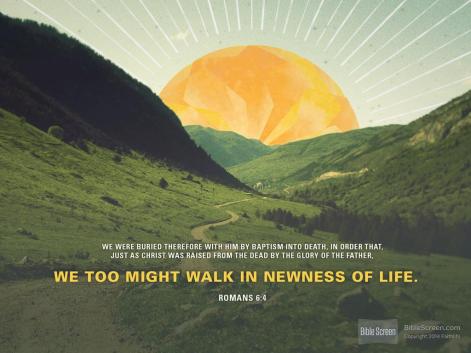
What then are we to say? Should we continue in sin in order that grace may abound? By no means! How can we who died to sin go on living in it? Do you not know that all of us who have been baptized into Christ Jesus were baptized into his death? Therefore we have been buried with him by baptism into death, so that, just as Christ was raised from the dead by the glory of the Father, so we too might walk in newness of life. For if we have been united with him in a death like his, we will certainly be united with him in a resurrection like his. We know that our old self was crucified with him so that the body of sin might be destroyed, and we might no longer be enslaved to sin. But if we have died with Christ, we believe that we will also live with him. We know that Christ, being raised from the dead, will never die again; death no longer has dominion over him. The death he died, he died to sin, once for all; but the life he lives, he lives to God. So you also must consider yourselves dead to sin and alive to God in Christ Jesus.


What’s the worst word you can imagine hearing from the pulpit? In a world where you can get away with saying and doing just about anything, is the church still a sacred place untainted by the desires of the world? There are plenty of strange and difficult and downright awful stories from scripture that we can read from the lectern, but don’t you think the pulpit should remain nice and clean?

During the season of Lent, we confront our finitude, our sinfulness, and our total dependence on the Lord. It is a tough time for us comfortable Christians, because these are exactly the types of things that many of us would rather avoid.

Gone are the days when we could expect to hear about sin and be challenged and convicted out of it. Gone are the days when we could affirm our finite lives without needing the stark reminder of ashes on our foreheads once a year.

Today, God has been reduced to a bumper-stickered and hallmarked version of love. Nothing more, nothing less, nothing else.

Today, church is not the place for judgment and for talk about sin. Regardless of their primacy in scripture, we would all be happier if we could avoid them.

The same holds true for foul language.

Right?

ec5f5b7006dc9af1fb22b9c190f5bcbb_social-etiquettepptx-on-emaze-swear-words-clipart_846-422

This is definitely not the place for someone like me to stand in front of people like you and use words that are forbidden from the radio and are relegated to rated-R movies.

As I heard someone say recently, “Preacher, there are just some things you don’t talk about it church.”

There is a seemingly endless list of things not to talk about in church; things like politics, abortion, divorce, war, sex, taxes, just to name a few. But foul language, language that results in soap-in-the-mouth discipline, is a particularly poignant thing to avoid in church.

And I have a friend in ministry who has completely ignored this accepted fact.

He loves to use foul language from the pulpit. Whether it’s the Christmas Eve sermon and the church is filled with young families who only show up for one worship service a year, or an Ash Wednesday service where only the die-hard Christians come out, he’s known for his colorful language. He’ll tell you that he uses those particular words in order to enhance the sermon in such a way that it will become more memorable and hit closer to home.

And a lot of the people at his church can’t stand it.

“Why does he feel like he has to resort to such awful language?” “The church deserves better than this.” “Does he talk to his mother that way?”

And, I think, they have a point. When the language used becomes more memorable or more important than what is being proclaimed, something has fallen a part. For instance: His recent Ash Wednesday sermon was titled “God Doesn’t Give A @#$%” I read it and listened to it online, it was phenomenal. The theology and the proclamation were remarkably faithful to the One who is faithful to us. But a few of the people from the church called me afterward and couldn’t even begin to express what the sermon was about at all; they were still hung up on the title.

However, there is a value to using some bad words in church.

During the season of Lent, this time after Epiphany but before Easter, there is a specific word that we avoid at all costs. It’s really bad. The word is… well, I’m not supposed to say it. Um, how can I do this…

Okay, there’s this great song by Ray Stevens called the Mississippi Squirrel Revival, maybe you’ve heard it, and part of it goes like this: The day the squirrel went berserk // In the First Self-Righteous Church // In the sleepy little town of Pascagoula // It was a fight for survival // That broke out in revival // They were jumpin’ pews and shoutin’ @#$%^&*!”

You know the word I’m talking about? You might not have even noticed it, but we have not said the “H” word in worship since before Ash Wednesday. It has not been read from the lectern, it has not been hidden in one of the verses from our hymns, and I certainly haven’t used it from the pulpit.

We purposely avoid the word during Lent so that when we shout it out on Easter it will mean all that much more. We specifically deprive ourselves of this important and powerful word to create a longing for the realization of all that the life, death, and resurrection of Jesus promises to us and to the world.

And there’s another bad “H” word that we need to talk about: Hell.

I don’t mean the place filled with fire and a red-toned, frighteningly tall, horned figure with a trident and a bifurcated tail. I mean using “hell” as an expression.

Paul writes: “What then are we to say? Should we continue in sin in order that grace may abound? By no means!” Now, what I’m about to say will probably get me in trouble, but so be it. That little ending, the “by no means” just doesn’t cut it. In Greek the expression is “me genotio” and it is way more emphatic than “by no means.” Some translations have it as “God forbid” or “Definitely not” but even both of those miss the mark.

37475703

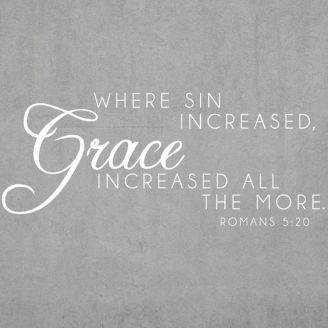
In what we read last week, Paul wrote: “When sin increased, grace abounded all the more.” And it’s as if Paul knew that people would hear those words and say, “Dude, that’s awesome! If grace abounds all the more when sin increases, then lets keep the sins rolling!”

And here is Paul’s response: “Should we continue to sin in order that grace may abound? HELL NO!

Our lives have changed forever. We can’t just retreat to the ways of the past because grace abounds. God in Christ has made in us a new creation! The gift of God in Christ on the cross was, and is, such that we are forever freed from the tyranny of sin and death. Should we continue to sin in order that grace may abound? HELL NO!

But that’s not the last bad word we’re going to talk about today. No, we still need to talk about “Sin” and “Death.” Perhaps two of the worst words that can ever be used in church. And you can tell they’re bad word precisely because of how rarely they are used in a place like this.

We need to talk about these bad words, not because they are normal parts of human experience, but because they are false powers that rule over us. That’s how Paul understood them: Sin reigns, Death has dominion.

You need only turn on the television for five minutes in the evening to see how true this really is: The nighty News hour is filled to the brim with the failures and faults and sins of other people; The Republican Party failed to procure their dream for American Healthcare. Left Wing activists went on a violent strike in another major city. Augusta County citizen receives life sentence for horrible crime. North Korea has another failed missile test but they are getting closer to developing their own weapons of mass destruction. The market fluctuated with each tweet from our president. Test scores have fallen in local school leading to speculation that it will close… All of them are negative.

And then when they go to a commercial break we are bombarded by products designed to make us believe that we can and will live forever; Use this cream and your wrinkles will disappear. Invest in this company and you will never have to worry about money. Go on this vacation and you will feel happy and healthy like the people running on the beach or tanning by the pool.

We live under the tyranny of sin and death. But Paul says this should not be so!

Ro6

We who have been baptized into Christ have been crucified with Christ. Our sinful selves are put to death on the Cross so that we will no longer be slaves to the bad words of Sin and Death.

Long ago, we would have known this without Paul having to remind us. Baptisms, long ago, were all about death. That’s where the Baptists beat us today, I’m sorry to say. When the Baptists baptize, they fully submerge people under water. And, depending on the faithfulness of the pastor, the soon-to-be-new Christian might be held under for quite a long time.

You would’ve missed the baptism to death if you were with us in Alexandria when Elijah was baptized. No, we didn’t hold him under a tub of water to embody the death to sin. No, we didn’t give him some old and tattered gown to wear. Elijah looked perfect in his little khakis, and button-up shirt, and bow-tie, and mustard-colored cardigan. Elijah was sprinkled with water, and the perfectly portioned amount of holy oil was smeared in the shape of the cross on his forehead. And, he was carried out to the congregation and held up high by the same preacher who curses too much.

We miss the death to sin in our baptisms. But we have a member of our lectionary bible study who really gets it. Judy had avoided church for decades before God grabbed her by the heart and said, “Follow me.” She brought her questions and her doubts to her preacher, and after a time she felt her heart strangely warmed and felt moved to be baptized.

Unlike babes in the United Methodist Church, Judy marched up to the giant baptismal font and prepared to jump into the all-too-cold water. And outside, through the multicolored stained glass windows, a thunderstorm was brewing.

Judy slowly descended into the water, and with cracks of thunder in the distance the preacher plunged her into the depths of death to sin. I like to imagine that if she opened her eyes underwater, even for the briefest of moments, she would have seen a flash of lighting that illuminated the entire congregation. The whole moment felt as if the rule of Sin and Death, the dominion of the devil himself, was making one final dash to keep her under their control. But alas, the grace of Jesus Christ abounded all the more, and she arose from the water dead to sin and death.

Are we to continue in sin that grace may abound? HELL NO!

God has changed us! Not just through the waters of our baptisms, not just through the bread that we break and the cup from which we drink, but also through the death of Jesus on the cross. It changes everything! This gift transforms our very lives to the point that we should feel compelled not to fall back into the old ways, to the old self, ruled by Sin and Death.

But we know the truth: we do fall back. We know that those who are sent to prison for horrible crimes have an all too high likelihood of returning one day. We know that those caught in adultery tend to habitually cheat for the rest of their lives. We know that even the strongest member of an AA group can fall off the wagon.

We know that we fall back.

We say “never again” to so many thing only to have them come right back around. We say never again to the anger, to the cigarette, to the bottle, to the cheating, to the lying, to the hatred, to the racism, to the homophobia, to the elitism, to the narcissism, to defeatism, to a great number of things.

            They never stop.

            The fact that they never stop is evidence of the power of Sin in this world, which reigns in Death.

But our lives have been changed! God has wiped away the old self and clothed us with the new. God washed away our insecurities and insufficiencies and said, “My grace is enough.” God was nailed to the hard wood of the cross to die a death that we might die in our baptism. God was raised from the dead as we were brought forth from the water to live a resurrected and holy life.

            The death Jesus died, he died to sin, once for all; but the life he lives, he lives to God. So we also must consider ourselves dead to sin and alive to God in Christ Jesus our Lord.

Should we continue in sin in order that grace may abound? HELL NO! Amen.

The Most Hipster Passage From The Old Testament

strangely-warmed-spreaker-header

The team from Crackers & Grape Juice went down to Durham, NC a couple weeks ago to interview Stanley Hauerwas for our lectionary podcast Strangely Warmed. During our time together we talked about the readings for the fourth Sunday of Lent during year A from the Revised Common Lectionary and Dr. Hauerwas gave us a lot to chew on. If you want to hear the conversation, and learn about the most hipster passage from the Old Testament, you can check out the podcast here: Year A – Lent 4

hauerwas


Christian-Hipster1

Stuck In The Bushes

Romans 5.12-21

Therefore, just as sin came into the world through one man, and death came through sin, and so death spread to all because all have sinned – sin was indeed in the world before the law, but sin is not reckoned when there is no law. Yet death exercised dominion from Adam to Moses, even over those whose sins were not like the transgression of Adam, who is a type of the one who was to come. But the free gift is not like the trespass. For if the many died through the one man’s trespass, much more surely have the grace of God and the free gift in the grace of the one man, Jesus Christ, abounded for the many. And the free gift is not like the effect of the one man’s sin. For the judgment following one trespass brought condemnation, but the free gift following many trespasses brings justification. If, because of the one man’s trespass, death exercised dominion through that one, much more surely will those who receive the abundance of grace and the free gift of righteousness exercise dominion in the life through the one man, Jesus Christ. Therefore just as one man’s trespass led to condemnation for all, so one man’s act of righteousness leads to justification and life for all. For just as by the one man’s disobedience the many were made sinners, so by the one man’s obedience the many will be made righteous. But law came in, with the result that the trespass multiplied; but where sin increased, grace abounded all the more, so that, just as sin exercised dominion in death, so grace might also exercise dominion in death, so grace might also exercise dominion through justification leading to eternal life through Jesus Christ our Lord.

I take a lot of pride in my ability to communicate with people of different age groups. On any given week I will spend time explaining theology to five year olds in our preschool, fifteen year olds in our youth group, 50 year olds in our bible study, and then the rest of you on Sunday morning. It is definitely a challenge taking ideas from the likes of Paul and proclaiming them in a way that can be appreciated for the here and now for the young and old.

But sometimes, I fail.

Like the time I tried to address the moral and ethical dilemmas of Capital Punishment to our youth group one night, to the times I’ve tried to proclaim the strange complexity of confronting our finitude on Ash Wednesday to our preschoolers, to the times I’ve told some of our much older adults that one must have the faith of a child to inherit the kingdom of God.

Communicating the gospel, sharing the Good News, is a challenge, and I definitely failed once when we were on our mission trip to West Virginia a couple summers back. Picture it, if you can: It is hotter than blazes outside, and I’m stuck in a tiny kitchen surrounded by teenagers who would rather be instagramming and snap chatting one another than cleaning a floor or painting a ceiling. And it was silent.

So I did what I do: I started asking questions…

“What’s your favorite story from the bible?”

One of our boys immediately said something about David defeating Goliath. The Davidic story will forever rest in the hearts of prepubescent boys who struggle with how rapidly the girls are growing while they remain the same.

A boy from another church said, “Well, I kinda like the one about, you know, Jesus feeding people?” while saliva poured out of his mouth as he stared at the cooler in the corner filled with our lunches.

A girl from a different church said, “I’ve always been rather captivated by Jesus turning water into wine at the wedding at Cana in Galilee.” To which I made a mental note to bring this up with her youth group later in the evening. No sensible teenage girl should be thinking about water turning into wine, and certainly not when Jesus has anything to do with it.

We went on and on, and then it was my turn to answer. “Well” I said, “It’s not my favorite story, but I’ve always loved this little detail at the beginning of the bible, in the book of Genesis. Adam and Eve were placed in the Garden of Eden with a choice. They could choose to live in perfect harmony with God and God’s creation, with each other, free from sin and free from death. But Adam and Eve made the wrong choice, they wanted to be like God, and as soon as they tasted the fruit from the tree of knowledge of Good and Evil, their eyes were opened, and they knew they were naked.

“But here’s the part that gets me every time. Almost as soon as they sin, they heard the sound of God walking in the garden and they both sprinted for the bushes. But God called out, ‘Where are you Adam? Where are you Eve?’ After waiting for a few moments, Adam popped his little head out of the bushes, and told God that he was hiding because he was naked and afraid.”

To which God said, ‘Who told you that you were naked?’

“Isn’t that hilarious?” – The teenagers had all stopped working while I was sharing the story, and now they were all staring at me with eyebrows askew. I could hear the paint dripping off their brushes onto the floor as if even the crickets were too concerned to chirp. One of the boys finally broke the silence to say, “Um… I don’t think it’s very funny. If I were naked and God came looking for me, I’d run for the bushes too!”

Do we know this old, old, story? Do we know what sin is? Do we know what happened to Adam and Eve in the Garden of Eden?

What kind of stories and habits and beliefs do we want to pass on to the coming generations? I feel like I am forever hearing about the good ol’ days when “we knew our bibles” and “we would’ve gone to school with snow like this when I was a kid” and “we entertained ourselves with our imaginations and not a screen in our pockets.”

Do we wish that things could go back to the way they were? Are we worried about the future that we are handing to our children?

We can talk and talk about what we want to pass on, what we hope to engender, but if we don’t know our story, if we don’t know where we came from, how in the world can we even hope to take a step in the right direction?

tumblr_nfzluvor3q1sk7sreo1_500

Just as sin came into the world through one man… Paul assumes that we know the story, that we know the details of the Garden. He does not waste lines in his letter rehashing the characters and the questions, he gets right to the point: Sin came into the world through Adam and Eve. They, and therefore we, broke the covenant with God. The transition from God’s rule to the rule of sin and death came into the world because of our rebellious and disobedient desires.

This is our condition. There is no going back. Fear and shame and anger and disappointment are our lives. We are, in a sense, stuck in the bushes for good, hoping that God will not come looking for us.

We are in the bushes. And Lent is a great time to ask the question: Why? Which of the commandments have we broken? Did we work on the Sabbath? Have we hated our mothers or our fathers? Did we covet something that did not belong to us? An object, a job, or God forbid, a person?

How would we respond if we heard God walking toward us in the middle of our sin? We, like Adam and like that boy on the mission trip, would run for the bushes.

Paul assumes that we know the story of Adam and Eve in the Garden because it is OUR story! Adam’s sin is our sin, and it not only divided us from God, but also brought death into the world, which spread like a disease. This is Paul’s point, and he says it in these few verses over and over again.

We are trapped in sin and death and we are stuck in the bushes. That’s the story of the Garden. Is this what we want to pass on?

Truly I tell you, we cannot know who we are to be, if we do not know our story. This inexhaustible, unexplainable, indescribable moment from the beginning is who we are. It is the story of how the life of order fell into disorder. But, thanks be to God, it is not the end of the story.

Adam brought the entirety of humanity down, down to the depths of death and destruction. Jesus, however, is the new way who is able to create a new humanity.

The promise of a good and remade and hopeful future comes from the old story that is forever new. The story of our death, and then the death that freed us from sin and death.

In Jesus Christ our stories are made new; God, as the author of salvation, takes up the pen and starts a new chapter through the life, death, and resurrection of his son. This is the story that those who are coming, the one who will follow us, need to hear. This is the story we need to share. We need to pray for the courage to shout this story from the rooftops as if our lives depended on it, because they do.

The only way to victory, the way to upend what was done in the Garden, is through the cross. We might think of a different way, a more efficient and less taxing way, but the way of the cross is the WAY that Christ defeated death.

08687e2b32757ff3722238f19cd727cd

But this is not an easy story to tell. The message and value of the cross comes with a cost. It is difficult, it is selfless, and frankly it is un-American. Today, we would rather surround the young with lessons that teach very different values: get the job, earn as much as you can, find the right spouse, buy the car, lose the weight, invest in the right companies, bring 2.5 children into the world, purchase the perfect house, and you will be free and life will be perfect.

That’s the story we tell. And it’s a lie! It’s all a lie! None of these things can give life. They cannot give us the identity and purpose and hope we so desire. The job will change, the money will disappear, the spouse will grow old, the body will too, the companies will falter, the car will rust, the children will not listen; Sin and Death corrupt them all.

But there is nevertheless Good News, there is a way out of the bondage that was brought into the world by the one we call Adam. We are freed through the one we call Christ.

We are stuck in the bushes of our own sin and shame. But Christ comes to us in the Garden of our own demise without a question, but a call. Jesus does not ask us who told us we were sinning, Jesus says follow me. Follow me to Galilee, follow me to Gethsemane, follow me to Calvary.

Jesus is the way and the truth and the life. Sin has increased in this world and in our lives, but God’s grace in Jesus Christ has abounded all the more.

The story, our story, began in the Garden, but it did not end there. It continued through the strange and wild wilderness in the days of Abraham, weaved through the journey to Egypt and back again in Jacob and Joseph. It rose through the power of David and Solomon, and fell through the failure of God’s people worshipping idols. It danced through the prophets who remained faithful to the Lord, it endured droughts and famines, it saw suffering and sadness. It connected the lives of the powerful with the powerless, it brought down the high and lifted up the lowly.

It was born again in a manger in a small town called Bethlehem; it trudged through the towns of Galilee and sailed over the sea. It walked through the streets of Jerusalem and turned over the tables at the Temple. It was dragged before the council and the ruling elite. It was marched up to a hill and nailed to a cross. It was silent in a tomb for three days. And it broke free from the chains of sin and death.

That is the story. It is a story worth telling over and over again; because in it we discover who we are and whose we are. In it we see ourselves stuck in the bushes being beckoned by Jesus to follow him. And in it we realize that it is not just a story, nor even our story, but THE story. Amen.


romans_feature-01

Devotional – Psalm 32.5

Devotional:

Psalm 32.5

Then I acknowledged my sin to you, and I did not hide my iniquity; I said, “I will confess my transgressions to the Lord,” and you forgave the guilt of my sin.

 Weekly Devotional Image

I want you to take both hands and squeeze them into fists as tightly as possible (seriously). They need to be tight enough that you actually feel strained as you do so. Keep them squeezed and think about something you’ve done recently that could be qualified as a sin. It could be as simple as getting really frustrated when that person cut you off at the grocery store for the line marked “Ten Items Or Less” and it was clear that they had at least 40 items in their cart; or the anger you experienced when your child brought home that less-than-stellar report card; or the shame you felt when you caught yourself flirting with someone while you were currently in a relationship with someone else. Just think of a recent sin.

Now: Quickly release the tension in your left hand. But don’t let go with your right; keep that one tight. You’ll notice that your left hand might have a little tingling sensation from being held tightly for a few moments, but otherwise it should feel relatively normal.

Yet, the longer you continue to hold your right hand clenched in a fist, the more it will start to hurt. At first it was fine, maybe even comfortable, but now you can feel the little aches in all the tiny muscles, you can even feel the blood struggling to flow where it needs to go.

But don’t let go.

Clenched Fist

Think about that same sin again. What did you do with it? Did you let it percolate and grow into something much bigger? Did you confess your sin to the Lord? Did you share your struggle with anyone else and ask for help?

Keep that right hand tight for just a little bit longer.

And now release the tension slowly.

It’s going to hurt. As your fingers gradually stretch back out you will feel stabs of pain in the muscles as your hand regains it’s feeling. And, once you finally flex them all the way out, they’ll probably start curling back into a fist without you trying to do so.

Sin is like our clenched fists. We all sin, every single one of us. From the four-year-old preschool student, to the life-long Sunday school teacher, to the Mom or Dad just trying to make sure the kids have their lunches ready before they leave for school. We all sin.

We can, like our left hand, release the tension of our sins quickly. In the moment we can recognize where we have fallen short of God’s glory and, as the psalmist puts it, we can confess and repent of our transgressions to the Lord and be forgiven. However, most of us are more likely to treat our sins the way we treated our right hand; we let them simmer and boil for far too long so that by the time we actually confess it hurts all the more, and the more likely we are to descend back into that kind of behavior.

The Lord will forgive our sins, but we have to confess them first.


The Elephant In The Room

Romans 5.1-11

Therefore, since we are justified by faith, we have peace with God through our Lord Jesus Christ, through whom we have obtained access to this grace in which we stand; and we boast in our hope of sharing the glory of God. And not only that, but we also boast in our sufferings, knowing that suffering produces endurance, and endurance produces character, and character produces hope, and hope does not disappoint us, because God’s love has been poured into our hearts through the Holy Spirit that has been given to us. For while we were still weak, at the right time Christ died for the ungodly. Indeed, rarely will anyone die for a righteous person – though perhaps for a good person someone might actually dare to die. But God proves his love for us in that while we still were sinners Christ died for us. Much more surely then, now that we have been justified by his blood, will we be saved through him from the wrath of God. For if while we were reconciled to God through the death of his Son, much more surely, having been reconciled, will we be saved by his life. But more than that, we even boast in God through our Lord Jesus Christ, through whom we have now received reconciliation.


Sometimes I’ll be running at the gym, or walking the dog, or just sitting in my office when an idea will pop into my head. The idea starts like seed and then it germinates throughout my mind into sermon topics and bible studies and blog posts. The idea grows and grows and before it disappears into the gray matter of my brain I make sure to write it down.

And, (would you believe it?) an idea is coming to me right now! But I don’t have any paper up here so I need you all to write this stuff down (seriously).

Okay, we are justified by faith, God’s faith in us. That’s what we talked about last week. And because we are justified by faith, we have peace with God through Jesus. And, I mean, not only that, but we are bold to boast of God’s grace in our worst moments, because we know that our suffering leads to endurance, and endurance leads to character, and character leads to hope.

Yeah, that’s good.

We arrive at hope because God’s love has been poured into our hearts through the Spirit. And we know that God loves us because while we were still weak, Christ died for the ungodly. Right? Like, how often will someone die for a righteous person? Though, I guess for a good person someone might actually dare to die. But God proves his love to us in that while we were sinners Christ died for us!

Still with me?

Okay, and its even more than that, now that we have been justified by Christ’s blood we will be saved from the wrath of God. Through Jesus’ death we were reconciled back to God, and through Jesus’ life we will be saved! This is worth boasting about!

Did you get all of that?

Let me try to simplify in case I lost any of you: We are justified by God’s faith in us. Suffering leads to endurance, endurance to character, and character to hope. We arrive at this hope because we know God loves us. And we know God loves us because Christ died for us while we were yet sinners…

domain117

Paul is hard to take from the pulpit. Give me one of the stories of Jesus’ healings, or any of the parables; they preach themselves. Sometimes I even think it would be better to just read the scripture and not preach anything at all. But with Paul it takes on a new and strange and difficult dimension. Paul, in his letter to the Romans, writes in a form of rhetoric almost lost to the sands of time. In our current age of 140 character tweets from our President, frenetic television shows, and fast-paced YouTube videos, we no longer have the minds, nor the time to hear Paul’s theology.

A theology that was probably dictated to someone else to write down while Paul was thinking it up.

You can almost hear that in the reading can’t you? It’s like he remembered something from a few sentences back and wants to clarify it.

The Epistle to the Romans is not a perfectly crafted sermon meant for pulpit proclamation. Instead, it’s practical theology dictated from the greatest missionary the world has ever known.

Paul begins this section by addressing suffering; it’s the part of the passage that is most often mentioned. And he’s not just talking about some esoteric understanding of suffering. Paul is talking from experience! At the time of this letter, Paul was not a young, pre-maturely balding, healthy pastor standing in a pulpit telling his worn and suffering congregation to keep their chins up. No, this is entirely different. Paul suffered for the gospel, was arrested and persecuted, and yet he continued on. That’s why he can say that suffering leads to hope. For Paul it’s not a false and empty promise, it’s what he has experienced.

And then we come to the section about dying for others.

maxresdefault (3)

Dying for others, for one’s country, for our families, these stories captivate our hearts and our emotions. The thought of all the firefighters courageously rushing into the World Trade Center buildings on September 11th, or the countless volunteers who went to the other side of the world to fight in World War II, or just hearing about a mother who sacrifices herself to save her children, these stories really pull our heart strings.

But here, in Paul’s letter to the Romans, this is even more radical than any of those stories. We have to try to put aside the emotional waves of grief and reverence for the stories of modern sacrifice for one’s friends, family, or country. Paul does not say that Jesus died for his friends or his family or even his country.

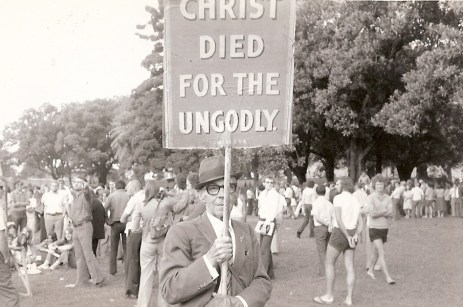
            Christ died for the ungodly!

Paul says that Christ died for us while we were his enemies!

Talk about an elephant in the room… While we were yet sinners, Christ died for us. We hear it in Romans, we hear it every time we come to the table for communion, but do we believe it?

We don’t like talking about sin, we good Christian folk. We want to hear about love, peace, joy, hope, and happiness.

Only the converted, those whose lives have been truly captivated by Christ, think of themselves as sinners. Others won’t have anything to do with it. That, my friends, is why we so seldom read from Paul’s letters in worship; we don’t like the idea of ourselves as sinners, as ungodly.

“Preacher, can’t you just give us a little more grace and love from the pulpit? Nobody wants to come to church to hear about sins!” And yet, we enjoy reading in the gossip columns and watching TMZ to learn about other people’s sins, but that’s their problem.

We don’t like admitting our shortcomings, our faults, and our helplessness. We reject that gospel and substitute our own, one we talked about a couple weeks ago. We’d rather believe the American gospel: God helps those who help themselves. Actually, Paul tells us quite the opposite: When we could not help ourselves, when we were stuck in the shadow of sin, Christ died for us.

73d8be39b92edf6031d5a129be633895

In our current age of tweets, twenty-minute TV shows, and traffic filled websites, we want everything compartmentalized as much as possible. Instead of reading a newspaper we want a short and brief email every morning that tells us only what we need to know. Instead of buying the latest hit book and spending an afternoon in our favorite chair, we read a summary online so we can talk about it with our friends. And instead of coming to church for an hour a week to experience the presence of God, people read the sermon online and check off the box on the Christian list of to-dos.

We, whether we admit it or not, are consumed by a desire to compress as much as possible into something as small as possible. Paul completely rejects this desire and notion that we can limit the gospel to any particular sentence or paragraph. The Gospel, the Good News, is nothing less than the life, death, and resurrection of Jesus Christ, Son of Man, and Son of God.

But, if we cannot resist the temptation, if we have to have something small, something we can keep with us at all times to know what the gospel is, this might work: While we were still sinners, Christ died for the ungodly.

            This is crazy stuff people! Our Lord and Savior, the one in the stained glass window behind me, he died for the ungodly!

Who is the ungodliest person you can think of right now? I know some of you will immediately think of the members of ISIS who are terrorizing regions under their control. Others of you will immediately think of the leaders in North Korea who are trying their best to develop nuclear weapons of mass destruction. Some of you might think of Donald Trump and the seemingly endless Executive Orders streaming out of the Oval Office these days. Some of you might even be thinking about the person sitting in the pew next to you.

If it’s too hard to think of someone ungodly, just think about one person you’re angry with right now…

Jesus died for that person. Whoever you’re thinking of, whoever that completely backwards and horrible and disappointing person is that’s bouncing around in your mind right now, Jesus died for them.

That’s the real elephant in the room. Jesus died precisely for the sort of person that would crucify him and mock him while they were doing it. People like us.

These things we call faith and discipleship are not very religious in the sense of being pretty and easy to handle. They are not something we can carry around in our pockets during the week only to show up when we need them. The cross of Christ is far too offensive to be religious.

The cross and the death of Christ shatter our expectations given to us by the world. They, in all their strangeness, reorient us back toward the radical nature of God’s love. The offensive and scandalous cross is our paradoxical hope and joy. Because in and through the cross, God did something that none of us would do.

            As the old hymn goes, the immortal God hath died for me.

God’s love in Christ is so comprehensive and so bewildering that it is able to wash away even the greatest of sins.

We started this sermon with a dictation, an imaginative way to reimagine the writing of Paul’s letter to the Romans. If you wrote down anything I hope you wrote this: While we were yet sinners God died for the ungodly, for us.

Now I want you to write down the name of the person you thought of just a moment ago, the person who you’re angry with. Write his or her name at the top as if you meant to send this letter to them.

Now you know that I’m going to ask you to send it. And I know that you probably won’t. You won’t for the same reason I wouldn’t; it’s offensive and it’s uncomfortable. We won’t send this affirmation of God’s unnerving love to someone else because it would force us into an area we’d rather avoid; we don’t want to come off as too evangelistic, or too churchy. We don’t want to admit our sin.

Can you imagine the shock on the person’s face if they received your dictated letter from the adapted words of the apostle Paul? Can you picture how bewildered they would be by something Christians say all the time? Can you imagine how it would change the way you look at them for the rest of your days?

While we were still weak, Christ died for the ungodly. In our weakness we reject the challenge to confront our sins and we reject the forgiving nature of God’s love for the world. We forget that Christ died for our shame and our sin and our sadness. We forget that Christ died for our disappointment and our degenerate derelictions and our deficiencies. We forget that Christ died for us and for the people whose names’ are at the top of our letters.

And yet Christ still died for us! What wondrous love in this that that caused the Lord of bliss to bear the dreadful curse for my soul! To God and to the Lamb who is the great I am, we shall sing! And when from death we’re free, and through eternity, we shall sing.

For while we were yet sinners, Christ died for us.

Amen.