Everyone Has A But

Matthew 5.21-37

You have heard that it was said to those of ancient times, “You shall not murder”; and “whoever murder shall be liable to judgment.” But I say to you that if you are angry with a brother or a sister, you will be liable to judgment; and if you insult a brother or a sister, you will be liable to the council; and if you say, “You fool,” you will be liable to the hell of fire. So when you are offering your gift at the altar, if you remember that your brother or sister has something against you, leave your gift there before the altar and go; first be reconciled to your bother or sister, and then come and offer your gift. Come to terms quickly with your accuser while you are on the way to court with him, or your accuser may hand you over to the judge, and the judge to the guard, and you will be thrown into prison. Truly I tell you, you will never get out until you have paid the last penny. You have heard that it was said, “You shall not commit adultery.” But I say to you that everyone who looks at a woman with lust has already committed adultery with her in his heart. If your right eye causes you to sin, tear it out and throw it away; it is better for you to lose one of your members than for your whole body to be thrown into hell. And if your right hand causes you to sin, cut it off and throw it away; it is better for you to lose one of your member than for your whole body to go into hell. It was also said, “Whoever divorces his wife, let him give her a certificate of divorce.” But I say to you that anyone who divorces his wife, except on the ground of unchastity, cause her to commit adultery; and whoever marries a divorced woman commits adultery. Again you have heard that it was said to those of ancient times, “You shall not swear falsely, but carry out the vows you have made to the Lord.” But I say to you, Do not swear at all, either by heaven, for it is the throne of God, or by the earth, for it is his footstool, or by Jerusalem, for it is the city of the great King. And do not swear by your head, for you cannot make one hair white or black. Let you words be “Yes, Yes” or “No, No”; anything more than this comes from the evil one.

The narthex is buzzing at First Church Galilee.

A young seminarian, the son of a construction worker is the rumor, just finished preaching a sermon and the amount of responses was staggering. 

It started with oohs and ahhh. A scattering of amens. But then there was silence, and head scratching, and even a few audible “Excuse Mes?”.

Mrs. Smith, the dedicated Sunday school teacher has amassed a crowd by the coffee decanter. “The nerve!” she begins, “Can you believe what we just witnessed? Don’t you think that boy would’ve had the good sense to know that we don’t come here to be told what to do, but instead to hear about who God is?”

Parishioners shake their heads in affirmation.

Mr. Cline, the head usher, then steps in, “Well now. He is young and so full of the Spirit. Maybe he didn’t really mean it.”

“Give me a break Jim,” Mrs. Smith retorts, “You know he meant it! You don’t get up in the pulpit and say things like that if you don’t mean it!”

And right then the preacher stops shaking hands at the door and walks up to the small but rather agitated crowd. Before he has a chance to speak, Mrs. Smith lights into him, “You’ve got a lot of nerve you son of a carpenter! It’s not responsible to tell people to pluck out their eyes and cut off their arms! There were children present during your message! You know, I have half a mind to send a note to the bishop about you!”

And, oddly enough, the preacher closes his mouth into a smile and says nothing. In the oddity of his silence, the congregation awkwardly begins to disperse, and they leave amazed and astounded at his teaching.

It is a strange sermon that our Lord preaches, a sermon we call the Sermon on the Mount. I think we can agree to an extent with my fictional parishioners who witnessed his proclamation – it is a bit weird to hear such word from the Word made flesh.

It’s one thing to tell people their blessed when they’re grieving and mourning. It’s still yet another thing to talk about being salty and shining your light into the world. But it’s another thing entirely when Jesus takes the law and cranks it up to eleven.

You have heard that it was said that you shall not murder, but I say that if you are angry with a brother or sister you’ve committed just as bad of a crime. 

You have heard that it was said you shall not commit adultery, but I say that if your eye lingers just a second too long on someone other than your spouse, you’ve become an adulterer. 

You have heard it was said that you shall worship the Lord your God, but I say to you that if you miss even one Sunday at church you are liable to the H E double hockeys sticks of fire.

Geez Jesus. What’s the deal? What happened to loving our neighbors as ourselves and doing a nice thing for someone else every once in a while?

And that’s not even mentioning the abject craziness of being told, by the Lord, that it would be better to rip out our eyes and cut off our hands than to continue living in the sins of our imaginations!

Now, we all know that Jesus spoke in parables. It’s important, of course, to note that Jesus also spoke in hyperbole, exaggerated speech, what Stephen Webb calls, “blessed excess.” 

Though, it doesn’t sound very blessed, even when Jesus does it.

Hyperbole – overstating something in order to underscore. We do it all the time do, we add for emphasis. We spice up our stories for effect, we exaggerate in order to drive something home, we give ourselves over to hyperbole. 

Even in the church we do it. Have you ever heard the hymn “O For A Thousand Tongues To Sing”? I don’t see 1,000 people here today…

I mean, it would be irresponsible for us to take Jesus at his word, to take him literally. If we did, this congregation would turn into a bunch of one-armed cyclopses. And that’s just the verses we read today. He keeps going!

And yet… and yet…

Might it be that we don’t feel comfortable with these words from Jesus not just because of how graphic he is, but also because of how close it hits to home? 

I suspect that only a very small selection of Christians enjoy this part of Jesus’ sermon. Honestly, this preacher didn’t want to have to preach a sermon on Jesus’ sermon on the mount this week. It’s a lot. But there are some out there for whom this sermon, these words of Jesus taking the people to task, it rings of truth because they know there is more at stake in the Kingdom of God than merely being accepted.

Acceptance is a passive reality that actually runs counter to God’s nature.

God doesn’t just accept us otherwise God, in Christ, would never heave preached this sermon. Acceptance isn’t enough. Neither is tolerance. 

Nobody wants to be accepted or tolerated.

We want to be loved.

And Jesus does love us, even me and you, but his love is intense, frightening, and overwhelming. In fact, Jesus loves us so much, he’s willing to do something most of us avoid at all costs – he tells the truth. 

But there’s a reason we avoid the truth – that we run from it whenever it rears its ugly head. No one wants to be told they are a sinner, let alone admit it themselves.

We all have our “buts,” our excuses, when it comes to Jesus’ sermon.

Just because I looked it doesn’t mean I acted on it. 

C’mon, what’s a little grudge got to do with me being able to come forward to the altar? 

So what if I get a little judgmental every once in awhile, it’s not like its hurting anyone!

Sure, maybe I went a little too far but I’m not as bad as some other people!

Okay, I’ll admit that I said some thing that I shouldn’t have, but words are not the same things as actions.

Yeah, it was a mistake, but I won’t do it again.

Everyone has a but, and each of those buts is just a further reminder that, at the end of the day, we’re all sinners! And, to be honest, the sermon only gets worse. Jesus will shortly command his followers to turn the other cheek, love and pray for their enemies, and more! 

The whole thing builds and builds with a crescendo, like many good sermons, until Jesus hammers it all home with this: “Do Not Judge lest ye be judged. Why do you seek the speck in your neighbors’s eye and neglect to see the log in your own?”

In other words, the sermon functions to help us see that we can’t judge anyone else for what they’ve done or left undone because, according to Jesus, all of us are incompatible with Christian teaching. 

Any straight reading of scripture, Jesus’ sermon included, shows us that the Law is inflexible and total. Do your best and God will do the rest is not the message of the Bible.

The Law functions to drive us out of our propensity toward sinful self-sufficiency. That’s why Jesus preaches his offensive sermon. Otherwise, we are doomed to remain exactly as we are. And the Lord doesn’t arrive to keep things the same – the Lord arrives to make all things new. Including us. 

But there is no resurrection without crucifixion. Hence the expression: The Gospel can only make alive those whom the Law has killed.

Jesus’ sermon accuses us – you are dead in your sins – and it also promises us new life – for the One who preaches these words is the same one who mounts the hard wood of the cross for people like us – people who don’t deserve it according to the words of his sermon.

It’s a bit odd to claim Good News in the midst of the sermon on the mount that sounds like such terribly bad news. But there is Good News because God in Christ does for us that which we cannot do on our own. 

We can’t live up to the expectations of Jesus’ sermon, but that’s kind of the point. Again, it reminds us that we are no better than anyone else. In fact, it helps us to see that we’re all in the same boat. Therefore, like Peter who jumps out of the boat, Jesus’ sermon give us the strength to call out, “Lord, save me.”

And that’s exactly what Jesus does.

A Theory of Change

Matthew 5.13-20

You are the salt of the earth; but if salt has lost its taste, how can its saltiness be restored? It is no longer good for anything, but is thrown out and trampled under foot. You are the light of the world. A city built on a hill cannot be hid. No one after lighting a lamp puts it under a bushel basket, but on the lamp stand, and it gives light to all in the house. In the same way, let your light shine before others, so that they may see your good works and give glory to your Father in heaven. Do not think that I have come to abolish the law or the prophets; I have come not to abolish but to fulfill. For truly I tell you, until heaven and earth pass away, not one letter, not one stroke of a letter, will pass from the law until all is accomplished. Therefore, whoever breaks one of the least of these commandments, and teaches other to do the same, will be called the least in the kingdom of heaven; but whoever does them and teaches them will be call great in the kingdom of heaven. For I tell you, unless your righteousness exceeds that of the scribes and Pharisees, you will never enter the kingdom of heaven. 

Jesus is in the middle of his proclamation. He is preaching his sermon on the mount. And whenever Jesus teaches there are fireworks, in large part because what he has to say runs counter to everything we think we know.

The sermon begins, innocuously enough, with a bunch of blessings. Albeit, a bunch of blessings don’t make sent according to the convictions of the world. Blessed are the poor in spirit, blessed are those who mourn, blessed are the last, least, lost, little, and dead.

And then Jesus turns the discourse over to a reflection on salt and light.

Ya’ll, Jesus says, are the salt of the earth and the light of the world. 

In other words, ya’ll bring the flavor and people are going to see me through you. It’s a beautiful bit of metaphoric reflection. Jesus takes these simple images and symbols and uses them to help us see who we are and whose we are.

But they come with warnings – the salt that provides zero flavor is worthless and the light that is hidden is nothing but more darkness.

And then comes the new teaching. It’s actually all new, but this is the beginning of the end for us. This is when Jesus’ sermon starts to make us squirm in our pews.

I have come not to abolish the law and the prophets. I’m not here to destroy the past or leave it behind. In fact, I have come to fulfill it.

What in the world does that mean?

We, the people of God, have always had plenty of trouble observing God’s commandments from the ten handed down on Sinai to the other six hundred or so from the Old Testament. And yet, Jesus says, if any of us break any of these commandments, or if we teach anyone to relax them, we will be called the lowest in the kingdom of heaven.

And that would be enough to cause us pause. But Jesus doesn’t stop there. Listen – unless your righteousness exceeds that of the scribes and Pharisees, you will never enter the kingdom of heaven. 

What if we tried to distill it a little more? What’s really at stake?

In another part of the Gospel, while not in the middle of a sermon, some do-goodery religious types try to trap Jesus with those questions: Which commandment Jesus is the most important?

You shall love the Lord your God with all your heart, with all your soul, with all your mind, with all your strength, and you shall love your neighbor as yourself.

Thanks JC! Sounds easy!

But, of course, we can’t even do those two commandments. We all worship other things, thereby not loving God. And, when push comes to shove, we generally look out for ourselves at the expense of our neighbors.

Even John Wesley, founder of what became the Methodist movement tried to whittle it all down to three simple rules: Do no harm, do good, and observe the ordnances of God.

But we don’t do those either!

Jesus says, unless our righteousness exceeds that of the scribes and the Pharisees, we will never enter the kingdom of heaven.

Oddly, within a few years of Jesus crucifixion and resurrection, St. Paul will write to the church in Rome, “None of us is righteous, no not one.”

What then, are we to do?

Christians have, from the very beginning, struggled with this part of Jesus’ sermon. And, to be completely honest, it will only get harder next week as Jesus goes on his rant about “You have heard it was said, but I say to you…”

Maybe we can feel a little better about our meager righteousness, if we have any at all, because the scribes and the Pharisees, whom we are supposed to compare ourselves, weren’t very righteous to begin with. Sure, they had all the outward signs, they obeyed the law and they showed up for worship and they knew all the rules. But they followed the law at the expense of others, leaving behind the widowed and the orphaned to fend for themselves. 

And yet, if Paul is right that none of us is righteous, what in the world are we doing?

Every organization, and every church, subscribes to its own theory of change. We human beings are not static creatures, and there is always a gulf between where we are and where we can be. The theory of change that an institution embodies shows what they think works.

For instance, the self-help industry believes that we can help ourselves. We merely need to read the right books with the right tips and we will finally become the best version of ourselves. And yet, if those books worked, there would no longer be a self-help section in book stores.

And the church has a similar theory of change, or at least we do without knowing it or acknowledging it. We assume that if people read their bibles, or pay attention to sermons, or show up for the right small groups, they will begin to move in the right direction. 

The great challenge with this theory of change is that it doesn’t work.

Have you ever tried to have a rational argument with someone of a different political persuasion about why they’re wrong? Or have you ever tried to convince a smoker to stop smoking?

Have you ever tired to tell a bunch of sinners to start being more righteous?

We can’t will ourselves, or anyone else for that matter, into better behavior. We can’t get rid of our sin on our own. Only God can do that.

Therefore there is a difference between what we call the Law and the Gospel. 

Jesus is hammering his listeners with the Lawthere is no leniency whatsoever. Which should leave us shaking in our boots or, to put a more liturgical spin on it, it should bring us to our knees. Which, incidentally, is kind of the point.

The primary purpose of the Law, the call to righteousness, isn’t so much what the Law says. The primary purpose of the Law is what the Law does to us. 

It reveals the truth of who we are – that no matter how many books we consume, or sermons we receive, we will forever be sinners in need of grace.

Basically, the function of the Law is to get each of us to see ourselves with enough clarity that we will ask the question, “How could God love someone like me?”

When we are in a space to ask that question, we are not far from the Kingdom of God.

We are not far from the Gospel – the Good News.

The Good News is that Jesus makes us righteous because we cannot do it on our own.

But there is a question that lingers: How?

I mean, I recognize the irony in preaching a sermon about how sermons can’t and don’t make us change. But if you’ll bear with me for a just a bit… The sermon on the mount, this proclamation from the Lord, is what begins to constitute the community we call church. The sermon is not about giving us tips on how to be better people, instead it functions to help us see that we’re not very good to begin with and yet we are welcome in a place, this place, despite our inability to be good. 

The law, the call to righteousness, drives us and downright forces us to the gospel. It requires us to rest in and trust Jesus’ amazing grace to do for us that which we cannot do for ourselves. 

In other words, the only way we can ever change is through our hearts, and not our minds. 

Change is only ever possible through relationships, not requirements.

But even that is almost impossible. Its so difficult that only God can really do it.

Change, transformation, occurs through the gift of the Holy Spirit such that our desires, not our minds, start to shift. 

Or, as Paul says “Our hope does not disappoint because God’s love has been poured into our hearts through the Holy Spirit that has been given to us.”

People are changed not through their will, their choices and actions. And neither are people changed through their minds and the consumption of knowledge. People are changed through their hearts, through love. 

And judgment kills love. When we feel judged, ie when we are told what to do, we hide our love away and we put up walls and we resist.

St. Augustine says, “The law commands rather than helps. It teaches us what is wrong without healing it. In fact, it increases what it does not heal, that we might seek the gift of grace with even greater attention.”

The church, then, exists not to judge the world, but to proclaim the gift of God’s unending power and love in the person of Jesus Christ. We do what we do to help others encounter the profound wonder of Jesus. The experience of being met by God in our need is the heart of our faith. 

Basically, guilt only ever produces more guilt. Love, on the other hand, is full of impossible possibility. 

Love actually changes things.

A few years ago I was listening to the radio when I was bombarded by a story of grace, a story of love, a story about a man named Daryl Davis.

– Daryl Davis Picture – 

Davis is a black blues musician and, for the past 30 years, he has spent his free time doing something outrageous – befriending members of the Ku Klux Klan. And, a result of those friendships, 200 Klansmen have given up their robes.

How did he do it?

Did he go to Klan meetings with pamphlets about their racism? Did he encourage them to read certain books that would help reframe their thinking? 

No.

He did something much harder and much more dangerous.

He befriended them.

It all started in a bar call the Silver Dollar Lounge when, after playing a set of music, a white man walked up to thank him for his performance and told him that he couldn’t believe a black man could play the blues so well. Davis was so confused by the comment that he asked if he could buy the man a drink and they sat down to talk. And talk they did. They talked about music and musicians, about how the blues originated with black musicians, and after offering a set of recommended records to buy the white man said to Davis, “You know, this is the first time in my life I’ve ever had a beer with a black man.”

Again, Davis pushed to find out why, and the man pulled out his KKK membership card from his wallet.

However, that conversation led to a friendship that led to the man leaving the KKK behind forever. Not because Davis judged him, but because he befriended him. The man’s heart, to put it one way, was strangely warmed and he was never the same.

Why do we give ourselves over to wondrous music? Why do we make friends and invite them over for dinner? Why do we ooh and ahh over various sunrises and sunsets? 

We do so out of the simple delight in the goodness of creation but also because half of the planet’s gorgeousness lies hidden in the glimpsed city it longs to become.

In short, we fill our lives with loves out of a delight for what they point us toward: the kingdom of heaven.

But make no mistake: love, the kind of radical love that leaves to KKK members turning in their robes, the kind of delight that actually leads to any change is downright dangerous.

And yet, ultimately that’s the kind of radical love that God has for us, a people completely undeserving. But God keeps showing up, even to the point of the cross, with nothing but the Gospel.

In the bread and cup, in the singing of our faith, through the hard wood of the cross, we all receive a righteousness that far exceeds anything the scribes or Pharisees could ever hope to accomplish – the righteousness of God.

The Gospel does not promise the possible – it deliver the impossible. 

The Good News of Jesus Christ gives what the law demands.

That’s why the love of God is strong enough to change things, even us.

Or, as Luther put it: God accepts none except the abandoned, makes no one healthy but the sick, gives sight to none but the blind, brings life to none but the dead, and makes no one righteous except sinners.

Sinners like you and me. Amen. 

Wading for Jesus

Matthew 4.12-23

Now when Jesus heard that John had been arrested, he withdrew to Galilee. He left Nazareth and made his home in Capernaum by the sea, in the territory of Zebulun and Naphtali, so that what had been spoken through the prophet Isaiah might be fulfilled: “Land of Zebulun, land of Naphtali, on the road by the sea, across the Jordan, Galilee of the Gentiles the people who sat in darkness have seen a great light, and for those who sat in the region and shadow of death light has dawned.” From that time Jesus began to proclaim, “Repent, for the kingdom of heaven has come near.” As he walked by the Sea of Galilee, he saw two brothers, Simon, who is called Peter, and Andrew his brother, casting a net into the sea for they were fishermen. And he said to them, “Follow me, and I will make you fish for people.” Immediately they left their nets and followed him. As he went from there, he saw two other brothers, James son of Zebedee and his brother John, in the boat with their father Zebedee, mending their nets, and he called them. Immediately they left the boat and their father, and followed him. Jesus went throughout Galilee, teaching in their synagogues and proclaiming the good news of the kingdom and curing every disease and every sickness among the people. 

We have a new bishop in the Virginia Annual Conference, her name is Sue Haupert-Johnson. She was interviewed this week by the Conference office in order to introduce to the people called Methodist in this place. And, among all the interesting and theological bits from the interview, she was asked about our vision. 

Those without vision are doomed to perish, the scriptures say. So it was a worthy question. And this was her response: “Vision doesn’t come from the top, but rather from the people. However, the heart of the vision of the church always contains this question: How do we introduce people to Jesus?”

John the Baptist is arrested.

That’s how our scripture starts today. It’s an odd beginning, and one that is all too easy to breeze over without realizing the implications of such an introduction.

Why is John arrested? The last we heard of him in Matthew’s Gospel he was out in the wilderness, far removed from the movers and the shakers, proclaiming a baptism for the repentance of sins. That doesn’t sound like much rabble-rousing, let alone enough to warrant being thrown behind bars. But, of course, he did call the Pharisees and the Sadducees “a brood of vipers!” Even still, it’s not like he was committing a crime.

However, whenever the power that be are called into question, they’re going to do whatever it takes to stop those questions. 

John has a sense, a glimpse, of what the world could be. As the herald of the One to come, he stands squarely between the times and beckons the gaze of those with eyes to see that not all is at it seems. Something is on the way. And that something has a name: Jesus.

The drama begins.

John is arrested and how does Jesus react? He retreats to Galilee. That’s a bit odd when you take a step back from the strange new world of the Bible… I mean, we’re talking about the incarnate God! Perhaps we would prefer it if Jesus called the people to arms, if he stormed the gates of the prison to free his cousin, or any other number of reactive activities. 

But, instead, Jesus responds to John’s arrest by preaching.

Words are powerful things, more powerful than we often give them credit for. John’s words were so powerful that they put a target on his back. Jesus’ words wind up sending him to the cross. And today, our words are just as powerful, they can build up and they can destroy. 

Jesus’ mission and ministry in Galilee is for a purpose, one that Matthew begs us to see. Jesus preaches in order to fulfill Isaiah’s prophecy.

“Land of Zebulun, land of Naphtali, on the road by the sea, across the Jordan, Galilee of the Gentiles the people who sat in darkness have seen a great light, and for those who sat in the region and shadow of death light has dawned.”

That text might sound familiar, and if it does it’s because we read those words every Christmas Eve – the people who sat in darkness have seen a great light. The great light, now, happens to be the One who preaches in Galilee. 

And then the text moves to the call of the first disciples. 

Jesus is preaching, but he’s also searching. He’s looking for those who can help manifest and live according to the strange new world we call the kingdom of God. Notably, Jesus does not call his disciples from the powerful or the elite, he doesn’t create a big board of draft prospects for kingdom work, rather he calls those who are ordinary knowing that, with the power of the Spirit, they can do extraordinary things.

There are no crowds yet waiting to see what the hope of the world can do, the Pharisees and the scribes haven’t started their plot to get rid of him, because this is still the beginning. And one day, while walking by the Sea of Galilee, Jesus saw two brothers, Simon called Peter and Andrew, casting a net into the lake. And Jesus said to them, “Follow me, and I will make you fish for people.” Immediately they left their nets behind and followed him.

That’s it.

Luke’s Gospel adds some flavor and flourish to the story with some drama out on the water, but according to the Matthew the call of the first disciples was as quick as “Follow me.”

Much has been made about this moment in scripture and what it means for us today as followers of Jesus. 

In other words, this is the story of the first call and what we, in turn, are called to do.

Life, today, often feels a lot like U2’s song, “I Still Haven’t Found What I’m Looking For.” We on the search for something. Some of us are looking for fulfillment, or purpose, or belonging. We look for it in people, jobs, vocations. 

I have a friend from seminary who embodied this searching perfectly. Every few months there was a new fad that dominated his existence. At first it was the desire to eat in a more local and healthy manner. He cultivated a backyard garden, read recipes book, even interned with a local farmer in between his classes. And, for a while, it took. Until it didn’t. At some point the garden was overrun by weeds, but by then he was on to the next thing: Barefoot running. He listened to some podcast about how our modern shoes are bad for our posture, and he became convinced that he needed to start running, every day, without shoes. So he did. He adopted a running calendar based on his class schedule and figured out the optimal times and places to run barefoot. And, for a while, it took. Until it didn’t. At some point the weather started to change and running sans shoes was starting to take a toll on his feet, but by then he was on to the next thing: Reading a book every three days. He encountered some article online about the devolution of our minds and the necessity to read as much as possible as quickly as possible. So he did. He set up timed alerts on his phone that told him when and what he was supposed to read. Every moment of the day was calculated down his average page per minute so that he could finish a book every three days. And, for awhile it took, until it didn’t.

I could go on. He certainly did.

He still hasn’t found what he was looking for.

And though curiosity is good, and frankly we could do well to have more of it in some ways, when it comes to the realm of the kingdom, we’ve got it backward. The Bible is not so much a long record of our search for God; rather, it is the amazing account of the extraordinary lengths to which God will go to search for us.

Perhaps that’s why the reference to Isaiah before the call of the disciples is so important: The people who sat in darkness have seen a great light. In the darkness of our lives, when we least expect it, God shows up.

The disciples weren’t looking for a teacher to follow, or a barefoot running regimen to adopt, or a spiritual guru who could help bring fulfillment to their lives. If they were looking for anything, it was fish. And then Jesus shows up with the nerve to flip their vocation completely upside down. 

Follow me, and I will make you fish for people.

God in Christ shows up, and then gives us something to do. Though, how we respond to that call is as varied as the people who Jesus delights in calling. What comes to your mind when you hear the commission?

Evangelism can sound like a dirty word in United Methodist circles. It is often manipulative and preys on individual fears in order to get people in the pews. 

Some will take evangelism as our responsibility to save souls, or win people for Jesus, or knock on doors until we find someone who is willing to accept Jesus as their Lord and savior. Some will stand on street corners shouting about the end times, while others (a few blocks away) will hand out tracts with 3 simple steps to make sure you go to the right place when you die.

On and on.

Fishing for people. It’s the Lord’s metaphor, so we’ve got to work with it. Though, I’m always a bit fearful of the language since fishing is inherently a coercive endeavor. We try to trick fish into eating something fake in order to reel them in. 

Maybe that’s not the best metaphor for evangelism. Except for the fact that fishing requires us to go where the fish are. 

Therefore, perhaps we are called to wade for Jesus just as much as we are called to fish for Jesus. The earliest Christians weren’t converted to Christianity because they were looking for something, or because they were convinced or duped by the disciples. The earliest Christians were encountered by the living God and they couldn’t help but follow. 

Wading into the muck and mire of a stream to catch a fish is inherently a messy and frustrating endeavor. The same is true of wading into someone’s mess. But that’s exactly what God did and does for us.

Each of us here are here because, somehow, God showed up in our lives. And, more often than not, God shows up through someone else. 

There’s a big difference, a huge difference, between trying to convince someone of the Gospel, and living according to the Gospel. For, living according to the Gospel, puts us in relationships with people we would otherwise ignore and, because God has a sense of humor, it usually results in someone seeing how we live and then asking, “Why are you the way you are?”

And the answer, of course, is Jesus. 

Notably, the word evangelism just means, bearing the Good News. After Jesus called the first disciples he went through Galilee proclaiming the Good News and great crowds began to follow.

He didn’t try to coerce them, or frighten them, or even convince them. He just preached the Good News. 

Hear the Good News: You are loved by God. There is a place for you in God’s church. There is nothing in your life, no matter what you do or leave undone, that can ever separate you from God’s love. 

Introducing people to Jesus is at the heart of what it means to follow. How we introduce people to Jesus is actually quite easy. It’s the why we introduce people to Jesus that we often overlook. We, of course, do it because Jesus tells us to. But also because our lives have been changed by God and we want that for others. My life is fundamentally better because of the church’s willingness to relentlessly wade into the muck of my life reminding me of the Good News when everything else sounds like bad news. 

I am who I am because God waded into my life. 

Following the Lord will bring us places and to people we would never have picked on our own. Living according to the Gospel will make us appear strange to those who have not heard it. Strange enough that they might wonder what happened to us. 

And, of course, it’s not what happened to us, but who: Jesus.

The Circumference of the Kingdom

1 Corinthians 10.10

Now I appeal to you, brother and sisters, by the name of our Lord Jesus Christ, that all of you be in agreement and that there be no divisions among you, but that you be united in the same mind and the same purpose.

We were in the middle of nowhere North Carolina and I was receiving a tour of the town from a local clergy person. He pointed out the local watering hole, the 7-11, and the mortician’s brick and mortar funeral parlor.

From my vantage point in the front passenger seat of the aging preacher’s beat up truck it looked like every building was slowly falling apart and no one was bothered to do anything about it. Until we got to the end of the tour and there was a huge, recently leveled, field and construction equipment was strewn about in every direction.

“What’s this going to be?” I asked.

The preacher said, “The new baptist church.”

“What happened to the old baptist church?”

“It’s still here, we passed it a few blocks back. The church got into a big knock-down-drag-out fight about the color of the carpet in the sanctuary. So half the church left to start their own.”

“Do they have a name for the new church?”

“Yeah, they’re calling themselves Harmony Baptist.”

Paul writes to the church in Corinth, “I appeal to you, brothers and sister, in the name of Jesus, that you all be in agreement and that there be no divisions among you, that you be united in the same mind with the same purpose.”

In other words, “For the love of everything holy, please stop being so stupid and start getting along with each other!”

It’s notable that, since the very beginning of the church, we’ve been in conflict. The book of Acts is filled with one vignette after another of the church being churchy with their disagreements. All of Paul’s letters, in some way, shape, or form, beg the recipients to start acting like the body of Christ into which they were baptized.

And the church comes by it honest.

For, to start, the church is filled with people like us: a bunch of no good dirty rotten scoundrels (even if we don’t want to admit it). But, more importantly, conflict is actually what makes the church the church!

Jesus’ mission and ministry in the world was filled with dissonance. The Pharisees and religious elites were quick with their accusations of blasphemy, the powers and principalities thought the only way to stop Jesus was the cross, and even the disciples were forever rebuking the Lord for his various proclamations and actions. 

If there’s one thing we can count on in the church, it’s conflict. 

No church has even found a way to follow the crucified God free of fiction.

And yet, friction is, often, what leads to transformation!

Case in point: the early church struggled with the rapid rise of Gentiles in their midst and had to figure out how expansive God’s kingdom really was. And, at the so-called Jerusalem Council in Acts 15, the church formally stated that no matter what scripture said, Christ’s salvation went beyond the bounds of Judaism. Therefore, matters of religious law such as circumcision, sabbath observance, and dietary restrictions were no longer required for those who followed Jesus.

Today, Jesus still refuses to leave us to our own devices and thoughts and even dreams about who the church is for. Jesus delights in sending people into our lives that we would never have picked on our own. And then, because he has a sense of humor, Jesus will see fit to make sure we read some of his words in church on Sunday like, “Love your enemies.”

We know that Jesus is at the center of what we call the kingdom of God, but we cannot know the circumference of the kingdom. In other words, we can’t decide who Jesus is for.

Or, as Barth put it, “This much is certain, that we have no theological right to set any sort of limits to the loving-kindness of God which has appeared in Jesus Christ. Our theological duty is to see and understand it as being still greater than we had seen before.”

Or, as John Wesley put it, “Salvation for all!”

God’s grace is ever expanding and never-ending. Remember: Jesus commands us to go to the ends of the earth proclaiming the Good News. And, as such, we can expect arguments, differences, and even divisions to sprout up again and again. Perhaps that’s why God keeps inviting us back to the table, pardoning us for our mistakes and shortcomings, and offering the body and the blood that makes all of this possible in the first place.

It’s not easy being the church, but nothing important ever is. 

The Beautiful Mess

John 1.29-42

The next day he saw Jesus coming toward him and declared, “Here is the Lamb of God who takes away the sin of the world! This is he of whom I said, ‘After me comes a man who ranks ahead of me because he was before me.’ I myself did not know him; but I came baptizing with water for this reason, that he might be revealed to Israel.” And John testified, “I saw the Spirit descending from heaven like a dove, and it remained on him. I myself did not know him, but the one who sent me to baptize with water said to me, ‘He on whom you see the Spirit descend and remain is the one who baptizes with the Holy Spirit.’ And I myself have seen and have testified that this is the Son of God.” The next day John again was standing with two of his disciples, and as he watched Jesus walk by, he exclaimed, “Look, here is the Lamb of God!” The two disciples heard him say this, and they followed Jesus. When Jesus turned and saw them following, he said to them, “What are you looking for?” They said to him, “Rabbi” (which translated means Teacher), “where are you staying?” He said to them, “Come and see.” They came and saw where he was staying, and they remained with him that day. It was about four o’clock in the afternoon. One of the two who heard John speak and followed him was Andrew, Simon Peter’s brother. He first found his brother Simon and said to him, “We have found the Messiah” (which is translated Anointed). He brought Simon to Jesus, who looked at him and said, “You are Simon son of John. You are to be called Cephas” (which is translated Peter).

Here, toward the beginning of the calendar year, I’ve been doing some thinking. We’re in the midst of a sermon series titled “New Year, New You” and I’ve come to realize some essential truths.

Things are not as they ought to be.

We can listen to the talking heads wax poetic about how politically divided we are, and how we just need to reach across the aisle and all that. But I think it’s far more insidious.

We are so obsessed with our financial gains and economic prosperity that we’ve allowed capitalism to become our dominant religion. We worship money and the accumulation of it. And the evils of capitalism, of which there are many, are as real as the evils of militarism and the evils of racism.

Did you know that, as a nation, we spend more money on national defense every year than on all of our programs of social uplift combined? Surely, that is a sign of our imminent spiritual doom.

We perpetuate a culture in which 1 out of every 3 black men can expect to go to prison at some point in their lives. The price that we must pay for the continued oppression of black bodies in this country is the price of our own destruction.

There is so much injustice in this country – racial injustice, economic injustice, gender injustice. And they cannot be solved without a radical redistribution of political and economic power.

Something’s gotta change.

Now, let us pause for a moment. How did all of that make you feel? Do you agree with what I said? Do you disagree? There’s a better than good chance that saying what I said left most, if not all, of us feeling uncomfortable.

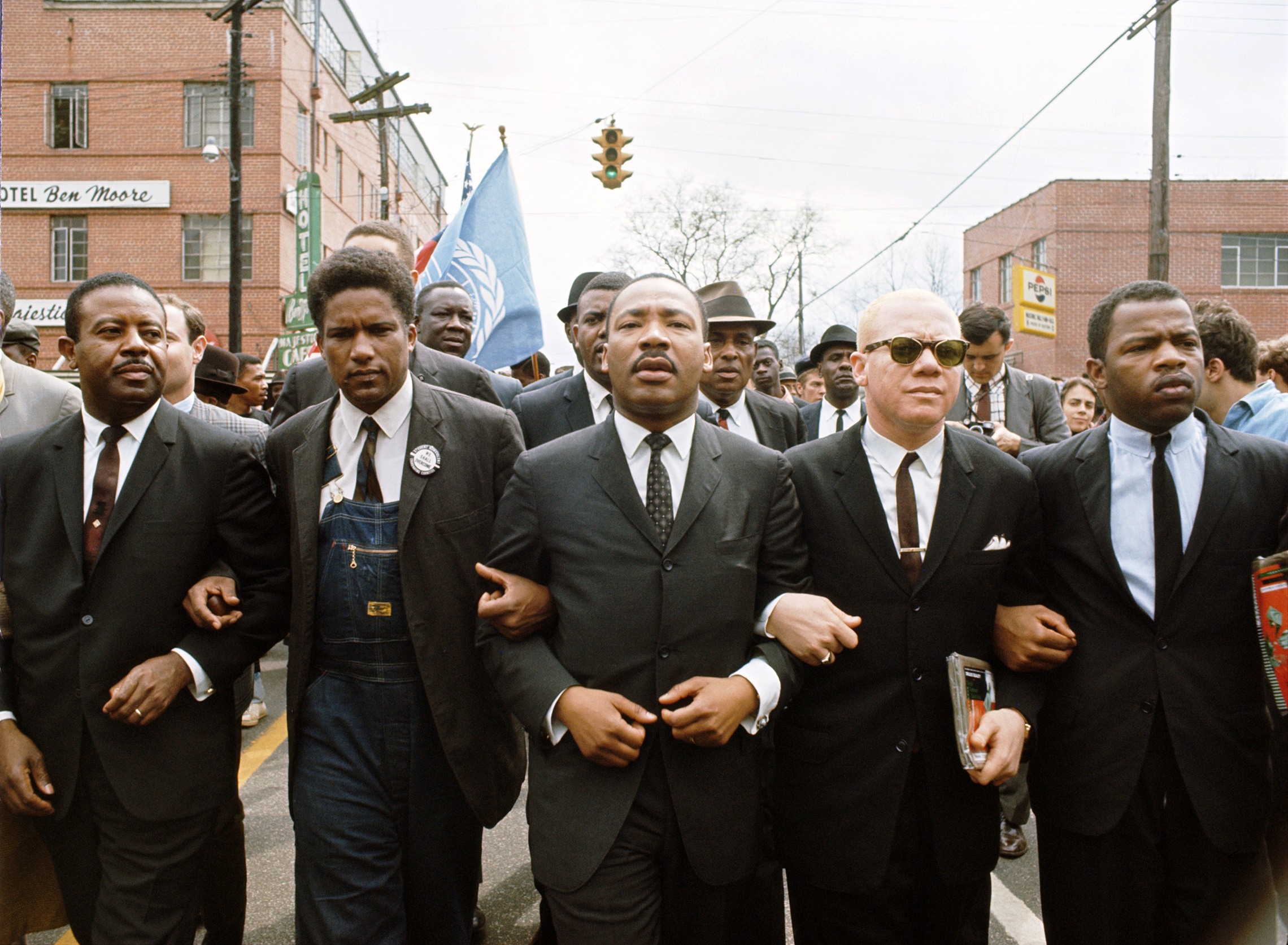
And yet, nearly everything I just said is not original to me. I stole those bits of proclamation from another preacher, one by the name of Martin Luther King Jr. And it was because he was willing to say things that made people uncomfortable that he was murdered. 

It’s been almost 55 years since Dr. King’s assassination. Tomorrow, businesses and schools and all sorts of institutions will close to observe a holiday given in his name, and yet I wonder what it is we remember about Dr. King. Perhaps our minds move to his “I Have A Dream Speech,” or maybe we remember his calm demeanor in the midst of such a perilous time.

However, a year before Dr. King was killed he was widely regarded as one of the most hated men in the country. 63% of respondents in a poll right before his death admitted to being vocally opposed to his words and works. 

It’s hard to remember this, let alone acknowledge it, because everyone today loves Dr. King. We celebrate his transformative work in documentaries and school projects. But we love him now because it’s so much easier to celebrate someone when they’re no longer challenging and upsetting the status quo.

In other words, it’s easier to love a hero when they’re dead.

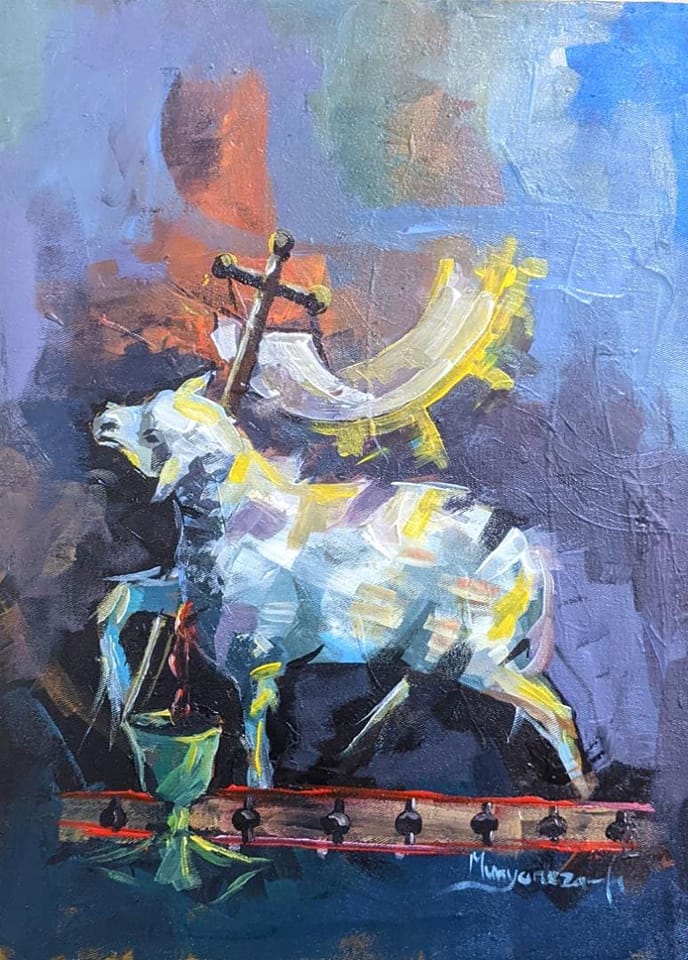
John says, “Here is the Lamb of God who takes away the sin of the world.”

For both Johns, the gospel writer and the Baptist, the image of the Lamb of God is central to their understanding of Jesus. We might talk about and think about Jesus as our teacher or our example or some other identifier, but for the Johns, Jesus is the Lamb of God.

And not just a lamb, but the Lamb – the Passover Lamb.

The church today is very comfortable as a safe and sanitary space where the realities of life, and by that I mean things like suffering, are kept at bay. We are good to mention the plight of Ukrainians in our congregational prayers, we will ask for volunteers to help with Family Promise, and all sorts of things. But when it comes to church, we like things neat and clean and ordinary.

We’re not comfortable with death or illness or questioning the status quo.

However, the church, weirdly, is called to be different. The church takes our over-manicured lives and says, “You’re a mess! You don’t want anyone to know it, and you don’t even want to admit it yourself, but things are falling apart!”

Behold the (Passover) Lab who takes away the sin of the world.

The church is a far cry from where we started. When God first gave specifics on how to worship to the people Israel it was messy: Build a temple, and take animals likes doves and bulls and slaughter them there. Take their blood and pour it over all sides of the altar.

Why? Because there is no transformation without sacrifice. 

Moreover, before God’s people made it to the banks of the Red Sea, waiting on a miracle, they had already experienced their miraculous deliverance from Egypt with Passover.

Take a lamb for each family, God says, a perfect and unblemished lamb, and bleed it out completely before you hang it to roast, make sure that none of its bones are broken. The lamb shall be divided in proportion to the people who eat of it. This is how you shall eat it: your loins girded, your sandals on your feet, and you shall eat it hurriedly. 

I’m getting you out of Egypt, says the Lord. Take the blood from the lamb and mark it on your doorposts so that I will know to passover as I bring my vengeance upon the people of Egypt.

It’s not for the faint of heart!

And, though we avoid it today at all costs, we still rely on blood for our worship. We no longer slaughter animals every week, but only because Jesus became the final sacrifice, the Lamb of God who takes away the sins of the world.

Jesus was without sin and was innocent of the charges lobbed against him, just like the Passover lamb is supposed to be perfect and without blemish.

Jesus was beaten to the point of death and stabbed in the side shortly before his death, just like the Passover lamb is supposed to be bled before being hung to roast. 

Jesus was hung up high and though beaten his bones were not broken, just like the lamb’s bones were to remain intact.

I know this is a lot, it’s gruesome and frightening and messy. 

But that’s what church is all about. It stands in stark contrast with so much of what we want our lives to look like. We want people to think we are perfect even though we are far from it. We want everything to be nice and orderly even when life is tearing at the seams. 

Church, in different ways, is God’s way of looking at the mess of our lives and saying, “I know you deserve this not at all, and yet I’m going to save you anyway. ”

Some of John’s disciples are there when he makes his radical proclamation. They understand, somehow, that the new Passover Lamb is right there in front of them. So they leave John behind to follow Jesus. 

They sacrifice whatever their lives might’ve been to follow the Lamb.

The life and ministry of Jesus who they follow is neither neat nor clean. Notably, Jesus is forever spending time with messy people and their messed up lives. His ministry is among and for the last, least, lost, little, and dead.

Even today, we worship the God who willingly chooses to enter into the muck and mire and mess of our lives, which means things are liable to get messy along the way of our own discipleship. 

And yet, that is Good News!

It is Good News because God comes to us in the brokenness of our health and the shipwreck of our family lives and the worst of our mistakes.

Or, as the liturgy puts it, Christ died for us while we were yet sinners, and that proves God’s love toward us.

Do you see? God saves us in our messes, not from them.

When John says, “Behold the Lamb of God who takes away the sin of the world,” he means it. He, somehow, knows the future in his present, he knows what will happen to the incarnate God when the holy encounters the unholy. 

Notice, the Lamb of God has not taken away the sins of some – of only the good or the cooperative or those with perfect Sunday attendance in church. 

The Lamb takes away the sin of the world, all of them. 

That’s why we can sing, “My sin oh the bliss of this glorious thought, my sin not in part but the whole, is nailed to the cross and I bear it no more!”

And yet, the very next verse says, “And, Lord, haste the day when my faith shall be sight, the clouds be rolled back as a scroll; the trump shall resound, and the Lord shall descend, even so, it is well with my soul.”

What is the Lord descending to do? The Lord comes to judge the living and the dead.

Behold the Lamb of God who takes away the sin of the world. We are redeemed by the Lamb already. And yet there’s a bit more to it as well. Even now Jesus is taking our sin away. Like Dr. King, the Lord speaks words of comfort to the afflicted, and affliction to the comfortable.

It’s a both/and. We are set free from the foolishness of our past while at the same time we are called to live new lives here and now based on that redemption.

Jesus is the exodus for the rest of us, he delivers us from our captivity to sin and death into a strange new world we call the Kingdom of God. 

And in its messy in the Kingdom.

I started the sermon with stolen quotes from Dr. King, a man committed to seeing and bringing about a different world. His commitment cost him his life. And I think he knew that it would. For, the night before he was killed, he delivered one of his most moving speeches. Notably, Dr. King was in Memphis in support of a new union for sanitation workers.

That final night he stood before a packed auditorium and ended with these words:

“Well, I don’t know what will happen now. We’ve got some difficult days ahead. But it really doesn’t matter with me now, because I’ve been to the mountaintop. I don’t mind. Like anybody, I would like to live a long life – longevity has its place. But I’m not concerned about that now. I just want to do God’s will. And he’s allowed me to go up to the mountain. And I’ve looked over, and I’ve seen the Promised Land. I may not get there with you, but I want you to know tonight that we as a people will get to the Promised Land. So I’m happy tonight, I’m not worried about anything, I’m not fearing any man. Mine eyes have seen the glory of the coming of the Lord.”

The next day he was dead.

The Lamb of God brings a kingdom the world doesn’t want – the blood of the Lamb makes a difference and that difference means we are now different. 

God does not accept the current realities of the world. God is still contending against the powers and the principalities. God will get us to the Promised Land. 

It’s like God is saying to us today: “Come and see what I can do – come and see what we can do together. It’s going to be messy, but change always is.” Amen. 

Don’t Look Back

Isaiah 42.8-9

I am the Lord, that is my name; my glory I give to not other, nor my praise to idols. See, the former things have come to pass, and new things I now declare; before they spring forth, I tell you of them. 

The church has always had a “problem” with looking backward. And, we come by it honest. The scriptures are ripe with stories of God’s people remaining stuck in the past (“At least we had food back in Egypt!”) and refusing to see how God makes all things new. 

One of the reasons we’re content with looking backward is the fact that the past feels under our control whereas the future is totally unknowable. 

Or, as Jesus bluntly put it, “No one who puts a hand on the plow and looks back is fit for God’s kingdom.”

But, as Christians, we are called to the dance, one that becomes manifest whenever we gather at the Lord’s Table, between remembering and anticipating. We remember God’s mighty acts in Jesus Christ as we feast on the bread and cup because they point us to the ways in which God is moving in our midst here, now, and in the future. 

There’s a story about a church where a concerned group of members called for a meeting about new ministry opportunities. For hours they went back and forth about each new possibility but they were all struck down because they seemed impossible. 

An older man from the congregation sat in silence throughout the meeting until, when he could no longer stand it, he raised his hand and said, “If I hear the word impossible one more time, I will leave this church forever. Have you all forgotten? Nothing is impossible with God!”

Here, at the beginning of a new calendar year, it is good and right for us to wrestle with the impossible possibility of God. The Lord shouts to us through the scriptures, “The former things have come to pass, and new things I now declare!” God is in the business of making all things new. Even the church.

Or, as Will Willimon puts it, “God’s future is for those who ask tough questions, come up with surprising answers, and dare better to align themselves with their core identity and purpose as the Body of Christ in motion.” “The church,” he says, “for any of its faults, is Christ’s big idea to put right what’s wrong with the world.”

In Luke’s Gospel, on the day of Easter, two figures walk toward Emmaus with their heads stuck in the past. Along the road they talk only of what happened to Jesus and they no longer have any hope. That is, until the hope of the world shows up on the road right in front of them.

“What are you talking about?” The strange figure asks.

Clops responds, “Are you the only fool in Jerusalem who doesn’t know the things that happened?” 

“What things?”

“Jesus is dead! Locked up and forsaken in a tomb. We had hoped he was the one who would save us.”

The strange figure spends the rest of the walk preaching, reinterpreting the scriptures, and (sadly) the two are no wiser than they were at the start. Until they get to Emmaus, and decide to share supper together. They break bread, share wine, and suddenly they see

They race all the way back to Jerusalem with nothing but hope. 

Every Sunday is a little Emmaus. We gather with all of our worries, fears, and hopelessness. We can’t help but only look backward. And then, as we open up the strange new world of the Bible, Jesus encounters us proclaiming the scriptures anew. We gather at the table, receiving the gift we do not deserve but so desperately need. And our eyes are opened to God’s new future.

Don’t look back! God is in motion! Let’s go!

God Is God And We Are Not

Psalm 8

O Lord, our Sovereign, how majestic is your name in all the earth! You have set your glory above the heavens. Out of the mouth of babes and infants you have founded a bulwark because of your foes, to silence the enemy and the avenger. When I look at your heavens, the work of your fingers, the moon and the stars that you have established; what are human being that you are mindful of them, mortals that you care for them? Yet you have made them a little lower than God, and crowned them with glory and honor. You have given them dominion over the works of your hands; you have put all things under their feet, all sheep and oxen, and also the beasts of the field, the birds of the air, and the fish of the sea, whatever passes along the paths of the seas. O Lord, our Sovereign, how majestic is your name in all the earth!

Christmas Pageant stories are a dime a dozen.

I, myself, stood in a different pulpit helping narrate a particular pageant when one of the shepherds turned his staff upside down and ignited it like a lightsaber. Were it not for a daring dive from the aforementioned pulpit, the shepherd would’ve beheaded a wiseman, an angel, and at least three sheep.

There was another pageant when a kid dressed as a donkey decided to take a nap on the chancel steps in the middle of the drama, and remained there until after the applause died down at the end and everyone heard him say, “Mom?”

There’s a wonder and a beauty to the way children lead us in worship. Whether it’s the theological daring answers during a Children’s message, to the way they give themselves over completely to the movement of the Spirit, to the various pageant pronouncements, the glory of the Lord is revealed.

There’s a story that passes around this time of year every year about a certain pageant and the child who played the innkeeper. For weeks and weeks all the children practiced their positions and their lines, they were ready. But when Christmas Eve arrived, and the little Mary, Joseph, and plastic Jesus arrived at the cardboard cut out entrance to the inn, they knocked on the door and the innkeeper froze. Little Mary kept repeating her line, “Please let us in. We’re cold and we really need a place to stay!” Getting louder with each repetition. Until, finally, the innkeeper looked out into the congregation and said to the pageant coordinator, “I know I’m supposed to say, ‘No,’ but can I let them in anyway?”

Kids get it.

The Psalmist declares, “O Lord, our Sovereign, how majestic is your name in all the earth! You have set your glory above the heavens. Out of the mouth of babes and infants you have founded a bulwark because of your foes, to silence the enemy and the avenger.”

There’s a better than good chance that every one of us here has a story in which a child or a kid or a youth pointed us to a greater reality about the kingdom, than we could come to on our own. For instance, I was with my family in Alexandria this last week, celebrating the holidays, and we decided to go visit my grandmother’s grave on the anniversary of her death. She died last year at this time. 

And as we were dressing the kids and getting them into our various cars, my nephew asked, “Where are we going?” And I said, “We’re going to see Omi.” And he gave me this puzzled look and said, “But Omi’s with Jesus now.”

Kids get it.

But then the psalmist drops this on our dozing heads: “When I look at your heavens, the work of your fingers, the moon and the stars that you have established; what are human being that you are mindful of them, mortals that you care for them?”

What a brutal question!

That God considers us, at all, is beyond our deserving. That God listens to our prayers is downright ridiculous. We tend to look at all we’ve done and said with such pride and glory, but compared to the works of God we are a bunch of ants. 

The God who called the universe into being out of nothing, who brought forth order out of chaos, who breathed life into creation, is probably not very impressed with the Lego set I built a few days ago, or the meal I cooked for my family, or even this sermon I crafted.

All things considered, there’s nothing terribly special about humanity. We’re a bunch of creatures who often make a mockery of the creation that God has given to us. 

Sure, we can point to some of our achievements, save for the fact that some of the worst things we’ve ever done as a species were done in the name of progress. 

What makes us unique isn’t what we can, or can’t, do, but the fact that God becomes one of us. God did not become a penguin, God became a human, a particular human in the person of Jesus Christ. And, notably, God did not just show up as a fully formed adult human being – God shows up as a baby!

That’s the message of the incarnation. And it is so bewildering that people like us decorate trees, and exchange gifts, and light candles year after year to celebrate God’s unwavering commitment to us. 

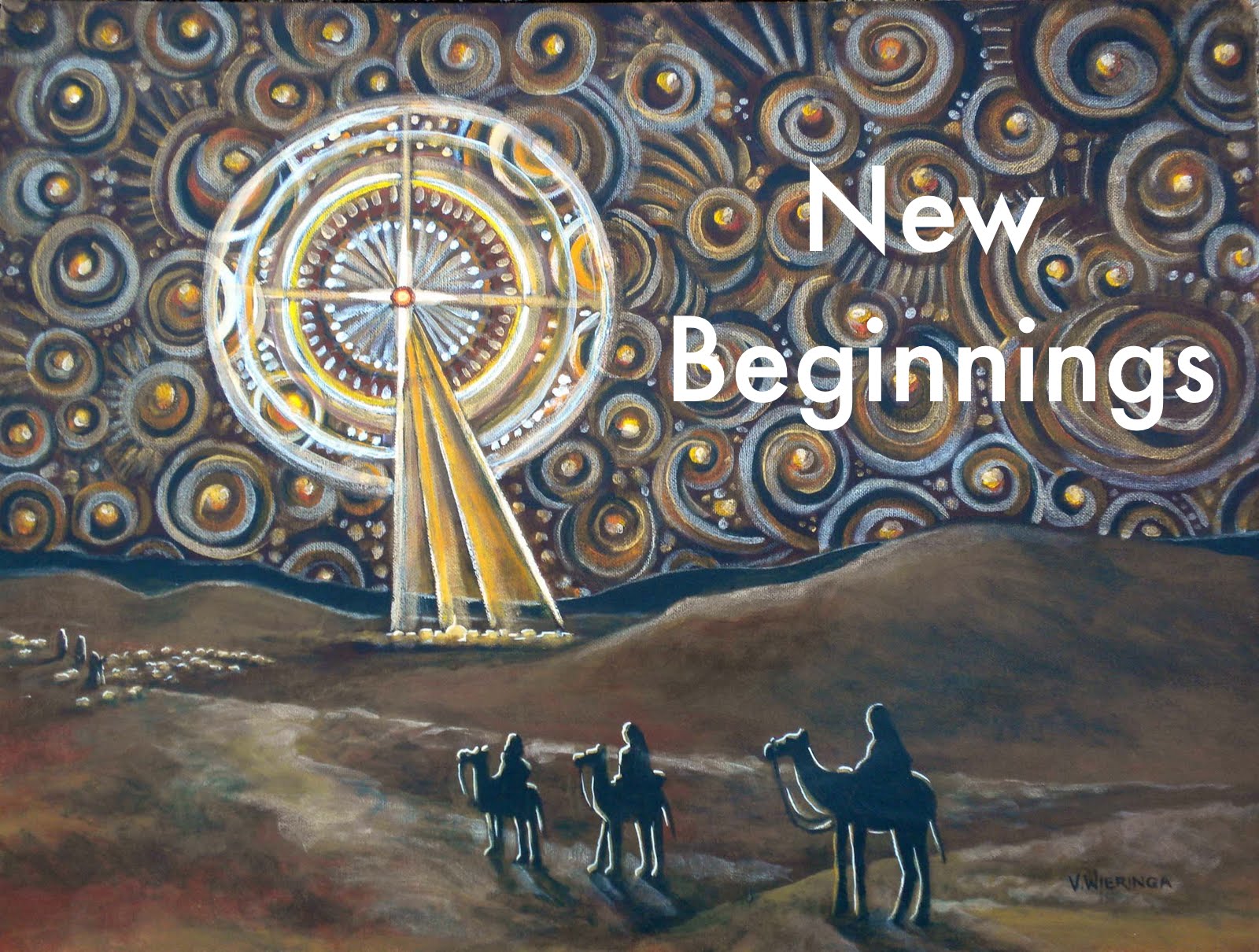
But the only reason we, that is Gentiles, even know about this enough to celebrate it is because of what we call Epiphany, the feast that marks the visit of the Magi and the expansion of the kingdom to those outside the people Israel. 

According to Matthew’s Gospel, after Jesus’ birth wise men/magi from the East come to Jerusalem looking for the king of the Jews because they observed a rising star and came to pay their respect. There’s a frightening plot by King Herod to put to an end any threat to his power, but the magi make haste to Bethlehem where they discover the star leading them to the location of the baby Jesus. 

When they encounter the baby born king they do something strange. It would be one thing to bring gifts to a king, stranger still to give those gifts to a baby born to a poor Jewish woman and her soon-to-be husband. But scripture says that when the magi saw Jesus, they knelt down and worshipped him and were overwhelmed with joy.

Epiphany is the celebration of that moment. We mark it on the liturgical calendar because it both points to the wild character of the incarnation, God in the flesh as a baby, but also to the way in which the glory of Jesus’ birth stretches beyond the confines of Israel.

Jesus will certainly grow to enact miracles and make various proclamations about the ever widening nature of the kingdom, but this is the radical beginning of that expansion. 

Jesus comes for a lot of reasons – to save us, to show us how the kingdom works, to reveal the nature of God. But one of the things we often overlook is that Jesus helps us to become fully human.

That’s a strange claim to make. You might expect to hear that Jesus helps us to become better Christians, or fuller Christians. And yet, if Herbert McCabe is right, we can only be fully human as we are incorporated into the fullness of humanity named Jesus Christ. Jesus, McCabe argues, “was the first true human for whom to live was simply to love – for this is what human beings are for.”

The kingdom of God, therefore, isn’t just for certain sets of people in particular places. The kingdom of God is for everyone. When we say that Jesus is fully human and fully divine, we mean that he is the fullness of humanity and the fullness of God. If we want to know what it means to be human, we need not look further than Jesus Christ, for his life was love. 

Maybe that’s why the magi fell to their knees and worship. Not because they intellectually understood the proclamation of the incarnation, of because they rationally deduced the momentous moment in front of them, but because they encountered love in the flesh, true and full humanity in a baby.

The presence of the magi in the manger means that the love that is God is for people even like us. And whenever we encounter that total radical love, whether it’s here in church, or at school, or at work, or around the dinner table, we can’t help but worship. It is nothing short of amazing that God, author of the cosmos, loves us and is as close to us as a baby being rocked in our arms or the bread and cup at the table.

An important theological claim is that God is God and we are not. It keeps things squarely where they are supposed to be. What are human beings that God is mindful of us, and all that.

But then, in the incarnation, everything takes on a strange and wondrous dimension. Because even though God is God and we are not, God willingly choose to become us, that we might discover who we are and whose we are.

Which, in the end, is why the psalmist can sing: “O Lord, our Sovereign, how majestic is your name in all the earth!” Amen.

Preaching With The Angels

This week on the Strangely Warmed podcast I speak with Jason Micheli and Teer Hardy about the readings for Christmas Eve/Christmas Day [A] (Isaiah 9.2-7, Psalm 86, Titus 2.11-14, Luke 2.1-20). Jason is the lead pastor of Annandale UMC in Annandale, VA and Teer is one of the pastors at Mt. Olivet UMC in Arlington, VA. Our conversation covers a range of topics including funeral sermons, merchandise, Christmas Unicorns, transitional themes, the truth, pageantry, the Prince of Peace, homiletical imaginations, Joshua Retterer, new songs, judgment, gifts, Sufjan Stevens, fear, and Karl Barth. If you would like to listen to the episode or subscribe to the podcast you can do so here: Preaching With The Angels

The Mother of God

Isaiah 7.10-16

Again the Lord spoke to Ahaz, saying, Ask a sign of the Lord your God; let it be deep as Sheol or high as heaven. But Ahaz said, I will not ask, and I will not put the Lord to the test. Then Isaiah said: “Hear then, O house of David! Is it too little for you to weary mortals, that you weary my God also? Therefore the Lord himself will give you a sign. Look, the young woman is with child and shall bear a son, and shall name him Immanuel. He shall eat curds and honey by the time he knows how to refuse the evil and can choose the good. For before the child knows how to refuse the evil and choose the good, the land before whose two kings you are in dread will be deserted.

Gender-inclusive language. 

That’s a strange way to start a sermon. 

The practice of using gender-inclusive language for the divine has been around for awhile but it really came into vogue shortly before I arrived in seminary. It’s a willingness to confront the masculine pronouns often attributed to God: God as he. 

The reason being that God is not a he, unless we’re talking about Jesus. 

Of course, scripture and grammar lends itself to this. We pray to God as Father and all of that. But there are actually plenty of moments in the Old Testament when God is given feminine attributes, and even Jesus uses feminine attributes for God in the New Testament, we just rarely talk about them.

Again, what’s at stake here is the fact that God is not like us. God is, to use an expression of Barth’s, totally other. Therefore, to use human attributes, particularly gendered attributes for God, makes God like us.

And so there began a push while I was in school to stop referring to God as he. True story: we would have one point taken away per gendered reference to God in our papers, which taught us how to adapt quickly. 

Perhaps you have noticed, but maybe not, when I preach I try my best to not masculinize God. In other words, I try to avoiding pronoun-ing God. And sometimes it makes for a strange sentence. But it’s important. God is not a man. God is God.

Of course there are some, who in order to offer a corrective to the masculinity of God rendered in church, will feminize God and refer to God as she, or mother. Which, I think, can be helpful. God is both paternal and maternal. But it still puts God in our own terms, rather than letting God speak to us about who God is.

And yet, there is a more radical notion about the identity of God that we often overlook or downright ignore. 

You know what’s more radical than talking about God as our mother? The fact that God has one. 

700 years before the Advent of Christ, the people of God were in a time of war and fear. The city of Jerusalem was besieged during the reign of Ahaz and there seemed to be no hope on the horizon. And in the midst of this terror, the Lord asks Ahaz if he would like a sign of God’s power. And, inexplicably, Ahaz refuses! Which leave the prophet Isaiah to lament, “Is it not enough to weary everyone else, now you’ve moved to wearying God?”

And the Lord offers this sign whether Ahaz wants it or not: “Look, the young woman is with child and shall bear a son, and shall name him Immanuel.”

Notably, Isaiah does not say that “a” young woman will bear a child named Immanuel. Isaiah says “the” young woman will do so. “The” is the definite article indicating that not just anyone will give birth to this Promised One, but someone in particular would do it. We, of course, did not know who the “the” would be until Mary was singled out to be the Mother of God, the mother of Jesus. Not just any young Jewish girl would do. The one to carry and birth Jesus is Mary.

It’s difficult, I fear, for us to imagine the bewildered reception of Isaiah’s proclamation. We are so storied by the story of Christmas, moved by its majesty, that we can scarcely fathom the oddity of the prophet’s promise.

The city is under siege, hope is lost, and the Lord says, “A baby is coming.”

A baby? What about a ruthless warrior, or a fearsome king, or a charismatic leader? Surely that’s what God people needed! And yet, God says the sign is the woman who will bear a child named Immanuel.

That God chooses the woman as the sign, that God enacts God’s purposes through this young woman is so confounding. 

  What we dare to proclaim about God is that God willingly gets involved in the flesh and blood and bone of human life. The God we worship is en-wombed in Mary.

There’s a reason we don’t talk much about Mary. There are a lot of reasons actually. Most of them stem from our patriarchal renderings of existence. Some of them stem from the fact that we are Protestant and don’t want to be associated with the Mary-worship that happens in the Catholic Church. And yet, to ignore Mary, is to ignore the radical notion of the Incarnation. 

The ignorance of Mary results in a form of Christendom in which men continue to feel as if they are superior to women.

Patriarchy is real, the unjust rule of men over women exists and its wrong. And not just because of our modern sensibilities of equality, it’s wrong because of the fact that God is born of Mary!

Listen – Mary, as we say in certain theological circles, is the THEOTOKOS, the God-bearer. And, so named, she safeguards the fleshiness of God. Without her the God we worship remains aloof, but with her, the God we worship becomes one of us.

There is something almost outrageously particular about the fact that God’s fleshy presence in the world is localized in the womb of an unmarried teenage girl from Nazareth. Which is made all the more wild when we realize that Isaiah told God’s people this would happen 700 years before it did.

We tend to lob all these titles and distinctions upon God. God is almighty, omnipotent, omniscient, or whatever big seminary word we want to use. And all of that is fine. God is the author of the cosmos after all. But to claim God as enfleshed, that God has a birth and a death, is at the heart of the scandal that makes our faith, faith.

Even Martin Luther, who so famously broke away from the Roman Catholic Church, (which was simply called church until Luther started something different), Luther was wary of the church’s veneration of Mary and how close it was coming to idolatry. But even Luther was quick to note, “Mary breastfed God, rocked God to sleep, prepared broth and soup for God.”

Have you ever thought about the Gospel that way before?

If we take the strange new world of the Bible seriously, then Mary also changed God’s diapers, taught God songs to sing, taught God the stories of the faith, even the promise of the coming Messiah who was rocking in her arms the entire time.

Similarly, Charles Wesley praised Mary as one, “Who gave all things to be, what a wonder to see, God born of this creature, and nursed on her knee.”

Mary, an ordinary young woman from Nazareth, keeps the incarnation scandalous. 

Artist: Scott Erickson

Not to jump too solidly into the New Testament, but, Mary’s “Let it be” opens the way for a new eruption of grace into the world. We might call “Let it be” the Gospel according to Paul McCartney, but its actually the Gospel according to Mary!

Mary writes the best (can we say that?) song in the Gospels, a song we refer to as the Magnificat. It demonstrates her profound knowledge and love of the scriptures, and is perhaps the must frequently sung song throughout all of church history. 

Mary is present and is also the instigator of Jesus’ first miracle at the wedding in Cana of Galilee (water to wine). And she and others are present at the cross when the disciples flee.

Moreover, Mary is in the upper room at Pentecost, the only woman present who is named, and she receives the same Spirit that sets the church in motion.

But wait, there’s more: Throughout the early history of the church up through the Middle Ages, there were more paintings done of Mary than of Jesus!

The young woman with child of Isaiah’s proclamation is Mary, the flesh and blood Mother of God. Mary is not an idea, she is not a myth. She is a real person, as real as you and me. She is a real person who made decisions upon which our faith depends. 

We often fail to embody the embodied nature of our faith because, at some point, we assume that whatever our faith is it is at least a set of ideas or slogans. Ideas that help us make sense of the world, or slogans to help us behave better and therefore fix the world. 

But the witness of the faith cannot be summarized on a bumper sticker or in a tweet. It cannot be expressed through ideas or slogans.

It cannot because our faith, oddly enough, hinges on a young Jewish woman named Mary.

Here we are, at the end of Advent, preparing to dress up the kids next week for a pageant, and perhaps we do well to remember that Mary was not only real, she was also unlikely. That God chooses her, from a forgotten town with no bright hope for tomorrow, is wild beyond imagining. 

That God chooses any of us for God’s purposes is outrageous.

We would never have chosen to do it this way.

But, then again, we are not God. Thank God we are not God.

Because of the proclamation of Mary’s womb, God has given us more than we deserve, God has given us reason to be patient because the cosmos hinges not upon what we do, but upon what has been done for us. 

Therefore, here on the last Sunday of Advent, we are given the hope that we can learn to wait. Not unlike the Israelites waited for God to keep God’s promise. Not unlike Mary waited nine months with her belly swelling. Not unlike the disciples waited three days after the crucifixion. 

Waiting is part of the discipline of learning what it means to be creatures of time.

Time is a gift and a burden. That we have time at all is nothing short of God’s grace. But our time is limited. We must be born and we must die – Advent refuses to let us pretend otherwise. And yet, at the same time, Advent stories us. That is, Advent teaches us who we are and whose we are. 

Stories, of course, come in all shapes and sizes. Some are short and some are long. Some are funny and some are not. Some are defined by all sorts of words, and others can be summarized with “Let it be.” 

We, all of us, are storied creatures.

And, strangely, the great Good News of Advent is that our time has been storied by Jesus Christ, born of Mary. Mary makes possible our stories because she bears God into the world. God takes on flesh and dwells among us which gives us the grace to be, and become, fully human. 

It’s rather extraordinary, when we can take a step back from it all, that we know the name of the Lord’s mother! And yet, even more extraordinary is the fact that God chose to come and make time for us, redeeming out time, and making possible the salvation that disrupts time forever. 

Our time is so redeemed because Mary’s son is Immanuel, God with us.

No matter what.

Whether we are on the naughty list or the nice list, God is with us.

Whether we have gobs of presents under the tree, or if we haven’t had the time to get a tree at all, God is with us.

Whether we have more Christmases ahead of us, or only a few left, God is with us. 

Behold! The young woman is with child and shall bear a son, and shall name him Immanuel. Thanks be to God. 

The Naughty List

There’s a lot of good music to listen to this time of year both inside, and outside, the church. When the congregation belts out O Come, O Come, Emmanuel it brings tears to my eyes, just as Nat King Cole’s “The Christmas Song” can make me extra nostalgic for Christmases from the past.

But for as many good songs as there are this time of year, there are also some awful songs as well. And perhaps none are worse than “Santa Claus Is Coming To Town.” (If that song is your absolute favorite, then I apologize for the rest of this)

What we worship and celebrate during Advent is the antithesis of what that song conveys. Santa Claus may be watching your each and every move in order to reward you (or punish you) on Christmas, but Jesus arrives regardless of whether we’re on the naughty list or the nice list. Though, spoiler warning, we’re all on the naughty list, which is why Jesus is born into the world in the first place! We need all the help we can get!

And, thankfully, as Isaiah reminds us, we remain loved by God even when we knowingly choose to do the things we know we shouldn’t. In other words, the real gift of Christmas can never be taken away because Jesus Christ is coming to town!