Charm Is Deceitful

strangely-warmed-spreaker-header

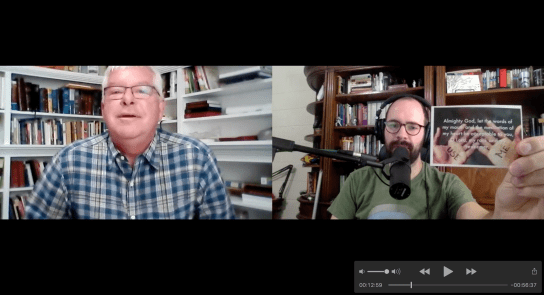
This week on the Strangely Warmed podcast I speak with Alan Layman about the readings for the 18th Sunday After Pentecost (Proverbs 31.10-31, Psalm 1, James 3.13-4.3, 7-8a, Mark 9.30-37). Alan serves as the pastor of Grace UMC in Parksley, VA. Our conversation covers a range of topics including pastoral titles, staying connected in a global movement, senior superlatives, wicked advice, true prosperity, faithful habits, visions of the kingdom, the absence of the devil, and hot dogs with popsicles. If you would like to listen to the episode or subscribe to the podcast you can do so here: Charm Is Deceitful 

allll

Sticks and Stones

strangely-warmed-spreaker-header

This week on the Strangely Warmed podcast I speak with Alan Layman about the readings for the 17th Sunday After Pentecost (Proverbs 1.20-33, Psalm 19, James 3.1-12, Mark 8.27-38). Alan serves as the pastor of Grace UMC in Parksley, VA. Our conversation covers a range of topics including a small church with a big presence, being “off the map”, the femininity of wisdom, prevenient grace, perfect law, the good side of fear, pre-preaching prayers, righteous anger, and speaking without thinking. If you would like to listen to the episode or subscribe to the podcast you can do so here: Sticks and Stones

a

The Original OG

strangely-warmed-spreaker-header

This week on the Strangely Warmed podcast I speak with Jason Micheli about the readings for the 16th Sunday After Pentecost (Proverbs 22.1-2, 8-9, 22-23, Psalm 125, James 2.1-17, Mark 7.24-37). Jason serves as the senior pastor of Annandale UMC, in Annandale VA. Our conversation covers a range of topics including dawgs, big buts, long car trips with your mother-in-law, new names, sowing injustice, being surrounded by God, gratitude for the Word, incompatibility, and Jesus’ sighs. If you would like to listen to the episode or subscribe to the podcast you can do so here: The Original OG

jj

We’re All Dirty On The Inside

strangely-warmed-spreaker-header

This week on the Strangely Warmed podcast I speak with Jason Micheli about the readings for the 15th Sunday After Pentecost (Songs of Songs 2.8-13, Psalm 45.1-2, 6-9, James 1.17-27, Mark 7.1-8, 14-15, 21-23). Jason serves as the senior pastor of Annandale UMC, in Annandale VA. Our conversation covers a range of topics including the most handsome of men, Karl Barth and Methodism, the g-spot, Jesus’ crush on the church, being prune by the Word, divine equity, biblical advice, looking in the mirror, and the truth in our hearts. If you would like to listen to the episode or subscribe to the podcast you can do so here: We’re All Dirty On The Inside

j

Also – The Crackers & Grape Juice team is excited to announce our first book! I Like Big Buts: Reflections on Romans (you can find the ebook and paperback on Amazon).

Devotional – Ezekiel 27.1-2

Devotional:

Ezekiel 37.1-2

The hand of the Lord came upon me, and he brought me out by the spirit of the Lord and set me down in the middle of the valley; it was full of bones. He led me all around them; there were very many lying in the valley, and they were very dry.

Weekly Devotional Image

I love challenging couples to pick their own wedding scripture beyond the cliché of 1 Corinthians 13 (Love is patient, love is kind…). In between premarital counseling sessions, I ask them to dive deep into their bibles in order to final a passage or a verse that really speaks to them, and I have been deeply impressed with the scriptures they’ve picked. I’ve been blessed to bring couples together into holy marriage with the stories of David being anointed by Samuel, Paul’s description of what it means to be a Christian, a prayer to the church in Ephesus, and more.

The scripture passage a couple chooses for their wedding says a lot about what their relationship is like, and what their marriage will be like.

Years ago, two of my friends from Durham were married at a local Presbyterian church that was known for the preaching of the pastor. To start the wedding homily, the pastor described the sanctity of marriage and what it means for two individuals to make this covenant, but then he began shaking his head and said, “You know that these two standing before us are devoutly faithful, because when I asked them to choose their wedding scripture, they picked the valley of the dry bones from Ezekiel.”

1509747_10155231246960627_1383507341785953622_n

I can remember sitting with my back against the pew and wondering what in the world he was going to do with the text. The valley of the dry bones is a remarkably beautiful passage, but it doesn’t naturally lend itself to a wedding sermon.

So the pastor continued on with bits of wisdom and advice, he shared stories about successful marriages and what to emulate as well as terrible marriages and what to avoid. But for the better part of ten minutes, he completely avoided the Ezekiel passage. And then, out of nowhere, the Spirit start blowing and he said, “James and Jennifer, I think you two can have a good marriage, but if you think that you can do it without the help of your friends, family, and the Lord, it will never be more than a dry valley filled with old bones. Only your friends, family, and the Lord can breathe the Spirit back into those bones and give them life.”

It was a simple sermonic twist, but it’s one that I think everyone it attendance will never forget.

What does your life look like? Is it filled with vibrancy and energy? Do you feel the Spirit moving in your midst? Or is your life like a deep valley filled with dry bones?

Thanks be to God who calls us into relationship with the Spirit, with our friends, and with our families who can breathe life into the dry bones of our lives.

Devotional – James 5.8

Devotional:

James 5.8

You also must be patient. Strengthen your hearts, for the coming of the Lord is near.

Weekly Devotional Image

Christmas pageants require patience. Christmas pageants for preschoolers require particularly profound patience. Every year the students of St. John’s Preschool spend time each day during the season of Advent practicing and rehearsing their lines for their annual Christmas pageant. We always have a Mary and a Joseph who carefully hold a baby doll in their hands as they sit patiently toward the front. We always have a couple Wisemen who are forever beating each other with gold, frankincense, and myrrh. And we have an assorted collection of barnyard animals including mice, sheep, cows, and at least one donkey.

Today I gathered with the children in the sanctuary and, as the defacto narrator, I led them through the pageant from beginning to end. When our shyer students walked up to the microphone I was ready to feed them their line and when our gregarious students walked up to the microphone I covered my ears in anticipation of them belting out their one line proclamation.

Meanwhile, a father of one of our students was in the preschool preparing Christmas trees for each of the classrooms. The hope was that after practicing, the children would return to their rooms with the surprise of cheer waiting for them in the form of a tree and then they could decorate each tree as they saw fit.

christmas-trees

When we finished the pageant, I walked with the children to their rooms and as soon as they saw the Christmas trees they went berserk. Our pretend shepherds were jumping up and down while our animals were spinning around in circles and even Mary and Joseph were screaming with joy. I did my best to calm them and then we sat on the floor to talk about the trees and how the relate to the Christmas story. I began with what I thought was a rather innocuous question: “Why do we celebrate Christmas?” To which one of our three year olds shouted out, “TO GET PRESENTS!!!”

Advent is a season of patience. While others want to jump straight to Christmas morning, while our preschoolers salivate over wrapped boxes under the tree, we strive to patiently wait for the coming of the Lord. This is the season of strengthening our hearts so that we might be prepared to receive the gift of the Christ-child with unadulterated joy (like the preschoolers) while also remembering the real present is God’s presence with us.

When Should We Pray? – Sermon on James 5.13-20

James 5.13-20

Are any among you suffering? They should pray. Are any cheerful? They should sing songs of praise. Are any among you sick? They should call for the elders of the church and have them pray over them, anointing them with oil in the name of the Lord. The prayer of faith will save the sick, and the Lord will raise them up; and anyone who has committed sins will be forgiven. Therefore confess your sins to one another, and pray for one another, so that you may be healed. The prayer of the righteous is powerful and effective. Elijah was a human being like us, and he prayed fervently that it might not rain, and for three years and six months it did not rain on the earth. Then he prayed again, and the heaven gave rain and the earth yielded its harvest. My brothers and sisters, if anyone among you wanders from the truth and is brought back by another, you should know that whoever brings back a sinner from wandering will save the sinner’s soul from death and will cover a multitude of sins.

00030228_h


Sunday morning: 11am. The gathered community of faith was sitting patiently in the pews waiting for the worship service to begin. Week after week the people sat in the same pews with the same expressions on their faces. Year after year they listened to preachers come and go telling the same stories about Jesus from different perspectives.

It was just like every other Sunday morning. Mr. Smith sat all the way up on the right hand side in the front pew with his notebook and pen in hand ready to take notes on whatever he heard. Jimmy, John, and Josh were midway back on the left quietly giggling while drawing stick figure battles all over the bulletin. And Miss Ethel, old and frail, was still slowly making her way up the center aisle while the first hymn was being played.

Worship is repetitive; for nearly two millennia Christians have gathered once a week to say the same prayers, hear the same stories, and sing the same songs. Worship is just like any good habit, and the longer you have it, the more fruitful it will become.

The congregation sat attentively while the pastor preached on the power of prayer. The seasoned Christians had heard sermons like this one before; they could almost imagine how the preacher would tie it together before he even spoke the words. The newer Christians were getting a little tired of hearing about prayer week after week, they wondered about when the pastor would call for them to lead a revolution to turn the world upside-down, they wanted to hear about power, not about prayer. And the youth, bless their hearts, if you had called their names from the pulpit in the middle of the service they would have looked up with bug-eyed expressions as if their teacher had singled them out in the middle of class.

The preacher was getting to what he imagined was the pinnacle of his proclamation, the words were flowing accordingly, and he no longer needed to look at his notes to drive the point home. As he stood up in the pulpit, gazing out over his gathered flock, he lifted up his fist for the final paragraph and froze in mid-sentence when he saw Miss Ethel slowly slump over in her pew having taken her final breath on earth.

Hands

When are we supposed to pray? James would have us pray all the time. Are any among you suffering? They should pray. Are any cheerful? They should sing songs of praise. Are any among you sick? They should call for the elders of the church and have them pray over them, anointing them with oil in the name of the Lord.

No matter what is going on in life, whether we’re on a mountaintop of joy, or in the bottom of a valley of sorrow, we should pray. We pray in celebration and in defeat, we pray during the mundane, and we pray during the extraordinary.

The end of James’ letter is a favorite among preachers because it explains itself. There’s no need to go digging through the grammar to exegete a strange or divergent meaning. James means what he says:

We should pray all the time.

            Prayers of deep faith will bring about salvation on earth.

The Lord will raise us up.

            Through prayer, any sin can be forgiven.

            We should confess our sins to other people, and pray for others to be healed.

            Righteous prayers are powerful and effective.

            Elijah was just like us, and he prayed for a drought for three years and it did not rain, and as soon as he prayed for the rain to fall, it did.

            If anyone begins to wander away from faithful life, we do well to reach out and bring them back out of love.

            That’s it.

So, then why is prayer such a last resort for many of us?

James clearly outlines that if Christians do anything, they should pray. As individuals and as a community we are defined by the fact that we believe in relying on something bigger than ourselves being active in the world. Yet, more often than not, Christianity has been compartmentalized into just having a personal relationship with Jesus Christ (something you can do without the church). But having a personal relationship with Jesus Christ, though wonderful, is not what Jesus wants from us. Instead, we are called to be people of prayer who live like Jesus in community with our brothers and sisters in faith.

James clearly outlines what prayer can accomplish: it keeps us humble when life is full of success, and it keeps us hopeful when life is full of disappointment; it encourages us to open our eyes to the ways God is moving in the world, and it encourages us to be active participants in God’s kingdom here on earth.

Prayer is about relationship; it’s about connecting with God through the people around us.

The pastor stood in the pulpit and did not know what to do. He was trying desperately to string the final thoughts of his sermon together when Ms. Ethel fell over in her pew and died. He could feel all the eyes in the sanctuary look from her pew, to him in the pulpit, expecting him to do something. But he panicked and froze.

This was not something they covered in seminary, there was no class on ministering to the dead in the middle of a worship service, so the pastor stood in the pulpit and stared back at the church.

One of the ushers immediately called the rescue squad, but the rest of the church slowly stood up from their pews and began to gather around Ms. Ethel’s pew. No directions were offered, no specific pages of the hymnal were referenced, but as if God’s was orchestrating the entire thing, the congregation gathered around her lifeless body and began to pray and sing.

The words of faith came pouring from their mouths, thanksgivings were uttered, and intercessions were demanded. The great songs like Amazing Grace and How Great Thou Art were sung and hummed by the church. And by the time the ambulance had taken Ms. Ethel away, the pastor and the entire church were holding each other in tears of pain and joy, recognizing the loss of life while acknowledging the hope of the resurrection.

When asked later about the moment of prayer, the parishioners simply explained that in the midst of something so profound, the only thing they could do was pray.

james-4x3

Prayer can be beautiful, but it can also be uncomfortable. We don’t like having to wrestle with our finitude, we don’t like having to admit that one day we will die, that’s why weddings are much more crowded than funerals. But prayer, done rightly, is the most faithful thing we can ever do as Christians.

If James had it his way, we would spend more of our time confessing our sins to our fellow Christians. Talk about uncomfortable. When I encouraged all of you to take time to walk up to the pulpit and proclaim your sins, I did so in jest, but it would make us a more faithful community.

Look around the room: you all are beautiful. On the surface you’ve got the right outfits and dispositions. But on the inside, everyone is facing a battle that they rarely share with anyone else. It is a mistake to assume that we are eager to surrender our privacy to the church, but imagine (if you can) what it would be like if we trusted each other enough to do so.

If we could find just one person to confess to, we would make ourselves vulnerable and ready for healing. Confession is the beginning of transformation.

How are we, as a church, shaped by prayer?

Worship is structured around prayer. We pray for God’s presence to be made known to us in this place on Sunday mornings. We pray collectively for the world toward the beginning of the service. We pray silently from our pews lifting up our own joys and concerns. We pray for the offering that is collected by the ushers. We pray through the hymns we sing and the creeds we confess. The best sermons we hear are the ones less about our lives and more like prayers offered to and about God. And we end worship with a prayer.

In addition to worship we pray before our bible studies and youth meetings. We pray before every committee and before the church council. We are a people of prayer… but are we being shaped by prayer?

We are now going to try something that will probably make us uncomfortable.

In a few moments I will ask us to find someone else in church and ask for their prayers. We tried this on Wednesday night at The Circle meeting and it was a challenge. I asked for the youth to give me just one thing that I could pray for regarding their lives. Immediately I heard about friends or family members that needed prayer, but that wasn’t what I was talking about. I asked, “How can I pray for you right now?” and I want each of us to ask that same question right now.

So, as your able, I encourage you to find someone else in the church, you don’t have to wander too far, but find someone that is not in your immediate family. Once we’ve paired up, I want both people to take an opportunity to share something they need prayers for. This doesn’t have to be an ultimate confessional moment, maybe the thing you need is more patience with your children, perhaps you feel confused about decision and you could use some discernment, or maybe you’re unsure about what God is doing in your life.

Whatever that thing is I want you to share it, and the person who hears it will pray about it. The prayer can be as simple as “Lord, in your mercy, hear our prayer.” Or it can be filled with other words. The point is, I want everyone in this church to have the opportunity to share a need they have, and have someone in this church pray for them right away.

I know this is uncomfortable, but sometimes the most faithful things we do as disciples are born out of discomfort. So, let’s give it a try….

In the words of James: Are any of us suffering? We should pray. Are any of us filled with joy? We should sing songs of praise. Are any of us sick? We should call for our brothers and sisters in Christ to come and pray over us. We should confess our sins to one another, and pray for one another, so that we may be healed and transformed. Amen.

Devotional – James 3.5


Devotional:

James 3.5

So also the tongue is a small member, yet it boasts of great exploits. How great a forest is set ablaze by a small fire!

Weekly Devotional Image

On Sunday morning, during the Sunday school hour, I asked the group if they could remember a mean comment someone had made in the past. I was trying to prepare us for a discussion on the fact that in Mark 7 Jesus basically calls the Syrophoenician woman a dog and what it means to wrestle with the text. I myself can remember of number of negative comments from my childhood, moments when I was made fun of by fellow students, or a harsh criticism from a former Scout Master. But one of the women from the Sunday school class shared that, out of all the experiences she had as a teacher, she will never forget the one boy who waited till the end of the year to tell her that she was mean.

What is it about words that make them so powerful? How strange is it that one of the greatest tools of humanity can both give life and destroy life? The expression “sticks and stones may break my bones, but names will never hurt me” is a worthy thing to teach young children so as to not let comments destroy us, but the expression isn’t really true; names can hurt, and they can stay with us for years and years.

iStock_000025235303_Medium

Just ask a preacher about the power a comment can make right before or after a worship service. Just ask a teacher about the power a comment can make on an end of the year evaluation. Just ask a student about the power a comment can make during the first few weeks of a new school year. Just reflect on your own life and soon enough you will surely remember a time when the power of words was almost unbearable.

The tongue is a small thing, yet it has great power. James reminds us that even the greatest fires were started with a tiny spark. In all of our actions as Christians, the many ways we demonstrate Christ’s love in the world, the way we use our words might be the most powerful.

This week, let us reflect on the times that we have experienced the harsh reality of the power of words. How have we continued to carry those comments around, and how have we let them reshape our lives? Similarly, let us pray for God to give us the strength to use our words wisely toward others so that we might build people up, rather than break them down.

powerof-words


Who Are You? – Sermon on James 1.17-27

James 1.17-27

Every generous act of giving, with every perfect gift, is from above, coming down from the Father of lights, with whom there is no variation or shadow due to change. In fulfillment of his own purpose he gave us birth by the word of truth, so that we would become a kind of first fruits of his creatures. You must understand this, my beloved: let everyone be quick to listen, slow to speak, slow to anger; for your anger does not produce God’s righteousness. Therefore rid yourselves of all sordidness and rank growth of wickedness, and welcome with meekness the implanted word that has the power to save your souls. But be doers of the word, and not merely hearers who deceive themselves. For if any are hearers of the word and not doers, they are like those who look at themselves in a mirror; for they look at themselves and, on going away, immediately forget what they were like. But those who look into the perfect law, the law of liberty, and persevere, being not hearers who forget but doers who act — they will be blessed in their doing. If any think they are religious, and do not bridle their tongues but deceive their hearts, their religion is worthless. Religion that is pure and undefiled before God, the Father, is this: to care for orphans and widows in their distress, and to keep oneself unstained by the world.

who-am-i


The small town sheriff was frustrated when he received a phone-call from the station that interrupted his Sunday supper. A report had come in that a group of young boys were throwing water balloons at strangers walking along Main Street. Reluctantly, the sheriff changed out of his Sunday best into his uniform and went to find the hooligans.

Just as the report noted, a group of young boys were standing on a street corner with a bucket of water balloons and were striking anyone within distance. As he approached in his patrol car, he expected to hear the boys laughing and hollering, but they were rather silent as he inched his way forward. He recognized all the boys from his local church, and dreaded the phone calls he would be making to all of their parents, but he knew their behavior had to stop.

The boys were smart enough not to throw a balloon at the police car, but the sheriff was still nervous to roll down his window in case a wayward throw made it inside. “What do you think you’re doing?” he yelled to the boys. In unison they all solemnly replied, “we’re working for the Lord.” He was mystified by their response, after all how could throwing water balloons at strangers be equated with the almighty? So the sheriff sat in his car with one eyebrow raised and motioned for them to explain.

The ringleader then stepped forward and said, “Didn’t you hear the preacher this morning sheriff? He told us to go out baptizing in the name of the Father, Son, and Holy Spirit. We’ve got Holy Water Balloons and we’ve done already made 45 Christians.”

Every good thing in our lives, every generous act of giving, every perfect gift, every blessing, every compliment, is from above.

Throughout our days, the Lord nurtures, guides, and provides all that we need. More often than not, God uses the people around us to do so, but nevertheless God supplies the goodness in our lives.

The letter of James is beautiful, and it begins with a quick assessment of the discipled life and what it means to live into this identity.

James knew how to notice the small things, because the small acts of life are the nuts and bolts of existence. It is the little things, the small actions and the tiny compliments, that hold together the fabric of our lives and give us the power to build and shape community. What we say and how we act are more important than we can possibly imagine.

The Lord has given us new life by the Word of truth and the power of scripture so that we would become a kind of first fruits. We have been given the great blessings of God’s presence, scripture, and Jesus Christ and now we have the responsibility to let those blessings bear fruit in our lives, and in the lives around us.

We must understand this, children of God, we should be quick to listen, slow to speak, and slow to anger, because our anger does not produce God’s righteousness. How many times have we jumped to a conclusion, or said something without thinking it through and immediately regretted it? How valuable is James’ advice: be quick to listen, slow to speak, and slow to anger?

Our contemporary conversations are filled with “uhhs” “buts” “likes” and other verbal bridges because we are afraid of silence. Rather than actually listening to others, or at least giving them the chance to speak, we fill up every ditch between our words out of fear that someone else will jump in with something else to say. Imagine how much our relationships would change if we only heeded James’ words in our conversations? Can you picture how different our identities would be if we were quick to listen, slow to speak, and slow to anger?

If we have the strength to change the way we converse, then we will begin to welcome with meekness the implanted word that has the power to change the world. Instead of relying on our own words at all times and places, with patience we can remember the great Word of God in Jesus Christ and put all our trust in him. Instead of believing that we are alone in the world and in our situations, we will come to see that God is with us, and has carried God’s people through this before and will again.

But it’s not just about the words we use and speak, as Christians we are invited to be doers of the Word and not merely hearers who deceive themselves.

Have you ever departed from church on a Sunday morning, after hearing a particularly convicting message, only to believe that it had nothing to do with you? Have you ever picked up the bible and started reading only to think about the other people the scripture should apply to instead of you?

For if we are hearers of the word and not doers, then we are like those who look at a mirror and as soon as we walk away immediately forget who we are. Our identities are rooted in the scriptures we read, and in the water of our baptism. But too often, we leave from church, or we put down the bible, or the water dries from our hair, and we immediately forget who we are and whose we are.

If church is supposed to accomplish anything on a regular basis, it is to act like a giant mirror so that we catch a glimpse of who God is calling us to be, and then never forget what we have seen.

who-am-i-1024x575

It was New Year’s Eve 1999 and Javier was afraid. For months news pundits and writers speculated about the “end of the world” coming with the year 2000. In addition to some strange and warped biblical prophecies, technologically proficient workers warned about the change that might come with the digits 99 changing to 00 and the blackouts that could ensue. For weeks people throughout the world prepared for the worst, and the rhetoric about the end times increased.

So Javier found himself getting ready to attend a worship service with his family and friends in El Salvador on the eve of the new millennium and he was afraid. The service itself was fine; it proclaimed the word of God’s faithfulness in spite the warnings about the new millennium, yet Javier could not rid himself of the fear that was shaking him to his core. Before the service came to a close, Javier stood up, walked to the front and asked to be baptized. He did not know what the New Year would bring, he did not know what would happen to the world, but he figured that a little water on his head couldn’t hurt.

Except, that simple affirmation that God was bigger than himself, that simple humbled moment of reverence to God’s power to save was enough to change Javier’s life forever. Of course, the year 2000 did not bring about the end of the world, but it did bring about Javier’s new identity in Jesus Christ. From that night forward he saw himself as a disciple and has lived into that ever sense.

My own baptism took place when I was 19 days old. Other than some strange blurry photographs of my mother and father standing at the front of the church, I have no idea what it was like or what happened. But it came to shape my very identity. The people who were present in worship that day 27 year ago took seriously the commitment to raise me in faith, and helped me hold on to my identity in Jesus.

The Sunday before I became the pastor at St. John’s I stood before my home congregation and thanked them for nurturing me in the faith all these years and said goodbye. But while I stood in the narthex shaking hands after the service, a much older woman came up with a very worn bible in her hands. Without saying much she turned to the back inside cover and showed me my name and the date of my baptism. For decades she had written down the name and date of every person baptized in her presence and made a point to pray for every single one of them, every single day. Her prayers shaped me into who I am.

Those of us to look in the mirror and remember who we are when we walk away, those of us who are doers of the word will be blessed in our actions. Our religion is pure when we, like the disciples from long ago, actually live into the Word of God and start caring about the people in our midst. Our religion is pure when we clasp our hands together and pray for the world. Our religion is pure when we remember our baptisms and are thankful.

tumblr_m8lkq3H8zQ1rqn80jo1_500

Who are you?

What defines your identity?

Perhaps we’ve forgotten who we are and whose we are. Instead of seeing disciples of Jesus Christ in the mirror, we only see fathers, mothers, brothers, sisters. Instead of holding on the image of God in our hearts, we turn away from the mirror of church and we immediately forget what God is speaking into our lives.

Do you remember your baptism? Can you recall the details of what eventually led you to yearn for the water of a new identity? Were you, like Javier, led to baptism out of fear? Were you, like me, led to baptism before you even had a chance to know what was happening?

Baptism is not about quantity; we’re not interested in throwing Holy Water Balloons at everyone within distance. Baptism is instead about discovering our fullest identity in Christ through a covenant by water and the Spirit.

Today, we are all invited to remember our baptisms and be thankful. In a few moments I will pray over our baptismal font, and everyone may come forward to remember and give thanks. The mirror behind the water is there for us to take a good look, so that when we turn around we will not forget who we are.

Disciples of Jesus Christ: Remember that every good thing is from above, that God has given us the word of truth so that we may bear fruit in our lives. Remember to be quick to listen, slow to speak, and slow to anger. Remember that we are called to be doers of the Word. Remember your baptism and be thankful. Remember who you are. Amen.

God With Us – Homily on James 5.13-20

I was recently asked to speak to a local group of ICM Chaplains about the importance of carrying our faith into the workplace. It was an honor and a privilege to speak with such great chaplains and enjoy an evening of fellowship together. Below is the homily I preached for the occasion.

James 5.13-20

Are any song you suffering? They should pray. Are any cheerful? They should sing songs of praise. Are any among you sick? They should call for the elders of the church and have them pray over them, anointing them with oil in the name of the Lord. The prayer of faith will save the sick, and the Lord will raise them up; and anyone who has committed sins will be forgiven. Therefore confess your sins to one another, and pray for one another, so that you may be healed. The prayer of the righteous is powerful and effective. Elijah was a human being like us, and he prayed fervently that it might not rain, and for three years and six months it did not rain on the earth. Then he prayed again, and the heaven gave rain and the earth yielded its harvest. My brothers and sisters, if anyone among you wanders from the truth and is brought back by another, you should know that whoever brings back a sinner from wandering will save the sinner’s soul from death and will cover a multitude of sins.

11295

She walked with a limp and was struggling under the oppressive humidity. Employed by the church as a custodian, the older woman largely kept to herself but you could tell that she was remarkably lonely. I had taken the time to express kind greetings throughout the summer but they never developed into a conversation. I was serving as an intern at a rural church in the deep recesses of Western North Carolina and I spent most of my days exploring the Great Smokey Mountains instead of sitting in my stuffy office reading over my sermons for Sundays.

Her loneliness was palpable enough that I finally decided to do something about it, and one Thursday morning toward the end of my time I invited her to come on hike with me along a creek right outside of town. I had been part of the church long enough to know that the building itself often casts a shadow over the lives of the people who call it home, and if you really want to get to know someone, you’ve got to go somewhere else.

She walked with a limp and was struggling under the oppressive humidity. I offered her my water bottle while we sat along the creek and let our feet cool off in the water. While sitting side by side I realized that I knew nothing about her outside of her name, but over the next thirty minutes I learned more about her than anyone else in town. Without prompting, without asking any questions, she started to spill forth details that had remained buried for a long time. I learned that she had been a writer in Chicago pursuing truth wherever possible, I learned about her desire to have children but had a husband who felt otherwise, I learned about the husband’s pension for physical punishment, I learned about the night he had one too many and beat her so bad she wound up in the hospital with a limp and brain damage, I learned about how she fled to escape his wrath to North Carolina, I learned about how she could only find work as a church custodian because of her physical problems, I learned that she felt alone, afraid, and empty.

We prayed. We prayed and prayed out in those woods. We spilt tears into the creek and we asked for God’s peace. Before we returned to town, my curiosity was too strong to not ask the question on my heart: “Why did you tell me all of that?” I asked. “Because you didn’t ask, you just listened.”

_

He came to the prayer meetings but never said a word. Every Wednesday morning the family men would sit in one of the parlors at the church and pray for one another before leaving for work. 40 such men had grown to value their time spent with God and one another to help them through the day ahead. We all listened about the problems at home, the children who refused to listen, the bosses who ignored their hard work, the financial struggles, and the crises of faith. It was a time of great vulnerability for us to share our doubts and frustrations without a sense of shame or judgment.

He came to the prayer meetings but never said a word. He never shared his frustration, never offered to pray. He just sat silently in the corner, sipped on his coffee, and left silently at the end of the meeting. That was the routine until one morning when he approached me and asked if he could take me out to breakfast. 20 minutes later I found myself sitting at the Birmingham Country Club in Birmingham, MI with a man who made more in a year than I will make in my entire life. He told me he had cancer, that he had not told anyone else, and that he didn’t know what to do. We prayed together while our coffee grew cold and asked for God’s grace to rain down on us in all things. Before we returned to our cars, my curiosity was too strong to not ask the question on my heart: “Why did you tell me all of that?” I asked. “Because you’re not the pastor, and I felt I could trust you.”

_

Icicles were beginning to form in my beard. The Christmas trees stood brilliantly arranged on the lawn of St. John’s UMC, with snow caught on the branches while families perused the plentiful selection of White Pines and Frasier Furs. I located one such family with two young children examining a tree near the end of the row. I offered to pull it off the line so they could examine from all angles and imagine it in their living room. We began talking about Staunton and what it means to be a true Stauntonian when they shared with me their desire to find a local church community. “We just moved here,” they said, “and we were hoping to plug in and meet some new people.”

“Well look no further than St. John’s” I began. “We’ve got services on Sundays, a wonderful Preschool, and people who are full of love. However, the pastor isn’t worth a can of beans.” They leaned in closer and asked with a whisper: “Well, then why do you come here if the pastor is so bad? “Because he is me. What makes our church wonderful are the people who attend, not the one who stands at the front.”

_

ICM: Industrial Commercial Ministries. Your mission is to be a caring presence in the workplaces you serve. You bring faith to the people as a sign of God’s love and presence. I love what you do, because you are called to be just like me, which is to say, you are called to be pastoral in the places that matter most. One of the failings of the modern church is the relegation of faithful living to one hour a week on Sunday mornings. We have diminished the role of Christian discipleship to the worship of God alone, which has allowed us to forget that we have put on Christ Monday through Saturday.

In my experience the most transformative moments in Christians’ lives take place somewhere other than church. My role as a pastor is to equip the people of God to be the body of Christ for the world. As chaplains you have the distinct privilege of sitting and praying with people in the midst of terrible valleys and incredible mountaintops. You, more than pastors, are deeply entrenched in the true mission field of 21st century Christianity.

The end of James contains one of the most beautiful calls for Christians to act like Christ: “Therefore confess your sins to one another, and pray for one another, so that you may be healed.” Being a Christian is not just about coming to church. Being Christian requires a commitment to confessing our shortcomings with one another, seeking help for the struggles of life no matter where we are and no matter what we do. Being a Christian requires us to be God’s loving and forgiving presence for people who feel they had been abandoned to the cruel fates of the world.

I give God many thanks for the work that you do as chaplains. You get to sit along the creeks of life, soaking your feet in the water, while listening to people open up about their pasts in a way that can be healing and transformative. You get to pray with people who have been dealt heavy blows regarding family issues, hopeless diagnoses, and financial burdens. You get to make Christianity wonderful by being the body of Christ for the world in the world.

I believe the Holy Spirit is moving through all of you. I believe God has done some incredible things through your willingness to meet people where they are. I believe the future of Christianity will be largely dependent on people like you who make the world become flesh in the way you live your lives.

This season of advent is perfect reminder for those of us called to be chaplains. We wait for Emmanuel, God with us, so that we can share that incredible good news with others: God is with you.

Amen.