Unsettled

strangely-warmed-spreaker-header

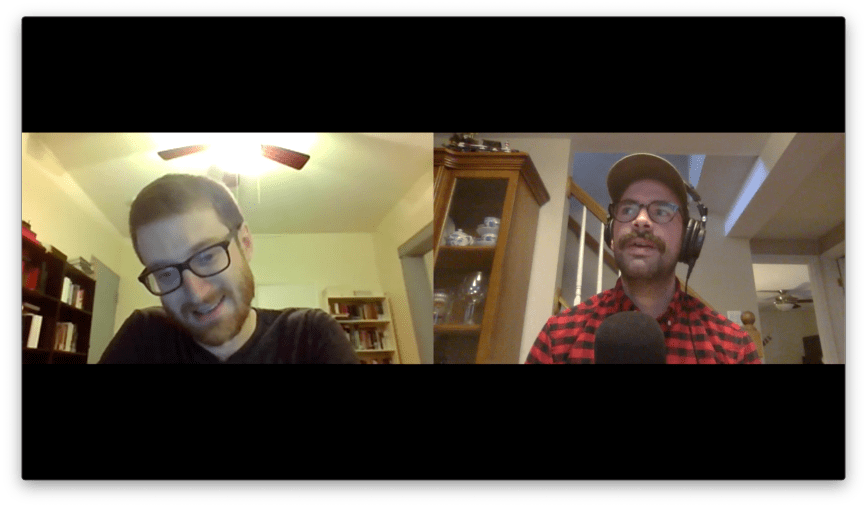
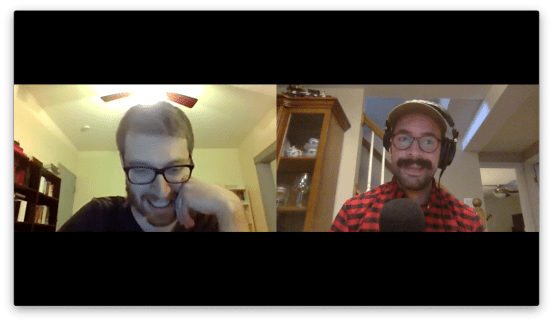
This week on the Strangely Warmed podcast I speak with Teer Hardy about the readings for the 1st Sunday After Christmas [A] (Isaiah 63.7-9, Psalm 148, Hebrews 2.10-18, Matthew 2.13-23). Our conversation covers a range of topics including fools for Christ, Christmas gifts, the podcast team as Toy Story characters, Crazy Talk, braving testimonies, Christology, forced socialization, quoting Gandalf, and the end of the story. If you would like to listen to the episode or subscribe to the podcast you can do so here: Unsettled

opt-the-day-after-christmas from Life Magazine Jamie Wyeth


We Didn’t Start The Fire

strangely-warmed-spreaker-header

This week on the Strangely Warmed podcast I speak with Teer Hardy about the readings for Christmas Eve [A] (Isaiah 9.2-7, Psalm 96, Titus 2.11-14, Luke 2.1-20). Our conversation covers a range of topics including breaking yokes, getting political in church, fire on the altar, Bojack Horseman and Fleabag, singing our faith, making connections, David Bentley Hart, redemptive justice, and loneliness in a connected world. If you would like to listen to the episode or subscribe to the podcast you can do so here: We Didn’t Start The Fire

Screen Shot 2019-12-17 at 3.14.07 PM

Grace Is Ridiculous

strangely-warmed-spreaker-header

This week on the Strangely Warmed podcast I speak with Tim Tate about the readings for the 4th Sunday of Advent [A] (Isaiah 7.10-16, Psalm 80.1-7, 17-19, Romans 1.1-7, Matthew 1.18-25). Our conversation covers a range of topics including working out for Advent, setting the church on fire, baptismal remembrances, testing the Lord, Mary’s knowledge, The One Thing Needful, the bread of tears, having a Roman holiday, Christmas trees, and the simplicity of scripture. If you would like to listen to the episode or subscribe to the podcast you can do so here: Grace Is Ridiculous

Screen Shot 2019-12-16 at 9.56.16 AM

Farting Around

Devotional:

Psalm 146.10

The Lord will reign forever, your God, O Zion, for all generations. Praise the Lord! 

Weekly Devotional Image

I had an existential crisis yesterday.

I was sitting in a local Auto Parts Shop waiting for my car’s inspection and emissions to be completed having procrastinated for far too long. When I entered I took a seat close to the door, filled up a too-small styrofoam cup with horrible coffee, and pulled out a book to read. But before I could even find my recently dog-eared page, I noticed the man sitting next to me. He was wearing boots, jeans, a black flannel shirt, a knit cap, he had a beat up paperback sitting on his lap, and he was fast asleep. It was then that I took stock of my own clothing and situation, for I too was wearing boots, jeans, a black flannel shirt, a knit cap, and I was about to open my paperback book.

And I kind of freaked out.

What made me freak out wasn’t the odds of running into my twin (who was probably 30 years older than me) but was the fact that I felt like I received a brief glimpse into my future. And it left me feeling, well, uncomfortable.

Instead of opening my book and actually reading, I spent the rest of my purgatorial time asking questions in my head like: Is this what I doomed to do the rest of my days? Is life just a repetitive joke until it ends? Is their any meaning to all of this?

By the time my name was called I was sufficiently in the midst of a mental crisis when the snoring man’s cell phone rang. He promptly woke from his slumber, brought the phone to his ear, and after listening for a moment he said, “Yeah, just farting around waiting for my car to be ready.”

Which made me think of a haunting quote from Kurt Vonnegut Jr.: “I tell you, we are here on Earth to fart around, and don’t let anybody tell you different.”

In Stanley Hauerwas’ sermon “Facing Nothingness – Facing God” from his collection Without Apology he seeks dispel the sentiment of Vonneguts’ quote by in fact naming what we are here on Earth to do, namely “wait for a new heaven and a new earth.”

The sermon explores the many ways in which we wrestle with our finitude and mortality by trying to seek out our own immortality by making a difference such that “we will not be forgotten by those who benefit from our trying to make a difference.” And yet, we very rarely actually make much of a difference. The world continues to spin in spite of our best intentions, we revert back to the same old sins that leave the lost lost and the found found, and we neglect to realize that even if we are remembered for our good deeds the people who knew those good deeds will also one day be forgotten.

This is a recipe for anxiety.

BFFF9D60-A4DA-46D2-A1A7-3DF022255F83

But what does this mean, particularly, for Christians? What about those who gather week after week in the hope that our lives are not pointless?

The prophet Isaiah was once called by God to comfort God’s people and to speak tenderly with Jerusalem. But when Isaiah presses the Lord about what to actually speak it sounds anything but tender – “All people are grass that withers away when the breath of the Lord blows upon it.”

Or, in other words, we are not the center of the universe.

For a people constantly told to “make your own destiny” and “leave your mark” it can be a difficult endeavor to confront the reality that we are reminded of every Ash Wednesday: We are dust and to dust we shall return. The life of a Christian is defined by the recognition that we are fragile, fleeting, and finite things. And, even more importantly, we can’t do much of anything about it! This is our lot in life.

But we are an Advent people and we have learned (or are learning) what it means to wait. Christianity isn’t about being given a set of tools or resources to make sure we are remembered long after we’re dead. Instead Christianity is about seeing how the time we’ve been given is a gift because it is God’s time for us.

karl-barth-smoking

Karl Barth put it this way: “When I really give anyone my time, I thereby give them the last and most personal thing that I have to give at all, namely myself… The difference at once to be noticed between our having time for others and God’s having time for us is twofold, that if God gives us time, He who deals with us is He who alone has genuine, real time to give, and that He gives us this time not just partially, not with all sorts of reservations and qualifications, such as are habitual with us when giving to others, but entirely.” Church Dogmatics I.2

The regular gathering and shaping of Christians through the liturgy forms us into people who know how to wait in the time God has given us. Whenever we hear the Word read in worship or we gather at the table of communion or we pray over the waters of baptism we do so by facing God in the person of “Jesus Christ who gives us the confidence that time is not a tale told to us by an idiot, but rather time names God’s desire that we participate in God’s very life. We are not abandoned. The heavens do declare the glory of God.” (Hauerwas, Without Apology, 54).

As Advent people we are also Easter people – We know how the story begins and how it ends – We know the Alpha and the Omega.

It is far too easy these days to give in to the existential fears that so regularly plague us. No matter how old we are we all look back and wonder what the sum of our lives mean. Life can, at times, feel meaningless. But for Christians, our lives have meaning precisely because God has come to dwell among us in Jesus Christ. Our meaning comes in receiving the One who comes to us precisely to remind us who we are. We have been given good work to do because all we have to do it wait – the rest is up to God.

Advent Is A Little Lent

strangely-warmed-spreaker-header

This week on the Strangely Warmed podcast I speak with Tim Tate about the readings for the 3rd Sunday of Advent [A] (Isaiah 35.1-10, Psalm 146.5-10, James 5.7-10, Matthew 11.2-11). Our conversation covers a range of topics including relational leadership, Advent Hymns, highlighting tension, tempering the holidays, divine reversal, the Bible on a bumper sticker, opening prisons, The Wesleyan Covenant Prayer, burning Christmas trees, and churchy expectations. If you would like to listen to the episode or subscribe to the podcast you can do so here: Advent Is A Little Lent

Screen Shot 2019-12-09 at 10.08.31 AM.png

Killing The Wicked

strangely-warmed-spreaker-header

This week on the Strangely Warmed podcast I speak with Ben Crosby about the readings for the 2nd Sunday of Advent [A] (Isaiah 11.1-10, Psalm 72.1-7, 18-19, Romans 15.4-13, Matthew 3.1-12). Our conversation covers a range of topics including theological Advent calendars, Weird Anglican Twitter, Methodist monikers, the strange new world of the Bible, the rectification of ALL things, suffering sinners, depoliticizing justice, the low bar of toleration, and finding vipers in the manger. If you would like to listen to the episode or subscribe to the podcast you can do so here: Killing The Wicked

Screen Shot 2019-12-02 at 1.18.46 PM

Progress Is A Problem

strangely-warmed-spreaker-header

This week on the Strangely Warmed podcast I speak with Ben Crosby about the readings for the 1st Sunday of Advent [A] (Isaiah 2.1-5, Psalm 122, Romans 13.11-14, Matthew 24.36-44). Our conversation covers a range of topics including a case for the BCP, purple paraments, the eschatology of Advent, firearms and faith, unpacking peace in the Upper Room, being drunk on the Law, wearing Jesus, quarreling around Thanksgiving, and the unexpected nature of grace. If you would like to listen to the episode or subscribe to the podcast you can do so here: Progress Is A Problem

Screen Shot 2019-11-25 at 8.01.43 AM

The End

Devotional:

Isaiah 65.17

For I am about to create new heavens and a new earth; the former things shall not be remembered or come to mind. 

Weekly Devotional Image

On Sunday countless Christians across the globe will hear words from the lips of Jesus as recorded in Luke 21. The particular passage is often hailed as a mini-apocalypse in the midst of the Gospel, and is present in the Synoptics (Matthew, Mark, and Luke). The imagery and language has been examined again and again over the centuries and have caused many to interpret contemporary signs as signs of “the end.”

“Nation will rise against nation, and kingdom against kingdom.”

“There will be earthquakes, and in various places famines and plagues.”

“There will be dreadful rainfall and great signs from heaven.”

Every new war and every climate related disaster get viewed through this lens of Christianity and we are left wondering if what we’re seeing right now is the end. 

Part of that theological process often includes reflections about who is in and who is out if this in fact the end. We create measurements of morality, or degrees of faithfulness, that would grant someone passage into the great beyond. Or, to use the language of Isaiah, the new heavens and the new earth.

For a regrettably long period of time, the church has used this language as a tool to convince or persuade others to give their lives to Christ in order to be saved from the coming wrath. 

Robert Farrar Capon, however, offers a great alternative to those Christians who would desire to “scare people into faith” using the apocalyptic language of Jesus:

Immediately after the tribulation of those days, he says, the sun will be darkened and the moon will not give its light and the stars will fall from heaven and the powers of the heaven will be unsettled.”

This is the hour of grace, the moment before the general resurrection when a whole dead world lies still – when all the successes that could never save it and all the failures it could never undo have gone down into the silence of Jesus’ death.

“And then the sign of the Son of man will appear in heaven and all the tribes of the earth will mourn.”

This is the hour of judgment, the moment of the resurrection when the whole world receives its new life out of death. And it is also the moment of hell, when all those who find they can no longer return to their old lives of estrangement foolishly mourn their loss of nothing and refuse to accept the only reality there is.

“And they will see the Son of man coming on the clouds of heaven with power and great glory; and he will send out his angels with a loud trumpet and they will gather his elect from the four winds, from one end of heaven to the other.”

This, at last, is the end: the triumph of the acceptance that is heaven and the catastrophe of the rejection that is hell. And the only difference between the two is faith. No evil deeds are judged, because the whole world was dead to the law by the body of Christ (Romans 7.4). And no good deeds are required, for Christ is the end of the law so that everyone who believes may be justified (Romans 10.4). Judgment falls only on those who refuse to believe there is no judgment – who choose to stand before a Judge who no longer has any record and take their stand on a life that no longer exists.

And heaven? Heaven is the gift everyone always had by the death of the Lamb slain from the foundation of the world. All it ever took to enjoy it was trust. (Robert Farrar Capon, The Parables of Judgment).

May it be so.

maxresdefault

Look At Jesus

strangely-warmed-spreaker-header

This week on the Strangely Warmed podcast I speak with Alan Combs about the readings for the 23rd Sunday After Pentecost [C] (Isaiah 65.17-25, 2 Thessalonians 3.6-13, Luke 21.5-19). Alan serves at First UMC in Salem, VA. Our conversation covers a range of topics including what its like to preach against the text, hiding in the lectionary, the truth, Revelation in the Old Testament, endless patience, unthinkable peace, throwing the skunk on the table, and being stuck in time. If you would like to listen to the episode or subscribe to the podcast you can do so here: Look At Jesus

Screen Shot 2019-11-11 at 7.24.20 PM

Welcoming The Fire

strangely-warmed-spreaker-header

This week on the Strangely Warmed podcast I speak with Kenneth Tanner about the readings for the 10th Sunday After Pentecost [C] (Isaiah 5.1-7, Psalm 80.1-2, 8-19, Hebrews 11.29-12.2, Luke 12.49-56). Ken serves as the pastor of Holy Redeemer in Rochester, Michigan. Our conversation covers a range of topics including Fleming Rutledge, preaching for preachers, the fruit of the vine, the blame game, particular preparation, the case for the collar, restoration, the faith hall of fame, the divine “yet”, and quoting Capon. If you would like to listen to the episode or subscribe to the podcast you can do so here: Welcoming The Fire

Screen Shot 2019-08-13 at 8.57.18 AM