The Mission Of The Church

1 Corinthians 3.1-9

And so, brothers and sisters, I could not speak to you as spiritual people, but rather as people of the flesh, as infants in Christ. I fed you with milk, not solid food, for you were not ready for solid food. Even now, you are still not ready, for you are still of the flesh. For as long as there is jealousy and quarreling among you, are you not of the flesh, and behaving according to human inclinations? For when one says, “I belong to Paul,” and another, “I belong to Apollos,” are you not merely human? What then is Apollos? What is Paul? Servants through whom you came to believe, as the Lord assigned to each. I planted, Apollos watered, but God gave the growth. So neither the one who plants nor the one who waters is anything, but only God who gives the growth. The one who plants and the one who waters have a common purpose, and each will receive wages according to the labor of each. For we are God’s servants, working together; you are God’s field, God’s building.


When I lived in Harrisonburg, I played drums for a worship service that met every Sunday evening. On Sunday mornings the sanctuary would be packed with individuals and families from the community who would listen to the organ, sing from the hymnal, pray from the pews, and worship together. On Sunday evenings however, we would set up for a very different type of worship service: we had two electric guitars, a bass, a drum set, and a couple singers. Instead of suits and dresses most people came as they were, and instead of the sanctuary being packed, we were lucky if there were more people in the pews than in the band.

The basic worship formula included playing four or so songs, reading scripture, hearing a sermon, celebrating communion, and then playing one more song. Which meant that I spent most of the evenings sitting behind a drum kit looking out at everyone else. From this vantage point I quickly learned who always came late, who refused to sing certain songs, who let themselves go and put their hands in the air to praise, and who pretended to pray while they were actually texting someone on their phone.

I had been playing with the band for a while when I started to notice a young man, probably about my age, who walked in during the first song, and left during the last song every week. We had other people show up for one Sunday a month, or would be there for a couple weeks in a row only to disappear for a months at a time, but this guy was there EVERY WEEK.

Week after week I watched him arrive only to depart before I had a chance to talk to him. But, even though we didn’t talk, his faithfulness was palpable. As a college student, he came to worship week after week while others were choosing to put their allegiances in other places.

When the academic year was coming to a close, the leadership team for the service met to discuss changes for the future. It was abundantly clear that we were not growing and we wanted to make more disciples of Jesus Christ so we started discussing ways we could get more people to join us.

I suggested that we speak to the young man who snuck in and snuck out; after all, he showed up more than anyone else, and I thought he would have some ideas for us.

So the next Sunday, we purposefully ended with a song that did not use the drums so that I could talk to him before he jettisoned out of the sanctuary. We met by the doorway and I introduced myself. I explained that I saw him come in every week, and apologized for not doing more to make a connection. I then launched into a dense theological reflection about why we need more people to come to the service and that all of us thought he would be a great person to speak with. He listened as I went on and on until he raised his hand and said, “That sounds nice and all, but I’m not a Christian.”

            “Not a Christian? What do you mean you’re not a Christian? Why have you been here every week if you’re not a Christian?”

            “I don’t feel like I belong anywhere else, and I don’t have any friends.”

eternal-mission-church_620

We, as human beings, want to belong. We want to belong in the worst ways whether we’re in preschool, high school, or it’s been a long time since we’ve been in school. Out of this desire for belonging we join communities: neighborhood associations, sport teams, civic organizations, and even scout troops.

But they tend to disappoint us. We hope for a sense of identity and purpose and community to magically erupt soon after we begin participating, but because people are so focused on themselves, or someone forgets our name, or someone else argues with us over a matter of opinion, we become disappointed and disillusioned. And before long, we fall back into that pit of loneliness.

The same human desire for belonging was apparently true of the folk in Corinth. The church that Paul helped to inaugurate was struggling. The people wanted desperately to belong, to be part of something. And they joined the church, but then (like we always do) they broke up into factions: I belong to Paul, I belong to Apollos, or some other leader.

One need not stretch the imagination to hear the same sorts of declarations in the church today: I’m a Republican, I’m a Democrat. Zig Volskis was the best pastor we ever had. Steve Greer was the best pastor we ever had.

Paul caught word of these divisions and wrote to the church: Who do you belong to? Why are you dividing over issues of leadership? I came to you with the message of Jesus Christ and him crucified, but clearly it did not take root deep enough. So long as you continue to quarrel you will not be ready to be Christ’s church.

Who do we belong to?

We have a book in the United Methodist Church called The Book of Discipline. In it, its paragraph 120 if you’re interested, we have the mission of the church written out plainly for all to read and understand.

mission_umc_logo

The mission of the United Methodist Church is to make disciples of Jesus Christ for the transformation of the world.

Making disciples is at the heart of what it means to be a United Methodist. I mean, its what Jesus calls the disciples to do at the end of Matthew’s gospel: Go therefore and make disciples of all nations baptizing them in the name of the Father, Son, and Holy Spirit.

But making disciples is often confused with filling the pews.

It results in having conversations about how to get more people in the building while neglecting to interact and connect with the people already in the building. It results in infantile discipleship. It results in working for the numbers, and not the kingdom.

And then we’ve got this bit about transforming the world. Is that really our mission? Do we have the church to change the people and the community around us? Should that be our soul purpose? Does the church exist to make the world a better place?

The church is defined by the sacraments of communion and baptism in order to be a community of difference and peace. The church, therefore, is called not to make the world a better place, but to be the better place God has already made in the world.

Of course, the problem is whether or not our experience of the church matches its definition of being the better place.

I suspect that many of you have experienced the church as Paul experienced it: Disagreements, petty arguments, and at times suffocating silence between bickering factions. For some, the pews of the sanctuary are more like walls of division and less like avenues of connection.

If church is the better place that God has already made in the world, then it should, like it was for that young man in Harrisonburg, be the place to cure loneliness. Because loneliness is something all of us have experienced in some way, shape, or form, and is a wound not easily healed.

I spend an hour every week with the youth of our church at our gathering called The Circle. We always have communion and answer questions and study the bible. But we often just talk about what’s going on in each other’s lives. And, without breaking their trust, I’ll tell you: their lives are not easy. There is such a tremendous amount of pressure placed on them by outside forces. They feel compelled and pushed to change their image, the way they talk, the way they think, and even what they believe in order to be accepted.

Some weeks I leave our Circle meeting feeling broken by what they have to endure on a regular basis, only to have a conversation the next day with an adult who is going through basically the same things in a different context.

The world would have us change. Change your image, hide your faults, be someone else.

As Christians, however, we walk with our wounds and our cracks and our brokenness instead of running away from them. We cannot accept who we are until we discover that we are loved by God because of who we are.

The church can be the better place that God has made in the world because the church is the place where we walk with our wounds and loneliness because of Christ and him crucified. The broken and lonely Christ on the cross knows our brokenness and our loneliness. But he also carries our wounds so that we might see the One who truly loves us.

God is transforming the world. God is the one who makes the first last and the last first. God does, and should, get all the good verbs. Our God is a God of action, of change, of transformation. We are the church, we are the vineyard of God’s garden, we plant the seeds, we water the seeds, but God is the one who makes them grow.

You and I, with our sins and our disappointments, with our fears and loneliness, we have a place here. God invites us to the better place where we are welcomed not because we fit the mold, but because we do not fit the mold. We have a place in this better place because we are caught up in God’s great story.

Just look at the cross, consider the waters of baptism. God is made manifest in the world not through the powerful, not through the expectations of the mighty, but through the weak and through the shamed; through babies and wandering Israelites; through tax collectors and fishermen; through a poor rabbi murdered by the state.

This is the better place God has made in the world. And in this place we remember our baptisms, we remember our death to self and our resurrection in Jesus Christ. We remember our baptism and through that water we remember the story of creation, of the flood, of the exodus. We remember that in our baptism we became part of the body of Christ, the church, where we should never be lonely. Where we should never be made to feel as if we are not enough.

In baptism we joined the better place God has made in this world.

Who then do we belong to?

Do we belong to political rhetoric and partisan ideology? Do we belong to church growth programs co-opted by a desire to see more people in the pews? Do we belong to isolationism or interventionism? Do we belong to a world that pressures us to become that which we are not? Do we belong to Paul or to Apollos? Do we belong to the flesh and are consumed by jealousy and quarreling?

No.

            In this better place, we belong to God. Amen.


(With thanks to Jason Micheli, Stanley Hauerwas, and Will Willimon)

Devotional – John 1:29

Devotional:

John 1.29

The next day [John] saw Jesus coming toward him and declared, “Here is the Lamb of God who takes away the sin of the world!”
Weekly Devotional Image

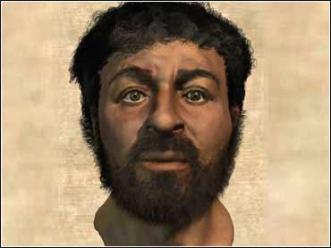
The quest for the historical Jesus, for the most authentic and true description of the man, dominated a strain of theological thought during the 19th and 20th centuries. Theologians would dissect scripture, historians would recover artifacts, and pastors practically posit who Jesus really was during the first century. In large part it was a response to the world’s obsession with historical and verifiable truth at the time, but it also captivated the minds of many Christians who sat in the pews on Sunday mornings.

Through their work Jesus was seen as a Rabbi (a teacher and prophet of first-century Judaism), a Light to the Gentiles (a philosophical mediator between differing groups), a Monk who ruled the world (a monastic example of the need to remove oneself from the world), the Prince of Peace (the divine example of pacifism), a Liberator (the opposition to economic and social injustice), and a slew of other identities.

In response to this growing trend, Albert Schweitzer famously said that going to look for the real Jesus is like looking into the bottom of a well; we know there is something down below, but what we’re really seeing is a faint reflection of ourselves.

historical-jesus

Many of us are guilty of this similar line of thought even today. We have a social cause on our radar and we twist and manipulate Jesus to defending our cause. Politically, regardless of which side we identify with, we make the assumption that Jesus is on our side when debating someone with a different position. Our churches are so sure that Jesus supports our behavior that we are suspicious of everyone outside the bubble of our experience.

John, however, saw Jesus and declared, “Here is the Lamb of God who takes away the sin of the world!”

How do we see Jesus? Do we limit Jesus to some political ideology or ethical principle? Do we believe that Jesus is our side and that we have a responsibility to convert those who disagree with us? Do we look for Jesus and only see a faint reflection of ourselves?

Or do we see Jesus like John? Do we open up scripture to enter the strange new world of the bible and encounter the Lamb of God? Do we understand Jesus as totally other and at the same time just like us? Do we believe that Jesus has not only taken away our sin (and therefore calls us to be holy) but also taken away the sins of our enemies?

How do we see Jesus?

Not To Boast, But…

2 Thessalonians 1.1-4, 11-12

Paul, Silvanus, and Timothy, To the church of the Thessalonians in God our Father and the Lord Jesus Christ: Grace to you and peace from God our Father and the Lord Jesus Christ. We must always give thanks to God for you, brothers and sisters, as is right, because your faith is growing abundantly, and the love of everyone of you for one another is increasing. Therefore we ourselves boast of you among the churches of God for your steadfastness and faith during all your persecutions and the afflictions that you are enduring. To this end we always pray for you, asking that our God will make you worthy of this call and will fulfill by his power every good resolve and work of faith, so that the name of our Lord Jesus may be glorified in you, and you in him, according to the grace of our God and the Lord Jesus Christ.

love_god_love_people_1x

“I’d like to come by and shoot a story about St. John’s.”

The producer from WHSV had called the church and when I heard his request through the phone I was both nervous and excited. A story. About St. John’s. On Television. But then I realized I needed to ask a question.

“About what exactly?”

We do a fair amount for our local community, but I had a feeling this request was for something else. And in the pit of my stomach I was worried that he wanted to do a story about the controversy series we recently finished. After two months of standing up in the pulpit and belaboring different points of friction, I was looking forward to leaving the controversies aside for a little while, and did not want to speak on behalf of a church where we are clearly divided over a number of issues.

But then he said, “I saw on your website that your church is hosting a communion service on Election Day, and I thought that was something more people should know about.”

He arrived about 30 minutes later with a bag full of camera equipment and a spiral bound notebook full of questions. He set everything up in the office and ran a microphone cable under the desk and into my lap to pick up on all of the dialogue. We tested for light and volume levels for a couple minutes, made sure I was in the frame, went over the specifics about looking at him and not directly into the camera, and then he pressed the record button.

“Tell me a little about the church…”

“Well,” I began, “Not to boast, but, this is the best church in the entire Shenandoah Valley. We’ve got a Preschool that has been in existence for about 30 years and has the greatest reputation for its education. The children are nurtured by our beloved teachers, they receive the necessarily information to excel when they leave for Kindergarten, and we strive to teach them about the virtues of love, grace, and mercy.

We have a solid youth group that meets on Wednesday evenings from 7-8pm for communion, discipleship formation, and bible study. The group contains the best and brightest kids from Staunton and they regularly out disciple me, their pastor. They have a hunger for the Word and are willing to vulnerably encounter one another in questions about their faith. To be honest, they give me hope for the future of the church because they believe in what we are doing almost more than most of the adults.

We have a lectionary bible study of which more than half of the attendees are not members of our church. Every week they gather in the room next door to read four scripture texts and prayerfully discern what God is saying to them through the text. They bring their experience and love of the bible to that group and all of us have grown in our faith because of that bible study.

On Sunday mornings we have some of the best worship that any church in Staunton has to offer. Our order of worship is streamlined for maximum impact, our hymns directly relate to the greater theme and narrative of worship, most of the time the sermons aren’t half bad, and we’ve got an organist who can really make our organ move and groove. The kind of hospitality that our church members extend to strangers and longtime members is worthy of imitation by all churches and they are truly the reason people come back week after week.

On any given week our building is used by a number of local civic organizations including girl scouts, cub scouts, and boy scouts. We have a quilt-for-a-cause team that regularly works on quilts that are then given away to local children in need. We’ve got a group of volunteers called the Cheer Team who take time to visit with those who are lonely or afraid in the community. We’ve got others who go to the Trinity Soup kitchen to cook and serve food to the homeless. We send a mission team of youth every summer to help different communities in need. We’ve got…”

“Just a little bit” he said. “Now,” he went on, “tell me about this Election Day communion service.”

“Are you sure you don’t want to know more about St. John’s? I really could go on, I was only really getting started.”

“No, let’s try to stay on task.”

So for the next 45 minutes he recorded as we went back and forth about the current state of politics in our country, we waxed lyrical about pamphlets and fliers we’ve received here at the church about who we should vote for as Christians, we explored the theological implications of a communion service in the midst of such political division, and we even discussed the practical matters of how much bread to purchase and how many people we should expect to attend.

All in all, we examined just about every aspect of the Election Day Communion service and when we had gone through all his questions, we shook hands and he left to get some exterior shots of the building. The last thing he said was, “It should be on the evening news in the next day or two.”

We don’t have cable at the parsonage, but you better believe I kept checking the WHSV website for the story about our church. With every click to reload the page I dreamt about how many people would see the wonderful descriptions of the church, I imagined how many people would hear all the things I boasted about, and I began picturing our pews filled to the brim on Sunday morning.

Two days later, the story finally appeared on in the news cycle. The opening shot was an image of our altar, the one right behind me, and as the news anchor began introducing the story my teeth chattered with excitement.

The anchor said, “St. John’s Pastor Taylor Mertins has this to say….”

Then the shot cuts to me in the office, with Star Wars figurines and works of theology on my shelves. Here was the big moment. And then I watched myself say, “We are going to pray for our political leaders whether it’s the person we voted for or not. That would be the most Christian thing we could do.”

And then it ended. 10 seconds. The vast majority of our conversation was left on the cutting room floor, and 45 minutes of bragging was reduced to a 10 second sound bite.

Now, don’t get me wrong. I am grateful that WHSV came to do a story about our Election Communion Service, it will be a profound moment of unity in the midst of chaos and division, I only wish that everyone watching got to hear and experience all the things that make our church what it is.

And then I reread our scripture text for this morning.

2 Thessalonians is one of the earliest Christian documents that the church has. It is the second letter written by Paul to the church in Thessalonica. And apparently, the Thessalonians have their act together. Not only does Paul mention the fact that he gives thanks and prays for their little community, but also Paul boasts about their church to all the other churches. They are the city on the hill to which all the others churches should aspire to, they are the standard by which other churches should measure themselves, and they are worth bragging about.

But why did Paul choose to brag about them?

Was it the number of people they had in the pews on Sunday morning? Perhaps they had a remarkable preschool that was helping to shape the future? Maybe they had a youth group that met once a week for communion, fellowship, and bible study? Or perhaps they had streamlined their worship services to connect all of the hymns with the scripture, and the sermon, and the offering, and the prayers?

No.

Paul boasted about the Thessalonians because they remained steadfast in their faith in the midst of persecutions and afflictions. Paul boasted about their church because they grasped and lived into the mission of the church: to grow in love of God and love of neighbor.

We, the church, are a different people. We, the church, are an alternative form of community. Rather than being labeled and defined by the marks of culture that surround us – consumption, power, greed, political parties, nationalities, sexual identities, economics – we are like strangers living in a strange land.

What we value and desire is not what the world values and desires.

            What we proclaim and believe is not what the world proclaims and believes.

            What we worship and affirm is not what the world worships and affirms.

            We are a different people, we Christians.

Though the world may change, though new presidents may reside in the oval office, though new pastors can be sent to different churches, we grow in love of God and love of neighbor. That is our mission, and if anyone can say we love God and others, if that’s what they boast about, well that’s good enough.

love-god-love-others-720-e1340940523238

So perhaps, the ten-second sound bite about the Election Day Communion service is precisely what the community should know about our church. They don’t need to know about our different activities and ministerial programs, they don’t need to know the specifics of our Sunday liturgy, they don’t need to hear a forty-five minute speech about all the best things we’ve got going on at St. John’s.

All they need to know is that we are growing in love of God and neighbor by putting aside things like all of our political differences and joining together to feast at God’s table. Instead of being captivated by the world as the results pour in on Novembers 8th, we will be here loving one another and remembering that we worship the living God.

Therefore, maybe it is our sense of challenge, our willingness to return to this place Sunday after Sunday that connects us with the church in Thessalonica from so long ago. They suffered under persecution and affliction and were able to keep the faith. We wrestle with the competing narratives that vie for our allegiance and we keep the faith. Rather than falling prey to the whims of the world, instead of being consumed by the popularity of politics, we remember that we are God’s people. This land is going through a time of great division and schism, but because of God’s grace, we have not lost sight of who we are and whose we are.

To this end we pray, asking that God will continue to make us worthy of the call and that God will fulfill by His power every good resolve and work of faith so that the name of our Lord Jesus may be glorified in us, and us in him, according to the grace and mercy of God.

The mission of the church, and the mission of all Christians, is to love God and love others. That’s it. Amen.


A Letter To My Son

Galatians 1.1-10

Paul an apostle – sent neither by human commission nor from human authorities, but through Jesus Christ and God the Father, who raised him from the dead – and all the members of God’s family who are with me, To the churches of Galatia: Grace to you and peace from God our Father and the Lord Jesus Christ, who gave himself for our sins to set us free from the present evil age, according to the will of our God and Father, to whom be the glory forever and ever. Amen. I am astonished that you are so quickly deserting the one who called you in the grace of Christ and are turning to a different gospel – not that there is another gospel, but there are some who are confusing you and want to pervert the gospel of Christ. But even if we or an angel from heaven should proclaim to you a gospel contrary to what we proclaimed to you, let that one be accursed! As we have said before, so now I repeat, if anyone proclaims to you a gospel contrary to what you received, let that one be accursed! Am I now seeking human approval, or God’s approval? Or am I trying to please people? If I were still pleasing people, I would not be a servant of Christ.

Galatians_692

Months ago, while I was planning all of our worship services for the year ahead, I read this text from Galatians for the last Sunday of May and I thought it was perfect. I knew that Lindsey was pregnant and that, if the timing worked out, this would be the first Sunday and opportunity to preach after the birth of our son. All of you would have listened to other preachers for four weeks, and then I would be standing up here proclaiming God’s faithful Word from Galatians.

The text is so fitting for today because Paul, having worked with the Galatian churches for some time, has been absent from the community and catches wind about their lack of faithfulness. Perhaps after the community listened to a group of different preachers for four Sundays in a row, Paul felt inclined to write to them about the true gospel.

Now, keep in mind, most of Paul’s letters are filled with elevated language complimenting the community from the conception. Galatians begins in a very different way. Far from kind and pastoral, Paul’s tone is irritated and cranky. Paul whips through the customary pleasantries and gets right to the point: “I am astonished that you are so quickly deserting the one who called you in the grace of Christ and are turning to a different gospel!”

So, here we are. I’ve been gone for about a month. I tried to keep away from my phone and email, I even attempted to avoid driving near the church on Sunday mornings, but I’ve heard through the grapevine about what’s really taken place. Our District Superintendent had the nerve to break four of his ribs shortly before preaching and called upon Larry Kreamer to fill in as best he good. Chris Markham had the nerve to get up here in the pulpit and preach about Mary Magdalene, calling all of us to recognize how quickly we lift proverbial stones to cast at one another, in particular toward people of a different sexual identity. Rick Maryman had the nerve to boldly call the church to remember the role of the Holy Spirit and never lose sight of the importance of Pentecost. And then Eric Fitzgerald stood up here last week and talked about how God’s ways are not our ways, and that there really is a time for everything; whether we recognize it or not.

I can’t believe it! I’ve only been gone four weeks and you all have fallen away from the gospel. You’ve listened to those who would rather distort the gospel of Jesus Christ and who offered something contrary to what has been offered previously! I knew I needed to pray for you in my absence but I didn’t know I needed to pray that much!

Of course, I am only joking. I am grateful for the witness and willingness of our gifted laity who faithfully proclaimed the gospel over the last four Sundays. It brings me a sense of peace that words cannot describe to know that, unlike the Galatians, all of you have held fast to the Good News and have continued to be servants of Jesus Christ.

For the sermon today, I decided to write a letter in the vein of Paul. Though instead of writing it to a wayward church in Galatia, I wrote it to my son Elijah. This passage is one that is easy to avoid, after all we’re reading a letter meant for somebody else’s church. We can write it off as a personal matter between Paul and the Galatians – except for the fact that this is God’s Word for us. Similarly, it is my hope that in the words I have written for my son, you will hear God speaking to you as well.

Transformed


Dear Elijah,

You are loved beyond your ability to comprehend. You mother and I eagerly awaited your arrival, we prepared by purchasing everything we thought we could possibly need, we read books on how to raise a child, we sought out advice from friends, family, and at times even strangers. You are the first grandson in the family, and in your short month of life, your grandparents have become completely obsessed with you.

And more than the family, there is an entire community who knows nothing about you other than your existence, and yet you are loved. Preschoolers from the church have bombarded me with questions about you, and what you look like, and how you’re sleeping, and a slew of other inquiries. Members from the church have flooded my email inbox wanting to know if we need anything to take care of you. And for as long as we’ve known that you were joining our family, the entire community has lifted you up in prayer.

You are loved beyond your ability to comprehend. But more than this church, and even more than your parents, God loves you with reckless abandon.

Over the years you will come to know more about God’s unending love through the stories of scripture that will be shared in worship. You will hear about God’s creative majesty in the foundation of the world, God’s calling of the people Israel to a new beginning, God’s persistence when the people fell away from the path, and even God’s grace made manifest in a manger.

In time you will experience the power and might of Jesus Christ. God in the flesh, born in a humble abode, who walked the roads of life with friends and strangers, healed the sick, fed the hungry, clothed the naked, broke the law, fulfilled the scriptures, died on a cross, and rose from the grave.

Elijah, the church will strive to share with you the radical message of Jesus Christ in such a way that it transforms your life forever. The people in the pews will gather you in, proclaim God’s Word, respond to it, and send you forth week after week to be Christ’s body for the world. No small task.

SeraPetrasPhotography_EWM-23

And Elijah, you will live and move and have your being in a world that few of us can even imagine…

As you become the person God is calling you to be, you will live in a world where the church is no longer the status quo for everyone. Christianity as Christendom has fallen away. You will be judged for your strange faith, rather than commended as many of us once were.

You will live in a world where homosexuality is normative. You will encounter couples that have otherwise been called incompatible with Christian teaching, but for you they will be perfectly compatible with Christian teaching. You will interact with people from such a wide plethora of diversity that you will want the world to be the mosaic it is, rather than hoping for birds of a feather to flock together.

Sadly, you will never know what it means to live into the mystery of life and faith. There will always be an answer for every one of your questions at just the click of a button. You will have to work harder to experience the profound wonder of God’s presence because you will rarely have to struggle for clarity.

And, I’m sad to say, you will never know of a life prior to September 11th. You will grow up in a world cowering in fear to the seemingly endless threat of international and domestic terrorism. You will be raised with the words Jesus gave to his disciples about striving for peace, while countless men and women are called to give their lives for the freedoms we hold so dear. Son, the world we live in is broken; we often succumb to the power of sin that pushes us to believe that violence and power control our destinies, and that death carries a strong sting.

Elijah, in time you will struggle and wrestle between the call of competing narratives and gospels that vie for your allegiance. Even though your mother and I, and your friends, and the church will do everything we can to hold fast to the gospel that was shared with us, at some point you will fall away. Whether through doubt, disillusionment, or some other reason, there will come a time when you will grow frustrated with this thing called church.

Elijah, it might happen when you start to understand the pressure that is constantly placed on churches to increase attendance, to raise the budget, to fill the pews, to do whatever it takes to improve the market share. You will see how many of us care more about being nice, or funny, or unassuming, that we make the church more about us than about God.

And on the other side, you will meet people who subvert the gospel to mean whatever they want it to mean; people who will use scripture like a weapon to attack others for their way of life and it will leave you feeling frustrated.

But Elijah, I want you to try to remember one thing: Jesus is Lord, and everything else is secondary.

Wherever you are led throughout your life, wherever the Spirit calls you to go, you will encounter Christians at both ends of the spectrum. Christians who will do whatever it takes, even at the expense of watering down the gospel, to make it as appealing as possible. And Christians who will take up the bible like a sword to mow down their enemies.

But Jesus, the one in whom we live and move and have our being, was not concerned seeking the approval of his fellow human beings. He did not belittle the immense and profound qualities of God’s love to being something easy and trite. Jesus pushed his followers into uncomfortable arenas of love and respect in order to transform the world.

And at the same time Jesus, the one in whom we live and move and have our being, was not concerned with attacking people for their differences and ostracizing them from the community. He did not use scripture to condemn the world. Instead, Jesus went out to the people that most of us would rather ignore and he told them that they deserved to be loved just as much as anyone else.

Elijah, God’s love in Jesus Christ is a mystery. Thanks be to God that there is not an easy and simple answer to that question of faith. Unlike almost everything else you will experience, it cannot be explained at the click of a button. Instead, you can only know the love of God through the table at which the church gathers, through the breaking of bread and the sharing of the cup. Only when God invites you to the table will you begin to enter the light from the darkness. Only in the sharing of communion will the competing narratives and false gospels begin to fade away. Only when you experience this little bit of heaven on earth, will you begin to rejoice in the mystery that is the grace of Jesus Christ.

Elijah, I love you. Your family loves you. The church loves you. But more importantly, God loves you.

-Dad


Amen.

Devotional – Isaiah 43.1

Devotional

Isaiah 43:1

But now thus says the Lord, he who created you, O Jacob, he who formed you, O Israel: Do not fear, for I have redeemed you; I have called you by name, you are mine.

Weekly Devotional Image

Names are important. Ever since my wife became pregnant we have discussed possible names for the baby arriving this spring. We have experimented with family names as well as biblical names. We have searched online for popular baby names (in order to avoid them). We’ve even gone so far as too imagine how possible names could be used to make fun of the child in the future.

Names are intimate and help to demonstrate how connected we are with one another. For instance, most of us can remember a time and the feeling of guilt that comes when we cannot remember the name of someone we supposed to know. When we call one another by name we are entering in a privileged moment of connectivity with another human being.

This morning, while the preschoolers were entering the school for the first time since breaking for the holidays, I stood by the door and welcomed each of them. I got down on my knees to look at most of them on a level plane and asked about their Christmas presents and celebrations. It was a joyful time as we all reconnected.

shutterstock_97916309

One of the last children to arrive was a new student about to begin his first day. Unlike the other kids, this was a completely new and strange experience. All around him were the friendships that have started this year and he stood all by himself. Because I had the chance to meet his parents before this morning, I knew who he was and bent down to greet him by name. The shy young boy looked up at me and started to beam as he declared, “You know me?!”

Within minutes he was in his new classroom playing with new friends. All of the nerves were gone and were replaced with the joy of playing with blocks at 9 o’clock in the morning. Such is the power of being called by our names.

Many of us wrestle with our own identities. We wonder about who we are and what we are being called to do. Yet, God knows who we are and calls us by name. The kind of joy that our new preschool student felt this morning is available to us when we recognize how God has called us and knows us. Sometimes it happens in the words of a hymn we sing in church, sometimes it happens in a devotional we read to start our day, and sometimes it happens in the still small silence of our prayers. God knows us. God loves us. God calls us by name.

This week, let us look for the moments when God calls us, let us rejoice in the knowledge of whom we belong to, and let us give thanks for all of the blessings that God has given us.

Who Are You? – Sermon on James 1.17-27

James 1.17-27

Every generous act of giving, with every perfect gift, is from above, coming down from the Father of lights, with whom there is no variation or shadow due to change. In fulfillment of his own purpose he gave us birth by the word of truth, so that we would become a kind of first fruits of his creatures. You must understand this, my beloved: let everyone be quick to listen, slow to speak, slow to anger; for your anger does not produce God’s righteousness. Therefore rid yourselves of all sordidness and rank growth of wickedness, and welcome with meekness the implanted word that has the power to save your souls. But be doers of the word, and not merely hearers who deceive themselves. For if any are hearers of the word and not doers, they are like those who look at themselves in a mirror; for they look at themselves and, on going away, immediately forget what they were like. But those who look into the perfect law, the law of liberty, and persevere, being not hearers who forget but doers who act — they will be blessed in their doing. If any think they are religious, and do not bridle their tongues but deceive their hearts, their religion is worthless. Religion that is pure and undefiled before God, the Father, is this: to care for orphans and widows in their distress, and to keep oneself unstained by the world.

who-am-i


The small town sheriff was frustrated when he received a phone-call from the station that interrupted his Sunday supper. A report had come in that a group of young boys were throwing water balloons at strangers walking along Main Street. Reluctantly, the sheriff changed out of his Sunday best into his uniform and went to find the hooligans.

Just as the report noted, a group of young boys were standing on a street corner with a bucket of water balloons and were striking anyone within distance. As he approached in his patrol car, he expected to hear the boys laughing and hollering, but they were rather silent as he inched his way forward. He recognized all the boys from his local church, and dreaded the phone calls he would be making to all of their parents, but he knew their behavior had to stop.

The boys were smart enough not to throw a balloon at the police car, but the sheriff was still nervous to roll down his window in case a wayward throw made it inside. “What do you think you’re doing?” he yelled to the boys. In unison they all solemnly replied, “we’re working for the Lord.” He was mystified by their response, after all how could throwing water balloons at strangers be equated with the almighty? So the sheriff sat in his car with one eyebrow raised and motioned for them to explain.

The ringleader then stepped forward and said, “Didn’t you hear the preacher this morning sheriff? He told us to go out baptizing in the name of the Father, Son, and Holy Spirit. We’ve got Holy Water Balloons and we’ve done already made 45 Christians.”

Every good thing in our lives, every generous act of giving, every perfect gift, every blessing, every compliment, is from above.

Throughout our days, the Lord nurtures, guides, and provides all that we need. More often than not, God uses the people around us to do so, but nevertheless God supplies the goodness in our lives.

The letter of James is beautiful, and it begins with a quick assessment of the discipled life and what it means to live into this identity.

James knew how to notice the small things, because the small acts of life are the nuts and bolts of existence. It is the little things, the small actions and the tiny compliments, that hold together the fabric of our lives and give us the power to build and shape community. What we say and how we act are more important than we can possibly imagine.

The Lord has given us new life by the Word of truth and the power of scripture so that we would become a kind of first fruits. We have been given the great blessings of God’s presence, scripture, and Jesus Christ and now we have the responsibility to let those blessings bear fruit in our lives, and in the lives around us.

We must understand this, children of God, we should be quick to listen, slow to speak, and slow to anger, because our anger does not produce God’s righteousness. How many times have we jumped to a conclusion, or said something without thinking it through and immediately regretted it? How valuable is James’ advice: be quick to listen, slow to speak, and slow to anger?

Our contemporary conversations are filled with “uhhs” “buts” “likes” and other verbal bridges because we are afraid of silence. Rather than actually listening to others, or at least giving them the chance to speak, we fill up every ditch between our words out of fear that someone else will jump in with something else to say. Imagine how much our relationships would change if we only heeded James’ words in our conversations? Can you picture how different our identities would be if we were quick to listen, slow to speak, and slow to anger?

If we have the strength to change the way we converse, then we will begin to welcome with meekness the implanted word that has the power to change the world. Instead of relying on our own words at all times and places, with patience we can remember the great Word of God in Jesus Christ and put all our trust in him. Instead of believing that we are alone in the world and in our situations, we will come to see that God is with us, and has carried God’s people through this before and will again.

But it’s not just about the words we use and speak, as Christians we are invited to be doers of the Word and not merely hearers who deceive themselves.

Have you ever departed from church on a Sunday morning, after hearing a particularly convicting message, only to believe that it had nothing to do with you? Have you ever picked up the bible and started reading only to think about the other people the scripture should apply to instead of you?

For if we are hearers of the word and not doers, then we are like those who look at a mirror and as soon as we walk away immediately forget who we are. Our identities are rooted in the scriptures we read, and in the water of our baptism. But too often, we leave from church, or we put down the bible, or the water dries from our hair, and we immediately forget who we are and whose we are.

If church is supposed to accomplish anything on a regular basis, it is to act like a giant mirror so that we catch a glimpse of who God is calling us to be, and then never forget what we have seen.

who-am-i-1024x575

It was New Year’s Eve 1999 and Javier was afraid. For months news pundits and writers speculated about the “end of the world” coming with the year 2000. In addition to some strange and warped biblical prophecies, technologically proficient workers warned about the change that might come with the digits 99 changing to 00 and the blackouts that could ensue. For weeks people throughout the world prepared for the worst, and the rhetoric about the end times increased.

So Javier found himself getting ready to attend a worship service with his family and friends in El Salvador on the eve of the new millennium and he was afraid. The service itself was fine; it proclaimed the word of God’s faithfulness in spite the warnings about the new millennium, yet Javier could not rid himself of the fear that was shaking him to his core. Before the service came to a close, Javier stood up, walked to the front and asked to be baptized. He did not know what the New Year would bring, he did not know what would happen to the world, but he figured that a little water on his head couldn’t hurt.

Except, that simple affirmation that God was bigger than himself, that simple humbled moment of reverence to God’s power to save was enough to change Javier’s life forever. Of course, the year 2000 did not bring about the end of the world, but it did bring about Javier’s new identity in Jesus Christ. From that night forward he saw himself as a disciple and has lived into that ever sense.

My own baptism took place when I was 19 days old. Other than some strange blurry photographs of my mother and father standing at the front of the church, I have no idea what it was like or what happened. But it came to shape my very identity. The people who were present in worship that day 27 year ago took seriously the commitment to raise me in faith, and helped me hold on to my identity in Jesus.

The Sunday before I became the pastor at St. John’s I stood before my home congregation and thanked them for nurturing me in the faith all these years and said goodbye. But while I stood in the narthex shaking hands after the service, a much older woman came up with a very worn bible in her hands. Without saying much she turned to the back inside cover and showed me my name and the date of my baptism. For decades she had written down the name and date of every person baptized in her presence and made a point to pray for every single one of them, every single day. Her prayers shaped me into who I am.

Those of us to look in the mirror and remember who we are when we walk away, those of us who are doers of the word will be blessed in our actions. Our religion is pure when we, like the disciples from long ago, actually live into the Word of God and start caring about the people in our midst. Our religion is pure when we clasp our hands together and pray for the world. Our religion is pure when we remember our baptisms and are thankful.

tumblr_m8lkq3H8zQ1rqn80jo1_500

Who are you?

What defines your identity?

Perhaps we’ve forgotten who we are and whose we are. Instead of seeing disciples of Jesus Christ in the mirror, we only see fathers, mothers, brothers, sisters. Instead of holding on the image of God in our hearts, we turn away from the mirror of church and we immediately forget what God is speaking into our lives.

Do you remember your baptism? Can you recall the details of what eventually led you to yearn for the water of a new identity? Were you, like Javier, led to baptism out of fear? Were you, like me, led to baptism before you even had a chance to know what was happening?

Baptism is not about quantity; we’re not interested in throwing Holy Water Balloons at everyone within distance. Baptism is instead about discovering our fullest identity in Christ through a covenant by water and the Spirit.

Today, we are all invited to remember our baptisms and be thankful. In a few moments I will pray over our baptismal font, and everyone may come forward to remember and give thanks. The mirror behind the water is there for us to take a good look, so that when we turn around we will not forget who we are.

Disciples of Jesus Christ: Remember that every good thing is from above, that God has given us the word of truth so that we may bear fruit in our lives. Remember to be quick to listen, slow to speak, and slow to anger. Remember that we are called to be doers of the Word. Remember your baptism and be thankful. Remember who you are. Amen.

Devotional – 2 Corinthians 5.15

Devotional

2 Corinthians 5.15

And he died for all, so that those who live might live no longer for themselves, but for him who died and was raised for them.

Weekly Devotional Image

I’m a people pleaser. Ever since I was a young child I have felt the need to do whatever I can to make other people happy and feel affirmed. In elementary school I would make sure that everyone was invited to play together on the playground, in high school I listened to my peers and would quickly change my plans if it made things easier, in seminary I spent time complimenting my classmates on their comments particularly when professors were doing the opposite. Even now, I catch myself paying people compliments in the midst of a conversation with the hope that it will brighten their day.

Pleasing other people is important. We live in a world that consistently breaks us down and makes us question our own worth. So, if I can do anything to help build self-esteem, I’m going to do it. However, if I limit my actions to only pleasing others, I start to water down the gospel and limit the power of transformation in worship.

On Sunday I preached a sermon that many people did not want to hear. I felt convicted by the Holy Spirit to preach about the demons in our lives that prevent us from acting according to God’s love. I focused on the demonic power of homophobia, but the same sermon could have been focused on racism, materialism, sexism, etc. And honestly, I was afraid to preach it. In the days leading up to Sunday, I started thinking about scrapping it for something else because I was worried about how everyone would react.

I know that some of the people from St. John’s are not happy about what I said because they told me so on their way out. As I listened to their comments, and saw people shaking their heads in disagreement, I started to take it personally and felt defeated. Thoughts bounced around in my head like: What happens if they don’t come back because of me? What will they tell their friends about what I said?

But then I read 2 Corinthians 5.15.

120924_2Corinthians5_15

If I only worry about how people see me, and hear me, and react to my words, then I am only living for myself instead of for Christ. If I spent every Sunday only affirming the faith and actions of the congregation, then we would never feel challenged to be better.

One of the greatest challenges of being a disciple is learning to let go of our selfish needs and desires. We are called to live for the one who died and was raised for us. If we live for Christ then we will have the strength to preach the truth at all times in all places. If we live for Christ we will learn to both praise and challenge the people around us without fear.

This week, let us take a step back and remember who we are and whose we are. Let us pray for the Lord to give us the courage to be honest with the people in our lives. And let us truly live for the one who died and was raised for us.

The Johns – Sermon on John 15.9-11, 1 John 2.15-17, and Revelation 21.1-5

John 15.9-11

As the Father has loved me, so I have loved you; abide in my love. If you keep my commandments, you will abide in my love, just as I have kept my Father’s commandments and abide in his love. I have said these things to you so that my joy may be in you, and that your joy may be complete.

1 John 2.15-17

Do not love the world or the things in the world. The love of the Father is not in those who love the world; for all that is in the world – the desire of the flesh, the desire of the eyes, the pride in riches – comes not from the Father but from the world. And the world and its desire are passing away, but those who do the will of God live forever.

Revelation 21.1-5

Then I saw a new heaven and a new earth; for the first heaven and the first earth had passed away, and the sea was no more. And I saw the holy city, the new Jerusalem, coming down out of heaven from God, prepared as a bride adorned for her husband. And I heard a loud voice from the throne saying, “See, the home of God is among mortals. He will dwell with them; they will be his peoples, and God himself will be with them; he will wipe away every tear from their eyes. Death will be no more; mourning and crying and pain will be no more, for the first things have passed away.” And the one who was seated on the throne said, “See, I am making all things new.” Also he said, “Write this, for these words are trustworthy and true.”

IMG_0058

“Taylor, the bishop is appointing you to St. John’s United Methodist Church in Staunton, Virginia. We believe the church fits with your gifts and graces and we are excited to see what the Holy Spirit can do through you there.” Those were the words used to let me know where I would be spending the next few years of my life. I remember how I felt with the phone next to my ear and Lindsey by my side when I found out that I would be coming here to serve this church.

Obviously, for the next few days all I could think about was the church and the community. What would you all be like? Would we enjoy living here? What would we do for fun? How would you respond to me as your pastor?

Of course I Googled the church, searched the church name in the local newspaper databases, and even looked up the address of the parsonage. And for as many things as I could discover, more questions began to develop to the point where I had to just stop and accept that this is where I was going.

However, one question remained in the back of my mind during the months leading up to my first Sunday. I was fine letting everything else go, I was content with the unknown, except for one thing: Why St. John’s?

Now I don’t mean why this church out of all the churches in the Virginia conference, though I have wondered about that at times. What I mean is this: Why is the church named St. John’s?

Do any of you know? Church naming often carries an interesting history. Like when a group of people from a Baptist church grow frustrated with another group and decide to leave and start a new church with the ironic name of Harmony Baptist.

Or like what we have here in town with 1st Presbyterian, 2nd Presbyterian, 3rd Presbyterian, etc. I would love to know the story behind that.

Anyway, why are we called St. John’s?

The story goes that a long time ago there was a particularly advantageous District Superintendent who dreamed of 4 new churches in the Staunton District. The population was booming in the valley and he believed it was time for the Methodist Church to start breaking ground and forming church homes for new people. He wanted 4 new churches and he wanted them to be named after the gospels: Matthew, Mark, Luke, and John. Though only two of them ever came to fruition: Mark and John.

Now, is that really how we got our name? I have no idea, but thats the story everyone seems to tell.

I want to know if thats the story we want to tell. That the name of this blessed house of the Lord got its name from some guy in the past who wanted to leave his mark in Staunton. Or do we want to take ownership of our name, and live into the reality of what it means to be St. John’s?

Our name is part of who we are, it is a part of our very identity, for better or worse. If we were First UMC I would expect that we were the first to break ground in Staunton, that we would be leading the community in what it means to love one another. If we were Harmony UMC I would expect a church full of people who agreed on everything all the time, no matter what. If we were Wesley UMC I would expect that John Wesley would be fundamental to our mission and work in the kingdom.

But if we call ourselves St. John’s, then who are we?

IMG_0063

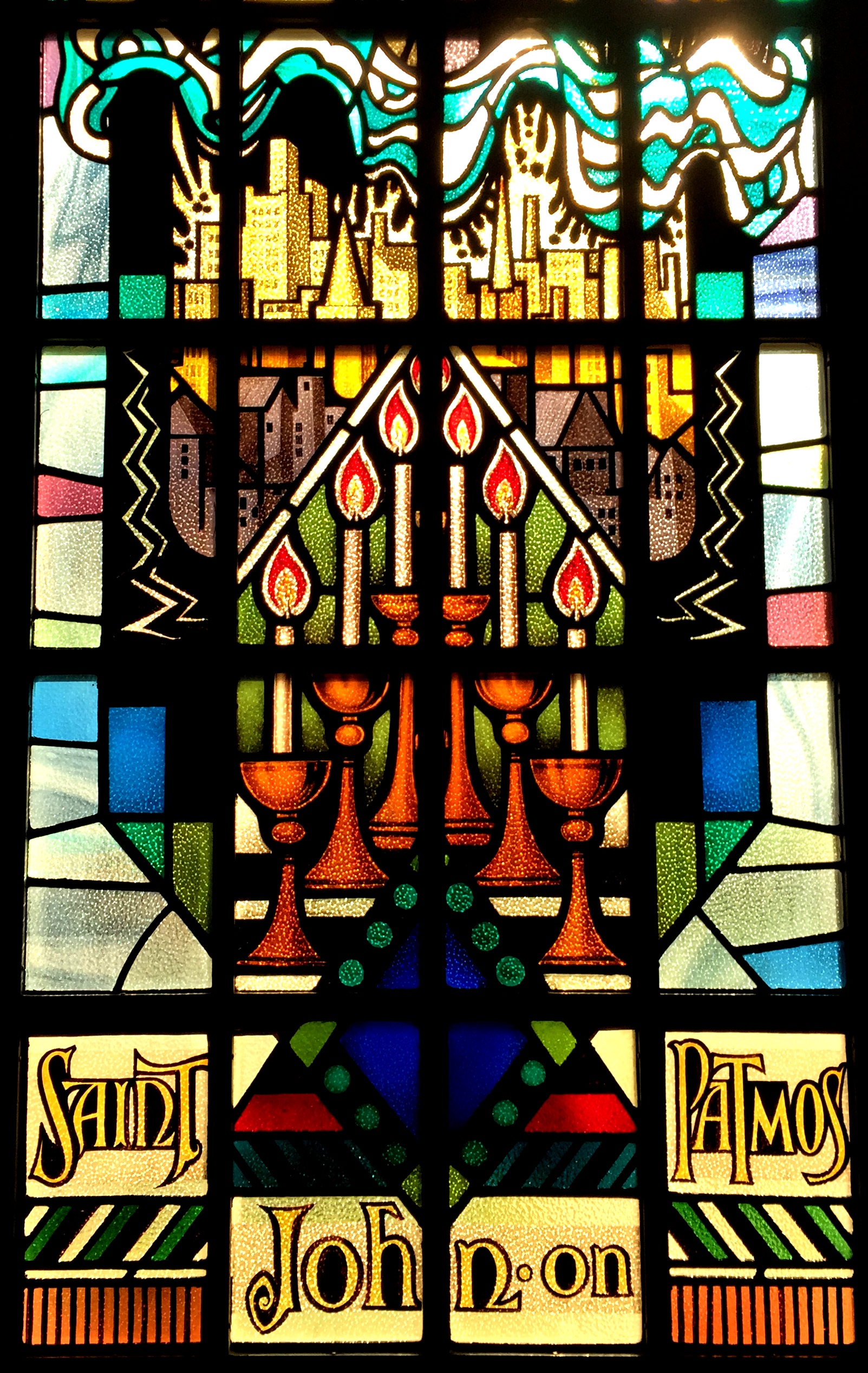
On the right side of our sanctuary we have three stained glass windows that I call The Johns. We have John the Evangelist, John of Patmos, and John the Presbyter. Do they represent three different and distinct men? Are they in fact all the same person, just being shown throughout the different decades?

Early Christian tradition held that John was one of the original 12 disciples who actually lived a long life and was not killed for his faith like the others. It is believed that he was responsible for writing the gospel according to John, the letters 1-3 John, and the final book of the New Testament Revelation. Of course modern scholars debate as to the particular authorship and whether or not one man was responsible for all of these different writings.

What is important for us is the fact that we affirm all of the writing as canon and life-giving, that Christians for centuries have come to discover the living God in the words attributed to John, and that we will continue to live into our discipleship through them.

Our first window displays the young John as the Evangelist. Today when we hear the word evangelism we tend to picture people converting others to follow Christ, but in its most simple meaning, an evangelist is someone who shares the Good News, and in this case, it came through a written account of Jesus life and ministry.

We see a young John holding a chalice and the image of an eagle. The chalice serves to emphasize the importance of the sacrament, and the pouring out of Jesus blood for us. Throughout the gospel of John, Jesus’ atoning sacrifice is a particular focus and theme. Reflecting on Jesus life later, John could remember everything through the lens of the resurrection, and we see the importance of Jesus’ life here in the chalice.

The other detail, the eagle, is very interesting. In Revelation, a book we will talk about shortly, there is a brief section where John describes four winged creatures from his dream. Each of them have come to represent a specific gospel and it’s respective author: Matthew is a man with wings, or an angel; Mark is a lion; Luke is an ox; and John is the eagle.

Whenever our eyes fall to this window we are called to remember the Father’s love in Christ Jesus. Like the winged eagle flying high in the sky we look up to the kind of love that Jesus exemplified and strive to live accordingly. The great sacrifice was made so that our joy could be complete in and with one another as we look on eternity without flinching as we journey toward the goal of communing with the Lord.

John the Evangelist wrote what he did to remember for us what his master taught him: As the Father has loved me, so I have loved you; abide in my love.

Our second window, the one to the right, contains John as the Presbyter. Presbyter comes from the greek word presbuteros which means “elder.” As John grew older and continued to play an integral role in the formation of the early church, it became necessary for him to write letters concerning the faith.

In the window we see a mature John with a quill and parchment. Like we still do today, whenever we encounter the struggles of fellow disciples, we strive to help them through their trials and tribulations. For John, having lived with Christ and experienced the true power of the resurrection, he devoted himself to the early Christians and helped them to understand the importance of love.

He wrote things like: “Do not love the world or the things in the world.” Only a man speaking from a life of wisdom could make such a statement. The desires of flesh and the prides in riches only serve to destroy us because they wither away. All of the false things that we put our faith and hope in are passing away, but the love of God endures forever and ever.

Whenever we glance to this window of John as the Presbyter, we are called to remember the value of wisdom and what it means to grow together. Being Christian is not something that can be done in isolation, but instead can only be fruitful and life-giving if we disciple as a community. John wrote letters to encourage and remind the faithful what it means to be faithful. As disciples we have the responsibility to build one another up for kingdom work.

John the Presbyter wrote to Christian communities about what faithful living was all about: those who do the will of God live forever.

The third window, in the middle, contains John on Patmos. After a life of faith, John was exiled away to Patmos, a small Greek island in the Aegean Sea where he wrote about his visions. The book of Revelation contains fantastic imagery of the way God has, is, and will move  in the world. Our final John is older with a fiery city at his feet, and the new Jerusalem above his head with the lamb.

The Lord gave John certain visions and told him to write them down because they were trustworthy and true. Our window displays the height of the revelation when God will make all things new. A holy city, the new Jerusalem, will come down from heaven. This is where God will dwell with the people, God will wipe away all of our tears. Death will be no more; mourning and crying and pain will be no more. The first things will pass away because God will make all things new.

In our window we see the former things, the earthly passions of the world at the bottom passing away. But God has not, and will not, abandon us to our own devices. The new city at the top will reign and the kingdom will be forever. 

Whenever our eyes fall upon this window we remember that the Lord is with us now and forever. That even in our death we will come closer to the new heaven and the new earth that the Lord has promised. In the midst of our grief and suffering now we can still give thanks to the Lord for that day when he will make all things new. This window calls us to trust the Lord just like John did throughout his life.

John on Patmos wrote down the visions the Lord had provided so that others would come to know what the future holds: The Lord will dwell with us and make all things new. 

St Johns logo

Who are we? A group of Christians who get together week after week to rediscover what it means to follow Christ? A ragtag collection of disciples who need to find a little more light in our lives?

If we want to live into our name, then we need a better story than being named by a District Superintendent. If we want to be the St. John’s that God is calling us to be, then we need to reclaim what that name means for us.

We are St. John’s. That very name carries with it the history of what our church has done for this community. Wherever I go in Staunton I love to tell people that I serve as the pastor here at St. John’s because our name is immediately met with recognition; “My children went to Preschool there!” “My wife and I were married in that sanctuary.” “We buy our Christmas tree from your church every year.”

But we are also more than what we do. Our identity is firmly rooted in the name of John and we should be proud of it. We were named after a man who was called to follow Jesus, remembered the Messiah’s life for other communities, wrote to churches about faithful wisdom, and caught glimpses of future glory. 

Likewise, we are a community of faith that believes in following the Lord, in sharing God’s story with other people, in teaching those younger in the faith about what it means to love, in celebrating the coming day when God will make all things new.

St. John’s; what a perfect name. Amen.

Devotional – Mark 8.31-32

Devotional:

Mark 8.31-32

Then he began to teach them that the Son of Man must undergo great suffering, and be rejected by the elders, the chief priests, and the scribes, and be killed, and after three days rise again. He said all this quite openly. And Peter took him aside and began to rebuke him.

Weekly Devotional Image What character from the bible do you identify with the most?

I love asking that question. Whether in the middle of painting a house surrounded by middle-schoolers on a mission trip, or in the midst of a counseling session with a member from the community, identifying with people from the bible can be eye-opening. For instance: Middle-school age boys almost always say they identify with David (during the fight with Goliath) probably because of their current physical changes and the pressures of school and social developments. Middle-school girls often identify with Esther probably because they want to establish their independence and unique responsibilities for taking care of others.

bibleheroeswJesus

The question was first asked of me during a Clinical Pastoral Education session. Our group leader wanted us to begin understanding our own limitations and strengths when it came to meeting people in the midst of suffering, so we began with acknowledging our perceived biblical counterparts. At the time I was getting used to seeing the world through a scripturally shaped imagination and had already paired up my group members with people from the bible. I was therefore thrilled when some of them identified with the characters I had imagined for them. When it came time for me to answer, I responded without hesitation: “Peter”

Ever since I was a kid I have been fascinated by the stories involving Peter from the New Testament. I loved imagining Peter mending the nets on the boats to then being brought to his knees in humble reverence for the Lord in his midst. I loved picturing him jumping off the boat to meet Jesus walking on the water. I loved his willingness to speak up and act first while the other disciples remained quiet in the background.

As I have grown older my identification with Peter has taken truer form when I spent time with the more embarrassing stories of his life. I truly fear that if I was placed under the same kind of pressure I would deny Jesus three times. I wonder how similarly I would have responded if I had been on top of the mountain during the transfiguration. And I am ashamed knowing that if Jesus had explained the need for his death prior to resurrection, I probably would have pulled him aside to rebuke him for making such claims.

I identify most with Peter. I see myself in him when I read from the New Testament and therefore have learned how to respond to God’s grace in my life in a way so as to not make the same mistakes that Peter once did.

Who do you identify with in scripture? Are you going through something in your life right now that aligns with a particular story from the bible? How can you use the living Word to help shape and mold the direction your life is heading?

C.O.G. – Sermon on Galatians 4.4-7

Galatians 4.4-7

But when the fullness of time had come, God sent his Son, born of a woman, born under the law, in order to redeem those who were under the law, so that we might receive adoption as children. And because you are children, God has sent the Spirit of his Son into our hearts, crying, “Abba! Father!” So you are no longer a slave but a child, and if a child then also an heir, through God.

il_570xN.188791052

The sermon title this morning is C.O.G. which, if you are unfamiliar with the acronym, stands for Child of God. Made popular by the evangelical movement, COG is an identification with those who are part of a Christian community. For me, the use of child of God, happens whenever I baptize an infant or an adult. After going through the entire liturgy, blessing the water, and baptizing in the name of the Father, Son, and Holy Spirit I always announce that they are a child of God. There is just something incredible about receiving a new identity and a family through baptism that orients one’s priorities toward the divine and the new family that is the church.

Other than baptisms, I use Child of God when referring to our little preschoolers that gather here during the week. It has been strange recently, since they are on Christmas break, the hallways and building have been significantly quieter, and I have gotten a lot more work done! Nevertheless the COGs in our Preschool are one of the most important elements of our church and I believe in sanctioning my time in such a way that I can be with them and communicate the gospel in as many ways as possible.

This has taken place from being present at the basement doors every morning to welcome the children and families, to inviting them for regular church functions. But the way that the gospel is best communicated is during our weekly chapel time here in the sanctuary. While many of you are at work or home, studying in school or day-dreaming about the future, all of our COGs make their way to the choir loft and they sit in eager anticipation of a new story. We began in Genesis and have made our way to the time of David, we have made Chicken Noodle Soup, and gone through obstacle courses, we have drawn our own technicolor dream coats, and we have pretended to be our favorite animals on Noah’s Ark.

10258298_711472592262391_3893566834731889728_o

The most profound Chapel Time experience, for me, took place when we prepared to wrestle with God. The kids lined up in the center aisle and did push ups and sit-ups in order to gain some strength, and then one by one I wrestled each of them by the altar in the same way that Jacob wrestled with an angel on the banks of the Jabbok river. Each of them came forward, we would go back in forth, I would let them think they would beat me, and then I would pick them up over my head and spin them around as they giggled and screamed. When our last four year old, Jack, made his way forward I began to bring the lesson home…

I got down on my knees and we grabbed hold of one another and I said to the kids: “This is what God is like. We can wrestle with the things that happen in the world, we can question and be angry and upset, and no matter how confused or frustrated we become God will never let us go. That’s how much God loves us. He can put up with all of our tantrums and yelling, He is patient with us when we no longer have patience. God loves us no matter what.

The kids were silent and listening attentively. I don’t remember anything else I said, even though I went on for awhile, because I was distracted by something else. While I was holding Jack in my arms, I could feel his heartbeat through my hand. This precious and vulnerable little child, who I was wrestling with, was gripping me so tightly that I could feel his little heart beat. In an instant the lesson I was trying to communicate took a different form for me as I realized how fragile this child was in my arms and the kind of ways that we strive to take care of other children. In a fraction of a second I felt afraid of letting him go, out of fear of what could happen to him. Though not even a father, I felt responsible for him, and was terrified of what might happen if I let him go.

When the fullness of time came, God sent his Son in order to redeem us so that we might receive adoption as children. The world was a strange place when Jesus was born in Bethlehem; indeed the fullness of time had come. Between the Old and New Testaments a lot had taken place and changed. For a while the Jewish people flourished as their culture continued to grow and spread until Antiochus Epiphanes brought about a horrific wave of persecution. The Jews were hated and tortured for their faith and were driven to armed rebellion.

People, for the first time, were traveling beyond the cities and towns of their birth to see greater parts of the world.

During the time of Christ’s birth, the world was full of change and excitement. Add to that the Roman network of international highways over which the first Christian missionaries traveled, and the Greek language that united many different people under one tongue.

For Paul, writing the letter to the Galatians, the timing of Jesus’ birth was remarkably important. We too celebrate this event in such a way as to date everything that happened BC (Before Christ) or after his birth AD (Anno Domini) “in the year of our Lord.” (Now known as BCE “Before Common Era” and CE “Common Era”)

This was the specific and the right time for God’s new intervention in the world. Long anticipated through the Old Testament, the time of the Lord’s favor had begun.

Born into the rude stable that so many of us display on our coffee tables and mantles, God’s Word became incarnate in a baby born to a virgin. By becoming like us, by taking on our flesh to be just like us, God adopted us into his heavenly family so that we might become heirs and children of God.

Paul is then writing and pleading for the very thing that makes Christianity unique; the change that Christ can make in someone’s life so that they can possess and exercise total freedom.

Being Christian is all about freedom. God came into the world to free us from sin, and to free us for a new life.

However, this incredible gift cannot be brought about by unquestioning adherence to a book of rules. Otherwise we choose to break the rules, or we let the rules break us.

rules

Too many of my friends have left the church, and left the faith, because it was made into a rule-system by which they were required to follow. Like the child I held in my arms during chapel time, the church refused to let them go and experience the freedom to question, doubt, and explore. Perhaps when they were younger the church had been life-giving and exciting, but as they grew older it felt suffocating and demanding. They heard about the “freedom” that Paul wrote about, but they certainly didn’t feel it in their own lives. They were taught to so fervently keep the faith whenever they doubted, even just a little, that when they had a crisis of faith their entire discipleship fell apart and they left the church.

Paul’s thoughts to the Galatians opens up a new vision of what it means to be a Child of God, and how we can, in turn, nurture other COGs around us.

I held on to Jack and I felt his little heart beat in my hand. I began to play in my head all the terrible things that could happen to him once he was released from my protective bubble. I thought about what I had shared with the children: God loves you so much that he will never let you go. But that’s not exactly true.

God loves us to such a degree that He will not abandon us, but at the same time God gives us the freedom to question, to raise our clenched fists in the sky in frustration, and to wonder about what all of this faith stuff actually means. 

In that profound moment kneeling on the floor of our chancel I recognized that, like God, I had to let him go. That God’s love was so great and incredible that no matter what happens to him, God will never abandon him. That we have to give our children freedom to make mistakes and explore the world, because that’s the only way that they will come to know our God as “father.” They cannot experience God’s divine loves through a book and moral expectations alone. They will discover God’s majesty in those moments when they begin to doubt, and recognize that God’s love remains with them anyway.

Only a bible like ours would contain the psalms, a tremendous source of writing that has almost every single human emotion, most of them directed at God.

Only a faith like ours would gather in grieving people for funerals and triumphantly declare that death has been defeated in Jesus Christ even when the loss of a loved one feels so horrifically overpowering.

Only a God like ours would let us wrestle and walk away and still see us as his children.

Years ago I was lamenting with one of my friends about the ways certain Christians give others Christians such a bad name. It felt like every time I turned on the TV there was a report of some pastor abusing power from the pulpit, some church spouting off with heretical theology, or some Christian organization bashing anything and anyone that did not look or sound just like them.

I remember feeling beaten by these rogue Christians. How could we ever make the church appealing again if people like that are getting all of the attention from the media? Why don’t we share information about all the good the church is doing in the world? Why don’t we ever hear about the food pantries and clothing drives that are saving communities?

My friend listened patiently as I went on and on listing my complaints. She smiled politely whenever I went off on another tangent and waited for me to finish.

She said: “They’ll figure it out someday Taylor. When? No one knows, but at some point they will see how far they have moved away from God’s commands.

What makes you so sure?” I demanded.

They’re children of God, just like you and me.

Part of what makes our faith so beautiful is that we have been brought into God’s great family as children. We have been adopted into a new identity because God came to be Emmanuel by our sides. As God’s children we have been given the freedom to love God with our hearts, minds, and souls, and we have been given the freedom to question and wonder.

The future of our faith will largely depend on how we continue to nurture the spiritual questions of people young in the faith. We might want to grip those around us with structured rules of how to live and behave, but remember that God came to be with us to adopt us as children; our heavenly Father has given us the freedom that brings about true faith.

The world was a strange place and full of new and exciting things when Jesus was born in Bethlehem. The world is still a strange place and full of new and exciting things. It will take a tremendous amount of courage to see others as Children of God just like you and me; to give them freedom to doubt, to be patient with their foolish ways, and to not abandon them. But if God is willing to do it, shouldn’t we?

Amen.