No Matter What

Genesis 9.8-17

Then God said to Noah and to his sons with him, “As for me, I am establishing my covenant with you and your descendants after you and with every living creature that is with you, the birds, the domestic animals, and every animal of the earth with you, as many as came out of the ark. I establish my covenant with you, that never again shall all flesh be cut off by the waters of a flood, and never again shall there be a flood to destroy the earth.” God said, “This is the sign of the covenant that I make between me and you and every living creature that is with you, for all future generations: I have set my bow in the clouds, and it shall be a sign of the covenant between me and the earth. When I bring clouds over the earth and the bow is seen in the clouds, I will remember my covenant that is between me and you and every living creature of all flesh, and waters shall never again become a flood to destroy all flesh. When the bow is in the clouds, I will see it and remember the everlasting covenant between God and every living creature of all flesh that is on the earth.” God said to Noah, “This is the sign of the covenant that I have established between me and all flesh that is on the earth.” 

In the summer of 2007, having completed my first year of college, I volunteered to help lead a youth mission trip for my home church to New Orleans. It had been two years since the devastation of hurricane Katrina, and parts of the city were still in desperate need of help.

We spent our days in the sweltering heat exchanging crow bars and sledge hammers for demolition. Every house we approached had been boarded up since the storm, and we were tasked with removing everything we could so that city inspectors could deem whether or not the framing was safe for rehabilitation, or if they would have to tear the entire thing down to the foundation and start over.

The mildewed sheet rock was easy enough to pull down, as were the piles of clothing that remained stacked in various states of disarray. But the mangled children’s toys, and the warped family photo albums were another thing entirely.

Mission trips are often marked by laughter and singing and frivolity.

But not when we were in New Orleans.

What I remember most is the silence.

But that’s actually not true. There is something I remember more than the silence.

On our final day, shortly before we were scheduled to fly home, we were given the tour of the lower ninth ward. This was the spot hit hardest, and unlike our modest de-construction work on houses in other parts of the city, the lower ninth ward was devoid of everything. No trees. No bushes. No houses at all. The only evidence that anyone had ever lived there were rectangles of concrete organized in a grid pattern.

A tour guide was leading us through the neighborhood, pointing to memories of the past never to return again, and at some point he said, “The hurricane was God’s judgment on this wicked place.”

The hurricane was God’s judgment on this wicked place.

Perhaps you’ve heard something similar to that. I know I heard it, in as many words, after hurricane Sandy in New York, I know I heard it after hurricane Harvey hit Houston. 

And, more often than not, it’s Christians who make those kinds of theological claims! 

And every time it makes me wonder if they’ve ever actually read the story of Noah and the Flood.

Listen:

Shortly after our first parents stumble out of the garden of Eden, never to return again, things go from bad to worse. Sin abounds on the earth, enmity between God’s creatures plagues the entirety of creation. By the 6th chapter of Genesis the state of things is so bad that God regrets creating creation.

“The Lord saw that the wickedness of humankind was great in the earth, and that every inclination of their hearts was only evil continuously. And the Lord was sorry that he had made humankind on the earth, and it grieved God to the heart.”

Things are so bad off that rather than try to rehabilitate the state of things, God decides to flush it all down the toilet and start over.

Except for Noah and his family and two of every kind of creature.

Why Noah?

Noah found favor with God and was a righteous man.

Therefore Noah receives his divine commission, specific instructions for a rather large nautical vessel, and prepares for the day of judgment.

It rains for forty days and forty nights.

Let us pause for a moment. 

This is a beloved tale in the church. We teach it to our children with flannel graphs and plastic toys. We act it out in vacation bible school and we sing songs about it.

I understand the sentimentality of the animals being something worthy of childlike reflection. But this is a horrifying story. 

Water is strange. Without it, we die. Too much of it, we die. We are surround by water prior to birth, but in life water is often an uncontrollable agent of chaos.

And in this story Noah and his family were spared, but literally everything else in creation is destroyed. What we often miss is that when the seas recede and the ark lands on solid ground, the Noahic family was surrounded by abject devastation.

I know of no children’s version of this story that contains this important and devastating detail. Save for the Brick Testament which, somehow, makes it even worse.

Moreover, according to the strange new world of the Bible, God floods the world not as an act of caprice, but out of a desire to cleanse creation from unrighteousness. It is not a random event in which God intervenes on behalf of Noah and his family.

The flood is willed by God.

The situation of creation could not be improved. The trajectory from the garden did not lead us to getting better all the time, but getting worse. And perhaps the most frightening part of the story isn’t even in the story. It’s how true it all still is today.

Try as we might, and we do try all the time, we can’t make ourselves righteous. 

We try to right ourselves in subtle ways, like how during the pandemic the ubiquity of Peloton’s (stationary bicycles) shot through the roof as people were spending more time at home and wanted to spend more time working on their health but a staggering number of the devices were purchased only to be used once or twice or not at all.

And sometimes we try to right ourselves, save ourselves, in some not so subtle ways. We give our lives over to busyness hoping that so long as we have something to show for our lives, our lives will live on after we’re gone, or we put our hope in political machinations that will surely make the world a better place.

But it doesn’t work that way – we can’t right ourselves. 

And yet, Noah, in the eyes of the Lord, is deemed righteous.

The Bible gives us zero examples of what that might mean or look like, though he does do what the Lord tells him so that’s got to count for something. The only thing we can say about Noah’s life, and his righteousness takes place after the flood.

You see, when we tell this story, and even when we read this story, it ends with the rainbow. The sign of God’s new covenant with creation. Which would be a fitting conclusion. But the story keeps going. And when the waters finally recede, the first thing Noah does is cultivate a vineyard and he gets good and drunk from his own wine, so much so that he shames himself in front of his children and he curses one of them.

So much for being righteous.

Which means, in the end, the flood is a failed new beginning, at least as far as humanity is concerned. We are not better off after it than we were before it. And the rest of the Bible keeps steering in this direction. 

In just a few chapters the descendants of Noah will get it in their thick skulls to build a giant tower so they can be just like God. Abram is called into a life of impossible possibility and continually pretends to be something he is not. Jacob is blessed only because he pulls one over on his father. Joseph sees the future and is literally sold into slavery by his brothers.

I could go on.

From Eden to Egypt, from progress to prophets, the people of God go from obedience to disobedience over and over again. We are miserable offenders who, when push comes to shove, look out for ourselves and only for ourselves.

But the story of the Bible isn’t a story about us, thanks be to God. The story of the Bible is the story of God.

The waters recede after the flood, Noah and his family wander among the graveyard of the Earth and God sets a rainbow in the sky. “I am making a new covenant,” says the Lord, “and this shall be a sign to you and to me.”

God reminds God’s self.

That’s a bit strange. 

But perhaps God needs the reminder of the promise because we fail to keep up our end of the bargain.

In most covenants, if one of the parties breaks the rules, the covenant is over. But this covenant, marked by the rainbow, unlike every earthly covenant, is not contingent on our obedience. That is: God remains steadfast even if we don’t, because we won’t.

God’s love and faith and grace always exceed what we can do.

We are absolutely addicted to keeping score in this life. I did this for you but you didn’t return the favor. We all have these little ledger books in our mind about what we have done and what has been done, or left undone, to us.

And yet, right here in Genesis 9, we catch a glimpse of how God has hung up the ledger book forever. God promises to never ever again cover the earth with the destructive powers of water as a judgment against us even though God has every right to judge us. We have failed to be an obedient church, we have not loved our neighbors as ourselves, on and on.

But instead of giving us what we deserve, God hangs up the bow.

God saves the world not from our brokenness, but instead in our brokenness. 

We don’t like that.

We never have.

It’s why we present these perfect version of ourselves in church, or at work, or at school, or online. We love the idea of getting better all the time. But God doesn’t meet us in our perfection. God meets us exactly as we are, wherever we are.

We can’t get back to Eden on our own. We certainly try, and usually make a heck of a mess while doing so. But instead of getting back to Eden, God brings it to us. That it has a name: Jesus. 

In the fullness of time, in the incarnation, God comes into the muck and mire of life, a life no better than it was before the flood, and becomes the living water for us, which makes a way where there is no way.

The whole crux of the Noah story is that, in the end, God hangs up the rainbow and says, “I’m never going to do that again.” That’s the promise. It’s the first covenant of grace and mercy. The rainbow is a reminder that God is for us, no matter what!

Listen – Jesus does not say, “Bring to me your perfect lives and your perfect jobs and your perfect families.” Instead Jesus says, “Bring to me your burdens, and I will give you rest.”

Jesus does not look at our choices and our actions in order to weigh out whether or not we’ve done enough to make it through the pearly gates. Instead, Jesus says, “I have come to saves sinners and only sinners.”

Jesus does not write us off for our faults or our failures. Instead he says, “You are mine and I am thine. No matter what.” Amen.


Hide & Seek

Genesis 3.1-11

Now the serpent was more crafty than any other wild animal that the Lord God had made. He said to the woman, “Did God say, ‘You shall not eat from any tree in the garden’?” The woman said to the serpent, “We may eat of the fruit of the trees in the garden, but God said, ‘You shall not eat of the fruit of the tree that is in the middle of the garden, nor shall you touch it, or you shall die.’” But the serpent said to the woman, “You will not die, for God knows that when you eat of it your eyes will be opened, and you will be like God, knowing good and evil.” So when the woman saw that the tree was good for food and that it was a delight to the eyes and that the tree was to be desired to make one wise, she took of its fruit and ate, and she also gave some to her husband, who was with her, and he ate. Then the eyes of both were opened, and they knew that they were naked, and they sewed fig leaves together and made loincloths for themselves. They heard the sound of the Lord God walking in the garden at the time of the evening breeze, and the man and his wife hid themselves from the presence of the Lord God among the trees of the garden. But the Lord God called to the man and said to him, “Where are you?” He said, “I heard the sound of you in the garden, and I was afraid, because I was naked, and I hid myself.” He said, “Who told you that you were naked? Have you eaten from the tree of which I commanded you not to eat?”

The beginning of the strange new world of the Bible is, indeed, new and strange. God makes it all through the power of speech, “Let there be light!” And then, as is God’s pleasure, God makes humankind in God’s image. Fashioned from the earth, given the breath of the Spirit, our ancestral parents walk among paradise.

This, to put it bluntly, is when the story gets good.

I often wonder what story from scripture is known among the masses more than any other. With the ubiquity of Christmas celebrations, there’s a pretty good chance that lots and lots of people knowing something about the manger and something about the birth of Christ. With the never ending resourcefulness of the “underdog triumph,” David and Goliath must be known by others. But the story of Adam and Eve is, quite possibly, the most well known story from the Bible.

And for good reason.

It is short. It is simple. It gives explanation for why things are the way they are. Though, it cannot be explained in a way that leaves us satisfied, which is what makes it worth coming back to over and over and over again.

Last week in worship Fred Sistler, guest preacher extraordinaire, said, “Genesis doesn’t give us the how, but the wow.” I really like that. There’s a lot of wow in this story. But perhaps, at least with Genesis 3, the wow turns into a woah.

Adam and Even are in paradise. To us that might seem like a remote island in the Caribbean, or any other number of idyllic spots, but paradise in the strange new world of the Bible is simply a perfect communion between God and God’s creation.

Which, if we’re being honest, might not sound much like paradise.

We can scarcely fathom how communal the communion was because it sounds so wrong. And if it sounds wrong it’s because the idea of being too intimately connected with anything, let alone God, is no one’s idea of a good time.

We know what we’re really like behind closed doors, and what’s buried deep in our internet search histories, and where our knee-jerk reactions can be found. We know that even though its easy to point out the splinter in someone else’s eye, we’ve got logs in our own. We know that, to use Paul’s language, we continue to do things we know we shouldn’t.

All of us, the tall and the small, we’re all masters of blocking our some of the grim realities of life. We can read a frightening article about something like the devastating effects of global warming, or we can listen to a podcast about the terror of our current economic situation, but when push comes to shove, we can definitely pretend like everything is fine.

But the Bible doesn’t do this – it never does. Oddly enough, this is why the strange new world of the Bible is realer than our own. It tells the truth, even when it hurts. 

Consider: This book begins with paradise, perfect communion (perhaps uncomfortable communion), and by chapter 11 we encounter murder, near genocide, lying, and loads of violence.

Which begs the question: What went wrong?

As has been mentioned before, GK Chesterton famously responded once to a newspaper article asking “What’s Wrong With The World?” With only two words: I am.

You see, the story of Adam and Eve is real, realer than we often give it credit for. And their story is our story. 

Our first parents find themselves in paradise and there is only one rule. Can you imagine? You can do whatever you want! You’re never in need of anything at all. There’s just one teeny tiny caveat: See that tree over there? You can’t eat from it. Everything else is yours, except for that.

Enter the serpent, the craftiest of creatures.

“Psst, Eve. Did God tell you that you were forbidden to eat from every tree?”

“No, you silly snake, we’re not allowed to eat from one tree.”

“Don’t you find that a little odd, Eve? I mean why would God give you all the other trees to eat from but not this one? Isn’t God the God of love? Doesn’t sound very loving to me…”

“Well, God said we would die if we eat it…”

“C’mon Eve! Do you really believe that? Why would God go through all the trouble to give you life only to take it away?”

And so the seeds of doubt are planted.

The end of the beginning.

She reaches for the tree, as does her husband, and their eyes are opened. That’s the way scripture puts it. The effect is instantaneous. They now know what they didn’t know. There is no going back. 

And what do they do with all this knew knowledge? Are they puffed up with bravado? Are they ready to take on the world?

No.

They are afraid. They see themselves for who they really are and they can’t stand the sight. They fashion fig leaves for clothing, and they hide.

We still hide all the time. We hide in our jobs, in the bottle, in our busyness, in our children, in our wealth, in our power.

And it’s while we’re hiding that God comes and says, “Taylor, Taylor, where are you?”

Notice, the question is not who are you? God does not come with moral judgments, or ethical inquiries. God comes asking where we are.

And what’s the answer?

I’m right here God and I’m lost.

We might not think we are lost, we can try to convince ourselves that we know exactly where we are on the map of life. But, when we take a good hard look in the mirror, we know that we are not as we ought to be. The condition of our condition ain’t good.

And, typically, this is where the scripture, and therefore the sermon, ends. In Adam and Eve we discover ourselves, our plight, and we are made to feel bad about out badness.

And that might not be such a bad thing. Sometimes discovering or confronting our badness leads to goodness. But most of the time, it just makes things worse.

And, notably, that makes it all about us. Our choice, our failure, our punishment.

But what about God?

God comes looking for us.

You see, the strange new world of the Bible is the story of God’s unyielding search for us. From the first parents in the garden of Eden, to the Good Shepherd, to Eschaton, God is for us. 

When they eat from the forbidden tree, God doesn’t hurl down lightning bolts from the sky, nor does God spin together a tornado. No, God goes into the garden and asks, “Where are you?”

Adam, Eve, you, me, we’re all lost. Truly, completely, lost. And for some reason, we assume that we have to be the ones to find ourselves. It’s why we’re forever giving ourselves over to the latest fads of self-discovery, some of which are probably fine. We’re trying to find ourselves with technological advancements, some of which are probably fine. 

We’ve done all sorts of crazy things in the name of progress to make this world more like Eden.

We got rid of slavery only to now have the highest rate of incarceration of any developed nation.

We keep improving our medical systems, but American life spans are diminishing in large part due to the opioid epidemic.

Examples abound!

And yet! (The strange new world of the Bible always hinges on the divine yet.)

And yet God does not give up on us! The story, our story, begins in the garden but it does not end there. The story continues through the strange and wild wilderness in the days of Abraham, it weaves through the journey to Egypt and back again in Jacob and Joseph, it delivers through miracles made manifest in Moses, it rises through the power of David and Solomon, it dances through the prophets who proclaim the word of the Lord, it endures through drought and famines, it connects the lives of the powerful and the powerless, it brings down the mighty and lifts up the lowly.

Of the many details in the story, the story we know so well because we’ve heard it time and time again, the one that always hits me in the face is the fact that, when Adam and Eve see the truth, they hide behind a tree

The story of God’s search for us eventually leads to a small town called Bethlehem, it trudges through Galilee and sails over the sea, it tells of prodigals and publicans, it walks the streets of Jerusalem and turns over the tables at the temple, it marches up a hill to a place call the Skull, and it hangs on a tree for people like you and me, and then it breaks free from the chains of sin and death for you and me.

Our first parents hide behind a tree in their shame, but Jesus hangs on a tree to proclaim that God will never ever stop searching for us, that no amount of badness will ever hold a light to the love that refuses to let us go, and that God is the one who makes a way where there is no way.

Life is a long game of hide and seek. But God always wins. Amen.

What Are You Doing Here?

This week on the Strangely Warmed podcast I speak with Jason Micheli about the readings for the 2nd Sunday After Pentecost [C] (1 Kings 19.1-15a, Psalm 42 & Psalm 43, Galatians 3.23-29, Luke 8.26-39). Jason is the lead pastor of Annandale UMC in Annandale, VA. Our conversation covers a range of topics including proper introductions, For All Mankind, Gary Oldman, hipsterdom, Mt. Horeb, melancholia, Mockingbird, silence, journeys, perfect prayers, Martin Luther, the tonic of grace, living among the dead, and freedom. If you would like to listen to the episode or subscribe to the podcast you can do so here: What Are You Doing Here?

The Scandal Of Grace

Romans 5.1-2

Therefore, since we are justified by faith, we have peace with God through our Lord Jesus Christ, through whom we have obtained access to this grace in which we stand; and we boast in our hope of sharing the glory of God. 

We’re all constantly caught up in the business of self-justification. It happens in ways big and small and in ways seen and unseen. We self-justify grabbing that one extra cookie (or drink) because we had a tough day at work. We self-justify our imperfect families with perfectly coordinated family portraits on Instagram. On and on and on.

Everyone is trying to earn their salvation with what we in the church call works-righteousness. Whenever we face a dose of the truth about who we are, we desperately desire to make it right. The problem lies in the fact that no matter what good we do, we can’t actually justify (make right) who we are. Every person knows (at least in some way) what he or she should do, from keeping up with the dishes to not having an affair, and we fail to do it.

A long time ago there was this really great guy who was a model citizen, he worshiped regularly, and he followed all the rules. His rule-following was such that, whenever he encountered those who broke the law, he put them in their place. And then, one day, he was traveling to a nearby town to continue a campaign against a new, irreverent, and even dangerous religious sect, when he was encountered by its founder and blinded for his inability to see the truth right in front of him.

His name was Paul.

After a particularly moving moment with a man named Ananias who, through the power of the Spirit, restored Paul’s sight, Paul was set on a trajectory that changed everything.

He met with other Christians, was compelled to spread the Good News, and eventually helped to start Christian communities across the Mediterranean. Through prayer, the Spirit, and perhaps a love of the scriptures, Paul discerned a few things about the faith: The message of the Gospel is meant for all people, our sins really are forgiven by the only One who can forgive them, and we have new lives to live because we have been set free from all sorts of things including self-mastery, moralism, and even death.

The majority of the New Testament is, in fact, Paul’s letters written to the early Christian communities outlining what this faith is all about. However, it is always worth nothing that Paul is not Jesus. And yet, perhaps it is helpful to note that Paul taught what Jesus did.

Therefore, we hold the example of Christ’s life and ministry in the Gospels with Paul’s epistles so that we might begin to understand how the Gospel is, oddly enough, a person.

In his epistle to the church in Rome, Paul spends the first four chapters outlining the human condition and our need for God’s divine grace in the person of Jesus Christ. And then, right at the beginning of chapter five, he drops the hammer of the Gospel: “Therefore, since we are justified by faith, we have peace with God through our Lord Jesus Christ, through whom we have obtained access to this grace in which we stand.”

It’s a scandalous proclamation.

What makes it scandalous is that the Gospel has nothing to do with our morality or our goodness or our virtue. Paul shouts across the centuries that the Gospel, Jesus, is something that is done to us. But, for people who live and breathe in a world run by meritocracy, we scarcely know what it means to receive something like grace. That’s why the parables always pop the circuit breakers of our brains.

Grace really is scandalous because it, to use Jesus’ words, pays the early bird just as much as the perennially late fool. Grace runs into the streets of life toward every prodigal reeking of their mistakes and throws a party no matter what. Grace is the terrible shepherd who leaves behind the well-behaved and good-listening ninety-nine sheep to go after the one who got lost. 

We stand in scandalous grace not because we earn it or deserve it but because God delights in giving it to us. It is one hilarious gift that we can never ever repay, and it also happens to be the reason we can call the Good News good. 

Or, as Martin Luther so wonderfully put it: “The Law says ‘do this’ and it is never done. Grace says, ‘believe this’ and everything is already finished.”

Standing In Grace

This week on the Strangely Warmed podcast I speak with Jason Micheli about the readings for Trinity Sunday [C] (Proverbs 8.1-4, 22-31, Psalm 8, Romans 5.1-5, John 16.12-15). Jason is the lead pastor of Annandale UMC in Annandale, VA. Our conversation covers a range of topics including the podfather, personification, worship planning, advice, trinitarian metaphors, interpretative lenses, babes and infants, reading backwards, communal requirements, hope, and confession. If you would like to listen to the episode or subscribe to the podcast you can do so here: Standing In Grace

The Language Of Faith

Acts 2.1-4

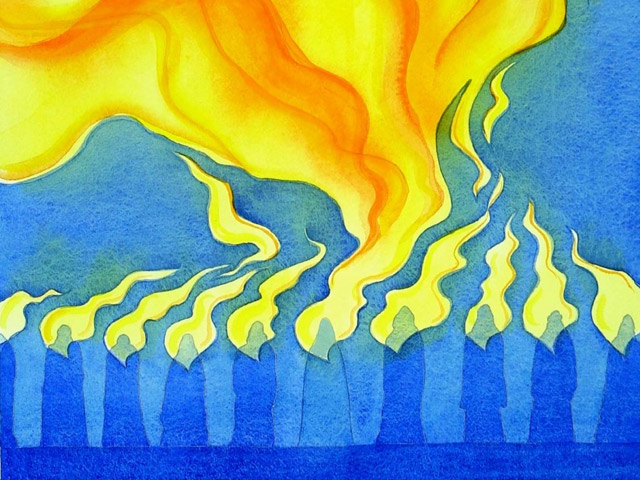
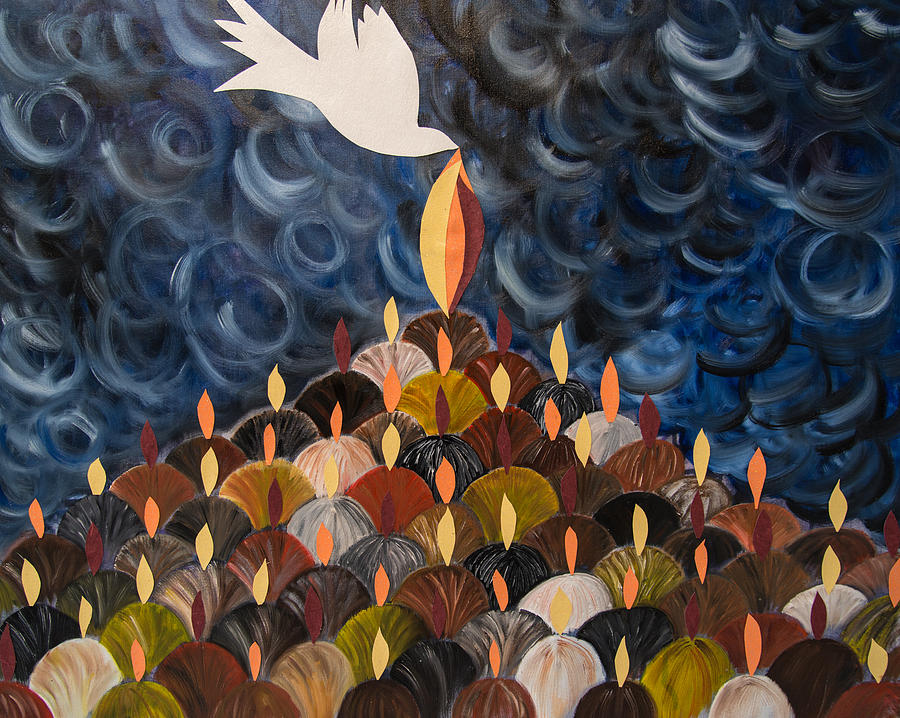
When the day of Pentecost had come, they were all together in one place. And suddenly from heaven there came a sound like the rush of a violent wind, and it filled the entire house where they were sitting. Divided tongues, as of fire, appeared among them, and a tongue rested on each of them. All of them were filled with the Holy Spirit and began to speak in other languages, as the Spirit gave them ability. 

Dear Paige, Maggie, Keeli, Braelyn, Liam, Emma, and Sophia,

On this, the day of your confirmation, I have decided to write a letter instead of a sermon. Though, for what it’s worth, most sermons are like letters anyway. And, because this is the occasion of your confirmation, it is also a letter for all who call this church home for, God is confirming their faith just as much as yours.

Therefore, let me begin in a scriptural way: Grace and peace to you from God our Father and the Lord Jesus Christ:

There is no way that you can possibility comprehend what is about to happen to you. Part of the life of faith is coming to grips with an adventure that, though we know not where we are going, we at least know who is with us along the way: That who has a name: Jesus.

50 days after Jesus’ resurrection from the dead, after Easter, the disciples were all in one place together. They had recently witnessed their Lord ascend to rule at the right hand of the Father, and were rebuked for keeping their eyes in the sky. And without knowing what would happen next, they were confronted by the wild and reckless Holy Spirit.

Pentecost is all about the unknowability of God. Whenever we think we know what’s going to happen, whenever we congratulate ourselves for finally figuring out the divine, God pulls one over on us and we’re left scratching our heads. 

The sound like the rush of a violent wind filled the disciples – divided tongues as of fire appear among them and they were able to speak in other languages as the Spirit gave them ability.

Fun fact, the story gets even better, because when they busted out of their gathering place the crowds who encounter the disciples accuse them of being drunk even though it’s only 9 in the morning. They are accused of being drunk because they are stumbling around into a new strange world that they can scarcely wrap their heads around. 

I hope that, in some way, you leave from church today staggering around like those first disciples. In fact, I hope that happens every Sunday, because when the Spirit encounters us, we can’t help but walk away altered. 

Those early disciples, the ones who walked the roads of Galilee with Jesus, the ones who spoke with tongues of fire, they were compelled to tell the Good News to all who would hear it, because, it was the difference that made all the difference.

Through your confirmation we have bombarded you with all sorts of things – scripture, creeds, tradition, prayer, denominationalism, sacraments, mission. You’ve been exposed to all the parts that make the church the church. But above all, in confirmation you have been taught the faith. But this is only the beginning.

Learning the faith is like learning to speak a new language. You can read all the books in the world about it, but you can’t do it until you do it. And, just like a language, you can’t learn it without others and without practice. 

A few months back one of you asked, “How can you tell the difference between God speaking, and your gut?”

That is easily one of the all time best questions asked of a preacher. It’s a great question because all of us have that question, and because the answer is right in front of us every Sunday. 

Whatever it means to be Christian, it at least involves the discovery of friends we did not know that we had. You see, church is the last vestige of a place where people willfully gather together with people who think, speak, and act differently than themselves.

None of you go to school together. Think about that for a moment. Whereas most friendships are born out of commonalities like schools, or extracurricular actives, you only know each other because of Jesus.

And that’s true for the rest of us as well! 

The only real thing we have in common is Jesus.

That’s important. For, the only way any of us can ever hold fast to the promises of scripture is through the community we call church. In order to hear the promises of God we need others to declare those promises to us over and over again, particularly when we feel like we can’t believe them or that they’re no longer true.

But God really does love you, in spite of all the reasons that God shouldn’t. 

The noise of the world will be deafening at times, trying to tell you what to think and what to believe. But it can never compete with the wild rushing wind of the Spirit, the various languages that rose up for the Gospel, because those words reveal who we are and whose we are. 

In life we are habituated by many languages. Like the language of literature, the language of baseball, the language of dance, the language of music, they all form us and shape us in ways seen and unseen. But today, on Pentecost, we are reminded that our first language is the language of faith and that before we are anything we are Jesus people.

The only way we can tell the difference between whether God is speaking to us or we’re listening to our gut, is by sharing it with others and having it confirmed by them. 

We told you over and over again during this season of confirmation that: Baptism is God’s way of saying ‘yes’ to us, and confirmation is our way of saying ‘yes’ to God. 

The simplicity of that sentence betrays the confounding nature of confirmation. Saying ‘yes’ to God means being caught up in God’s story in the world, it means receiving friends you never knew you had, it means fumbling out into the world not knowing exactly what the Spirit is up to.

And even though you will be confirmed individually, confirmation can only take place with and by others. The same is true of the sacraments. You can’t baptize yourself, and you can’t give communion to yourself. It is something done to us within the community of faith by others. 

We only learn what it means to be Christians by watching other Christians within the church and doing what they do. To be Christian means being together. Which, of course, isn’t easy. Particularly because we believe in telling the truth, even to those we love.

But, as Tom Holland of Spider-man fame put it, “I personally think if something’s not a challenge, there’s no point doing it, because you’re not gonna learn much.” (That’s for you Sophia).

Being a Christian might be the greatest challenge of your life. Not because it comes with all sorts of rules and requirements, but because it runs so counter to the rest of the world. 

The world worships the first, the greatest, the found, the big, and the alive.

But God comes for the last, least, lost, little, and dead.

The world runs by deception and destruction.

The Kingdom of God runs by mercy.

The world is full to the brim with bad news.

Jesus comes to bring Good News.

On Pentecost the Holy Spirit was poured out on all flesh, the tall and the small, the old and the young, the good and the bad. It’s not because we earned it. It’s not because Jesus was finally pleased with all of our faith. It’s because we needed it.

And we still do. 

It is my hope and prayer that, throughout your lives, you will hear the Good News: You are part of an adventure that is made possible by God’s relentless grace. You have a place in God’s church no matter what you do or leave undone. You are loved by God and there ain’t nothing you can do about it. You are forgiven.

When we went on our confirmation retreat to Alta Mons there was a considerable amount of content we had to cover. We had to explore the theological proclamation of the Trinity, we had to tell the whole story of the Bible, we had much to do.

And chances are, you won’t remember any of it. And that’s okay. The life of faith takes a lifetime. But, even though you won’t remember most of that content, I do hope you remember the feeling of being together, of going on a walk as the sun went down and being silent with God, of laughing hysterically at the dinner table with every new revelation about the people sitting next to you, of singing songs by the campfire, of sharing bread and cup by the waterfall.

You see, those are the real marks of a Christian. Not a list of good deeds to make us feel better about ourselves. Not perfect attendance in church every single Sunday.

Being together is what makes possible being Christian.

But you don’t have to take my word for it. Listen: On the day of Pentecost, one of those seemingly drunk disciples got up to preach and afterward 3,000 people welcomed the message and joined the way. Scripture says they responded to God’s Spirit by devoting themselves to fellowship, to the breaking of bread, and to the prayers.

People often assume that the church’s primary business is to get people out of their badness and into a life of goodness. But it isn’t. If that happens, well then that’s wonderful. But the primary mission of the church is to proclaim grace, to tell the story, to share the invitation to the cosmic bash we call the kingdom of God. 

God’s love does not depend of what we do or what we’re like.

There is nothing, and I mean NOTHING, we can do to make God love us any more, and there’s nothing we can do to make God love us any less.

God doesn’t care whether we’re sinners or saints.

God never gives us what we deserve and always gives us more than we deserve. 

God is a shepherd who never gives up searching of the one lost sheep, a parent who is always looking down the road for the prodigal and any excuse to throw a party, a sower who keeps scattering seed no matter the cost.

I hope you see and know and believe that the language of faith is surprising. You might even come to a time in your life when you find yourself surprised that you are, indeed, a Christian. But you need not be surprised. The God who raised Jesus from the dead is full of surprises. Just look around. Amen. 

The Politics of Pentecost

Acts 2.17-18

In the last days it will be, God declares, that I will pour out my Spirit upon all flesh, and your sons and your daughters shall prophesy, and your young men shall see visions, and your old mens shall dream dreams. Even upon my slaves, both men and women, in those days I will pour out my Spirit; and they shall prophesy. 

When I first started in ministry I received my first office visitor before I preached my first sermon. There were still boxes upon boxes of books scattered across the floor when a well dressed gentleman gently knocked on the door. I remember being lost in thought about what to say from the pulpit on my introductory Sunday when the man offered his hand and said, “I’m your local state representative, and as one of our community’s leads I want to welcome you to this place we call home.”

I was flabbergasted. What a remarkably kind and thoughtful thing to do! Here I was, a 25 year old freshly graduated seminarian and he took the time to find me and welcome me. 

We talked for a few minutes about the town before he announced that he needed to return to his own office. I thanked him profusely for the visit and just before he walked down the hall he said something I’ll never forget. With a casual grin he looked over his shoulder and said, “I always appreciate my pastors putting in a good word from the pulpit if you know what I mean.”

And with that he walked away.

Here in the United States we operate under the auspices of the (so-called) separation of church and state. It is certainly a worthy goal, but it is not necessarily present in reality; the church and the state are forever getting intertwined.

In most communities church fellowship halls are voting locations, political candidates are often quick to share their religious affiliations, and we put all sorts of theological language on political items like currency, legislature, and judicial proceedings (to name a few).

Even though the country was founded on a separation of church and state, Christians in the US have played the political game for so long that we can almost no longer differentiate between the country and the Lord, something that scripture (and Jesus) calls idolatry.

We might not like to think about the church as a political entity, and we might even lament those moments when the church hedges a little too close to the supposed line, but the church is a politic. And it’s Jesus’ fault.

In Luke’s gospel, Jesus begins his ministry by reading from the scroll of Isaiah: “The Spirit of the Lord is upon me, because he has anointed me to bring good news to the poor. He has sent me to proclaim release to the captives and recovery of sight to the blind, to set free those who are oppressed, to proclaim the year of the Lord’s favor.” And then he has the gall to say, “This scripture is being fulfilled in me.”

This first century wandering rabbi starts it all off with promises about prison reform, political liberation, and economic redistribution!

Later, Jesus enters the holiest of cities on the back of a donkey like a revolutionary. The crowds welcome the King of kings with songs and shouts of resistance to the powers that be, expecting him to lead an armed rebellion against the empire. 

The following day Jesus strolls through the temple courts and drives out the merchants for their economic chicanery. Next he condemns the tax system, ridicules the abuses of the religious authorities, and predicts the destruction of the indestructible temple. 

For this, and more, he is arrested, condemned, and executed by the religious authorities and the political authorities together. Moreover, the sign adorned on the cross, Jesus’ instrument of capital punishment, reads: “This is the King of the Jews.”

And then, on Pentecost, the Holy Spirit is poured out on all flesh filling the people of God with a bold and wondrous hope for things not yet seen: a strange new world. A strange new world in which slaves are set free, outcasts are summoned home, and everything is turned upside down. 

It might seem banal to confess Jesus as Lord, but it is not just a personal opinion. Confessing the lordship of Christ is quite possibly the most political statement a Christian can ever make. For, if Jesus is lord then no one else is.

Every year we mark the occasion of Pentecost in worship because the political ramifications are still echoing across the centuries. The same Spirit poured out on Pentecost fills us today with the strength and the wisdom and the grace to be God’s people in the world. Without the church, the world cannot know how beautiful things could be

On Pentecost we are reminded that before we are anything else, we are Jesus people. No matter how much we think we are bonded by the names on our bumper stickers or by the animals  (elephants and donkeys) of our political persuasions, nothing can hold a flame to the bonds formed in the waters of baptism and by the most political animal of all: the Lamb of God who comes to take away the sins of the world.

Which is all just another way of saying: On Pentecost things get political, and it’s all Jesus’ fault.

The End Of Words

Revelation 22.12-14, 16-17, 20-21

“See, I am coming soon; my reward is with me, to repay according to everyone’s work. I am the Alpha and the Omega, the first and the last, the beginning and the end.” Blessed are those who wash their robes, so that they will have the right to the tree of life and may enter the city by the gates. “It is I, Jesus, who sent my angel to you with this testimony for the churches. I am the root and the descendant of David, the bright morning star.” The Spirit and the bride say, “Come.” And let everyone who hears say, “Come.” And let everyone who is thirsty come. Let anyone who wishes take the water of life as a gift. The one who testifies to these things says, “Surely I am coming soon.” Amen. Come Lord Jesus! The grace of the Lord Jesus be with all the saints. Amen.

My favorite theologian Karl Barth was known for saying, “Preachers ought to preach with the Bible in one hand and the newspaper in the other.” At least, that’s what people like to say that he said. When, in fact, what he actually said was, “Read your Bibles and read your newspapers, but interpret newspapers from your Bibles.”

Things happen in the world and the church responds by casting the light of the gospel on the events of the world. To gather in this place in this way week after week as if everything that happens out there doesn’t affect what we do here is a denial of reality. But, as Christians, we know that what we do here actually shapes how we behave out there. 

And yet, the work of the church is risky business. It is risky business because violence has a way of making a mockery of words.

We say, “Never again,” and then it happens again.

We say, “This is not who we are,” even though it usually is exactly who we are.

We say, “The time has come for change,” but things often stay the same.

What then can we, or for that matter I, say in a time riddled with violence?

What does it say about us, as a people, that our moral leaders are not those who stand in  pulpits, or even those who sit in a pew, but those who host late night talk shows and moderate debates on cable news networks?

Have we, the church, not something to say?

“See, I am coming soon” says the Lord, “I am the A and the Z, the first and the last, the beginning and the end.”

This Bible, the strange new world it opens up for us, gives life and life abundant when we have scripturally shaped imaginations and live accordingly in a world that scripture produces. 

Week after week, year after year, we sit before the throne of the Lord and we read God’s words. The Bible is stained with the cost of God’s love. Though we have it here on the table without blemish, currently turned to the final page, it is very much a living witness to the confounding reality of God. We read these words over and over and over again because our lives depend on them.

I don’t know about you, but for me, this week, I needed desperately to cling to the promises of God in this book. This book that points to the living God made manifest in the person of Jesus Christ. I needed hope because things feel so very hopeless.

On Monday morning, sitting with my family at the table with our breakfast, my 6 year old son casually asked, “Dad, what were your lockdown drills like in school?”

And I said, “Buddy, we didn’t have lock down drills when I was in school.”

“Why not?”

It’s not as if the world of my youth was better or safer than the world today, but something has changed. And not for the better.

The next day 19 children didn’t come home from school in Texas, and neither did 2 teachers. 

Blessed are those who weep with those who weep and who mourn with those who mourn.  Jesus says, “I am the root and the descent of David, the bright morning star.” And the Spirit and the church say, “Come.”

Why do we beckon for the Lord? 

Because we need all the help we can get.

All is not as it should be.

Jesus is the A and the Z, and every letter in between. As the divine Word of God Jesus is present in our letters and our words and our speech. Jesus speaks when we no longer know what to say.

On Wednesday afternoon, Eric Anderson and I took chairs from our children’s Sunday school classrooms, and we placed them on the front lawn, just on the other side of those doors. We did so as a witness to the 19 children whose chairs are now empty at school, and to the 2 adults who no longer teach.

When I came back into the sanctuary, I looked over my shoulder at those empty chairs and I burst into tears. And I prayed for Jesus to come.

Come Lord Jesus, rend open our hardened hearts. Come Lord Jesus and guide us in the way of justice and truth. Come Lord Jesus and rectify our wrongs.

And yet, just as I, and even we, pray for Jesus to come, the Lord calls for us to gather at the altar. It’s why churches regardless of denominational affiliation or theological posturing have altars in their sanctuaries – it is a place of holiness where we can kneel before the Lord. 

God beckons us to the altar so that we might be altered. We are invited not because we are good, or virtuous, or even right. We are brought before the throne of the Lord because we are not as we should be, and God has a habit of making something of our nothing.

Judgment comes first for the household of God, Peter writes in an epistle to the early church. We, then, don’t exist as a shining star for the rest of the world to follow, we don’t scoff at the world in all of its trespasses. Instead, we exist to confess the condition of our condition, we gather to the the truth.

Most merciful God, we confess that we have not loved you with our whole heart. We have failed to be an obedient church. We have not done your will, we have broken your law, we have rebelled against your love, we have not loved our neighbors, and we have not heard the cry of the needy. Forgive us, we pray. Free us for joyful obedience, through Jesus Christ our Lord.

That’s our prayer before we receive communion. It it the recognition of who we are and why we so desperately need to put something holy into us that we might become who God is calling us to be. Because if that work is up to us alone, then it will never ever happen.

Confession is often used as another way to say repentance. Before we come to the altar, before we come to the throne, we confess or repent of our wrongs. But repentance is not simply feeling sorry for our sins, or feeling guilty about what we’ve done or left undone. 

Guilt and shame don’t produce change.

In fact, more often than not, guilt and shame usually lead to more guilt and more shame.

Change comes when we discover, oddly enough, that the God we expected to clobber us with guilt instead clobbers us with grace. God does not need to destroy us in order to deliver us. God’s love really is so powerful and so strange that it is the difference that makes all the difference.

Put another way: when we come to grips with the confounding nature of God’s love for people even like us, we can’t help but live differently.

Therefore, we don’t fall to our knees in order to get God to do something. We fall to our knees because God has already done the something we need. 

Karl Barth once said that only Christians are sinners. That is: only those who know how much they are loved can ever understand how much they have betrayed that love. 

In other words: it is only in the light of grace that we can become strong enough to admit that we can be wrong, and then try to take steps in a direction of discipleship. 

Contrary to how it might feel, or even be said in church, God is not done with us. That’s why the psalmist can cry out, “Create in me a clean heart, O God.” The psalmist knows that our hearts are indeed, unclean. We need something done to us. And that something has a name: Jesus.

There’s this story from Viktor Frankl, the Austrian psychiatrist, about his experience in a Nazi death camp, and I can’t get it out of my head:

“One evening, when we were already resting not he floor of our hut, dead tired, soup bowls in hand, a fellow prisoner rushed in and asked us to run out to the assembly grounds and see the wonderful sunset. Standing outside we saw sinister cloud glowing in the west and the whole sky alive with clouds of ever-changing shapes and colors, from steel blue to blood red. The desolate grey hud huts provided a sharp contrast, while the puddles on the muddy ground reflected the glowing sky. Then, after minutes of moving silence, one prisoner said to another, ‘How beautiful the world could be!’

When we do this, when we gather for worship, and meet at the altar, and sing these songs, and pray these prayers, its like the beauty of the sunset reflecting in the puddles of a hopeless gray death camp. God’s grace is a thing of immense and overwhelming beauty shining on a world of sin and pain and loss.

But what we do and what we experience here does not merely console us or offer us a brief reprieve from the world with the beauty of God’s grace. It also awakens within us a holy impatience, as Frederick Bauerschmidt puts it, a faithful sense of outrage, and awareness of how beautiful the world could be, but is not. 

At least, not yet. 

Grace isn’t expensive, nor is it cheap, grace is free. But discipleship comes with a cost. Following the Lord means considering how God in Christ knew the deep pain and brokenness of life, that we creatures are cruel and disappointing, that things don’t often work out quite the way we want them to. And yet our God does not stand aloof from human suffering while offering trite platitudes about the beyond. Instead, God comes to us, right down in the muck and mire of life, and says “Follow me.”

Come Lord Jesus! The grace of the Lord Jesus be with all the saints. 

This is the end of the strange new world of the Bible. These are literally the end of words. All that needs to be said is said and scripture concludes with a call for the Lord to come! 

Come Lord Jesus, from our fears and sins release us, let us find our rest in thee! 

Come Lord Jesus! Show us how beautiful the world could be if we were only willing to take steps into your kingdom rather than the kingdoms of our own making. 

Come Lord Jesus! Fill us with the grace of holy impatience because something needs to change! Amen.

Strangely Warmed

John 17.23

I in them and you in me, that they may be completely one, so that the world may know that you have sent me and have loved them even as you have loved me.

Why the United Methodist Church?

This is a question that I receive fairly often throughout the comings and goings of my life. I’ll be sitting in the stands watching my son play tee ball when the subject of employment comes up which inevitably leads to why I serve in the UMC. Or, I’ll preside over a wedding with lots of strangers only to be bombarded with questions about denominational affiliation as soon as the service ends. Or someone will see me working on a sermon at a coffee shop with my clergy collar on and they walk over to ask, “So what kind of Christian are you?”

For what it’s worth, I am a Christian before I am a Methodist. Or, put another way, I’m a Christian who happens to be a Methodist.

I follow Jesus, not John Wesley. 

And yet, I find that Wesley’s understanding of the Gospel to be spot on. 

There are a great number of moments from his life, and even more from his sermons, that resonate deeply in my soul, but nothing quite compares to his Aldersgate Street experience when he was 35 years old. This is how we wrote about it in his journal:

“In the evening I went very unwillingly to a society in Aldersgate Street, where one was reading Luther’s Preface to the Epistle to the Romans. About a quarter before nine, while he was describing the change which God works in the heart through faith in Christ, I felt my heart strangely warmed. I felt I did trust in Christ, Christ alone, for salvation; and an assurance was given me that He had taken away my sins, even mine, and saved me from the law of sin and death.” – John Wesley, May 24th, 1738

What makes his experience all the more profound is how little he felt an assurance before that moment, even though he had been ordained for a number of years!

I love the hymns we sing in the UMC, I love the connectional nature of our church and how we are bound together with other churches, and I love the incarnational focus of our ministries going to where the Spirit moves. But more than anything, I love the relentless proclamation of prevenient grace; God’s love precedes all things. 

While sitting at the society meeting at Aldersgate Street, Wesley experienced what I have experienced and what I hope every person will come to experience: There is nothing we have to do to earn God’s love except trust that it is true. And when we live into that trust, we are living in the light of grace which changes everything. It changes everything because it means all of our sins, past/present/future are nailed to the cross and we bear them no more. 

The work of Christ frees us from the law of sin and death so that we might live abundantly for God and for others. It is, quite literally, the difference that makes all the difference. 

If you want to know more about how God works in the heart through faith in Christ, you can check out the Strangely Warmed podcast which I host. Every week we bring you conversations about the readings from the Revised Common Lectionary and we do so without using stained glass language.

The River

Revelation 21.10, 22-22.5

And in the spirit he carried me away to a great, high mountain and showed me the holy city Jerusalem coming down out of heaven from God. I saw no temple in the city, for its temple is the Lord God the Almighty and the Lamb. And the city has no need of sun or moon to shine on it, for the glory of the Lord is its light, and its lamp is the Lamb. The nations will walk by its light, and the kings of the earth will bring their glory into it. Its gates will never be shut by day – and there will be no night there. People will bring into it the glory and the honor of the nations. But nothing unclean will enter it, nor anyone who practices abomination or falsehood, but only those who are written in the Lamb’s book of life. Then the angel showed me the river of the water of life, bright as a crystal, flowing form the throne of God and of the Lamb through the middle of the street of the city. On either side of the river is the tree of life with its twelve kinds of fruit, producing its fruit each month; and the leaves of the tree are for the healing of the nations. Nothing accursed will be found there any more. But the throne of God and of the Lamb will be in it, and his servants will worship him; they will see his face, and his name will be on their foreheads. And there will be no more night; they need no light of lamp or sun, for the Lord God will be their light, and they will reign forever and ever.

It happens, every so often, that someone reaches out with an inquiry about baptism.

A couple has a baby and they call the church office to ask if it would be possible for their newborn to be baptized. A stranger stumbles into church on a Sunday morning, is moved by the power of the Spirit, and approaches me afterward to discuss the holy waters. A long time church members sees someone else being baptized and, for the first time, desires to receive the promise of the covenant made by water and the spirit.

And, inevitably, we come to a moment when I ask THE question as it pertains to baptism: “Why?” 

One of my professors once said that the most faithful churches are those who won’t marry or baptize anyone off the street. That is, if a random couple asks to be married, it would be better for them to get married by the justice of the peace. The covenant of marriage, at least as understood by the church, is only possible within a community who will help hold the couple accountable to the promises they make.

And the same holds true for baptism.

Should you grow weary or bored at any point in the next ten to fifteen minutes, you can look at the liturgies in the hymnal or google online and you will discover that the questions and promises of marriage and baptism are remarkably similar.

What makes them similar is the outward nature of a promise, that neither of the them should be entered lightly, and they are only possible within the connection of a community we call church.

A few years back I was serving a church with a preschool and I made it a point to hang out among the students and their families as much as possible. I was at the door nearly every morning welcoming them into our building, I led chapel time once a week in the sanctuary, and after a while I started getting invited to a lot of 4 year old birthday parties.

And I’m not sure how it happened, but at some point along the way we had three different families represented in the preschool who each had a parent in ministry. 

Let me tell you, teaching preschoolers about the Bible is hard enough, but it takes on a whole new dimension when a few of those children would return home week after week to tell their pastor-parent what this pastor said.

Anyway, it came to pass that, one year, two brothers from the preschool asked if I would baptize them. And, of course, their mother was also a United Methodist pastor serving a church on the other side of town. So we decided to baptize the boys together.

But this was not to be an ordinary baptism. No, we did not schedule it to take place once picturesque Sunday morning in a sanctuary, we didn’t even consider baptizing them in the preschool where they learned of the faith. The boys wanted to be baptized in living water, a river or a lake or a stream.

It happened on a cold early May day, where we gather on the banks of, I kid you not, Whiskey Creek in Churchville, VA. I knew well enough to bring my fishing waiters because the water was liable to be cold. And it was frigid.

So we said all the things we normally say, I prayed with the boys by the creek’s edge, and then, because it was so cold, I had to literally carry the younger brother out into the middle of the creek, and his mother and I rapidly dunked him under the water three times in the name of the Father, the Son, and the Holy Spirit.

When he burst forth from the water on the final dunking, he screamed bloody murder, tears were streaming down his face. He hit me in the face and declared for everyone to hear, “I hate you Pastor Taylor!”

And then I had to go get his brother and do the same thing to him. 

John the Revelator sees what we cannot, at least not yet. From the vantage point of a high and holy mountain, he takes in the New Jerusalem, the great rectification of all things. And, oddly enough, there is no church in the city, no place of worship. How can it be that, when God comes to dwell among us, there is no place to gather such as this?

There is no temple because God is the temple. 

There is no darkness because God is the light.

There is no gate because God is the host.

Nothing unclean will enter this holiest of places, and neither will those who practice abomination or falsehood.

And there, in the center of it all, is the river of the water of life, bright as a crystal, flowing from the throne of God and of the Lamb.

This water, and more importantly from whom it flows, makes all things new, all things holy, all things clean.

There has long been an understanding of John’s vision as a prophecy. That is: it tells us about what will come to pass at some point in the future. Christian types will then hold these images over the heads of their dozing congregations and point to connective images in our surrounding culture as signs that the times have come. They do so as a warning about getting clean for the king, repenting in dust and ashes, so that, when the time comes, they will do what is necessary to make it through the gate.

And all of that might be right. But if that’s all that this is, then we’re in trouble. Big trouble. Big trouble because, none of us will make the cut. Abomination sounds like a big and scary thing, and yet all of us practice abominations on a regular basis. An abomination is anything that causes distrust or hatred – and we live in a world that runs on distrust and hatred! We are defined, so often, not by what we love but by what we hate. And that’s not even mentioning those who deal in falsehoods, namely all of us.

For as much as this is an image of something that will come to pass, it is also, at the same time, very much a description of how things are right now. Revelation is a timeless book not because it stands the test of time, but because it rejects all notions of temporal categories. It is beyond time. It has happened, is happening, and will happen. But, for creaturely creatures like ourselves, we can scarcely wrap our heads around it.

But John’s sees something that speaks into who we are and whose we are in present, past, and future. John sees the river. The river of the water of life.

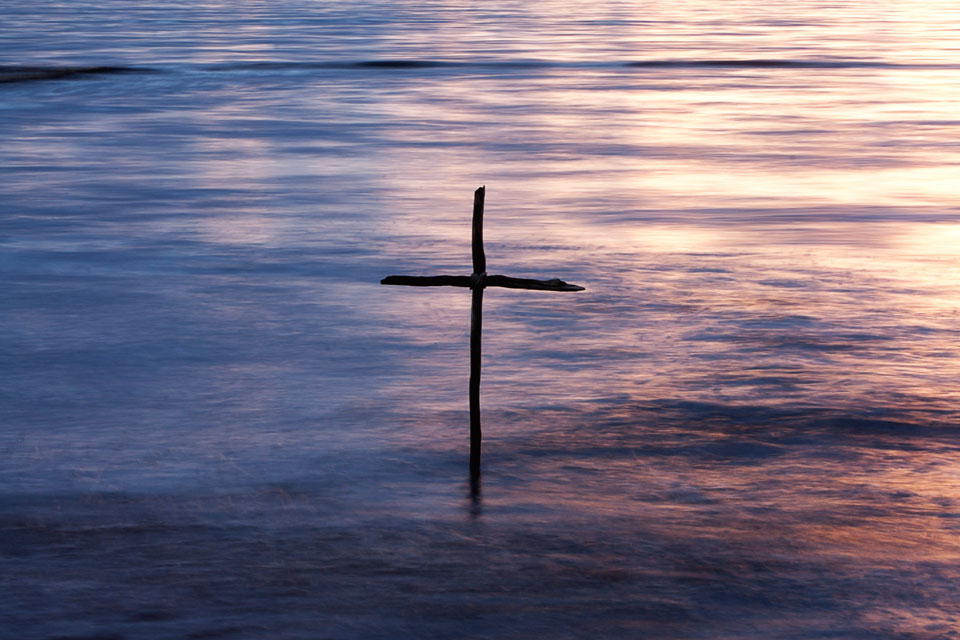
Water runs through the strange new world of the Bible. In the beginning God swept across the waters and brought forth order out of chaos. In the days of Noah God set forth a rainbow in the sky. When God saw God’s people as slaves in Egypt, God led them to freedom through the sea, and eventually through the Jordan to the land that was promised. 

In the fullness of time God sent Jesus, nurtured in the water of a woman and was baptized by John in the river Jordan. Jesus called his disciples to share in his baptism of death and resurrection and to spread to the Good News to all who will hear it. 

The water that flows through the middle of the street of the city in John’s vision is the water through which we are delivered to a strange new land where even people like us are made holy.

Nothing unclean can enter the city and we can’t make ourselves clean. No amount of goodness, no down-on-our-knees prayers of repentance, no righteous acts of piety or mercy can wash away our sins. 

The old hymn is right: What can wash away my sins? Nothing but the blood of Jesus.

Therefore, I can understand the hatred that came from the boy I baptized in Whiskey Creek. To be made clean implies there is a need to be made clean. And no one likes to admit there is something wrong with them. Moreover, baptism is the beginning of a journey into discipleship and following Jesus isn’t easy! I mean, look at who he decided to gather together as a church! Us! We’re stuck with each other whether we like it or not! 

Now, could that boy articulate his hatred in the river with such theological insights? Probably not. But his emotional response to the cold waters of his baptism is a truth we often forget. Baptism changes everything. 

The blood of the Lamb, who comes to take away the sins of the world, flows forth from the throne and makes a way where there is no way. It is the great cleansing flood that makes the impossible possible. Baptism is God’s way of saying yes to us when God has no good reason to say yes at all. 

I, myself, was baptized at 19 days old. I had no choice. It was done to me. 

But those who were gathered in the church 34 years ago took seriously the vows they made to raise me in the faith, with God’s help. So much so that I wound up going into the ministry.

Beware of baptizing your child! You never know what God might call them to do!

Anyway, when I was 25 and about to start serving in my first appointment, I had the opportunity to return to my home church and preach one last time as a layperson. I preached on the power of baptism and how I was a product of their promises. 

After the service ended, and I was shaking hands in the narthex, a woman I had known my whole life approached me with a well worn Bible in her hand. She opened it up to the inside front cover and I saw names and dates covering every available inch. And with her index finger she moved across the name until she came to mine and she said, “Whenever we have a baptism I write down the name and date of the person and I pray for each of them every morning. Which means, I’ve prayed for you almost every single day of your life.”

I don’t know “why” my parents had me baptized. I’m not sure they were ever asked, or if they even gave it much thought. But that conversation with that woman in the narthex of the church is the beginning of an answer to the question.

The boys I baptized in Whiskey Creek, one of whom socked me in the face right after, that moment started a journey that is the adventure of faith. Each and every day they are learning more about what it means to love God, and to be loved by God.

Baptism is the radical reorientation of all things. Whenever we bring someone to the water, whenever we remember our own baptisms, the heavens are torn apart again and God meets us in the water, right where we are.

The radical nature of the sacrament is made manifest insofar as our baptismal identities are more determinative than any other part of who we are. The waters of baptism wash away any notion of our being defined by our faults and our failures. Each drop of baptismal water contains an ocean of grace and mercy and love deep and wide enough to engulf the entirety of everything that ever was or will be.

In baptism, the heavens are torn apart, the past, present, and future are confused in the best possible way, and the Lord declares, “you are my child.”

And we are who God’s says we are. Amen.