On Evangelism or: Why The Church Needs Crucifixion

Matthew 28.19 – Go therefore and make disciples of all nations, baptizing them in the name of the Father and of the Son and of the Holy Spirit.

Evangelism

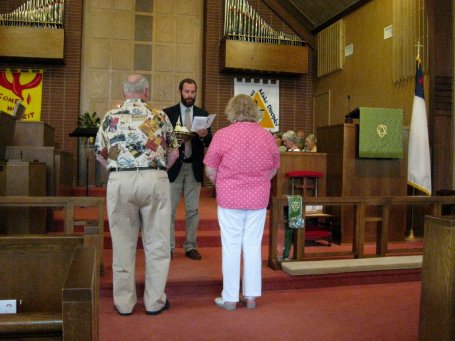
We sent out hundreds of post-cards over a month ago inviting the entire neighborhood to join us on the front lawn of the church for a free Community Cook-Out. The post-cards were well designed and inviting with all of the necessary information. For a modest price we were able to reach a whole group of people who we would otherwise miss.

This will be our third annual gathering and it has been largely successful. Half of the people in attendance are usually not from the church and we want them to know that we care about the neighborhood we are in. However, on some level, we also want them to know that we love them enough that we would love to have them join us in worship on Sunday mornings.

IMG_1642

Yet, evangelism is not the goal of our gathering. We have not specifically identified key lay people to go around asking people if Jesus Christ is their personal Lord and Savior. We have not prepared pamphlets to hand out describing the eternal fires of hell if someone does not get saved. We have not invited the neighborhood to our front lawn to get them into heaven.

Instead, we hope that by showing them our love, it will somehow draw them into church to discover where that love comes from: God.

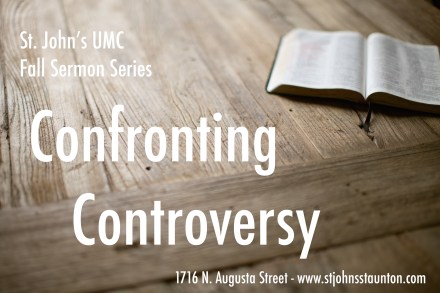
Next week we are going to send out even more post-cards to the local community about our upcoming sermon series titled “Confronting Controversy.” After speaking with a few nominal Christians from the neighborhood about what they want to hear about in church, we synthesized this series to be approachable and life-giving to people who are not currently in the church. The post-card has been well designed with a catchy image and all of the necessary information on the back. We hope that by sending them out, people from the community will join us in worship and discover that what the world thinks about the church may not be the same thing as what God thinks about the world.
controversy

Both of these ventures, a Community Cook-Out and a Controversial Sermon Series, are about trying to grow the church in some way, shape, or form. Many of us call this “evangelism.” But that’s not what evangelism means.

In David Fitch’s recent work Prodigal Christianity, he highlights a moment from his ministry where the church tried to grow and failed:

“When our church, Life on the Vine, was new, we sent out ten thousand postcards to people in our neighborhoods. We artfully displayed a collage of various depictions of Jesus (classical paintings, icons, and European, African, and Asian portrayals) with the question in bold print running across it: “Who is Jesus?” On the back, we invited the neighborhood to have a discussion with us about the question. We were playing off the cultural curiosity around Easter and hope that we could welcome a constructive conversation around the question. The card was not well received. Local “Bible-believing” Christians accused us of straying into relativism with so many different depictions of Jesus. They worried we were losing the truth of Jesus. Meanwhile many others accused us of being intolerant. Were not other religious leaders just as worthy of discussion? We got nasty phone calls asking, “Why are you focusing only on Jesus?” No one, and I mean NO ONE, came to any of our gatherings from this postcard.”[1]

Out of ten thousand postcards, no one came to any of the gatherings. I think a lot of this has to do with our false assumption that just by offering something people will show up. We believe that if we give them an interesting sermon series or bible study people are bound to show up in droves. And if we let them know about it through a postcard we can reach even more people!

These types of evangelism largely fail because we’ve confused evangelism with filling the pews instead of sharing the Good News.

I cringe whenever I encounter an “evangelist” in the midst of life who abruptly asks, “Have you confessed Jesus Christ as your personal Lord and Savior?” Because with their question is the assumption that we have the power to save ourselves, and that they are playing a fundamental role in our salvation. However, Jesus does not command the disciples to go out convincing people to confess him as Lord. Instead he tells them to go and make disciples.

Discipleship formation is primarily about relationships and less about post-cards and Main Street confessions. We become evangelists not when we beg or convince someone to confess Jesus as Lord, but when we intentionally create relationships with individuals through the love that Jesus taught us to live by. We can use sermon series and community events to first bring people into the church, but those types of things will never be enough (by themselves) to evangelize. It takes a willing and loving disciple who sees others not as pew fillers but fellow brothers and sisters in the kingdom of God.

As a gathering church we are called to be confident in God’s love for us, and for us to share that same love with others; “We love because he first loved us” (1 John 4.19). We will grow and bear fruit in the kingdom when love becomes our first priority instead of growth. We have failed to grow not because we have been doing things unworthily, but because we’ve grown bored and unhappy. With churches all across the American landscape floundering under the pressure to grow and remain sustainable, the church falls back to the common tropes of Vacation Bible Schools and Sermon Series assuming they will grow the church.

Can you imagine what the church might look like if Christians were actually happy and excited about being the church? That’s where and when evangelism happens – not in the boredom of another series or bible study, but in the community transformed by joy and sharing that joy.

Evangelism (1)

Evangelism is our call as Christians. We are commanded by the Lord to share the Good News in order to make disciples and transform the world. If we want this kind of dynamic and life-giving evangelism to take place, then we have to be willing to crucify some of our current practices and programs; you can’t have resurrection without crucifixion.

We need to crucify our boring and lifeless activities that we assume will grow the church. Is the annual Cook-Out really sharing the good news with others, or are we doing it to feel good about seeing a lot of people on our property?

We need to ask difficult questions about our programs and whether or not they are designed to evangelize. Are our monthly meetings really about branching out to the community and transforming our cultural landscape, or are we meeting to keep the people already in the church happy?

We need to confront our budgets and demand that they reflect Jesus’ mission. Are we spending our resources according to the great commission, or are we neglecting to be good stewards by wasting our resources of lifeless avenues of ministry?

We need to take a look at our own families and reflect on how we evangelize those closest to us. Are we so consumed by raising our children to choose whether to be Christian or not for their own good, or are we afraid of telling them what we really feel and believe?

What can we crucify in our hearts and in our churches to be resurrected into the kind of evangelists that God is calling us to be?


[1] Fitch, David and Geoff Holsclaw, Prodigal Christianity: Ten Signposts into the Missional Frontier (Jossey-Bass: San Francisco, 2013), 32.

An Example – Sermon on Luke 12.32-34

Luke 12.32-34

Do not be afraid, little flock, for it is your Father’s good pleasure to give you the kingdom. Sell your possessions, and give alms. Make purses for yourselves that do not wear out, an unfailing treasure in heaven, where no thief comes near and no moth destroys. For where your treasure is, there your heart will be also.

bible-verse-luke-1234-where-your-treasure-is-there-your-heart-will-be-also-2014-for-slideshow


Meanwhile, when the crowds gathered by the thousands to hear him talk, so many in fact that they began to trample on one another, Jesus rose to speak. He warned his disciples against hypocrisy – live honest lives. He instructed them to confess fearlessly – all who earnestly repent will be forgiven. He shared the parable of the rich fool – you can’t take your money to heaven. And then he gave them some final instructions:

“Do not be afraid little sheep! For it is God’s good pleasure to give you the kingdom. Sell your possessions, and give away your money, use your gifts to bless others here and now. For where your treasure it, there your heart will be also.”

Sometimes Christians drive me crazy. You know, the super pious ones who are forever wearing their faith on their sleeves; the ones who stand on the street corners of life blasting off about some passage or another; the ones who come knocking on your door and try to sell you on the gift of eternal life instead of the fires of hell.

Have you ever met or encountered a Christian like that? I can’t help but feel like they are the kinds of Christians that are giving the rest of us Christians a bad name. Jesus never instructed his disciples to act like the people from Westboro Baptist church who are forever picketing the funerals of people whom they believe did not live up to Christ’s expectations. Jesus never called his disciples to be racist or bigoted toward peoples of different nationalities, or race, or creed, or sexual orientation. Jesus never implored the disciples to use fear mongering to convince people to come to church or otherwise be threatened with the fires of eternal punishment. Yet, if you turn on the news, or get online, those are the kinds of Christians we hear about the most; the ones who give the rest of us Christians a bad name.

Like Hillary Clinton proudly claiming to be a Methodist over and over again, and how much her Methodism has shaped her politics. But we know that she has gone back and forth on a number of issues and made untruthful claims when the bible is pretty clear: you shall not bear false witness.

Or like Donald Trump who, when asked about his faith said that he’s never needed to pray for forgiveness and when asked about his favorite scripture was said, “An eye for an eye and a tooth for a tooth.” Except the scripture he was talking about actually goes like this: “You have heard an eye for an eye and a tooth for a tooth. But I say to you, ‘Do not resist an evildoer. But if anyone strikes you on the right cheek, turn the other also.’”

Just once I would like a good Christian to be featured for all to see; someone who has absorbed the Word throughout his or her life and has lived accordingly; someone who believes the good news is so good, that is worth sharing not to fill the pews, but to fill hearts; someone who could stand like an earthly example for the rest of us to catch a glimpse of the ways Jesus calls us to behave.

tumblr_naz1buY4JX1svej5no1_1280

This winter I was asked to be a guest preacher at Augusta Street UMC just down the road. We had a midweek and midday service and I decided to preach about how good it is when we dwell together in unity. The service was well received and we gathered in the social hall after worship for a light lunch. I walked around for a couple minutes until I found an empty chair next to Wilford Kirby who was deeply engrossed in a conversation with someone else.

Elsewhere in the room, United Methodists from all of the churches in our town were sitting with their friends from their churches. Like cliques in a high school, the Central folk were at one table, the Cherryvale folk at another, and so on. But Wilford refused to be subject to this paradigm. He was sitting with the preacher from Augusta Street, though I don’t think he knew that he was the preacher. Because I eavesdropped on the end of their conversation, and the last thing Wilford said to the preacher was: “You should come try out our church on Sundays.”

Anyway, I sat with Wilford and he was quick to make a couple comments about their church facility in comparison with ours, offered a few critiques on how my sermon could have been better, and continued to eat his soup and sandwiches. I had other things to get done that afternoon, so after I finished eating I excused myself and told Wilford that I’d see him in church on Sunday and left.

Not fifteen minutes later was my phone ringing. When I answered all I heard was: “Wilford fell, broke some ribs, on his way to the hospital.”

I immediately turned my car toward the direction of Augusta health and beat the ambulance to the Emergency Department. But because they needed to do some x-rays and have him checked out I wasn’t able to get back, and he didn’t want me to anyway.

The next day I showed up at his house and banged on his door until he slowly made his way to the front of the house and let me in. I should have been a little more compassionate and patient regarding the fact that he was walking around with a few broken ribs, but I wanted to know what happened. I wanted to make sure he was okay. I wanted to pray for him.

And as we sat down in his basement, before I could even open my mouth, he asked me how I was doing, and then went through the list of everyone he had been praying for and wanted updates since he had been out of the loop for a whole day.

Wilford Kirby is the kind of Christian that makes the rest of us Christians look better.

Wilford Kirby is an example to us all about what it means to follow Christ in this life.

Luke, in this passage about our treasures and our hearts, calls for us to put first things first. The things of the Lord are to be the most urgent and pressing priority in every Christian’s life. We are not to be afraid nor are we to succumb to the worldly distractions of wealth that constantly distract us from God’s love and care. There are no wallets, or stock portfolios, or bonds that will not wear out in time. God promises not to fill us with earthly wealth and material possessions, but instead surprises us with the gift of the kingdom.

Receiving this gift, the kingdom, makes us rich beyond our ability to comprehend. But being rich toward God is not about putting sizable sums in the offering plate during worship. What Jesus rejoices in, is our reorientation toward the whole of life as an abundant gift from a generous God – a gift that can be given away with abandon.

Wilford Kirby has given his life to the kingdom, because the kingdom was first given to him.

12347609_912278878848427_5975116725585975318_n

He has easily attended more worship services than anyone in this church over the last three years, including me (and I’m the pastor!). On Sunday mornings Wilford is the first layperson to enter the sanctuary making sure our heat is pumping in the winter, and the AC is on during the summer. He checks the lights for optimum worship participation, and he checks through the bulletins to make sure everything will go smoothly.

Every winter he sits out in his truck for hours on end waiting for people to come take a peek at our Christmas trees and offer them his assistance. Even though we have a giant sign advertising the times the lot will be open, Wilford believes in being present for the kind of people who ignore signs like those.

He is here an hour before our special services throughout the year like Ash Wednesday, and Good Friday, and Christmas Eve just in case anyone arrives extra early.

He is almost always the first person to show up in my office to find out how someone from our church is doing and how he can be praying for him or her.

For years he has mowed the lawn of our church and took care of the property as a volunteer. He never complained; he never sought recognition; he never wanted praise. I cannot tell you how many times I’ve been sitting in the comfort of my air-conditioned office day-dreaming about God when I’d see Wilford come flying past my window on the lawn mower with a smile hidden underneath his dust-mask.

Wilford has been here for every funeral since I arrived. Even for people he never knew. Yet he always stands in the back greeting people as they walk in, not because he was asked to, not because he was told to, be because he believes it’s the right thing to do.

For where your treasure is, there your heart will be also.

            The greatest treasure that Wilford Kirby has offered this church has been his very life, and he has given it with abandon.

But why? Wilford could be spending his precious time working with other civic organizations trying to make the world better. He could be spending his afternoons on the golf course or relaxing in the comfort of his home. He could use his life to do any number of things, but instead he has given it to this church.

My suspicion is that Wilford has given his life to the church because he knows and has experienced how the kingdom was given to him, and he wants to share that gift with others. He trusts that the Lord will provide. He humbly obeys the commands to love even the unlovable. He has seen first-hand how the kingdom of God can become manifest in other peoples’ lives. He put his treasure in this place because his heart has always been here. He wants other people to be blessed in the ways that he has been blessed. So he shows up. He prays. He cares. He loves. And he is an example to us all.

But that’s not to say that Wilford is perfect; he’s not. There are plenty of Sunday mornings when I finish a service and walk down the center aisle only to see Wilford standing in the back with his arm outstretched and his finger pulling me in as if to say, “Let me offer a suggestion.” Or there have been plenty of times that I’ve heard his footsteps walking down the hallway and I know from the texture of his tempo that he’s coming not to congratulate me on something but to complain about something that has happened in the church. But the thing is, even when Wilford is frustrated or upset it is because he believes our church can be better. He believes that we are part of the kingdom and we can’t be just like any other church. He expects excellence precisely because that’s what God expects from all of us.

Being rich toward God involves a generosity of spirit that opens our perceptions toward God’s generosity. Wilford knows how blessed he is, for the kind of life that he has had, and therefore he knows no other way to live than the way that he does.

Theses words from Jesus first meant for the crowd, and now meant for us, decisively interrupt our lives in this place and on this day calling us to focus not on the demands of the overly scheduled life, but on the Lord who comes in surprising ways to offer comfort, assurance, and love. Through these words we hear Jesus telling us that the time is now to start living a new life, not dictated by the past, but defined by God’s belief in our future. God uses people like us, people like Wilford, to make the kingdom manifest so that lasting joy will come to God’s little flock we call the church.

At this table, where Wilford has come time and time again, we receive the body and blood of Jesus Christ. In this profound moment we are offered the kingdom again even though we do not deserve it. We come forward with hands outstretched remembering this incredible gift that has been given without cost. And by receiving this gift, we cannot help ourselves but live transformed lives.

So come and see that the Lord is good. Feast at this table where heaven and earth are bound together. Join together with Wilford Kirby as he walks to the front to receive the gift of the kingdom once again. And let it change your life like it has changed his. Amen.

On Why Christians Should Not Read The Bible

A reflection on Stanley Hauerwas’ Unleashing the Scripture:

I was 9 years old and sitting in one of the front pews at Aldersgate UMC in Alexandria, Virginia when I was called up to the altar and given a red hardback copy of the New Revised Stand Version of the Bible. I can remember feeling the thin pages in my fingers while I flipped between the Old and New Testaments and ignored whatever the preacher was preaching about. I knew it was the same bible as the one sitting on the back of the pew in front of me, but there was something different about it being my bible. From that point forward, whenever I grew tired or distracted by whatever was going on in the pulpit, I always knew I could open up the book in front of me and enter the strange new world of the bible.

I still have that bible that was given to me almost 20 years ago; it sits on one of my shelves next to the never-ending row of different translations that I have accumulated over the years. I had it with me in college when I grew frustrated with different campus ministries, I had it with me in seminary while I was helping multiple churches, and I still have it now while pastoring a church. For years I came to rely on that bible’s words to reveal something to me about the nature of God, particularly when I felt like worship was not making the cut.

This is why, according to Stanley Hauerwas in Unleashing the Scripture, we need to take the bible away from North American Christians.

Hauerwas

Most American Christians believe they have a right and obligation to regularly read from the bible. Ask almost anyone in the church I serve and they will tell you about how important it is for them to start their mornings by reading scripture. As Protestants we celebrate the great availability of the Bible and regularly call for individuals to read it on a daily basis. But through the privatization of scripture we have transformed our understanding of the bible into it being treated like any other book, rather than the living Word of God.

The scriptures we affirm as the holy and living Word of the Lord cannot be properly understood outside of the church community that gathers around the Word every week. Or, to put it another way, to read scripture in isolation without the community of faith assumes that the text of scripture makes sense separate from a Church that gives it sense.

Reading in isolation, or believing that having a personal relationship with Jesus Christ revealed through scripture alone (sola scriptura) is enough, has led to some of the most profound abuses of scripture through a practice called proof-texting (Cherry-picking particular verses to make a singular argument).

Inductive-PF

The collection of both the Old and New Testaments contain a remarkable number of stories and teaching that make it difficult to treat as a whole. Whenever someone makes the comment, “The Bible says…” I am always thinking of another place in the Bible that says something contrary to the first point. The bible is a strange and beautiful thing that cannot be limited to a handful of verses.

However, this is exactly what many Christians do when they want to argue a very specific position. For instance, there are passages in both the Old and New Testaments that advocate for the subjugation or lower status of women (ex. 1 Corinthians 11.8-9), but these verses can only be properly understood in the light of scripture as a whole and within the worshipping community. Because only in a worshipping community can the scriptures be read, debated, and proclaimed. Only in a worshipping community can a differing opinion be brought forth and used to consider the first scripture at hand. Only in a worshipping community that gathers at the table are we forced to confront the deep and profound truth that we (men and women) have been created in God’s image, that we (men and women) are invited to partake without cost, and we (men and women) are offered the body and the blood of the Lord.

Similarly, proof-texting has been used to advocate for the horrific treatment of members of the LGBTQ community by reading verses from the likes of Leviticus and the letters of Paul without confronting the fact that Jesus never says anything about homosexuality in the four gospels. It is only in the community of faith that we are challenged to read the scriptures that go against our opinion and then, through the power of the Holy Spirit, are we able to take steps forward in faith.

The temptation to read our bibles in isolation results in the Scripture being broken up as separate texts, commandments, and opinions. The Church, as the body of Christ, is the corrective to this temptation and is the place where scripture lives and becomes incarnate in the way we live.

It is good and right for us to have our own bibles and to read from them from time to time. I’ll admit that to call for the Bible to be taken away from individuals who wish to read the Word of God is an absurd proposition. Yet, in the Church’s current situation, the overwhelming opinion that every person has the “right” to interpret scripture has led to the fractured and divisive nature of the Church.

Instead, we are most faithful when we turn in our bibles together in the midst of worship, when we pray for the Lord to speak to us once again through the Word, and when we wrestle with what God is saying as a community.

10 Things I Learned From My Third Year Of Ministry

10 Things I Learned From My Third Year Of Ministry

Screen Shot 2016-06-20 at 3.19.17 PM

  1. The Holy Spirit Moves in Mysterious Ways

At the end of last summer our youth leaders resigned from their position and we were in need of new leadership. After putting out the job description in a number of places, and receiving zero responses, I decided to take over the position for a limited basis. We restarted the youth group as a discipleship adventure whereby we would meet every Wednesday night from 7-8pm for communion, fellowship, and bible study. Each week I planned out activities for the bible study, and prayed over bread and grape juice, but the youth taught me more about God than I ever taught them. Throughout the year they wrestled with topics like being Christian and political, violence, bigotry, and identify; and not because I brought the subjects up, but because they initiated the dialogue. I often make the false assumption that I am bringing God to other people as a pastor, but the youth reminded me that the Holy Spirit moves in mysterious ways. I never anticipated leading the youth at St. John’s UMC, but now I can see that it has been one of the most rewarding parts of my ministry.


  1. Time = Trust

After 3 years in ministry, I am starting to feel the trust that has formed because of the amount of time we’ve had together. Of course I felt trusted from the beginning, but we are now at a place in our relationship as church and pastor whereby we can move in new and exciting ways because of our history. At first it was a hard sell for the church to participate in something like a free community cookout, but because we have seen the fruit that comes from providing food and fellowship for the community, the church is now pushing for the event to grow. Similarly, the church has a preschool that went underappreciated for too many years. Because I have taken the time to work with the preschool, and share stories about it in worship, the church now believes in the importance of connecting with the preschoolers and their families. The trust within the church has grown because of the good time we have spent growing together in faithfulness.


  1. The Job Is Big

The list of things I’ve had to do under the auspices of being a pastor gets longer every week. In seminary they prepare pastors for the work of preaching, teaching, praying, and visiting, but they are a fraction of what I actually do. On any given day I am: an office manager answering phones and responding to emails; a property manager changing light bulbs, working on the plumbing, tinkering with the boiler, and climbing up into the attic for the HVAC system; a sound technician addressing the speakers and microphones in the sanctuary; a babysitter watching over children from the preschool and the greater community; a spiritual guru answering questions about faith from strangers and friends alike; a social media ninja overseeing our Facebook, Twitter, and YouTube accounts; a webmaster maintaining the church website and internet presence; an animal control specialist removing birds that got into the social hall through the chimney; and an assortment of other jobs. To be a pastor is to wear many hats with many responsibilities.


  1. It’s Hard to Let Go

My wife gave birth to our first child at the end of April and I was able to take 4 weeks of paternity leave to be at home with them. Those 4 weeks were an absolute blessing to be there to comfort both of them during those difficult first weeks, and it also allowed me to bond with my son in a way that I will always cherish. However, taking that time off from the pulpit was really hard. After preaching nearly every Sunday for three years I grew accustomed to knowing the people of the church and how to faithfully proclaim God’s Word to them. In taking a month off, I had to trust that the Lord would provide even in my absence. I am thankful for the time away not only because of what it meant for my family, but also because it reminded me of the truth about the church; it belongs to God and not to me.


  1. If You Build It They Might Come

Just because you create a new program, or offer a new class, it does not necessarily mean that people will come. We’ve had a number of new things develop and become successful at St. John’s including a weekly lectionary bible study, weekly youth meeting, and occasional fellowship events. But for every successful venture we’ve developed, there have been an equal number of opportunities for discipleship that failed. I attempted to lead a weekly evening bible study on the book of James, and by the third week no one came. I tried to start a monthly gathering for fellowship on the first Sundays of the month and by the third month I was the only one in the fellowship hall. There is a temptation to take these kinds of failures too personally, so it is good to reflect on the times that even Jesus’ or Paul’s or Peter’s ministries were not successful. When we put our effort into something that doesn’t bear fruit, we do well to cut it off and let the vine remain strong instead of draining away its resources.


  1. A Phone Call Can Make All The Difference

I once heard a professor say that 90% of the church will show up for church on Sunday, so working on worship and sermon preparation should demand 90% of a pastor’s time. Though this is true on one level, it also neglects to account for those who either can no long come to church, or haven’t for some time. On a whim last fall I decided to go through the entire church directory and call every person that was not in church the previous Sunday. A number of people were simply out of town, or had not been to the church in a number of years, but every single person was grateful for the phone call nonetheless. I did not call in order to guilt the people into coming back to church, or with some other ulterior motive, but simply to say “hello” and the response has been incredible. For those who have fallen captive to loneliness they were reminded that the church still cares about them, and for those on the edge of regular church attendance they were reminded that the church knows them and wants to stay connected. All it takes is lifting up a phone and dialing a number and it can make all the difference.


  1. People Remember

It amazes me how people can remember a phrase from a sermon or a prayer from a year ago and demonstrate how it has developed into fruit in their daily lives. I’ll be sitting in a lectionary bible study and one of the people in the room will quote a sermon I offered on the text from three years ago. Or I will be sitting with a family in my office planning for a funeral and one of the family members will ask me to preach on a text they once heard me mention from the pulpit. Or I will be in the midst of concluding a chapel time lesson with the preschoolers when one of them will connect the message to a different lesson from earlier in the year (we were talking about the power of communion and I was holding the loaf of bread when one of our four-year-olds shouted out, “so Jesus was born in the house of bread (Bethlehem) and then he gives us the bread of life? Cool!”). Seeing and experiencing how people remember what I have said in the past is remarkably affirming, but it is also indicative of the power of our words.

12304502_10204993990640458_5137127778263361305_o (1)


  1. Thankfulness Breeds Generosity

For a long time the church I serve was in a difficult financial situation. They had not paid their apportionments in full for the better part of two decades and they regularly struggled making sure they had enough to keep the church open from month to month. As a congregation they became accustomed to hearing about the financial disparities and the need for them to sacrifice for the greater church. When I arrived we attempted to look at our financial situation from a completely different perspective and instead of talking about sacrifice, we talked about generosity. Little by little, as the church saw the tangible fruit from our ministries developing throughout the year, our offering started to increase which in turn allowed us to focus on more opportunities for ministry and not just keeping the church open from month to month. It took some time, but we were able to move from a maintenance model of the church to a missional model for the church. Last fall, after it was clear that we would be able to pay our apportionments in full for the third year in a row, I hand wrote a letter to everyone who gave to the church during the previous year. It took a long time, but I wanted everyone to know how thankful the church was for each person’s continued generosity and commitment to building God’s kingdom. What I never anticipated was the fact that our weekly offering grew almost immediately after the letters went out. I believe that knowing how our gifts have been used for God’s kingdom, and that the church is grateful for those gifts, has reshaped our church’s identity from scarcity to generosity.


  1. Though We May Not Think Alike…

John Wesley once famously said, “Though we may not think alike, may we not love alike? Without all doubt we may.” At the heart of Methodism is a commitment to think and let think. Which is to say, we are a church of differing opinions and somehow we can continue to do the work of the church because we are united in our love. This kind of commitment to radical love amidst disagreements has been evident in the way people have responded to my preaching. Over the last year I have been able to speak toward a variety of subjects that we are clearly divided over. I have addressed homosexuality, the pervasiveness of violence, divorce, and other subjects. I have made jokes about Bernie Sanders, Hillary Clinton, and Donald Trump. I have tried to comfort the afflicted and afflict the comfortable. And people keep showing up to church. Even though they let me know that might not agree with anything I said on a particular Sunday, they will be sitting in one of the pews the following week. Though we may not think alike, we are still loving alike in this strange and beautiful thing we call the church.


  1. I Still Have The Best Job In The World

Ordained ministry is an odd and wondrous calling. There are days that feel like I am carrying the weight of the world on my shoulders and I become frighteningly anxious over the future of the church. I will pull out my phone and learn about another person’s death, or I will receive an email about a divorce that is about to be finalized, or someone will show up at my office looking for any sense of hope in an otherwise hopeless situation. But most of the time, it is the greatest job in the world. Where else could I spend time deep in God’s Word reflecting on how the Lord continues to speak to us today? What job would give me the opportunity to preside over something as precious as the water dripping on a child’s head in baptism or breaking off a piece of bread for a faithful disciple? What vocation would bring me to the brink of life and death on such a regular basis? It is a privilege to serve God’s kingdom as the pastor of St. John’s and more rewarding than I could have ever imagined.

On Reading Sermons Online

I preach from a manuscript in the pulpit every Sunday. During the week I carefully craft the words that will be proclaimed and I humbly pray that the Lord will show up through, and even in spite of, my sermons. Personally, preaching from a manuscript allows me to articulate how I believe the Lord continues to speak through scripture without going off on tangents in the middle of the proclamation. Because I use manuscripts, I have a copy of every sermon I’ve ever preached from the first one as a teenager at Aldersgate UMC in Alexandria, VA to the one I preached at St. John’s UMC in Staunton, VA last Sunday.

By my cursory calculations I have preached over 200 times including Sunday sermons, special occasions, funerals, and weddings. Each of these sermons contain, on average, 2,000 words, which added together, comes to about 400,000 words on God’s holy Word. With the exception of funerals, all of these sermons are available to read online at any time via www.ThinkandLetThink.com

And the sad thing is, more people read my sermons online than come to worship on Sundays.

onlinesermons

I spent some time today going over the data points and statistics for the blog and I realized that on any given day nearly twice as many people read my sermon from Sunday than were in attendance in worship. Moreover, if the number of people who read the blog every week attended church on Sunday, I would be leading one of the larger churches in the entire Virginia Conference of the UMC.

I want to be clear that I am humbled by this kind of readership and I hope what I have posted has been fruitful for the people who view this blog. But I also want to be clear about another thing: reading a sermon online is not a substitute for gathering in worship.

Throughout the last century, the American Protestant Church has elevated the role of the sermon to the highest of worship elements. Just look at any bulletin on Sunday morning and the whole service usually builds up to the proclamation, and then people are sent home. More than prayers, and hymns, and God forbid the Eucharist, the sermon has come to define what it means to worship.

On one hand, sermons are important. They are the moment in worship whereby the Word of the Lord is proclaimed in a new and exciting way and becomes incarnate in the way that we live out what we hear. But the sermon is unintelligible without the rest of the service. The prayers and the hymns and the silences are what lend light to the words striving to resonate with God’s Word. What we preachers offer from the pulpit mean little, if not nothing, without the other parts of the worship experience.

Additionally, the sermon should not be the pinnacle of worship, but instead one of the integral parts that make the totality of worship life giving and fruitful. To equate all of worship with a sermon prevents the Holy Spirit from moving among the people in such a way that they can respond to God’s great word. To equate all of worship with a sermon implies that our words about God are more important than God’s Word about us. To equate all of worship with a sermon makes the preacher the focus of the worship rather than almighty God.

I am grateful that thousands of people have read this blog over the last few years. I am hopeful that the words found here have given life and meaning to the people who read them. But more than that, I hope these words have inspired people to gather with other Christians at least once a week. What we do, and who we are, is made incarnational in the practice of worship, not by reading sermons online.

Startup Stock Photos

Make the Church Great Again

Psalm 146

Praise the Lord! Praise the Lord, O my soul! I will praise the Lord as long as I live; I will sing praises to my God all my life long. Do not put your trust in princes, in mortals, in whom there is no help. When their breath departs, they return to the earth; on that very day their plans perish. Happy are those whose help is the God of Jacob, whose hope is in the Lord their God, who made heaven and earth, the sea, and all that is in them; who keeps faith forever; who executes justice for the oppressed; who gives food to the hungry. The Lord sets the prisoners free; the Lord opens the eyes of the blind. The Lord lifts up those who are bowed down; the Lord loves the righteous. The Lord watches over the strangers; he upholds the orphan and the widow, but the way of the wicked he brings to ruin. The Lord will reign forever, your God, O Zion, for all generations. Praise the Lord!

Psalms-Series-graphic


In the beginning, we met in people’s homes. The church wasn’t even called the church; it was called “ecclesia” which means a gathering. The earliest disciples of Jesus gathered together in homes to retell the story, break bread together, and engage in prayer.

As the centuries passed and the Good News spread across the world, gathering spaces called churches were erected in certain communities. Through this period, we met for worship in whatever church was closest. In didn’t matter if we didn’t agree with what the person at the front said, or even if we hated the people in the pews next to us, we only really had one option for church and it was good enough.

Today, in the American context, we have every possible flavor of church you could ever want. In our town alone there are at least 87 different churches within the city limits. We are no longer bound to attend church based on proximity; instead we attend church based on denominational affiliation, pastoral performance, and opportunities for youth. Whereas we once gathered as a truly diverse community of faith, we now tend to gather with people who make us comfortable and appear just like us. Whereas we used to be stuck with the church in our neighborhood, now there are websites dedicated to church reviews and helping people find the church that fits them best.

This week, I got online and I started reading church reviews from all over the country. After all, it could only help to see what people think of other churches to get an idea about what many of you might think about St. John’s. And, I’ve got to be honest; most of them are awful…

“Absolutely doumbfounded. Checked this church out for the first time today, and really wish I had read some of the other reviews first. It was creepy how strangers kept smiling and maintaining eye contact even after the service started. I lost track after 15 people introduced themselves. And the sermon was about nothing more than tithing. The ushers passed around cards talking about a “90 day challenge” … giving 10% of your income to that church for three months, but that’s not all folks, it said, “if you don’t feel blessed after those 90 days, there is a money back guarantee!!!” It felt more like an infomercial than a worship service. But they did share how they are giving away a free cruise on Father’s day weekend… The thing I regret most is not walking out of there in the middle of the service.

“Young people ruined the church. God used to be the foundation of our community and members got to know each other until they came and everything went downhill. The new young families came in wearing blue jeans and tee shirts; they were disrespectful of what it means to be holy. My heart is heavy that my church has become just another soulless generic space in hipsterland.”

“This was the worst restaurant ever. First of all, their bread was terribly sweet, and they make you literally stand in line for it. Then, you wait in line to dip your bread into a cup of what tastes like decades old grape juice. There was no main course. I sat in a stiff wooden bench for an hour before I was able to eat and there was a man wearing a dress who shouted the whole time. It was free however, though they asked for donations near the end and passed around a plate. I give it 1 star, and do not recommend it to anyone.”

However, I found one review that was so positive that I had to share it:

“In my life, I have never been with a group of people who were so fired up to make positive changes in the world. The entire experience was surreal, in the best way possible. There was a lady near me who came up at the beginning and wanted to know all about me. I honestly didn’t know it could be this exciting. I loved that the speaker didn’t need to use notes while he was talking. It felt genuine and meaningful and he even encouraged us to shout back when we felt the need to do so. Other people might make comments about how the parking lot was crowded but I think that’s a good thing! I’ve gone to gatherings like this my whole life, and for the first time I feel like we’re moving in the right direction and I left feeling charged up for action. It’s time to make America great again!”

15154070

That last review was a mash-up of descriptions from two recent political rallies centered on presidential candidates Hillary Clinton and Donald Trump. After reading negative church reviews for an hour, it shocked me that gatherings in support of the next president of the United States were garnering better reviews than households of God. And even more than their positive language, what they described appears like a perfect worship service; except for the fact that they are worshipping politicians rather than almighty God.

From the beginning we have looked for other people to take care of our needs. Whether it was in the Garden, or just the other day in Staunton, it is part of our human condition to rely on the “other” to help us. This is even more prevalent when it comes to our modern days “princes” otherwise known as politicians.

Now there isn’t anything inherently wrong with politicians: they stand before us and tell us what they will do for us. We vote for them and they represent our interests. Our failure is in our tendency to look for politicians to be our saviors.

The psalmist knew this basic fact of the human condition. The Hebrew people wanted kings just like all the other gatherings of people and so they got what they wanted. But in raising political leaders to be saviors they committed the ultimate sin that we still commit today: believing that we can save ourselves.

Praise the Lord! Do not put your trust in politicians, in feeble and broken individuals. When their breath departs, when their days come to an end, their plans perish. However, the Lord endures forever. Happy are those whose hope is in the Lord, who keeps faith forever, who executes justice for the oppressed; who gives food to the hungry.

God is the one from whom our help will come. God is a nurse who opens the eyes of those who refuse to see. God is a social worker who lifts up those who are bowed down under the weight of the world. God is a political activist who sets the prisoners free and watches over all foreigners. God is the one who reigns and remains steadfast forever.

The question for us, the question the psalm begs us to ask is this: Who do we really worship?

A few weeks ago the General Conference of the United Methodist Church met in Portland, Oregon, and among other things, they voted on a global annual budget. From now until 2020 the global United Methodist church projects needing and spending $604 million dollars. This money will be used in a variety of ways to support the denomination’s mission of making disciples of Jesus Christ for the transformation of the world.

The number, I’ll admit, is staggering. However, it pales in comparison to the 1 billion dollars that has been raised and spent in the 2016 presidential race. Add that to the countless hours we have spent glued to the television during debates, or the infinite number of Internet articles that support the candidate of our choosing, or just the mind-boggling number of bumper stickers and yard signs in Staunton alone and you will start to realize who we really worship.

The-Church-and-Politics-Sermon-Title-sm-535x428

It’s time to make the church great again. Not by going back to the days of old to be what we once were, but to look boldly to the future and believe that God can save us, not politicians, not public leaders, not even pastors. Can you imagine how much good the church could do if it was supported like a presidential campaign? Can you picture how many lives could be changed for the better if we worshipped the Lord the way we worship our politics?

God can use politicians to bring about God’s will on earth, but there is a limit to what they can accomplish. Moreover, the longer we wait for our politicians to save us, the longer we pass the buck on to someone else, the longer we will prevent God from using people like us to make the kingdom come here on earth. Believe it or not, God uses people like us to work for justice, feed to the hungry, love the outcasts; watch over strangers, orphans, and widows. As disciples of Jesus Christ our work is to act like Jesus.

If you get online and search for reviews of St. John’s, you won’t find any. Trust me, I looked. Either we haven’t offended people enough, or we haven’t inspired people enough to write a review of a “worship experience.” But maybe, just maybe, there are no reviews of St. John’s because we know the church is not something to be done and reviewed. We know the church isn’t like a restaurant or business that we can experience at our leisure. We know the church isn’t like a political party that makes promises that cannot be kept. We, after worshipping in these pews – offering these prayers – eating this bread and drinking from this cup, we understand that church isn’t about what we get out of it, but instead it’s about what God gets out of us.

If we really want to make the Church great again, then we need not look further than this table and the meal that has been prepared for us. For it is here, where heaven and earth meet for a brief moment, where we confess and are reconciled, that we remember how the Lord is the one who lifts us up when we’re down; how the Lord opens our eyes when we are blinded by the world; how the Lord reigns forever. Praise the Lord! Amen.

Love Hurts

John 13.31-35

When he had gone out, Jesus said, “Now the Son of Man has been glorified, and God has been glorified in him. If God has been glorified in him, God will also glorify him in himself and will glorify him at once. Little children, I am with you only a little longer. You will look for me; and as I said to the Jews so now I say to you, ‘Where I am going, you cannot come.’ I give you a new commandment, that you love one another. Just as I have loved you, you also should love one another. By this everyone will know that you are my disciples, if you have love for one another.”

2012-04_LT-TrueLoveHurts


Two weeks ago I stood before all of you and preached about love. I said, “Here we are, just like the disciples, a few weeks on the other side of Easter. For us the normalcy of life has returned. The shadow of the cross has crept back into our daily lives. We turn on the television and we want to know why we live in such a broken world. We confront people who drive us crazy. We grow tired of the seemingly endless race for the White House. We clench our fits with frustration over our lack of control. We worry about our bank accounts, and our children, and our futures.

“And then Jesus has the nerve to show up in our lives and ask, “Do you love me?If we love Jesus, then we have to love one another.”

I think the message was pretty straightforward. Jesus loves us so we should love each other. In fact, none of you complained about the service while shaking hands afterwards, I received zero emails regarding the content of the sermon, and after singing the hymn “Lord, I Want To Be a Christian” most of us left with smiles on our faces.

Today we are here in church reading about another example of Jesus calling us to love. We love this story. It repeats for us our assumption that whatever it means to be Christian, whatever creeds we affirm, whatever beliefs we proclaim, it at least means we are supposed to be nice and loving toward other people.

The fact that we often boil Jesus down to a guy preaching love makes sense. Jesus talks about love all the time in the gospels, toward all people regardless of circumstances. Love, in fact, seems to be what Jesus is all about. And in this story, during his final night with his friends, in his concluding remarks, he tells them to love one another just as he loved them.

Loving one another like Jesus sounds pretty nice. Don’t you think the world really would be a better place if we could all just get along?

Love is lovely, but it also gets us into trouble. If Jesus really was all about love in the Hallmark sense of the word, if we can whittle the entirety of the gospel down to “love one another” then why did Jesus have to die? Why would you put someone to death who is recommending that we love each other?

Jesus says, “I give you a new commandment, that you love one another. Just as I have loved you, you also should love one another.”

loveoneanother

Just as I have loved you…

A couple months ago I was sitting at a coffee shop downtown working on a sermon. As I often do, I was wearing a clergy collar and sitting near the door with a cup of coffee and my computer. For the overwhelmingly majority of my sermon writing coffee shop experiences, everyone ignores the pastor in the corner, but not this day.

A guy walked in, looking pretty disheveled, and immediately bee-lined over to me. His eyes were locked onto my collar and, before I knew what he was doing, he fell to his hands and knees and started to kiss my feet. Embarrassed, I tried to get him to stop, and when he could tell that everyone was staring at us, he asked to speak to me outside.

We sat down on a bench and he began to tell me about his troubles. He was down on his luck, no money, no job, no home. He had been kicked out of a couple local homeless shelters, but heard a rumor that he could get better help in Charlottesville. As he went on I caught myself preparing my response in my head rather than really listening to his dilemma. And as I often do I offered him a few dollars and suggested that he try SACRA or any number of other places in town.

He looked at me blankly and said, “Man, I just need a ride to Charlottesville.”

I don’t remember exactly what I said in response but I’m sure that I made excuses about how much work I had to do, or that I really needed to get back to the church. And as I went on listing my justifications he stood up while I was talking and he left me there sitting on the bench. My voice trailed off as he walked away, and before he turned the corner he said, “A man was going down from Jerusalem to Jericho…

Jesus loved people so much, that he was willing to correct them when they were wrong. When Peter tried to tell him that he was not supposed to die on a cross, Jesus quickly replied, “Get behind me Satan, for you are setting your mind not on divine things, but on human things.” Jesus was unwilling to sit idly by while people continued to miss signs of the kingdom and regularly corrected others when necessary.

And once, while I sat stunned on a bench, Jesus lovingly used the words from the story of the Good Samaritan through a homeless man to correct my understanding of what I was doing. That’s the kind of love that Jesus had for people, correcting them with love when they fell from the path

Just as I loved you…

A friend of mine was vexed when someone from his church continued to cheat on his wife. They all lived in a small community where everyone knew everyone’s business. And this particular man would get in his truck, drive to the other side of town, and cheat on his wife. Of course, the wife remained faithful and steadfast, even through she was traumatized by his infidelity.

Friends tried to convince the man that he needed to stop, and he even admitted that he knew what he was doing was wrong and against God’s will, but he couldn’t help himself. They tried getting him in therapy, they tried calling him everyday to remind him to remain faithful, but no matter what they did, it continued.

One day my friend grew so frustrated with the infidelity of the man that he showed up at his house and demanded the keys to the truck. He said, “It doesn’t seem like you can stop yourself, but you’ll have a hard time getting over there without your truck.”

And you know what? It worked.

Jesus loved people so much, that he was willing to disrupt their lives and sensibilities when they were wrong. He once gathered people together and said, “If your arm causes you to sin, cut it off. If your eye causes you to stumble, tear it out.” Jesus was unwilling to sit idly by while people committed horrendous sins against other people and neglected to honor God through their behavior.

And once, through a demand for car keys, Jesus lovingly disrupted a man’s adulterous tendencies. That’s the kind of love that Jesus had for people, disrupting them with love when they fell from the path.

Just as I loved you…

Back in June a young white man entered Emanuel AME Church in Charleston, South Carolina for bible study. The group gathered together to study God’s Word, and the man listened while they discussed scripture. However, when they bowed their heads in prayer, he took out a gun and killed nine of them.

After he was arrested, the family members of the nine victims were able to speak directly to the shooter during his first court appearance. One by one, each person addressed the murderer and offered him forgiveness.

“I acknowledge that I am very angry,” said the sister of one of the deceased. “But one thing my sister taught me what that we are the family that love built and we don’t have no room for hating, so we have to forgive. I pray for God to have mercy on you.”

“I forgive you,” said the daughter of one of the deceased. “You took something very precious from me. I will never talk to her again. I will never, ever hold her again. But I forgive you. May God have mercy on your soul.”

Near the end, the granddaughter of one of the victims stood up and said, “Although my grandfather and the other victims died at the hands of hate, this is proof, everyone’s plea for your soul, is proof that they lived in love and their legacies will live in love. So hate won’t win.”

Jesus loved people so much, that he was willing to forgive their faults and transgressions even at the point of his death. While the crowds gathered at the foot of the cross, while the crown of thorns dug into his skin, while he felt his life slipping away he prayed, “Forgive them Father, for they do not know what they are doing.” Jesus was unwilling to let anger, and aggression, and hatred get the better of him. He witnessed the abandonment of his disciples and followers, he experienced the people’s movement from “hosanna” to “crucify” and he still forgave them.

And once, while a murderer sat in a courtroom surrounded by the families of his victims, Jesus lovingly forgave him through their willingness to forgive. That’s the kind of love that Jesus had for people, forgiving them with love when they fell from the path.

Jesus didn’t get killed for loving too much. At least not in the way that many of us belittle the kind of radical love Jesus had for the people around him. Jesus got killed because his way of loving challenged the status quo and upset sensibilities. Jesus got killed because his love hurt.

On his final night with his friends, the very people that would be responsible for continuing his message of salvation and love, Jesus offered them a final commandment. “You have to love one another. Just as I loved you, you also should love one another.”

Jesus loved people so much that he was willing to confront others in the midst of their wayward behavior. He knew that time is a fleeting thing and that love, God’s love, demands confrontational action when we act selfishly rather than selflessly.

He was also willing to disrupt actions and attitudes that led to brokenness and abuse. He saw all people for their fundamental worth and he challenged others to seek holiness in every way, shape, or form.

And Jesus was convinced by the power of forgiveness when he was betrayed, broken, and even killed. He lived his life as God in the flesh to point others toward the power of grace and mercy.

To love like Jesus will hurt. It will put us in positions we would rather avoid, it will call our kind of behaviors and practices into question, and it will force us to confront the brokenness in one another. But this is the way everyone will know that we are his disciples, if we love each other just as he loved us. Amen.


With A Little Help From My Friends

John 20.19-29

When it was evening on that day, the first day of the week, and the doors of the house where the disciples had met were locked for fear of the Jews, Jesus came and stood among them and said, “Peace be with you.” After he said this, he showed them his hands and his side. Then the disciples rejoiced when they saw the Lord. Jesus said to them again, “Peace be with you. As the Father has sent me, so I send you.” When he had said this, he breathed on them and said to them, “Receive the Holy Spirit. If you forgive the sins of any, they are forgiven them; if you retain the sins of any, they are retained.” But Thomas (who was called the Twin), one of the twelve, was not with them when Jesus came. So the other disciples told him, “We have seen the Lord.” But he said to them, “Unless I see the mark of the nails in his hands, and put my finger in the mark of the nails and my hand in his said, I will not believe.” A week later his disciples were again in the house, and Thomas was with them. Although the doors were shut, Jesus came and stood among them and said, “Peace be with you.” Then he said to Thomas, “Put your finger here and see my hands. Reach out your hand and put it in my side. Do not doubt but believe.” Thomas answered him, “My Lord and my God!” Jesus said to him, “Have you believed because you have seen me? Blessed are those who have not seen and yet have come to believe.”

img_1433


Before I became your pastor, I was a pulpit-filler. If a pastor became sick, or was otherwise unavailable to preach, I was tapped on to come up with something to say from the pulpit. A phone call would arrive in the middle of a week, or even on Sunday morning, and I would have to whip something together right quick. For years I took the ”undesirable” Sundays: Memorial Day, Labor Day, Thanksgiving Sunday, and the Sunday after Easter; those Sundays when the regular pastor needed a break.

Every time I was tasked with preaching was an opportunity to grow in my faith while attempting to articular the faith for others.

When I was in college I got the phone call one week to preach for a Sunday evening service. I was fairly familiar with the context because I played the drums for the church every week, but this time they wanted me to come out from behind the drum set to proclaim God’s Word.

At the time I was living with a couple of roommates, but of course none of them went to church. Week after week they would rib me for waking up early on Sunday morning, they would jokingly mock me with questions about God’s presence, and they made sure I knew they thought there were better things I could be doing with my time.

So I thought this would be the perfect opportunity to get them to church.

It was on a Sunday night, so they couldn’t complain about sleeping in. We would be playing contemporary Christian rock songs, so they couldn’t complain about the music. And I was supposed to preach, so they couldn’t complain about it being archaic or a waste of time (I hoped).

I casually invited them to worship while we were having dinner one night; I shared that I was the preacher and that it would be a relatively short sermon, and I made sure to mention that it would really mean a lot to me if they would come.

Under the weight of my communal invitation and guilt, they all came to church that night and sat together in a pew near the back.

The service went well; the music balance was good, and the sermon was short and to the point, and then we moved to the communion table. Our resident pastor began talking about how whenever Jesus gathered with his friends he would breathe new life into them through his words and his presence. And on his final night he took bread, broke it, gave it to his friends and said, “Take. Eat. This is my body.” And then he took the cup and shared it with his friends saying: “Take. Drink. This is my blood.

One by one every person in the sanctuary gathered in the center aisle and started walking forward for communion. The pastor stood next to me holding the bread, and I stood next to her holding the cup and for each person that came forward we said, “The body of Christ given for you.” Or: “The blood of Christ shed for you.” Hands were outstretched penitently while people feasted on the Lord, and then the end of the line came forward, with my roommates.

Unsure of what was actually taking place, they stood up like everybody else and came forward without knowing what to do next. As they stood in front of us, and in front of the whole congregation, the pastor’s eyes darted back and forth between myself, and the ragtag roommates standing in front of us. Her eyes screamed, “Do something!”

So I did what anyone in my position would do. I whispered to my friends as quickly as possible: “I know this will sound weird… But you need to take a piece of bread, dip it in the grape juice, and eat it. Don’t worry I’ll explain it to you later.” And with that they all feasted on the body and blood of our Lord, and returned to their pews confused and bewildered.

On the day of Jesus’ resurrection, after appearing to Mary Magdalene and calling her by name, Jesus appeared before the disciples. They were locked away in a room full of fear and trembling when Jesus said, “Peace be with you.” Perhaps they were afraid of being crucified like he was by the Jews, or they were afraid of how the crowds would taunt them when they came out of hiding, or they were afraid of seeing their risen friend in their midst. But Jesus found it fitting to speak words of peace in the midst of their terror.

And immediately Jesus outlined what they were supposed to do: “Go. As the Father sent me, now I send you.” With his proclamation, Jesus empowered his friends to proclaim the Good News for everyone to hear.

But Thomas, one of the disciples, was not there to experience the resurrected Jesus. The disciples tried to explain what they had seen, heard, felt, and experienced. Yet, their eyes and fingers were not enough for Thomas. He did not trust his friends. He wanted to see and touch Jesus for himself.

09b

Sure enough, a week passed, and Jesus showed up again before the disciples and Thomas. Again Jesus greeted them by saying, “Peace be with you.” And he told Thomas to feel the scars on his hands and side, but before Thomas could even reach out he declared, “My Lord and my God!” And thus Jesus concluded the moment by saying, “Have you believed because you have seen me? Blessed are those who have not seen and yet have come to believe.

Thomas gets a pretty bad rap. Every year we follow Easter Sunday with this reading about doubting Thomas. He is the one disciple who gets a qualifier in front of his name. We don’t refer to eager Peter, or betraying Judas, but we do say doubting Thomas. For years pastors like me have used this Sunday and this story to call people like you to learn from the example of Thomas, to not doubt the Lord, to believe without seeing.

But the real problem with Thomas is not his lack of faith in the Lord, but his lack of faith in his friends. For three years he had traveled with this ragtag group of disciples, shoulder-to-shoulder they had watching Jesus perform countless miracles, and now when they tell him the Gospel, he does not believe them.

After the episode of my friends confusedly attending worship and receiving communion, I avoided the topic of church. I knew they had a strange experience through their lack of addressing the service in any way shape or form, and they stopped mocking me for going to church. At the time, I thought they thought I was nuts.

A few weeks passed and the topic of faith was still avoided like the plague until one morning I walked down the stairs and discovered one of my roommates crying on the couch. He had just received a phone call from a long time friend of ours whose father had died. The man was a staple in our community, regularly coached little league sports, and was another father figure for most of us. And when my roommate received the news, it devastated him.

I slowly made my way across the room and sat down next to him. For the longest time neither of us spoke. Finally my roommate looked up from his tears and he said, “I want you to pray for me.

I sat shocked. I didn’t know what to say. But he continued: “You know I don’t know much about God or church. But I know it’s important to you. When you were standing up before us in church I could tell that you really believed. I don’t know what I believe. And I can’t describe it, but I really feel like you need to pray for me.”

So I did.

When Thomas heard the news of the risen Lord through his friends, he didn’t believe them. Even though they were some of the people he should’ve trusted the most, he refused to accept their words.

When my friend felt the sting of death and loss, he didn’t know what to believe. But, for better or worse, he trusted me. Even though he had every reason to be suspicious and weirded out by what he had experienced in worship, he believed in God’s presence through prayer.

Thomas’ kind of radical suspicion of his friends still takes place in our lives today. We view church as a private thing, something we do on the weekends and don’t need to bring up during the week. We might know people in our lives that are suffering or are alone, but we assume that God will send them to us when they’re ready.

SnapshotImage

If we want to be faithful followers of Jesus, then me must stop distrusting our friends and neighbors. At the very least, we should stop questioning motives or thinking the worst in others when they express a difference of opinion.

To be faithful followers of Jesus requires a willingness to be sent by God to people who do not know God. It requires us to be vulnerable and uncomfortable while inviting others to discover God’s love in a place like this. It requires us to be the agents of belief for people who have not yet seen.

All of us are here because we are the product of someone influencing our faithfulness. Whether a parent or a friend or even a stranger, we were once invited to discover God through the power of church.

Friends, I promise you that the days of people showing up to church because a church is in their neighborhood are long gone. Today, people discover God’s presence, they begin to believe what they see and see what they believe when people like us are brave enough to invite them to church.

Because, for us, this table is the closest we can get to the presence of Christ. In the bread and the cup God invites us into the upper room when Christ shared the meal with his friends. When we feast on his body and blood we receive the grace necessary to be Christ’s body in the world.

This thing we call communion, whether at the table or just gathering in worship, has transformed my life. If you’re here in church, it’s probably changed your life too. So, may the God of grace and glory give us the courage to invite others to be transformed as well. Amen.

Baptism and Temptation

Mark 1.9-13

In those days Jesus came from Nazareth in Galilee and was baptized by John in the Jordan. And just as he was coming up out of the water, he saw the heavens torn apart and the Spirit descending like a dove on him. And a voice came from heaven, “You are my Son, the Beloved; with you I am well pleased.” And the Spirit immediately drove him out into the wilderness, and he was in the wilderness forty days, being tempted by Satan.

baptism (1)

This morning is the first Sunday in the season of Lent. Christians throughout the world will use this season to repent of past sins, and seek renewal in their commitment to follow Jesus Christ. Throughout this season we are going to explore and examine Jesus’ life from baptism to resurrection by walking in his footsteps on the way that leads to life. We are using Adam Hamilton’s book The Way to guide our weekly services, because it follows Jesus’ life in a way that is important for us to rediscover during Lent. We begin with Jesus’ baptism and temptation.


Before I became your pastor, I helped a number of churches with their ministries. One such church is nestled in the Great Smokey Mountains in the far reaches of western North Carolina. Bryson City United Methodist Church has a beautiful building right in the center of town. They have services every Sunday that are often interrupted by the sound of motorcycles during the summer. They have a dynamic choir that rivals choral groups from cathedrals. And it is within walking distance of one of my favorite restaurants: Bojangles.

I spent an entire summer doing everything I could for the church, but honestly they didn’t have many expectations – so long as I showed up on Sunday morning with something to say and checked in on people during the week, I was encouraged to spend my time exploring the local area by hiking and whitewater rafting. (It was a great summer).

I will never forget some of the characters that would show up on Sunday mornings. There was Ralph, the church organist and music minister, who had a ponytail and always wanted to talk more about fly fishing than the hymns we would use during a worship service. There was Mr. Outlaw who knew his bible better than the seminarian that had shown up for the summer. And there was Ben Bushyhead. I will never forget Ben Bushyhead, not just for his incredible last name, but because after I preached for the first time he walked right up to me and said (rather declaratively), “Son, you using too many of them big seminary words.”

On one particular Sunday morning, toward the end of my time at the church, they were going to have their first baptism in a long time. A member of the church’s grandson was visiting and they all thought it was the right time and the right place to have him baptized. The excitement in the congregation that morning buzzed through the pews. This was what the church was all about: Welcoming visitors with signs of affection and love; returning to the great sacrament of baptism; and seeing young people standing near the altar.

The service built up toward the baptism at the end and the pastor invited the family to join him around the baptismal font. He spoke with conviction about how God had moved across the waters in creation to bring order out of chaos, he reminded us of the Israelites’ journey through the water on their way out of Egypt, and he even compared this sacrament to the baptism that John shared with his cousin Jesus at the Jordan River.

It was a holy moment seeing the congregation preparing for the baptism and a few of the older members were doing their best to cover up the tears that were slowly falling down their faces.

The pastor then motioned for the baby. He held the young boy with one hand, took of the top off the font with the other, and his eyes went wide. The beautifully and intricately carved baptismal font was empty; there was no water for the baptism.

The pastor looked up from the font and we locked eyes in the middle of the sanctuary. Without being told what needed to be done, I jumped up from my spot and ran to the kitchen. I frantically searched for any vessel that could hold water and settled on an old and chipped coffee mug. Using the sink, I filled the cup to the brim and then ran back to the sanctuary spilling a fair amount of water on the way.

While I stood in front of the congregation, I tried to make it look as liturgically appropriate as possible as I poured the water into the font, and the baptism went on as planned.

Bryson City UMC

Bryson City UMC

The beginning of the Good News of Jesus Christ. John was preaching and proclaiming in the wilderness when Jesus arrived to be baptized. This important and sacred event revealed the voice of the Lord identifying Jesus as the Beloved, while also setting in motion Jesus’ earthly ministry.

Jesus, as the Son of God, did not need to be baptized to be cleansed from his sins, but in going down to the water with the masses, he demonstrated his willingness to identify with sinful people. Jesus believed in doing ministry with others, rather than for others. In this scene we see God, in Christ, starting to bridge the great chasm between the earthly and the divine to inaugurate a new reality.

Yet, just as the baptismal scene comes to its conclusion, the Spirit of the Lord drives Jesus out to the wilderness where Satan tempted him for forty days.

During this time Jesus fasted from food and spent most of his time in prayer, though Satan was not inclined to leave him alone. He tempted Jesus with bread, with praise, and power. And Jesus remained steadfast; he resisted the temptations, and came out on the other side of the forty days strengthened and ready to begin his public ministry.

Again, in the temptations, we see Jesus’ willingness to identify with sinful people. All of us have moments where we wrestle with the devil.

We might feel helpless to resist the call of abundant and unhealthy foods. While countless people die of starvation everyday, few of us actively work to end hunger in the world.

We might feel helpless to the temptation of empty relationships and abusive power dynamics. We settle for the easy route so long as it benefits us completely, and few of us live selflessly instead of selfishly.

We might feel helpless to resist the urge to spend money on lottery tickets, or we cheat on our taxes, or we pretend to be something we’re not in order to further our quest for financial gain.

All of us are tempted one way or another. But chief among our temptations, is the temptation to forget what it means to be baptized.

In the small church in the Great Smokey Mountains, they had lost sight of the value of baptism; it had been so long since anyone was baptized that the font was empty and held no water! When we let the wells of baptism run dry in our churches and in our souls, we forget who we are and whose we are. When the identity we receive in baptism is forgotten, we quickly fall prey to the devil’s many temptations.

Baptism is a defining act. Through the sacrament of baptism God claims us, we are anointed with the Spirit, and we are set aside for God’s purposes. During baptisms in worship, the entire congregation makes a public commitment and covenant to raise the baptized person in the faith and become a new family. In baptism we receive the power of God’s Spirit to resist temptations through unending grace.

But when we forget who we are, when we forget how far God was willing to go for our sakes, our baptismal identity fades from our minds and is replaced with insatiable desires and temptations.

On Wednesday, many of us were reminded of our baptismal identities while ashes in the sign of the cross were marked on our foreheads. Wherever we went on Wednesday we were met with strange looks regarding the smudges on our skin, and whenever we glanced at our appearance in the mirror, we came face to face with our baptismal identities. But if you take a quick glance around the congregation, you will notice that all of the ashes have faded away.

Like empty baptismal fonts, and clear foreheads, we can fall to the temptation of forgetting who we really are.

In a few minutes all of us will be invited to remember our baptisms. We will use similar words just like the ones that have been used for centuries, we will pray over the water, and we will ask God to give us the strength to remember who we are each and every day. Whether we can vividly remember the moment we felt the water on our skin long ago, or it was done to us while we were babies, we will take time to give thanks for the people who surrounded us in those moments. We will give thanks for the congregations that promised to raise us in the faith, and do the same for others.

modern-artwork

But just in case this baptismal remembrance is not enough, we are going to take it one step further. After I take water and mark your forehead with the sign of the cross, you will receive a little plastic card with these words: “Lord, as I was my hands, I remember my baptism. Cleanse me by your grace. Fill me with your Spirit. Renew my soul. Amen.” Our challenge is to take these cards and place them near a sink in our homes. That way, whenever we go to wash our hands we can offer this prayer to God and remember who we are. That way, the baptismal font of our souls will never run dry. That way, we can resist the temptation to forget our baptisms.

Remember your baptism and resist temptation. Remember your baptism and receive strength. Remember your baptism and be thankful. Amen.

Devotional – 1 Thessalonians 3.12

Devotional:

1 Thessalonians 3.12

And may the Lord make you increase and abound in love for one another and for all, just as we abound in love for you.

Weekly Devotional Image

God loves to surprise us. We will be worried about a particular event in our lives when God will use a friend or family member to speak a word of hope that we need to hear. We will have anxiety over a relationship when God will speak through the words of scripture to remind us about what we are called to do. We will be afraid about a current event when God will use a pastor to proclaim bold words about the power of God’s grace and mercy. God loves to surprise us.

As I was preparing for worship last week I knew that I needed to make an announcement about the importance of inviting someone to discover God’s love at St. John’s. We have embraced this as a congregational goal for the year and I put little inserts in the bulletin that anyone could use to invite someone to church. But on Saturday afternoon, I did not know how I would share this endeavor with the church, short of holding up the insert and asking people to invite others. And then when I was walking the dog on Saturday night, she got out of her harness and bolted into the darkness.

I went home to grab the flashlight, hiking boots, and a fleece cap and went searching. I looked and looked all over the neighborhood, I got in the car and combed the surrounding blocks, and I called out her name with as much love as I could muster. When I finally found her behind a neighbor’s house I quickly grabbed her and (because I forgot the leash) I carried her all the way home.

God loves to surprise us. As I carried the dog in my arms I was struck by how God loves me the same way. God will never stop searching for me when I am lost, God will use others to redirect me to the right path, and God will always be ready to carry me home. When I finally got home and the dog nuzzled up next to me on the couch I realized that I had my illustration for inviting others to discover God’s love.

IMG_0432

Paul wrote to the church in Thessalonica and prayed for the Lord to “make [them] increase and abound in love for one another and for all.” It is a good and right thing to grow the church because it allows us to bear fruit in the world and seek out the lost. If we believe the church has done some remarkable and transformative things in our lives then we should naturally want to share that gift with everyone around us.

This week, let us pray for God to give us the strength and courage to invite someone to discover the love of God in church. Let us seek out the lost and offer to bring them home. And let us increase and abound in love for one another and for all.