The Gifts of God – Peace

Micah 5.2-5a

But you, O Bethlehem of Ephrathah, who are the one of the little clans of Judah, from you shall come forth for me one who is to rule in Israel, whose origin is from of old, from ancient days. Therefore he shall give them up until the time when she who is in labor has brought forth; then the rest of his kindred shall return to the people of Israel. And he shall stand and feed his flock in the strength of the Lord, in the majesty of the name of the Lord his God. And they shall live secure, for now he shall be great to the ends of the earth; and he shall be the one of peace.


IMG_8605-5843

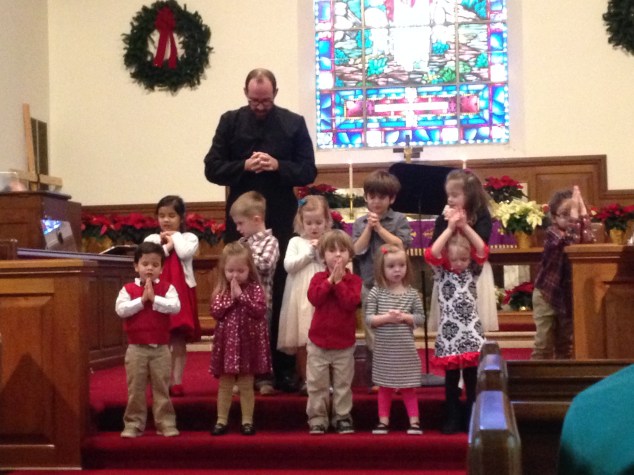
The children looked perfect in their Christmas pageant costumes. One by one they entered the chancel area in preparation for proclaiming their individual lines. The shepherds came first, watching over their sheep. Then the animals of the manger came forth, including a cow, a bird, and a mouse. They all made it to their spots and sat perfectly still as a donkey, Mary, and Joseph walked up to the microphone and exclaimed that a baby would soon be born, but they would need to find a place to stay.

Then the angelic cherubs boldly walked down the center aisle in the dark each holding an electric candle. The lead angel walked up to the microphone and frightening declared: “Do not be afraid! I bring joy to everyone!” The wise men and a camel followed the star to the manger where they presented the baby Jesus with their gifts of gold, frankincense, and myrrh.

I had the best vantage point of the entire production from up here in the pulpit. I could see all of the children with their costumes and I could also look out at the faces of all the parents, families, and friends that had gathered for this spectacular performance. I was honestly beaming while I stood up here on Tuesday evening because the kids had all done such a great job, they all nailed their lines, and were standing perfectly still in their spots.

Except for one of our shepherds.

Throughout the weeks of practice we had purposely withheld the shepherd staffs from the children knowing full and well that they would play with them too much. And during the actual performance most of them were being wonderful, but one of the shepherds could not overcome the desire to do something.

At first he just twirled the staff around in his hands like trying to start a fire on the carpet. Later, he swung it from side to side like a microphone at a rock and roll concert. I tried my best to whisper powerfully for him to stop, and though he would for a moment or two, he would then start up with something new.

As we were nearing the end of the performance, nearly all of the characters and animals from the manger scene were in place; the little shepherd grabbed his staff and started lifting it into the air. I, of course, immediately thought of Moses lifting up his staff in the wilderness to strike the rock for water. I, of course, immediately thought of how theological our young shepherd was being as he lifted the staff into the air, but then I realized he was about to bash somebody on the top of the head!

Breaking character from the pulpit, I quickly reached down and stopped the staff in mid arch. My eyes went down the shaft of the staff to the little hand, to the arm, to the face of the young shepherd, and instead of seeing a repentant and apologetic look; he had the biggest and proudest grin on his face.

IMG_0610

We lean toward violence. From Preschoolers picking up shepherd staffs, to fights in high school, to international and political disagreements, we lean toward violence. There is a power that comes with violence and demonstrates our importance and opinion. Violence has been at the forefront of some of the most important historical moments in the entirety of human existence and still captivates our attention. The movies that make the most money, the stories that garner the most attention, the moments we can’t tear our eyes away from usually contain violence.

As I have found myself saying too often from this pulpit: just turn on the TV or get online and you will be immediately bombarded with the violence in the world and the local community. Even this season of Advent and preparation for the holidays tends to bring out the worst in us. We have short tempers with the people ahead of us in line while we are buying gifts. We mutter inappropriate comments about drivers that are just driving too slowly. And we secretly expect to receive as many good gifts as we give.

Our lives and the world are filled with aggression, anger, and violence.

Yet, the prophet tells us about the one who will come with peace.

Micah spoke during a time of considerable unrest. The situation was grim with corrupt political leaders. There were fearful enemies on the horizon. Internal disputes were pinning people against one another. (Sound familiar?) And while the people saw no hope, Micah saw the promise of peace. Micah looked beyond the present circumstances, he looked beyond the news headlines and the talking heads, he looked beyond the broken and tarnished community to what God was promising to do.

From the little town of Bethlehem will come one who will rule the world. From a back road town of insignificance will come the one who will lead his flock in the way that leads to life and peace.

Many of us have a hard time imaging that an impressive hero can come from such a small town and such a fragile beginning. We, instead, look to politicians and presidents, magistrates and ministers, to fix all of our problems. But from the words of scripture this morning, Micah is jumping up and down and waving his arms to move us in an entirely different direction. He is pointing not at the towering leaders of the world on CNN. He is not drawing us to the political buildings in Washington DC. Instead he is pushing us to a small, out of the way, little place called Bethlehem.

55f81b353eaa23507d83b12e70adb998

Jesus is the one of peace, the one who comes as a light in the darkness, the one who will stand and lead like a shepherd. Jesus came from humble beginnings and changed the world.

One of the things that the bible loves to show us is that true power and peace often comes from unexpected people in unexpected places. Many of us have heard the Christmas story so many times that we are desensitized to the insignificance of Bethlehem in the most significant story ever told.

Yet, important babies that change the world can be born just about anywhere. Bethlehem is proof of that. Every baby has the potential to help remind us of the way that leads to peace. Jesus is proof of that.

This week, our little neck of the woods made national news. A local geography teacher landed in the hot seat for an assignment where her students were required to copy a text in Arabic from the Quran. The purpose was to demonstrate the beauty and power of calligraphy and, in a sense, teach students to appreciate people who have differing beliefs and opinions. However, when a particular parent found out that the text in Arabic said, “There is no god but Allah. Muhammad is the messenger of Allah” everything came to a head.

In the days that followed, a community meeting was held at a local church for concerned parents who were outraged by the assignment. Augusta County rightly started to step up security measures in order to maintain the peace, but the longer the situation percolated the more frightening it became. On Thursday morning there were armed guards at Riverheads elementary school. And on Thursday afternoon, every student in Augusta County was ordered to leave their respective school and the buildings were to go on lockdown. Lastly, Friday’s classes were completely canceled.

Augusta County received so many threats by phone and mail that they believed they could not guarantee the safety of their students and decided to cancel an entire day of school.

There are so many facets to the story that we don’t have enough time to address all of them, but suffice it to say, it is sad. It is a sad that a teacher did not take the time to re-evaluate what text she was having the students copy. It is sad that an entire community responded immediately out of fear and hatred. It is sad that such a tremendous amount of people were filled with rage to the point that Augusta County had to cancel school. It is sad.

While Fox News picked up the story for the nation to learn about what was going on here, I felt God’s Word calling me to listen to the Bethlehem-like voices. Instead of reading news article after news article from talking heads, I went to the local youth of our community and listened.

This is what one of them said: “Religion is not the problem. Religion does not breed terrorism. Ignorance breeds terrorism. Lack of education breeds terrorism. Failure to see the world around you breeds terrorism. Incompetence breeds terrorism. The inability to accept one’s wrongs breeds terrorism. The inability to connect and empathize and understand your fellow human beings is what breeds terrorism.”

I don’t know how to fix or change what happened in Augusta County this week, but if we continue to treat everyone who is different from us with nothing but suspicion and fear, then we have lost our connection to the one who comes in peace. If we make the self-righteous assumption that everyone should look like us, think like us, and talk likes us, then we have stopped following Jesus.

For too long we have lived with a culture that teaches us to defeat our enemies so that only our friends will be left. But that’s not what Jesus calls us to do! Jesus, the one born in a manger in Bethlehem, Jesus the one who shall be our peace, Jesus the one who we worship on Christmas Eve and every Sunday of our lives, tells us to love our enemies! Jesus calls us to pray for those who persecute us. Jesus tells us to live our lives in the way that leads to peace.

God’s peace in Christ is a gift; a gift with strings attached. God gives us peace, but we are to be instruments of God’s peace on earth. We know that peace is not easy. It requires a willingness to sacrifice and be vulnerable with people who differ from us. Peace is uncomfortable. Peace is strange. Peace is difficult because it is so contrary to the ways of the world.

Peace is hard, but so is following Jesus. Amen.

Devotional – Luke 1.52

Devotional:

Luke 1.52

He has brought down the powerful from their thrones, and lifted up the lowly.

Weekly Devotional Image

Some sermons stick with us, while others fade away. I can remember interactive sermons from the church where I grew up that required congregational participation for the message to hit home. I can remember specific lines from the church I attended in college that continued to resonate in my relationships and activities. And I can definitely remember a preacher from seminary who connected the hymns in worship with the sermon better than anyone else.

After preaching steadily for the last few years, I have noticed how much I miss listening to sermons. I enjoy the art of crafting words to proclaim God’s Word in worship, but I also need to have words preached toward me as well. I will often listen to, or read, sermons online but they are no substitute for the depth of experiencing a sermon in worship.

Last advent, Clayton Payne, one of my clergy peers from Staunton, preached for a community advent service. I served as the liturgist for the service, welcoming the congregation, announcing the hymns, praying when necessary, and introducing the speaker. And then Clayton walked up in to the pulpit and brought the Word.

He preached from Mary’s Magnificat, Luke 1.46-55, a song of praise that she delivered after meeting with Elizabeth. The beginning of the sermon was striking because Clayton specifically confronted how joyful Christmas is for us, and how Mary’s song should really put us in our place. Mary proclaims that God will bring down the powerful from their thrones, and lift of the lowly. Clayton then made it very clear that most of us are not the lowly that God will be raising up. We who rest in comfort, we who have presents piled under the Christmas tree, we who always know that we will have another meal, are like the powerful that God needs to bring down from our thrones of privilege.

I remember thinking that Clayton was mighty brave for preaching such a convicting sermon, and then I realized how right he was. Christmas should be a time of great joy and celebration, but it should also be a time when we take a hard look in the mirror and recognize our place of privilege. The words of scripture around the first Christmas are filled with hope for the lowly, but they are also filled with terror for the powerful.

the-virgin-mary-cared-for-her-child-jesus-with-simplicity-and-joy-elizabeth-wang-

Some sermons stick with us, while others fade away. Though it still makes me uncomfortable, I am grateful for Clayton’s words that helped me to see another angle of the great story of God coming to change the world.

This week, as we prepare for Christmas, let us reflect on the sermons from the past that have stayed with us. Let us give thanks to the preachers who faithfully proclaimed God’s Word. And let us remember our place in the story.

The Gifts of God – Hope

Isaiah 12.2-6

Surely God is my salvation; I will trust, and will not be afraid, for the Lord God is my strength and my might; he has become my salvation. With joy you will draw water from the wells of salvation. And you will say in that day: Give thanks to the Lord, call on his name; make known his deeds among the nations; proclaim that his name is exalted. Sing praises to the Lord, for he has done gloriously; let this be known in all the earth. Shout aloud and sing for joy, O royal Zion, for great in your midst is the Holy One of Israel.

hope-hero

Over the last few weeks we have been going through a sermon series on The Gifts of God. This has been particularly fitting considering the fact that Advent is usually a time when we fret about what we will be purchasing for everyone else. However, this Advent, we have been reflecting on what God has given us. Today we continue the sermon series with God’s gift of Hope.

When I was a kid, even when I was as young as some of our preschoolers, I loved Star Wars. We had the old VHS versions of “A New Hope” “The Empire Strikes Back” and “Return of the Jedi.” The covers were so worn from use that you could barely read the writing, and the film inside the VHS tapes was starting to crackle from excessive usage. But I loved them nonetheless.

Some of the themes were lost on me as a child but I loved the light saber fights, the fundamental battle of Good vs. Evil (The Darkside vs. The Light), and that a kid from a Tatooine moisture farm could go from bulls-eyeing womp rats in T-16 to saving the entire galaxy.

Star Wars taught me that, with the right cause, even the weak could triumph. Star Wars taught me that we are not defined by our past and are given opportunities to change. And Star Wars taught me about hope.

In the beginning of Episode IV, aptly titled “A New Hope”, the galaxy is in disarray and the evil Empire continues to exert its power over the powerless. For a generation, people of all shapes and sizes cowered under the rule of the emperor and started to forget the way things used to be. However, a group of people held onto the hope of a new future, they called themselves The Rebel Alliance, and they believed that things could change.

Isaiah 12 is about hope for the future. Like the rebels from the Star Wars universe, Isaiah fundamentally believed that a day would come when everything would be turned upside down and salvation would be delivered.

With confidence, Isaiah declared a profound trust in the Lord, a trust without fear. With hope, Isaiah envisioned that future day when all of God’s people would give thanks to the Lord and make God’s deeds known among the nations. With joy, Isaiah could hear the songs of the future praising the mighty works of the Lord, for he would have done gloriously.

And on that day, God’s people will draw water from the wells of salvation.

IMG_4568

The man felt empty; like something was missing from his life. He had parents who loved him, he had gone to the right school, he had a good job, but things didn’t feel right. Whenever the holiday seasons came around he did not have the energy the call his parents, he resented the happy families at department stores purchasing gifts, and he abstained from the holiday radio channels.

He couldn’t explain it but one day he lost his patience with his family when they kept asking him about whether or not he was happy. One day at work he screamed at a customer after losing his patience. And one night, while he sat in his apartment, he realized how empty and lonely he felt.

He continued like this for some time. Living a dry and empty life, until he met her. She was everything he could have hoped for; smart, pretty, funny. They immediately hit it off, and in her he believed he found the solution for his emptiness, in her he thought he found the one thing that could fill him again.

The beginning of their marriage was wonderful; they saw the world with hope and expectation. They both were not filled, but they had more than they had in a long time. But it started to fade. Arguments with the in-laws, shouting matches in the living room, and nights spent sleeping in other rooms emptied them of the joy and hope they once felt.

They were at a crossroads in their relationship and were unsure of how to move forward. Both of them were too proud to try counseling, and definitely too proud to apologize, so they just continued with the thinly veiled frustration with one another. But then they had an idea: “Maybe if we have a child, it will fix all our problems, it will bring us closer together.”

They had some stability after the first, but when things reverted back to the pre-baby days, they decided to have a second child, and then a third. What they didn’t know, but what many of should know, is that even the perfect child cannot fill the emptiness within us. No child should be expected to make up for our baggage, and no child should be expected to heal our brokenness.

But this habit and rhythm in the family didn’t stop. After the kids, the parents tried to fill themselves with experiences and material possessions. They went on vacations they couldn’t afford, they took out a loan on a house they could never pay back, and every Christmas had to be better (and filled with more gifts) than the last. But all of these things failed to fill the emptiness they felt.

And on that day, God’s people will draw water from the wells of salvation.

IMG_4571

Jesus once met a woman at a well and confronted her emptiness. She had attempted to fill her life with man after man and yet there was something missing. Jesus said to her, “Everyone who drinks of this water will be thirsty again, but those who drink of the water that I give them will never be thirsty. The water that I will give will become in them a spring of water gushing up to eternal life.

Many of us are broken. Actually, the truth is, we are all broken. Most of us just don’t want to admit it. We have good days, but there are times that we feel dry and empty inside. We seek out the wrong objects to validate our lives: a spouse, a career, a child. And none of those things are strong enough to hold our identity together.

Yet, God offers us this living water, water from a well that never runs dry. When we start to see the hope that God has given us, when we rest our identity on the fact that we are first a child of God, when we drop our buckets into God’s well of salvation things starts to change.

God knows our thoughts and minds. God witnesses our brokenness and sinfulness. And God still loves us anyway. God’s love is truly unconditional. God’s love is unmerited. God’s love is filled with hope for our futures.

I’ve only been doing this whole pastor thing for two and a half years, but two and a half years is long enough to know that most of us, if not all of us, are looking for love and validation in all the wrong places. We expect our children to makes our lives better, we expect the presents under the tree to make our lives fuller, and we expect our spouses to fix all of our problems.

Jesus offers us something totally and wonderfully different. Jesus offers us hope from the well of salvation. A hope in a future not defined by our past. A future not limited by the mistakes we make here and now. A future not corrupted by the powers of death.

Jesus offers us hope, a hope unlike any other, a hope that can truly fill us.

An-so-Lord-where-do-it-put-my-hope

When we find our hope in the Lord, we can stand up to the intolerance and injustice in our midst because we know God’s sees the world differently.

When we find our hope in the Lord, the presents under the tree will not leave us looking for the next fix because we will know that the greatest gift we’ve ever received is Jesus.

When we find our hope in the Lord, we can confront the brokenness in the world and know that life here on earth is not the end.

Isaiah had hope, hope for a day when God would show up, hope for a time when God would make all things new. Isaiah prayed for a future where people would sing praises for the glorious power of the Lord. Isaiah dreamed about a day when God would offer the wells of salvation to the world.

That hope became real on the first Christmas, and that hope is still real and available to you and to me.

Jesus calls to each of us today and says, “I can fill you. I can fill you with the living water that never runs dry. I can bring you to the well of salvation. I can fill you with hope, and love, and validation. I can fill you with joy, and peace, and purpose. I can fill you and turn your life around.

Amen.


(With thanks to the Tamed Cynic, Jason Micheli, for inspiring parts of this sermon)

Devotional – Philippians 4.4

Devotional:

Philippians 4.4

Rejoice in the Lord always, again I will say, Rejoice.

Weekly Devotional Image

Advent is a strange time for Christians. While we patiently wait through the weeks leading up to Christmas, people around us are moving at remarkable speeds to get anything and everything they need for the holiday. I was at Target yesterday and I saw a couple arguing about how many gifts they should be purchasing for their respective in-laws. In the parking lot I witnessed a man struggling to fit his bags of presents into the back of his car. And while I was leaving the shopping center I saw someone blow through a red light and the immediate response of one driver screaming obscenities from her car.

Advent is a strange time for Christians. While we strive for patience, the world rushes on. And while we strive to remember the reason for the season, we get caught up with the anger and impatience the holiday brings with it.

Children, on the other hand, are somehow able to maintain the sense of joy that comes this time of year.

This morning, shortly after the preschoolers arrived, we gathered in the sanctuary to practice for the upcoming Christmas pageant. For weeks the students have worked on memorizing their lines and delivering them clearly into a microphone, their costumes have been altered and cleaned, and they have learned to keep from fidgeting while standing in place.

After we went through the theatrical side of the production, we then reorganized the kids to practice singing six songs about the real meaning of Christmas. Our Preschool director quieting counted “1-2-3” in order to start the song and then they started to belt out the words to “We Wish You A Merry Christmas.” It was loud and powerful. They took in as much air as possible to sing with full gusto, they had accompanying hand motions to mirror the words, and every one of them had a huge smile on their face. In fact, they were so loud that our secretary left her office just to make sure that everything was okay in the sanctuary.

IMG_0566

Near the end of his letter to the Philippians, Paul commands the disciples of Jesus to “Rejoice in the Lord always, against I will say, Rejoice.” There are plenty of Sundays in worship when it really feels like we are rejoicing in the Lord, but many of them pale in comparison to the joy I heard echoing from our Preschoolers this morning. They believe in rejoicing in the Lord always.

This week, let us strive to rejoice in this season rather than resent it. Let us pray for God to give us patience while we prepare for the holiday. And let us recapture the joy of this time in the same spirit as preschool-age children.


Devotional – Luke 1.78-79

Devotional:

Luke 1.78-79

By the tender mercy of our God, the dawn from on high will break upon us, to give light to those who sit in darkness and in the shadow of death, to guide our feet into the way of peace.

Weekly Devotional Image

It was on my first day in seminary when a preacher said, “We spend so much time talking about Jesus that we forget to talk to Jesus.” It was a convicting truth that would come to fruition over the following months and I knew I needed to do something about it. Days would pass and, though I had been deep in scripture for particular class, I realized that I had not taken the time to pray to the Lord who was being revealed to me in the scripture. It was at that point when I committed to attend Morning Prayer in Goodson Chapel with all of the Anglicans and Episcopalians.

I was one of the token Methodists with a few of my denominational colleagues and we tried to keep up with our peers as they bowed their heads at particular times during the liturgy, as they made the sign of the cross across their bodies, and as they drank from a common cup when we had communion. It was difficult to assimilate during those first few weeks; many of the people in attendance did not even need to look at a Book of Common Prayer to say all of the right words at the right time. However, after a few months passed, I started to realize that I no longer needed to look at the book because the words and habits of Morning Prayer had sunk deep into my soul.

books-of-common-prayer

I don’t remember when it happened, but one morning while we were proclaiming the words from “The Song of Zechariah” (Benedictus Dominus Deus) the young man next to me changed some of the words. Instead of speaking in the plural, he spoke individually: “By the tender mercy of my God, the dawn from on high will break upon me, to give light to me as I sit in darkness and in the shadow of death, to guide my feet into the way of peace.” His willingness to proclaim God’s faithful words for himself, has stuck with me ever since.

During this season of Advent, it is good and right for us to recognize that God made good on his promise “to give light to those who sit in darkness and in the shadow of death” when he came in the form of flesh as a baby in a manger. We spend these weeks patiently waiting, just like the Israelites did so long ago, for the light that will shine in the darkness. But this isn’t just something that God did in the past; every Advent is an opportunity to embark on a new way of life where God’s tender mercy will guide our feet into the way of peace.

This week, let us take time to proclaim the words from The Song of Zechariah personally. Whether in the morning when we wake up, or at night before we fall asleep, or whenever we feel called to during the day, let us proclaim: “By the tender mercy of my God, the dawn from on high will break upon me, to give light to me as I sit in darkness and in the shadow of death, to guide my feet into the way of peace.”


The Gifts of God – Truth

Psalm 25.1-10

To you, O Lord, I lift up my soul. O my God, in you I trust; do not let me be put to shame; do not let my enemies exult over me. Do not let those who wait for you be put to shame; let them be ashamed who are wantonly treacherous. Make me to know your ways, O Lord; teach me your paths. Lead me in your truth, and teach me, for you are the God of my salvation; for you I wait all day long. Be mindful of your mercy, O Lord, and of your steadfast love, for they have been from of old. Do not remember the sins of my soul or my transgressions; according to your steadfast love remember me, for your goodness’ sake, O Lord! Good and upright is the Lord; therefore he instructs sinners in the way. He leads the humble in what is right, and teaches the humble his way. All the paths of the Lord are steadfast love and faithfulness, for those who keep his covenant and his decrees.

Christmas 1

Happy New Year! As I mentioned last week, today is the beginning of our year as Christians. We have reset the calendar to rediscover the love of God in our lives and in this place. From now until Christmas Eve, we will have a sermon series on the gifts of God. This is particularly fitting considering the fact that Advent is usually a time when we fret about what we will be purchasing for everyone else. However, this Advent, we will be reflecting on what God has given us. Today we begin the sermon series with God’s gift of truth.

Make me to know you ways, O Lord; teach me your paths. Lead me in your truth, and teach me, for you are the God of my salvation; for you I wait all day long.


One of God’s greatest gifts to us is truth. God provides for us a way and a path for Christian living and they all point to the truth. The psalmist confesses the beauty of this truth and pleads for God to maintain the truth in all times and in all places.

Advent is a wonderful and strange time for us Christians. In four short weeks we, as a church, are expected to make time and space to prepare our lives for God’s indwelling. All the while, many of us want to quickly break out the carols to accompany the dizzying whirl of parties and purchasing the usually precede Christmas. We want Christmas morning to be here so badly, that we forget about the anticipation of Advent.

True confession: My Christmas lights were up three weeks ago. We had a particularly balmy day and I decided that I might as well get outside and string up the lights, even if I was wearing shorts and a tee shirt. I have almost purchased all of my Christmas presents. I keep a notebook with me throughout the year and whenever Lindsey makes mention of something she likes, I make a note of it so that I will be prepared for Christmas. And even this morning, while I was praying in our sanctuary and on the front lawn, I caught sight of a particularly beautiful Christmas tree that I will probably bring home this afternoon.

I am impatient. I get so excited about a particular time and event that I often lose sight of the time leading up to it, precious time to be savored and enjoyed. But here’s a truth that God provides for us impatient people: the anticipation is just as important as the thing itself.

If couples went from engagement immediately to the wedding they would not have the important time of really learning what their in-laws are like.

            If young people were given a driver’s license without having a learner’s permit for nine months there would be a tremendous amount of fender benders in Robert E. Lee’s parking lot.

            If we jumped straight from Thanksgiving to Christmas morning then we would believe Christmas is more about gifts under the tree than God’s gift of Jesus for you and me.

The anticipation is just as important as the thing itself.

The psalm describes a profound trust in the Lord, a trust in the Lord’s paths, ways, and truths. God reminds us of these truths through different people and events, and when we confront them we can’t help but admit how true they really are.

The psalm also proclaims an important truth that we all need to hear right now: God is the God of our salvation.

In our contemporary culture, people often use the language of salvation when referring to politicians. President Roosevelt was considered by many to be a savior as was Kennedy and Reagan. Today we still look at our politicians with a messianic lens.

I was walking down Beverley street a few weeks ago when I overheard a couple in front of me discussing Donald Trump’s political astuteness. One of them said, “If only he was president, he would fix all the problems that the democrats started!” I couldn’t help but laugh when I heard what they had to say and I kept on walking. But then when I got in the car and started to drive back to church I heard someone call into NPR to claim that Hillary Clinton has the power to unite all people and will bring us, as in Americans, to the Promised Land. And then I got an email from someone who asked me to use the pulpit as a means by which to convey to all of you that Ben Carson was handpicked by God to bring about infinite prosperity and a return to Christendom here in the United States. And then someone sent me a picture that said, “We should elect Bernie Sanders as a socialist Jew, because we worship another socialist Jew every Sunday in church.”

political_saviors

In a matter of hours, I heard about how four different political candidates would bring about a peace and wholeness in America that sounds impossible. Politicians cannot save us. They can advocate for us, they can institute law that can help us, but they cannot save us. Donald Trump cannot save us. Hillary Clinton cannot save us. Ben Carson cannot save us. Bernie Sanders cannot save us. Only Jesus saves.

This is one of God’s truths: only God can save. Yet, we all fall to the temptation of believing that political leaders are like messiahs who should be the ultimate objects of our trust and allegiance. Just drive around Staunton for an hour and look at all the political bumper stickers and yard signs covered in red white and blue. Countless Americans will contribute untold sums of money to political campaigns, they will use their precious free time to attend rallies and knock on doors, and they will jump at the first chance to get into an argument with someone who has a difference in political opinion.

Can you imagine what our community would be like if we actually worshipped Jesus like we worship our politicians? Can you picture what Staunton would look like if we put crosses on our cars (letting everyone know what we are supposed to act like) instead of political bumper stickers? Can you imagine what it would be like if we put up mangers in our front yards letting everyone know we worship the kings of kings instead of political banners?

We need politicians for our country. But we only need God for salvation.

That’s what God’s truths are like. On some fundamental level we know them to be true, but life tries to convince us otherwise. Getting excited about Christmas isn’t a bad thing; it’s only when we let the material become more important than the spiritual that God needs to remind us of the truth. Wanting politicians to make substantial and important changes isn’t a bag thing; it’s only when we start worshipping politicians like we are supposed to worship Jesus that God needs to remind us of the truth.

On Thursday evening I was sitting around the table at my parents house in Alexandria, VA for Thanksgiving. Family members had worked all day to get the food exactly the way we wanted, decorations had been set up across the house, and we were finally about to go around the table and share what we were thankful for this year. One of my cousins got the waterworks flowing as he shared that he was thankful for the new life that Lindsey and I will be bringing into the family in April. Both of my sisters expressed thankfulness for our family that has supported them throughout their lives. But then my grandmother started to share.

She told us about a family that lives across the street who has been through the ringer over the last few years: Divorce, unruly children, uncertain employment, etc. The mother of the family has grown close with my grandmother and they were out in the street talking a few weeks ago. The woman asked my grandmother what she would be doing for Thanksgiving and she described the very feast and fellowship that we were currently enjoying. The woman listened patiently to all the things my grandmother described and then said, “Do you know how blessed you are?

My grandmother began to cry and she exclaimed how she takes so many of her blessings for granted: Good health, a family that loves one another, food on the table, her faithfulness. The joy and exuberance of the day quickly transformed into a brief time of silence as we all pondered about the blessings that we take for granted.

Want to know one of God’s truths that we miss the most? We are blessed. Amidst spinning truths and impending threats we have a God who loves us more than we can possibly imagine. Amidst all of our fears and frustrations we have a savior who was willing to die on a cross to save us. Amidst all of the uncertainties and hypocrisies we have a Spirit that breathes new life into us each and every day. We are blessed.

blessed-main-image

Good and upright is our God. He patiently instructs us through his Word in the way that leads to salvation. God leads the humble in what is right and teaches each of us the path to follow. All of the Lord’s ways are steadfast love and faithfulness so long as we remember the truth.

In a moment I’m going to invite us to encounter and confront one of these truths. Some of us will still wish it was Christmas day today, some of us will still worship politicians like we should worship Jesus Christ, but one of the things all of us can do is be thankful for the blessings in our lives. I would like each of us to pair up with someone in the church, someone that we don’t normally spend time with, and I want us to just have a conversation about how God has blessed us this year. Take a few moments to share, perhaps like you did on Thanksgiving, what you are thankful for right now.

One of the gifts of God this advent is the truth. The truth of God’s love made manifest in a baby born in a manger, a baby that embodied the Good News, a baby that carries the promise of transformation of life from sin to salvation, from slavery to freedom, from injustice to peace, and from death to resurrection. We are blessed. Amen.

Palms Beneath My Feet – Sermon on Mark 11.1-11

Mark 11.1-11

When they were approaching Jerusalem, at Bethphage and Bethany, near the Mount of Olives, he sent two of his disciples and said to them, “Go into the village ahead of you, and immediately as you enter it, you will find tied there a colt that has never been ridden; untie it and bring it. If anyone says to you, ‘Why are you doing this?’ just say this, ‘The Lord needs it and will send it back immediately.’ “ They went away and found a colt tied near a door, outside in the street. As they were untying it, some of the bystanders said to them, “What are you doing, untying the colt?” They told them what Jesus had said; and they allowed them to take it. Then they brought the colt to Jesus and threw their cloaks on it; and he sat on it. Many people spread their cloaks on the road, and others spread leafy branches that they had cut in the fields. Then those who went ahead and those who followed were shouting, “Hosanna! Blessed is the one who comes in the name of the Lord! Blessed is the coming kingdom of our ancestor David! Hosanna in the highest heaven!” Then he entered Jerusalem and went into the temple; and when he had looked around at everything, as it was already late, he went out to Bethany with the twelve.

palm-sunday-2

Weekly Chapel Time requires a willing and humble spirit. What we do here on Sunday mornings carries an air of sophisticated and focused liturgy. But when I bring the Preschoolers in during the week… there are no rules. When we worship together most of us have fairly decent attention spans, but the 2, 3, and 4 year-olds need to be consistently bombarded with images and ideas in order to stay focused.

I’ll freely admit that I treat our preschoolers the same way that I treat our worshippers (I’ll let you decide whether or not that is a good thing) because we are all working toward the same goal: a greater awareness of God’s love and mercy in the world.

Anyway, this week, in preparation for Palm Sunday, we gathered the children in the sanctuary for their lesson. They sat in the pews up here in the choir loft, with their little legs dangling in the air, excited and nervous to keep learning about this guy named Jesus. I love quizzing them on previous stories because they are fascinated by scripture. For instance: If I could get all of us to be as excited about Zacchaeus, the wee-little man, climbing up a sycamore tree, just imagine how faithful we would become.

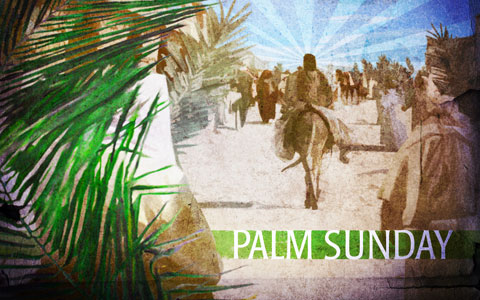
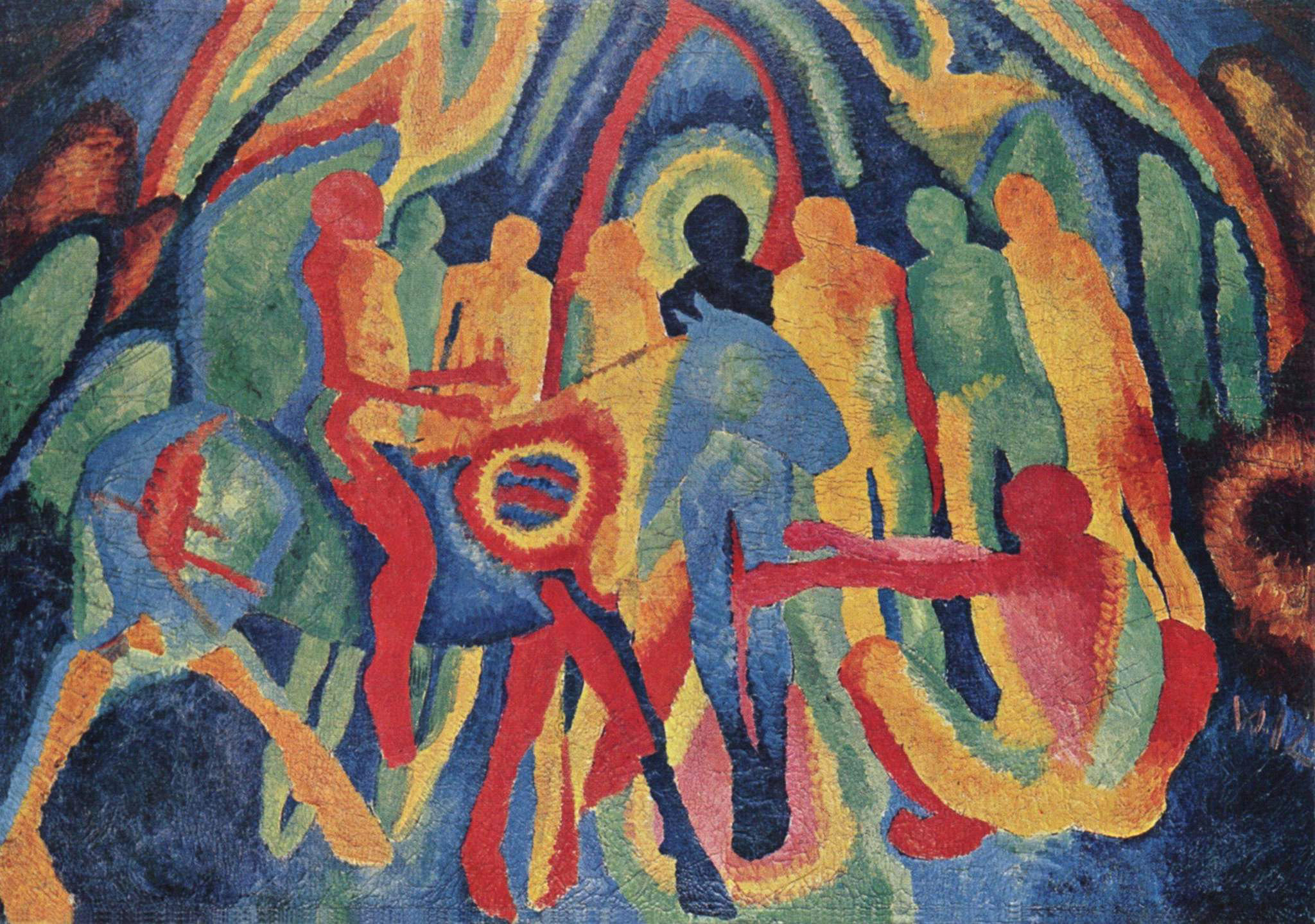
I shared with the children that Jesus needed to get to a strange place called Jerusalem to do something incredible for his friends. They gathered together outside the city and Jesus sent two men to find a donkey for him to ride on. The closer the came to the gates, more and more people gathered palms from the surrounding area and waved them in the air, and placed them on the ground all while shouting “Hosanna!” which means “save us!”

I then had all the children line up with their own palm branches in the center aisle and we were going to recreate the story. I found a young boy to be Jesus and when I asked who they thought the donkey should be they all emphatically yelled, “You Pastor Taylor!” I’m not sure how I felt about them so quickly identifying me with that particular animal, but I let it go.

So there I was on my hands and knees with a child saddled across my back making our way into Jerusalem. I had instructed all the children to either wave their palms or place them on the ground and shout “save us!” to the boy on my back. The entire journey down the center aisle took longer than I thought because I did not want to drop the Jesus on my back, but as I walked forward and saw the palms beneath my feet I was struck by the Holy Spirit.

The children continued to scream and beg for their salvation, the Jesus on my back kept kicking into my rib cage to make me go faster, but all I could think about was what the donkey must have experienced when he carried Jesus into Jerusalem, what it must have been like to deliver the Lord to his death.

The following is an imaginative retelling of the story from the donkey’s perspective…

Palm-Sunday

With palms beneath my feet, Jesus, there are so many things I wish I could tell you. Carrying you while the crowds scream on our sides, I wish I could share all the things I have seen and heard. This might be the only chance I’ll get, and it already feels too late.

I was there Jesus. I was there in the manger when you were born. Your parents had come into the tiny room and your mother looked like she was about to burst. I was but a young foal back then, but I remember. They were so afraid and alone when they cuddled together holding you close. While they were filled with fear, I was filled with joy. I knew from the moment I saw you that you were special, that you were the Son of God. The other animals could feel it too, and while your family fell into the familiar rhythm of sleep, we gathered around you to share our warmth. I watched you sleep all night and I could feel that our lives were connected, and I knew that I would see you again one day.

You left from Bethlehem but as the years passed I heard stories about your life. I would be in the marketplace, or moving about the village and rumors would fall upon my ears.

When you were a child they said that you stood apart. Other children would spend their days running around and getting into mischief, but you would sit in the synagogue and teach the elders. Your command of the scriptures spread before you even started your ministry. I would watch the people while they talked about you and they were filled with such hope. Words like “messiah, lord, and savior” were used to describe you and I could tell that the Lord was among us.

Then it came to pass that you were baptized by your cousin John in the Jordan river. Witnesses said they saw the sky open up and they heard the voice of God. While others denied the claims, I knew it was true, I could feel that your ministry was about to begin and that everything would change.

You traveled throughout Galilee proclaiming the year of the Lord’s favor. You healed the sick, gave sight to the blind, and restored the outcasts to their families. Everywhere you went stories about your love and mercy traveled ahead and the crowds grew larger and larger. You fed the multitudes by the sea, you walked on water, and you brought Lazarus back from the dead. You spoke of mustard seeds, prodigal sons, and good samaritans. You ate with sinners, worked on the sabbath, and argued with the Pharisees. Some say that even just a few weeks ago you were on the mountaintop when Moses and Elijah appeared and you were transfigured.

This morning I was tied up near the door when two of your disciples came close. One of them spoke to my owner and said, “The Lord needs him” and they brought me to you. I knew the time had come when we would be reunited, but the joy I expected to feel has been mixed with trepidation.

Jesus, how I wish you could hear me, how I wish I could tell you all I have seen and heard. We departed early this morning and the crowds gathered around us. It feels as if the closer we get to Jerusalem the people grow louder and more eager to cry out. Do they know what they mean when they say, “Hosanna! Blessed is the one who comes in the name of the Lord! Blessed is the coming kingdom of our ancestor David! Hosanna in the highest heaven!”?

I’m beginning to worry Jesus. I don’t think they know who you really are. The people sound more like an angry mob waiting for you to overthrow the Romans than a faithful group waiting for the kingdom of God. They want another Moses to lead them out of physical bondage, they want another David who can lead them into battle, they want another Solomon to build a giant temple.

a_liturgyofthepalms-large

These people have suffered but they believe in you. Did you see them take off their cloaks and place them in the road? I have been walking over garments for hours. Did you see them rush into the fields for palm branches to wave them in the air and create a royal pathway? The palms beneath my feet are a sign of how much these people believe in you.

What are you going to do Jesus? I can hear people murmuring about your coming mission, some are saying that you are going to the temple and you are going to overthrow the tables. Some are saying that you are going to lead the rebellion and kill the chief priests and scribes. Some are saying that you are going to destroy the temple and then build a new one.

Jesus I’m afraid for your life! These people don’t know who you really are and what you’ve come to do. They shout “Hosanna, Hosanna!” but I fear their shouts will soon turn to “Crucify, Crucify!” They are only concerned about themselves. Even your disciples on either side of us, I can smell their fear.

Jesus, I was there when you were born. I felt God’s presence in you and I knew you would save the world. But please Jesus, let me take you away from this place. Jerusalem can only bring about your death. We still have a chance to turn around and head home.

Or is it too late? 

The crowds are starting to thin Jesus. The people are beginning to head home. We are stepping through the gate and the palms are no longer beneath my feet. I want to believe in you and what you are doing. I want to believe this is God’s will. But I’m so afraid.

Jesus, I am an old donkey and I don’t know how much further I can carry you.

It’s just us now and the sun is beginning to set.

What will happen? What are you going to do?

If this is the last time I will see you, I wish I could talk to you. I wish I could warn you about what is to come. I wish I could stop you.

You swing your legs around and are standing right before me. Your eyes contain the same hope they did the day you were born in the humble manger. As you pet my old matted fur I can feel all the people you have already touched and healed. I can feel the sick children and parents, I can feel the blind and the lame, the last, least and lost.

What a privilege it was to carry you today my Lord. I knew that we would meet again, I only wish I could do something to warn you.

You’re now leaning in close to whisper in my ear. Is this goodbye? Is this the end?

You said, “No my old friend. I know exactly what I am doing. And this is only the beginning.” Amen.

Faith Hall of Fame – Hebrews 11.32-40

Hebrews 11.32-40

And what more should I say? For time would fail me to tell of Gideon, Barak, Samson, Jephthah, of David and Samuel and the prophets — who through faith conquered kingdoms, administered justice, obtained promises, shut the mouths of lions, quenched raging fire, escaped the edge of the sword, won strength out of weakness, became mighty in war, put foreign armies to flight. Women received their dead by resurrection. Others were tortured, refusing to accept release, in order to obtain a better resurrection. Others suffered mocking and flogging, and even chains and imprisonment. They were stoned to death, they were sawn in two, they were killed by the sword; they went about in skins of sheep and goats, destitute, persecuted, tormented — of whom the world was not worthy. They wandered in deserts and mountains, and in caves and holes in the ground. Yet all these, though they were commended for their faith, did not receive what was promised, since God had provided something better so they would not, apart from us, be made perfect.

1357372800

Today we conclude our Advent Sermon Series on “New Beginnings.” This is the final Sunday leading up to Christmas day, and over the last few weeks we have prepared our hearts and minds for the coming of God in Christ. We began with Abram being called into a strange land. Next we looked at Samuel being called by name in the temple. Last week we explored Paul’s conversion on the road to Damascus. This morning we conclude by looking at the Faith Hall of Fame from Hebrews 11.

_

And what more should I say? For time would fail me to tell of Fletcher Swink, Sam Stanley, Zig Volskis, Patricia Meadows, and the other pastors — who through faith endured frustrating congregations, proclaimed God’s presence, fought for justice, became mighty in honor, and brought people to the Lord.

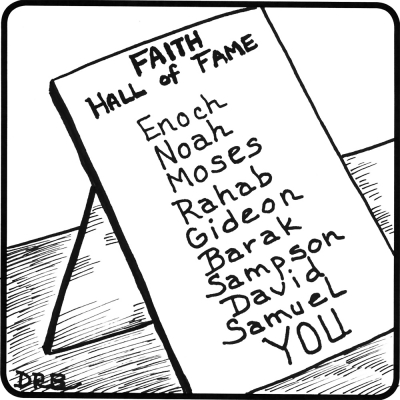
Hebrews 11 contains what I call the “Faith Hall of Fame.” The entire chapter is devoted to the great leaders and prophets from the Old Testament and their willingness to stand up for God even when it meant certain doom. They so fervently believed that God was with them, that they were willing to embark on new beginnings when others refused to obey.

The closest thing we have to a Faith Hall of Fame here at St. John’s can be found in our parlor next to the narthex. Inside you will discover a picture of every pastor that has had the good fortune to serve this church since 1954. From Fletcher Swink to yours truly, every pastor has been framed and dated, hung with care, and honored with a spot on the wall.

Have you ever taken the time to look through the pictures? It was one of the first things I did when I was newly appointed, and frankly the room terrifies me. Whenever I sit in the parlor with a group of people, I feel the heavy gaze of the pastors, they look down from their Faith Hall of Fame, and I can’t help but wonder what they think of me.

Marshall Kirby begged me my first week to give him a picture so that he could put me up with everyone else. I hesitated. For weeks he bugged me about getting the picture, about having it be just the right size and tint to blend in with the others. But I continued to put it off. I kept making excuses about how busy I was, or about the priorities I needed to focus on, but the truth is, I didn’t feel worthy of going on the wall. I had been here for such a short amount of time and felt that I hadn’t done anything that earned me a spot in the Hall of Fame.

When I’m in the parlor, when I experience the St. John’s Hall of Fame, I think about all the things they must have gone through to bring this church to where it is. I think about Fletcher Swink starting the church down the road at the Auto Parts store. I imagine that it required a tremendous amount of faith to believe that God had call him from Durham, NC to Staunton, VA to start a new church; to make something of nothing. How many nights did he pray for God to send him people, how many afternoons did he spend worrying about the new building project, how often did he confront frustrated parishioners about his sermons?

When I’m in the parlor, when I experience the St. John’s Hall of Fame, I think about Patricia Meadows being appointed as the first female pastor. I wonder about how hard she had to work to gain the trust of the people, what lengths she had to go to to reignite the flame of faith. I imagine the deep prayers she offered to God about sending new sheep to her flock, the lonely days of sermon preparation, and the terrifying moments of standing by the graveside with friends and family from the church. How often did she wrestle with her call when she felt persecuted, how many days did she spend praying for the people of our community when they were no longer able to offer their own prayers, how did she feel standing up against the injustices around her?

I wonder about all the pastors of this church, and what they went through for God’s kingdom. What was it that set them apart? What did they do that helped to grow and nurture faith in this community?

Last week I was standing in the parlor, admiring the past, when I realized how similar our Faith Hall of Fame is to the one listed in Hebrews 11.

faith

The people of Israel’s past were not of special value. Gideon was hesitant and timid when he was called by God; Barak had to be shamed by Deborah into fighting for the Lord; Jephthah is remembered mostly for his rash oath; Samson was weak of mind and conscience.

Similarly, there is nothing particularly special about those who have served our church. Though undoubtedly unique, they contained no special powers that set them apart from other clergy. Each of them had strengths and weaknesses that became manifest while they served the church.

Our pastors, and the heroes from Israel’s past, were set apart because they did all things “through faith.” They worked knowing that the real significance of what they had done would never be seen in their own time, but something that would come much later. They suffered through persecution and injustice because they believed in God’s goodness even when the world claimed the contrary.

We remember the ways our pastors have suffered: Angry emails/letters about inappropriate sermons, knowing glances and whispers from the committee members in the parking lot (where the real meetings happen). Shouts and finger pointing during counseling sessions. Years of loneliness serving a church full of people who cannot see the pastor as anything other than pastor. Doubts when preparing funerals for people in the community.

We read about all the ways the faithful of Israel suffered: torture, mocking, flogging, chains and imprisonment. Stoned to death, sawn in two, killed by the sword, wandered about in the skins of sheep and goats, destitute, persecuted, and tormented.

This is what evil does to the good. It attacks at the core of our being, shakes our faith, and  encourages us to doubt. Yet, reading these words and remembering our church’s past should bring us courage and hope. We see in them the willingness of people to go and risk it all for God. Pastors who remained brave and faithful when others tried to break them down. Prophets who spoke the truth when others sought to kill them. We see in them the true courage that faith can develop. 

It only takes a moment to see this tremendous faith in the world today, people standing up against injustice when the world argues the contrary. Consider the droves of people standing with their hands up and holding signs that say “Black Lives Matter” in response to Ferguson. Consider the droves of people standing shoulder to shoulder with the LGBTQ community during Pride marches in response to fanatical attacks against sexuality.

pic_related_120114_SM_Black-Lives-Matter-G_1

We remember and read and see the ways people suffer for God’s kingdom and we commend them for their willingness to go and be grace for the world. God sends into our confused and cruel humanity his messengers and prophets. God sends them into the midst of the wolves so that we might not be left to our evil ways, that we may see in them hope for tomorrow, and in response turn back to the God of mercy.

Yet all these, though they are commended for their faith, did not receive what was promised, since God had provided something better so they would not, apart from us, be made perfect. Whether Gideon, Barak, Fletcher Swink, or Zig Volskis, their completion depends on us. Their faith rested in God who would fulfill his promises. They served the Lord as an anchor cast into the days ahead; faith is built on hope for the future.

Abraham’s faith would have been in vain if his descendants never made it to the Land of Promise. Samuel’s faith would have been in vain if he had not responded to God calling him by name in the temple. Paul’s faith would have been in vain if the resurrected Christ had not appeared to him on the road to Damascus.

Apart from us they cannot be made perfect. The completion of those from the Faith Hall of Fame depends on us. We can fulfill their faith even today by going out and being Christ’s body for the world.

We remember the past of scripture, and the past of our church, but we are not to idealize it. We cannot be blind to the mistakes of those who came before us, or allow the past to fasten its dead hand upon us, binding us down to fruitless ideas, ancient prejudices, and old failures. We look back so that we can look forward. Just because “thats the way we’ve always done it” does not mean “thats the way we must do it now.”

Yet too often we forget how indebted we are to the past. We neglect to remember how faithful Abram, Samuel, and Paul were. We brush aside all the pastors who worked with every fiber of their being to bring about God’s kingdom here on earth. Every good thing that we have and enjoy was consecrated by the sacrifices of the past. We have faith because the people of the past passed it along to us. So today, we in our turn cast our anchors into the future. Without those who are to come after us, without the youth of our church and without the children of our preschool, we shall not be made perfect.

We are who we are because of the past. We will become what God intends for us because of the legacy we pass on to the future. Our new beginning comes when we cast our hope into the future of God’s kingdom, when we stand up for something new and different that breaks from the past, when we take steps in faith knowing that God is with us.

God is with us. In a few days we will gather again to celebrate Christ being born into the world to be God with us. We will look to that lowly manger and remember that God came to dwell among us and encourage us to be brave people of faith who remember the past and cast our hope into the future. Our purpose does not depend on our own power, but on the strength of love that comes from the Lord and in community with one another.

I still feel uncomfortable whenever I’m in the parlor. Sets of eyes follow me from the past, and I see in them everything they went through to bring our church to where it is. I believe in their hope cast into the future. In all of you I see the seeds that they planted long ago that are blossoming into true discipleship today.

I see my picture on the wall and feel unworthy. But that’s when I remember that it’s not about me and it’s not about what I do. It’s about what God does through me. It’s about what God does through you. Amen.

Devotional – Luke 1.37

Devotional:

Luke 1.37

For nothing will be impossible for God.

Weekly Devotional Image

Our parsonage is beautiful. One of the many blessings of serving as a pastor for a United Methodist church is the fact that the local church often provides a parsonage for their pastor and family. I’ll freely admit that I was slightly nervous before arriving in Staunton for the first time because I would have no say about where I was living. Whereas other families can pick and choose a residence based upon their proclivities, I would be stuck with whatever St. John’s provided. However, when I began moving my belongings in, I realized how very fortunate I was.

Providing a parsonage is an incredible act of grace and generosity, one that I try to not take for granted. Whenever I pull into the driveway after a particularly stressful day at the church, I give God thanks for the people of our church community and their willingness to provide such a wonderful gift for my family. I am proud of the parsonage and I look forward to the changing seasons as an opportunity to adorn the house with different holiday elements.

Yesterday afternoon, my wife and I invited everyone from the church community for an open house at the parsonage. Part of our decision was born out of the fact that the parsonage belongs to the church, and we wanted to express our thankfulness for their generosity. (The other part of our decision was born out of the fact that Lindsey talked me into purchasing two Christmas trees this year, and she wanted to show off all of our ornaments.) We worked hard last week to clean and organize everything, prepare an abundance of food, and open our house to those near and dear to us.

Youth playing "Just Dance" during the Open House

Youth playing “Just Dance” during the Open House

At some point during the open house, I was struck by how remarkably blessed we are. In such a short amount of time Lindsey and I have been so welcomed into the local community, and to be surrounded by our church family was a humbling experience. I looked around and saw the people I have prayed with, and for, on a regular basis, I saw the children I have baptized, I saw the individuals I have counseled, and I saw God’s love manifest in the gathered people.

I have known for a long time that I felt called to be a pastor, but I never imagined that it would feel this incredible and graceful. I thought that being part of a loving community to this degree was impossible. But nothing is impossible for God.

The feelings that I experienced yesterday were only possible because of the incredible gift that God gave us in Jesus Christ. Without the impossible possibility of God coming in the form of flesh as a baby in a manger we would not have such a loving community. Without the impossible possibility of God’s unending love and grace, we would not see one another as precious gifts.

In these few remaining days of Advent, I encourage you to look around at the blessings in your life, give thanks to God for the gifts that you have been given, and remember that nothing is impossible for God.

The Advent of Paul – Sermon on Acts 9.1-9

Acts 9.1-9

Meanwhile Saul, still breathing threats and murder against the disciples of the Lord, went to the high priest and asked him for letters to the synagogues at Damascus, so that if he found any who belonged to the Way, men or women, he might bring them bound to Jerusalem. Now as he was going along and approaching Damascus, suddenly a light from heaven flashed around him. He fell to the ground and heard a voice saying to him, “Saul, Saul, why do you persecute me?” He asked, “Who are you, Lord?” The reply came, “I am Jesus, whom you are persecuting. But get up and enter the city, and you will be told what you are to do.” The men who were traveling with him stood speechless because they heard the voice but saw no one. Saul got up from the ground, and though his eyes were open, he could see nothing; so they led him by the hand and brought him to Damascus. For three days he was without sight, and neither ate nor drank.

paul-road-to-damascus

Today we continue with our Advent Sermon Series on “New Beginnings.” These few weeks of Advent are integral to the life of our church community in the sense that we are preparing our hearts, minds, and souls for the coming of God in Christ on Christmas day. We began with Abram being called to go to a strange land, and then we looked at Samuel being called by name in the temple. Today we continue by looking at the Advent of Paul.

Most pastors love to talk. They spend their Sundays standing before the gathered people proclaiming the Word of God with the hope of it becoming incarnate. It takes hours of preparation, study, and prayer to craft a sermon and many pastors find excitement and fulfillment when they are speaking. Whether they are preaching from a pulpit, leading a bible study, or huddling together in prayer, words are at the foundation of what we do.

Most pastors love to talk, and when you get a group of us together, sometimes the talking never stops…

I was at Licensing School, a required element to become a Pastor in the United Methodist Church, but frankly it could’ve happened at any clergy gathering. The routine is typical, everyone tries to size one another up based upon appearances, we try to guess what kind of churches are represented; Is this their first career, second, or third? What kind of call story do they have? Did she have all that gray hair before she became a pastor? We are usually forced to sit with people who we have yet to meet and then comes the ice breaker questions that will hopefully move us from strangers to friends.

The familiar questions focus on our ability to share our call narrative. I like to call it the elevator speech. In the time that it takes you to get from the lobby to the top floor, can you share how God has called you to ministry?

Here is my elevator speech:

“Born and raised as a United Methodist in Alexandria, VA, I began wrestling with a call to ministry when I was in high school. There were a number of formative experiences that led me to believe that God was calling me to ordained ministry including: being the crew chaplain for a Boy Scout High Adventure trip in Philmont, New Mexico, creating and leading a youth band for my home church, and helping to organize a weekly youth bible study. However, my awareness of the call truly came into focus when one of my dear friends died in a car accident right before Christmas. As we mourned her death I found myself comforting those around me with words that were not my own, and one night I was pulled to my knees on the sidewalk along Ft. Hunt Road to pray. I prayed and prayed and when I stood up, I knew there was nothing else in my life that I could do other than proclaim the Word of the Lord through ministry.

I have had to tell it so many times that I have learned how to include just the right amount of details in just the right amount of time.

For others, this process can take multiple elevator rides. They go on and on about the ways God has called them, and when I was at Licensing School I learned a lot about the people I would be serving with for the rest of my life.

You call that a call story? My husband left me right before the cancer came back. My children had grown up and moved off to different places with their own families and I was all alone. I went to support groups, and tried to keep a positive attitude but nothing was working. It was then that I accepted Jesus Christ as my personal Lord and Savior and put my whole trust in his grace. Later, when I beat the cancer, Jesus told me to become a pastor and share the Good News like he had done with me.”

You call that a call story? I was killing more brain cells than Paul was killing Christians when God called me to a new life in Jesus Christ. The bottle was my bible. Jose Cuervo and Jim Beam were my best friends and were with me through the important moments of life, though I could never remember any of them. It was deep in the trenches of one of my worst benders that Jesus told me it was time to live a new life, that he had a mission for me, and I haven’t had a drink since.”

These call stories went on and on with every new story going deeper and farther than the last. The more I sat and listened, the more I realized that I was doing the same thing, and that we were trying to “out-Paul” one another.

Now, don’t get me wrong — I love the story of Paul on the road, but sadly, we have too often used it to judge what Christianity is supposed to look like.

Flannery O’Connor, the American writer, once said “I reckon the Lord knew that the only way to make a Christian out of that one was to knock him off his horse!” Her statement gets at the heart of the matter for Paul’s conversion, but oddly enough there is no horse in the story.

But that helps to show how “well” we think we know the story. It has been told so many time in such a variety of ways. Most of the art depicting this scene has Paul falling off his horse, when this is a detail missing from the scripture. Regardless of equine presence, the story is one that captivates us even today.

The first detail we learn about Paul is that he was a young man who watched over the garments of those who stoned Stephen. But he was not just any young man, not just an innocent bystander. He not only approved of Stephen’s death, but also led a violent persecution of the budding Christian community.

Paul was enemy number one to the church, and God would turn his life around to become evangelist number one.

While he was threatening and murdering the disciples of God, Paul went to the high priest and asked for letters to the synagogues in Damascus, so that if he found any Christians on the way, he might bring them bound to Jerusalem. He was not just a concerned citizen, Paul was an active go-getter against the subversive community, willing to go above and beyond his duty.

It was on the way to Damascus that a light from heaven flashed around him. He fell to the ground and heard a voice saying, “Saul, Saul, why do you persecute me?” He asked, “Who are you, Lord?” The reply came, “I am Jesus, whom you are persecuting. But get up and enter the city, and you will be told what you are to do.” Paul’s companions that were traveling stood speechless because they heard the voice but saw no one. After being helped up from the ground Paul could see nothing, so his friends had to guide him the rest of the way to Damascus.

UnappLightGod

Some have subjected this story to psychological reflection about the inner-turmoil bubbling within Paul’s soul regarding his willingness to kill Christians. They see the Damascus road experience as an inward struggle that results in a changed life.

However, the details of the narrative argue the contrary. This is not an account of what was going on within Paul, but rather a story about a man who was encountered by something outside of himself. Conversion has to do with being approached by God, and being changed in the process of the encounter.

Paul was helpless and totally dependent on others after encountering Christ on the road. God, meanwhile, spoke with a disciple named Ananias in Damascus. He was commanded to go and meet the man from the road, Paul from Tarsus, lay hands on him so that he might recover his sight. Ananias hesitated knowing the kind of wrath and destruction that Paul had brought on his fellow Christians, but the Lord insisted “Go, for he is an instrument whom I have chosen to bring my name before Gentiles, and kings, and before the people of Israel; I myself will show him how much he must suffer for the sake of my name.

So Ananias went and laid his hands on Paul to restore his sight. Paul was then filled with the Holy Spirt, was baptized, and regained his strength. Through the power of God made manifest in Ananias, Paul went from being an enemy to being a brother; his life was completely turned around.

When pastors get together we can attempt to “out-Paul” one another. We strive to substantiate our call stories by comparing it with the one who was confronted on the road to Damascus. I have seriously heard people begin their stories with, “It was like I was on my own road to Damascus when God called me to a new life…” This story has become the prototype for many Christians, and we use it as a lens by which we judge others’ calls to different forms of discipleship.

This is a problem.

It is a problem because we forget that the radical kind of change worked in Paul is something that Christ does, not us. Sometimes we become so concerned with the desire to convert others that we foolishly put all of the responsibility on our shoulders when God is the true agent of change. We can show people the door of faith, but God is the one who gives them the strength to walk through it.

It is also a problem because it is not universal. The story of Paul on the road to Damascus is wonderful and miraculous, but it should not lead us to conclude that every conversion is basically the same.

Different people come to Jesus along different routes. When we consider the wealth of conversion stories from scripture, in addition to the tales of fellow Christians in our lives, it become self-evident that God calls individuals according to his will, not a singular story by which all others should be judged. Paul was called in a way that was proportionate to the life he was living – he needed to be knocked down in order to start a new life. But not all of us have lived like Paul. 

The one thing that is universal regarding the story of Paul on the road is that meeting God changes the way we see everything. When we encounter the divine we become dependent on those already versed in the faith, we need Ananiases to help guide and nurture us when our vision has been turned upside down.

God met Paul on the road to Damascus and changed his life forever. God brought me down to my knees on a cold December evening when I was sixteen years old and changed my life forever. God spoke through Gabriel to a virgin named Mary about her bringing a baby into the world which changed her life forever.

Paul’s story is a great. It is full of beautiful details and demonstrates God’s power to change lives. But his story is not the only one. The Old and New Testaments are filled with stories about people whose lives were changed by God in incredible ways. Our church is filled with people who have encountered the good God in ways that are beyond our imaginations.

Whenever we meet God, whether through a particularly poignant moment, the reading of scripture, or the deep thoughts of prayer we embark on a new beginning. Like Paul, everything gets changed and we see the world a little more clearly, we see God’s grace manifest through the friends and family around us and we realize the deepest truth about Christmas – that God does not leave us to our own devices. Amen.