The Most Hipster Passage From The Old Testament

strangely-warmed-spreaker-header

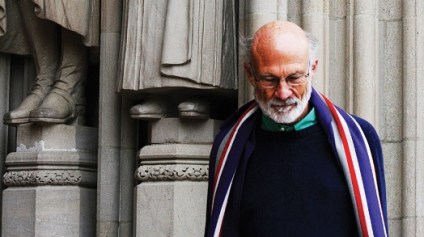
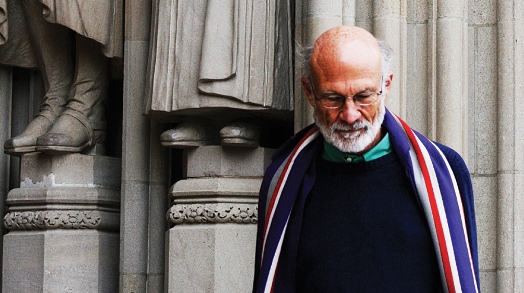
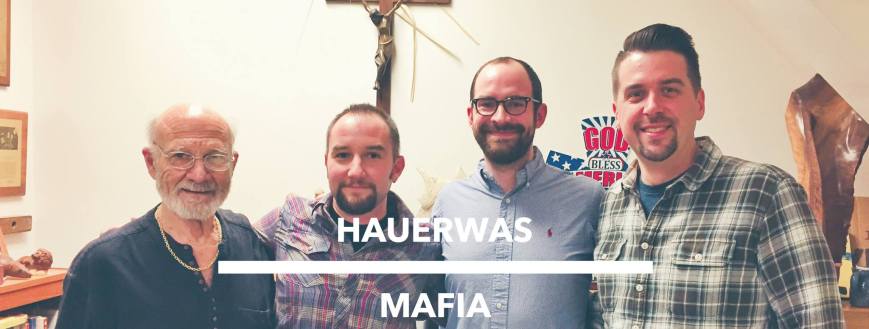
The team from Crackers & Grape Juice went down to Durham, NC a couple weeks ago to interview Stanley Hauerwas for our lectionary podcast Strangely Warmed. During our time together we talked about the readings for the fourth Sunday of Lent during year A from the Revised Common Lectionary and Dr. Hauerwas gave us a lot to chew on. If you want to hear the conversation, and learn about the most hipster passage from the Old Testament, you can check out the podcast here: Year A – Lent 4

hauerwas


Christian-Hipster1

Stuck In The Bushes

Romans 5.12-21

Therefore, just as sin came into the world through one man, and death came through sin, and so death spread to all because all have sinned – sin was indeed in the world before the law, but sin is not reckoned when there is no law. Yet death exercised dominion from Adam to Moses, even over those whose sins were not like the transgression of Adam, who is a type of the one who was to come. But the free gift is not like the trespass. For if the many died through the one man’s trespass, much more surely have the grace of God and the free gift in the grace of the one man, Jesus Christ, abounded for the many. And the free gift is not like the effect of the one man’s sin. For the judgment following one trespass brought condemnation, but the free gift following many trespasses brings justification. If, because of the one man’s trespass, death exercised dominion through that one, much more surely will those who receive the abundance of grace and the free gift of righteousness exercise dominion in the life through the one man, Jesus Christ. Therefore just as one man’s trespass led to condemnation for all, so one man’s act of righteousness leads to justification and life for all. For just as by the one man’s disobedience the many were made sinners, so by the one man’s obedience the many will be made righteous. But law came in, with the result that the trespass multiplied; but where sin increased, grace abounded all the more, so that, just as sin exercised dominion in death, so grace might also exercise dominion in death, so grace might also exercise dominion through justification leading to eternal life through Jesus Christ our Lord.

I take a lot of pride in my ability to communicate with people of different age groups. On any given week I will spend time explaining theology to five year olds in our preschool, fifteen year olds in our youth group, 50 year olds in our bible study, and then the rest of you on Sunday morning. It is definitely a challenge taking ideas from the likes of Paul and proclaiming them in a way that can be appreciated for the here and now for the young and old.

But sometimes, I fail.

Like the time I tried to address the moral and ethical dilemmas of Capital Punishment to our youth group one night, to the times I’ve tried to proclaim the strange complexity of confronting our finitude on Ash Wednesday to our preschoolers, to the times I’ve told some of our much older adults that one must have the faith of a child to inherit the kingdom of God.

Communicating the gospel, sharing the Good News, is a challenge, and I definitely failed once when we were on our mission trip to West Virginia a couple summers back. Picture it, if you can: It is hotter than blazes outside, and I’m stuck in a tiny kitchen surrounded by teenagers who would rather be instagramming and snap chatting one another than cleaning a floor or painting a ceiling. And it was silent.

So I did what I do: I started asking questions…

“What’s your favorite story from the bible?”

One of our boys immediately said something about David defeating Goliath. The Davidic story will forever rest in the hearts of prepubescent boys who struggle with how rapidly the girls are growing while they remain the same.

A boy from another church said, “Well, I kinda like the one about, you know, Jesus feeding people?” while saliva poured out of his mouth as he stared at the cooler in the corner filled with our lunches.

A girl from a different church said, “I’ve always been rather captivated by Jesus turning water into wine at the wedding at Cana in Galilee.” To which I made a mental note to bring this up with her youth group later in the evening. No sensible teenage girl should be thinking about water turning into wine, and certainly not when Jesus has anything to do with it.

We went on and on, and then it was my turn to answer. “Well” I said, “It’s not my favorite story, but I’ve always loved this little detail at the beginning of the bible, in the book of Genesis. Adam and Eve were placed in the Garden of Eden with a choice. They could choose to live in perfect harmony with God and God’s creation, with each other, free from sin and free from death. But Adam and Eve made the wrong choice, they wanted to be like God, and as soon as they tasted the fruit from the tree of knowledge of Good and Evil, their eyes were opened, and they knew they were naked.

“But here’s the part that gets me every time. Almost as soon as they sin, they heard the sound of God walking in the garden and they both sprinted for the bushes. But God called out, ‘Where are you Adam? Where are you Eve?’ After waiting for a few moments, Adam popped his little head out of the bushes, and told God that he was hiding because he was naked and afraid.”

To which God said, ‘Who told you that you were naked?’

“Isn’t that hilarious?” – The teenagers had all stopped working while I was sharing the story, and now they were all staring at me with eyebrows askew. I could hear the paint dripping off their brushes onto the floor as if even the crickets were too concerned to chirp. One of the boys finally broke the silence to say, “Um… I don’t think it’s very funny. If I were naked and God came looking for me, I’d run for the bushes too!”

Do we know this old, old, story? Do we know what sin is? Do we know what happened to Adam and Eve in the Garden of Eden?

What kind of stories and habits and beliefs do we want to pass on to the coming generations? I feel like I am forever hearing about the good ol’ days when “we knew our bibles” and “we would’ve gone to school with snow like this when I was a kid” and “we entertained ourselves with our imaginations and not a screen in our pockets.”

Do we wish that things could go back to the way they were? Are we worried about the future that we are handing to our children?

We can talk and talk about what we want to pass on, what we hope to engender, but if we don’t know our story, if we don’t know where we came from, how in the world can we even hope to take a step in the right direction?

tumblr_nfzluvor3q1sk7sreo1_500

Just as sin came into the world through one man… Paul assumes that we know the story, that we know the details of the Garden. He does not waste lines in his letter rehashing the characters and the questions, he gets right to the point: Sin came into the world through Adam and Eve. They, and therefore we, broke the covenant with God. The transition from God’s rule to the rule of sin and death came into the world because of our rebellious and disobedient desires.

This is our condition. There is no going back. Fear and shame and anger and disappointment are our lives. We are, in a sense, stuck in the bushes for good, hoping that God will not come looking for us.

We are in the bushes. And Lent is a great time to ask the question: Why? Which of the commandments have we broken? Did we work on the Sabbath? Have we hated our mothers or our fathers? Did we covet something that did not belong to us? An object, a job, or God forbid, a person?

How would we respond if we heard God walking toward us in the middle of our sin? We, like Adam and like that boy on the mission trip, would run for the bushes.

Paul assumes that we know the story of Adam and Eve in the Garden because it is OUR story! Adam’s sin is our sin, and it not only divided us from God, but also brought death into the world, which spread like a disease. This is Paul’s point, and he says it in these few verses over and over again.

We are trapped in sin and death and we are stuck in the bushes. That’s the story of the Garden. Is this what we want to pass on?

Truly I tell you, we cannot know who we are to be, if we do not know our story. This inexhaustible, unexplainable, indescribable moment from the beginning is who we are. It is the story of how the life of order fell into disorder. But, thanks be to God, it is not the end of the story.

Adam brought the entirety of humanity down, down to the depths of death and destruction. Jesus, however, is the new way who is able to create a new humanity.

The promise of a good and remade and hopeful future comes from the old story that is forever new. The story of our death, and then the death that freed us from sin and death.

In Jesus Christ our stories are made new; God, as the author of salvation, takes up the pen and starts a new chapter through the life, death, and resurrection of his son. This is the story that those who are coming, the one who will follow us, need to hear. This is the story we need to share. We need to pray for the courage to shout this story from the rooftops as if our lives depended on it, because they do.

The only way to victory, the way to upend what was done in the Garden, is through the cross. We might think of a different way, a more efficient and less taxing way, but the way of the cross is the WAY that Christ defeated death.

08687e2b32757ff3722238f19cd727cd

But this is not an easy story to tell. The message and value of the cross comes with a cost. It is difficult, it is selfless, and frankly it is un-American. Today, we would rather surround the young with lessons that teach very different values: get the job, earn as much as you can, find the right spouse, buy the car, lose the weight, invest in the right companies, bring 2.5 children into the world, purchase the perfect house, and you will be free and life will be perfect.

That’s the story we tell. And it’s a lie! It’s all a lie! None of these things can give life. They cannot give us the identity and purpose and hope we so desire. The job will change, the money will disappear, the spouse will grow old, the body will too, the companies will falter, the car will rust, the children will not listen; Sin and Death corrupt them all.

But there is nevertheless Good News, there is a way out of the bondage that was brought into the world by the one we call Adam. We are freed through the one we call Christ.

We are stuck in the bushes of our own sin and shame. But Christ comes to us in the Garden of our own demise without a question, but a call. Jesus does not ask us who told us we were sinning, Jesus says follow me. Follow me to Galilee, follow me to Gethsemane, follow me to Calvary.

Jesus is the way and the truth and the life. Sin has increased in this world and in our lives, but God’s grace in Jesus Christ has abounded all the more.

The story, our story, began in the Garden, but it did not end there. It continued through the strange and wild wilderness in the days of Abraham, weaved through the journey to Egypt and back again in Jacob and Joseph. It rose through the power of David and Solomon, and fell through the failure of God’s people worshipping idols. It danced through the prophets who remained faithful to the Lord, it endured droughts and famines, it saw suffering and sadness. It connected the lives of the powerful with the powerless, it brought down the high and lifted up the lowly.

It was born again in a manger in a small town called Bethlehem; it trudged through the towns of Galilee and sailed over the sea. It walked through the streets of Jerusalem and turned over the tables at the Temple. It was dragged before the council and the ruling elite. It was marched up to a hill and nailed to a cross. It was silent in a tomb for three days. And it broke free from the chains of sin and death.

That is the story. It is a story worth telling over and over again; because in it we discover who we are and whose we are. In it we see ourselves stuck in the bushes being beckoned by Jesus to follow him. And in it we realize that it is not just a story, nor even our story, but THE story. Amen.


romans_feature-01

Devotional – Psalm 32.5

Devotional:

Psalm 32.5

Then I acknowledged my sin to you, and I did not hide my iniquity; I said, “I will confess my transgressions to the Lord,” and you forgave the guilt of my sin.

 Weekly Devotional Image

I want you to take both hands and squeeze them into fists as tightly as possible (seriously). They need to be tight enough that you actually feel strained as you do so. Keep them squeezed and think about something you’ve done recently that could be qualified as a sin. It could be as simple as getting really frustrated when that person cut you off at the grocery store for the line marked “Ten Items Or Less” and it was clear that they had at least 40 items in their cart; or the anger you experienced when your child brought home that less-than-stellar report card; or the shame you felt when you caught yourself flirting with someone while you were currently in a relationship with someone else. Just think of a recent sin.

Now: Quickly release the tension in your left hand. But don’t let go with your right; keep that one tight. You’ll notice that your left hand might have a little tingling sensation from being held tightly for a few moments, but otherwise it should feel relatively normal.

Yet, the longer you continue to hold your right hand clenched in a fist, the more it will start to hurt. At first it was fine, maybe even comfortable, but now you can feel the little aches in all the tiny muscles, you can even feel the blood struggling to flow where it needs to go.

But don’t let go.

Clenched Fist

Think about that same sin again. What did you do with it? Did you let it percolate and grow into something much bigger? Did you confess your sin to the Lord? Did you share your struggle with anyone else and ask for help?

Keep that right hand tight for just a little bit longer.

And now release the tension slowly.

It’s going to hurt. As your fingers gradually stretch back out you will feel stabs of pain in the muscles as your hand regains it’s feeling. And, once you finally flex them all the way out, they’ll probably start curling back into a fist without you trying to do so.

Sin is like our clenched fists. We all sin, every single one of us. From the four-year-old preschool student, to the life-long Sunday school teacher, to the Mom or Dad just trying to make sure the kids have their lunches ready before they leave for school. We all sin.

We can, like our left hand, release the tension of our sins quickly. In the moment we can recognize where we have fallen short of God’s glory and, as the psalmist puts it, we can confess and repent of our transgressions to the Lord and be forgiven. However, most of us are more likely to treat our sins the way we treated our right hand; we let them simmer and boil for far too long so that by the time we actually confess it hurts all the more, and the more likely we are to descend back into that kind of behavior.

The Lord will forgive our sins, but we have to confess them first.


The Elephant In The Room

Romans 5.1-11

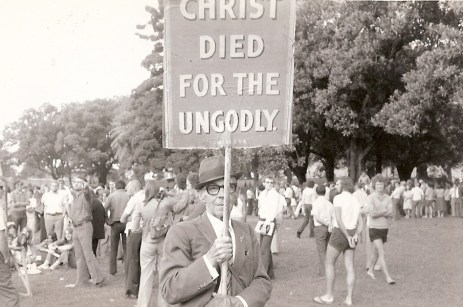
Therefore, since we are justified by faith, we have peace with God through our Lord Jesus Christ, through whom we have obtained access to this grace in which we stand; and we boast in our hope of sharing the glory of God. And not only that, but we also boast in our sufferings, knowing that suffering produces endurance, and endurance produces character, and character produces hope, and hope does not disappoint us, because God’s love has been poured into our hearts through the Holy Spirit that has been given to us. For while we were still weak, at the right time Christ died for the ungodly. Indeed, rarely will anyone die for a righteous person – though perhaps for a good person someone might actually dare to die. But God proves his love for us in that while we still were sinners Christ died for us. Much more surely then, now that we have been justified by his blood, will we be saved through him from the wrath of God. For if while we were reconciled to God through the death of his Son, much more surely, having been reconciled, will we be saved by his life. But more than that, we even boast in God through our Lord Jesus Christ, through whom we have now received reconciliation.


Sometimes I’ll be running at the gym, or walking the dog, or just sitting in my office when an idea will pop into my head. The idea starts like seed and then it germinates throughout my mind into sermon topics and bible studies and blog posts. The idea grows and grows and before it disappears into the gray matter of my brain I make sure to write it down.

And, (would you believe it?) an idea is coming to me right now! But I don’t have any paper up here so I need you all to write this stuff down (seriously).

Okay, we are justified by faith, God’s faith in us. That’s what we talked about last week. And because we are justified by faith, we have peace with God through Jesus. And, I mean, not only that, but we are bold to boast of God’s grace in our worst moments, because we know that our suffering leads to endurance, and endurance leads to character, and character leads to hope.

Yeah, that’s good.

We arrive at hope because God’s love has been poured into our hearts through the Spirit. And we know that God loves us because while we were still weak, Christ died for the ungodly. Right? Like, how often will someone die for a righteous person? Though, I guess for a good person someone might actually dare to die. But God proves his love to us in that while we were sinners Christ died for us!

Still with me?

Okay, and its even more than that, now that we have been justified by Christ’s blood we will be saved from the wrath of God. Through Jesus’ death we were reconciled back to God, and through Jesus’ life we will be saved! This is worth boasting about!

Did you get all of that?

Let me try to simplify in case I lost any of you: We are justified by God’s faith in us. Suffering leads to endurance, endurance to character, and character to hope. We arrive at this hope because we know God loves us. And we know God loves us because Christ died for us while we were yet sinners…
domain117

Paul is hard to take from the pulpit. Give me one of the stories of Jesus’ healings, or any of the parables; they preach themselves. Sometimes I even think it would be better to just read the scripture and not preach anything at all. But with Paul it takes on a new and strange and difficult dimension. Paul, in his letter to the Romans, writes in a form of rhetoric almost lost to the sands of time. In our current age of 140 character tweets from our President, frenetic television shows, and fast-paced YouTube videos, we no longer have the minds, nor the time to hear Paul’s theology.

A theology that was probably dictated to someone else to write down while Paul was thinking it up.

You can almost hear that in the reading can’t you? It’s like he remembered something from a few sentences back and wants to clarify it.

The Epistle to the Romans is not a perfectly crafted sermon meant for pulpit proclamation. Instead, it’s practical theology dictated from the greatest missionary the world has ever known.

Paul begins this section by addressing suffering; it’s the part of the passage that is most often mentioned. And he’s not just talking about some esoteric understanding of suffering. Paul is talking from experience! At the time of this letter, Paul was not a young, pre-maturely balding, healthy pastor standing in a pulpit telling his worn and suffering congregation to keep their chins up. No, this is entirely different. Paul suffered for the gospel, was arrested and persecuted, and yet he continued on. That’s why he can say that suffering leads to hope. For Paul it’s not a false and empty promise, it’s what he has experienced.

And then we come to the section about dying for others.

maxresdefault (3)

Dying for others, for one’s country, for our families, these stories captivate our hearts and our emotions. The thought of all the firefighters courageously rushing into the World Trade Center buildings on September 11th, or the countless volunteers who went to the other side of the world to fight in World War II, or just hearing about a mother who sacrifices herself to save her children, these stories really pull our heart strings.

But here, in Paul’s letter to the Romans, this is even more radical than any of those stories. We have to try to put aside the emotional waves of grief and reverence for the stories of modern sacrifice for one’s friends, family, or country. Paul does not say that Jesus died for his friends or his family or even his country.

            Christ died for the ungodly!

Paul says that Christ died for us while we were his enemies!

Talk about an elephant in the room… While we were yet sinners, Christ died for us. We hear it in Romans, we hear it every time we come to the table for communion, but do we believe it?

We don’t like talking about sin, we good Christian folk. We want to hear about love, peace, joy, hope, and happiness.

Only the converted, those whose lives have been truly captivated by Christ, think of themselves as sinners. Others won’t have anything to do with it. That, my friends, is why we so seldom read from Paul’s letters in worship; we don’t like the idea of ourselves as sinners, as ungodly.

“Preacher, can’t you just give us a little more grace and love from the pulpit? Nobody wants to come to church to hear about sins!” And yet, we enjoy reading in the gossip columns and watching TMZ to learn about other people’s sins, but that’s their problem.

We don’t like admitting our shortcomings, our faults, and our helplessness. We reject that gospel and substitute our own, one we talked about a couple weeks ago. We’d rather believe the American gospel: God helps those who help themselves. Actually, Paul tells us quite the opposite: When we could not help ourselves, when we were stuck in the shadow of sin, Christ died for us.

73d8be39b92edf6031d5a129be633895

In our current age of tweets, twenty-minute TV shows, and traffic filled websites, we want everything compartmentalized as much as possible. Instead of reading a newspaper we want a short and brief email every morning that tells us only what we need to know. Instead of buying the latest hit book and spending an afternoon in our favorite chair, we read a summary online so we can talk about it with our friends. And instead of coming to church for an hour a week to experience the presence of God, people read the sermon online and check off the box on the Christian list of to-dos.

We, whether we admit it or not, are consumed by a desire to compress as much as possible into something as small as possible. Paul completely rejects this desire and notion that we can limit the gospel to any particular sentence or paragraph. The Gospel, the Good News, is nothing less than the life, death, and resurrection of Jesus Christ, Son of Man, and Son of God.

But, if we cannot resist the temptation, if we have to have something small, something we can keep with us at all times to know what the gospel is, this might work: While we were still sinners, Christ died for the ungodly.

            This is crazy stuff people! Our Lord and Savior, the one in the stained glass window behind me, he died for the ungodly!

Who is the ungodliest person you can think of right now? I know some of you will immediately think of the members of ISIS who are terrorizing regions under their control. Others of you will immediately think of the leaders in North Korea who are trying their best to develop nuclear weapons of mass destruction. Some of you might think of Donald Trump and the seemingly endless Executive Orders streaming out of the Oval Office these days. Some of you might even be thinking about the person sitting in the pew next to you.

If it’s too hard to think of someone ungodly, just think about one person you’re angry with right now…

Jesus died for that person. Whoever you’re thinking of, whoever that completely backwards and horrible and disappointing person is that’s bouncing around in your mind right now, Jesus died for them.

That’s the real elephant in the room. Jesus died precisely for the sort of person that would crucify him and mock him while they were doing it. People like us.

These things we call faith and discipleship are not very religious in the sense of being pretty and easy to handle. They are not something we can carry around in our pockets during the week only to show up when we need them. The cross of Christ is far too offensive to be religious.

The cross and the death of Christ shatter our expectations given to us by the world. They, in all their strangeness, reorient us back toward the radical nature of God’s love. The offensive and scandalous cross is our paradoxical hope and joy. Because in and through the cross, God did something that none of us would do.

            As the old hymn goes, the immortal God hath died for me.

God’s love in Christ is so comprehensive and so bewildering that it is able to wash away even the greatest of sins.

We started this sermon with a dictation, an imaginative way to reimagine the writing of Paul’s letter to the Romans. If you wrote down anything I hope you wrote this: While we were yet sinners God died for the ungodly, for us.

Now I want you to write down the name of the person you thought of just a moment ago, the person who you’re angry with. Write his or her name at the top as if you meant to send this letter to them.

Now you know that I’m going to ask you to send it. And I know that you probably won’t. You won’t for the same reason I wouldn’t; it’s offensive and it’s uncomfortable. We won’t send this affirmation of God’s unnerving love to someone else because it would force us into an area we’d rather avoid; we don’t want to come off as too evangelistic, or too churchy. We don’t want to admit our sin.

Can you imagine the shock on the person’s face if they received your dictated letter from the adapted words of the apostle Paul? Can you picture how bewildered they would be by something Christians say all the time? Can you imagine how it would change the way you look at them for the rest of your days?

While we were still weak, Christ died for the ungodly. In our weakness we reject the challenge to confront our sins and we reject the forgiving nature of God’s love for the world. We forget that Christ died for our shame and our sin and our sadness. We forget that Christ died for our disappointment and our degenerate derelictions and our deficiencies. We forget that Christ died for us and for the people whose names’ are at the top of our letters.

And yet Christ still died for us! What wondrous love in this that that caused the Lord of bliss to bear the dreadful curse for my soul! To God and to the Lamb who is the great I am, we shall sing! And when from death we’re free, and through eternity, we shall sing.

For while we were yet sinners, Christ died for us.

Amen.

Why You Can’t Read John 3.16 without John 3.1-15

strangely-warmed-spreaker-header

The team from Crackers & Grape Juice went down to Durham, NC a couple weeks ago to interview Stanley Hauerwas for our new lectionary Podcast Strangely Warmed. During our time together we talked about the readings for the second Sunday of Lent during year A from the Revised Common Lectionary and Dr. Hauerwas gave us a lot to chew on. If you want to hear the conversation, and learn why you can’t read John 3.16 without John 3.1-15, you can check out the podcast here: Year A – Lent 2

hauerwas

Devotional – Genesis 12.1

Devotional:

Genesis 12.1

Now the Lord said to Abram, “Go from your country and your kindred and your father’s house to the land that I will show you.”

 Weekly Devotional Image

And that’s how it all began. The Lord said to Abram, “Go.” In the entirety of the Old Testament, there are few passages as important and theologically profound as God’s calling of Abram to go to a strange new place. We can talk about Jacob wrestling with the emissary from God by the banks of the Jabbok river, we can talk about Joseph saving the Egyptian people from certain starvation, we can even talk about Moses’ trials and tribulations with the Hebrew people in the wilderness, but this moment with Abram, this call, sets in motion the great narrative of God with God’s people.

The sheer magnitude of such a call cannot be overlooked. During the time of Abram’s life, almost everything was dependent on staying in one’s country and with one’s family. Most people spent their entire lives, from birth to death, within a handful of miles and rarely explored anything outside the normal and comfortable dwelling of “home.” And yet God had the audacity, the boldness, and the faithfulness to call Abram to do the unthinkable: go to a strange new place and leave it all behind.

This, in a sense, is akin to the call of all Christians. We might not be asked to leave our home country, we might not be asked to leave our families, but we are certainly compelled to enter into strange relationships and moments around us. It is easy to stay within a certain bubble throughout our lives and never stretch too far into the unknown. We can develop rhythms and habits that actively prevent us from encountering anything out of the ordinary. But God is extraordinary.

go

Lent is a time for us to reflect and repent. We reflect on the many ways God’s has so graced us, and we repent for the many ways we have failed to positively respond to that grace. Lent is a time for us to all recognize the Abram within us, and wonder where God is calling us to go. What place are we avoiding because it makes us uncomfortable? What relationship have we let fall apart because it just felt like too much work? What frustrating behavior in a friend or a spouse or a child have we let percolate for far too long?

In some way, shape, or form God is calling each and every one of us to “go.” God calls us to “go” because our God is a God on the move. God cannot be relegated to a sanctuary on Sunday mornings at 11am, God is not absent until we pray for God’s presence, God is not sitting on a throne up in heaven watching us through a telescope. God moves, and so should we.

Open Hearts. Open Minds. Open Doors.

Romans 4.1-5, 13-17

What then are we to say was gained by Abraham, our ancestor according to the flesh? For if Abraham was justified by works, he has something to boast about, but not before God. For what does the scripture say? “Abraham believed God, and it was reckoned to him as righteousness.” Now to one who works, wages are not reckoned as a gift but as something due. But to one who without works trusts him who justifies the ungodly, such faith is reckoned as righteousness. For the promise that he would inherit the world did not come to Abraham or to his descendants through the law but through the righteousness of faith. If it is the adherents of the law who are to be the heirs, faith is null and the promise is void. For the law brings wrath; but where there is no law, neither is there violation. For this reason it depends on faith, in order that the promise may rest on grace and be guaranteed to all his descendants, not only to the adherents of the law but also to those who share the faith of Abraham (for he is the father of all of us, as it is written, “I have made you the father of many nations”) – in the presence of the God in whom he believed, who gives life to the dead and calls into existence the things that do not exist.


There are many many many versions of Christianity. And not just denominations like Presbyterians, Episcopalians, and Baptists; even within something like the United Methodist Church there is a great myriad of ideas about what it means to be the church. For instance: There are 7 UMCs in Staunton, and we could all use the same text on Sunday morning, and just about everything else would be completely different from one another.

But the one thing that might unite all churches, almost more than baptism or communion, is a desire to appear as welcoming and inclusive as possible.

All you need to do is check a church website, or bulletin, or marquee and you can find a self-made description that says something like: we are an open, friendly, inclusive, and welcoming church. Or just try asking someone about their church and you’re likely to hear: “we love everybody!”

In the United Methodist Church, we like to say we have open hearts, open minds, and open doors.

37807

What a righteous slogan.

Inclusivity, being open, they’re quite the buzzwords these days. Rather than appearing at all judgmental, we want people to know that we accept all people. Rather than seeming prejudiced, we want everyone to know that they are welcome. Rather than looking at people based on their outward appearance, we want to the world to know that we care about the content of one’s character.

But the truth is, there are a great number of people who have been ignored, if not rejected, by congregations claiming to be inclusive (including our own).

A couple weeks ago I preached a sermon on the mission of the church. I made the claim that instead of being consumed by a desire to fill the pews, instead of trying to make the world a better place, the church is called to be the better place that God has already made in the world. And as the better place, church should be the one place where no one is ever lonely. I must’ve said that last part no less than three times from the pulpit.

And when we finished worship, most of us walked up the stairs to the Social Hall for a time of food and fellowship. Like we usually do, a long line was formed and one by one we filled our plates and sat down.

The time difference between proclaiming the sermon and sitting down to eat could not have been more than 30 minutes. And yet there was a young family who were here with us in worship for the very first time, who sat alone in our social hall the entire time. And there was an older gentleman, who has served the needs of this church longer than I’ve been alive, who sat by himself for nearly the entire time.

It is not possible for any church, even St. John’s, to be “inclusive” of everyone. And not necessarily for the reasons we might think. We might not judge others for the stereotypical ways often publicized about the church like being homophobic, or racist, or elitist (though there is plenty of that). No, we also reject others for mental illness, politically different or incorrect views, or for poor social skills and status.

We reject people for all sorts of reasons.

Years ago, when I first entered seminary, I went on a bike ride with some friends to another house full of seminarians. We represented the great mosaic of mainline protestant Christianity and we quickly began addressing why each of us was attracted to the particular church we would serve in the future. The Episcopalian talked about her love of the Book of Common Prayer and being united with Christians all over the world who say the exact same words whenever they get together. The Baptist talked about the beauty of believer’s baptism and getting to bring adults into God’s flock.

One of the Methodists, me, talked about the wonder of God’s prevenient grace, a love that is offered to all without cost or judgment. But then I went on to express my chief disappointment: Our slogan of open hearts, open minds, open doors. I joked about how many Methodist churches regularly lock their doors, how many of them are filled with people whose minds are already made up about God and others, and how many of them have people with hearts that have no desire to be open to the strange new reality of God’s kingdom.

To be honest, I got pretty fired up about it. After all, it was the beginning of seminary and I was trying to show off.

But I meant what I said. Our slogan is something we can strive for, but it is not a fair description of who we are. There will always be a newcomer who sits in a pew by herself without anyone coming over to say hello. There will always be a family that risks being ostracized by coming to church only to being judged from afar. There will always be sermon series that make people feel like they are not welcome into the fold of God’s grace.

So I went on and on about this until I looked at the other Methodist whose face had turned bright red. “Is everything okay?” I asked. He paused and then said, “My Dad was on the committee at General Conference that created our slogan. I think it’s the best thing about the United Methodist Church.”

We have a slogan, a nice and pretty slogan that we should strive for, but oftentimes we fall short. When we fall short, we do so because of sin. Sin captivates us in a way that makes it virtually impossible for any church to “unconditionally accept” everyone who comes through the door.

We judge others based on physical and outward appearance. We make assumptions about families for a myriad of reasons. We shake our heads in disgust about couples that do not fit the normative mold that society has established.

And we should be cautious about advertising or describing ourselves as such. We might think we’re righteous enough to live by the slogan, we can even hope for it, but we are far from it.

Only Jesus, the one in whom we live and move, is capable of a truly open heart, open mind, open door ministry because Jesus was God in the flesh. Jesus was righteous.

But what about Abraham? Paul uses this part of his letter to the Romans to use Abraham as an example of righteousness. Abraham was the one who was called to leave the land of his ancestors and family to go where God called him. Abraham was the one in whom the covenant between God and God’s people was made. Abraham was the one who was promised to become the father of many nations. Abraham was the one who believed God and it was reckoned to him as righteousness.

Should we follow Abraham’s example? Would that make us more inclusive and righteous? Could we keep our slogan of open hearts, open minds, open doors?

Here’s the thing: Abraham did nothing to earn this honor and distinction from God. As Paul puts it, Abraham has no ground for boasting.

Whenever we read about the story of Abraham, whether in worship or in a bible study, he is often lauded for his journey into the unknown, for his faith and steadfast commitment to the Lord, and for his perseverance through suffering and tribulation. But his relationship with God, his faith being reckoned as righteousness, is only possible because of God’s faith in him. Abraham is righteous because God called him and empowered him to go into a strange new world.

Abraham, rather than being the perfect model for inclusivity and righteousness and faithfulness, is an example of a justified sinner. Abraham is one of many unlikely individuals whom God reshapes for God’s purposes. Abraham is chosen not because of anything he has done, but because of God who can do anything.

God is the one who worked in and through Abraham’s life, and not the other way around. Abraham does not justify himself, or transform himself, or redeem himself. That’s what God does.

And the same holds true for us today.

open_hearts_logo

We can have the perfect advertising campaign, with our slogan in big capital letters, but that does not redeem our sinful actions and behaviors. We might think we are righteous and that we are “color-blind” or “LGBTQ affirming” or “economically transparent” but we are nevertheless sinners in need of God’s grace and forgiveness. We can even leave the church doors unlocked all week long, but we will still be broken and in need of God’s redeeming love.

This passage, this beautiful piece of theology from Romans, is about more than the example of Abraham and why we need to have faith. Paul’s emphasis is on the fact that God made Abraham righteous. That God has freely poured out grace on the ungodly, people like us. And that God’s gift of Jesus Christ to us and to the world is grossly unmerited and undeserved, and yet it is given to us.

She came to church pretty regularly but she kept to herself. She’d sit off at the end of a pew and keep her head down so as not to attract too much attention. Whenever it was time to sing, she would stand up with everyone else but her voice never made it higher than a whisper. When it came time to say the Lord’s Prayer she would properly bow her head and mouth the words. But whenever the congregation was invited to the front to receive communion, she never left her seat.

young-woman-praying-in-church

Most of the church was preoccupied with thoughts about their own sins or about where they would eat lunch after the service to notice the woman who remained in her pew while they were feasting on the body and the blood. But the pastor noticed.

After a couple months he caught her after church, and wanted to know why she participated in almost every part of worship, but not in communion. She said, “I don’t feel like I deserve it.”

That, my friends, is the whole point. We don’t deserve it. You don’t, and I don’t. None of us have earned God’s salvation, there’s no list of things we can check off in order to get into heaven. This bread and this cup, the cross and the empty tomb, they are unmerited and undeserved gifts from God to us.

We cannot have a church that is open hearts, open minds, and open doors because we are already in it. Our presence, our sinfulness, makes it impossible to be a totally inclusive community.

Only Christ, only God, only the Spirit have open hearts, open minds, open doors. Only the triune God opens up the floodgates of grace to wash away our sins. Only the triune God opens up our eyes to view others without judgment or wrath or fear or anger. Only the triune God opens the doors of the church to the faithful community, to feast at the table that gives us a foretaste of heaven on earth.

Only the triune God gives life to the dead and calls into existence the things that do not exist. To God be the glory. Amen.


romans_feature-01


The End Of The Beginning – Ash Wednesday

Genesis 3.19

By the sweat of your face you shall eat bread until you return to the ground, for out of it you were taken; you are dust, and to dust you shall return.

If you’re here in this place, with these people, on this occasion right now, you are blessed. You are blessed because you understand, you grasp, what the church is really all about. We are a people called church, who follow Jesus and take upon ourselves the sins of the world.

However, we don’t take upon the sins of the world in the way Jesus did. We are told to take up our own crosses, but we don’t drag them up to a place called The Skull, and we don’t wait for people to nail us to them. We take upon the sins of the world in confession, a confession that God is our judge and has every right to be. Because we have failed to be the people God has called us to be over and over and over again.

The United Methodist Church has a document to help us whenever we gather together. The Book of Worship outlines the ways to serve the Lord for just about every occasion, including funerals.

The Service of Committal is brief and is reserved for the graveside. And in our Book of Worship you can find these directions for clergy: “Stand at the head of the coffin and while facing it, cast earth upon it as it is lowered into the grave. The pastor then says, ‘Almighty God, into your hands we commend your son/daughter, in sure and certain hope of resurrection to eternal life through Jesus Christ our Lord. This body we commit to the ground, earth to earth, ashes to ashes, dust to dust.’”

The last time I did a graveside burial, I held the Book of Worship in my hands like I’ve done too many times before, I read the all too familiar words, and when it came time to cast dirt upon the coffin, I couldn’t find any. I frantically looked at the area around the hole, and they had covered it with a frighteningly sharp bright green carpet of AstroTurf. So I bent down in my robe onto my knees, and I started ripping up the perfectly manicured grass on the edge of the fabricated lawn. I needed some dirt. I needed to dirty this pristine and picturesque committal service because death is ugly and disruptive. I clawed the ground and threw the grass to the side until I scraped enough bare earth with my hands to have a solid mound to drop onto the coffin.

It was a holy thing.

dirt-placeholder

I took my dirt covered hands and placed them on the coffin, I prayed the words from the Book of Worship, and then I slowly walked away giving the family time to grieve before leaving. And just as I began backing away, the funeral director motioned for the pall bearers to come forward. But they did not bend down to the hole in the ground I had just revealed. No, they took roses, the boutonnieres, from their lapels and laid them silently on the recently dirt covered coffin.

It is, of course, much nicer to throw roses than dirt. But like almost everything in the tradition of the church regarding worship, the dirt has important theological significance.

I wound venture to guess that many Christians, though they hear the words about ashes to ashes and dust to dust at funerals and at Ash Wednesday services, they have no idea where those words come from. But you do. You know where they come from because you just heard it. It is the final announcement from God to Adam and Eve as they are kicked out of the Garden of Eden.

By the sweat of your face you shall eat bread until you return to the ground, for out of it you were taken; you are dust, and to dust you shall return.

            For us humans, this is the end of the beginning.

Much has been made about the Genesis story of eating from the tree of knowledge of Good and Evil. The slithering serpent who manipulates Eve’s desire; Eve’s treachery through inviting Adam to join her in the prohibited act; Adam hiding his shame and nakedness from God when the Lord returns to the Garden. And its all pretty harsh.

By this act sin was brought into the world. Because of our ancestors’ choice, we were banished from the paradise of God’s created order and were punished. Women must suffer through childbirth. Humans must work and sweat over the earth in order to glean enough produce to survive. Families are torn apart by an individual’s choice that has ramifications far greater than they can ever imagine.

And then we come to a place like this to have ashes smeared across our foreheads in an effort to remember what happened long ago, and what will happen to all of us one day.

We will die.

But we’re content with spending the rest of our days prettying everything that we can. We bring roses to place on the coffins at graveyards. Politicians bump up statistics to make things appear better than the actually are. We do our best to cover our scars, both physical and emotional, as if they were never there. And some churches spend Ash Wednesday not in sanctuaries confessing their sins with their brothers and sisters in faith, but in their parking lots presenting “Ashes to God with a cup of Joe.”

We would rather cover the harsh realities of truth than look at them in the eye.

God’s pronouncement to Adam and Eve, that terrifying moment when they were expelled and told that they will suffer until they return to the ground, that strange and all too familiar expression you are dust and to dust you shall return, they strike fear in the hearts of us mortals.

Sometimes its good to be afraid because it reminds us what a tremendous blessing it is to be alive at all. Sometimes its good to get down on our knees and confess our sins before the Lord because it reminds us that we are not God. And sometimes we need to catch a glimpse of ourselves in the mirror on Ash Wednesday to remember who we are, and whose we are.

This day, this Ash Wednesday, is a moment for us to confess our sins, and for all the sins of the people who are not here. We bow our heads and are adorned with a sign of death, not just as a reminder to us and to others that we will die, but that God will not let death be the final Word.

And here is the hope, my brothers and sisters, the hope we need on a day like today. We know how the story ends. We know that the pronouncement at the edge of the Garden was not the final word. We know the final word is not suffering, nor death, nor dirt, nor even dust. We know that the final Word is Jesus Christ.

The ashes that will soon be on our skin are not our crosses to bear, but Christ’s who carried it to The Skull and was nailed to it for the world. Jesus Christ is God’s greatest and final Word because in him the fullness of the Lord was pleased to dwell. In Him the sin of Adam and Eve were reconciled unto the Lord. In Him we are brought back into the dwelling of God’s grace where the light always shines in the darkness.

So wear the ashes with fear and trembling, let them dirty your lives a little bit, but also remember the hope that has been available to us in the one who hung on the cross, and rose again. Amen.

maxresdefault-2

Jesus’ Temptation or: Who Does Government Belong To?

The team from Crackers & Grape Juice interviewed Stanley Hauerwas about the Lectionary Readings for Lent 1 (3/4/17). You can listen to our conversation here: Strangely Warmed

hauerwas

There is a temptation, during the season of Lent, to make it all about our temptations rather than Jesus’ temptation. While people today (Ash Wednesday) are embarking on the beginning of their 40 fast from the likes of chocolate, coffee, and candy, the Revised Common Lectionary forces us to confront the truth about Jesus’ temptation on the first Sunday of Lent. Our conversation with Hauerwas brought forth some interesting insights about comparing Jesus temptation by the devil with the serpent’s tempting of Eve in the Garden for both pastors and laypeople. If you’re preaching the first Sunday of Lent, or if you are interested in the connections between Genesis and Matthew, check out the episode from Strangely Warmed.

strangely-warmed-spreaker-header


In Defense Of The Revised Common Lectionary

Crackers & Grape Juice is an interview-driven theological podcast about faith without using stained glass language. My friends Jason Micheli, Teer Hardy, and Morgan Guyton started the podcast over a year ago in order to remain connected to one another while also continuing to explore theology. Near the beginning, I was asked to help with editing specific episodes and quickly became part of the team. Since the inception, Crackers & Grape Juice’s audience has grown tremendously thanks, in part, to interviewees such as David Bentley Hart, Stanley Hauerwas, Will Willimon, Rob Bell, and others. We are committed to producing and providing faithful content with faithful theologians, but we have also added a new podcast to the mix.

Strangely Warmed is a new lectionary-based podcast designed to address the weekly church reading without using stained glass language. The Revised Common Lectionary is a wonderful resource for churches and one that has come to shape the Christian experience over the last few decades. The RCL is a three-year cycle of four readings for each Sunday and special days throughout the liturgical year. There is always a reading from the Old Testament, the Psalms, an Epistle, and a Gospel (with a few exceptions). At the heart of the RCL is a desire to bring churches through the great narrative of scripture without being limited by the subjectivity of the preacher.

However, the Lectionary is something unknown in many churches even if the preacher follows it weekly. Therefore, I have created the following Top Ten List in defense of the Revised Common lectionary for pastors and lay people who are interested in following and subscribing to Strangely Warmed. (You can subscribe on iTunes, Stitcher, and Spreaker)

strangely-warmed-spreaker-header

  1. Our Time is NOT God’s Time
    1. Christians, whether they know it or not, follow a different year than the calendar year. We might write February 28th on our checks and important documents, but for us the day is actually defined by being part of the season of Epiphany (until Ash Wednesday when we enter the season of Lent). To follow Jesus Christ implies a willingness to have our expectations (taught to us by the world) uprooted and flipped by the living God. The RCL helps guide us through the Christian year in such a way that our identity first rests with our discipleship, and then everything else secondarily. Moreover, following something like the RCL is a reminder that our time is not the same thing as God’s time. We might feel wearied by the weight of the most recent political development or social event, but the stories of God’s interaction with God’s people transcend time; they are in fact timeless. There is a great comfort that comes when diving into the strange new world of the bible through the RCL because it provides a sense of perspective that Christians regularly need.
  2. Habits/Discipline
    1. As Stanley Hauerwas has said on a number of occasions: What we believe shapes how we behave. Following the RCL informs our beliefs and necessarily shapes our behaviors, choices, and actions. The lectionary is a habit and requires discipline for both pastors and lay people. I will be the first to admit that there are plenlty of stories in the Bible that I would rather not preach, and when a particular event occurs I often know which story from the Bible would be effective to use from the pulpit in which to address the event. However, only picking and choosing the stories that we are familiar with, or the stories we are comfortable with, furthers the sinful idea that we can fit God into a box. Psalm 23 is a beautiful text and brings comfort to many people, but it cannot be the only thing that we Christians proclaim on a weekly basis. We need the Psalm 22s just as much as the Psalm 23s and the RCL provides that disciplined exposure to the canonical narrative of God’s grace.
  3. Limited Imagination
    1. Similarly, following the RCL, whether in preaching or in a bible study, forces us to proclaim scripture we would otherwise ignore. God can, and does, speak through scripture, even if we can’t imagine how upon first glance. And when we limit the passages on Sunday mornings to, say, the Gospels, we are limiting God’s Word being proclaimed in worship. There are definitely weird and strange passages in both the Old and New Testaments, but committing to them (rather than ignoring them) challenges us to have scripturally shaped imaginations. At the heart of the RCL is a commitment to be under the obligation of the text to say what God wants said for God’s church rather than what the preacher want to say about God to God’s church.
  4. Biblical Literacy
    1. We don’t know our bibles like we once did. Period. I could go on and on about the many times I’ve encountered someone who has gone to church for most of his/her life only to not know about the story of the bible. For instance: I was recently asked if Moses was in the New Testament, another person had no idea who Isaiah was, and another shared her utter shock that when we have communion we are living into the last time Jesus gathered with the disciples. All of those interactions came from people who have been going to church longer than I’ve been alive! Now I’m not say that we need to memorize the entirety of scripture, or get lost in the weeds, but the RCL is a tool to help us reclaim our biblical literacy.
  5. The catholic (universal) church
    1. Preaching and reading from the RCL connects us with the church universal. There is something profoundly beautiful about the fact that two churches, from completely different denominations, can read the same scripture on the same Sunday morning. Personally, this connection with the catholic church has been made manifest in a Lectionary Bible Study I participate in at the church I serve where more than half of the people in attendance attend other churches on Sunday morning. Yet, the same scriptures we read during the week are the ones they encounter on Sunday morning. In a time when there seem to be almost more denomination than there are Christians, the RCL connects us to the united church that Christ prayed for in John 17.
  6. Scripture Interprets Scripture
    1. The bible is cyclical, and you can miss this if you read it in isolation or with the strange collaboration of something like the RCL. For instance, the story of Christ’s Transfiguration on the mountaintop is a powerful one in and of itself, but it takes on a whole new meaning when we read it in light of the similarities between Jesus and Moses. Both were born into situations where their lives were in peril, both heard the voice of the Lord in pivotal moments before their ministries began, both proclaimed the law from a mountain, and both had their faces shine in the light of God’s presence. Scripture helps interpret scripture, and the RCL does a pretty good job at pairing readings from throughout the bible that connect with one another.
  7. Christological Focus
    1. Jesus Christ is the lens by which we read scripture. We Christians have the benefit of knowing the “end of the story” when we are reading passages from the Old Testament and we should remember Christ’s role throughout the canon. However, we don’t simply read the New Testament into the Old; we also need to read the Old into the New. The New Testament is filled with scriptural references to the Old Testament that fall flat when we, as preachers and readers, do not draw the connections between the two. And Christ is the glue that holds both Testaments together. The RCL implores those who adhere to it to see the connections between all four readings and how Christ is the means by which they relate to one another.
  8. Inexhaustibility of Scripture
    1. God always has something to say. Now that I’m in my fourth year of ministry, I am making my way through Year A of the RCL for the second time and I am blown away by how much the same scripture I preached on just a few years ago still have so much to say. The way I read John 1 my first year in ministry has changed dramatically and has therefore transformed the way I preach that passage. Similarly, I have been in bible studies and read enough theology over the last few years that I will never look at certain passages the same way again. The RCL allows we preachers to reflect on how we looked at, and preached, a text in the recent past and how we can use in again in the present.
  9. Room for the Spirit
    1. As previously mentioned, there are some difficult passages in both the Old and New Testaments. Passages about the wrath of God or the judgment of God are not easily preached or taught in church. However, using the RCL compels the preacher to rely on the Spirit’s guidance when handling a difficult passage which is something that should be done for every sermon regardless of difficulty. When I was first appointed to St. John’s and was planning worship for the coming months, I made a habit of reading all for lectionary texts for each Sunday and the one I wanted to preach on the least was the one that I picked for the particular Sunday. This simple practice forced me to rely on praying for the Spirit to guide me and for God’s will to be done in a way that made my preaching better, more faithful, and more fruitful.
  10. Being Shaped by the Word
    1. In our current cultural clime (the Reign of Trump), the lectionary helps us negotiate the world in which we find ourselves. Rather than reading into scripture what we want to say, the RCL allows us to proclaim what God wants to say. If we are willing to stand under the text (rather than above it) then we can let the text narrate our lives and we can be faithful. For example: On election day, the gospel lection was about Jesus’ prophecy of the destruction of the Temple in three days. Stanley Hauerwas was tasked with preaching that week at Duke Divinity School, and he preached about how Jesus just didn’t get it; you don’t tell the Jews the Temple is going to be destroyed in three days if you’re running for office. He then went on to address how the assumption that elections are the means by which just societies are established is an illusion; in the New Testament we learn about how democracies work in the one moment where there is an example of a democratic election… the crowd chose Barabbas. Hauerwas easily could have picked any number of passages from the Bible to preach during Election Day, but he was held accountable to the lectionary, which told him what to preach rather than the other way around. Following the RCL, whether in preaching or in teaching, grants us the freedom to be shaped by the Word.


16991646_1754345251560760_6036548281295906470_o


16992453_1752449351750350_1251793558137580780_o