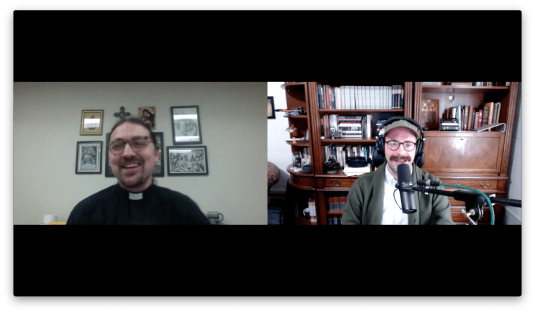
This week on the Strangely Warmed podcast I speak with Todd Littleton about the readings for the 5th Sunday of Lent [A] (Ezekiel 37.1-14, Psalm 130, Romans 8.6-11, John 11.1-45). Todd is a Baptist pastor serving Snow Hill Church in Tuttle, Oklahoma. Our conversation covers a range of topics including Baptist autonomy, cross denominational friendships, dry bones, speaking creation, holding dirt, edgy professors, the songs of Frozen 2, the agency of God, the Gospel in the West Wing, fleshiness, and rejected for election. If you would like to listen to the episode or subscribe to the podcast you can do so here: Feeling Your Feelings
The Lord said to Samuel, “How long will you grieve over Saul? I have rejected him from being king over Israel. Fill your horn with oil and set out; I will send you to Jesse the Bethlehemite, for I have provided for myself a king among his sons.” Samuel said, “How can I go? If Saul hears of it, he will kill me.” And the Lord said, “Take a heifer with you, and say, ‘I have come to sacrifice to the Lord.’ Invite Jesse to the sacrifice, and I will show you what you shall do; and you shall anoint for me the one whom I name to you.” Samuel did what the Lord commanded, and came to Bethlehem. The elders of the city came to meet him trembling, and said, “Do you come peaceably?” He said, “Peaceably; I have come to sacrifice to the Lord; sanctify yourselves and come with me to the sacrifice.” And he sanctified Jesse and his sons and invited them to the sacrifice. When they came, he looked on Eliab and thought, “Surely the Lord’s anointed is now before the Lord.” But the Lord said to Samuel, “Do not look on his appearance or on the height of his stature, because I have rejected him; for the Lord does not see as mortals see; they look on the outward appearance, but the Lord looks on the heart.” Then Jesse called Abinadab, and made him pass before Samuel. He said, “Neither has the Lord chosen this one.” Then Jesse made Shammah pass by. And he said, “Neither has the Lord chosen this one.” Jesse made seven of his sons pass before Samuel, and Samuel said to Jesse, “The Lord has not chosen any of these.” Samuel said to Jesse, “Are all your sons here?” And he said, “There remains yet the youngest, but he is keeping the sheep.” And Samuel said to Jesse, “Send and bring him; for we will not sit down until he comes here.” He sent and brought him in. Now he was ruddy, and had beautiful eyes, and was handsome. The Lord said, “Rise and anoint him; for this is the one.” Then Samuel took the horn of oil, and anointed him in the presence of his brothers; and the spirit of the Lord came mightily upon David from that day forward. Samuel then set out and went to Ramah.
“True terror is waking up one day and realizing your high school senior class is running the country.” That’s one of my favorite quotes from Kurt Vonnegut. Vonnegut is known for books like Slaughterhouse 5 and Breakfast of Champions, and other quotes quotes like, “We are what we pretend to be, so we must be careful about what we pretend to be.” And yet, for a pastor to love the writing of Vonnegut is saying something, considering the fact that he was an outspoken agnostic humanist.
Or to put it a little more concretely, another one of his more famous quotes is: “If I should ever die, God forbid, I hope you will say, ‘Kurt is up in heaven now.’ That’s my favorite joke.”
I hope the joke was on Vonnegut though, and that he’s now rejoicing in the glory of the Lord, lapping up the Supper of the Lamb that has no end.
Anyway. When I was younger, I came across another quote of Vonnegut’s that, for obvious reasons, has really stuck with me: “People don’t come to church for preachments, of course, but to daydream about God.”
To me, this quote resonates right now particularly since we can’t actually go to church with the threat of the Coronavirus looming over public gatherings. The church is a people who gather together who cannot gather together right now. And still, the sentiment of the quote rings out whether we are meeting in-person or not. People don’t come to church to hear a preacher ramble on about a particular Biblical text, or offer up droning announcements, or even to say the prayers that they could say on their own whenever they want.
People come to church because they want to discover something about the Lord.
At times, this hoped-for-discovery is concrete – in the midst of uncertainty, people look for solid ground – in the midst of a diagnosis, people look for hope – in the midst of sorrow, people look to the Lord who will hold them when it feels like they can’t hold it together.
But at other times, it’s a little different.
Whether we would be able to articulate it or not, many of us gather as the people called church with one question on our minds: “What is God like?”
And, scripture does not disappoint.
This is, perhaps, why so many people flock to Jesus’ parables; they are all attempts at encapsulating the character of God in a story, such that upon hearing it we might catch a glimpse at the answer to our question.
In today’s passage, the choosing and anointing of David, we encounter the Lord who cares more about one’s heart than one’s outward appearance. If any line from this scripture is known by Christians it is that one. That particular line was even reappropriated famously by Martin Luther King Jr.: “I have a dream that my four little children will one day live in a nation where they will not be judged by the color of their skin, but by the content of their character.”
God, strangely and rather bizarrely, chooses David as the next King of Israel. To bask in the audacity of such a call is difficult for us, because we know what will happen to this shepherd boy. We can’t hear about his calling without already conjuring up the defeat of Goliath, the dancing before the Ark, and the domination of the territories that would result in the power of Israel.
And, more often that not, when we hear this story (if we hear this story at all), the boys of Jesse are paraded before the prophet Samuel and it’s all about David, and why David was selected, and how he would become King.
But this isn’t a story about David.
It’s a story about God.
A God who see more than we could possibly ever see.
A God who delights in making something of our nothing.
A God who delights in choosing the people we wouldn’t, to change the world.
So, why are you tuning in to this livestream? Or, why are you listening to it later? Are you here to hear my preachments? Or are you here because you want to hear something about the Lord?
God still speaks all the time. God speaks to us through Word and through Sacrament. God is made manifest in the means of grace and the hope of glory. God is there in the waters of baptism, with us in the bread and the cup, and with us in our each and every breath.
But God is not like how we so often think.
I mean, imagine God in your minds for a moment… What do you see? Is it an old man with a long flowing beard resting on some puffy clouds?
That’s Hallmark, not the Bible.
God is, for lack of a better word, different.
God is foolish, according to the ways of the world, because God sees something in David, something that no one else could see, not even Samuel.
And that’s because God is different.
God is like someone stuck in between being a teenager and being a full adult. For those of us in the throws of adulthood, I know this can sound a little off-putting, but that doesn’t mean it isn’t true. God seems to make a whole bunch of mistakes, always trying out the wrong people for the wrong job, always seeing the world through a too glass-half-full attitude.
And yet we love to make God into our own image all the time, whether it’s in our art or in our words or in our preachments or prayers. Albert Schweitzer once said that every time we go looking for God, it’s like we’re peering down deep into the bottom of a well, and though we think we see something down there, what we’re really seeing is a faint reflection of ourselves.
But if you are brave enough to jump down into the well, down into the strange new world of the Bible, you will find a God who rebukes our desires to make God into our own image.
God is God, and we are not.
Think about it, God is like someone stuck in this never-ending youthful time of idealism even though everything in the world is screaming the contrary.
Who would be the best person to put in charge of the budding nation Israel? Surely a major modern general, or a lifelong diplomatic politician? “No,” God says, “I want that ruddy boy out wandering around with the sheep. The one who keeps whistling without a care in the world. I want the one who will throw it all away because of a rooftop peeping session. I want the one no one else wants.”
Are we sure we can even trust God?
On Pentecost, the beginning of this strange thing we call church, someone had too much to drink according to some people on the street. Furniture was tossed all around in the upper room, and there was the distinct smell of something burning wafting around in the air. People could barely understand this ragtag group of individuals who tumbled out into the busy streets with nothing to proclaim but the Good News of a free ticket of grace.
That was God’s idea of a good time.
One of the best stories Jesus ever told, a story squarely about God, is about two boys who were terrible to their father. The younger tells his Dad to drop dead and give him his inheritance and the older one resents his father for not throwing him a party even though he lived in his Dad’s basement. And the father, in the end, pulls out all the stops and throws the party to end all parties for the younger wayward son, and begs the older one to just relax and have a good time.
It’s no wonder so many of Jesus’ stories end with parties, often filled to the brim with the lame, maimed, and blind, people with whom many of us wouldn’t be caught dead.
God is all over the place, frenetic in disposition, and often rambling on about new ideas and is constantly inviting us to join the ride. Frankly, God invites everyone to jump on the crazy train that is careening out of the station toward a destination only God knows where.
And on this trip, God notices all the things that we’ve stopped noticing – blind beggars, and widow’s coins, and children willing to share their lunch. God screams for attention and keeps pointing out the mistakes of the pompous, the self-righteousness of the wealth, and the injustice of the powerful and the elite.
God even has the gall to proclaim that only kids get in to the kingdom, and that its virtually impossible for a rich person to get in. And, to make it even more confounding, God rounds that one out with the whole, “But nothing is impossible for God.”
I wonder why no one took the time to explain to God how the world really works. Surely, a disciple or a prophet or even a stranger could have informed the Lord how to behave properly and stay in line. Or, at the very least, God should’ve taken a good hard look in the mirror and decided to shape up.
But no. God just keeps bumbling around hanging out with the disreputable types, spending the morning with the sick and those of ill repute, lunch with the tax collectors, and then late night snacks with the questioning religious authorities.
God shows up with friends at a party uninvited, encourages everyone to drink the good wine, and then rubs hands together until the wine overflows, only to move on to the next venue where God is similarly uninvited.
And, because God behaves this way, people will often approach the Lord at these parties, words will be said, voices raised, and even faces smacked. But does God ever raise God’s voice, does God bring the smack down on those who lean toward violence? In short, does God act the way we would act?
Never.
God is like someone who wants to know us better and has plenty of opinions for how we should be living our lives. In fact, God wants to know us better than we want to know God. God never stops inviting us to the party and even though we reject the offer more often than not, the offer always stands.
Some of us have even said, “No,” to God as politely or as emphatically as we know how, and God keeps calling us the next day, and the day after that, and the day after that.
God is intense, passionate, unbalanced, unfair, and a little too honest. God is always pushing the envelope, testing the boundaries of what we might call “proper behavior.” God is the one who sees a vision of the world that even on our best days we could never properly imagine.
And we wonder, why can’t God just calm down about all this stuff? If God really wants to be the God of all people, wouldn’t it be better it God toed the line and stayed unbiased about the comings and goings of the world? When will God relax and start acting like the God we want?
But, again, the story of scripture is not a story about us. It’s about God.
The Lord saw David’s heart and choose him, even though David would mess it all up in the future. We would hope that God would make better choices than picking a murderous adulterer to be the king of the nation, but then again, God chose to dwell among us and to redeem us and to save us.
And, though it pains us to admit, even though God came to usher in a new vision of the world, even though God came to set us free from our bonds to sin and death, something about God’s attitude and disposition made us want him dead.
God is different. But that’s what makes the Good News good. Amen.
Even though I walk through the darkest valley, I fear no evil; for you are with me; your rod and your staff — they comfort me.
I love and loathe the 23rd Psalm. I love it because it brings a sense of peace whenever I read it and I loathe it because it is, by far, the most overused psalm from the entirety of the Psalter.
When I visit folk in the hospital and ask if they would like me to read some scripture, they invariably ask for Psalm 23. When I meet with families to prepare funeral services they request a read of Psalm 23. If you’re with a group of Christians and someone says, “The Lord is my…” there’s a better than good chance that the room will finish the sentence and keep on going to the very end.
Now, to be clear, there’s nothing inherently wrong with it being the most popular psalm, but it does mean that we know it without really knowing it.
When was the last time you thought about how the Lord prepares a table for you, in the presence of your enemies? For many that would strike a sense of fear, rather than comfort. Or, when was the last time you thought about dwelling in the house of the Lord your entire life? I know some of you love church, but to dwell in the house of the Lord for the rest of your life would have to mean that you really love church.
But today, the bit that sticks out the most to me is the psalmist declaration that the rod and the staff of the Lord are a comfort. This sticks out to me because the rod and the staff are tools used by shepherds to keep their wandering sheep in check.
Another way to encounter the verse would be like this: “Even though I’m going through some tough stuff, I’m not going to be afraid, because God is with me and knocking me around until this stuff really starts to sink in.”
These are uncertain times – the numbers of confirmed Coronavirus cases in Virginia keep going up day after day, schools are closed for at least another 3 weeks, and local grocery stores are starting to shift around their operating hours to help mitigate the rate of exposure.
And yet, strangely, the psalmist reminds us that, even though we are sequestered into our homes and are limiting our interactions with others, are not alone. God in Christ has come to dwell among us, to be present in our prayers, to be revealed in the reading of the Word, and even to rest in the silence with us that we otherwise try to avoid.
Sometimes it takes a lifetime of Sundays before the Gospel message finally hits home. Sometimes it takes a pandemic to remind us of our fragility in a world that keep foolishly promising us that we’re invincible. Sometimes it takes reading the most popular Psalm for the thousandth time before we can start to see the most beautiful aspect of it: the fact that its true.
This week on the Strangely Warmed podcast I speak with Alan Combs about the readings for the 4th Sunday of Lent [A] (1 Samuel 16.1-13, Psalm 23, Ephesians 5.8-14, John 9.1-41). Alan is a United Methodist pastor serving First UMC in Salem, VA. Our conversation covers a range of topics including DBH and universalism, wider circles, Saved By The Bell: The College Years, a terrible Karl Barth impression, the story behind the story, having eyes to see, being stuck in a groove, the theologies of Methodism, and the miracle of evangelism. If you would like to listen to the episode or subscribe to the podcast you can do so here: On The Fence Inside The Big Tent
From the wilderness of Sin the whole congregation of the Israelites journeyed by stages, as the Lord commanded. They camped at Rephidim, but there was no water for the people to drink. The people quarreled with Moses, and said, “Give us water to drink.” Moses said to them, “Why do you quarrel with me? Why do you test the Lord?” But the people thirsted there for water; and the people complained against Moses and said, “Why did you bring us out of Egypt, to kill us and our children and livestock with thirst?” So Moses cried out to the Lord, “What shall I do with this people? They are almost ready to stone me.” The Lord said to Moses, “Go on ahead of the people, and take some of the elders of Israel with you; take in your hand the staff with which you struck the Nile, and go. I will be standing there in front of you on the rock at Horeb. Strike the rock, and water will come out of it, so that the people may drink.” Moses did so, in the sight of the elders of Israel. He called the place Massah and Meribah, because the Israelites quarreled and tested the Lord, saying, “Is the Lord among us or not?”
Who elected him king of this whole enterprise in the first place. I mean, who does he think he is? We’ve been out here wandering and wandering, and it’s not like he has a map or anything. And compasses haven’t even been invented yet!
I think that it’s high time someone gave him a piece of our minds.
Fine, I’ll do it.
Hey Moses! I need a word.
We’ve been camping here at Rephidim for a while now, and, um, what exactly are you going to do about the water situation? People are thirsty, you know!
And, I hate to be the one to bring this up with you, but back in the place that must not be named, we at least had food to eat and water to drink. I know they worked us to the bone, but we had beds to sleep in at night when we were exhausted. And sure, they killed all of the first born sons all those years ago, but things got better. All we want to know is, what’s the plan man?!?!
Why did you drag us all the way out here just to die?!
–
Lord, what am I supposed to do with these people? They’re just about ready to kill me. I told you back when you showed up in that bush that no one would listen to me. And then that advice, the whole, “tell them I AM sent you,” that went over really well. And, frankly Lord, I have to agree with the people, what exactly is the plan, because right now, Egypt isn’t looking so bad…
–
A voice cries out: You fool! Go grab that stick over there on the floor, take some friends, hit the rock and water will come out so the people can drink.
–
So Moses did as he was told. And the people drank. And they continued to wander and grumble and complain. He named the place of the miracle water rock, Massah and Meribah, because the people kept fighting and saying, “Is the Lord really with us or not?”
That story has been told and relived in our own lives over and over again. In the wilderness it was the people complaining about the water. For some of us, it has sounded like this:
A husband sits down with his wife – I know I shouldn’t have cheated on you honey. But it was only the one time, and really, you haven’t been available and what was I supposed to do? I come home from work, putting in all those hours so you can have the food ready for me on the table, and then I’m not even greeted with a smile, and heaven forbid a compliment. And so, yeah, I cheated. It felt like what it used to feel like with us…
Or:
A wife sits down with her husband – I don’t think we should stay together. Neither of us have broken our marriage vow, but it just doesn’t feel like this is going to work. You never listen to me, you never care about how I feel. You’re gone all the time and you’re so distant. I work so hard to have everything ready for you, and have you ever thanked me? Have you ever even noticed everything I do? In my last marriage, as horrible as it was, at least I felt seen and noticed. But with you, it’s like I don’t even exist sometimes…
Or:
Parents sit down with their child – These grades are simply not going to cut it. We’ve sacrificed too much for you to throw your education away like this. Who do you think paid for the tutor, and have you even considered how much time we’ve given up to stay up night after night to help you with your homework? Why can’t you be like Jimmy from down the street? He listens to his parents, he gets good grades, he never gets in trouble. But you? You’re making everything so difficult!
And so it goes.
We look to other people and other things all the time to fix whatever is wrong or broken or empty within us.
It’s what individuals do when they find themselves in a rut at work – they will spend more time looking through job postings for other companies than working for their current employer, and then they run off at the first opportunity for something else only to discover more of the same.
It’s what dating couples do when they’re not ready to get married because they’re fighting and not communicating at all and they assume that getting married will force them into a place where it will all get sorted out but it only gets worse.
It’s what married couples do who fight because maybe they shouldn’t have gotten married in the first place and they decide to have a kid because surely thats the best solution to the problem.
And then, in the midst of all of that hoped-for self-discovery, we spend more time looking backward or in other places, than we do observing the present.
Well, at least back in Egypt we had water to drink. My last job didn’t make me stay so late on Friday afternoons. My last boyfriend really listened to me. My neighbor’s kid is so much better behaved than my own.
And it’s not long before everyone is left feeling empty inside.
Idolatry – it’s not a word we use much in the church these days, but it’s a word God uses all the time in the scriptures. Idolatry: looking to others to give you what only God can give.
It’s the first of the ten commandments – you shall have no other gods but the Lord.
And we break that one all the time.
We can’t replace God with a spouse, or a kid, or a job, or a political party, or any other number of things we look to to provide meaning and value in our lives. And, if we’re honest, we know those things always come up short.
They come up short because no spouse or friend or kid or job or anything else can give us whatever it is we are looking for.
The Israelites had no hope and no future in Egypt. Beaten to death, belittled for being who they were, relegated to the worst imaginable conditions. And God shows up for spectacularly, delivering God’s people out of bondage in Egypt into a strange new land.
But the people grumble, because no matter how much we think the grass is greener on the other side, its still grass.
And, for some bewildering reason, its in our wandering that God delights in showing up. Hey Moses, go hit that rock with the stick and see what happens. Oh, you all are hungry, I’ll just rain a little manna down from heaven. Still living under the rule of sin and death, I’ll send my Son to turn the world upside down.
God, in spite of our earnings and deservings (which don’t amount to much in the first place), shows up and pours out the living water upon all who are thirsty. In the church we call it baptism, but it really happens all the time. Frankly, it’s one of the reasons we get together so often, to remind ourselves and one another of the story that is our story, the story of what we once were and the story of who we are now, because of God.
Not because we’ve finally found the right path, or person, or program. But because God is the source of our being and calls into existence the things that do not exist and makes a way where there was no way.
When we begin to see how God is active in our lives, then our friends can let us down and even though it hurts it won’t upend us; our children can drive us crazy and it won’t destroy us; our spouses can speak the deepest and ugliest truths about us and it will be painful to hear, but we can handle it.
We can do all of that because the cross has already spoken the deepest and darkest truth about who we are. We are the sinners for whom Christ died.
I like to call that the inconvenient truth of Christianity. We’ve become very good these days, frankly we have lots of practice, at pointing out the sins in other people. To some degree I think that’s what social media is all about. We either log on to call out the imperfections of others, or we try to portray ourselves as if we are perfect into order to put other down.
The inconvenient truth of Christianity is that we are no better than those who wandered in the wilderness of Sin looking for a little sip of water. We are no better than the television pundits who have made careers out of sensationalizing what we might call the news. We are no better than the man who drove from town to town buying all of the hand sanitizer in order to resell it as a huge margin and is now sitting on 17,000 bottles and has been blocked from online sales.
This is a confounding moment for the church and, strangely, some are using this as a moment to defy the calls of the community and are gathering this morning in spite of the danger. And yet, this is a danger that extends far beyond those who gather, because those gather run the risk of sharing the virus with everyone else.
We live in an age of self-righteousness and assertion such that we are all often saying in some way, shape, and form: “I am right and they are wrong – pay attention to me because I’m the one who really matters – you can’t tell me what to do because I am the master of my own universe.”
But part of the Christian message is that God is the master of the universe, that God comes to us in ways that defy and upend our expectations.
The cross reminds us that God rules in weakness.
And remember, it is from that cross that points at and reflects all of our iniquities and all of our sins and all of our shames that the Lord says, “I forgive you, because you have no idea what you’re doing.”
The story of Moses and the wandering Israelites in the wilderness is a familiar tale because many of us experience it on a regular basis. We thirst for things both tangible and intangible and, more often than not, we look to the people and the things around us to fill the holes deep within us.
But there’s another story in the Bible about someone who thirsts.
Jesus is on his way to Galilee and he decides to stop in Samaria at a well.
At the well, in the middle of the day, he meets a woman carrying an empty bucket.
But it’s not the bucket he notices.
He sees her, truly sees her, and takes in her emptiness, the emptiness that has carried her from man to man to man to man.
And he says to her, “I am Living Water. What I give is from a spring that will never ever stop. It will never run dry. It will fill you with love and meaning and purpose and value and healing and worth.”
And she leaves, gushing to everyone about what Jesus had done for her.
Jesus does, again and again, what we could not and would not do for ourselves. He speaks a word of truth that can sting and build us up in the same moment. And, in the end, he is the one who saves us, and not the other way around. Amen.
For while we were still weak, at the right time Christ died for the ungodly.
About a year ago I was sitting in the upstairs area of Wegman’s, sipping on a cup of coffee, while my computer, Bible, and United Methodist Hymnal were out on the table in front of me. I was there in the hopes of stringing together a worship service and a sermon, but I was distracted. My distraction stemmed from the, at the time, recent Special General Conference in which the UMC doubled down on its language regarding the so-called incompatibility of homosexual Christians.
Every time I lifted my hands to get something down in writing, I was at a loss of what to say.
So I sat there and I sipped on my coffee and I rested in my distractions. Until a man walked over from the other side of the space and asked if he could sit with me. I noted that there were plenty of other empty seats available, but motioned for him to sit down. He paused for a moment, and then asked, “Are you a pastor in the UMC?”
“Did the hymnal give it away?”
“That, and the glum disposition. I read about the big church meeting in the newspaper the other day. You know, I used to be a United Methodist once upon a time.”
“Oh really. But you’re not anymore?”
“Nope. I can remember when the church really was together on everything, as if we were all on the same page. But then it got so divisive that I just decided to call it quits.”
“That’s too bad. Well, what kind of a church do you go to now?”
“Oh. Um, I haven’t been to a church in years to be honest… Anyway, I’m not really sure why I came over but, good luck with the church. I think you’re gonna need it.”
I’ve had a lot of interactions like that one over the last year, some with total strangers and some with people I’ve known my whole life. People who have approached me because of the United Methodist Church’s position on human sexuality, their struggling to come to any sort of conclusion about it, and their admission that church really isn’t for them anyway.
I’ve found each and every one of those conversations to be remarkably enlightening. For one thing, they demonstrated that the church does remain in the cultural consciousness for those outside the church, though they tend to only think about it one-dimensionally. Secondly, people are hungry for conversations about things they do not understand, even if they can’t articulate it. And thirdly, a whole lot of people inside and outside the church believe the church can only be the church if the people in the church are unified.
Spoiler warning: The church has never been unified.
If it ever felt unified, whether it was last year or 1,000 years ago, it was because particular voices were being stifled or kicked out altogether. We, in the church, have often confused unity with uniformity, and uniformity is only achieved through suppression.
The church is a strange and wondrous thing. I have noted on many occasions that the church is the last surviving place where people willfully gather with people who are different from themselves – to be clear, not every church is like this, but there are some where the people in the pews on Sunday share one thing, and only one thing, in common: Jesus.
The church is at its best when we are all busy changing each other and being changed by one another. The church is not some static institution that was the same yesterday, today, and forever. It is a living and transforming thing that is guided by the voice of the Lord that continues to speak even into the wilderness of our sin.
Or, to put it another way, the church gathers again and again to remember that while we were weak, Christ died for the ungodly. And, though it pains us to admit, we (all of us) are the ungodly for whom Christ died.
If there is any unity in the church, let it be that.
This week on the Strangely Warmed podcast I speak with Alan Combs about the readings for the 3rd Sunday of Lent [A] (Exodus 17.1-7, Psalm 95, Romans 5.1-11, John 4.5-42). Alan is a United Methodist pastor serving First UMC in Salem, VA. Our conversation covers a range of topics including scriptural introductions, Christian Twitter, Old Testament preaching, the wilderness of Sin, the “back in Egypt” committee, MewithoutYou, the best parts of the communion liturgy, faith vs. faithfulness, the living water on the cross, and secret snacks. If you would like to listen to the episode or subscribe to the podcast you can do so here: Thirst Trap
Now the Lord said to Abram, “Go from your country and your kindred and your father’s house to the land that I will show you. I will make of you a great nation, and I will bless you, and make your name great, so that you will be a blessing. I will bless those who bless you, and the one who curses you I will curse, and in you all the families of the earth shall be blessed.” So Abram went, as the Lord had told him; and Lot went with him.
The people who seem to have it all just drive me crazy.
Now, you’re good and faithful and kind people so you don’t know what’s its like to feel the way I do, but when people go about parading all of their successes and all of their perfections I just get all sorts of frustrated.
It’s even worse when the people in question are Christians.
These people are the type who get on social media and brag about all the blessings God has showered down on top of them, all the while giving you a tour of their 3.5 million dollar house.
They are the type of people who, after experiencing some apparently divine miracle, start raking in the dough from the righteous investments and then brag about their vacation home on the other side of the world.
They are the type of people who make it seem as if being a Christian simply means there are no problems, no fights with spouses, no disagreements with kids, no bills to be paid, no medicine to take, so long as you invite Jesus into your heart.
But what about the other Christians?
What about the disciple who’s coping with poverty and hunger? What about the family that shows up in church only to get in the car and continue the fight they paused when they pulled into the parking lot? What about the person sitting in the pews week after week feeling less and less sure about this thing called faith?
To be clear: Miracles happen, and the less fortunate can become the most fortunate. After all, Jesus did say that the first will be last and the last will be first. It just seems like sometimes those who go from last to first want to remind everyone that they got there on their own.
Which, of course, is absurd.
But that doesn’t stop us from consuming it with reckless abandon.
We are suckers for the supposedly self-made fortunes, and the get rich quick schemes, and the take this pill to lose all your fat babble.
And, frankly, if we want to pour ourselves into those narratives, we are more than welcome to do so, they just don’t have much to do with the Lord.
Every verse in the Bible is important.
That’s why, every week, we read the Word aloud in this space and we affirm the importance of that Word by responding with: The Word of God for the People of God… Thanks be to God. There are, of course, verses in the scripture for which it becomes a little harder to affirm our gratitude for something that appears confounding. But, as Christians, we believe that this book continues to speak new and fresh and good words into our lives, even today.
Every verse is important but (dare I say it?) there are some which are more important than others. What we’ve read today, the call of Abram, though short and to the point, it contains some of the most important words of all: Now the Lord said to Abram…
That might not seem like much, but it is not too strong of a statement to say that the entire structure of our faith hangs upon this foundation that we, at other times, call revelation. Now the Lord said to Abram… If this is something we believe to be true, then everything else falls into place accordingly.
Like most books, we learn to read the Bible in particular ways. Some of us learned this explicitly from a pastor or a Sunday school teacher, and others among us just picked it up along the way. There are a great many ways to read the Word and how we do it can make all the difference.
The two primary ways of coming to the text, of reading it and hearing it, are to do so anthropologically or theologically.
Now, before I lose all of you to the midmorning nap session that can come from using words like the ones I just did, bear with me. All they mean is that we can encounter the Bible as if its all about humanity (and largely only about humanity) or as if its all about God (and largely only about God).
How we read the Bible, and in particular this story near the beginning, is a big deal.
And it comes down to grammar.
Again, I recognize that I am tempting fate by dragging out such ideas this early on a Sunday morning, on Daylight Savings no less, but the grammar we use in the life of faith communicates more about who we are and whose we are than we recognize
God is the subject of the verb right here at the beginning of Genesis 12. That means we’re not the main characters of the story – God is.
The story of the Bible is, of course, the great tale of God with God’s people’s, but (more often than not) we read it as the story of who we are, and what we’re supposed to do, or not to, and the more we focus on ourselves the less we realize that God is the subject of the verb.
But we don’t like this.
Not one bit.
So time and time again we change the grammar. We do it whether we’re lay or clergy, we do it in the pulpit and in the classroom, and the results can be devastating.
I can vividly remember attending a college campus meeting of Christians shortly after moving away from home in which all of the faithful freshman were encouraged to gather together for a worship service in an auditorium. There was a band that played familiar songs, and we said familiar prayers, and this scripture from Genesis 12 was used by the speaker that night.
She went on and on about how Abram was faithful in traveling to where God sent him. She talked about how Abram is an example to all of us whenever we encounter something new and strange and different. She kept returning to this singular idea that no matter how difficult college life might feel like, all of us had to keep the faith, to stay the course, and to be like Abram as strangers in a strange land.
I know she meant well, and I know that she truly believed in what she was saying, the only problem is most of us were already nervous as it was, and now it felt ten times worse. She left us with this idea that our faith was being put to the test, and that only if we held fast to our moral convictions would we remain, as she put it, sheep of His flock.
It was all about us, and it had almost nothing to do with God.
We, whether we’re college freshman or not, are all functioning narcissists. We think the world revolves around us and we want to know how everything will affect us and we act as if the entirety of the cosmos is resting on our shoulders.
And that is exhausting.
For some reason, bad theology mostly, we think this whole story from Genesis 12 is going to be about Abram as if Abram has special powers or holy characteristics that make him worthy of God’s affections. There had to be something special about Abram that led to God choosing to bless the world through him.
But, the truth is, we don’t know anything about Abram at this point in the story. At least Noah was a good man when God told him to build the ark, but Abram’s got nothing. All we know from Genesis is that he is the son of Terrah, and his wife Sarai is barren.
That’s it.
And yet, those skim details are everything! They are everything because these two people carry nothing significant about them or within them. What happens from this point forward is about what God does in the lives of two people who had no potential for anything on their own.
God chooses nobodies to bless the world.
I don’t know how that makes you feel, but it brings me great comfort. For, if God could bless the world through two people who had no hope in the world, then maybe God can do something even through someone like me.
Or someone like you.
And, again, notice the grammar. God is the one who blesses the world through Abram and Sarai, not the other way around. God is the one who makes a way out of no way which, incidentally, is the entire story of the Bible.
God promises to do what is impossible for humankind, God calls into existence things that do not exist, God is the subject of the verb.
If it were all on us, if it were all up to us, we would fail. We can’t bless the world because we are far too concerned with blessing ourselves. We can’t fix the world because we are so fixated on our own problems. We can’t redeem the world because we are the ones who need redemption.
We can’t even keep our promises.
But God does.
Always.
That’s a pretty crazy thing to think about when you hear it for the first time or the thousandth time, it just also happens to be true.
Lenny Duncan is a pastor in Brooklyn, NY at a church that has rapidly grown under his leadership. He is a gifted speaker and is sought after across the country as someone who can speak the truth of the role of church in the 21st century. He wrote a book that I’m reading right now called Dear Church.
But the fact that Lenny became a pastor is a miracle.
It’s a miracle because he had a far greater chance of ending up in prison than behind a pulpit.
He’s a former drug dealer, sex worker, homeless queer teen, and a felon.
He tried church again and again and again when he was younger, and every time he did he left feeling worse than when he arrived. He was told, explicitly and implicitly that he was not enough, that he needed to correct his ways before coming to the Lord, and that he needed to take a good hard look in the mirror to find out if he was really worthy of Jesus’ love.
That only led to more of the same in his life.
Until one day, miraculously, he entered a church just like any other church, sitting in the first pew with a backward cap on, listening to people whisper about him under their breath, but this time he heard something different. Not a different sermon or a different prayer or a different hymn, but a different invitation.
An invitation that felt like an invasion.
“This is Jesus’ table; he made no restrictions, so come.”
There was no membership meeting, no checking of theology, no “friendly” talk with the pastor before he was invited to the table of grace. He was welcomed simply as he was, and that was revolutionary.
He describes the moment that he heard those words and walked up the center aisle like this:
“Tears welled up in my eyes as I walked forward… this welcome to the table was something I had never experienced before. I didn’t even know what it was. It awakened the shadow side of my relationship with God that I hadn’t had the courage to look under. It was like a knife that cut instantly through years of shame and brokenness and released me from those bonds. Grace is like a knife sometimes.”
That invasion of an invitation changed him forever. It changed him because instead of being invited to change or transform or get his life together, he was invited by a mighty God who works the changes that we couldn’t on our own.
Right then and there God called him to a new and strange and different life. Not because he had any of the prerequisites or the right schooling or the right amount of faith, but simply because God loves to make something of our nothing. Amen.
I lift up my eyes to the hills – from where will my help come? My help comes from the Lord, who made heaven and earth.
For months (years) the cultural consciousness has been fixated on politics, and in particular on presidential politics. The build up to the 2016 Presidential election, the wake of that election, and now here on Super Tuesday in 2020 we are still talking about presidential politics ALL THE TIME.
Which, in a sense, is fine. We’re Christians after all, we can talk about whatever we want. And yet, the more we talk about the politics of a country the less we remember that our truest citizenship is in heaven.
Or, to put it another way, we keep treating our politicians as if they are in charge of our lives when, as Christians, we affirm that Jesus Christ is Lord.
In Jesus’ kingdom, the rules and the ruler are different. All assumptions about what is important, and who we are to be, and what we are to care about have been changed.
It’s like being dropped into a strange new world in which everyone else is speaking a different language. It takes time to learn the lingo, to adapt to the habits of the people around us, and to recognize that we are transformed in the process. It’s not a simple matter of fitting Jesus into our present way of thinking, nor is it just giving an hour of our time to the church. We don’t fit Jesus into our lives – Jesus drags us into his.
We move from the kingdom of consumption to the kingdom of communion, from the kingdom of popularity to the kingdom of poverty, from the kingdom of destruction to the kingdom of deliverance, from the kingdom of competition to the kingdom of cooperation.
Today, people are taking selfies with their “I Voted” stickers to show their allegiance to the democratic processes of America. They are sending text messages and making phone calls to make sure that everyone gets out to make “the right choice.” And I keep hearing about how this is the most important election in history, which is what we say every single time there’s an election!
And all the while, I can’t help but think of how we would never elect Jesus to lead us.
We would never willingly elect someone who told us the first will be last and the last will be first.
We would never willingly elect someone who told us to sell of our our possessions and give all the proceeds to the poor.
We would never willingly elect someone who spent of all their time hanging out with the riff-raff of society.
In order to get elected by the likes of u,s Jesus would have to make promises to the rich in order to stabilize economic prosperity. He would have to compromise with leaders who treat their citizens like dirt. He would have to keep his mouth shut and stop telling parables out of fear that he wouldn’t get re-elected in the future.
Thank God we’re not voting on Jesus. And, more importantly, instead of electing him, he elected us.
In this broken and flawed and sinful world, we see and know God because we see and know Jesus. Jesus is the image of the invisible, the very beginning of everything in creation. Jesus is before all things and in him all things hold together.
He is the one from whom our help comes.
So, instead of being consumed by the politics and priorities of this world, remember that we are consumed by the grace of God made manifest in Jesus Christ our Lord.
This week on the Strangely Warmed podcast I speak with Sara Keeling about the readings for the 2nd Sunday of Lent [A] (Genesis 12.1-4a, Psalm 121, Romans 4.1-5, 13-17, John 3.1-17). Sara is a United Methodist pastor serving Good Shepherd UMC in Dale City, VA. Our conversation covers a range of topics including the H-word, the importance of space, blessing to bless, mountain ministry, the law gospel distinction, Easter moments, Nicodemus as a middle schooler, being born-again, the challenge of John 3.16, and God as Mother. If you would like to listen to the episode or subscribe to the podcast you can do so here: Knocking The World To Pieces



















 think and let think