Then Peter came and said to him, “Lord, if another member of the church sins against me, how often should I forgive? As many as seven times?” Jesus said to him, “Not seven times, but, I tell you, seventy-seven times.”
Jesus loved to speak in parables.
Perhaps he enjoyed watching his disciples scratch their heads or maybe he knew that parabolic utterances have an uncanny way of allowing the truth to really break through.
Peter wants to know what the forgiveness business really looks like and Jesus basically responds by saying that in the Kingdom of Heaven, there is no end to forgiveness. However, knowing that wouldn’t be enough, he decides to drop a parable on his dozing disciples to send home the message.
The Kingdom of Heaven is like a king who wished to settle accounts with his servants. When he began the process a slave who owed him ten million dollars was brought forward. And, because he could not pay back the king, he along with his wife and children were ordered to be sold into slavery.
Summary: Don’t break the rules.
But then the slave speaks. Having racked up an impossible debt, he asks for patience.
So how does the king respond? Moments ago he ordered the man and his family to be sold into slavery, but now he, bizarrely, takes pity, releases the man, and forgives ALL his debts.
The parable goes on to describe how the now debt-free servant holds a small debt over the head of another servant and is then punished by torture, but I want to pause on the king.
Because this king is a fool.
He offers forgiveness without spending much time in contemplation – he doesn’t consult with his trusted advisers and he doesn’t even weigh out what the payment on the debt would mean for the kingdom.
Instead, the king chooses to throw away the entirety of the kingdom for one servant.
Now, lest we think that’s an overly dramatic read of the parables – to forgive a debt as great as the servant’s is not merely a matter of being nice. It is a willingness to throw everything away for the man. Without receiving the ten thousand talents (read: ten million dollars), the kingdom would cease to operate accordingly and would thusly be destroyed.
The forgiveness offered by the king is not just a gift – it’s a radically changed life through death.
Jesus is setting Peter up with the story, and all of us who read it all these years later. Jesus is trying to say, yet again, that he is going to fix the world through his dying.
He will destroy death by dying on the cross, by giving up the kingdom for undeserving servants, by going after the one lost sheep and leaving the ninety-nine behind.
He will free us from ourselves by losing everything himself.
Jesus delights in breaking the rules and expectations of the world by showing that things aren’t as they appear.
There is no limit to the forgiveness offered by God through Christ Jesus. It sounds crazy, it sounds unbelievable, but it’s true.
If there was a limit to forgiveness in the Kingdom, then Peter would not have cut it as a disciple, and neither would any of us.
Jesus uses this parable not as a way to explain everything to our satisfaction, but to call attention to the unsatisfactoriness of all our previous understandings.
Or, to put it another way: the world runs on debt and repayment (at interest), but the Kingdom of God runs on mercy and forgiveness.
This week on the Strangely Warmed podcast I speak with Drew Colby about the readings for the 15th Sunday After Pentecost [A] (Exodus 14.19-31, Psalm 114, Romans 14.1-12, Matthew 18.21-35). Drew is the lead pastor of Grace UMC in Manassas, VA. Our conversation covers a range of topics including Burn Notice, (no) free ads, impossible possibility, watered life, a shout out to Kenneth Tanner, theodicy, silence as pastoral care, fire insurance, preaching to prisoners, and parable perspectives. If you would like to listen to the episode or subscribe to the podcast you can do so here: Giving Up The Kingdom
Paul and Timothy, servants of Christ Jesus, To all the saints in Christ Jesus who are in Philippi, with the bishops and the deacons. Grace to you and peace from God our Father and the Lord Jesus Christ. I thank my God every time I remember you, constantly praying with joy in every one of my prayers for all of you, because of your sharing in the gospel from the first day until now. I am confident of this, that the one who began a good work among you will bring it to completion by the day of Jesus Christ. It is right for me to think this way about all of you, because you hold me in your heart, for all of you share in God’s grace with me, both in my imprisonment and in the defense and confirmation of the gospel. For God is my witness, how I long for all of you with the compassion of Christ Jesus. And this is my prayer, that your love may overflow more and more with knowledge and full insight to help you determine what is best, so that in the day of Christ you may be pure and blameless, having produced the harvest of righteousness that comes through Jesus Christ for the glory and the praise of God.
There’s no such thing as a solitary Christian.
The work of the church, that is the body of Christ, never takes place in a vacuum. It was, and always will be, rooted in community and carried out for the sake of community.
At least, that’s the idea.
On January 30th, 1933, Adolf Hitler became the democratically elected chancellor of Germany and thus began the Third Reich. Germany, the land that produced the likes of Bach, Goethe, and Durer was now being led by a man who consorted with criminals and was often seen carrying around a dog whip in public. Hitler’s words and orations regularly incited violence from his crowds and Germany would never be the same.
Two days after Hitler was elected, a twenty-six year old theologian named Dietrich Bonhoeffer gave a radio address throughout the German nation. The speech was titled “The Younger Generation’s Altered Concept of Leadership.” The talk itself was highly philosophical, but it also specifically argued against the type of leadership that Hitler would use over the following twelve year, inevitably leading a nation and half the world into a nightmare of violence and misery.
However, before Bonhoeffer could finish, the radio signal was cut off.
Only two days after Hitler’s election, the Nazis were already suppressing the voice of one calling into question the powers and principalities made manifest in a nation.
Paul begins his letter to the church in Philippi with his standard, and yet magnificent, greeting: Grace to you and peace from God our Father and the Lord Jesus Christ.
Words, admittedly, that we throw around a lot in the church but contain multitudes.
To begin with grace is a recognition that grace is Christ’s presence to all of us as a gift. It is God’s contradiction of sin and death, it is God’s contending against the powers and principalities of this life. For, grace is the opposite of how the world works.
Grace is unmerited and unearned favor. Which stands in contradiction with a people who live by merit and favor, by power and violence.
The world says, “do this and do that.” Grace says, “It’s already done.”
The cross of Christ, hanging empty in the sky, is a stark declaration and reminder that God stands against sin, evil, and death. It is, problematic language not withstanding, God’s war on our behalf. Grace invades into existence not because we believed in God just enough, or because we said the right prayers, but simply because God is merciful.
And grace never stops coming.
It marks the beginning of Paul’s letters, it is the thread that runs throughout every single correspondence, and it is the foundation upon which the church stands. Grace exists to deliver us from sin and death. It comes, that is, to deliver we sinners from what we really deserve.
And we really don’t deserve it.
We are all highly susceptible to the powers and principalities of this life, the myriad ways that sins sinks us lower and lower into the pits of our own making. We all do things we know we shouldn’t and we all avoid doing things we know we should. One need only scroll through the likes of Twitter or Facebook for five minutes to be bombarded with our total depravity.
But grace comes to bring mercy and life instead of condemnation and death.
That’s why grace is always unsettling and always new – it is completely contrary to just about everything else in this life.
According to the ways of the world, grace doesn’t make sense.
And it’s with grace that Paul begins his letter. Grace, that is, and peace.
Peace is a challenging word for the church because we can define it in all sorts of ways.
Is peace simply the absence of conflict?
Is peace possible only when we lay down our arms?
For Paul, peace means conflict with the world, even as peace with the world means conflict with God. Living in the light of God’s grace and peace will bring those who follow the Lord into contention with all that the world stands for.
Peace is not sitting idly by hoping for the best, its not singing kumbaya by the father, its not a CocaCola advertisement.
The peace of God contains the wisdom to change what can be changed while refusing to accept the things that cannot be changed (contrary to the so-called “Serenity Prayer”).
God’s grace and peace put forth a radical retelling of the cosmos, and they cannot be stopped.
Things became very difficult for the young Dietrich Bonhoeffer after he made that first radio address. As Germany further descended into Fuhrer worship with the German church emphasizing the politics of a nation over and against the theology of scripture, Bonhoeffer struggled with what it meant to be faithful to the Lord. Eventually, he began training other pastors through an underground seminary where the chief message was to remain faithful to God even if it meant being at odds with your country.
By 1940, Bonhoeffer was forbidden from speaking publicly and he had to regularly report his activities to the German police. Within a year he was no longer allowed to print or publish any of his writings. And on April 5th, 1943, ten years after his first radio address, Bonhoeffer was arrested by the Gestapo for his continual Anti-Nazi remarks and involvement with the Abwher’s plot to undermine Hitler.
For two years Bonhoeffer sat in prison and, strangely enough, sympathetic guards smuggled out his letters and papers that included his theological reflection in the midst of his imprisonment.
One might expect that Bonhoeffer would question his faith behind bars, or recant from his previous beliefs if it would mean his release. But most of his letters, though excluding the occasional complaint about his particular conditions, contain thoughts on the joy of discipleship even with its costs.
He wrote from shackles to a people immersed in the second World War of God’s unending grace, even while the world stood in contradiction.
Paul, in his letter to the Philippians, beginning with grace and peace, reveals the condition of his own condition: “I thank my God every time I remember you, constantly praying with joy in every one of my prayers for all of you, because of your sharing in the gospel from the first day until now… It is right for me to think this way about all of you, because you hold me in your heart, for all of you share in God’s grace with me, both in my imprisonment and in the defense and confirmation of the gospel.”
Paul writes of joy from his own joyless location to a people who, apparently, felt no joy. Throughout his letter there are signs of anxiety from among the Philippians – they suffered for their convictions whether it meant Roman persecution or social hostility.
And yet Paul points them to the joy of the gospel in spite of whatever their hardships might be.
But notice: He does so not as a denial of their present circumstances, not as a prosperity gospel in which things will get better if they just work harder. No, Paul writes about joy because, as disciples, they know God!
Its as if Paul is saying, “Look, I know it’s rough. But if all you ever do is look at your own failures or the failures of those around you, that’s all you will ever see. But here’s the Good News (the best news): no matter how bad your sins might be, no matter how trying your circumstances might be, God is greater than your sins and your suffering. So don’t put your hope in yourselves or the people around you. They might make some changes, but in the end God is greater. Despite all our failures and all our weaknesses, despite all our disappointments, God has already changed the world. Everything else is sinking sand.”
Though Bonhoeffer remained hopeful for the end of the War and his release from prison, he was condemned to death in April of 1945. He was killed by handing just two weeks before the US military liberated the camp where he was being held.
Shortly before his execution, Bonhoeffer concluded a worship service for his fellow inmates, and as he walked toward the waiting noose he said to another prisoner: “This is the end – for me the beginning of life.”
Bonhoeffer and Paul’s joy in the midst of their own respective incarcerations is instructive for those of us who follow Christ today. Because whether in prison or in the courtroom, whether in chains or freedom, they both strived to do one thing above all else – share the Good News.
For, the Good News is that another one bound by shackles, God in the flesh, ridiculed, betrayed, and abandoned, marched to his own execution while carrying the instrument of his death. He hung from the cross for the world to see, and yet as he look out on the world he proclaimed forgiveness for a people underserving.
His earthly life ended as it began – by, with, and through grace.
Grace is a joy and it will forever stand as God’s defiant “Nevertheless!” to the powers and principalities of the world. And it cannot be stopped.
The only thing we have to do is take Jesus at his word.
And when we do that, when we put our trust in Jesus instead of ourselves and all of our schemes, then we are living in his grace.
And no matter what happens to us in the course of trusting – no matter how many waverings we have, no matter how many times we fail – we believe that Jesus, by his death and resurrection, has made it all right, all we have to do is say thank you and rest.
Because all that we have to show for ourselves is not much to begin with. And, contrary to how we would run the show, Jesus chooses not to condemn us whether are works are bad or good.
For all of us must appear before the judgment seat of Christ.
I’ve had the (mis)fortune to serve on two different juries in the last ten years. In both cases I was the first (of roughly one hundred potential jurors) to be called into the box and in both cases there was nothing sufficiently problematic to strike me from serving.
But it’s not as if I didn’t try to get excused.
The first time I received a summons I was in seminary and was only able to defer twice before I had to serve no matter what, and even though I explained to the lawyers that I was studying to become a pastor which might sway my understanding of the law, they picked me anyway.
The second time I received a summons I literally wore my clergy collar to the courthouse hoping it would make me appear unsuitable to serve, but that backfired just the same.
If you’ve never had the pleasure to serve on a jury (or be part of a trial in general) it is not like it appears in so many courtroom dramas. It’s mostly monotonous with a lot of legal jargon being spouted between two lawyers and judge while the rest of the room remains silent. There’s never (at least in my experience) a dramatic moment where the truth is finally revealed. And, unless its a remarkably controversial case, the courtroom is mostly empty.
But one thing that is true between how courtrooms are dramatized and how they exist in reality, is that in the end people get to decide sentences according to human judgments. We listen, we discern, and ultimately we rule in favor or against such that someone’s life is changed for good or ill.
Which makes Paul’s proclamation in his second letter to the church in Corinth all the more remarkable: all of us must appear before the judgment seat of Christ.
No matter how good we are or how bad we are, whether we get caught in this life or we get away with our schemes, all of us must stand in judgment. And, to make matters worse (and unlike our human courtrooms) we can’t hide the truth. No deceptive lawyering can contain the condition of our condition. God sees already what is going on inside of us, our wishes and intentions, and God knows what we really are.
How then could we possibly survive? What will become of us in the Lord’s judgment?
Notice: We must appear before the judgment seat of Christ.
Not before some earthly black robed judge sitting in his/her human courtroom. No, but we must appear before and in front of the one who takes away the sins of the world. Our judge, strangely enough, has loved us from all eternity and from the manger to the grave drew us into Himself and nailed everyone of our sins to His cross.
And He is our judge!
We, therefore, need not fear the end of our days nor should we fear that ultimate moment of judgment. For it is not like the courtrooms of this life where human beings dispense judgments upon one another. Instead, the judge has already come to be judged in our place.
The Crackers & Grape Juice crew got together (online) a few weeks ago to talk about James McClendon’s essay “The God of Theologians and the God of Jesus Christ” for our podcast titled You Are Not Accepted.
Typically, the pod looks at a sermon/essay written by Stanley Hauerwas, and though this one was put forth by someone else, the Hauerwasian themes are all there.
Central to McClendon’s argument is the fact that whoever the “God of the Theologians” is, that God is most certainly White, Male, and Racist. Whereas the God of Jesus Christ, that is the God of Scripture, is not. McClendon can make a claim like that because no matter how much we go looking for Jesus, most of the time its just like looking at the bottom of a well – we think we see Him down there but all we’re really seeing is a faint reflection of ourselves. God, on the other hand, doesn’t wait for us to come looking; God finds us.
This week on the Strangely Warmed podcast I speak with Drew Colby about the readings for the 14th Sunday After Pentecost [A] (Exodus 12.1-14, Psalm 149, Romans 13.8-14, Matthew 18.15-20). Drew is the lead pastor of Grace UMC in Manassas, VA. Our conversation covers a range of topics including lead in the pipes, Rugrats, Christological readings, singing our faith, metaethics, dinner parties, the irony of solitary Christians, truth telling, and the need for grace. If you would like to listen to the episode (#200!!!) or subscribe to the podcast you can do so here: Adventure Time!
From that time on, Jesus began to show his disciples that he must go to Jerusalem and undergo great suffering at the hands of the elders and chief priests and scribes, and be killed, and on the third day be raised. And Peter took him aside and began to rebuke him, saying, “God forbid it, Lord! This must never happen to you.” But he turned and said to Peter, “Get behind me, Satan, You are a stumbling block to me; for you are setting your mind not on divine things but on human things.” Then Jesus told his disciples, “If any want to become my followers let them deny themselves and take up their cross and follow me. For those who want to save their life will lose it, and those who lose their life for my sake will find it. For what will it profit them if they gain the whole world but forfeit their life? Or what will they give in return for their life? “For the Son of man is to come with his angels in the glory of his Father, and then he will repay everyone for what has been done. Truly I tell you, there are some standing here who will not taste death before they see the Son of Man coming in his kingdom.”
From that time on, Jesus began to show his disciples that he must go to Jerusalem and undergo great suffering at the hands of the elders and the chief priests and scribes, and be killed, and on the third day be raised.
But Peter? Peter wasn’t having any of that.
“Um, Jesus, Lord, I don’t mean to interrupt but, are you out of your mind? If you’re the Messiah I’ve confessed you to be, then you know that you can’t die. That’s losing. And in the kingdom you promised us there’s supposed to be nothing but winning!”
“Pete” the Lord calmly intones, “Get out of my way! You’re stuck on earthly things, but the kingdom is bigger and better than your feeble little head can imagine.”
Then Jesus looks out at everyone else, “Hey, listen up. This is important. If you want to be part of this whole turning the world upside down endeavor, then your world’s need to get flipped right now. If you want to save your lives, go find some other teacher. But if you’re willing to accept that this life ain’t much to begin with, that’s what actually leads to salvation. Because, in the end, you can be the perfect version of yourself, but it won’t even come close to what I can do through you.”
We’ve struggled with Jesus’ mission of world turning since the very beginning. Peter was unable to imagine the strange new world inaugurated in God’s Son because he was so wedded to the way things were.
And we’re no different.
Think about parents compelling their kids to go to college even when they don’t want to go.
Or the rat race to earn more money to buy the bigger house and have the more expensive car.
Or the never ending quest in the realm of the church to produce perfect specimens of Christians who never make the wrong choices and always make the right ones.
All of that has little, if anything, to do with Jesus kingdom.
Notice: Jesus doesn’t command his followers to take up their crosses and then begin a five step program toward spiritual formation. He doesn’t require them to sit for hours on end studying the scriptures so that all of the secrets might be revealed. He doesn’t compel them to become the best versions of themselves by abstaining for everything wrong with the world.
Instead he says, “Follow me.”
Most preachers, myself included, preach a theology of Peter far more than a theology of Jesus. Which is just another way of saying, we preachers are also wedded to the ways of the world, to the ways we discern what is and isn’t successful, and we drop it on our dozing congregations. We tell people like all of you to shape up, start reading the Bible daily, fix your problems, pray with fervor, all that Jazz.
We preach a Gospel where we are saved by our efforts to live the good and righteous life.
But that’s not the Gospel of Jesus Christ.
The Gospel of Jesus Christ is the strange good news that we are saved in our deaths.
Karl Barth, the greatest theologian of the 20th century, spent some of his final years humbling preaching to prisoners in jail in Basel, Switzerland. A man whose tomes of theology line my shelves would stand to proclaim the Good News for a people who had been locked behind bars for making all the wrong choices.
In one such sermon, near the end of his life, Barth reflected on how all the crowning achievement’s of a person life will be nothing but a mole hill at the end. That, in time, all of the things we do in this life, whether great or small, will fade away and in our deaths none of it will do us any good.
At that moment, all of us will stand before the throne of the Lord and we will have nothing better to do than to hope for something none of us deserve.
Can you imagine? This incredible theologian and pastor proclaiming a Word of truth to a people undeserving, that is prisoners, and he counts himself among their ranks?
No matter how good we are or how bad we are, we all will stand before the throne and we will have nothing else to rely on, not our works and not our achievement, but only the mercy of God.
Karl Barth
That’s why Jesus can look out at the crowds and tell them to lose their lives for the Good News because the only one who can redeem their lives is Jesus. No amount of good works could ever put us back in God’s good graces, it’s only the unknowable love of God in Christ Jesus that makes us holy and becomes the mercy seat by which our lives and deaths become transformed.
Martin Luther one wrote, “The law says, ‘do this’ and it is never done. Grace says, ‘believe in this,’ and everything is already done.”
The world is forever telling us to do more to be better to earn and produce and reform and things largely stay the same.
Jesus, on the other hand, is forever telling us that the most important thing has already been finished, the only thing we have to do is trust him.
Peter, like us, wants so desperately to be the master of his own fate, he wants to be in control of what happens and to whom. His imagination of the Kingdom of God is limited by his imagination of earthly kingdoms. But Jesus didn’t come to bring us more of the same.
He came to raise the dead.
And the dead can’t raise themselves.
In this moment, Peter is losing his religion. Religion, properly understood, is the stuff we are must do in order to get a higher power to do something for us. And Jesus takes all of Peter’s religion, is former understanding of the way things work, and he flushes them down the toilet.
In a sense Jesus says to Peter, “You don’t get it. You’re so obsessed with it making sense that you think you know what I have to do and what you have to do. But here’s the deal Pete – I’m going to do everything for you and for everyone else.”
The Good News of Jesus Christ is that God loves us whether we stop sinning or not, because our sins are no problem for the Lord who takes away the sins of the world and nails them to his cross.
The Good News of Jesus Christ is that all the earthly means and measures of success don’t mean beans in the Kingdom of God because the Lord has already gone and accepted every last one of us in his Son and loves us in spite of ourselves.
The Good News of Jesus Christ is that even our deaths can’t stop the Lord from getting what he wants because the Lord works in the business of raising the dead.
We can spend our whole lives in fear, like Peter, wondering if we’ll ever measure up to the expectations of the world. But Christ comes into the midst of our lives, offering a Word of transformation, “Follow me.”
Jesus didn’t come to improve the improvable, or reform the reformable, or teach the teachable. None of those things work.
He didn’t come to bring about a better version of whatever already existed but to transform the entire cosmos.
We can follow Jesus and we can lose our lives because Jesus came to raise the dead.
Do not judge, so that you may not be judged. For with the judgment you make you will be judged, and the measure you give will be the measure you get. Why do you see the speck in your neighbor’s eye, but do not notice the log in your own eye? Or how can you say to your neighbor “Let me take the speck out of your eye,” while the log is in your own eye? You hypocrite, first take the log out of your own eye, and then you will see clearly to take the speck out of your neighbor’s eye.
Love the sinner, hate the sin.
It’s sounds so Christian, doesn’t it?
Surely, when Jesus was delivering his sermon on the mount, he summarized the whole thing with love the sinner, hate the sin.
Surely, if we Christians lived according to those six words, the world would be a better place.
Surely, loving sinners and hating sin is what the church is supposed to do!
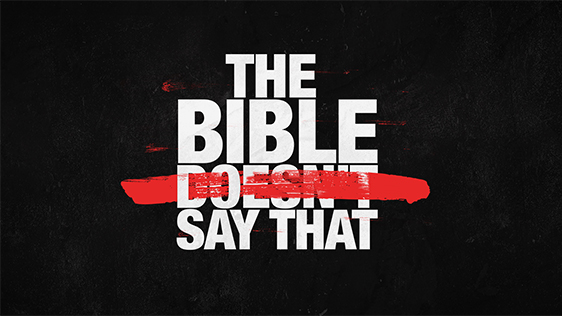
And yet, it’s not in the Bible.
In my experience, when people, and by people I mean Christians, say, “love the sinner, hate the sin” they are almost always referring to the LGBTQIA community. For them, it’s a Christian way to say, “I love my Lesbian/Gay/Bi/Transgender/Queer/Intersex/Asexual friend, but I hate that they’re Lesbian/Gay/Bi/Transgender/Queer/Intersex/Asexual.”
In our post-truth, post-liberal, post-whatever period, “love the sinner, hate the sin” is the means by which we can cover our real feelings all while appearing congenial toward those with whom we fundamentally disagree.
However, over the last few years, I’ve heard Christians use the expression within the realm of political disagreement. And, frankly, its been rather amazing to see how quickly the Christian cover-all for conversations about the LGBTQIA community has shifted to conversations about who, or who isn’t, running the country.
“Well, I know that dirty rotten scoundrel is going to vote for Trump again, but he’s my brother so I still love him” Or, “If Joe Biden is elected he’s going to absolutely ruin this country, but he’s a Christian so I’ve got to try and love him.”
So, whether it’s disagreements about who can get married or who can lead the church or who should be President, love the sinner, hate the sin has become our go-to expression.
Love the sinner, hate the sin.
It sounds good, but in actuality it’s rather difficult to hate another person’s sin alone, without harming the sinner.
Sin! Can you believe you’re listening to a preacher talk about sin? We don’t talk about it much anymore in mainline protestant circles.
Pastors, like me, would rather talk about God’s loving nature, God’s unending forgiveness, God’s desire for mercy, instead of God’s judgment.
We would rather tell people like you to love your neighbors than to tell you to tell your neighbor that they’re sinners.
We would rather skip over the hard and strange passages about condemnation than truly proclaim that God’s scripture is still speaking something fresh and new even today.
But for a long time, and I mean a LONG time, sin was THE thing that pastors talked about – sinners in the hands of an angry God, fire and brim stone, repent or burn forever.
That stuff.
We’re largely afraid of sin today. And not sin as a particular set of behavioral patterns, but because talk of it simply makes us uncomfortable. I’ve heard from countless people on countless occasions how they don’t want Sunday morning to feel like a drag on top of their already difficult lives, so preachers like me talk about the Gospel without ever mentioning sin.
In fact, I had a professor in seminary who once taught us to preach ten sermons about grace for every one sermon about sin.
And, because it has been removed from the lexicon of church, we don’t really know what sin is anymore.
In both Hebrew and Greek the words for sin basically mean “to wander from the path” or “to miss the mark.” Sin is any action, thought, or behavior that divides us from God and from one another. Sin can be a choice, or a lack of making a choice, that results in failing to do something we know we should.
And here’s the chief thing about sin: We all do it.
All of us.
From the preacher preaching right now to every person listening.
We are all sinners.
But, more importantly, we are all sinners for whom Christ died.
Love the sinner – of course we’re supposed to love the sinner – that’s what Jesus did. The problem with it is that Jesus does not call us, his followers, to love sinners, but to love our neighbors.
And the distinction is important. It is important because if we say, “we’re going to love sinners” we will automatically view others as sinners before being our neighbors. Which, even though its true, it tends to put us in a place of judgment where we are the righteous and they, whoever they are, are not.
Loving sinners is further problematized by the fact that we already often understand and label others by their mistakes and failures and sins. Regardless of when the sin occurred, or even the frequency, we are very quick to call people cheaters, adulterers, liars, etc.
Or, to put it another way, instead of seeing our neighbors as neighbors, we tend to see them through the lens of their biggest mistake.
When I started at my first church I was pretty nervous. I was fresh out of seminary, with a head full of ideas, and no real understanding of what I had gotten myself into.
Nevertheless, I found myself unpacking all my big and important theology books in my first office, all while day dreaming about what to say in my first sermon, when I opened the top drawer of the desk and found a sealed envelope with the words, “For The New Preacher” on it.
Up to that point I had not had a single conversation with the pastor I was following – the pastor had recently retired and moved away and I was therefore entering the church without any knowledge of the church.
But there was this envelope, in the desk, for me, and it was clearly left by the last pastor.
So, eager to glean anything that I could, I tore it open.
Inside I found a solitary piece of paper with the words, “DO NOT TRUST.”
Underneath which were five names of individuals from the congregation.
Can you imagine? No matter how hard I tried to forget the note, no matter how hard I tried to embrace the particular individuals in spite of what I read, my entire perspective had been upended by those three words: “DO NOT TRUST.”
The same thing happens when we view others as sinners first, and neighbors second.
And yet, of course, Christians are called to love sinners.
Because, in the end, that exactly what Christ does for all of us.
All of us would do well to remember that we’re in the same boat with everyone else. Which is to say, sinners are who we are. The best of us and the worst of us, we’re all sinners. The challenge with that recognition is that we are almost all better at recognizing the sins in others far before we can recognize them in ourselves.
Which brings us to the second part of the statement in question today. Love the sinner, hate the sin.
Jesus says, “Why do you look for the speck in your neighbor’s eye, but do not notice the log in your own eye?”
We’re mighty good at seeing and pointing out the sins in others. That’s what Facebook and Twitter are all about! There’s just something so enjoyable when we can vent about the sinners in our midst and all the problems they’re causing for the rest of us!
To bring it back to politics for a moment: We’ve seen the Democratic and Republican National Conventions in the last two weeks with leaders from both parties speaking publicly about who should be elected (or re-elected) come November. And, without getting into specifics, both parties spent the majority of their conventions not talking about themselves and what they want to accomplish, but what’s wrong with the other party and how if those other people over there are elected (or re-elected) it will ruin everything.
Judgement, contrary to the commands against it by Jesus, is our cup of tea.
And whenever we “hate the sin” we jump straight up onto pedestals of our own creation to look down about the weak.
Jesus himself spent his whole ministry with sinners: drunks, prostitutes, thieves, murderers, traitors, and countless others who sinned against the Lord. You know, people like us.
Jesus routinely chose to gather with the likes of the worst to break bread, to offer healing, and, perhaps most importantly, to offer them most precious gift of all: his time.
And he said to all those sinners, “Follow me.”
But Jesus never, not even once, said to any of them, “I love you, but I hate your sin.”
Instead, when Jesus encountered the utter depravity of those in his midst, he offered them, strangely enough, forgiveness.
But we are not like Jesus. We regularly fail to love the other as brother and the stranger as sister. We see the world in all of its wrongness and we believe, deep in our bones, that the problems of the world can be blamed entirely on other people.
Even preachers, preachers like me, fall into this trap. Just take a gander at some of the sermons online throughout this pandemic, there’s a pretty good chance you’ll find me, standing right here wearing a slightly different outfit, calling out the mistakes of others. I mean, this whole sermon series “That’s NOT In The Bible” is about calling to question the Christian types who use these non-biblical expressions which, at the end of the day, is remarkably judgmental!
And yet, the irony notwithstanding, saying “love the sinner, hate the sin” makes us purveyors of judgment. It gives us the space to ridicule and belittle those with whom we disagree all while maintain some semblance of a Christian disposition. But whenever we fall back to that frame-of-reference, whenever we use it as the means by which we can justify our judgements, we fail to recognize the logs in our own eyes.
Should we pretend then that sin doesn’t exist and that we can continue merrily doing whatever we want whenever we want?
Or course not.
There is sin in the world, plenty of it. But before we go out pointing at all those sins, we all do well to look in the mirror.
Because all of us make bad choices. We all avoid doing things we know we should do. We all flock together for like-minded judgments against others. And we all keep dropping vaguely Christian expressions that aren’t in the Bible.
But, in the end, Jesus looks right at us, right into the depths of our being, and says, “I forgive you, log and all.”
And that’s rather staggering. It’s staggering because we don’t deserve it.
Just look at the parables; more often than not they end with someone throwing out the ledger book, or offering forgiveness before an apology, or being invited to a banquet they have no business attending.
Just look at Jesus life; pronouncing forgiveness from the cross, or reconciling with the abandoning and disciples in the upper room, or choosing the murderous Paul to be the chief evangelist of the first century.
God in Christ knows the prejudices we’re ashamed of (and even the ones we’re proud of), God knows the golden calves we worship instead of Him, God sees all of our self-righteous indignation, and still says, “I forgive you, log and all.”
God has read all the emails we craft out of anger but are too afraid to send, God witnesses the manifold ways we lie to our families and friends, God knows our internet search histories and still stays, “I forgive you, log and all.”
God is there with us in the comments section of Facebook, God hears the sighs we offer in response to those on the opposite end of the political spectrum, God knows about the biggest mistake we’ve ever made and still says, “I forgive you, log and all.”
Love the sinner, hate the sin.
We say it, we read it, we might even live by it (or think we live by it), but it creates more problems than it solves. Sure, loving sinners is what we’re supposed to do, but it often results in us lording it over those we deem sinners, which doesn’t sound a whole lot like love to begin with.
Loving sinners is the aim of the church, but most of the time we fail. We’ve simply got logs too big in our eyes to do much of anything.
Thanks be to God, then, for Jesus Christ who loves us and forgives us in spite of those logs. Amen.
“Let’s fix our eyes on Old Glory and all she represents… let’s fix our eyes on the author and perfecter of our faith and freedom, and never forget that, ‘where the spirit of the Lord is, there is freedom,’ that means freedom always wins.”
So said Vice President Mike Pence during a live speech last night in the midst of the Republican National Convention.
And it’s nothing short of idolatry.
I’ve heard, time and again, to keep politics out of the church. And, frankly, I sympathize with those who don’t want to hear about political proclivities from the pulpit. I sympathize with those who believe the United States of America was founded on the separation of church and state.
And yet, when a politician like Mike Pence stands and speaks in such a way to insert the church into the midst of the state I, a member and leader of the church, can no longer remain silent.
He literally swapped out Jesus for “Old Glory” and “this land of heroes”. Which is just another way of saying: Mike Pence put forth a theology in which America is synonymous with the Kingdom of God.
Let the reader understand… Those things are truly mutually exclusive.
Back in July I put up a short, and to the point, tweet about how American Flags should not be present in church sanctuaries. I did so because America and the Church are not the same thing and when the Flag is present next to the Cross (or next to the altar) it synthesizes those things together.
I have, for a long time, felt the dissonance between the Flag and the Cross of Christ and I have written about it at length on a number of occasions. That I feel so strongly is a result of the Gospel’s insistence that our, that is Christians’, truest citizen can be found in heaven and that our truest freedom comes from Jesus, not the US of A.
As of writing this post, that tweet about the Flag in the sanctuary has been seen over 750,000 times and over 93,000 people have interacted with it.
The responses to the tweet, and to American Nationalism within the realm of the church, were fairly predictable.
On one side, people were deeply offended by the thought of the flag being removed from the sanctuary (or now calling into question Mike Pence using the Gospel as a political prop). I was implored to realize that the flag symbolizes sacrifice (a sacrifice akin to Christ’s?) and to take it away is unpatriotic (if not treasonous).
On the other side, people expressed their concern with the proximity of the Flag to the worship of God (or now to it being used as a political mechanism in a speech). They remarked that we, who call ourselves Christians, cannot serve two masters (America and God), that God doesn’t belong to any particular nation state (despite what politicians might tell us), and that to conflate these two thing together is a remarkable American phenomenon (we, that is Americans, are some of the only people for whom putting the Cross near the Flag is a regular occurrence).
In the last two weeks we, as a nation, have made it through both the Republican and Democratic National Conventions. We’ve heard all about the importance of freedom and American exceptionalism but, for Christians, it’s vitally important to remember that our greatest freedom came long before George Washington, that our glory is far older than “Old Glory”, and that Jesus is not synonymous with the USA.
Our obsession with the Flag, and political ideologies, is what Jesus calls idolatry.
The United States of America, whether we like to admit it or not, has far more in common with Rome than it does with the Kingdom of God. We are the nation state that Jesus offers his words of condemnation. We’re just so drunk on our own self-righteousness to notice.
This week on the Strangely Warmed podcast I speak with Jason Micheli about the readings for the 13th Sunday After Pentecost [A] (Exodus 3.1-15, Psalm 105.1-6, 23-26, 45b, Romans 12.9-21, Matthew 16.21-28). Jason is the lead pastor of Annandale UMC in Annandale, VA and one of the hosts of Crackers & Grape Juice. Our conversation covers a range of topics including middle names, Shea Serrano’s Movies (and Other Things), stinky feet, witnessed suffering, qualitative differences, hardened hearts, exhortations, wedding promises, and the loss of self. If you would like to listen to the episode or subscribe to the podcast you can do so here: God Finds Us












 think and let think