Devotional – Ephesians 5.10-14

Devotional:

Ephesians 5.10-14

Try to find out what is pleasing to the Lord. Take no part in the unfruitful works of darkness, but instead expose them. For it is shameful even to mention what such people do secretly; but everything exposed by the light becomes visible, for everything that becomes visible is light. Therefore it says, “Sleeper, awake! Rise from the dead, and Christ will shine on you.”

Weekly Devotional Image

As I sat here this morning typing the devotional scripture out on my computer, 5006 customers lost power in Staunton, including St. John’s UMC; a particularly fitting moment for reflection on a scripture that discusses visibility, light, and darkness! Everything in my office, the hallway, and the entire church shut off except for my laptop computer (on battery power). Though light was coming in the window, the only thing illuminated within the office was God’s Word staring back at me on the screen: “everything exposed by the light becomes visible, for everything that becomes visible is light.”

the-cross

Instead of staying in my office to write out some narratival reflection on light and darkness, I made my way down the halls to the other part of the building in order to check on our secretary, our teachers, and students in the Pre-School. 

The 4 year-olds thought the power outage was the funniest thing in the world (thats because they think anything can become the funniest thing in the world) and I was greeted with a uproar of laughter when I opened the door to their room. Sensing that my presence was not needed, I went across the hallway to the 2 year-old room; they were having a very different experience. 

The room was silent and dark with the students all huddled together with their teacher in the middle of the room. Because the blinds were drawn, a very limited amount of light was streaming through and it was clear that some of the kids were on the verge of fear. “Pastor Taylor,” one of them began, “Is there a storm outside?” 

Darkness can be a frightening thing. Even though those students had been outside only minutes before, walking in with their parents, the darkness that entered the room brought forth a sense of fear for them. Darkness can envelop us. Darkness can pierce through the deepest core of our souls, because darkness is the unknown.

In Paul’s letter to the church in Ephesus, he cautioned the gathered body to expose the darkness, and do what is pleasing to the Lord. For you, the darkness might not be as obvious as it was to the 2 year-olds this morning, your darkness might be entirely different and difficult to discover, but the darkness is something that waits for each of us. The unknown can instill in us a sense of fear, often appearing insurmountable; the loss of a job or loved one, the inability to communicate with your children, the loss of independence as you grow older, falling short of parental expectations, etc. 

But friends, Christ’s light shines in the darkness. When the power came back on in the building, the lights in the Pre-School shined brilliantly, bringing a sense of calm back to the students. In the same way, Christ’s light brings brilliance to our lives, reminding us of who we are and whose we are.

So, as you go forth into the world today, I encourage you to try and discover what is pleasing to the Lord, pray for God to deliver from any darkness in your life, and know that Christ’s light shines on, and through, you.

Nicodemus and Sidewalk Chalk – Sermon on John 3.1-17

John 3.1-17

Now there was a pharisee named Nicodemus, a leader of the Jews. He came to Jesus by night and said to him, “Rabbi, we know that you are a teacher who has come from God; for no one can do these signs that you do apart from the presence of God.” Jesus answered him, “Very truly, I tell you, no one can see the kingdom of God without being born from above.” Nicodemus said to him, “How can anyone be born after having grown old? Can one enter a second time into the mother’s womb and be born?” Jesus answered, “Very truly, I tell you, no one can enter the kingdom of God without being born of water and Spirit. What is born of the flesh is flesh, and what is born of the Spirit is spirit. Do not be astonished that I said to you, ‘You must be born from above.’ The wind blows where it chooses, and you hear the sound of it, but you do not know where it comes from or where it goes. So it is with everyone who is born of the Spirit.” Nicodemus said to him, “How can these things be?” Jesus answered him, “Are you a teacher of Israel, and yet you do not understand these things? Very truly, I tell you, we speak of what we know and testify to what we have seen; yet you do not receive our testimony. If I had told you about earthly things and you do not believe, how can you believe if I tell you about heavenly things? No one has ascended into heaven except the one who descended from heaven, the Son of Man. And just as Moses lifted up the serpent in the wilderness, so must the Son of Man be lifted up, that whoever believes in him may have eternal life. For God so loved the world that he gave his only Son, so that everyone who believes in him may not perish but may have eternal life. Indeed, God did not send the Son into the world to condemn the world, but in order that the world might be saved through him.

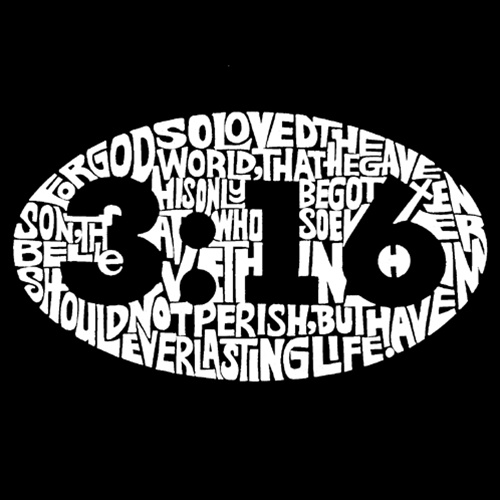
john-3-16

For God so loved the world that he gave his only Son, so that everyone who believes in him may not perish but have eternal life.

There was a pharisee named Nicodemus and he came to visit Jesus at night. As a leader of the Jews it was probably best to visit Jesus under the cover of darkness, and when they met together Nicodemus began to ask Jesus about all he had seen and heard. “Teacher, it is clear to us that you have come from God because no one can perform the signs that you do apart from the presence of God.” “You’re absolutely right,” Jesus replied, “No one can see the kingdom of God without being born from above.”

“Now wait a minute Jesus, how can anyone be born after having grown old? Can someone re-enter their mother’s womb and be born?” Jesus calmly answered, “Listen Nicodemus, no one can enter the kingdom of God without being born of water and Spirit. What is born of the flesh is flesh, and what is born of the Spirit is spirit. Do not be surprised that I told you that you had to be born from above. You know very well that the wind blows where it chooses, you hear the sound of it, but you do not know where it comes from or where it goes. So it is with everyone who is born of the Spirit.”

“But Jesus how can these things be?!” “Nicodemus, are you a teacher of Israel, and yet you do not understand these things? If I had told you about earthly things you would’ve believed,  but now I talk to you about heavenly things and you do not believe. No one has ascended into heaven expect the one who descended from heaven, the Son of Man. Just as Moses lifted up the serpent in the wilderness, so must the Son of Man be lifted up, that whoever believes in him may have eternal life. For God so loved the world that he gave his only Son, so that everyone who believes in him may not perish but have eternal life. Indeed, God did not send the Son into the world to condemn the world, but in order that the world might be saved through him.”

Nicodemus_Jesus

Last week we looked at one of the most well known stories from the Old Testament: Adam and Eve in the Garden. Today I could not help myself from proclaiming one of the most well known New Testament scriptures: John 3:16. In the entire biblical canon, both the Old and New Testaments, there must be few, if any, scriptures that have been so remarkably loved by so many as this text. It is simple and to the point. It opens up endless possibilities. It embodies the hope of all Christians. It is beautiful and appealing. It begins with the beginning and stretches into the far reaches of eternity. It proclaims that which is most fundamental to our faith: that God loves us. 

But the scripture today is about so much more than just that one isolated verse. I am thrilled that so many of us have memorized John 3:16, but we cannot forget about the inquisitive soon-to-be disciple named Nicodemus.

What do you make of this pharisee who came to see Jesus in the middle of the night?


On Tuesday morning, after gathering with the UMW, I made my way outside onto our back parking lot. After months of cold weather, with mounds of snow continually piling up, the Pre-School was finally able to play outside again. Now, let me be clear: I am just like those children. Having been cooped up in this church all winter I was just as, if not more, excited to run around and play outside. The children all had their plastic cars and bikes, some were running around in circles, others were using the fake gas pump to fill up the cars, (capitalism at its finest) when I saw a box of sidewalk chalk.

sidewalk-chalk

I silently made my way to the middle of the black top with the biggest piece of chalk that I could find and I began to draw. Without saying a word, or drawing attention to myself, the children began to congregate around me in a large circle. “Pastor Taylor, what are you drawing?” I heard one them mutter behind me, and I replied, “You’ll see in a moment.” As I stepped back the children moved with me, and there on the blacktop was a giant head with a wide open mouth. Why? I have no idea, but its what I drew. And without really understanding what I was doing I told the children that I was going to jump in the mouth of this mystery person made out of chalk. If I had said that to any of you, you would have thought that I lost my marbles. But with the children, they believed me, they looked into my soul, and some of them even begged me not to do it. But there I stood crouched with my hands at my side, and I jumped in. Of course I acted as if I was falling in and some of the children laughed, and when I was done, I encouraged some of them to jump in. There was a moment when the first girl stepped forward to the edge of the face. As I saw her prepare to jump in I realized she was unsure of what would happen to her. While rocking her hands back and forth I could see the sense of wonder and imagination brewing within her as she jumped right in.

Thats what Nicodemus was like. Jesus is known for having said that whoever does not receive the kingdom of God like a child shall not enter it. Nicodemus had a childlike and inquisitive faith. When confronted with the man of many wonders, Nicodemus wanted to jump right in to learn more about this new kingdom. While his contemporaries scoffed at the new teaching, Nicodemus’ imagination allowed him to see deeply into the truth of Jesus.

The other leaders of the synagogues were already muttering with irritated resentment regarding this so-called teacher who was beginning to develop a following. They disagreed with his strange ways, his strange teaching, and his strange disregard for authority. Nicodemus, however, felt there was indeed something strange about Jesus, but it could not be dismissed so easily. To Nicodemus, God was still speaking through people, and to his ears there was something in this new proclamation worth considering.

So, under the cover of night, Nicodemus went to learn more. He wanted to see for himself, he desired to hear from the man himself, to question and to learn. Instead of giving into the rumors, Nicodemus wanted to base his understanding on first hand experience. He could not settle for hearing about the man, but instead needed to jump straight into the abyss of the Son of Man.

In his willingness to question Christ we discover that Nicodemus was a great man who possessed enviable qualities. While suffocated by the surrounding culture and religions assumptions and expectations, he somehow managed to exhibit an open-mindedness that broke the chains of religious limitation. 

Moreover, Nicodemus is one of the best examples of discipleship. By the end of the gospel account Peter will have denied Jesus in a shameful panic, the rest of the disciples will have scattered or run off into hiding. For all practical purposes, the story had come to a close. But Nicodemus, this strange pharisee from our story today, openly stood forth as one of Jesus’ only remaining friends. Nicodemus dared to risk the punishment of superiors, the resentment of his peers, by paying the last loving rites to the dead body of Jesus that would have been treated as trash by anyone else.

Nicodemus is an understatedly important figure in the Gospel for us in the life of the church. He is so familiar to us, because he is just like us. He asked the kind of questions that many of us would have asked, had we been there with our Lord.

If you take a step back from the account, what Jesus was talking about sounds impossible. How can someone be born anew? Jesus simply responds to our misunderstanding and confusion; its not about being physically reborn as a child, but about being born anew in such a way that you can reorient your life. We must be born anew. Our prayer and our hope should be rooted in the desire to be recreated. Make me another kind of being from what I am. Renew a steadfast spirit within me. Create in me a clean heart. Do all this, O God, so that I can lead a different life. 

The whole point of the gospel is that God can achieve the impossible. Just as God can raise Jesus from the dead, God can achieve the impossible with you and me. And he does it! We see it happening in other peoples lives, our wayward friends who reorient their lives for the better. We have experienced it on some measure in our own lives however small or large. How does God change us? Ah, says Jesus, that is part of the great mystery. The wind comes who knows how, cleansing, refreshing, and then before we know it, its gone.

For God all things are possible. We can be born anew. We can find a new orientation for our lives no matter how young or old we may be. But even greater than this, is the promise of eternal life.

Jesus ends his conversation with Nicodemus with the, now famous, “for God so loved the world that he gave his only Son, that whoever believes in him may have eternal life.”

Martin Luther, the great protestant reformer once said, “If I were as our Lord God, and these vile people were as disobedient as they are now, I would knock the whole world to pieces!” We consistently make a mockery of God’s love by continually disobeying his commands, and by ceasing to love others as we love ourselves. How can God love us when we ruin everything he created including ourselves?

God loves us, because God is love. God loves the world; his foolish, blundering, wayward, and sin sick world. This love utterly breaks through our foolish conceptions of what love means and is; God’s love runs out to lengths that sounds incredible to our human ears because we could never return that same love.

god-god-is-love-lord-love-the-greatest-love-of-all-favim

God is like that remarkable parent who continues to love a child through all the wrong decisions and failures. Picking them up from the police station, driving them back to rehab, sitting with them night after night helping with homework, loaning them money when they fall on hard times. The only difference being that when our love for our children fails, his love for us remains steadfast.

God proves his love toward us by doing all that God can do, and giving all that God can give to help us; stretching himself even to sacrifice his only Son, and hold back nothing.

Thats what Nicodemus learned from his time with Jesus. That in the impossible mystery of God’s created order, God’s love knows no bounds, was made manifest in Christ’s death on the cross for you and for me and for the whole world.

Let us all strive to live like Nicodemus. Let our faith be inquisitive and exciting. Let us all prepare to jump into the unknown, to fearlessly step into a relationship with the triune God, and above all remember that great scripture: God so loved the world that he gave his only Son, so that everyone who believes in him may not perish but have eternal life. To God be the Glory.

Amen.


Devotional – Psalm 95.6-7

Devotional:

Psalm 95.6-7

O come, let us worship and bow down, let us kneel before the Lord, our Maker! For he is our God, and we are the people of his pasture, and the sheep of his hand. O that today you would listen to his voice!

Weekly Devotional Image

“Have any of you ever worked on a farm?” my CPE (Clinical Pastoral Education) supervisor once asked during a reflection session. My group had been gathering every Monday for the past few months to talk about different interactions with patients from Duke University Hospital, and what it meant to be pastorally present in suffering. At the end of a particularly laborious day, our supervisor asked his question about farm life. Most us us had grown up in the suburbs, and therefore had limited experience of farm life. So as we shook our heads in response to his question, he continued on. “Well, when working on a farm you often get the chance to interact with a variety of animals. The cows have to be milked regularly, the chickens’ eggs have to be collected, and, at some point, you’d have to deal with the sheep.”

herd

“Sheep are by far the dumbest animals I’ve ever seen. They are pathetically dependent on a shepherd to watch over them. They are have no sense of direction, often wandering off into oblivion. They are defenseless, prone to becoming a easy snack for any predator. And they are just plain dumb.” (At this point in the conversation, the rest of us were waiting for him to make his point after having rambled about the idiocy of sheep) “And that why I love the fact the we are the sheep, and Jesus is our shepherd. We can be so dumb sometimes, and we so desperately need our Shepherd to help us figure out whats going on.

The psalmist writes, “We are the people of his pasture, and the sheep of his hand. O that today you would listen to his voice!” In many ways, the analogy of discipleship to wandering like a directionless sheep is fitting. How often to we stray from the path that we know is right? How often do we succumb to the temptations (predators) around us in our daily living? And the psalmist tells us exactly what to do when we find ourselves acting like the sheep that we are: Listen to his voice.

As I have mentioned before, Lent is a great time for us to re-evaluate where we are with our God. Are we prone to wandering off like a defenseless sheep in our lives, or are we listening for the voice of our great Shepherd who watches over his flock? Today, let us all recognize our foolish ways that drive us away from God, reorient ourselves back to the great “I AM,” and above all, listen to his voice through prayer, reading scripture, and reconciling our relationships with those around us. 

The Temptation of Temptation – Sermon on Genesis 2.15-17, 3.1-7

Genesis 2.15-17, 3.1-7

The Lord God took the man and put him in the garden of Eden to till it and keep it. And the Lord God commanded the man, “You may freely eat of every tree of the garden; but of the tree of the knowledge of good and evil you shall not eat, for in the day that you eat of it you shall die.

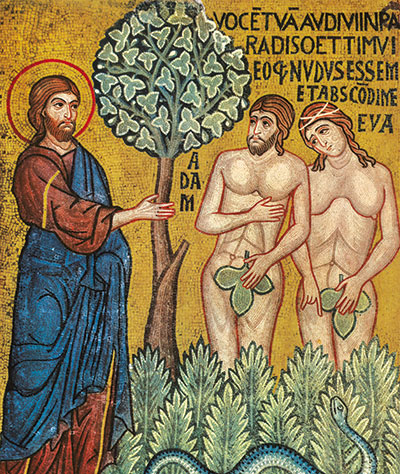
Now the serpent was more crafty than any other wild animal that the Lord God had made. He said to the woman, “Did God say, ‘You shall eat from any tree in the garden’?” The woman said to the serpent, “We may eat of the fruit of the trees in the garden; but God said, ‘You shall not eat of the fruit of the tree that is in the middle of the garden, nor shall you touch it, or you shall die.’” But the serpent said to the woman, “You will not die; for God knows that when you eat of it your eyes will be opened, and you will be like God, knowing good and evil.” So when the woman saw that the tree was good for food, and that it was a delight to the eyes, and that the tree was to be desired to make one wise, she took of its fruit and ate; and she also gave some to her husband, who was with her, and he ate. Then the eyes of both were opened, and they knew that they were naked; and they sewed fig leaves together and made loincloths for themselves.

tree_of_life

The Lord God commanded the man, “You may freely eat of every tree of the garden; but of the tree of the knowledge of good and evil you shall not eat, for in the day that you eat of it you shall die.”

In the entire range of the world’s writings, it would be immensely difficult to locate any passage so brief that has had such immense influence on human thought. I have heard this scripture preached upon countless times, I can remember learning about it in confirmation class years ago, and I can vividly remember struggling with the text as I attempted to explain it to pre-school age children during a particular Vacation Bible School. The story of Eden is so well known and discussed that even most self-affirmed “non-religious” people can even explain what took place in the Garden. 

This passage has been debated, ripped apart, examined, micromanaged, and exegeted for centuries. Generations of Christians have dwelt upon these verses unlike any others to explain the introduction of sin into the world through the one man, Adam.
07-04-012

I know a family that had it all together. The husband and wife always sat next to one another in church, fingers wrapped together as they listened to the sermons week after week. The children were all attractive, known in the community for their well-behaved manners, regular fixtures on the honor roll at school. Because of their wide interests and pursuits the family was known throughout many of the segmented areas of the community; sports, music, drama, politics, faith, etc. On the surface they were that perfect family. Others families would often hold them up on a pedestal and compare their own flawed family to this ideal one. Why can’t my children work harder like theirs? Why don’t our parents love us as much as theirs do?

What no one realized, was that underneath the exposed public appearance, the family was about to fall apart. I don’t know all the details about what happened leading up to the great schism, I don’t know who was to blame for the many rumors than began to spread around town, but I do know that it began with the husband.

He felt unfulfilled. There was a constant nagging sensation that he deserved more than what he had. Though he had that ideal wife, and the ideal children, with the ideal house, and the ideal job, he believed he deserved more.

Thats when a younger woman appeared in his life. He knew that it was wrong to flirt with her, he knew that it was wrong to lie to his wife about spending time with her, but he did it anyway. As time went on, casual get-togethers became more frequent, the conversations moved from flirting to romance, and soon they were engaged in an affair.

I don’t know if this is true, but I imagine that late at night, when laying awake in his bed he would rationalize what he had done: If she makes me happy how can it be wrong to be with her? I deserve her love. I deserve this kind of happiness in my life.

Eventually he could no longer continue to live the lie. He told his wife what he was doing, without remorse he left her and the children, and started a new life.

Europe_a_Prophecy,_copy_D,_object_1_(Bentley_1,_Erdman_i,_Keynes_i)_British_Museum

In the beginning God created the heavens and the earth. He gave meaning to existence, brought forth light and life, and populated the earth with his creations. The paramount of this creative work were our first parents, Adam and Eve, made in God’s image. They were given everything they needed: life, land, food, companionship, and purpose. At the beginning of our scripture this morning Adam and Eve were content with all they needed, but they did not have everything. 

Enter the serpent; crafty and wise. He said to Eve, “Did God tell you that you could eat from every tree in the garden?” and she replied, “Of course we may eat the fruit of the trees in the garden, but God told us not to eat the fruit of the tree in the middle of the garden, not even to touch it, because if we do we will die.” But then the serpent said, “Surely you will not die! God knows that when you eat of that tree your eyes will be opened, and you will be like God, knowing good and evil.” At that moment Eve saw the tree in a new light, she believed that it was good for food, a delight to the eyes, and that it would make her wise. So, she took the fruit from the tree and ate, gave some to Adam who also ate, and their eyes were opened. For the first time they realized they were naked and they sewed fig leaves together and made loincloths for themselves.

Real temptation is never an offer to fall, but instead it comes as an offer to rise. Notice: the question was not, “Do you wish to be like the serpent?” but instead, “Do you want to be like God?” The truest forms of temptation are indications of strength, not weakness. We are not tempted to do what we cannot do, but what is within our power. The greater our strength, the greater the temptation.

This is how the seductions of sin and temptation present themselves: Want to know a little bit more about life? Want to be a little bit greater than you are already?

The serpent of life, the deepest part of our imaginations, plays on our condition and places the seed of doubt: I know this is wrong, but if the fruit of it is good, what sense can there be in not enjoying it? The way the serpent tempted our first parents in the garden comes to us still this very day, presenting us the idea that we can know better than God.

Reinhold Niebuhr once asked, “Do we belong to God, or do we belong to the devil? We most certainly belong to God, but we are in danger of becoming the devil by imagining that we are God.” That is true temptation at its most frightening degree; you can be like God! In our pride and lust for power, we begin to define our own understanding of good and evil. We become masters of rationalization for the sins and the wrongs we commit.

Thats what happened to the man from that perfect family. Its what happens to each of us when the temptation of temptation dangles before us. We rationalize ourselves out of making the right choice. We instantly become the center of our own universe, our own god; we become the only thing we worship.

And its not just us. This has been going on throughout the entirety of human history, particularly through what has been revealed in scripture. When God told Adam and Eve not to eat from the tree of knowledge of good and evil, they reached out for the dangling fruit and consumed it. When God commanded the wandering Israelites to have no others gods before him, they created their own golden calf and began to worship themselves instead. When Jesus called Peter to follow him, Peter was quick to deny Jesus three times as he was being led to the cross. When temptation strikes, it hits us in the very core of our beings, and once it enters the realm of possibility it can be dangerous and evenly deadly.

But the fact remains that we live in a universe which God controls, not us. When God gave each of us the breath of life to exist in this world, to live, laugh, and love, he did not intend that we should take over the school and change the expectations to suit ourselves.

Temptation will confront us whether we ask for it or not, it hangs out like fruit begging to be plucked and consumed. In order to confront our temptations we are called to recognize that we live in a created world where we must accept reality and not believe that we can indulge in every single wayward fantasy. There are some things in life that we are not to have, some prizes we shall not win, and some ambitions that the grace of God will not let us gratify. When our consciences tells us, as it told Adam and Eve, that some particular temptation is not for us, we do well to not rationalize our curiosity or our appetite into an justification for reaching out to take it.

We live in a risky world full of temptations. Some of us are strong enough on our own to resist the constant bombardment of sinful choices, but most us will give into temptation when it appears before us. As Christian disciples we recognize that God means for us to grow in this difficult world, surrounded by influences clamoring for our allegiance. Our call is to not shift our responsibility onto someone or something else, but to make our own creative choices for the good.

Oscar Wilde said, “I can resist everything except temptation.” Many people act as if no one could reasonably be supposed to resist temptation. Temptation is a present element in every life and it comes to everyone. But it is possible to confront our temptation and not yield to their alluring powers. Just because a choice exists, that doesn’t give us reason for choosing the wrong one.

In my experience, one of the best ways to resist the temptation of temptation is to speak them aloud and confess them to our trusted friends or loved ones. The cost of this honesty is a remarkable amount of vulnerability. To confess our weaknesses requires a fundamentally strong trust with others.

So, confession time. One of my greatest temptations is to believe that I deserve this. That somehow I have been blessed with such an incredible community, church, and vocation because I have earned it. That the reason so many new people have been coming to church is because of ME. Now on some level this is true, I have worked hard to be where I am, but there is a remarkable temptation to believe that I have achieved this all on my own. There is a power that comes with the pulpit, a tempting power to become the center of my own universe, to preach myself, to be the shining example for all of you to follow.

The truth, however, is that I am called to proclaim Jesus Christ, and him alone. I am a flawed and weak creature, guilty of sin and falling short of God’s glory. I want all of you to know about this temptation in my life, so that in speaking it aloud I might confront it, and that by making it known all of you can help me battle against it.

For some of us, though, speaking aloud a temptation is too difficult. The amount of vulnerability required to admit a temptation is so staggering that we cannot even imagine sharing it with someone else. Thats okay. There is another way that we can begin to address our temptations. Before sharing it with someone else, we do well to admit our temptations to ourselves. 

WoodFire

In each of your bulletins you will find a blank piece of paper. I encourage you to take it out, and in the next few moments prayerfully consider the temptations in your lives; the true and deep temptations that you wrestle with. Write one of them down on that piece of paper. Admit the temptation to yourself so that you can begin to resist it. When our service ends this morning there will be a fire (in a fire pit) on the front lawn of the church. Throw your confession of temptation into the fire. Let God take that temptation from you. Let the God who was revealed in Jesus Christ, help carry your burden. Watch you paper burn in the fire knowing that God is with you in this life, walking beside you, loving you in spite of your temptations.

(Pause to write down the temptations)

My friends, here we are taking our first steps into the season of Lent. This liturgical journey is always tough. But it gives us an opportunity to confront the different sins and temptations in our lives. Over the next six weeks we can begin to reconcile our broken relationship with God, with others, and with creation. As you prepare to leave from this place, watch your temptation burn in the fire. Repent and believe the Good News of Jesus Christ. Witness the flame of the Holy Spirit consume that temptation in your life knowing that nothing will ever separate you from the love of God in Jesus Christ our Lord.

Amen.

Devotional – Genesis 12.1-4

Genesis 12.1-4

Now the Lord said to Abram, “Go from your country and your kindred and your father’s house to the land that I will show you. I will make of you a great nation, and I will bless you, and make your name great, so that you will be a blessing. I will bless those you bless you, and the one who curses you I will curse; and in you all the families of the earth shall be blessed.” So Abram went, as the Lord had told him; and Lot went with him. Abram was seventy-five years old when he departed from Haran.

Weekly Devotional Image

“When you get appointed to a church the worst thing you can do is go visit the shut-ins,” said a professor of mine in seminary (who will remain nameless). “I am sick and tired of hearing about new clergy full of vibrant passion and energy wasting it on visiting the people who have already had their faith developed. Pastors form the past were responsible for them. The best thing you can do when you get appointed to a new church is not to visit the older shut-in members, but go visit all the members under the age of thirty. Now there won’t be many younger than thirty so it shouldn’t take you very long. That’s mission.”

I was flabbergasted. Here I was sitting in the hallowed halls of Duke Divinity listening to a professor telling us to do exactly the opposite of what I imagined my first few weeks at a new appointment would look like.

I believe he was wrong. The best thing that a pastor can do when he/she enters a new appointment is to visit the shut-ins and all the members under 30. In fact the best thing a pastor can do is visit with all the people that make up the local church community. The idea that the older congregants have already had their ministry does a disservice the goodness of God’s creation and the understanding that all of us make up the body of Christ regardless of age and experience.

I love the call of Abram as described in Genesis 12. Abram is called to abandon the security of his homeland, the comfort that comes with social and family support. Abram would need to rely on the Lord for guidance because this call upon his life tested, as John Wesley said, “whether [Abram] could trust God farther than he could see him.” And notice how short his obedience is described in the passage: “So Abram went.” No indecision, no debating the outcome, no weighing the pros and cons, just go. But even more than this I love the fact the the story ends with the simple affirmation that Abram was 75 years old when he departed from Haran.

Many-of-God’s-finest-men-in-the-Bible-were-Polygamists-Abraham

If God chose to establish the covenant with a 75 year old man who dropped everything to follow in obedience, just imagine what God can do with you, whether you’re 5 or 85 years old. Christian discipleship is not dependent on our age, but instead on our willingness to hear God’s call and go.

No matter where you are on your faith journey, whether you deeply committed and active in a local church, or if you feel like you’re on the fringes of a church community, whether you’re young in the faith, or you’ve been attending church for as long as you can remember, God has a place and a call for you. It takes all of us to make up the body of Christ.

So, what is God calling you to? What might you have to drop in order to go where God needs you?


Clean Hearts – Homily for Ash Wednesday on Psalm 51.1-12

Psalm 51.1-12

Have mercy on me, O God, according to your steadfast love; according to your abundant mercy blot out my transgressions. Wash me thoroughly from my iniquity, and cleanse me from my sin. For I know my transgressions, and my sin is ever before me. Against you, you alone, have I sinned, and done what is evil in your sight, so that you are justified in your sentence and blameless when you pass judgment. Indeed, I was born guilty, a sinner when my mother conceived me. You desire truth in the inward being; therefore teach me wisdom in my secret heart. Purge me with hyssop, and I shall be clean; wash me, and I shall be whiter than snow. Let me hear joy and gladness; let the bones that you have crushed rejoice. Hide your face from my sins, and lot out all my iniquities. Create in me a clean heart, O God, and put a new and right spirit within me. Do not cast me away from your presence, and do not take your holy spirit from me. Restore to me the joy of your salvation, and sustain in me a willing spirit.

Ash_Wednesday

You are dust, and to dust you shall return.

For the last thousand years, these words have been traditionally used for this particular day. A priest or pastor will place a finger in the ashes, making the sign of the cross on a forehead, while whispering the words “You are dust, and to dust you shall return.”

These are frightening words. We have gathered today to be reminded of our own finitude, to mark the beginning of our forty day observance of Lent, to engage in a period of prayer and fasting. This is a solemn event in the life of our liturgical church, for today we are being asked to think about our own mortality.

When I was in seminary one of my professors told me that the hardest thing about being a pastor is that I have to remind people that they are dying when everything and everyone else tries to claim the contrary. I have been given the unenviable task of proclaiming the true and deep message of Ash Wednesday; we are dust, and to dust we shall return.

Most of us tempted to believe that we are invincible and that life will never catch up with us. We are tempted to believe that death isn’t real. Countless commercials and products are advertised with the sole purpose of prolonging our inevitable end. Even here in church, we spend so much time talking about the joy and hope of God in the resurrection from the dead, that we fail to spend adequate time reminding ourselves of our own finality.

Today, as we take our first steps into Lent with the ashes on our foreheads, we are like the psalmist who cried out, “Have mercy on me, O God, according to your steadfast love… wash me thoroughly from my iniquity, and cleanse me from my sin.” This is a time for us to deeply reflect on the ways that we can be better, the relationships to reconcile, and the new habits to cultivate. Lent is less about giving something up, and more about reorienting yourself back to God in order to use this life that has been given to you. Our desire is for God to create in us clean hearts and to put a new and right spirit within us. We have been given the greatest gift, the gift of life. The question we need to ask ourselves is this, “What are we doing with that great gift?”

In our narthex there is a plaque hanging on the wall in honor of Zig Volskis, a beloved former pastor of St. John’s. On the plaque you will find these words: “So teach us to count our days that we may gain a wise heart” (Psalm 90.12). Life is a fleeting and precious thing, one that we should not take for granted. Let us all learn to count our days, to reflect on our many blessings, rejoice in the gift of life and let our lives be fruitful for those around us.

Death is a frightening thing. Contemplating our finitude and celebrating it in worship is by far one of the strangest things we do as a church. But in the end, we do it so that we may gain wiser hearts, so that God might sustain us in the midst of our sinful lives, and above all so that we can appreciate the sacrifice of Christ on the cross and the glory of the resurrection. Let God use this Lenten season to help create in us clean hearts.

ash-wednesday-1-590x421

My friends, you are dust, and to dust you shall return. For the next forty days we will rest in the shadow of the cross, but remember this, the glory of the resurrection outshines everything, even death. 

Amen.


Mountains and Valleys – Sermon on Mark 9.2-8

Mark 9.2-8

Six days later, Jesus took with him Peter and James and John, and led them up a high mountain apart, by themselves. And he was transfigured before them, and his clothes became dazzling white, such as no one on earth could bleach them. And there appeared to them Elijah with Moses, who were talking with Jesus. Then Peter said to Jesus, “Rabbi, it is good for us to be here; let us make three dwellings, one for you, one for Moses, and one for Elijah.” He did not know what to say, for they were terrified. Then a cloud overshadowed them, and from the cloud there came a voice. “This is my Son, the Beloved; listen to him!” Suddenly when they looked around, they saw no one with them any more, but only Jesus.

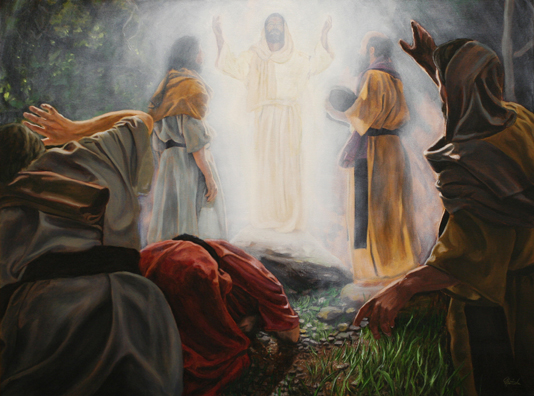
the-transfiguration

And he was transfigured before them, and his clothes became dazzling white, such as no one on earth could bleach them.

Six days later. An innocuous beginning to our scripture today. In order to properly experience the depth of the transfiguration, we have to go back six days in the life of Jesus and his disciples. Before hiking the mountain with the inner circle of Peter, James, and John, Jesus asked the disciples about his identity. “Who do people say that I am?” “Well Jesus, some call you John the Baptist, and others call you Elijah or one of the prophets.” “Okay, but who do you say that I am?” Peter answered, “You are the Christ, the Messiah.

Jesus then immediately taught his disciples about his impending death, and predicted his resurrection for the first time; “The Son of Man must undergo great suffering, and be rejected by the elders, the chief priests, and the scribes, and be killed, and after three days rise again.” Peter, the great representative for the rest of the disciples, the great representative for all of us, pulled Jesus aside and began to rebuke him for making such claims: “the messiah cannot be rejected by the elders and be killed Jesus, thats not what a messiah is supposed to do.”

Jesus quickly stopped Peter in his tracks, “Get behind me Satan! For you are setting your mind not on divine things but on human things.”

And so, six days later, perhaps when the disciples needed a reinforcement of faith after such a strange episode, the inner circle was invited by Jesus to the top of a mountain. I can imagine their wavering faith as they slowly walked along the path, unable to comprehend the new understanding of what it meant for their Lord to be the Messiah.

In the cool of the morning, with the dew still hanging in the air, Jesus was transfigured before the disciples. His clothes became dazzling white beyond human comprehension. And there, on either side of Jesus appeared Elijah and Moses. Then Peter said aloud, perhaps while cowering in fear, “Rabbi, it is good for us to be here; let us make three dwellings, one for you, one for Moses, and one for Elijah.” Suddenly, a cloud overshadowed them, and from the cloud there came a great voice: “This is my Son, the Beloved; listen to him!” And when they looked around, they saw no one with them anymore, but only Jesus.

4, Example 2a, The Saviour's Transfiguration, an early-15th century icon from the Tretyakov Gallery, attributed to Theophanes the Greek

Today, we celebrate Transfiguration Sunday. In the life of Jesus the Transfiguration was a defining moment that would come to determine the course of his mission to the world. From this point forward the trajectory of Jesus and his disciples was set toward Jerusalem. For the modern church, Transfiguration Sunday is celebrated immediately before Ash Wednesday and the beginning of Lent. Just as the Transfiguration trained the disciples’ eyes to the coming death and resurrection of Jesus, so too we are training ourselves to make our way through the coming forty days of Lent preparing for the celebration of Easter.

What do you think of this story? It has forever been a favorite of mine for many reasons. What does the appearance of Elijah and Moses mean for the disciples and Jesus? What must it have felt like to be there with Peter, James, and John to have witnessed Jesus transfigured before them? How powerful and enveloping was the cloud and God’s voice declaring Jesus as his Beloved? A whole sermon series could be devoted to these 7 verses. However, today we are going to focus on Peter’s peculiar request to build three dwellings on top of the mountain.

Peter is both frightened and ignorant. Within the last week he had made the stunning confession of Jesus as the Christ and then he was connected with the likes of Satan and commanded to move behind Jesus. Like many Christians, Peter was willing to go wherever Christ called him, though that didn’t necessarily mean he understood everything that was going on. This event had to have been remarkable for the three disciples present. In a brilliant fashion Jesus was validated as the Son of God. In spite of the shock regarding his own suffering and approaching death, this transfiguration confirmed him as the Lord’s anointed, the beloved Son.

Perfectly timed as a reinforcement for the disciples’ faith, particularly in the wake of Peter’s movement between perfection and ignorance, Peter responds to this glorious moment with the desire to build three dwellings. Behind his words was the need to prolong the experience. Who among us would not want to stay up there on the mountaintop with the transfigured Jesus flanked by Moses and Elijah? This was a moment high worth; the true, embodied, and illuminated understanding of Jesus. It was an experience that any of us would have liked to make permanent. However, life is not made up of mountaintops alone, for every glorious mountain there is a equally draining valley. It was good for Peter to experience the transfiguration, but it was NOT good for him to try and prolong the experience. Life must continue to move on.

A few months ago I was blessed with the opportunity to preside over my first wedding. Brian and Sarah are a delightful couple and I was thrilled with the invitation to join them together in marriage. The wedding went off without a hitch, well thats not exactly true, I had to remind the nervous father of the bride to stand with her until he gave her away, and then I had to direct him to sick back down after he had finished. Nevertheless, when it came time for the homily, I stood before Brian and Sarah, remarking about the sanctity of marriage and the role that God plays in all of our unions. I ended the homily with something I tell all couples preparing for marriage:

1175334_605087304526_1820722616_n

“From this point forward your individual stories are coming together. I want to tell you something that most will try to claim the contrary. Today will NOT be the happiest day of your lives. If you limit the joy of what you can experience in marriage to this one particular Saturday afternoon, it will cease to be organic and life-giving but instead repetitive and dull. You have an incredible story in front of you, one that has yet to be written, you are traveling as strangers into a strange land. There will be countless mountains and valleys and so much of your horizon is still beautifully unwritten.

Like Peter, many of us want to desperately hold on to those “transfigured” moments of our lives. We want to experience events where we get a little slice of heaven, but as soon as they fall in our laps we are often unwilling to let them go. The excitement of Christmas is often replaced by the anxiety and dull atmosphere of January. The beauty of a newborn baby is quickly rivaled by the long nights of crying and wailing. The joy of summer break from school flies by too quickly and before we know it we are sitting in a new classroom surrounded by unfamiliar faces. Life is made up of both mountains and valleys. Neither one can, nor should, last forever.

shenandoah-blue-ridge_2014_600x450

Transfigured moments are all around us, particularly here in worship. Worship is supposed to be a shining hour, high and lifted up, an event where the glory of God the Father, Son, and Spirit shines radiantly throughout our space. Like the disciples gathered on the mountain, worship is supposed to surround us like a cloud when Jesus and his revelation of God are made known to each of us. Worship, when done well, produces a glow unlike anything else on earth. Worship, beauty, joy, love; all of these are those wonderful transfigured moments that surround us daily. A life that has no transfigured hours of worship is poor, no matter how rich and decadent the elements may be.

So, just think for a moment, imagine the many areas in which the mood of Peter, when he said, “Lets just stay here” blocks the possibilities of life. Life cannot just be one big wedding celebration, nor can it be replaying our favorite song over and over and over again, nor can it be a endless worship service here at St. John’s. Whether we like it or not, we cannot stay on top of the mountain forever, we have to move and go on to new experiences of life, faith, and understanding.

As the disciples grew closer and closer to their Lord, his words and proclamations became increasingly difficult to understand and follow. While making their way to the inevitable result of Jerusalem, the disciples needed to hear Jesus. The voice from the cloud echoed out, “listen to him!” and I can think of no better words for all us to hear this morning.

When I was 16, standing on the sidewalk along Ft. Hunt road in Alexandria, Virginia on a cold and dark December evening my life was forever changed. I am a product of “listening to him.” I stand before you as the pastor serving this church because I was enveloped in that strange cloud of God’s grace, without a big booming voice, without particular words, and yet I somehow knew that I could do nothing with my life other than serving the church. My life has been filled with mountaintop experiences, some of them on literal mountain tops, but there have also been deep and seemingly endless valleys.

And so, what are to make of us this Transfiguration? That day when he took the three disciples to the mountainside to pray, his countenance was modified, his clothing was aflame. Two men appeared, Moses and Elijah came. Lost in the cloud a voice, have no fear, we draw near, lost in a cloud, a sign, Son of Man turn your ear.

We are just like those disciples standing on the mountainside with Jesus. We are given glimpses of heaven regularly in our lives. We are blessed to be showered with transfigured moments if we have eyes to see and ears to hear. However, life must be made of both mountains and valleys. Like the disciples we are called to listen to Jesus when the time comes to re-enter the reality of life. We have the privilege of listening to Jesus and having his words become incarnate in the ways that we live our lives.

lord__s_supper_by_bclary-d37hhzp

If you want to truly experience a transfigured moment in your life, look no further than this table with the gifts of bread and wine. This banquet that has been prepared for you and me is an encounter with the divine, it is a little slice of heaven for us. This is our mountaintop, that incredible and glorious moment when Jesus’ true radiance shined in a way unlike anything else on earth. In this communion we are brought into union with the triune God, we are nourished with the grace of God for our journeys of faith. 

So, as we prepare to feast at Christ’s table, remember that we cannot stay on the mountain forever. We will depart from this place and enter the world filled with the body and the blood. Listen to him in the valleys of life knowing that we are always going on to something new and wonderful. Let us all strive to be transfigured and delight in God’s will, walking in his ways forever. God is with us at the wedding receptions and in the hospital waiting rooms, God is with us when we fall and love and when we lose our jobs. God is with us when we cradle new-born children for the first time and when they leave us to begin their own lives. God is with us on the highest mountains and in the deepest valleys. Listen to him.

Amen.


Devotional – Matthew 6.1-4

Devotional:

Matthew 6.1-4

“Beware of practicing your piety before others in order to be seen by them; for then you have no reward from your Father in heaven. So whenever you give alms, do not sound a trumpet before you, as the hypocrites do in the synagogues and in the streets, so that they may be praised by others. Truly I tell you, they have received their reward. But when you give alms, do not let you left hand know what your right hand is doing, so that you alms may be done in secret; and your father who sees in secret will reward you.”


While I was in seminary Lenten disciplines became an incredible competition. Lent used to be a time of preparation for believers, a time of prayer, penance, repentance, self-denial, and catechesis. Today, in many churches, Lenten observance has been compartmentalized into giving up some of our temptations during the period between Ash Wednesday and Easter Sunday. At Duke Divinity it was not uncommon to hear subtle braggings throughout the halls; “This year I’m giving up sweets (and because we were in seminary there was always a theological reason) and every time I want to eat a cupcake I will pray instead.” Or “Im going to give up eating meat in order to honor the glory of God’s creation.” Or “I’m giving up television so that my focus can remain on the Word of God.”

I love my friends and peers from divinity school, but two years ago I outdid all of them. I gave up four Fs: Facebook, Fast-food, Fermented Drinks, and Facial Hair (which meant that I shaved every morning for forty days).

No Beard

No Beard

What I didn’t realize, at the time, was how often I shared and bragged about what I was giving up. As people would compare their sacrifices and temptations during that liturgical season I was there waiting for the right moment to outshine them with the ultimate sacrifices of a social network, McDonalds, Beer, and my Beard.

I am ashamed at how often I can easily turn the gospel around to be more about my own selfishness than the Good News of Jesus Christ.

When Jesus addressed the crowds and warned them about their piety regarding alms-giving it was all about intentionality. Whenever you drop your offering in the plate, whenever you bring your donations to the local mission, whenever you bring food to the local soup kitchen to not brag about it and share the news with everyone else. If that is your motive, than you are serving yourself and not others.

lent_desktop

As we prepare to enter the coming weeks of Lent I encourage each of you to remain committed to doing God’s good work in the world not for yourself, but for the glory of God. If you choose to give up a temptation during Lent do not brag about it to your friends and peers but focus instead on spending more time with God. May God grant each of us the strength to be better and love deeper.


Raphael’s “The Transfiguration”

Transfiguration_RaphaelThis Sunday I will be preaching about Peter’s peculiar desire to make three dwellings for Jesus, Elijah, and Moses on the mountain during the transfiguration. In his words, I believe, was the desire to remain on that mountain in order to continually experience God’s radiance. However, life is full of both mountaintops and valleys. It was good for Peter to experience the transfiguration; it was not good for him to try to prolong it.

Raphael’s The Transfiguration captures the incredible contrast between the mountain and the valley. The top of the frame witnesses to the glory and radiance described by the synoptic writers, the beauty of that striking event. The bottom shows the tragic need and suffering of the disciples.

The image serves to help connect the two seemingly opposed experiences. Our lives are made up of both joy and suffering, righteousness and sin, success and failure. It is in a painting such as this that we are reminded of the true value of the incarnation; God came in the form of flesh in Jesus Christ, fully God and fully human, to be celebrate with us in our triumphs and weep with us in our sorrows.

Son of Man, Son of God

In preparation for Transfiguration Sunday (March 2, 2014)


“The Transfiguration” by Sufjan Stevens

When he took the three disciples to the mountainside to pray

his countenance was modified, his clothing was aflame

Two men appeared, Moses and Elijah came

They were at his side

The prophecy, the legislation spoke

Of whenever he would die


Then there came a word of what he should accomplish on the day

Then Peter spoke, to make of them a tabernacle place

A cloud appeared in glory as an accolade

They fell on the ground

A voice arrived, the voice of God

The face of God covered in a cloud


What he said to them, the voice of God, the most believed son

Consider what he says to you, consider what’s to come

The prophecy was put to death, was put to death

And so will the son

And keep your word, disguise the vision

Till the time has come


Lost in the cloud, a voice

Have no fear, we draw near

Lost in the cloud, a sign

Son of man, turn your ear


Lost in the cloud, a voice

Lamb of God, we draw near

Lost in the cloud, a sign

Son of man, son of God