We Don’t Belong To Babylon

Isaiah 44.6-8

Thus says the Lord, the King of Israel, and his Redeemer, the Lord of hosts: I am the first and I am the last; besides me there is no god. Who is like me? Let them proclaim it, let them declare and set it forth before me. Who has announced from of old the things to come? Let them tell us what is yet to be. Do not fear, or be afraid; have I not told you from of old and declared it? You are my witnesses! Is there any god besides me? There is no other rock; I know not one.


Years ago I spent a summer working for a Toyota Dealership up in Alexandria. I was a porter and I was responsible for parking customer’s cars, driving them into the bays, and then bringing them back out when the work was completed. Every day I hopped into more cars than I could count and drove with great care through a parking lot that had twice as many cars as it should have.

I loved working there. I loved how every day was different, I loved all the strange and bizarre things people kept in the cars, I even enjoyed the great range of music that people chose to blare through their sound systems. But the part of the job that I loved the most was the people I worked with.

All of the other porters were at least twenty years older then me, and none of them were white. We were quite the motley crew standing together waiting to park cars, and during the slow moments we regaled one another with stories. That summer I learned about Carlos’ difficult journey from Mexico to the United States, I learned about Jamal’s continued experience of racism even though we lived in a supposedly progressive place, and I learned about Michael’s love for his home country of Ghana.

Of all the other porters Michael took me under his wing and always made sure that I was always drinking enough water. He called me Mr. Taylor and would clap his hands when he saw me walking up early in the morning.

We worked side by side for an entire summer and by the end he felt more like a friend than a co-worker.

On one particularly rainy afternoon, while business was slow, I asked Michael about what it was like to live here after spending most of his life in Ghana. He told me about how for years he only dreamed of one thing; saving enough money to bring him and his family to the US. How for years they watched American movies and read American books and they knew they had to do everything they could to get here.

And when they finally saved enough, when they finally came to the US, they were disappointed.

I remember thinking: “Disappointed? How could they be disappointed with all we have to offer here?”

And then he told me that they were disappointed because it was dirty, because there were people in need, and that he and his family still felt like strangers in a strange land.

18540

Isaiah’s message from the Lord isn’t just some random call from a prophet for the people to know more about God – it comes at a particular time to a particular people in a particular place. These words were, and still are, meant for a people in captivity.

The people of God had grown distant from the Lord and after countless attempts to bring the people back into the fold; they were taken into captivity in Babylon. For two generations God’s people were in a foreign land and it was in the midst of the Babylonian captivity that Isaiah spoke these words from the Lord: I am the first and I am the last, there is no one else like me. If any are so bold as to claim to be like the Lord let them declare what is to come. Do not fear, or be afraid. Have I not told you what was to happen? You are my witnesses!

The people receiving the Word from Isaiah were a people without hope. They had lost their homes, their nation, their possessions, their faith, their traditions, their roots, their identity, and their sense of belong. The Babylonian empire was known for its power and its majesty, but it was not what they thought it would be. Like my friend Michael from Ghana arriving in a new place, the Israelites were strangers in a strange land. Babylon was a nation with its own roots and customs and gods, and Israel was a tiny nation that had been assimilated into the greater empire.

Every single day God’s people were surrounded by idols clamoring for their worship. But unlike all the idols of Babylon, unlike all of the customs and the experiences, Isaiah declared that only the Lord is first and last, only God calls the future into being.

And to be honest, it is almost impossible for us to connect with the captive situation during the time of Isaiah. We are so entrenched in the culture around us that we cannot even fathom what it would look like to be in bondage, to be chained down, to be strangers in a strange land. But we are.

We are in bondage to the next new thing; in just a few months droves of people will be lining the streets for the next iPhone, Potomac Mills will be nearly impossible to navigate through, and the promise of big deals will cause people to make irrational decisions and choices.

We are controlled by the current political structures that we think determine our lives. Just ponder about how much time we spend watching or reading the news that is now completely and totally focused on who said what, the next vote down the line, and the latest tweet from the White House.

We are chained to economic plateaus that are relatively inescapable. Here in this country we cherish the American Dream, but the truth is that the overwhelming majority of us will die in the same economic bracket we were born into.

We think that all of those things determine our lives. They have become our Babylon.

On any given day we will spend more time worrying about a new product, or politics, or our prosperity far more than anything else. Like the Israelites in Babylon, like Michael at the dealership, we Christians are strangers in a strange land. And here’s the frightening part: the longer we spend time in the strange land, the less strange it appears.

I know a man who started attending church later in life and quickly got involved. At first he volunteered as an usher, and pretty soon he was helping to lead worship as a liturgist. He loved church. He embraced the different rhythms and habits of the congregation and threw himself completely in.

And, of course, it didn’t take long for him to join one of the many committees at church. For months he attended the meetings and all of the other activities at church, but suddenly he stopped appearing around the church as frequently until he disappeared all together.

I asked to meet with him to discuss what happened and his answer was simple and hard to hear. He said, “I loved church because it was unlike anything else in my life, but at some point it started feeling the same. I experienced arguments in church meetings, apathy in the pews, and people never stopped lamenting about the past. I came to church to escape that kind of stuff from my life, only to discover that it was here as well.”

If the church is no better than the culture that surrounds it, if it doesn’t embody a different way of being, then it simply isn’t the church.

We are supposed to be strangers in a strange land. While the world around us strives to change our priorities the words of Isaiah ring even louder. While the culture tells us that we have to make it through this life on our own, Jesus tells us that we cannot do it on our own. While cultural idols strive for our allegiance, the Lord speaks loud and clear: I am the first and I am the last; besides me there is no God.

We don’t belong to Babylon. We belong to God.

And, as Isaiah is bold to proclaim, our God comes to us from the future. God is concerned about where we are going, whereas we often spend far too much time stuck in the past.

0f01ca760818853c9a197c7f191b52d3--religion-quotes-tattoo-quotes

The Israelites in captivity were stuck in the past just as much as they were stuck in Babylon. Their minds were focused on the old things, the failures of a distant time, memories from days long ago. They needed to hear the good and the true Word of God: “Who else can tell you what is to come? Let them try to prophesy the future. I am coming to you from the future for I am the first and the last, the beginning and the end. Do not fear, or be afraid! You are my witnesses. Remember what I have done for you, and you will know there is no other rock.

At the time of Isaiah’s proclamation the people were in danger of forgetting who they were, and whose they were. They wallowed in their present circumstances and were giving themselves over to the idols in their midst. They needed a probing and holy Word from the Lord. They needed deliverance from their chains. They needed to hope for things not seen, they needed to believe, they needed to know that God was with them even in the midst of captivity.

But maybe all this Babylonian captivity stuff is too much for today. We haven’t been stolen from our homes and delivered into a foreign country. Perhaps the talk of idols and nationalism, the comparisons within politics, and the particles of God’s time traveling omnipotence are just too heavy. Maybe we’ve got other things to worry about: bills to pay, people to call, children to raise, a marriage to sustain, a future to figure out. Perhaps we are so deeply rooted in this strange land that we can no longer see it as strange. Maybe our captivity has become our home.

Well then let us all hear the adapted word from the prophet Isaiah:

We cannot save ourselves. We have been and will be saved by God. There is nothing on this earth, or in the entire cosmos, like the living God. No amount of materialistic accumulation, economic growth, or political power will ever bring us satisfaction. Every little thing that we want to give meaning to our lives will fall away.

God, however, is almighty, eternal, and full of mercy. God is the one reaching out to us when we no longer have the strength to reach back. God is the one who surrounds us when we feel completely alone. God is the one who delivers us from the captivity to the Babylons in our midst.

As Christians, we are strangers in a strange land. Everything surrounding us is constantly telling us what to think, how to act, and what to believe. The world tries to tell us who we are and whose we are.

But we don’t belong to Babylon. We belong to God. The world’s ways are not our ways!

We are more than the stories of the past. We are more than the failures of the present. We are more than our captivity to the idols competing for our allegiance. We are God’s children.

And our God is an awesome God! Our God is the first and the last. Our God is the beginning and the end. Our God is in control. Our God makes a way where there is no way. Our God is king of the cosmos. Our God is the solid rock upon which we stand. Our God is concerned with our future. Our God believes in our future. Our God know where we’re going.

Thanks be to God that we don’t belong to Babylon. Amen.

An Altar Call To Dust

strangely-warmed-spreaker-header

This week on the Strangely Warmed podcast I speak with Jason Micheli about the readings for the 7th Sunday after Pentecost (Genesis 28.10-19a, Isaiah 44.6-8, Romans 8.12-25, Matthew 13.24-30, 36-43). The conversation covers a range of topics including Little House on the Prairie, Christian time travelers, being scared @#$%less, altar calls, and growing weeds with the wheat. If you would like to listen to the episode or subscribe to the podcast you can do so here: An Altar Call To Dust 

superbook_bible_stories_by_sukreih-d7hc4le

Devotional – Psalm 139.4

Devotional:

Psalm 139.4

Even before a word is on my tongue, O Lord, you know it completely.

Weekly Devotional Image

I was shaking hands with people on their way out of worship when a young man, about my age, walked up. We exchanged the pleasantries due to one another in a place like church and then he asked if I would be willing to pray for him. I said something like, “Sure I’ll be happy to add you to my prayer list” and then prepared to shake the next person’s hand. But the young man kept standing there and said, “No. I need you to pray for me right now.”

He told me about the struggles in his life all while people standing in line waited patiently. He shared about his inability to find work, his complicated relationship with his father, and his general feeling of despair. And then he grabbed me by the hands, closed his eyes, and waited for me to pray. So I did.

I had casually known the young man for a couple years but I had no idea about his struggles. Week after week we were in the same church, singing the same songs, offering the same prayers, but I knew nothing about what was happening under the surface.

The psalmist proclaims, “Even before a word is on my tongue, O Lord, you know it completely.” And this is good and right and true. The Lord knows what we need and what we want even before we can articulate what we need and what we want. But just because God knows our words before we do, that doesn’t mean that everyone else does as well.

shutterstock_153536591

In today’s world many of us are uncomfortable with the thought of asking someone to pray for us, let alone having him or her do it right in the moment of our asking. Instead we fill the time of prayer concerns with the needs of other with whom we are familiar. And even then, the expectation is usually that a general prayer will be offered for individuals and groups removed from the immediate situation so that we can move on to something else.

The Lord knows what we need, but the people closest to us (our friends, family, church members) usually don’t. Instead, they are habituated by the masks we wear. They grow comfortable with what they experience and then assume that so long as everything on the surface appears normative then everything deeper must be the same.

What would it look like for you to ask someone in your life to pray for you this week? And not the “can you pray for me sometime” casual request we are used to hearing but the “I need you to pray for me right now.” It might be uncomfortable and even frightening, but it is at the heart of what it means to be in relationship with others in a way that is true, deep, and faithful.

Devotional – Genesis 25.29-31

Devotional:

Genesis 25:29-31

Once when Jacob was cooking a stew, Esau came in from the field, and he was famished. Esau said to Jacob, “Let me eat some of that red stuff, for I am famished!” Jacob said, “First sell me your birthright.”

 Weekly Devotional Image

Communicating the stories of scripture to young children is a challenge. Ask any young person even remotely familiar with the bible about their favorite story and you’re likely to hear something about Noah’s ark, Jonah and the Big Fish, or David and Goliath. But the bible is so much more than those stories and they need to be shared with all people.

During Chapel Time with the preschool students at my last church I would often try to come up with different and imaginative ways to tell the story. Long ago flannel-graph representations of characters and objects would be enough to impart the story in a young person’s mind, but today, with the advent of social media and youtube, different means are necessary.

Every year I would guide the children through the bible and whenever we came to the story of Jacob and Esau I asked the children to join me in the church kitchen. All of the ingredients were prepared ahead of time and each student was able to add a portion of the ingredients to make some “red stuff” (chili). They would stand there mystified as the ground beef mixed with the tomatoes and the black beans and the spices and they all struggled to stir the giant pot with a large wooden spoon. When it was ready to cook I would put it on the stove and let the kids return to their classes for a few hours.

84f04419-a405-4436-84f4-3e772b5fab25

At the end of the day, right before they were dismissed, I would bring the chili downstairs and each child was offered their own bowl. While we ate together I would tell them the story of Jacob and Esau and how Esau was willing to get rid of something so wonderful and so precious for a bowl of red stuff. The kids would stare into their empty bowls and contemplate the greater blessing of a full stomach or the blessing of almighty God and then we would pray together.

I loved teaching the lesson every year, but what I didn’t anticipate was how well the younger children would remember it with each passing year. Because by the time the 2 year olds became 4 year olds they refused to even taste the chili for fear that God would remove the blessing from them!

The stories of scripture offer us a window into the divine. The bible is a strange new world that we enter whenever we open the book, and stays with us whenever we put it down. In the world today we are offered all kinds of things to quench our thirst and satisfy our hunger whether its literal liquid and food or relationships or experiences. But all of them are fleeting when compared to the immense blessing of God in Jesus Christ.

A Sower Went Out To Sow

strangely-warmed-spreaker-header

This week on the Strangely Warmed podcast I speak with Jason Micheli about the readings for the 6th Sunday after Pentecost (Genesis 25, Isaiah 55, Romans 8, Matthew 13). The conversation covers a range of topics including wrestling in the womb, drinking with church people, difficult soil, and the problem with “I think therefore I am.” If you would like to listen to the episode or subscribe to the podcast you can do so here: A Sower Went Out To Sow.

sower

If you enjoy the episode or the podcast (or our other podcast Crackers & Grape Juice) leave us a rating and a review on iTunes; it helps us and it helps others discover the podcasts.

Prisoners of Hope

Zechariah 9.9-12

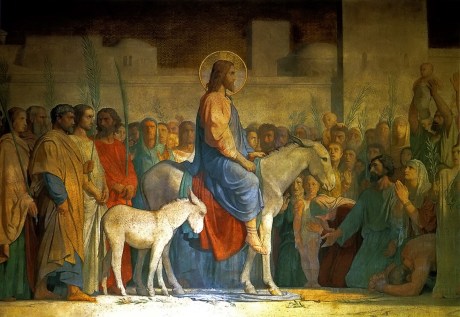
Rejoice greatly, O daughter Zion! Shout aloud, O daughter Jerusalem! Lo, your king comes to you; triumphant and victorious is he, humble and riding on a donkey, on a colt, the foal of a donkey. He will cut off the chariot from Ephraim and the war-horse from Jerusalem; and the battle bow shall be cut off, and he shall command peace to the nations; his dominion shall be from sea to sea, and from the River to the ends of the earth. As for you also, because of the blood of my covenant with you, I will set your prisoners free from the waterless pit. Return to your stronghold, O prisoners of hope; today I declare that I will restore to you double.


People of Cokesbury Church: the time has come to rejoice! And I don’t mean the easy-going, carefree, yeah we’re happy kind of joy, but jumping on the pews, putting your hands in the air, shouting to the Lord kind of joy. Glory glory glory!

Behold! Our king comes to us, he is triumphant and mighty and victorious. He comes humbly on the back of a donkey. He will destroy the tanks of armies and the defenses of countries. The missiles and the guns and weapons will be obliterated and peace will reign. Our donkey-riding king will rule from east to west and over the whole earth.

We’ve got reason to celebrate! Our king frees us from the waterless pit of our despair and depression. We prisoners of hope have been delivered.

Or maybe, we don’t feel like celebrating. Perhaps our lives don’t match up with the glory described by Zechariah. Maybe the world is a little too broken for peace to rain down like waters. Perhaps we don’t feel like dancing and shouting because we are stuck in a pit; a pit of anger or bitterness or fear or shame or loneliness.

pit

There was a man who was walking down the street when all of the sudden he fell into a deep hole. The walls were so steep that he couldn’t climb out and after struggling for a time he began to cry out for help.

A doctor was passing by along the road and he looked down into the pit when the man yelled up, “Hey! Can you help me out?” The doctor thought about it for a moment while stroking the stethoscope around his neck, and then he reached into his pocket, wrote a prescription, dropped it into the hole, and kept walking.

Then a preacher came walking along and the guy shouted up, “Hey Reverend! I’m stuck down here in this hole, can you help me out?” The pastor very slowly and deliberately put his hands together, said a prayer for the man, and kept walking.

Next a sweet older woman from the local church came up to the edge of the hole and the man yelled, “Excuse me! Please help me out of here.” The woman stared right into the man’s eyes and said, “Don’t you know that God helps those who help themselves?” And with that she went on her way.

Finally, a friend walked up and the man shouted, “It’s me, I’m stuck in the hole, can you help me out?” To which the friend jumped right down into the hole. The man said, “Are you stupid? Now we’re both stuck down here!” And the friend said, “Yeah, but I’ve been down here before and I know the way out.”

Today I am forever hearing about how we need to get others to accept Jesus Christ as their personal Lord in Savior. As if people are wandering around aimlessly looking for something to give meaning to their lives, and so long as they open up their hearts Jesus will be there waiting for them.

The problem with all of that is the fact that Jesus is the king who comes to us, not the other way around. We often get trapped in the pit of believing that we’ve got to go looking for Jesus when he’s the one looking for us.

Our Lord is the one who finds us wandering around the pit of our sorrow and jumps in to show us the way out. Jumping into the pit, after all, is the great story of scripture. God saw what God had made in Genesis and jumped down into the Garden to make humanity in the divine image. God saw Jacob struggling with his relationships and identity and jumped down to wrestle with him by the banks of the river. God saw the suffering of God’s people in Egypt and jumped down to call Moses from the burning bush. God saw the directionless plight of the people and jumped down to anoint David to rule as king. God saw the brokenness of the world and jumped down to take on flesh in the form of a baby born in a manger.

Jesus is the king who jumps down into the pit of our existence and offers us hope.

Zec9

I’ve only been here a short while, but I’ve already seen signs of hope in this church and in this community. Complete strangers in my neighborhood have introduced themselves simply because I’m new, employees at particular businesses have gone above and beyond to be kind and welcoming, a certain someone at the church even gave my wife a bouquet of roses last week.

And from where I stand this morning I see hope. I see individuals whose lives have been transformed by the gospel. I don’t even know many of your names but I know God has acted in your lives, I know that God has delivered you from the pit, because otherwise you wouldn’t be here.

From where I stand I see a church not built on demographics and like-mindedness. I don’t see a church consumed by consumption and driven by desire. I don’t see a church fixated on financial matter or obsessed with objectives.

I see a church of different opinions but similar love. I see a church of faith and fellowship. I see a church of love and hope.

This is a church with prisoners of hope.

We are captivated more by the optimism of “what if” than the pessimism of “it’s too late.” We are held in bondage to the belief that we are more than the mistakes of the past, more that the pain of the present, and more than the unknown of the future. We are prisoners of hope.

And our hope is in Jesus Christ, the one who finds us in the pit and shows us the way out. To be clear: the way out is a way out. It’s not a simple affirmation or secret sentence that fixes everything. Jesus invites us to follow him on the way that leads to life.

The church, as the body of Christ, as the gathering of disciples on the Way, is not a building or a program or an institution. It is neither stuck nor static. The church is a living, breathing, and moving thing.

Institutions care about maintaining the institution, keeping the doors open from week to week, working to keep it working like the past. Movements, however, care about the people, about keeping them from falling into pits of despair and jumping in when someone falls in regardless.

We move on the way out of the pit by following our king. And our king is not like worldly leaders. Our king doesn’t live in a white house or control the gathering of nations. He’s not waking up with Wall Street or guiding troops into battle. Our king comes to us humble on a donkey.

Christ is victorious against the powers of this world, the powers of nations and economics and militaristic might. And even more Jesus is victorious over our greatest enemy, death. But this doesn’t mean that death no longer stings, it does. Without the sting of death there would be no need for hope.

maxresdefault (4)

And we are prisoners of that hope. We look out at this broken and shattered world around us as an opportunity to be put back together. We don’t limit our vision of the man on the corner to his economic situation, we don’t see the young teen loitering as a criminal, we don’t see the loud neighbors as a threat to our security. We are prisoners of hope, we believe in the goodness of all people even when they try to prove the contrary.

This was my first full week at the church and I was wrong about what to expect. I figured that you all knew that I would be overwhelmed by having to unpack my office and adjust to a new community. I assumed that you all would leave me alone for a couple weeks until I got settled. But you all just kept showing up everyday as if I was your pastor.

And you’ve had your questions and I tried to field them as best as I could. I listened to your thoughts and reflections. But if you came by the office this week you know that I won’t let you leave without asking a question of my own: Why Cokesbury Church?

There is a plethora of churches in the Woodbridge community, churches of all shapes and sizes and worship styles. So of all the churches here in this place, why do you choose to gather at this place?

“I’ve been going here as long as I can remember…”

            “The people are just so friendly…”

            “Someone signed me up for the Flea Market and I’ve been coming ever since.”

I’ve enjoyed hearing the answers because they’ve provided a slice of the identity of this place, but one particular answer has really stuck with me.

I won’t say who it was, but someone from this church came by this week and I asked him or her why he or she came to this church. The person thought about it for a good amount of time before answering. “I was lost and Jesus found me in this place.”

Notice: the answer wasn’t I found Jesus here, but that Jesus found me in this place.

All of us have been lost at one point or another. We have fallen into pits that we simply could not escape on our own. We’ve been burdened by financial fear, relationship woes, or employment uncertainty. We’ve felt suffocated by limited direction, unending loneliness, or deep despair. We’ve been bullied, belittled, or berated. But Jesus found us and guided us out.

Thanks be to God that we are shackled as prisoners of hope. Thanks be to God that the Lord has delivered us from a faulty and limited vision of what can be. Thanks be to God that the Lord made a way where there was no way.

The promise of our hope, the hope that we are held captive by, is the restoration of all people and of all things. There is victory in Jesus, victory over the powers and the principalities bent on holding us down, victory over the steeps walls that feel inescapable, even victory over the chains of death.

I don’t know what most of you are going through right now. I don’t know what’s keeping you awake at night, what’s driving you crazy whenever you turn on the television, what causes your fists to clench up whenever you hear it. I don’t know what you’re afraid of, what you’re missing, or what you need. I don’t know where you’ve been, where you are, or where you’re going.

But I do know that Jesus does not leave us abandoned. Jesus jumps down into the miry bog of our lives and says, “Follow me, I’ve been here before, and I know the way out.” Amen.

Devotional – Zechariah 9.9

Devotional:

Zechariah 9.9

Rejoice greatly, O daughter Zion! Shout aloud, O daughter Jerusalem! Lo, your king comes to you; triumphant and victorious is he, humble and riding on a donkey, on a colt, the foal of a donkey.

Weekly Devotional Image

I just entered into my fifth year of ministry and one of the things that has sustained me the most throughout my vocation is the weekly reading of sermons that have nothing to do with the sermon I’m working on. I quickly learned that when you make the jump from receiving sermons to preaching sermons, you lose the important part of worship that is hearing the Word afresh and anew.

Some of my favorite preachers come from a variety of backgrounds and denominational affiliations, but perhaps my favorite preacher is Stanley Hauerwas. What makes Hauerwas’ sermons so powerful is the fact that he’s not a preacher. Though deeply involved in the work of ethics and theology, Hauerwas is still a lay-person and when he proclaims the Word from the pulpit it hits me more than from a lot of long time clergy.

Another reason I love Hauerwas’ preaching, perhaps the most important reason, is that he can get away with saying a lot more from the pulpit than most pastors precisely because he’s not a pastor. There’s a delicate balance the preacher has to find between saying what God wants to be said, and doing it in such a way that it doesn’t alienate everyone such that they won’t be back the next Sunday. But Hauerwas, as a layperson, can say just about whatever he wants.

His sermon on the Fourth of July is one that he stuck with me ever since the first time I read it, and particularly the last few paragraphs. Hauerwas again and again makes the claim that we are so entrenched in the worship of America that we can no longer recognize it for the idolatry that it is. He says that this is evident in the way that the political arena has overshadowed the reality of the church and in how we no longer question if the country has done anything wrong. Instead, we assume that if something is done in the name of America, it is for the greater good.

Bible-and-Flag

Try saying that from the pulpit in a church during the fourth of July weekend and you might not have a church to come back to the following Sunday.

But at the end of the sermon Hauerwas makes one final claim that is worthy of repetition. If the fireworks that burst in the sky and the red, white, and blue on our clothing are more captivating than the bread and wine at the table, then we are not the church. That’s not to say that we shouldn’t join together with neighbors to celebrate our country’s independence, or that we can’t sing patriotic songs or eat hot dogs or light off fireworks. But if all of those things are more important to us, if they speak a greater narrative in and to our lives, then we have to ask ourselves whom we really worship.

The prophet Zechariah proclaims that our King comes to us humble and riding on a donkey. As Christians, our King is not in the fireworks and the festivities and the food of the fourth of July. Our King is with the marginalized, the fearful, and the lonely.

Our King is not of this world. Our King rules the world.

Our King is not in a flag or in a pledge of allegiance. Our King is crucified and calls for our allegiance.

And so rejoice, Christians, sing aloud, for our King is triumphant and victorious. But he is not the same thing as our country.

On This Generation

But to what shall I compare this generation? It is like children sitting in the marketplace and calling to one another, “We played the flute for you, and you did not dance; we wailed and you did not mourn.”

strangely-warmed-spreaker-header

This week on the Strangely Warmed podcast I was left to record by myself as half of the team from Crackers & Grape Juice were moving to new appointments in the United Methodist Church and we couldn’t get our act together. It is easily our worst episode because we thrive on dialogues and not monologues, so have mercy. The readings include Genesis 24, Zechariah 9, Romans 7, and Matthew 11. If you want to learn more about worshipping the Lord in marriage, humility in leadership, sin, and our selfish generation you can check out the episode here: Like Children In The Marketplace.

As always, if you enjoy the podcast please leave us a rating or review on iTunes, it helps us and it helps others discover the podcast. You can find out more about both of our podcasts at our website.

triumphal-entry

100 Episodes; 100,000 Downloads

The Crackers & Grape Juice Team recently celebrated our 100,000th download while in Hampton, VA for Annual Conference for the UMC. We announced the milestone while gathering with some friends and fans for a Pub Theology event at which the one and only Clay Mottley played some of his tunes. For our 100th episode Jason Micheli and I caught up with Clay and we talked about how music can stir the soul. If you would like to hear the episode or subscribe to the podcast you can do so here: Some Songs Considered

Crackers-Banner-1

Thanks to everyone who has listened to any of the episodes from the Crackers & Grape Juice and/or the Strangely Warmed podcasts. We can’t believe how much the shows have grown and we look forward to fostering even more theological conversations without using stained glass language.


Devotional – Psalm 86.10

Devotional:

Psalm 86.10

For you are great and do wondrous things; you alone are God.

Weekly Devotional Image

Yesterday, while the United Methodist Churches in the Virginia Conference gathered for worship, clergy and lay representatives were at the Hampton Convention Center to hear Bishop Sharma Lewis lead worship. In her sermon she brought together many of the ideas from the weekend of Annual Conference particularly regarding the fact that God is in the business of doing new things. And she concluded with our new ministry focus: “to be disciples of Jesus Christ who are lifelong learners, who influence others to serve.”

But there was another line from her sermon that has been playing over and over in my mind more than any other: “Laity, do not say to your Clergy who bring fresh ideas, ‘But we’ve never done it that way before.’”

I count myself blessed that over the last four years St. John’s has largely responded positively to new ideas. Working together with the leadership of the church has resulted in new ministries and ways to serve the community that have allowed us to accomplish God’s will. But just as we embarked into new territory during my time as the pastor, you (and I really mean you) need to continue to have open eyes and open hearts to the new ideas from your new pastor.

editors-rant

Just because we did something a certain way while I was here does not mean that’s the way you have to do it forever. Frankly, you should probably change almost everything because that would be a better way of allowing the Spirit to move in new and bold ways. And that is what is at the heart of what Bishop Lewis said and at the heart of churches that are currently fruitful; a recognition that new ideas should be embraced because they ultimately come from God.

The psalmist boldly proclaims that God is the one who is great and does wondrous things. Pastors can do good things for their churches, they can help to point to what God is doing in the world, but God is the one doing the things in the world! God is God alone and a church can only be fruitful when it knows and believes that God is the one from whom all blessings flow.

So when you hear about a new idea, whether it comes from your new pastor or even from yourself, know and believe that God is the source of the idea, and prepare yourselves to be surprised by the wondrous majesty of our God who is in the business of doing new things.

I will miss all of you and all of the remarkable things we’ve done together over the last four years, but I am grateful that God will continue to do even more for you in this new chapter of the church’s life.