Softly and Tenderly

Revelation 21.1-6

Then I saw a new heaven and a new earth; for the first heaven and the first earth had passed away, and the sea was no more. And I saw the holy city, the new Jerusalem, coming down out of heaven from God, prepared as a bride adorned for her husband. And I heard a loud voice from the throne saying, “See the home of God is among mortals. He will dwell with them; they will be his peoples, and God himself will be with them; he will wipe every tear from their eyes. Death will be no more; mourning and crying and pain will be no more, for the first things have passed away.” And the one who was seated on the throne said, “See, I am making all things new.” Also he said, “Write this, for these words are trustworthy and true.” Then he said to me, “It is done! I am the Alpha and the Omega, the beginning and the end. To the thirsty I will give water as a gift from the spring of the water of life.”
8T655xLGc


Revelation is full of some of the most bizarre imagery in all of Christianity. Pick up the bible; flip all the way to the end, and what you find sounds like the stuff that some people will scream out from the street corners of life. In Revelation we read about beasts and dragons and lambs, we catch a glimpse of the bowls of God’s wrath, and the destruction of the world.

It is an often-ignored book of the bible, and for good reason. Revelation has been responsible for countless deaths throughout the centuries, as zealous Christians believed they were seeing the images of the book before their eyes and acted accordingly. It rests at the foundation for some of the strangest modern Christian literature. And it accounts for the never-ending amount of fundamentalist preachers who claim to know the exact day of calamity that will bring about the end of the existence.

Growing up in the church, I can barely remember ever hearing about Revelation. On Sunday mornings we were more inclined to hear about the miracles of Jesus in the gospels, or the great narratives of Genesis, than we were to hear about visions of God’s power and destruction. Even today as a pastor, I am ashamed to admit that after leading worship for two and a half years, I have only preached on Revelation once, and frankly it was to talk about the writer of Revelation more than the text itself.

Yet, if regular worship ignores the power of Revelation, funerals are the place where it is most needed.

It is no accident that the text we read this morning has been used and associated with Christian burials for nearly as long as the church has existed. When faithful disciples gather for services of death and resurrection, Revelation 21.1-6 needs to be read precisely because of what it proclaims. This handful of verses offers evocative and moving images of comfort to those of us who live past our friends and family who die, and for those of us who live in troubled times.

John of Patmos, the writer of Revelation, saw a map of the future; a description of what God will do in time. From his vantage point John witnessed a new heaven and a new earth. All that we have come to know had passed away from recognition, and even the sea was no more. But there in the sky John saw the holy city, the new Jerusalem, coming down from heaven adorned like a bride for her husband. Like the wonderful moment of a bride walking down the aisle in church, with all of the joy and expectation of a new and beautiful future, God’s city came to rest with God’s creation.

And then John heard a loud and booming voice declare, “See God’s home is now with mortals. God will live with them and He will wipe away every tear from their eyes. Death will cease to exist; mourning and crying and pain will be no more. The first things have passed away and God’s divine reality will reign forever.

9aa35fafafa0e744cf31748e6494bbea

And the one seated on the throne said, “See, I am making all things new! Write this down because it is trustworthy and true. It is done! I am the Alpha and Omega, the beginning and the end. To the thirsty I will give water as a gift from the spring of the water of life.”

John’s words are a consolation, a vision of hope for a people in distress. These words have brought comfort to countless Christians throughout the centuries, from the earliest disciples persecuted for their faith to those who still live in fear because of what they believe. And at funerals, they help to remind each of us about God’s love in the past, present, and future.

It was freezing outside as we all gathered around the grave. We had gone through the funeral service in the sanctuary, we had praised God in spite of loss, we had remembered the saint’s life that were now about to bury in the ground, and we had somberly marched into the cemetery with our heads hung low.

There is a strange thing that happens between the sanctuary service and the graveside. The finality of death takes on an entirely new and deeper meaning as you witness a casket or urn prepared to be lowered into the earth. Gone are the familiar smells and sights of the sanctuary only to be replaced with the sounds of nature and the smell of dirt.

We stood there and patiently waited for the family to gather as close as possible, and then every eye turned to me. When we mourn the dead, we become helpless and rely on someone to guide us through the right words and actions, hoping that the pastor will be true to the life and death of our beloved while declaring the hope of the resurrection.

Every person shivered in the wind. I offered prayers and scriptures reflective of the person’s life, I made time for silence so that we could all properly reflect on what we were doing, and then I walked over the casket. I reached down to the ground, and like I had countless times before, I grabbed the loose soil and dropped it onto the wood. And then with my hands resting on the casket I began to sing, “Softly and tenderly Jesus is calling. Calling for you and for me. Earnestly tenderly Jesus is calling, calling O Sinner come home. Come home, come home, ye who are weary come home. Earnestly tenderly Jesus is calling, calling O sinner come home.

4.2.7

4.2.7

The beauty of Revelation 21 is in the discovery that God will dwell with us, and the home of God will be with us. The hope of the text is the fact that God will call for all of us to come home at one point or another. The bell will toll for us all, but death has lost its sting because of the gift and grace of Jesus Christ.

Since becoming a pastor, I have had to bury a lot of saints, those faithful servants of God’s kingdom who witnessed in their lives to the love of God. While I have sat with numerous friends and families as we mourned the dead I have been brought back to this passage in Revelation that describes the beautiful future in store for us. And though we weep here and now on earth, we wait for that glorious day when death will be no more, when mourning and crying and pain will be no more and we live and with the One who reigns forever.

Today we honor the saints who have come before us, whose examples we wish to follow. God has gathered us in this place to remember what the saints did with their lives, and give thanks for their witness. The saints of faith are our brothers and sisters who risked in all for the sake of Christ.

Today we remember those from this church who have died in the last year, and we join in mourning with all of their friends and families. We remember George Harris, Howard Cassidy, Ray Lancaster, John Taylor, Sam Folkes, Jerry Pangburn, Jo Anne Berg, Dick Dickerson, Lucy Wisely, Frances Pack, Frank Rankin, and Steve Wisely. Some of us have the privilege to recall the life lessons they shared with us, we can remember admiring them for their faith, and we can even picture where they used to worship in this sanctuary.

To hear their names while hearing the words of God from Revelation is to join in solidarity with the saints of our lives and be strengthened by their witness; we too can be saints if our lives become examples of God’s love and compassion toward others.

Being a saint is not something that just happens when we die, but is a worthy goal in the here and now. Instead of lazily watching the days of life pass by, we can embrace God’s call on our lives to start bringing about glimpses of God’s kingdom on earth. This vision of the new heaven is available to us because God continues to make all things new, even us.

11406602_393570677503900_1541668082175042099_o

So where do we begin? We begin by looking to the place where God dwells with mortals: worship. We start our saintly lives by mirroring the saints who have come before us. We give thanks for their witness remembering that they modeled their lives after Christ and we start doing the same.

We look for the living saints in the pews next to us. We ask for their prayers to give us the grace to be better Christians, we seek them out for advice, and we rely on their teachings. We begin seeing the pews not as walls of division, but instead as avenues of connection.

And then we come to the table and feast from the bread and the cup being strengthened for the work of ministry in the world. We start seeing this table as the connection between past, present, and future, as we remember all who have feasted before us and that this is a foretaste of God’s heavenly kingdom.

We can start living like saints because we belong to a communion of saints. We can start living like saints because Jesus gave his life to destroy the powers of death. We can start living like saints because God makes all things new. Amen.

Devotional – John 11.35


Devotional:

John 11.35

Jesus began to weep.

Weekly Devotional Image

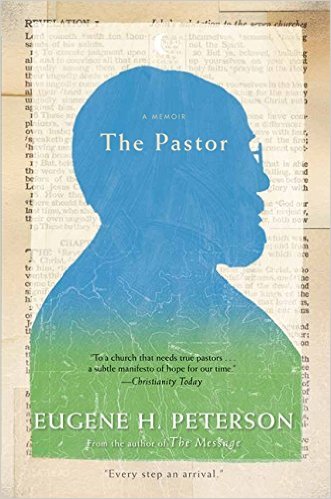
In Eugene Peterson’s memoir The Pastor he recounts the death and funeral of his mother after having buried countless church members throughout his life. As he stood before the gathered people his emotions came to a precipice and he could no longer contain himself. He writes:

“While I was reading the scriptures, tears erupted. I tried to hold them back, then gave in. I remember thinking, ‘All these people get to grieve, now it’s my turn,’ and let it come, sobbing uncontrollably. After thirty seconds or so, I recovered my composure and finished what I was doing. After the benediction, I didn’t want to see anyone and slipped into a room just off the chancel. My daughter, Karen, came in and sat beside me, without words, putting her hand on my thigh. And then a man I didn’t know came in, put his arm across my shoulder, spoke for three of four minutes in preacher clichés, and prayed. After he left I said, ‘Oh Karen, I hope I have never done that to anyone.’” (Peterson, Eugene. The Pastor: A Memoir. New York: HarperCollins, 2011. 294)

8T655xLGc

Across the great scope of Christianity, many churches will celebrate All Saints Day this Sunday. In the United Methodist Church we will use this particular opportunity in worship to remember the Saints of the church as well as all Christians both past and present. It is a time set apart to reflect on the many people who have shaped our lives, the grief we still feel regarding their deaths, and the hope of the promised resurrection.

All Saints is not a time for “preacher clichés.” It is not a time for churches to claim that God “just wanted another angel in heaven.” It is not a time for us to seek out those who are grieving and tell them how they are supposed to grieve (or worse: telling them they are supposed to be done grieving).

All Saints is a time for tears. Just like when Eugene Peterson’s wept over the death of his mother, and just like when Jesus wept over the death of Lazarus, it is good for us to grieve those who have died. This Sunday is a moment in the life of the church where we do well to let our emotions get the best of us and offer up our losses and sadness. Because it is in our grief that we really begin to appreciate those who have died and the ways they continue to shape our lives.

This week, as we prepare for All Saints Day, let us take time to reflect and pray for the people who have died in our lives. Let us thank God for their witness to God’s grace. And let us strive to sit alongside those who are grieving and bless them with our presence more than our words.

51ltEQZuJVL._SX329_BO1,204,203,200_

Why We Do What We Do – Pray

Mark 10.46-52

They came to Jericho. As he and his disciples and a large crowd were leaving Jericho, Bartimaeus son of Timaeus, a blind beggar, was sitting by the roadside. When he heard that it was Jesus of Nazareth, he began to shout out and say, “Jesus, Son of David, have mercy on me!” Many sternly ordered him to be quiet, but he cried out even more loudly, “Son of David, have mercy on me!” Jesus stood still and said, “Call him here.” And they called the blind man, saying to him, “Take heart; get up, he is calling you.” So throwing off his cloak, he sprang up and came to Jesus. Then Jesus said to him, “What do you want me to do for you?” The blind man said to him, “My teacher, let me see again.” Jesus said to him, “Go; your faith has made you well.” Immediately he regained his sight and followed him on the way.

download

The receiving line following worship is vastly underrated. A lot of people make their way out of the sanctuary quickly, whereas others will wait in line just to ask that one question that popped up during the service. It never ceases to amaze me that some of the most profoundly theological and spiritual moments that take place at St. John’s happen in that line after worship on Sunday mornings.

This month’s sermon series “Why We Do What We Do” has its roots in those conversations. Week after week I will hear some of you wonder about the purpose of an acolyte carrying in the flame for worship, or you ask about the value and importance of having a time for offering and collection, or you question why we talk so much about bible study, or you remark about how difficult it is to pray. If you’ve ever left church with a question on your heart and mind, this sermon series is for you.

Today we will explore why we pray.

We’ve all been there before. We’re driving through the parking lot, maybe running a little bit late, and we cannot find a parking spot to save our lives. We search and search, we circle and circle, but nothing opens up and the more we look at the clock the more nervous and frustrated we become.

The man was driving through the grocery store parking lot with a list of items to purchase in his pocket and not a parking spot in sight. To complicate matters, the man’s wife is pregnant at home and he knows that the only thing that will make her happy is a jar of pickles, ice cream, and a bag of Doritos (all on his list). He had rushed out of the house with the hope of returning home with the necessary items as soon as possible, but the lot is full and he’s running out of time.

He decides its time to resort to the guy in the sky. Not the normal praying type, he’s not sure how to start. “Um… God, I’m not sure if you can hear me, but it’s me calling. I need your help. I don’t know how long I’ve been circling this lot, but I need a parking space. Maybe you don’t realize how getting this stuff for my wife will earn me some major brownie points. And I need those brownie points.”

He keeps driving around with no spots opening up, so he decides its time to step up his game: “God, I’ve been a good guy. I give to charity. I listen to others. I try not to swear. Can’t you just help me out this one time?”

Nothing. If the man was desperate before, now he’s starting to panic. He decides it’s time to make a deal. “Okay God, if you give me a parking space I will go to church every Sunday for the rest of my life. I will start tithing money to the church. I’ll even volunteer in the nursery…” When all of the sudden he rounds a corner to see a perfect spot open up just within his reach and decides to finish his prayer: “Forget it God, I found a spot on my own.”

In the story immediately preceding our scripture today James and John (the sons of Zebedee) want something from Jesus. To which Jesus asks, “What do you want me to do for you?” “We want to sit on your right and left in your glory!” They want power and prestige, and they want Jesus to give it to them. And what does Jesus say? “You do not know what you are asking for.”

Why-Pray

Then they came to Jericho. As Jesus and the disciples were walking with a large crowd, Bartimaeus, a blind beggar, was sitting by the roadside. When he heard that it was Jesus of Nazareth walking by, he began to cry out, “Jesus, Son of David, have mercy on me!” However, the crowds were so large that Jesus was unable to hear Bartimaeus, and those closest to the blind man ordered him to be quiet. But Bartimaeus was no ordinary man so he continued to yell out, “Son of David, have mercy on me!” Jesus immediately stood still and called the man forward.

The crowds who have just moments ago ordered the blind man to be quiet now begin to shower him with praise: “Take heart! Get up, he is calling you!” Bartimaeus jumped up from the road and threw off his cloak, his one possession of value, and makes his way to the Lord. Then Jesus asks Bartimaeus the same question he asked the sons of Zebedee: “What do you want me to do for you.” But Bartimaeus’ prayer is completely different from the disciples and we can almost picture him kneeling before Jesus and saying, “My Lord, let me see again.

Why do we pray?

One answer, of course, is that we want God to do something for us. We cry out to God in the midst of suffering for healing, when we are lost we call out for direction, and when we are afraid we ask for peace. We need something from God so we ask for it through prayer.

Another reason to pray is to commune with God. These prayers are not based on receiving something in particular, but setting time apart to listen for the ways that God is speaking in the world. Instead of listing all of our needs and wants, we wait and tune into God’s frequency.

Yet, the majority of prayers come in the form of a need. Sadly, prayer is often our last resort when we can no longer bring order out of the chaos in life and we rely on a higher power to straighten out our mess.

How do we pray?

For centuries faithful disciples have experimented with ways to pray. Silence is always a good place to start. Finding a quiet space and time in our lives and just letting the worries of the world float away. Like Bartimaeus throwing off his cloak, we look for the ways we can rid ourselves of the baggage that clogs our ears and prevents us from listening.

Another form of prayer comes through the reading of small bits of scripture over and over. Like taking one of the psalms and slowly reading the words as our own prayers to God, letting the words of the past make manifest our needs in the present. We dive into the depth of God’s great Word and slowly begin to realize that God is still using scripture to shape us even today.

If all else fails, we can rely on the helpful acronym of PRAY for Prayer.

P – Praise

God, I praise you for all of your marvelous works in the world, and in particular the gift of you Son Jesus Christ.

R – Repent

Lord, I confess that I have not loved you with my whole heart and I have not loved my neighbor as myself. I am truly sorry and I humbly repent.

A – Ask

Father, give me the strength to be a better disciple and patience to accept the things I cannot change.

Y – Yield

God, even with my needs and wants, let your will be done in my life and here on earth. Amen.

pray-first

There are such a great number of ways to pray, that so long as we are doing what we do with intention, it can be a form of prayer. The greater question is not how do we pray, but are we praying for the right things?

On Wednesday night the youth gathered for The Circle. We went through the words of communion and feasted together, we checked in with each other and caught up about the comings and goings of the last week, and then we started to go through a few accountability questions. Someone pulled out the question “Who do I need to be praying for and why?” and the table responded in silence as we began to think about our responses. We listened as each person shared a particular need for someone else and it was obvious that our Adult volunteer was astounded by their maturity, and could not help himself from asking a new question: “Have any of you ever had your prayers answered? I’m not talking about praying for the Redskins to win, or to pass a test but a real and true prayer.”

It was truly a beautiful and holy moment as each of them shared a particular time when God had answered one of their prayers, a true prayer. Not prayers for a sports team, parking space, or academic grade, but for healing, patience, and purpose.

Bartimaeus is a model for discipleship. Instead of waiting for Jesus to just show up in his life, he calls out from the depth of his being for mercy. Instead of assuming that God will give him everything he needs without sacrifice, he quickly throws off the cloak of the past in order to embrace a new future. Instead of expecting a divine healing and a return the normalcy of life, he regains his sight and follows Jesus on the way to Jerusalem.

Bartimaeus calls out to Jesus, he fervently prays for mercy, and the crowds catch a glimpse of God’s grace. This event is a miracle. Miracles are those things that bring people from the darkness into the light, not just for the blind man, but everyone gathered around Jesus. Miracles turn our attention to what really matters in this life.

The true power of the miracle rests with Bartimaeus’ prayer. He calls out to Jesus. He comes to Jesus. He prays his true prayer. He sees Jesus better than the disciples, and he was blind.

What are we praying for?

In each of your bulletins you will find an envelope with a blank piece of paper inside. In a few moments I will be encouraging each of us to take out that paper and write down a true prayer to God. It has been my experience that when I pray out loud I don’t take the necessary time to really contemplate what I am asking for. But if we slow down enough to write down our prayer, it might encourage us to pray like Bartimaeus.

Cash-Envelopes

So we will take time to pray to God in written form, and then we will place the paper in the envelope and seal it. Then I would like each of us to write our name and address on the front and place it in the offering plate later in the service. No one will see this prayer but you and God. But we will mail them back to you in a number of months.

God answers our prayers, sometimes in different ways than we can imagine. My hope is that we will all take the time to earnestly pray to God, and in the months ahead we will begin to have our eyes opened, just like Bartimaeus, to the ways the God is moving in our lives. Amen.

Devotional – Hebrews 7.23-24


Devotional:

Hebrews 7.23-24

Furthermore, the former priests were many in number, because they were prevented by death from continuing in office; but he holds his priesthood permanently, because he continues forever.
Weekly Devotional Image

Full disclosure: There is temptation in ministry. There is the temptation to believe that you are the only one with the ability to save others. There is the temptation of power to control every single little element in the life of the church. And there is the temptation of becoming more important than the Lord you serve.

It happens a lot.

After weeks of a particular strong sermon series, a pastor’s ego can swell from all the compliments she hears. During the reception following a wedding, a pastor’s pride can cast a huge shadow over the guests. The habits of worship can lead to a pastor pointing to himself far more than he points to the cross. Temptation affects pastors just as much as everyone else.

Yet, pastors/priests/ministers come and go. I can remember hearing a couple of the ushers from my home church arguing about a particular pastor’s sermon and their frustration with how much longer he would remain “in charge of the church.” For weeks they spent time during every worship service venting their frustrations and they began to compare him to all of the “better pastors from the past.” They would say things like “he used to do it this way,” and “he made me feel better when I left church,” and “he used to tell the best stories.” This went on and on until one of the ushers could no longer stand to hear all of this take place during church and said, “We’re not supposed to be here for the pastor; we’re supposed to be here for Jesus.”

9.6.IsJesusSeniorPastorOfChurch_464334126

The writer of Hebrews rightly shows the difference between priests and Jesus. Ministers/Priests/Pastors are many in number because we eventually come to the end of our time, but Jesus holds his priesthood permanently and continues forever. This one line from Hebrews is a sobering reminder for all who have been called to the ministry to remember that we are called to point to the Lord who reigns forever and ever. We can do a lot of wonderful and marvelous things for the churches we serve, but we are only as good as we are willing to remember the one from whom all blessings flow.

Similarly, this passage from Hebrews is a reminder to everyone in the church about who is really “in charge.” If we are serious about the commitments and covenants we have made as Christians we will remember that Jesus is the King of kings and Lord of lords. We will listen to the words of our pastors but will always remember the distinction between their words and God’s Word. And we will remember that even minister are broken by the powers of temptation and are in need of God’s divine grace.

Why We Do What We Do: Give – Sermon on Luke 12.22-34

Luke 12.22-34

He said to his disciples, “Therefore I tell you, do not worry about your life, what you will eat, or about your body, what you will wear. For life is more than food, and the body is more than clothing. Consider the ravens: they neither sow nor reap, they have neither storehouse nor barn, and yet God feeds them. Of how much more value are you than the birds! And can any of you by worrying add a single hour to your span of life? If then you are not able to do so small a thing as that, why do you worry about the rest? Consider the lilies, how they grow: they neither toil nor spin; yet I tell you, even Solomon in all his glory was not clothed like one of these. But if God so clothes the grass of the field, which is alive today and tomorrow is thrown into the oven, how much more will he clothe you – you of little faith! And do not keep striving for what you are to eat and what you are to drink, and do not keep worrying. For it is the nations of the world that strive after all these things, and your Father know that you need them. Instead, strive for his kingdom, and these things will be given to you as well. Do not be afraid, little flock, for it is your Father’s good pleasure to give you the kingdom. Sell your possessions, and give alms. Make purses for yourselves that do not wear out, an unfailing treasure in heaven, where no thief comes near and no moth destroys. For where your treasure is, there you heart will be also.

church

The receiving line following worship is vastly underrated. A lot of people make their way out of the sanctuary as quickly as possible, whereas others will wait in line just to ask that one question that popped up during the service. It never ceases to amaze me that some of the most profoundly theological and spiritual moments that take place at St. John’s happen in that line after worship on Sunday mornings.

This month’s sermon series “Why We Do What We Do” has its roots in those conversations. Week after week I will hear some of you wonder about the purpose of an acolyte carrying in the flame for worship, or you ask about the value and importance of having a time for offering and collection, or you question why we talk so much about bible study, or you remark about how difficult it is to pray. If you’ve ever left church with a question on your heart and mind, this sermon series is for you.

Today we will explore why we give.

I was in my final year of seminary when my friend asked me to preach at his church. He had labored for the past few years as a full time student and full time pastor at the same time and needed someone to fill-in. He had received tickets to a Carolina Panthers football game, though I was forbidden from telling his church that’s where he was instead of with them on a Sunday morning for worship.

When Lindsey and I arrived at the tiny United Methodist Church in the middle of nowhere North Carolina, I was a little nervous about leading worship for a congregation that I had never met, but I figured God would show up even if my sermon fell flat. The sanctuary was tiny, with white walls and bright florescent lights hanging from the ceiling, there was a cross above the altar that was draped with an American flag, and it was so quiet that I was worried we had arrived at the wrong church.

However, the lay leader was waiting by the door and greeted us as if we were first-time visitors, only to later realize that I was supposed to be the pastor for the day. He quickly led me into the sanctuary, gave me a quick and grand tour, and then informed me that he was the head usher, liturgist, organist, and treasurer.

From what I remember the service went well, though most of the congregation was utterly bewildered by my academic deconstruction of a prophecy from the book of Daniel (something I thankfully gave up doing that day), and there was an infant who wailed the entire service. I like to think that she loved my preaching so much that it drove her to tears.

When the service ended, I finally had a chance to actually look around at the sanctuary and I noticed a list on the wall behind the pulpit of the hymns for the day, the offering brought in last week, and the deficit regarding the annual budget. There in big numbers for everyone to see was how far away they were from keeping up with their plan, and it was a staggering amount.

On my way out I thanked the lay-leader/usher/organist/treasurer for the opportunity to preach and asked why they felt the need to display their deficit for everyone to see every Sunday. I’ll never forget how casually he shrugged his shoulders and said, “Guilt is the only way to get them to give.

page44_picture0_1338615554

Talking about giving, and in particular financial giving is about as awkward as it gets in the church. Money, in general, is one of the taboo subjects of normal conversations. We don’t ask how much someone makes in a year, even if we are curious. We avoid asking for financial help because it means admitting too much vulnerability. But then if we take the taboo subject of money, and put it together with religion (or the church) we have the double whammy of things we’re not supposed to talk about.

After all, money and religion are personal and private subjects aren’t they? What I do with my money and what I do with my faith should be of no concern to anyone else other than myself…

To talk about giving in the church, to address the subject of why we give, we have to get personal. It would be shameful for me to stand here each and every week calling for the gathered body to give their gifts to God if I, myself, was afraid to talk about my own giving. If we want to be a church of gifts, then we must first be a church of vulnerability and then conversion.

Before I became a pastor, I rarely gave to the church. I have vivid memories of sitting in church throughout my adolescence, and feeling waves of guilt as I passed the offering plate over my lap to whomever else was in the pew. It helped that I was a teenager and had no money to give in the first place but the guilt was still there.

By the time I made it to college and seminary, I still attended church but rarely gave to the church. I certainly volunteered my time, led mission trips, and taught bible studies, but giving money to the church was not on my radar.

Then I was appointed here to St. John’s. Now that I had a steady income, Lindsey and I decided to start tithing to the church, and honestly it was really hard. We are a young married couple with debt to the federal government for paying for my seminary education, and we are going to have a baby in April. Yet, we covenanted with God and one another to give 10%. In the first months it was harder than I thought. I would find myself thinking about those thousands of dollars that I could be spending on other things, but we got into the habit and we kept giving.

blog.the.offering

My conversion toward giving did not happen in a big shiny moment, but was a gradual transformation. The more I gave, the longer the habit continued, the easier it became, and my perspective started to change.

Instead of imagining what I could’ve have done with the money I gave to church, I started to tangibly witness and experience what the money I gave was doing for the church and the kingdom.

Giving to the church requires a conversion; it is built on a vision where we recognize how our blessings can be used to bless others. We are not called to give to St. John’s out of guilt, but out of generosity.

As John Wesley once said: “Having, first, gained all you can, and, secondly saved all you can, then give all you can.

We are called to give because we have a shared vision and are invited into the mission of God through the church. Even a seemingly small act of generosity can grow into something far beyond what we could ever ask or imagine – The creation of a community of love in this world. If we act generously, we are helping God build the kingdom here on earth.

However, we should not be expected to give, or feel inclined to give without knowing why or to what we are giving. To just stand before you and say “give give give” prevents us from developing strong relationship with the people and programs we serve. So here are just three aspects of what our church does with our gifts:

At St. John’s we believe in providing meaningful, fruitful, and life changing worship every week of the year. We plan months ahead, connect messages with the music, and look for imaginative ways to respond to God’s love in the world. This means that we have to keep our sanctuary in the best shape possible for the worship of God, and use the great gifts of all involved in the church to make it happen. As a church we regularly welcome first-time visitors to discover God’s love through this place and help to develop professions of faith in Jesus Christ.

At St. John’s we believe in nurturing those in the midst of their faith journeys. We spend a significant amount of time and resources to help disciples grow in the faith and love of God and neighbor. We have numerous classes and opportunities to study God’s Word, but one of the most profound things we offer is weekly Chapel Time to our Preschoolers. Not only do we help to provide a wonderful facility for them to learn and grow, but we also welcome them into this sanctuary every week to learn about God, Jesus, and the Holy Spirit. The Preschoolers discover how much God loves them, and they take those stories home to the families and subsequently teach them about God’s love.

And at St. John’s we believe in witnessing to our faith in service beyond ourselves. We strive to serve those in need through a mosaic of opportunities in order to be Christ’s body for the world. For the first time in a long time we have paid our Apportionments in full to benefit the greater church, and the world. Some of that money goes to pay for clergy healthcare, some of it goes to domestic and international benevolences funds, and a number of other places. Moreover, we are able to provide a tremendous amount of financial resources to SACRA (Staunton-Augusta Church Relief Association) who then distribute the money to acute needs in the local community.

thumb

We give from our blessings to bless others. Whether it’s the people in the pews next to us who gather for worship, the preschoolers who gather to be nurtured and educated, or the countless people in the local and global community who need our help. We give out of generosity, because so much has been given to us.

However I don’t want to make it sound as if giving is the easiest thing in the world, because it does require sacrifice. Living a spiritual life of generosity requires a change of heart, a conversion. It might happen in a moment, or throughout a lifetime of faith, but when the transformation occurs, we become people of generosity.

We all have blessings to offer. Some of us have been blessed by God with incredibly lucrative careers and vocations, God has clothed us with more splendor than Solomon and all his temples, and we can give back to God through our financial giving. Some of us have been blessed by God with powerful relationship skills, God has given us personalities that bring out the best in others, and we can give back to God through our willingness to serve others. And God has blessed all of us with the gift of time, which is the most precious thing we can ever offer to the church and others.

Are we grateful for what God has done for us through this place? Do we appreciate all the blessings we have receiving throughout our lives? Do we want to bless others as we have been blessed?

We give because we have a common yearning for God’s kingdom to reign on earth, and when we give we join a new communion with the people of God. We give because it is the way by which we live out our love toward the church and our brothers and sisters in faith. We give because God first gave to us.

Where our treasure is, there are hearts will be also. Amen

Why We Do What We Do: Worship – Sermon on Luke 24.13-35

Four homilies on why we worship the way we do…

church

Gather

Luke 24.13-24

Now on that same day two of them were going to a village called Emmaus, about seven miles from Jerusalem, and talking with each other about all that had happened. While they were talking and discussing, Jesus himself came near and went with them, but their eyes were kept from recognizing him. And he said to them, “What are you discussing with each other while you walk along?” They stood still, looking sad. Then one of them, whose name was Cleopas, answered him, “Are you the only stranger in Jerusalem who does not know the things that have taken place there in these days?” He asked them, “What things?” They replied, “The things about Jesus of Nazareth, who was a prophet mighty in deed and word before God and all the people, and how our chief priests and leaders handed him over to be condemned to death and crucified him. But we had hoped that he was the one to redeem Israel. Yes, and besides all this, it is now the third day since these things took place. Moreover, some women of our group astounded us. They were at the tomb early this morning, and when they did not find his body there, they came back and told us that they had indeed seen a vision of angels who said that he was alive. Some of those who were with us went to the tomb and found it just as the women had said; but they did not see him.”


The receiving line following worship is vastly underrated. A lot of people make their way out of the sanctuary as quickly as possible, whereas others will wait in line just to ask that one question that popped up during the service. It never ceases to amaze me that some of the most profoundly theological and spiritual moments that take place at St. John’s happen in that line after worship on Sunday mornings. This month’s sermon series “Why We Do What We Do” has its roots in those conversations. Week after week I will hear some of you wonder about the purpose of an acolyte carrying in the flame for worship, or you ask about the value and importance of having a time for offering and collection, or you question why we talk so much about bible study, or you remark about how difficult it is to pray.

For any of you that have left worship with a question on your heart and mind, this sermon series is for you. This morning we begin with “Why We Worship.

Over the last two thousand years, disciples of Jesus Christ have been gathering on a regular basis to praise God. From the crowded upper rooms of the first century, to the ornate and opulent cathedrals of Europe, to the modern gymnasiums and living rooms filled with folding chairs, getting together is what we do as Christians.

I would now like to ask each of you to pull out your bulletin. You will notice that our worship is divided into four parts every week: GatheringProclaimingResponding – and Sending Forth. These four parts have connections with the ancient worship practices of the Israelites, but it can be specifically drawn to the story of the two disciples on the road to Emmaus. Jesus gathers the two men on the road, later he proclaims the scriptures and interprets them, then they respond by having a meal of bread and wine, and after the disciples eyes are opened to Jesus’ presence they are sent to proclaim what they had seen and heard to the disciples. These four parts have their beginnings in scripture, and we relive them each and every week.

When does worship begin? Some would claim that it starts whenever someone stands behind the lectern and starts to speak, but worship actually begins long before the moment we are all sitting in the sanctuary. God is actively involved in gathering us together from the moment we walk out our front door, to the thoughts we have while driving, to the quick and joyful conversations in the parking lot, to the greeting in the narthex and the ushers handing out the bulletins. All of these moments are part of God gathering us, and they all have an effect on the way we worship.

Once we arrive and are present in the sanctuary, God continues to gather us together in our announcements about upcoming activities in the church. It is a time of relating to one another and sharing opportunities about how we can grow in love of God and neighbor. Immediately following the announcements, we have what might be the most important piece of the gathering: preparing our hearts and minds for worship.

Rick will play on the organ for a brief period that we use to help center ourselves for the practice of worship. Worship is practice. We do it over and over to strengthen our spirits for the work of ministry in the world. Then the choir will rise to sing a call to worship, in effect calling us to worship the living God. We have a responsive reading as we center ourselves on the theme for the day, and we start singing our first hymn.

Picking hymns is easily one of my favorite parts of being a pastor. Spending time every week deep in the hymnal humming tunes and praying about which songs best fit with what we will do. And as we sing that first hymn, the acolyte and I will walk into the sanctuary signifying how the light of Christ is here with us in worship, how the light guides us and gathers us together.

By the time I actually make it to the pulpit, God is still gathering us together as we humbly bow and begin to pray as a community. The prayers we offer are a sign of our respect for the people in the pews next to us, as well as a commitment to the world around us. Finally, we gather our gifts of tithes and offerings to present to God (but we will talk more about why we give next week).

This is how God gathers us every week, just like God (in Christ) gathered the two disciples on the road to Emmaus to change their lives forever. So let’s continue letting God gather us for worship…

407025348_640


Proclaim

Luke 24.25-27

Then he said to them, “Oh, how foolish you are, and how slow of heart to believe all that the prophets have declared! Was it not necessary that the Messiah should suffer these things and then enter into his glory?” Then beginning with Moses and all the prophets, he interpreted to them the things about himself in all the scriptures.


After the disciples and Jesus were gathered on the road, after Jesus listened to them ramble on about the things they had seen and heard in Jerusalem, he proclaims the stories of scripture and reinterprets them through his gracious work. But notice, they still do not know who they are talking and walking with on the way.

I will be the first to admit that God’s holy scriptures can be confusing. There’s nothing like a seemingly random assortment of names through a genealogical proclamation that can leave us scratching out heads. But the more we read, the more we interpret how God is still speaking to us through the scriptures, the more it begins to start fitting together.

The second part of our worship is dedicated to proclamation, speaking words about God’s Word. We do this every week by reading from the bible, singing a hymn, and then listening to a sermon. The scriptures are picked according to a list called the Revised Common Lectionary, which compiles a great assortment of readings through a three-year cycle that goes through most of the bible. However, occasionally the scriptures are picked to fit a specific theme (like us using Luke 24.13-35 to talk about worship during this sermon series). We boldly proclaim the words of scripture and pray that somehow or another God can speak through a preacher to interpret these words for our lives today.

The middle hymn of worship is usually picked in reference to the specific text and our connection with it. Today we will sing “Open My Eyes, That I May See” because Jesus’ opened the eyes of the two disciples on the road to Emmaus through the breaking of bread and the sharing of the cup, but we also call on God to open our eyes to how the text continues to speak into our lives right now.

The sermon is a little bit harder to explain, because every preacher (and therefore every sermon) is different. Some can be funny and light-hearted; others are specifically focused on the Good News, whereas others can be more convicting about how we are living as disciples. The point of preaching is to challenge us to make God’s Word incarnate by the way we live our lives; which is precisely why preaching can be so hard to hear, and so hard to do.

This is how we proclaim God’s Word every week, just like Jesus proclaimed the scriptures and interpreted them for the disciples. So let’s proclaim God’s Word in worship…


Sermon:


A one sentence sermon: Whenever we gather in this place to do what we do, we join those first disciples and our eyes are opened to Jesus in our midst. Amen.

712603724d969fe0099b9850dd17303c_f1965


Respond

Luke 24.28-32

As they came near the village to which they were going, he walked ahead as if he were going on. But they urged him strongly, saying, “Stay with us, because it is almost evening and the day is now nearly over.” So he went in to stay with them. When he was at the table with them, he took bread, blessed and broke it, and gave it to them. Then their eyes were opened, and they recognized him; and he vanished from their sight. They said to each other, “Were not our hearts burning within us while he was talking to us on the road, while he was opening the scriptures to us?”


Jesus made it look like he was going to keep walking, but the disciples invited him to stay with them. While they sat at the table together, he took the bread and the cup, gave thanks to God, and gave it to them. Only then did they realize who had been with them the whole time. It was only in responding to the words they heard on the road, in the bread and wine on the table, that Christ became real for them.

The third part of our worship is focused on responding to the proclaimed Word of God. On most Sundays we do this by reaffirming our faith using the Apostles’ Creed, we make a public confession of who we are and what we believe. Other weeks we do something unique and special like last week when we broke off into pairs and prayed for each other. But the best and most faithful response to God’s Word happens when we gather at the table like those two disciples did with Jesus.

Breaking down the multiple elements of responding with Communion demands its own sermon series, but suffice it to say that this holy meal is what being a Christian is all about. We are invited by God no matter who we are and what we’ve done, we confess how we have fallen short of God’s expectations and are forgiven, we share signs of God’s love and peace, and then we feast.

This is how we respond to God’s glory in the church and in the world by feasting at the table, just like Jesus did with those two disciples whose eyes were truly opened. So, let us respond to God’s Word in worship…

Slide-400x400


Send

Luke 24.33-35

That same hour they got up and returned to Jerusalem; and they found the eleven and their companions gathered together. They were saying, “The Lord has risen indeed, and he has appeared to Simon!” Then they told what had happened on the road, and how he had been made known to them in the breaking of the bread.


I’ve always wondered what it must have felt like to be one of those disciples discovering the truth about their encounter from the road. But then I remember that I have had similar experiences: when I see someone come up in line to receive communion with a brilliant smile on their face, I realize that I am catching a glimpse of Jesus. When I witness one of our preschoolers reach out in concern toward one of their classmates, I realize that I am catching a glimpse of Jesus. When I see you greeting one another in love before, during and after worship, I realize that I am catching glimpses of Jesus.

After their incredible and momentous discovery, the disciples ran back to Jerusalem to share all they seen and heard. When we are confronted by God’s incredible power and glory, the only thing we can do is share what it felt like with others in our lives.

The final part of our worship is all about being sent forth into the world. While the notes of the final hymns are still resonating deep in our souls, as we continue to contemplate all we have seen and heard in this place, God sends us out into the world to share what we have experienced. I stand before the congregation and offer a benediction of blessing to go with us as we leave, and then the acolyte carries the light of Christ before us, encouraging us to take Christ’s light out into the world. Lastly, the choir sends us off with one final song, blessing us to be a blessing to others.

This is how we are sent forth from God’s house, just like the disciples ran to tell their friends what had happened. So, let us prepare to be sent forth to be God’s people for the world…

Print

Devotional – Hebrews 1.1-2

Devotional:

Hebrews 1.1-2

Long ago God spoke to our ancestors in many and various ways by the prophets, but in these last days he has spoken to us by a Son, whom he appointed heir of all things, through whom he also created the worlds.

Weekly Devotional Image

When I was growing up in the church I loved to ask questions. I thought the beauty of what we were doing as Christians was the fact that it was never a one-sided conversation; the moments following worship or bible studies when I had the freedom to wonder are still some of my fondest memories. As Kurt Vonnegut once said, “People don’t come to church for preachments, of course, but to daydream about God.”

I remember in particular one meeting in a youth room filled with old soft couches that just consumed those who sat on/in them. We were going around the room sharing our experiences of prayer and what we got out of it. One of my friends made a comment about how important it was for his family to pray before every meal remembering that God had really blessed them. Another friend shyly admitted that the only time she ever prayed was at church or in youth group because she didn’t know how to pray by herself. But one of my friends sat on his own couch with his arms crossed around his chest in frustration. When it came time for him to share he said, “I don’t understand prayer. We’re told to ask God to help us, but I never hear God say anything back. We learn about all these stories in the bible when God speaks to the people, so why doesn’t God speak to us like that anymore?”

All the eyes in the room immediately darted to our leader in anticipation of his answer. He calmly smiled and said, “God spoke his truest and best Word in Jesus. If we are waiting to hear God speak in our lives, all we have to do is open our bibles because God is still speaking to us through Jesus.”

word-became-flesh

That memory has stuck with me over the years because of how profound it actually was. Many of us expect prayer to be like a phone conversation with one of our friends, and then become immediately disappointed when God does not speak back. However, that leader was right: God spoke God’s fullest Word in Jesus Christ (as the incarnate Word). God can still speak to us today through our friends, or even in the still small silence, but God decisively speaks in our world through the stories of Jesus in scripture.

So, instead of reading scripture like a collection of stories from long ago, can you imagine how life giving it could be if we read it like Jesus was speaking to us here and now? The beauty of the bible takes on a whole new dimension when we stop limiting Jesus to the past, and start hearing him speak in the present.

When Should We Pray? – Sermon on James 5.13-20

James 5.13-20

Are any among you suffering? They should pray. Are any cheerful? They should sing songs of praise. Are any among you sick? They should call for the elders of the church and have them pray over them, anointing them with oil in the name of the Lord. The prayer of faith will save the sick, and the Lord will raise them up; and anyone who has committed sins will be forgiven. Therefore confess your sins to one another, and pray for one another, so that you may be healed. The prayer of the righteous is powerful and effective. Elijah was a human being like us, and he prayed fervently that it might not rain, and for three years and six months it did not rain on the earth. Then he prayed again, and the heaven gave rain and the earth yielded its harvest. My brothers and sisters, if anyone among you wanders from the truth and is brought back by another, you should know that whoever brings back a sinner from wandering will save the sinner’s soul from death and will cover a multitude of sins.

00030228_h


Sunday morning: 11am. The gathered community of faith was sitting patiently in the pews waiting for the worship service to begin. Week after week the people sat in the same pews with the same expressions on their faces. Year after year they listened to preachers come and go telling the same stories about Jesus from different perspectives.

It was just like every other Sunday morning. Mr. Smith sat all the way up on the right hand side in the front pew with his notebook and pen in hand ready to take notes on whatever he heard. Jimmy, John, and Josh were midway back on the left quietly giggling while drawing stick figure battles all over the bulletin. And Miss Ethel, old and frail, was still slowly making her way up the center aisle while the first hymn was being played.

Worship is repetitive; for nearly two millennia Christians have gathered once a week to say the same prayers, hear the same stories, and sing the same songs. Worship is just like any good habit, and the longer you have it, the more fruitful it will become.

The congregation sat attentively while the pastor preached on the power of prayer. The seasoned Christians had heard sermons like this one before; they could almost imagine how the preacher would tie it together before he even spoke the words. The newer Christians were getting a little tired of hearing about prayer week after week, they wondered about when the pastor would call for them to lead a revolution to turn the world upside-down, they wanted to hear about power, not about prayer. And the youth, bless their hearts, if you had called their names from the pulpit in the middle of the service they would have looked up with bug-eyed expressions as if their teacher had singled them out in the middle of class.

The preacher was getting to what he imagined was the pinnacle of his proclamation, the words were flowing accordingly, and he no longer needed to look at his notes to drive the point home. As he stood up in the pulpit, gazing out over his gathered flock, he lifted up his fist for the final paragraph and froze in mid-sentence when he saw Miss Ethel slowly slump over in her pew having taken her final breath on earth.

Hands

When are we supposed to pray? James would have us pray all the time. Are any among you suffering? They should pray. Are any cheerful? They should sing songs of praise. Are any among you sick? They should call for the elders of the church and have them pray over them, anointing them with oil in the name of the Lord.

No matter what is going on in life, whether we’re on a mountaintop of joy, or in the bottom of a valley of sorrow, we should pray. We pray in celebration and in defeat, we pray during the mundane, and we pray during the extraordinary.

The end of James’ letter is a favorite among preachers because it explains itself. There’s no need to go digging through the grammar to exegete a strange or divergent meaning. James means what he says:

We should pray all the time.

            Prayers of deep faith will bring about salvation on earth.

The Lord will raise us up.

            Through prayer, any sin can be forgiven.

            We should confess our sins to other people, and pray for others to be healed.

            Righteous prayers are powerful and effective.

            Elijah was just like us, and he prayed for a drought for three years and it did not rain, and as soon as he prayed for the rain to fall, it did.

            If anyone begins to wander away from faithful life, we do well to reach out and bring them back out of love.

            That’s it.

So, then why is prayer such a last resort for many of us?

James clearly outlines that if Christians do anything, they should pray. As individuals and as a community we are defined by the fact that we believe in relying on something bigger than ourselves being active in the world. Yet, more often than not, Christianity has been compartmentalized into just having a personal relationship with Jesus Christ (something you can do without the church). But having a personal relationship with Jesus Christ, though wonderful, is not what Jesus wants from us. Instead, we are called to be people of prayer who live like Jesus in community with our brothers and sisters in faith.

James clearly outlines what prayer can accomplish: it keeps us humble when life is full of success, and it keeps us hopeful when life is full of disappointment; it encourages us to open our eyes to the ways God is moving in the world, and it encourages us to be active participants in God’s kingdom here on earth.

Prayer is about relationship; it’s about connecting with God through the people around us.

The pastor stood in the pulpit and did not know what to do. He was trying desperately to string the final thoughts of his sermon together when Ms. Ethel fell over in her pew and died. He could feel all the eyes in the sanctuary look from her pew, to him in the pulpit, expecting him to do something. But he panicked and froze.

This was not something they covered in seminary, there was no class on ministering to the dead in the middle of a worship service, so the pastor stood in the pulpit and stared back at the church.

One of the ushers immediately called the rescue squad, but the rest of the church slowly stood up from their pews and began to gather around Ms. Ethel’s pew. No directions were offered, no specific pages of the hymnal were referenced, but as if God’s was orchestrating the entire thing, the congregation gathered around her lifeless body and began to pray and sing.

The words of faith came pouring from their mouths, thanksgivings were uttered, and intercessions were demanded. The great songs like Amazing Grace and How Great Thou Art were sung and hummed by the church. And by the time the ambulance had taken Ms. Ethel away, the pastor and the entire church were holding each other in tears of pain and joy, recognizing the loss of life while acknowledging the hope of the resurrection.

When asked later about the moment of prayer, the parishioners simply explained that in the midst of something so profound, the only thing they could do was pray.

james-4x3

Prayer can be beautiful, but it can also be uncomfortable. We don’t like having to wrestle with our finitude, we don’t like having to admit that one day we will die, that’s why weddings are much more crowded than funerals. But prayer, done rightly, is the most faithful thing we can ever do as Christians.

If James had it his way, we would spend more of our time confessing our sins to our fellow Christians. Talk about uncomfortable. When I encouraged all of you to take time to walk up to the pulpit and proclaim your sins, I did so in jest, but it would make us a more faithful community.

Look around the room: you all are beautiful. On the surface you’ve got the right outfits and dispositions. But on the inside, everyone is facing a battle that they rarely share with anyone else. It is a mistake to assume that we are eager to surrender our privacy to the church, but imagine (if you can) what it would be like if we trusted each other enough to do so.

If we could find just one person to confess to, we would make ourselves vulnerable and ready for healing. Confession is the beginning of transformation.

How are we, as a church, shaped by prayer?

Worship is structured around prayer. We pray for God’s presence to be made known to us in this place on Sunday mornings. We pray collectively for the world toward the beginning of the service. We pray silently from our pews lifting up our own joys and concerns. We pray for the offering that is collected by the ushers. We pray through the hymns we sing and the creeds we confess. The best sermons we hear are the ones less about our lives and more like prayers offered to and about God. And we end worship with a prayer.

In addition to worship we pray before our bible studies and youth meetings. We pray before every committee and before the church council. We are a people of prayer… but are we being shaped by prayer?

We are now going to try something that will probably make us uncomfortable.

In a few moments I will ask us to find someone else in church and ask for their prayers. We tried this on Wednesday night at The Circle meeting and it was a challenge. I asked for the youth to give me just one thing that I could pray for regarding their lives. Immediately I heard about friends or family members that needed prayer, but that wasn’t what I was talking about. I asked, “How can I pray for you right now?” and I want each of us to ask that same question right now.

So, as your able, I encourage you to find someone else in the church, you don’t have to wander too far, but find someone that is not in your immediate family. Once we’ve paired up, I want both people to take an opportunity to share something they need prayers for. This doesn’t have to be an ultimate confessional moment, maybe the thing you need is more patience with your children, perhaps you feel confused about decision and you could use some discernment, or maybe you’re unsure about what God is doing in your life.

Whatever that thing is I want you to share it, and the person who hears it will pray about it. The prayer can be as simple as “Lord, in your mercy, hear our prayer.” Or it can be filled with other words. The point is, I want everyone in this church to have the opportunity to share a need they have, and have someone in this church pray for them right away.

I know this is uncomfortable, but sometimes the most faithful things we do as disciples are born out of discomfort. So, let’s give it a try….

In the words of James: Are any of us suffering? We should pray. Are any of us filled with joy? We should sing songs of praise. Are any of us sick? We should call for our brothers and sisters in Christ to come and pray over us. We should confess our sins to one another, and pray for one another, so that we may be healed and transformed. Amen.

Devotional – Mark 9.47

Devotional:

Mark 9.47

And if your eye cause you to stumble, tear it out; it is better for you to enter the kingdom of God with one eye than to have two eyes and be thrown into hell.
Weekly Devotional Image

I was sitting in a classroom at James Madison University when one of my peers raised her hand to ask a question. The lecture had been focused on the reliability of the New Testament writers/witnesses and a debate had erupted over whether or not to take the bible literally. I sat patiently near the front of the class watching the comments fling back and forth like a ping pong match between the students and our professor when the girl finally raised her hand.

She said, “I just want everyone to know that I take the bible literally because Jesus is my savior.” The rest of us stared at her and then slowly turned to watch our professor’s rebuttal. “Really? You take the entire bible literally all the time?” he asked rhetorically. The silence was palpable. He continued, “Well then, let me ask you this: Are you a sinner?”

With an obvious look on her face, she said, “Of course I am, but Jesus died on the cross to save me from my sins.” The professor responded, “Yes yes, but do you sin, even though Jesus died for the world?” “Duh,” she said, “everyone sins, and that why we need to let Jesus into our hearts.”

The professor then sighed and brought the point home, “So you say you’re a sinner, but I notice that you have two hands, two legs, and two eyes… Jesus told his disciples that if their hands or feet cause them to sin, they should cut one of them off, and if their eyes cause them to sin they should pluck one out. So you see, I’m having a hard time understanding how you take the bible literally, affirm that you’re a sinner, and still have both your hands, both your feet, and both your eyes all at the same time.”

I don’t remember the girl’s name, but I will never forget the way she looked as she slumped back down into her chair thinking about what our professor had said.

Image processed by CodeCarvings Piczard ### FREE Community Edition ### on 2015-05-18 22:39:16Z | http://piczard.com | http://codecarvings.com &

The bible is full of different literary forms that give it life. There are epic poems that retell the great story of the past in order to teach a lesson to the present. There are long genealogies that connect different characters throughout the centuries. There are parables of everyday situations that are meant to leave us scratching our heads in wonder. There are metaphors used (just like we do) to convey meaning in a way that is memorable and effective. There are proverbs, psalms, and poems that contain wisdom beyond their literal words.

The bible is not a historical narrative to be analyzed and redacted like a modern textbook. It is not a perfect collection of rules to live life. The bible is not a text to be read literally all the time in every situation; otherwise we would all be stumbling around with missing appendages.

The great beauty of scripture is that it opens up the strange new world of what it means to be in relationship with God and with our fellow human beings. The greatest moments in our lives cannot be conveyed in simple words to be taken literally, but are in fact so profound that we must use differing literary forms to even begin conveying what our experience was like. The bible is full of wonder and that’s why we keep coming back to it every day and every week to learn more about who we are, and whose we are.

This week, let us open up our bibles to discover the strange new world of God’s kingdom, and start letting it become incarnate in the way we live.

Devotional – Mark 9.37

Devotional:

Mark 9.37

“Whoever welcomes one such child in my name welcomes me, and whoever welcomes me welcomes not me but the one who sent me.”

Weekly Devotional Image

I just finished welcoming all of the preschoolers into St. John’s for the first day of school. Many of the students and their parents were eagerly waiting in the parking lot holding their cameras in anticipation of some precious photographs. When I finally opened the door, tears immediately began to fall (though mostly from the adults) as everyone approached the building.

From my vantage point I had the privilege of witnessing some profoundly beautiful moments as children reached up to their mothers and fathers for a final hug and kiss before the day began. I saw all the new and perfectly coordinated outfits that you would expect for the first day. I experienced God’s holiness in the children reconnecting with their friends as they walked down the hallway toward their classrooms.

As much as I enjoyed watching the children and their parents this morning, what I really enjoyed was watching the preschool teachers. From the moment they arrived early this morning, they had permanent smiles stretched across their faces in anticipation of the new school year. They expressed a deep and profound love for all the children returning, and they welcomed them with open and joyful arms.

995085_833137600095889_2723574813095297781_n

From my office I can hear all the students laughing and playing in the preschool and I know they are going to have another incredible year. Yet, I can’t help but ponder about this beautiful morning in connection with the way we all interact with one another. Jesus once said “whoever welcomes one such child in my name welcomes me, and whoever welcomes me welcomes not me but the one who sent me.” When I saw the preschool teachers welcoming their students, I experienced God’s presence and love in the preschool.

Why is this feeling so unique and rare? Why do we only feel this kind of excitement and love on the first day of school? If we can experience God’s love by welcoming the people in our lives like the way we welcome children, then why don’t we do that all the time?

This week, as we continue to wrestle with what it means to be disciples of Jesus Christ, let us strive to welcome all people in our lives the way the preschool teachers welcomed their students. Let us reject our false assumptions about those who are different from us. And let us remember that when we rejoice in love, we are making God’s kingdom incarnate here on earth.

12002989_878596355550013_2054279923538527080_n