Jesus’ Temptation or: Who Does Government Belong To?

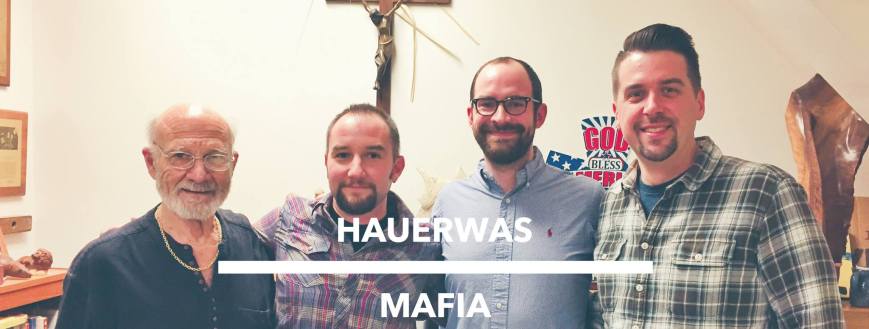
The team from Crackers & Grape Juice interviewed Stanley Hauerwas about the Lectionary Readings for Lent 1 (3/4/17). You can listen to our conversation here: Strangely Warmed

hauerwas

There is a temptation, during the season of Lent, to make it all about our temptations rather than Jesus’ temptation. While people today (Ash Wednesday) are embarking on the beginning of their 40 fast from the likes of chocolate, coffee, and candy, the Revised Common Lectionary forces us to confront the truth about Jesus’ temptation on the first Sunday of Lent. Our conversation with Hauerwas brought forth some interesting insights about comparing Jesus temptation by the devil with the serpent’s tempting of Eve in the Garden for both pastors and laypeople. If you’re preaching the first Sunday of Lent, or if you are interested in the connections between Genesis and Matthew, check out the episode from Strangely Warmed.

strangely-warmed-spreaker-header


In Defense Of The Revised Common Lectionary

Crackers & Grape Juice is an interview-driven theological podcast about faith without using stained glass language. My friends Jason Micheli, Teer Hardy, and Morgan Guyton started the podcast over a year ago in order to remain connected to one another while also continuing to explore theology. Near the beginning, I was asked to help with editing specific episodes and quickly became part of the team. Since the inception, Crackers & Grape Juice’s audience has grown tremendously thanks, in part, to interviewees such as David Bentley Hart, Stanley Hauerwas, Will Willimon, Rob Bell, and others. We are committed to producing and providing faithful content with faithful theologians, but we have also added a new podcast to the mix.

Strangely Warmed is a new lectionary-based podcast designed to address the weekly church reading without using stained glass language. The Revised Common Lectionary is a wonderful resource for churches and one that has come to shape the Christian experience over the last few decades. The RCL is a three-year cycle of four readings for each Sunday and special days throughout the liturgical year. There is always a reading from the Old Testament, the Psalms, an Epistle, and a Gospel (with a few exceptions). At the heart of the RCL is a desire to bring churches through the great narrative of scripture without being limited by the subjectivity of the preacher.

However, the Lectionary is something unknown in many churches even if the preacher follows it weekly. Therefore, I have created the following Top Ten List in defense of the Revised Common lectionary for pastors and lay people who are interested in following and subscribing to Strangely Warmed. (You can subscribe on iTunes, Stitcher, and Spreaker)

strangely-warmed-spreaker-header

  1. Our Time is NOT God’s Time
    1. Christians, whether they know it or not, follow a different year than the calendar year. We might write February 28th on our checks and important documents, but for us the day is actually defined by being part of the season of Epiphany (until Ash Wednesday when we enter the season of Lent). To follow Jesus Christ implies a willingness to have our expectations (taught to us by the world) uprooted and flipped by the living God. The RCL helps guide us through the Christian year in such a way that our identity first rests with our discipleship, and then everything else secondarily. Moreover, following something like the RCL is a reminder that our time is not the same thing as God’s time. We might feel wearied by the weight of the most recent political development or social event, but the stories of God’s interaction with God’s people transcend time; they are in fact timeless. There is a great comfort that comes when diving into the strange new world of the bible through the RCL because it provides a sense of perspective that Christians regularly need.
  2. Habits/Discipline
    1. As Stanley Hauerwas has said on a number of occasions: What we believe shapes how we behave. Following the RCL informs our beliefs and necessarily shapes our behaviors, choices, and actions. The lectionary is a habit and requires discipline for both pastors and lay people. I will be the first to admit that there are plenlty of stories in the Bible that I would rather not preach, and when a particular event occurs I often know which story from the Bible would be effective to use from the pulpit in which to address the event. However, only picking and choosing the stories that we are familiar with, or the stories we are comfortable with, furthers the sinful idea that we can fit God into a box. Psalm 23 is a beautiful text and brings comfort to many people, but it cannot be the only thing that we Christians proclaim on a weekly basis. We need the Psalm 22s just as much as the Psalm 23s and the RCL provides that disciplined exposure to the canonical narrative of God’s grace.
  3. Limited Imagination
    1. Similarly, following the RCL, whether in preaching or in a bible study, forces us to proclaim scripture we would otherwise ignore. God can, and does, speak through scripture, even if we can’t imagine how upon first glance. And when we limit the passages on Sunday mornings to, say, the Gospels, we are limiting God’s Word being proclaimed in worship. There are definitely weird and strange passages in both the Old and New Testaments, but committing to them (rather than ignoring them) challenges us to have scripturally shaped imaginations. At the heart of the RCL is a commitment to be under the obligation of the text to say what God wants said for God’s church rather than what the preacher want to say about God to God’s church.
  4. Biblical Literacy
    1. We don’t know our bibles like we once did. Period. I could go on and on about the many times I’ve encountered someone who has gone to church for most of his/her life only to not know about the story of the bible. For instance: I was recently asked if Moses was in the New Testament, another person had no idea who Isaiah was, and another shared her utter shock that when we have communion we are living into the last time Jesus gathered with the disciples. All of those interactions came from people who have been going to church longer than I’ve been alive! Now I’m not say that we need to memorize the entirety of scripture, or get lost in the weeds, but the RCL is a tool to help us reclaim our biblical literacy.
  5. The catholic (universal) church
    1. Preaching and reading from the RCL connects us with the church universal. There is something profoundly beautiful about the fact that two churches, from completely different denominations, can read the same scripture on the same Sunday morning. Personally, this connection with the catholic church has been made manifest in a Lectionary Bible Study I participate in at the church I serve where more than half of the people in attendance attend other churches on Sunday morning. Yet, the same scriptures we read during the week are the ones they encounter on Sunday morning. In a time when there seem to be almost more denomination than there are Christians, the RCL connects us to the united church that Christ prayed for in John 17.
  6. Scripture Interprets Scripture
    1. The bible is cyclical, and you can miss this if you read it in isolation or with the strange collaboration of something like the RCL. For instance, the story of Christ’s Transfiguration on the mountaintop is a powerful one in and of itself, but it takes on a whole new meaning when we read it in light of the similarities between Jesus and Moses. Both were born into situations where their lives were in peril, both heard the voice of the Lord in pivotal moments before their ministries began, both proclaimed the law from a mountain, and both had their faces shine in the light of God’s presence. Scripture helps interpret scripture, and the RCL does a pretty good job at pairing readings from throughout the bible that connect with one another.
  7. Christological Focus
    1. Jesus Christ is the lens by which we read scripture. We Christians have the benefit of knowing the “end of the story” when we are reading passages from the Old Testament and we should remember Christ’s role throughout the canon. However, we don’t simply read the New Testament into the Old; we also need to read the Old into the New. The New Testament is filled with scriptural references to the Old Testament that fall flat when we, as preachers and readers, do not draw the connections between the two. And Christ is the glue that holds both Testaments together. The RCL implores those who adhere to it to see the connections between all four readings and how Christ is the means by which they relate to one another.
  8. Inexhaustibility of Scripture
    1. God always has something to say. Now that I’m in my fourth year of ministry, I am making my way through Year A of the RCL for the second time and I am blown away by how much the same scripture I preached on just a few years ago still have so much to say. The way I read John 1 my first year in ministry has changed dramatically and has therefore transformed the way I preach that passage. Similarly, I have been in bible studies and read enough theology over the last few years that I will never look at certain passages the same way again. The RCL allows we preachers to reflect on how we looked at, and preached, a text in the recent past and how we can use in again in the present.
  9. Room for the Spirit
    1. As previously mentioned, there are some difficult passages in both the Old and New Testaments. Passages about the wrath of God or the judgment of God are not easily preached or taught in church. However, using the RCL compels the preacher to rely on the Spirit’s guidance when handling a difficult passage which is something that should be done for every sermon regardless of difficulty. When I was first appointed to St. John’s and was planning worship for the coming months, I made a habit of reading all for lectionary texts for each Sunday and the one I wanted to preach on the least was the one that I picked for the particular Sunday. This simple practice forced me to rely on praying for the Spirit to guide me and for God’s will to be done in a way that made my preaching better, more faithful, and more fruitful.
  10. Being Shaped by the Word
    1. In our current cultural clime (the Reign of Trump), the lectionary helps us negotiate the world in which we find ourselves. Rather than reading into scripture what we want to say, the RCL allows us to proclaim what God wants to say. If we are willing to stand under the text (rather than above it) then we can let the text narrate our lives and we can be faithful. For example: On election day, the gospel lection was about Jesus’ prophecy of the destruction of the Temple in three days. Stanley Hauerwas was tasked with preaching that week at Duke Divinity School, and he preached about how Jesus just didn’t get it; you don’t tell the Jews the Temple is going to be destroyed in three days if you’re running for office. He then went on to address how the assumption that elections are the means by which just societies are established is an illusion; in the New Testament we learn about how democracies work in the one moment where there is an example of a democratic election… the crowd chose Barabbas. Hauerwas easily could have picked any number of passages from the Bible to preach during Election Day, but he was held accountable to the lectionary, which told him what to preach rather than the other way around. Following the RCL, whether in preaching or in teaching, grants us the freedom to be shaped by the Word.


16991646_1754345251560760_6036548281295906470_o


16992453_1752449351750350_1251793558137580780_o

Devotional – Matthew 4.1-2

Devotional:

Matthew 4.1-2

Then Jesus was led up by the Spirit into the wilderness to be tempted by the devil. He fasted forty days and forty nights, and afterwards he was famished.

Weekly Devotional Image

In a few days churches across the globe will begin the season of Lent through Ash Wednesday services. Countless disciples will have ashes in the shape of the cross on their foreheads at school, at work, at the gym, and everywhere in between. The season of Lent marks our journey with Jesus’ journey toward Jerusalem that culminates in the empty tomb on Easter.

For a long time, Lent has been a season in the life of the church focused on personal piety and repentance. It is an opportunity for Christians to confess their sins and spend a number of weeks turning back to the Lord in spite of their previous choices. And this emphasis on repentance has been made manifest in the popular decision to “give something up for Lent.”

We are told that it is good and right to give up a temptation during the season because it allows us to focus more on God and because it allows us to mirror Jesus’ temptation in the wilderness by the devil. When done faithfully, giving something up can be a truly fruitful activity; fasting has always had a place in the life of disciples. However, the season of Lent is about a lot more than personal piety, and when we limit our participation in this important season to “giving something up” we neglect to remember that Jesus’ temptation is not our temptation.

577342031dea80418edd74d681006901

When Jesus was hungry the devil challenged him to turn stones into bread and yet Jesus refused. When the devil enticed Jesus to jump from the pinnacle of the temple to put God to the test, Jesus refused. And finally, when the devil offered Jesus all the governments of the world in exchange for Jesus worshipping the devil, Jesus refused.

The devil offers things to Jesus that only the devil can offer to the Son of man. We, like Jesus, can be tempted by hunger, contractual prayers with God, and with a desire to control our lives through things like government, but they are not offered to us in the way that they are offered to Jesus. Jesus’ temptation marks the beginning of a ministry that will upset the expectations of the world and eventually result in his death on a cross. As the Son of God, Jesus is offered, and tempted, with the devil’s way out but he refuses. He refuses because he is God incarnate and cannot deviate from the path that leads to resurrection.

If we want to give something up during Lent in order to grow closer to God, by all means we can. However, perhaps a better thing to give up is not a physical and tangible item like chocolate or watching TV, but instead we can give up the false notions that we are the central characters of scripture, that we can earn our salvation, that we are more important than we really are.

Instead, maybe this Lent we give thanks to the Lord our God who came to walk among us, be tempted like us, yet be totally unlike us, and save us from sins, from death, and from ourselves.

The Mission Of The Church

1 Corinthians 3.1-9

And so, brothers and sisters, I could not speak to you as spiritual people, but rather as people of the flesh, as infants in Christ. I fed you with milk, not solid food, for you were not ready for solid food. Even now, you are still not ready, for you are still of the flesh. For as long as there is jealousy and quarreling among you, are you not of the flesh, and behaving according to human inclinations? For when one says, “I belong to Paul,” and another, “I belong to Apollos,” are you not merely human? What then is Apollos? What is Paul? Servants through whom you came to believe, as the Lord assigned to each. I planted, Apollos watered, but God gave the growth. So neither the one who plants nor the one who waters is anything, but only God who gives the growth. The one who plants and the one who waters have a common purpose, and each will receive wages according to the labor of each. For we are God’s servants, working together; you are God’s field, God’s building.


When I lived in Harrisonburg, I played drums for a worship service that met every Sunday evening. On Sunday mornings the sanctuary would be packed with individuals and families from the community who would listen to the organ, sing from the hymnal, pray from the pews, and worship together. On Sunday evenings however, we would set up for a very different type of worship service: we had two electric guitars, a bass, a drum set, and a couple singers. Instead of suits and dresses most people came as they were, and instead of the sanctuary being packed, we were lucky if there were more people in the pews than in the band.

The basic worship formula included playing four or so songs, reading scripture, hearing a sermon, celebrating communion, and then playing one more song. Which meant that I spent most of the evenings sitting behind a drum kit looking out at everyone else. From this vantage point I quickly learned who always came late, who refused to sing certain songs, who let themselves go and put their hands in the air to praise, and who pretended to pray while they were actually texting someone on their phone.

I had been playing with the band for a while when I started to notice a young man, probably about my age, who walked in during the first song, and left during the last song every week. We had other people show up for one Sunday a month, or would be there for a couple weeks in a row only to disappear for a months at a time, but this guy was there EVERY WEEK.

Week after week I watched him arrive only to depart before I had a chance to talk to him. But, even though we didn’t talk, his faithfulness was palpable. As a college student, he came to worship week after week while others were choosing to put their allegiances in other places.

When the academic year was coming to a close, the leadership team for the service met to discuss changes for the future. It was abundantly clear that we were not growing and we wanted to make more disciples of Jesus Christ so we started discussing ways we could get more people to join us.

I suggested that we speak to the young man who snuck in and snuck out; after all, he showed up more than anyone else, and I thought he would have some ideas for us.

So the next Sunday, we purposefully ended with a song that did not use the drums so that I could talk to him before he jettisoned out of the sanctuary. We met by the doorway and I introduced myself. I explained that I saw him come in every week, and apologized for not doing more to make a connection. I then launched into a dense theological reflection about why we need more people to come to the service and that all of us thought he would be a great person to speak with. He listened as I went on and on until he raised his hand and said, “That sounds nice and all, but I’m not a Christian.”

            “Not a Christian? What do you mean you’re not a Christian? Why have you been here every week if you’re not a Christian?”

            “I don’t feel like I belong anywhere else, and I don’t have any friends.”

eternal-mission-church_620

We, as human beings, want to belong. We want to belong in the worst ways whether we’re in preschool, high school, or it’s been a long time since we’ve been in school. Out of this desire for belonging we join communities: neighborhood associations, sport teams, civic organizations, and even scout troops.

But they tend to disappoint us. We hope for a sense of identity and purpose and community to magically erupt soon after we begin participating, but because people are so focused on themselves, or someone forgets our name, or someone else argues with us over a matter of opinion, we become disappointed and disillusioned. And before long, we fall back into that pit of loneliness.

The same human desire for belonging was apparently true of the folk in Corinth. The church that Paul helped to inaugurate was struggling. The people wanted desperately to belong, to be part of something. And they joined the church, but then (like we always do) they broke up into factions: I belong to Paul, I belong to Apollos, or some other leader.

One need not stretch the imagination to hear the same sorts of declarations in the church today: I’m a Republican, I’m a Democrat. Zig Volskis was the best pastor we ever had. Steve Greer was the best pastor we ever had.

Paul caught word of these divisions and wrote to the church: Who do you belong to? Why are you dividing over issues of leadership? I came to you with the message of Jesus Christ and him crucified, but clearly it did not take root deep enough. So long as you continue to quarrel you will not be ready to be Christ’s church.

Who do we belong to?

We have a book in the United Methodist Church called The Book of Discipline. In it, its paragraph 120 if you’re interested, we have the mission of the church written out plainly for all to read and understand.

mission_umc_logo

The mission of the United Methodist Church is to make disciples of Jesus Christ for the transformation of the world.

Making disciples is at the heart of what it means to be a United Methodist. I mean, its what Jesus calls the disciples to do at the end of Matthew’s gospel: Go therefore and make disciples of all nations baptizing them in the name of the Father, Son, and Holy Spirit.

But making disciples is often confused with filling the pews.

It results in having conversations about how to get more people in the building while neglecting to interact and connect with the people already in the building. It results in infantile discipleship. It results in working for the numbers, and not the kingdom.

And then we’ve got this bit about transforming the world. Is that really our mission? Do we have the church to change the people and the community around us? Should that be our soul purpose? Does the church exist to make the world a better place?

The church is defined by the sacraments of communion and baptism in order to be a community of difference and peace. The church, therefore, is called not to make the world a better place, but to be the better place God has already made in the world.

Of course, the problem is whether or not our experience of the church matches its definition of being the better place.

I suspect that many of you have experienced the church as Paul experienced it: Disagreements, petty arguments, and at times suffocating silence between bickering factions. For some, the pews of the sanctuary are more like walls of division and less like avenues of connection.

If church is the better place that God has already made in the world, then it should, like it was for that young man in Harrisonburg, be the place to cure loneliness. Because loneliness is something all of us have experienced in some way, shape, or form, and is a wound not easily healed.

I spend an hour every week with the youth of our church at our gathering called The Circle. We always have communion and answer questions and study the bible. But we often just talk about what’s going on in each other’s lives. And, without breaking their trust, I’ll tell you: their lives are not easy. There is such a tremendous amount of pressure placed on them by outside forces. They feel compelled and pushed to change their image, the way they talk, the way they think, and even what they believe in order to be accepted.

Some weeks I leave our Circle meeting feeling broken by what they have to endure on a regular basis, only to have a conversation the next day with an adult who is going through basically the same things in a different context.

The world would have us change. Change your image, hide your faults, be someone else.

As Christians, however, we walk with our wounds and our cracks and our brokenness instead of running away from them. We cannot accept who we are until we discover that we are loved by God because of who we are.

The church can be the better place that God has made in the world because the church is the place where we walk with our wounds and loneliness because of Christ and him crucified. The broken and lonely Christ on the cross knows our brokenness and our loneliness. But he also carries our wounds so that we might see the One who truly loves us.

God is transforming the world. God is the one who makes the first last and the last first. God does, and should, get all the good verbs. Our God is a God of action, of change, of transformation. We are the church, we are the vineyard of God’s garden, we plant the seeds, we water the seeds, but God is the one who makes them grow.

You and I, with our sins and our disappointments, with our fears and loneliness, we have a place here. God invites us to the better place where we are welcomed not because we fit the mold, but because we do not fit the mold. We have a place in this better place because we are caught up in God’s great story.

Just look at the cross, consider the waters of baptism. God is made manifest in the world not through the powerful, not through the expectations of the mighty, but through the weak and through the shamed; through babies and wandering Israelites; through tax collectors and fishermen; through a poor rabbi murdered by the state.

This is the better place God has made in the world. And in this place we remember our baptisms, we remember our death to self and our resurrection in Jesus Christ. We remember our baptism and through that water we remember the story of creation, of the flood, of the exodus. We remember that in our baptism we became part of the body of Christ, the church, where we should never be lonely. Where we should never be made to feel as if we are not enough.

In baptism we joined the better place God has made in this world.

Who then do we belong to?

Do we belong to political rhetoric and partisan ideology? Do we belong to church growth programs co-opted by a desire to see more people in the pews? Do we belong to isolationism or interventionism? Do we belong to a world that pressures us to become that which we are not? Do we belong to Paul or to Apollos? Do we belong to the flesh and are consumed by jealousy and quarreling?

No.

            In this better place, we belong to God. Amen.


(With thanks to Jason Micheli, Stanley Hauerwas, and Will Willimon)

Devotional – Matthew 5.23-24

Devotional:

Matthew 5.23-24

So when you are offering your gift at the altar, if you remember that your brother or sister has something against you, leave your gift there before the alter and go; first be reconciled to you brother or sister, and then come and offer your gift.

Weekly Devotional Image

“I want you to write down the name of someone who is currently driving you crazy.” That’s how I chose to begin a sermon more than a year ago. Each bulletin had a blank piece of paper inside, and after writing down the name I asked everyone to crumple it up and hold it in their hands until the end of the sermon.

The sermon was focused on Isaiah 6.1-8 and I talked about how Christians, for centuries, have been called by God to confront conflict. I said that to be faithful is to meet the outcasts where they are and show them love, that to be a disciple means a willingness to forgive people when they have done something wrong, and that to follow Jesus means having the courage to ask for forgiveness when we have done something wrong.

I concluded the sermon by asking everyone to look at the names crumpled up in their hands, and seriously consider making the first move to confront the conflict with that person. I warned everyone that it might not go well, and that it might blow up in our faces, but that the longer the conflict remains, the harder it would be to hear the living God speaking in our lives.

1be9b5bd635fbd64716dbb286ad38d4d

Like a lot of sermons, I preached it and hoped the people of St. John’s took the challenge seriously. Over the next few months I occasionally heard about what happened when certain individuals confronted the conflict in their lives, but a few people told me that it was too hard and they were too afraid to face the person whose name they wrote at the beginning of the sermon.

Jesus, in the Sermon on the Mount, takes the art of reconciliation very seriously: Before you bring a gift to the altar (before you place your tithe in the offering plate during worship) you need to leave; first be reconciled to your brother or sister, and then come back to offer your gift.

I’ve often thought about what this would look like in the middle of a worship service: How would people respond if we told them to leave the church right then and there to be reconciled with the people they are quarreling with before giving their gifts to the church? Would any of them come back the next Sunday? Would anyone walk straight up to me because I’m the person they’re frustrated with?

It is easy to show up to church every week as if we have everything in our lives figured out and squared away, when the truth is that we are quarreling with people in our lives and that we don’t have everything figured out. Church, however, is the place where we learn what it means to be broken, and how God is working through us to put the pieces back together.

So, if we took Jesus’ words seriously, who would we need to reconcile with before we show up to church next Sunday?

Love The Sinner, Hate The Sin

Matthew 7.1-5

Do not judge, so that you may not be judged. For with the judgment you make you will be judged, and the measure you give will be the measure you get. Why do you see the speck in your neighbor’s eye, but do not notice the log in your own eye? Or how can you say to you neighbor, “Let me take the speck out of your eye,” while the log is in your own eye? You hypocrite, first take the log out of your own eye, and then you will see clearly to take the speck out of our neighbor’s eye.


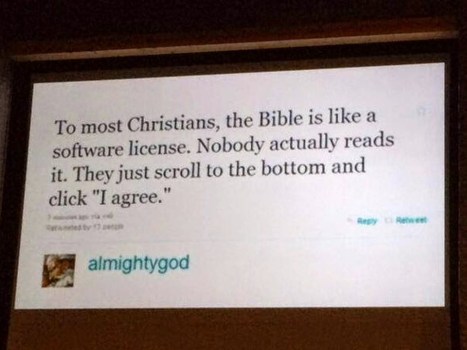
We announced this sermon series a couple months back, and ever since then a number of you have expressed your excitement about the possibility of confronting these Christianisms. Whether you were in the middle of suffering and someone said, “God won’t give you more than you can handle” or a friend tried to explain how your struggles were given to you by the Lord because “everything happens for a reason” or any number of situations, these dumb things that Christians say are things all of us have heard.

However, some of you have also expressed your concern about today’s statement, the last one in the series, “love the sinner, hate the sin.”

It sounds so right doesn’t it? What could possibly be wrong with it?

We can all agree that Christians say a lot of dumb things, but this is a good thing to say, right?

post_image2-720x360

In my experience, when people say “love the sinner, hate the sin” they are usually referring to homosexuality. For many, it is a kind and Christian way to say, “I love my gay friends, but I hate that they’re gay.” In this post-truth, post-liberal, post-whatever period, it is a way for some of us to cover our true feelings while appearing congenial toward those whom we disagree with about sexuality.

Though recently, when I’ve heard people say it they are now using it with regard to the realm of politics. It is amazing how quickly the Christian cover-all for conversations about homosexuality has shifted to conversations about who, or who isn’t, running the country. “Well, I know she voted for that traitor Hillary Clinton, but I love her anyway.” Or “Donald Trump is ruining our country, but I love him anyway.” “I love my brother, but he can be a bleeding liberal.” “I love my sister, but she’s so conservative she’s off the political spectrum.”

Love the sinner, hate the sin.

It sounds good, but it’s pretty hard to hate another’s sin, without harming the sinner.

What is sin? We don’t talk about it anymore. Pastors like me would rather talk about God’s loving nature, than God’s judgment. We would rather tell people like you to love your neighbors, than to tell you to tell your neighbor they’re sinners. We would rather skip over the hard and strange passages about condemnation than truly proclaim that God’s scripture is still speaking to us today.

But for a long time, and I mean a LONG time, sin was THE thing that pastors talked about; sinners in the hands of an angry God, fire and brim stone, and repent or burn forever.

We’re afraid of sin. And not sin as a behavior; we’re afraid to talk about it because it makes us, and our congregations, uncomfortable. I hear again and again that people don’t want to leave church feeling miserable about their lives and their behavior, so preachers like me water down the gospel and we avoid even mentioning sin.

In fact, I had a professor in seminary who taught us to preach ten sermons about grace for every one sermon about sin. We preachers, and you Christians, can’t handle the topic of sin like we once could.

But what is it?

In both Hebrew and Greek the words for sin basically means “to wander from the path” or “to miss the mark.” Sin is any action, thought, or behavior that divides us from God. Sin can be any choice, or lack of choice, that results in failing to do something we know we should.

And here’s the thing: We all do it. All of us sin. From the guy standing before you in a white robe, to the decades long Sunday School teacher, to the child drawing on his bulletin, to the person in the pew across the aisle, to you. We are all sinners.

We think, say, and do things we should not. And we fail to think, say, and do things we should.

lovehate1-750x400

Love the sinner. Of course we are supposed to love the sinner. Jesus did it all the time. Most of his ministry was about loving sinners. The problem is that Jesus does not call his disciples to love sinners, but to love our neighbors.

This is an important difference. The difference being the starting point. If we say we are going to love sinners, we will view other people more like sinners and less like neighbors. It automatically puts us into a place of judgment where we are the righteous, and they are not.

Loving sinners also furthers the problematic identity problem where by we understand and identify others by their mistakes. We label people by their sins. Regardless of when the sin occurred, and even regardless of frequency, we still call people things like cheaters, adulterers, and liars.

Or, to put it another way: Instead of seeing our neighbors as our neighbors, we judge them and identify them by which political candidate’s name was on a sign in their front yard.

A while back one of my friends was starting a new job fresh out of college. He was understandably nervous when he entered the office building for the first time and made his way to a cubicle near the corner of the room. He quietly unloaded his boxes of pertinent materials onto his desk and set up pictures of his family and friends while other employees walked idly by.

There were signs that someone had used the cubicle before him: an accidental scratch across the desk, a piece of discarded paper in the trashcan, and finger smudges on the computer monitor. But other than that, the cubicle was empty.

He worked his first full day under the weight of focus, though a few people came by to introduce themselves. And when it was time to go home he packed his bag and opened the top drawer to grab his pen when he noticed a post-it note near the back. Without thinking much about it, he grabbed it and read three big words: DO NOT TRUST. And underneath those words were the names of five people from the office.

Can you imagine? No matter how hard he tried to forget the note, no matter how hard he tried to trust the people in spite of what he read, his entire perspective had been reshaped by those three words.

The same happens when we view others as sinners first, and neighbors second. We should always try to love them, but we can love them even more if we see them first as our brothers and sisters and less as sinners in our midst.

Jesus says, “Why do you look for the speck in your neighbor’s eye, but do not notice the log in your own eye?” We’re good at seeing the sin in others. That’s what Facebook is for! So we can vent about the sinners in our midst and all the problems they’re causing for the rest of us!

Jesus used this expression because he knew that the disciples would struggle with the tendency to judge others. So instead of loving the sinner, perhaps it’s better to say “I am a sinner, and I ‘m trying love my neighbor.”

But we still have to face the end, “hate the sin.”

Jesus spent a lot of time with sinners: drunks, prostitutes, thieves, murderers, traitors, and countless others who sinned against the Lord. Jesus routinely gathered with them to do what we will do in a few minutes, he broke bread with them. Jesus gave him the most precious gift he had to offer, his time. And then he told them to follow him.

But Jesus never, not even once, said to any of them, “I love you, but I hate your sin.”

Jesus, instead, offered forgiveness.

He encountered all kinds of people who were defined by their choices, and he saw them for who they were in spite of their sins. His love was such that it knew no bounds. It was enough.

            But we are not like Jesus. We fail to love the other as brother and the stranger as sister. We have logs in our eyes and say things like, “love the sinner, hate the sin.”

love

There was a man who died, and upon his death he arrived at the pearly gates in heaven. He looked all around and soaked up the sights of the fluffy clouds and he was so excited to see people just on the other side of the gate that he had missed for so long. He wanted to run straight to them but there was a line leading up to St. Peter. So the man got in line and waited patiently for his turn.

He knew it wasn’t the right thing to do, but as he got closer he couldn’t help eavesdropping on the conversations between St. Peter and the soon to be residents of heaven. “Oh you did so much for that soup kitchen!” “You’re the one who read scripture out loud in church every week, very good, very good.” And so on. But when the man’s turn came, St. Peter looked down in the Book of Life and then said, “Yeah you were a believer, but you skipped the ‘not being a jerk about it’ part.”

Saying, and living by, “love the sinner, hate the sin” makes us jerks. It means the log in our eye is so large that we are unable from seeing others as brothers and sisters. It means that our own sinfulness blinds us from truly loving.

There is sin in this world. People will make the wrong choice, they will choose evil. We will make sinful decisions; we will avoid doing the things we know we should do. But instead of rallying together and focusing on all the sins and problems of other people, instead of flocking to the Internet and like-minded dinner parties to declare the sins of the other, we all need to take a good hard look in the mirror. We need to recognize the log in our own eyes before we dare point out the speck in another.

Because Jesus, looks right into our hearts and says “I love you, log and all.”

God in Christ knows the prejudices we’re ashamed of, God knows the golden calves we worship instead of Him, God sees our self-righteousness and indignation and says, “I love you, log and all.”

God sees the emails we craft out of anger but are too afraid to send, God knows the ways we lie to our spouses and our children, God witnesses the depth of our depravity and says, “I love you, log and all.”

God was there with us in the voting booth, God hears the sighs we utter in response to someone on the other side of the political aisle, God knows how we really feel and says, “I love you, log and all.”

“Love the sinner, hate the sin.” We say it. We read it. We might even live by it. But we should just stop with the word “love.”

Love.

617564_1

Not Hallmark love. Not Valentine’s Day love. But love like Jesus. That might be good enough. Because loving like Jesus does not mean turning away from the sinners in our midst. It means walking up to a crowd of people who are about to do something terrible and saying, “Who among you is without sin? Let him cast the first stone!”

It means encountering the beauty of the Lord and responding with the truest words we can ever say: “Have mercy on me Lord, a sinner.”

It means being humble enough to seek out those whom we have wronged and asking for their forgiveness.

It means caring for those on the margins regardless of the decisions they’ve made or the sins they’ve committed.

It means reaching out to the people who we disagree with most not to change their mind, but to offer them the same thing Jesus offer us, time.

So the next time we say “love the sinner, hate the sin.” Let’s just stop with love. Amen.
God Said It, I Believe It, That Settles It

Deuteronomy 23.12-14

You shall have a designated area outside the camp to which you shall go. With your utensils you shall have a trowel; when you relieve yourself outside, you shall dig a hole with it and then cover up your excrement. Because the Lord your God travels along with your camp, to save you and to hand over your enemies to you, therefore your camp must be holy, so that he may not see anything indecent among you and turn away from you.

1 Corinthians 14.32-35

And the spirits of prophets are subject to the prophets, for God is a God not of disorder but of peace. As in all the churches of the saints, women should be silent in churches. For they are not permitted to speak, but should be subordinate, as the law also says. If there is anything they desire to know, let them ask their husbands at home. For it is shameful for a woman to speak in church.


We have a problem. I’m sorry that I have to use the pulpit to bring it up, but this is the best way to reach the highest number of people. We, as a church, have fundamentally broken one of God’s laws and we need to do something about it. We need to pray for forgiveness. We need to seek God’s mercy. And, we should get moving on this issue quickly in order to establish our faithfulness before the Lord.

We need to stop using the church bathrooms.

Now, some of you might be thinking: What in the world? Stop using the bathrooms? We’ve heard him say some strange stuff from the pulpit, but this has to be the strangest!

But scripture is pretty clear. We are supposed to have a designated area, outside the church, where we shall go when nature calls. We are supposed to keep a trowel with us at all times so that when we relieve ourselves outside, we can dig a hole and then cover up our excrement. We need to do this because the Lord is with us when we are in church, therefore this church must be holy and we can’t let the Lord see anything indecent among us.

So, after prayerful consideration, the trustees have voted to permanently close all the bathrooms in the church building, and we will construct some outhouses on the edge of the property for excrement disposal.

Just kidding.

lexica

Have you ever heard someone preach on Deuteronomy 23.12-14? I haven’t, nor have I even encountered it during a bible study. But in the 1880’s, churches and bathrooms were quite the topic of sermonic conversation. The advent of indoor plumbing had arrived and the question about whether or not to have bathrooms in churches started to pop up.

By the logic of the Old Testament, churches were seen just like the Israelite encampments and because of this the same rules about where people could relieve themselves were applied. Many preachers used this argument from their pulpit more than a century ago to fight the growing trend to build bathrooms in churches!

Today, when designing a new church, one of the first questions isn’t what the sanctuary should look like, or what kind of design will enhance the altar, or even how many people can fit in it, but how many bathrooms should there be, and where should they be put.

How do we understand the Word of God? Do we believe that all scriptures have been inspired by God and are useful for teaching? What does it even mean that God inspired the writing of scripture?

Years ago I was invited to participate in a bible study that met once a week. At the time we were going through the gospel of Matthew when one of the women in attendance interrupted with a dilemma for the group. Her son told her that he was thinking about getting a tattoo and she knew that God forbids this kind of behavior in the Old Testament. It was clear that she was looking for approval from the rest of us, but I opened my big mouth and said something like, “Well, I don’t think its that big of a deal” To which she replied, “If God says it in the bible, then the issue has been settled!”

I should have stopped right there, but I couldn’t help myself. “So, you don’t eat pork or shrimp? And you are going to rally the community together to stone your son to death for rebelling against you? And you didn’t mean to wear earrings today because you know the bible forbids them as well?”

This sort of extreme biblical literalism is problematic, and basically impossible. If we try to live by the Word with extreme rigidity, we would not be allowed to wear clothing with blended fabrics, we’d have to completely rethink our diets, working on the Sabbath would get us killed, and men would not be allowed to trim their beards. Ever.

            God said it, I believe it, that settles it.

This is another one of the trite and cliché Christianisms that float around in conversation. When Christians get into an argument about a particular biblical precept, like prohibitions against tattoos or homosexuality, they will take a verse and use it like a weapon against the person they disagree with. God said it, I believe it, that settles it.

But, whether we admit it or not, rarely do we read the bible and think, “Okay, that settles it then.”

Today, no one worries about whether to build a church without a bathroom, we don’t hear preachers belabor biblical dietary restrictions, and we neglect a great number of scriptures while at the same time we use scripture to attack others.

There are all sorts of rules and regulations in scripture that, if we’re honest, we pick and choose to emphasize.

bible-and-its-interpretation

As we read earlier, Paul is clear in more than one letter that women should not speak in church. And yet, this church had a female pastor for a number of years, and our liturgist this morning just read out loud from the bible! Heaven forbid! A woman speaking in church! Can you believe it?

Of course, some churches still believe that the words about the subordination of women are the gospel truth. In those church, women are not allowed to serve in leadership positions, they are not allowed to teach Bible Studies where men are present, and they are not allowed to serve in any capacity that would require them to speak in front of the congregation.

I’ll tell you right now, this church would not be here if women kept their mouths shut. We are as faithful as we are because the women in our midst have been brave enough to speak what God has placed on their hearts, and because we have listened.

So what are we to do? We can’t just throw out the bible, but at the same time we can’t live by every single word within it.

Like the apostles and disciples before us, we read scripture and we hear God speaking through it. But we also ask questions of it. We consider context. We wonder if God really intended women to remain silent in church. We recognize that things like slavery are counter to God’s will, despite more than 200 verses that support it in the Bible. We don’t preach and teach that having bathrooms inside churches are offensive to God.

We follow Jesus’ example.

Jesus, Son of Man and Son of God, did not adhere to strict biblical literalism. He had different interpretations of the Sabbath restrictions, he had stronger opinions about divorce and adultery, and he regularly disobeyed the Law by eating with those deemed unclean.

Living as a Christian, reading the bible, it’s all about interpretation. And, to be clear, interpretation does not mean to change the text, or to ignore it, but to proclaim it for this time and for this place.

Even the Bibles in our pews are themselves a work of interpretation. Someone, and more often than not some people, made particular choices about how to translate particular words from Hebrew and Greek into English. This might not seem like a big deal, but if you take something like one of the most beloved of all scriptures: For God so loved the world that he gave his only begotten son that whosoever believe in him may not perish but have everlasting life. The word for “perish” in Greek is apollumi which can mean perish, but it can also mean to die, to be destroyed, to be lost, killed, or ruined. Each of these translations can change the meaning of the text slightly, and are therefore a product of interpretation.

So whenever we take up a bible, whenever we flip to a specific passage, the work of interpretation started long before our eyes flow over the English translation. But nevertheless, even the best translations leave us to continue the task of interpretation.

How do we do it? Well, we don’t do it in isolation. We don’t read our bibles in our living rooms never to speak about the words again, we don’t listen to a sermon only to have that be the only time we encounter the words.

We interpret God’s Word in community. We go to bible studies, we send emails to our friends and to our pastor, and we do what we need to do in order to comprehend that which is often incomprehensible.

And we let Jesus help us interpret. In the beginning was the Word and the Word was with God, and the Word was God. As the definitive Word, Jesus helps us to understand the words of scripture. We read from the Old and New Testament alike through the lens of Jesus and we begin to wrestle with how these words continue to live and breathe in our lives today.

But that requires a lot more work than “God said it, I believe it, that settles it.” It compels us to actually take up our bibles, read them, and talk about them. It challenges us to ask hard questions and produce new ideas. It requires us to believe that this book is in fact the living Word of God and that it continues to speak truth in new and exciting ways, perhaps in ways we cannot even imagine.

This last week has been filled with controversy from the Oval Office. In their first week, the new administration put forth a number of executive orders including a call to begin construction on a wall at our southern border, a gag order for the EPA, and the halting of refugee migration from a number of countries.

c3nffwbxaae5lbr

On the same day we celebrate the liberation of the concentration camps in Europe, our country said, “we don’t want them” to people fleeing persecution and destruction.

Now, no one has said that this has been done because of scripture, but the bible should have played a role in the decision if our politicians are going to keep claiming their Christian allegiance.

Moses was a refugee after fleeing from Egypt.

            Ruth was a refugee after her husband died and she followed her mother-in-law to a strange new land.

            The entire Israelite people were refugees in Babylon.

            Jesus, the one we worship here in church, was a refugee. Jesus, like people in the Middle East today, had to flee his home out of fear of violence, persecution, and even death.

And yet, we tout these certain stories from scripture and hold them over people’s heads about behavior and identity. But when we start actively preventing the oppressed from entering the country, we forget all about the story of our Lord and Savior.

People have used this book, with understandings like “God said it, I believe it, that settles it,” to attack and belittle people for far too long. It has been used to justify the horrific practice of slavery. It has been used to subjugate and relegate women’s rights. It has been used to rationalize physical violence and aggression toward people of different religions. It has been used to incite fear and terror in those who do not believe. It has been used as a weapon again and again and again.

And now we, the people of God, join together to say “no more!”

“No more!” to the use of scripture like a weapon to oppress the weak and the marginalized. “No more!” to the complacent Christianity that stands idly by as people are attacked for whom they are. “No more!” to the backwards ways of the past that lose sight of God’s grace here and now.

“No more!” to God said it, I believe it, that settles it.

Devotional – 1 Corinthians 1.27

Devotional:

1 Corinthians 1.27

But God chose what is foolish in the world to shame the wise; God chose what is weak in the world to shame the strong.

Weekly Devotional Image 

When Pharaoh enslaved the descendants of Abraham, God chose a weak little baby abandoned by his mother to the Nile River to deliver the people out of bondage. When Goliath stood in front of the Philistine and Hebrew armies, God chose a foolish and weak little shepherd named David to bring him down. When the time came for the defeat of death, God chose to come in the form of a baby to die at the hands of the government in order to rise again.

Through the Old and New Testaments, God is forever subverting the expectations of the world with something foolish or weak. We can only imagine what people thought of Noah building his giant ark, or Isaiah wandering the streets naked for three years, or Jesus praying over a loaf of bread and cup of wine. God chooses what is foolish in the world to shame the wise; God chooses what is weak in the world to shame the strong.

For far too long, the world has treated an entire gender as foolish and weak. Even in this progressive land we call the United States of America, women still only make $0.80 for every $1 that men earn. The belittling of women is made manifest in a number of ways from churches that believe women do not have the right to preach, to companies that overlook hiring women because of their gender, to women who are made to feel that their fundamental role is to support their husbands.

But on Saturday, God subverted the perspective of the world through the gathering and marching of “foolish and weak” women to shame the wise and the strong. They did not need weapons and aggression and violence to achieve their goal, they did not need the tools the world values so dear, they used the foolishness and weakness of peace to say more than any weapon ever can.

632318086-dc-rally-women-march-washington

What good news it is to know that God is still upsetting and overturning the world to shame the wise and strong! How glorious to know that women all across the world can come together in such a holy way to protect those whom the world has dismissed! How beautiful to see women powerfully and deliberately march for empowerment!

God makes the first last, and the last first. The great story of scripture is the narrative of God turning the world upside down. O that God would do the same to all of our hearts who are more convicted by the ways of the world, than by the truth of the Good News.

God Won’t Give You More Than You Can Handle

Mark 2.1-5

When he returned to Capernaum after some days, it was reported that he was at home. So many gathered around that there was no longer room for them, not even in front of the door; and he was speaking the word to them. Then some people came, bringing to him a paralyzed man, carried by four of them. And when they could not bring him to Jesus because of the crowd, they removed the roof above him; and after having dug through it, they let down the mat on which the paralytic lay. When Jesus saw their faith, he said to the paralytic, “Son, your sins are forgiven.”


On the day of the funeral, everything felt too familiar. The pews were filling up with the same people who were here the week before, the same family was waiting in the narthex, and our organist was even playing some of the same music as people were walking in.

I stood right here in front of the gathered congregation and asked everyone to stand for the family. Leading the profession were two daughters who were about to bury their father after burying their mother the week before. Their grief and pain and anger were palpable as they slowly walking down the center aisle, and everyone watched them as they passed.

And we did what we do for a service of death and resurrection. We prayed. We opened up the hymnals and proclaimed God’s faithfulness through song. We listened. We grieved. We cried.

As we finished, I watched the pallbearers stand up and surround the coffin. With hands shaking in nervousness and fear they carried their friend’s body out of the church and put him in the hearse.

And we did what we do when travel to a cemetery. We got in our cars and turned on our hazard lights. We followed one another through the streets of Staunton. We watched cars slow down and pull over out of respect for what we were doing. We drove. We listened. We grieved. We cried.

After arriving at the cemetery, I watched the same pallbearers carry the coffin to the grave over uncertain soil. With sweat perspiring on their foreheads they lowered their friend to the ground and stood beside the family.

And we did what we do by the graveside. We prayed. We listened. We placed dirt on the coffin. We said what we needed to say. We listened. We grieved. We cried.

After the final “Amen” I waited by the grave with a few others, making sure the family was comforted. I overheard familiar and charming anecdotes about the man we just gathered to bury. I witnessed family members reach out to one another for the first time in many years. I saw a lot of tissues filled with tears wadded up in clenched fists.

And then I saw something I’ll never forget. A man, unknown to me, walked right over to one of the daughters devastated by the loss of both her parents. He placed his hand on her shoulder and said, “Don’t worry, God won’t give you more than you can handle.” And with that he turned around and walked away.

God won’t give you more than you can handle.

635787512482303409305489483_29f1979c65db2aa1627169bad37391df-imgopt1000x70

I’m sure that all of us here have heard this statement, or some form of it, in our lives. It is part of that trite and cliché Christian-lingo that we use to fill uncomfortable silences when we don’t know what else to say. And it’s not true.

Let’s start with the beginning: God won’t give you… We’ve talked about it with every sermon of this series so far; God doesn’t give us our sufferings. God is not some sadist who delights in our trials and tribulations. God is not some architect of divine destruction. God is not sitting up in heaven plotting away about what terrible things to send for us to handle.

Can you imagine going to a devastated neighborhood in Chicago to families whose sons have been killed by gunfire and saying, “Don’t worry God won’t give you more than you can handle”?

Can you imagine going to a young mother recently diagnosed with breast cancer and saying, “Don’t worry, God won’t give you more than you can handle”?

Can you imagine going to the millions of people in this country who are terrified of losing their healthcare coverage in the next few months and saying, “Don’t worry, God won’t give you more than you can handle?”

God did not kill those families’ sons, God did not give that woman breast cancer, and God is not responsible for the arguments about whether or not to eradicate the Affordable Care Act.

Sometimes, we say things like “God won’t give you more than you can handle” because we don’t know what else to say. We encounter the shadow of suffering that is so suffocating we don’t know how to respond. So instead, we will that awful void with awful words. And we make God into a monster.

The problem is that when we use trite and cliché words like the ones we are confronting this morning, we imply that God chooses to make people suffer.

Jesus, God incarnate, had been on the road for a while, going from town to town, synagogue to synagogue, proclaiming the Good News, teaching about the kingdom of God, and healing those on the margins of society. Word about his ministry spread pretty vast, and he returned to Capernaum for a few days, perhaps to rest. But so many people knew where he was that they surrounded his house and Jesus spoke the Word to them.

Some friends heard about what was happening, so they went to their paralyzed friend and carried him on a mat to Jesus. When they could not bring him to the Messiah because of the crowd, they carried him to the roof, dug through the ceiling, and lowered their friend to Jesus. And when Jesus saw the faith of the friends, he looked at the paralytic and said, “Son, your sins are forgiven.”

What a strange and beautiful story. Friends with such profound faith were willing to carry their friend, and dig through a roof, just so he could encounter the living God.

I often wonder about the tradition of pallbearers at funerals. Did it start of out a practical necessity? Is there strong theological purpose behind it? Is it a unique Christian behavior?

But on the day I buried a husband after burying his wife the week before, the day I saw a man dismissively respond to the daughter’s suffering, I saw the connection between pallbearers, and the friends who carried the paralytic to Jesus.

When we cannot handle what’s happening in our lives, we need people who can carry us, and the ones we love, to Jesus.

We will face adversity in our lives. We will experience hardships. We, or someone we love, may struggle with debilitating depression or suicidal thoughts or grief so heavy it feels like someone is sitting on our chest. We might give in to the temptation of an addiction and lose contact with the people we need most. We may fall into a pit of financial debt that feels impossible to climb out of.

If we are like most human beings, at some point we will absolutely face things that are more than we can handle.

So here’s a corrective. It’s not that God won’t give you more than you can handle, but that God will help you handle all that you’ve been given.

6fa0c8a00d809d23761dfaa71b6b542a

This acknowledges that trials and tribulation will occur in our lives, and it promises that when we go through the muck and grime of life, God will be present.

When we’re walking through hard times, whether they were given to us by the random chance of life, or they’re a result of our own brokenness, or they’re signs of our captivity to the powers and principalities, it’s okay and good to admit, “I can’t handle this by myself, and I need help.” There are times when we need a doctor, or a therapist to carry us. More often, we need family, friends, pastors, neighbors, and brothers and sisters in our church family to come alongside us to carry us through.

God does not give us more than we can handle. God gives us Jesus Christ so that we can handle what life gives us.

For a lot of people, what happened on Friday in Washington DC was more than they could handle. Whether it was the pent up frustration with the political rhetoric that overflowed over the last 18 months, or witnessing a billionaire place his hands on Abraham Lincoln’s bible, or experiencing the great swing of the pendulum from one political ideology to another, it felt overwhelming. Some responded with violent protests and destroyed shop windows and attacked the police. Others responded with peaceful demonstrations making sure their voices were not stomped out among all the shouting debauchery. There were the political talking heads offering their opinions about who was right and who was wrong. There were smug smiles and there were frightening frowns. The inauguration, for some, was more than they could handle.

For others, the last eight years has been more than they could handle. Whether it was the constant feeling like the country was slipping out of their fingers, or the realization that the American dream is not what it once was, or the rise of oppositional and divisive voices, it felt overwhelming. Some responded with protests and boycotts of particular institutions, others responded by focusing inwardly and praying for change, and still yet others waited patiently for a new direction. For eight years there were plenty of talking heads offering their unsolicited opinions about who was right and who was wrong. The last eight years, for some, was more than they could handle.

Some say the time has come for all of us to just get along. A couple weeks ago I even told you that we, as a church, should have a collective New Year’s resolution to be more kind.

Kindness and getting along are good and nice. But there are people around us, people in our lives, who need more than kindness and getting along. There are people desperately clinging to the hope of their healthcare coverage completely unsure of what it about to happen. There are people who are hopeless when confronting their joblessness and economic futures. There are people shaking and quaking about their faith and whether or not they are going to be forced to register themselves because they wear a particular piece of cloth on their heads. There are people who see police officers as enemies and not community protectors.

There are people in our community; there are people in our church, who have more than they can handle right now.

We need people, like the friends who carried the paralytic to Jesus, to carry others who have more than they can handle. We need people who can look us in the eye and tell us we have a problem. We need people who will call their friends every night just to get them through a profound period of loss. We need people like all the women who marched in solidarity all across the world yesterday. We need people with eyes wide open to the horrible suffering of the people around us so that it does not go on unnoticed. We need people who are unafraid of the consequences for questioning the status quo. Right now, we need people who are brave enough to carry us to Jesus. Amen.


dumb-things-christians-say-sermon-series-idea