The Beautiful Mess

John 1.29-42

The next day he saw Jesus coming toward him and declared, “Here is the Lamb of God who takes away the sin of the world! This is he of whom I said, ‘After me comes a man who ranks ahead of me because he was before me.’ I myself did not know him; but I came baptizing with water for this reason, that he might be revealed to Israel.” And John testified, “I saw the Spirit descending from heaven like a dove, and it remained on him. I myself did not know him, but the one who sent me to baptize with water said to me, ‘He on whom you see the Spirit descend and remain is the one who baptizes with the Holy Spirit.’ And I myself have seen and have testified that this is the Son of God.” The next day John again was standing with two of his disciples, and as he watched Jesus walk by, he exclaimed, “Look, here is the Lamb of God!” The two disciples heard him say this, and they followed Jesus. When Jesus turned and saw them following, he said to them, “What are you looking for?” They said to him, “Rabbi” (which translated means Teacher), “where are you staying?” He said to them, “Come and see.” They came and saw where he was staying, and they remained with him that day. It was about four o’clock in the afternoon. One of the two who heard John speak and followed him was Andrew, Simon Peter’s brother. He first found his brother Simon and said to him, “We have found the Messiah” (which is translated Anointed). He brought Simon to Jesus, who looked at him and said, “You are Simon son of John. You are to be called Cephas” (which is translated Peter).

Here, toward the beginning of the calendar year, I’ve been doing some thinking. We’re in the midst of a sermon series titled “New Year, New You” and I’ve come to realize some essential truths.

Things are not as they ought to be.

We can listen to the talking heads wax poetic about how politically divided we are, and how we just need to reach across the aisle and all that. But I think it’s far more insidious.

We are so obsessed with our financial gains and economic prosperity that we’ve allowed capitalism to become our dominant religion. We worship money and the accumulation of it. And the evils of capitalism, of which there are many, are as real as the evils of militarism and the evils of racism.

Did you know that, as a nation, we spend more money on national defense every year than on all of our programs of social uplift combined? Surely, that is a sign of our imminent spiritual doom.

We perpetuate a culture in which 1 out of every 3 black men can expect to go to prison at some point in their lives. The price that we must pay for the continued oppression of black bodies in this country is the price of our own destruction.

There is so much injustice in this country – racial injustice, economic injustice, gender injustice. And they cannot be solved without a radical redistribution of political and economic power.

Something’s gotta change.
Now, let us pause for a moment. How did all of that make you feel? Do you agree with what I said? Do you disagree? There’s a better than good chance that saying what I said left most, if not all, of us feeling uncomfortable.

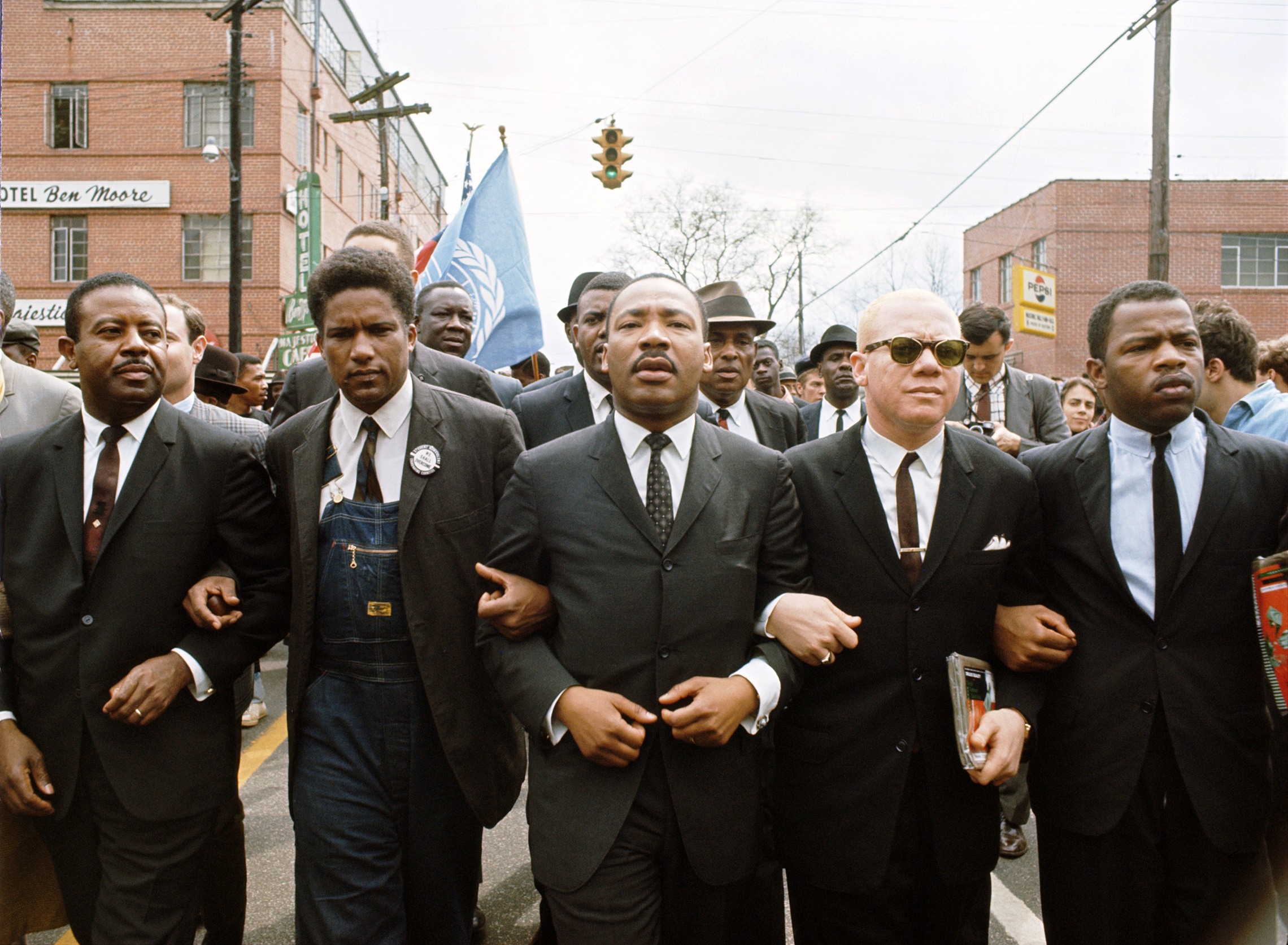
And yet, nearly everything I just said is not original to me. I stole those bits of proclamation from another preacher, one by the name of Martin Luther King Jr. And it was because he was willing to say things that made people uncomfortable that he was murdered. 

It’s been almost 55 years since Dr. King’s assassination. Tomorrow, businesses and schools and all sorts of institutions will close to observe a holiday given in his name, and yet I wonder what it is we remember about Dr. King. Perhaps our minds move to his “I Have A Dream Speech,” or maybe we remember his calm demeanor in the midst of such a perilous time.

However, a year before Dr. King was killed he was widely regarded as one of the most hated men in the country. 63% of respondents in a poll right before his death admitted to being vocally opposed to his words and works. 

It’s hard to remember this, let alone acknowledge it, because everyone today loves Dr. King. We celebrate his transformative work in documentaries and school projects. But we love him now because it’s so much easier to celebrate someone when they’re no longer challenging and upsetting the status quo.

In other words, it’s easier to love a hero when they’re dead.
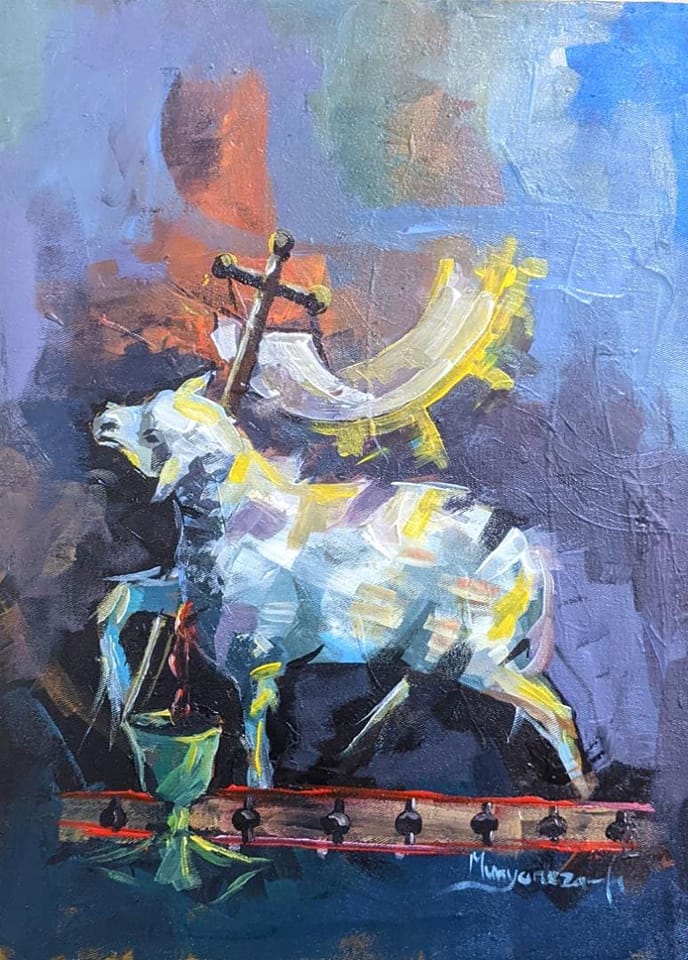
John says, “Here is the Lamb of God who takes away the sin of the world.”

For both Johns, the gospel writer and the Baptist, the image of the Lamb of God is central to their understanding of Jesus. We might talk about and think about Jesus as our teacher or our example or some other identifier, but for the Johns, Jesus is the Lamb of God.

And not just a lamb, but the Lamb – the Passover Lamb.

The church today is very comfortable as a safe and sanitary space where the realities of life, and by that I mean things like suffering, are kept at bay. We are good to mention the plight of Ukrainians in our congregational prayers, we will ask for volunteers to help with Family Promise, and all sorts of things. But when it comes to church, we like things neat and clean and ordinary.

We’re not comfortable with death or illness or questioning the status quo.

However, the church, weirdly, is called to be different. The church takes our over-manicured lives and says, “You’re a mess! You don’t want anyone to know it, and you don’t even want to admit it yourself, but things are falling apart!”

Behold the (Passover) Lab who takes away the sin of the world.

The church is a far cry from where we started. When God first gave specifics on how to worship to the people Israel it was messy: Build a temple, and take animals likes doves and bulls and slaughter them there. Take their blood and pour it over all sides of the altar.

Why? Because there is no transformation without sacrifice. 

Moreover, before God’s people made it to the banks of the Red Sea, waiting on a miracle, they had already experienced their miraculous deliverance from Egypt with Passover.

Take a lamb for each family, God says, a perfect and unblemished lamb, and bleed it out completely before you hang it to roast, make sure that none of its bones are broken. The lamb shall be divided in proportion to the people who eat of it. This is how you shall eat it: your loins girded, your sandals on your feet, and you shall eat it hurriedly. 

I’m getting you out of Egypt, says the Lord. Take the blood from the lamb and mark it on your doorposts so that I will know to passover as I bring my vengeance upon the people of Egypt.

It’s not for the faint of heart!

And, though we avoid it today at all costs, we still rely on blood for our worship. We no longer slaughter animals every week, but only because Jesus became the final sacrifice, the Lamb of God who takes away the sins of the world.

Jesus was without sin and was innocent of the charges lobbed against him, just like the Passover lamb is supposed to be perfect and without blemish.

Jesus was beaten to the point of death and stabbed in the side shortly before his death, just like the Passover lamb is supposed to be bled before being hung to roast. 

Jesus was hung up high and though beaten his bones were not broken, just like the lamb’s bones were to remain intact.

I know this is a lot, it’s gruesome and frightening and messy. 

But that’s what church is all about. It stands in stark contrast with so much of what we want our lives to look like. We want people to think we are perfect even though we are far from it. We want everything to be nice and orderly even when life is tearing at the seams. 

Church, in different ways, is God’s way of looking at the mess of our lives and saying, “I know you deserve this not at all, and yet I’m going to save you anyway. ”

Some of John’s disciples are there when he makes his radical proclamation. They understand, somehow, that the new Passover Lamb is right there in front of them. So they leave John behind to follow Jesus. 

They sacrifice whatever their lives might’ve been to follow the Lamb.

The life and ministry of Jesus who they follow is neither neat nor clean. Notably, Jesus is forever spending time with messy people and their messed up lives. His ministry is among and for the last, least, lost, little, and dead.

Even today, we worship the God who willingly chooses to enter into the muck and mire and mess of our lives, which means things are liable to get messy along the way of our own discipleship. 

And yet, that is Good News!

It is Good News because God comes to us in the brokenness of our health and the shipwreck of our family lives and the worst of our mistakes.

Or, as the liturgy puts it, Christ died for us while we were yet sinners, and that proves God’s love toward us.

Do you see? God saves us in our messes, not from them.

When John says, “Behold the Lamb of God who takes away the sin of the world,” he means it. He, somehow, knows the future in his present, he knows what will happen to the incarnate God when the holy encounters the unholy. 

Notice, the Lamb of God has not taken away the sins of some – of only the good or the cooperative or those with perfect Sunday attendance in church. 

The Lamb takes away the sin of the world, all of them. 

That’s why we can sing, “My sin oh the bliss of this glorious thought, my sin not in part but the whole, is nailed to the cross and I bear it no more!”

And yet, the very next verse says, “And, Lord, haste the day when my faith shall be sight, the clouds be rolled back as a scroll; the trump shall resound, and the Lord shall descend, even so, it is well with my soul.”

What is the Lord descending to do? The Lord comes to judge the living and the dead.

Behold the Lamb of God who takes away the sin of the world. We are redeemed by the Lamb already. And yet there’s a bit more to it as well. Even now Jesus is taking our sin away. Like Dr. King, the Lord speaks words of comfort to the afflicted, and affliction to the comfortable.

It’s a both/and. We are set free from the foolishness of our past while at the same time we are called to live new lives here and now based on that redemption.

Jesus is the exodus for the rest of us, he delivers us from our captivity to sin and death into a strange new world we call the Kingdom of God. 

And in its messy in the Kingdom.

I started the sermon with stolen quotes from Dr. King, a man committed to seeing and bringing about a different world. His commitment cost him his life. And I think he knew that it would. For, the night before he was killed, he delivered one of his most moving speeches. Notably, Dr. King was in Memphis in support of a new union for sanitation workers.

That final night he stood before a packed auditorium and ended with these words:

“Well, I don’t know what will happen now. We’ve got some difficult days ahead. But it really doesn’t matter with me now, because I’ve been to the mountaintop. I don’t mind. Like anybody, I would like to live a long life – longevity has its place. But I’m not concerned about that now. I just want to do God’s will. And he’s allowed me to go up to the mountain. And I’ve looked over, and I’ve seen the Promised Land. I may not get there with you, but I want you to know tonight that we as a people will get to the Promised Land. So I’m happy tonight, I’m not worried about anything, I’m not fearing any man. Mine eyes have seen the glory of the coming of the Lord.”

The next day he was dead.

The Lamb of God brings a kingdom the world doesn’t want – the blood of the Lamb makes a difference and that difference means we are now different. 

God does not accept the current realities of the world. God is still contending against the powers and the principalities. God will get us to the Promised Land. 

It’s like God is saying to us today: “Come and see what I can do – come and see what we can do together. It’s going to be messy, but change always is.” Amen. 

We Begin (And End) With Grace

1 Corinthians 1.3

Grace to you and peace from God our Father and the Lord Jesus Christ.

The first thing you say and the last thing you say matter far more than everything in between.” So spoke one of my preaching professors in seminary and his advice is applicable for preachers and non-preachers alike. It is a great challenge in our frenetic and fast-paced world to hold anyone’s attention. Therefore, we must be particularly mindful of the first thing we say, and the last thing we say, in any conversation.

I have had a long-standing habit of starting Sunday worship with the same words every week: Grace and peace to you from God our Father and the Lord Jesus Christ. I also use those words to start every congregational letter, every pastor’s pen, and a handful of other communications.

I do so because, as my professor noted, first things matter. And I also do so because Paul begins his letters to the various churches in the first century with a similar salutation!

Which is just another way of saying: we begin with grace.

What is grace? Grace is one of those grace churchy words that we throw around all the time and it’s not altogether clear we know what we mean when we say it. 

Robert Farrar Capon defined grace as “the celebration of life, relentlessly hounding all the non-celebrants in the world. It is a floating, cosmic bash shouting its way through the streets of the universe, flinging the sweetness of its cassations to every window, pounding on every door in a hilarity beyond all liking and happening, until the prodigals come out at last and dance, and the elder brothers finally take their fingers out of their ears.”

In a similar vein, Frederick Buechner described grace thusly: “Grace is something you can never get, but only be given. There’s no way to earn it or deserve it or bring it about, anymore than you can deserve the taste of raspberries and cream or earn good looks or bring about your own birth. A good sleep is grace, and so are good dreams. Most tears are grace. The smell of rain is grace. Somebody loving you is grace. Loving somebody is grace.”

Whatever grace is, it is a gift given to us by God. And, a crucial eccentricity of our faith is that we are saved by grace. 

It’s not an easy thing to admit, particularly with the way that our wider culture emphasizes meritocracy at all times, but there is nothing we can do or accomplish in this life that can make us worthy of standing as justified in God’s sight. We, to use the language of the old Prayer Book, are miserable offenders. We follow too much the devices and desires of our own hearts. Even the best of our good works, whatever they may be, are tainted with self-interest, pride, and a whole host of other problems. 

God is perfect; we are not.

God is holy; we are not.

We can’t earn our righteousness or save ourselves. It is by grace, and only by grace, that we are saved by God. 

And, thankfully, grace is God’s first word toward us. Grace is the fuel that makes possible and intelligible the gift that is the church. Grace is what beckons us to the table with the bread and the cup. Grace is co-mingled with the waters of our baptisms. Grace is the reminder that nothing can ever separate us from the love of God in Christ Jesus our Lord.

Grace is the beginning and grace will lead us home. Thanks be to God. 

The Gospel According To Francis Spufford

This week on the Strangely Warmed podcast I speak with Teer Hardy about the readings for the Second Sunday After the Epiphany [A] (Isaiah 49.1-7, Psalm 40.1-11, 1 Corinthians 1.1-9, John 1.29-42). Teer is one of the pastors serving Mt. Olivet UMC in Arlington, VA. Our conversation covers a range of topics including sin, coffee and contemplation, Prayer School, sharp swords, prophetic preaching, miry bogs, Pelagius, trust, sanctification, gifts, blame, low anthropology, the Lamb of God, and discipleship. If you would like to listen to the episode or subscribe to the podcast you can do so here: The Gospel According To Francis Spufford

The Adventure Begins

Matthew 3.13-17

Then Jesus came from Galilee to John at the Jordan, to be baptized by him. John would have prevented him, saying, “I need to be baptized by you, and do you come to me?” But Jesus answered him, “Let it be so now; for it is proper for us in this way to fulfill all righteousness.” Then he consented. And when Jesus had been baptized, just as he came up from the water, suddenly the heavens were opened to him and he saw the Spirit of God descending like a dove and alighting on him. And a voice from heaven said, “This is my Son, the Beloved, with whom I am well pleased.”

Tell us what you remember about your baptism.

So spoke the instructor in my Spiritual Formation class in seminary more than a decade ago. We were huddled in a basement classroom, devoid of any natural light, squirming in our plastic chairs, wondering who would be the first to share.

“I remember,” one of them began, “being afraid.”

He described the fear of Y2K and what horrors it could bring. And so, on the last Sunday of the calendar year, he marched up to the font at the end of church and asked to be baptized because, as he put it, “I wanted to make sure I would go to heaven if the world ended when we hit the year 2000.”

“I remember,” another classmate began, “feeling pressured into by my friends.”

She described the teenybopper convictions of her closest friends who told her she had to be baptized. She didn’t even go to church. But then, one Sunday, she was picked up in a minivan by one of her friend’s parents, and a bunch of strangers surrounded her at the font and water was dumped all over her head. When she got home, soaking wet, her parents demanded to know what happened, and all she could say was, “Jesus happened, I think.”

“I remember,” someone else intoned, “the storm.”

She described her reluctance to attend church her entire life until, well into middle age, a particular tragedy drew her in the direction of mystery that happened to be her local church. She started reading the Bible, participated in worship, joined a small group, and felt like God was calling her to be a Christian. So they scheduled her baptism, and in the middle of the service an unexpected thunderstorm rolled through the town. All was well until they began praying over the water and lightning struck nearby with the thunderclap shaking the sanctuary. In the silence that followed she, apparently, shouted, “The devil ain’t got me no more.”

And then I raised my hand and said, “I remember nothing. I was 19 days old.”

We can only ever begin again, Barth once said. Christians, those who follow Jesus, are ever in a state of starting over. We have a liturgical calendar that folds in on itself every year, we return to the same scriptures and the same songs and the same prayers not out of tireless commitment to the old, but because they make us new.

We can only ever begin, again.

Today is Baptism of the Lord Sunday, when churches across the world read about Jesus’ baptism by his cousin John in the Jordan. 

It’s a bit odd, when you take a step back and think about it, that John is the one who baptizes Jesus. It’s odd for a variety of reasons. Notably, John shows up in the wilderness proclaiming a baptism for the repentance of sins. He looks out on God’s people who have completely lost their way and he beckons them back, again, to the truth of the Lord who delivered them from captivity into the Promised Land. Like all the prophets before him, John speaks with clarity and authority and power about repentance.

And yet, what does Jesus have to repent? Why does Jesus need to be baptized by John?

Repentance is such a churchy word. Where else can you hear that word thrown around with such reckless abandon?

What is it? Repentance is not feeling bad about what we’ve done, or thinking differently than we once did. Repentance means nothing more than turning around, or returning. The church, in our unending concern with encouraging people to think for themselves and make all the right choices, often confuses God’s kingdom with the benefits of the kingdom. 

We talk about turning our lives around so that we can finally find our purpose. We talk about repentance so that we will finally start behaving and make the world a better place. We talk about making changes or resolutions in order to finally become the people God wants us to be.

And those things are fine, they have their place. But they are not the Gospel. They are just the bonus, the 2-for1 deal which is handed over by the One who hands himself over on our behalf. 

The Gospel is the Good News of Jesus. Repentance is just the word that describes our activity whenever we encounter it.

John, out in the wilderness, is not offering a better way to live. The kingdom does not come about because we actually start doing the things we’re supposed to do. Rather, the kingdom of God is already present in the person of Jesus, and we are not worthy of it. That’s why we repent, we return. We wander off in all sorts of directions, but then in the waters of our baptism we return to the truth of who we are: Sinners in the hands of a loving God. 

Wandering is at the heart of who we are. There’s this gnawing lack of something inside all of us. It’s why we flock to the self-help section in bookstores, hoping we will finally discover who we really are. 

And, again, if self-help books worked, there wouldn’t be any of them anymore.

Find yourself! Says the slogan for clothing companies, vacation destinations, and retirement portfolios. 

Do you want to find yourself? You don’t need to go climb a mountain, literal or figuration. You don’t need to sign-up with a spiritual guru or enroll in a CrossFit class. 

All you need is some water.

Look in it and you’ll see who you are. 

It used to be the case that, when a set of parents brought their child forward for baptism, they only had one name – their family name. And then, someone like me would say, “What name is given this child?” The answer would be the first public declaration of a person’s identity. Our first names, which in certain places are still called Christian names.

Names are gifts. We don’t get to choose them or pick them. They’re given to us.

And then, with the waters of baptism, we receive yet another new name. A larger and more important name: Christian.

Whenever I baptize someone, whether they’re a shiny new baby, or covered in wrinkles with gray hair, I always say the same thing: I baptize you in the name of the Father, of the Son, and of the Holy Spirit – you are a precious Lamb of Jesus Christ.

I say that last part not because I was taught to say it, but because that’s what one of my grandmother’s has called me my entire life. 

I’m still growing into it.

It takes time for all of us to live into our names, that Christian name in particular. It’s something we return to every so often because sometimes we forget who we are.

It’s easy, all too easy, to forget our identity. The world will strive to tell us who we are, and what we should care about it, and what we should think. We’re told by the world, and others, that our lives are journeys of self-discovery whereas, in baptism, God finds us.

Our lives are the adventure of being lost and being found over and over again. 

Martin Luther, the great reformer of the church, was often prone to depression and anxiety. And he said that in those most awful moments, those dark nights of the soul, it was a great comfort to take a drop of water, place it on his forehead, and say, “I am baptized.”

Why?

Because we belong to God and that can never ever be taken away.

Or, as Paul puts it, I am convinced that neither death, nor life, nor angels, nor rulers, nor things present, nor things to come, nor powers, nor height, nor depth, nor anything else in all creation, will be able to separate us from the love of God in Christ Jesus our Lord. 

We return to that promise because sometimes we forget.

In the end, becoming and being a Christian is something done to us and for us before it is anything done by us.

In other words: faith requires others. Just like baptism. Someone has to hold us, pray over the water, tell us about Jesus and the promise of what he has done, is doing, and will do. Someone has to model that faith, a whole life of faith. Otherwise, we would have no idea what we are baptized into.

To know who Jesus is and what he means has got to come to us through others as a gift – a gift like grace.

Before the church was called church is was called EKKLESIA, which just means gathering. Church, then, is people who are together. People who hold fast to one another as we hold fast to the promise of the Gospel. 

And that’s why the church gives us this day, this same Sunday every single year, that we might remember who and whose we are.

I don’t remember my baptism. There was no peer pressure, or fear, or even reluctance. I had no choice in the matter. But the choice made on my behalf has made all the difference in the world. 

And that’s true for all of us, whether we marched to the font on our own or someone carried us to it. From the moment of our baptisms, it becomes impossible to explain our lives without reference to the water, the promise, the story, and the others who made it possible.

Baptism is where the adventure we call faith begins. 

Jesus’ baptism by John unleashes him into the world. The heavens are opened and he sets out on the adventure of preaching, healing, teaching, feeding, dying, and living again that makes possible the rectification of all things, even us. This is where his journey begins, as do our own, in the waters of baptism.

Don’t Look Back

Isaiah 42.8-9

I am the Lord, that is my name; my glory I give to not other, nor my praise to idols. See, the former things have come to pass, and new things I now declare; before they spring forth, I tell you of them. 

The church has always had a “problem” with looking backward. And, we come by it honest. The scriptures are ripe with stories of God’s people remaining stuck in the past (“At least we had food back in Egypt!”) and refusing to see how God makes all things new. 

One of the reasons we’re content with looking backward is the fact that the past feels under our control whereas the future is totally unknowable. 

Or, as Jesus bluntly put it, “No one who puts a hand on the plow and looks back is fit for God’s kingdom.”

But, as Christians, we are called to the dance, one that becomes manifest whenever we gather at the Lord’s Table, between remembering and anticipating. We remember God’s mighty acts in Jesus Christ as we feast on the bread and cup because they point us to the ways in which God is moving in our midst here, now, and in the future. 

There’s a story about a church where a concerned group of members called for a meeting about new ministry opportunities. For hours they went back and forth about each new possibility but they were all struck down because they seemed impossible. 

An older man from the congregation sat in silence throughout the meeting until, when he could no longer stand it, he raised his hand and said, “If I hear the word impossible one more time, I will leave this church forever. Have you all forgotten? Nothing is impossible with God!”

Here, at the beginning of a new calendar year, it is good and right for us to wrestle with the impossible possibility of God. The Lord shouts to us through the scriptures, “The former things have come to pass, and new things I now declare!” God is in the business of making all things new. Even the church.

Or, as Will Willimon puts it, “God’s future is for those who ask tough questions, come up with surprising answers, and dare better to align themselves with their core identity and purpose as the Body of Christ in motion.” “The church,” he says, “for any of its faults, is Christ’s big idea to put right what’s wrong with the world.”

In Luke’s Gospel, on the day of Easter, two figures walk toward Emmaus with their heads stuck in the past. Along the road they talk only of what happened to Jesus and they no longer have any hope. That is, until the hope of the world shows up on the road right in front of them.

“What are you talking about?” The strange figure asks.

Clops responds, “Are you the only fool in Jerusalem who doesn’t know the things that happened?” 

“What things?”

“Jesus is dead! Locked up and forsaken in a tomb. We had hoped he was the one who would save us.”

The strange figure spends the rest of the walk preaching, reinterpreting the scriptures, and (sadly) the two are no wiser than they were at the start. Until they get to Emmaus, and decide to share supper together. They break bread, share wine, and suddenly they see

They race all the way back to Jerusalem with nothing but hope. 

Every Sunday is a little Emmaus. We gather with all of our worries, fears, and hopelessness. We can’t help but only look backward. And then, as we open up the strange new world of the Bible, Jesus encounters us proclaiming the scriptures anew. We gather at the table, receiving the gift we do not deserve but so desperately need. And our eyes are opened to God’s new future.

Don’t look back! God is in motion! Let’s go!

God Is God And We Are Not

Psalm 8

O Lord, our Sovereign, how majestic is your name in all the earth! You have set your glory above the heavens. Out of the mouth of babes and infants you have founded a bulwark because of your foes, to silence the enemy and the avenger. When I look at your heavens, the work of your fingers, the moon and the stars that you have established; what are human being that you are mindful of them, mortals that you care for them? Yet you have made them a little lower than God, and crowned them with glory and honor. You have given them dominion over the works of your hands; you have put all things under their feet, all sheep and oxen, and also the beasts of the field, the birds of the air, and the fish of the sea, whatever passes along the paths of the seas. O Lord, our Sovereign, how majestic is your name in all the earth!

Christmas Pageant stories are a dime a dozen.

I, myself, stood in a different pulpit helping narrate a particular pageant when one of the shepherds turned his staff upside down and ignited it like a lightsaber. Were it not for a daring dive from the aforementioned pulpit, the shepherd would’ve beheaded a wiseman, an angel, and at least three sheep.

There was another pageant when a kid dressed as a donkey decided to take a nap on the chancel steps in the middle of the drama, and remained there until after the applause died down at the end and everyone heard him say, “Mom?”

There’s a wonder and a beauty to the way children lead us in worship. Whether it’s the theological daring answers during a Children’s message, to the way they give themselves over completely to the movement of the Spirit, to the various pageant pronouncements, the glory of the Lord is revealed.

There’s a story that passes around this time of year every year about a certain pageant and the child who played the innkeeper. For weeks and weeks all the children practiced their positions and their lines, they were ready. But when Christmas Eve arrived, and the little Mary, Joseph, and plastic Jesus arrived at the cardboard cut out entrance to the inn, they knocked on the door and the innkeeper froze. Little Mary kept repeating her line, “Please let us in. We’re cold and we really need a place to stay!” Getting louder with each repetition. Until, finally, the innkeeper looked out into the congregation and said to the pageant coordinator, “I know I’m supposed to say, ‘No,’ but can I let them in anyway?”

Kids get it.

The Psalmist declares, “O Lord, our Sovereign, how majestic is your name in all the earth! You have set your glory above the heavens. Out of the mouth of babes and infants you have founded a bulwark because of your foes, to silence the enemy and the avenger.”

There’s a better than good chance that every one of us here has a story in which a child or a kid or a youth pointed us to a greater reality about the kingdom, than we could come to on our own. For instance, I was with my family in Alexandria this last week, celebrating the holidays, and we decided to go visit my grandmother’s grave on the anniversary of her death. She died last year at this time. 

And as we were dressing the kids and getting them into our various cars, my nephew asked, “Where are we going?” And I said, “We’re going to see Omi.” And he gave me this puzzled look and said, “But Omi’s with Jesus now.”

Kids get it.

But then the psalmist drops this on our dozing heads: “When I look at your heavens, the work of your fingers, the moon and the stars that you have established; what are human being that you are mindful of them, mortals that you care for them?”

What a brutal question!

That God considers us, at all, is beyond our deserving. That God listens to our prayers is downright ridiculous. We tend to look at all we’ve done and said with such pride and glory, but compared to the works of God we are a bunch of ants. 

The God who called the universe into being out of nothing, who brought forth order out of chaos, who breathed life into creation, is probably not very impressed with the Lego set I built a few days ago, or the meal I cooked for my family, or even this sermon I crafted.

All things considered, there’s nothing terribly special about humanity. We’re a bunch of creatures who often make a mockery of the creation that God has given to us. 

Sure, we can point to some of our achievements, save for the fact that some of the worst things we’ve ever done as a species were done in the name of progress. 

What makes us unique isn’t what we can, or can’t, do, but the fact that God becomes one of us. God did not become a penguin, God became a human, a particular human in the person of Jesus Christ. And, notably, God did not just show up as a fully formed adult human being – God shows up as a baby!

That’s the message of the incarnation. And it is so bewildering that people like us decorate trees, and exchange gifts, and light candles year after year to celebrate God’s unwavering commitment to us. 

But the only reason we, that is Gentiles, even know about this enough to celebrate it is because of what we call Epiphany, the feast that marks the visit of the Magi and the expansion of the kingdom to those outside the people Israel. 

According to Matthew’s Gospel, after Jesus’ birth wise men/magi from the East come to Jerusalem looking for the king of the Jews because they observed a rising star and came to pay their respect. There’s a frightening plot by King Herod to put to an end any threat to his power, but the magi make haste to Bethlehem where they discover the star leading them to the location of the baby Jesus. 

When they encounter the baby born king they do something strange. It would be one thing to bring gifts to a king, stranger still to give those gifts to a baby born to a poor Jewish woman and her soon-to-be husband. But scripture says that when the magi saw Jesus, they knelt down and worshipped him and were overwhelmed with joy.

Epiphany is the celebration of that moment. We mark it on the liturgical calendar because it both points to the wild character of the incarnation, God in the flesh as a baby, but also to the way in which the glory of Jesus’ birth stretches beyond the confines of Israel.

Jesus will certainly grow to enact miracles and make various proclamations about the ever widening nature of the kingdom, but this is the radical beginning of that expansion. 

Jesus comes for a lot of reasons – to save us, to show us how the kingdom works, to reveal the nature of God. But one of the things we often overlook is that Jesus helps us to become fully human.

That’s a strange claim to make. You might expect to hear that Jesus helps us to become better Christians, or fuller Christians. And yet, if Herbert McCabe is right, we can only be fully human as we are incorporated into the fullness of humanity named Jesus Christ. Jesus, McCabe argues, “was the first true human for whom to live was simply to love – for this is what human beings are for.”

The kingdom of God, therefore, isn’t just for certain sets of people in particular places. The kingdom of God is for everyone. When we say that Jesus is fully human and fully divine, we mean that he is the fullness of humanity and the fullness of God. If we want to know what it means to be human, we need not look further than Jesus Christ, for his life was love. 

Maybe that’s why the magi fell to their knees and worship. Not because they intellectually understood the proclamation of the incarnation, of because they rationally deduced the momentous moment in front of them, but because they encountered love in the flesh, true and full humanity in a baby.

The presence of the magi in the manger means that the love that is God is for people even like us. And whenever we encounter that total radical love, whether it’s here in church, or at school, or at work, or around the dinner table, we can’t help but worship. It is nothing short of amazing that God, author of the cosmos, loves us and is as close to us as a baby being rocked in our arms or the bread and cup at the table.

An important theological claim is that God is God and we are not. It keeps things squarely where they are supposed to be. What are human beings that God is mindful of us, and all that.

But then, in the incarnation, everything takes on a strange and wondrous dimension. Because even though God is God and we are not, God willingly choose to become us, that we might discover who we are and whose we are.

Which, in the end, is why the psalmist can sing: “O Lord, our Sovereign, how majestic is your name in all the earth!” Amen.

Water Is Thicker Than Blood

This week on the Strangely Warmed podcast I speak with Alan Combs about the readings for Baptism of the Lord Sunday [A] (Isaiah 42.1-9, Psalm 29, Acts 10.34-43, Matthew 3.13-17). Alan is the lead pastor of First UMC in Salem, VA. Our conversation covers a range of topics including Pulp Fiction, adult mission trips, tiredness, the NT in the OT, expectations, flames of fire, the voice of the Lord, Dogma, passivity, Jayber Crow, baptism, Karl Barth, and good questions. If you would like to listen to the episode or subscribe to the podcast you can do so here: Water Is Thicker Than Blood

Welcome To Humanity

1 Corinthians 12.12-14

For just as the body is one and has many members, and all the members of the body, though many, are one body, so it is with Christ. For in the one Spirit we were all baptized into one body – Jews or Greeks, slaves or free – and we were all made to drink of one Spirit. Indeed, the body does not consist of one member but of many.

1 Thessalonians 5.11

Therefore encourage one another and build up each other, as indeed you are doing. 

Dear Finley,

I have a confession to make. I have a long standing habit of writing homiletical epistles on the occasion of one’s baptism – it’s a way of cutting across time such that, one day, you can look back and find out why you were baptized. You will have no memory of this but, your life will be decisively different because of it.

And yet, before God and family, I must confess that the idea is not original to me. I stole it from one of your other uncles: Jason

He knows that the proclamation of the Word is essential to the sacrament that is your baptism, because, as Barth put it, “Preachers dare to talk about God.”

Otherwise, there’s a temptation to make your baptism all about you. When, in fact, it’s actually all about the One in whose life and death you are being baptized. 

Your uncle taught that to me.

I wonder what your life will be like, having two of the smartest pastors ever called by God as some of your uncles. Perhaps it will be a gift and a curse, for you are doomed to hear the same things over and over again.

At the very least, you’re likely to hear a lot about Karl Barth, Stanley Hauerwas, and Jesus.

And yet, repetition is all anyone can ever hope for.

I pray you never tire of hearing, “I love you.”

Similarly, I hope you rejoice in being told to remember your baptism and be thankful. Of course, you won’t remember any of this, but the ripples of it will impact every part of your life.

Finley, today you become a human. I know that is a strange thing to say. You might expect to hear that today you become a Christian

And yet, if Herbert McCabe is right, we can only be fully human as we are incorporated into the fullness of humanity named Jesus Christ. Jesus, McCabe argues, “was the first true human for whom to live was simply to love – for this is what human beings are for.”

Our lives are made up of various loves. Your father, for instance, loves tractors and chainsaws. Your mother loves ceramics and plants. One set of your grandparents sit around their phones everyday waiting to see you smile on FaceTime. The other set was so excited about your arrival into the world that they bought a house in Harrisonburg, just to be close to you.

And you have a whole set of aunts, uncles, and cousins who are obsessed with you.

On and on and on.

And the claim made in your baptism is that God loves you.

You will come to find that God’s love is both wonderful and awful. It’s why we sing of the hopes and fears of all the years being met in the person of Jesus Christ. It is wonderful and awful to be loved by God because God really know us, and loves us anyway.

To be human is to love, and to be loved in return.

Another thing you will hear over and over again throughout your life, is something your uncle and I get to declare every time people gather at the Lord’s table: “Christ died for us while we were yet sinners, and that proves God’s love toward us. In the name of Jesus Christ, you are forgiven.”

The baptism into which you are baptized sets you on a course of being surrounded and caught up in the adventure called church, in which you will be forgiven over and over again. 

Hence the first scripture passage your parents chose for this occasion: For just as the body is one and has many members, and all the members of the body, though many, are one body, so it is with Christ. For in the one Spirit we were all baptized into one body – Jews or Greeks, slaves or free – and we were all made to drink of one Spirit.

The water of your baptism incorporates you into something seen and unseen. It connects you with others across time and space. Or, as Stanley Hauerwas is oft to quip: Whatever Christianity is, it is at least the discovery of friends you did not know you had.

This is true not only for the church, but for you in particular. Without Jesus your parents never would’ve met. The smattering of family and friends we call family who gather for your baptism would not be possible without Jesus. 

I hope and pray you discover that nothing is more precious in the world than the gift of a friend. Friendship takes time and requires forgiveness. Forgiveness and patience are deeply connected. But God has given us all the time we need to become friends with one another. And, of course, learning how to become friends with others also teaches us what it means to be friends with God.

In short, we have all the time in the world to learn how to forgive and, perhaps more importantly, how to be forgiven.

Thankfully, Jesus, the one in whose baptism you share today, is in the forgiveness business. 

Which leads to the second text your parents chose for the occasion of your baptism.

“Therefore, encourage one another and build up each other, as indeed you are doing.”

Another thing your uncle taught me is that, whenever you encounter a therefore in scripture, you need to know what the therefore is there for. 

If you look just two verses before you will encounter these all too important words: God has destined us not for wrath but for obtaining salvation through our Lord Jesus Christ, who died for us, so that whether we are awake or asleep we may live with him… Therefore encourage one another and build up each other, as indeed you are doing.

In other words, the forgiveness that makes friendship possible is only possible because of Jesus Christ and him crucified. 

We are called to build one another up not because it makes the world a better place, though it certainly might. We are called to encourage one another because God has already made the world a better place in Jesus. We are called to forgive one another because God is the great forgiver.

In your baptism your sins are forgiven. Not just the ones committed before your baptism, which up to this point mostly amount to waking your parents up in the middle of the night over and over again, but also all of the sins yet to come. 

Again, Christ died for us while we were yet sinners.

The timing of your baptism is important – not only because it allowed for most of your family to be present, but also because it is Christmastide, the wonderful time between Christmas and Epiphany. A strange and wondrous witness to the infancy of the Lord, and the expansive extent of the kingdom of God.

The timing of your baptism also points to the fact that you are a baby. It is important that we baptize you as an infant. For, at this very moment, there is absolutely nothing you can do to earn, accept, or even believe in the forgiveness that your baptism imparts. In baptizing you we, the church, declare that you already have it. 

We are baptizing you into a different life, a human life, a life of love and friendship that will set you at odds with the world. 

It will set you at odds with the world because the world will tell you there is always more to be done, whereas your baptism says, “It is finished.” The world will tell you to be careful with your love, whereas your baptism points to the fact that God is reckless with God’s love. 

Right here and right now you are beloved. Not because you have done anything or deserve anything, but because the Lamb of God has taken away the sins of the world, even yours.

So welcome to the strange new world that is your life. You might never have been but you are because the family called church wouldn’t have been complete without you. Beautiful and terrible things will happen to you, but you needn’t be afraid. God is with you. Nothing can ever take that away. Amen. 

The Politics of Christmas

This week on the Strangely Warmed podcast I speak with Alan Combs about the readings for the First Sunday After Christmas [A] (Isaiah 63.7-9, Psalm 148, Hebrews 2.10-18, Matthew 2.13-23). Alan is the lead pastor of First UMC in Salem, VA. Our conversation covers a range of topics including band names, timeliness, gracious deeds, Christmastide, corporate worship, belonging, praise, Winter Camp, Karl Barth, sanctification, reality, the implications of the incarnation, and presence. If you would like to listen to the episode or subscribe to the podcast you can do so here: The Politics of Christmas

The Reason For The Season

Isaiah 9.2-7

The people who walked in darkness have seen a great light; those who lived in a land of deep darkness on them light has shined. You have multiplied the nation, you have increased its joy; they rejoice before you as with joy at the harvest, as people exult when dividing plunder. For the yoke of their burden, and the bar across their shoulders, the rod of their oppressor, you have broken as on the day of Midian. For all the boots of the tramping warriors and all the garments rolled in blood shall be burned as fuel for the fire. For a child has been born for us, a son given to us; authority rests upon his shoulders; and he is named Wonderful Counselor, Mighty God, Everlasting Father, Prince of Peace. His authority shall grow continually, and there shall be endless peace for the throne of David and his kingdom. He will establish and uphold it with justice and with righteousness from this time onward and forevermore. The zeal of the Lord of hosts will do this. 

I don’t know if I’ve ever heard a good Christmas sermon. I certainly haven’t preached one. No commentary, no anecdote, no perfectly delivered joke can ever come close to the outrageously wonderful news of the Christmas story. 

The story is better than any sermon and yet, I wonder what you were thinking as the scriptures were read and the notes from the songs were lifted up… 

Perhaps some of you have heard the Christmas story so many times before that it flew right over your hears. Maybe some of you think it a mere fairy tale, far removed from the realities of life. Perhaps some of you were transported to Christmases past and remembered hearing the story from other people in other ways. Maybe some of you drifted off to the dream-like space where the boundaries of reality become fuzzy.

And then BOOM! Christmas! The angel of the Lord appears and shakes us up. The angel shows up in the Gospel, just as much as the angel of the Lord is present with us right now, downright shouting the Good News for all to hear: “For to you is born this day in the city of David, a Savior, who is the Messiah, the Lord.”

Notice, the angel does not say, “For us is born.”

The angel says, “For you.”

That’s so strange. Which is really saying something because the strange new world of the Bible was plenty strange before this angel showed up with glad tiding to tell.

You see, the Christmas story is not meant for certain people in particular places. This news is for you. You! Regardless of who you are, whether or not you understand it, or even believe it, whether you are on the nice list or the naughty list this year. There are no qualifications for who should receive this news because this news, the Good News, is for you!

And what, exactly is the Good News?

God took on flesh to liberate us from sin and death.

In other words, the Good News is Jesus.

Jesus is the reason for the season. All of the other trimmings and trappings and traditions serve only to point to the One who arrives for you.

And yet, we could just as well say that the reason for the season is the joy of giving.

Indeed, it is true that Jesus says it is better to give than to receive. It is true that our brains release more endorphins when we do something for someone else, than if someone does something for us. 

But Christmas, at least according to the strange new world of the Bible, isn’t about what we’re supposed to do for others. It’s about what God does for us. For you.

Many of us love Christmas because we believe, whether or not it’s true, that Christmas brings out the best in us. Christmas has the power to reform even the Scroogiest among us. Dickens’ A Christmas Carol has probably done more to form our notions about this night than Luke’s story of the manger. Luke gives all the agency to God, reminds us through shepherd and song that Christmas is about God’s gift to us, whereas Dickens tell us about how we can give to others.

But that betrays the necessity of the incarnation. God does not take on flesh to help us see that we have the power to save and fix ourselves. God takes on flesh to save us. Full stop.

The Gospels go to great lengths, through various stories, to demonstrate how we can’t help ourselves, how utterly dependent we are on the God who comes to us. 

The great joy of Christmas is that we do nothing to make it happen – Christmas happens to us. Even the biblical characters that we read and were singing about, they are all so wildly passive in the story. They are recipients of God’s grace made manifest in the manger.

This is often the way God loves us. Not with a drill-master attitude of begging us to see our potential if we would only work harder. But with strange gifts that we did not know we needed, gifts that transform us into people we don’t necessarily want to be. 

Christmas is about the great gift given to us, to you. And that gift has a name: Jesus.

The angel address us personally, individually, with the gift of the one born. But, at the same time, the angel’s proclamation ties all of us together. For in receiving the gift, in receiving the news, no one is first and no one is last. 

The Christian life is one great communion, the great fellowship that transcends all things.

Christmas created and creates a new community called church. At any given time and place we have no idea what it will look like, except we know it will be filled with people whom we would not have chosen if we were not friends with Jesus.

Put another way, through the gift of Jesus Christ, God has also given us each other.

Look around. You might not know it, or even believe it, but these are the people God has chosen for you to be with this Christmas. Men and women. Old and young. Conservative and liberal. Gay and straight. Courageous and cowardly. Stupid and smart. Hideous and handsome. Saints and sinners. 

All sorts of people who are only here because of Jesus.

Jesus is the Good News, Jesus is our only hope, Jesus is the reason for the season.

There’s this thing that we do every Christmas Eve, in addition to the drama and the lines and the songs, we end worship same way every year: with the lighting of candles and the singing of Silent Night. It’s a tradition. Some of my earliest memories are of standing up on the seat of a pew on Christmas Eve, holding up my little candle, and watching wax fall onto the floor. 

But last year, as we rounded out our worship, I came forward with my tiny little candle, and brought it up to the Christ Candle. From that one candle the light spreads throughout the church. And I’ve done this countless times. But last year something happened to me. I brought the light down to the first person sitting in the first pew, I don’t even remember who it was, but I remember their eyes. I remember seeing the light of the candle flickering in their eyes, and I remember them crying. And right then, and it hit me hard in the chest, a sensation I can’t quite describe with words, I was overwhelmed by the conviction that it’s true. All of it. The light of God’s love outshines the darkness.

In the candlelight spreading across the sanctuary, I saw and felt the Good News of Jesus Christ.

God in Christ, born to us, has brought us salvation. God is our helper, liberator, and redeemer. God rescues and delivers us. We live because God is with us.

God in Christ, born to us, has brought salvation to all, without reservation or exception, simply because that is who God is.

God in Christ, born to us, has changed the cosmos free of charge, without our earning or deserving. The only thing we are asked to do is stretch out our hand, receive the gift, and be thankful.

To you is born this day in the city of David a Savior, who is the Messiah, the Lord. 

Merry Christmas.